•  
Lake Urmia Environmental Disaster - Iran

Lake Urmia Environmental Disaster - Iran

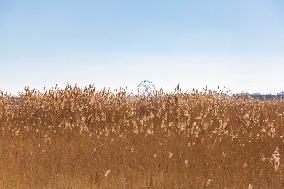
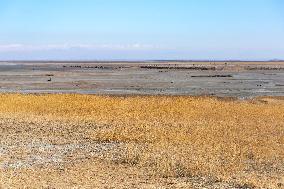
A view shows dry reeds on the dry bed of Lake Urmia in northwestern Iran on December 20, 2025. Lake Urmia, once the largest lake in the Middle East, has dramatically shrunk due to prolonged drought, the damming of rivers feeding the lake, and extensive groundwater extraction in the surrounding area. Although increased rainfall and water diversion briefly helped restore water levels in 2019, renewed drought and administrative mismanagement in the early 2020s reversed the trend, and satellite imagery shows the lake has almost entirely dried up by September 2025. Photo by Morteza Aminoroayayi/Middle East Images/ABACAPRESS.COM

  •  
Lake Urmia Environmental Disaster - Iran

Lake Urmia Environmental Disaster - Iran

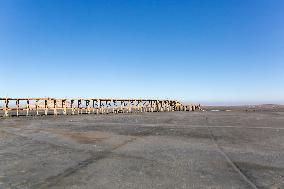
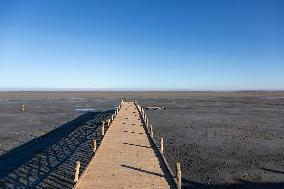
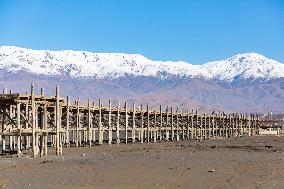
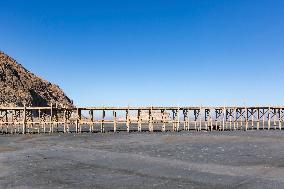
A view shows a wooden pier on the dry bed of Lake Urmia in northwestern Iran on December 20, 2025. Lake Urmia, once the largest lake in the Middle East, has dramatically shrunk due to prolonged drought, the damming of rivers feeding the lake, and extensive groundwater extraction in the surrounding area. Although increased rainfall and water diversion briefly helped restore water levels in 2019, renewed drought and administrative mismanagement in the early 2020s reversed the trend, and satellite imagery shows the lake has almost entirely dried up by September 2025. Photo by Morteza Aminoroayayi/Middle East Images/ABACAPRESS.COM

  •  
Lake Urmia Environmental Disaster - Iran

Lake Urmia Environmental Disaster - Iran

A view shows a wooden pier on the dry bed of Lake Urmia in northwestern Iran on December 20, 2025. Lake Urmia, once the largest lake in the Middle East, has dramatically shrunk due to prolonged drought, the damming of rivers feeding the lake, and extensive groundwater extraction in the surrounding area. Although increased rainfall and water diversion briefly helped restore water levels in 2019, renewed drought and administrative mismanagement in the early 2020s reversed the trend, and satellite imagery shows the lake has almost entirely dried up by September 2025. Photo by Morteza Aminoroayayi/Middle East Images/ABACAPRESS.COM

  •  
Lake Urmia Environmental Disaster - Iran

Lake Urmia Environmental Disaster - Iran

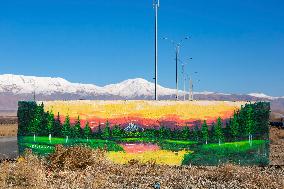
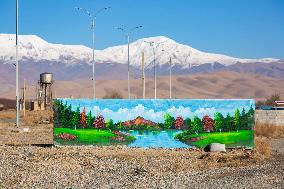
A view shows a mural depicting a landscape painted on a concrete wall near Sharafkhaneh port at Lake Urmia in northwestern Iran on December 19, 2025. Lake Urmia, once the largest lake in the Middle East, has dramatically shrunk due to prolonged drought, the damming of rivers feeding the lake, and extensive groundwater extraction in the surrounding area. Although increased rainfall and water diversion briefly helped restore water levels in 2019, renewed drought and administrative mismanagement in the early 2020s reversed the trend, and satellite imagery shows the lake has almost entirely dried up by September 2025. Photo by Morteza Aminoroayayi/Middle East Images/ABACAPRESS.COM

  •  
Lake Urmia Environmental Disaster - Iran

Lake Urmia Environmental Disaster - Iran

A view shows dry grass and the dry bed of Lake Urmia in northwestern Iran on December 20, 2025. Lake Urmia, once the largest lake in the Middle East, has dramatically shrunk due to prolonged drought, the damming of rivers feeding the lake, and extensive groundwater extraction in the surrounding area. Although increased rainfall and water diversion briefly helped restore water levels in 2019, renewed drought and administrative mismanagement in the early 2020s reversed the trend, and satellite imagery shows the lake has almost entirely dried up by September 2025. Photo by Morteza Aminoroayayi/Middle East Images/ABACAPRESS.COM

  •  
Lake Urmia Environmental Disaster - Iran

Lake Urmia Environmental Disaster - Iran

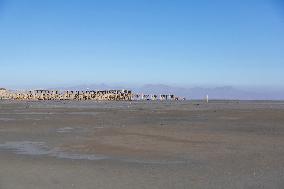
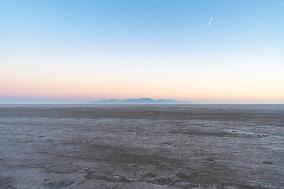
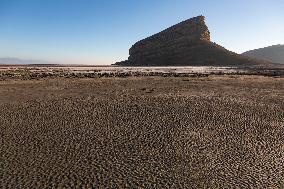
A view shows the dry bed of Lake Urmia in northwestern Iran on December 19, 2025. Lake Urmia, once the largest lake in the Middle East, has dramatically shrunk due to prolonged drought, the damming of rivers feeding the lake, and extensive groundwater extraction in the surrounding area. Although increased rainfall and water diversion briefly helped restore water levels in 2019, renewed drought and administrative mismanagement in the early 2020s reversed the trend, and satellite imagery shows the lake has almost entirely dried up by September 2025. Photo by Morteza Aminoroayayi/Middle East Images/ABACAPRESS.COM

  •  
Lake Urmia Environmental Disaster - Iran

Lake Urmia Environmental Disaster - Iran

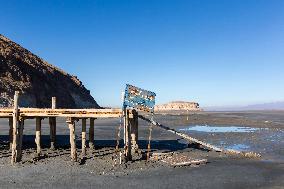
A view shows a rusty sign next to a wooden pier on the dry bed of Lake Urmia in northwestern Iran on December 20, 2025. Lake Urmia, once the largest lake in the Middle East, has dramatically shrunk due to prolonged drought, the damming of rivers feeding the lake, and extensive groundwater extraction in the surrounding area. Although increased rainfall and water diversion briefly helped restore water levels in 2019, renewed drought and administrative mismanagement in the early 2020s reversed the trend, and satellite imagery shows the lake has almost entirely dried up by September 2025. Photo by Morteza Aminoroayayi/Middle East Images/ABACAPRESS.COM

  •  
Lake Urmia Environmental Disaster - Iran

Lake Urmia Environmental Disaster - Iran

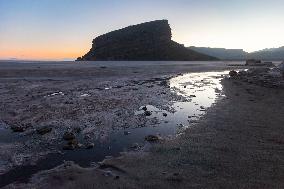
A view shows a shallow stream near a rocky cliff on the bed of Lake Urmia in northwestern Iran on December 19, 2025. Lake Urmia, once the largest lake in the Middle East, has dramatically shrunk due to prolonged drought, the damming of rivers feeding the lake, and extensive groundwater extraction in the surrounding area. Although increased rainfall and water diversion briefly helped restore water levels in 2019, renewed drought and administrative mismanagement in the early 2020s reversed the trend, and satellite imagery shows the lake has almost entirely dried up by September 2025. Photo by Morteza Aminoroayayi/Middle East Images/ABACAPRESS.COM

  •  
Lake Urmia Environmental Disaster - Iran

Lake Urmia Environmental Disaster - Iran

A view shows a wooden pier on the dry bed of Lake Urmia in northwestern Iran on December 20, 2025. Lake Urmia, once the largest lake in the Middle East, has dramatically shrunk due to prolonged drought, the damming of rivers feeding the lake, and extensive groundwater extraction in the surrounding area. Although increased rainfall and water diversion briefly helped restore water levels in 2019, renewed drought and administrative mismanagement in the early 2020s reversed the trend, and satellite imagery shows the lake has almost entirely dried up by September 2025. Photo by Morteza Aminoroayayi/Middle East Images/ABACAPRESS.COM

  •  
Lake Urmia Environmental Disaster - Iran

Lake Urmia Environmental Disaster - Iran

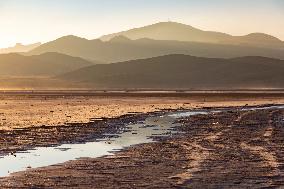
A view shows tire tracks running alongside a shallow stream on the bed of Lake Urmia in northwestern Iran on December 19, 2025. Lake Urmia, once the largest lake in the Middle East, has dramatically shrunk due to prolonged drought, the damming of rivers feeding the lake, and extensive groundwater extraction in the surrounding area. Although increased rainfall and water diversion briefly helped restore water levels in 2019, renewed drought and administrative mismanagement in the early 2020s reversed the trend, and satellite imagery shows the lake has almost entirely dried up by September 2025. Photo by Morteza Aminoroayayi/Middle East Images/ABACAPRESS.COM

  •  
Lake Urmia Environmental Disaster - Iran

Lake Urmia Environmental Disaster - Iran

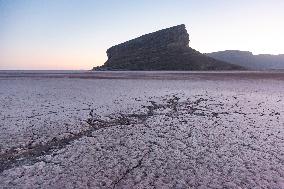
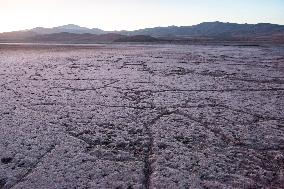
Salt formations cover the cracked surface of the dried bed of Lake Urmia in northwestern Iran on December 19, 2025. Lake Urmia, once the largest lake in the Middle East, has dramatically shrunk due to prolonged drought, the damming of rivers feeding the lake and extensive groundwater extraction in the surrounding area. Although increased rainfall and water diversion briefly helped restore water levels in 2019, renewed drought and administrative mismanagement in the early 2020s reversed the trend, and satellite imagery shows the lake has almost entirely dried up by September 2025. Photo by Morteza Aminoroayayi/Middle East Images/ABACAPRESS.COM

  •  
Lake Urmia Environmental Disaster - Iran

Lake Urmia Environmental Disaster - Iran

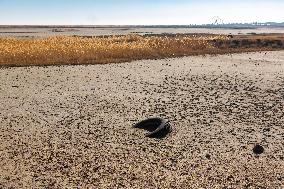
A discarded tire sits near dry reeds on the dry bed of Lake Urmia in northwestern Iran on December 20, 2025. Lake Urmia, once the largest lake in the Middle East, has dramatically shrunk due to prolonged drought, the damming of rivers feeding the lake, and extensive groundwater extraction in the surrounding area. Although increased rainfall and water diversion briefly helped restore water levels in 2019, renewed drought and administrative mismanagement in the early 2020s reversed the trend, and satellite imagery shows the lake has almost entirely dried up by September 2025. Photo by Morteza Aminoroayayi/Middle East Images/ABACAPRESS.COM

  •  
Lake Urmia Environmental Disaster - Iran

Lake Urmia Environmental Disaster - Iran

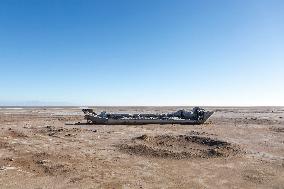
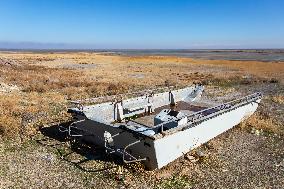
Remnants of a boat sit on the dry bed of Lake Urmia in northwestern Iran on December 19, 2025. Lake Urmia, once the largest lake in the Middle East, has dramatically shrunk due to prolonged drought, the damming of rivers feeding the lake, and extensive groundwater extraction in the surrounding area. Although increased rainfall and water diversion briefly helped restore water levels in 2019, renewed drought and administrative mismanagement in the early 2020s reversed the trend, and satellite imagery shows the lake has almost entirely dried up by September 2025. Photo by Morteza Aminoroayayi/Middle East Images/ABACAPRESS.COM

  •  
Lake Urmia Environmental Disaster - Iran

Lake Urmia Environmental Disaster - Iran

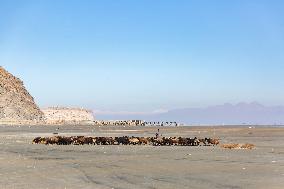
A shepherd guides a flock of sheep on the dry bed of Lake Urmia in northwestern Iran on December 20, 2025. Lake Urmia, once the largest lake in the Middle East, has dramatically shrunk due to prolonged drought, the damming of rivers feeding the lake, and extensive groundwater extraction in the surrounding area. Although increased rainfall and water diversion briefly helped restore water levels in 2019, renewed drought and administrative mismanagement in the early 2020s reversed the trend, and satellite imagery shows the lake has almost entirely dried up by September 2025. Photo by Morteza Aminoroayayi/Middle East Images/ABACAPRESS.COM

  •  
Lake Urmia Environmental Disaster - Iran

Lake Urmia Environmental Disaster - Iran

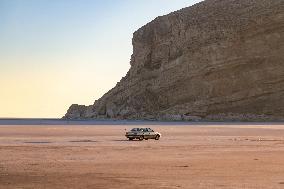
A car drives near a rocky cliff on the dry bed of Lake Urmia in northwestern Iran on December 19, 2025. Lake Urmia, once the largest lake in the Middle East, has dramatically shrunk due to prolonged drought, the damming of rivers feeding the lake, and extensive groundwater extraction in the surrounding area. Although increased rainfall and water diversion briefly helped restore water levels in 2019, renewed drought and administrative mismanagement in the early 2020s reversed the trend, and satellite imagery shows the lake has almost entirely dried up by September 2025. Photo by Morteza Aminoroayayi/Middle East Images/ABACAPRESS.COM

  •  
Lake Urmia Environmental Disaster - Iran

Lake Urmia Environmental Disaster - Iran

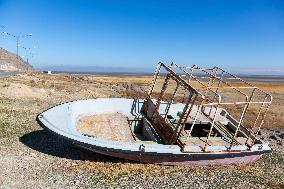
A rusty boat sits next to a road near Lake Urmia in northwestern Iran on December 20, 2025. Lake Urmia, once the largest lake in the Middle East, has dramatically shrunk due to prolonged drought, the damming of rivers feeding the lake, and extensive groundwater extraction in the surrounding area. Although increased rainfall and water diversion briefly helped restore water levels in 2019, renewed drought and administrative mismanagement in the early 2020s reversed the trend, and satellite imagery shows the lake has almost entirely dried up by September 2025. Photo by Morteza Aminoroayayi/Middle East Images/ABACAPRESS.COM

  •  
Lake Urmia Environmental Disaster - Iran

Lake Urmia Environmental Disaster - Iran

A view shows a wooden pier on the dry bed of Lake Urmia in northwestern Iran on December 19, 2025. Lake Urmia, once the largest lake in the Middle East, has dramatically shrunk due to prolonged drought, the damming of rivers feeding the lake, and extensive groundwater extraction in the surrounding area. Although increased rainfall and water diversion briefly helped restore water levels in 2019, renewed drought and administrative mismanagement in the early 2020s reversed the trend, and satellite imagery shows the lake has almost entirely dried up by September 2025. Photo by Morteza Aminoroayayi/Middle East Images/ABACAPRESS.COM

  •  
Lake Urmia Environmental Disaster - Iran

Lake Urmia Environmental Disaster - Iran

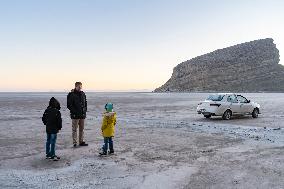
A man and two children stand near a car and a rocky cliff on the dry bed of Lake Urmia in northwestern Iran on December 19, 2025. Lake Urmia, once the largest lake in the Middle East, has dramatically shrunk due to prolonged drought, the damming of rivers feeding the lake, and extensive groundwater extraction in the surrounding area. Although increased rainfall and water diversion briefly helped restore water levels in 2019, renewed drought and administrative mismanagement in the early 2020s reversed the trend, and satellite imagery shows the lake has almost entirely dried up by September 2025. Photo by Morteza Aminoroayayi/Middle East Images/ABACAPRESS.COM

  •  
Lake Urmia Environmental Disaster - Iran

Lake Urmia Environmental Disaster - Iran

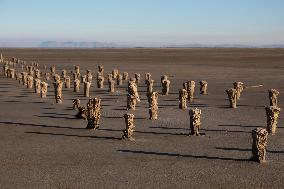
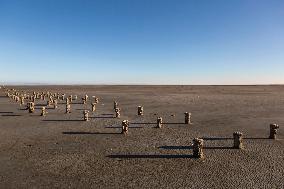
A view shows rows of wooden posts protruding from the dry bed of Lake Urmia in northwestern Iran on December 20, 2025. Lake Urmia, once the largest lake in the Middle East, has dramatically shrunk due to prolonged drought, the damming of rivers feeding the lake, and extensive groundwater extraction in the surrounding area. Although increased rainfall and water diversion briefly helped restore water levels in 2019, renewed drought and administrative mismanagement in the early 2020s reversed the trend, and satellite imagery shows the lake has almost entirely dried up by September 2025. Photo by Morteza Aminoroayayi/Middle East Images/ABACAPRESS.COM

  •  
Lake Urmia Environmental Disaster - Iran

Lake Urmia Environmental Disaster - Iran

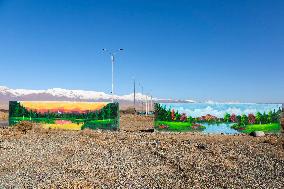
A view shows murals depicting nature scenes painted on concrete walls near Sharafkhaneh port at Lake Urmia in northwestern Iran on December 19, 2025. Lake Urmia, once the largest lake in the Middle East, has dramatically shrunk due to prolonged drought, the damming of rivers feeding the lake, and extensive groundwater extraction in the surrounding area. Although increased rainfall and water diversion briefly helped restore water levels in 2019, renewed drought and administrative mismanagement in the early 2020s reversed the trend, and satellite imagery shows the lake has almost entirely dried up by September 2025. Photo by Morteza Aminoroayayi/Middle East Images/ABACAPRESS.COM

  •  
Lake Urmia Environmental Disaster - Iran

Lake Urmia Environmental Disaster - Iran

A view shows the dry bed of Lake Urmia in northwestern Iran on December 19, 2025. Lake Urmia, once the largest lake in the Middle East, has dramatically shrunk due to prolonged drought, the damming of rivers feeding the lake, and extensive groundwater extraction in the surrounding area. Although increased rainfall and water diversion briefly helped restore water levels in 2019, renewed drought and administrative mismanagement in the early 2020s reversed the trend, and satellite imagery shows the lake has almost entirely dried up by September 2025. Photo by Morteza Aminoroayayi/Middle East Images/ABACAPRESS.COM

  •  
Lake Urmia Environmental Disaster - Iran

Lake Urmia Environmental Disaster - Iran

A view shows a wooden pier on the dry bed of Lake Urmia in northwestern Iran on December 20, 2025. Lake Urmia, once the largest lake in the Middle East, has dramatically shrunk due to prolonged drought, the damming of rivers feeding the lake, and extensive groundwater extraction in the surrounding area. Although increased rainfall and water diversion briefly helped restore water levels in 2019, renewed drought and administrative mismanagement in the early 2020s reversed the trend, and satellite imagery shows the lake has almost entirely dried up by September 2025. Photo by Morteza Aminoroayayi/Middle East Images/ABACAPRESS.COM

  •  
Lake Urmia Environmental Disaster - Iran

Lake Urmia Environmental Disaster - Iran

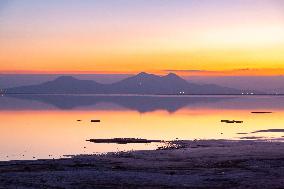
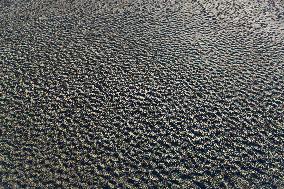
A view shows reflections on the surface of Lake Urmia in northwestern Iran on December 18, 2025. Lake Urmia, once the largest lake in the Middle East, has dramatically shrunk due to prolonged drought, the damming of rivers feeding the lake, and extensive groundwater extraction in the surrounding area. Although increased rainfall and water diversion briefly helped restore water levels in 2019, renewed drought and administrative mismanagement in the early 2020s reversed the trend, and satellite imagery shows the lake has almost entirely dried up by September 2025. Photo by Morteza Aminoroayayi/Middle East Images/ABACAPRESS.COM

  •  
Lake Urmia Environmental Disaster - Iran

Lake Urmia Environmental Disaster - Iran

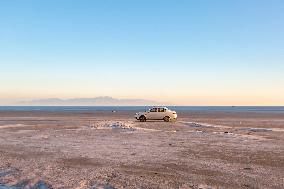
A car drives on the dry bed of Lake Urmia in northwestern Iran on December 19, 2025. Lake Urmia, once the largest lake in the Middle East, has dramatically shrunk due to prolonged drought, the damming of rivers feeding the lake, and extensive groundwater extraction in the surrounding area. Although increased rainfall and water diversion briefly helped restore water levels in 2019, renewed drought and administrative mismanagement in the early 2020s reversed the trend, and satellite imagery shows the lake has almost entirely dried up by September 2025. Photo by Morteza Aminoroayayi/Middle East Images/ABACAPRESS.COM

  •  
Lake Urmia Environmental Disaster - Iran

Lake Urmia Environmental Disaster - Iran

A view shows a mural depicting a landscape painted on a concrete wall near Sharafkhaneh port at Lake Urmia in northwestern Iran on December 19, 2025. Lake Urmia, once the largest lake in the Middle East, has dramatically shrunk due to prolonged drought, the damming of rivers feeding the lake, and extensive groundwater extraction in the surrounding area. Although increased rainfall and water diversion briefly helped restore water levels in 2019, renewed drought and administrative mismanagement in the early 2020s reversed the trend, and satellite imagery shows the lake has almost entirely dried up by September 2025. Photo by Morteza Aminoroayayi/Middle East Images/ABACAPRESS.COM

  •  
Lake Urmia Environmental Disaster - Iran

Lake Urmia Environmental Disaster - Iran

A view shows rows of wooden posts protruding from the dry bed of Lake Urmia in northwestern Iran on December 20, 2025. Lake Urmia, once the largest lake in the Middle East, has dramatically shrunk due to prolonged drought, the damming of rivers feeding the lake, and extensive groundwater extraction in the surrounding area. Although increased rainfall and water diversion briefly helped restore water levels in 2019, renewed drought and administrative mismanagement in the early 2020s reversed the trend, and satellite imagery shows the lake has almost entirely dried up by September 2025. Photo by Morteza Aminoroayayi/Middle East Images/ABACAPRESS.COM

  •  
Lake Urmia Environmental Disaster - Iran

Lake Urmia Environmental Disaster - Iran

Salt formations cover the cracked surface of the dried bed of Lake Urmia in northwestern Iran on December 19, 2025. Lake Urmia, once the largest lake in the Middle East, has dramatically shrunk due to prolonged drought, the damming of rivers feeding the lake and extensive groundwater extraction in the surrounding area. Although increased rainfall and water diversion briefly helped restore water levels in 2019, renewed drought and administrative mismanagement in the early 2020s reversed the trend, and satellite imagery shows the lake has almost entirely dried up by September 2025. Photo by Morteza Aminoroayayi/Middle East Images/ABACAPRESS.COM

  •  
Lake Urmia Environmental Disaster - Iran

Lake Urmia Environmental Disaster - Iran

Remains of a boat sits near the dry bed of Lake Urmia in northwestern Iran on December 20, 2025. Lake Urmia, once the largest lake in the Middle East, has dramatically shrunk due to prolonged drought, the damming of rivers feeding the lake, and extensive groundwater extraction in the surrounding area. Although increased rainfall and water diversion briefly helped restore water levels in 2019, renewed drought and administrative mismanagement in the early 2020s reversed the trend, and satellite imagery shows the lake has almost entirely dried up by September 2025. Photo by Morteza Aminoroayayi/Middle East Images/ABACAPRESS.COM

  •  
Lake Urmia Environmental Disaster - Iran

Lake Urmia Environmental Disaster - Iran

A car drives on the dry bed of Lake Urmia in northwestern Iran on December 19, 2025. Lake Urmia, once the largest lake in the Middle East, has dramatically shrunk due to prolonged drought, the damming of rivers feeding the lake, and extensive groundwater extraction in the surrounding area. Although increased rainfall and water diversion briefly helped restore water levels in 2019, renewed drought and administrative mismanagement in the early 2020s reversed the trend, and satellite imagery shows the lake has almost entirely dried up by September 2025. Photo by Morteza Aminoroayayi/Middle East Images/ABACAPRESS.COM

  •  
Lake Urmia Environmental Disaster - Iran

Lake Urmia Environmental Disaster - Iran

A view shows the dry bed of Lake Urmia in northwestern Iran on December 19, 2025. Lake Urmia, once the largest lake in the Middle East, has dramatically shrunk due to prolonged drought, the damming of rivers feeding the lake, and extensive groundwater extraction in the surrounding area. Although increased rainfall and water diversion briefly helped restore water levels in 2019, renewed drought and administrative mismanagement in the early 2020s reversed the trend, and satellite imagery shows the lake has almost entirely dried up by September 2025. Photo by Morteza Aminoroayayi/Middle East Images/ABACAPRESS.COM

  •  
Lake Urmia Environmental Disaster - Iran

Lake Urmia Environmental Disaster - Iran

A view shows scattered rocks and shallow water in parts of Lake Urmia in northwestern Iran on December 18, 2025. Lake Urmia, once the largest lake in the Middle East, has dramatically shrunk due to prolonged drought, the damming of rivers feeding the lake, and extensive groundwater extraction in the surrounding area. Although increased rainfall and water diversion briefly helped restore water levels in 2019, renewed drought and administrative mismanagement in the early 2020s reversed the trend, and satellite imagery shows the lake has almost entirely dried up by September 2025. Photo by Morteza Aminoroayayi/Middle East Images/ABACAPRESS.COM

  •  
Rice Production in Indonesia - Bali

Rice Production in Indonesia - Bali

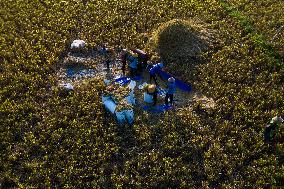
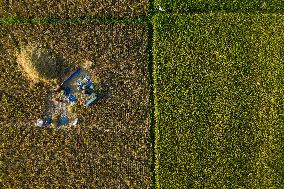
Workers operate a machine to separate harvested rice grains from stalks in a field in Denpasar, Bali, Indonesia on September 12, 2023. Mechanical processing helps speed up harvesting and reduce labor needs in rice production, which plays a critical role in feeding billions worldwide. Photo by Nicola Longobardi/Middle East Images/ABACAPRESS.COm

  •  
Rice Production in Indonesia - Bali

Rice Production in Indonesia - Bali

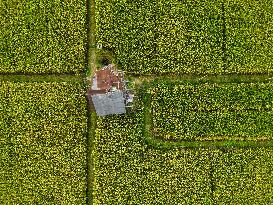
An aerial view shows a small shed surrounded by rice fields in Denpasar, Bali, Indonesia on September 12, 2023. Farmers use such structures to store tools and rest during long working hours, as rice cultivation remains central to feeding more than half of the global population. Photo by Nicola Longobardi/Middle East Images/ABACAPRESS.COm

  •  
Rice Production in Indonesia - Bali

Rice Production in Indonesia - Bali

Workers operate a machine to separate harvested rice grains from stalks in a field in Denpasar, Bali, Indonesia on September 12, 2023. Mechanical processing helps speed up harvesting and reduce labor needs in rice production, which plays a critical role in feeding billions worldwide. Photo by Nicola Longobardi/Middle East Images/ABACAPRESS.COm

  •  
Rice Production in Indonesia - Bali

Rice Production in Indonesia - Bali

An aerial view shows a small shed surrounded by rice fields in Denpasar, Bali, Indonesia on September 12, 2023. Farmers use such structures to store tools and rest during long working hours, as rice cultivation remains central to feeding more than half of the global population. Photo by Nicola Longobardi/Middle East Images/ABACAPRESS.COm

  •  
Satellite View of Gulf of Morbihan - France

Satellite View of Gulf of Morbihan - France

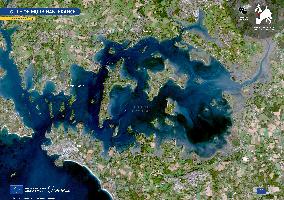
Handout Satellite View, dated October 17, 2025, shows the Gulf of Morbihan in France. The Gulf of Morbihan, part of the Natura 2000 network, forms one of France’s most distinctive coastal landscapes. This inland sea is dotted with dozens of small islands and peninsulas, creating a labyrinth of sheltered bays, narrow channels, and shifting tidal flats. Its highly indented shape supports a mosaic of coastal habitats, from eelgrass meadows to mudflats, which provide vital feeding and breeding grounds for migratory birds and numerous marine species. Located in Brittany, near towns such as Vannes, Arradon, and Arzon, the gulf’s intricate contours are clearly visible in this Copernicus Sentinel-2 image acquired on 17 October 2025. The deep blues highlight the flooded channels at high tide, while surrounding vegetation appears in bright green. Photo by European Union, Copernicus Sentinel-2 imagery via ABACAPRESS.COM

  •  
Farms For Egg-laying Hens - China

Farms For Egg-laying Hens - China

An aerial drone photo taken on Nov. 28, 2025 shows a farm for egg-laying hens in Lengshuitan District of Yongzhou City, central China's Hunan Province. Lengshuitan District of Yongzhou City has been actively boosting the development of farms for egg-laying hens in recent years. By introducing advanced equipment for hen-feeding and egg-sorting, the district aims to build a system of large-scale, automated, and well managed farms of egg-laying hens. As of now, Lengshuitan District boasts 120 of such farms, each with more than 10,000 hens in stock. The 8 million hens in these farms yield more than 7 million eggs per day - a leading source of income for the district's agricultural economy. Photo by Liu Wangmin/Xinhua/ABACAPRESS.COM

  •  
Farms For Egg-laying Hens - China

Farms For Egg-laying Hens - China

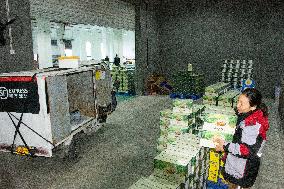
A staff member of courier service loads packed eggs onto a vehicle at an egg sorting center in Lengshuitan District of Yongzhou City, central China's Hunan Province, Nov. 28, 2025. Lengshuitan District of Yongzhou City has been actively boosting the development of farms for egg-laying hens in recent years. By introducing advanced equipment for hen-feeding and egg-sorting, the district aims to build a system of large-scale, automated, and well managed farms of egg-laying hens. As of now, Lengshuitan District boasts 120 of such farms, each with more than 10,000 hens in stock. The 8 million hens in these farms yield more than 7 million eggs per day - a leading source of income for the district's agricultural economy. Photo by Liu Wangmin/Xinhua/ABACAPRESS.COM

  •  
Farms For Egg-laying Hens - China

Farms For Egg-laying Hens - China

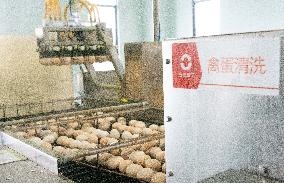
A robotic arm maneuvers eggs on a platform for cleaning at an egg sorting center in Lengshuitan District of Yongzhou City, central China's Hunan Province, Nov. 28, 2025. Lengshuitan District of Yongzhou City has been actively boosting the development of farms for egg-laying hens in recent years. By introducing advanced equipment for hen-feeding and egg-sorting, the district aims to build a system of large-scale, automated, and well managed farms of egg-laying hens. As of now, Lengshuitan District boasts 120 of such farms, each with more than 10,000 hens in stock. The 8 million hens in these farms yield more than 7 million eggs per day - a leading source of income for the district's agricultural economy. Photo by Liu Wangmin/Xinhua/ABACAPRESS.COM

  •  
Farms For Egg-laying Hens - China

Farms For Egg-laying Hens - China

Staff members pack cleaned and sterilized eggs at an egg sorting center in Lengshuitan District of Yongzhou City, central China's Hunan Province, Nov. 28, 2025. Lengshuitan District of Yongzhou City has been actively boosting the development of farms for egg-laying hens in recent years. By introducing advanced equipment for hen-feeding and egg-sorting, the district aims to build a system of large-scale, automated, and well managed farms of egg-laying hens. As of now, Lengshuitan District boasts 120 of such farms, each with more than 10,000 hens in stock. The 8 million hens in these farms yield more than 7 million eggs per day - a leading source of income for the district's agricultural economy. Photo by Liu Wangmin/Xinhua/ABACAPRESS.COM

  •  
Farms For Egg-laying Hens - China

Farms For Egg-laying Hens - China

Cleaned and sterilized eggs are labeled with date and brand logo at an egg sorting center in Lengshuitan District of Yongzhou City, central China's Hunan Province, Nov. 28, 2025. Lengshuitan District of Yongzhou City has been actively boosting the development of farms for egg-laying hens in recent years. By introducing advanced equipment for hen-feeding and egg-sorting, the district aims to build a system of large-scale, automated, and well managed farms of egg-laying hens. As of now, Lengshuitan District boasts 120 of such farms, each with more than 10,000 hens in stock. The 8 million hens in these farms yield more than 7 million eggs per day - a leading source of income for the district's agricultural economy. Photo by Liu Wangmin/Xinhua/ABACAPRESS.COM

  •  
Farms For Egg-laying Hens - China

Farms For Egg-laying Hens - China

This photo taken on Nov. 28, 2025 shows a scene at an egg conveyor line at a farm for egg-laying hens in Lengshuitan District of Yongzhou City, central China's Hunan Province. Lengshuitan District of Yongzhou City has been actively boosting the development of farms for egg-laying hens in recent years. By introducing advanced equipment for hen-feeding and egg-sorting, the district aims to build a system of large-scale, automated, and well managed farms of egg-laying hens. As of now, Lengshuitan District boasts 120 of such farms, each with more than 10,000 hens in stock. The 8 million hens in these farms yield more than 7 million eggs per day - a leading source of income for the district's agricultural economy. Photo by Liu Wangmin/Xinhua/ABACAPRESS.COM

  •  
Farms For Egg-laying Hens - China

Farms For Egg-laying Hens - China

This photo taken on Nov. 28, 2025 shows a scene at an egg conveyor line at a farm for egg-laying hens in Lengshuitan District of Yongzhou City, central China's Hunan Province. Lengshuitan District of Yongzhou City has been actively boosting the development of farms for egg-laying hens in recent years. By introducing advanced equipment for hen-feeding and egg-sorting, the district aims to build a system of large-scale, automated, and well managed farms of egg-laying hens. As of now, Lengshuitan District boasts 120 of such farms, each with more than 10,000 hens in stock. The 8 million hens in these farms yield more than 7 million eggs per day - a leading source of income for the district's agricultural economy. Photo by Liu Wangmin/Xinhua/ABACAPRESS.COM

  •  
Farms For Egg-laying Hens - China

Farms For Egg-laying Hens - China

A staff member checks the condition of a chick at a farm for egg-laying hens in Lengshuitan District of Yongzhou City, central China's Hunan Province, Nov. 28, 2025. Lengshuitan District of Yongzhou City has been actively boosting the development of farms for egg-laying hens in recent years. By introducing advanced equipment for hen-feeding and egg-sorting, the district aims to build a system of large-scale, automated, and well managed farms of egg-laying hens. As of now, Lengshuitan District boasts 120 of such farms, each with more than 10,000 hens in stock. The 8 million hens in these farms yield more than 7 million eggs per day - a leading source of income for the district's agricultural economy. Photo by Liu Wangmin/Xinhua/ABACAPRESS.COM

  •  
Farms For Egg-laying Hens - China

Farms For Egg-laying Hens - China

A staff member checks the condition of a chick at a farm for egg-laying hens in Lengshuitan District of Yongzhou City, central China's Hunan Province, Nov. 28, 2025. Lengshuitan District of Yongzhou City has been actively boosting the development of farms for egg-laying hens in recent years. By introducing advanced equipment for hen-feeding and egg-sorting, the district aims to build a system of large-scale, automated, and well managed farms of egg-laying hens. As of now, Lengshuitan District boasts 120 of such farms, each with more than 10,000 hens in stock. The 8 million hens in these farms yield more than 7 million eggs per day - a leading source of income for the district's agricultural economy. Photo by Liu Wangmin/Xinhua/ABACAPRESS.COM

  •  
Farms For Egg-laying Hens - China

Farms For Egg-laying Hens - China

A staff member checks eggs at an egg sorting center in Lengshuitan District of Yongzhou City, central China's Hunan Province, Nov. 28, 2025. Lengshuitan District of Yongzhou City has been actively boosting the development of farms for egg-laying hens in recent years. By introducing advanced equipment for hen-feeding and egg-sorting, the district aims to build a system of large-scale, automated, and well managed farms of egg-laying hens. As of now, Lengshuitan District boasts 120 of such farms, each with more than 10,000 hens in stock. The 8 million hens in these farms yield more than 7 million eggs per day - a leading source of income for the district's agricultural economy. Photo by Liu Wangmin/Xinhua/ABACAPRESS.COM

  •  
Farms For Egg-laying Hens - China

Farms For Egg-laying Hens - China

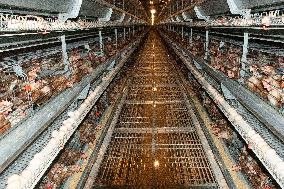
This photo taken on Nov. 28, 2025 shows a scene inside a farm for egg-laying hens in Lengshuitan District of Yongzhou City, central China's Hunan Province. Lengshuitan District of Yongzhou City has been actively boosting the development of farms for egg-laying hens in recent years. By introducing advanced equipment for hen-feeding and egg-sorting, the district aims to build a system of large-scale, automated, and well managed farms of egg-laying hens. As of now, Lengshuitan District boasts 120 of such farms, each with more than 10,000 hens in stock. The 8 million hens in these farms yield more than 7 million eggs per day - a leading source of income for the district's agricultural economy. Photo by Liu Wangmin/Xinhua/ABACAPRESS.COM

  •  

China: Video Shows Mother Sparrow Caring for Larger-Looking Chick

On October 29, 2025, in Jiangsu, China, a video showed a small sparrow seemingly feeding a larger one. The filmer clarified that the bigger bird was the young one, and the smaller was the mother. The clip highlights a mother’s care transcending species.

  •  
Famous Pair Of Pandas Will Leave Beauval Zoo For China - France

Famous Pair Of Pandas Will Leave Beauval Zoo For China - France

File photo - Feeding time for the pandas: Astrid, a keeper, gives the pandas their supplements, on April 11, 2012, at the Beauval Zoo. For the first time in France, a pair of pandas is being presented to the public: Huan Huan, the female, and Yuan Zi, the male. The giant panda is listed as “endangered” on the IUCN (International Union for Conservation of Nature) Red List of Threatened Species. It is estimated that there are 1,600 pandas still living in the wild. The famous pair of pandas will leave Beauval Zoo on Tuesday, November 25, 2025, due to an early return to China caused by the female's kidney failure, on November 24, 2025, in Saint-Aignan, France. Photo by Pascal Baril/ABACAPRESS.COM

  •  
Famous Pair Of Pandas Will Leave Beauval Zoo For China - France

Famous Pair Of Pandas Will Leave Beauval Zoo For China - France

File photo - Feeding time for the pandas: Astrid, a keeper, gives the pandas their supplements, on April 11, 2012, at the Beauval Zoo. For the first time in France, a pair of pandas is being presented to the public: Huan Huan, the female, and Yuan Zi, the male. The giant panda is listed as “endangered” on the IUCN (International Union for Conservation of Nature) Red List of Threatened Species. It is estimated that there are 1,600 pandas still living in the wild. The famous pair of pandas will leave Beauval Zoo on Tuesday, November 25, 2025, due to an early return to China caused by the female's kidney failure, on November 24, 2025, in Saint-Aignan, France. Photo by Pascal Baril/ABACAPRESS.COM

  • Main
  • Top
  • Editorial
  • Creative
  • About Us
  • About ILG
  • Terms of use
  • Company
  • BEHIND
  • Price List
  • Single Plan
  • Monthly Plan
  • Services
  • Shooting
  • Rights Clearance
  • Support
  • FAQ
  • How To Buy
  • Contact Us
  • Become a Partner

© KYODO NEWS IMAGES INC

All Rights Reserved.

  • Editorial
  • Olympics
  • News
  • Sports
  • Japan
  • Tech
  • Royal
  • Disaster
  • NorthKorea
  • Old Japan
  • SNS
  • Creative
  • Food
  • Japan
  • Landscape
  • Animal
  • Popular
  • #Ukraine
  • #Russia
  • #coronavirus
  • #N. Korea
  • #China
  • #Thailand
  • #Ukraine
  • #Russia
  • #coronavirus
  • #N. Korea
  • #China
  • #Thailand
  • Food
  • Japan
  • Landscape
  • Animal
  • Olympics
  • News
  • Sports
  • Japan
  • Tech
  • Royal
  • Disaster
  • NorthKorea
  • Old Japan
  • SNS