•  
Taiwanese tourists to Japan

Taiwanese tourists to Japan

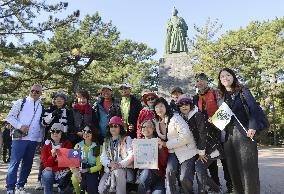
Tourists from Taiwan pose for a photo in front of a statue of Ryoma Sakamoto, a famed 19th-century historic figure who played a key role in Japan's transition from feudal rule to modern statehood during the Meiji Restoration, in Kochi, western Japan, on Dec. 15, 2025.

  •  
Taiwanese tourists to Japan

Taiwanese tourists to Japan

Tourists from Taiwan pose for a photo in front of a statue of Ryoma Sakamoto, a famed 19th-century historic figure who played a key role in Japan's transition from feudal rule to modern statehood during the Meiji Restoration, in Kochi, western Japan, on Dec. 15, 2025.

  •  
Taiwanese tourists to Japan

Taiwanese tourists to Japan

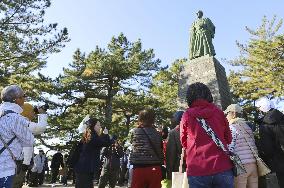
Tourists from Taiwan listen to a guide in front of a statue of Ryoma Sakamoto, a famed 19th-century historic figure who played a key role in Japan's transition from feudal rule to modern statehood during the Meiji Restoration, in Kochi, western Japan, on Dec. 15, 2025. ==Kyodo

  •  
Illustration - Aerial View of France

Illustration - Aerial View of France

FRANCE. CHARENTE (16) ROCHEFOUCAULD-EN-ANGOUMOIS. AERIAL VIEW OF THE RENAISSANCE CHATEAU OF LA ROCHEFOUCAULD, MOST OF WHICH WAS BUILT AROUND 1520 ON THE SITE OF A FEUDAL FORTRESS DATING FROM THE XI? CENTURY, THE TOWERS OF WHICH HAVE BEEN PRESERVED. THE CHATEAU AND ITS GROUNDS WERE LISTED AS A HISTORIC MONUMENT IN 1955. Photo by Stephane Compoint/Only France/ABACAPRESS.COM

  •  
1922 national meeting by group to liberate "burakumin"

1922 national meeting by group to liberate "burakumin"

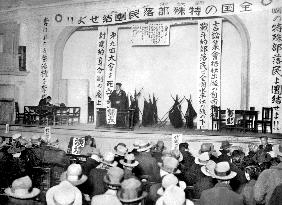
OSAKA, Japan, May 29 Kyodo - The National Levelers Association holds its ninth national meeting at a public hall in Osaka, western Japan, on Dec. 5, 1930. The association was founded in 1922 to protect the rights of "burakumin," people descended from the outcast communities of Japan's feudal era. (Photo taken by Japan Telegraphic Communication Co.)

  •  
Parade marking 410th anniversary of Domyoji battle

Parade marking 410th anniversary of Domyoji battle

People posing as warriors clad in feudal-era armor parade in Fujiidera in Osaka Prefecture, western Japan, on May 4, 2025, marking the 410th anniversary of the 1615 battle of Domyoji between the armies of the Tokugawa and Toyotomi factions.

  •  
Parade marking 410th anniversary of Domyoji battle

Parade marking 410th anniversary of Domyoji battle

People posing as warriors clad in feudal-era armor parade in Fujiidera in Osaka Prefecture, western Japan, on May 4, 2025, marking the 410th anniversary of the 1615 battle of Domyoji between the armies of the Tokugawa and Toyotomi factions.

  •  

Samurai warriors festival

KOFU, Japan, April 6 Kyodo - Actress Jun Shibuki, dressed as Takeda Shingen, a 16th century feudal lord, poses before the start of a march during the 51st Lord Shingen festival in Kofu, Yamanashi Prefecture, on April 5, 2025. About 1,000 people clad as feudal-era samurai warriors started marching along a road when the actress shouted a word of command. (Kyodo)

  •  
Samurai warriors festival

Samurai warriors festival

Actress Jun Shibuki (top), dressed as Takeda Shingen, a 16th century feudal lord, poses before the start of a march during the 51st Lord Shingen festival in Kofu, Yamanashi Prefecture, on April 5, 2025. About 1,000 people clad as feudal-era samurai warriors started marching along a road when the actress shouted a word of command.

  •  
Samurai warriors festival

Samurai warriors festival

Actress Jun Shibuki, dressed as Takeda Shingen, a 16th century feudal lord, poses before the start of a march during the 51st Lord Shingen festival in Kofu, Yamanashi Prefecture, on April 5, 2025. About 1,000 people clad as feudal-era samurai warriors started marching along a road when the actress shouted a word of command.

  •  
Samurai warriors festival

Samurai warriors festival

Actress Jun Shibuki (top), dressed as Takeda Shingen, a 16th century feudal lord, poses before the start of a march during the 51st Lord Shingen festival in Kofu, Yamanashi Prefecture, on April 5, 2025. About 1,000 people clad as feudal-era samurai warriors started marching along a road when the actress shouted a word of command.

  •  
(InXizang)CHINA-XIZANG-FORMER SERF-NEW LIFE-KELSANG YUDRON (CN)

(InXizang)CHINA-XIZANG-FORMER SERF-NEW LIFE-KELSANG YUDRON (CN)

(240405) -- LHASA, April 5, 2024 (Xinhua) -- Kelsang Yudron washes apples at home in Lhasa, southwest China's Xizang Autonomous Region, April 3, 2024. Kelsang Yudron was born in 1947 in what is now Lhunzhub County, located in Lhasa City. Her family of eight lived in a cramped mud house of around 30 square meters. With no decent furniture, they slept on a humble bed made of mud bricks and covered with thick hays and blankets. They toiled from dawn till midnight, working in the fields and tending to livestock for their feudal lords. Hunger and discomfort plagued them at night. Hard labor and poor nutrition often led to illness for many serfs. In 1959, the democratic reform in Xizang liberated around one million serfs, including Kelsang Yudron's family. In 1960, she seized the opportunity to study nursing in Xianyang, northwest China's Shaanxi Province. Having completed her education in six years, she returned to her hometown afterward and dedicated over three decades to saving lives. Upon retirement, Kelsan

  •  
(InXizang)CHINA-XIZANG-FORMER SERF-NEW LIFE-KELSANG YUDRON (CN)

(InXizang)CHINA-XIZANG-FORMER SERF-NEW LIFE-KELSANG YUDRON (CN)

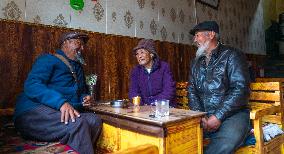
(240405) -- LHASA, April 5, 2024 (Xinhua) -- Kelsang Yudron (C) chats with her friends at a tea house in Lhasa, southwest China's Xizang Autonomous Region, April 3, 2024. Kelsang Yudron was born in 1947 in what is now Lhunzhub County, located in Lhasa City. Her family of eight lived in a cramped mud house of around 30 square meters. With no decent furniture, they slept on a humble bed made of mud bricks and covered with thick hays and blankets. They toiled from dawn till midnight, working in the fields and tending to livestock for their feudal lords. Hunger and discomfort plagued them at night. Hard labor and poor nutrition often led to illness for many serfs. In 1959, the democratic reform in Xizang liberated around one million serfs, including Kelsang Yudron's family. In 1960, she seized the opportunity to study nursing in Xianyang, northwest China's Shaanxi Province. Having completed her education in six years, she returned to her hometown afterward and dedicated over three decades to saving lives. Upo

  •  
(InXizang)CHINA-XIZANG-FORMER SERF-NEW LIFE-KELSANG YUDRON (CN)

(InXizang)CHINA-XIZANG-FORMER SERF-NEW LIFE-KELSANG YUDRON (CN)

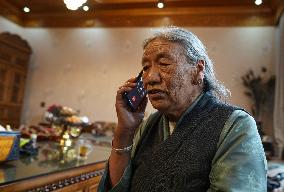
(240405) -- LHASA, April 5, 2024 (Xinhua) -- Kelsang Yudron makes a phone call at home in Lhasa, southwest China's Xizang Autonomous Region, April 3, 2024. Kelsang Yudron was born in 1947 in what is now Lhunzhub County, located in Lhasa City. Her family of eight lived in a cramped mud house of around 30 square meters. With no decent furniture, they slept on a humble bed made of mud bricks and covered with thick hays and blankets. They toiled from dawn till midnight, working in the fields and tending to livestock for their feudal lords. Hunger and discomfort plagued them at night. Hard labor and poor nutrition often led to illness for many serfs. In 1959, the democratic reform in Xizang liberated around one million serfs, including Kelsang Yudron's family. In 1960, she seized the opportunity to study nursing in Xianyang, northwest China's Shaanxi Province. Having completed her education in six years, she returned to her hometown afterward and dedicated over three decades to saving lives. Upon retirement, K

  •  
(InXizang)CHINA-XIZANG-FORMER SERF-NEW LIFE-KELSANG YUDRON (CN)

(InXizang)CHINA-XIZANG-FORMER SERF-NEW LIFE-KELSANG YUDRON (CN)

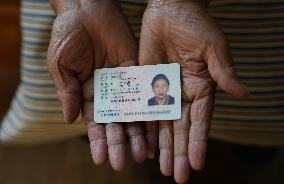
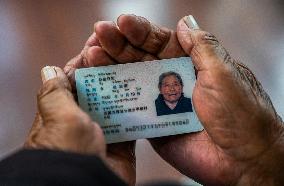
(240405) -- LHASA, April 5, 2024 (Xinhua) -- Kelsang Yudron presents her ID card in Lhasa, southwest China's Xizang Autonomous Region, April 3, 2024. Kelsang Yudron was born in 1947 in what is now Lhunzhub County, located in Lhasa City. Her family of eight lived in a cramped mud house of around 30 square meters. With no decent furniture, they slept on a humble bed made of mud bricks and covered with thick hays and blankets. They toiled from dawn till midnight, working in the fields and tending to livestock for their feudal lords. Hunger and discomfort plagued them at night. Hard labor and poor nutrition often led to illness for many serfs. In 1959, the democratic reform in Xizang liberated around one million serfs, including Kelsang Yudron's family. In 1960, she seized the opportunity to study nursing in Xianyang, northwest China's Shaanxi Province. Having completed her education in six years, she returned to her hometown afterward and dedicated over three decades to saving lives. Upon retirement, Kelsang

  •  
(InXizang)CHINA-XIZANG-FORMER SERF-NEW LIFE-KELSANG YUDRON (CN)

(InXizang)CHINA-XIZANG-FORMER SERF-NEW LIFE-KELSANG YUDRON (CN)

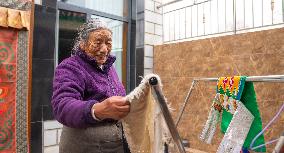
(240405) -- LHASA, April 5, 2024 (Xinhua) -- Kelsang Yudron airs clothes at home in Lhasa, southwest China's Xizang Autonomous Region, April 3, 2024. Kelsang Yudron was born in 1947 in what is now Lhunzhub County, located in Lhasa City. Her family of eight lived in a cramped mud house of around 30 square meters. With no decent furniture, they slept on a humble bed made of mud bricks and covered with thick hays and blankets. They toiled from dawn till midnight, working in the fields and tending to livestock for their feudal lords. Hunger and discomfort plagued them at night. Hard labor and poor nutrition often led to illness for many serfs. In 1959, the democratic reform in Xizang liberated around one million serfs, including Kelsang Yudron's family. In 1960, she seized the opportunity to study nursing in Xianyang, northwest China's Shaanxi Province. Having completed her education in six years, she returned to her hometown afterward and dedicated over three decades to saving lives. Upon retirement, Kelsang

  •  
(InXizang)CHINA-XIZANG-FORMER SERF-NEW LIFE-KELSANG YUDRON (CN)

(InXizang)CHINA-XIZANG-FORMER SERF-NEW LIFE-KELSANG YUDRON (CN)

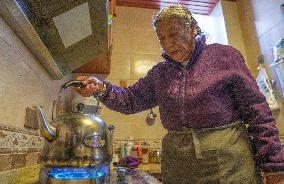
(240405) -- LHASA, April 5, 2024 (Xinhua) -- Kelsang Yudron boils some water at home in Lhasa, southwest China's Xizang Autonomous Region, April 3, 2024. Kelsang Yudron was born in 1947 in what is now Lhunzhub County, located in Lhasa City. Her family of eight lived in a cramped mud house of around 30 square meters. With no decent furniture, they slept on a humble bed made of mud bricks and covered with thick hays and blankets. They toiled from dawn till midnight, working in the fields and tending to livestock for their feudal lords. Hunger and discomfort plagued them at night. Hard labor and poor nutrition often led to illness for many serfs. In 1959, the democratic reform in Xizang liberated around one million serfs, including Kelsang Yudron's family. In 1960, she seized the opportunity to study nursing in Xianyang, northwest China's Shaanxi Province. Having completed her education in six years, she returned to her hometown afterward and dedicated over three decades to saving lives. Upon retirement, Kel

  •  
(InXizang)CHINA-XIZANG-FORMER SERF-NEW LIFE-KELSANG YUDRON (CN)

(InXizang)CHINA-XIZANG-FORMER SERF-NEW LIFE-KELSANG YUDRON (CN)

(240405) -- LHASA, April 5, 2024 (Xinhua) -- This photo taken on April 3, 2024 shows a portrait of Kelsang Yudron in Lhasa, southwest China's Xizang Autonomous Region. Kelsang Yudron was born in 1947 in what is now Lhunzhub County, located in Lhasa City. Her family of eight lived in a cramped mud house of around 30 square meters. With no decent furniture, they slept on a humble bed made of mud bricks and covered with thick hays and blankets. They toiled from dawn till midnight, working in the fields and tending to livestock for their feudal lords. Hunger and discomfort plagued them at night. Hard labor and poor nutrition often led to illness for many serfs. In 1959, the democratic reform in Xizang liberated around one million serfs, including Kelsang Yudron's family. In 1960, she seized the opportunity to study nursing in Xianyang, northwest China's Shaanxi Province. Having completed her education in six years, she returned to her hometown afterward and dedicated over three decades to saving lives. Upon r

  •  
(InXizang)CHINA-XIZANG-FORMER SERF-NEW LIFE-LOZANG (CN)

(InXizang)CHINA-XIZANG-FORMER SERF-NEW LIFE-LOZANG (CN)

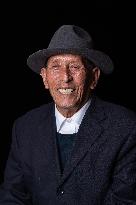
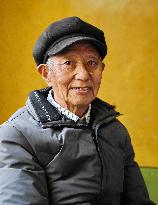
(240404) -- LHASA, April 4, 2024 (Xinhua) -- Lozang is pictured at his house in Kundeling Street, Chengguan District of Lhasa, southwest China's Xizang Autonomous Region, April 2, 2024. Born in 1939, Lozang is a resident of Kundeling Street of Chengguan District in Lhasa. Before the democratic reform, Lozang and his family were serfs, working for Kundeling Monastery. During his childhood, Lozang worked as a muleteer and was obliged to transport supplies, only receiving meager sustenance in return. In March 1959, people in Xizang launched the democratic reform that ended the region's feudal serfdom. Lozang was freed and allocated accommodations. In 1960, he was appointed head of the residents' committee in his community, and elected as a deputy to the National People's Congress. Now retired, Lozang lives with his family in a three-story house. His eldest and second daughters run a tea shop in downtown Lhasa, and his younger daughter works in a bank. Lozang said he was very happy to take care of h

  •  
(InXizang)CHINA-XIZANG-FORMER SERF-NEW LIFE-LOZANG (CN)

(InXizang)CHINA-XIZANG-FORMER SERF-NEW LIFE-LOZANG (CN)

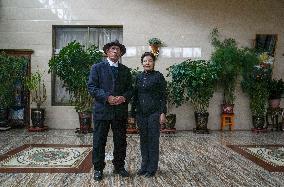
(240404) -- LHASA, April 4, 2024 (Xinhua) -- Lozang poses for a photo with his wife at his house in Kundeling Street, Chengguan District of Lhasa, southwest China's Xizang Autonomous Region, April 2, 2024. Born in 1939, Lozang is a resident of Kundeling Street of Chengguan District in Lhasa. Before the democratic reform, Lozang and his family were serfs, working for Kundeling Monastery. During his childhood, Lozang worked as a muleteer and was obliged to transport supplies, only receiving meager sustenance in return. In March 1959, people in Xizang launched the democratic reform that ended the region's feudal serfdom. Lozang was freed and allocated accommodations. In 1960, he was appointed head of the residents' committee in his community, and elected as a deputy to the National People's Congress. Now retired, Lozang lives with his family in a three-story house. His eldest and second daughters run a tea shop in downtown Lhasa, and his younger daughter works in a bank. Lozang said he was very hap

  •  
(InXizang)CHINA-XIZANG-FORMER SERF-NEW LIFE-LOZANG (CN)

(InXizang)CHINA-XIZANG-FORMER SERF-NEW LIFE-LOZANG (CN)

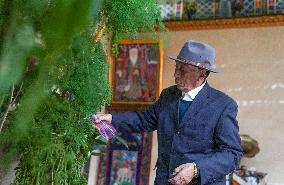
(240404) -- LHASA, April 4, 2024 (Xinhua) -- Lozang waters plants at his house in Kundeling Street, Chengguan District of Lhasa, southwest China's Xizang Autonomous Region, April 2, 2024. Born in 1939, Lozang is a resident of Kundeling Street of Chengguan District in Lhasa. Before the democratic reform, Lozang and his family were serfs, working for Kundeling Monastery. During his childhood, Lozang worked as a muleteer and was obliged to transport supplies, only receiving meager sustenance in return. In March 1959, people in Xizang launched the democratic reform that ended the region's feudal serfdom. Lozang was freed and allocated accommodations. In 1960, he was appointed head of the residents' committee in his community, and elected as a deputy to the National People's Congress. Now retired, Lozang lives with his family in a three-story house. His eldest and second daughters run a tea shop in downtown Lhasa, and his younger daughter works in a bank. Lozang said he was very happy to take care of

  •  
(InXizang)CHINA-XIZANG-FORMER SERF-NEW LIFE-LOZANG (CN)

(InXizang)CHINA-XIZANG-FORMER SERF-NEW LIFE-LOZANG (CN)

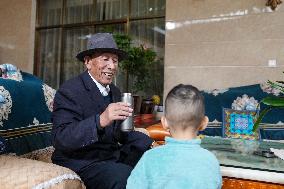
(240404) -- LHASA, April 4, 2024 (Xinhua) -- Lozang plays with his grandchild at his house in Kundeling Street, Chengguan District of Lhasa, southwest China's Xizang Autonomous Region, April 2, 2024. Born in 1939, Lozang is a resident of Kundeling Street of Chengguan District in Lhasa. Before the democratic reform, Lozang and his family were serfs, working for Kundeling Monastery. During his childhood, Lozang worked as a muleteer and was obliged to transport supplies, only receiving meager sustenance in return. In March 1959, people in Xizang launched the democratic reform that ended the region's feudal serfdom. Lozang was freed and allocated accommodations. In 1960, he was appointed head of the residents' committee in his community, and elected as a deputy to the National People's Congress. Now retired, Lozang lives with his family in a three-story house. His eldest and second daughters run a tea shop in downtown Lhasa, and his younger daughter works in a bank. Lozang said he was very happy to

  •  
(InXizang)CHINA-XIZANG-FORMER SERF-NEW LIFE-LOZANG (CN)

(InXizang)CHINA-XIZANG-FORMER SERF-NEW LIFE-LOZANG (CN)

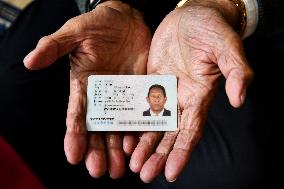
(240404) -- LHASA, April 4, 2024 (Xinhua) -- Lozang presents his ID card in Lhasa, southwest China's Xizang Autonomous Region, Dec. 7, 2021. Born in 1939, Lozang is a resident of Kundeling Street of Chengguan District in Lhasa. Before the democratic reform, Lozang and his family were serfs, working for Kundeling Monastery. During his childhood, Lozang worked as a muleteer and was obliged to transport supplies, only receiving meager sustenance in return. In March 1959, people in Xizang launched the democratic reform that ended the region's feudal serfdom. Lozang was freed and allocated accommodations. In 1960, he was appointed head of the residents' committee in his community, and elected as a deputy to the National People's Congress. Now retired, Lozang lives with his family in a three-story house. His eldest and second daughters run a tea shop in downtown Lhasa, and his younger daughter works in a bank. Lozang said he was very happy to take care of his grandchildren at home and exercise occasio

  •  
(InXizang)CHINA-XIZANG-FORMER SERF-NEW LIFE-LOZANG (CN)

(InXizang)CHINA-XIZANG-FORMER SERF-NEW LIFE-LOZANG (CN)

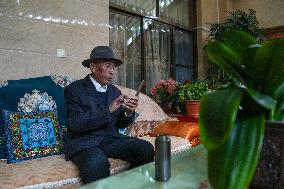
(240404) -- LHASA, April 4, 2024 (Xinhua) -- Lozang uses a mobile phone at his house in Kundeling Street, Chengguan District of Lhasa, southwest China's Xizang Autonomous Region, April 2, 2024. Born in 1939, Lozang is a resident of Kundeling Street of Chengguan District in Lhasa. Before the democratic reform, Lozang and his family were serfs, working for Kundeling Monastery. During his childhood, Lozang worked as a muleteer and was obliged to transport supplies, only receiving meager sustenance in return. In March 1959, people in Xizang launched the democratic reform that ended the region's feudal serfdom. Lozang was freed and allocated accommodations. In 1960, he was appointed head of the residents' committee in his community, and elected as a deputy to the National People's Congress. Now retired, Lozang lives with his family in a three-story house. His eldest and second daughters run a tea shop in downtown Lhasa, and his younger daughter works in a bank. Lozang said he was very happy to take c

  •  
XINHUA PHOTOS OF THE DAY

XINHUA PHOTOS OF THE DAY

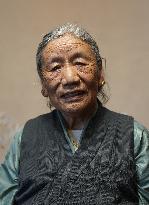
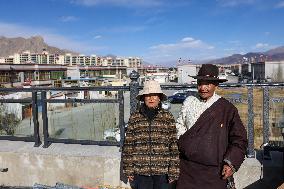
(240404) -- BEIJING, April 4, 2024 (Xinhua) -- This photo taken on March 27, 2024 shows a portrait of Lozang Gonpo who had been a serf before the democratic reform that ended feudal serfdom in Xizang in 1959, in Lhasa, southwest China's Xizang Autonomous Region. (Xinhua/Zhang Rufeng)

  •  
(InXizang)CHINA-XIZANG-FORMER SERF-NEW LIFE-YESHE SAMDRUP (CN)

(InXizang)CHINA-XIZANG-FORMER SERF-NEW LIFE-YESHE SAMDRUP (CN)

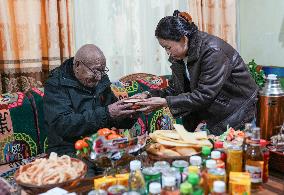
(240402) -- LHASA, April 2, 2024 (Xinhua) -- Yeshe Samdrup's daughter-in-law serves tea to him in Doilungdeqen District in Lhasa, southwest China's Xizang Autonomous Region, March 13, 2024. Yeshe Samdrup was born in 1936. When he recalls his childhood memories, he remembers the experience as he collected the dry dung fuel for the serf owner and got only a little bit of food as payment. It was almost impossible to have meat as food at that time. "As the serf owner throw some bones, we have to fight with dogs for the marrow inside the bones," according to Yeshe, "we work as men at daytime and guard the house as dogs at nighttime." In March 1959, people in Xizang launched the democratic reform that ended the region's feudal serfdom. This changed Yeshe's life from living like a "talking animal" to being a real human. Thanks to the democratic reform, a total of two hectares of land, together with the house, cattle and sheep, were assigned to Yeshe's family. Today, there are 30 members of four generations in Yeshe

  •  
(InXizang)CHINA-XIZANG-FORMER SERF-NEW LIFE-YESHE SAMDRUP (CN)

(InXizang)CHINA-XIZANG-FORMER SERF-NEW LIFE-YESHE SAMDRUP (CN)

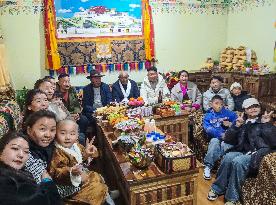
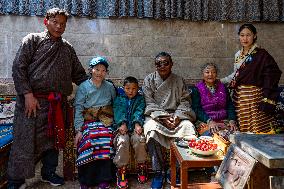
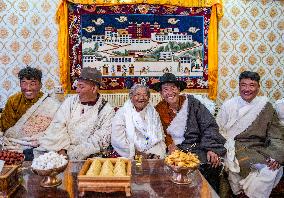
(240402) -- LHASA, April 2, 2024 (Xinhua) -- This file photo taken in 2023 shows Yeshe Samdrup posing for a photo with his family members during the Tibetan New Year in Doilungdeqen District in Lhasa, southwest China's Xizang Autonomous Region. Yeshe Samdrup was born in 1936. When he recalls his childhood memories, he remembers the experience as he collected the dry dung fuel for the serf owner and got only a little bit of food as payment. It was almost impossible to have meat as food at that time. "As the serf owner throw some bones, we have to fight with dogs for the marrow inside the bones," according to Yeshe, "we work as men at daytime and guard the house as dogs at nighttime." In March 1959, people in Xizang launched the democratic reform that ended the region's feudal serfdom. This changed Yeshe's life from living like a "talking animal" to being a real human. Thanks to the democratic reform, a total of two hectares of land, together with the house, cattle and sheep, were assigned to Yeshe's family. T

  •  
(InXizang)CHINA-XIZANG-FORMER SERF-NEW LIFE-YESHE SAMDRUP (CN)

(InXizang)CHINA-XIZANG-FORMER SERF-NEW LIFE-YESHE SAMDRUP (CN)

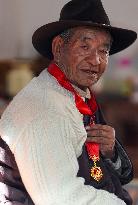
(240402) -- LHASA, April 2, 2024 (Xinhua) -- Yeshe Samdrup is seen in Doilungdeqen District in Lhasa, southwest China's Xizang Autonomous Region, March 13, 2024. Yeshe Samdrup was born in 1936. When he recalls his childhood memories, he remembers the experience as he collected the dry dung fuel for the serf owner and got only a little bit of food as payment. It was almost impossible to have meat as food at that time. "As the serf owner throw some bones, we have to fight with dogs for the marrow inside the bones," according to Yeshe, "we work as men at daytime and guard the house as dogs at nighttime." In March 1959, people in Xizang launched the democratic reform that ended the region's feudal serfdom. This changed Yeshe's life from living like a "talking animal" to being a real human. Thanks to the democratic reform, a total of two hectares of land, together with the house, cattle and sheep, were assigned to Yeshe's family. Today, there are 30 members of four generations in Yeshe's family. Yeshe has so many

  •  
(InXizang)CHINA-XIZANG-FORMER SERF-NEW LIFE-YESHE SAMDRUP (CN)

(InXizang)CHINA-XIZANG-FORMER SERF-NEW LIFE-YESHE SAMDRUP (CN)

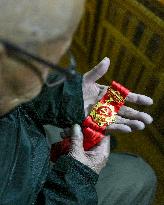
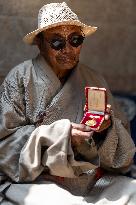
(240402) -- LHASA, April 2, 2024 (Xinhua) -- Yeshe Samdrup checks his commemorative medal awarded to Communist Party of China members after 50 years of Party membership in Doilungdeqen District in Lhasa, southwest China's Xizang Autonomous Region, March 13, 2024. Yeshe Samdrup was born in 1936. When he recalls his childhood memories, he remembers the experience as he collected the dry dung fuel for the serf owner and got only a little bit of food as payment. It was almost impossible to have meat as food at that time. "As the serf owner throw some bones, we have to fight with dogs for the marrow inside the bones," according to Yeshe, "we work as men at daytime and guard the house as dogs at nighttime." In March 1959, people in Xizang launched the democratic reform that ended the region's feudal serfdom. This changed Yeshe's life from living like a "talking animal" to being a real human. Thanks to the democratic reform, a total of two hectares of land, together with the house, cattle and sheep, were assigned t

  •  
(InXizang)CHINA-XIZANG-FORMER SERF-NEW LIFE-YESHE SAMDRUP (CN)

(InXizang)CHINA-XIZANG-FORMER SERF-NEW LIFE-YESHE SAMDRUP (CN)

(240402) -- LHASA, April 2, 2024 (Xinhua) -- Yeshe Samdrup drinks tea in Doilungdeqen District in Lhasa, southwest China's Xizang Autonomous Region, March 13, 2024. Yeshe Samdrup was born in 1936. When he recalls his childhood memories, he remembers the experience as he collected the dry dung fuel for the serf owner and got only a little bit of food as payment. It was almost impossible to have meat as food at that time. "As the serf owner throw some bones, we have to fight with dogs for the marrow inside the bones," according to Yeshe, "we work as men at daytime and guard the house as dogs at nighttime." In March 1959, people in Xizang launched the democratic reform that ended the region's feudal serfdom. This changed Yeshe's life from living like a "talking animal" to being a real human. Thanks to the democratic reform, a total of two hectares of land, together with the house, cattle and sheep, were assigned to Yeshe's family. Today, there are 30 members of four generations in Yeshe's family. Yeshe has so m

  •  
(InXizang)CHINA-XIZANG-FORMER SERF-NEW LIFE-YESHE SAMDRUP (CN)

(InXizang)CHINA-XIZANG-FORMER SERF-NEW LIFE-YESHE SAMDRUP (CN)

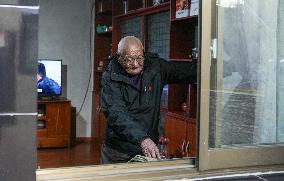
(240402) -- LHASA, April 2, 2024 (Xinhua) -- Yeshe Samdrup prepares to close the curtain and watch TV in Doilungdeqen District in Lhasa, southwest China's Xizang Autonomous Region, March 13, 2024. Yeshe Samdrup was born in 1936. When he recalls his childhood memories, he remembers the experience as he collected the dry dung fuel for the serf owner and got only a little bit of food as payment. It was almost impossible to have meat as food at that time. "As the serf owner throw some bones, we have to fight with dogs for the marrow inside the bones," according to Yeshe, "we work as men at daytime and guard the house as dogs at nighttime." In March 1959, people in Xizang launched the democratic reform that ended the region's feudal serfdom. This changed Yeshe's life from living like a "talking animal" to being a real human. Thanks to the democratic reform, a total of two hectares of land, together with the house, cattle and sheep, were assigned to Yeshe's family. Today, there are 30 members of four generations i

  •  
(InXizang)CHINA-XIZANG-FORMER SERF-NEW LIFE-PADMA (CN)

(InXizang)CHINA-XIZANG-FORMER SERF-NEW LIFE-PADMA (CN)

(240401) -- LHASA, April 1, 2024 (Xinhua) -- Padma (4th L) poses for a photo with his family at his residence in Shannan, southwest China's Xizang Autonomous Region, March 27, 2024. Padma was born into a herdsman family in 1942 in Xainza County in Nagqu City, southwest China's Xizang Autonomous Region. During his childhood, his family was obliged to herd over 1,000 sheep for aristocrats, only receiving meager sustenance in return. In March 1959, people in Xizang launched the democratic reform that ended the region's feudal serfdom. This pivotal moment allowed Padma to pursue a better life for himself and his community. Padma established a new settlement with his companions by the Garco Lake in the 1970s, and was awarded the title of "national model worker" in 1989. Padma now resides in the comfort of a two-story dwelling at the relocation site in Shannan City. (Xinhua/Jiang Fan)

  •  
(InXizang)CHINA-XIZANG-FORMER SERF-NEW LIFE-PADMA (CN)

(InXizang)CHINA-XIZANG-FORMER SERF-NEW LIFE-PADMA (CN)

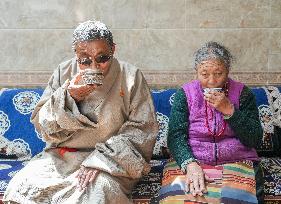
(240401) -- LHASA, April 1, 2024 (Xinhua) -- Padma and his wife enjoy butter tea at his residence in Shannan, southwest China's Xizang Autonomous Region, March 27, 2024. Padma was born into a herdsman family in 1942 in Xainza County in Nagqu City, southwest China's Xizang Autonomous Region. During his childhood, his family was obliged to herd over 1,000 sheep for aristocrats, only receiving meager sustenance in return. In March 1959, people in Xizang launched the democratic reform that ended the region's feudal serfdom. This pivotal moment allowed Padma to pursue a better life for himself and his community. Padma established a new settlement with his companions by the Garco Lake in the 1970s, and was awarded the title of "national model worker" in 1989. Padma now resides in the comfort of a two-story dwelling at the relocation site in Shannan City. (Xinhua/Ding Ting)

  •  
(InXizang)CHINA-XIZANG-FORMER SERF-NEW LIFE-PADMA (CN)

(InXizang)CHINA-XIZANG-FORMER SERF-NEW LIFE-PADMA (CN)

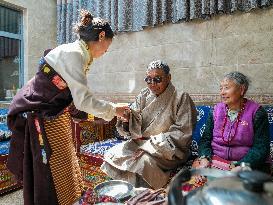
(240401) -- LHASA, April 1, 2024 (Xinhua) -- Padma's granddaughter (L) serves a cup of butter tea to Padma and his wife at his residence in Shannan, southwest China's Xizang Autonomous Region, March 27, 2024. Padma was born into a herdsman family in 1942 in Xainza County in Nagqu City, southwest China's Xizang Autonomous Region. During his childhood, his family was obliged to herd over 1,000 sheep for aristocrats, only receiving meager sustenance in return. In March 1959, people in Xizang launched the democratic reform that ended the region's feudal serfdom. This pivotal moment allowed Padma to pursue a better life for himself and his community. Padma established a new settlement with his companions by the Garco Lake in the 1970s, and was awarded the title of "national model worker" in 1989. Padma now resides in the comfort of a two-story dwelling at the relocation site in Shannan City. (Xinhua/Ding Ting)

  •  
(InXizang)CHINA-XIZANG-FORMER SERF-NEW LIFE-PADMA (CN)

(InXizang)CHINA-XIZANG-FORMER SERF-NEW LIFE-PADMA (CN)

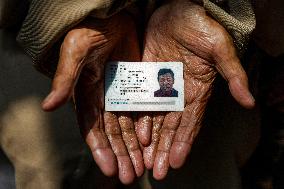
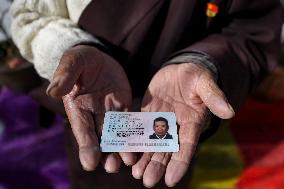
(240401) -- LHASA, April 1, 2024 (Xinhua) -- Padma presents his ID card in Shannan, southwest China's Xizang Autonomous Region, March 27, 2024. Padma was born into a herdsman family in 1942 in Xainza County in Nagqu City, southwest China's Xizang Autonomous Region. During his childhood, his family was obliged to herd over 1,000 sheep for aristocrats, only receiving meager sustenance in return. In March 1959, people in Xizang launched the democratic reform that ended the region's feudal serfdom. This pivotal moment allowed Padma to pursue a better life for himself and his community. Padma established a new settlement with his companions by the Garco Lake in the 1970s, and was awarded the title of "national model worker" in 1989. Padma now resides in the comfort of a two-story dwelling at the relocation site in Shannan City. (Xinhua/Jiang Fan)

  •  
(InXizang)CHINA-XIZANG-FORMER SERF-NEW LIFE-PADMA (CN)

(InXizang)CHINA-XIZANG-FORMER SERF-NEW LIFE-PADMA (CN)

(240401) -- LHASA, April 1, 2024 (Xinhua) -- Padma is pictured in Shannan, southwest China's Xizang Autonomous Region, March 27, 2024. Padma was born into a herdsman family in 1942 in Xainza County in Nagqu City, southwest China's Xizang Autonomous Region. During his childhood, his family was obliged to herd over 1,000 sheep for aristocrats, only receiving meager sustenance in return. In March 1959, people in Xizang launched the democratic reform that ended the region's feudal serfdom. This pivotal moment allowed Padma to pursue a better life for himself and his community. Padma established a new settlement with his companions by the Garco Lake in the 1970s, and was awarded the title of "national model worker" in 1989. Padma now resides in the comfort of a two-story dwelling at the relocation site in Shannan City. (Xinhua/Jiang Fan)

  •  
(InXizang)CHINA-XIZANG-FORMER SERF-NEW LIFE-PADMA (CN)

(InXizang)CHINA-XIZANG-FORMER SERF-NEW LIFE-PADMA (CN)

(240401) -- LHASA, April 1, 2024 (Xinhua) -- Padma presents the "national model worker" medal in Shannan, southwest China's Xizang Autonomous Region, March 27, 2024. Padma was born into a herdsman family in 1942 in Xainza County in Nagqu City, southwest China's Xizang Autonomous Region. During his childhood, his family was obliged to herd over 1,000 sheep for aristocrats, only receiving meager sustenance in return. In March 1959, people in Xizang launched the democratic reform that ended the region's feudal serfdom. This pivotal moment allowed Padma to pursue a better life for himself and his community. Padma established a new settlement with his companions by the Garco Lake in the 1970s, and was awarded the title of "national model worker" in 1989. Padma now resides in the comfort of a two-story dwelling at the relocation site in Shannan City. (Xinhua/Jiang Fan)

  •  
(InXizang)CHINA-XIZANG-FORMER SERF-NEW LIFE-DRAKPA WANGDEN (CN)

(InXizang)CHINA-XIZANG-FORMER SERF-NEW LIFE-DRAKPA WANGDEN (CN)

(240330) -- LHASA, March 30, 2024 (Xinhua) -- Drakpa Wangden poses for a photo with his daughter at his home at Yabda Village of Doilungdeqen District in Lhasa, southwest China's Xizang Autonomous Region, March 11, 2024. Born in 1944, Drakpa Wangden lives now in Doilungdeqen District of Lhasa, southwest China's Xizang Autonomous Region. Before the democratic reform, Drakpa Wangden and his family were serfs, working on manors affiliated with two monasteries in present-day Lhasa. For his family, each spring meant borrowing seeds from their masters, however, they could collect nothing during the autumn harvest. At that time, the sustenance of Drakpa Wangden's family of nine was a meager bowl of tsampa, a traditional Tibetan staple made from barley flour, no larger than the palm of a child's hand. In March 1959, people in Xizang launched a democratic reform that ended the region's feudal serfdom and Drakpa Wangden's family was freed along with about a million serfs. Under the systems of the people's con

  •  
(InXizang)CHINA-XIZANG-FORMER SERF-NEW LIFE-DRAKPA WANGDEN (CN)

(InXizang)CHINA-XIZANG-FORMER SERF-NEW LIFE-DRAKPA WANGDEN (CN)

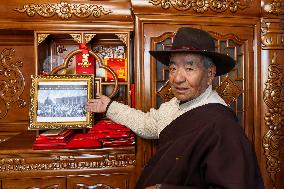
(240330) -- LHASA, March 30, 2024 (Xinhua) -- Drakpa Wangden demonstrates photos and certificates of honor he won in Lhasa, southwest China's Xizang Autonomous Region, March 11, 2024. Born in 1944, Drakpa Wangden lives now in Doilungdeqen District of Lhasa, southwest China's Xizang Autonomous Region. Before the democratic reform, Drakpa Wangden and his family were serfs, working on manors affiliated with two monasteries in present-day Lhasa. For his family, each spring meant borrowing seeds from their masters, however, they could collect nothing during the autumn harvest. At that time, the sustenance of Drakpa Wangden's family of nine was a meager bowl of tsampa, a traditional Tibetan staple made from barley flour, no larger than the palm of a child's hand. In March 1959, people in Xizang launched a democratic reform that ended the region's feudal serfdom and Drakpa Wangden's family was freed along with about a million serfs. Under the systems of the people's congresses and regional ethnic autonomy

  •  
(InXizang)CHINA-XIZANG-FORMER SERF-NEW LIFE-DRAKPA WANGDEN (CN)

(InXizang)CHINA-XIZANG-FORMER SERF-NEW LIFE-DRAKPA WANGDEN (CN)

(240330) -- LHASA, March 30, 2024 (Xinhua) -- This photo taken on March 11, 2024 shows the ID card of Drakpa Wangden. Born in 1944, Drakpa Wangden lives now in Doilungdeqen District of Lhasa, southwest China's Xizang Autonomous Region. Before the democratic reform, Drakpa Wangden and his family were serfs, working on manors affiliated with two monasteries in present-day Lhasa. For his family, each spring meant borrowing seeds from their masters, however, they could collect nothing during the autumn harvest. At that time, the sustenance of Drakpa Wangden's family of nine was a meager bowl of tsampa, a traditional Tibetan staple made from barley flour, no larger than the palm of a child's hand. In March 1959, people in Xizang launched a democratic reform that ended the region's feudal serfdom and Drakpa Wangden's family was freed along with about a million serfs. Under the systems of the people's congresses and regional ethnic autonomy that were put in place after the reform, former serfs and slaves w

  •  
(InXizang)CHINA-XIZANG-FORMER SERF-NEW LIFE-DRAKPA WANGDEN (CN)

(InXizang)CHINA-XIZANG-FORMER SERF-NEW LIFE-DRAKPA WANGDEN (CN)

(240330) -- LHASA, March 30, 2024 (Xinhua) -- Drakpa Wangden walks into his home at Yabda Village of Doilungdeqen District in Lhasa, southwest China's Xizang Autonomous Region, March 11, 2024. Born in 1944, Drakpa Wangden lives now in Doilungdeqen District of Lhasa, southwest China's Xizang Autonomous Region. Before the democratic reform, Drakpa Wangden and his family were serfs, working on manors affiliated with two monasteries in present-day Lhasa. For his family, each spring meant borrowing seeds from their masters, however, they could collect nothing during the autumn harvest. At that time, the sustenance of Drakpa Wangden's family of nine was a meager bowl of tsampa, a traditional Tibetan staple made from barley flour, no larger than the palm of a child's hand. In March 1959, people in Xizang launched a democratic reform that ended the region's feudal serfdom and Drakpa Wangden's family was freed along with about a million serfs. Under the systems of the people's congresses and regional ethnic

  •  
(InXizang)CHINA-XIZANG-FORMER SERF-NEW LIFE-DRAKPA WANGDEN (CN)

(InXizang)CHINA-XIZANG-FORMER SERF-NEW LIFE-DRAKPA WANGDEN (CN)

(240330) -- LHASA, March 30, 2024 (Xinhua) -- The 80-year-old Drakpa Wangden shows his commemorative medal awarded to the Communist Party of China (CPC) members after five decades of Party membership in Lhasa, southwest China's Xizang Autonomous Region, March 11, 2024. Born in 1944, Drakpa Wangden lives now in Doilungdeqen District of Lhasa, southwest China's Xizang Autonomous Region. Before the democratic reform, Drakpa Wangden and his family were serfs, working on manors affiliated with two monasteries in present-day Lhasa. For his family, each spring meant borrowing seeds from their masters, however, they could collect nothing during the autumn harvest. At that time, the sustenance of Drakpa Wangden's family of nine was a meager bowl of tsampa, a traditional Tibetan staple made from barley flour, no larger than the palm of a child's hand. In March 1959, people in Xizang launched a democratic reform that ended the region's feudal serfdom and Drakpa Wangden's family was freed along with about a milli

  •  
(InXizang)CHINA-XIZANG-FORMER SERF-NEW LIFE-DRAKPA WANGDEN (CN)

(InXizang)CHINA-XIZANG-FORMER SERF-NEW LIFE-DRAKPA WANGDEN (CN)

(240330) -- LHASA, March 30, 2024 (Xinhua) -- Drakpa Wangden prunes a potted flower outside his home at Yabda Village of Doilungdeqen District in Lhasa, southwest China's Xizang Autonomous Region, March 11, 2024. Born in 1944, Drakpa Wangden lives now in Doilungdeqen District of Lhasa, southwest China's Xizang Autonomous Region. Before the democratic reform, Drakpa Wangden and his family were serfs, working on manors affiliated with two monasteries in present-day Lhasa. For his family, each spring meant borrowing seeds from their masters, however, they could collect nothing during the autumn harvest. At that time, the sustenance of Drakpa Wangden's family of nine was a meager bowl of tsampa, a traditional Tibetan staple made from barley flour, no larger than the palm of a child's hand. In March 1959, people in Xizang launched a democratic reform that ended the region's feudal serfdom and Drakpa Wangden's family was freed along with about a million serfs. Under the systems of the people's congresses

  •  
(InXizang)CHINA-XIZANG-FORMER SERF-NEW LIFE-SICHOD WANGMO (CN)

(InXizang)CHINA-XIZANG-FORMER SERF-NEW LIFE-SICHOD WANGMO (CN)

(240329) -- LHASA, March 29, 2024 (Xinhua) -- Sichod Wangmo (C) celebrates the Tibetan New Year with her family in Jiagen Village in Damxung County of Lhasa, southwest China's Xizang Autonomous Region, Feb. 10, 2024. Sichod Wangmo, 85, is a resident of Jiagen Village in Damxung County of Lhasa, southwest China's Xizang Autonomous Region. In old Xizang, Sichod Wangmo was a serf. Her mother passed away when she was very young. Young Sichod Wangmo made a living with her grandma by pasturing for a serf owner. They didn't have their own cattle and sheep, but they still needed to pay various taxes which were too high for them to afford. In March 1959, people in Xizang launched the democratic reform that ended the region's feudal serfdom. Sichod Wangmo felt her life was turning on a new page since she was allocated five yaks by the government. Now, Sichod Wangmo's family has grown into a big one with four generations of over 100 members. This year, Sichod Wangmo's family members came together for a reunio

  •  
(InXizang)CHINA-XIZANG-FORMER SERF-NEW LIFE-SICHOD WANGMO (CN)

(InXizang)CHINA-XIZANG-FORMER SERF-NEW LIFE-SICHOD WANGMO (CN)

(240329) -- LHASA, March 29, 2024 (Xinhua) -- This photo taken on March 13, 2024 shows a portrait of Sichod Wangmo. Sichod Wangmo, 85, is a resident of Jiagen Village in Damxung County of Lhasa, southwest China's Xizang Autonomous Region. In old Xizang, Sichod Wangmo was a serf. Her mother passed away when she was very young. Young Sichod Wangmo made a living with her grandma by pasturing for a serf owner. They didn't have their own cattle and sheep, but they still needed to pay various taxes which were too high for them to afford. In March 1959, people in Xizang launched the democratic reform that ended the region's feudal serfdom. Sichod Wangmo felt her life was turning on a new page since she was allocated five yaks by the government. Now, Sichod Wangmo's family has grown into a big one with four generations of over 100 members. This year, Sichod Wangmo's family members came together for a reunion to celebrate the Tibetan New Year in Jiagen Village. Surrounded by her loved ones, Sichod Wangmo ch

  •  
(InXizang)CHINA-XIZANG-FORMER SERF-NEW LIFE-SICHOD WANGMO (CN)

(InXizang)CHINA-XIZANG-FORMER SERF-NEW LIFE-SICHOD WANGMO (CN)

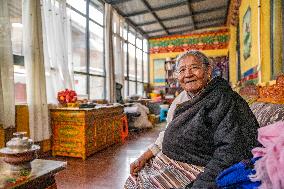
(240329) -- LHASA, March 29, 2024 (Xinhua) -- Sichod Wangmo is pictured at her home in Jiagen Village in Damxung County of Lhasa, southwest China's Xizang Autonomous Region, March 13, 2024. Sichod Wangmo, 85, is a resident of Jiagen Village in Damxung County of Lhasa, southwest China's Xizang Autonomous Region. In old Xizang, Sichod Wangmo was a serf. Her mother passed away when she was very young. Young Sichod Wangmo made a living with her grandma by pasturing for a serf owner. They didn't have their own cattle and sheep, but they still needed to pay various taxes which were too high for them to afford. In March 1959, people in Xizang launched the democratic reform that ended the region's feudal serfdom. Sichod Wangmo felt her life was turning on a new page since she was allocated five yaks by the government. Now, Sichod Wangmo's family has grown into a big one with four generations of over 100 members. This year, Sichod Wangmo's family members came together for a reunion to celebrate the Tibetan

  •  
(InXizang)CHINA-XIZANG-FORMER SERF-NEW LIFE-SICHOD WANGMO (CN)

(InXizang)CHINA-XIZANG-FORMER SERF-NEW LIFE-SICHOD WANGMO (CN)

(240329) -- LHASA, March 29, 2024 (Xinhua) -- Sichod Wangmo (L) and a family member greet each other in Jiagen Village in Damxung County of Lhasa, southwest China's Xizang Autonomous Region, Feb. 10, 2024. Sichod Wangmo, 85, is a resident of Jiagen Village in Damxung County of Lhasa, southwest China's Xizang Autonomous Region. In old Xizang, Sichod Wangmo was a serf. Her mother passed away when she was very young. Young Sichod Wangmo made a living with her grandma by pasturing for a serf owner. They didn't have their own cattle and sheep, but they still needed to pay various taxes which were too high for them to afford. In March 1959, people in Xizang launched the democratic reform that ended the region's feudal serfdom. Sichod Wangmo felt her life was turning on a new page since she was allocated five yaks by the government. Now, Sichod Wangmo's family has grown into a big one with four generations of over 100 members. This year, Sichod Wangmo's family members came together for a reunion to celebr

  •  
(InXizang)CHINA-XIZANG-FORMER SERF-NEW LIFE-SICHOD WANGMO (CN)

(InXizang)CHINA-XIZANG-FORMER SERF-NEW LIFE-SICHOD WANGMO (CN)

(240329) -- LHASA, March 29, 2024 (Xinhua) -- This photo taken on March 13, 2024 shows the ID card of Sichod Wangmo. Sichod Wangmo, 85, is a resident of Jiagen Village in Damxung County of Lhasa, southwest China's Xizang Autonomous Region. In old Xizang, Sichod Wangmo was a serf. Her mother passed away when she was very young. Young Sichod Wangmo made a living with her grandma by pasturing for a serf owner. They didn't have their own cattle and sheep, but they still needed to pay various taxes which were too high for them to afford. In March 1959, people in Xizang launched the democratic reform that ended the region's feudal serfdom. Sichod Wangmo felt her life was turning on a new page since she was allocated five yaks by the government. Now, Sichod Wangmo's family has grown into a big one with four generations of over 100 members. This year, Sichod Wangmo's family members came together for a reunion to celebrate the Tibetan New Year in Jiagen Village. Surrounded by her loved ones, Sichod Wangmo c

  •  
(InXizang)CHINA-XIZANG-FORMER SERF-NEW LIFE-SICHOD WANGMO (CN)

(InXizang)CHINA-XIZANG-FORMER SERF-NEW LIFE-SICHOD WANGMO (CN)

(240329) -- LHASA, March 29, 2024 (Xinhua) -- Sichod Wangmo (C, front) poses for a group photo with her family in Jiagen Village in Damxung County of Lhasa, southwest China's Xizang Autonomous Region, Feb. 10, 2024. Sichod Wangmo, 85, is a resident of Jiagen Village in Damxung County of Lhasa, southwest China's Xizang Autonomous Region. In old Xizang, Sichod Wangmo was a serf. Her mother passed away when she was very young. Young Sichod Wangmo made a living with her grandma by pasturing for a serf owner. They didn't have their own cattle and sheep, but they still needed to pay various taxes which were too high for them to afford. In March 1959, people in Xizang launched the democratic reform that ended the region's feudal serfdom. Sichod Wangmo felt her life was turning on a new page since she was allocated five yaks by the government. Now, Sichod Wangmo's family has grown into a big one with four generations of over 100 members. This year, Sichod Wangmo's family members came together for a reunion

  •  
XINHUA-PICTURES OF THE YEAR 2023-CHINA NEWS

XINHUA-PICTURES OF THE YEAR 2023-CHINA NEWS

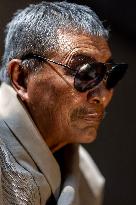
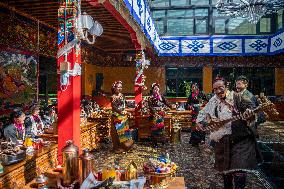
(240105) -- BEIJING, Jan. 5, 2024 (Xinhua) -- Children and grandchildren of Tseten celebrate a traditional festival at their home in Lhaze County, southwest China's Xizang Autonomous Region, Jan. 22, 2023. Born in 1943, Tseten was a "Tralpa" (serf) before the campaign of democratic reform in Xizang. In March 1959, democratic reform was launched in Xizang and feudal serfdom was finally abolished. Nowadays, 11 members of four generations of Tseten's family live in plenty in their newly-built two-story house. (Xinhua/Sun Fei)

  • Main
  • Top
  • Editorial
  • Creative
  • About Us
  • About ILG
  • Terms of use
  • Company
  • BEHIND
  • Price List
  • Single Plan
  • Monthly Plan
  • Services
  • Shooting
  • Rights Clearance
  • Support
  • FAQ
  • How To Buy
  • Contact Us
  • Become a Partner

© KYODO NEWS IMAGES INC

All Rights Reserved.

  • Editorial
  • Olympics
  • News
  • Sports
  • Japan
  • Tech
  • Royal
  • Disaster
  • NorthKorea
  • Old Japan
  • SNS
  • Creative
  • Food
  • Japan
  • Landscape
  • Animal
  • Popular
  • #Ukraine
  • #Thailand
  • #coronavirus
  • #N. Korea
  • #China
  • #Russia
  • #Ukraine
  • #Thailand
  • #coronavirus
  • #N. Korea
  • #China
  • #Russia
  • Food
  • Japan
  • Landscape
  • Animal
  • Olympics
  • News
  • Sports
  • Japan
  • Tech
  • Royal
  • Disaster
  • NorthKorea
  • Old Japan
  • SNS