•  
Murals of Okto-ri tomb in Nampho, N. Korea

Murals of Okto-ri tomb in Nampho, N. Korea

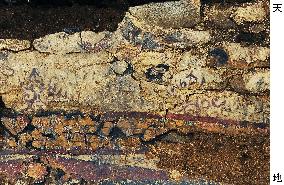
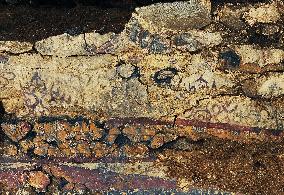
TOKYO, Japan - Photo taken in October 2011 shows murals on a stone chamber wall in the Okto-ri tomb, dating back to the late fourth century to the early fifth century during the Koguryo dynasty, in Nampho, North Korea. The paintings depict a beam (edged with red lines), flames above the beam and a foot of a black tortoise, one of ''Four Guardian Deities,'' above the flames.

  •  
Excavation of Koguryo tomb in Pyongyang

Excavation of Koguryo tomb in Pyongyang

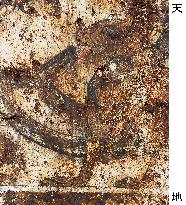
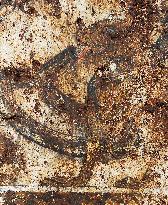
PYONGYANG, North Korea - Photo taken on Oct. 11, 2011, shows a black tortoise, one of the four guardian deities and the guardian of the north, painted on a stone chamber wall at the Kosan-dong No. 1 tomb, one of the Koguryo tombs in Pyongyang, North Korea, dating back to the early sixth century. The tomb was recently excavated by a team of Japanese and North Korean researchers after being first unearthed in 1936.

  •  
Excavation of Koguryo tomb in Pyongyang

Excavation of Koguryo tomb in Pyongyang

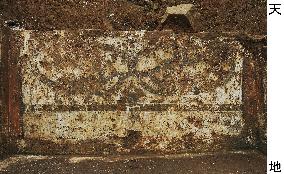
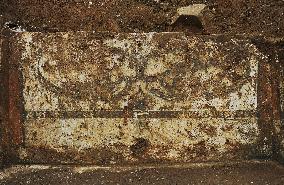
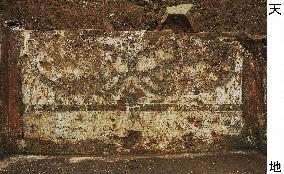
PYONGYANG, North Korea - Photo taken Oct. 9, 2011, shows a pair of black tortoises, one of the four guardian deities and the guardian of the north, painted on a stone chamber wall at the Kosan-dong No. 1 tomb, one of the Koguryo tombs in Pyongyang, North Korea. The tomb, dating back to the early sixth century during the Koguryo dynasty, was recently excavated by a team of Japanese and North Korean researchers after being first unearthed in 1936.

  •  
The Sanmon Gate at Sensoji Temple

The Sanmon Gate at Sensoji Temple

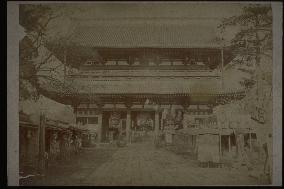
The sanmon (front gate) at Sensoji Temple was called Niomon because statues of the guardian deities Kongo Rikishi were installed on both the right and left (present-day Hozomon). Statues of Monju Bosatsu (Manjusri Bodhisattva) and Shiten (four angels) are installed on the second floor of the gate building. The plaque Sensoji is based on calligraphy by the head priest of the Tendai Sect, Ryosho Hoshin-o. This photograph was taken before brick buildings were erected in the Nakamise commercial area in 1885.==Date:unknown, Place:Tokyo, Photo:unknown, (Credit:Nagasaki University Library/Kyodo News Images) [Cabinet Number72‐123‐0]

  •  
Murals of Okto-ri tomb in Nampho, N. Korea

Murals of Okto-ri tomb in Nampho, N. Korea

TOKYO, Japan - Photo taken in October 2011 shows murals on a stone chamber wall in the Okto-ri tomb, dating back to the late fourth century to the early fifth century during the Koguryo dynasty, in Nampho, North Korea. The paintings depict a beam (edged with red lines), flames above the beam and a foot of a black tortoise, one of ''Four Guardian Deities,'' above the flames. (Kyodo)

  •  
Excavation of Koguryo tomb in Pyongyang

Excavation of Koguryo tomb in Pyongyang

PYONGYANG, North Korea - Photo taken Oct. 9, 2011, shows a pair of black tortoises, one of the four guardian deities and the guardian of the north, painted on a stone chamber wall at the Kosan-dong No. 1 tomb, one of the Koguryo tombs in Pyongyang, North Korea. The tomb, dating back to the early sixth century during the Koguryo dynasty, was recently excavated by a team of Japanese and North Korean researchers after being first unearthed in 1936. (Kyodo)

  •  
Excavation of Koguryo tomb in Pyongyang

Excavation of Koguryo tomb in Pyongyang

PYONGYANG, North Korea - Photo taken on Oct. 11, 2011, shows a black tortoise, one of the four guardian deities and the guardian of the north, painted on a stone chamber wall at the Kosan-dong No. 1 tomb, one of the Koguryo tombs in Pyongyang, North Korea, dating back to the early sixth century. The tomb was recently excavated by a team of Japanese and North Korean researchers after being first unearthed in 1936. (Kyodo)

  •  
Excavation of Koguryo tomb in Pyongyang

Excavation of Koguryo tomb in Pyongyang

PYONGYANG, North Korea - Photo taken Oct. 9, 2011, shows a pair of black tortoises, one of the four guardian deities and the guardian of the north, painted on a stone chamber wall at the Kosan-dong No. 1 tomb, one of the Koguryo tombs in Pyongyang, North Korea. The tomb, dating back to the early sixth century during the Koguryo dynasty, was recently excavated by a team of Japanese and North Korean researchers after being first unearthed in 1936. (Kyodo)

  • Main
  • Top
  • Editorial
  • Creative
  • About Us
  • About ILG
  • Terms of use
  • Company
  • BEHIND
  • Price List
  • Single Plan
  • Monthly Plan
  • Services
  • Shooting
  • Rights Clearance
  • Support
  • FAQ
  • How To Buy
  • Contact Us
  • Become a Partner

© KYODO NEWS IMAGES INC

All Rights Reserved.

  • Editorial
  • Olympics
  • News
  • Sports
  • Japan
  • Tech
  • Royal
  • Disaster
  • NorthKorea
  • Old Japan
  • SNS
  • Creative
  • Food
  • Japan
  • Landscape
  • Animal
  • Popular
  • #Ukraine
  • #China
  • #coronavirus
  • #N. Korea
  • #Thailand
  • #Russia
  • #Ukraine
  • #China
  • #coronavirus
  • #N. Korea
  • #Thailand
  • #Russia
  • Food
  • Japan
  • Landscape
  • Animal
  • Olympics
  • News
  • Sports
  • Japan
  • Tech
  • Royal
  • Disaster
  • NorthKorea
  • Old Japan
  • SNS