•  
Nomadic Life in Inner Mongolia's Horqin Grassland - China

Nomadic Life in Inner Mongolia's Horqin Grassland - China

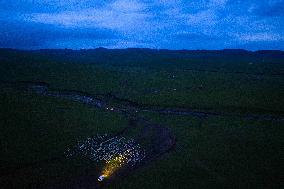
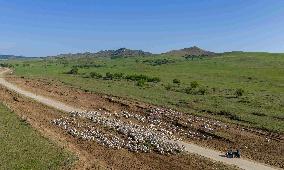
An aerial drone photo taken on June 14, 2025 shows herdsmen driving the livestock at night on the way to the summer campsite on Ar Horqin Grassland, Chifeng City of north China's Inner Mongolia Autonomous Region. Saintsogt, 55, a herdsman in Bayin-undur of Ar Horqin Banner, north China's Inner Mongolia Autonomous Region, is busy with the annual summer migration covering a distance of about 100 kilometers. For the past four decades, he has completed the migration every year. Saintsogt's pasture is a part of the Ar Horqin Grassland Nomadic System, which was listed as one of the Globally Important Agricultural Heritage Systems (GIAHS) sites by the United Nations Food and Agriculture Organization (FAO) on May 20, 2022. Herders here still keep the traditional nomadic customs today. "The travel time has been shortened to three days from eight," Saintsogt said. "The rain makes pasture grow better, and the livestock have enough forage." This year, herders from more than 1,200 households and 128,000 livestock in Bayin

  •  
Nomadic Life in Inner Mongolia's Horqin Grassland - China

Nomadic Life in Inner Mongolia's Horqin Grassland - China

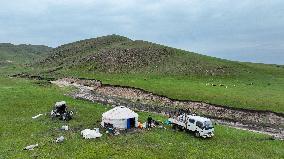
An aerial drone photo taken on June 15, 2025 shows a Mongolian yurt of Saintsogt at his summer campsite on Ar Horqin Grassland, Chifeng City of north China's Inner Mongolia Autonomous Region. Saintsogt, 55, a herdsman in Bayin-undur of Ar Horqin Banner, north China's Inner Mongolia Autonomous Region, is busy with the annual summer migration covering a distance of about 100 kilometers. For the past four decades, he has completed the migration every year. Saintsogt's pasture is a part of the Ar Horqin Grassland Nomadic System, which was listed as one of the Globally Important Agricultural Heritage Systems (GIAHS) sites by the United Nations Food and Agriculture Organization (FAO) on May 20, 2022. Herders here still keep the traditional nomadic customs today. "The travel time has been shortened to three days from eight," Saintsogt said. "The rain makes pasture grow better, and the livestock have enough forage." This year, herders from more than 1,200 households and 128,000 livestock in Bayin-undur joined the mig

  •  
Nomadic Life in Inner Mongolia's Horqin Grassland - China

Nomadic Life in Inner Mongolia's Horqin Grassland - China

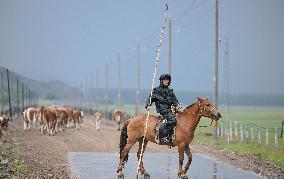
Saintsogt's son (2nd R) drives sheep in rain on his way to the summer campsite on Ar Horqin Grassland, Chifeng City of north China's Inner Mongolia Autonomous Region, June 13, 2025. Saintsogt, 55, a herdsman in Bayin-undur of Ar Horqin Banner, north China's Inner Mongolia Autonomous Region, is busy with the annual summer migration covering a distance of about 100 kilometers. For the past four decades, he has completed the migration every year. Saintsogt's pasture is a part of the Ar Horqin Grassland Nomadic System, which was listed as one of the Globally Important Agricultural Heritage Systems (GIAHS) sites by the United Nations Food and Agriculture Organization (FAO) on May 20, 2022. Herders here still keep the traditional nomadic customs today. "The travel time has been shortened to three days from eight," Saintsogt said. "The rain makes pasture grow better, and the livestock have enough forage." This year, herders from more than 1,200 households and 128,000 livestock in Bayin-undur joined the migration. Ph

  •  
Nomadic Life in Inner Mongolia's Horqin Grassland - China

Nomadic Life in Inner Mongolia's Horqin Grassland - China

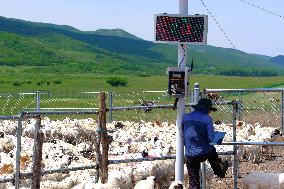
A staff member of Gogodtai Han Ul national nature reserve counts the livestock entering the nature reserve in north China's Inner Mongolia Autonomous Region, June 14, 2025. Saintsogt, 55, a herdsman in Bayin-undur of Ar Horqin Banner, north China's Inner Mongolia Autonomous Region, is busy with the annual summer migration covering a distance of about 100 kilometers. For the past four decades, he has completed the migration every year. Saintsogt's pasture is a part of the Ar Horqin Grassland Nomadic System, which was listed as one of the Globally Important Agricultural Heritage Systems (GIAHS) sites by the United Nations Food and Agriculture Organization (FAO) on May 20, 2022. Herders here still keep the traditional nomadic customs today. "The travel time has been shortened to three days from eight," Saintsogt said. "The rain makes pasture grow better, and the livestock have enough forage." This year, herders from more than 1,200 households and 128,000 livestock in Bayin-undur joined the migration. Photo by Ma

  •  
Nomadic Life in Inner Mongolia's Horqin Grassland - China

Nomadic Life in Inner Mongolia's Horqin Grassland - China

Saintsogt's son seeks for a sick sheep after arriving at the summer campsite on Ar Horqin Grassland, Chifeng City of north China's Inner Mongolia Autonomous Region, June 15, 2025. Saintsogt, 55, a herdsman in Bayin-undur of Ar Horqin Banner, north China's Inner Mongolia Autonomous Region, is busy with the annual summer migration covering a distance of about 100 kilometers. For the past four decades, he has completed the migration every year. Saintsogt's pasture is a part of the Ar Horqin Grassland Nomadic System, which was listed as one of the Globally Important Agricultural Heritage Systems (GIAHS) sites by the United Nations Food and Agriculture Organization (FAO) on May 20, 2022. Herders here still keep the traditional nomadic customs today. "The travel time has been shortened to three days from eight," Saintsogt said. "The rain makes pasture grow better, and the livestock have enough forage." This year, herders from more than 1,200 households and 128,000 livestock in Bayin-undur joined the migration. Phot

  •  
Nomadic Life in Inner Mongolia's Horqin Grassland - China

Nomadic Life in Inner Mongolia's Horqin Grassland - China

Saintsogt's wife arranges bedding at home before departing for the summer campsite on Ar Horqin Grassland, Chifeng City of north China's Inner Mongolia Autonomous Region, June 13, 2025. Saintsogt, 55, a herdsman in Bayin-undur of Ar Horqin Banner, north China's Inner Mongolia Autonomous Region, is busy with the annual summer migration covering a distance of about 100 kilometers. For the past four decades, he has completed the migration every year. Saintsogt's pasture is a part of the Ar Horqin Grassland Nomadic System, which was listed as one of the Globally Important Agricultural Heritage Systems (GIAHS) sites by the United Nations Food and Agriculture Organization (FAO) on May 20, 2022. Herders here still keep the traditional nomadic customs today. "The travel time has been shortened to three days from eight," Saintsogt said. "The rain makes pasture grow better, and the livestock have enough forage." This year, herders from more than 1,200 households and 128,000 livestock in Bayin-undur joined the migration

  •  
Nomadic Life in Inner Mongolia's Horqin Grassland - China

Nomadic Life in Inner Mongolia's Horqin Grassland - China

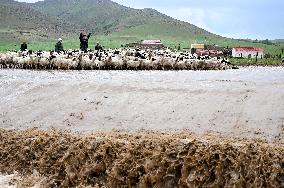
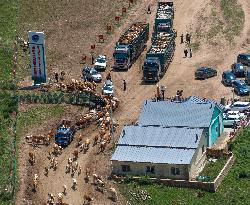
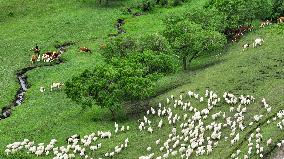
An aerial drone photo taken on June 14, 2025 shows herders waiting for entering the Gogodtai Han Ul national nature reserve in north China's Inner Mongolia Autonomous Region. Saintsogt, 55, a herdsman in Bayin-undur of Ar Horqin Banner, north China's Inner Mongolia Autonomous Region, is busy with the annual summer migration covering a distance of about 100 kilometers. For the past four decades, he has completed the migration every year. Saintsogt's pasture is a part of the Ar Horqin Grassland Nomadic System, which was listed as one of the Globally Important Agricultural Heritage Systems (GIAHS) sites by the United Nations Food and Agriculture Organization (FAO) on May 20, 2022. Herders here still keep the traditional nomadic customs today. "The travel time has been shortened to three days from eight," Saintsogt said. "The rain makes pasture grow better, and the livestock have enough forage." This year, herders from more than 1,200 households and 128,000 livestock in Bayin-undur joined the migration. Photo by

  •  
Nomadic Life in Inner Mongolia's Horqin Grassland - China

Nomadic Life in Inner Mongolia's Horqin Grassland - China

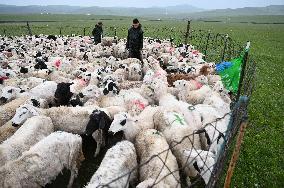
Saintsogt gathers the livestock at the winter campsite before departing for the summer campsite on Ar Horqin Grassland, Chifeng City of north China's Inner Mongolia Autonomous Region, June 13, 2025. Saintsogt, 55, a herdsman in Bayin-undur of Ar Horqin Banner, north China's Inner Mongolia Autonomous Region, is busy with the annual summer migration covering a distance of about 100 kilometers. For the past four decades, he has completed the migration every year. Saintsogt's pasture is a part of the Ar Horqin Grassland Nomadic System, which was listed as one of the Globally Important Agricultural Heritage Systems (GIAHS) sites by the United Nations Food and Agriculture Organization (FAO) on May 20, 2022. Herders here still keep the traditional nomadic customs today. "The travel time has been shortened to three days from eight," Saintsogt said. "The rain makes pasture grow better, and the livestock have enough forage." This year, herders from more than 1,200 households and 128,000 livestock in Bayin-undur joined

  •  
Nomadic Life in Inner Mongolia's Horqin Grassland - China

Nomadic Life in Inner Mongolia's Horqin Grassland - China

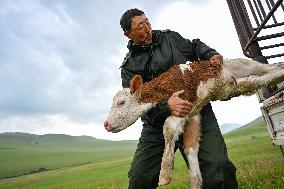
Saintsogt takes a newly born calf off the truck after arriving at the summer campsite on Ar Horqin Grassland, Chifeng City of north China's Inner Mongolia Autonomous Region, June 15, 2025. Saintsogt, 55, a herdsman in Bayin-undur of Ar Horqin Banner, north China's Inner Mongolia Autonomous Region, is busy with the annual summer migration covering a distance of about 100 kilometers. For the past four decades, he has completed the migration every year. Saintsogt's pasture is a part of the Ar Horqin Grassland Nomadic System, which was listed as one of the Globally Important Agricultural Heritage Systems (GIAHS) sites by the United Nations Food and Agriculture Organization (FAO) on May 20, 2022. Herders here still keep the traditional nomadic customs today. "The travel time has been shortened to three days from eight," Saintsogt said. "The rain makes pasture grow better, and the livestock have enough forage." This year, herders from more than 1,200 households and 128,000 livestock in Bayin-undur joined the migrat

  •  
Nomadic Life in Inner Mongolia's Horqin Grassland - China

Nomadic Life in Inner Mongolia's Horqin Grassland - China

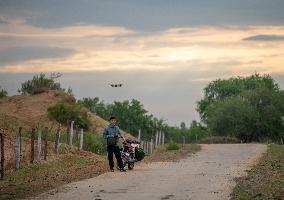
Saintsogt's son operates a drone to check the number of the livestock on Ar Horqin Grassland, Chifeng City of north China's Inner Mongolia Autonomous Region, June 13, 2025. Saintsogt, 55, a herdsman in Bayin-undur of Ar Horqin Banner, north China's Inner Mongolia Autonomous Region, is busy with the annual summer migration covering a distance of about 100 kilometers. For the past four decades, he has completed the migration every year. Saintsogt's pasture is a part of the Ar Horqin Grassland Nomadic System, which was listed as one of the Globally Important Agricultural Heritage Systems (GIAHS) sites by the United Nations Food and Agriculture Organization (FAO) on May 20, 2022. Herders here still keep the traditional nomadic customs today. "The travel time has been shortened to three days from eight," Saintsogt said. "The rain makes pasture grow better, and the livestock have enough forage." This year, herders from more than 1,200 households and 128,000 livestock in Bayin-undur joined the migration. Photo by Ma

  •  
Nomadic Life in Inner Mongolia's Horqin Grassland - China

Nomadic Life in Inner Mongolia's Horqin Grassland - China

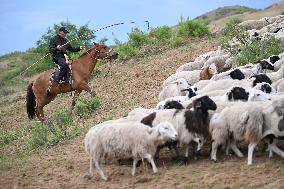
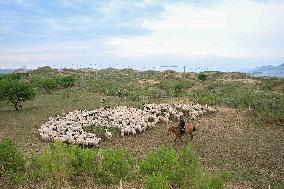
An aerial drone photo taken on June 14, 2025 shows Saintsogt driving the livestock on his way to the summer campsite on Ar Horqin Grassland, Chifeng City of north China's Inner Mongolia Autonomous Region. Saintsogt, 55, a herdsman in Bayin-undur of Ar Horqin Banner, north China's Inner Mongolia Autonomous Region, is busy with the annual summer migration covering a distance of about 100 kilometers. For the past four decades, he has completed the migration every year. Saintsogt's pasture is a part of the Ar Horqin Grassland Nomadic System, which was listed as one of the Globally Important Agricultural Heritage Systems (GIAHS) sites by the United Nations Food and Agriculture Organization (FAO) on May 20, 2022. Herders here still keep the traditional nomadic customs today. "The travel time has been shortened to three days from eight," Saintsogt said. "The rain makes pasture grow better, and the livestock have enough forage." This year, herders from more than 1,200 households and 128,000 livestock in Bayin-undur j

  •  
Nomadic Life in Inner Mongolia's Horqin Grassland - China

Nomadic Life in Inner Mongolia's Horqin Grassland - China

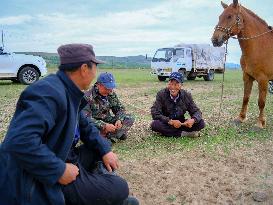
Saintsogt (R) talks with other herdsmen on their way to the summer campsite on Ar Horqin Grassland, Chifeng City of north China's Inner Mongolia Autonomous Region, June 13, 2025. Saintsogt, 55, a herdsman in Bayin-undur of Ar Horqin Banner, north China's Inner Mongolia Autonomous Region, is busy with the annual summer migration covering a distance of about 100 kilometers. For the past four decades, he has completed the migration every year. Saintsogt's pasture is a part of the Ar Horqin Grassland Nomadic System, which was listed as one of the Globally Important Agricultural Heritage Systems (GIAHS) sites by the United Nations Food and Agriculture Organization (FAO) on May 20, 2022. Herders here still keep the traditional nomadic customs today. "The travel time has been shortened to three days from eight," Saintsogt said. "The rain makes pasture grow better, and the livestock have enough forage." This year, herders from more than 1,200 households and 128,000 livestock in Bayin-undur joined the migration. Photo

  •  
Nomadic Life in Inner Mongolia's Horqin Grassland - China

Nomadic Life in Inner Mongolia's Horqin Grassland - China

Saintsogt gathers the livestock at their winter campsite before departing for the summer campsite on Ar Horqin Grassland, Chifeng City of north China's Inner Mongolia Autonomous Region, June 13, 2025. Saintsogt, 55, a herdsman in Bayin-undur of Ar Horqin Banner, north China's Inner Mongolia Autonomous Region, is busy with the annual summer migration covering a distance of about 100 kilometers. For the past four decades, he has completed the migration every year. Saintsogt's pasture is a part of the Ar Horqin Grassland Nomadic System, which was listed as one of the Globally Important Agricultural Heritage Systems (GIAHS) sites by the United Nations Food and Agriculture Organization (FAO) on May 20, 2022. Herders here still keep the traditional nomadic customs today. "The travel time has been shortened to three days from eight," Saintsogt said. "The rain makes pasture grow better, and the livestock have enough forage." This year, herders from more than 1,200 households and 128,000 livestock in Bayin-undur joine

  •  
Nomadic Life in Inner Mongolia's Horqin Grassland - China

Nomadic Life in Inner Mongolia's Horqin Grassland - China

An aerial drone photo shows Saintsogt's son (L) riding a motorcycle to drive the livestock on his way to the summer campsite on Ar Horqin Grassland, Chifeng City of north China's Inner Mongolia Autonomous Region, June 14, 2025. Saintsogt, 55, a herdsman in Bayin-undur of Ar Horqin Banner, north China's Inner Mongolia Autonomous Region, is busy with the annual summer migration covering a distance of about 100 kilometers. For the past four decades, he has completed the migration every year. Saintsogt's pasture is a part of the Ar Horqin Grassland Nomadic System, which was listed as one of the Globally Important Agricultural Heritage Systems (GIAHS) sites by the United Nations Food and Agriculture Organization (FAO) on May 20, 2022. Herders here still keep the traditional nomadic customs today. "The travel time has been shortened to three days from eight," Saintsogt said. "The rain makes pasture grow better, and the livestock have enough forage." This year, herders from more than 1,200 households and 128,000 liv

  •  
Nomadic Life in Inner Mongolia's Horqin Grassland - China

Nomadic Life in Inner Mongolia's Horqin Grassland - China

Saintsogt drives cattle in the rain on his way to the summer campsite on Ar Horqin Grassland, Chifeng City of north China's Inner Mongolia Autonomous Region, June 13, 2025. Saintsogt, 55, a herdsman in Bayin-undur of Ar Horqin Banner, north China's Inner Mongolia Autonomous Region, is busy with the annual summer migration covering a distance of about 100 kilometers. For the past four decades, he has completed the migration every year. Saintsogt's pasture is a part of the Ar Horqin Grassland Nomadic System, which was listed as one of the Globally Important Agricultural Heritage Systems (GIAHS) sites by the United Nations Food and Agriculture Organization (FAO) on May 20, 2022. Herders here still keep the traditional nomadic customs today. "The travel time has been shortened to three days from eight," Saintsogt said. "The rain makes pasture grow better, and the livestock have enough forage." This year, herders from more than 1,200 households and 128,000 livestock in Bayin-undur joined the migration. Photo by Be

  •  
Nomadic Life in Inner Mongolia's Horqin Grassland - China

Nomadic Life in Inner Mongolia's Horqin Grassland - China

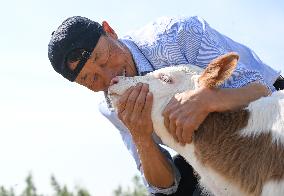
Saintsogt hugs a newly born calf on his way to the summer campsite on Ar Horqin Grassland, Chifeng City of north China's Inner Mongolia Autonomous Region, June 14, 2025. Saintsogt, 55, a herdsman in Bayin-undur of Ar Horqin Banner, north China's Inner Mongolia Autonomous Region, is busy with the annual summer migration covering a distance of about 100 kilometers. For the past four decades, he has completed the migration every year. Saintsogt's pasture is a part of the Ar Horqin Grassland Nomadic System, which was listed as one of the Globally Important Agricultural Heritage Systems (GIAHS) sites by the United Nations Food and Agriculture Organization (FAO) on May 20, 2022. Herders here still keep the traditional nomadic customs today. "The travel time has been shortened to three days from eight," Saintsogt said. "The rain makes pasture grow better, and the livestock have enough forage." This year, herders from more than 1,200 households and 128,000 livestock in Bayin-undur joined the migration. Photo by Bei H

  •  
Nomadic Life in Inner Mongolia's Horqin Grassland - China

Nomadic Life in Inner Mongolia's Horqin Grassland - China

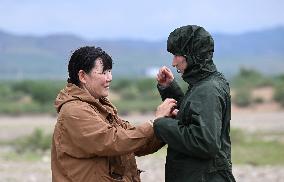
Saintsogt's wife (L) helps her son to wear a raincoat on their way to the summer campsite on Ar Horqin Grassland, Chifeng City of north China's Inner Mongolia Autonomous Region, June 13, 2025. Saintsogt, 55, a herdsman in Bayin-undur of Ar Horqin Banner, north China's Inner Mongolia Autonomous Region, is busy with the annual summer migration covering a distance of about 100 kilometers. For the past four decades, he has completed the migration every year. Saintsogt's pasture is a part of the Ar Horqin Grassland Nomadic System, which was listed as one of the Globally Important Agricultural Heritage Systems (GIAHS) sites by the United Nations Food and Agriculture Organization (FAO) on May 20, 2022. Herders here still keep the traditional nomadic customs today. "The travel time has been shortened to three days from eight," Saintsogt said. "The rain makes pasture grow better, and the livestock have enough forage." This year, herders from more than 1,200 households and 128,000 livestock in Bayin-undur joined the mi

  •  
Nomadic Life in Inner Mongolia's Horqin Grassland - China

Nomadic Life in Inner Mongolia's Horqin Grassland - China

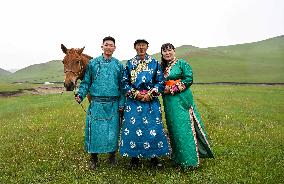
Saintsogt (C), his wife (R) and son pose for a group photo at their summer campsite on Ar Horqin Grassland, Chifeng City of north China's Inner Mongolia Autonomous Region, June 15, 2025. Saintsogt, 55, a herdsman in Bayin-undur of Ar Horqin Banner, north China's Inner Mongolia Autonomous Region, is busy with the annual summer migration covering a distance of about 100 kilometers. For the past four decades, he has completed the migration every year. Saintsogt's pasture is a part of the Ar Horqin Grassland Nomadic System, which was listed as one of the Globally Important Agricultural Heritage Systems (GIAHS) sites by the United Nations Food and Agriculture Organization (FAO) on May 20, 2022. Herders here still keep the traditional nomadic customs today. "The travel time has been shortened to three days from eight," Saintsogt said. "The rain makes pasture grow better, and the livestock have enough forage." This year, herders from more than 1,200 households and 128,000 livestock in Bayin-undur joined the migratio

  •  
ITALY-ROME-FAO-GIAHS SITES-NEW CERTIFICATES

ITALY-ROME-FAO-GIAHS SITES-NEW CERTIFICATES

(230523) -- ROME, May 23, 2023 (Xinhua) -- A representative of Shexian Dryland Stone Terraced System in China's Hebei Province communicates with an attendee at the United Nations Food and Agriculture Organization (FAO) headquarters in Rome, Italy, May 22, 2023. The FAO awarded certificates at its headquarters here to 24 new Globally Important Agricultural Heritage Systems (GIAHS) sites on Monday. The 24 sites, which have been designated by FAO since the last ceremony in 2018, are located in 12 countries, including China, Spain, Ecuador, Iran, Italy, Japan, South Korea, and Morocco. TO GO WITH "FAO designates 24 new Globally Important Agricultural Heritage Systems" (Xinhua/Jin Mamengni)

  •  
ITALY-ROME-FAO-GIAHS SITES-NEW CERTIFICATES

ITALY-ROME-FAO-GIAHS SITES-NEW CERTIFICATES

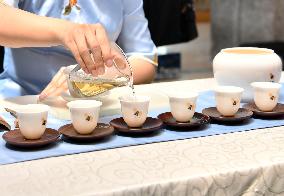
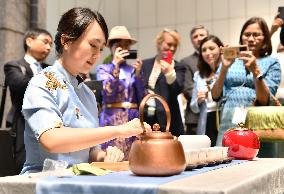
(230523) -- ROME, May 23, 2023 (Xinhua) -- A representative of Anxi Tieguanyin Tea Culture System in China's Fujian Province performs tea art at the United Nations Food and Agriculture Organization (FAO) headquarters in Rome, Italy, May 22, 2023. The FAO awarded certificates at its headquarters here to 24 new Globally Important Agricultural Heritage Systems (GIAHS) sites on Monday. The 24 sites, which have been designated by FAO since the last ceremony in 2018, are located in 12 countries, including China, Spain, Ecuador, Iran, Italy, Japan, South Korea, and Morocco. TO GO WITH "FAO designates 24 new Globally Important Agricultural Heritage Systems" (Xinhua/Jin Mamengni)

  •  
ITALY-ROME-FAO-GIAHS SITES-NEW CERTIFICATES

ITALY-ROME-FAO-GIAHS SITES-NEW CERTIFICATES

(230523) -- ROME, May 23, 2023 (Xinhua) -- A representative of Anxi Tieguanyin Tea Culture System in China's Fujian Province performs tea art at the United Nations Food and Agriculture Organization (FAO) headquarters in Rome, Italy, May 22, 2023. The FAO awarded certificates at its headquarters here to 24 new Globally Important Agricultural Heritage Systems (GIAHS) sites on Monday. The 24 sites, which have been designated by FAO since the last ceremony in 2018, are located in 12 countries, including China, Spain, Ecuador, Iran, Italy, Japan, South Korea, and Morocco. TO GO WITH "FAO designates 24 new Globally Important Agricultural Heritage Systems" (Xinhua/Jin Mamengni)

  •  
ITALY-ROME-FAO-GIAHS SITES-NEW CERTIFICATES

ITALY-ROME-FAO-GIAHS SITES-NEW CERTIFICATES

(230523) -- ROME, May 23, 2023 (Xinhua) -- A representative of Qingyuan Forest-Mushroom Co-culture System in China's Zhejiang Province communicates with an attendee at the United Nations Food and Agriculture Organization (FAO) headquarters in Rome, Italy, May 22, 2023. The FAO awarded certificates at its headquarters here to 24 new Globally Important Agricultural Heritage Systems (GIAHS) sites on Monday. The 24 sites, which have been designated by FAO since the last ceremony in 2018, are located in 12 countries, including China, Spain, Ecuador, Iran, Italy, Japan, South Korea, and Morocco. TO GO WITH "FAO designates 24 new Globally Important Agricultural Heritage Systems" (Xinhua/Jin Mamengni)

  •  
ITALY-ROME-FAO-GIAHS SITES-NEW CERTIFICATES

ITALY-ROME-FAO-GIAHS SITES-NEW CERTIFICATES

(230523) -- ROME, May 23, 2023 (Xinhua) -- United Nations Food and Agriculture Organization (FAO) Director-General Qu Dongyu (L, front) and FAO Deputy Director-General Maria Helena Semedo (R, front) taste food products from newly-awarded Globally Important Agricultural Heritage Systems (GIAHS) sites located in China, at the FAO headquarters in Rome, Italy, May 22, 2023. The FAO awarded certificates at its headquarters here to 24 new GIAHS sites on Monday. The 24 sites, which have been designated by FAO since the last ceremony in 2018, are located in 12 countries, including China, Spain, Ecuador, Iran, Italy, Japan, South Korea, and Morocco. TO GO WITH "FAO designates 24 new Globally Important Agricultural Heritage Systems" (Xinhua/Jin Mamengni)

  •  
ITALY-ROME-FAO-GIAHS SITES-NEW CERTIFICATES

ITALY-ROME-FAO-GIAHS SITES-NEW CERTIFICATES

(230523) -- ROME, May 23, 2023 (Xinhua) -- United Nations Food and Agriculture Organization (FAO) Director-General Qu Dongyu (C) and other attendees taste Anxi Tieguanyin Tea from China's Fujian Province at the FAO headquarters in Rome, Italy, May 22, 2023. The FAO awarded certificates at its headquarters here to 24 new Globally Important Agricultural Heritage Systems (GIAHS) sites on Monday. The 24 sites, which have been designated by FAO since the last ceremony in 2018, are located in 12 countries, including China, Spain, Ecuador, Iran, Italy, Japan, South Korea, and Morocco. TO GO WITH "FAO designates 24 new Globally Important Agricultural Heritage Systems" (Xinhua/Jin Mamengni)

  •  
ITALY-ROME-FAO-GIAHS SITES-NEW CERTIFICATES

ITALY-ROME-FAO-GIAHS SITES-NEW CERTIFICATES

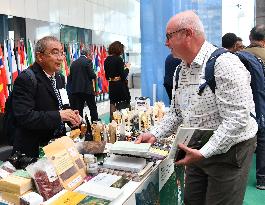
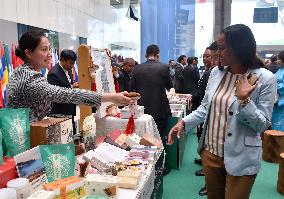
(230523) -- ROME, May 23, 2023 (Xinhua) -- A representative of Ar Horqin Grassland Nomadic System in China's Inner Mongolia Autonomous Region displays local products at the United Nations Food and Agriculture Organization (FAO) headquarters in Rome, Italy, May 22, 2023. The FAO awarded certificates at its headquarters here to 24 new Globally Important Agricultural Heritage Systems (GIAHS) sites on Monday. The 24 sites, which have been designated by FAO since the last ceremony in 2018, are located in 12 countries, including China, Spain, Ecuador, Iran, Italy, Japan, South Korea, and Morocco. TO GO WITH "FAO designates 24 new Globally Important Agricultural Heritage Systems" (Xinhua/Jin Mamengni)

  •  
ITALY-ROME-FAO-GIAHS SITES-NEW CERTIFICATES

ITALY-ROME-FAO-GIAHS SITES-NEW CERTIFICATES

(230523) -- ROME, May 23, 2023 (Xinhua) -- United Nations Food and Agriculture Organization (FAO) Director-General Qu Dongyu addresses the certificate award ceremony for 24 new Globally Important Agricultural Heritage Systems (GIAHS) sites at the FAO headquarters in Rome, Italy, May 22, 2023. The FAO awarded certificates at its headquarters here to 24 new GIAHS sites on Monday. The 24 sites, which have been designated by FAO since the last ceremony in 2018, are located in 12 countries, including China, Spain, Ecuador, Iran, Italy, Japan, South Korea, and Morocco. TO GO WITH "FAO designates 24 new Globally Important Agricultural Heritage Systems" (Xinhua/Jin Mamengni)

  •  
ITALY-ROME-FAO-GIAHS SITES-NEW CERTIFICATES

ITALY-ROME-FAO-GIAHS SITES-NEW CERTIFICATES

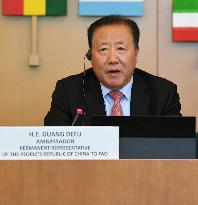
(230523) -- ROME, May 23, 2023 (Xinhua) -- Guang Defu, ambassador and permanent representative of China to United Nations Food and Agriculture Organization (FAO), addresses the certificate award ceremony for 24 new Globally Important Agricultural Heritage Systems (GIAHS) sites at the FAO headquarters in Rome, Italy, May 22, 2023. The FAO awarded certificates at its headquarters here to 24 new GIAHS sites on Monday. The 24 sites, which have been designated by FAO since the last ceremony in 2018, are located in 12 countries, including China, Spain, Ecuador, Iran, Italy, Japan, South Korea, and Morocco. TO GO WITH "FAO designates 24 new Globally Important Agricultural Heritage Systems" (Xinhua/Jin Mamengni)

  •  

Snow-covered terraced fields in Taihang Mountains in China's Hebei

STORY: Snow-covered terraced fields in Taihang Mountains in China's Hebei DATELINE: Feb. 10, 2023 LENGTH: 00:00:49 LOCATION: SHIJIAZHUANG, China CATEGORY: ENVIRONMENT SHOTLIST: 1. various of snow-covered terraced fields in the Taihang Mountains STORYLINE: Terraced fields in the Taihang Mountains are covered with snow in Hebei, China. The rain-fed stone terrace farming system in Shexian county was recognized as one of the Globally Important Agricultural Heritage Systems (GIAHS) by the Food and Agriculture Organization of the United Nations in May 2022. Xinhua News Agency correspondents reporting from Shijiazhuang, China. (XHTV)

  •  
Sado, Noto farming listed as GIAHS

Sado, Noto farming listed as GIAHS

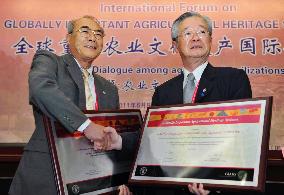
BEIJING, China - Nanao Mayor Bumpei Takemoto (L) and Sado Mayor Koichiro Takano hold certificates of the Globally Important Agricultural Heritage Systems in Beijing on June 11, 2011. The U.N. Food and Agriculture Organization officially announced the same day it will add the farming methods of Sado, Niigata Prefecture, and Noto, Ishikawa Prefecture, to its GIAHS list at an international forum in the Chinese capital.

  •  

Mushroom-growing area in E China recognized as Globally Important Agricultural Heritage System

STORY: Mushroom-growing area in E China recognized as Globally Important Agricultural Heritage System DATELINE: Nov. 6, 2022 LENGTH: 0:01:58 LOCATION: HANGZHOU, China CATEGORY: ENVIRONMENT SHOTLIST: 1. various of mushrooms in forests 2. various of Qingyuan Forest-Mushroom Co-culture System STORYLINE: A mushroom-growing area in Qingyuan County, east China's Zhejiang Province, was formally recognized as Globally Important Agricultural Heritage System (GIAHS) by the Food and Agriculture Organization (FAO) on Thursday in Rome, Italy. The Qingyuan Forest-Mushroom Co-culture System (QFMCS) is an agroforestry system in a high-altitude mountainous region. It focuses on sustainable forest management, development of the mushroom industry, and the cyclic use of resources. The system provides an example for forest conservation, understory management and edible fungus cultivation in mountainous regions. Xinhua News Agency correspondents reporting from Hangzhou, China. (XHTV)

  •  
CHINA-FUJIAN-YOUXI-TERRACED FIELDS (CN)

CHINA-FUJIAN-YOUXI-TERRACED FIELDS (CN)

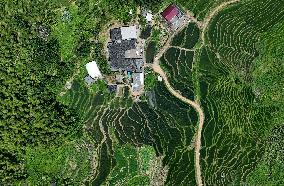
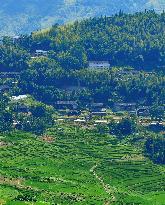
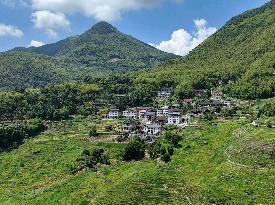
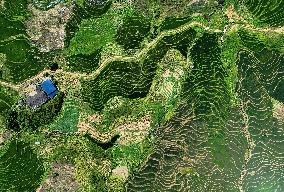
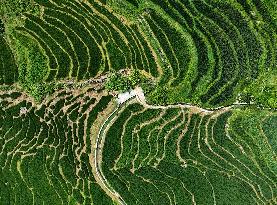
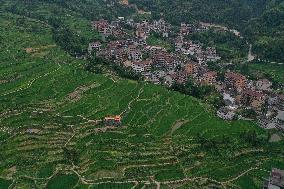
(220812) -- YOUXI, Aug. 12, 2022 (Xinhua) -- Aerial photo taken on Aug. 12, 2022 shows the terraced fields in Lianhe Township of Youxi County, southeast China's Fujian Province. The terraced field in Lianhe Township was designated by the Food and Agriculture Organization of the United Nations as one of the Globally Important Agricultural Heritage Systems (GIAHS) in 2018. (Xinhua/Wei Peiquan)

  •  
CHINA-FUJIAN-YOUXI-TERRACED FIELDS (CN)

CHINA-FUJIAN-YOUXI-TERRACED FIELDS (CN)

(220812) -- YOUXI, Aug. 12, 2022 (Xinhua) -- Photo taken on Aug. 12, 2022 shows the terraced fields in Lianhe Township of Youxi County, southeast China's Fujian Province. The terraced field in Lianhe Township was designated by the Food and Agriculture Organization of the United Nations as one of the Globally Important Agricultural Heritage Systems (GIAHS) in 2018. (Xinhua/Wei Peiquan)

  •  
CHINA-FUJIAN-YOUXI-TERRACED FIELDS (CN)

CHINA-FUJIAN-YOUXI-TERRACED FIELDS (CN)

(220812) -- YOUXI, Aug. 12, 2022 (Xinhua) -- Aerial photo taken on Aug. 12, 2022 shows the terraced fields in Lianhe Township of Youxi County, southeast China's Fujian Province. The terraced field in Lianhe Township was designated by the Food and Agriculture Organization of the United Nations as one of the Globally Important Agricultural Heritage Systems (GIAHS) in 2018. (Xinhua/Wei Peiquan)

  •  
CHINA-FUJIAN-YOUXI-TERRACED FIELDS (CN)

CHINA-FUJIAN-YOUXI-TERRACED FIELDS (CN)

(220812) -- YOUXI, Aug. 12, 2022 (Xinhua) -- Aerial photo taken on Aug. 12, 2022 shows the terraced fields in Lianhe Township of Youxi County, southeast China's Fujian Province. The terraced field in Lianhe Township was designated by the Food and Agriculture Organization of the United Nations as one of the Globally Important Agricultural Heritage Systems (GIAHS) in 2018. (Xinhua/Wei Peiquan)

  •  
CHINA-FUJIAN-YOUXI-TERRACED FIELDS (CN)

CHINA-FUJIAN-YOUXI-TERRACED FIELDS (CN)

(220812) -- YOUXI, Aug. 12, 2022 (Xinhua) -- Aerial photo taken on Aug. 12, 2022 shows the terraced fields in Lianhe Township of Youxi County, southeast China's Fujian Province. The terraced field in Lianhe Township was designated by the Food and Agriculture Organization of the United Nations as one of the Globally Important Agricultural Heritage Systems (GIAHS) in 2018. (Xinhua/Wei Peiquan)

  •  
(ZhejiangPictorial) CHINA-ZHEJIANG-QINGTIAN-RICE-FISH CO-CULTURE SYSTEM (CN)

(ZhejiangPictorial) CHINA-ZHEJIANG-QINGTIAN-RICE-FISH CO-CULTURE SYSTEM (CN)

(220719) -- QINGTIAN, July 19, 2022 (Xinhua) -- In this aerial photo, farmers carry buckets of fish fry before releasing them into rice fields in Xiaozhoushan Township, Qingtian County, east China's Zhejiang Province, June 11, 2020. The rice-fish co-culture system in Qingtian has a history of more than 1,300 years and was listed in the world's first group of the Globally Important Agricultural Heritage Systems (GIAHS) designated by the Food and Agriculture Organization of the United Nations (FAO) in 2005. Qingtian, in the southwestern part of Zhejiang, has sufficient water resources and a terraced landscape. The rice-fish co-culture system can bring handsome incomes to local farmers. In 2021, the rice-fish co-culture system in Qingtian covered around 3,700 hectares of paddy fields, with an average rice yield of 7.2 tonnes per hectare. The total output value of rice and fish reached 265 million yuan (about 39.3 million U.S. dollars). (Xinhua/Xu Yu)

  •  
(ZhejiangPictorial) CHINA-ZHEJIANG-QINGTIAN-RICE-FISH CO-CULTURE SYSTEM (CN)

(ZhejiangPictorial) CHINA-ZHEJIANG-QINGTIAN-RICE-FISH CO-CULTURE SYSTEM (CN)

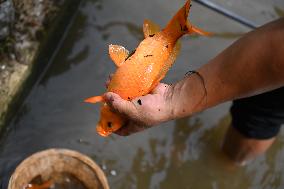
(220719) -- QINGTIAN, July 19, 2022 (Xinhua) -- Photo taken on July 19, 2022 shows a fish caught by a farmer in a protection area of the rice-fish co-culture system in Qingtian County, east China's Zhejiang Province. The rice-fish co-culture system in Qingtian has a history of more than 1,300 years and was listed in the world's first group of the Globally Important Agricultural Heritage Systems (GIAHS) designated by the Food and Agriculture Organization of the United Nations (FAO) in 2005. Qingtian, in the southwestern part of Zhejiang, has sufficient water resources and a terraced landscape. The rice-fish co-culture system can bring handsome incomes to local farmers. In 2021, the rice-fish co-culture system in Qingtian covered around 3,700 hectares of paddy fields, with an average rice yield of 7.2 tonnes per hectare. The total output value of rice and fish reached 265 million yuan (about 39.3 million U.S. dollars). (Xinhua/Huang Zongzhi)

  •  
(ZhejiangPictorial) CHINA-ZHEJIANG-QINGTIAN-RICE-FISH CO-CULTURE SYSTEM (CN)

(ZhejiangPictorial) CHINA-ZHEJIANG-QINGTIAN-RICE-FISH CO-CULTURE SYSTEM (CN)

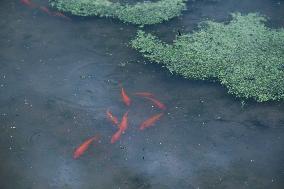
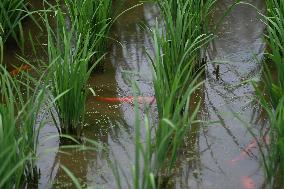
(220719) -- QINGTIAN, July 19, 2022 (Xinhua) -- Photo taken on July 18, 2022 shows fish swimming in a protection area of the rice-fish co-culture system in Qingtian County, east China's Zhejiang Province. The rice-fish co-culture system in Qingtian has a history of more than 1,300 years and was listed in the world's first group of the Globally Important Agricultural Heritage Systems (GIAHS) designated by the Food and Agriculture Organization of the United Nations (FAO) in 2005. Qingtian, in the southwestern part of Zhejiang, has sufficient water resources and a terraced landscape. The rice-fish co-culture system can bring handsome incomes to local farmers. In 2021, the rice-fish co-culture system in Qingtian covered around 3,700 hectares of paddy fields, with an average rice yield of 7.2 tonnes per hectare. The total output value of rice and fish reached 265 million yuan (about 39.3 million U.S. dollars). (Xinhua/Huang Zongzhi)

  •  
(ZhejiangPictorial) CHINA-ZHEJIANG-QINGTIAN-RICE-FISH CO-CULTURE SYSTEM (CN)

(ZhejiangPictorial) CHINA-ZHEJIANG-QINGTIAN-RICE-FISH CO-CULTURE SYSTEM (CN)

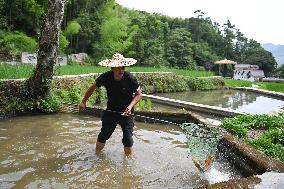
(220719) -- QINGTIAN, July 19, 2022 (Xinhua) -- A farmer catches fish in a protection area of the rice-fish co-culture system in Qingtian County, east China's Zhejiang Province, July 19, 2022. The rice-fish co-culture system in Qingtian has a history of more than 1,300 years and was listed in the world's first group of the Globally Important Agricultural Heritage Systems (GIAHS) designated by the Food and Agriculture Organization of the United Nations (FAO) in 2005. Qingtian, in the southwestern part of Zhejiang, has sufficient water resources and a terraced landscape. The rice-fish co-culture system can bring handsome incomes to local farmers. In 2021, the rice-fish co-culture system in Qingtian covered around 3,700 hectares of paddy fields, with an average rice yield of 7.2 tonnes per hectare. The total output value of rice and fish reached 265 million yuan (about 39.3 million U.S. dollars). (Xinhua/Huang Zongzhi)

  •  
(ZhejiangPictorial) CHINA-ZHEJIANG-KUAIJISHAN ANCIENT CHINESE TORREYA COMMUNITY(CN)

(ZhejiangPictorial) CHINA-ZHEJIANG-KUAIJISHAN ANCIENT CHINESE TORREYA COMMUNITY(CN)

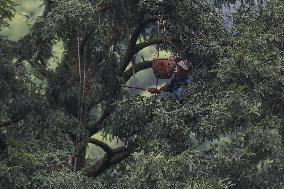
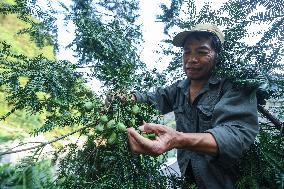
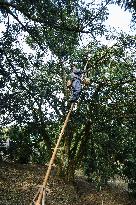
(220719) -- HANGZHOU, July 19, 2022 (Xinhua) -- A farmer picks Chinese torreya nuts in Longxi Village of Jidong Township in Shaoxing City, east China's Zhejiang Province, Sept. 27, 2019. Zhejiang Province is a major production area of Chinese torreya nuts. The Kuaijishan ancient Chinese torreya community in Zhejiang was named a pilot site of the Globally Important Agricultural Heritage Systems (GIAHS) program in 2013. The planting of Kuaijishan ancient torreya can be dated back to more than 2,000 years. It is a "living fossil" marking China's height in plant breeding and grafting. (Xinhua/Huang Zongzhi)

  •  
(ZhejiangPictorial) CHINA-ZHEJIANG-QINGTIAN-RICE-FISH CO-CULTURE SYSTEM (CN)

(ZhejiangPictorial) CHINA-ZHEJIANG-QINGTIAN-RICE-FISH CO-CULTURE SYSTEM (CN)

(220719) -- QINGTIAN, July 19, 2022 (Xinhua) -- Photo taken on June 11, 2020 shows fish swimming in a rice field in Xiaozhoushan Township, Qingtian County, east China's Zhejiang Province. The rice-fish co-culture system in Qingtian has a history of more than 1,300 years and was listed in the world's first group of the Globally Important Agricultural Heritage Systems (GIAHS) designated by the Food and Agriculture Organization of the United Nations (FAO) in 2005. Qingtian, in the southwestern part of Zhejiang, has sufficient water resources and a terraced landscape. The rice-fish co-culture system can bring handsome incomes to local farmers. In 2021, the rice-fish co-culture system in Qingtian covered around 3,700 hectares of paddy fields, with an average rice yield of 7.2 tonnes per hectare. The total output value of rice and fish reached 265 million yuan (about 39.3 million U.S. dollars). (Xinhua/Xu Yu)

  •  
(ZhejiangPictorial) CHINA-ZHEJIANG-KUAIJISHAN ANCIENT CHINESE TORREYA COMMUNITY(CN)

(ZhejiangPictorial) CHINA-ZHEJIANG-KUAIJISHAN ANCIENT CHINESE TORREYA COMMUNITY(CN)

(220719) -- HANGZHOU, July 19, 2022 (Xinhua) -- A farmer picks Chinese torreya nuts in Feiwang Village of Zhaojia Township in Zhuji City, east China's Zhejiang Province, Sept. 10, 2020. Zhejiang Province is a major production area of Chinese torreya nuts. The Kuaijishan ancient Chinese torreya community in Zhejiang was named a pilot site of the Globally Important Agricultural Heritage Systems (GIAHS) program in 2013. The planting of Kuaijishan ancient torreya can be dated back to more than 2,000 years. It is a "living fossil" marking China's height in plant breeding and grafting. (Xinhua/Xu Yu)

  •  
(ZhejiangPictorial) CHINA-ZHEJIANG-QINGTIAN-RICE-FISH CO-CULTURE SYSTEM (CN)

(ZhejiangPictorial) CHINA-ZHEJIANG-QINGTIAN-RICE-FISH CO-CULTURE SYSTEM (CN)

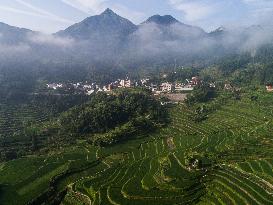
(220719) -- QINGTIAN, July 19, 2022 (Xinhua) -- Aerial photo taken on July 25, 2019 shows terraced rice fields in Xiaozhoushan Township, Qingtian County, east China's Zhejiang Province. The rice-fish co-culture system in Qingtian has a history of more than 1,300 years and was listed in the world's first group of the Globally Important Agricultural Heritage Systems (GIAHS) designated by the Food and Agriculture Organization of the United Nations (FAO) in 2005. Qingtian, in the southwestern part of Zhejiang, has sufficient water resources and a terraced landscape. The rice-fish co-culture system can bring handsome incomes to local farmers. In 2021, the rice-fish co-culture system in Qingtian covered around 3,700 hectares of paddy fields, with an average rice yield of 7.2 tonnes per hectare. The total output value of rice and fish reached 265 million yuan (about 39.3 million U.S. dollars). (Xinhua/Xu Yu)

  •  
(ZhejiangPictorial) CHINA-ZHEJIANG-QINGTIAN-RICE-FISH CO-CULTURE SYSTEM (CN)

(ZhejiangPictorial) CHINA-ZHEJIANG-QINGTIAN-RICE-FISH CO-CULTURE SYSTEM (CN)

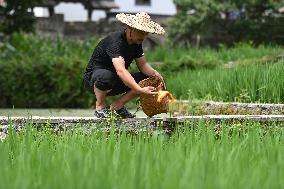
(220719) -- QINGTIAN, July 19, 2022 (Xinhua) -- A farmer releases a fish into a rice field in a protection area of the rice-fish co-culture system in Qingtian County, east China's Zhejiang Province, July 19, 2022. The rice-fish co-culture system in Qingtian has a history of more than 1,300 years and was listed in the world's first group of the Globally Important Agricultural Heritage Systems (GIAHS) designated by the Food and Agriculture Organization of the United Nations (FAO) in 2005. Qingtian, in the southwestern part of Zhejiang, has sufficient water resources and a terraced landscape. The rice-fish co-culture system can bring handsome incomes to local farmers. In 2021, the rice-fish co-culture system in Qingtian covered around 3,700 hectares of paddy fields, with an average rice yield of 7.2 tonnes per hectare. The total output value of rice and fish reached 265 million yuan (about 39.3 million U.S. dollars). (Xinhua/Huang Zongzhi)

  •  
(ZhejiangPictorial) CHINA-ZHEJIANG-QINGTIAN-RICE-FISH CO-CULTURE SYSTEM (CN)

(ZhejiangPictorial) CHINA-ZHEJIANG-QINGTIAN-RICE-FISH CO-CULTURE SYSTEM (CN)

(220719) -- QINGTIAN, July 19, 2022 (Xinhua) -- Aerial photo taken on July 25, 2019 shows terraced rice fields in Xiaozhoushan Township, Qingtian County, east China's Zhejiang Province. The rice-fish co-culture system in Qingtian has a history of more than 1,300 years and was listed in the world's first group of the Globally Important Agricultural Heritage Systems (GIAHS) designated by the Food and Agriculture Organization of the United Nations (FAO) in 2005. Qingtian, in the southwestern part of Zhejiang, has sufficient water resources and a terraced landscape. The rice-fish co-culture system can bring handsome incomes to local farmers. In 2021, the rice-fish co-culture system in Qingtian covered around 3,700 hectares of paddy fields, with an average rice yield of 7.2 tonnes per hectare. The total output value of rice and fish reached 265 million yuan (about 39.3 million U.S. dollars). (Xinhua/Xu Yu)

  •  
(ZhejiangPictorial) CHINA-ZHEJIANG-KUAIJISHAN ANCIENT CHINESE TORREYA COMMUNITY(CN)

(ZhejiangPictorial) CHINA-ZHEJIANG-KUAIJISHAN ANCIENT CHINESE TORREYA COMMUNITY(CN)

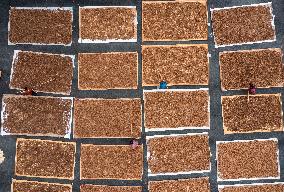
(220719) -- HANGZHOU, July 19, 2022 (Xinhua) -- In this aerial photo, farmers air Chinese torreya nuts in Zhaojia Township in Zhuji City, east China's Zhejiang Province, Oct. 19, 2021. Zhejiang Province is a major production area of Chinese torreya nuts. The Kuaijishan ancient Chinese torreya community in Zhejiang was named a pilot site of the Globally Important Agricultural Heritage Systems (GIAHS) program in 2013. The planting of Kuaijishan ancient torreya can be dated back to more than 2,000 years. It is a "living fossil" marking China's height in plant breeding and grafting. (Xinhua/Xu Yu)

  •  
(ZhejiangPictorial) CHINA-ZHEJIANG-KUAIJISHAN ANCIENT CHINESE TORREYA COMMUNITY(CN)

(ZhejiangPictorial) CHINA-ZHEJIANG-KUAIJISHAN ANCIENT CHINESE TORREYA COMMUNITY(CN)

(220719) -- HANGZHOU, July 19, 2022 (Xinhua) -- A farmer picks Chinese torreya nuts in Feiwang Village of Zhaojia Township in Zhuji City, east China's Zhejiang Province, Sept. 10, 2020. Zhejiang Province is a major production area of Chinese torreya nuts. The Kuaijishan ancient Chinese torreya community in Zhejiang was named a pilot site of the Globally Important Agricultural Heritage Systems (GIAHS) program in 2013. The planting of Kuaijishan ancient torreya can be dated back to more than 2,000 years. It is a "living fossil" marking China's height in plant breeding and grafting. (Xinhua/Xu Yu)

  •  
(ZhejiangPictorial) CHINA-ZHEJIANG-QINGTIAN-RICE-FISH CO-CULTURE SYSTEM (CN)

(ZhejiangPictorial) CHINA-ZHEJIANG-QINGTIAN-RICE-FISH CO-CULTURE SYSTEM (CN)

(220719) -- QINGTIAN, July 19, 2022 (Xinhua) -- People visit a museum themed on Qingtian rice-fish co-culture system in Qingtian County, east China's Zhejiang Province, July 18, 2022. The rice-fish co-culture system in Qingtian has a history of more than 1,300 years and was listed in the world's first group of the Globally Important Agricultural Heritage Systems (GIAHS) designated by the Food and Agriculture Organization of the United Nations (FAO) in 2005. Qingtian, in the southwestern part of Zhejiang, has sufficient water resources and a terraced landscape. The rice-fish co-culture system can bring handsome incomes to local farmers. In 2021, the rice-fish co-culture system in Qingtian covered around 3,700 hectares of paddy fields, with an average rice yield of 7.2 tonnes per hectare. The total output value of rice and fish reached 265 million yuan (about 39.3 million U.S. dollars). (Xinhua/Huang Zongzhi)

  •  
(ZhejiangPictorial) CHINA-ZHEJIANG-QINGTIAN-RICE-FISH CO-CULTURE SYSTEM (CN)

(ZhejiangPictorial) CHINA-ZHEJIANG-QINGTIAN-RICE-FISH CO-CULTURE SYSTEM (CN)

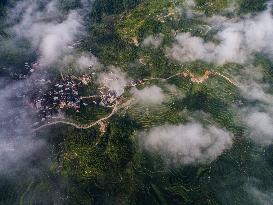
(220719) -- QINGTIAN, July 19, 2022 (Xinhua) -- Aerial photo taken on July 18, 2022 shows a protection area of the rice-fish co-culture system in Qingtian County, east China's Zhejiang Province. The rice-fish co-culture system in Qingtian has a history of more than 1,300 years and was listed in the world's first group of the Globally Important Agricultural Heritage Systems (GIAHS) designated by the Food and Agriculture Organization of the United Nations (FAO) in 2005. Qingtian, in the southwestern part of Zhejiang, has sufficient water resources and a terraced landscape. The rice-fish co-culture system can bring handsome incomes to local farmers. In 2021, the rice-fish co-culture system in Qingtian covered around 3,700 hectares of paddy fields, with an average rice yield of 7.2 tonnes per hectare. The total output value of rice and fish reached 265 million yuan (about 39.3 million U.S. dollars). (Xinhua/Huang Zongzhi)

  •  
(ZhejiangPictorial) CHINA-ZHEJIANG-QINGTIAN-RICE-FISH CO-CULTURE SYSTEM (CN)

(ZhejiangPictorial) CHINA-ZHEJIANG-QINGTIAN-RICE-FISH CO-CULTURE SYSTEM (CN)

(220719) -- QINGTIAN, July 19, 2022 (Xinhua) -- Aerial photo taken on July 18, 2022 shows a protection area of the rice-fish co-culture system in Qingtian County, east China's Zhejiang Province. The rice-fish co-culture system in Qingtian has a history of more than 1,300 years and was listed in the world's first group of the Globally Important Agricultural Heritage Systems (GIAHS) designated by the Food and Agriculture Organization of the United Nations (FAO) in 2005. Qingtian, in the southwestern part of Zhejiang, has sufficient water resources and a terraced landscape. The rice-fish co-culture system can bring handsome incomes to local farmers. In 2021, the rice-fish co-culture system in Qingtian covered around 3,700 hectares of paddy fields, with an average rice yield of 7.2 tonnes per hectare. The total output value of rice and fish reached 265 million yuan (about 39.3 million U.S. dollars). (Xinhua/Huang Zongzhi)

  • Main
  • Top
  • Editorial
  • Creative
  • About Us
  • About ILG
  • Terms of use
  • Company
  • BEHIND
  • Price List
  • Single Plan
  • Monthly Plan
  • Services
  • Shooting
  • Rights Clearance
  • Support
  • FAQ
  • How To Buy
  • Contact Us
  • Become a Partner

© KYODO NEWS IMAGES INC

All Rights Reserved.

  • Editorial
  • Olympics
  • News
  • Sports
  • Japan
  • Tech
  • Royal
  • Disaster
  • NorthKorea
  • Old Japan
  • SNS
  • Creative
  • Food
  • Japan
  • Landscape
  • Animal
  • Popular
  • #Ukraine
  • #Russia
  • #coronavirus
  • #N. Korea
  • #Thailand
  • #China
  • #Ukraine
  • #Russia
  • #coronavirus
  • #N. Korea
  • #Thailand
  • #China
  • Food
  • Japan
  • Landscape
  • Animal
  • Olympics
  • News
  • Sports
  • Japan
  • Tech
  • Royal
  • Disaster
  • NorthKorea
  • Old Japan
  • SNS