•  
(MASTER OF CRAFTS)CHINA-CARVED LACQUER-INHERITOR-STUDIO (CN)

(MASTER OF CRAFTS)CHINA-CARVED LACQUER-INHERITOR-STUDIO (CN)

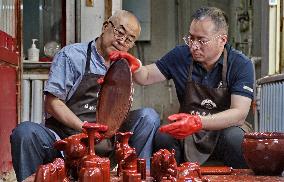
(240607) -- BEIJING, June 7, 2024 Photo by Xinhua/ABACAPRESS.COM) -- Zhu Jiang (L) and his father carry semi-finished carved lacquer wares for drying at his studio in Gu'an, north China's Hebei Province, May 30, 2024. Carved lacquer, dating back to the Tang Dynasty (618-907), greeted its peak time in Ming and Qing dynasties (1368-1911). Since the founding of the People's Republic of China in 1949, Beijing and Yangzhou have become the two centers for the craft of carved lacquer, which was listed as a national-level intangible cultural heritage in 2006. Carved lacquer differs in its colors, namely red, black or multiple colors. Its making procedures include designing, body shaping, lacquer making, coating, drawing, carving and grinding. The craftsman needs to smoothly use various kinds of knives to carve patterns on the ware, and even a little miss can destroy the whole artwork. The craft can only be grasped through three to five years of practice. Therefore, it is also called "the art of time." Born in 1976, Z

  •  
(MASTER OF CRAFTS)CHINA-CARVED LACQUER-INHERITOR-STUDIO (CN)

(MASTER OF CRAFTS)CHINA-CARVED LACQUER-INHERITOR-STUDIO (CN)

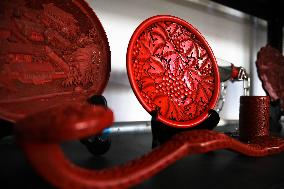
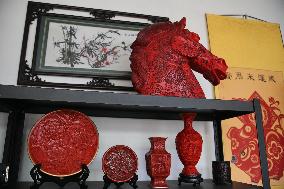
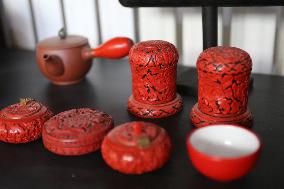
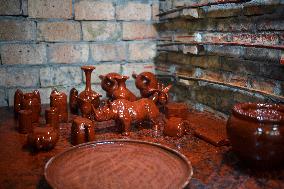
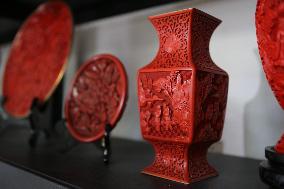
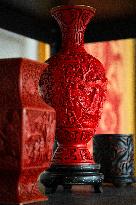
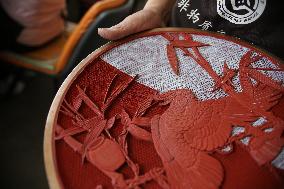
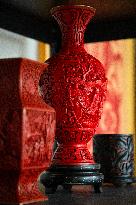
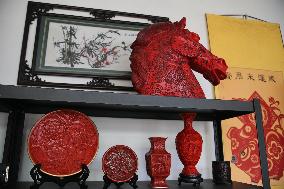
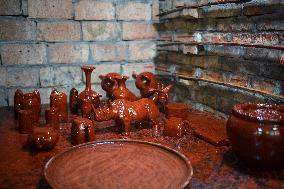
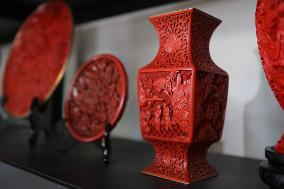
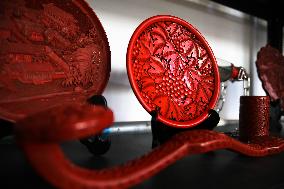
(240607) -- BEIJING, June 7, 2024 Photo by Xinhua/ABACAPRESS.COM) -- Carved lacquer artworks are displayed at Zhu Jiang's studio in Gu'an, north China's Hebei Province, May 30, 2024. Carved lacquer, dating back to the Tang Dynasty (618-907), greeted its peak time in Ming and Qing dynasties (1368-1911). Since the founding of the People's Republic of China in 1949, Beijing and Yangzhou have become the two centers for the craft of carved lacquer, which was listed as a national-level intangible cultural heritage in 2006. Carved lacquer differs in its colors, namely red, black or multiple colors. Its making procedures include designing, body shaping, lacquer making, coating, drawing, carving and grinding. The craftsman needs to smoothly use various kinds of knives to carve patterns on the ware, and even a little miss can destroy the whole artwork. The craft can only be grasped through three to five years of practice. Therefore, it is also called "the art of time." Born in 1976, Zhu Jiang, an inheritor of the craft

  •  
(MASTER OF CRAFTS)CHINA-CARVED LACQUER-INHERITOR-STUDIO (CN)

(MASTER OF CRAFTS)CHINA-CARVED LACQUER-INHERITOR-STUDIO (CN)

(240607) -- BEIJING, June 7, 2024 Photo by Xinhua/ABACAPRESS.COM) -- Carved lacquer artworks are displayed at Zhu Jiang's studio in Gu'an, north China's Hebei Province, May 30, 2024. Carved lacquer, dating back to the Tang Dynasty (618-907), greeted its peak time in Ming and Qing dynasties (1368-1911). Since the founding of the People's Republic of China in 1949, Beijing and Yangzhou have become the two centers for the craft of carved lacquer, which was listed as a national-level intangible cultural heritage in 2006. Carved lacquer differs in its colors, namely red, black or multiple colors. Its making procedures include designing, body shaping, lacquer making, coating, drawing, carving and grinding. The craftsman needs to smoothly use various kinds of knives to carve patterns on the ware, and even a little miss can destroy the whole artwork. The craft can only be grasped through three to five years of practice. Therefore, it is also called "the art of time." Born in 1976, Zhu Jiang, an inheritor of the craft

  •  
(MASTER OF CRAFTS)CHINA-CARVED LACQUER-INHERITOR-STUDIO (CN)

(MASTER OF CRAFTS)CHINA-CARVED LACQUER-INHERITOR-STUDIO (CN)

(240607) -- BEIJING, June 7, 2024 Photo by Xinhua/ABACAPRESS.COM) -- Carved lacquer artworks are displayed at Zhu Jiang's studio in Gu'an, north China's Hebei Province, May 30, 2024. Carved lacquer, dating back to the Tang Dynasty (618-907), greeted its peak time in Ming and Qing dynasties (1368-1911). Since the founding of the People's Republic of China in 1949, Beijing and Yangzhou have become the two centers for the craft of carved lacquer, which was listed as a national-level intangible cultural heritage in 2006. Carved lacquer differs in its colors, namely red, black or multiple colors. Its making procedures include designing, body shaping, lacquer making, coating, drawing, carving and grinding. The craftsman needs to smoothly use various kinds of knives to carve patterns on the ware, and even a little miss can destroy the whole artwork. The craft can only be grasped through three to five years of practice. Therefore, it is also called "the art of time." Born in 1976, Zhu Jiang, an inheritor of the craft

  •  
(MASTER OF CRAFTS)CHINA-CARVED LACQUER-INHERITOR-STUDIO (CN)

(MASTER OF CRAFTS)CHINA-CARVED LACQUER-INHERITOR-STUDIO (CN)

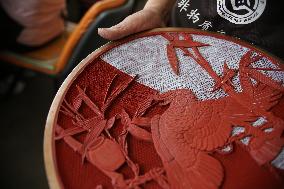
(240607) -- BEIJING, June 7, 2024 Photo by Xinhua/ABACAPRESS.COM) -- A piece of carved lacquer artwork on drying is displayed at Zhu Jiang's studio in Gu'an, north China's Hebei Province, May 30, 2024. Carved lacquer, dating back to the Tang Dynasty (618-907), greeted its peak time in Ming and Qing dynasties (1368-1911). Since the founding of the People's Republic of China in 1949, Beijing and Yangzhou have become the two centers for the craft of carved lacquer, which was listed as a national-level intangible cultural heritage in 2006. Carved lacquer differs in its colors, namely red, black or multiple colors. Its making procedures include designing, body shaping, lacquer making, coating, drawing, carving and grinding. The craftsman needs to smoothly use various kinds of knives to carve patterns on the ware, and even a little miss can destroy the whole artwork. The craft can only be grasped through three to five years of practice. Therefore, it is also called "the art of time." Born in 1976, Zhu Jiang, an inh

  •  
(MASTER OF CRAFTS)CHINA-CARVED LACQUER-INHERITOR-STUDIO (CN)

(MASTER OF CRAFTS)CHINA-CARVED LACQUER-INHERITOR-STUDIO (CN)

(240607) -- BEIJING, June 7, 2024 Photo by Xinhua/ABACAPRESS.COM) -- Carved lacquer artworks are displayed at Zhu Jiang's studio in Gu'an, north China's Hebei Province, May 30, 2024. Carved lacquer, dating back to the Tang Dynasty (618-907), greeted its peak time in Ming and Qing dynasties (1368-1911). Since the founding of the People's Republic of China in 1949, Beijing and Yangzhou have become the two centers for the craft of carved lacquer, which was listed as a national-level intangible cultural heritage in 2006. Carved lacquer differs in its colors, namely red, black or multiple colors. Its making procedures include designing, body shaping, lacquer making, coating, drawing, carving and grinding. The craftsman needs to smoothly use various kinds of knives to carve patterns on the ware, and even a little miss can destroy the whole artwork. The craft can only be grasped through three to five years of practice. Therefore, it is also called "the art of time." Born in 1976, Zhu Jiang, an inheritor of the craft

  •  
(MASTER OF CRAFTS)CHINA-CARVED LACQUER-INHERITOR-STUDIO (CN)

(MASTER OF CRAFTS)CHINA-CARVED LACQUER-INHERITOR-STUDIO (CN)

(240607) -- BEIJING, June 7, 2024 Photo by Xinhua/ABACAPRESS.COM) -- Semi-finished carved lacquer artworks are seen on drying at Zhu Jiang's studio in Gu'an, north China's Hebei Province, May 30, 2024. Carved lacquer, dating back to the Tang Dynasty (618-907), greeted its peak time in Ming and Qing dynasties (1368-1911). Since the founding of the People's Republic of China in 1949, Beijing and Yangzhou have become the two centers for the craft of carved lacquer, which was listed as a national-level intangible cultural heritage in 2006. Carved lacquer differs in its colors, namely red, black or multiple colors. Its making procedures include designing, body shaping, lacquer making, coating, drawing, carving and grinding. The craftsman needs to smoothly use various kinds of knives to carve patterns on the ware, and even a little miss can destroy the whole artwork. The craft can only be grasped through three to five years of practice. Therefore, it is also called "the art of time." Born in 1976, Zhu Jiang, an inh

  •  
(MASTER OF CRAFTS)CHINA-CARVED LACQUER-INHERITOR-STUDIO (CN)

(MASTER OF CRAFTS)CHINA-CARVED LACQUER-INHERITOR-STUDIO (CN)

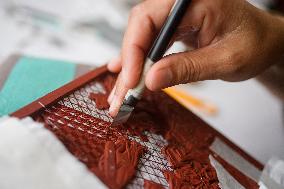
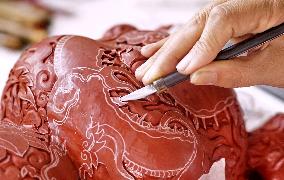
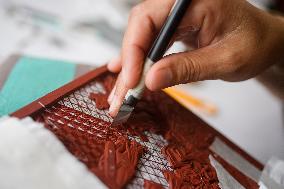
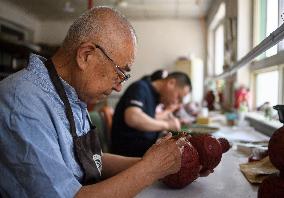
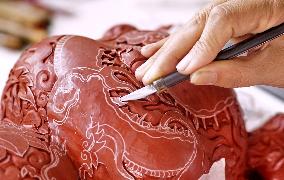
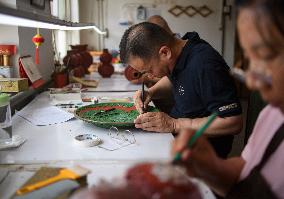
(240607) -- BEIJING, June 7, 2024 Photo by Xinhua/ABACAPRESS.COM) -- Zhu Jiang makes carved lacquer at his studio in Gu'an, north China's Hebei Province, May 30, 2024. Carved lacquer, dating back to the Tang Dynasty (618-907), greeted its peak time in Ming and Qing dynasties (1368-1911). Since the founding of the People's Republic of China in 1949, Beijing and Yangzhou have become the two centers for the craft of carved lacquer, which was listed as a national-level intangible cultural heritage in 2006. Carved lacquer differs in its colors, namely red, black or multiple colors. Its making procedures include designing, body shaping, lacquer making, coating, drawing, carving and grinding. The craftsman needs to smoothly use various kinds of knives to carve patterns on the ware, and even a little miss can destroy the whole artwork. The craft can only be grasped through three to five years of practice. Therefore, it is also called "the art of time." Born in 1976, Zhu Jiang, an inheritor of the craft of carved lacq

  •  
(MASTER OF CRAFTS)CHINA-CARVED LACQUER-INHERITOR-STUDIO (CN)

(MASTER OF CRAFTS)CHINA-CARVED LACQUER-INHERITOR-STUDIO (CN)

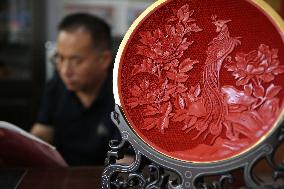
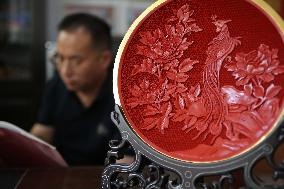
(240607) -- BEIJING, June 7, 2024 Photo by Xinhua/ABACAPRESS.COM) -- Zhu Jiang reads a book on carved lacquer at his studio in Gu'an, north China's Hebei Province, May 30, 2024. Carved lacquer, dating back to the Tang Dynasty (618-907), greeted its peak time in Ming and Qing dynasties (1368-1911). Since the founding of the People's Republic of China in 1949, Beijing and Yangzhou have become the two centers for the craft of carved lacquer, which was listed as a national-level intangible cultural heritage in 2006. Carved lacquer differs in its colors, namely red, black or multiple colors. Its making procedures include designing, body shaping, lacquer making, coating, drawing, carving and grinding. The craftsman needs to smoothly use various kinds of knives to carve patterns on the ware, and even a little miss can destroy the whole artwork. The craft can only be grasped through three to five years of practice. Therefore, it is also called "the art of time." Born in 1976, Zhu Jiang, an inheritor of the craft of c

  •  
(MASTER OF CRAFTS)CHINA-CARVED LACQUER-INHERITOR-STUDIO (CN)

(MASTER OF CRAFTS)CHINA-CARVED LACQUER-INHERITOR-STUDIO (CN)

(240607) -- BEIJING, June 7, 2024 Photo by Xinhua/ABACAPRESS.COM) -- Zhu Jiang makes carved lacquer at his studio in Gu'an, north China's Hebei Province, May 30, 2024. Carved lacquer, dating back to the Tang Dynasty (618-907), greeted its peak time in Ming and Qing dynasties (1368-1911). Since the founding of the People's Republic of China in 1949, Beijing and Yangzhou have become the two centers for the craft of carved lacquer, which was listed as a national-level intangible cultural heritage in 2006. Carved lacquer differs in its colors, namely red, black or multiple colors. Its making procedures include designing, body shaping, lacquer making, coating, drawing, carving and grinding. The craftsman needs to smoothly use various kinds of knives to carve patterns on the ware, and even a little miss can destroy the whole artwork. The craft can only be grasped through three to five years of practice. Therefore, it is also called "the art of time." Born in 1976, Zhu Jiang, an inheritor of the craft of carved lacq

  •  
(MASTER OF CRAFTS)CHINA-CARVED LACQUER-INHERITOR-STUDIO (CN)

(MASTER OF CRAFTS)CHINA-CARVED LACQUER-INHERITOR-STUDIO (CN)

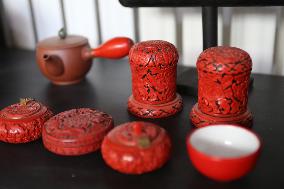
(240607) -- BEIJING, June 7, 2024 Photo by Xinhua/ABACAPRESS.COM) -- Carved lacquer artworks are displayed at Zhu Jiang's studio in Gu'an, north China's Hebei Province, May 30, 2024. Carved lacquer, dating back to the Tang Dynasty (618-907), greeted its peak time in Ming and Qing dynasties (1368-1911). Since the founding of the People's Republic of China in 1949, Beijing and Yangzhou have become the two centers for the craft of carved lacquer, which was listed as a national-level intangible cultural heritage in 2006. Carved lacquer differs in its colors, namely red, black or multiple colors. Its making procedures include designing, body shaping, lacquer making, coating, drawing, carving and grinding. The craftsman needs to smoothly use various kinds of knives to carve patterns on the ware, and even a little miss can destroy the whole artwork. The craft can only be grasped through three to five years of practice. Therefore, it is also called "the art of time." Born in 1976, Zhu Jiang, an inheritor of the craft

  •  
(MASTER OF CRAFTS)CHINA-CARVED LACQUER-INHERITOR-STUDIO (CN)

(MASTER OF CRAFTS)CHINA-CARVED LACQUER-INHERITOR-STUDIO (CN)

(240607) -- BEIJING, June 7, 2024 Photo by Xinhua/ABACAPRESS.COM) -- Zhu Jiang makes carved lacquer at his studio in Gu'an, north China's Hebei Province, May 30, 2024. Carved lacquer, dating back to the Tang Dynasty (618-907), greeted its peak time in Ming and Qing dynasties (1368-1911). Since the founding of the People's Republic of China in 1949, Beijing and Yangzhou have become the two centers for the craft of carved lacquer, which was listed as a national-level intangible cultural heritage in 2006. Carved lacquer differs in its colors, namely red, black or multiple colors. Its making procedures include designing, body shaping, lacquer making, coating, drawing, carving and grinding. The craftsman needs to smoothly use various kinds of knives to carve patterns on the ware, and even a little miss can destroy the whole artwork. The craft can only be grasped through three to five years of practice. Therefore, it is also called "the art of time." Born in 1976, Zhu Jiang, an inheritor of the craft of carved lacq

  •  
(MASTER OF CRAFTS)CHINA-CARVED LACQUER-INHERITOR-STUDIO (CN)

(MASTER OF CRAFTS)CHINA-CARVED LACQUER-INHERITOR-STUDIO (CN)

(240607) -- BEIJING, June 7, 2024 Photo by Xinhua/ABACAPRESS.COM) -- Carved lacquer artworks are displayed at Zhu Jiang's studio in Gu'an, north China's Hebei Province, May 30, 2024. Carved lacquer, dating back to the Tang Dynasty (618-907), greeted its peak time in Ming and Qing dynasties (1368-1911). Since the founding of the People's Republic of China in 1949, Beijing and Yangzhou have become the two centers for the craft of carved lacquer, which was listed as a national-level intangible cultural heritage in 2006. Carved lacquer differs in its colors, namely red, black or multiple colors. Its making procedures include designing, body shaping, lacquer making, coating, drawing, carving and grinding. The craftsman needs to smoothly use various kinds of knives to carve patterns on the ware, and even a little miss can destroy the whole artwork. The craft can only be grasped through three to five years of practice. Therefore, it is also called "the art of time." Born in 1976, Zhu Jiang, an inheritor of the craft

  •  
(MASTER OF CRAFTS)CHINA-CARVED LACQUER-INHERITOR-STUDIO (CN)

(MASTER OF CRAFTS)CHINA-CARVED LACQUER-INHERITOR-STUDIO (CN)

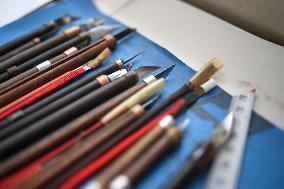
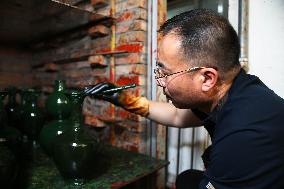
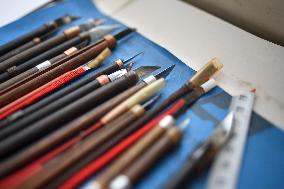
(240607) -- BEIJING, June 7, 2024 Photo by Xinhua/ABACAPRESS.COM) -- Knives for making carved lacquer are seen at Zhu Jiang's studio in Gu'an, north China's Hebei Province, May 30, 2024. Carved lacquer, dating back to the Tang Dynasty (618-907), greeted its peak time in Ming and Qing dynasties (1368-1911). Since the founding of the People's Republic of China in 1949, Beijing and Yangzhou have become the two centers for the craft of carved lacquer, which was listed as a national-level intangible cultural heritage in 2006. Carved lacquer differs in its colors, namely red, black or multiple colors. Its making procedures include designing, body shaping, lacquer making, coating, drawing, carving and grinding. The craftsman needs to smoothly use various kinds of knives to carve patterns on the ware, and even a little miss can destroy the whole artwork. The craft can only be grasped through three to five years of practice. Therefore, it is also called "the art of time." Born in 1976, Zhu Jiang, an inheritor of the c

  •  
(MASTER OF CRAFTS)CHINA-CARVED LACQUER-INHERITOR-STUDIO (CN)

(MASTER OF CRAFTS)CHINA-CARVED LACQUER-INHERITOR-STUDIO (CN)

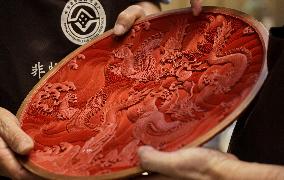
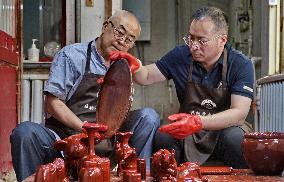
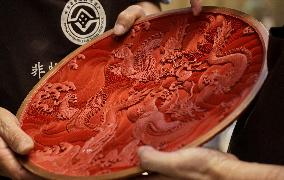
(240607) -- BEIJING, June 7, 2024 Photo by Xinhua/ABACAPRESS.COM) -- Zhu Qingyuan, father of Zhujiang, shows a piece of semi-finished carved lacquer artwork at Zhu Jiang's studio in Gu'an, north China's Hebei Province, May 30, 2024. Carved lacquer, dating back to the Tang Dynasty (618-907), greeted its peak time in Ming and Qing dynasties (1368-1911). Since the founding of the People's Republic of China in 1949, Beijing and Yangzhou have become the two centers for the craft of carved lacquer, which was listed as a national-level intangible cultural heritage in 2006. Carved lacquer differs in its colors, namely red, black or multiple colors. Its making procedures include designing, body shaping, lacquer making, coating, drawing, carving and grinding. The craftsman needs to smoothly use various kinds of knives to carve patterns on the ware, and even a little miss can destroy the whole artwork. The craft can only be grasped through three to five years of practice. Therefore, it is also called "the art of time."

  •  
(MASTER OF CRAFTS)CHINA-CARVED LACQUER-INHERITOR-STUDIO (CN)

(MASTER OF CRAFTS)CHINA-CARVED LACQUER-INHERITOR-STUDIO (CN)

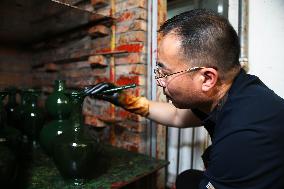
(240607) -- BEIJING, June 7, 2024 Photo by Xinhua/ABACAPRESS.COM) -- Zhu Jiang checks semi-finished carved lacquer wares at his studio in Gu'an, north China's Hebei Province, May 30, 2024. Carved lacquer, dating back to the Tang Dynasty (618-907), greeted its peak time in Ming and Qing dynasties (1368-1911). Since the founding of the People's Republic of China in 1949, Beijing and Yangzhou have become the two centers for the craft of carved lacquer, which was listed as a national-level intangible cultural heritage in 2006. Carved lacquer differs in its colors, namely red, black or multiple colors. Its making procedures include designing, body shaping, lacquer making, coating, drawing, carving and grinding. The craftsman needs to smoothly use various kinds of knives to carve patterns on the ware, and even a little miss can destroy the whole artwork. The craft can only be grasped through three to five years of practice. Therefore, it is also called "the art of time." Born in 1976, Zhu Jiang, an inheritor of the

  •  
(MASTER OF CRAFTS)CHINA-CARVED LACQUER-INHERITOR-STUDIO (CN)

(MASTER OF CRAFTS)CHINA-CARVED LACQUER-INHERITOR-STUDIO (CN)

(240607) -- BEIJING, June 7, 2024 Photo by Xinhua/ABACAPRESS.COM) -- Zhu Jiang makes carved lacquer at his studio in Gu'an, north China's Hebei Province, May 30, 2024. Carved lacquer, dating back to the Tang Dynasty (618-907), greeted its peak time in Ming and Qing dynasties (1368-1911). Since the founding of the People's Republic of China in 1949, Beijing and Yangzhou have become the two centers for the craft of carved lacquer, which was listed as a national-level intangible cultural heritage in 2006. Carved lacquer differs in its colors, namely red, black or multiple colors. Its making procedures include designing, body shaping, lacquer making, coating, drawing, carving and grinding. The craftsman needs to smoothly use various kinds of knives to carve patterns on the ware, and even a little miss can destroy the whole artwork. The craft can only be grasped through three to five years of practice. Therefore, it is also called "the art of time." Born in 1976, Zhu Jiang, an inheritor of the craft of carved lacq

  •  
(MASTER OF CRAFTS)CHINA-CARVED LACQUER-INHERITOR-STUDIO (CN)

(MASTER OF CRAFTS)CHINA-CARVED LACQUER-INHERITOR-STUDIO (CN)

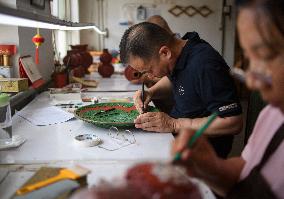
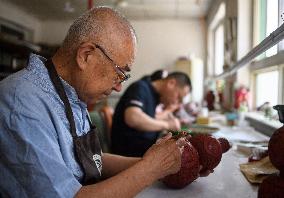
(240607) -- BEIJING, June 7, 2024 Photo by Xinhua/ABACAPRESS.COM) -- Zhu Qingyuan, father of Zhu Jiang, makes carved lacquer at Zhu Jiang's studio in Gu'an, north China's Hebei Province, May 30, 2024. Carved lacquer, dating back to the Tang Dynasty (618-907), greeted its peak time in Ming and Qing dynasties (1368-1911). Since the founding of the People's Republic of China in 1949, Beijing and Yangzhou have become the two centers for the craft of carved lacquer, which was listed as a national-level intangible cultural heritage in 2006. Carved lacquer differs in its colors, namely red, black or multiple colors. Its making procedures include designing, body shaping, lacquer making, coating, drawing, carving and grinding. The craftsman needs to smoothly use various kinds of knives to carve patterns on the ware, and even a little miss can destroy the whole artwork. The craft can only be grasped through three to five years of practice. Therefore, it is also called "the art of time." Born in 1976, Zhu Jiang, an inhe

  •  
(MASTER OF CRAFTS)CHINA-CARVED LACQUER-INHERITOR-STUDIO (CN)

(MASTER OF CRAFTS)CHINA-CARVED LACQUER-INHERITOR-STUDIO (CN)

(240607) -- BEIJING, June 7, 2024 Photo by Xinhua/ABACAPRESS.COM) -- Zhu Jiang (R) and his father Zhu Qingyuan discuss lacquer coating at Zhu Jiang's studio in Gu'an, north China's Hebei Province, May 30, 2024. Carved lacquer, dating back to the Tang Dynasty (618-907), greeted its peak time in Ming and Qing dynasties (1368-1911). Since the founding of the People's Republic of China in 1949, Beijing and Yangzhou have become the two centers for the craft of carved lacquer, which was listed as a national-level intangible cultural heritage in 2006. Carved lacquer differs in its colors, namely red, black or multiple colors. Its making procedures include designing, body shaping, lacquer making, coating, drawing, carving and grinding. The craftsman needs to smoothly use various kinds of knives to carve patterns on the ware, and even a little miss can destroy the whole artwork. The craft can only be grasped through three to five years of practice. Therefore, it is also called "the art of time." Born in 1976, Zhu Jian

  •  
(MASTER OF CRAFTS)CHINA-CARVED LACQUER-INHERITOR-STUDIO (CN)

(MASTER OF CRAFTS)CHINA-CARVED LACQUER-INHERITOR-STUDIO (CN)

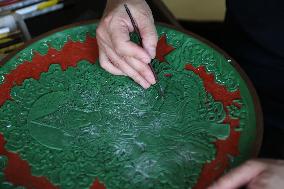
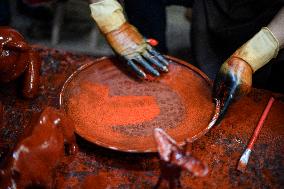
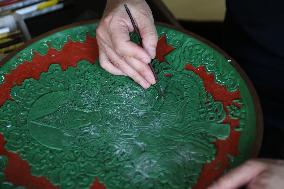
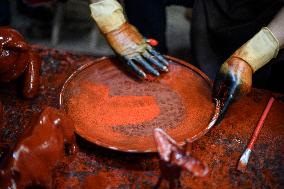
(240607) -- BEIJING, June 7, 2024 Photo by Xinhua/ABACAPRESS.COM) -- Zhu Jiang coats lacquer onto a plate at his studio in Gu'an, north China's Hebei Province, May 30, 2024. Carved lacquer, dating back to the Tang Dynasty (618-907), greeted its peak time in Ming and Qing dynasties (1368-1911). Since the founding of the People's Republic of China in 1949, Beijing and Yangzhou have become the two centers for the craft of carved lacquer, which was listed as a national-level intangible cultural heritage in 2006. Carved lacquer differs in its colors, namely red, black or multiple colors. Its making procedures include designing, body shaping, lacquer making, coating, drawing, carving and grinding. The craftsman needs to smoothly use various kinds of knives to carve patterns on the ware, and even a little miss can destroy the whole artwork. The craft can only be grasped through three to five years of practice. Therefore, it is also called "the art of time." Born in 1976, Zhu Jiang, an inheritor of the craft of carve

  •  
(MASTER OF CRAFTS)CHINA-CARVED LACQUER-INHERITOR-STUDIO (CN)

(MASTER OF CRAFTS)CHINA-CARVED LACQUER-INHERITOR-STUDIO (CN)

(240607) -- BEIJING, June 7, 2024 (Xinhua) -- Carved lacquer artworks are displayed at Zhu Jiang's studio in Gu'an, north China's Hebei Province, May 30, 2024. Carved lacquer, dating back to the Tang Dynasty (618-907), greeted its peak time in Ming and Qing dynasties (1368-1911). Since the founding of the People's Republic of China in 1949, Beijing and Yangzhou have become the two centers for the craft of carved lacquer, which was listed as a national-level intangible cultural heritage in 2006. Carved lacquer differs in its colors, namely red, black or multiple colors. Its making procedures include designing, body shaping, lacquer making, coating, drawing, carving and grinding. The craftsman needs to smoothly use various kinds of knives to carve patterns on the ware, and even a little miss can destroy the whole artwork. The craft can only be grasped through three to five years of practice. Therefore, it is also called "the art of time." Born in 1976, Zhu Jiang, an inheritor of the craft of carved lacque

  •  
(MASTER OF CRAFTS)CHINA-CARVED LACQUER-INHERITOR-STUDIO (CN)

(MASTER OF CRAFTS)CHINA-CARVED LACQUER-INHERITOR-STUDIO (CN)

(240607) -- BEIJING, June 7, 2024 (Xinhua) -- Zhu Jiang checks semi-finished carved lacquer wares at his studio in Gu'an, north China's Hebei Province, May 30, 2024. Carved lacquer, dating back to the Tang Dynasty (618-907), greeted its peak time in Ming and Qing dynasties (1368-1911). Since the founding of the People's Republic of China in 1949, Beijing and Yangzhou have become the two centers for the craft of carved lacquer, which was listed as a national-level intangible cultural heritage in 2006. Carved lacquer differs in its colors, namely red, black or multiple colors. Its making procedures include designing, body shaping, lacquer making, coating, drawing, carving and grinding. The craftsman needs to smoothly use various kinds of knives to carve patterns on the ware, and even a little miss can destroy the whole artwork. The craft can only be grasped through three to five years of practice. Therefore, it is also called "the art of time." Born in 1976, Zhu Jiang, an inheritor of the craft of carved

  •  
(MASTER OF CRAFTS)CHINA-CARVED LACQUER-INHERITOR-STUDIO (CN)

(MASTER OF CRAFTS)CHINA-CARVED LACQUER-INHERITOR-STUDIO (CN)

(240607) -- BEIJING, June 7, 2024 (Xinhua) -- Zhu Jiang (L) and his father carry semi-finished carved lacquer wares for drying at his studio in Gu'an, north China's Hebei Province, May 30, 2024. Carved lacquer, dating back to the Tang Dynasty (618-907), greeted its peak time in Ming and Qing dynasties (1368-1911). Since the founding of the People's Republic of China in 1949, Beijing and Yangzhou have become the two centers for the craft of carved lacquer, which was listed as a national-level intangible cultural heritage in 2006. Carved lacquer differs in its colors, namely red, black or multiple colors. Its making procedures include designing, body shaping, lacquer making, coating, drawing, carving and grinding. The craftsman needs to smoothly use various kinds of knives to carve patterns on the ware, and even a little miss can destroy the whole artwork. The craft can only be grasped through three to five years of practice. Therefore, it is also called "the art of time." Born in 1976, Zhu Jiang, an inhe

  •  
(MASTER OF CRAFTS)CHINA-CARVED LACQUER-INHERITOR-STUDIO (CN)

(MASTER OF CRAFTS)CHINA-CARVED LACQUER-INHERITOR-STUDIO (CN)

(240607) -- BEIJING, June 7, 2024 (Xinhua) -- Zhu Jiang reads a book on carved lacquer at his studio in Gu'an, north China's Hebei Province, May 30, 2024. Carved lacquer, dating back to the Tang Dynasty (618-907), greeted its peak time in Ming and Qing dynasties (1368-1911). Since the founding of the People's Republic of China in 1949, Beijing and Yangzhou have become the two centers for the craft of carved lacquer, which was listed as a national-level intangible cultural heritage in 2006. Carved lacquer differs in its colors, namely red, black or multiple colors. Its making procedures include designing, body shaping, lacquer making, coating, drawing, carving and grinding. The craftsman needs to smoothly use various kinds of knives to carve patterns on the ware, and even a little miss can destroy the whole artwork. The craft can only be grasped through three to five years of practice. Therefore, it is also called "the art of time." Born in 1976, Zhu Jiang, an inheritor of the craft of carved lacquer, le

  •  
(MASTER OF CRAFTS)CHINA-CARVED LACQUER-INHERITOR-STUDIO (CN)

(MASTER OF CRAFTS)CHINA-CARVED LACQUER-INHERITOR-STUDIO (CN)

(240607) -- BEIJING, June 7, 2024 (Xinhua) -- Carved lacquer artworks are displayed at Zhu Jiang's studio in Gu'an, north China's Hebei Province, May 30, 2024. Carved lacquer, dating back to the Tang Dynasty (618-907), greeted its peak time in Ming and Qing dynasties (1368-1911). Since the founding of the People's Republic of China in 1949, Beijing and Yangzhou have become the two centers for the craft of carved lacquer, which was listed as a national-level intangible cultural heritage in 2006. Carved lacquer differs in its colors, namely red, black or multiple colors. Its making procedures include designing, body shaping, lacquer making, coating, drawing, carving and grinding. The craftsman needs to smoothly use various kinds of knives to carve patterns on the ware, and even a little miss can destroy the whole artwork. The craft can only be grasped through three to five years of practice. Therefore, it is also called "the art of time." Born in 1976, Zhu Jiang, an inheritor of the craft of carved lacque

  •  
(MASTER OF CRAFTS)CHINA-CARVED LACQUER-INHERITOR-STUDIO (CN)

(MASTER OF CRAFTS)CHINA-CARVED LACQUER-INHERITOR-STUDIO (CN)

(240607) -- BEIJING, June 7, 2024 (Xinhua) -- Carved lacquer artworks are displayed at Zhu Jiang's studio in Gu'an, north China's Hebei Province, May 30, 2024. Carved lacquer, dating back to the Tang Dynasty (618-907), greeted its peak time in Ming and Qing dynasties (1368-1911). Since the founding of the People's Republic of China in 1949, Beijing and Yangzhou have become the two centers for the craft of carved lacquer, which was listed as a national-level intangible cultural heritage in 2006. Carved lacquer differs in its colors, namely red, black or multiple colors. Its making procedures include designing, body shaping, lacquer making, coating, drawing, carving and grinding. The craftsman needs to smoothly use various kinds of knives to carve patterns on the ware, and even a little miss can destroy the whole artwork. The craft can only be grasped through three to five years of practice. Therefore, it is also called "the art of time." Born in 1976, Zhu Jiang, an inheritor of the craft of carved lacque

  •  
(MASTER OF CRAFTS)CHINA-CARVED LACQUER-INHERITOR-STUDIO (CN)

(MASTER OF CRAFTS)CHINA-CARVED LACQUER-INHERITOR-STUDIO (CN)

(240607) -- BEIJING, June 7, 2024 (Xinhua) -- Zhu Jiang makes carved lacquer at his studio in Gu'an, north China's Hebei Province, May 30, 2024. Carved lacquer, dating back to the Tang Dynasty (618-907), greeted its peak time in Ming and Qing dynasties (1368-1911). Since the founding of the People's Republic of China in 1949, Beijing and Yangzhou have become the two centers for the craft of carved lacquer, which was listed as a national-level intangible cultural heritage in 2006. Carved lacquer differs in its colors, namely red, black or multiple colors. Its making procedures include designing, body shaping, lacquer making, coating, drawing, carving and grinding. The craftsman needs to smoothly use various kinds of knives to carve patterns on the ware, and even a little miss can destroy the whole artwork. The craft can only be grasped through three to five years of practice. Therefore, it is also called "the art of time." Born in 1976, Zhu Jiang, an inheritor of the craft of carved lacquer, learned the

  •  
(MASTER OF CRAFTS)CHINA-CARVED LACQUER-INHERITOR-STUDIO (CN)

(MASTER OF CRAFTS)CHINA-CARVED LACQUER-INHERITOR-STUDIO (CN)

(240607) -- BEIJING, June 7, 2024 (Xinhua) -- Zhu Qingyuan, father of Zhujiang, shows a piece of semi-finished carved lacquer artwork at Zhu Jiang's studio in Gu'an, north China's Hebei Province, May 30, 2024. Carved lacquer, dating back to the Tang Dynasty (618-907), greeted its peak time in Ming and Qing dynasties (1368-1911). Since the founding of the People's Republic of China in 1949, Beijing and Yangzhou have become the two centers for the craft of carved lacquer, which was listed as a national-level intangible cultural heritage in 2006. Carved lacquer differs in its colors, namely red, black or multiple colors. Its making procedures include designing, body shaping, lacquer making, coating, drawing, carving and grinding. The craftsman needs to smoothly use various kinds of knives to carve patterns on the ware, and even a little miss can destroy the whole artwork. The craft can only be grasped through three to five years of practice. Therefore, it is also called "the art of time." Born in 1976, Zhu

  •  
(MASTER OF CRAFTS)CHINA-CARVED LACQUER-INHERITOR-STUDIO (CN)

(MASTER OF CRAFTS)CHINA-CARVED LACQUER-INHERITOR-STUDIO (CN)

(240607) -- BEIJING, June 7, 2024 (Xinhua) -- Semi-finished carved lacquer artworks are seen on drying at Zhu Jiang's studio in Gu'an, north China's Hebei Province, May 30, 2024. Carved lacquer, dating back to the Tang Dynasty (618-907), greeted its peak time in Ming and Qing dynasties (1368-1911). Since the founding of the People's Republic of China in 1949, Beijing and Yangzhou have become the two centers for the craft of carved lacquer, which was listed as a national-level intangible cultural heritage in 2006. Carved lacquer differs in its colors, namely red, black or multiple colors. Its making procedures include designing, body shaping, lacquer making, coating, drawing, carving and grinding. The craftsman needs to smoothly use various kinds of knives to carve patterns on the ware, and even a little miss can destroy the whole artwork. The craft can only be grasped through three to five years of practice. Therefore, it is also called "the art of time." Born in 1976, Zhu Jiang, an inheritor of the cra

  •  
(MASTER OF CRAFTS)CHINA-CARVED LACQUER-INHERITOR-STUDIO (CN)

(MASTER OF CRAFTS)CHINA-CARVED LACQUER-INHERITOR-STUDIO (CN)

(240607) -- BEIJING, June 7, 2024 (Xinhua) -- Zhu Qingyuan, father of Zhu Jiang, makes carved lacquer at Zhu Jiang's studio in Gu'an, north China's Hebei Province, May 30, 2024. Carved lacquer, dating back to the Tang Dynasty (618-907), greeted its peak time in Ming and Qing dynasties (1368-1911). Since the founding of the People's Republic of China in 1949, Beijing and Yangzhou have become the two centers for the craft of carved lacquer, which was listed as a national-level intangible cultural heritage in 2006. Carved lacquer differs in its colors, namely red, black or multiple colors. Its making procedures include designing, body shaping, lacquer making, coating, drawing, carving and grinding. The craftsman needs to smoothly use various kinds of knives to carve patterns on the ware, and even a little miss can destroy the whole artwork. The craft can only be grasped through three to five years of practice. Therefore, it is also called "the art of time." Born in 1976, Zhu Jiang, an inheritor of the craf

  •  
(MASTER OF CRAFTS)CHINA-CARVED LACQUER-INHERITOR-STUDIO (CN)

(MASTER OF CRAFTS)CHINA-CARVED LACQUER-INHERITOR-STUDIO (CN)

(240607) -- BEIJING, June 7, 2024 (Xinhua) -- A piece of carved lacquer artwork on drying is displayed at Zhu Jiang's studio in Gu'an, north China's Hebei Province, May 30, 2024. Carved lacquer, dating back to the Tang Dynasty (618-907), greeted its peak time in Ming and Qing dynasties (1368-1911). Since the founding of the People's Republic of China in 1949, Beijing and Yangzhou have become the two centers for the craft of carved lacquer, which was listed as a national-level intangible cultural heritage in 2006. Carved lacquer differs in its colors, namely red, black or multiple colors. Its making procedures include designing, body shaping, lacquer making, coating, drawing, carving and grinding. The craftsman needs to smoothly use various kinds of knives to carve patterns on the ware, and even a little miss can destroy the whole artwork. The craft can only be grasped through three to five years of practice. Therefore, it is also called "the art of time." Born in 1976, Zhu Jiang, an inheritor of the cra

  •  
(MASTER OF CRAFTS)CHINA-CARVED LACQUER-INHERITOR-STUDIO (CN)

(MASTER OF CRAFTS)CHINA-CARVED LACQUER-INHERITOR-STUDIO (CN)

(240607) -- BEIJING, June 7, 2024 (Xinhua) -- Carved lacquer artworks are displayed at Zhu Jiang's studio in Gu'an, north China's Hebei Province, May 30, 2024. Carved lacquer, dating back to the Tang Dynasty (618-907), greeted its peak time in Ming and Qing dynasties (1368-1911). Since the founding of the People's Republic of China in 1949, Beijing and Yangzhou have become the two centers for the craft of carved lacquer, which was listed as a national-level intangible cultural heritage in 2006. Carved lacquer differs in its colors, namely red, black or multiple colors. Its making procedures include designing, body shaping, lacquer making, coating, drawing, carving and grinding. The craftsman needs to smoothly use various kinds of knives to carve patterns on the ware, and even a little miss can destroy the whole artwork. The craft can only be grasped through three to five years of practice. Therefore, it is also called "the art of time." Born in 1976, Zhu Jiang, an inheritor of the craft of carved lacque

  •  
(MASTER OF CRAFTS)CHINA-CARVED LACQUER-INHERITOR-STUDIO (CN)

(MASTER OF CRAFTS)CHINA-CARVED LACQUER-INHERITOR-STUDIO (CN)

(240607) -- BEIJING, June 7, 2024 (Xinhua) -- Knives for making carved lacquer are seen at Zhu Jiang's studio in Gu'an, north China's Hebei Province, May 30, 2024. Carved lacquer, dating back to the Tang Dynasty (618-907), greeted its peak time in Ming and Qing dynasties (1368-1911). Since the founding of the People's Republic of China in 1949, Beijing and Yangzhou have become the two centers for the craft of carved lacquer, which was listed as a national-level intangible cultural heritage in 2006. Carved lacquer differs in its colors, namely red, black or multiple colors. Its making procedures include designing, body shaping, lacquer making, coating, drawing, carving and grinding. The craftsman needs to smoothly use various kinds of knives to carve patterns on the ware, and even a little miss can destroy the whole artwork. The craft can only be grasped through three to five years of practice. Therefore, it is also called "the art of time." Born in 1976, Zhu Jiang, an inheritor of the craft of carved la

  •  
(MASTER OF CRAFTS)CHINA-CARVED LACQUER-INHERITOR-STUDIO (CN)

(MASTER OF CRAFTS)CHINA-CARVED LACQUER-INHERITOR-STUDIO (CN)

(240607) -- BEIJING, June 7, 2024 (Xinhua) -- Carved lacquer artworks are displayed at Zhu Jiang's studio in Gu'an, north China's Hebei Province, May 30, 2024. Carved lacquer, dating back to the Tang Dynasty (618-907), greeted its peak time in Ming and Qing dynasties (1368-1911). Since the founding of the People's Republic of China in 1949, Beijing and Yangzhou have become the two centers for the craft of carved lacquer, which was listed as a national-level intangible cultural heritage in 2006. Carved lacquer differs in its colors, namely red, black or multiple colors. Its making procedures include designing, body shaping, lacquer making, coating, drawing, carving and grinding. The craftsman needs to smoothly use various kinds of knives to carve patterns on the ware, and even a little miss can destroy the whole artwork. The craft can only be grasped through three to five years of practice. Therefore, it is also called "the art of time." Born in 1976, Zhu Jiang, an inheritor of the craft of carved lacque

  •  
(MASTER OF CRAFTS)CHINA-CARVED LACQUER-INHERITOR-STUDIO (CN)

(MASTER OF CRAFTS)CHINA-CARVED LACQUER-INHERITOR-STUDIO (CN)

(240607) -- BEIJING, June 7, 2024 (Xinhua) -- Zhu Jiang makes carved lacquer at his studio in Gu'an, north China's Hebei Province, May 30, 2024. Carved lacquer, dating back to the Tang Dynasty (618-907), greeted its peak time in Ming and Qing dynasties (1368-1911). Since the founding of the People's Republic of China in 1949, Beijing and Yangzhou have become the two centers for the craft of carved lacquer, which was listed as a national-level intangible cultural heritage in 2006. Carved lacquer differs in its colors, namely red, black or multiple colors. Its making procedures include designing, body shaping, lacquer making, coating, drawing, carving and grinding. The craftsman needs to smoothly use various kinds of knives to carve patterns on the ware, and even a little miss can destroy the whole artwork. The craft can only be grasped through three to five years of practice. Therefore, it is also called "the art of time." Born in 1976, Zhu Jiang, an inheritor of the craft of carved lacquer, learned the

  •  
(MASTER OF CRAFTS)CHINA-CARVED LACQUER-INHERITOR-STUDIO (CN)

(MASTER OF CRAFTS)CHINA-CARVED LACQUER-INHERITOR-STUDIO (CN)

(240607) -- BEIJING, June 7, 2024 (Xinhua) -- Carved lacquer artworks are displayed at Zhu Jiang's studio in Gu'an, north China's Hebei Province, May 30, 2024. Carved lacquer, dating back to the Tang Dynasty (618-907), greeted its peak time in Ming and Qing dynasties (1368-1911). Since the founding of the People's Republic of China in 1949, Beijing and Yangzhou have become the two centers for the craft of carved lacquer, which was listed as a national-level intangible cultural heritage in 2006. Carved lacquer differs in its colors, namely red, black or multiple colors. Its making procedures include designing, body shaping, lacquer making, coating, drawing, carving and grinding. The craftsman needs to smoothly use various kinds of knives to carve patterns on the ware, and even a little miss can destroy the whole artwork. The craft can only be grasped through three to five years of practice. Therefore, it is also called "the art of time." Born in 1976, Zhu Jiang, an inheritor of the craft of carved lacque

  •  
(MASTER OF CRAFTS)CHINA-CARVED LACQUER-INHERITOR-STUDIO (CN)

(MASTER OF CRAFTS)CHINA-CARVED LACQUER-INHERITOR-STUDIO (CN)

(240607) -- BEIJING, June 7, 2024 (Xinhua) -- Zhu Jiang makes carved lacquer at his studio in Gu'an, north China's Hebei Province, May 30, 2024. Carved lacquer, dating back to the Tang Dynasty (618-907), greeted its peak time in Ming and Qing dynasties (1368-1911). Since the founding of the People's Republic of China in 1949, Beijing and Yangzhou have become the two centers for the craft of carved lacquer, which was listed as a national-level intangible cultural heritage in 2006. Carved lacquer differs in its colors, namely red, black or multiple colors. Its making procedures include designing, body shaping, lacquer making, coating, drawing, carving and grinding. The craftsman needs to smoothly use various kinds of knives to carve patterns on the ware, and even a little miss can destroy the whole artwork. The craft can only be grasped through three to five years of practice. Therefore, it is also called "the art of time." Born in 1976, Zhu Jiang, an inheritor of the craft of carved lacquer, learned the

  •  
(MASTER OF CRAFTS)CHINA-CARVED LACQUER-INHERITOR-STUDIO (CN)

(MASTER OF CRAFTS)CHINA-CARVED LACQUER-INHERITOR-STUDIO (CN)

(240607) -- BEIJING, June 7, 2024 (Xinhua) -- Zhu Jiang (R) and his father Zhu Qingyuan discuss lacquer coating at Zhu Jiang's studio in Gu'an, north China's Hebei Province, May 30, 2024. Carved lacquer, dating back to the Tang Dynasty (618-907), greeted its peak time in Ming and Qing dynasties (1368-1911). Since the founding of the People's Republic of China in 1949, Beijing and Yangzhou have become the two centers for the craft of carved lacquer, which was listed as a national-level intangible cultural heritage in 2006. Carved lacquer differs in its colors, namely red, black or multiple colors. Its making procedures include designing, body shaping, lacquer making, coating, drawing, carving and grinding. The craftsman needs to smoothly use various kinds of knives to carve patterns on the ware, and even a little miss can destroy the whole artwork. The craft can only be grasped through three to five years of practice. Therefore, it is also called "the art of time." Born in 1976, Zhu Jiang, an inheritor o

  •  
(MASTER OF CRAFTS)CHINA-CARVED LACQUER-INHERITOR-STUDIO (CN)

(MASTER OF CRAFTS)CHINA-CARVED LACQUER-INHERITOR-STUDIO (CN)

(240607) -- BEIJING, June 7, 2024 (Xinhua) -- Zhu Jiang makes carved lacquer at his studio in Gu'an, north China's Hebei Province, May 30, 2024. Carved lacquer, dating back to the Tang Dynasty (618-907), greeted its peak time in Ming and Qing dynasties (1368-1911). Since the founding of the People's Republic of China in 1949, Beijing and Yangzhou have become the two centers for the craft of carved lacquer, which was listed as a national-level intangible cultural heritage in 2006. Carved lacquer differs in its colors, namely red, black or multiple colors. Its making procedures include designing, body shaping, lacquer making, coating, drawing, carving and grinding. The craftsman needs to smoothly use various kinds of knives to carve patterns on the ware, and even a little miss can destroy the whole artwork. The craft can only be grasped through three to five years of practice. Therefore, it is also called "the art of time." Born in 1976, Zhu Jiang, an inheritor of the craft of carved lacquer, learned the

  •  
(MASTER OF CRAFTS)CHINA-CARVED LACQUER-INHERITOR-STUDIO (CN)

(MASTER OF CRAFTS)CHINA-CARVED LACQUER-INHERITOR-STUDIO (CN)

(240607) -- BEIJING, June 7, 2024 (Xinhua) -- Zhu Jiang coats lacquer onto a plate at his studio in Gu'an, north China's Hebei Province, May 30, 2024. Carved lacquer, dating back to the Tang Dynasty (618-907), greeted its peak time in Ming and Qing dynasties (1368-1911). Since the founding of the People's Republic of China in 1949, Beijing and Yangzhou have become the two centers for the craft of carved lacquer, which was listed as a national-level intangible cultural heritage in 2006. Carved lacquer differs in its colors, namely red, black or multiple colors. Its making procedures include designing, body shaping, lacquer making, coating, drawing, carving and grinding. The craftsman needs to smoothly use various kinds of knives to carve patterns on the ware, and even a little miss can destroy the whole artwork. The craft can only be grasped through three to five years of practice. Therefore, it is also called "the art of time." Born in 1976, Zhu Jiang, an inheritor of the craft of carved lacquer, learne

  •  

Agricultural technicians in China's Hebei help farmers reduce grain losses

STORY: Agricultural technicians in China's Hebei help farmers reduce grain losses DATELINE: Aug. 8, 2023 LENGTH: 00:01:04 LOCATION: SHIJIAZHUANG, China CATEGORY: AGRICULTURE SHOTLIST: 1. various of farmlands 2. SOUNDBITE (Chinese): LIU ZHONGBO, Vegetable farmer in Yongqing County STORYLINE: Langfang City in north China's Hebei Province has organized agricultural technicians to help farmers reduce losses caused by heavy rains and floods. Due to the impact of Typhoon Doksuri, torrential rains battered Beijing and its surrounding regions, causing anomalous floods in several districts of the capital city and several localities in Hebei Province in the past few days. In Gu'an County, agricultural technicians teach corn farmers to prevent and control pest infestations in order to improve quality and increase yield. Yongqing County has sent eight technical guidance groups to check crop damages and help vegetable farmers resume production as soon as possible. SOUNDBITE (Chinese): LIU ZHONGBO, Vegetable farmer

  • Main
  • Top
  • Editorial
  • Creative
  • About Us
  • About ILG
  • Terms of use
  • Company
  • BEHIND
  • Price List
  • Single Plan
  • Monthly Plan
  • Services
  • Shooting
  • Rights Clearance
  • Support
  • FAQ
  • How To Buy
  • Contact Us
  • Become a Partner

© KYODO NEWS IMAGES INC

All Rights Reserved.

  • Editorial
  • Olympics
  • News
  • Sports
  • Japan
  • Tech
  • Royal
  • Disaster
  • NorthKorea
  • Old Japan
  • SNS
  • Creative
  • Food
  • Japan
  • Landscape
  • Animal
  • Popular
  • #Ukraine
  • #Russia
  • #coronavirus
  • #N. Korea
  • #China
  • #Thailand
  • #Ukraine
  • #Russia
  • #coronavirus
  • #N. Korea
  • #China
  • #Thailand
  • Food
  • Japan
  • Landscape
  • Animal
  • Olympics
  • News
  • Sports
  • Japan
  • Tech
  • Royal
  • Disaster
  • NorthKorea
  • Old Japan
  • SNS