•  
The Coolest Camel Herder of The Annual Camel Fair - Pushkar

The Coolest Camel Herder of The Annual Camel Fair - Pushkar

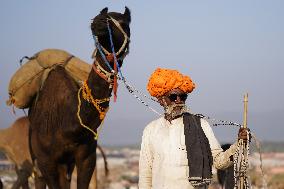
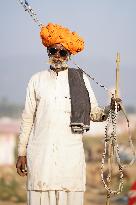
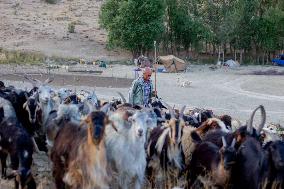
An Indian camel herder poses for photograph during the Annual Camel Fair at Pushkar in India's desert state of Rajasthan on October 26, 2025. Thousands of livestock traders from the region come to the traditional camel fair where livestock, mainly camels, are traded. The annual camel and livestock fair is one of the world's largest camel fairs. Photo by Himanshu Sharma/ABACAPRESS.COM

  •  
The Coolest Camel Herder of The Annual Camel Fair - Pushkar

The Coolest Camel Herder of The Annual Camel Fair - Pushkar

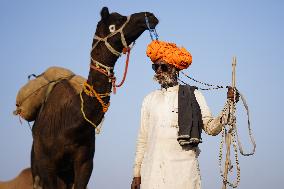
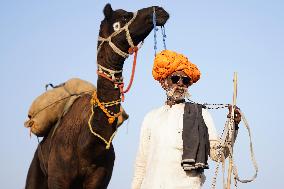
An Indian camel herder poses for photograph during the Annual Camel Fair at Pushkar in India's desert state of Rajasthan on October 26, 2025. Thousands of livestock traders from the region come to the traditional camel fair where livestock, mainly camels, are traded. The annual camel and livestock fair is one of the world's largest camel fairs. Photo by Himanshu Sharma/ABACAPRESS.COM

  •  
The Coolest Camel Herder of The Annual Camel Fair - Pushkar

The Coolest Camel Herder of The Annual Camel Fair - Pushkar

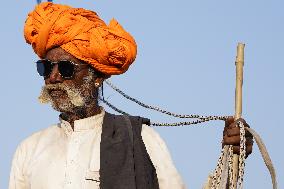
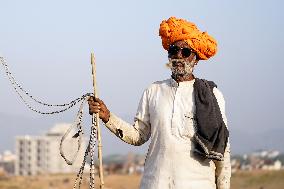
An Indian camel herder poses for photograph during the Annual Camel Fair at Pushkar in India's desert state of Rajasthan on October 26, 2025. Thousands of livestock traders from the region come to the traditional camel fair where livestock, mainly camels, are traded. The annual camel and livestock fair is one of the world's largest camel fairs. Photo by Himanshu Sharma/ABACAPRESS.COM

  •  
The Coolest Camel Herder of The Annual Camel Fair - Pushkar

The Coolest Camel Herder of The Annual Camel Fair - Pushkar

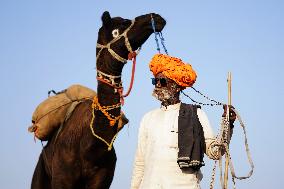
An Indian camel herder poses for photograph during the Annual Camel Fair at Pushkar in India's desert state of Rajasthan on October 26, 2025. Thousands of livestock traders from the region come to the traditional camel fair where livestock, mainly camels, are traded. The annual camel and livestock fair is one of the world's largest camel fairs. Photo by Himanshu Sharma/ABACAPRESS.COM

  •  
The Coolest Camel Herder of The Annual Camel Fair - Pushkar

The Coolest Camel Herder of The Annual Camel Fair - Pushkar

An Indian camel herder poses for photograph during the Annual Camel Fair at Pushkar in India's desert state of Rajasthan on October 26, 2025. Thousands of livestock traders from the region come to the traditional camel fair where livestock, mainly camels, are traded. The annual camel and livestock fair is one of the world's largest camel fairs. Photo by Himanshu Sharma/ABACAPRESS.COM

  •  
The Coolest Camel Herder of The Annual Camel Fair - Pushkar

The Coolest Camel Herder of The Annual Camel Fair - Pushkar

An Indian camel herder poses for photograph during the Annual Camel Fair at Pushkar in India's desert state of Rajasthan on October 26, 2025. Thousands of livestock traders from the region come to the traditional camel fair where livestock, mainly camels, are traded. The annual camel and livestock fair is one of the world's largest camel fairs. Photo by Himanshu Sharma/ABACAPRESS.COM

  •  
The Coolest Camel Herder of The Annual Camel Fair - Pushkar

The Coolest Camel Herder of The Annual Camel Fair - Pushkar

An Indian camel herder poses for photograph during the Annual Camel Fair at Pushkar in India's desert state of Rajasthan on October 26, 2025. Thousands of livestock traders from the region come to the traditional camel fair where livestock, mainly camels, are traded. The annual camel and livestock fair is one of the world's largest camel fairs. Photo by Himanshu Sharma/ABACAPRESS.COM

  •  
SWEDEN DINNER 2025

SWEDEN DINNER 2025

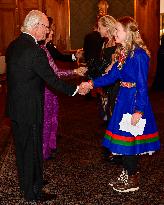
Evelina Solsten, reindeer herder in Tåssåsen's Sami village, is welcomed by Sweden's King Carl Gustaf during the Sweden dinner at Stockholm Palace, Sweden, October 17, 2025.Photo: Jonas Ekströmer / TT / Code 10030

  •  
Nomadic People - Iran

Nomadic People - Iran

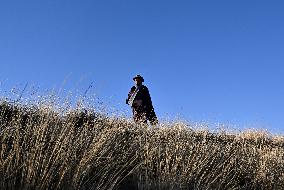
A Qashqai herder leads his flock through a valley. The Qashqai nomads migrate seasonally across the Zagros Mountains. Iran, November 9, 2024. Photo by Zurvan/Middle East Images/ABACAPRESS.COM

  •  
Princess Beatrix At The Reopening Of The Flour Mill - Netherlands

Princess Beatrix At The Reopening Of The Flour Mill - Netherlands

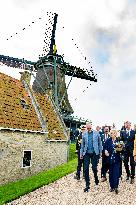
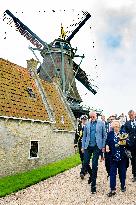
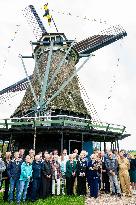
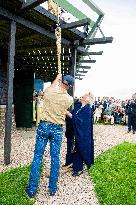
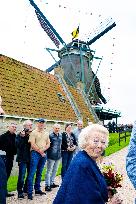
Princess Beatrix at the reopening of the Flour Mill De Herder in Medemblik. Princess Beatrix is the patroness of De Hollandsche Molen, the association that is committed to the preservation of mills in the Netherlands. September 24, 2024. Photo by Bruno Press/ABACAPRESS.COM

  •  
Princess Beatrix At The Reopening Of The Flour Mill - Netherlands

Princess Beatrix At The Reopening Of The Flour Mill - Netherlands

Princess Beatrix at the reopening of the Flour Mill De Herder in Medemblik. Princess Beatrix is the patroness of De Hollandsche Molen, the association that is committed to the preservation of mills in the Netherlands. September 24, 2024. Photo by Bruno Press/ABACAPRESS.COM

  •  
Princess Beatrix At The Reopening Of The Flour Mill - Netherlands

Princess Beatrix At The Reopening Of The Flour Mill - Netherlands

Princess Beatrix at the reopening of the Flour Mill De Herder in Medemblik. Princess Beatrix is the patroness of De Hollandsche Molen, the association that is committed to the preservation of mills in the Netherlands. September 24, 2024. Photo by Bruno Press/ABACAPRESS.COM

  •  
Princess Beatrix At The Reopening Of The Flour Mill - Netherlands

Princess Beatrix At The Reopening Of The Flour Mill - Netherlands

Princess Beatrix at the reopening of the Flour Mill De Herder in Medemblik. Princess Beatrix is the patroness of De Hollandsche Molen, the association that is committed to the preservation of mills in the Netherlands. September 24, 2024. Photo by Bruno Press/ABACAPRESS.COM

  •  
Princess Beatrix At The Reopening Of The Flour Mill - Netherlands

Princess Beatrix At The Reopening Of The Flour Mill - Netherlands

Princess Beatrix at the reopening of the Flour Mill De Herder in Medemblik. Princess Beatrix is the patroness of De Hollandsche Molen, the association that is committed to the preservation of mills in the Netherlands. September 24, 2024. Photo by Bruno Press/ABACAPRESS.COM

  •  
Princess Beatrix At The Reopening Of The Flour Mill - Netherlands

Princess Beatrix At The Reopening Of The Flour Mill - Netherlands

Princess Beatrix at the reopening of the Flour Mill De Herder in Medemblik. Princess Beatrix is the patroness of De Hollandsche Molen, the association that is committed to the preservation of mills in the Netherlands. September 24, 2024. Photo by Bruno Press/ABACAPRESS.COM

  •  
Princess Beatrix At The Reopening Of The Flour Mill - Netherlands

Princess Beatrix At The Reopening Of The Flour Mill - Netherlands

Princess Beatrix at the reopening of the Flour Mill De Herder in Medemblik. Princess Beatrix is the patroness of De Hollandsche Molen, the association that is committed to the preservation of mills in the Netherlands. September 24, 2024. Photo by Bruno Press/ABACAPRESS.COM

  •  
Princess Beatrix At The Reopening Of The Flour Mill - Netherlands

Princess Beatrix At The Reopening Of The Flour Mill - Netherlands

Princess Beatrix at the reopening of the Flour Mill De Herder in Medemblik. Princess Beatrix is the patroness of De Hollandsche Molen, the association that is committed to the preservation of mills in the Netherlands. September 24, 2024. Photo by Bruno Press/ABACAPRESS.COM

  •  
Princess Beatrix At The Reopening Of The Flour Mill - Netherlands

Princess Beatrix At The Reopening Of The Flour Mill - Netherlands

Princess Beatrix at the reopening of the Flour Mill De Herder in Medemblik. Princess Beatrix is the patroness of De Hollandsche Molen, the association that is committed to the preservation of mills in the Netherlands. September 24, 2024. Photo by Bruno Press/ABACAPRESS.COM

  •  
Princess Beatrix At The Reopening Of The Flour Mill - Netherlands

Princess Beatrix At The Reopening Of The Flour Mill - Netherlands

Princess Beatrix at the reopening of the Flour Mill De Herder in Medemblik. Princess Beatrix is the patroness of De Hollandsche Molen, the association that is committed to the preservation of mills in the Netherlands. September 24, 2024. Photo by Bruno Press/ABACAPRESS.COM

  •  
Princess Beatrix At The Reopening Of The Flour Mill - Netherlands

Princess Beatrix At The Reopening Of The Flour Mill - Netherlands

Princess Beatrix at the reopening of the Flour Mill De Herder in Medemblik. Princess Beatrix is the patroness of De Hollandsche Molen, the association that is committed to the preservation of mills in the Netherlands. September 24, 2024. Photo by Bruno Press/ABACAPRESS.COM

  •  
(SichuanMosaics)CHINA-SICHUAN-GARZE-HORSE RACING (CN)

(SichuanMosaics)CHINA-SICHUAN-GARZE-HORSE RACING (CN)

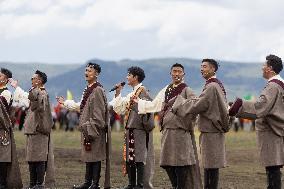
(240730) -- LITANG, July 30, 2024 Photo by Xinhua/ABACAPRESS.COM) -- Tamdrin (C) sings with other local singers at a racecourse in Litang County, the Tibetan Autonomous Prefecture of Garze, southwest China's Sichuan Province, July 30, 2024. Tamdrin is a Tibetan herder from a village of Litang County. He became a social media sensation in China years ago and is now the tourism ambassador of his home county of Litang. A horse racing event kicked off in Litang County on Tuesday, attracting nearly 1,000 herdsmen from across the county to participate in a variety of activities. Photo by Xinhua/ABACAPRESS.COM/Jiang Hongjing)

  •  
(SichuanMosaics)CHINA-SICHUAN-GARZE-HORSE RACING (CN)

(SichuanMosaics)CHINA-SICHUAN-GARZE-HORSE RACING (CN)

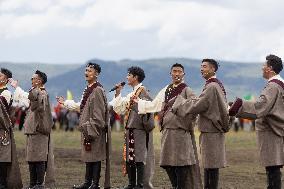
(240730) -- LITANG, July 30, 2024 Photo by Xinhua/ABACAPRESS.COM) -- Locals perform singing at a racecourse in Litang County, the Tibetan Autonomous Prefecture of Garze, southwest China's Sichuan Province, July 30, 2024. Tamdrin is a Tibetan herder from a village of Litang County. He became a social media sensation in China years ago and is now the tourism ambassador of his home county of Litang. A horse racing event kicked off in Litang County on Tuesday, attracting nearly 1,000 herdsmen from across the county to participate in a variety of activities. Photo by Xinhua/ABACAPRESS.COM/Jiang Hongjing)

  •  

Trapped foal saved by herder in China's Inner Mongolia

STORY: Trapped foal saved by herder in China's Inner Mongolia SHOOTING TIME: June 11, 2024 DATELINE: June 17, 2024 LENGTH: 0:00:16 LOCATION: XILIN GOL LEAGUE, China CATEGORY: ENVIRONMENT SHOTLIST: 1. various of the rescue STORYLINE: A foal trapped in a mud pool on the grassland was found and saved by a herder in north China's Inner Mongolia Autonomous Region. Xinhua News Agency correspondents reporting from Xilin Gol League, China. (XHTV)

  •  
Xinhua Headlines: Solar power farms on plateau fuel China's green energy revolution

Xinhua Headlines: Solar power farms on plateau fuel China's green energy revolution

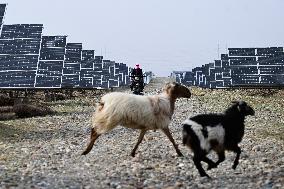
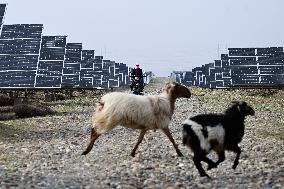
(240609) -- XINING, June 9, 2024 Photo by Xinhua/ABACAPRESS.COM) -- A herder riding a motorbike tends his sheep at a solar photovoltaic power plant in Gonghe County, Hainan Tibetan Autonomous Prefecture in northwest China's Qinghai Province, April 15, 2024. Photo by Xinhua/ABACAPRESS.COM/Zhang Long)

  •  
Xinhua Headlines: Solar power farms on plateau fuel China's green energy revolution

Xinhua Headlines: Solar power farms on plateau fuel China's green energy revolution

(240609) -- XINING, June 9, 2024 (Xinhua) -- A herder riding a motorbike tends his sheep at a solar photovoltaic power plant in Gonghe County, Hainan Tibetan Autonomous Prefecture in northwest China's Qinghai Province, April 15, 2024. (Xinhua/Zhang Long)

  •  
The Marsh Arabs - Iraq

The Marsh Arabs - Iraq

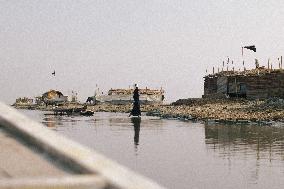
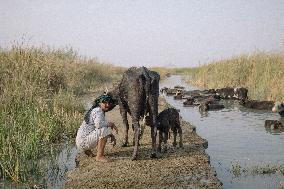
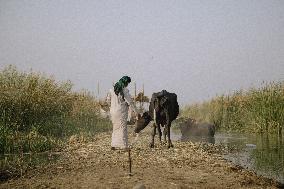
A buffalo herder carries water to her house in the Chibayesh marshland in Iraq's southern Ahwar area of Dhi Qar on January 22, 2021. The Mesopotamian Marshes are located in southern Iraq, in the basin of the two mythical rivers of the Middle East: the Euphrates and the Tigris. The region is considered one of the cradles of civilization and, according to legend, even hosted the Gardens of Eden. The Marsh Arabs, also called Maadans, are an ancient community. It is estimated that they have occupied the marshes for almost 5,000 years. Between 1991 and 2003, the former dictator Saddam Hussein completely dried up the area because he believed it harbored his opponents. When he fell, the Maadans returned and tore down the dikes and dams he had built. The marshes have then almost returned to their original state. But in recent years, global warming and dams built upstream of the two rivers in Turkey have once again put the marshes in danger. Photo by Aline Deschamps/Middle East Images/ABACAPRESS.COM

  •  
The Marsh Arabs - Iraq

The Marsh Arabs - Iraq

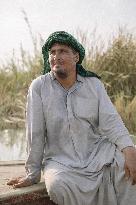
A buffalo herder sits down with visitors in the Chibayesh marshland in Iraq's southern Ahwar area of Dhi Qar on January 22, 2021. The Mesopotamian Marshes are located in southern Iraq, in the basin of the two mythical rivers of the Middle East: the Euphrates and the Tigris. The region is considered one of the cradles of civilization and, according to legend, even hosted the Gardens of Eden. The Marsh Arabs, also called Maadans, are an ancient community. It is estimated that they have occupied the marshes for almost 5,000 years. Between 1991 and 2003, the former dictator Saddam Hussein completely dried up the area because he believed it harbored his opponents. When he fell, the Maadans returned and tore down the dikes and dams he had built. The marshes have then almost returned to their original state. But in recent years, global warming and dams built upstream of the two rivers in Turkey have once again put the marshes in danger. Photo by Aline Deschamps/Middle East Images/ABACAPRESS.COM

  •  
The Marsh Arabs - Iraq

The Marsh Arabs - Iraq

A buffalo herder looks after his herd of buffalos the Chibayesh marshland in Iraq's southern Ahwar area of Dhi Qar on January 22, 2021. The Mesopotamian Marshes are located in southern Iraq, in the basin of the two mythical rivers of the Middle East: the Euphrates and the Tigris. The region is considered one of the cradles of civilization and, according to legend, even hosted the Gardens of Eden. The Marsh Arabs, also called Maadans, are an ancient community. It is estimated that they have occupied the marshes for almost 5,000 years. Between 1991 and 2003, the former dictator Saddam Hussein completely dried up the area because he believed it harbored his opponents. When he fell, the Maadans returned and tore down the dikes and dams he had built. The marshes have then almost returned to their original state. But in recent years, global warming and dams built upstream of the two rivers in Turkey have once again put the marshes in danger. Photo by Aline Deschamps/Middle East Images/ABACAPRESS.COM

  •  
The Marsh Arabs - Iraq

The Marsh Arabs - Iraq

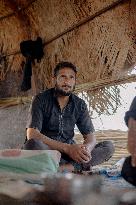
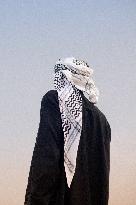
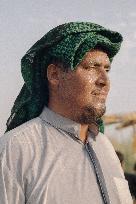
A buffalo herder poses for a portrait in the Chibayesh marshland in Iraq's southern Ahwar area of Dhi Qar on January 22, 2021. The Mesopotamian Marshes are located in southern Iraq, in the basin of the two mythical rivers of the Middle East: the Euphrates and the Tigris. The region is considered one of the cradles of civilization and, according to legend, even hosted the Gardens of Eden. The Marsh Arabs, also called Maadans, are an ancient community. It is estimated that they have occupied the marshes for almost 5,000 years. Between 1991 and 2003, the former dictator Saddam Hussein completely dried up the area because he believed it harbored his opponents. When he fell, the Maadans returned and tore down the dikes and dams he had built. The marshes have then almost returned to their original state. But in recent years, global warming and dams built upstream of the two rivers in Turkey have once again put the marshes in danger. Photo by Aline Deschamps/Middle East Images/ABACAPRESS.COM

  •  
The Marsh Arabs - Iraq

The Marsh Arabs - Iraq

A buffalo herder poses for a portrait in the Chibayesh marshland in Iraq's southern Ahwar area of Dhi Qar on January 22, 2021. The Mesopotamian Marshes are located in southern Iraq, in the basin of the two mythical rivers of the Middle East: the Euphrates and the Tigris. The region is considered one of the cradles of civilization and, according to legend, even hosted the Gardens of Eden. The Marsh Arabs, also called Maadans, are an ancient community. It is estimated that they have occupied the marshes for almost 5,000 years. Between 1991 and 2003, the former dictator Saddam Hussein completely dried up the area because he believed it harbored his opponents. When he fell, the Maadans returned and tore down the dikes and dams he had built. The marshes have then almost returned to their original state. But in recent years, global warming and dams built upstream of the two rivers in Turkey have once again put the marshes in danger. Photo by Aline Deschamps/Middle East Images/ABACAPRESS.COM

  •  
The Marsh Arabs - Iraq

The Marsh Arabs - Iraq

A buffalo herder poses for a portrait in the Chibayesh marshland in Iraq's southern Ahwar area of Dhi Qar on January 22, 2021. The Mesopotamian Marshes are located in southern Iraq, in the basin of the two mythical rivers of the Middle East: the Euphrates and the Tigris. The region is considered one of the cradles of civilization and, according to legend, even hosted the Gardens of Eden. The Marsh Arabs, also called Maadans, are an ancient community. It is estimated that they have occupied the marshes for almost 5,000 years. Between 1991 and 2003, the former dictator Saddam Hussein completely dried up the area because he believed it harbored his opponents. When he fell, the Maadans returned and tore down the dikes and dams he had built. The marshes have then almost returned to their original state. But in recent years, global warming and dams built upstream of the two rivers in Turkey have once again put the marshes in danger. Photo by Aline Deschamps/Middle East Images/ABACAPRESS.COM

  •  
The Marsh Arabs - Iraq

The Marsh Arabs - Iraq

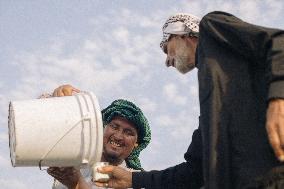
A buffalo herder pours fresh milk to a visitor in the Chibayesh marshland in Iraq's southern Ahwar area of Dhi Qar on January 22, 2021. The Mesopotamian Marshes are located in southern Iraq, in the basin of the two mythical rivers of the Middle East: the Euphrates and the Tigris. The region is considered one of the cradles of civilization and, according to legend, even hosted the Gardens of Eden. The Marsh Arabs, also called Maadans, are an ancient community. It is estimated that they have occupied the marshes for almost 5,000 years. Between 1991 and 2003, the former dictator Saddam Hussein completely dried up the area because he believed it harbored his opponents. When he fell, the Maadans returned and tore down the dikes and dams he had built. The marshes have then almost returned to their original state. But in recent years, global warming and dams built upstream of the two rivers in Turkey have once again put the marshes in danger. Photo by Aline Deschamps/Middle East Images/ABACAPRESS.COM

  •  
The Marsh Arabs - Iraq

The Marsh Arabs - Iraq

A buffalo herder poses for a portrait in the Chibayesh marshland in Iraq's southern Ahwar area of Dhi Qar on January 22, 2021. The Mesopotamian Marshes are located in southern Iraq, in the basin of the two mythical rivers of the Middle East: the Euphrates and the Tigris. The region is considered one of the cradles of civilization and, according to legend, even hosted the Gardens of Eden. The Marsh Arabs, also called Maadans, are an ancient community. It is estimated that they have occupied the marshes for almost 5,000 years. Between 1991 and 2003, the former dictator Saddam Hussein completely dried up the area because he believed it harbored his opponents. When he fell, the Maadans returned and tore down the dikes and dams he had built. The marshes have then almost returned to their original state. But in recent years, global warming and dams built upstream of the two rivers in Turkey have once again put the marshes in danger. Photo by Aline Deschamps/Middle East Images/ABACAPRESS.COM

  •  
The Marsh Arabs - Iraq

The Marsh Arabs - Iraq

A buffalo herder stands next to a buffalo the Chibayesh marshland in Iraq's southern Ahwar area of Dhi Qar on January 22, 2021. The Mesopotamian Marshes are located in southern Iraq, in the basin of the two mythical rivers of the Middle East: the Euphrates and the Tigris. The region is considered one of the cradles of civilization and, according to legend, even hosted the Gardens of Eden. The Marsh Arabs, also called Maadans, are an ancient community. It is estimated that they have occupied the marshes for almost 5,000 years. Between 1991 and 2003, the former dictator Saddam Hussein completely dried up the area because he believed it harbored his opponents. When he fell, the Maadans returned and tore down the dikes and dams he had built. The marshes have then almost returned to their original state. But in recent years, global warming and dams built upstream of the two rivers in Turkey have once again put the marshes in danger. Photo by Aline Deschamps/Middle East Images/ABACAPRESS.COM

  •  
CHINA-QINGHAI-XINING-HERDER-POETRY (CN)

CHINA-QINGHAI-XINING-HERDER-POETRY (CN)

(240416) -- XINING, April 16, 2024 (Xinhua) -- Norpal Gyal walks on a grassland near Qinghai Lake in northwest China's Qinghai Province, March 20, 2024. TO GO WITH "Profile: Rural herder captures life's symphony through poetry " (Xinhua/Zhang Hongxiang)

  •  

Harsh weather kills over 5 mln head of livestock in Mongolia

STORY: Harsh weather kills over 5 mln head of livestock in Mongolia SHOOTING TIME: March 2024 DATELINE: March 22, 2024 LENGTH: 00:00:35 LOCATION: Ulan Bator CATEGORY: ENVIRONMENT SHOTLIST: 1. various of livestock in Mongolia STORYLINE: More than 5 million head of livestock have perished in Mongolia so far this winter, due to extreme wintry weather known as "dzud," the country's State Emergency Commission (SEC) said Friday. The dzud is a Mongolian term to describe a severely cold winter when a large number of livestock die because the ground is frozen or covered in snow. As Mongolia saw much more snow than usual this winter, over 80 percent of its territory had been blanketed with snow up to 100 cm thick, according to the country's weather monitoring agency. The amount of snow cover in Mongolia has so far decreased to around 60 percent, it said, adding that the country is expected to experience severe spring weather. At the end of last year, there were over 190,000 herder households in the c

  •  

China hands over relief materials to herders in central Mongolia hit by harsh winter

STORY: China hands over relief materials to herders in central Mongolia hit by harsh winter SHOOTING DATE: March 18, 2024 DATELINE: March 19, 2024 LENGTH: 00:01:06 LOCATION: ERDENE, Mongolia CATEGORY: ECONOMY/POLITICS SHOTLIST: 1. various of relief materials provided by China to Mongolia STORYLINE: Chinese Ambassador to Mongolia Shen Minjuan and Mongolian Foreign Minister Batmunkh Battsetseg on Monday visited the central Mongolian province of Tuv to hand over relief materials provided by China to 500 herdsmen affected by the extreme wintry weather. This winter, Mongolia has been hit by a severe "dzud," a Mongolian term to describe a severely cold winter when many livestock die because the ground is frozen or covered in snow. They handed over the relief materials including warm clothes, family packages, food and other necessities to herder families in Erdene soum (administrative subdivision) of the province. More than 4 million head of livestock have died so far this winter due to the dzud, acco

  •  

Over 600,000 livestock die in cold winter in Mongolia

STORY: Over 600,000 livestock die in cold winter in Mongolia SHOOTING TIME: Recent footage DATELINE: Feb. 16, 2024 LENGTH: 0:00:55 LOCATION: Ulan Bator CATEGORY: SOCIETY SHOTLIST: 1. various of the harsh weather STORYLINE: At least 611,924 heads of livestock have died across Mongolia so far this winter, due to the extreme wintry weather known as "dzud," local media reported on Friday, citing the country's State Emergency Commission (SEC). The dzud is a Mongolian term to describe a severely cold winter when a large number of livestock die because the ground is frozen or covered by snow. Among the country's 21 provinces, Khentii, Dornod, Sukhbaatar and Dornogovi in the east, as well as Arkhangai in the central west, registered the highest rates of animal death, the SEC said in a statement. In addition, at least 13,500 herder households have been trapped in the snow, and 38,400 km of roads have been closed due to the snow, it said. The number of livestock in Mongolia stood at 64.7 million at

  •  
CHINA-INT'L WORKERS' DAY-WORKERS (CN)

CHINA-INT'L WORKERS' DAY-WORKERS (CN)

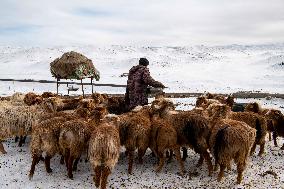
(230430) -- BEIJING, April 30, 2023 (Xinhua) -- A young herder feeds sheep in the Barlik Mountain area in Yumin County, northwest China's Xinjiang Uygur Autonomous Region, Feb. 14, 2023. International Workers' Day is observed annually on May 1 in China. The sight of every worker's back prompts images related to effort, progress, practicality, as well as faith in the future. Every worker, no matter how ordinary, deserves a big applause for their every bit of hard work in making themselves a better person and the world a better place. (Xinhua/Hu Huhu)

  •  

8 mln heads of livestock move for better pasture in Mongolia

STORY: 8 mln heads of livestock move for better pasture in Mongolia SHOOTING TIME: December, 2023 DATELINE: Jan. 23, 2024 LENGTH: 00:00:50 LOCATION: TUV/DUNDGOVI, Mongolia CATEGORY: ENVIRONMENT/SOCIETY SHOTLIST: 1. various of livestock in Mongolia STORYLINE: Around 8 million heads of livestock have been moving from one place to another for better pasture to overcome the current harsh wintry weather, Mongolia's National Emergency Management Agency (NEMA) said Tuesday. "So far, at least 7.8 million heads of livestock from 18,800 herder households have been moving from their own areas to another in search of better pasture," the NEMA said, adding that its regional headquarters have been established in the eastern provinces of Khentii, Dornod and Sukhbaatar, as well as in the northern province of Khuvsgul to provide the state support and health care services to the herder households. According to the National Statistics Office, Mongolia, one of the last nomadic countries in the world, had 64.7 million livest

  •  
CHINA-XIZANG-HERDER-SHEEP BREEDING COOPERATIVES (CN)

CHINA-XIZANG-HERDER-SHEEP BREEDING COOPERATIVES (CN)

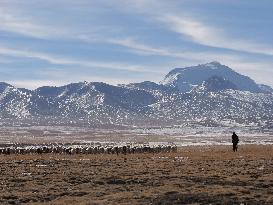
(240123) -- LHASA, Jan. 23, 2024 (Xinhua) -- A sheep breeding cooperative is pictured in Kamba County, southwest China's Xizang Autonomous Region, Dec. 20, 2023. TO GO WITH "Across China: Sheep breeding cooperatives boost incomes of Xizang herders" (Xinhua/Lodro Gyatso)

  •  
CHINA-XIZANG-HERDER-SHEEP BREEDING COOPERATIVES (CN)

CHINA-XIZANG-HERDER-SHEEP BREEDING COOPERATIVES (CN)

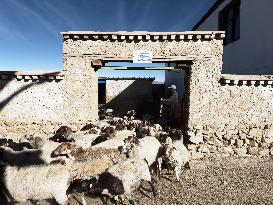
(240123) -- LHASA, Jan. 23, 2024 (Xinhua) -- A herder takes care of a herd of sheep in Kamba County in southwest China's Xizang Autonomous Region, Dec. 20, 2023. TO GO WITH "Across China: Sheep breeding cooperatives boost incomes of Xizang herders" (Xinhua/Lodro Gyatso)

  •  
CHINA-XIZANG-HERDER-SHEEP BREEDING COOPERATIVES (CN)

CHINA-XIZANG-HERDER-SHEEP BREEDING COOPERATIVES (CN)

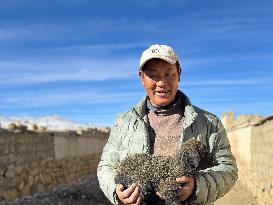
(240123) -- LHASA, Jan. 23, 2024 (Xinhua) -- A staff member of a sheep breeding cooperative holds a newborn Kamba lamb in Kamba County, southwest China's Xizang Autonomous Region, Dec. 20, 2023. TO GO WITH "Across China: Sheep breeding cooperatives boost incomes of Xizang herders" (Xinhua/Lodro Gyatso)

  •  
CHINA-XINJIANG-MORI-KAZAK HERDER-WINTER LIFE (CN)

CHINA-XINJIANG-MORI-KAZAK HERDER-WINTER LIFE (CN)

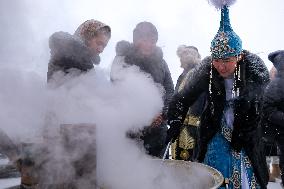
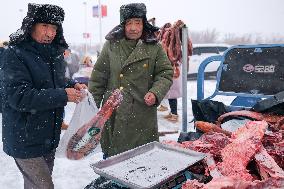
(231222) -- MORI, Dec. 22, 2023 (Xinhua) -- People prepare a mutton stew at a market during a cultural event in the Kazak Autonomous County of Mori, northwest China's Xinjiang Uygur Autonomous Region, Dec. 21, 2023. Every year between November and December is the time for Kazak herders to stock meat for winter. Herders share the fruits of their work and replenish energy for the winter following local customs. A cultural event marking the traditional festive practice kicked off on Thursday in the county. (Xinhua/Zhang Cheng)

  •  
CHINA-XINJIANG-MORI-KAZAK HERDER-WINTER LIFE (CN)

CHINA-XINJIANG-MORI-KAZAK HERDER-WINTER LIFE (CN)

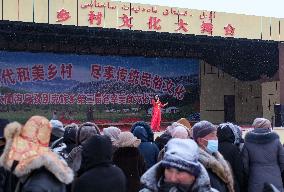
(231222) -- MORI, Dec. 22, 2023 (Xinhua) -- People watch a performance during a cultural event in the Kazak Autonomous County of Mori, northwest China's Xinjiang Uygur Autonomous Region, Dec. 21, 2023. Every year between November and December is the time for Kazak herders to stock meat for winter. Herders share the fruits of their work and replenish energy for the winter following local customs. A cultural event marking the traditional festive practice kicked off on Thursday in the county. (Xinhua/Zhang Cheng)

  •  
CHINA-XINJIANG-MORI-KAZAK HERDER-WINTER LIFE (CN)

CHINA-XINJIANG-MORI-KAZAK HERDER-WINTER LIFE (CN)

(231222) -- MORI, Dec. 22, 2023 (Xinhua) -- Villagers shop at a market during a cultural event in the Kazak Autonomous County of Mori, northwest China's Xinjiang Uygur Autonomous Region, Dec. 21, 2023. Every year between November and December is the time for Kazak herders to stock meat for winter. Herders share the fruits of their work and replenish energy for the winter following local customs. A cultural event marking the traditional festive practice kicked off on Thursday in the county. (Xinhua/Zhang Cheng)

  •  
CHINA-XINJIANG-MORI-KAZAK HERDER-WINTER LIFE (CN)

CHINA-XINJIANG-MORI-KAZAK HERDER-WINTER LIFE (CN)

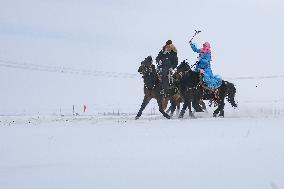
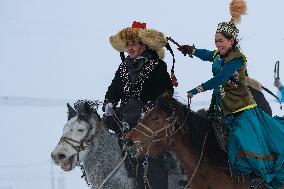
(231222) -- MORI, Dec. 22, 2023 (Xinhua) -- Herders perform a traditional horse racing show named "Guniangzhui" during a cultural event in the Kazak Autonomous County of Mori, northwest China's Xinjiang Uygur Autonomous Region, Dec. 21, 2023. Every year between November and December is the time for Kazak herders to stock meat for winter. Herders share the fruits of their work and replenish energy for the winter following local customs. A cultural event marking the traditional festive practice kicked off on Thursday in the county. (Xinhua/Zhang Cheng)

  •  
CHINA-XINJIANG-MORI-KAZAK HERDER-WINTER LIFE (CN)

CHINA-XINJIANG-MORI-KAZAK HERDER-WINTER LIFE (CN)

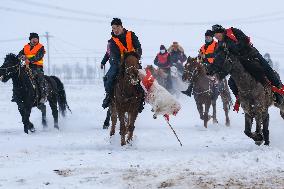
(231222) -- MORI, Dec. 22, 2023 (Xinhua) -- Herders give a performance of the goat-grabbing game during a cultural event in the Kazak Autonomous County of Mori, northwest China's Xinjiang Uygur Autonomous Region, Dec. 21, 2023. Every year between November and December is the time for Kazak herders to stock meat for winter. Herders share the fruits of their work and replenish energy for the winter following local customs. A cultural event marking the traditional festive practice kicked off on Thursday in the county. (Xinhua/Zhang Cheng)

  •  
CHINA-XINJIANG-MORI-KAZAK HERDER-WINTER LIFE (CN)

CHINA-XINJIANG-MORI-KAZAK HERDER-WINTER LIFE (CN)

(231222) -- MORI, Dec. 22, 2023 (Xinhua) -- Herders perform a traditional horse racing show named "Guniangzhui" during a cultural event in the Kazak Autonomous County of Mori, northwest China's Xinjiang Uygur Autonomous Region, Dec. 21, 2023. Every year between November and December is the time for Kazak herders to stock meat for winter. Herders share the fruits of their work and replenish energy for the winter following local customs. A cultural event marking the traditional festive practice kicked off on Thursday in the county. (Xinhua/Zhang Cheng)

  •  
CHINA-XINJIANG-MORI-KAZAK HERDER-WINTER LIFE (CN)

CHINA-XINJIANG-MORI-KAZAK HERDER-WINTER LIFE (CN)

(231222) -- MORI, Dec. 22, 2023 (Xinhua) -- A woman shops at a market during a cultural event in the Kazak Autonomous County of Mori, northwest China's Xinjiang Uygur Autonomous Region, Dec. 21, 2023. Every year between November and December is the time for Kazak herders to stock meat for winter. Herders share the fruits of their work and replenish energy for the winter following local customs. A cultural event marking the traditional festive practice kicked off on Thursday in the county. (Xinhua/Zhang Cheng)

  • Main
  • Top
  • Editorial
  • Creative
  • About Us
  • About ILG
  • Terms of use
  • Company
  • BEHIND
  • Price List
  • Single Plan
  • Monthly Plan
  • Services
  • Shooting
  • Rights Clearance
  • Support
  • FAQ
  • How To Buy
  • Contact Us
  • Become a Partner

© KYODO NEWS IMAGES INC

All Rights Reserved.

  • Editorial
  • Olympics
  • News
  • Sports
  • Japan
  • Tech
  • Royal
  • Disaster
  • NorthKorea
  • Old Japan
  • SNS
  • Creative
  • Food
  • Japan
  • Landscape
  • Animal
  • Popular
  • #Ukraine
  • #China
  • #coronavirus
  • #N. Korea
  • #Thailand
  • #Russia
  • #Ukraine
  • #China
  • #coronavirus
  • #N. Korea
  • #Thailand
  • #Russia
  • Food
  • Japan
  • Landscape
  • Animal
  • Olympics
  • News
  • Sports
  • Japan
  • Tech
  • Royal
  • Disaster
  • NorthKorea
  • Old Japan
  • SNS