•  
Iranian Nomads - Saqqez

Iranian Nomads - Saqqez

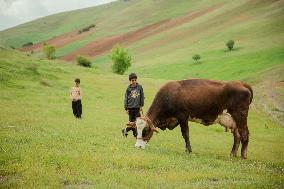
Two children stand near a grazing cow on a grassy field near Saqqez, Iran, on May 9, 2025. Saqqez is located in Iran's Kurdistan Province, where nomadic communities continue to practice seasonal migration and traditional livestock herding. Photo by Barbod Khorshidi/Middle East Images/ABACAPRESS.COM

  •  
Iranian Nomads - Saqqez

Iranian Nomads - Saqqez

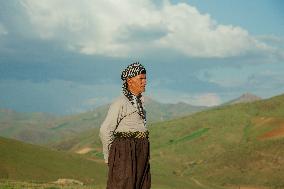
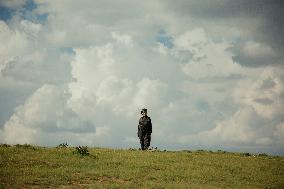
A man stands on hills in a rural area of Saqqez, Iran, on May 9, 2025. Saqqez is located in Iran's Kurdistan Province, where nomadic communities continue to practice seasonal migration and traditional livestock herding. Photo by Barbod Khorshidi/Middle East Images/ABACAPRESS.COM

  •  
Iranian Nomads - Saqqez

Iranian Nomads - Saqqez

A man stands on hills in a rural area of Saqqez, Iran, on May 9, 2025. Saqqez is located in Iran's Kurdistan Province, where nomadic communities continue to practice seasonal migration and traditional livestock herding. Photo by Barbod Khorshidi/Middle East Images/ABACAPRESS.COM

  •  
Iranian Nomads - Saqqez

Iranian Nomads - Saqqez

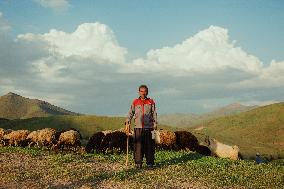
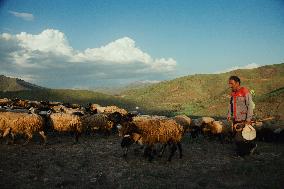
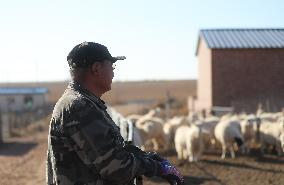
A man stands beside a flock of sheep in Saqqez, Iran, on May 9, 2025. Saqqez is located in Iran's Kurdistan Province, where nomadic communities continue to practice seasonal migration and traditional livestock herding. Photo by Barbod Khorshidi/Middle East Images/ABACAPRESS.COM

  •  
Iranian Nomads - Saqqez

Iranian Nomads - Saqqez

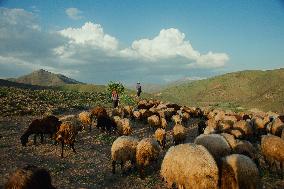
A flock of sheep grazes in a mountainous area near Saqqez, Iran, on May 9, 2025. Saqqez is located in Iran's Kurdistan Province, where nomadic communities continue to practice seasonal migration and traditional livestock herding. Photo by Barbod Khorshidi/Middle East Images/ABACAPRESS.COM

  •  
Iranian Nomads - Saqqez

Iranian Nomads - Saqqez

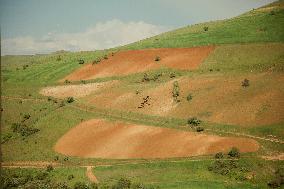
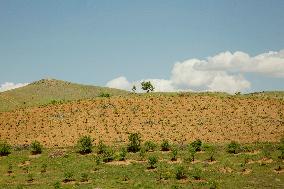
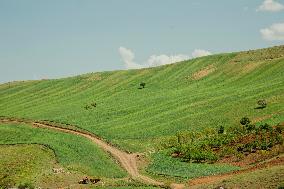
A view of the hillside terrain near Saqqez, Iran, on May 9, 2025. Saqqez is located in Iran's Kurdistan Province, where nomadic communities continue to practice seasonal migration and traditional livestock herding. Photo by Barbod Khorshidi/Middle East Images/ABACAPRESS.COM

  •  
Iranian Nomads - Saqqez

Iranian Nomads - Saqqez

A man walks beside a flock of sheep in Saqqez, Iran, on May 9, 2025. Saqqez is located in Iran's Kurdistan Province, where nomadic communities continue to practice seasonal migration and traditional livestock herding. Photo by Barbod Khorshidi/Middle East Images/ABACAPRESS.COM

  •  
Iranian Nomads - Saqqez

Iranian Nomads - Saqqez

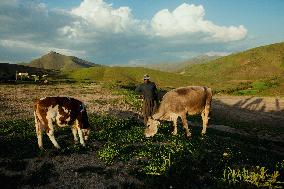
Two cows graze while a man walks nearby on farmland in Saqqez, Iran, on May 9, 2025. Saqqez is located in Iran's Kurdistan Province, where nomadic communities continue to practice seasonal migration and traditional livestock herding. Photo by Barbod Khorshidi/Middle East Images/ABACAPRESS.COM

  •  
Iranian Nomads - Saqqez

Iranian Nomads - Saqqez

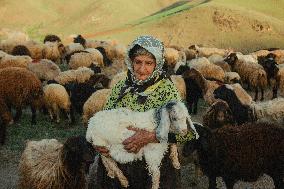
A woman holds a lamb while surrounded by sheep near Saqqez, Iran, on May 9, 2025. Saqqez is located in Iran's Kurdistan Province, where nomadic communities continue to practice seasonal migration and traditional livestock herding. Photo by Barbod Khorshidi/Middle East Images/ABACAPRESS.COM

  •  
Iranian Nomads - Saqqez

Iranian Nomads - Saqqez

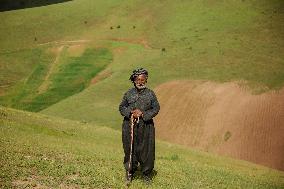
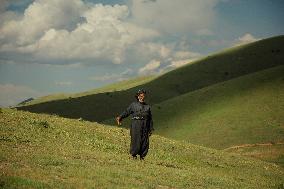
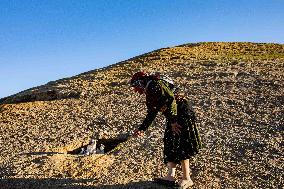
A man walks across a sloped field in traditional clothing near Saqqez, Iran, on May 9, 2025. Saqqez is located in Iran's Kurdistan Province, where nomadic communities continue to practice seasonal migration and traditional livestock herding. Photo by Barbod Khorshidi/Middle East Images/ABACAPRESS.COM

  •  
Iranian Nomads - Saqqez

Iranian Nomads - Saqqez

A view of the hillside terrain near Saqqez, Iran, on May 9, 2025. Saqqez is located in Iran's Kurdistan Province, where nomadic communities continue to practice seasonal migration and traditional livestock herding. Photo by Barbod Khorshidi/Middle East Images/ABACAPRESS.COM

  •  
Iranian Nomads - Saqqez

Iranian Nomads - Saqqez

A view of the hillside terrain near Saqqez, Iran, on May 9, 2025. Saqqez is located in Iran's Kurdistan Province, where nomadic communities continue to practice seasonal migration and traditional livestock herding. Photo by Barbod Khorshidi/Middle East Images/ABACAPRESS.COM

  •  
Iranian Nomads - Saqqez

Iranian Nomads - Saqqez

A view of the hillside terrain near Saqqez, Iran, on May 9, 2025. Saqqez is located in Iran's Kurdistan Province, where nomadic communities continue to practice seasonal migration and traditional livestock herding. Photo by Barbod Khorshidi/Middle East Images/ABACAPRESS.COM

  •  
Iranian Nomads - Saqqez

Iranian Nomads - Saqqez

A man walks across a sloped field in traditional clothing near Saqqez, Iran, on May 9, 2025. Saqqez is located in Iran's Kurdistan Province, where nomadic communities continue to practice seasonal migration and traditional livestock herding. Photo by Barbod Khorshidi/Middle East Images/ABACAPRESS.COM

  •  
Iranian Nomads - Saqqez

Iranian Nomads - Saqqez

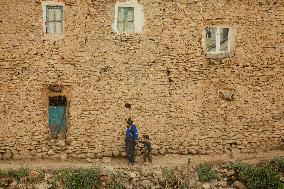
A woman and a child walk in front of a stone house near Saqqez, Iran, on May 9, 2025. Saqqez is located in Iran's Kurdistan Province, where nomadic communities continue to practice seasonal migration and traditional livestock herding. Photo by Barbod Khorshidi/Middle East Images/ABACAPRESS.COM

  •  
Iranian Nomads - Saqqez

Iranian Nomads - Saqqez

A man stands on hills in a rural area of Saqqez, Iran, on May 9, 2025. Saqqez is located in Iran's Kurdistan Province, where nomadic communities continue to practice seasonal migration and traditional livestock herding. Photo by Barbod Khorshidi/Middle East Images/ABACAPRESS.COM

  •  
(EnchantingGuangxi)CHINA-GUANGXI-MIAO ETHNIC GROUP (CN)

(EnchantingGuangxi)CHINA-GUANGXI-MIAO ETHNIC GROUP (CN)

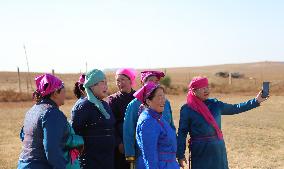
(240718) -- LIUZHOU, July 18, 2024 Photo by Xinhua/ABACAPRESS.COM) -- Villagers engage in conversations after herding sheep in Wuying Village on the border between south China's Guangxi Zhuang Autonomous Region and southwest China's Guizhou Province, July 12, 2024. Wuying Village, spanning a history of over 200 years, is a Miao ethnic group hamlet that nestles snugly in the towering mountains stretching across the border between Guangxi and Guizhou. In the past, the impassable mountains and rugged landscape rendered locals extremely poor. In recent years, Wuying Village has made efforts in the fields of economy, education, culture and ethnic unity, etc. to promote rural vitalization for further development. Photo by Xinhua/ABACAPRESS.COM/Huang Xiaobang)

  •  
ChineseToday | Young couple inherit Aoluguya Ewenki legacy in forests in north China

ChineseToday | Young couple inherit Aoluguya Ewenki legacy in forests in north China

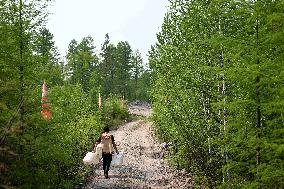
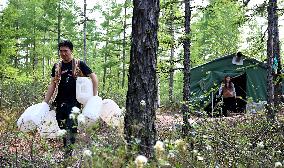
(240714) -- HULUN BUIR, July 14, 2024 Photo by Xinhua/ABACAPRESS.COM) -- Wu Qiming is on the way to fetch water from a stream near the reindeer herding site in Jinhe Town of Genhe City, north China's Inner Mongolia Autonomous Region, July 3, 2024. The Aoluguya Ewenki people, known as "the last hunting tribe in China," is the only ethnic minority group in China that raises reindeer. More than 20 years ago, they moved from the deep forests in the Dahinggan Mountains to Genhe City to resettle, but their tradition of herding reindeer was still preserved. Ayousha is one of the Aoluguya Ewenki people who spent her childhood in the deep forest with her family. In order to inherit the ethnic tradition of herding reindeer, Wu Qiming, Ayousha's husband and man of Han nationality, accompanied her back to the forest from the city in 2019, and together they set up a reindeer herding site in a forest in Jinhe Town. Both born in the 1990s, they are the youngest reindeer herders in the area now. The forests in the Dahinggan

  •  
ChineseToday | Young couple inherit Aoluguya Ewenki legacy in forests in north China

ChineseToday | Young couple inherit Aoluguya Ewenki legacy in forests in north China

(240714) -- HULUN BUIR, July 14, 2024 Photo by Xinhua/ABACAPRESS.COM) -- Ayousha brews coffee in a tent at the reindeer herding site in Jinhe Town of Genhe City, north China's Inner Mongolia Autonomous Region, July 3, 2024. The Aoluguya Ewenki people, known as "the last hunting tribe in China," is the only ethnic minority group in China that raises reindeer. More than 20 years ago, they moved from the deep forests in the Dahinggan Mountains to Genhe City to resettle, but their tradition of herding reindeer was still preserved. Ayousha is one of the Aoluguya Ewenki people who spent her childhood in the deep forest with her family. In order to inherit the ethnic tradition of herding reindeer, Wu Qiming, Ayousha's husband and man of Han nationality, accompanied her back to the forest from the city in 2019, and together they set up a reindeer herding site in a forest in Jinhe Town. Both born in the 1990s, they are the youngest reindeer herders in the area now. The forests in the Dahinggan Mountains are lush and g

  •  
ChineseToday | Young couple inherit Aoluguya Ewenki legacy in forests in north China

ChineseToday | Young couple inherit Aoluguya Ewenki legacy in forests in north China

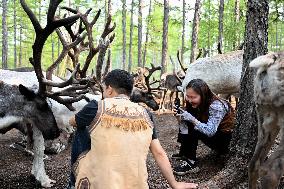
(240714) -- HULUN BUIR, July 14, 2024 Photo by Xinhua/ABACAPRESS.COM) -- Ayousha and her husband Wu Qiming record short videos at the reindeer herding site in Jinhe Town of Genhe City, north China's Inner Mongolia Autonomous Region, July 3, 2024. The Aoluguya Ewenki people, known as "the last hunting tribe in China," is the only ethnic minority group in China that raises reindeer. More than 20 years ago, they moved from the deep forests in the Dahinggan Mountains to Genhe City to resettle, but their tradition of herding reindeer was still preserved. Ayousha is one of the Aoluguya Ewenki people who spent her childhood in the deep forest with her family. In order to inherit the ethnic tradition of herding reindeer, Wu Qiming, Ayousha's husband and man of Han nationality, accompanied her back to the forest from the city in 2019, and together they set up a reindeer herding site in a forest in Jinhe Town. Both born in the 1990s, they are the youngest reindeer herders in the area now. The forests in the Dahinggan M

  •  
ChineseToday | Young couple inherit Aoluguya Ewenki legacy in forests in north China

ChineseToday | Young couple inherit Aoluguya Ewenki legacy in forests in north China

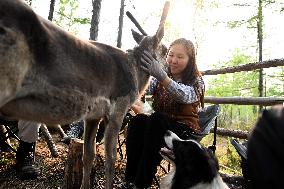
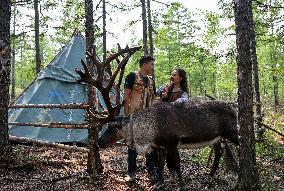
(240714) -- HULUN BUIR, July 14, 2024 Photo by Xinhua/ABACAPRESS.COM) -- Ayousha comforts a reindeer at the reindeer herding site in Jinhe Town of Genhe City, north China's Inner Mongolia Autonomous Region, July 3, 2024. The Aoluguya Ewenki people, known as "the last hunting tribe in China," is the only ethnic minority group in China that raises reindeer. More than 20 years ago, they moved from the deep forests in the Dahinggan Mountains to Genhe City to resettle, but their tradition of herding reindeer was still preserved. Ayousha is one of the Aoluguya Ewenki people who spent her childhood in the deep forest with her family. In order to inherit the ethnic tradition of herding reindeer, Wu Qiming, Ayousha's husband and man of Han nationality, accompanied her back to the forest from the city in 2019, and together they set up a reindeer herding site in a forest in Jinhe Town. Both born in the 1990s, they are the youngest reindeer herders in the area now. The forests in the Dahinggan Mountains are lush and gree

  •  
ChineseToday | Young couple inherit Aoluguya Ewenki legacy in forests in north China

ChineseToday | Young couple inherit Aoluguya Ewenki legacy in forests in north China

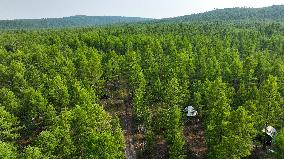
(240714) -- HULUN BUIR, July 14, 2024 Photo by Xinhua/ABACAPRESS.COM) -- An aerial drone photo taken on July 3, 2024 shows a view near the reindeer herding site in Jinhe Town of Genhe City, north China's Inner Mongolia Autonomous Region. The Aoluguya Ewenki people, known as "the last hunting tribe in China," is the only ethnic minority group in China that raises reindeer. More than 20 years ago, they moved from the deep forests in the Dahinggan Mountains to Genhe City to resettle, but their tradition of herding reindeer was still preserved. Ayousha is one of the Aoluguya Ewenki people who spent her childhood in the deep forest with her family. In order to inherit the ethnic tradition of herding reindeer, Wu Qiming, Ayousha's husband and man of Han nationality, accompanied her back to the forest from the city in 2019, and together they set up a reindeer herding site in a forest in Jinhe Town. Both born in the 1990s, they are the youngest reindeer herders in the area now. The forests in the Dahinggan Mountains

  •  
ChineseToday | Young couple inherit Aoluguya Ewenki legacy in forests in north China

ChineseToday | Young couple inherit Aoluguya Ewenki legacy in forests in north China

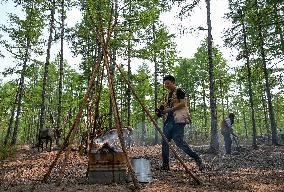
(240714) -- HULUN BUIR, July 14, 2024 Photo by Xinhua/ABACAPRESS.COM) -- Wu Qiming prepares to fetch water from a stream near the reindeer herding site in Jinhe Town of Genhe City, north China's Inner Mongolia Autonomous Region, July 3, 2024. The Aoluguya Ewenki people, known as "the last hunting tribe in China," is the only ethnic minority group in China that raises reindeer. More than 20 years ago, they moved from the deep forests in the Dahinggan Mountains to Genhe City to resettle, but their tradition of herding reindeer was still preserved. Ayousha is one of the Aoluguya Ewenki people who spent her childhood in the deep forest with her family. In order to inherit the ethnic tradition of herding reindeer, Wu Qiming, Ayousha's husband and man of Han nationality, accompanied her back to the forest from the city in 2019, and together they set up a reindeer herding site in a forest in Jinhe Town. Both born in the 1990s, they are the youngest reindeer herders in the area now. The forests in the Dahinggan Mount

  •  
ChineseToday | Young couple inherit Aoluguya Ewenki legacy in forests in north China

ChineseToday | Young couple inherit Aoluguya Ewenki legacy in forests in north China

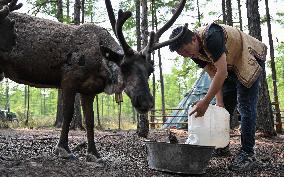
(240714) -- HULUN BUIR, July 14, 2024 Photo by Xinhua/ABACAPRESS.COM) -- Wu Qiming feeds water to a reindeer at the reindeer herding site in Jinhe Town of Genhe City, north China's Inner Mongolia Autonomous Region, July 3, 2024. The Aoluguya Ewenki people, known as "the last hunting tribe in China," is the only ethnic minority group in China that raises reindeer. More than 20 years ago, they moved from the deep forests in the Dahinggan Mountains to Genhe City to resettle, but their tradition of herding reindeer was still preserved. Ayousha is one of the Aoluguya Ewenki people who spent her childhood in the deep forest with her family. In order to inherit the ethnic tradition of herding reindeer, Wu Qiming, Ayousha's husband and man of Han nationality, accompanied her back to the forest from the city in 2019, and together they set up a reindeer herding site in a forest in Jinhe Town. Both born in the 1990s, they are the youngest reindeer herders in the area now. The forests in the Dahinggan Mountains are lush

  •  
ChineseToday | Young couple inherit Aoluguya Ewenki legacy in forests in north China

ChineseToday | Young couple inherit Aoluguya Ewenki legacy in forests in north China

(240714) -- HULUN BUIR, July 14, 2024 Photo by Xinhua/ABACAPRESS.COM) -- Ayousha watches as her husband Wu Qiming deworms a reindeer at the reindeer herding site in Jinhe Town of Genhe City, north China's Inner Mongolia Autonomous Region, July 3, 2024. The Aoluguya Ewenki people, known as "the last hunting tribe in China," is the only ethnic minority group in China that raises reindeer. More than 20 years ago, they moved from the deep forests in the Dahinggan Mountains to Genhe City to resettle, but their tradition of herding reindeer was still preserved. Ayousha is one of the Aoluguya Ewenki people who spent her childhood in the deep forest with her family. In order to inherit the ethnic tradition of herding reindeer, Wu Qiming, Ayousha's husband and man of Han nationality, accompanied her back to the forest from the city in 2019, and together they set up a reindeer herding site in a forest in Jinhe Town. Both born in the 1990s, they are the youngest reindeer herders in the area now. The forests in the Dahin

  •  
ChineseToday | Young couple inherit Aoluguya Ewenki legacy in forests in north China

ChineseToday | Young couple inherit Aoluguya Ewenki legacy in forests in north China

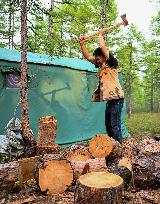
(240714) -- HULUN BUIR, July 14, 2024 Photo by Xinhua/ABACAPRESS.COM) -- Wu Qiming chops firewood at the reindeer herding site in Jinhe Town of Genhe City, north China's Inner Mongolia Autonomous Region, July 3, 2024. The Aoluguya Ewenki people, known as "the last hunting tribe in China," is the only ethnic minority group in China that raises reindeer. More than 20 years ago, they moved from the deep forests in the Dahinggan Mountains to Genhe City to resettle, but their tradition of herding reindeer was still preserved. Ayousha is one of the Aoluguya Ewenki people who spent her childhood in the deep forest with her family. In order to inherit the ethnic tradition of herding reindeer, Wu Qiming, Ayousha's husband and man of Han nationality, accompanied her back to the forest from the city in 2019, and together they set up a reindeer herding site in a forest in Jinhe Town. Both born in the 1990s, they are the youngest reindeer herders in the area now. The forests in the Dahinggan Mountains are lush and green i

  •  
ChineseToday | Young couple inherit Aoluguya Ewenki legacy in forests in north China

ChineseToday | Young couple inherit Aoluguya Ewenki legacy in forests in north China

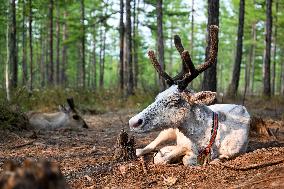
(240714) -- HULUN BUIR, July 14, 2024 Photo by Xinhua/ABACAPRESS.COM) -- A reindeer is seen at the reindeer herding site in Jinhe Town of Genhe City, north China's Inner Mongolia Autonomous Region, July 3, 2024. The Aoluguya Ewenki people, known as "the last hunting tribe in China," is the only ethnic minority group in China that raises reindeer. More than 20 years ago, they moved from the deep forests in the Dahinggan Mountains to Genhe City to resettle, but their tradition of herding reindeer was still preserved. Ayousha is one of the Aoluguya Ewenki people who spent her childhood in the deep forest with her family. In order to inherit the ethnic tradition of herding reindeer, Wu Qiming, Ayousha's husband and man of Han nationality, accompanied her back to the forest from the city in 2019, and together they set up a reindeer herding site in a forest in Jinhe Town. Both born in the 1990s, they are the youngest reindeer herders in the area now. The forests in the Dahinggan Mountains are lush and green in summ

  •  
ChineseToday | Young couple inherit Aoluguya Ewenki legacy in forests in north China

ChineseToday | Young couple inherit Aoluguya Ewenki legacy in forests in north China

(240714) -- HULUN BUIR, July 14, 2024 Photo by Xinhua/ABACAPRESS.COM) -- An aerial drone photo taken on July 3, 2024 shows reindeer at the reindeer herding site in Jinhe Town of Genhe City, north China's Inner Mongolia Autonomous Region. The Aoluguya Ewenki people, known as "the last hunting tribe in China," is the only ethnic minority group in China that raises reindeer. More than 20 years ago, they moved from the deep forests in the Dahinggan Mountains to Genhe City to resettle, but their tradition of herding reindeer was still preserved. Ayousha is one of the Aoluguya Ewenki people who spent her childhood in the deep forest with her family. In order to inherit the ethnic tradition of herding reindeer, Wu Qiming, Ayousha's husband and man of Han nationality, accompanied her back to the forest from the city in 2019, and together they set up a reindeer herding site in a forest in Jinhe Town. Both born in the 1990s, they are the youngest reindeer herders in the area now. The forests in the Dahinggan Mountains

  •  
ChineseToday | Young couple inherit Aoluguya Ewenki legacy in forests in north China

ChineseToday | Young couple inherit Aoluguya Ewenki legacy in forests in north China

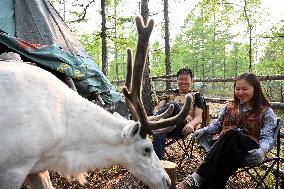
(240714) -- HULUN BUIR, July 14, 2024 Photo by Xinhua/ABACAPRESS.COM) -- Ayousha and her husband Wu Qiming rest at the reindeer herding site in Jinhe Town of Genhe City, north China's Inner Mongolia Autonomous Region, July 3, 2024. The Aoluguya Ewenki people, known as "the last hunting tribe in China," is the only ethnic minority group in China that raises reindeer. More than 20 years ago, they moved from the deep forests in the Dahinggan Mountains to Genhe City to resettle, but their tradition of herding reindeer was still preserved. Ayousha is one of the Aoluguya Ewenki people who spent her childhood in the deep forest with her family. In order to inherit the ethnic tradition of herding reindeer, Wu Qiming, Ayousha's husband and man of Han nationality, accompanied her back to the forest from the city in 2019, and together they set up a reindeer herding site in a forest in Jinhe Town. Both born in the 1990s, they are the youngest reindeer herders in the area now. The forests in the Dahinggan Mountains are lu

  •  
ChineseToday | Young couple inherit Aoluguya Ewenki legacy in forests in north China

ChineseToday | Young couple inherit Aoluguya Ewenki legacy in forests in north China

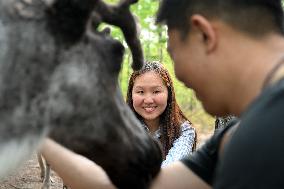
(240714) -- HULUN BUIR, July 14, 2024 Photo by Xinhua/ABACAPRESS.COM) -- Ayousha and her husband Wu Qiming pose for photos with their most favorite reindeer at the reindeer herding site in Jinhe Town of Genhe City, north China's Inner Mongolia Autonomous Region, July 3, 2024. The Aoluguya Ewenki people, known as "the last hunting tribe in China," is the only ethnic minority group in China that raises reindeer. More than 20 years ago, they moved from the deep forests in the Dahinggan Mountains to Genhe City to resettle, but their tradition of herding reindeer was still preserved. Ayousha is one of the Aoluguya Ewenki people who spent her childhood in the deep forest with her family. In order to inherit the ethnic tradition of herding reindeer, Wu Qiming, Ayousha's husband and man of Han nationality, accompanied her back to the forest from the city in 2019, and together they set up a reindeer herding site in a forest in Jinhe Town. Both born in the 1990s, they are the youngest reindeer herders in the area now.

  •  
ChineseToday | Young couple inherit Aoluguya Ewenki legacy in forests in north China

ChineseToday | Young couple inherit Aoluguya Ewenki legacy in forests in north China

(240714) -- HULUN BUIR, July 14, 2024 Photo by Xinhua/ABACAPRESS.COM) -- Tourists pose for photos with a reindeer at the reindeer herding site in Jinhe Town of Genhe City, north China's Inner Mongolia Autonomous Region, July 3, 2024. The Aoluguya Ewenki people, known as "the last hunting tribe in China," is the only ethnic minority group in China that raises reindeer. More than 20 years ago, they moved from the deep forests in the Dahinggan Mountains to Genhe City to resettle, but their tradition of herding reindeer was still preserved. Ayousha is one of the Aoluguya Ewenki people who spent her childhood in the deep forest with her family. In order to inherit the ethnic tradition of herding reindeer, Wu Qiming, Ayousha's husband and man of Han nationality, accompanied her back to the forest from the city in 2019, and together they set up a reindeer herding site in a forest in Jinhe Town. Both born in the 1990s, they are the youngest reindeer herders in the area now. The forests in the Dahinggan Mountains are

  •  
ChineseToday | Young couple inherit Aoluguya Ewenki legacy in forests in north China

ChineseToday | Young couple inherit Aoluguya Ewenki legacy in forests in north China

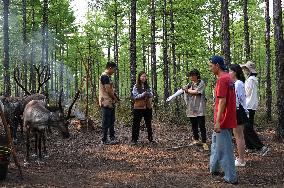
(240714) -- HULUN BUIR, July 14, 2024 Photo by Xinhua/ABACAPRESS.COM) -- Ayousha (2nd L) communicates with tourists at the reindeer herding site in Jinhe Town of Genhe City, north China's Inner Mongolia Autonomous Region, July 3, 2024. The Aoluguya Ewenki people, known as "the last hunting tribe in China," is the only ethnic minority group in China that raises reindeer. More than 20 years ago, they moved from the deep forests in the Dahinggan Mountains to Genhe City to resettle, but their tradition of herding reindeer was still preserved. Ayousha is one of the Aoluguya Ewenki people who spent her childhood in the deep forest with her family. In order to inherit the ethnic tradition of herding reindeer, Wu Qiming, Ayousha's husband and man of Han nationality, accompanied her back to the forest from the city in 2019, and together they set up a reindeer herding site in a forest in Jinhe Town. Both born in the 1990s, they are the youngest reindeer herders in the area now. The forests in the Dahinggan Mountains ar

  •  
ChineseToday | Young couple inherit Aoluguya Ewenki legacy in forests in north China

ChineseToday | Young couple inherit Aoluguya Ewenki legacy in forests in north China

(240714) -- HULUN BUIR, July 14, 2024 Photo by Xinhua/ABACAPRESS.COM) -- Ayousha and her husband Wu Qiming work at the reindeer herding site in Jinhe Town of Genhe City, north China's Inner Mongolia Autonomous Region, July 3, 2024. The Aoluguya Ewenki people, known as "the last hunting tribe in China," is the only ethnic minority group in China that raises reindeer. More than 20 years ago, they moved from the deep forests in the Dahinggan Mountains to Genhe City to resettle, but their tradition of herding reindeer was still preserved. Ayousha is one of the Aoluguya Ewenki people who spent her childhood in the deep forest with her family. In order to inherit the ethnic tradition of herding reindeer, Wu Qiming, Ayousha's husband and man of Han nationality, accompanied her back to the forest from the city in 2019, and together they set up a reindeer herding site in a forest in Jinhe Town. Both born in the 1990s, they are the youngest reindeer herders in the area now. The forests in the Dahinggan Mountains are lu

  •  
ChineseToday | Young couple inherit Aoluguya Ewenki legacy in forests in north China

ChineseToday | Young couple inherit Aoluguya Ewenki legacy in forests in north China

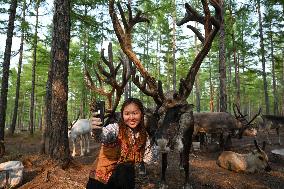
(240714) -- HULUN BUIR, July 14, 2024 Photo by Xinhua/ABACAPRESS.COM) -- Ayousha records short videos at the reindeer herding site in Jinhe Town of Genhe City, north China's Inner Mongolia Autonomous Region, July 3, 2024. The Aoluguya Ewenki people, known as "the last hunting tribe in China," is the only ethnic minority group in China that raises reindeer. More than 20 years ago, they moved from the deep forests in the Dahinggan Mountains to Genhe City to resettle, but their tradition of herding reindeer was still preserved. Ayousha is one of the Aoluguya Ewenki people who spent her childhood in the deep forest with her family. In order to inherit the ethnic tradition of herding reindeer, Wu Qiming, Ayousha's husband and man of Han nationality, accompanied her back to the forest from the city in 2019, and together they set up a reindeer herding site in a forest in Jinhe Town. Both born in the 1990s, they are the youngest reindeer herders in the area now. The forests in the Dahinggan Mountains are lush and gre

  •  
ChineseToday | Young couple inherit Aoluguya Ewenki legacy in forests in north China

ChineseToday | Young couple inherit Aoluguya Ewenki legacy in forests in north China

(240714) -- HULUN BUIR, July 14, 2024 Photo by Xinhua/ABACAPRESS.COM) -- Wu Qiming fetches water from a stream near the reindeer herding site in Jinhe Town of Genhe City, north China's Inner Mongolia Autonomous Region, July 3, 2024. The Aoluguya Ewenki people, known as "the last hunting tribe in China," is the only ethnic minority group in China that raises reindeer. More than 20 years ago, they moved from the deep forests in the Dahinggan Mountains to Genhe City to resettle, but their tradition of herding reindeer was still preserved. Ayousha is one of the Aoluguya Ewenki people who spent her childhood in the deep forest with her family. In order to inherit the ethnic tradition of herding reindeer, Wu Qiming, Ayousha's husband and man of Han nationality, accompanied her back to the forest from the city in 2019, and together they set up a reindeer herding site in a forest in Jinhe Town. Both born in the 1990s, they are the youngest reindeer herders in the area now. The forests in the Dahinggan Mountains are l

  •  

Traumatized Iraqi child struggles to overcome hardships after years of war

STORY: Traumatized Iraqi child struggles to overcome hardships after years of war SHOOTING TIME: Earlier footage DATELINE: June 1, 2024 LENGTH: 00:02:56 LOCATION: SALAHUDIN, Iraq CATEGORY: SOCIETY SHOTLIST: 1. various of Hathal Sabbar herding sheep 2. SOUNDBITE 1 (Arabic): HATHAL SABBAR, Iraqi child 3. SOUNDBITE 2 (Arabic): OUD, Local resident STORYLINE: Iraqi children have been struggling to escape the impacts of violence, displacement, and terrorism that swept the country following the U.S.-led invasion of Iraq in 2003. 10-year-old Hathal Sabbar living in the town of al-Dhuluiya in north Baghdad is one of them. Sabbar has suffered from poverty and insufficient education after his father was killed and his three uncles kidnapped by the Islamic State (IS) militants days after his birth. Not long after the death of his father, Sabbar's mother left home, which made his life even harder. He is now in the third grade of primary school, which is about 7 km from his home. Sabbar also needs to herd t

  •  

Sichod Wangmo's happy life in China's Xizang after democratic reform

STORY: Sichod Wangmo's happy life in China's Xizang after democratic reform SHOOTING TIME: March 28, 2024 DATELINE: March 31, 2024 LENGTH: 00:02:13 LOCATION: LHASA, China CATEGORY: SOCIETY SHOTLIST: 1. various of Sichod Wangmo's family SOUNDBITE 1 (Tibetan): SICHOD WANGMO, Resident in Damxung County, China's Xizang SOUNDBITE 2 (Tibetan): SONAM NORDAR, Resident in Damxung County, China's Xizang SOUNDBITE 3 (Tibetan): SONAM NORDAR, Resident in Damxung County, China's Xizang SOUNDBITE 4 (Tibetan): SICHOD WANGMO, Resident in Damxung County, China's Xizang STORYLINE: SOUNDBITE 1 (Tibetan): SICHOD WANGMO, Resident in Damxung County, China's Xizang In the past (before 1959), people here barely had enough to eat. We lived in dire poverty while also having to help the serf owners with herding, rarely having a full stomach. My name is Sichod Wangmo and I'm 85 years old now. Sichod Wangmo used to be a serf in old Xizang Born in 1939, she has witnessed the tremendous changes that have taken place in Xizang over the

  •  
CHINA-GANSU-SCIENTIFIC HERDING (CN)

CHINA-GANSU-SCIENTIFIC HERDING (CN)

(231204) -- LANZHOU, Dec. 4, 2023 (Xinhua) -- This aerial photo taken on March 10, 2022 shows a breeding base in Maqu County, Gannan Tibetan Autonomous Prefecture of northwest China's Gansu Province. TO GO WITH "Across China: Scientific herding improves yield, environment" (Xinhua)

  •  
CHINA-GANSU-SCIENTIFIC HERDING (CN)

CHINA-GANSU-SCIENTIFIC HERDING (CN)

(231204) -- LANZHOU, Dec. 4, 2023 (Xinhua) -- Jing Xiaoping (1st R) and his team members prepare well-proportioned forage for yaks in Maqu County, Gannan Tibetan Autonomous Prefecture of northwest China's Gansu Province, Nov. 7, 2023. TO GO WITH "Across China: Scientific herding improves yield, environment" (Xinhua/Wen Jing)

  •  
The Kurds of Khorasan - Iran

The Kurds of Khorasan - Iran

Hadi's mother is playing with puppies that are kept and bred to become herding dogs. They are one of the Kurdish nomadic families of Kermanj who were forced to migrate from their homeland to these areas to protect the eastern borders of Iran, and during this period they lost many of their cultural characteristics and behaviors. They are animal husbandry now and still speak Kurdish, but the clothes they wear are no longer Kurdish and their behaviors have completely changed and most of them do not even know where their original birthplace was. Golestan, Iran, February 2, 2022. Photo by Younes Mohammad/Middle East Images/ABACAPRESS.COM

  •  
(ChineseToday) CHINA-INNER MONGOLIA-ORDOS-HERDSMEN LIFE (CN)

(ChineseToday) CHINA-INNER MONGOLIA-ORDOS-HERDSMEN LIFE (CN)

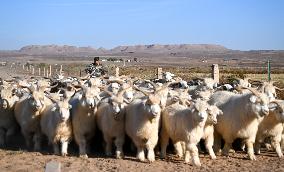
(231018) -- ORDOS, Oct. 18, 2023 (Xinhua) -- Mingan-erdeni feels the pulse of a herdsman at his home in Otog Banner of Ordos, north China's Inner Mongolia Autonomous Region, Oct. 16, 2023. Dorji is a 61-year-old herdsman living in Otog Banner. During the autumn season, Dorji's daily routine includes herding horses and goats. He has over 200 Arabas cashmere goats, which provide sound economic returns. In his spare time, Dorji participates in a local cultural activity called "Nair" with his 91-year-old father, Mingan-erdeni. "Nair" dates back to the Yuan Dynasty (1271-1368) and is a form of folk art that involves playing musical instruments, singing, and dancing. It has been listed as a regional intangible cultural heritage in Inner Mongolia. Mingan-erdeni, a former rural doctor, encouraged his neighbors to form a "Nair" band in 2018. This band not only represents the preservation of the "Nair" culture but also serves as an important means to enrich the spiritual life of these senior herdsmen. Harvesting

  •  
(ChineseToday) CHINA-INNER MONGOLIA-ORDOS-HERDSMEN LIFE (CN)

(ChineseToday) CHINA-INNER MONGOLIA-ORDOS-HERDSMEN LIFE (CN)

(231018) -- ORDOS, Oct. 18, 2023 (Xinhua) -- Mingan-erdeni (2nd L) and his fellow "Nair" band members are seen during a rehearsal in Otog Banner of Ordos, north China's Inner Mongolia Autonomous Region, Oct. 15, 2023. Dorji is a 61-year-old herdsman living in Otog Banner. During the autumn season, Dorji's daily routine includes herding horses and goats. He has over 200 Arabas cashmere goats, which provide sound economic returns. In his spare time, Dorji participates in a local cultural activity called "Nair" with his 91-year-old father, Mingan-erdeni. "Nair" dates back to the Yuan Dynasty (1271-1368) and is a form of folk art that involves playing musical instruments, singing, and dancing. It has been listed as a regional intangible cultural heritage in Inner Mongolia. Mingan-erdeni, a former rural doctor, encouraged his neighbors to form a "Nair" band in 2018. This band not only represents the preservation of the "Nair" culture but also serves as an important means to enrich the spiritual life of thes

  •  
(ChineseToday) CHINA-INNER MONGOLIA-ORDOS-HERDSMEN LIFE (CN)

(ChineseToday) CHINA-INNER MONGOLIA-ORDOS-HERDSMEN LIFE (CN)

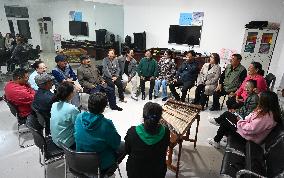
(231018) -- ORDOS, Oct. 18, 2023 (Xinhua) -- Members of a "Nair" band gather in an activity room in Otog Banner of Ordos, north China's Inner Mongolia Autonomous Region, Oct. 15, 2023. Dorji is a 61-year-old herdsman living in Otog Banner. During the autumn season, Dorji's daily routine includes herding horses and goats. He has over 200 Arabas cashmere goats, which provide sound economic returns. In his spare time, Dorji participates in a local cultural activity called "Nair" with his 91-year-old father, Mingan-erdeni. "Nair" dates back to the Yuan Dynasty (1271-1368) and is a form of folk art that involves playing musical instruments, singing, and dancing. It has been listed as a regional intangible cultural heritage in Inner Mongolia. Mingan-erdeni, a former rural doctor, encouraged his neighbors to form a "Nair" band in 2018. This band not only represents the preservation of the "Nair" culture but also serves as an important means to enrich the spiritual life of these senior herdsmen. Harvesting and

  •  
(ChineseToday) CHINA-INNER MONGOLIA-ORDOS-HERDSMEN LIFE (CN)

(ChineseToday) CHINA-INNER MONGOLIA-ORDOS-HERDSMEN LIFE (CN)

(231018) -- ORDOS, Oct. 18, 2023 (Xinhua) -- This photo taken on Oct. 15, 2023 shows the autumn scenery of grasslands in Ordos, north China's Inner Mongolia Autonomous Region. Dorji is a 61-year-old herdsman living in Otog Banner. During the autumn season, Dorji's daily routine includes herding horses and goats. He has over 200 Arabas cashmere goats, which provide sound economic returns. In his spare time, Dorji participates in a local cultural activity called "Nair" with his 91-year-old father, Mingan-erdeni. "Nair" dates back to the Yuan Dynasty (1271-1368) and is a form of folk art that involves playing musical instruments, singing, and dancing. It has been listed as a regional intangible cultural heritage in Inner Mongolia. Mingan-erdeni, a former rural doctor, encouraged his neighbors to form a "Nair" band in 2018. This band not only represents the preservation of the "Nair" culture but also serves as an important means to enrich the spiritual life of these senior herdsmen. Harvesting and music to

  •  
(ChineseToday) CHINA-INNER MONGOLIA-ORDOS-HERDSMEN LIFE (CN)

(ChineseToday) CHINA-INNER MONGOLIA-ORDOS-HERDSMEN LIFE (CN)

(231018) -- ORDOS, Oct. 18, 2023 (Xinhua) -- Dorji plays music in Otog Banner of Ordos, north China's Inner Mongolia Autonomous Region, Oct. 15, 2023. Dorji is a 61-year-old herdsman living in Otog Banner. During the autumn season, Dorji's daily routine includes herding horses and goats. He has over 200 Arabas cashmere goats, which provide sound economic returns. In his spare time, Dorji participates in a local cultural activity called "Nair" with his 91-year-old father, Mingan-erdeni. "Nair" dates back to the Yuan Dynasty (1271-1368) and is a form of folk art that involves playing musical instruments, singing, and dancing. It has been listed as a regional intangible cultural heritage in Inner Mongolia. Mingan-erdeni, a former rural doctor, encouraged his neighbors to form a "Nair" band in 2018. This band not only represents the preservation of the "Nair" culture but also serves as an important means to enrich the spiritual life of these senior herdsmen. Harvesting and music together make up the autumn

  •  
(ChineseToday) CHINA-INNER MONGOLIA-ORDOS-HERDSMEN LIFE (CN)

(ChineseToday) CHINA-INNER MONGOLIA-ORDOS-HERDSMEN LIFE (CN)

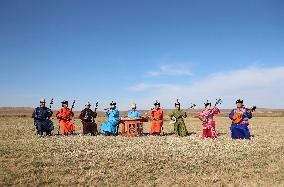
(231018) -- ORDOS, Oct. 18, 2023 (Xinhua) -- Members of a "Nair" band perform on a grassland in Otog Banner of Ordos, north China's Inner Mongolia Autonomous Region, Oct. 16, 2023. Dorji is a 61-year-old herdsman living in Otog Banner. During the autumn season, Dorji's daily routine includes herding horses and goats. He has over 200 Arabas cashmere goats, which provide sound economic returns. In his spare time, Dorji participates in a local cultural activity called "Nair" with his 91-year-old father, Mingan-erdeni. "Nair" dates back to the Yuan Dynasty (1271-1368) and is a form of folk art that involves playing musical instruments, singing, and dancing. It has been listed as a regional intangible cultural heritage in Inner Mongolia. Mingan-erdeni, a former rural doctor, encouraged his neighbors to form a "Nair" band in 2018. This band not only represents the preservation of the "Nair" culture but also serves as an important means to enrich the spiritual life of these senior herdsmen. Harvesting and mus

  •  
(ChineseToday) CHINA-INNER MONGOLIA-ORDOS-HERDSMEN LIFE (CN)

(ChineseToday) CHINA-INNER MONGOLIA-ORDOS-HERDSMEN LIFE (CN)

(231018) -- ORDOS, Oct. 18, 2023 (Xinhua) -- Dorji looks at his goats in Otog Banner of Ordos, north China's Inner Mongolia Autonomous Region, Oct. 16, 2023. Dorji is a 61-year-old herdsman living in Otog Banner. During the autumn season, Dorji's daily routine includes herding horses and goats. He has over 200 Arabas cashmere goats, which provide sound economic returns. In his spare time, Dorji participates in a local cultural activity called "Nair" with his 91-year-old father, Mingan-erdeni. "Nair" dates back to the Yuan Dynasty (1271-1368) and is a form of folk art that involves playing musical instruments, singing, and dancing. It has been listed as a regional intangible cultural heritage in Inner Mongolia. Mingan-erdeni, a former rural doctor, encouraged his neighbors to form a "Nair" band in 2018. This band not only represents the preservation of the "Nair" culture but also serves as an important means to enrich the spiritual life of these senior herdsmen. Harvesting and music together make up the

  •  
(ChineseToday) CHINA-INNER MONGOLIA-ORDOS-HERDSMEN LIFE (CN)

(ChineseToday) CHINA-INNER MONGOLIA-ORDOS-HERDSMEN LIFE (CN)

(231018) -- ORDOS, Oct. 18, 2023 (Xinhua) -- Dorji herds his goats on a grassland in Otog Banner of Ordos, north China's Inner Mongolia Autonomous Region, Oct. 16, 2023. Dorji is a 61-year-old herdsman living in Otog Banner. During the autumn season, Dorji's daily routine includes herding horses and goats. He has over 200 Arabas cashmere goats, which provide sound economic returns. In his spare time, Dorji participates in a local cultural activity called "Nair" with his 91-year-old father, Mingan-erdeni. "Nair" dates back to the Yuan Dynasty (1271-1368) and is a form of folk art that involves playing musical instruments, singing, and dancing. It has been listed as a regional intangible cultural heritage in Inner Mongolia. Mingan-erdeni, a former rural doctor, encouraged his neighbors to form a "Nair" band in 2018. This band not only represents the preservation of the "Nair" culture but also serves as an important means to enrich the spiritual life of these senior herdsmen. Harvesting and music together

  •  
(ChineseToday) CHINA-INNER MONGOLIA-ORDOS-HERDSMEN LIFE (CN)

(ChineseToday) CHINA-INNER MONGOLIA-ORDOS-HERDSMEN LIFE (CN)

(231018) -- ORDOS, Oct. 18, 2023 (Xinhua) -- Members of a "Nair" band prepare to take group photos during the intervals of performing on a grassland in Otog Banner of Ordos, north China's Inner Mongolia Autonomous Region, Oct. 16, 2023. Dorji is a 61-year-old herdsman living in Otog Banner. During the autumn season, Dorji's daily routine includes herding horses and goats. He has over 200 Arabas cashmere goats, which provide sound economic returns. In his spare time, Dorji participates in a local cultural activity called "Nair" with his 91-year-old father, Mingan-erdeni. "Nair" dates back to the Yuan Dynasty (1271-1368) and is a form of folk art that involves playing musical instruments, singing, and dancing. It has been listed as a regional intangible cultural heritage in Inner Mongolia. Mingan-erdeni, a former rural doctor, encouraged his neighbors to form a "Nair" band in 2018. This band not only represents the preservation of the "Nair" culture but also serves as an important means to enrich the spi

  •  
(ChineseToday) CHINA-INNER MONGOLIA-ORDOS-HERDSMEN LIFE (CN)

(ChineseToday) CHINA-INNER MONGOLIA-ORDOS-HERDSMEN LIFE (CN)

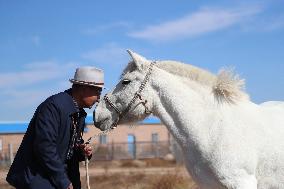
(231018) -- ORDOS, Oct. 18, 2023 (Xinhua) -- Mingan-erdeni kisses one of his horses in Otog Banner of Ordos, north China's Inner Mongolia Autonomous Region, Oct. 16, 2023. Dorji is a 61-year-old herdsman living in Otog Banner. During the autumn season, Dorji's daily routine includes herding horses and goats. He has over 200 Arabas cashmere goats, which provide sound economic returns. In his spare time, Dorji participates in a local cultural activity called "Nair" with his 91-year-old father, Mingan-erdeni. "Nair" dates back to the Yuan Dynasty (1271-1368) and is a form of folk art that involves playing musical instruments, singing, and dancing. It has been listed as a regional intangible cultural heritage in Inner Mongolia. Mingan-erdeni, a former rural doctor, encouraged his neighbors to form a "Nair" band in 2018. This band not only represents the preservation of the "Nair" culture but also serves as an important means to enrich the spiritual life of these senior herdsmen. Harvesting and music togeth

  • Main
  • Top
  • Editorial
  • Creative
  • About Us
  • About ILG
  • Terms of use
  • Company
  • BEHIND
  • Price List
  • Single Plan
  • Monthly Plan
  • Services
  • Shooting
  • Rights Clearance
  • Support
  • FAQ
  • How To Buy
  • Contact Us
  • Become a Partner

© KYODO NEWS IMAGES INC

All Rights Reserved.

  • Editorial
  • Olympics
  • News
  • Sports
  • Japan
  • Tech
  • Royal
  • Disaster
  • NorthKorea
  • Old Japan
  • SNS
  • Creative
  • Food
  • Japan
  • Landscape
  • Animal
  • Popular
  • #Ukraine
  • #Thailand
  • #coronavirus
  • #N. Korea
  • #Russia
  • #China
  • #Ukraine
  • #Thailand
  • #coronavirus
  • #N. Korea
  • #Russia
  • #China
  • Food
  • Japan
  • Landscape
  • Animal
  • Olympics
  • News
  • Sports
  • Japan
  • Tech
  • Royal
  • Disaster
  • NorthKorea
  • Old Japan
  • SNS