•  
New Expressway Tunnel Opens To Traffic In Xinjiang - China

New Expressway Tunnel Opens To Traffic In Xinjiang - China

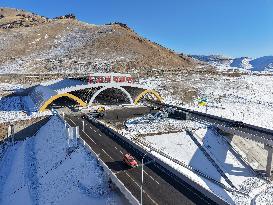
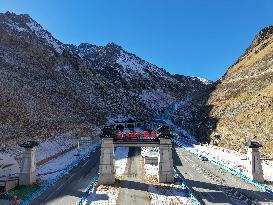
An aerial drone photo shows a vehicle driving out from the Tianshan Shengli Tunnel on Urumqi-Yuli Expressway in northwest China's Xinjiang Uygur Autonomous Region, Dec. 26, 2025. The 22.13-km Tianshan Shengli Tunnel, the world's longest expressway tunnel, officially opened to traffic on Friday. Traversing the central Tianshan Mountains in northwest China's Xinjiang Uygur Autonomous Region, the tunnel slashes what was once a several-hour mountain drive to just 20 minutes. As a vital artery linking city clusters in northern and southern Xinjiang, the G0711 Urumqi-Yuli Expressway, including the tunnel, entered operation on the same day. Photo by Hu Huhu/Xinhua/ABACAPRESS.COM

  •  
New Expressway Tunnel Opens To Traffic In Xinjiang - China

New Expressway Tunnel Opens To Traffic In Xinjiang - China

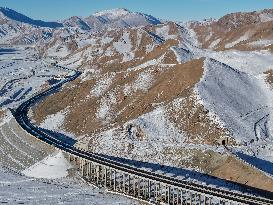
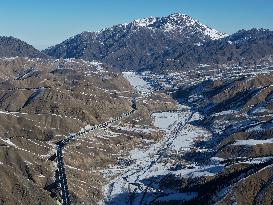
An aerial drone photo shows the Urumqi-Yuli Expressway in Hejing County, northwest China's Xinjiang Uygur Autonomous Region, Dec. 26, 2025. The 22.13-km Tianshan Shengli Tunnel, the world's longest expressway tunnel, officially opened to traffic on Friday. Traversing the central Tianshan Mountains in northwest China's Xinjiang Uygur Autonomous Region, the tunnel slashes what was once a several-hour mountain drive to just 20 minutes. As a vital artery linking city clusters in northern and southern Xinjiang, the G0711 Urumqi-Yuli Expressway, including the tunnel, entered operation on the same day. Photo by Hu Huhu/Xinhua/ABACAPRESS.COM

  •  
New Expressway Tunnel Opens To Traffic In Xinjiang - China

New Expressway Tunnel Opens To Traffic In Xinjiang - China

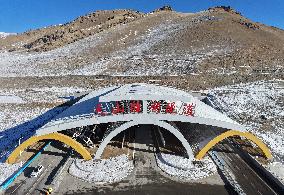
An aerial drone photo shows a vehicle driving out from the Tianshan Shengli Tunnel on the Urumqi-Yuli Expressway in northwest China's Xinjiang Uygur Autonomous Region, Dec. 26, 2025. The 22.13-km Tianshan Shengli Tunnel, the world's longest expressway tunnel, officially opened to traffic on Friday. Traversing the central Tianshan Mountains in northwest China's Xinjiang Uygur Autonomous Region, the tunnel slashes what was once a several-hour mountain drive to just 20 minutes. As a vital artery linking city clusters in northern and southern Xinjiang, the G0711 Urumqi-Yuli Expressway, including the tunnel, entered operation on the same day. Photo by Hu Huhu/Xinhua/ABACAPRESS.COM

  •  
New Expressway Tunnel Opens To Traffic In Xinjiang - China

New Expressway Tunnel Opens To Traffic In Xinjiang - China

An aerial drone photo shows a vehicle driving out from the Tianshan Shengli Tunnel on Urumqi-Yuli Expressway in northwest China's Xinjiang Uygur Autonomous Region, Dec. 26, 2025. The 22.13-km Tianshan Shengli Tunnel, the world's longest expressway tunnel, officially opened to traffic on Friday. Traversing the central Tianshan Mountains in northwest China's Xinjiang Uygur Autonomous Region, the tunnel slashes what was once a several-hour mountain drive to just 20 minutes. As a vital artery linking city clusters in northern and southern Xinjiang, the G0711 Urumqi-Yuli Expressway, including the tunnel, entered operation on the same day. Photo by Hu Huhu/Xinhua/ABACAPRESS.COM

  •  
New Expressway Tunnel Opens To Traffic In Xinjiang - China

New Expressway Tunnel Opens To Traffic In Xinjiang - China

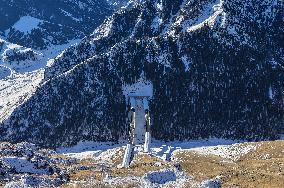
An aerial drone photo shows the exit of the Tianshan Shengli Tunnel on the Urumqi-Yuli Expressway in northwest China's Xinjiang Uygur Autonomous Region, Dec. 26, 2025. The 22.13-km Tianshan Shengli Tunnel, the world's longest expressway tunnel, officially opened to traffic on Friday. Traversing the central Tianshan Mountains in northwest China's Xinjiang Uygur Autonomous Region, the tunnel slashes what was once a several-hour mountain drive to just 20 minutes. As a vital artery linking city clusters in northern and southern Xinjiang, the G0711 Urumqi-Yuli Expressway, including the tunnel, entered operation on the same day. Photo by Hu Huhu/Xinhua/ABACAPRESS.COM

  •  
World's Longest Expressway Tunnel - Urumqi

World's Longest Expressway Tunnel - Urumqi

This photo taken on December 21, 2025 shows a view of the Tianshan Shengli Tunnel on Urumqi-Yuli Expressway in northwest China's Xinjiang Uygur Autonomous Region. The Tianshan Shengli Tunnel, the world's longest expressway tunnel, and the Urumqi-Yuli Expressway that traverses the Tianshan Mountains via the tunnel, will be open to traffic by the end of this year, enabling a new shortcut linking southern and northern parts of Xinjiang. The 22.13-kilometer tunnel will reduce the time it takes to drive across the middle section of the Tianshan Mountains from several hours to about 20 minutes. Once operational, the travel time from the regional capital of Urumqi, north of the Tianshan Mountains, to Korla, south of the Tianshan Mountains, will be shortened from seven hours to about three hours. Photo by Hu Huhu/Xinhua/ABACAPRESS.COM

  •  
World's Longest Expressway Tunnel - Urumqi

World's Longest Expressway Tunnel - Urumqi

An aerial drone photo taken on December 23, 2025 shows a view of Urumqi-Yuli Expressway that traverses the Tianshan Mountains in northwest China's Xinjiang Uygur Autonomous Region. The Tianshan Shengli Tunnel, the world's longest expressway tunnel, and the Urumqi-Yuli Expressway that traverses the Tianshan Mountains via the tunnel, will be open to traffic by the end of this year, enabling a new shortcut linking southern and northern parts of Xinjiang. The 22.13-kilometer tunnel will reduce the time it takes to drive across the middle section of the Tianshan Mountains from several hours to about 20 minutes. Once operational, the travel time from the regional capital of Urumqi, north of the Tianshan Mountains, to Korla, south of the Tianshan Mountains, will be shortened from seven hours to about three hours. Photo by Hu Huhu/Xinhua/ABACAPRESS.COM

  •  
World's Longest Expressway Tunnel - Urumqi

World's Longest Expressway Tunnel - Urumqi

An aerial drone photo taken on December 23, 2025 shows a view of Urumqi-Yuli Expressway that traverses the Tianshan Mountains in northwest China's Xinjiang Uygur Autonomous Region. The Tianshan Shengli Tunnel, the world's longest expressway tunnel, and the Urumqi-Yuli Expressway that traverses the Tianshan Mountains via the tunnel, will be open to traffic by the end of this year, enabling a new shortcut linking southern and northern parts of Xinjiang. The 22.13-kilometer tunnel will reduce the time it takes to drive across the middle section of the Tianshan Mountains from several hours to about 20 minutes. Once operational, the travel time from the regional capital of Urumqi, north of the Tianshan Mountains, to Korla, south of the Tianshan Mountains, will be shortened from seven hours to about three hours. Photo by Hu Huhu/Xinhua/ABACAPRESS.COM

  •  
World's Longest Expressway Tunnel - Urumqi

World's Longest Expressway Tunnel - Urumqi

This photo taken on December 20, 2025 shows a view of the rescue station of Tianshan Shengli Tunnel on Urumqi-Yuli Expressway in northwest China's Xinjiang Uygur Autonomous Region. The Tianshan Shengli Tunnel, the world's longest expressway tunnel, and the Urumqi-Yuli Expressway that traverses the Tianshan Mountains via the tunnel, will be open to traffic by the end of this year, enabling a new shortcut linking southern and northern parts of Xinjiang. The 22.13-kilometer tunnel will reduce the time it takes to drive across the middle section of the Tianshan Mountains from several hours to about 20 minutes. Once operational, the travel time from the regional capital of Urumqi, north of the Tianshan Mountains, to Korla, south of the Tianshan Mountains, will be shortened from seven hours to about three hours. Photo by Hu Huhu/Xinhua/ABACAPRESS.COM

  •  
World's Longest Expressway Tunnel - Urumqi

World's Longest Expressway Tunnel - Urumqi

An aerial drone photo taken on December 23, 2025 shows a view of Urumqi-Yuli Expressway that traverses the Tianshan Mountains in northwest China's Xinjiang Uygur Autonomous Region. The Tianshan Shengli Tunnel, the world's longest expressway tunnel, and the Urumqi-Yuli Expressway that traverses the Tianshan Mountains via the tunnel, will be open to traffic by the end of this year, enabling a new shortcut linking southern and northern parts of Xinjiang. The 22.13-kilometer tunnel will reduce the time it takes to drive across the middle section of the Tianshan Mountains from several hours to about 20 minutes. Once operational, the travel time from the regional capital of Urumqi, north of the Tianshan Mountains, to Korla, south of the Tianshan Mountains, will be shortened from seven hours to about three hours. Photo by Hu Huhu/Xinhua/ABACAPRESS.COM

  •  
World's Longest Expressway Tunnel - Urumqi

World's Longest Expressway Tunnel - Urumqi

A drone photo taken on December 23, 2025 shows the entry of Tianshan Shengli Tunnel on Urumqi-Yuli Expressway in northwest China's Xinjiang Uygur Autonomous Region. The Tianshan Shengli Tunnel, the world's longest expressway tunnel, and the Urumqi-Yuli Expressway that traverses the Tianshan Mountains via the tunnel, will be open to traffic by the end of this year, enabling a new shortcut linking southern and northern parts of Xinjiang. The 22.13-kilometer tunnel will reduce the time it takes to drive across the middle section of the Tianshan Mountains from several hours to about 20 minutes. Once operational, the travel time from the regional capital of Urumqi, north of the Tianshan Mountains, to Korla, south of the Tianshan Mountains, will be shortened from seven hours to about three hours. Photo by Hu Huhu/Xinhua/ABACAPRESS.COM

  •  
Geminid Meteor Shower - China

Geminid Meteor Shower - China

This photo taken on on December 14, 2025 shows the Geminid meteor shower in the sky over Yulong Snow Mountain in Lijiang City, southwest China's Yunnan Province. The Geminid meteor shower, one of the most spectacular meteor showers of the year, reached its peak on Sunday. Photo by Hu Chao /Xinhua/ABACAPRESS.COM

  •  
Geminid Meteor Shower - China

Geminid Meteor Shower - China

This stack composite photo taken on on December 13, 2025 shows the starry sky over Baisha Town of Lijiang City, southwest China's Yunnan Province. The Geminid meteor shower, one of the most spectacular meteor showers of the year, reached its peak on Sunday. Photo by Hu Chao /Xinhua/ABACAPRESS.COM

  •  
Geminid Meteor Shower - China

Geminid Meteor Shower - China

This photo taken on on December 14, 2025 shows the Geminid meteor shower in the sky over Yulong Snow Mountain in Lijiang City, southwest China's Yunnan Province. The Geminid meteor shower, one of the most spectacular meteor showers of the year, reached its peak on Sunday. Photo by Hu Chao /Xinhua/ABACAPRESS.COM

  •  
Geminid Meteor Shower - China

Geminid Meteor Shower - China

This photo taken on on December 12, 2025 shows the Geminid meteor shower in the sky over Baisha Town of Lijiang City, southwest China's Yunnan Province. The Geminid meteor shower, one of the most spectacular meteor showers of the year, reached its peak on Sunday. Photo by Hu Chao /Xinhua/ABACAPRESS.COM

  •  
Geminid Meteor Shower - China

Geminid Meteor Shower - China

This photo taken on on December 13, 2025 shows the Geminid meteor shower in the sky over Baisha Town of Lijiang City, southwest China's Yunnan Province. The Geminid meteor shower, one of the most spectacular meteor showers of the year, reached its peak on Sunday. Photo by Hu Chao /Xinhua/ABACAPRESS.COM

  •  
#CHINA-WINTER SCENERY (CN)

#CHINA-WINTER SCENERY (CN)

An aerial drone photo taken on Dec. 7, 2025 shows tourists visiting a reservoir in Shaoxing City, east China's Zhejiang Province. Photo by Hu Xuejun/Xinhua/ABACAPRESS.COM

  •  
National Guard Members Shot - DC

National Guard Members Shot - DC

Police keep a presence following the shooting of two U.S. National Guard members near the White House in Washington, D.C., the United States, on Nov. 26, 2025. Two U.S. National Guard members were shot near the White House on Wednesday and a suspect is in custody, according to local authorities. Photo by Hu Yousong/Xinhua/ABACAPRESS.COM

  •  
National Guard Members Shot - DC

National Guard Members Shot - DC

Law enforcement officials visit the crime scene following two National Guard members were shot near the White House in Washington, D.C., the United States, on Nov. 26, 2025. Two U.S. National Guard members were shot near the White House on Wednesday and a suspect is in custody, according to local authorities. Photo by Hu Yousong/Xinhua/ABACAPRESS.COM

  •  
National Guard Members Shot - DC

National Guard Members Shot - DC

Police keep a presence following the shooting of two U.S. National Guard members near the White House in Washington, D.C., the United States, on Nov. 26, 2025. Two U.S. National Guard members were shot near the White House on Wednesday and a suspect is in custody, according to local authorities. Photo by Hu Yousong/Xinhua/ABACAPRESS.COM

  •  
National Guard Members Shot - DC

National Guard Members Shot - DC

Police keep a presence following the shooting of two U.S. National Guard members near the White House in Washington, D.C., the United States, on Nov. 26, 2025. Two U.S. National Guard members were shot near the White House on Wednesday and a suspect is in custody, according to local authorities. Photo by Hu Yousong/Xinhua/ABACAPRESS.COM

  •  
National Guard Members Shot - DC

National Guard Members Shot - DC

Police keep a presence following the shooting of two U.S. National Guard members near the White House in Washington, D.C., the United States, on Nov. 26, 2025. Two U.S. National Guard members were shot near the White House on Wednesday and a suspect is in custody, according to local authorities. Photo by Hu Yousong/Xinhua/ABACAPRESS.COM

  •  
National Guard Members Shot - DC

National Guard Members Shot - DC

Police keep a presence following the shooting of two U.S. National Guard members near the White House in Washington, D.C., the United States, on Nov. 26, 2025. Two U.S. National Guard members were shot near the White House on Wednesday and a suspect is in custody, according to local authorities. Photo by Hu Yousong/Xinhua/ABACAPRESS.COM

  •  
National Guard Members Shot - DC

National Guard Members Shot - DC

Law enforcement officials visit the crime scene following two National Guard members were shot near the White House in Washington, D.C., the United States, on Nov. 26, 2025. Two U.S. National Guard members were shot near the White House on Wednesday and a suspect is in custody, according to local authorities. Photo by Hu Yousong/Xinhua/ABACAPRESS.COM

  •  
National Guard Members Shot - DC

National Guard Members Shot - DC

Law enforcement officials visit the crime scene following two National Guard members were shot near the White House in Washington, D.C., the United States, on Nov. 26, 2025. Two U.S. National Guard members were shot near the White House on Wednesday and a suspect is in custody, according to local authorities. Photo by Hu Yousong/Xinhua/ABACAPRESS.COM

  •  
National Guard Members Shot - DC

National Guard Members Shot - DC

FBI Director Kash Patel (front) speaks during a press conference following the shooting of two U.S. National Guard members near the White House in Washington, D.C., the United States, on Nov. 26, 2025. Two U.S. National Guard members were shot near the White House on Wednesday and a suspect is in custody, according to local authorities. Photo by Hu Yousong/Xinhua/ABACAPRESS.COM

  •  
Tie-Dye Technique Of Bai Ethnic Group - Chin

Tie-Dye Technique Of Bai Ethnic Group - Chin

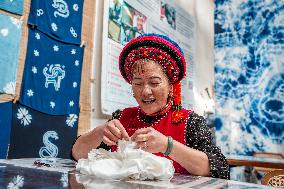
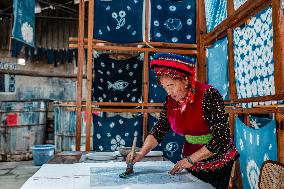
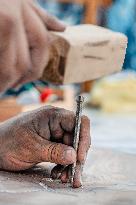
Duan Yuan, an inheritor of the tie-dye technique of Bai ethnic group, makes tie-dye designs in a dyehouse in Zhoucheng Village of Dali Bai Autonomous Prefecture, southwest China's Yunnan Province, November 21, 2025. Known as the hometown of the tie-dye technique of Bai ethnic group, Zhoucheng Village hosts over 200 households engaging in tie-dye businesses, with the number of employees exceeding 4,000. As a traditional folk technique of the Bai ethnic group, tie-dye boasts a history spanning over a thousand years and was included in the first batch of China's national intangible cultural heritage list in 2006. Tying and dyeing are the core steps in the process of making indigo tie-dye products. Artisans use needles and threads to create various patterns on the fabric, which are then dyed with plant-based dyes, resulting in blue backgrounds adorned with vivid white patterns. Photo by Hu Chao/Xinhua/ABACAPRESS.COM

  •  
Tie-Dye Technique Of Bai Ethnic Group - Chin

Tie-Dye Technique Of Bai Ethnic Group - Chin

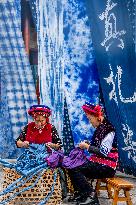
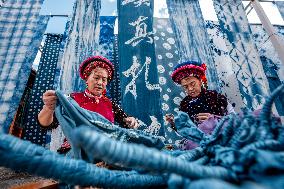
Duan Yinmei, an inheritor of the tie-dye technique of Bai ethnic group, creates knots on fabrics in a dyehouse in Zhoucheng Village of Dali Bai Autonomous Prefecture, southwest China's Yunnan Province, November 21, 2025. Known as the hometown of the tie-dye technique of Bai ethnic group, Zhoucheng Village hosts over 200 households engaging in tie-dye businesses, with the number of employees exceeding 4,000. As a traditional folk technique of the Bai ethnic group, tie-dye boasts a history spanning over a thousand years and was included in the first batch of China's national intangible cultural heritage list in 2006. Tying and dyeing are the core steps in the process of making indigo tie-dye products. Artisans use needles and threads to create various patterns on the fabric, which are then dyed with plant-based dyes, resulting in blue backgrounds adorned with vivid white patterns. Photo by Hu Chao/Xinhua/ABACAPRESS.COM

  •  
Tie-Dye Technique Of Bai Ethnic Group - Chin

Tie-Dye Technique Of Bai Ethnic Group - Chin

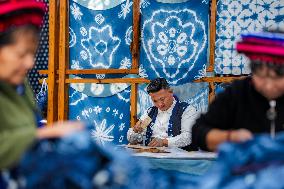
A woman experiences the tie-dye technique of Bai ethnic group in a dyehouse in Zhoucheng Village of Dali Bai Autonomous Prefecture, southwest China's Yunnan Province, November 21, 2025. Known as the hometown of the tie-dye technique of Bai ethnic group, Zhoucheng Village hosts over 200 households engaging in tie-dye businesses, with the number of employees exceeding 4,000. As a traditional folk technique of the Bai ethnic group, tie-dye boasts a history spanning over a thousand years and was included in the first batch of China's national intangible cultural heritage list in 2006. Tying and dyeing are the core steps in the process of making indigo tie-dye products. Artisans use needles and threads to create various patterns on the fabric, which are then dyed with plant-based dyes, resulting in blue backgrounds adorned with vivid white patterns. Photo by Hu Chao/Xinhua/ABACAPRESS.COM

  •  
Tie-Dye Technique Of Bai Ethnic Group - Chin

Tie-Dye Technique Of Bai Ethnic Group - Chin

Duan Yinmei, an inheritor of the tie-dye technique of Bai ethnic group, dyes patterns on fabrics in a dyehouse in Zhoucheng Village of Dali Bai Autonomous Prefecture, southwest China's Yunnan Province, November 21, 2025. Known as the hometown of the tie-dye technique of Bai ethnic group, Zhoucheng Village hosts over 200 households engaging in tie-dye businesses, with the number of employees exceeding 4,000. As a traditional folk technique of the Bai ethnic group, tie-dye boasts a history spanning over a thousand years and was included in the first batch of China's national intangible cultural heritage list in 2006. Tying and dyeing are the core steps in the process of making indigo tie-dye products. Artisans use needles and threads to create various patterns on the fabric, which are then dyed with plant-based dyes, resulting in blue backgrounds adorned with vivid white patterns. Photo by Hu Chao/Xinhua/ABACAPRESS.COM

  •  
Tie-Dye Technique Of Bai Ethnic Group - Chin

Tie-Dye Technique Of Bai Ethnic Group - Chin

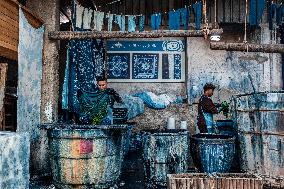
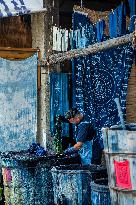
Duan Yuan, an inheritor of the tie-dye technique of Bai ethnic group, rinses dyed fabrics in a dyehouse in Zhoucheng Village of Dali Bai Autonomous Prefecture, southwest China's Yunnan Province, November 21, 2025. Known as the hometown of the tie-dye technique of Bai ethnic group, Zhoucheng Village hosts over 200 households engaging in tie-dye businesses, with the number of employees exceeding 4,000. As a traditional folk technique of the Bai ethnic group, tie-dye boasts a history spanning over a thousand years and was included in the first batch of China's national intangible cultural heritage list in 2006. Tying and dyeing are the core steps in the process of making indigo tie-dye products. Artisans use needles and threads to create various patterns on the fabric, which are then dyed with plant-based dyes, resulting in blue backgrounds adorned with vivid white patterns. Photo by Hu Chao/Xinhua/ABACAPRESS.COM

  •  
Tie-Dye Technique Of Bai Ethnic Group - Chin

Tie-Dye Technique Of Bai Ethnic Group - Chin

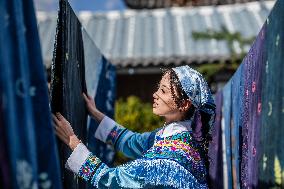
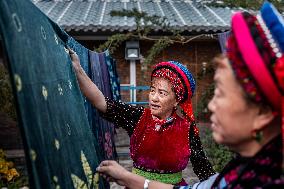
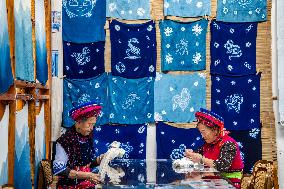
Duan Yinmei (L), an inheritor of the tie-dye technique of Bai ethnic group, and handicraftsman Duan Lilan dry tie-dye fabrics in a dyehouse in Zhoucheng Village of Dali Bai Autonomous Prefecture, southwest China's Yunnan Province, November 21, 2025. Known as the hometown of the tie-dye technique of Bai ethnic group, Zhoucheng Village hosts over 200 households engaging in tie-dye businesses, with the number of employees exceeding 4,000. As a traditional folk technique of the Bai ethnic group, tie-dye boasts a history spanning over a thousand years and was included in the first batch of China's national intangible cultural heritage list in 2006. Tying and dyeing are the core steps in the process of making indigo tie-dye products. Artisans use needles and threads to create various patterns on the fabric, which are then dyed with plant-based dyes, resulting in blue backgrounds adorned with vivid white patterns. Photo by Hu Chao/Xinhua/ABACAPRESS.COM

  •  
Tie-Dye Technique Of Bai Ethnic Group - Chin

Tie-Dye Technique Of Bai Ethnic Group - Chin

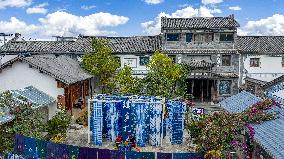
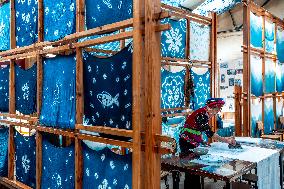
An aerial drone photo shows a scene at a dyehouse in Zhoucheng Village of Dali Bai Autonomous Prefecture, southwest China's Yunnan Province, November 21, 2025. Known as the hometown of the tie-dye technique of Bai ethnic group, Zhoucheng Village hosts over 200 households engaging in tie-dye businesses, with the number of employees exceeding 4,000. As a traditional folk technique of the Bai ethnic group, tie-dye boasts a history spanning over a thousand years and was included in the first batch of China's national intangible cultural heritage list in 2006. Tying and dyeing are the core steps in the process of making indigo tie-dye products. Artisans use needles and threads to create various patterns on the fabric, which are then dyed with plant-based dyes, resulting in blue backgrounds adorned with vivid white patterns. Photo by Hu Chao/Xinhua/ABACAPRESS.COM

  •  
Tie-Dye Technique Of Bai Ethnic Group - Chin

Tie-Dye Technique Of Bai Ethnic Group - Chin

Duan Yinmei (L), an inheritor of the tie-dye technique of Bai ethnic group, and handicraftsman Duan Lilan untie knots on fabrics in a dyehouse in Zhoucheng Village of Dali Bai Autonomous Prefecture, southwest China's Yunnan Province, November 21, 2025. Known as the hometown of the tie-dye technique of Bai ethnic group, Zhoucheng Village hosts over 200 households engaging in tie-dye businesses, with the number of employees exceeding 4,000. As a traditional folk technique of the Bai ethnic group, tie-dye boasts a history spanning over a thousand years and was included in the first batch of China's national intangible cultural heritage list in 2006. Tying and dyeing are the core steps in the process of making indigo tie-dye products. Artisans use needles and threads to create various patterns on the fabric, which are then dyed with plant-based dyes, resulting in blue backgrounds adorned with vivid white patterns. Photo by Hu Chao/Xinhua/ABACAPRESS.COM

  •  
Tie-Dye Technique Of Bai Ethnic Group - Chin

Tie-Dye Technique Of Bai Ethnic Group - Chin

Duan Yinmei (L), an inheritor of the tie-dye technique of Bai ethnic group, and handicraftsman Duan Lilan untie knots on fabrics in a dyehouse in Zhoucheng Village of Dali Bai Autonomous Prefecture, southwest China's Yunnan Province, November 21, 2025. Known as the hometown of the tie-dye technique of Bai ethnic group, Zhoucheng Village hosts over 200 households engaging in tie-dye businesses, with the number of employees exceeding 4,000. As a traditional folk technique of the Bai ethnic group, tie-dye boasts a history spanning over a thousand years and was included in the first batch of China's national intangible cultural heritage list in 2006. Tying and dyeing are the core steps in the process of making indigo tie-dye products. Artisans use needles and threads to create various patterns on the fabric, which are then dyed with plant-based dyes, resulting in blue backgrounds adorned with vivid white patterns. Photo by Hu Chao/Xinhua/ABACAPRESS.COM

  •  
Tie-Dye Technique Of Bai Ethnic Group - Chin

Tie-Dye Technique Of Bai Ethnic Group - Chin

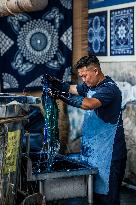
Duan Yuan (L), an inheritor of the tie-dye technique of Bai ethnic group, dyes fabrics in a dyehouse in Zhoucheng Village of Dali Bai Autonomous Prefecture, southwest China's Yunnan Province, November 21, 2025. Known as the hometown of the tie-dye technique of Bai ethnic group, Zhoucheng Village hosts over 200 households engaging in tie-dye businesses, with the number of employees exceeding 4,000. As a traditional folk technique of the Bai ethnic group, tie-dye boasts a history spanning over a thousand years and was included in the first batch of China's national intangible cultural heritage list in 2006. Tying and dyeing are the core steps in the process of making indigo tie-dye products. Artisans use needles and threads to create various patterns on the fabric, which are then dyed with plant-based dyes, resulting in blue backgrounds adorned with vivid white patterns. Photo by Hu Chao/Xinhua/ABACAPRESS.COM

  •  
Tie-Dye Technique Of Bai Ethnic Group - Chin

Tie-Dye Technique Of Bai Ethnic Group - Chin

Duan Yuan, an inheritor of the tie-dye technique of Bai ethnic group, makes tie-dye designs in a dyehouse in Zhoucheng Village of Dali Bai Autonomous Prefecture, southwest China's Yunnan Province, November 21, 2025. Known as the hometown of the tie-dye technique of Bai ethnic group, Zhoucheng Village hosts over 200 households engaging in tie-dye businesses, with the number of employees exceeding 4,000. As a traditional folk technique of the Bai ethnic group, tie-dye boasts a history spanning over a thousand years and was included in the first batch of China's national intangible cultural heritage list in 2006. Tying and dyeing are the core steps in the process of making indigo tie-dye products. Artisans use needles and threads to create various patterns on the fabric, which are then dyed with plant-based dyes, resulting in blue backgrounds adorned with vivid white patterns. Photo by Hu Chao/Xinhua/ABACAPRESS.COM

  •  
Tie-Dye Technique Of Bai Ethnic Group - Chin

Tie-Dye Technique Of Bai Ethnic Group - Chin

Duan Yuan, an inheritor of the tie-dye technique of Bai ethnic group, dyes fabrics in a dyehouse in Zhoucheng Village of Dali Bai Autonomous Prefecture, southwest China's Yunnan Province, November 21, 2025. Known as the hometown of the tie-dye technique of Bai ethnic group, Zhoucheng Village hosts over 200 households engaging in tie-dye businesses, with the number of employees exceeding 4,000. As a traditional folk technique of the Bai ethnic group, tie-dye boasts a history spanning over a thousand years and was included in the first batch of China's national intangible cultural heritage list in 2006. Tying and dyeing are the core steps in the process of making indigo tie-dye products. Artisans use needles and threads to create various patterns on the fabric, which are then dyed with plant-based dyes, resulting in blue backgrounds adorned with vivid white patterns. Photo by Hu Chao/Xinhua/ABACAPRESS.COM

  •  
Tie-Dye Technique Of Bai Ethnic Group - Chin

Tie-Dye Technique Of Bai Ethnic Group - Chin

Duan Yuan, an inheritor of the tie-dye technique of Bai ethnic group, dyes fabrics in a dyehouse in Zhoucheng Village of Dali Bai Autonomous Prefecture, southwest China's Yunnan Province, November 21, 2025. Known as the hometown of the tie-dye technique of Bai ethnic group, Zhoucheng Village hosts over 200 households engaging in tie-dye businesses, with the number of employees exceeding 4,000. As a traditional folk technique of the Bai ethnic group, tie-dye boasts a history spanning over a thousand years and was included in the first batch of China's national intangible cultural heritage list in 2006. Tying and dyeing are the core steps in the process of making indigo tie-dye products. Artisans use needles and threads to create various patterns on the fabric, which are then dyed with plant-based dyes, resulting in blue backgrounds adorned with vivid white patterns. Photo by Hu Chao/Xinhua/ABACAPRESS.COM

  •  
Tie-Dye Technique Of Bai Ethnic Group - Chin

Tie-Dye Technique Of Bai Ethnic Group - Chin

Duan Yuan, an inheritor of the tie-dye technique of Bai ethnic group, makes tie-dye designs in a dyehouse in Zhoucheng Village of Dali Bai Autonomous Prefecture, southwest China's Yunnan Province, November 21, 2025. Known as the hometown of the tie-dye technique of Bai ethnic group, Zhoucheng Village hosts over 200 households engaging in tie-dye businesses, with the number of employees exceeding 4,000. As a traditional folk technique of the Bai ethnic group, tie-dye boasts a history spanning over a thousand years and was included in the first batch of China's national intangible cultural heritage list in 2006. Tying and dyeing are the core steps in the process of making indigo tie-dye products. Artisans use needles and threads to create various patterns on the fabric, which are then dyed with plant-based dyes, resulting in blue backgrounds adorned with vivid white patterns. Photo by Hu Chao/Xinhua/ABACAPRESS.COM

  •  
Tie-Dye Technique Of Bai Ethnic Group - Chin

Tie-Dye Technique Of Bai Ethnic Group - Chin

Duan Yinmei, an inheritor of the tie-dye technique of Bai ethnic group, unties knots on fabrics in a dyehouse in Zhoucheng Village of Dali Bai Autonomous Prefecture, southwest China's Yunnan Province, November 21, 2025. Known as the hometown of the tie-dye technique of Bai ethnic group, Zhoucheng Village hosts over 200 households engaging in tie-dye businesses, with the number of employees exceeding 4,000. As a traditional folk technique of the Bai ethnic group, tie-dye boasts a history spanning over a thousand years and was included in the first batch of China's national intangible cultural heritage list in 2006. Tying and dyeing are the core steps in the process of making indigo tie-dye products. Artisans use needles and threads to create various patterns on the fabric, which are then dyed with plant-based dyes, resulting in blue backgrounds adorned with vivid white patterns. Photo by Hu Chao/Xinhua/ABACAPRESS.COM

  •  
Tie-Dye Technique Of Bai Ethnic Group - Chin

Tie-Dye Technique Of Bai Ethnic Group - Chin

Duan Yinmei, an inheritor of the tie-dye technique of Bai ethnic group, dyes patterns on fabrics in a dyehouse in Zhoucheng Village of Dali Bai Autonomous Prefecture, southwest China's Yunnan Province, November 21, 2025. Known as the hometown of the tie-dye technique of Bai ethnic group, Zhoucheng Village hosts over 200 households engaging in tie-dye businesses, with the number of employees exceeding 4,000. As a traditional folk technique of the Bai ethnic group, tie-dye boasts a history spanning over a thousand years and was included in the first batch of China's national intangible cultural heritage list in 2006. Tying and dyeing are the core steps in the process of making indigo tie-dye products. Artisans use needles and threads to create various patterns on the fabric, which are then dyed with plant-based dyes, resulting in blue backgrounds adorned with vivid white patterns. Photo by Hu Chao/Xinhua/ABACAPRESS.COM

  •  
Tie-Dye Technique Of Bai Ethnic Group - Chin

Tie-Dye Technique Of Bai Ethnic Group - Chin

Duan Yinmei (R), an inheritor of the tie-dye technique of Bai ethnic group, and handicraftsman Duan Lilan create knots on fabrics in a dyehouse in Zhoucheng Village of Dali Bai Autonomous Prefecture, southwest China's Yunnan Province, November 21, 2025. Known as the hometown of the tie-dye technique of Bai ethnic group, Zhoucheng Village hosts over 200 households engaging in tie-dye businesses, with the number of employees exceeding 4,000. As a traditional folk technique of the Bai ethnic group, tie-dye boasts a history spanning over a thousand years and was included in the first batch of China's national intangible cultural heritage list in 2006. Tying and dyeing are the core steps in the process of making indigo tie-dye products. Artisans use needles and threads to create various patterns on the fabric, which are then dyed with plant-based dyes, resulting in blue backgrounds adorned with vivid white patterns. Photo by Hu Chao/Xinhua/ABACAPRESS.COM

  •  
Fencing at China's 15th National Games - Hong Kong

Fencing at China's 15th National Games - Hong Kong

Choi Chun Yin (L) of Hong Kong competes against Chen Haiwei of Fujian during the men's team foil final of fencing at China's 15th National Games in Hong Kong, south China, November 19, 2025. Photo by Xinhua/Hu Huhu/ABACAPRESS.COM

  •  
Fencing at China's 15th National Games - Hong Kong

Fencing at China's 15th National Games - Hong Kong

Cheung Ka Long (R) of Hong Kong competes against Xu Jie of Fujian during the men's team foil final of fencing at China's 15th National Games in Hong Kong, south China, November 19, 2025. Photo by Xinhua/Hu Huhu/ABACAPRESS.COM

  •  
Fencing at China's 15th National Games - Hong Kong

Fencing at China's 15th National Games - Hong Kong

Zheng Yanhua (L) of Guangdong competes against Qian Jiarui of Jiangsu during the women's sabre team final of fencing at China's 15th National Games in Hong Kong, south China, November 19, 2025. Photo by Xinhua/Hu Huhu/ABACAPRESS.COM

  •  
Fencing at China's 15th National Games - Hong Kong

Fencing at China's 15th National Games - Hong Kong

Fu Ying of Jiangsu celebrates after winning the women's sabre team final of fencing at China's 15th National Games in Hong Kong, south China, November 19, 2025. Photo by Xinhua/Hu Huhu/ABACAPRESS.COM

  •  
Fencing at China's 15th National Games - Hong Kong

Fencing at China's 15th National Games - Hong Kong

Chen Ying (L) of Guangdong competes against Qian Jiarui of Jiangsu during the women's sabre team final of fencing at China's 15th National Games in Hong Kong, south China, November 19, 2025. Photo by Xinhua/Hu Huhu/ABACAPRESS.COM

  •  
Fencing at China's 15th National Games - Hong Kong

Fencing at China's 15th National Games - Hong Kong

Zheng Yanhua (L) of Guangdong competes against Yang Hengyu of Jiangsu during the women's sabre team final of fencing at China's 15th National Games in Hong Kong, south China, November 19, 2025. Photo by Xinhua/Hu Huhu/ABACAPRESS.COM

  •  
15th Chinese National Games Opening Ceremony - Guangzho

15th Chinese National Games Opening Ceremony - Guangzho

Artists perform during the opening ceremony of China's 15th National Games in Guangzhou, south China's Guangdong Province, November 9, 2025. Photo by Xinhua/Hu Huhu/ABACAPRESS.COM

  • Main
  • Top
  • Editorial
  • Creative
  • About Us
  • About ILG
  • Terms of use
  • Company
  • BEHIND
  • Price List
  • Single Plan
  • Monthly Plan
  • Services
  • Shooting
  • Rights Clearance
  • Support
  • FAQ
  • How To Buy
  • Contact Us
  • Become a Partner

© KYODO NEWS IMAGES INC

All Rights Reserved.

  • Editorial
  • Olympics
  • News
  • Sports
  • Japan
  • Tech
  • Royal
  • Disaster
  • NorthKorea
  • Old Japan
  • SNS
  • Creative
  • Food
  • Japan
  • Landscape
  • Animal
  • Popular
  • #Ukraine
  • #Russia
  • #coronavirus
  • #N. Korea
  • #Thailand
  • #China
  • #Ukraine
  • #Russia
  • #coronavirus
  • #N. Korea
  • #Thailand
  • #China
  • Food
  • Japan
  • Landscape
  • Animal
  • Olympics
  • News
  • Sports
  • Japan
  • Tech
  • Royal
  • Disaster
  • NorthKorea
  • Old Japan
  • SNS