•  
Radia's Windrunner Takes Title Of World's Largest Plane

Radia's Windrunner Takes Title Of World's Largest Plane

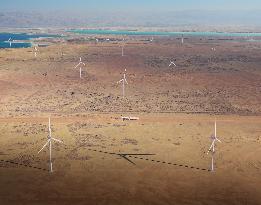
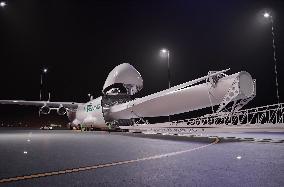
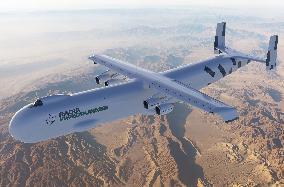
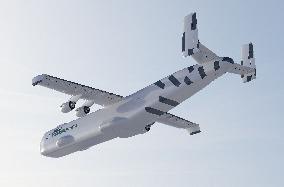
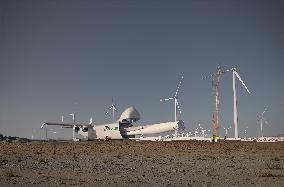
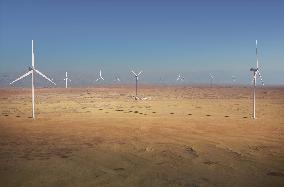
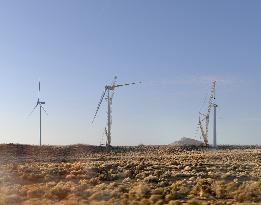
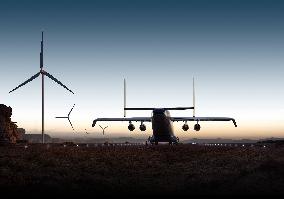
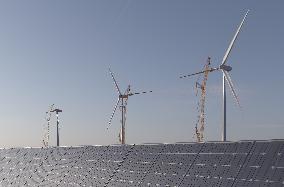
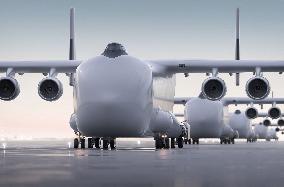
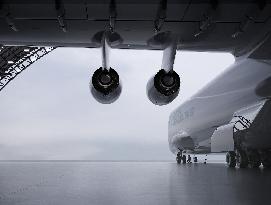
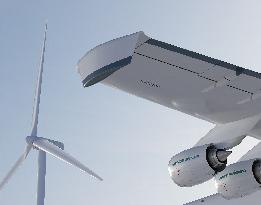
Handout rendering showsWindRunner, a new plane being developed by Colorado-based energy startup Radia. The 108-m (356-ft) long Radia Windrunner is designed to transport cargo too big for the road, to short, semi-prepared airstrips on rough terrain. It would dwarf the majestic 84-m (275-ft) long Antonov An-225 Mriya, which is sadly no longer with us. With the notable exception of the Large Hadron Collider, there's really no machine in history with single parts larger than today's mammoth wind turbines. Some offshore turbines, for example, are being built with blades more than 140 m (459 ft) long. One of the reasons why they're not getting to this scale on dry land is that it's damn near impossible to move blades this size on the road. Size really matters in wind power, where the swept area of your turbine is the key factor in how much energy you can harvest. The tips of the blades sweep a larger area than the sections closest to the hub, so there's a disproportionate area gain to be made for every bit of lengt

  •  
Radia's Windrunner Takes Title Of World's Largest Plane

Radia's Windrunner Takes Title Of World's Largest Plane

Handout rendering showsWindRunner, a new plane being developed by Colorado-based energy startup Radia. The 108-m (356-ft) long Radia Windrunner is designed to transport cargo too big for the road, to short, semi-prepared airstrips on rough terrain. It would dwarf the majestic 84-m (275-ft) long Antonov An-225 Mriya, which is sadly no longer with us. With the notable exception of the Large Hadron Collider, there's really no machine in history with single parts larger than today's mammoth wind turbines. Some offshore turbines, for example, are being built with blades more than 140 m (459 ft) long. One of the reasons why they're not getting to this scale on dry land is that it's damn near impossible to move blades this size on the road. Size really matters in wind power, where the swept area of your turbine is the key factor in how much energy you can harvest. The tips of the blades sweep a larger area than the sections closest to the hub, so there's a disproportionate area gain to be made for every bit of lengt

  •  
Radia's Windrunner Takes Title Of World's Largest Plane

Radia's Windrunner Takes Title Of World's Largest Plane

Handout rendering showsWindRunner, a new plane being developed by Colorado-based energy startup Radia. The 108-m (356-ft) long Radia Windrunner is designed to transport cargo too big for the road, to short, semi-prepared airstrips on rough terrain. It would dwarf the majestic 84-m (275-ft) long Antonov An-225 Mriya, which is sadly no longer with us. With the notable exception of the Large Hadron Collider, there's really no machine in history with single parts larger than today's mammoth wind turbines. Some offshore turbines, for example, are being built with blades more than 140 m (459 ft) long. One of the reasons why they're not getting to this scale on dry land is that it's damn near impossible to move blades this size on the road. Size really matters in wind power, where the swept area of your turbine is the key factor in how much energy you can harvest. The tips of the blades sweep a larger area than the sections closest to the hub, so there's a disproportionate area gain to be made for every bit of lengt

  •  
Radia's Windrunner Takes Title Of World's Largest Plane

Radia's Windrunner Takes Title Of World's Largest Plane

Handout rendering showsWindRunner, a new plane being developed by Colorado-based energy startup Radia. The 108-m (356-ft) long Radia Windrunner is designed to transport cargo too big for the road, to short, semi-prepared airstrips on rough terrain. It would dwarf the majestic 84-m (275-ft) long Antonov An-225 Mriya, which is sadly no longer with us. With the notable exception of the Large Hadron Collider, there's really no machine in history with single parts larger than today's mammoth wind turbines. Some offshore turbines, for example, are being built with blades more than 140 m (459 ft) long. One of the reasons why they're not getting to this scale on dry land is that it's damn near impossible to move blades this size on the road. Size really matters in wind power, where the swept area of your turbine is the key factor in how much energy you can harvest. The tips of the blades sweep a larger area than the sections closest to the hub, so there's a disproportionate area gain to be made for every bit of lengt

  •  
Radia's Windrunner Takes Title Of World's Largest Plane

Radia's Windrunner Takes Title Of World's Largest Plane

Handout rendering showsWindRunner, a new plane being developed by Colorado-based energy startup Radia. The 108-m (356-ft) long Radia Windrunner is designed to transport cargo too big for the road, to short, semi-prepared airstrips on rough terrain. It would dwarf the majestic 84-m (275-ft) long Antonov An-225 Mriya, which is sadly no longer with us. With the notable exception of the Large Hadron Collider, there's really no machine in history with single parts larger than today's mammoth wind turbines. Some offshore turbines, for example, are being built with blades more than 140 m (459 ft) long. One of the reasons why they're not getting to this scale on dry land is that it's damn near impossible to move blades this size on the road. Size really matters in wind power, where the swept area of your turbine is the key factor in how much energy you can harvest. The tips of the blades sweep a larger area than the sections closest to the hub, so there's a disproportionate area gain to be made for every bit of lengt

  •  
Radia's Windrunner Takes Title Of World's Largest Plane

Radia's Windrunner Takes Title Of World's Largest Plane

Handout rendering showsWindRunner, a new plane being developed by Colorado-based energy startup Radia. The 108-m (356-ft) long Radia Windrunner is designed to transport cargo too big for the road, to short, semi-prepared airstrips on rough terrain. It would dwarf the majestic 84-m (275-ft) long Antonov An-225 Mriya, which is sadly no longer with us. With the notable exception of the Large Hadron Collider, there's really no machine in history with single parts larger than today's mammoth wind turbines. Some offshore turbines, for example, are being built with blades more than 140 m (459 ft) long. One of the reasons why they're not getting to this scale on dry land is that it's damn near impossible to move blades this size on the road. Size really matters in wind power, where the swept area of your turbine is the key factor in how much energy you can harvest. The tips of the blades sweep a larger area than the sections closest to the hub, so there's a disproportionate area gain to be made for every bit of lengt

  •  
Radia's Windrunner Takes Title Of World's Largest Plane

Radia's Windrunner Takes Title Of World's Largest Plane

Handout rendering showsWindRunner, a new plane being developed by Colorado-based energy startup Radia. The 108-m (356-ft) long Radia Windrunner is designed to transport cargo too big for the road, to short, semi-prepared airstrips on rough terrain. It would dwarf the majestic 84-m (275-ft) long Antonov An-225 Mriya, which is sadly no longer with us. With the notable exception of the Large Hadron Collider, there's really no machine in history with single parts larger than today's mammoth wind turbines. Some offshore turbines, for example, are being built with blades more than 140 m (459 ft) long. One of the reasons why they're not getting to this scale on dry land is that it's damn near impossible to move blades this size on the road. Size really matters in wind power, where the swept area of your turbine is the key factor in how much energy you can harvest. The tips of the blades sweep a larger area than the sections closest to the hub, so there's a disproportionate area gain to be made for every bit of lengt

  •  
Radia's Windrunner Takes Title Of World's Largest Plane

Radia's Windrunner Takes Title Of World's Largest Plane

Handout rendering showsWindRunner, a new plane being developed by Colorado-based energy startup Radia. The 108-m (356-ft) long Radia Windrunner is designed to transport cargo too big for the road, to short, semi-prepared airstrips on rough terrain. It would dwarf the majestic 84-m (275-ft) long Antonov An-225 Mriya, which is sadly no longer with us. With the notable exception of the Large Hadron Collider, there's really no machine in history with single parts larger than today's mammoth wind turbines. Some offshore turbines, for example, are being built with blades more than 140 m (459 ft) long. One of the reasons why they're not getting to this scale on dry land is that it's damn near impossible to move blades this size on the road. Size really matters in wind power, where the swept area of your turbine is the key factor in how much energy you can harvest. The tips of the blades sweep a larger area than the sections closest to the hub, so there's a disproportionate area gain to be made for every bit of lengt

  •  
Radia's Windrunner Takes Title Of World's Largest Plane

Radia's Windrunner Takes Title Of World's Largest Plane

Handout rendering showsWindRunner, a new plane being developed by Colorado-based energy startup Radia. The 108-m (356-ft) long Radia Windrunner is designed to transport cargo too big for the road, to short, semi-prepared airstrips on rough terrain. It would dwarf the majestic 84-m (275-ft) long Antonov An-225 Mriya, which is sadly no longer with us. With the notable exception of the Large Hadron Collider, there's really no machine in history with single parts larger than today's mammoth wind turbines. Some offshore turbines, for example, are being built with blades more than 140 m (459 ft) long. One of the reasons why they're not getting to this scale on dry land is that it's damn near impossible to move blades this size on the road. Size really matters in wind power, where the swept area of your turbine is the key factor in how much energy you can harvest. The tips of the blades sweep a larger area than the sections closest to the hub, so there's a disproportionate area gain to be made for every bit of lengt

  •  
Radia's Windrunner Takes Title Of World's Largest Plane

Radia's Windrunner Takes Title Of World's Largest Plane

Handout rendering showsWindRunner, a new plane being developed by Colorado-based energy startup Radia. The 108-m (356-ft) long Radia Windrunner is designed to transport cargo too big for the road, to short, semi-prepared airstrips on rough terrain. It would dwarf the majestic 84-m (275-ft) long Antonov An-225 Mriya, which is sadly no longer with us. With the notable exception of the Large Hadron Collider, there's really no machine in history with single parts larger than today's mammoth wind turbines. Some offshore turbines, for example, are being built with blades more than 140 m (459 ft) long. One of the reasons why they're not getting to this scale on dry land is that it's damn near impossible to move blades this size on the road. Size really matters in wind power, where the swept area of your turbine is the key factor in how much energy you can harvest. The tips of the blades sweep a larger area than the sections closest to the hub, so there's a disproportionate area gain to be made for every bit of lengt

  •  
Radia's Windrunner Takes Title Of World's Largest Plane

Radia's Windrunner Takes Title Of World's Largest Plane

Handout rendering showsWindRunner, a new plane being developed by Colorado-based energy startup Radia. The 108-m (356-ft) long Radia Windrunner is designed to transport cargo too big for the road, to short, semi-prepared airstrips on rough terrain. It would dwarf the majestic 84-m (275-ft) long Antonov An-225 Mriya, which is sadly no longer with us. With the notable exception of the Large Hadron Collider, there's really no machine in history with single parts larger than today's mammoth wind turbines. Some offshore turbines, for example, are being built with blades more than 140 m (459 ft) long. One of the reasons why they're not getting to this scale on dry land is that it's damn near impossible to move blades this size on the road. Size really matters in wind power, where the swept area of your turbine is the key factor in how much energy you can harvest. The tips of the blades sweep a larger area than the sections closest to the hub, so there's a disproportionate area gain to be made for every bit of lengt

  •  
Radia's Windrunner Takes Title Of World's Largest Plane

Radia's Windrunner Takes Title Of World's Largest Plane

Handout rendering showsWindRunner, a new plane being developed by Colorado-based energy startup Radia. The 108-m (356-ft) long Radia Windrunner is designed to transport cargo too big for the road, to short, semi-prepared airstrips on rough terrain. It would dwarf the majestic 84-m (275-ft) long Antonov An-225 Mriya, which is sadly no longer with us. With the notable exception of the Large Hadron Collider, there's really no machine in history with single parts larger than today's mammoth wind turbines. Some offshore turbines, for example, are being built with blades more than 140 m (459 ft) long. One of the reasons why they're not getting to this scale on dry land is that it's damn near impossible to move blades this size on the road. Size really matters in wind power, where the swept area of your turbine is the key factor in how much energy you can harvest. The tips of the blades sweep a larger area than the sections closest to the hub, so there's a disproportionate area gain to be made for every bit of lengt

  •  
Workers check Hadron facility in east Japan village after restart

Workers check Hadron facility in east Japan village after restart

Workers at the Japan Proton Accelerator Research Complex monitor measuring instruments at its Hadron Experimental Facility in Tokai, Ibaraki Prefecture, east of Tokyo, on April 24, 2015, following its restart two years after a radiation leakage accident in 2013. (Kyodo) ==Kyodo

  •  
Hadron facility in east Japan village restarts 2 yrs after accident

Hadron facility in east Japan village restarts 2 yrs after accident

Naohito Saito, head of the Hadron Experimental Facility at the Japan Proton Accelerator Research Complex in Tokai, Ibaraki Prefecture, east of Tokyo, speaks to reporters on April 24, 2015, as it restarted two years after a radiation leakage accident in 2013. (Kyodo) ==Kyodo

  • Main
  • Top
  • Editorial
  • Creative
  • About Us
  • About ILG
  • Terms of use
  • Company
  • BEHIND
  • Price List
  • Single Plan
  • Monthly Plan
  • Services
  • Shooting
  • Rights Clearance
  • Support
  • FAQ
  • How To Buy
  • Contact Us
  • Become a Partner

© KYODO NEWS IMAGES INC

All Rights Reserved.

  • Editorial
  • Olympics
  • News
  • Sports
  • Japan
  • Tech
  • Royal
  • Disaster
  • NorthKorea
  • Old Japan
  • SNS
  • Creative
  • Food
  • Japan
  • Landscape
  • Animal
  • Popular
  • #Ukraine
  • #China
  • #coronavirus
  • #N. Korea
  • #Russia
  • #Thailand
  • #Ukraine
  • #China
  • #coronavirus
  • #N. Korea
  • #Russia
  • #Thailand
  • Food
  • Japan
  • Landscape
  • Animal
  • Olympics
  • News
  • Sports
  • Japan
  • Tech
  • Royal
  • Disaster
  • NorthKorea
  • Old Japan
  • SNS