•  

Executives of Japan's Liberal Democratic Party

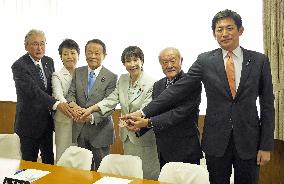
TOKYO, Japan, Oct. 7 Kyodo - New executives of Japan's ruling Liberal Democratic Party --election strategy chief Keiji Furuya, General Council chair Haruko Arimura, Vice President Taro Aso, President Sanae Takaichi, Secretary General Shunichi Suzuki and policy council chief Takayuki Kobayashi -- pose for a photo at the party's headquarters in Tokyo on Oct. 7, 2025.(Kyodo)

  •  
Executive of Japan's Liberal Democratic Party

Executive of Japan's Liberal Democratic Party

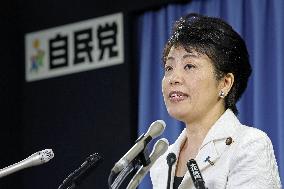
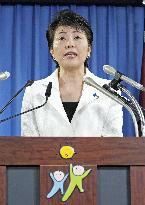
Haruko Arimura, newly appointed General Council chair of Japan's ruling Liberal Democratic Party, speaks at a press conference at the party's headquarters in Tokyo on Oct. 7, 2025.

  •  
Executive of Japan's Liberal Democratic Party

Executive of Japan's Liberal Democratic Party

Haruko Arimura, newly appointed General Council chair of Japan's ruling Liberal Democratic Party, speaks at a press conference at the party's headquarters in Tokyo on Oct. 7, 2025.

  •  
Executive of Japan's Liberal Democratic Party

Executive of Japan's Liberal Democratic Party

Haruko Arimura, newly appointed General Council chair of Japan's ruling Liberal Democratic Party, speaks at a press conference at the party's headquarters in Tokyo on Oct. 7, 2025.

  •  
Executives of Japan's Liberal Democratic Party

Executives of Japan's Liberal Democratic Party

New executives of Japan's ruling Liberal Democratic Party -- (from L) election strategy chief Keiji Furuya, General Council chair Haruko Arimura, Vice President Taro Aso, President Sanae Takaichi, Secretary General Shunichi Suzuki and policy council chief Takayuki Kobayashi -- pose for a photo at the party's headquarters in Tokyo on Oct. 7, 2025.

  •  
(SP)INDONESIA-BALI-AFC U17 WOMEN'S ASIAN CUP-2024-FINAL-DPRK VS JPN

(SP)INDONESIA-BALI-AFC U17 WOMEN'S ASIAN CUP-2024-FINAL-DPRK VS JPN

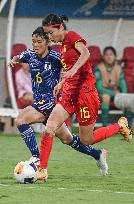
(240519) -- BALI, May 19, 2024 (Xinhua) -- Choe Rim-Jong (L) of the Democratic People's Republic of Korea (DPRK) competes against Suzuki Haruko of Japan during the final between the Democratic People's Republic of Korea (DPRK) and Japan at the AFC U-17 Women's Asia Cup in Bali, Indonesia, May 19, 2024. (Xinhua/Agung Kuncahya B.)

  •  
(SP)INDONESIA-BALI-FOOTBALL-AFC U17 WOMEN'S ASIAN CUP-JPN VS CHN

(SP)INDONESIA-BALI-FOOTBALL-AFC U17 WOMEN'S ASIAN CUP-JPN VS CHN

(240513) -- BALI, May 13, 2024 (Xinhua) -- Zhang Kecan (R) of China vies with Suzuki Haruko of Japan during the Group B match of the AFC U17 Women's Asian Cup 2024 between Japan and China in Bali, Indonesia, May 13, 2024. (Xinhua/Agung Kuncahya B.)

  •  
Haruko Obokata

Haruko Obokata

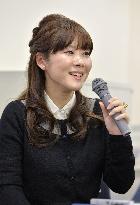
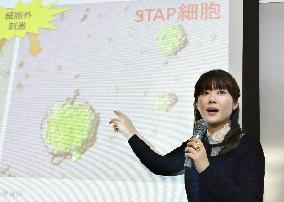
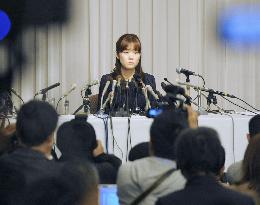
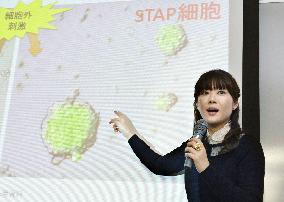
KOBE, Japan - Haruko Obokata, a scientist at Riken's Center for Developmental Biology in Kobe, speaks at a press conference in Kobe, Hyogo Prefecture, on Jan. 28, 2014, on "stimulus-triggered acquisition of pluripotency," or STAP, a method of generating pluripotent cells. A team of scientists led by Obokata has discovered, in research conducted by scientists at the state-backed Riken institute and Harvard University, that by simply exposing body cells to acidic liquids, the cells can be reprogrammed to grow into any type of mature tissue.

  •  
Haruko Obokata

Haruko Obokata

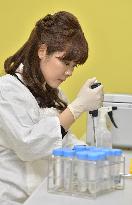
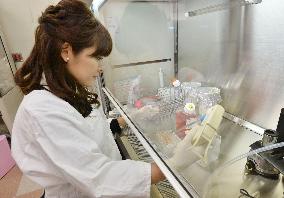
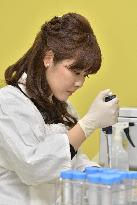
KOBE, Japan - Photo shows Haruko Obokata, a scientist at Riken's Center for Developmental Biology, at its laboratory in Kobe, Hyogo Prefecture, on Jan. 28, 2014. A team of scientists led by Obokata has discovered, in research conducted by scientists at the state-backed Riken institute and Harvard University, that by simply exposing body cells to acidic liquids, the cells can be reprogrammed to grow into any type of mature tissue.

  •  
Haruko Obokata

Haruko Obokata

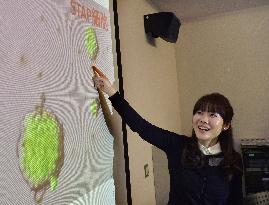
KOBE, Japan - Haruko Obokata, a scientist at Riken's Center for Developmental Biology in Kobe, speaks on "stimulus-triggered acquisition of pluripotency," or STAP, a method of generating pluripotent cells, in Kobe, Hyogo Prefecture, on Jan. 28, 2014. A team of scientists led by Obokata has discovered, in research conducted by scientists at the state-backed Riken institute and Harvard University, that by simply exposing body cells to acidic liquids, cells can be reprogrammed to grow into any type of mature tissue.

  •  
New method for reprogramming body cells

New method for reprogramming body cells

TOKYO, Japan - Photo shows Haruko Obokata, a scientist at Riken's Center for Developmental Biology in Kobe. A team of scientists led by Obokata has discovered, in research conducted by scientists at the state-backed Riken institute and Harvard University, that by simply exposing body cells to acidic liquids, the cells can be reprogrammed to grow into any type of mature tissue. They named the method of generating pluripotent cells, or cells that can grow into any type of mature tissues in the body, "stimulus-triggered acquisition of pluripotency," or STAP. The discovery was announced in the Jan. 30, 2014 issue of Nature.

  •  
New method for reprogramming body cells

New method for reprogramming body cells

KOBE, Japan - Photo shows Haruko Obokata, a scientist at Riken Center for Developmental Biology, at its laboratory in Kobe, Hyogo Prefecture, on Jan. 28, 2014. A team of scientists led by Obokata has discovered, in research conducted by scientists at the state-backed Riken institute and Harvard University, that by simply exposing body cells to acidic liquids, the cells can be reprogrammed to grow into any type of mature tissue. They named the method of generating pluripotent cells, or cells that can grow into any type of mature tissues in the body, "stimulus-triggered acquisition of pluripotency," or STAP. The discovery was announced in the Jan. 30, 2014 issue of Nature.

  •  
Riken to ask Obokata to return 600,000 yen paper submission fee

Riken to ask Obokata to return 600,000 yen paper submission fee

TOKYO, March 20 Kyodo - Undated photo shows Haruko Obokata, who resigned from the Riken research institute in December 2014 in the wake of a scandal over her misconduct in a so-called STAP stem-cell study. Riken announced on March 20, 2015, it plans to demand that Obokata return about 600,000 yen in research paper submission fees.

  •  
Obokata fails to file appeal after panel condemns "STAP cell" study

Obokata fails to file appeal after panel condemns "STAP cell" study

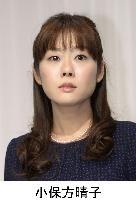
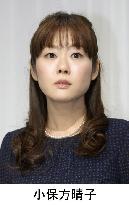
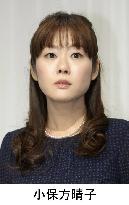
TOKYO, Japan - Photo shows Haruko Obokata, a former researcher with the Riken research institute. The institute said on Jan. 6, 2015, that Obokata has not filed an appeal in response to a panel investigation finding in December, 2014 that "STAP cells" she claimed to have created almost certainly did not exist.

  •  
Purported "STAP cells" likely came from embryonic stem cells

Purported "STAP cells" likely came from embryonic stem cells

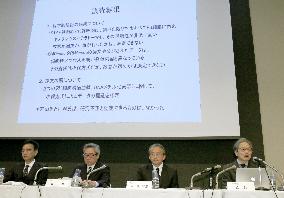
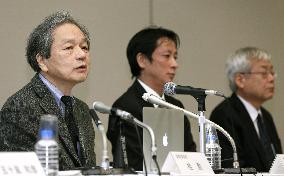
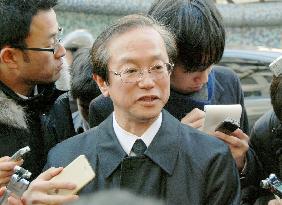
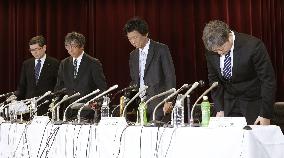
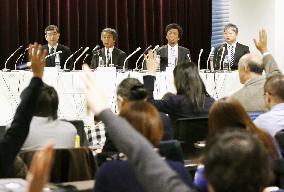
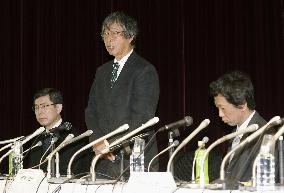
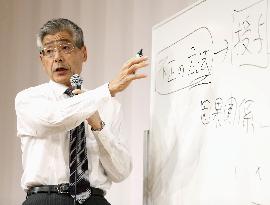
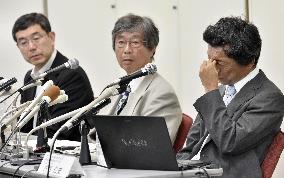
TOKYO, Japan - Isao Katsura (far R), director general of the National Institute of Genetics and leader of a panel under the Riken research institute, attends a press conference along with other panel members in Tokyo on Dec. 26, 2014, to announce that the "STAP cells" that scientist Haruko Obokata, who left Riken on Dec. 21, claimed to have created were likely cells generated from embryonic stem cells.

  •  
Purported "STAP cells" likely came from embryonic stem cells

Purported "STAP cells" likely came from embryonic stem cells

TOKYO, Japan - Isao Katsura (L), director general of the National Institute of Genetics and leader of a panel under the Riken research institute, attends a press conference along with other panel members in Tokyo on Dec. 26, 2014, to announce that the "STAP cells" that scientist Haruko Obokata, who left Riken on Dec. 21, claimed to have created were likely cells generated from embryonic stem cells.

  •  
Purported "STAP cells" likely came from embryonic stem cells

Purported "STAP cells" likely came from embryonic stem cells

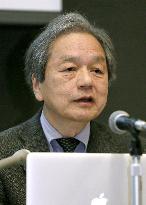
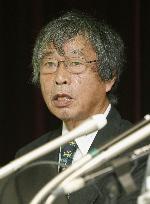
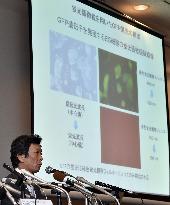
TOKYO, Japan - Isao Katsura, director general of the National Institute of Genetics and leader of a panel under the Riken research institute, attends a press conference in Tokyo on Dec. 26, 2014, to announce that the "STAP cells" that scientist Haruko Obokata, who left Riken on Dec. 21, claimed to have created were likely cells generated from embryonic stem cells.

  •  
Purported "STAP cells" likely came from embryonic stem cells

Purported "STAP cells" likely came from embryonic stem cells

TOKYO, Japan - Haruko Obokata, then a researcher with the Riken research institute, announces the creation of the "STAP cells," claimed to be capable of developing into any type of tissue, in Kobe, western Japan, in this file photo taken in January 2014. A panel under the government-backed institute said Dec. 26, 2014, that the STAP cells that Obokata claimed to have created were likely cells generated from embryonic stem cells. Obokata left her job at Riken on Dec. 21.

  •  
Purported "STAP cells" likely came from embryonic stem cells

Purported "STAP cells" likely came from embryonic stem cells

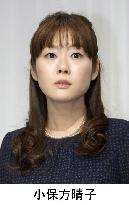
TOKYO, Japan - Photo shows Haruko Obokata, a former researcher with the Riken research institute. A panel under the government-backed institute said Dec. 26, 2014, that the "STAP cells" that Obokata claimed to have created were likely cells generated from embryonic stem cells. Obokata left her job at Riken on Dec. 21.

  •  
Institute concludes Obokata failed to replicate "STAP cell" creation

Institute concludes Obokata failed to replicate "STAP cell" creation

TOKYO, Japan - File photo taken Jan. 28, 2014, shows Haruko Obokata, a researcher with the Riken institute, at her laboratory in the institute in Kobe, western Japan. On Dec. 19, 2014, Riken concluded that Obokata failed in experiments to produce stem cells that she previously claimed to have created.

  •  
Institute concludes Obokata failed to replicate "STAP cell" creation

Institute concludes Obokata failed to replicate "STAP cell" creation

TOKYO, Japan - File photo taken in April 2014 shows Haruko Obokata, a researcher with the Riken institute, during a press conference at an Osaka hotel. On Dec. 19, 2014, Riken concluded that Obokata failed in experiments to produce stem cells that she previously claimed to have created.

  •  
Obokata failed to replicate "STAP cell" creation

Obokata failed to replicate "STAP cell" creation

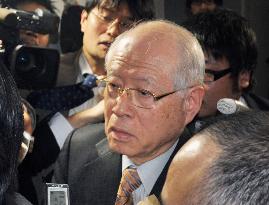
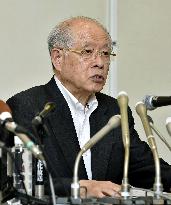
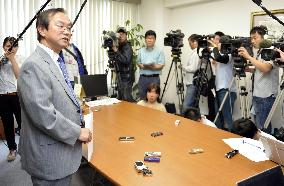
TOKYO, Japan - Riken President Ryoji Noyori, a 2001 Nobel laureate in chemistry, is surrounded by reporters at the science ministry in Tokyo on Dec. 19, 2014, as the Japanese research institute announced that embattled scientist Haruko Obokata has failed in experiments to produce the cells that she previously claimed to have created.

  •  
Institute concludes Obokata failed to replicate "STAP cell" creation

Institute concludes Obokata failed to replicate "STAP cell" creation

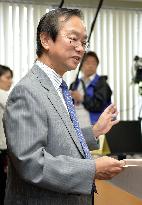
OSAKA, Japan - Hideo Miki, lawyer for Haruko Obokata, a researcher with the Riken institute, meets the press in Osaka on Dec. 19, 2014, after the institute concluded that Obokata failed in experiments to produce stem cells that she previously claimed to have created.

  •  
Obokata failed to replicate "STAP cell" creation

Obokata failed to replicate "STAP cell" creation

TOKYO, Japan - Shinichi Aizawa (2nd from L), head of Japan's Riken verification team on the STAP cell research, attends a press conference in Tokyo on Dec. 19, 2014. The research institute announced that embattled scientist Haruko Obokata has failed in experiments to produce the cells that she previously claimed to have created.

  •  
Obokata failed to replicate "STAP cell" creation

Obokata failed to replicate "STAP cell" creation

TOKYO, Japan - Shinichi Aizawa (2nd from L), head of Japan's Riken verification team on the STAP cell research, attends a press conference in Tokyo on Dec. 19, 2014. The research institute announced that embattled scientist Haruko Obokata has failed in experiments to produce the cells that she previously claimed to have created.

  •  
Obokata failed to replicate "STAP cell" creation

Obokata failed to replicate "STAP cell" creation

TOKYO, Japan - Shinichi Aizawa, head of Japan's Riken verification team on the STAP cell research, attends a press conference in Tokyo on Dec. 19, 2014. The research institute announced that embattled scientist Haruko Obokata has failed in experiments to produce the cells that she previously claimed to have created.

  •  
Obokata failed to replicate "STAP cell" creation

Obokata failed to replicate "STAP cell" creation

TOKYO, Japan - Shinichi Aizawa (C), head of Japan's Riken verification team on the STAP cell research, attends a press conference in Tokyo on Dec. 19, 2014. The research institute announced that embattled scientist Haruko Obokata has failed in experiments to produce the cells that she previously claimed to have created.

  •  
Verification experiment on STAP cells to be terminated

Verification experiment on STAP cells to be terminated

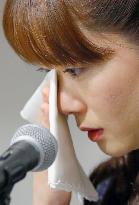
TOKYO, Japan - Embattled scientist Haruko Obokata at Japan's Riken research institute wipes away tears during a press conference in April 2014 at an Osaka hotel, as doubts emerged about so-called STAP cell papers she co-authored. Riken will announce on Dec. 19, 2014, that it has decided to end the verification experiment over her research as the cells cannot be produced.

  •  
Obokata apparently fails to reproduce STAP cells

Obokata apparently fails to reproduce STAP cells

TOKYO, Japan - File photo taken in January 2014 shows scientist Haruko Obokata at Japan's Riken research institute announcing her research into so-called STAP cells in the western city of Kobe. Her research papers were withdrawn later amid allegations of misconduct, and it was reported on Dec. 18, 2014, that she has failed to reproduce STAP cells during verification experiments.

  •  
3 female ministers visit Yasukuni

3 female ministers visit Yasukuni

TOKYO, Japan - Haruko Arimura, minister in charge of women's empowerment, visits the war-linked Yasukuni Shrine in Tokyo on Oct. 18, 2014, on the occasion of its autumn festival. Two other female Cabinet ministers also visited the shrine, a move that will likely draw criticism from China and South Korea.

  •  
Abe stands before office for promotion of women's role

Abe stands before office for promotion of women's role

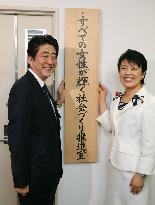
TOKYO, Japan - Japanese Prime Minister Shinzo Abe (L) and Haruko Arimura, minister in charge of women's active social participation, stand by the signboard of an office tasked with creating "a society where all women can become active" in the Cabinet Office in Tokyo on Oct. 15, 2014.

  •  
Waseda to strip Obokata of doctorate unless dissertation corrected

Waseda to strip Obokata of doctorate unless dissertation corrected

OSAKA, Japan - Hideo Miki, a lawyer for Haruko Obokata, a 31-year-old researcher at the Japanese government-affiliated Riken institute, meets the press in the city of Osaka on Oct. 7, 2014, after Waseda University said it will strip Obokata of her doctorate unless she corrects her dissertation.

  •  
Waseda to strip Obokata of doctorate unless dissertation corrected

Waseda to strip Obokata of doctorate unless dissertation corrected

TOKYO, Japan - Photo shows Haruko Obokata, a 31-year-old researcher at the Japanese government-affiliated Riken institute. Waseda University said Oct. 7, 2014, it will strip Obokata of her doctorate unless she corrects her dissertation, following her involvement in a scandal earlier in the year related to research on so-called STAP cells. Citing a serious fault in the dissertation screening process, the university gave Obokata a year to correct a number of irregularities including the use of material from a U.S. website.

  •  
Arimura takes over from Mori

Arimura takes over from Mori

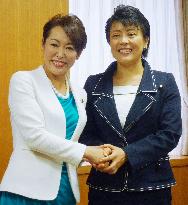
TOKYO, Japan - Haruko Arimura (R), Japan's newly appointed minister in charge of supporting women's empowerment, and Masako Mori, former minister in charge of tackling the declining birthrate, shake hands at the Consumer Affairs Agency in Tokyo on Sept. 4, 2014, as Arimura took over the job from Mori.

  •  
Abe reshuffles Cabinet to tighten grip on power

Abe reshuffles Cabinet to tighten grip on power

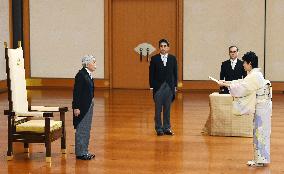
TOKYO, Japan - Haruko Arimura (R) is attested as a Cabinet minister by Emperor Akihito (L) at the Imperial Palace in Tokyo on Sept. 3, 2014, with Prime Minister Shinzo Abe (C) looking on. Earlier in the day, Arimura was appointed as minister in charge of promoting women's active participation and administrative reform in Abe's reshuffled Cabinet. (Pool photo by Mainichi Shimbun)

  •  
Abe reshuffles Cabinet

Abe reshuffles Cabinet

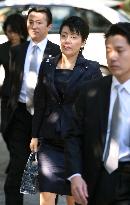
TOKYO, Japan - Haruko Arimura (front), newly appointed as minister in charge of supporting women's empowerment, enters the prime minister's office in Tokyo on Sept. 3, 2014.

  •  
Riken team has not reproduced STAP cells

Riken team has not reproduced STAP cells

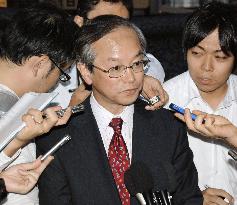
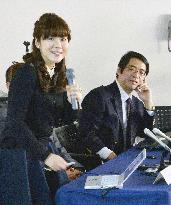
TOKYO, Japan - Hitoshi Niwa (R), a researcher at the Riken research institute who heads the team reexamining the so-called STAP cells, speaks at a news conference in Tokyo on Aug. 27, 2014. He said the team has yet to reproduce through ongoing experiments the cells described in Haruko Obokata's research papers, which she subsequently withdrew amid allegations of misconduct.

  •  
Riken team has not reproduced STAP cells

Riken team has not reproduced STAP cells

TOKYO, Japan - Hitoshi Niwa (R), a researcher at the Riken research institute who heads the team reexamining the so-called STAP cells, prepares to answer a question during a press conference in Tokyo on Aug. 27, 2014. He said the team has yet to reproduce through ongoing experiments the cells described in Haruko Obokata's research papers, which she subsequently withdrew amid allegations of misconduct.

  •  
Riken team has not reproduced STAP cells

Riken team has not reproduced STAP cells

TOKYO, Japan - Hitoshi Niwa, a researcher at the Riken research institute who heads the team reexamining the so-called STAP cells, speaks at a news conference in Tokyo on Aug. 27, 2014. He said the team has yet to reproduce through ongoing experiments the cells described in Haruko Obokata's research papers, which she subsequently withdrew amid allegations of misconduct.

  •  
Riken team has not reproduced STAP cells

Riken team has not reproduced STAP cells

TOKYO, Japan - Hitoshi Niwa, a researcher at the Riken research institute who heads the team reexamining the so-called STAP cells, speaks at a news conference in Tokyo on Aug. 27, 2014. He said the team has yet to reproduce through ongoing experiments the cells described in Haruko Obokata's research papers, which she subsequently withdrew amid allegations of misconduct.

  •  
Riken to halve scale of Center for Developmental Biology

Riken to halve scale of Center for Developmental Biology

TOKYO, Japan - Ryoji Noyori, the Nobel chemistry laureate and president of the government-backed Riken research institute, speaks at a news conference in Tokyo on Aug. 27, 2014, after submitting a plan to Hakubun Shimomura, minister in charge of science and technology, to halve the scale of the Center for Developmental Biology after it failed to prevent researcher Haruko Obokata's misconduct.

  •  
STAP cells paper co-author Sasai commits suicide

STAP cells paper co-author Sasai commits suicide

KOBE, Japan - File photo taken Jan. 28, 2014, in the western Japan city of Kobe shows Yoshiki Sasai (R), deputy director of the Riken Center for Developmental Biology, and Riken scientist Haruko Obokata announcing their research on so-called STAP cells. Sasai, a co-author of STAP research papers, committed suicide on Aug. 5 at Riken. Obokata is the lead author of the two controversial papers.

  •  
Waseda panel says Obokata's doctorate should stay despite scandal

Waseda panel says Obokata's doctorate should stay despite scandal

TOKYO, Japan - Lawyer Hideaki Kobayashi, who heads an investigative panel of Waseda University, tells reporters at a Tokyo hotel on July 17, 2014, that embattled researcher Haruko Obokata should not be stripped of her doctorate, as it was not obtained "through illicit means" and inadequate screening was to blame for endorsement of her "problematic" dissertation.

  •  
Obokata arrives at Riken to prove STAP cells

Obokata arrives at Riken to prove STAP cells

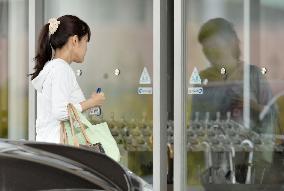
KOBE, Japan - Haruko Obokata, the lead author of two controversial STAP cell papers, enters Riken's Center for Developmental Biology in Kobe on July 2, 2014, to participate in experiments to verify the findings of her research. Obokata, 30, will participate in the experiments through Nov. 30 to determine if STAP cells can be produced. The institute said it will secure transparency by video recording her experiments and through other means.

  •  
Obokata arrives at Riken to prove STAP cells

Obokata arrives at Riken to prove STAP cells

KOBE, Japan - Haruko Obokata, the lead author of two controversial STAP cell papers, enters Riken's Center for Developmental Biology in Kobe on July 2, 2014, to participate in experiments to verify the findings of her research. Obokata, 30, will participate in the experiments through Nov. 30 to determine if STAP cells can be produced. The institute said it will secure transparency by video recording her experiments and through other means.

  •  
Obokata arrives at Riken to prove STAP cells

Obokata arrives at Riken to prove STAP cells

KOBE, Japan - Haruko Obokata, the lead author of two controversial STAP cell papers, arrives at Riken's Center for Developmental Biology in Kobe on July 2, 2014, to participate in experiments to verify the findings of her research. Obokata, 30, will participate in the experiments through Nov. 30 to determine if STAP cells can be produced. The institute said it will secure transparency by video recording her experiments and through other means.

  •  
Obokata arrives at Riken to prove STAP cells

Obokata arrives at Riken to prove STAP cells

KOBE, Japan - Haruko Obokata, the lead author of two controversial STAP cell papers, enters Riken's Center for Developmental Biology in Kobe on July 2, 2014, to participate in experiments to verify the findings of her research. Obokata, 30, will participate in the experiments through Nov. 30 to determine if STAP cells can be produced. The institute said it will secure transparency by video recording her experiments and through other means.

  •  
Obokata rejects most recent doubt

Obokata rejects most recent doubt

OSAKA, Japan - Hideo Miki, lawyer for Haruko Obokata, a researcher with the government-funded Riken institute, meets reporters in Osaka on June 18, 2014. Miki said Obokata, the lead author of two controversial papers on STAP cells, or stimulus-triggered acquisition of pluripotency cells, is eager to prove on her own that her findings are valid, refuting her research collaborator's recent unsupportive remarks.

  •  
Obokata rejects most recent doubt

Obokata rejects most recent doubt

OSAKA, Japan - Hideo Miki, lawyer for Haruko Obokata, a researcher with the government-funded Riken institute, meets reporters in Osaka on June 18, 2014. Miki said Obokata, the lead author of two controversial papers on STAP cells, or stimulus-triggered acquisition of pluripotency cells, is eager to prove on her own that her findings are valid, refuting her research collaborator's recent unsupportive remarks.

  •  
Panel urges research center to disband after STAP controversy

Panel urges research center to disband after STAP controversy

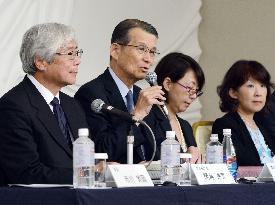
TOKYO, Japan - Members of a panel tasked with reforming operations of the Riken research institute attend a press conference on June 12, 2014, in Tokyo, urging it to disband the research center employing Haruko Obokata following misconduct over a study into so-called STAP cells. They include the panel chief Teruo Kishi (2nd from L).

  • Main
  • Top
  • Editorial
  • Creative
  • About Us
  • About ILG
  • Terms of use
  • Company
  • BEHIND
  • Price List
  • Single Plan
  • Monthly Plan
  • Services
  • Shooting
  • Rights Clearance
  • Support
  • FAQ
  • How To Buy
  • Contact Us
  • Become a Partner

© KYODO NEWS IMAGES INC

All Rights Reserved.

  • Editorial
  • Olympics
  • News
  • Sports
  • Japan
  • Tech
  • Royal
  • Disaster
  • NorthKorea
  • Old Japan
  • SNS
  • Creative
  • Food
  • Japan
  • Landscape
  • Animal
  • Popular
  • #Ukraine
  • #China
  • #coronavirus
  • #N. Korea
  • #Thailand
  • #Russia
  • #Ukraine
  • #China
  • #coronavirus
  • #N. Korea
  • #Thailand
  • #Russia
  • Food
  • Japan
  • Landscape
  • Animal
  • Olympics
  • News
  • Sports
  • Japan
  • Tech
  • Royal
  • Disaster
  • NorthKorea
  • Old Japan
  • SNS