•  
Quake-hit Hatay Archaeology Museum Gets Reinforced - Turkey

Quake-hit Hatay Archaeology Museum Gets Reinforced - Turkey

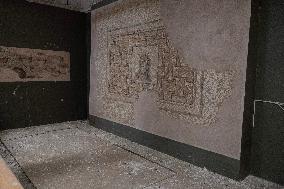
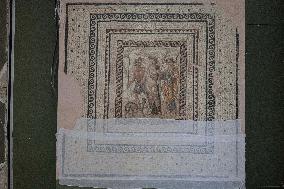
An inside view of the mosaics at the Hatay Archaeology Museum, during the reinforcement work in Hatay, Turkey, on January 23, 2024, on year after deadly quake. The museum has a total exhibition area of 10,000 square meters, including 3,500 square meters of mosaics, and is known for its extensive collection of archaeological artifacts. Hatay Archeology Museum, one of the museums where the world's largest mosaic collection of the Roman and Byzantine Era. There are also many artifacts from the Paleolithic, Neolithic, Chalcolithic, Bronze Age, Hittite, Hellenistic, Eastern Roman, Seljuk and Ottoman periods in the museum. Photo by Ugur Yildirim/Demiroren Visual Media/ABACAPRESS.COM

  •  
Quake-hit Hatay Archaeology Museum Gets Reinforced - Turkey

Quake-hit Hatay Archaeology Museum Gets Reinforced - Turkey

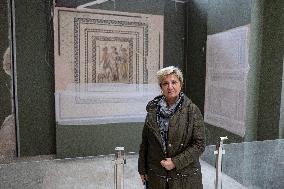
Museum Director Ayşe Ersoy poses in fornt of a mosaic, in Hatay, Turkey, on January 23, 2024, on year after deadly quake. Hatay Archeology Museum Director Ayşe Ersoy said, 'Thirty artifacts too big to carry were put under cages. All of our mosaics were taken under protection on site', reinforcement works are now being carried out in the building. Teams continue to work in line with the report given by the scientific teams. After three years, our museum will be reopened to visitors with a completely different concept'. The museum has a total exhibition area of 10,000 square meters, including 3,500 square meters of mosaics, and is known for its extensive collection of archaeological artifacts. Hatay Archeology Museum, one of the museums where the world's largest mosaic collection of the Roman and Byzantine Era. There are also many artifacts from the Paleolithic, Neolithic, Chalcolithic, Bronze Age, Hittite, Hellenistic, Eastern Roman, Seljuk and Ottoman periods in the museum. Photo by Ugur Yildirim/Demiroren Vi

  •  
Quake-hit Hatay Archaeology Museum Gets Reinforced - Turkey

Quake-hit Hatay Archaeology Museum Gets Reinforced - Turkey

An inside view of the mosaics at the Hatay Archaeology Museum, during the reinforcement work in Hatay, Turkey, on January 23, 2024, on year after deadly quake. The museum has a total exhibition area of 10,000 square meters, including 3,500 square meters of mosaics, and is known for its extensive collection of archaeological artifacts. Hatay Archeology Museum, one of the museums where the world's largest mosaic collection of the Roman and Byzantine Era. There are also many artifacts from the Paleolithic, Neolithic, Chalcolithic, Bronze Age, Hittite, Hellenistic, Eastern Roman, Seljuk and Ottoman periods in the museum. Photo by Ugur Yildirim/Demiroren Visual Media/ABACAPRESS.COM

  •  
Quake-hit Hatay Archaeology Museum Gets Reinforced - Turkey

Quake-hit Hatay Archaeology Museum Gets Reinforced - Turkey

An inside view of the mosaics at the Hatay Archaeology Museum, during the reinforcement work in Hatay, Turkey, on January 23, 2024, on year after deadly quake. The museum has a total exhibition area of 10,000 square meters, including 3,500 square meters of mosaics, and is known for its extensive collection of archaeological artifacts. Hatay Archeology Museum, one of the museums where the world's largest mosaic collection of the Roman and Byzantine Era. There are also many artifacts from the Paleolithic, Neolithic, Chalcolithic, Bronze Age, Hittite, Hellenistic, Eastern Roman, Seljuk and Ottoman periods in the museum. Photo by Ugur Yildirim/Demiroren Visual Media/ABACAPRESS.COM

  •  
Quake-hit Hatay Archaeology Museum Gets Reinforced - Turkey

Quake-hit Hatay Archaeology Museum Gets Reinforced - Turkey

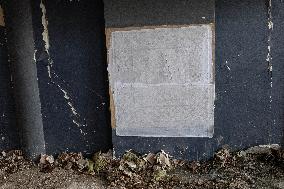
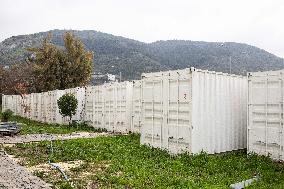
Containers outside the Hatay Archaeology Museum, with the artifacts from the Paleolithic, Neolithic, Chalcolithic, Bronze Age, Hittite, Hellenistic, Eastern Roman, Seljuk and Ottoman periods, during the reinforcement work in Hatay, Turkey, on January 23, 2024, on year after deadly quake. The museum has a total exhibition area of 10,000 square meters, including 3,500 square meters of mosaics, and is known for its extensive collection of archaeological artifacts. Hatay Archeology Museum, one of the museums where the world's largest mosaic collection of the Roman and Byzantine Era. There are also many artifacts from the Paleolithic, Neolithic, Chalcolithic, Bronze Age, Hittite, Hellenistic, Eastern Roman, Seljuk and Ottoman periods in the museum. Photo by Ugur Yildirim/Demiroren Visual Media/ABACAPRESS.COM

  •  
Quake-hit Hatay Archaeology Museum Gets Reinforced - Turkey

Quake-hit Hatay Archaeology Museum Gets Reinforced - Turkey

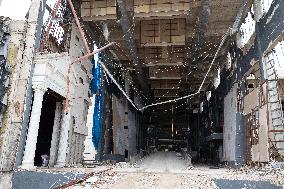
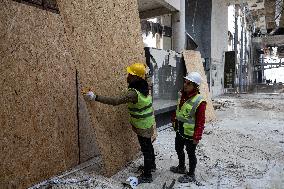
An inside view of the Hatay Archaeology Museum, during the reinforcement work in Hatay, Turkey, on January 23, 2024, on year after deadly quake. The museum has a total exhibition area of 10,000 square meters, including 3,500 square meters of mosaics, and is known for its extensive collection of archaeological artifacts. Hatay Archeology Museum, one of the museums where the world's largest mosaic collection of the Roman and Byzantine Era. There are also many artifacts from the Paleolithic, Neolithic, Chalcolithic, Bronze Age, Hittite, Hellenistic, Eastern Roman, Seljuk and Ottoman periods in the museum. Photo by Ugur Yildirim/Demiroren Visual Media/ABACAPRESS.COM

  •  
Quake-hit Hatay Archaeology Museum Gets Reinforced - Turkey

Quake-hit Hatay Archaeology Museum Gets Reinforced - Turkey

An inside view of the Hatay Archaeology Museum, during the reinforcement work in Hatay, Turkey, on January 23, 2024, on year after deadly quake. The museum has a total exhibition area of 10,000 square meters, including 3,500 square meters of mosaics, and is known for its extensive collection of archaeological artifacts. Hatay Archeology Museum, one of the museums where the world's largest mosaic collection of the Roman and Byzantine Era. There are also many artifacts from the Paleolithic, Neolithic, Chalcolithic, Bronze Age, Hittite, Hellenistic, Eastern Roman, Seljuk and Ottoman periods in the museum. Photo by Ugur Yildirim/Demiroren Visual Media/ABACAPRESS.COM

  •  
Quake-hit Hatay Archaeology Museum Gets Reinforced - Turkey

Quake-hit Hatay Archaeology Museum Gets Reinforced - Turkey

An inside view of the Hatay Archaeology Museum, during the reinforcement work in Hatay, Turkey, on January 23, 2024, on year after deadly quake. The museum has a total exhibition area of 10,000 square meters, including 3,500 square meters of mosaics, and is known for its extensive collection of archaeological artifacts. Hatay Archeology Museum, one of the museums where the world's largest mosaic collection of the Roman and Byzantine Era. There are also many artifacts from the Paleolithic, Neolithic, Chalcolithic, Bronze Age, Hittite, Hellenistic, Eastern Roman, Seljuk and Ottoman periods in the museum. Photo by Ugur Yildirim/Demiroren Visual Media/ABACAPRESS.COM

  •  
Quake-hit Hatay Archaeology Museum Gets Reinforced - Turkey

Quake-hit Hatay Archaeology Museum Gets Reinforced - Turkey

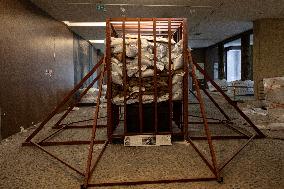
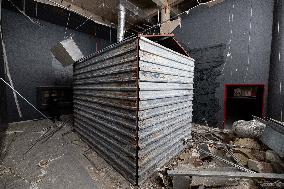
An view of the Antakya Sarcophagus from the 3rd century BC, under protection in Hatay Archaeology Museum, during the reinforcement work in Hatay, Turkey, on January 23, 2024, on year after deadly quake. The museum has a total exhibition area of 10,000 square meters, including 3,500 square meters of mosaics, and is known for its extensive collection of archaeological artifacts. Hatay Archeology Museum, one of the museums where the world's largest mosaic collection of the Roman and Byzantine Era. There are also many artifacts from the Paleolithic, Neolithic, Chalcolithic, Bronze Age, Hittite, Hellenistic, Eastern Roman, Seljuk and Ottoman periods in the museum. Photo by Ugur Yildirim/Demiroren Visual Media/ABACAPRESS.COM

  •  

Türkiye seizes 2,000-year-old statue's head in smuggling crackdown raid

STORY: Türkiye seizes 2,000-year-old statue's head in smuggling crackdown raid DATELINE: June 18, 2023 LENGTH: 00:00:37 LOCATION: ISTANBUL, Türkiye CATEGORY: SOCIETY SHOTLIST: 1. footage of anti-smuggling police seizing the head of a 2,000-year-old Hellenistic statue hidden in a dishwasher during an operation against antiquities smugglers in Izmir, Türkiye 2. various of the statue STORYLINE: Turkish police seized the head of a 2,000-year-old statue in the western city of Izmir as part of a crackdown on a ring of historical artifact smugglers, the state-run Anadolu agency reported Saturday. The police raided the house of a suspect believed to be involved in the smuggling of ancient treasures in the Karabaglar district of Izmir and found the head of the statue in a dishwasher. The head is believed to be part of a marble statue depicting a goddess or a noble dating back to the Hellenistic period. Legal procedures have been launched against the suspect who allegedly attempted to smuggle the artifact abroad.

  •  

10,500 artifacts unearthed in Türkiye in 2022

STORY: 10,500 artifacts unearthed in Türkiye in 2022 DATELINE: Jan. 20, 2023 LENGTH: 00:02:24 LOCATION: ISTANBUL, Türkiye CATEGORY: SOCIETY SHOTLIST: 1. various of the archaeological excavation site at Haydarpasa Train Station 2. various of the archaeological excavation site at Zerzevan Castle 3. various of Corum Museum, Türkiye 4. various of the Hittite cuneiform tablets in Corum Museum 5. various of historical artifacts in Corum Museum STORYLINE: A total of 10,500 artifacts for museum collections were unearthed in 249 archaeological digs in Türkiye in 2022, according to data from the Turkish General Directorate of Museums and Cultural Heritage. The vast majority of these digs were conducted by Turkish teams, while foreign teams ran 32 excavations. Most digs were on land, while seven were conducted underwater to uncover sunken treasures. Once home to countless ancient civilizations, from the Hittites to the Hellenistic States and the Roman Empire, modern Türkiye is rich in archaeological treasures. Yah

  •  
ISRAEL-KNUCKLEBONE DICES-DISCOVERY

ISRAEL-KNUCKLEBONE DICES-DISCOVERY

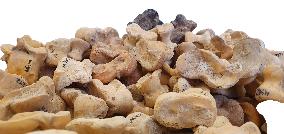
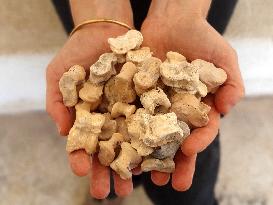
(220817) -- MARESHA, Aug. 17, 2022 (Xinhua) -- Photo taken on June 20, 2022 shows the dice assemblage. Israeli archaeologists have discovered a collection of 530 knucklebone dices used for gaming and divination 2,300 years ago, the Israel Antiquities Authority (IAA) said on Tuesday. The knucklebones, called "astragali," were found in a huge underground cave complex in the southern Judean Foothills region, where the Hellenistic city of Maresha was located, the IAA noted. (Yoli Schwartz/Israel Antiquities Authority/Handout via Xinhua)

  •  
ISRAEL-KNUCKLEBONE DICES-DISCOVERY

ISRAEL-KNUCKLEBONE DICES-DISCOVERY

(220817) -- MARESHA, Aug. 17, 2022 (Xinhua) -- Photo taken on June 20, 2022 shows the dice assemblage. Israeli archaeologists have discovered a collection of 530 knucklebone dices used for gaming and divination 2,300 years ago, the Israel Antiquities Authority (IAA) said on Tuesday. The knucklebones, called "astragali," were found in a huge underground cave complex in the southern Judean Foothills region, where the Hellenistic city of Maresha was located, the IAA noted. (Yoli Schwartz/Israel Antiquities Authority/Handout via Xinhua)

  •  
TURKEY-ADIYAMAN-MOUNT NEMRUT-TOURISM

TURKEY-ADIYAMAN-MOUNT NEMRUT-TOURISM

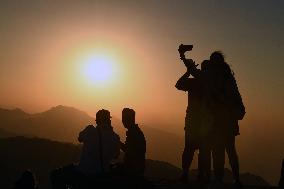
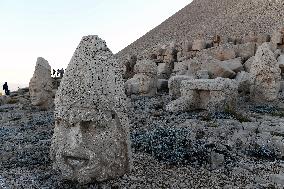
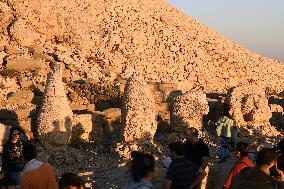
(220607) -- ADIYAMAN (TURKEY), June 7, 2022 (Xinhua) -- People are silhouetted against the sunshine as they visit the tomb-sanctuary on Mount Nemrut in Adiyaman Province, Turkey, on June 7, 2022. Mount Nemrut (Nemrut Dag) was inscribed on UNESCO World Heritage List in 1987. On Mount Nemrut, the mausoleum of Antiochus I, who reigned over Commagene, a kingdom founded north of Syria and the Euphrates after the breakup of Alexander's empire, is one of the most ambitious constructions of the Hellenistic period. The syncretism of its pantheon, and the lineage of its kings, which can be traced back through two sets of legends, Greek and Persian, is evidence of the dual origin of this kingdom's culture. (Photo by Mustafa Kaya/Xinhua)

  •  
TURKEY-ADIYAMAN-MOUNT NEMRUT-TOURISM

TURKEY-ADIYAMAN-MOUNT NEMRUT-TOURISM

(220607) -- ADIYAMAN (TURKEY), June 7, 2022 (Xinhua) -- People visit the tomb-sanctuary on Mount Nemrut in Adiyaman Province, Turkey, on June 7, 2022. Mount Nemrut (Nemrut Dag) was inscribed on UNESCO World Heritage List in 1987. On Mount Nemrut, the mausoleum of Antiochus I, who reigned over Commagene, a kingdom founded north of Syria and the Euphrates after the breakup of Alexander's empire, is one of the most ambitious constructions of the Hellenistic period. The syncretism of its pantheon, and the lineage of its kings, which can be traced back through two sets of legends, Greek and Persian, is evidence of the dual origin of this kingdom's culture. (Photo by Mustafa Kaya/Xinhua)

  •  
TURKEY-ADIYAMAN-MOUNT NEMRUT-TOURISM

TURKEY-ADIYAMAN-MOUNT NEMRUT-TOURISM

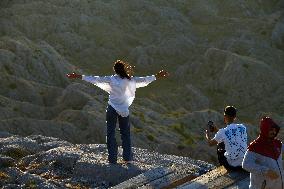
(220607) -- ADIYAMAN (TURKEY), June 7, 2022 (Xinhua) -- People visit the tomb-sanctuary on Mount Nemrut in Adiyaman Province, Turkey, on June 7, 2022. Mount Nemrut (Nemrut Dag) was inscribed on UNESCO World Heritage List in 1987. On Mount Nemrut, the mausoleum of Antiochus I, who reigned over Commagene, a kingdom founded north of Syria and the Euphrates after the breakup of Alexander's empire, is one of the most ambitious constructions of the Hellenistic period. The syncretism of its pantheon, and the lineage of its kings, which can be traced back through two sets of legends, Greek and Persian, is evidence of the dual origin of this kingdom's culture. (Photo by Mustafa Kaya/Xinhua)

  •  
TURKEY-ADIYAMAN-MOUNT NEMRUT-TOURISM

TURKEY-ADIYAMAN-MOUNT NEMRUT-TOURISM

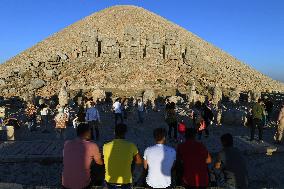
(220607) -- ADIYAMAN (TURKEY), June 7, 2022 (Xinhua) -- People visit the tomb-sanctuary on Mount Nemrut in Adiyaman Province, Turkey, on June 7, 2022. Mount Nemrut (Nemrut Dag) was inscribed on UNESCO World Heritage List in 1987. On Mount Nemrut, the mausoleum of Antiochus I, who reigned over Commagene, a kingdom founded north of Syria and the Euphrates after the breakup of Alexander's empire, is one of the most ambitious constructions of the Hellenistic period. The syncretism of its pantheon, and the lineage of its kings, which can be traced back through two sets of legends, Greek and Persian, is evidence of the dual origin of this kingdom's culture. (Photo by Mustafa Kaya/Xinhua)

  •  
TURKEY-ADIYAMAN-MOUNT NEMRUT-TOURISM

TURKEY-ADIYAMAN-MOUNT NEMRUT-TOURISM

(220607) -- ADIYAMAN (TURKEY), June 7, 2022 (Xinhua) -- People visit the tomb-sanctuary on Mount Nemrut in Adiyaman Province, Turkey, on June 7, 2022. Mount Nemrut (Nemrut Dag) was inscribed on UNESCO World Heritage List in 1987. On Mount Nemrut, the mausoleum of Antiochus I, who reigned over Commagene, a kingdom founded north of Syria and the Euphrates after the breakup of Alexander's empire, is one of the most ambitious constructions of the Hellenistic period. The syncretism of its pantheon, and the lineage of its kings, which can be traced back through two sets of legends, Greek and Persian, is evidence of the dual origin of this kingdom's culture. (Photo by Mustafa Kaya/Xinhua)

  • Main
  • Top
  • Editorial
  • Creative
  • About Us
  • About ILG
  • Terms of use
  • Company
  • BEHIND
  • Price List
  • Single Plan
  • Monthly Plan
  • Services
  • Shooting
  • Rights Clearance
  • Support
  • FAQ
  • How To Buy
  • Contact Us
  • Become a Partner

© KYODO NEWS IMAGES INC

All Rights Reserved.

  • Editorial
  • Olympics
  • News
  • Sports
  • Japan
  • Tech
  • Royal
  • Disaster
  • NorthKorea
  • Old Japan
  • SNS
  • Creative
  • Food
  • Japan
  • Landscape
  • Animal
  • Popular
  • #Ukraine
  • #China
  • #coronavirus
  • #N. Korea
  • #Thailand
  • #Russia
  • #Ukraine
  • #China
  • #coronavirus
  • #N. Korea
  • #Thailand
  • #Russia
  • Food
  • Japan
  • Landscape
  • Animal
  • Olympics
  • News
  • Sports
  • Japan
  • Tech
  • Royal
  • Disaster
  • NorthKorea
  • Old Japan
  • SNS