•  
Traditional Hunting Performance in Cholpon-Ata - Kyrgyzstan

Traditional Hunting Performance in Cholpon-Ata - Kyrgyzstan

Zhapar, son of hunter Nursultan, is pictured holding a raptor near Cholpon-Ata, Kyrgyzstan, on Aug. 16, 2025. The herders living in eastern Kyrgyzstan inherited the hunting customs of their ancestors, and still maintain the tradition of taming falcons and hunting dogs. Photo by Li Renzi/ABACAPRESS.COM

  •  
Traditional Hunting Performance in Cholpon-Ata - Kyrgyzstan

Traditional Hunting Performance in Cholpon-Ata - Kyrgyzstan

Hunter Nursultan performs hunting skills near Cholpon-Ata, Kyrgyzstan, on Aug. 16, 2025. The herders living in eastern Kyrgyzstan inherited the hunting customs of their ancestors, and still maintain the tradition of taming falcons and hunting dogs. Photo by Li Renzi/ABACAPRESS.COM

  •  
Traditional Hunting Performance in Cholpon-Ata - Kyrgyzstan

Traditional Hunting Performance in Cholpon-Ata - Kyrgyzstan

A foreign visitor experiences raptor training near Cholpon-Ata, Kyrgyzstan, on Aug. 16, 2025. The herders living in eastern Kyrgyzstan inherited the hunting customs of their ancestors, and still maintain the tradition of taming falcons and hunting dogs. Photo by Li Renzi/ABACAPRESS.COM

  •  
Traditional Hunting Performance in Cholpon-Ata - Kyrgyzstan

Traditional Hunting Performance in Cholpon-Ata - Kyrgyzstan

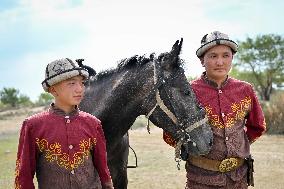
Hunter Nursultan and his son Zhapar are pictured near Cholpon-Ata, Kyrgyzstan, on Aug. 16, 2025. The herders living in eastern Kyrgyzstan inherited the hunting customs of their ancestors, and still maintain the tradition of taming falcons and hunting dogs. Photo by Li Renzi/ABACAPRESS.COM

  •  
Traditional Hunting Performance in Cholpon-Ata - Kyrgyzstan

Traditional Hunting Performance in Cholpon-Ata - Kyrgyzstan

Hunter Nursultan performs hunting skills near Cholpon-Ata, Kyrgyzstan, on Aug. 16, 2025. The herders living in eastern Kyrgyzstan inherited the hunting customs of their ancestors, and still maintain the tradition of taming falcons and hunting dogs. Photo by Li Renzi/ABACAPRESS.COM

  •  
Traditional Hunting Performance in Cholpon-Ata - Kyrgyzstan

Traditional Hunting Performance in Cholpon-Ata - Kyrgyzstan

Hunter Nursultan performs hunting skills near Cholpon-Ata, Kyrgyzstan, on Aug. 16, 2025. The herders living in eastern Kyrgyzstan inherited the hunting customs of their ancestors, and still maintain the tradition of taming falcons and hunting dogs. Photo by Li Renzi/ABACAPRESS.COM

  •  
Traditional Hunting Performance in Cholpon-Ata - Kyrgyzstan

Traditional Hunting Performance in Cholpon-Ata - Kyrgyzstan

Hunter Nursultan performs hunting skills near Cholpon-Ata, Kyrgyzstan, on Aug. 16, 2025. The herders living in eastern Kyrgyzstan inherited the hunting customs of their ancestors, and still maintain the tradition of taming falcons and hunting dogs. Photo by Li Renzi/ABACAPRESS.COM

  •  
Traditional Hunting Performance in Cholpon-Ata - Kyrgyzstan

Traditional Hunting Performance in Cholpon-Ata - Kyrgyzstan

A foreign visitor experiences raptor training near Cholpon-Ata, Kyrgyzstan, on Aug. 16, 2025. The herders living in eastern Kyrgyzstan inherited the hunting customs of their ancestors, and still maintain the tradition of taming falcons and hunting dogs. Photo by Li Renzi/ABACAPRESS.COM

  •  
Camels On Their Summer Migration Journey - China

Camels On Their Summer Migration Journey - China

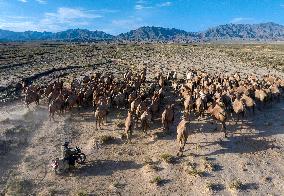
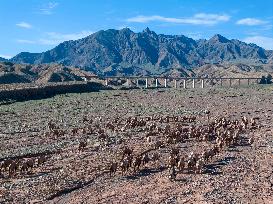
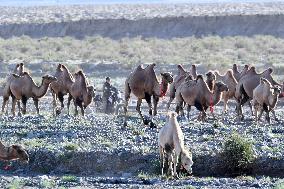
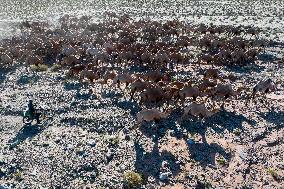
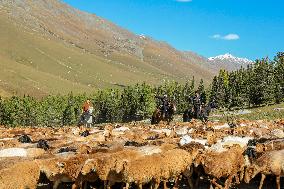
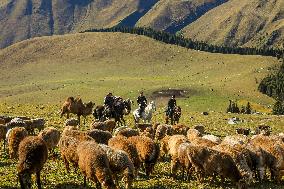
A drone photo taken on July 26, 2025 shows camels on their summer migration journey in the Kazak Autonomous County of Aksay, northwest China's Gansu Province. Herders in Jia'erwuzong Village of Aksay move their camels to the summer pastures of Qilian every summer, allowing the grasslands to rejuvenate and ensuring the sustainability of their animal husbandry. Photo by Gao Hongshan/Xinhua/ABACAPRESS.COM

  •  
CHINA-GANSU-AKSAY-CAMEL MIGRATION (CN)

CHINA-GANSU-AKSAY-CAMEL MIGRATION (CN)

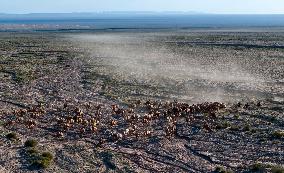
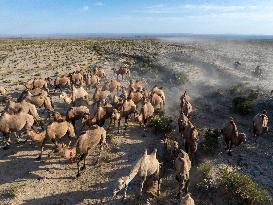
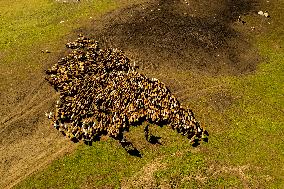
An aerial drone photo taken on July 26, 2025 shows camels on their summer migration journey in the Kazak Autonomous County of Aksay, northwest China's Gansu Province. Herders in Jia'erwuzong Village of Aksay move their camels to the summer pastures of Qilian every summer, allowing the grasslands to rejuvenate and ensuring the sustainability of their animal husbandry. Photo by Gao Hongshan/Xinhua/ABACAPRESS.COM

  •  
CHINA-GANSU-AKSAY-CAMEL MIGRATION (CN)

CHINA-GANSU-AKSAY-CAMEL MIGRATION (CN)

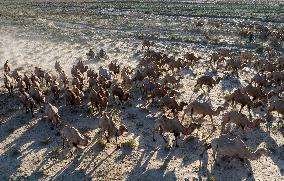
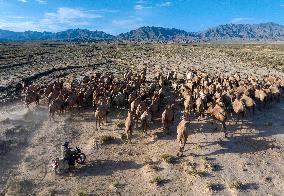
An aerial drone photo taken on July 26, 2025 shows camels on their summer migration journey in the Kazak Autonomous County of Aksay, northwest China's Gansu Province. Herders in Jia'erwuzong Village of Aksay move their camels to the summer pastures of Qilian every summer, allowing the grasslands to rejuvenate and ensuring the sustainability of their animal husbandry. Photo by Gao Hongshan/Xinhua/ABACAPRESS.COM

  •  
CHINA-GANSU-AKSAY-CAMEL MIGRATION (CN)

CHINA-GANSU-AKSAY-CAMEL MIGRATION (CN)

An aerial drone photo taken on July 26, 2025 shows camels on their summer migration journey in the Kazak Autonomous County of Aksay, northwest China's Gansu Province. Herders in Jia'erwuzong Village of Aksay move their camels to the summer pastures of Qilian every summer, allowing the grasslands to rejuvenate and ensuring the sustainability of their animal husbandry. Photo by Gao Hongshan/Xinhua/ABACAPRESS.COM

  •  
CHINA-GANSU-AKSAY-CAMEL MIGRATION (CN)

CHINA-GANSU-AKSAY-CAMEL MIGRATION (CN)

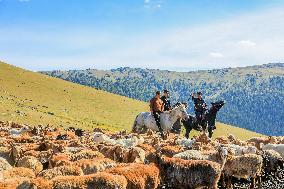
This photo taken on July 26, 2025 shows camels on their summer migration journey in the Kazak Autonomous County of Aksay, northwest China's Gansu Province. Herders in Jia'erwuzong Village of Aksay move their camels to the summer pastures of Qilian every summer, allowing the grasslands to rejuvenate and ensuring the sustainability of their animal husbandry. Photo by Gao Hongshan/Xinhua/ABACAPRESS.COM

  •  
CHINA-GANSU-AKSAY-CAMEL MIGRATION (CN)

CHINA-GANSU-AKSAY-CAMEL MIGRATION (CN)

An aerial drone photo taken on July 26, 2025 shows camels on their summer migration journey in the Kazak Autonomous County of Aksay, northwest China's Gansu Province. Herders in Jia'erwuzong Village of Aksay move their camels to the summer pastures of Qilian every summer, allowing the grasslands to rejuvenate and ensuring the sustainability of their animal husbandry. Photo by Gao Hongshan/Xinhua/ABACAPRESS.COM

  •  
CHINA-GANSU-AKSAY-CAMEL MIGRATION (CN)

CHINA-GANSU-AKSAY-CAMEL MIGRATION (CN)

An aerial drone photo taken on July 26, 2025 shows camels on their summer migration journey in the Kazak Autonomous County of Aksay, northwest China's Gansu Province. Herders in Jia'erwuzong Village of Aksay move their camels to the summer pastures of Qilian every summer, allowing the grasslands to rejuvenate and ensuring the sustainability of their animal husbandry. Photo by Gao Hongshan/Xinhua/ABACAPRESS.COM

  •  
CHINA-GANSU-AKSAY-CAMEL MIGRATION (CN)

CHINA-GANSU-AKSAY-CAMEL MIGRATION (CN)

An aerial drone photo taken on July 26, 2025 shows camels on their summer migration journey in the Kazak Autonomous County of Aksay, northwest China's Gansu Province. Herders in Jia'erwuzong Village of Aksay move their camels to the summer pastures of Qilian every summer, allowing the grasslands to rejuvenate and ensuring the sustainability of their animal husbandry. Photo by Gao Hongshan/Xinhua/ABACAPRESS.COM

  •  
Nomadic Life in Inner Mongolia's Horqin Grassland - China

Nomadic Life in Inner Mongolia's Horqin Grassland - China

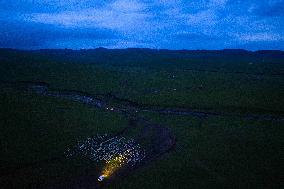
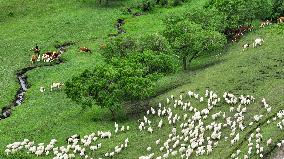
An aerial drone photo taken on June 14, 2025 shows herdsmen driving the livestock at night on the way to the summer campsite on Ar Horqin Grassland, Chifeng City of north China's Inner Mongolia Autonomous Region. Saintsogt, 55, a herdsman in Bayin-undur of Ar Horqin Banner, north China's Inner Mongolia Autonomous Region, is busy with the annual summer migration covering a distance of about 100 kilometers. For the past four decades, he has completed the migration every year. Saintsogt's pasture is a part of the Ar Horqin Grassland Nomadic System, which was listed as one of the Globally Important Agricultural Heritage Systems (GIAHS) sites by the United Nations Food and Agriculture Organization (FAO) on May 20, 2022. Herders here still keep the traditional nomadic customs today. "The travel time has been shortened to three days from eight," Saintsogt said. "The rain makes pasture grow better, and the livestock have enough forage." This year, herders from more than 1,200 households and 128,000 livestock in Bayin

  •  
Nomadic Life in Inner Mongolia's Horqin Grassland - China

Nomadic Life in Inner Mongolia's Horqin Grassland - China

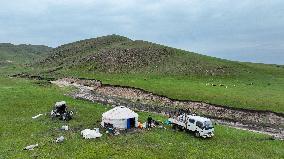
An aerial drone photo taken on June 15, 2025 shows a Mongolian yurt of Saintsogt at his summer campsite on Ar Horqin Grassland, Chifeng City of north China's Inner Mongolia Autonomous Region. Saintsogt, 55, a herdsman in Bayin-undur of Ar Horqin Banner, north China's Inner Mongolia Autonomous Region, is busy with the annual summer migration covering a distance of about 100 kilometers. For the past four decades, he has completed the migration every year. Saintsogt's pasture is a part of the Ar Horqin Grassland Nomadic System, which was listed as one of the Globally Important Agricultural Heritage Systems (GIAHS) sites by the United Nations Food and Agriculture Organization (FAO) on May 20, 2022. Herders here still keep the traditional nomadic customs today. "The travel time has been shortened to three days from eight," Saintsogt said. "The rain makes pasture grow better, and the livestock have enough forage." This year, herders from more than 1,200 households and 128,000 livestock in Bayin-undur joined the mig

  •  
Nomadic Life in Inner Mongolia's Horqin Grassland - China

Nomadic Life in Inner Mongolia's Horqin Grassland - China

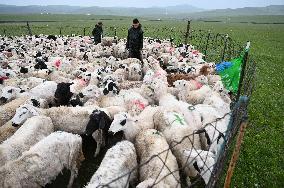
Saintsogt's son (2nd R) drives sheep in rain on his way to the summer campsite on Ar Horqin Grassland, Chifeng City of north China's Inner Mongolia Autonomous Region, June 13, 2025. Saintsogt, 55, a herdsman in Bayin-undur of Ar Horqin Banner, north China's Inner Mongolia Autonomous Region, is busy with the annual summer migration covering a distance of about 100 kilometers. For the past four decades, he has completed the migration every year. Saintsogt's pasture is a part of the Ar Horqin Grassland Nomadic System, which was listed as one of the Globally Important Agricultural Heritage Systems (GIAHS) sites by the United Nations Food and Agriculture Organization (FAO) on May 20, 2022. Herders here still keep the traditional nomadic customs today. "The travel time has been shortened to three days from eight," Saintsogt said. "The rain makes pasture grow better, and the livestock have enough forage." This year, herders from more than 1,200 households and 128,000 livestock in Bayin-undur joined the migration. Ph

  •  
Nomadic Life in Inner Mongolia's Horqin Grassland - China

Nomadic Life in Inner Mongolia's Horqin Grassland - China

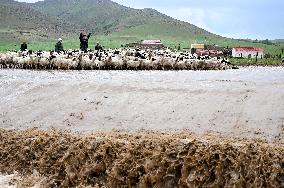
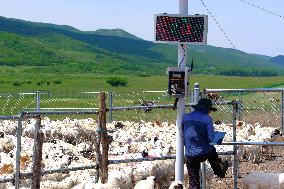
A staff member of Gogodtai Han Ul national nature reserve counts the livestock entering the nature reserve in north China's Inner Mongolia Autonomous Region, June 14, 2025. Saintsogt, 55, a herdsman in Bayin-undur of Ar Horqin Banner, north China's Inner Mongolia Autonomous Region, is busy with the annual summer migration covering a distance of about 100 kilometers. For the past four decades, he has completed the migration every year. Saintsogt's pasture is a part of the Ar Horqin Grassland Nomadic System, which was listed as one of the Globally Important Agricultural Heritage Systems (GIAHS) sites by the United Nations Food and Agriculture Organization (FAO) on May 20, 2022. Herders here still keep the traditional nomadic customs today. "The travel time has been shortened to three days from eight," Saintsogt said. "The rain makes pasture grow better, and the livestock have enough forage." This year, herders from more than 1,200 households and 128,000 livestock in Bayin-undur joined the migration. Photo by Ma

  •  
Nomadic Life in Inner Mongolia's Horqin Grassland - China

Nomadic Life in Inner Mongolia's Horqin Grassland - China

Saintsogt's son seeks for a sick sheep after arriving at the summer campsite on Ar Horqin Grassland, Chifeng City of north China's Inner Mongolia Autonomous Region, June 15, 2025. Saintsogt, 55, a herdsman in Bayin-undur of Ar Horqin Banner, north China's Inner Mongolia Autonomous Region, is busy with the annual summer migration covering a distance of about 100 kilometers. For the past four decades, he has completed the migration every year. Saintsogt's pasture is a part of the Ar Horqin Grassland Nomadic System, which was listed as one of the Globally Important Agricultural Heritage Systems (GIAHS) sites by the United Nations Food and Agriculture Organization (FAO) on May 20, 2022. Herders here still keep the traditional nomadic customs today. "The travel time has been shortened to three days from eight," Saintsogt said. "The rain makes pasture grow better, and the livestock have enough forage." This year, herders from more than 1,200 households and 128,000 livestock in Bayin-undur joined the migration. Phot

  •  
Nomadic Life in Inner Mongolia's Horqin Grassland - China

Nomadic Life in Inner Mongolia's Horqin Grassland - China

Saintsogt's wife arranges bedding at home before departing for the summer campsite on Ar Horqin Grassland, Chifeng City of north China's Inner Mongolia Autonomous Region, June 13, 2025. Saintsogt, 55, a herdsman in Bayin-undur of Ar Horqin Banner, north China's Inner Mongolia Autonomous Region, is busy with the annual summer migration covering a distance of about 100 kilometers. For the past four decades, he has completed the migration every year. Saintsogt's pasture is a part of the Ar Horqin Grassland Nomadic System, which was listed as one of the Globally Important Agricultural Heritage Systems (GIAHS) sites by the United Nations Food and Agriculture Organization (FAO) on May 20, 2022. Herders here still keep the traditional nomadic customs today. "The travel time has been shortened to three days from eight," Saintsogt said. "The rain makes pasture grow better, and the livestock have enough forage." This year, herders from more than 1,200 households and 128,000 livestock in Bayin-undur joined the migration

  •  
Nomadic Life in Inner Mongolia's Horqin Grassland - China

Nomadic Life in Inner Mongolia's Horqin Grassland - China

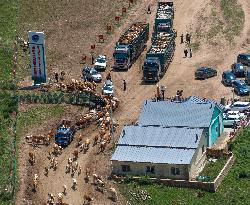
An aerial drone photo taken on June 14, 2025 shows herders waiting for entering the Gogodtai Han Ul national nature reserve in north China's Inner Mongolia Autonomous Region. Saintsogt, 55, a herdsman in Bayin-undur of Ar Horqin Banner, north China's Inner Mongolia Autonomous Region, is busy with the annual summer migration covering a distance of about 100 kilometers. For the past four decades, he has completed the migration every year. Saintsogt's pasture is a part of the Ar Horqin Grassland Nomadic System, which was listed as one of the Globally Important Agricultural Heritage Systems (GIAHS) sites by the United Nations Food and Agriculture Organization (FAO) on May 20, 2022. Herders here still keep the traditional nomadic customs today. "The travel time has been shortened to three days from eight," Saintsogt said. "The rain makes pasture grow better, and the livestock have enough forage." This year, herders from more than 1,200 households and 128,000 livestock in Bayin-undur joined the migration. Photo by

  •  
Nomadic Life in Inner Mongolia's Horqin Grassland - China

Nomadic Life in Inner Mongolia's Horqin Grassland - China

Saintsogt gathers the livestock at the winter campsite before departing for the summer campsite on Ar Horqin Grassland, Chifeng City of north China's Inner Mongolia Autonomous Region, June 13, 2025. Saintsogt, 55, a herdsman in Bayin-undur of Ar Horqin Banner, north China's Inner Mongolia Autonomous Region, is busy with the annual summer migration covering a distance of about 100 kilometers. For the past four decades, he has completed the migration every year. Saintsogt's pasture is a part of the Ar Horqin Grassland Nomadic System, which was listed as one of the Globally Important Agricultural Heritage Systems (GIAHS) sites by the United Nations Food and Agriculture Organization (FAO) on May 20, 2022. Herders here still keep the traditional nomadic customs today. "The travel time has been shortened to three days from eight," Saintsogt said. "The rain makes pasture grow better, and the livestock have enough forage." This year, herders from more than 1,200 households and 128,000 livestock in Bayin-undur joined

  •  
Nomadic Life in Inner Mongolia's Horqin Grassland - China

Nomadic Life in Inner Mongolia's Horqin Grassland - China

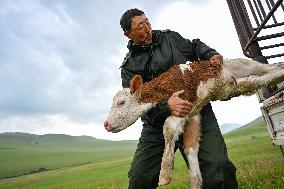
Saintsogt takes a newly born calf off the truck after arriving at the summer campsite on Ar Horqin Grassland, Chifeng City of north China's Inner Mongolia Autonomous Region, June 15, 2025. Saintsogt, 55, a herdsman in Bayin-undur of Ar Horqin Banner, north China's Inner Mongolia Autonomous Region, is busy with the annual summer migration covering a distance of about 100 kilometers. For the past four decades, he has completed the migration every year. Saintsogt's pasture is a part of the Ar Horqin Grassland Nomadic System, which was listed as one of the Globally Important Agricultural Heritage Systems (GIAHS) sites by the United Nations Food and Agriculture Organization (FAO) on May 20, 2022. Herders here still keep the traditional nomadic customs today. "The travel time has been shortened to three days from eight," Saintsogt said. "The rain makes pasture grow better, and the livestock have enough forage." This year, herders from more than 1,200 households and 128,000 livestock in Bayin-undur joined the migrat

  •  
Nomadic Life in Inner Mongolia's Horqin Grassland - China

Nomadic Life in Inner Mongolia's Horqin Grassland - China

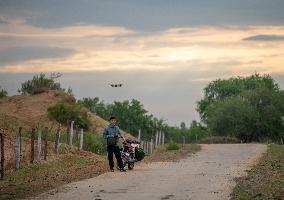
Saintsogt's son operates a drone to check the number of the livestock on Ar Horqin Grassland, Chifeng City of north China's Inner Mongolia Autonomous Region, June 13, 2025. Saintsogt, 55, a herdsman in Bayin-undur of Ar Horqin Banner, north China's Inner Mongolia Autonomous Region, is busy with the annual summer migration covering a distance of about 100 kilometers. For the past four decades, he has completed the migration every year. Saintsogt's pasture is a part of the Ar Horqin Grassland Nomadic System, which was listed as one of the Globally Important Agricultural Heritage Systems (GIAHS) sites by the United Nations Food and Agriculture Organization (FAO) on May 20, 2022. Herders here still keep the traditional nomadic customs today. "The travel time has been shortened to three days from eight," Saintsogt said. "The rain makes pasture grow better, and the livestock have enough forage." This year, herders from more than 1,200 households and 128,000 livestock in Bayin-undur joined the migration. Photo by Ma

  •  
Nomadic Life in Inner Mongolia's Horqin Grassland - China

Nomadic Life in Inner Mongolia's Horqin Grassland - China

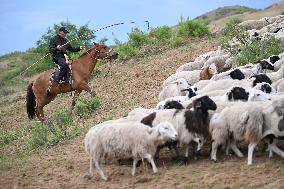
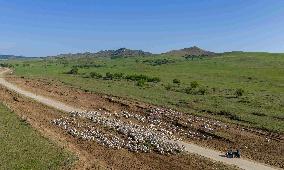
An aerial drone photo taken on June 14, 2025 shows Saintsogt driving the livestock on his way to the summer campsite on Ar Horqin Grassland, Chifeng City of north China's Inner Mongolia Autonomous Region. Saintsogt, 55, a herdsman in Bayin-undur of Ar Horqin Banner, north China's Inner Mongolia Autonomous Region, is busy with the annual summer migration covering a distance of about 100 kilometers. For the past four decades, he has completed the migration every year. Saintsogt's pasture is a part of the Ar Horqin Grassland Nomadic System, which was listed as one of the Globally Important Agricultural Heritage Systems (GIAHS) sites by the United Nations Food and Agriculture Organization (FAO) on May 20, 2022. Herders here still keep the traditional nomadic customs today. "The travel time has been shortened to three days from eight," Saintsogt said. "The rain makes pasture grow better, and the livestock have enough forage." This year, herders from more than 1,200 households and 128,000 livestock in Bayin-undur j

  •  
Nomadic Life in Inner Mongolia's Horqin Grassland - China

Nomadic Life in Inner Mongolia's Horqin Grassland - China

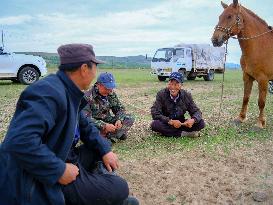
Saintsogt (R) talks with other herdsmen on their way to the summer campsite on Ar Horqin Grassland, Chifeng City of north China's Inner Mongolia Autonomous Region, June 13, 2025. Saintsogt, 55, a herdsman in Bayin-undur of Ar Horqin Banner, north China's Inner Mongolia Autonomous Region, is busy with the annual summer migration covering a distance of about 100 kilometers. For the past four decades, he has completed the migration every year. Saintsogt's pasture is a part of the Ar Horqin Grassland Nomadic System, which was listed as one of the Globally Important Agricultural Heritage Systems (GIAHS) sites by the United Nations Food and Agriculture Organization (FAO) on May 20, 2022. Herders here still keep the traditional nomadic customs today. "The travel time has been shortened to three days from eight," Saintsogt said. "The rain makes pasture grow better, and the livestock have enough forage." This year, herders from more than 1,200 households and 128,000 livestock in Bayin-undur joined the migration. Photo

  •  
Nomadic Life in Inner Mongolia's Horqin Grassland - China

Nomadic Life in Inner Mongolia's Horqin Grassland - China

Saintsogt gathers the livestock at their winter campsite before departing for the summer campsite on Ar Horqin Grassland, Chifeng City of north China's Inner Mongolia Autonomous Region, June 13, 2025. Saintsogt, 55, a herdsman in Bayin-undur of Ar Horqin Banner, north China's Inner Mongolia Autonomous Region, is busy with the annual summer migration covering a distance of about 100 kilometers. For the past four decades, he has completed the migration every year. Saintsogt's pasture is a part of the Ar Horqin Grassland Nomadic System, which was listed as one of the Globally Important Agricultural Heritage Systems (GIAHS) sites by the United Nations Food and Agriculture Organization (FAO) on May 20, 2022. Herders here still keep the traditional nomadic customs today. "The travel time has been shortened to three days from eight," Saintsogt said. "The rain makes pasture grow better, and the livestock have enough forage." This year, herders from more than 1,200 households and 128,000 livestock in Bayin-undur joine

  •  
Nomadic Life in Inner Mongolia's Horqin Grassland - China

Nomadic Life in Inner Mongolia's Horqin Grassland - China

An aerial drone photo shows Saintsogt's son (L) riding a motorcycle to drive the livestock on his way to the summer campsite on Ar Horqin Grassland, Chifeng City of north China's Inner Mongolia Autonomous Region, June 14, 2025. Saintsogt, 55, a herdsman in Bayin-undur of Ar Horqin Banner, north China's Inner Mongolia Autonomous Region, is busy with the annual summer migration covering a distance of about 100 kilometers. For the past four decades, he has completed the migration every year. Saintsogt's pasture is a part of the Ar Horqin Grassland Nomadic System, which was listed as one of the Globally Important Agricultural Heritage Systems (GIAHS) sites by the United Nations Food and Agriculture Organization (FAO) on May 20, 2022. Herders here still keep the traditional nomadic customs today. "The travel time has been shortened to three days from eight," Saintsogt said. "The rain makes pasture grow better, and the livestock have enough forage." This year, herders from more than 1,200 households and 128,000 liv

  •  
Nomadic Life in Inner Mongolia's Horqin Grassland - China

Nomadic Life in Inner Mongolia's Horqin Grassland - China

Saintsogt drives cattle in the rain on his way to the summer campsite on Ar Horqin Grassland, Chifeng City of north China's Inner Mongolia Autonomous Region, June 13, 2025. Saintsogt, 55, a herdsman in Bayin-undur of Ar Horqin Banner, north China's Inner Mongolia Autonomous Region, is busy with the annual summer migration covering a distance of about 100 kilometers. For the past four decades, he has completed the migration every year. Saintsogt's pasture is a part of the Ar Horqin Grassland Nomadic System, which was listed as one of the Globally Important Agricultural Heritage Systems (GIAHS) sites by the United Nations Food and Agriculture Organization (FAO) on May 20, 2022. Herders here still keep the traditional nomadic customs today. "The travel time has been shortened to three days from eight," Saintsogt said. "The rain makes pasture grow better, and the livestock have enough forage." This year, herders from more than 1,200 households and 128,000 livestock in Bayin-undur joined the migration. Photo by Be

  •  
Nomadic Life in Inner Mongolia's Horqin Grassland - China

Nomadic Life in Inner Mongolia's Horqin Grassland - China

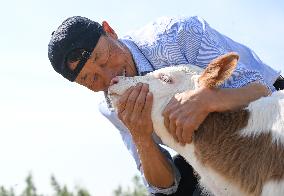
Saintsogt hugs a newly born calf on his way to the summer campsite on Ar Horqin Grassland, Chifeng City of north China's Inner Mongolia Autonomous Region, June 14, 2025. Saintsogt, 55, a herdsman in Bayin-undur of Ar Horqin Banner, north China's Inner Mongolia Autonomous Region, is busy with the annual summer migration covering a distance of about 100 kilometers. For the past four decades, he has completed the migration every year. Saintsogt's pasture is a part of the Ar Horqin Grassland Nomadic System, which was listed as one of the Globally Important Agricultural Heritage Systems (GIAHS) sites by the United Nations Food and Agriculture Organization (FAO) on May 20, 2022. Herders here still keep the traditional nomadic customs today. "The travel time has been shortened to three days from eight," Saintsogt said. "The rain makes pasture grow better, and the livestock have enough forage." This year, herders from more than 1,200 households and 128,000 livestock in Bayin-undur joined the migration. Photo by Bei H

  •  
Nomadic Life in Inner Mongolia's Horqin Grassland - China

Nomadic Life in Inner Mongolia's Horqin Grassland - China

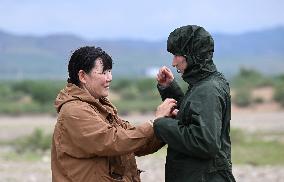
Saintsogt's wife (L) helps her son to wear a raincoat on their way to the summer campsite on Ar Horqin Grassland, Chifeng City of north China's Inner Mongolia Autonomous Region, June 13, 2025. Saintsogt, 55, a herdsman in Bayin-undur of Ar Horqin Banner, north China's Inner Mongolia Autonomous Region, is busy with the annual summer migration covering a distance of about 100 kilometers. For the past four decades, he has completed the migration every year. Saintsogt's pasture is a part of the Ar Horqin Grassland Nomadic System, which was listed as one of the Globally Important Agricultural Heritage Systems (GIAHS) sites by the United Nations Food and Agriculture Organization (FAO) on May 20, 2022. Herders here still keep the traditional nomadic customs today. "The travel time has been shortened to three days from eight," Saintsogt said. "The rain makes pasture grow better, and the livestock have enough forage." This year, herders from more than 1,200 households and 128,000 livestock in Bayin-undur joined the mi

  •  
Nomadic Life in Inner Mongolia's Horqin Grassland - China

Nomadic Life in Inner Mongolia's Horqin Grassland - China

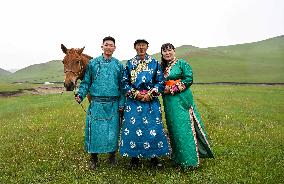
Saintsogt (C), his wife (R) and son pose for a group photo at their summer campsite on Ar Horqin Grassland, Chifeng City of north China's Inner Mongolia Autonomous Region, June 15, 2025. Saintsogt, 55, a herdsman in Bayin-undur of Ar Horqin Banner, north China's Inner Mongolia Autonomous Region, is busy with the annual summer migration covering a distance of about 100 kilometers. For the past four decades, he has completed the migration every year. Saintsogt's pasture is a part of the Ar Horqin Grassland Nomadic System, which was listed as one of the Globally Important Agricultural Heritage Systems (GIAHS) sites by the United Nations Food and Agriculture Organization (FAO) on May 20, 2022. Herders here still keep the traditional nomadic customs today. "The travel time has been shortened to three days from eight," Saintsogt said. "The rain makes pasture grow better, and the livestock have enough forage." This year, herders from more than 1,200 households and 128,000 livestock in Bayin-undur joined the migratio

  •  
Snowfall in Zhangye

Snowfall in Zhangye

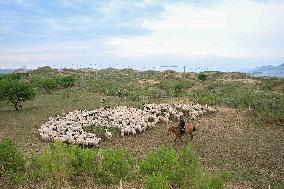
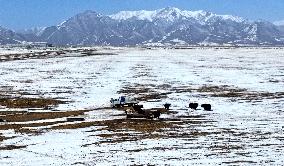
Herders use vehicles to carry water to feed the yaks they raise after snowfall in Zhangye City, Gansu Province, China on May 5, 2025.

  •  
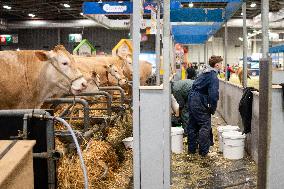
Illustration of the Agricultural Show - Paris AJ

Illustration of the Agricultural Show - Paris AJ

This photo is an illustration that shows cows and herders preparing for milking during the 2025 Paris International Agricultural Show (Salon International de l'Agriculture SIA) on February 26, 2025 in Paris, France. Photo by Alexis Jumeau/ABACAPRESS.COM

  •  
Police Help Herders With The Autumn Migration of Livestock

Police Help Herders With The Autumn Migration of Livestock

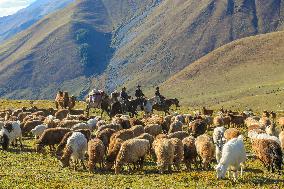
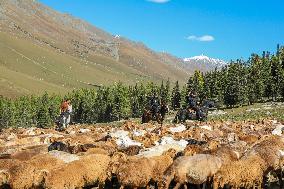
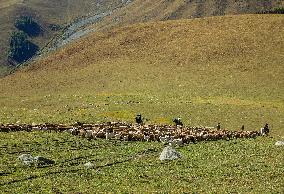
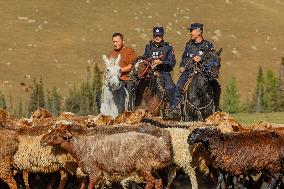
ALTAY, CHINA - SEPTEMBER 10, 2024 - Police officers from Hemu Border Police Station help herdsmen with the autumn migration of livestock in Altay, Xinjiang province, China, Sept 10, 2024.

  •  
Police Help Herders With The Autumn Migration of Livestock

Police Help Herders With The Autumn Migration of Livestock

ALTAY, CHINA - SEPTEMBER 10, 2024 - Police officers from Hemu Border Police Station help herdsmen with the autumn migration of livestock in Altay, Xinjiang province, China, Sept 10, 2024.

  •  
Police Help Herders With The Autumn Migration of Livestock

Police Help Herders With The Autumn Migration of Livestock

ALTAY, CHINA - SEPTEMBER 10, 2024 - Police officers from Hemu Border Police Station help herdsmen with the autumn migration of livestock in Altay, Xinjiang province, China, Sept 10, 2024.

  •  
Police Help Herders With The Autumn Migration of Livestock

Police Help Herders With The Autumn Migration of Livestock

ALTAY, CHINA - SEPTEMBER 10, 2024 - Police officers from Hemu Border Police Station help herdsmen with the autumn migration of livestock in Altay, Xinjiang province, China, Sept 10, 2024.

  •  
Police Help Herders With The Autumn Migration of Livestock

Police Help Herders With The Autumn Migration of Livestock

ALTAY, CHINA - SEPTEMBER 10, 2024 - Police officers from Hemu Border Police Station help herdsmen with the autumn migration of livestock in Altay, Xinjiang province, China, Sept 10, 2024.

  •  
Police Help Herders With The Autumn Migration of Livestock

Police Help Herders With The Autumn Migration of Livestock

ALTAY, CHINA - SEPTEMBER 10, 2024 - Police officers from Hemu Border Police Station help herdsmen with the autumn migration of livestock in Altay, Xinjiang province, China, Sept 10, 2024.

  •  
Police Help Herders With The Autumn Migration of Livestock

Police Help Herders With The Autumn Migration of Livestock

ALTAY, CHINA - SEPTEMBER 10, 2024 - Police officers from Hemu Border Police Station help herdsmen with the autumn migration of livestock in Altay, Xinjiang province, China, Sept 10, 2024.

  •  
Police Help Herders With The Autumn Migration of Livestock

Police Help Herders With The Autumn Migration of Livestock

ALTAY, CHINA - SEPTEMBER 10, 2024 - Police officers from Hemu Border Police Station help herdsmen with the autumn migration of livestock in Altay, Xinjiang province, China, Sept 10, 2024.

  •  
Changtang Uninhabited Area in Ngari

Changtang Uninhabited Area in Ngari

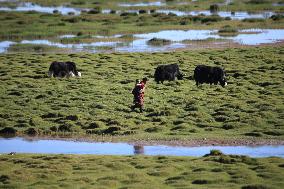
NGARI, CHINA - AUGUST 11, 2024 - Herders toil in the Changtang depopulated area of Ngari, Tibet, China, August 11, 2024.

  •  
XINHUA PHOTOS OF THE DAY

XINHUA PHOTOS OF THE DAY

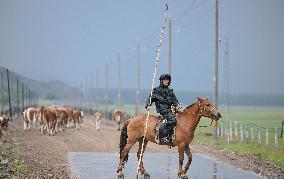
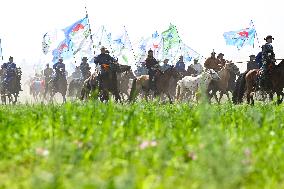
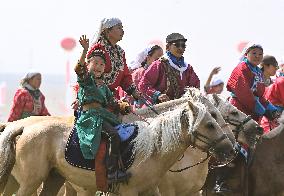
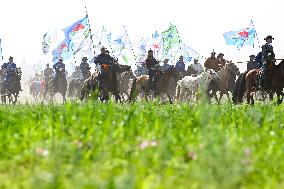
(240715) -- BEIJING, July 15, 2024 Photo by Xinhua/ABACAPRESS.COM) -- Herders on horseback are pictured during the opening ceremony of the 34th Naadam festival in Xilin Gol League, north China's Inner Mongolia Autonomous Region, July 14, 2024. The Naadam festival kicked off here on July 14. Naadam, usually held in mid-summer and sometimes in winter in pastoral areas of Inner Mongolia, means "games" in the Mongolian language. It often comprises wrestling, archery, and horse racing, also known as the "Three Games of Men." Photo by Xinhua/ABACAPRESS.COM/Bei He)

  •  
CHINA-INNER MONGOLIA-XILIN GOL-NAADAM FESTIVAL (CN)

CHINA-INNER MONGOLIA-XILIN GOL-NAADAM FESTIVAL (CN)

(240714) -- XILIN GOL, July 14, 2024 Photo by Xinhua/ABACAPRESS.COM) -- Herders on horseback are pictured during the opening ceremony of the 34th Naadam festival in Xilin Gol League, north China's Inner Mongolia Autonomous Region, July 14, 2024. The Naadam festival kicked off here on Sunday. Naadam, usually held in mid-summer and sometimes in winter in pastoral areas of Inner Mongolia, means "games" in the Mongolian language. It often comprises wrestling, archery, and horse racing, also known as the "Three Games of Men." Photo by Xinhua/ABACAPRESS.COM/Bei He)

  •  
CHINA-INNER MONGOLIA-XILIN GOL-NAADAM FESTIVAL (CN)

CHINA-INNER MONGOLIA-XILIN GOL-NAADAM FESTIVAL (CN)

(240714) -- XILIN GOL, July 14, 2024 Photo by Xinhua/ABACAPRESS.COM) -- Herders on horseback are pictured during the opening ceremony of the 34th Naadam festival in Xilin Gol League, north China's Inner Mongolia Autonomous Region, July 14, 2024. The Naadam festival kicked off here on Sunday. Naadam, usually held in mid-summer and sometimes in winter in pastoral areas of Inner Mongolia, means "games" in the Mongolian language. It often comprises wrestling, archery, and horse racing, also known as the "Three Games of Men." Photo by Xinhua/ABACAPRESS.COM/Bei He)

  •  
ChineseToday | Young couple inherit Aoluguya Ewenki legacy in forests in north China

ChineseToday | Young couple inherit Aoluguya Ewenki legacy in forests in north China

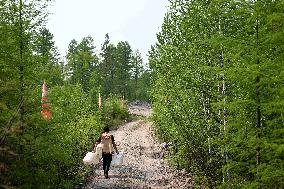
(240714) -- HULUN BUIR, July 14, 2024 Photo by Xinhua/ABACAPRESS.COM) -- Wu Qiming is on the way to fetch water from a stream near the reindeer herding site in Jinhe Town of Genhe City, north China's Inner Mongolia Autonomous Region, July 3, 2024. The Aoluguya Ewenki people, known as "the last hunting tribe in China," is the only ethnic minority group in China that raises reindeer. More than 20 years ago, they moved from the deep forests in the Dahinggan Mountains to Genhe City to resettle, but their tradition of herding reindeer was still preserved. Ayousha is one of the Aoluguya Ewenki people who spent her childhood in the deep forest with her family. In order to inherit the ethnic tradition of herding reindeer, Wu Qiming, Ayousha's husband and man of Han nationality, accompanied her back to the forest from the city in 2019, and together they set up a reindeer herding site in a forest in Jinhe Town. Both born in the 1990s, they are the youngest reindeer herders in the area now. The forests in the Dahinggan

  •  
ChineseToday | Young couple inherit Aoluguya Ewenki legacy in forests in north China

ChineseToday | Young couple inherit Aoluguya Ewenki legacy in forests in north China

(240714) -- HULUN BUIR, July 14, 2024 Photo by Xinhua/ABACAPRESS.COM) -- Ayousha brews coffee in a tent at the reindeer herding site in Jinhe Town of Genhe City, north China's Inner Mongolia Autonomous Region, July 3, 2024. The Aoluguya Ewenki people, known as "the last hunting tribe in China," is the only ethnic minority group in China that raises reindeer. More than 20 years ago, they moved from the deep forests in the Dahinggan Mountains to Genhe City to resettle, but their tradition of herding reindeer was still preserved. Ayousha is one of the Aoluguya Ewenki people who spent her childhood in the deep forest with her family. In order to inherit the ethnic tradition of herding reindeer, Wu Qiming, Ayousha's husband and man of Han nationality, accompanied her back to the forest from the city in 2019, and together they set up a reindeer herding site in a forest in Jinhe Town. Both born in the 1990s, they are the youngest reindeer herders in the area now. The forests in the Dahinggan Mountains are lush and g

  • Main
  • Top
  • Editorial
  • Creative
  • About Us
  • About ILG
  • Terms of use
  • Company
  • BEHIND
  • Price List
  • Single Plan
  • Monthly Plan
  • Services
  • Shooting
  • Rights Clearance
  • Support
  • FAQ
  • How To Buy
  • Contact Us
  • Become a Partner

© KYODO NEWS IMAGES INC

All Rights Reserved.

  • Editorial
  • Olympics
  • News
  • Sports
  • Japan
  • Tech
  • Royal
  • Disaster
  • NorthKorea
  • Old Japan
  • SNS
  • Creative
  • Food
  • Japan
  • Landscape
  • Animal
  • Popular
  • #Ukraine
  • #Thailand
  • #coronavirus
  • #N. Korea
  • #China
  • #Russia
  • #Ukraine
  • #Thailand
  • #coronavirus
  • #N. Korea
  • #China
  • #Russia
  • Food
  • Japan
  • Landscape
  • Animal
  • Olympics
  • News
  • Sports
  • Japan
  • Tech
  • Royal
  • Disaster
  • NorthKorea
  • Old Japan
  • SNS