•  
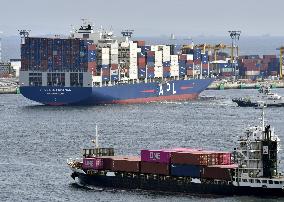
Container vessel in Yokohama

Container vessel in Yokohama

A container vessel (top) leaves Honmoku Pier in Yokohama, near Tokyo, bound for North America on April 5, 2025.

  •  
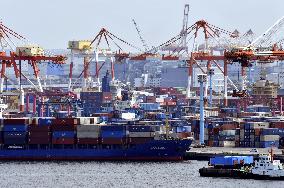
Container vessel in Yokohama

Container vessel in Yokohama

A container vessel is berthed at Honmoku Pier in Yokohama, near Tokyo, with containers stacked on the pier on April 5, 2025.

  •  
Mitsubishi Logistics logo

Mitsubishi Logistics logo

Three major warehousing companies, including Mitsubishi Logistics, are forming a logistics base at Minami-Honmoku Wharf; October 17, 2019, Minami-Honmoku Distribution Center, Minami-Honmoku, Naka-ku, Yokohama; Credit: The Nikkan Kogyo Shimbun / Kyodo News Images

  •  
Minami-Honmoku-Hama Road damaged by Typhoon No. 15.

Minami-Honmoku-Hama Road damaged by Typhoon No. 15.

Damage to Honmoku-Hama Road caused by a collision with a cargo ship driven by the strong winds of Typhoon No. 15. Photo: Yokohama City, Kanagawa Prefecture, October 17, 2019; Credit: Nikkan Kogyo Shimbun / Kyodo News Images

  •  
Minami-Honmoku-Hama Road damaged by Typhoon No. 15.

Minami-Honmoku-Hama Road damaged by Typhoon No. 15.

Damage to Honmoku-Hama Road caused by a collision with a cargo ship driven by the strong winds of Typhoon No. 15. Photo: Yokohama City, Kanagawa Prefecture, October 17, 2019; Credit: Nikkan Kogyo Shimbun / Kyodo News Images

  •  
Minami-Honmoku-Hama Road damaged by Typhoon No. 15.

Minami-Honmoku-Hama Road damaged by Typhoon No. 15.

Damage to Honmoku-Hama Road caused by a collision with a cargo ship driven by the strong winds of Typhoon No. 15. Photo: Yokohama City, Kanagawa Prefecture, October 17, 2019; Credit: Nikkan Kogyo Shimbun / Kyodo News Images

  •  
Minami-Honmoku-Hama Road damaged by Typhoon No. 15.

Minami-Honmoku-Hama Road damaged by Typhoon No. 15.

Damage to Honmoku-Hama Road caused by a collision with a cargo ship driven by the strong winds of Typhoon No. 15. Photo: Yokohama City, Kanagawa Prefecture, October 17, 2019; Credit: Nikkan Kogyo Shimbun / Kyodo News Images

  •  
Minami-Honmoku-Hama Road damaged by Typhoon No. 15.

Minami-Honmoku-Hama Road damaged by Typhoon No. 15.

Damage to Honmoku-Hama Road caused by a collision with a cargo ship driven by the strong winds of Typhoon No. 15. Photo: Yokohama City, Kanagawa Prefecture, October 17, 2019; Credit: Nikkan Kogyo Shimbun / Kyodo News Images

  •  
Minami-Honmoku-Hama Road damaged by Typhoon No. 15.

Minami-Honmoku-Hama Road damaged by Typhoon No. 15.

Damage to Honmoku-Hama Road caused by a collision with a cargo ship driven by the strong winds of Typhoon No. 15. Photo: Yokohama City, Kanagawa Prefecture, October 17, 2019; Credit: Nikkan Kogyo Shimbun / Kyodo News Images

  •  
Logo mark of Toyota Auto Auction

Logo mark of Toyota Auto Auction

Keywords: Toyota Auto Auction, TAA, auto auction, used car permanent exhibition hall, used car, used car auction, company, signboard, logo, logo mark = October 17, 2019, TAA Yokohama, Minami Honmoku, Naka-ku, Yokohama, Japan, Credit: Nikkan Kogyo Shimbun / Kyodo News Images

  •  
Ocean Network Express Container

Ocean Network Express Container

Keywords: Ocean Network Express, Ocean Network Express, ONE, shipping company, liner shipping business, container shipping business integration company, container trailer = October 17, 2019, Minami Honmoku, Naka-ku, Yokohama, Japan; Credit: Nikkan Kogyo Shimbun / Kyodo News Images

  •  
Mitsui Warehouse logo

Mitsui Warehouse logo

Three major warehousing companies, including Mitsui Warehouse, are forming a logistics base at Minami Honmoku Pier. (Minami Honmoku Warehouse, Minami Honmoku, Naka-ku, Yokohama City, October 17, 2019; credit: Nikkan Kogyo Shimbun / Kyodo News Images)

  •  
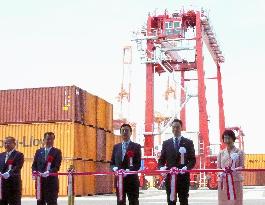
Yokohama port opens container terminal with Japan's deepest-water berth

Yokohama port opens container terminal with Japan's deepest-water berth

Yokohama Mayor Fumiko Hayashi (far R) attends a ribbon-cutting ceremony at the Minami Honmoku Pier at Yokohama port southwest of Tokyo on April 16, 2015, to commemorate the completion of a container terminal with Japan's deepest-water berth at 18 meters, allowing the world's largest containerships to be docked. (Kyodo) ==Kyodo

  •  
Honmoku Point seen from the Fudozaka slope

Honmoku Point seen from the Fudozaka slope

The promenade from the Bluff past Negishi hill was the Fudosaka yunning straight down to the seaside. At the foot of a slope is Mississippi Bay. Two rickshaw men each pull a family on their vehicles.==Date:unknown, Place:Yokohama, Photo:Ogawa Kazumasa, (Credit:Nagasaki University Library/Kyodo News Images) [Cabinet Number10‐9‐0]

  •  
Honmoku Point and a jinrikisha

Honmoku Point and a jinrikisha

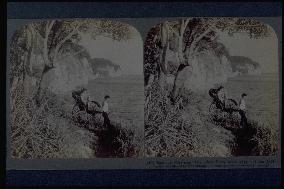
Stereograph produced by Underwood & Underwood Co. depicting the Negishi Bay side of Honmoku Peninsula. There are three valleys on the peninsula, and the tip was called Treaty Point by Perry. The inscription on the back says that the peninsula was called Mikado Cliff by foreigners. Copyright 1904.==Date:1904, Place:Yokohama, Photo:Underwood, (Credit:Nagasaki University Library/Kyodo News Images) [Cabinet Number97‐87‐0]

  •  
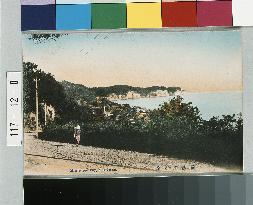
Honmoku Point seen from the Fudozaka slope

Honmoku Point seen from the Fudozaka slope

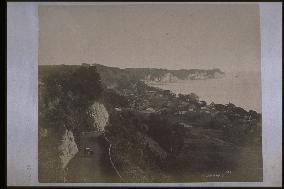
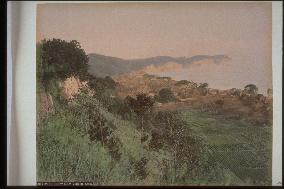
Negishi Village is at the foot of the hill, and Honmoku Peninsula is visible in the background, with (from the left) the Ichinotani, Ninotani, and Sannotani Valleys. Negishi Bay was known to foreigners as Mississippi Bay after the nickname given to it by Commodore Perry. Part of the new road built for foreigners, Fudo Slope was praised by them as one of the most beautiful scenes in the world.==Date:unknown, Place:Yokohama, Photo:unknown, (Credit:Nagasaki University Library/Kyodo News Images) [Cabinet Number92‐5‐0]

  •  
Honmoku Point seen from the Fudozaka slope

Honmoku Point seen from the Fudozaka slope

Negishi Village is at the foot of the hill, and Honmoku Peninsula is visible in the background, with (from the left) the Ichinotani, Ninotani, and Sannotani Valleys. Negishi Bay was known to foreigners as Mississippi Bay after the nickname given to it by Commodore Perry. Part of the new road built for foreigners, Fudo Slope was praised by them as one of the most beautiful scenes in the world.==Date:unknown, Place:Yokohama, Photo:unknown, (Credit:Nagasaki University Library/Kyodo News Images) [Cabinet Number89‐10‐0]

  •  
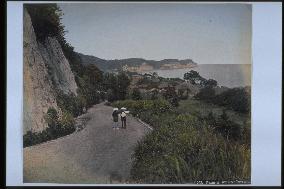
Parents and children at Honmoku Point seen from Fudozaka Slope

Parents and children at Honmoku Point seen from Fudozaka Slope

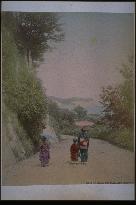
Negishi Bay was known to foreigners as Mississippi Bay after the nickname given to it by Commodore Perry. Part of the new road built for foreigners, Fudo Slope was praised by them as one of the most beautiful scenes in the world. This area was later reclaimed from the ocean and is presently an industrial zone.==Date:unknown, Place:Yokohama, Photo:A. Farsari, (Credit:Nagasaki University Library/Kyodo News Images) [Cabinet Number81‐1‐0]

  •  
Honmoku Point seen from the Fudozaka slope

Honmoku Point seen from the Fudozaka slope

Negishi Village is at the foot of the hill, and Honmoku Peninsula is visible in the background, with (from the left) the Ichinotani, Ninotani, and Sannotani Valleys. Negishi Bay was known to foreigners as Mississippi Bay after the nickname given to it by Commodore Perry. Part of the new road built for foreigners, Fudo Slope was praised by them as one of the most beautiful scenes in the world.==Date:unknown, Place:Yokohama, Photo:Tamamura Kozaburo, (Credit:Nagasaki University Library/Kyodo News Images) [Cabinet Number80‐22‐0]

  •  
Honmoku Point seen from the Fudozaka slope

Honmoku Point seen from the Fudozaka slope

Negishi Village is at the foot of the hill, and Honmoku Peninsula is visible in the background, with (from the left) the Ichinotani, Ninotani, and Sannotani Valleys. Negishi Bay was known to foreigners as Mississippi Bay after the nickname given to it by Commodore Perry. Part of the new road built for foreigners, Fudo Slope was praised by them as one of the most beautiful scenes in the world.==Date:unknown, Place:Yokohama, Photo:Tamamura Kozaburo, (Credit:Nagasaki University Library/Kyodo News Images) [Cabinet Number79‐27‐0]

  •  
Honmoku Point seen from the Fudozaka slope

Honmoku Point seen from the Fudozaka slope

Negishi Village is at the foot of the hill, and Honmoku Peninsula is visible in the background, with (from the left) the Ichinotani, Ninotani, and Sannotani Valleys. Negishi Bay was known to foreigners as Mississippi Bay after the nickname given to it by Commodore Perry. Part of the new road built for foreigners, Fudo Slope was praised by them as one of the most beautiful scenes in the world.==Date:unknown, Place:Yokohama, Photo:R. Stillfried, (Credit:Nagasaki University Library/Kyodo News Images) [Cabinet Number78‐2‐0]

  •  
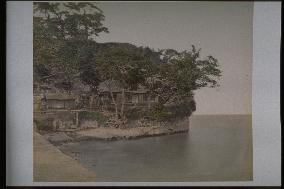
A teahouse at Honmoku Juniten

A teahouse at Honmoku Juniten

A road to Honmoku and Negishi was built for foreigners in 1864. Horse carriages were able to pass the following year, and many visitors came along the foot of the hill to enjoy the scenic beauty of Honmoku Juniten Shinto Shrine. Teahouses were built along the road, and people enjoyed bathing and gathering shellfish.==Date:unknown, Place:Yokohama, Photo:Tamamura Kozaburo, (Credit:Nagasaki University Library/Kyodo News Images) [Cabinet Number68‐3‐2]

  •  
A teahouse in Negishi

A teahouse in Negishi

In late 1864, responding to the Namamugi Incident, the Tokugawa Shogunate opened a new road from Negishi to Honmoku southeast of Yokohama to keep foreigners away from the Tokaido Highway. There were teahouses for foreigners along the road. This appears to be one of the teahouses in Negishi, but the exact location is unknown.==Date:unknown, Place:Yokohama, Photo:unknown, (Credit:Nagasaki University Library/Kyodo News Images) [Cabinet Number64‐43‐0]

  •  
A teahouse at Honmoku Juniten

A teahouse at Honmoku Juniten

A road to Honmoku and Negishi was built for foreigners in 1864. Horse carriages were able to pass the following year, and many visitors came along the foot of the hill to enjoy the scenic beauty of Honmoku Juniten Shinto Shrine. Teahouses were built along the road, and people enjoyed bathing and gathering shellfish.==Date:unknown, Place:Yokohama, Photo:unknown, (Credit:Nagasaki University Library/Kyodo News Images) [Cabinet Number64‐28‐0]

  •  
Honmoku coast

Honmoku coast

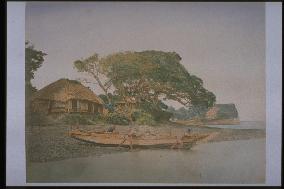
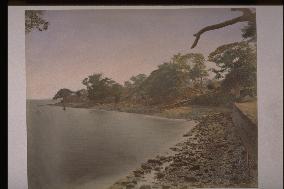
Seashore near Honmoku Juniten Shrine. A road to Honmoku and Negishi was built for foreigners in 1864 and allowed visitors to walk to the shrine, famous for its beautiful scenery, along the foot of the hill. Juniten Shinto Shrine, the guardian shrine of Honmoku Hongo Village, was later renamed Honmoku Shinto Shrine and still exists today.==Date:unknown, Place:Yokohama, Photo:unknown, (Credit:Nagasaki University Library/Kyodo News Images) [Cabinet Number64‐17‐0]

  •  
Honmoku Point seen from the Fudozaka slope

Honmoku Point seen from the Fudozaka slope

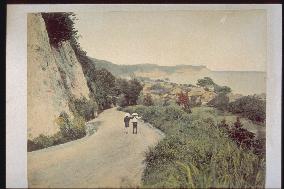
Negishi Village is at the foot of the hill, and Honmoku Peninsula is visible in the background, with (from the left) the Ichinotani, Ninotani, and Sannotani Valleys. Negishi Bay was known to foreigners as Mississippi Bay after the nickname given to it by Commodore Perry. Part of the new road built for foreigners, Fudo Slope was praised by them as one of the most beautiful scenes in the world.==Date:unknown, Place:Yokohama, Photo:unknown, (Credit:Nagasaki University Library/Kyodo News Images) [Cabinet Number55‐42‐0]

  •  
A teahouse at Honmoku Juniten

A teahouse at Honmoku Juniten

A road to Honmoku and Negishi was built for foreigners in 1864. Horse carriages were able to pass the following year, and many visitors came along the foot of the hill to enjoy the scenic beauty of Honmoku Juniten Shinto Shrine. Teahouses were built along the road, and people enjoyed bathing and gathering shellfish.==Date:unknown, Place:Yokohama, Photo:unknown, (Credit:Nagasaki University Library/Kyodo News Images) [Cabinet Number55‐34‐0]

  •  
Honmoku Point seen from the Fudozaka slope

Honmoku Point seen from the Fudozaka slope

Negishi Village is at the foot of the hill, and Honmoku Peninsula is visible in the background, with (from the left) the Ichinotani, Ninotani, and Sannotani Valleys. Negishi Bay was known to foreigners as Mississippi Bay after the nickname given to it by Commodore Perry. Part of the new road built for foreigners, Fudo Slope was praised by them as one of the most beautiful scenes in the world.==Date:unknown, Place:Yokohama, Photo:unknown, (Credit:Nagasaki University Library/Kyodo News Images) [Cabinet Number55‐14‐0]

  •  
A teahouse at Honmoku Juniten

A teahouse at Honmoku Juniten

A road to Honmoku and Negishi was built for foreigners in 1864. Horse carriages were able to pass the following year, and many visitors came along the foot of the hill to enjoy the scenic beauty of Honmoku Juniten Shinto Shrine. Teahouses were built along the road, and people enjoyed bathing and gathering shellfish.==Date:unknown, Place:Yokohama, Photo:unknown, (Credit:Nagasaki University Library/Kyodo News Images) [Cabinet Number55‐5‐0]

  •  
A teahouse at Honmoku Juniten

A teahouse at Honmoku Juniten

A road to Honmoku and Negishi was built for foreigners in 1864. Horse carriages were able to pass the following year, and many visitors came along the foot of the hill to enjoy the scenic beauty of Honmoku Juniten Shinto Shrine. Teahouses were built along the road, and people enjoyed bathing and gathering shellfish.==Date:unknown, Place:Yokohama, Photo:Tamamura Kozaburo, (Credit:Nagasaki University Library/Kyodo News Images) [Cabinet Number48‐88‐0]

  •  
Honmoku Point seen from the Fudozaka slope

Honmoku Point seen from the Fudozaka slope

Negishi Village is at the foot of the hill, and Honmoku Peninsula is visible in the background, with (from the left) the Ichinotani, Ninotani, and Sannotani Valleys. Negishi Bay was known to foreigners as Mississippi Bay after the nickname given to it by Commodore Perry. Part of the new road built for foreigners, Fudo Slope was praised by them as one of the most beautiful scenes in the world.==Date:unknown, Place:Yokohama, Photo:Tamamura Kozaburo, (Credit:Nagasaki University Library/Kyodo News Images) [Cabinet Number48‐85‐0]

  •  
A teahouse at Honmoku Juniten

A teahouse at Honmoku Juniten

A promenade for foreigners was made around the Bluff, Honmoku and Negishi in 1864. Juniten shrine is the guardian of Hongo village in Honmoku. The scenic Honmoku Juniten has a side road, and there were tea houses along the way.==Date:unknown, Place:Yokohama, Photo:Suzuki Shin-ichi, (Credit:Nagasaki University Library/Kyodo News Images) [Cabinet Number41‐16‐0]

  •  
Honmoku Point seen from the Fudozaka slope

Honmoku Point seen from the Fudozaka slope

The promenade through from the Bluff of Yokohama to the hills in Negishi lead to the Fudosaka down to the beach. This photo was the place near Negishi village down from the Fudosaka. The village below is the Negishi village and the above is the Honmoku cape.==Date:unknown, Place:Yokohama, Photo:Kusakabe Kinbei, (Credit:Nagasaki University Library/Kyodo News Images) [Cabinet Number40‐2‐0]

  •  
Honmoku Point seen from the Fudozaka slope

Honmoku Point seen from the Fudozaka slope

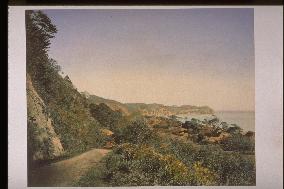
The promenade from the Bluff of Yokohama to the hills of Negishi end at the beach after going through Fudosaka. At present reclamation of the sea makes it impossible to view this scene. This was a famous spot favoured by foreigners living in the settlement, and many pictures remain.==Date:unknown, Place:Yokohama, Photo:Ogawa Kazumasa, (Credit:Nagasaki University Library/Kyodo News Images) [Cabinet Number25‐72‐0]

  •  
Honmoku Point seen from the Fudozaka slope

Honmoku Point seen from the Fudozaka slope

The promenade from the Bluff to Negishi reached the beach at Fudosaka. Foreigners visiting this site are said to have praised the view.==Date:unknown, Place:Yokohama, Photo:A. Farsari, (Credit:Nagasaki University Library/Kyodo News Images) [Cabinet Number20‐19‐0]

  •  
Rows of pine trees at honmoku

Rows of pine trees at honmoku

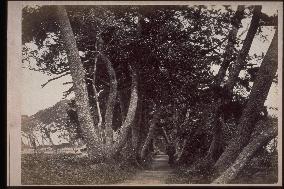
A road on Honmoku. The boulevard leading to the Juniten is beautiful. There was a custom of making shadows in the temples or avenues, and the houses were not built in mountains so as to save the most beautiful spots for the deities. From the August 2, 1872 edition of The Far East, in the republished edition.==Date:unknown, Place:Yokohama, Photo:unknown, (Credit:Nagasaki University Library/Kyodo News Images) [Cabinet Number19‐38‐0]

  •  
A teahouse at Honmoku Juniten

A teahouse at Honmoku Juniten

A promenade for foreigners was opened in 1864, and tea houses were established along the way.==Date:unknown, Place:Yokohama, Photo:unknown, (Credit:Nagasaki University Library/Kyodo News Images) [Cabinet Number15‐47‐0]

  •  
Honmoku Point seen from the Fudozaka slope

Honmoku Point seen from the Fudozaka slope

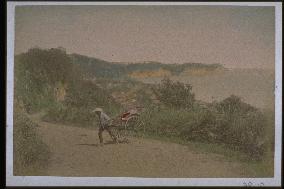
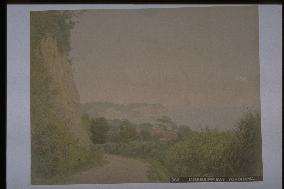
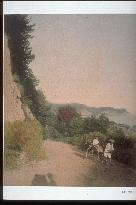
The promenade from the Bluff to the Negishi hills descends to the seaside by the Fudosaka in the photo. Mississippi Bay is visible from the slope. A rickshaw man pulls an empty carriage on the promenade.==Date:unknown, Place:Yokohama, Photo:Tamamura Kozaburo, (Credit:Nagasaki University Library/Kyodo News Images) [Cabinet Number11‐24‐0]

  •  
A teahouse at Honmoku Juniten

A teahouse at Honmoku Juniten

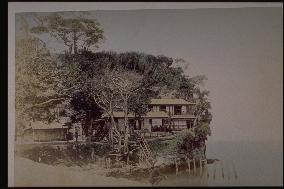
In the last days of the Tokugawa period, a promenade for foreigners was opened between Honmoku and Negishi in the south part of the Bluff. Honmoku Juniten was famous for its scencery and had branch roads. The Junitensha is the guardian of Honmoku Hongo village. The photo shows the tea shop protruding to the beach, which was also a bathing spot.==Date:unknown, Place:Yokohama, Photo:Ogawa Kazumasa, (Credit:Nagasaki University Library/Kyodo News Images) [Cabinet Number10‐8‐0]

  •  
Honmoku Point seen from the Fudozaka slope

Honmoku Point seen from the Fudozaka slope

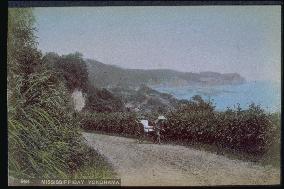
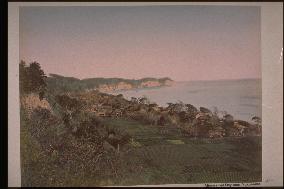
The caption reads Mississippi Bay near Yokohama in English. It is the same as No. 4-22. It is a view of Negishi village from Fudo saka. To the right is Mississippi (Negishi) Bay, and to the distance is Honmoku Cape. In the village are seen thatch-roofed houses and cultivated fields.==Date:unknown, Place:Yokohama, Photo:Ogawa Kazumasa, (Credit:Nagasaki University Library/Kyodo News Images) [Cabinet Number6‐13‐0]

  •  
Honmoku Point seen from the Fudozaka slope

Honmoku Point seen from the Fudozaka slope

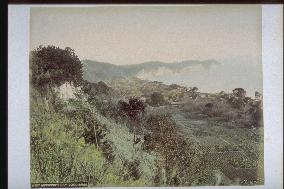
The caption reads Mississippi Bay near Yokohama in English. It is a view of Negishi village from Fudosaka. To the right is Mississippi Bay (presently Negishi Bay) with Honmoku Cape in the distance. Thatch-roofed houses and a well-cultivated field can be seen in the village.==Date:unknown, Place:Yokohama, Photo:Kusakabe Kinbei, (Credit:Nagasaki University Library/Kyodo News Images) [Cabinet Number4‐22‐0]

  •  
Honmoku Point seen from the Fudozaka slope

Honmoku Point seen from the Fudozaka slope

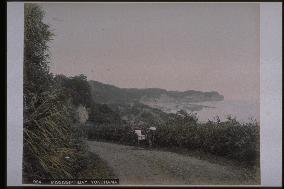
The caption reads View of Mississippi Bay near Yokohama, in English. Honmoku cape is seen from Honmoku beach through Fudosaka in the suburbs of Yokohama. It is a scenic site, and foreign travelers favoured visits there.==Date:unknown, Place:Yokohama, Photo:Kusakabe Kinbei, (Credit:Nagasaki University Library/Kyodo News Images) [Cabinet Number3‐16‐0]

  •  
Honmoku coast

Honmoku coast

The caption reads view of Honmoku, near Yokohama, in English. Miyahara Beach is seen from the torii of Honmoku shrine. This is a view of the picturesque resort Honmoku beach. The wooden bridge protruding from the beach may be a pier in full tide.==Date:unknown, Place:Yokohama, Photo:Kusakabe Kinbei, (Credit:Nagasaki University Library/Kyodo News Images) [Cabinet Number3‐14‐0]

  •  
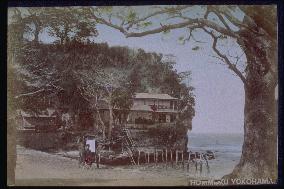
A teahouse at Honmoku Juniten

A teahouse at Honmoku Juniten

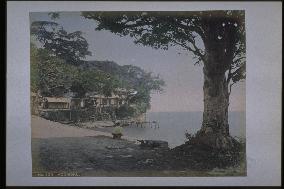
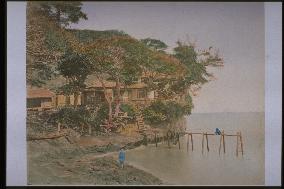
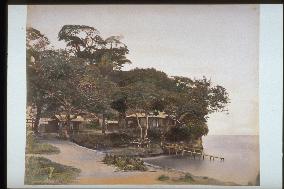
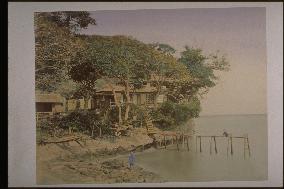
The caption reads View of Honmoku Bathing Place near Yokohama in English. This is the tea house at Juniten near Honmoku beach, which was a resort and a beach for bathing. The wooden bridge protruding toward the sea may be a pier for boats or for swimming.==Date:unknown, Place:Yokohama, Photo:Kusakabe Kinbei, (Credit:Nagasaki University Library/Kyodo News Images) [Cabinet Number3‐13‐0]

  •  
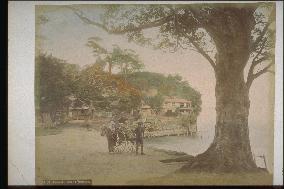
HONMOKU shrine

HONMOKU shrine

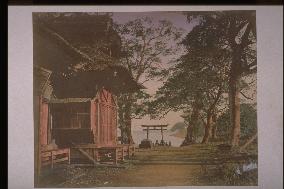
The caption reads view of Honmoku near Yokohama, but this is a photo of Honmoku Shrine (Juni Tensha) on the Honmoku beach taken from the mountain side. This shrine was the guardian of Hongo village and became Honmoku Shrine with the Buddhist and Shinto separation in the early Meiji era. Votive pictures of horses can be seen next to the shrine.==Date:unknown, Place:Yokohama, Photo:Kusakabe Kinbei, (Credit:Nagasaki University Library/Kyodo News Images) [Cabinet Number3‐12‐0]

  •  
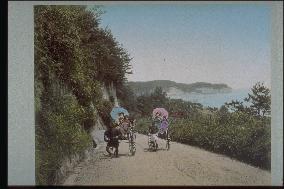
A jinrikisha going up the Fudozaka slope

A jinrikisha going up the Fudozaka slope

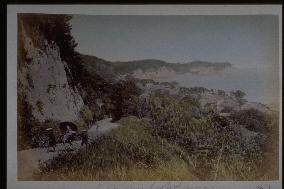
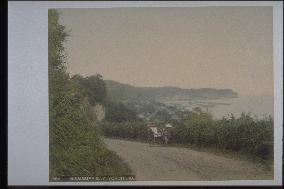
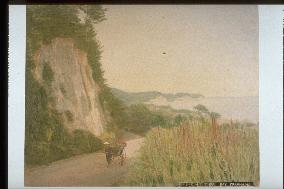
The caption reads Mississippi Bay, Yokohama in English. The photo shows Fudosaka road descending from Negishi to Honmoku Beach. To the right is Mississippi Bay (Negishi Bay). A rickshaw man pulls a passenger on a rickshaw in the direction of Negishi.==Date:unknown, Place:Yokohama, Photo:Kusakabe Kinbei, (Credit:Nagasaki University Library/Kyodo News Images) [Cabinet Number2‐26‐0]

  •  
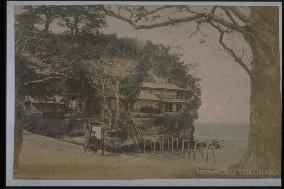
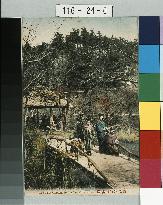
A teahouse at Honmoku Juniten

A teahouse at Honmoku Juniten

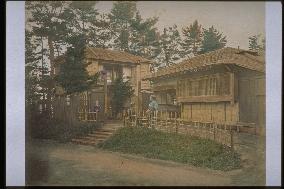
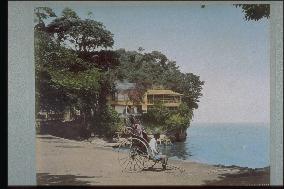
Caption reads The garden and tea house of a residence near Yokohama in German. The photo shows a tea house located in Juniten at the seaside in the suburbs of Yokohama. The rickshaw carries children, and a woman walks along with it on the seaside path wearing an okosozukin (a combination of hood and veil).==Date:unknown, Place:Yokohama, Photo:Kusakabe Kinbei, (Credit:Nagasaki University Library/Kyodo News Images) [Cabinet Number1‐46‐0]

  •  
Yokohama honmoku

Yokohama honmoku

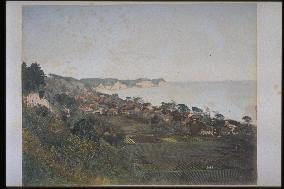
Yokohama honmoku==Date:Early Meiji, Place:Yokohama, Photo:unknown, (Credit:Nagasaki University Library/Kyodo News Images)

  •  
Sannotani, Honmoku Yokohama

Sannotani, Honmoku Yokohama

Sannotani, Honmoku Yokohama==Date:unknown, Place:Yokohama, Photo:unknown, (Credit:Nagasaki University Library/Kyodo News Images)

  •  
Sankeien Garden, Honmoku Yokohama

Sankeien Garden, Honmoku Yokohama

Sankeien Garden, Honmoku Yokohama==Date:unknown, Place:Yokohama, Photo:unknown, (Credit:Nagasaki University Library/Kyodo News Images)

  • Main
  • Top
  • Editorial
  • Creative
  • About Us
  • About ILG
  • Terms of use
  • Company
  • BEHIND
  • Price List
  • Single Plan
  • Monthly Plan
  • Services
  • Shooting
  • Rights Clearance
  • Support
  • FAQ
  • How To Buy
  • Contact Us
  • Become a Partner

© KYODO NEWS IMAGES INC

All Rights Reserved.

  • Editorial
  • Olympics
  • News
  • Sports
  • Japan
  • Tech
  • Royal
  • Disaster
  • NorthKorea
  • Old Japan
  • SNS
  • Creative
  • Food
  • Japan
  • Landscape
  • Animal
  • Popular
  • #Ukraine
  • #China
  • #coronavirus
  • #N. Korea
  • #Russia
  • #Thailand
  • #Ukraine
  • #China
  • #coronavirus
  • #N. Korea
  • #Russia
  • #Thailand
  • Food
  • Japan
  • Landscape
  • Animal
  • Olympics
  • News
  • Sports
  • Japan
  • Tech
  • Royal
  • Disaster
  • NorthKorea
  • Old Japan
  • SNS