•  
Haseko Corporation President Change Press Conference

Haseko Corporation President Change Press Conference

Haseko Corporation, press conference on the change of president.The photo shows (from right to left) Satoshi Kumano, President and Representative Director; Kazuo Ikegami, Vice Chairman and Representative.=January 23,2025,Minato-ku, Tokyo

  •  
Haseko Corporation President Change Press Conference

Haseko Corporation President Change Press Conference

Haseko Corporation, press conference on the change of president.The photo shows (from right to left) Satoshi Kumano, President and Representative Director; Kazuo Ikegami, Vice Chairman and Representative Director addressing the audience.=January 23,2025,Minato-ku, Tokyo

  •  
Asahi rejects journalist's commentary on comfort women

Asahi rejects journalist's commentary on comfort women

TOKYO, Japan - Photo shows Japanese journalist Akira Ikegami. Ikegami, 64, said Sept. 3, 2014, he has asked the Asahi Shimbun newspaper to terminate his serialized commentaries after the daily rejected printing his latest column about its recent extensive review of its past "comfort women" reports. Ikegami explained the rejection undermined a relationship of trust between him and the paper. (Image use permitted only for newspapers, television and Internet)(PHOTO NOT FOR SALE)

  •  
Priests of different faiths forming groups across Japan

Priests of different faiths forming groups across Japan

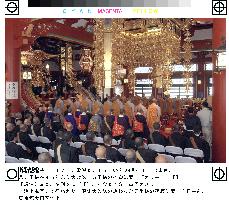
TOKYO, Japan - Photo taken April 22, 2014, shows priests of Buddhism, Shinto, Christianity and other religions gathering for a regular meeting of their group at Ikegami Honmonji, a Buddhism temple of the Nichiren sect, in Tokyo's Ota Ward.

  •  
World population tops 7 billion

World population tops 7 billion

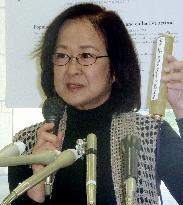
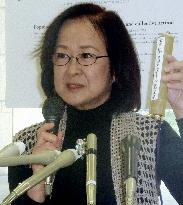
TOKYO, Japan - Kiyoko Ikegami, head of the U.N. Population Fund's Tokyo office, holds a certificate for a baby who was born on Oct. 31, 2011, as ''one of the 7 billionth babies'' during a press conference held the same day in Tokyo. The New York-based UNFPA estimates that the world's population exceeded 7 billion on Oct. 31, 2011.

  •  
(2)Repairs completed on oldest wooden pagoda in Tokyo

(2)Repairs completed on oldest wooden pagoda in Tokyo

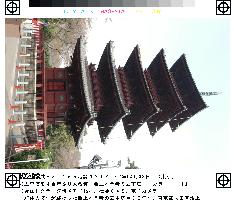
TOKYO, Japan - Monks at the Ikegami Hommonji Temple in Tokyo's Ota Ward hold a ceremony April 3 to mark the completion of repair work on the oldest wooden pagoda in the Kanto region. The five story structure has not undergone major repairs since its construction in 1608.

  •  
(1)Repairs completed on oldest wooden pagoda in Tokyo

(1)Repairs completed on oldest wooden pagoda in Tokyo

TOKYO, Japan - Repairs to the oldest wooden pagoda in the Kanto region, in Tokyo's Ota Ward, are completed April 3. The five-story pagoda in the Ikegami Hommonji Temple grounds had not undergone major repairs since its construction in 1608.

  •  
Seiden Rg Veda (1992)

Seiden Rg Veda (1992)

Film Poster Film: Seiden Rg Veda (1991) Director: Hiroyuki Ebata, Takamasa Ikegami 02 May 1992 Date: 02 May 1992

  •  
House; Hausu (1977)

House; Hausu (1977)

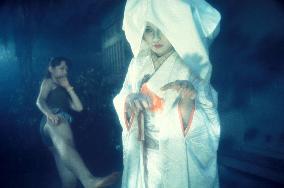
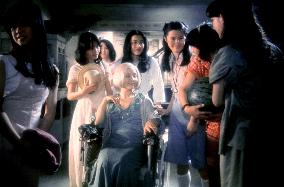
Miki Jinbo & Kimiko Ikegami Characters: Kunfu, Angel / Angel's Mother Television: House; Hausu (1977) Director: Nobuhiko Obayashi 30 July 1977 Miki Jinbo ('Kung Fu'), Kimiko Ikegami ('Gorgeous') Date: 30 July 1977

  •  
House; Hausu (1977)

House; Hausu (1977)

Kumiko Ohba, Masayo Miyako, Eriko Tanaka, Kimiko Ikegami, Yoko Minamida, Ai Matsubara, Mieko Sato & Miki Jinbo Characters: Fanta, Suito, Merodi, Angel / Angel's Mother, Auntie, Gari, Makku, Kunf

  •  
Tokyo police host meeting on antiterrorism measures

Tokyo police host meeting on antiterrorism measures

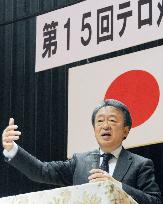
Journalist Akira Ikegami gives a talk during a meeting in suburban Tokyo hosted on Nov. 19, 2015, by the Metropolitan Police Department on antiterrorism measures in the wake of the terrorist attacks in Paris. About 600 people, including representatives of the Tokyo metropolitan government, the Self-Defense Forces, railway operators and electric power companies, attended the event at the National Police Academy in Fuchu on the western outskirts of the Japanese capital. (Kyodo) ==Kyodo

  •  
Tokyo scene: "Robe-hanging pine" by Senzoku Pond

Tokyo scene: "Robe-hanging pine" by Senzoku Pond

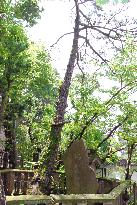
A "robe-hanging pine" stands imposingly at Myofukuji temple by the Senzoku Pond in Tokyo's Ota district on July 10, 2015. Edo-era Buddhist monk Nichiren Shonin, founder of the Nichiren school of Buddhism, is said to have washed his feet at the pond after hanging his robe on the pine before visiting Ikegami Honmonji temple, the citadel of the school. (Kyodo) ==Kyodo

  •  
Ikegami Hondenji Temple and priests

Ikegami Hondenji Temple and priests

Ikegami Hondenji Temple and priests==Date:1904, Place:Tokyo, Photo:Underwood, (Credit:Nagasaki University Library/Kyodo News Images)

  •  
Ikegami Honmonji Temple

Ikegami Honmonji Temple

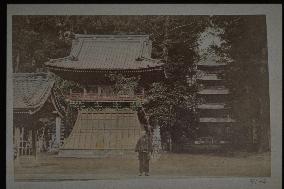
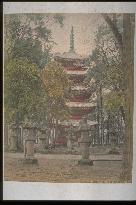
Honmonji Temple is the main temple of the Nichiren Sect of Japanese Buddhism, built on the site of Nichiren's death in 1288. The five-story pagoda visible in the back was constructed by the 2nd Shogun Tokugawa Hidetada in 1607. Today, it is the only pagoda in Japan conveying the Japanese-Chinese building style of the Momoyama Period and the oldest five-story pagoda in Tokyo. The building in the foreground is the Kodo (Drum Hall).==Date:unknown, Place:Tokyo, Photo:unknown, (Credit:Nagasaki University Library/Kyodo News Images) [Cabinet Number91‐2‐0]

  •  
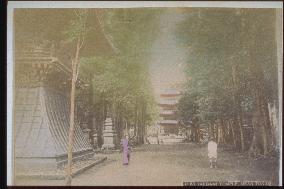
Ikegami Honmonji Temple

Ikegami Honmonji Temple

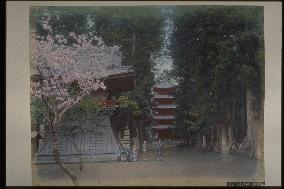
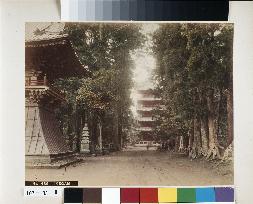
Visitors to the temple saw this scene after passing through the front gate (existent) built between 1688 and 1704, going up the stairs donated by Kato Kiyomasa and installed between 1596 and 1615, and then passing through the sanmon gate built along with the five-story pagoda by the second shogun Tokugawa Hidetada in 1608. The building on the left is the drum tower where ceremonial drums were stored. Both the gate and the drum tower were destroyed in World War II. The 29.5-meter pagoda however survived and still stands today as the oldest pagoda in the Kanto region and a National Important Cultural Asset. Mid-Meiji Period.==Date:unknown, Place:Tokyo, Photo:unknown, (Credit:Nagasaki University Library/Kyodo News Images) [Cabinet Number59‐19‐0]

  •  
Ikegami Honmonji Temple

Ikegami Honmonji Temple

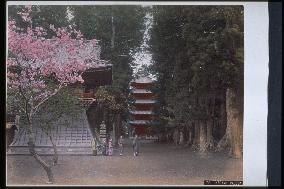
The five-story pagoda was built by the second shogun Tokugawa Hidetada in 1608 to show appreciation for his recovery from illness. The pagoda leaned to one side after the earthquake of 1614, and the fifth shogun Tsunayoshi ordered it to be repaired and transferred to its current location in 1701. The first story was designed in Japanese style, but the second story and above were executed in an unusual Chinese style. The building was completely restored in 2001.==Date:unknown, Place:Tokyo, Photo:unknown, (Credit:Nagasaki University Library/Kyodo News Images) [Cabinet Number53‐27‐0]

  •  
Ikegami Honmonji Temple

Ikegami Honmonji Temple

The five-story pagoda was built by the second shogun Tokugawa Hidetada in 1608 to show appreciation for his recovery from illness. The pagoda leaned to one side after the earthquake of 1614, and the fifth shogun Tsunayoshi ordered it to be repaired and transferred to its current location in 1701. The first story was designed in Japanese style, but the second story and above were executed in an unusual Chinese style. The building was completely restored in 2001.==Date:unknown, Place:Tokyo, Photo:unknown, (Credit:Nagasaki University Library/Kyodo News Images) [Cabinet Number53‐14‐0]

  •  
The five-story pagoda of Kaneiji Temple

The five-story pagoda of Kaneiji Temple

This five-storied pagoda was built in 1631by Doi Toshikatsu, a minister of the Shogunate, and was donated to Ueno Toshogu Shrine (the shrine dedicated to the first Shogun Tokugawa Iemitsu). The original pagoda was destroyed by a fire at Yakushi-do in 1636 and replaced with this pagoda by Doi Toshikatsu the same year. The stone lanterns of Toshogu visible in the foreground are still remain on the north side of the approach to Ueno Zoo. Ownership transferred to Kan'eiji Temple in 1868 and then the Metropolitan Tokyo Government after World War II. Today it is referred to as the former pagoda of Kan'eiji Temple. Only two pagodas from the Edo Period remain in Tokyo at present, this one and another at Honmonji Temple in Ikegami.==Date:unknown, Place:Tokyo, Photo:unknown, (Credit:Nagasaki University Library/Kyodo News Images) [Cabinet Number53‐16‐2]

  •  
Ikegami Honmonji Temple

Ikegami Honmonji Temple

Visitors to the temple saw this scene after passing through the front gate (existent) built between 1688 and 1704, going up the stairs donated by Kato Kiyomasa and installed between 1596 and 1615, and then passing through the sanmon gate built along with the five-story pagoda by the second shogun Tokugawa Hidetada in 1608. The building on the left is the drum tower where ceremonial drums were stored. Both the gate and the drum tower were destroyed in World War II. The 29.5-meter pagoda however survived and still stands today as the oldest pagoda in the Kanto region and a National Important Cultural Asset. Mid-Meiji Period.==Date:unknown, Place:Tokyo, Photo:unknown, (Credit:Nagasaki University Library/Kyodo News Images) [Cabinet Number53‐2‐0]

  •  
The precincts of Ikegami Honmonji Temple

The precincts of Ikegami Honmonji Temple

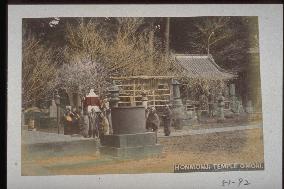
Daikoku-do viewed from Soshi-do. Nichiren, the founder of the Nichiren Sect of Buddhism, died in the year 1282 at the residence of Ikegami Munenaka Ikegami on his way to Hitachi from Mt. Minobu for spa treatment. Munenaka donated units of land equivalent to the number of ideographs in the Saddharmapundarika-sutra (about 70,000 tsubo or 231,420 square meters) and this became Ikegami Honmonji Temple. The Soshi-do, dedicated to Soshi, the founder of the Isshu Sect, is to the left just outside the picture. It was rebuilt in 1723 but burned to the ground during World War II. There are many worshippers beyond the basin.==Date:unknown, Place:Tokyo, Photo:unknown, (Credit:Nagasaki University Library/Kyodo News Images) [Cabinet Number51‐92‐0]

  •  
View in front of ikegami honmonji temple

View in front of ikegami honmonji temple

The same structure with the photos numbered 37-5 and 37-22. The coloring is brilliant compared to the other photos. And it looks more like a drawing.==Date:unknown, Place:Fujisawa, Photo:unknown, (Credit:Nagasaki University Library/Kyodo News Images) [Cabinet Number37‐37‐0]

  •  
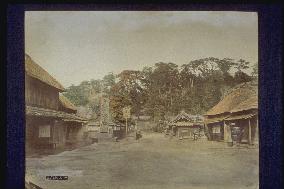
View in front of ikegami honmonji temple

View in front of ikegami honmonji temple

The same structure as the photo numbered 37-5. The panel standing to the left of Taiko bridge reads, Sekkyo . Across the bridge is the gate of the temple, and a long staircase continues beyond leading to the compounds of the temple.==Date:unknown, Place:Fujisawa, Photo:unknown, (Credit:Nagasaki University Library/Kyodo News Images) [Cabinet Number37‐22‐0]

  •  
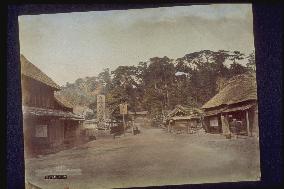
View in front of ikegami honmonji temple

View in front of ikegami honmonji temple

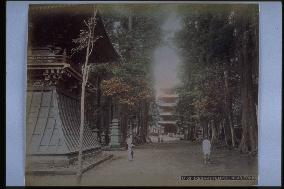
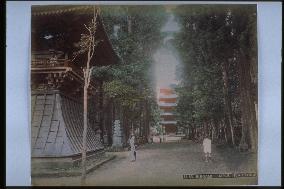
Ikegami Honmonji is called Choeisan Daikokuin, and it is one of the head temples of the Nichiren sect located in the hills of Ikegami. Nichiren established the temple in 1274, giving it the present name. The compounds stretch into the foliage growing to the rear.==Date:unknown, Place:Tokyo, Photo:unknown, (Credit:Nagasaki University Library/Kyodo News Images) [Cabinet Number37‐5‐0]

  •  
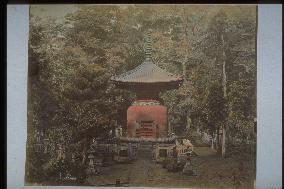
Ikegami Honmonji Temple

Ikegami Honmonji Temple

The Hoto of Ikegami Honmonji Temple which is one of the four head temples of the Nichiren Sect. One of the disciples established this temple at the location where Nichiren died. This tower dates back to the 14th century.==Date:unknown, Place:Tokyo, Photo:unknown, (Credit:Nagasaki University Library/Kyodo News Images) [Cabinet Number26‐29‐0]

  •  
Ikegami Honmonji Temple

Ikegami Honmonji Temple

The Ikegami family of Musashi were high-ranking officials in the Kamakura Bakufu. The family invited Nichiren just before he passed away. Their residence stands in the present Ikenoue of Otaku, the origins of the Honmonji of Ikenoue. To the left of the picture is part of the five-story tower, and its great magnitude can be seen from a comparison with the person below.==Date:unknown, Place:Tokyo, Photo:Ogawa Kazumasa, (Credit:Nagasaki University Library/Kyodo News Images) [Cabinet Number25‐75‐0]

  •  
Priests of different faiths forming groups across Japan

Priests of different faiths forming groups across Japan

TOKYO, Japan - Photo taken April 22, 2014, shows priests of Buddhism, Shinto, Christianity and other religions gathering for a regular meeting of their group at Ikegami Honmonji, a Buddhism temple of the Nichiren sect, in Tokyo's Ota Ward. (Kyodo)

  •  
World population tops 7 billion

World population tops 7 billion

TOKYO, Japan - Kiyoko Ikegami, head of the U.N. Population Fund's Tokyo office, holds a certificate for a baby who was born on Oct. 31, 2011, as ''one of the 7 billionth babies'' during a press conference held the same day in Tokyo. The New York-based UNFPA estimates that the world's population exceeded 7 billion on Oct. 31, 2011. (Kyodo)

  •  
Entrance to Ikegami

Entrance to Ikegami

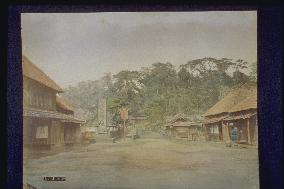
Entrance to Ikegami==Date:Early Meiji, Place:Tokyo, Photo:unknown, (Credit:Nagasaki University Library/Kyodo News Images)

  •  
Ikegami Honmonji Temple

Ikegami Honmonji Temple

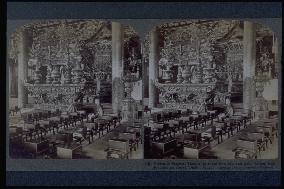
Ikegami Honmonji Temple==Date:unknown, Place:Tokyo, Photo:unknown, (Credit:Nagasaki University Library/Kyodo News Images)

  •  
(1)Repairs completed on oldest wooden pagoda in Tokyo

(1)Repairs completed on oldest wooden pagoda in Tokyo

TOKYO, Japan - Repairs to the oldest wooden pagoda in the Kanto region, in Tokyo's Ota Ward, are completed April 3. The five-story pagoda in the Ikegami Hommonji Temple grounds had not undergone major repairs since its construction in 1608.

  •  
Dinosaur fossil found in Japan

Dinosaur fossil found in Japan

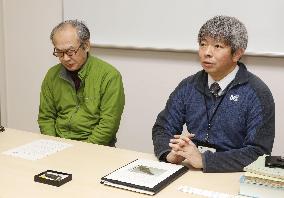
Naoki Ikegami (R) of Mifune Dinosaur Museum attends a press conference in Mifune, Kumamoto Prefecture, southwestern Japan, on Jan. 28, 2019, with Koji Murakami, who found in October 2014 a fossil believed to be a rib of a carnivorous dinosaur from about 130 million years ago. (Kyodo) ==Kyodo

  •  
Fire drill held at temple in Tokyo

Fire drill held at temple in Tokyo

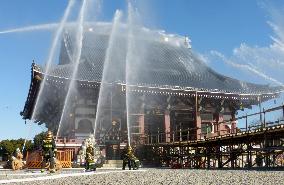
Columns of water are discharged during a fire drill at Ikegami Honmonji Temple in Tokyo on Jan. 26, 2017, the Cultural Property Fire Prevention Day in Japan. The day was set in 1955 after the Golden Hall at Horyuji Temple in Nara Prefecture, which was designated as a world cultural heritage site in 1993, was damaged by fire on Jan. 26, 1949. (Kyodo) ==Kyodo

  • Main
  • Top
  • Editorial
  • Creative
  • About Us
  • About ILG
  • Terms of use
  • Company
  • BEHIND
  • Price List
  • Single Plan
  • Monthly Plan
  • Services
  • Shooting
  • Rights Clearance
  • Support
  • FAQ
  • How To Buy
  • Contact Us
  • Become a Partner

© KYODO NEWS IMAGES INC

All Rights Reserved.

  • Editorial
  • Olympics
  • News
  • Sports
  • Japan
  • Tech
  • Royal
  • Disaster
  • NorthKorea
  • Old Japan
  • SNS
  • Creative
  • Food
  • Japan
  • Landscape
  • Animal
  • Popular
  • #Ukraine
  • #Thailand
  • #coronavirus
  • #N. Korea
  • #China
  • #Russia
  • #Ukraine
  • #Thailand
  • #coronavirus
  • #N. Korea
  • #China
  • #Russia
  • Food
  • Japan
  • Landscape
  • Animal
  • Olympics
  • News
  • Sports
  • Japan
  • Tech
  • Royal
  • Disaster
  • NorthKorea
  • Old Japan
  • SNS