•  
(InTibet) CHINA-XIZANG-DAMXUNG-GUTU EVE-FEAST (CN)

(InTibet) CHINA-XIZANG-DAMXUNG-GUTU EVE-FEAST (CN)

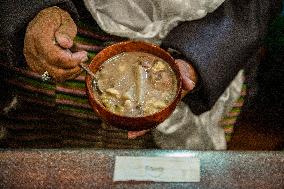
(240209) -- LHASA, Feb. 9, 2024 (Xinhua) -- Sichod Wangmo has "gutu" at home in Damxung County, southwest China's Xizang Autonomous Region, Feb. 8, 2024. The Tibetan New Year coincides with the Chinese Lunar New Year, or the Spring Festival, which falls on Feb. 10 this year. Two days ahead of the Tibetan New Year is the traditional "Gutu Eve" for families to have a feast of "gutu", a traditional soup dish made of flour, at home. "Gu" in Tibetan means nine, which is a lucky number. "Tu" means "pasta." Nine different fillings like wool, charcoal and chili are placed inside the dough drops, and each of these fillings has a meaning. As the festival approaches, the village is exuding a cheerful and festive atmosphere. Like other locals, family members of Sichod Wangmo also gathered at home and enjoyed the feast, looking forward to having better days in the upcoming year. (Xinhua/Sun Ruibo)

  •  
(InTibet) CHINA-XIZANG-DAMXUNG-GUTU EVE-FEAST (CN)

(InTibet) CHINA-XIZANG-DAMXUNG-GUTU EVE-FEAST (CN)

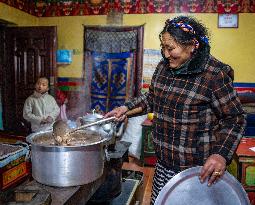
(240209) -- LHASA, Feb. 9, 2024 (Xinhua) -- Sichod Wangmo's daughter-in-law cooks "gutu" at home in Damxung County, southwest China's Xizang Autonomous Region, Feb. 8, 2024. The Tibetan New Year coincides with the Chinese Lunar New Year, or the Spring Festival, which falls on Feb. 10 this year. Two days ahead of the Tibetan New Year is the traditional "Gutu Eve" for families to have a feast of "gutu", a traditional soup dish made of flour, at home. "Gu" in Tibetan means nine, which is a lucky number. "Tu" means "pasta." Nine different fillings like wool, charcoal and chili are placed inside the dough drops, and each of these fillings has a meaning. As the festival approaches, the village is exuding a cheerful and festive atmosphere. Like other locals, family members of Sichod Wangmo also gathered at home and enjoyed the feast, looking forward to having better days in the upcoming year. (Xinhua/Sun Fei)

  •  
(InTibet) CHINA-XIZANG-DAMXUNG-GUTU EVE-FEAST (CN)

(InTibet) CHINA-XIZANG-DAMXUNG-GUTU EVE-FEAST (CN)

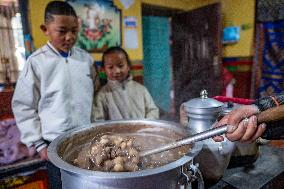
(240209) -- LHASA, Feb. 9, 2024 (Xinhua) -- Sichod Wangmo's great-grandson and great-granddaughter wait to have "gutu" at home in Damxung County, southwest China's Xizang Autonomous Region, Feb. 8, 2024. The Tibetan New Year coincides with the Chinese Lunar New Year, or the Spring Festival, which falls on Feb. 10 this year. Two days ahead of the Tibetan New Year is the traditional "Gutu Eve" for families to have a feast of "gutu", a traditional soup dish made of flour, at home. "Gu" in Tibetan means nine, which is a lucky number. "Tu" means "pasta." Nine different fillings like wool, charcoal and chili are placed inside the dough drops, and each of these fillings has a meaning. As the festival approaches, the village is exuding a cheerful and festive atmosphere. Like other locals, family members of Sichod Wangmo also gathered at home and enjoyed the feast, looking forward to having better days in the upcoming year. (Xinhua/Sun Fei)

  •  
(InTibet) CHINA-XIZANG-DAMXUNG-GUTU EVE-FEAST (CN)

(InTibet) CHINA-XIZANG-DAMXUNG-GUTU EVE-FEAST (CN)

(240209) -- LHASA, Feb. 9, 2024 (Xinhua) -- Sichod Wangmo (R) takes a bowl of "gutu" from her son at home in Damxung County, southwest China's Xizang Autonomous Region, Feb. 8, 2024. The Tibetan New Year coincides with the Chinese Lunar New Year, or the Spring Festival, which falls on Feb. 10 this year. Two days ahead of the Tibetan New Year is the traditional "Gutu Eve" for families to have a feast of "gutu", a traditional soup dish made of flour, at home. "Gu" in Tibetan means nine, which is a lucky number. "Tu" means "pasta." Nine different fillings like wool, charcoal and chili are placed inside the dough drops, and each of these fillings has a meaning. As the festival approaches, the village is exuding a cheerful and festive atmosphere. Like other locals, family members of Sichod Wangmo also gathered at home and enjoyed the feast, looking forward to having better days in the upcoming year. (Xinhua/Sun Fei)

  •  
(InTibet) CHINA-XIZANG-DAMXUNG-GUTU EVE-FEAST (CN)

(InTibet) CHINA-XIZANG-DAMXUNG-GUTU EVE-FEAST (CN)

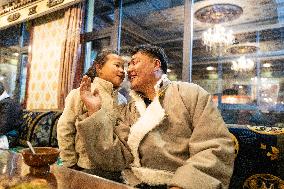
(240209) -- LHASA, Feb. 9, 2024 (Xinhua) -- Sichod Wangmo's grandson Pasang Norbu (R) talks with her great-granddaughter Yangjen Lhamo after dinner at home in Damxung County, southwest China's Xizang Autonomous Region, Feb. 8, 2024. The Tibetan New Year coincides with the Chinese Lunar New Year, or the Spring Festival, which falls on Feb. 10 this year. Two days ahead of the Tibetan New Year is the traditional "Gutu Eve" for families to have a feast of "gutu", a traditional soup dish made of flour, at home. "Gu" in Tibetan means nine, which is a lucky number. "Tu" means "pasta." Nine different fillings like wool, charcoal and chili are placed inside the dough drops, and each of these fillings has a meaning. As the festival approaches, the village is exuding a cheerful and festive atmosphere. Like other locals, family members of Sichod Wangmo also gathered at home and enjoyed the feast, looking forward to having better days in the upcoming year. (Xinhua/Sun Ruibo)

  •  
(InTibet) CHINA-XIZANG-DAMXUNG-GUTU EVE-FEAST (CN)

(InTibet) CHINA-XIZANG-DAMXUNG-GUTU EVE-FEAST (CN)

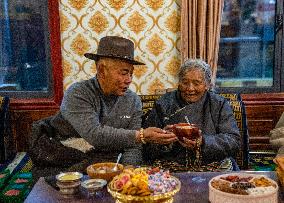
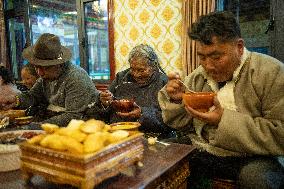
(240209) -- LHASA, Feb. 9, 2024 (Xinhua) -- Sichod Wangmo (2nd R) and her family have "gutu" at home in Damxung County, southwest China's Xizang Autonomous Region, Feb. 8, 2024. The Tibetan New Year coincides with the Chinese Lunar New Year, or the Spring Festival, which falls on Feb. 10 this year. Two days ahead of the Tibetan New Year is the traditional "Gutu Eve" for families to have a feast of "gutu", a traditional soup dish made of flour, at home. "Gu" in Tibetan means nine, which is a lucky number. "Tu" means "pasta." Nine different fillings like wool, charcoal and chili are placed inside the dough drops, and each of these fillings has a meaning. As the festival approaches, the village is exuding a cheerful and festive atmosphere. Like other locals, family members of Sichod Wangmo also gathered at home and enjoyed the feast, looking forward to having better days in the upcoming year. (Xinhua/Sun Ruibo)

  •  
(InTibet) CHINA-TIBET-HORSE BAG-CRAFTSMAN (CN)

(InTibet) CHINA-TIBET-HORSE BAG-CRAFTSMAN (CN)

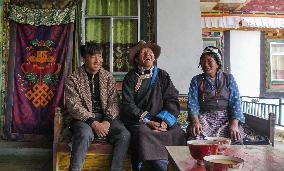
(230501) -- LHASA, May 1, 2023 (Xinhua) -- Sonam Qoipei (C) chats with his family members in Nang County of Nyingchi, southwest China's Tibet Autonomous Region, April 19, 2023. At Sonam Qoipei's workshop of handmade horse bag, various types of horse bags are neatly placed on the cabinets. The horse bag is made of cowhide, which is waterproof. Its making skill was listed as an intangible cultural heritage of Tibet in 2018. Sonam Qoipei, 61, developed a keen interest in making horse bags when he was a child, after he saw the adults in his village riding on horses with the bags. At the age of 21, he studied the craft of making horse bags from a local craftsman. For now, he has become the inheritor of the craft. The process of making horse bags involves dozens of steps, so the production is time-consuming and the output is low, which has hindered its development and inheritance. In 2015, the craftsmanship received a financial support from the local government, so that it can be passed on. In 2022

  •  
(InTibet) CHINA-TIBET-HORSE BAG-CRAFTSMAN (CN)

(InTibet) CHINA-TIBET-HORSE BAG-CRAFTSMAN (CN)

(230501) -- LHASA, May 1, 2023 (Xinhua) -- Sonam Qoipei makes a horse bag in Nang County of Nyingchi, southwest China's Tibet Autonomous Region, April 19, 2023. At Sonam Qoipei's workshop of handmade horse bag, various types of horse bags are neatly placed on the cabinets. The horse bag is made of cowhide, which is waterproof. Its making skill was listed as an intangible cultural heritage of Tibet in 2018. Sonam Qoipei, 61, developed a keen interest in making horse bags when he was a child, after he saw the adults in his village riding on horses with the bags. At the age of 21, he studied the craft of making horse bags from a local craftsman. For now, he has become the inheritor of the craft. The process of making horse bags involves dozens of steps, so the production is time-consuming and the output is low, which has hindered its development and inheritance. In 2015, the craftsmanship received a financial support from the local government, so that it can be passed on. In 2022, Sonam Qoipei w

  •  
(InTibet) CHINA-TIBET-HORSE BAG-CRAFTSMAN (CN)

(InTibet) CHINA-TIBET-HORSE BAG-CRAFTSMAN (CN)

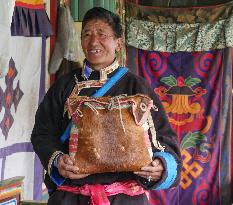
(230501) -- LHASA, May 1, 2023 (Xinhua) -- Sonam Qoipei displays a horse bag he made in Nang County of Nyingchi, southwest China's Tibet Autonomous Region, April 18, 2023. At Sonam Qoipei's workshop of handmade horse bag, various types of horse bags are neatly placed on the cabinets. The horse bag is made of cowhide, which is waterproof. Its making skill was listed as an intangible cultural heritage of Tibet in 2018. Sonam Qoipei, 61, developed a keen interest in making horse bags when he was a child, after he saw the adults in his village riding on horses with the bags. At the age of 21, he studied the craft of making horse bags from a local craftsman. For now, he has become the inheritor of the craft. The process of making horse bags involves dozens of steps, so the production is time-consuming and the output is low, which has hindered its development and inheritance. In 2015, the craftsmanship received a financial support from the local government, so that it can be passed on. In 2022, Son

  •  
(InTibet) CHINA-TIBET-PALM-LEAF MANUSCRIPT-CONSERVATION (CN)

(InTibet) CHINA-TIBET-PALM-LEAF MANUSCRIPT-CONSERVATION (CN)

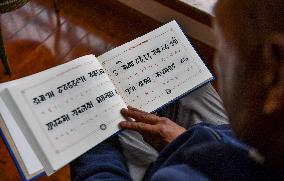
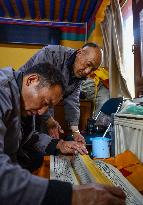
(230430) -- LHASA, April 30, 2023 (Xinhua) -- Gyumey Tsultrim checks a reference book in Sanskrit and Tibetan in Lhasa, southwest China's Tibet Autonomous Region, April 19, 2023. At Truzing Palace of Norbulingka in the western suburbs of Lhasa, thousands of ancient books on various fields of Tibet are stored on shelves. For now, Gyumey Tsultrim and his colleagues' primary task is to make an inventory of the ancient books both manually and digitally. Gyumey Tsultrim was born in 1967 in Chanang County in Shannan. In 1986, while experts from the Academy of Social Sciences of the Tibet Autonomous Region were conducting historical and cultural research in Chanang, Gyumey Tsultrim, working as an assistant in Tibetan language, was exposed to Sanskrit for the first time. In 1991, he went to the High-level Tibetan Buddhism College of China in Beijing to study Sanskrit systematically. In 2006, Gyumey Tsultrim published a book on Sanskrit handwriting and began participating in the protection of the palm-leaf manuscr

  •  
(InTibet) CHINA-TIBET-PALM-LEAF MANUSCRIPT-CONSERVATION (CN)

(InTibet) CHINA-TIBET-PALM-LEAF MANUSCRIPT-CONSERVATION (CN)

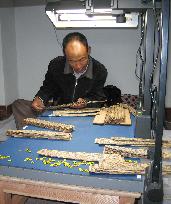
(230430) -- LHASA, April 30, 2023 (Xinhua) -- This file photo taken on May 12, 2008 shows Gyumey Tsultrim (1st L) arranging palm-leaf manuscripts of Buddhist sutras at Potala Palace in Lhasa, southwest China's Tibet Autonomous Region. At Truzing Palace of Norbulingka in the western suburbs of Lhasa, thousands of ancient books on various fields of Tibet are stored on shelves. For now, Gyumey Tsultrim and his colleagues' primary task is to make an inventory of the ancient books both manually and digitally. Gyumey Tsultrim was born in 1967 in Chanang County in Shannan. In 1986, while experts from the Academy of Social Sciences of the Tibet Autonomous Region were conducting historical and cultural research in Chanang, Gyumey Tsultrim, working as an assistant in Tibetan language, was exposed to Sanskrit for the first time. In 1991, he went to the High-level Tibetan Buddhism College of China in Beijing to study Sanskrit systematically. In 2006, Gyumey Tsultrim published a book on Sanskrit handwriting and began

  •  
(InTibet) CHINA-TIBET-PALM-LEAF MANUSCRIPT-CONSERVATION (CN)

(InTibet) CHINA-TIBET-PALM-LEAF MANUSCRIPT-CONSERVATION (CN)

(230430) -- LHASA, April 30, 2023 (Xinhua) -- This file photo taken on July 27, 2008 shows Gyumey Tsultrim observing palm-leaf manuscripts of Buddhist sutras in southwest China's Tibet Autonomous Region. At Truzing Palace of Norbulingka in the western suburbs of Lhasa, thousands of ancient books on various fields of Tibet are stored on shelves. For now, Gyumey Tsultrim and his colleagues' primary task is to make an inventory of the ancient books both manually and digitally. Gyumey Tsultrim was born in 1967 in Chanang County in Shannan. In 1986, while experts from the Academy of Social Sciences of the Tibet Autonomous Region were conducting historical and cultural research in Chanang, Gyumey Tsultrim, working as an assistant in Tibetan language, was exposed to Sanskrit for the first time. In 1991, he went to the High-level Tibetan Buddhism College of China in Beijing to study Sanskrit systematically. In 2006, Gyumey Tsultrim published a book on Sanskrit handwriting and began participating in the protection

  •  
(InTibet) CHINA-TIBET-PALM-LEAF MANUSCRIPT-CONSERVATION (CN)

(InTibet) CHINA-TIBET-PALM-LEAF MANUSCRIPT-CONSERVATION (CN)

(230430) -- LHASA, April 30, 2023 (Xinhua) -- Gyumey Tsultrim (back) and his colleague make an inventory of ancient books in Lhasa, southwest China's Tibet Autonomous Region, April 19, 2023. At Truzing Palace of Norbulingka in the western suburbs of Lhasa, thousands of ancient books on various fields of Tibet are stored on shelves. For now, Gyumey Tsultrim and his colleagues' primary task is to make an inventory of the ancient books both manually and digitally. Gyumey Tsultrim was born in 1967 in Chanang County in Shannan. In 1986, while experts from the Academy of Social Sciences of the Tibet Autonomous Region were conducting historical and cultural research in Chanang, Gyumey Tsultrim, working as an assistant in Tibetan language, was exposed to Sanskrit for the first time. In 1991, he went to the High-level Tibetan Buddhism College of China in Beijing to study Sanskrit systematically. In 2006, Gyumey Tsultrim published a book on Sanskrit handwriting and began participating in the protection of the palm-

  •  
(InTibet) CHINA-TIBET-PALM-LEAF MANUSCRIPT-CONSERVATION (CN)

(InTibet) CHINA-TIBET-PALM-LEAF MANUSCRIPT-CONSERVATION (CN)

(230430) -- LHASA, April 30, 2023 (Xinhua) -- This file photo taken on June 26, 2008 shows Gyumey Tsultrim arranging palm-leaf manuscripts of Buddhist sutras at Tibet Museum in Lhasa, southwest China's Tibet Autonomous Region. At Truzing Palace of Norbulingka in the western suburbs of Lhasa, thousands of ancient books on various fields of Tibet are stored on shelves. For now, Gyumey Tsultrim and his colleagues' primary task is to make an inventory of the ancient books both manually and digitally. Gyumey Tsultrim was born in 1967 in Chanang County in Shannan. In 1986, while experts from the Academy of Social Sciences of the Tibet Autonomous Region were conducting historical and cultural research in Chanang, Gyumey Tsultrim, working as an assistant in Tibetan language, was exposed to Sanskrit for the first time. In 1991, he went to the High-level Tibetan Buddhism College of China in Beijing to study Sanskrit systematically. In 2006, Gyumey Tsultrim published a book on Sanskrit handwriting and began particip

  •  
(InTibet) CHINA-TIBET-PALM-LEAF MANUSCRIPT-CONSERVATION (CN)

(InTibet) CHINA-TIBET-PALM-LEAF MANUSCRIPT-CONSERVATION (CN)

(230430) -- LHASA, April 30, 2023 (Xinhua) -- Gyumey Tsultrim (1st L) and his colleagues collect ancient books before making an inventory of them in Lhasa, southwest China's Tibet Autonomous Region, April 19, 2023. At Truzing Palace of Norbulingka in the western suburbs of Lhasa, thousands of ancient books on various fields of Tibet are stored on shelves. For now, Gyumey Tsultrim and his colleagues' primary task is to make an inventory of the ancient books both manually and digitally. Gyumey Tsultrim was born in 1967 in Chanang County in Shannan. In 1986, while experts from the Academy of Social Sciences of the Tibet Autonomous Region were conducting historical and cultural research in Chanang, Gyumey Tsultrim, working as an assistant in Tibetan language, was exposed to Sanskrit for the first time. In 1991, he went to the High-level Tibetan Buddhism College of China in Beijing to study Sanskrit systematically. In 2006, Gyumey Tsultrim published a book on Sanskrit handwriting and began participating in the

  •  
(InTibet) CHINA-TIBET-PALM-LEAF MANUSCRIPT-CONSERVATION (CN)

(InTibet) CHINA-TIBET-PALM-LEAF MANUSCRIPT-CONSERVATION (CN)

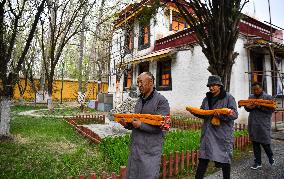
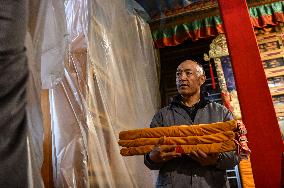
(230430) -- LHASA, April 30, 2023 (Xinhua) -- Gyumey Tsultrim carries ancient books before making an inventory of them in Lhasa, southwest China's Tibet Autonomous Region, April 19, 2023. At Truzing Palace of Norbulingka in the western suburbs of Lhasa, thousands of ancient books on various fields of Tibet are stored on shelves. For now, Gyumey Tsultrim and his colleagues' primary task is to make an inventory of the ancient books both manually and digitally. Gyumey Tsultrim was born in 1967 in Chanang County in Shannan. In 1986, while experts from the Academy of Social Sciences of the Tibet Autonomous Region were conducting historical and cultural research in Chanang, Gyumey Tsultrim, working as an assistant in Tibetan language, was exposed to Sanskrit for the first time. In 1991, he went to the High-level Tibetan Buddhism College of China in Beijing to study Sanskrit systematically. In 2006, Gyumey Tsultrim published a book on Sanskrit handwriting and began participating in the protection of the palm-lea

  •  
(InTibet) CHINA-TIBET-PALM-LEAF MANUSCRIPT-CONSERVATION (CN)

(InTibet) CHINA-TIBET-PALM-LEAF MANUSCRIPT-CONSERVATION (CN)

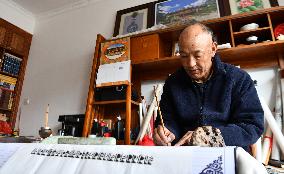
(230430) -- LHASA, April 30, 2023 (Xinhua) -- Gyumey Tsultrim writes Sanskrit calligraphy at home in Lhasa, southwest China's Tibet Autonomous Region, April 19, 2023. At Truzing Palace of Norbulingka in the western suburbs of Lhasa, thousands of ancient books on various fields of Tibet are stored on shelves. For now, Gyumey Tsultrim and his colleagues' primary task is to make an inventory of the ancient books both manually and digitally. Gyumey Tsultrim was born in 1967 in Chanang County in Shannan. In 1986, while experts from the Academy of Social Sciences of the Tibet Autonomous Region were conducting historical and cultural research in Chanang, Gyumey Tsultrim, working as an assistant in Tibetan language, was exposed to Sanskrit for the first time. In 1991, he went to the High-level Tibetan Buddhism College of China in Beijing to study Sanskrit systematically. In 2006, Gyumey Tsultrim published a book on Sanskrit handwriting and began participating in the protection of the palm-leaf manuscripts of Budd

  •  
(InTibet) CHINA-TIBET-PALM-LEAF MANUSCRIPT-CONSERVATION (CN)

(InTibet) CHINA-TIBET-PALM-LEAF MANUSCRIPT-CONSERVATION (CN)

(230430) -- LHASA, April 30, 2023 (Xinhua) -- Gyumey Tsultrim (C) and colleagues collect ancient books before making an inventory of them in Lhasa, southwest China's Tibet Autonomous Region, April 19, 2023. At Truzing Palace of Norbulingka in the western suburbs of Lhasa, thousands of ancient books on various fields of Tibet are stored on shelves. For now, Gyumey Tsultrim and his colleagues' primary task is to make an inventory of the ancient books both manually and digitally. Gyumey Tsultrim was born in 1967 in Chanang County in Shannan. In 1986, while experts from the Academy of Social Sciences of the Tibet Autonomous Region were conducting historical and cultural research in Chanang, Gyumey Tsultrim, working as an assistant in Tibetan language, was exposed to Sanskrit for the first time. In 1991, he went to the High-level Tibetan Buddhism College of China in Beijing to study Sanskrit systematically. In 2006, Gyumey Tsultrim published a book on Sanskrit handwriting and began participating in the protect

  •  
(InTibet)CHINA-TIBET-TIBETAN MEDICINE-PRACTITIONER (CN)

(InTibet)CHINA-TIBET-TIBETAN MEDICINE-PRACTITIONER (CN)

(230430) -- LHASA, April 30, 2023 (Xinhua) -- Buchung Tsering inspects the production of Tibetan medicine in Tibet Ganlu Tibetan Medicine Co., Ltd. in Lhasa, southwest China's Tibet Autonomous Region, April 20, 2023. Buchung Tsering has been engaged in the field of Tibetan medicine for about 20 years. He is the manager of the production department of Tibet Ganlu Tibetan Medicine Co., Ltd. Tibetan medicine, known as "Sowa Rigpa" in Tibetan, dates back 2,500 years. It has absorbed the influences of traditional Chinese, Indian and Arab medicine and is mainly practiced in Tibet and the Himalayan region. Since 2008, Buchung Tsering has been committed to making use of modern science and technology to boost the production of Tibetan medicine. He launched a specimen gallery for Tibetan medicine in the company, and invited well-known experts to identify and fix the weak links in medicine production. Buchung Tsering has also compiled some instruction manuals of Tibetan medicine. In 2021, he was awarded the t

  •  
(InTibet)CHINA-TIBET-TIBETAN MEDICINE-PRACTITIONER (CN)

(InTibet)CHINA-TIBET-TIBETAN MEDICINE-PRACTITIONER (CN)

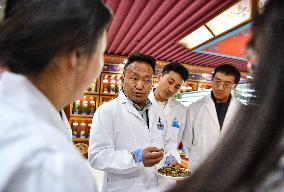
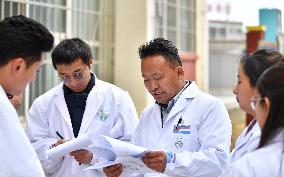
(230430) -- LHASA, April 30, 2023 (Xinhua) -- Buchung Tsering gives a lesson to his students in a specimen gallery for Tibetan medicine in Tibet Ganlu Tibetan Medicine Co., Ltd. in Lhasa, southwest China's Tibet Autonomous Region, April 20, 2023. Buchung Tsering has been engaged in the field of Tibetan medicine for about 20 years. He is the manager of the production department of Tibet Ganlu Tibetan Medicine Co., Ltd. Tibetan medicine, known as "Sowa Rigpa" in Tibetan, dates back 2,500 years. It has absorbed the influences of traditional Chinese, Indian and Arab medicine and is mainly practiced in Tibet and the Himalayan region. Since 2008, Buchung Tsering has been committed to making use of modern science and technology to boost the production of Tibetan medicine. He launched a specimen gallery for Tibetan medicine in the company, and invited well-known experts to identify and fix the weak links in medicine production. Buchung Tsering has also compiled some instruction manuals of Tibetan medicine.

  •  
(InTibet)CHINA-TIBET-TIBETAN MEDICINE-PRACTITIONER (CN)

(InTibet)CHINA-TIBET-TIBETAN MEDICINE-PRACTITIONER (CN)

(230430) -- LHASA, April 30, 2023 (Xinhua) -- Buchung Tsering inspects the production of Tibetan medicine in Tibet Ganlu Tibetan Medicine Co., Ltd. in Lhasa, southwest China's Tibet Autonomous Region, April 20, 2023. Buchung Tsering has been engaged in the field of Tibetan medicine for about 20 years. He is the manager of the production department of Tibet Ganlu Tibetan Medicine Co., Ltd. Tibetan medicine, known as "Sowa Rigpa" in Tibetan, dates back 2,500 years. It has absorbed the influences of traditional Chinese, Indian and Arab medicine and is mainly practiced in Tibet and the Himalayan region. Since 2008, Buchung Tsering has been committed to making use of modern science and technology to boost the production of Tibetan medicine. He launched a specimen gallery for Tibetan medicine in the company, and invited well-known experts to identify and fix the weak links in medicine production. Buchung Tsering has also compiled some instruction manuals of Tibetan medicine. In 2021, he was awarded the t

  •  
(InTibet)CHINA-TIBET-TIBETAN MEDICINE-PRACTITIONER (CN)

(InTibet)CHINA-TIBET-TIBETAN MEDICINE-PRACTITIONER (CN)

(230430) -- LHASA, April 30, 2023 (Xinhua) -- Buchung Tsering gives a lesson to his students in a specimen gallery for Tibetan medicine in Tibet Ganlu Tibetan Medicine Co., Ltd. in Lhasa, southwest China's Tibet Autonomous Region, April 20, 2023. Buchung Tsering has been engaged in the field of Tibetan medicine for about 20 years. He is the manager of the production department of Tibet Ganlu Tibetan Medicine Co., Ltd. Tibetan medicine, known as "Sowa Rigpa" in Tibetan, dates back 2,500 years. It has absorbed the influences of traditional Chinese, Indian and Arab medicine and is mainly practiced in Tibet and the Himalayan region. Since 2008, Buchung Tsering has been committed to making use of modern science and technology to boost the production of Tibetan medicine. He launched a specimen gallery for Tibetan medicine in the company, and invited well-known experts to identify and fix the weak links in medicine production. Buchung Tsering has also compiled some instruction manuals of Tibetan medicine.

  •  
(InTibet)CHINA-TIBET-TIBETAN MEDICINE-PRACTITIONER (CN)

(InTibet)CHINA-TIBET-TIBETAN MEDICINE-PRACTITIONER (CN)

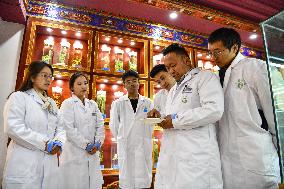
(230430) -- LHASA, April 30, 2023 (Xinhua) -- Buchung Tsering and his students learn about the policies related to developing Tibetan medicine in Lhasa, southwest China's Tibet Autonomous Region, April 20, 2023. Buchung Tsering has been engaged in the field of Tibetan medicine for about 20 years. He is the manager of the production department of Tibet Ganlu Tibetan Medicine Co., Ltd. Tibetan medicine, known as "Sowa Rigpa" in Tibetan, dates back 2,500 years. It has absorbed the influences of traditional Chinese, Indian and Arab medicine and is mainly practiced in Tibet and the Himalayan region. Since 2008, Buchung Tsering has been committed to making use of modern science and technology to boost the production of Tibetan medicine. He launched a specimen gallery for Tibetan medicine in the company, and invited well-known experts to identify and fix the weak links in medicine production. Buchung Tsering has also compiled some instruction manuals of Tibetan medicine. In 2021, he was awarded the title

  •  
(InTibet)CHINA-TIBET-LHASA-WOODCARVING-CRAFTSMAN (CN)

(InTibet)CHINA-TIBET-LHASA-WOODCARVING-CRAFTSMAN (CN)

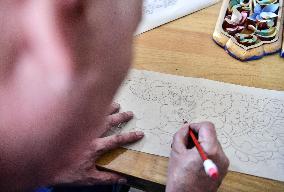
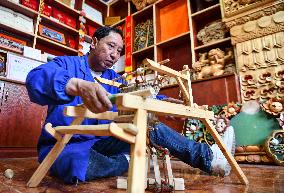
(230429) -- LHASA, April 29, 2023 (Xinhua) -- Lhaba Cering draws a woodcarving sketch in Lhasa, capital of southwest China's Tibet Autonomous Region, April 25, 2023. Lhaba Cering, 55, has great enthusiasm and love for woodcarving. In 1983, then an apprentice of a craft and ancient architecture art company in Lhasa, Lhaba Cering participated in the routine maintenance work of the auxiliary buildings of the Potala Palace. Since then, an indissoluble bond between him and woodcarving has been formed. Tibetan woodcarving has unique form and shape. With the help of teachers and his own efforts, Lhaba Cering has made rapid progress, and his works are highly praised. In 2014, Lhaba Cering set up a professional handmade woodcarving cooperative for farmers and herdsmen in Lhasa. He taught the woodcarving skills to apprentices, devoting himself to improving the inheritance and development of Tibetan woodcarving and increasing the income of local farmers and herdsmen. In 2019, Lhaba Cering was awarded the title

  •  
(InTibet)CHINA-TIBET-LHASA-WOODCARVING-CRAFTSMAN (CN)

(InTibet)CHINA-TIBET-LHASA-WOODCARVING-CRAFTSMAN (CN)

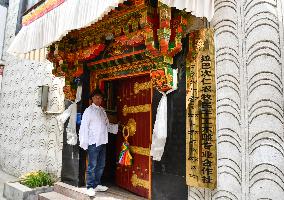
(230429) -- LHASA, April 29, 2023 (Xinhua) -- Lhaba Cering stands at the gate of a professional handmade woodcarving cooperative for farmers and herdsmen in Lhasa, capital of southwest China's Tibet Autonomous Region, April 25, 2023. Lhaba Cering, 55, has great enthusiasm and love for woodcarving. In 1983, then an apprentice of a craft and ancient architecture art company in Lhasa, Lhaba Cering participated in the routine maintenance work of the auxiliary buildings of the Potala Palace. Since then, an indissoluble bond between him and woodcarving has been formed. Tibetan woodcarving has unique form and shape. With the help of teachers and his own efforts, Lhaba Cering has made rapid progress, and his works are highly praised. In 2014, Lhaba Cering set up a professional handmade woodcarving cooperative for farmers and herdsmen in Lhasa. He taught the woodcarving skills to apprentices, devoting himself to improving the inheritance and development of Tibetan woodcarving and increasing the income of loca

  •  
(InTibet)CHINA-TIBET-LHASA-WOODCARVING-CRAFTSMAN (CN)

(InTibet)CHINA-TIBET-LHASA-WOODCARVING-CRAFTSMAN (CN)

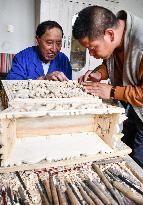
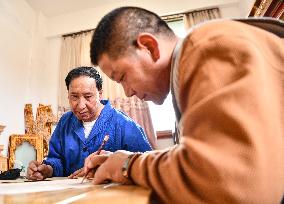
(230429) -- LHASA, April 29, 2023 (Xinhua) -- Lhaba Cering (L) instructs as an apprentice works on a woodcarving art craft piece in Lhasa, capital of southwest China's Tibet Autonomous Region, April 25, 2023. Lhaba Cering, 55, has great enthusiasm and love for woodcarving. In 1983, then an apprentice of a craft and ancient architecture art company in Lhasa, Lhaba Cering participated in the routine maintenance work of the auxiliary buildings of the Potala Palace. Since then, an indissoluble bond between him and woodcarving has been formed. Tibetan woodcarving has unique form and shape. With the help of teachers and his own efforts, Lhaba Cering has made rapid progress, and his works are highly praised. In 2014, Lhaba Cering set up a professional handmade woodcarving cooperative for farmers and herdsmen in Lhasa. He taught the woodcarving skills to apprentices, devoting himself to improving the inheritance and development of Tibetan woodcarving and increasing the income of local farmers and herdsmen. I

  •  
(InTibet)CHINA-TIBET-LHASA-WOODCARVING-CRAFTSMAN (CN)

(InTibet)CHINA-TIBET-LHASA-WOODCARVING-CRAFTSMAN (CN)

(230429) -- LHASA, April 29, 2023 (Xinhua) -- Lhaba Cering assembles a woodcarving art craft piece in Lhasa, capital of southwest China's Tibet Autonomous Region, April 25, 2023. Lhaba Cering, 55, has great enthusiasm and love for woodcarving. In 1983, then an apprentice of a craft and ancient architecture art company in Lhasa, Lhaba Cering participated in the routine maintenance work of the auxiliary buildings of the Potala Palace. Since then, an indissoluble bond between him and woodcarving has been formed. Tibetan woodcarving has unique form and shape. With the help of teachers and his own efforts, Lhaba Cering has made rapid progress, and his works are highly praised. In 2014, Lhaba Cering set up a professional handmade woodcarving cooperative for farmers and herdsmen in Lhasa. He taught the woodcarving skills to apprentices, devoting himself to improving the inheritance and development of Tibetan woodcarving and increasing the income of local farmers and herdsmen. In 2019, Lhaba Cering was award

  •  
(InTibet)CHINA-TIBET-LHASA-WOODCARVING-CRAFTSMAN (CN)

(InTibet)CHINA-TIBET-LHASA-WOODCARVING-CRAFTSMAN (CN)

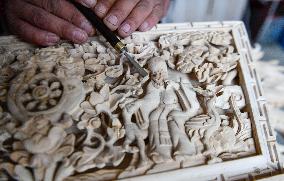
(230429) -- LHASA, April 29, 2023 (Xinhua) -- Lhaba Cering makes a woodcarving art craft piece in Lhasa, capital of southwest China's Tibet Autonomous Region, April 25, 2023. Lhaba Cering, 55, has great enthusiasm and love for woodcarving. In 1983, then an apprentice of a craft and ancient architecture art company in Lhasa, Lhaba Cering participated in the routine maintenance work of the auxiliary buildings of the Potala Palace. Since then, an indissoluble bond between him and woodcarving has been formed. Tibetan woodcarving has unique form and shape. With the help of teachers and his own efforts, Lhaba Cering has made rapid progress, and his works are highly praised. In 2014, Lhaba Cering set up a professional handmade woodcarving cooperative for farmers and herdsmen in Lhasa. He taught the woodcarving skills to apprentices, devoting himself to improving the inheritance and development of Tibetan woodcarving and increasing the income of local farmers and herdsmen. In 2019, Lhaba Cering was awarded t

  •  
(InTibet)CHINA-TIBET-LHASA-WOODCARVING-CRAFTSMAN (CN)

(InTibet)CHINA-TIBET-LHASA-WOODCARVING-CRAFTSMAN (CN)

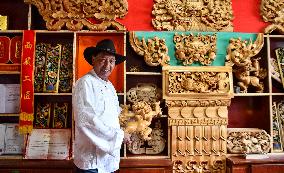
(230429) -- LHASA, April 29, 2023 (Xinhua) -- Lhaba Cering displays his woodcarving art craft pieces in Lhasa, capital of southwest China's Tibet Autonomous Region, April 25, 2023. Lhaba Cering, 55, has great enthusiasm and love for woodcarving. In 1983, then an apprentice of a craft and ancient architecture art company in Lhasa, Lhaba Cering participated in the routine maintenance work of the auxiliary buildings of the Potala Palace. Since then, an indissoluble bond between him and woodcarving has been formed. Tibetan woodcarving has unique form and shape. With the help of teachers and his own efforts, Lhaba Cering has made rapid progress, and his works are highly praised. In 2014, Lhaba Cering set up a professional handmade woodcarving cooperative for farmers and herdsmen in Lhasa. He taught the woodcarving skills to apprentices, devoting himself to improving the inheritance and development of Tibetan woodcarving and increasing the income of local farmers and herdsmen. In 2019, Lhaba Cering was awa

  •  
(InTibet)CHINA-TIBET-LHASA-WOODCARVING-CRAFTSMAN (CN)

(InTibet)CHINA-TIBET-LHASA-WOODCARVING-CRAFTSMAN (CN)

(230429) -- LHASA, April 29, 2023 (Xinhua) -- Lhaba Cering (L) instructs as an apprentice draws woodcarving sketch in Lhasa, capital of southwest China's Tibet Autonomous Region, April 25, 2023. Lhaba Cering, 55, has great enthusiasm and love for woodcarving. In 1983, then an apprentice of a craft and ancient architecture art company in Lhasa, Lhaba Cering participated in the routine maintenance work of the auxiliary buildings of the Potala Palace. Since then, an indissoluble bond between him and woodcarving has been formed. Tibetan woodcarving has unique form and shape. With the help of teachers and his own efforts, Lhaba Cering has made rapid progress, and his works are highly praised. In 2014, Lhaba Cering set up a professional handmade woodcarving cooperative for farmers and herdsmen in Lhasa. He taught the woodcarving skills to apprentices, devoting himself to improving the inheritance and development of Tibetan woodcarving and increasing the income of local farmers and herdsmen. In 2019, Lhaba

  •  
(InTibet) CHINA-TIBET-LHASA-POWER SUPPLY-MAINTENANCE

(InTibet) CHINA-TIBET-LHASA-POWER SUPPLY-MAINTENANCE

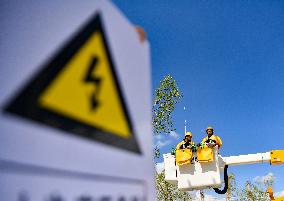
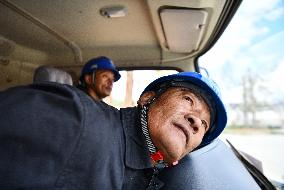
(230427) -- LHASA, April 27, 2023 (Xinhua) -- Zhaxi Nyima (R) and his apprentice practice operation skills on overhead high-voltage live wire in Lhasa, capital of southwest China's Tibet Autonomous Region, April 26, 2023. Zhaxi Nyima has been working in the field of power supply for about 30 years. In 2016, he took the training class and got the certificate, becoming the first person qualified of doing live-wire work in high altitude area in State Grid Tibet Electric Power Company. Live-wire operation is an important technical measure to ensure reliable power supply, but it is also a very dangerous and hard work. No matter in hot summer or cold winter, as long as there is a task, Zhaxi Nyima will climb on the high-voltage wire more than 10 meters above the ground and solve the problems. In 2018, Tashi Nyima won the title of "Tibetan Craftsman" in recognition of his professional skills. (Xinhua/Jigme Dorje)

  •  
(InTibet) CHINA-TIBET-LHASA-POWER SUPPLY-MAINTENANCE

(InTibet) CHINA-TIBET-LHASA-POWER SUPPLY-MAINTENANCE

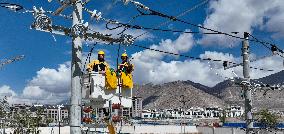
(230427) -- LHASA, April 27, 2023 (Xinhua) -- This aerial photo shows Zhaxi Nyima (R) and his apprentice practicing operation skills on overhead high-voltage live wire in Lhasa, capital of southwest China's Tibet Autonomous Region, April 26, 2023. Zhaxi Nyima has been working in the field of power supply for about 30 years. In 2016, he took the training class and got the certificate, becoming the first person qualified of doing live-wire work in high altitude area in State Grid Tibet Electric Power Company. Live-wire operation is an important technical measure to ensure reliable power supply, but it is also a very dangerous and hard work. No matter in hot summer or cold winter, as long as there is a task, Zhaxi Nyima will climb on the high-voltage wire more than 10 meters above the ground and solve the problems. In 2018, Tashi Nyima won the title of "Tibetan Craftsman" in recognition of his professional skills. (Xinhua/Jigme Dorje)

  •  
(InTibet) CHINA-TIBET-LHASA-POWER SUPPLY-MAINTENANCE

(InTibet) CHINA-TIBET-LHASA-POWER SUPPLY-MAINTENANCE

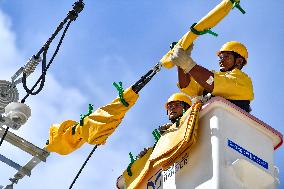
(230427) -- LHASA, April 27, 2023 (Xinhua) -- Zhaxi Nyima (R) and his apprentice practice operation skills on overhead high-voltage live wire in Lhasa, capital of southwest China's Tibet Autonomous Region, April 26, 2023. Zhaxi Nyima has been working in the field of power supply for about 30 years. In 2016, he took the training class and got the certificate, becoming the first person qualified of doing live-wire work in high altitude area in State Grid Tibet Electric Power Company. Live-wire operation is an important technical measure to ensure reliable power supply, but it is also a very dangerous and hard work. No matter in hot summer or cold winter, as long as there is a task, Zhaxi Nyima will climb on the high-voltage wire more than 10 meters above the ground and solve the problems. In 2018, Tashi Nyima won the title of "Tibetan Craftsman" in recognition of his professional skills. (Xinhua/Jigme Dorje)

  •  
(InTibet) CHINA-TIBET-LHASA-POWER SUPPLY-MAINTENANCE

(InTibet) CHINA-TIBET-LHASA-POWER SUPPLY-MAINTENANCE

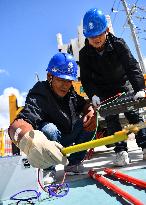
(230427) -- LHASA, April 27, 2023 (Xinhua) -- Zhaxi Nyima (L) tests insulation resistance in Lhasa, capital of southwest China's Tibet Autonomous Region, April 26, 2023. Zhaxi Nyima has been working in the field of power supply for about 30 years. In 2016, he took the training class and got the certificate, becoming the first person qualified of doing live-wire work in high altitude area in State Grid Tibet Electric Power Company. Live-wire operation is an important technical measure to ensure reliable power supply, but it is also a very dangerous and hard work. No matter in hot summer or cold winter, as long as there is a task, Zhaxi Nyima will climb on the high-voltage wire more than 10 meters above the ground and solve the problems. In 2018, Tashi Nyima won the title of "Tibetan Craftsman" in recognition of his professional skills. (Xinhua/Liu Zhoupeng)

  •  
(InTibet) CHINA-TIBET-LHASA-POWER SUPPLY-MAINTENANCE

(InTibet) CHINA-TIBET-LHASA-POWER SUPPLY-MAINTENANCE

(230427) -- LHASA, April 27, 2023 (Xinhua) -- Zhaxi Nyima (front) looks for operating spots in Lhasa, capital of southwest China's Tibet Autonomous Region, April 26, 2023. Zhaxi Nyima has been working in the field of power supply for about 30 years. In 2016, he took the training class and got the certificate, becoming the first person qualified of doing live-wire work in high altitude area in State Grid Tibet Electric Power Company. Live-wire operation is an important technical measure to ensure reliable power supply, but it is also a very dangerous and hard work. No matter in hot summer or cold winter, as long as there is a task, Zhaxi Nyima will climb on the high-voltage wire more than 10 meters above the ground and solve the problems. In 2018, Tashi Nyima won the title of "Tibetan Craftsman" in recognition of his professional skills. (Xinhua/Jigme Dorje)

  •  
(InTibet) CHINA-XIZANG-QAMDO-LION DANCE (CN)

(InTibet) CHINA-XIZANG-QAMDO-LION DANCE (CN)

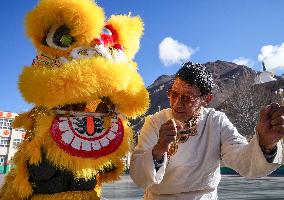
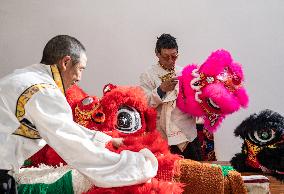
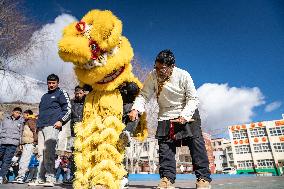
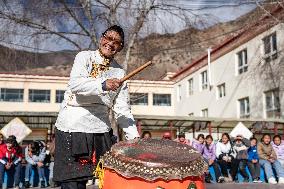
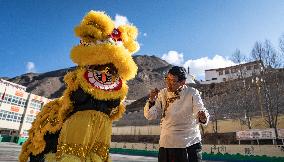
(240121) -- QAMDO, Jan. 21, 2024 (Xinhua) -- Tengpa Anye (R) instructs students to perform lion dance at a primary school in Xobando Town of Lhorong County in Qamdo City, southwest China's Xizang Autonomous Region, Jan. 19, 2024. Lhorong County, with an average elevation of about 3,700 meters, was once an important stop along the ancient Tea Horse Road and a significant channel for Tibetan-Han exchanges. Locals in Xobando Town injected elements of Tibetan folk dances into the Han lion dance introduced to the town in early years, and created a new performing art -- Xobando lion dance. Tengpa Anye, 69, who began to learn lion dance from his father at 13, is an inheritor of Xobando lion dance art. In the past, Tengpa had to make lion dance props by himself because the ready-made ones were unaffordable. Nowadays, thanks to improved living conditions and governmental supports, Tengpa and his students have not only access to professionally prepared props but also opportunities to appear at major performance event

  •  
(InTibet) CHINA-XIZANG-QAMDO-LION DANCE (CN)

(InTibet) CHINA-XIZANG-QAMDO-LION DANCE (CN)

(240121) -- QAMDO, Jan. 21, 2024 (Xinhua) -- Tengpa Anye (R) instructs students to perform lion dance at a primary school in Xobando Town of Lhorong County in Qamdo City, southwest China's Xizang Autonomous Region, Jan. 19, 2024. Lhorong County, with an average elevation of about 3,700 meters, was once an important stop along the ancient Tea Horse Road and a significant channel for Tibetan-Han exchanges. Locals in Xobando Town injected elements of Tibetan folk dances into the Han lion dance introduced to the town in early years, and created a new performing art -- Xobando lion dance. Tengpa Anye, 69, who began to learn lion dance from his father at 13, is an inheritor of Xobando lion dance art. In the past, Tengpa had to make lion dance props by himself because the ready-made ones were unaffordable. Nowadays, thanks to improved living conditions and governmental supports, Tengpa and his students have not only access to professionally prepared props but also opportunities to appear at major performance event

  •  
(InTibet) CHINA-XIZANG-QAMDO-LION DANCE (CN)

(InTibet) CHINA-XIZANG-QAMDO-LION DANCE (CN)

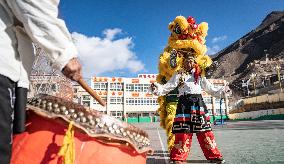
(240121) -- QAMDO, Jan. 21, 2024 (Xinhua) -- Tengpa Anye (L) plays the drum as his students perform lion dance at a primary school in Xobando Town of Lhorong County in Qamdo City, southwest China's Xizang Autonomous Region, Jan. 19, 2024. Lhorong County, with an average elevation of about 3,700 meters, was once an important stop along the ancient Tea Horse Road and a significant channel for Tibetan-Han exchanges. Locals in Xobando Town injected elements of Tibetan folk dances into the Han lion dance introduced to the town in early years, and created a new performing art -- Xobando lion dance. Tengpa Anye, 69, who began to learn lion dance from his father at 13, is an inheritor of Xobando lion dance art. In the past, Tengpa had to make lion dance props by himself because the ready-made ones were unaffordable. Nowadays, thanks to improved living conditions and governmental supports, Tengpa and his students have not only access to professionally prepared props but also opportunities to appear at major performa

  •  
(InTibet) CHINA-XIZANG-QAMDO-LION DANCE (CN)

(InTibet) CHINA-XIZANG-QAMDO-LION DANCE (CN)

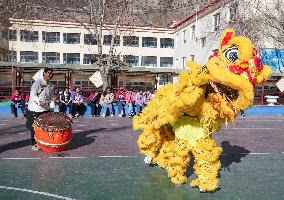
(240121) -- QAMDO, Jan. 21, 2024 (Xinhua) -- Students of Tengpa Anye perform lion dance at a primary school in Xobando Town of Lhorong County in Qamdo City, southwest China's Xizang Autonomous Region, Jan. 19, 2024. Lhorong County, with an average elevation of about 3,700 meters, was once an important stop along the ancient Tea Horse Road and a significant channel for Tibetan-Han exchanges. Locals in Xobando Town injected elements of Tibetan folk dances into the Han lion dance introduced to the town in early years, and created a new performing art -- Xobando lion dance. Tengpa Anye, 69, who began to learn lion dance from his father at 13, is an inheritor of Xobando lion dance art. In the past, Tengpa had to make lion dance props by himself because the ready-made ones were unaffordable. Nowadays, thanks to improved living conditions and governmental supports, Tengpa and his students have not only access to professionally prepared props but also opportunities to appear at major performance events. No longer

  •  
(InTibet) CHINA-XIZANG-QAMDO-LION DANCE (CN)

(InTibet) CHINA-XIZANG-QAMDO-LION DANCE (CN)

(240121) -- QAMDO, Jan. 21, 2024 (Xinhua) -- Tengpa Anye (R) cleans a lion dance prop at a primary school in Xobando Town of Lhorong County in Qamdo City, southwest China's Xizang Autonomous Region, Jan. 19, 2024. Lhorong County, with an average elevation of about 3,700 meters, was once an important stop along the ancient Tea Horse Road and a significant channel for Tibetan-Han exchanges. Locals in Xobando Town injected elements of Tibetan folk dances into the Han lion dance introduced to the town in early years, and created a new performing art -- Xobando lion dance. Tengpa Anye, 69, who began to learn lion dance from his father at 13, is an inheritor of Xobando lion dance art. In the past, Tengpa had to make lion dance props by himself because the ready-made ones were unaffordable. Nowadays, thanks to improved living conditions and governmental supports, Tengpa and his students have not only access to professionally prepared props but also opportunities to appear at major performance events. No longer a

  •  
(InTibet) CHINA-XIZANG-QAMDO-LION DANCE (CN)

(InTibet) CHINA-XIZANG-QAMDO-LION DANCE (CN)

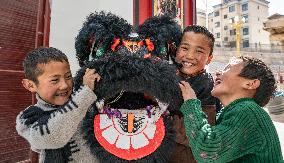
(240121) -- QAMDO, Jan. 21, 2024 (Xinhua) -- Children have fun with a lion dance prop at a primary school in Xobando Town of Lhorong County in Qamdo City, southwest China's Xizang Autonomous Region, Jan. 19, 2024. Lhorong County, with an average elevation of about 3,700 meters, was once an important stop along the ancient Tea Horse Road and a significant channel for Tibetan-Han exchanges. Locals in Xobando Town injected elements of Tibetan folk dances into the Han lion dance introduced to the town in early years, and created a new performing art -- Xobando lion dance. Tengpa Anye, 69, who began to learn lion dance from his father at 13, is an inheritor of Xobando lion dance art. In the past, Tengpa had to make lion dance props by himself because the ready-made ones were unaffordable. Nowadays, thanks to improved living conditions and governmental supports, Tengpa and his students have not only access to professionally prepared props but also opportunities to appear at major performance events. No longer a

  •  
(InTibet) CHINA-XIZANG-QAMDO-LION DANCE (CN)

(InTibet) CHINA-XIZANG-QAMDO-LION DANCE (CN)

(240121) -- QAMDO, Jan. 21, 2024 (Xinhua) -- Tengpa Anye (L) performs lion dance with his grandson in Xobando Town of Lhorong County in Qamdo City, southwest China's Xizang Autonomous Region, Jan. 19, 2024. Lhorong County, with an average elevation of about 3,700 meters, was once an important stop along the ancient Tea Horse Road and a significant channel for Tibetan-Han exchanges. Locals in Xobando Town injected elements of Tibetan folk dances into the Han lion dance introduced to the town in early years, and created a new performing art -- Xobando lion dance. Tengpa Anye, 69, who began to learn lion dance from his father at 13, is an inheritor of Xobando lion dance art. In the past, Tengpa had to make lion dance props by himself because the ready-made ones were unaffordable. Nowadays, thanks to improved living conditions and governmental supports, Tengpa and his students have not only access to professionally prepared props but also opportunities to appear at major performance events. No longer an agile

  •  
(InTibet) CHINA-XIZANG-QAMDO-LION DANCE (CN)

(InTibet) CHINA-XIZANG-QAMDO-LION DANCE (CN)

(240121) -- QAMDO, Jan. 21, 2024 (Xinhua) -- Tengpa Anye (R) instructs students to perform lion dance at a primary school in Xobando Town of Lhorong County in Qamdo City, southwest China's Xizang Autonomous Region, Jan. 19, 2024. Lhorong County, with an average elevation of about 3,700 meters, was once an important stop along the ancient Tea Horse Road and a significant channel for Tibetan-Han exchanges. Locals in Xobando Town injected elements of Tibetan folk dances into the Han lion dance introduced to the town in early years, and created a new performing art -- Xobando lion dance. Tengpa Anye, 69, who began to learn lion dance from his father at 13, is an inheritor of Xobando lion dance art. In the past, Tengpa had to make lion dance props by himself because the ready-made ones were unaffordable. Nowadays, thanks to improved living conditions and governmental supports, Tengpa and his students have not only access to professionally prepared props but also opportunities to appear at major performance event

  •  
(InTibet) CHINA-XIZANG-QAMDO-LION DANCE (CN)

(InTibet) CHINA-XIZANG-QAMDO-LION DANCE (CN)

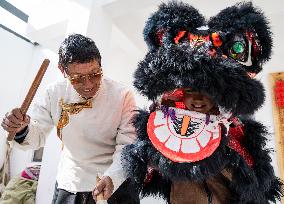
(240121) -- QAMDO, Jan. 21, 2024 (Xinhua) -- Tengpa Anye plays the drum to accompany lion dance at a primary school in Xobando Town of Lhorong County in Qamdo City, southwest China's Xizang Autonomous Region, Jan. 19, 2024. Lhorong County, with an average elevation of about 3,700 meters, was once an important stop along the ancient Tea Horse Road and a significant channel for Tibetan-Han exchanges. Locals in Xobando Town injected elements of Tibetan folk dances into the Han lion dance introduced to the town in early years, and created a new performing art -- Xobando lion dance. Tengpa Anye, 69, who began to learn lion dance from his father at 13, is an inheritor of Xobando lion dance art. In the past, Tengpa had to make lion dance props by himself because the ready-made ones were unaffordable. Nowadays, thanks to improved living conditions and governmental supports, Tengpa and his students have not only access to professionally prepared props but also opportunities to appear at major performance events. N

  •  
(InTibet) CHINA-XIZANG-LHASA-SNOW (CN)

(InTibet) CHINA-XIZANG-LHASA-SNOW (CN)

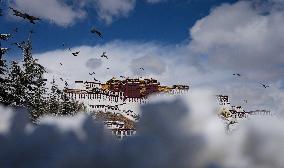
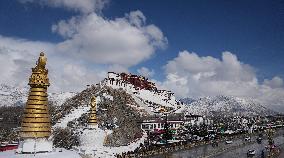
(240118) -- LHASA, Jan. 18, 2024 (Xinhua) -- The Potala Palace is seen in Lhasa, southwest China's Xizang Autonomous Region, Jan. 18, 2024. Snow fell in Lhasa on Thursday. (Xinhua/Jigme Dorje)

  •  
(InTibet) CHINA-XIZANG-LHASA-SNOW (CN)

(InTibet) CHINA-XIZANG-LHASA-SNOW (CN)

(240118) -- LHASA, Jan. 18, 2024 (Xinhua) -- This photo taken on Jan. 18, 2024 shows a park in Lhasa, southwest China's Xizang Autonomous Region. Snow fell in Lhasa on Thursday. (Xinhua/Jigme Dorje)

  •  
(InTibet) CHINA-XIZANG-LHASA-SNOW (CN)

(InTibet) CHINA-XIZANG-LHASA-SNOW (CN)

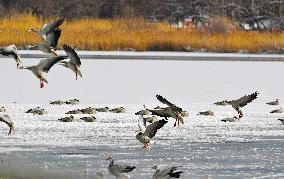
(240118) -- LHASA, Jan. 18, 2024 (Xinhua) -- Bar-headed geese are seen at Lhalu wetland in Lhasa, southwest China's Xizang Autonomous Region, Jan. 18, 2024. Snow fell in Lhasa on Thursday. (Xinhua/Zhang Rufeng)

  •  
(InTibet) CHINA-XIZANG-LHASA-SNOW (CN)

(InTibet) CHINA-XIZANG-LHASA-SNOW (CN)

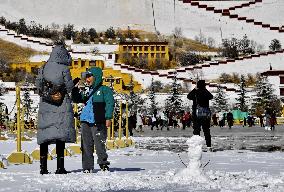
(240118) -- LHASA, Jan. 18, 2024 (Xinhua) -- Tourists visit the Potala Palace square in Lhasa, southwest China's Xizang Autonomous Region, Jan. 18, 2024. Snow fell in Lhasa on Thursday. (Xinhua/Zhang Rufeng)

  •  
(InTibet) CHINA-XIZANG-LHASA-SNOW (CN)

(InTibet) CHINA-XIZANG-LHASA-SNOW (CN)

(240118) -- LHASA, Jan. 18, 2024 (Xinhua) -- The Potala Palace is seen in Lhasa, southwest China's Xizang Autonomous Region, Jan. 18, 2024. Snow fell in Lhasa on Thursday. (Xinhua/Jigme Dorje)

  •  
(InTibet)CHINA-XIZANG-SHANNAN-RARE ANIMALS (CN)

(InTibet)CHINA-XIZANG-SHANNAN-RARE ANIMALS (CN)

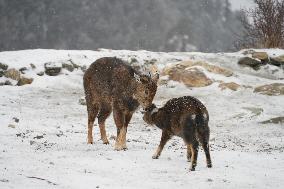
(240118) -- LHASA, Jan. 18, 2024 (Xinhua) -- Himalayan gorals are pictured in Shannan City of southwest China's Xizang Autonomous Region, Jan. 17, 2024. (Xinhua/Tenzing Nima Qadhup)

  • Main
  • Top
  • Editorial
  • Creative
  • About Us
  • About ILG
  • Terms of use
  • Company
  • BEHIND
  • Price List
  • Single Plan
  • Monthly Plan
  • Services
  • Shooting
  • Rights Clearance
  • Support
  • FAQ
  • How To Buy
  • Contact Us
  • Become a Partner

© KYODO NEWS IMAGES INC

All Rights Reserved.

  • Editorial
  • Olympics
  • News
  • Sports
  • Japan
  • Tech
  • Royal
  • Disaster
  • NorthKorea
  • Old Japan
  • SNS
  • Creative
  • Food
  • Japan
  • Landscape
  • Animal
  • Popular
  • #Ukraine
  • #China
  • #coronavirus
  • #N. Korea
  • #Thailand
  • #Russia
  • #Ukraine
  • #China
  • #coronavirus
  • #N. Korea
  • #Thailand
  • #Russia
  • Food
  • Japan
  • Landscape
  • Animal
  • Olympics
  • News
  • Sports
  • Japan
  • Tech
  • Royal
  • Disaster
  • NorthKorea
  • Old Japan
  • SNS