•  
SNCF Reseau Railway Track Heating System - Rambouillet

SNCF Reseau Railway Track Heating System - Rambouillet

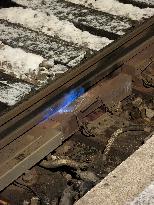
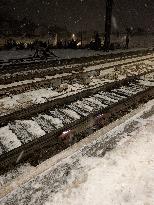
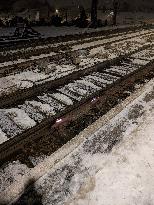
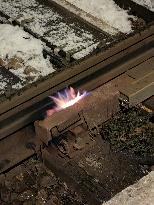
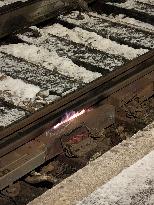
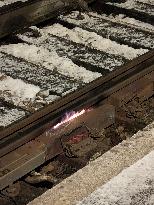
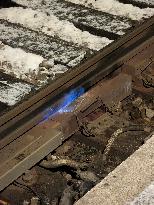
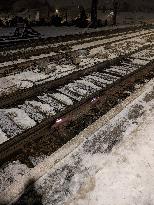
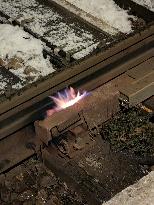
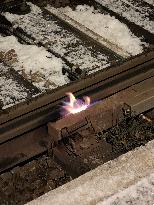
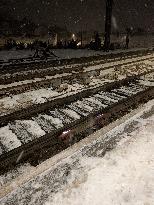
Illustration – SNCF Réseau's track heating system during the cold snap that has been affecting France for the past two days. During periods of snowfall, ice accumulation can damage railway infrastructure and cause delays. Frost on overhead lines, for example, can paralyze certain lines. To deal with this, SNCF Réseau deploys several measures: switch heaters to free switches from ice, increased monitoring by staff, de-icing of overhead lines using electrical circuits and heating gas, and the use of scraper locomotives. Rambouillet, France, January 7, 2026. Photo by Christopher Charpaud/ABACAPRESS.COM

  •  
SNCF Reseau Railway Track Heating System - Rambouillet

SNCF Reseau Railway Track Heating System - Rambouillet

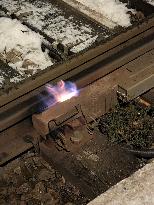
Illustration – SNCF Réseau's track heating system during the cold snap that has been affecting France for the past two days. During periods of snowfall, ice accumulation can damage railway infrastructure and cause delays. Frost on overhead lines, for example, can paralyze certain lines. To deal with this, SNCF Réseau deploys several measures: switch heaters to free switches from ice, increased monitoring by staff, de-icing of overhead lines using electrical circuits and heating gas, and the use of scraper locomotives. Rambouillet, France, January 7, 2026. Photo by Christopher Charpaud/ABACAPRESS.COM

  •  
SNCF Reseau Railway Track Heating System - Rambouillet

SNCF Reseau Railway Track Heating System - Rambouillet

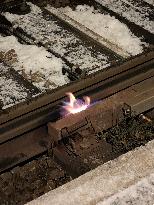
Illustration – SNCF Réseau's track heating system during the cold snap that has been affecting France for the past two days. During periods of snowfall, ice accumulation can damage railway infrastructure and cause delays. Frost on overhead lines, for example, can paralyze certain lines. To deal with this, SNCF Réseau deploys several measures: switch heaters to free switches from ice, increased monitoring by staff, de-icing of overhead lines using electrical circuits and heating gas, and the use of scraper locomotives. Rambouillet, France, January 7, 2026. Photo by Christopher Charpaud/ABACAPRESS.COM

  •  
SNCF Reseau Railway Track Heating System - Rambouillet

SNCF Reseau Railway Track Heating System - Rambouillet

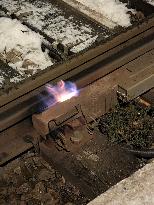
Illustration – SNCF Réseau's track heating system during the cold snap that has been affecting France for the past two days. During periods of snowfall, ice accumulation can damage railway infrastructure and cause delays. Frost on overhead lines, for example, can paralyze certain lines. To deal with this, SNCF Réseau deploys several measures: switch heaters to free switches from ice, increased monitoring by staff, de-icing of overhead lines using electrical circuits and heating gas, and the use of scraper locomotives. Rambouillet, France, January 7, 2026. Photo by Christopher Charpaud/ABACAPRESS.COM

  •  
SNCF Reseau Railway Track Heating System - Rambouillet

SNCF Reseau Railway Track Heating System - Rambouillet

Illustration – SNCF Réseau's track heating system during the cold snap that has been affecting France for the past two days. During periods of snowfall, ice accumulation can damage railway infrastructure and cause delays. Frost on overhead lines, for example, can paralyze certain lines. To deal with this, SNCF Réseau deploys several measures: switch heaters to free switches from ice, increased monitoring by staff, de-icing of overhead lines using electrical circuits and heating gas, and the use of scraper locomotives. Rambouillet, France, January 7, 2026. Photo by Christopher Charpaud/ABACAPRESS.COM

  •  
SNCF Reseau Railway Track Heating System - Rambouillet

SNCF Reseau Railway Track Heating System - Rambouillet

Illustration – SNCF Réseau's track heating system during the cold snap that has been affecting France for the past two days. During periods of snowfall, ice accumulation can damage railway infrastructure and cause delays. Frost on overhead lines, for example, can paralyze certain lines. To deal with this, SNCF Réseau deploys several measures: switch heaters to free switches from ice, increased monitoring by staff, de-icing of overhead lines using electrical circuits and heating gas, and the use of scraper locomotives. Rambouillet, France, January 7, 2026. Photo by Christopher Charpaud/ABACAPRESS.COM

  •  
SNCF Reseau Railway Track Heating System - Rambouillet

SNCF Reseau Railway Track Heating System - Rambouillet

Illustration – SNCF Réseau's track heating system during the cold snap that has been affecting France for the past two days. During periods of snowfall, ice accumulation can damage railway infrastructure and cause delays. Frost on overhead lines, for example, can paralyze certain lines. To deal with this, SNCF Réseau deploys several measures: switch heaters to free switches from ice, increased monitoring by staff, de-icing of overhead lines using electrical circuits and heating gas, and the use of scraper locomotives. Rambouillet, France, January 7, 2026. Photo by Christopher Charpaud/ABACAPRESS.COM

  •  
SNCF Reseau Railway Track Heating System - Rambouillet

SNCF Reseau Railway Track Heating System - Rambouillet

Illustration – SNCF Réseau's track heating system during the cold snap that has been affecting France for the past two days. During periods of snowfall, ice accumulation can damage railway infrastructure and cause delays. Frost on overhead lines, for example, can paralyze certain lines. To deal with this, SNCF Réseau deploys several measures: switch heaters to free switches from ice, increased monitoring by staff, de-icing of overhead lines using electrical circuits and heating gas, and the use of scraper locomotives. Rambouillet, France, January 7, 2025. Photo by Christopher Charpaud/ABACAPRESS.COM

  •  
SNCF Reseau Railway Track Heating System - Rambouillet

SNCF Reseau Railway Track Heating System - Rambouillet

Illustration – SNCF Réseau's track heating system during the cold snap that has been affecting France for the past two days. During periods of snowfall, ice accumulation can damage railway infrastructure and cause delays. Frost on overhead lines, for example, can paralyze certain lines. To deal with this, SNCF Réseau deploys several measures: switch heaters to free switches from ice, increased monitoring by staff, de-icing of overhead lines using electrical circuits and heating gas, and the use of scraper locomotives. Rambouillet, France, January 7, 2025. Photo by Christopher Charpaud/ABACAPRESS.COM

  •  
SNCF Reseau Railway Track Heating System - Rambouillet

SNCF Reseau Railway Track Heating System - Rambouillet

Illustration – SNCF Réseau's track heating system during the cold snap that has been affecting France for the past two days. During periods of snowfall, ice accumulation can damage railway infrastructure and cause delays. Frost on overhead lines, for example, can paralyze certain lines. To deal with this, SNCF Réseau deploys several measures: switch heaters to free switches from ice, increased monitoring by staff, de-icing of overhead lines using electrical circuits and heating gas, and the use of scraper locomotives. Rambouillet, France, January 7, 2025. Photo by Christopher Charpaud/ABACAPRESS.COM

  •  
SNCF Reseau Railway Track Heating System - Rambouillet

SNCF Reseau Railway Track Heating System - Rambouillet

Illustration – SNCF Réseau's track heating system during the cold snap that has been affecting France for the past two days. During periods of snowfall, ice accumulation can damage railway infrastructure and cause delays. Frost on overhead lines, for example, can paralyze certain lines. To deal with this, SNCF Réseau deploys several measures: switch heaters to free switches from ice, increased monitoring by staff, de-icing of overhead lines using electrical circuits and heating gas, and the use of scraper locomotives. Rambouillet, France, January 7, 2025. Photo by Christopher Charpaud/ABACAPRESS.COM

  •  
SNCF Reseau Railway Track Heating System - Rambouillet

SNCF Reseau Railway Track Heating System - Rambouillet

Illustration – SNCF Réseau's track heating system during the cold snap that has been affecting France for the past two days. During periods of snowfall, ice accumulation can damage railway infrastructure and cause delays. Frost on overhead lines, for example, can paralyze certain lines. To deal with this, SNCF Réseau deploys several measures: switch heaters to free switches from ice, increased monitoring by staff, de-icing of overhead lines using electrical circuits and heating gas, and the use of scraper locomotives. Rambouillet, France, January 7, 2025. Photo by Christopher Charpaud/ABACAPRESS.COM

  •  
SNCF Reseau Railway Track Heating System - Rambouillet

SNCF Reseau Railway Track Heating System - Rambouillet

Illustration – SNCF Réseau's track heating system during the cold snap that has been affecting France for the past two days. During periods of snowfall, ice accumulation can damage railway infrastructure and cause delays. Frost on overhead lines, for example, can paralyze certain lines. To deal with this, SNCF Réseau deploys several measures: switch heaters to free switches from ice, increased monitoring by staff, de-icing of overhead lines using electrical circuits and heating gas, and the use of scraper locomotives. Rambouillet, France, January 7, 2025. Photo by Christopher Charpaud/ABACAPRESS.COM

  •  
SNCF Reseau Railway Track Heating System - Rambouillet

SNCF Reseau Railway Track Heating System - Rambouillet

Illustration – SNCF Réseau's track heating system during the cold snap that has been affecting France for the past two days. During periods of snowfall, ice accumulation can damage railway infrastructure and cause delays. Frost on overhead lines, for example, can paralyze certain lines. To deal with this, SNCF Réseau deploys several measures: switch heaters to free switches from ice, increased monitoring by staff, de-icing of overhead lines using electrical circuits and heating gas, and the use of scraper locomotives. Rambouillet, France, January 7, 2025. Photo by Christopher Charpaud/ABACAPRESS.COM

  •  
Lake Urmia Environmental Disaster - Iran

Lake Urmia Environmental Disaster - Iran

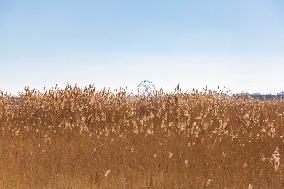
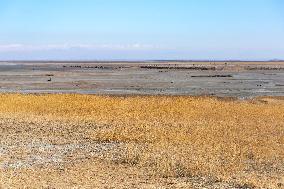
A view shows dry reeds on the dry bed of Lake Urmia in northwestern Iran on December 20, 2025. Lake Urmia, once the largest lake in the Middle East, has dramatically shrunk due to prolonged drought, the damming of rivers feeding the lake, and extensive groundwater extraction in the surrounding area. Although increased rainfall and water diversion briefly helped restore water levels in 2019, renewed drought and administrative mismanagement in the early 2020s reversed the trend, and satellite imagery shows the lake has almost entirely dried up by September 2025. Photo by Morteza Aminoroayayi/Middle East Images/ABACAPRESS.COM

  •  
Lake Urmia Environmental Disaster - Iran

Lake Urmia Environmental Disaster - Iran

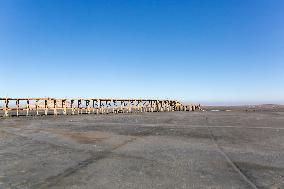
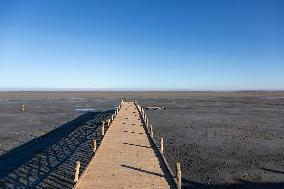
A view shows a wooden pier on the dry bed of Lake Urmia in northwestern Iran on December 20, 2025. Lake Urmia, once the largest lake in the Middle East, has dramatically shrunk due to prolonged drought, the damming of rivers feeding the lake, and extensive groundwater extraction in the surrounding area. Although increased rainfall and water diversion briefly helped restore water levels in 2019, renewed drought and administrative mismanagement in the early 2020s reversed the trend, and satellite imagery shows the lake has almost entirely dried up by September 2025. Photo by Morteza Aminoroayayi/Middle East Images/ABACAPRESS.COM

  •  
Lake Urmia Environmental Disaster - Iran

Lake Urmia Environmental Disaster - Iran

A view shows a wooden pier on the dry bed of Lake Urmia in northwestern Iran on December 20, 2025. Lake Urmia, once the largest lake in the Middle East, has dramatically shrunk due to prolonged drought, the damming of rivers feeding the lake, and extensive groundwater extraction in the surrounding area. Although increased rainfall and water diversion briefly helped restore water levels in 2019, renewed drought and administrative mismanagement in the early 2020s reversed the trend, and satellite imagery shows the lake has almost entirely dried up by September 2025. Photo by Morteza Aminoroayayi/Middle East Images/ABACAPRESS.COM

  •  
Lake Urmia Environmental Disaster - Iran

Lake Urmia Environmental Disaster - Iran

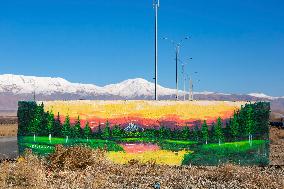
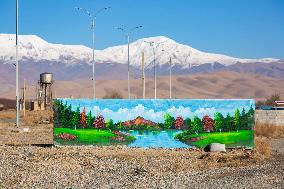
A view shows a mural depicting a landscape painted on a concrete wall near Sharafkhaneh port at Lake Urmia in northwestern Iran on December 19, 2025. Lake Urmia, once the largest lake in the Middle East, has dramatically shrunk due to prolonged drought, the damming of rivers feeding the lake, and extensive groundwater extraction in the surrounding area. Although increased rainfall and water diversion briefly helped restore water levels in 2019, renewed drought and administrative mismanagement in the early 2020s reversed the trend, and satellite imagery shows the lake has almost entirely dried up by September 2025. Photo by Morteza Aminoroayayi/Middle East Images/ABACAPRESS.COM

  •  
Lake Urmia Environmental Disaster - Iran

Lake Urmia Environmental Disaster - Iran

A view shows dry grass and the dry bed of Lake Urmia in northwestern Iran on December 20, 2025. Lake Urmia, once the largest lake in the Middle East, has dramatically shrunk due to prolonged drought, the damming of rivers feeding the lake, and extensive groundwater extraction in the surrounding area. Although increased rainfall and water diversion briefly helped restore water levels in 2019, renewed drought and administrative mismanagement in the early 2020s reversed the trend, and satellite imagery shows the lake has almost entirely dried up by September 2025. Photo by Morteza Aminoroayayi/Middle East Images/ABACAPRESS.COM

  •  
Lake Urmia Environmental Disaster - Iran

Lake Urmia Environmental Disaster - Iran

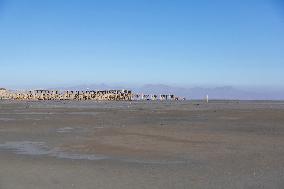
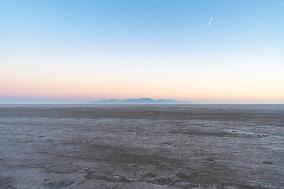
A view shows the dry bed of Lake Urmia in northwestern Iran on December 19, 2025. Lake Urmia, once the largest lake in the Middle East, has dramatically shrunk due to prolonged drought, the damming of rivers feeding the lake, and extensive groundwater extraction in the surrounding area. Although increased rainfall and water diversion briefly helped restore water levels in 2019, renewed drought and administrative mismanagement in the early 2020s reversed the trend, and satellite imagery shows the lake has almost entirely dried up by September 2025. Photo by Morteza Aminoroayayi/Middle East Images/ABACAPRESS.COM

  •  
Lake Urmia Environmental Disaster - Iran

Lake Urmia Environmental Disaster - Iran

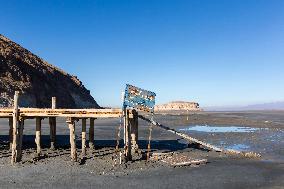
A view shows a rusty sign next to a wooden pier on the dry bed of Lake Urmia in northwestern Iran on December 20, 2025. Lake Urmia, once the largest lake in the Middle East, has dramatically shrunk due to prolonged drought, the damming of rivers feeding the lake, and extensive groundwater extraction in the surrounding area. Although increased rainfall and water diversion briefly helped restore water levels in 2019, renewed drought and administrative mismanagement in the early 2020s reversed the trend, and satellite imagery shows the lake has almost entirely dried up by September 2025. Photo by Morteza Aminoroayayi/Middle East Images/ABACAPRESS.COM

  •  
Lake Urmia Environmental Disaster - Iran

Lake Urmia Environmental Disaster - Iran

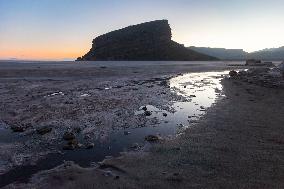
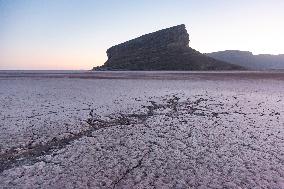
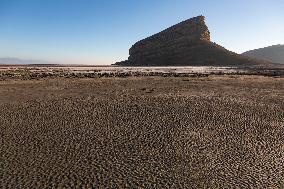
A view shows a shallow stream near a rocky cliff on the bed of Lake Urmia in northwestern Iran on December 19, 2025. Lake Urmia, once the largest lake in the Middle East, has dramatically shrunk due to prolonged drought, the damming of rivers feeding the lake, and extensive groundwater extraction in the surrounding area. Although increased rainfall and water diversion briefly helped restore water levels in 2019, renewed drought and administrative mismanagement in the early 2020s reversed the trend, and satellite imagery shows the lake has almost entirely dried up by September 2025. Photo by Morteza Aminoroayayi/Middle East Images/ABACAPRESS.COM

  •  
Lake Urmia Environmental Disaster - Iran

Lake Urmia Environmental Disaster - Iran

A view shows a wooden pier on the dry bed of Lake Urmia in northwestern Iran on December 20, 2025. Lake Urmia, once the largest lake in the Middle East, has dramatically shrunk due to prolonged drought, the damming of rivers feeding the lake, and extensive groundwater extraction in the surrounding area. Although increased rainfall and water diversion briefly helped restore water levels in 2019, renewed drought and administrative mismanagement in the early 2020s reversed the trend, and satellite imagery shows the lake has almost entirely dried up by September 2025. Photo by Morteza Aminoroayayi/Middle East Images/ABACAPRESS.COM

  •  
Lake Urmia Environmental Disaster - Iran

Lake Urmia Environmental Disaster - Iran

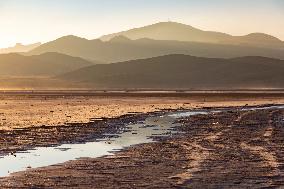
A view shows tire tracks running alongside a shallow stream on the bed of Lake Urmia in northwestern Iran on December 19, 2025. Lake Urmia, once the largest lake in the Middle East, has dramatically shrunk due to prolonged drought, the damming of rivers feeding the lake, and extensive groundwater extraction in the surrounding area. Although increased rainfall and water diversion briefly helped restore water levels in 2019, renewed drought and administrative mismanagement in the early 2020s reversed the trend, and satellite imagery shows the lake has almost entirely dried up by September 2025. Photo by Morteza Aminoroayayi/Middle East Images/ABACAPRESS.COM

  •  
Lake Urmia Environmental Disaster - Iran

Lake Urmia Environmental Disaster - Iran

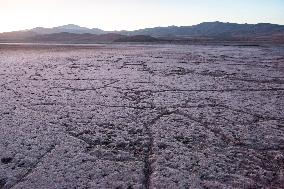
Salt formations cover the cracked surface of the dried bed of Lake Urmia in northwestern Iran on December 19, 2025. Lake Urmia, once the largest lake in the Middle East, has dramatically shrunk due to prolonged drought, the damming of rivers feeding the lake and extensive groundwater extraction in the surrounding area. Although increased rainfall and water diversion briefly helped restore water levels in 2019, renewed drought and administrative mismanagement in the early 2020s reversed the trend, and satellite imagery shows the lake has almost entirely dried up by September 2025. Photo by Morteza Aminoroayayi/Middle East Images/ABACAPRESS.COM

  •  
Lake Urmia Environmental Disaster - Iran

Lake Urmia Environmental Disaster - Iran

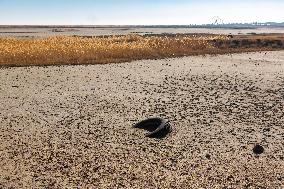
A discarded tire sits near dry reeds on the dry bed of Lake Urmia in northwestern Iran on December 20, 2025. Lake Urmia, once the largest lake in the Middle East, has dramatically shrunk due to prolonged drought, the damming of rivers feeding the lake, and extensive groundwater extraction in the surrounding area. Although increased rainfall and water diversion briefly helped restore water levels in 2019, renewed drought and administrative mismanagement in the early 2020s reversed the trend, and satellite imagery shows the lake has almost entirely dried up by September 2025. Photo by Morteza Aminoroayayi/Middle East Images/ABACAPRESS.COM

  •  
Lake Urmia Environmental Disaster - Iran

Lake Urmia Environmental Disaster - Iran

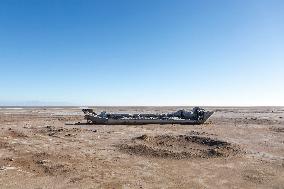
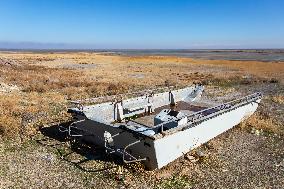
Remnants of a boat sit on the dry bed of Lake Urmia in northwestern Iran on December 19, 2025. Lake Urmia, once the largest lake in the Middle East, has dramatically shrunk due to prolonged drought, the damming of rivers feeding the lake, and extensive groundwater extraction in the surrounding area. Although increased rainfall and water diversion briefly helped restore water levels in 2019, renewed drought and administrative mismanagement in the early 2020s reversed the trend, and satellite imagery shows the lake has almost entirely dried up by September 2025. Photo by Morteza Aminoroayayi/Middle East Images/ABACAPRESS.COM

  •  
Lake Urmia Environmental Disaster - Iran

Lake Urmia Environmental Disaster - Iran

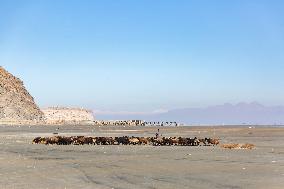
A shepherd guides a flock of sheep on the dry bed of Lake Urmia in northwestern Iran on December 20, 2025. Lake Urmia, once the largest lake in the Middle East, has dramatically shrunk due to prolonged drought, the damming of rivers feeding the lake, and extensive groundwater extraction in the surrounding area. Although increased rainfall and water diversion briefly helped restore water levels in 2019, renewed drought and administrative mismanagement in the early 2020s reversed the trend, and satellite imagery shows the lake has almost entirely dried up by September 2025. Photo by Morteza Aminoroayayi/Middle East Images/ABACAPRESS.COM

  •  
Lake Urmia Environmental Disaster - Iran

Lake Urmia Environmental Disaster - Iran

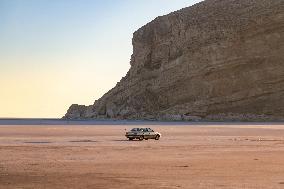
A car drives near a rocky cliff on the dry bed of Lake Urmia in northwestern Iran on December 19, 2025. Lake Urmia, once the largest lake in the Middle East, has dramatically shrunk due to prolonged drought, the damming of rivers feeding the lake, and extensive groundwater extraction in the surrounding area. Although increased rainfall and water diversion briefly helped restore water levels in 2019, renewed drought and administrative mismanagement in the early 2020s reversed the trend, and satellite imagery shows the lake has almost entirely dried up by September 2025. Photo by Morteza Aminoroayayi/Middle East Images/ABACAPRESS.COM

  •  
Lake Urmia Environmental Disaster - Iran

Lake Urmia Environmental Disaster - Iran

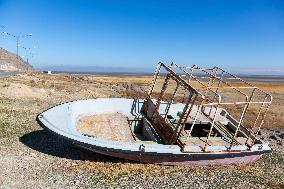
A rusty boat sits next to a road near Lake Urmia in northwestern Iran on December 20, 2025. Lake Urmia, once the largest lake in the Middle East, has dramatically shrunk due to prolonged drought, the damming of rivers feeding the lake, and extensive groundwater extraction in the surrounding area. Although increased rainfall and water diversion briefly helped restore water levels in 2019, renewed drought and administrative mismanagement in the early 2020s reversed the trend, and satellite imagery shows the lake has almost entirely dried up by September 2025. Photo by Morteza Aminoroayayi/Middle East Images/ABACAPRESS.COM

  •  
Lake Urmia Environmental Disaster - Iran

Lake Urmia Environmental Disaster - Iran

A view shows a wooden pier on the dry bed of Lake Urmia in northwestern Iran on December 19, 2025. Lake Urmia, once the largest lake in the Middle East, has dramatically shrunk due to prolonged drought, the damming of rivers feeding the lake, and extensive groundwater extraction in the surrounding area. Although increased rainfall and water diversion briefly helped restore water levels in 2019, renewed drought and administrative mismanagement in the early 2020s reversed the trend, and satellite imagery shows the lake has almost entirely dried up by September 2025. Photo by Morteza Aminoroayayi/Middle East Images/ABACAPRESS.COM

  •  
Lake Urmia Environmental Disaster - Iran

Lake Urmia Environmental Disaster - Iran

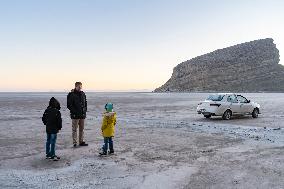
A man and two children stand near a car and a rocky cliff on the dry bed of Lake Urmia in northwestern Iran on December 19, 2025. Lake Urmia, once the largest lake in the Middle East, has dramatically shrunk due to prolonged drought, the damming of rivers feeding the lake, and extensive groundwater extraction in the surrounding area. Although increased rainfall and water diversion briefly helped restore water levels in 2019, renewed drought and administrative mismanagement in the early 2020s reversed the trend, and satellite imagery shows the lake has almost entirely dried up by September 2025. Photo by Morteza Aminoroayayi/Middle East Images/ABACAPRESS.COM

  •  
Lake Urmia Environmental Disaster - Iran

Lake Urmia Environmental Disaster - Iran

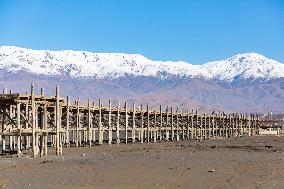
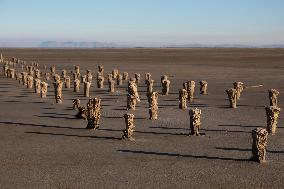
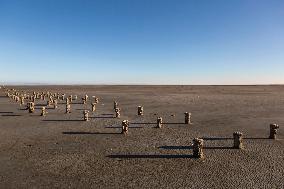
A view shows rows of wooden posts protruding from the dry bed of Lake Urmia in northwestern Iran on December 20, 2025. Lake Urmia, once the largest lake in the Middle East, has dramatically shrunk due to prolonged drought, the damming of rivers feeding the lake, and extensive groundwater extraction in the surrounding area. Although increased rainfall and water diversion briefly helped restore water levels in 2019, renewed drought and administrative mismanagement in the early 2020s reversed the trend, and satellite imagery shows the lake has almost entirely dried up by September 2025. Photo by Morteza Aminoroayayi/Middle East Images/ABACAPRESS.COM

  •  
Lake Urmia Environmental Disaster - Iran

Lake Urmia Environmental Disaster - Iran

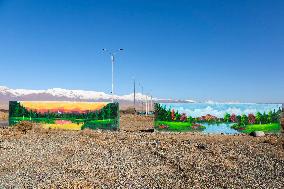
A view shows murals depicting nature scenes painted on concrete walls near Sharafkhaneh port at Lake Urmia in northwestern Iran on December 19, 2025. Lake Urmia, once the largest lake in the Middle East, has dramatically shrunk due to prolonged drought, the damming of rivers feeding the lake, and extensive groundwater extraction in the surrounding area. Although increased rainfall and water diversion briefly helped restore water levels in 2019, renewed drought and administrative mismanagement in the early 2020s reversed the trend, and satellite imagery shows the lake has almost entirely dried up by September 2025. Photo by Morteza Aminoroayayi/Middle East Images/ABACAPRESS.COM

  •  
Lake Urmia Environmental Disaster - Iran

Lake Urmia Environmental Disaster - Iran

A view shows the dry bed of Lake Urmia in northwestern Iran on December 19, 2025. Lake Urmia, once the largest lake in the Middle East, has dramatically shrunk due to prolonged drought, the damming of rivers feeding the lake, and extensive groundwater extraction in the surrounding area. Although increased rainfall and water diversion briefly helped restore water levels in 2019, renewed drought and administrative mismanagement in the early 2020s reversed the trend, and satellite imagery shows the lake has almost entirely dried up by September 2025. Photo by Morteza Aminoroayayi/Middle East Images/ABACAPRESS.COM

  •  
Lake Urmia Environmental Disaster - Iran

Lake Urmia Environmental Disaster - Iran

A view shows a wooden pier on the dry bed of Lake Urmia in northwestern Iran on December 20, 2025. Lake Urmia, once the largest lake in the Middle East, has dramatically shrunk due to prolonged drought, the damming of rivers feeding the lake, and extensive groundwater extraction in the surrounding area. Although increased rainfall and water diversion briefly helped restore water levels in 2019, renewed drought and administrative mismanagement in the early 2020s reversed the trend, and satellite imagery shows the lake has almost entirely dried up by September 2025. Photo by Morteza Aminoroayayi/Middle East Images/ABACAPRESS.COM

  •  
Lake Urmia Environmental Disaster - Iran

Lake Urmia Environmental Disaster - Iran

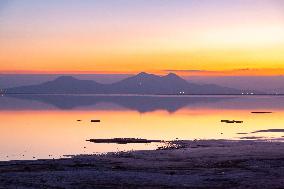
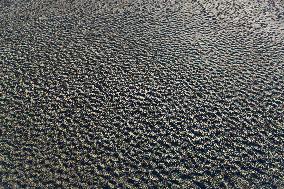
A view shows reflections on the surface of Lake Urmia in northwestern Iran on December 18, 2025. Lake Urmia, once the largest lake in the Middle East, has dramatically shrunk due to prolonged drought, the damming of rivers feeding the lake, and extensive groundwater extraction in the surrounding area. Although increased rainfall and water diversion briefly helped restore water levels in 2019, renewed drought and administrative mismanagement in the early 2020s reversed the trend, and satellite imagery shows the lake has almost entirely dried up by September 2025. Photo by Morteza Aminoroayayi/Middle East Images/ABACAPRESS.COM

  •  
Lake Urmia Environmental Disaster - Iran

Lake Urmia Environmental Disaster - Iran

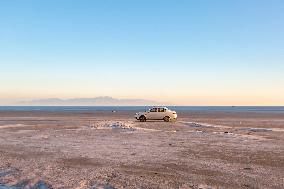
A car drives on the dry bed of Lake Urmia in northwestern Iran on December 19, 2025. Lake Urmia, once the largest lake in the Middle East, has dramatically shrunk due to prolonged drought, the damming of rivers feeding the lake, and extensive groundwater extraction in the surrounding area. Although increased rainfall and water diversion briefly helped restore water levels in 2019, renewed drought and administrative mismanagement in the early 2020s reversed the trend, and satellite imagery shows the lake has almost entirely dried up by September 2025. Photo by Morteza Aminoroayayi/Middle East Images/ABACAPRESS.COM

  •  
Lake Urmia Environmental Disaster - Iran

Lake Urmia Environmental Disaster - Iran

A view shows a mural depicting a landscape painted on a concrete wall near Sharafkhaneh port at Lake Urmia in northwestern Iran on December 19, 2025. Lake Urmia, once the largest lake in the Middle East, has dramatically shrunk due to prolonged drought, the damming of rivers feeding the lake, and extensive groundwater extraction in the surrounding area. Although increased rainfall and water diversion briefly helped restore water levels in 2019, renewed drought and administrative mismanagement in the early 2020s reversed the trend, and satellite imagery shows the lake has almost entirely dried up by September 2025. Photo by Morteza Aminoroayayi/Middle East Images/ABACAPRESS.COM

  •  
Lake Urmia Environmental Disaster - Iran

Lake Urmia Environmental Disaster - Iran

A view shows rows of wooden posts protruding from the dry bed of Lake Urmia in northwestern Iran on December 20, 2025. Lake Urmia, once the largest lake in the Middle East, has dramatically shrunk due to prolonged drought, the damming of rivers feeding the lake, and extensive groundwater extraction in the surrounding area. Although increased rainfall and water diversion briefly helped restore water levels in 2019, renewed drought and administrative mismanagement in the early 2020s reversed the trend, and satellite imagery shows the lake has almost entirely dried up by September 2025. Photo by Morteza Aminoroayayi/Middle East Images/ABACAPRESS.COM

  •  
Lake Urmia Environmental Disaster - Iran

Lake Urmia Environmental Disaster - Iran

Salt formations cover the cracked surface of the dried bed of Lake Urmia in northwestern Iran on December 19, 2025. Lake Urmia, once the largest lake in the Middle East, has dramatically shrunk due to prolonged drought, the damming of rivers feeding the lake and extensive groundwater extraction in the surrounding area. Although increased rainfall and water diversion briefly helped restore water levels in 2019, renewed drought and administrative mismanagement in the early 2020s reversed the trend, and satellite imagery shows the lake has almost entirely dried up by September 2025. Photo by Morteza Aminoroayayi/Middle East Images/ABACAPRESS.COM

  •  
Lake Urmia Environmental Disaster - Iran

Lake Urmia Environmental Disaster - Iran

Remains of a boat sits near the dry bed of Lake Urmia in northwestern Iran on December 20, 2025. Lake Urmia, once the largest lake in the Middle East, has dramatically shrunk due to prolonged drought, the damming of rivers feeding the lake, and extensive groundwater extraction in the surrounding area. Although increased rainfall and water diversion briefly helped restore water levels in 2019, renewed drought and administrative mismanagement in the early 2020s reversed the trend, and satellite imagery shows the lake has almost entirely dried up by September 2025. Photo by Morteza Aminoroayayi/Middle East Images/ABACAPRESS.COM

  •  
Lake Urmia Environmental Disaster - Iran

Lake Urmia Environmental Disaster - Iran

A car drives on the dry bed of Lake Urmia in northwestern Iran on December 19, 2025. Lake Urmia, once the largest lake in the Middle East, has dramatically shrunk due to prolonged drought, the damming of rivers feeding the lake, and extensive groundwater extraction in the surrounding area. Although increased rainfall and water diversion briefly helped restore water levels in 2019, renewed drought and administrative mismanagement in the early 2020s reversed the trend, and satellite imagery shows the lake has almost entirely dried up by September 2025. Photo by Morteza Aminoroayayi/Middle East Images/ABACAPRESS.COM

  •  
Lake Urmia Environmental Disaster - Iran

Lake Urmia Environmental Disaster - Iran

A view shows the dry bed of Lake Urmia in northwestern Iran on December 19, 2025. Lake Urmia, once the largest lake in the Middle East, has dramatically shrunk due to prolonged drought, the damming of rivers feeding the lake, and extensive groundwater extraction in the surrounding area. Although increased rainfall and water diversion briefly helped restore water levels in 2019, renewed drought and administrative mismanagement in the early 2020s reversed the trend, and satellite imagery shows the lake has almost entirely dried up by September 2025. Photo by Morteza Aminoroayayi/Middle East Images/ABACAPRESS.COM

  •  
Lake Urmia Environmental Disaster - Iran

Lake Urmia Environmental Disaster - Iran

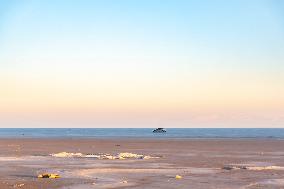
A view shows scattered rocks and shallow water in parts of Lake Urmia in northwestern Iran on December 18, 2025. Lake Urmia, once the largest lake in the Middle East, has dramatically shrunk due to prolonged drought, the damming of rivers feeding the lake, and extensive groundwater extraction in the surrounding area. Although increased rainfall and water diversion briefly helped restore water levels in 2019, renewed drought and administrative mismanagement in the early 2020s reversed the trend, and satellite imagery shows the lake has almost entirely dried up by September 2025. Photo by Morteza Aminoroayayi/Middle East Images/ABACAPRESS.COM

  •  
Nadam Fair Featuring Winter Fishing - China

Nadam Fair Featuring Winter Fishing - China

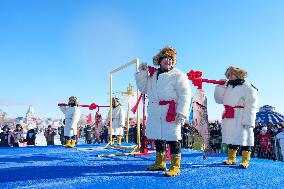
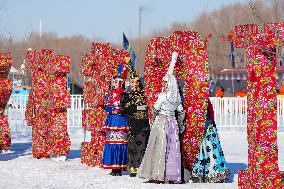
People perform during a winter fishing event of a Nadam fair in Mongolian Autonomous County of Dorbod, Daqing City, northeast China's Heilongjiang Province, Dec. 27, 2025. An ice and snow Nadam fair featuring winter fishing kicked off here on Saturday. The integrated development fishery, and cultural and tourism industry in Dorbod has not only boosted tourism market, but also increased the income of local fishermen. Photo by Wang Song /Xinhua/ABACAPRESS.COM

  •  
Nadam Fair Featuring Winter Fishing - China

Nadam Fair Featuring Winter Fishing - China

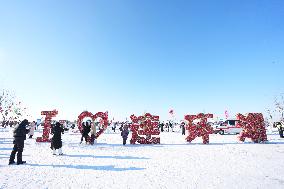
Tourists pose for photos during a winter fishing event of a Nadam fair in Mongolian Autonomous County of Dorbod, Daqing City, northeast China's Heilongjiang Province, Dec. 27, 2025. An ice and snow Nadam fair featuring winter fishing kicked off here on Saturday. The integrated development fishery, and cultural and tourism industry in Dorbod has not only boosted tourism market, but also increased the income of local fishermen. Photo by Wang Song /Xinhua/ABACAPRESS.COM

  •  
Nadam Fair Featuring Winter Fishing - China

Nadam Fair Featuring Winter Fishing - China

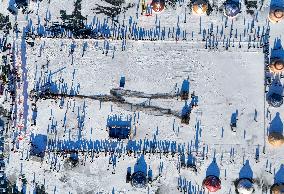
This aerial drone photo taken on Dec. 27, 2025 shows a winter fishing event of a Nadam fair on the frozen Lianhuan Lake in Mongolian Autonomous County of Dorbod, Daqing City, northeast China's Heilongjiang Province. An ice and snow Nadam fair featuring winter fishing kicked off here on Saturday. The integrated development fishery, and cultural and tourism industry in Dorbod has not only boosted tourism market, but also increased the income of local fishermen. Photo by Wang Song /Xinhua/ABACAPRESS.COM

  •  
Nadam Fair Featuring Winter Fishing - China

Nadam Fair Featuring Winter Fishing - China

Tourists pose for photos during a winter fishing event of a Nadam fair in Mongolian Autonomous County of Dorbod, Daqing City, northeast China's Heilongjiang Province, Dec. 27, 2025. An ice and snow Nadam fair featuring winter fishing kicked off here on Saturday. The integrated development fishery, and cultural and tourism industry in Dorbod has not only boosted tourism market, but also increased the income of local fishermen. Photo by Wang Song /Xinhua/ABACAPRESS.COM

  •  
Nadam Fair Featuring Winter Fishing - China

Nadam Fair Featuring Winter Fishing - China

This aerial drone photo taken on Dec. 27, 2025 shows a winter fishing event of a Nadam fair on the frozen Lianhuan Lake in Mongolian Autonomous County of Dorbod, Daqing City, northeast China's Heilongjiang Province. An ice and snow Nadam fair featuring winter fishing kicked off here on Saturday. The integrated development fishery, and cultural and tourism industry in Dorbod has not only boosted tourism market, but also increased the income of local fishermen. Photo by Wang Song /Xinhua/ABACAPRESS.COM

  • Main
  • Top
  • Editorial
  • Creative
  • About Us
  • About ILG
  • Terms of use
  • Company
  • BEHIND
  • Price List
  • Single Plan
  • Monthly Plan
  • Services
  • Shooting
  • Rights Clearance
  • Support
  • FAQ
  • How To Buy
  • Contact Us
  • Become a Partner

© KYODO NEWS IMAGES INC

All Rights Reserved.

  • Editorial
  • Olympics
  • News
  • Sports
  • Japan
  • Tech
  • Royal
  • Disaster
  • NorthKorea
  • Old Japan
  • SNS
  • Creative
  • Food
  • Japan
  • Landscape
  • Animal
  • Popular
  • #Ukraine
  • #China
  • #coronavirus
  • #N. Korea
  • #Thailand
  • #Russia
  • #Ukraine
  • #China
  • #coronavirus
  • #N. Korea
  • #Thailand
  • #Russia
  • Food
  • Japan
  • Landscape
  • Animal
  • Olympics
  • News
  • Sports
  • Japan
  • Tech
  • Royal
  • Disaster
  • NorthKorea
  • Old Japan
  • SNS