•  

India: IndiGo Flight Cancellations Strand Passengers Amid Regulatory Failure 4

Major travel chaos continued at airports across India as IndiGo cancelled hundreds of flights. The cancellations, which stranded scores of passengers and mainly affected key domestic routes, are due to IndiGo's failure to comply with new Flight Duty Time Limit (FDTL) regulations.

  •  

India: IndiGo Flight Cancellations Strand Passengers Amid Regulatory Failure 3

Major travel chaos continued at airports across India as IndiGo cancelled hundreds of flights. The cancellations, which stranded scores of passengers and mainly affected key domestic routes, are due to IndiGo's failure to comply with new Flight Duty Time Limit (FDTL) regulations.

  •  

India: IndiGo Flight Cancellations Strand Passengers Amid Regulatory Failure 2

Major travel chaos continued at airports across India as IndiGo cancelled hundreds of flights. The cancellations, which stranded scores of passengers and mainly affected key domestic routes, are due to IndiGo's failure to comply with new Flight Duty Time Limit (FDTL) regulations.

  •  

India: IndiGo Flight Cancellations Strand Passengers Amid Regulatory Failure

Major travel chaos continued at several airports in India as IndiGo cancelled hundreds of flights on Friday, December 5. The cancellations, which stranded scores of passengers and mainly affected key domestic routes, are due to IndiGo's failure to comply with new Flight Duty Time Limit (FDTL) regulations.

  •  
Tie-Dye Technique Of Bai Ethnic Group - Chin

Tie-Dye Technique Of Bai Ethnic Group - Chin

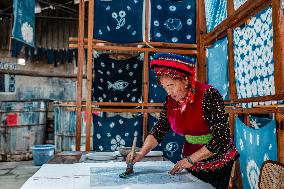
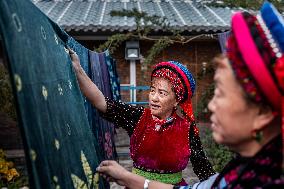
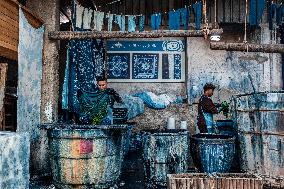
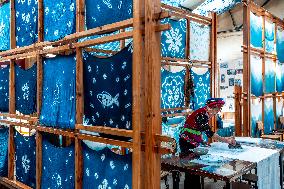
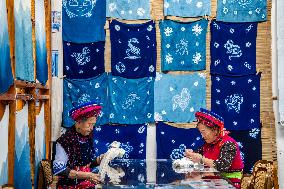
Duan Yuan, an inheritor of the tie-dye technique of Bai ethnic group, makes tie-dye designs in a dyehouse in Zhoucheng Village of Dali Bai Autonomous Prefecture, southwest China's Yunnan Province, November 21, 2025. Known as the hometown of the tie-dye technique of Bai ethnic group, Zhoucheng Village hosts over 200 households engaging in tie-dye businesses, with the number of employees exceeding 4,000. As a traditional folk technique of the Bai ethnic group, tie-dye boasts a history spanning over a thousand years and was included in the first batch of China's national intangible cultural heritage list in 2006. Tying and dyeing are the core steps in the process of making indigo tie-dye products. Artisans use needles and threads to create various patterns on the fabric, which are then dyed with plant-based dyes, resulting in blue backgrounds adorned with vivid white patterns. Photo by Hu Chao/Xinhua/ABACAPRESS.COM

  •  
Tie-Dye Technique Of Bai Ethnic Group - Chin

Tie-Dye Technique Of Bai Ethnic Group - Chin

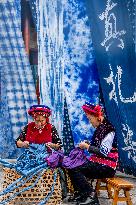
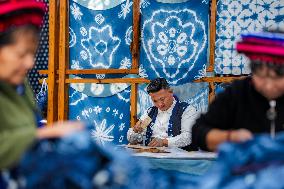
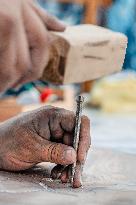
Duan Yinmei, an inheritor of the tie-dye technique of Bai ethnic group, creates knots on fabrics in a dyehouse in Zhoucheng Village of Dali Bai Autonomous Prefecture, southwest China's Yunnan Province, November 21, 2025. Known as the hometown of the tie-dye technique of Bai ethnic group, Zhoucheng Village hosts over 200 households engaging in tie-dye businesses, with the number of employees exceeding 4,000. As a traditional folk technique of the Bai ethnic group, tie-dye boasts a history spanning over a thousand years and was included in the first batch of China's national intangible cultural heritage list in 2006. Tying and dyeing are the core steps in the process of making indigo tie-dye products. Artisans use needles and threads to create various patterns on the fabric, which are then dyed with plant-based dyes, resulting in blue backgrounds adorned with vivid white patterns. Photo by Hu Chao/Xinhua/ABACAPRESS.COM

  •  
Tie-Dye Technique Of Bai Ethnic Group - Chin

Tie-Dye Technique Of Bai Ethnic Group - Chin

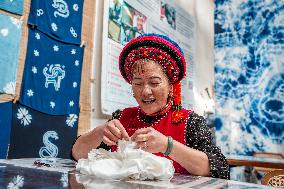
A woman experiences the tie-dye technique of Bai ethnic group in a dyehouse in Zhoucheng Village of Dali Bai Autonomous Prefecture, southwest China's Yunnan Province, November 21, 2025. Known as the hometown of the tie-dye technique of Bai ethnic group, Zhoucheng Village hosts over 200 households engaging in tie-dye businesses, with the number of employees exceeding 4,000. As a traditional folk technique of the Bai ethnic group, tie-dye boasts a history spanning over a thousand years and was included in the first batch of China's national intangible cultural heritage list in 2006. Tying and dyeing are the core steps in the process of making indigo tie-dye products. Artisans use needles and threads to create various patterns on the fabric, which are then dyed with plant-based dyes, resulting in blue backgrounds adorned with vivid white patterns. Photo by Hu Chao/Xinhua/ABACAPRESS.COM

  •  
Tie-Dye Technique Of Bai Ethnic Group - Chin

Tie-Dye Technique Of Bai Ethnic Group - Chin

Duan Yinmei, an inheritor of the tie-dye technique of Bai ethnic group, dyes patterns on fabrics in a dyehouse in Zhoucheng Village of Dali Bai Autonomous Prefecture, southwest China's Yunnan Province, November 21, 2025. Known as the hometown of the tie-dye technique of Bai ethnic group, Zhoucheng Village hosts over 200 households engaging in tie-dye businesses, with the number of employees exceeding 4,000. As a traditional folk technique of the Bai ethnic group, tie-dye boasts a history spanning over a thousand years and was included in the first batch of China's national intangible cultural heritage list in 2006. Tying and dyeing are the core steps in the process of making indigo tie-dye products. Artisans use needles and threads to create various patterns on the fabric, which are then dyed with plant-based dyes, resulting in blue backgrounds adorned with vivid white patterns. Photo by Hu Chao/Xinhua/ABACAPRESS.COM

  •  
Tie-Dye Technique Of Bai Ethnic Group - Chin

Tie-Dye Technique Of Bai Ethnic Group - Chin

Duan Yuan, an inheritor of the tie-dye technique of Bai ethnic group, rinses dyed fabrics in a dyehouse in Zhoucheng Village of Dali Bai Autonomous Prefecture, southwest China's Yunnan Province, November 21, 2025. Known as the hometown of the tie-dye technique of Bai ethnic group, Zhoucheng Village hosts over 200 households engaging in tie-dye businesses, with the number of employees exceeding 4,000. As a traditional folk technique of the Bai ethnic group, tie-dye boasts a history spanning over a thousand years and was included in the first batch of China's national intangible cultural heritage list in 2006. Tying and dyeing are the core steps in the process of making indigo tie-dye products. Artisans use needles and threads to create various patterns on the fabric, which are then dyed with plant-based dyes, resulting in blue backgrounds adorned with vivid white patterns. Photo by Hu Chao/Xinhua/ABACAPRESS.COM

  •  
Tie-Dye Technique Of Bai Ethnic Group - Chin

Tie-Dye Technique Of Bai Ethnic Group - Chin

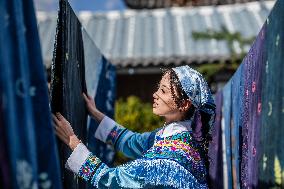
Duan Yinmei (L), an inheritor of the tie-dye technique of Bai ethnic group, and handicraftsman Duan Lilan dry tie-dye fabrics in a dyehouse in Zhoucheng Village of Dali Bai Autonomous Prefecture, southwest China's Yunnan Province, November 21, 2025. Known as the hometown of the tie-dye technique of Bai ethnic group, Zhoucheng Village hosts over 200 households engaging in tie-dye businesses, with the number of employees exceeding 4,000. As a traditional folk technique of the Bai ethnic group, tie-dye boasts a history spanning over a thousand years and was included in the first batch of China's national intangible cultural heritage list in 2006. Tying and dyeing are the core steps in the process of making indigo tie-dye products. Artisans use needles and threads to create various patterns on the fabric, which are then dyed with plant-based dyes, resulting in blue backgrounds adorned with vivid white patterns. Photo by Hu Chao/Xinhua/ABACAPRESS.COM

  •  
Tie-Dye Technique Of Bai Ethnic Group - Chin

Tie-Dye Technique Of Bai Ethnic Group - Chin

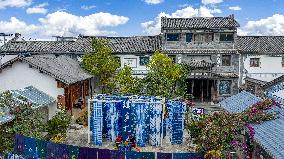
An aerial drone photo shows a scene at a dyehouse in Zhoucheng Village of Dali Bai Autonomous Prefecture, southwest China's Yunnan Province, November 21, 2025. Known as the hometown of the tie-dye technique of Bai ethnic group, Zhoucheng Village hosts over 200 households engaging in tie-dye businesses, with the number of employees exceeding 4,000. As a traditional folk technique of the Bai ethnic group, tie-dye boasts a history spanning over a thousand years and was included in the first batch of China's national intangible cultural heritage list in 2006. Tying and dyeing are the core steps in the process of making indigo tie-dye products. Artisans use needles and threads to create various patterns on the fabric, which are then dyed with plant-based dyes, resulting in blue backgrounds adorned with vivid white patterns. Photo by Hu Chao/Xinhua/ABACAPRESS.COM

  •  
Tie-Dye Technique Of Bai Ethnic Group - Chin

Tie-Dye Technique Of Bai Ethnic Group - Chin

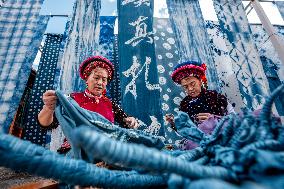
Duan Yinmei (L), an inheritor of the tie-dye technique of Bai ethnic group, and handicraftsman Duan Lilan untie knots on fabrics in a dyehouse in Zhoucheng Village of Dali Bai Autonomous Prefecture, southwest China's Yunnan Province, November 21, 2025. Known as the hometown of the tie-dye technique of Bai ethnic group, Zhoucheng Village hosts over 200 households engaging in tie-dye businesses, with the number of employees exceeding 4,000. As a traditional folk technique of the Bai ethnic group, tie-dye boasts a history spanning over a thousand years and was included in the first batch of China's national intangible cultural heritage list in 2006. Tying and dyeing are the core steps in the process of making indigo tie-dye products. Artisans use needles and threads to create various patterns on the fabric, which are then dyed with plant-based dyes, resulting in blue backgrounds adorned with vivid white patterns. Photo by Hu Chao/Xinhua/ABACAPRESS.COM

  •  
Tie-Dye Technique Of Bai Ethnic Group - Chin

Tie-Dye Technique Of Bai Ethnic Group - Chin

Duan Yinmei (L), an inheritor of the tie-dye technique of Bai ethnic group, and handicraftsman Duan Lilan untie knots on fabrics in a dyehouse in Zhoucheng Village of Dali Bai Autonomous Prefecture, southwest China's Yunnan Province, November 21, 2025. Known as the hometown of the tie-dye technique of Bai ethnic group, Zhoucheng Village hosts over 200 households engaging in tie-dye businesses, with the number of employees exceeding 4,000. As a traditional folk technique of the Bai ethnic group, tie-dye boasts a history spanning over a thousand years and was included in the first batch of China's national intangible cultural heritage list in 2006. Tying and dyeing are the core steps in the process of making indigo tie-dye products. Artisans use needles and threads to create various patterns on the fabric, which are then dyed with plant-based dyes, resulting in blue backgrounds adorned with vivid white patterns. Photo by Hu Chao/Xinhua/ABACAPRESS.COM

  •  
Tie-Dye Technique Of Bai Ethnic Group - Chin

Tie-Dye Technique Of Bai Ethnic Group - Chin

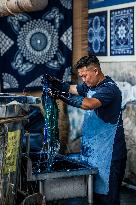
Duan Yuan (L), an inheritor of the tie-dye technique of Bai ethnic group, dyes fabrics in a dyehouse in Zhoucheng Village of Dali Bai Autonomous Prefecture, southwest China's Yunnan Province, November 21, 2025. Known as the hometown of the tie-dye technique of Bai ethnic group, Zhoucheng Village hosts over 200 households engaging in tie-dye businesses, with the number of employees exceeding 4,000. As a traditional folk technique of the Bai ethnic group, tie-dye boasts a history spanning over a thousand years and was included in the first batch of China's national intangible cultural heritage list in 2006. Tying and dyeing are the core steps in the process of making indigo tie-dye products. Artisans use needles and threads to create various patterns on the fabric, which are then dyed with plant-based dyes, resulting in blue backgrounds adorned with vivid white patterns. Photo by Hu Chao/Xinhua/ABACAPRESS.COM

  •  
Tie-Dye Technique Of Bai Ethnic Group - Chin

Tie-Dye Technique Of Bai Ethnic Group - Chin

Duan Yuan, an inheritor of the tie-dye technique of Bai ethnic group, makes tie-dye designs in a dyehouse in Zhoucheng Village of Dali Bai Autonomous Prefecture, southwest China's Yunnan Province, November 21, 2025. Known as the hometown of the tie-dye technique of Bai ethnic group, Zhoucheng Village hosts over 200 households engaging in tie-dye businesses, with the number of employees exceeding 4,000. As a traditional folk technique of the Bai ethnic group, tie-dye boasts a history spanning over a thousand years and was included in the first batch of China's national intangible cultural heritage list in 2006. Tying and dyeing are the core steps in the process of making indigo tie-dye products. Artisans use needles and threads to create various patterns on the fabric, which are then dyed with plant-based dyes, resulting in blue backgrounds adorned with vivid white patterns. Photo by Hu Chao/Xinhua/ABACAPRESS.COM

  •  
Tie-Dye Technique Of Bai Ethnic Group - Chin

Tie-Dye Technique Of Bai Ethnic Group - Chin

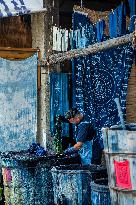
Duan Yuan, an inheritor of the tie-dye technique of Bai ethnic group, dyes fabrics in a dyehouse in Zhoucheng Village of Dali Bai Autonomous Prefecture, southwest China's Yunnan Province, November 21, 2025. Known as the hometown of the tie-dye technique of Bai ethnic group, Zhoucheng Village hosts over 200 households engaging in tie-dye businesses, with the number of employees exceeding 4,000. As a traditional folk technique of the Bai ethnic group, tie-dye boasts a history spanning over a thousand years and was included in the first batch of China's national intangible cultural heritage list in 2006. Tying and dyeing are the core steps in the process of making indigo tie-dye products. Artisans use needles and threads to create various patterns on the fabric, which are then dyed with plant-based dyes, resulting in blue backgrounds adorned with vivid white patterns. Photo by Hu Chao/Xinhua/ABACAPRESS.COM

  •  
Tie-Dye Technique Of Bai Ethnic Group - Chin

Tie-Dye Technique Of Bai Ethnic Group - Chin

Duan Yuan, an inheritor of the tie-dye technique of Bai ethnic group, dyes fabrics in a dyehouse in Zhoucheng Village of Dali Bai Autonomous Prefecture, southwest China's Yunnan Province, November 21, 2025. Known as the hometown of the tie-dye technique of Bai ethnic group, Zhoucheng Village hosts over 200 households engaging in tie-dye businesses, with the number of employees exceeding 4,000. As a traditional folk technique of the Bai ethnic group, tie-dye boasts a history spanning over a thousand years and was included in the first batch of China's national intangible cultural heritage list in 2006. Tying and dyeing are the core steps in the process of making indigo tie-dye products. Artisans use needles and threads to create various patterns on the fabric, which are then dyed with plant-based dyes, resulting in blue backgrounds adorned with vivid white patterns. Photo by Hu Chao/Xinhua/ABACAPRESS.COM

  •  
Tie-Dye Technique Of Bai Ethnic Group - Chin

Tie-Dye Technique Of Bai Ethnic Group - Chin

Duan Yuan, an inheritor of the tie-dye technique of Bai ethnic group, makes tie-dye designs in a dyehouse in Zhoucheng Village of Dali Bai Autonomous Prefecture, southwest China's Yunnan Province, November 21, 2025. Known as the hometown of the tie-dye technique of Bai ethnic group, Zhoucheng Village hosts over 200 households engaging in tie-dye businesses, with the number of employees exceeding 4,000. As a traditional folk technique of the Bai ethnic group, tie-dye boasts a history spanning over a thousand years and was included in the first batch of China's national intangible cultural heritage list in 2006. Tying and dyeing are the core steps in the process of making indigo tie-dye products. Artisans use needles and threads to create various patterns on the fabric, which are then dyed with plant-based dyes, resulting in blue backgrounds adorned with vivid white patterns. Photo by Hu Chao/Xinhua/ABACAPRESS.COM

  •  
Tie-Dye Technique Of Bai Ethnic Group - Chin

Tie-Dye Technique Of Bai Ethnic Group - Chin

Duan Yinmei, an inheritor of the tie-dye technique of Bai ethnic group, unties knots on fabrics in a dyehouse in Zhoucheng Village of Dali Bai Autonomous Prefecture, southwest China's Yunnan Province, November 21, 2025. Known as the hometown of the tie-dye technique of Bai ethnic group, Zhoucheng Village hosts over 200 households engaging in tie-dye businesses, with the number of employees exceeding 4,000. As a traditional folk technique of the Bai ethnic group, tie-dye boasts a history spanning over a thousand years and was included in the first batch of China's national intangible cultural heritage list in 2006. Tying and dyeing are the core steps in the process of making indigo tie-dye products. Artisans use needles and threads to create various patterns on the fabric, which are then dyed with plant-based dyes, resulting in blue backgrounds adorned with vivid white patterns. Photo by Hu Chao/Xinhua/ABACAPRESS.COM

  •  
Tie-Dye Technique Of Bai Ethnic Group - Chin

Tie-Dye Technique Of Bai Ethnic Group - Chin

Duan Yinmei, an inheritor of the tie-dye technique of Bai ethnic group, dyes patterns on fabrics in a dyehouse in Zhoucheng Village of Dali Bai Autonomous Prefecture, southwest China's Yunnan Province, November 21, 2025. Known as the hometown of the tie-dye technique of Bai ethnic group, Zhoucheng Village hosts over 200 households engaging in tie-dye businesses, with the number of employees exceeding 4,000. As a traditional folk technique of the Bai ethnic group, tie-dye boasts a history spanning over a thousand years and was included in the first batch of China's national intangible cultural heritage list in 2006. Tying and dyeing are the core steps in the process of making indigo tie-dye products. Artisans use needles and threads to create various patterns on the fabric, which are then dyed with plant-based dyes, resulting in blue backgrounds adorned with vivid white patterns. Photo by Hu Chao/Xinhua/ABACAPRESS.COM

  •  
Tie-Dye Technique Of Bai Ethnic Group - Chin

Tie-Dye Technique Of Bai Ethnic Group - Chin

Duan Yinmei (R), an inheritor of the tie-dye technique of Bai ethnic group, and handicraftsman Duan Lilan create knots on fabrics in a dyehouse in Zhoucheng Village of Dali Bai Autonomous Prefecture, southwest China's Yunnan Province, November 21, 2025. Known as the hometown of the tie-dye technique of Bai ethnic group, Zhoucheng Village hosts over 200 households engaging in tie-dye businesses, with the number of employees exceeding 4,000. As a traditional folk technique of the Bai ethnic group, tie-dye boasts a history spanning over a thousand years and was included in the first batch of China's national intangible cultural heritage list in 2006. Tying and dyeing are the core steps in the process of making indigo tie-dye products. Artisans use needles and threads to create various patterns on the fabric, which are then dyed with plant-based dyes, resulting in blue backgrounds adorned with vivid white patterns. Photo by Hu Chao/Xinhua/ABACAPRESS.COM

  •  
Incense Sticks Traditional Making - Vietnam

Incense Sticks Traditional Making - Vietnam

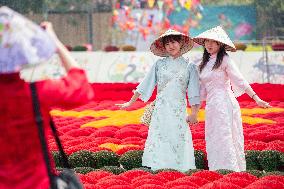
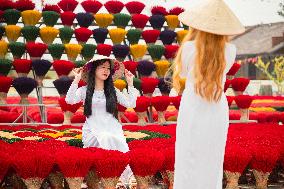
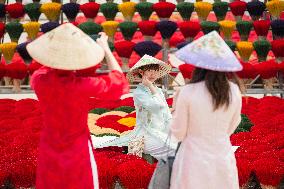
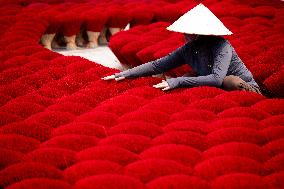
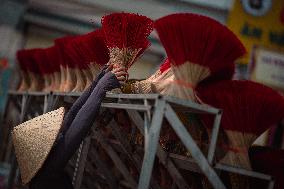
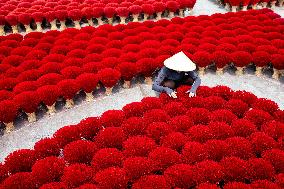
Tourists pose for photos amid bundles of incense sticks in Quang Phu Cau Village, Vietnam, March 24, 2025. Quang Phu Cau Village, 35 kilometers south of Hanoi, has a long tradition of making incense sticks. These incense sticks need to go through a dozens of processes, such as bamboo splitting, dyeing, powder wrapping and drying, to be made. When bundles of incense sticks are spread out in courtyards and fields for drying, its various colors like vermilion, bright yellow, indigo, emerald green and others form a spectacular scene, attracting many tourists and photographers. Photo by Zhu Wei/Xinhua/ABACAPRESS.COM

  •  
Incense Sticks Traditional Making - Vietnam

Incense Sticks Traditional Making - Vietnam

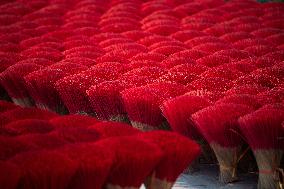
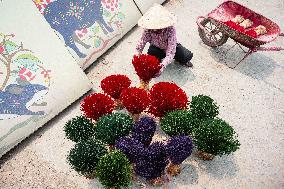
This photo shows bundles of incense sticks placed at a courtyard in Quang Phu Cau Village, Vietnam, March 24, 2025. Quang Phu Cau Village, 35 kilometers south of Hanoi, has a long tradition of making incense sticks. These incense sticks need to go through a dozens of processes, such as bamboo splitting, dyeing, powder wrapping and drying, to be made. When bundles of incense sticks are spread out in courtyards and fields for drying, its various colors like vermilion, bright yellow, indigo, emerald green and others form a spectacular scene, attracting many tourists and photographers. Photo by Zhu Wei/Xinhua/ABACAPRESS.COM

  •  
Incense Sticks Traditional Making - Vietnam

Incense Sticks Traditional Making - Vietnam

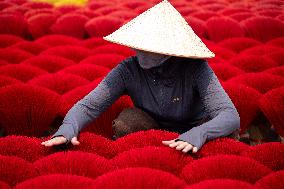
A tourist poses for photos amid bundles of incense sticks in Quang Phu Cau Village, Vietnam, March 24, 2025. Quang Phu Cau Village, 35 kilometers south of Hanoi, has a long tradition of making incense sticks. These incense sticks need to go through a dozens of processes, such as bamboo splitting, dyeing, powder wrapping and drying, to be made. When bundles of incense sticks are spread out in courtyards and fields for drying, its various colors like vermilion, bright yellow, indigo, emerald green and others form a spectacular scene, attracting many tourists and photographers. Photo by Zhu Wei/Xinhua/ABACAPRESS.COM

  •  
Incense Sticks Traditional Making - Vietnam

Incense Sticks Traditional Making - Vietnam

A tourist poses for photos amid bundles of incense sticks in Quang Phu Cau Village, Vietnam, March 24, 2025. Quang Phu Cau Village, 35 kilometers south of Hanoi, has a long tradition of making incense sticks. These incense sticks need to go through a dozens of processes, such as bamboo splitting, dyeing, powder wrapping and drying, to be made. When bundles of incense sticks are spread out in courtyards and fields for drying, its various colors like vermilion, bright yellow, indigo, emerald green and others form a spectacular scene, attracting many tourists and photographers. Photo by Zhu Wei/Xinhua/ABACAPRESS.COM

  •  
Incense Sticks Traditional Making - Vietnam

Incense Sticks Traditional Making - Vietnam

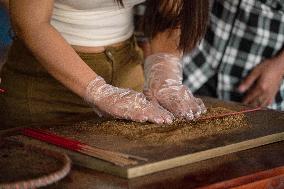
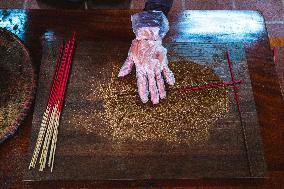
A tourist tries to make an incense stick in Quang Phu Cau Village, Vietnam, March 24, 2025. Quang Phu Cau Village, 35 kilometers south of Hanoi, has a long tradition of making incense sticks. These incense sticks need to go through a dozens of processes, such as bamboo splitting, dyeing, powder wrapping and drying, to be made. When bundles of incense sticks are spread out in courtyards and fields for drying, its various colors like vermilion, bright yellow, indigo, emerald green and others form a spectacular scene, attracting many tourists and photographers. Photo by Zhu Wei/Xinhua/ABACAPRESS.COM

  •  
Incense Sticks Traditional Making - Vietnam

Incense Sticks Traditional Making - Vietnam

A villager arranges incense sticks in Quang Phu Cau Village, Vietnam, March 24, 2025. Quang Phu Cau Village, 35 kilometers south of Hanoi, has a long tradition of making incense sticks. These incense sticks need to go through a dozens of processes, such as bamboo splitting, dyeing, powder wrapping and drying, to be made. When bundles of incense sticks are spread out in courtyards and fields for drying, its various colors like vermilion, bright yellow, indigo, emerald green and others form a spectacular scene, attracting many tourists and photographers. Photo by Zhu Wei/Xinhua/ABACAPRESS.COM

  •  
Incense Sticks Traditional Making - Vietnam

Incense Sticks Traditional Making - Vietnam

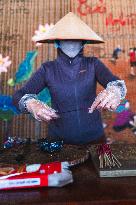
A villager demonstrates how to make incense sticks in Quang Phu Cau Village, Vietnam, March 24, 2025. Quang Phu Cau Village, 35 kilometers south of Hanoi, has a long tradition of making incense sticks. These incense sticks need to go through a dozens of processes, such as bamboo splitting, dyeing, powder wrapping and drying, to be made. When bundles of incense sticks are spread out in courtyards and fields for drying, its various colors like vermilion, bright yellow, indigo, emerald green and others form a spectacular scene, attracting many tourists and photographers. Photo by Zhu Wei/Xinhua/ABACAPRESS.COM

  •  
Incense Sticks Traditional Making - Vietnam

Incense Sticks Traditional Making - Vietnam

A tourist poses for photos amid bundles of incense sticks in Quang Phu Cau Village, Vietnam, March 24, 2025. Quang Phu Cau Village, 35 kilometers south of Hanoi, has a long tradition of making incense sticks. These incense sticks need to go through a dozens of processes, such as bamboo splitting, dyeing, powder wrapping and drying, to be made. When bundles of incense sticks are spread out in courtyards and fields for drying, its various colors like vermilion, bright yellow, indigo, emerald green and others form a spectacular scene, attracting many tourists and photographers. Photo by Zhu Wei/Xinhua/ABACAPRESS.COM

  •  
Incense Sticks Traditional Making - Vietnam

Incense Sticks Traditional Making - Vietnam

A villager arranges incense sticks in Quang Phu Cau Village, Vietnam, March 24, 2025. Quang Phu Cau Village, 35 kilometers south of Hanoi, has a long tradition of making incense sticks. These incense sticks need to go through a dozens of processes, such as bamboo splitting, dyeing, powder wrapping and drying, to be made. When bundles of incense sticks are spread out in courtyards and fields for drying, its various colors like vermilion, bright yellow, indigo, emerald green and others form a spectacular scene, attracting many tourists and photographers. Photo by Zhu Wei/Xinhua/ABACAPRESS.COM

  •  
Incense Sticks Traditional Making - Vietnam

Incense Sticks Traditional Making - Vietnam

A villager demonstrates how to make incense sticks in Quang Phu Cau Village, Vietnam, March 24, 2025. Quang Phu Cau Village, 35 kilometers south of Hanoi, has a long tradition of making incense sticks. These incense sticks need to go through a dozens of processes, such as bamboo splitting, dyeing, powder wrapping and drying, to be made. When bundles of incense sticks are spread out in courtyards and fields for drying, its various colors like vermilion, bright yellow, indigo, emerald green and others form a spectacular scene, attracting many tourists and photographers. Photo by Zhu Wei/Xinhua/ABACAPRESS.COM

  •  
Incense Sticks Traditional Making - Vietnam

Incense Sticks Traditional Making - Vietnam

A villager arranges incense sticks in Quang Phu Cau Village, Vietnam, March 24, 2025. Quang Phu Cau Village, 35 kilometers south of Hanoi, has a long tradition of making incense sticks. These incense sticks need to go through a dozens of processes, such as bamboo splitting, dyeing, powder wrapping and drying, to be made. When bundles of incense sticks are spread out in courtyards and fields for drying, its various colors like vermilion, bright yellow, indigo, emerald green and others form a spectacular scene, attracting many tourists and photographers. Photo by Zhu Wei/Xinhua/ABACAPRESS.COM

  •  
Incense Sticks Traditional Making - Vietnam

Incense Sticks Traditional Making - Vietnam

A villager arranges incense sticks in Quang Phu Cau Village, Vietnam, March 24, 2025. Quang Phu Cau Village, 35 kilometers south of Hanoi, has a long tradition of making incense sticks. These incense sticks need to go through a dozens of processes, such as bamboo splitting, dyeing, powder wrapping and drying, to be made. When bundles of incense sticks are spread out in courtyards and fields for drying, its various colors like vermilion, bright yellow, indigo, emerald green and others form a spectacular scene, attracting many tourists and photographers. Photo by Zhu Wei/Xinhua/ABACAPRESS.COM

  •  
Incense Sticks Traditional Making - Vietnam

Incense Sticks Traditional Making - Vietnam

A villager puts a bundle of incense sticks onto a shelf in Quang Phu Cau Village, Vietnam, March 24, 2025. Quang Phu Cau Village, 35 kilometers south of Hanoi, has a long tradition of making incense sticks. These incense sticks need to go through a dozens of processes, such as bamboo splitting, dyeing, powder wrapping and drying, to be made. When bundles of incense sticks are spread out in courtyards and fields for drying, its various colors like vermilion, bright yellow, indigo, emerald green and others form a spectacular scene, attracting many tourists and photographers. Photo by Zhu Wei/Xinhua/ABACAPRESS.COM

  •  
Incense Sticks Traditional Making - Vietnam

Incense Sticks Traditional Making - Vietnam

A villager arranges incense sticks in Quang Phu Cau Village, Vietnam, March 24, 2025. Quang Phu Cau Village, 35 kilometers south of Hanoi, has a long tradition of making incense sticks. These incense sticks need to go through a dozens of processes, such as bamboo splitting, dyeing, powder wrapping and drying, to be made. When bundles of incense sticks are spread out in courtyards and fields for drying, its various colors like vermilion, bright yellow, indigo, emerald green and others form a spectacular scene, attracting many tourists and photographers. Photo by Zhu Wei/Xinhua/ABACAPRESS.COM

  •  

India: Microsoft Outage Affects Airlines Operations At Several Airports

A Microsoft technical glitch affected airline operations across India on Friday, July 19 causing flight cancellations and delays. The outage forced several airlines including IndiGo, Akasa Airlines and SpiceJet, to ground planes.

  •  
Women In Film & Television 44th Annual Muse Awards - NYC

Women In Film & Television 44th Annual Muse Awards - NYC

Yvonne Phillips, Indigo Phillips and Lou Diamond Phillips attending the New York Women In Film & Television (NYWIFT) 44th Annual Muse Awards in New Yorkers City, NY, USA on March 27, 2024. Photo by Dave Allocca/Starpix/INSTARimages/ABACAPRESS.COM

  •  
Women In Film & Television 44th Annual Muse Awards - NYC

Women In Film & Television 44th Annual Muse Awards - NYC

Yvonne Phillips, Indigo Phillips, Tantoo Cardinal and Lou Diamond Phillips attending the New York Women In Film & Television (NYWIFT) 44th Annual Muse Awards in New Yorkers City, NY, USA on March 27, 2024. Photo by Dave Allocca/Starpix/INSTARimages/ABACAPRESS.COM

  •  
Ghostbusters: Frozen Empire Premiere - NYC

Ghostbusters: Frozen Empire Premiere - NYC

Yvonne Boismier Phillips, Indigo Sanara Phillips and Lou Diamond Phillips attend the Ghostbusters: Frozen Empire' Premiere in New York City, NY, USA on March 14, 2024. Photo by Charles Guerin/ABACAPRESS.COM

  •  
Ghostbusters: Frozen Empire Premiere - NYC

Ghostbusters: Frozen Empire Premiere - NYC

Yvonne Boismier Phillips, Indigo Sanara Phillips and Lou Diamond Phillips attend the Ghostbusters: Frozen Empire' Premiere in New York City, NY, USA on March 14, 2024. Photo by Charles Guerin/ABACAPRESS.COM

  •  
24th Annual Latin Grammy Awards - Seville

24th Annual Latin Grammy Awards - Seville

Lola Indigo attends the red carpet during the 24th Annual Latin GRAMMY Awards at FIBES on November 16, 2023 in Seville, Spain. Photo by ABACAPRESS.COM

  •  
24th Annual Latin Grammy Awards - Seville

24th Annual Latin Grammy Awards - Seville

Lola Indigo attends the red carpet during the 24th Annual Latin GRAMMY Awards at FIBES on November 16, 2023 in Seville, Spain. Photo by ABACAPRESS.COM

  •  
24th Annual Latin Grammy Awards - Seville

24th Annual Latin Grammy Awards - Seville

Lola Indigo attends the red carpet during the 24th Annual Latin GRAMMY Awards at FIBES on November 16, 2023 in Seville, Spain. Photo by ABACAPRESS.COM

  •  
24th Annual Latin Grammy Awards - Seville

24th Annual Latin Grammy Awards - Seville

Lola Indigo attends the red carpet during the 24th Annual Latin GRAMMY Awards at FIBES on November 16, 2023 in Seville, Spain. Photo by ABACAPRESS.COM

  •  
24th Annual Latin Grammy Awards - Seville

24th Annual Latin Grammy Awards - Seville

Lola Indigo attends the red carpet during the 24th Annual Latin GRAMMY Awards at FIBES on November 16, 2023 in Seville, Spain. Photo by ABACAPRESS.COM

  •  
Violet Indigo At Fnac Live Festival - Paris

Violet Indigo At Fnac Live Festival - Paris

Violet Indigo during Fnac Live festival in Paris, France on June 29, 2023. Photo by Lionel Urman/ABACAPRESS.COM

  •  
Violet Indigo At Fnac Live Festival - Paris

Violet Indigo At Fnac Live Festival - Paris

Violet Indigo during Fnac Live festival in Paris, France on June 29, 2023. Photo by Lionel Urman/ABACAPRESS.COM

  •  
Violet Indigo At Fnac Live Festival - Paris

Violet Indigo At Fnac Live Festival - Paris

Violet Indigo during Fnac Live festival in Paris, France on June 29, 2023. Photo by Lionel Urman/ABACAPRESS.COM

  •  
Violet Indigo At Fnac Live Festival - Paris

Violet Indigo At Fnac Live Festival - Paris

Violet Indigo during Fnac Live festival in Paris, France on June 29, 2023. Photo by Lionel Urman/ABACAPRESS.COM

  •  
Violet Indigo At Fnac Live Festival - Paris

Violet Indigo At Fnac Live Festival - Paris

Violet Indigo during Fnac Live festival in Paris, France on June 29, 2023. Photo by Lionel Urman/ABACAPRESS.COM

  • Main
  • Top
  • Editorial
  • Creative
  • About Us
  • About ILG
  • Terms of use
  • Company
  • BEHIND
  • Price List
  • Single Plan
  • Monthly Plan
  • Services
  • Shooting
  • Rights Clearance
  • Support
  • FAQ
  • How To Buy
  • Contact Us
  • Become a Partner

© KYODO NEWS IMAGES INC

All Rights Reserved.

  • Editorial
  • Olympics
  • News
  • Sports
  • Japan
  • Tech
  • Royal
  • Disaster
  • NorthKorea
  • Old Japan
  • SNS

  • Creative
  • Food
  • Japan
  • Landscape
  • Animal
  • Popular
  • #Ukraine
  • #China
  • #coronavirus
  • #N. Korea
  • #Russia
  • #Thailand
  • #Ukraine
  • #China
  • #coronavirus
  • #N. Korea
  • #Russia
  • #Thailand
  • Food
  • Japan
  • Landscape
  • Animal
  • Olympics
  • News
  • Sports
  • Japan
  • Tech
  • Royal
  • Disaster
  • NorthKorea
  • Old Japan
  • SNS