•  
Celebration of Gannangxiang Festival - China

Celebration of Gannangxiang Festival - China

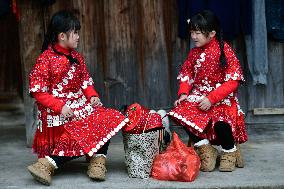
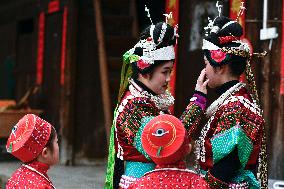
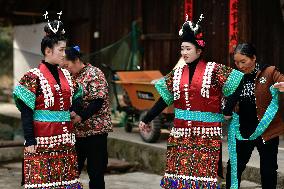
Twin sisters Yang Ningning (L) and Yang Ningwei have fun in Zhouxi Village, Zhouxi Town of Kaili, Qiandongnan Miao and Dong Autonomous Prefecture, southwest China's Guizhou Province, February 15, 2025. Donning in traditional attire, accompanied by the melody of Lusheng, a traditional musical instrument, local people in Kaili rejoiced the annual Gannangxiang festival in Zhouxi Town of Kaili. Every year during the festival, two pairs of twin sisters of Miao ethnic group, Yang Ningzhu and Yang Ningyu, Yang Ningwei and Yang Ningning, together with their mother Wu Qian, will come back from downtown Kaili to their grandmother's house in rural Miao village to attend this grand event. They believe that this is the best way to inherit ethnic culture. With a history of more than 400 years, the festival is inscribed on the list of provincial intangible cultural heritage of Guizhou. Photo by Xinhua/Yang Wenbin/ABACAPRESS.COM

  •  
Celebration of Gannangxiang Festival - China

Celebration of Gannangxiang Festival - China

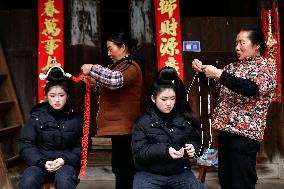
Two pairs of twin sisters talk with their mother Wu Qian (1st R) after getting dressed for the Gannangxiang festival in Zhouxi Village, Zhouxi Town of Kaili, Qiandongnan Miao and Dong Autonomous Prefecture, southwest China's Guizhou Province, February 16, 2025. Donning in traditional attire, accompanied by the melody of Lusheng, a traditional musical instrument, local people in Kaili rejoiced the annual Gannangxiang festival in Zhouxi Town of Kaili. Every year during the festival, two pairs of twin sisters of Miao ethnic group, Yang Ningzhu and Yang Ningyu, Yang Ningwei and Yang Ningning, together with their mother Wu Qian, will come back from downtown Kaili to their grandmother's house in rural Miao village to attend this grand event. They believe that this is the best way to inherit ethnic culture. With a history of more than 400 years, the festival is inscribed on the list of provincial intangible cultural heritage of Guizhou. Photo by Xinhua/Yang Wenbin/ABACAPRESS.COM

  •  
Celebration of Gannangxiang Festival - China

Celebration of Gannangxiang Festival - China

Twin sisters Yang Ningyu (1st L) and Yang Ningzhu (3rd L) are dressed to prepare for the celebration of Gannangxiang festival in Zhouxi Village, Zhouxi Town of Kaili, Qiandongnan Miao and Dong Autonomous Prefecture, southwest China's Guizhou Province, February 15, 2025. Donning in traditional attire, accompanied by the melody of Lusheng, a traditional musical instrument, local people in Kaili rejoiced the annual Gannangxiang festival in Zhouxi Town of Kaili. Every year during the festival, two pairs of twin sisters of Miao ethnic group, Yang Ningzhu and Yang Ningyu, Yang Ningwei and Yang Ningning, together with their mother Wu Qian, will come back from downtown Kaili to their grandmother's house in rural Miao village to attend this grand event. They believe that this is the best way to inherit ethnic culture. With a history of more than 400 years, the festival is inscribed on the list of provincial intangible cultural heritage of Guizhou. Photo by Xinhua/Yang Wenbin/ABACAPRESS.COM

  •  
Celebration of Gannangxiang Festival - China

Celebration of Gannangxiang Festival - China

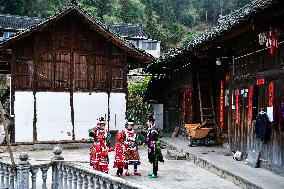
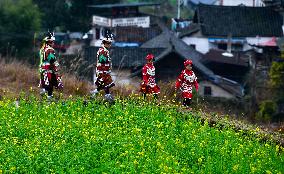
Two pairs of twin sisters are on their way to participate in the celebration of Gannangxiang festival in Zhouxi Village, Zhouxi Town of Kaili, Qiandongnan Miao and Dong Autonomous Prefecture, southwest China's Guizhou Province, February 15, 2025. Donning in traditional attire, accompanied by the melody of Lusheng, a traditional musical instrument, local people in Kaili rejoiced the annual Gannangxiang festival in Zhouxi Town of Kaili. Every year during the festival, two pairs of twin sisters of Miao ethnic group, Yang Ningzhu and Yang Ningyu, Yang Ningwei and Yang Ningning, together with their mother Wu Qian, will come back from downtown Kaili to their grandmother's house in rural Miao village to attend this grand event. They believe that this is the best way to inherit ethnic culture. With a history of more than 400 years, the festival is inscribed on the list of provincial intangible cultural heritage of Guizhou. Photo by Xinhua/Yang Wenbin/ABACAPRESS.COM

  •  
Celebration of Gannangxiang Festival - China

Celebration of Gannangxiang Festival - China

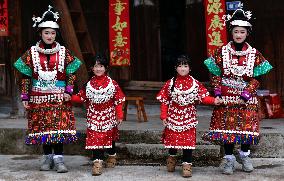
Two pairs of twin sisters pose for a group photo in Zhouxi Village, Zhouxi Town of Kaili, Qiandongnan Miao and Dong Autonomous Prefecture, southwest China's Guizhou Province, February 15, 2025. Donning in traditional attire, accompanied by the melody of Lusheng, a traditional musical instrument, local people in Kaili rejoiced the annual Gannangxiang festival in Zhouxi Town of Kaili. Every year during the festival, two pairs of twin sisters of Miao ethnic group, Yang Ningzhu and Yang Ningyu, Yang Ningwei and Yang Ningning, together with their mother Wu Qian, will come back from downtown Kaili to their grandmother's house in rural Miao village to attend this grand event. They believe that this is the best way to inherit ethnic culture. With a history of more than 400 years, the festival is inscribed on the list of provincial intangible cultural heritage of Guizhou. Photo by Xinhua/Yang Wenbin/ABACAPRESS.COM

  •  
Celebration of Gannangxiang Festival - China

Celebration of Gannangxiang Festival - China

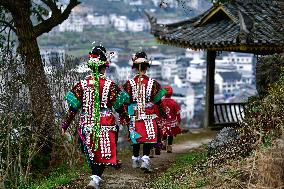
Two pairs of twin sisters are on their way to participate in the celebration of Gannangxiang festival in Zhouxi Village, Zhouxi Town of Kaili, Qiandongnan Miao and Dong Autonomous Prefecture, southwest China's Guizhou Province, February 15, 2025. Donning in traditional attire, accompanied by the melody of Lusheng, a traditional musical instrument, local people in Kaili rejoiced the annual Gannangxiang festival in Zhouxi Town of Kaili. Every year during the festival, two pairs of twin sisters of Miao ethnic group, Yang Ningzhu and Yang Ningyu, Yang Ningwei and Yang Ningning, together with their mother Wu Qian, will come back from downtown Kaili to their grandmother's house in rural Miao village to attend this grand event. They believe that this is the best way to inherit ethnic culture. With a history of more than 400 years, the festival is inscribed on the list of provincial intangible cultural heritage of Guizhou. Photo by Xinhua/Yang Wenbin/ABACAPRESS.COM

  •  
Celebration of Gannangxiang Festival - China

Celebration of Gannangxiang Festival - China

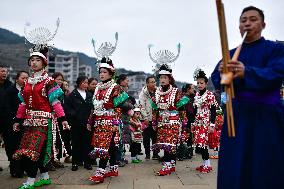
Twin sisters Yang Ningzhu (2nd L, middle row) and Yang Ningyu (3rd L, middle row) perform Lusheng dance in celebration of Gannangxiang festival in Zhouxi Town of Kaili, Qiandongnan Miao and Dong Autonomous Prefecture, southwest China's Guizhou Province, February 15, 2025. Donning in traditional attire, accompanied by the melody of Lusheng, a traditional musical instrument, local people in Kaili rejoiced the annual Gannangxiang festival in Zhouxi Town of Kaili. Every year during the festival, two pairs of twin sisters of Miao ethnic group, Yang Ningzhu and Yang Ningyu, Yang Ningwei and Yang Ningning, together with their mother Wu Qian, will come back from downtown Kaili to their grandmother's house in rural Miao village to attend this grand event. They believe that this is the best way to inherit ethnic culture. With a history of more than 400 years, the festival is inscribed on the list of provincial intangible cultural heritage of Guizhou. Photo by Xinhua/Yang Wenbin/ABACAPRESS.COM

  •  
Celebration of Gannangxiang Festival - China

Celebration of Gannangxiang Festival - China

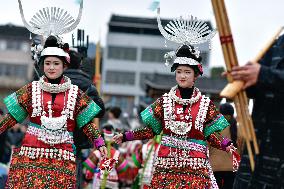
Twin sisters Yang Ningzhu (L) and Yang Ningyu perform Lusheng dance in celebration of Gannangxiang festival in Zhouxi Town of Kaili, Qiandongnan Miao and Dong Autonomous Prefecture, southwest China's Guizhou Province, February 15, 2025. Donning in traditional attire, accompanied by the melody of Lusheng, a traditional musical instrument, local people in Kaili rejoiced the annual Gannangxiang festival in Zhouxi Town of Kaili. Every year during the festival, two pairs of twin sisters of Miao ethnic group, Yang Ningzhu and Yang Ningyu, Yang Ningwei and Yang Ningning, together with their mother Wu Qian, will come back from downtown Kaili to their grandmother's house in rural Miao village to attend this grand event. They believe that this is the best way to inherit ethnic culture. With a history of more than 400 years, the festival is inscribed on the list of provincial intangible cultural heritage of Guizhou. Photo by Xinhua/Yang Wenbin/ABACAPRESS.COM

  •  
Celebration of Gannangxiang Festival - China

Celebration of Gannangxiang Festival - China

Two pairs of twin sisters prepare to participate in the celebration of Gannangxiang festival in Zhouxi Village, Zhouxi Town of Kaili, Qiandongnan Miao and Dong Autonomous Prefecture, southwest China's Guizhou Province, February 15, 2025. Donning in traditional attire, accompanied by the melody of Lusheng, a traditional musical instrument, local people in Kaili rejoiced the annual Gannangxiang festival in Zhouxi Town of Kaili. Every year during the festival, two pairs of twin sisters of Miao ethnic group, Yang Ningzhu and Yang Ningyu, Yang Ningwei and Yang Ningning, together with their mother Wu Qian, will come back from downtown Kaili to their grandmother's house in rural Miao village to attend this grand event. They believe that this is the best way to inherit ethnic culture. With a history of more than 400 years, the festival is inscribed on the list of provincial intangible cultural heritage of Guizhou. Photo by Xinhua/Yang Wenbin/ABACAPRESS.COM

  •  
Celebration of Gannangxiang Festival - China

Celebration of Gannangxiang Festival - China

Twin sisters Yang Ningyu (1st L) and Yang Ningzhu (3rd L) are dressed to prepare for the celebration of Gannangxiang festival in Zhouxi Village, Zhouxi Town of Kaili, Qiandongnan Miao and Dong Autonomous Prefecture, southwest China's Guizhou Province, February 15, 2025. Donning in traditional attire, accompanied by the melody of Lusheng, a traditional musical instrument, local people in Kaili rejoiced the annual Gannangxiang festival in Zhouxi Town of Kaili. Every year during the festival, two pairs of twin sisters of Miao ethnic group, Yang Ningzhu and Yang Ningyu, Yang Ningwei and Yang Ningning, together with their mother Wu Qian, will come back from downtown Kaili to their grandmother's house in rural Miao village to attend this grand event. They believe that this is the best way to inherit ethnic culture. With a history of more than 400 years, the festival is inscribed on the list of provincial intangible cultural heritage of Guizhou. Photo by Xinhua/Yang Wenbin/ABACAPRESS.COM

  •  
Queen Rania Talks at One Young World Summit - Montreal

Queen Rania Talks at One Young World Summit - Montreal

Queen Rania Al Abdullah of Jordan urges the world’s youth to take heed of the dangerous precedent being set by Israel’s actions in the Occupied Palestinian Territories, which she warned had “great implications” for the future they stand to inherit. “This war has done more than set the Gaza Strip back generations,” Queen Rania said. “It is also dragging the rest of the world back to a level of lawlessness best left to the archives of history.” In a speech she delivered during the One Young World Summit in Montreal, Canada, on September 21, 2024. Photo by Balkis Press/ABACAPRESS.COM

  •  
Queen Rania Talks at One Young World Summit - Montreal

Queen Rania Talks at One Young World Summit - Montreal

Queen Rania Al Abdullah of Jordan urges the world’s youth to take heed of the dangerous precedent being set by Israel’s actions in the Occupied Palestinian Territories, which she warned had “great implications” for the future they stand to inherit. “This war has done more than set the Gaza Strip back generations,” Queen Rania said. “It is also dragging the rest of the world back to a level of lawlessness best left to the archives of history.” In a speech she delivered during the One Young World Summit in Montreal, Canada, on September 21, 2024. Photo by Balkis Press/ABACAPRESS.COM

  •  
Queen Rania Talks at One Young World Summit - Montreal

Queen Rania Talks at One Young World Summit - Montreal

Queen Rania Al Abdullah of Jordan urges the world’s youth to take heed of the dangerous precedent being set by Israel’s actions in the Occupied Palestinian Territories, which she warned had “great implications” for the future they stand to inherit. “This war has done more than set the Gaza Strip back generations,” Queen Rania said. “It is also dragging the rest of the world back to a level of lawlessness best left to the archives of history.” In a speech she delivered during the One Young World Summit in Montreal, Canada, on September 21, 2024. Photo by Balkis Press/ABACAPRESS.COM

  •  
ChineseToday | Young couple inherit Aoluguya Ewenki legacy in forests in north China

ChineseToday | Young couple inherit Aoluguya Ewenki legacy in forests in north China

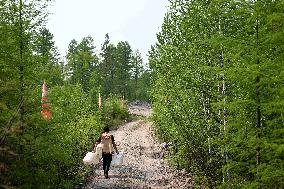
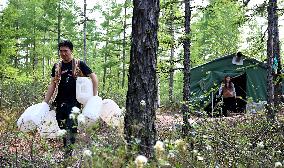
(240714) -- HULUN BUIR, July 14, 2024 Photo by Xinhua/ABACAPRESS.COM) -- Wu Qiming is on the way to fetch water from a stream near the reindeer herding site in Jinhe Town of Genhe City, north China's Inner Mongolia Autonomous Region, July 3, 2024. The Aoluguya Ewenki people, known as "the last hunting tribe in China," is the only ethnic minority group in China that raises reindeer. More than 20 years ago, they moved from the deep forests in the Dahinggan Mountains to Genhe City to resettle, but their tradition of herding reindeer was still preserved. Ayousha is one of the Aoluguya Ewenki people who spent her childhood in the deep forest with her family. In order to inherit the ethnic tradition of herding reindeer, Wu Qiming, Ayousha's husband and man of Han nationality, accompanied her back to the forest from the city in 2019, and together they set up a reindeer herding site in a forest in Jinhe Town. Both born in the 1990s, they are the youngest reindeer herders in the area now. The forests in the Dahinggan

  •  
ChineseToday | Young couple inherit Aoluguya Ewenki legacy in forests in north China

ChineseToday | Young couple inherit Aoluguya Ewenki legacy in forests in north China

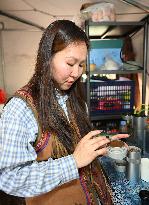
(240714) -- HULUN BUIR, July 14, 2024 Photo by Xinhua/ABACAPRESS.COM) -- Ayousha brews coffee in a tent at the reindeer herding site in Jinhe Town of Genhe City, north China's Inner Mongolia Autonomous Region, July 3, 2024. The Aoluguya Ewenki people, known as "the last hunting tribe in China," is the only ethnic minority group in China that raises reindeer. More than 20 years ago, they moved from the deep forests in the Dahinggan Mountains to Genhe City to resettle, but their tradition of herding reindeer was still preserved. Ayousha is one of the Aoluguya Ewenki people who spent her childhood in the deep forest with her family. In order to inherit the ethnic tradition of herding reindeer, Wu Qiming, Ayousha's husband and man of Han nationality, accompanied her back to the forest from the city in 2019, and together they set up a reindeer herding site in a forest in Jinhe Town. Both born in the 1990s, they are the youngest reindeer herders in the area now. The forests in the Dahinggan Mountains are lush and g

  •  
ChineseToday | Young couple inherit Aoluguya Ewenki legacy in forests in north China

ChineseToday | Young couple inherit Aoluguya Ewenki legacy in forests in north China

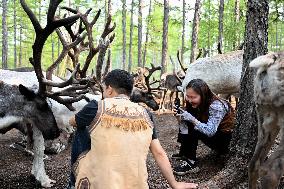
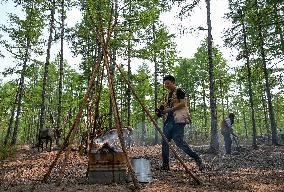
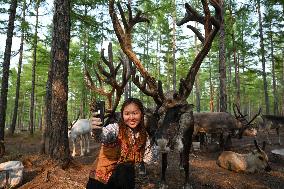
(240714) -- HULUN BUIR, July 14, 2024 Photo by Xinhua/ABACAPRESS.COM) -- Ayousha and her husband Wu Qiming record short videos at the reindeer herding site in Jinhe Town of Genhe City, north China's Inner Mongolia Autonomous Region, July 3, 2024. The Aoluguya Ewenki people, known as "the last hunting tribe in China," is the only ethnic minority group in China that raises reindeer. More than 20 years ago, they moved from the deep forests in the Dahinggan Mountains to Genhe City to resettle, but their tradition of herding reindeer was still preserved. Ayousha is one of the Aoluguya Ewenki people who spent her childhood in the deep forest with her family. In order to inherit the ethnic tradition of herding reindeer, Wu Qiming, Ayousha's husband and man of Han nationality, accompanied her back to the forest from the city in 2019, and together they set up a reindeer herding site in a forest in Jinhe Town. Both born in the 1990s, they are the youngest reindeer herders in the area now. The forests in the Dahinggan M

  •  
ChineseToday | Young couple inherit Aoluguya Ewenki legacy in forests in north China

ChineseToday | Young couple inherit Aoluguya Ewenki legacy in forests in north China

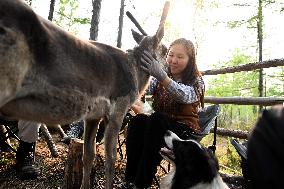
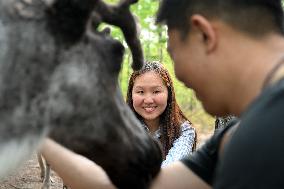
(240714) -- HULUN BUIR, July 14, 2024 Photo by Xinhua/ABACAPRESS.COM) -- Ayousha comforts a reindeer at the reindeer herding site in Jinhe Town of Genhe City, north China's Inner Mongolia Autonomous Region, July 3, 2024. The Aoluguya Ewenki people, known as "the last hunting tribe in China," is the only ethnic minority group in China that raises reindeer. More than 20 years ago, they moved from the deep forests in the Dahinggan Mountains to Genhe City to resettle, but their tradition of herding reindeer was still preserved. Ayousha is one of the Aoluguya Ewenki people who spent her childhood in the deep forest with her family. In order to inherit the ethnic tradition of herding reindeer, Wu Qiming, Ayousha's husband and man of Han nationality, accompanied her back to the forest from the city in 2019, and together they set up a reindeer herding site in a forest in Jinhe Town. Both born in the 1990s, they are the youngest reindeer herders in the area now. The forests in the Dahinggan Mountains are lush and gree

  •  
ChineseToday | Young couple inherit Aoluguya Ewenki legacy in forests in north China

ChineseToday | Young couple inherit Aoluguya Ewenki legacy in forests in north China

(240714) -- HULUN BUIR, July 14, 2024 Photo by Xinhua/ABACAPRESS.COM) -- An aerial drone photo taken on July 3, 2024 shows a view near the reindeer herding site in Jinhe Town of Genhe City, north China's Inner Mongolia Autonomous Region. The Aoluguya Ewenki people, known as "the last hunting tribe in China," is the only ethnic minority group in China that raises reindeer. More than 20 years ago, they moved from the deep forests in the Dahinggan Mountains to Genhe City to resettle, but their tradition of herding reindeer was still preserved. Ayousha is one of the Aoluguya Ewenki people who spent her childhood in the deep forest with her family. In order to inherit the ethnic tradition of herding reindeer, Wu Qiming, Ayousha's husband and man of Han nationality, accompanied her back to the forest from the city in 2019, and together they set up a reindeer herding site in a forest in Jinhe Town. Both born in the 1990s, they are the youngest reindeer herders in the area now. The forests in the Dahinggan Mountains

  •  
ChineseToday | Young couple inherit Aoluguya Ewenki legacy in forests in north China

ChineseToday | Young couple inherit Aoluguya Ewenki legacy in forests in north China

(240714) -- HULUN BUIR, July 14, 2024 Photo by Xinhua/ABACAPRESS.COM) -- Wu Qiming prepares to fetch water from a stream near the reindeer herding site in Jinhe Town of Genhe City, north China's Inner Mongolia Autonomous Region, July 3, 2024. The Aoluguya Ewenki people, known as "the last hunting tribe in China," is the only ethnic minority group in China that raises reindeer. More than 20 years ago, they moved from the deep forests in the Dahinggan Mountains to Genhe City to resettle, but their tradition of herding reindeer was still preserved. Ayousha is one of the Aoluguya Ewenki people who spent her childhood in the deep forest with her family. In order to inherit the ethnic tradition of herding reindeer, Wu Qiming, Ayousha's husband and man of Han nationality, accompanied her back to the forest from the city in 2019, and together they set up a reindeer herding site in a forest in Jinhe Town. Both born in the 1990s, they are the youngest reindeer herders in the area now. The forests in the Dahinggan Mount

  •  
ChineseToday | Young couple inherit Aoluguya Ewenki legacy in forests in north China

ChineseToday | Young couple inherit Aoluguya Ewenki legacy in forests in north China

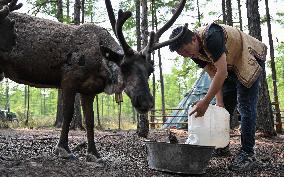
(240714) -- HULUN BUIR, July 14, 2024 Photo by Xinhua/ABACAPRESS.COM) -- Wu Qiming feeds water to a reindeer at the reindeer herding site in Jinhe Town of Genhe City, north China's Inner Mongolia Autonomous Region, July 3, 2024. The Aoluguya Ewenki people, known as "the last hunting tribe in China," is the only ethnic minority group in China that raises reindeer. More than 20 years ago, they moved from the deep forests in the Dahinggan Mountains to Genhe City to resettle, but their tradition of herding reindeer was still preserved. Ayousha is one of the Aoluguya Ewenki people who spent her childhood in the deep forest with her family. In order to inherit the ethnic tradition of herding reindeer, Wu Qiming, Ayousha's husband and man of Han nationality, accompanied her back to the forest from the city in 2019, and together they set up a reindeer herding site in a forest in Jinhe Town. Both born in the 1990s, they are the youngest reindeer herders in the area now. The forests in the Dahinggan Mountains are lush

  •  
ChineseToday | Young couple inherit Aoluguya Ewenki legacy in forests in north China

ChineseToday | Young couple inherit Aoluguya Ewenki legacy in forests in north China

(240714) -- HULUN BUIR, July 14, 2024 Photo by Xinhua/ABACAPRESS.COM) -- Ayousha watches as her husband Wu Qiming deworms a reindeer at the reindeer herding site in Jinhe Town of Genhe City, north China's Inner Mongolia Autonomous Region, July 3, 2024. The Aoluguya Ewenki people, known as "the last hunting tribe in China," is the only ethnic minority group in China that raises reindeer. More than 20 years ago, they moved from the deep forests in the Dahinggan Mountains to Genhe City to resettle, but their tradition of herding reindeer was still preserved. Ayousha is one of the Aoluguya Ewenki people who spent her childhood in the deep forest with her family. In order to inherit the ethnic tradition of herding reindeer, Wu Qiming, Ayousha's husband and man of Han nationality, accompanied her back to the forest from the city in 2019, and together they set up a reindeer herding site in a forest in Jinhe Town. Both born in the 1990s, they are the youngest reindeer herders in the area now. The forests in the Dahin

  •  
ChineseToday | Young couple inherit Aoluguya Ewenki legacy in forests in north China

ChineseToday | Young couple inherit Aoluguya Ewenki legacy in forests in north China

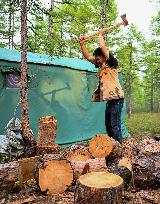
(240714) -- HULUN BUIR, July 14, 2024 Photo by Xinhua/ABACAPRESS.COM) -- Wu Qiming chops firewood at the reindeer herding site in Jinhe Town of Genhe City, north China's Inner Mongolia Autonomous Region, July 3, 2024. The Aoluguya Ewenki people, known as "the last hunting tribe in China," is the only ethnic minority group in China that raises reindeer. More than 20 years ago, they moved from the deep forests in the Dahinggan Mountains to Genhe City to resettle, but their tradition of herding reindeer was still preserved. Ayousha is one of the Aoluguya Ewenki people who spent her childhood in the deep forest with her family. In order to inherit the ethnic tradition of herding reindeer, Wu Qiming, Ayousha's husband and man of Han nationality, accompanied her back to the forest from the city in 2019, and together they set up a reindeer herding site in a forest in Jinhe Town. Both born in the 1990s, they are the youngest reindeer herders in the area now. The forests in the Dahinggan Mountains are lush and green i

  •  
ChineseToday | Young couple inherit Aoluguya Ewenki legacy in forests in north China

ChineseToday | Young couple inherit Aoluguya Ewenki legacy in forests in north China

(240714) -- HULUN BUIR, July 14, 2024 Photo by Xinhua/ABACAPRESS.COM) -- A reindeer is seen at the reindeer herding site in Jinhe Town of Genhe City, north China's Inner Mongolia Autonomous Region, July 3, 2024. The Aoluguya Ewenki people, known as "the last hunting tribe in China," is the only ethnic minority group in China that raises reindeer. More than 20 years ago, they moved from the deep forests in the Dahinggan Mountains to Genhe City to resettle, but their tradition of herding reindeer was still preserved. Ayousha is one of the Aoluguya Ewenki people who spent her childhood in the deep forest with her family. In order to inherit the ethnic tradition of herding reindeer, Wu Qiming, Ayousha's husband and man of Han nationality, accompanied her back to the forest from the city in 2019, and together they set up a reindeer herding site in a forest in Jinhe Town. Both born in the 1990s, they are the youngest reindeer herders in the area now. The forests in the Dahinggan Mountains are lush and green in summ

  •  
ChineseToday | Young couple inherit Aoluguya Ewenki legacy in forests in north China

ChineseToday | Young couple inherit Aoluguya Ewenki legacy in forests in north China

(240714) -- HULUN BUIR, July 14, 2024 Photo by Xinhua/ABACAPRESS.COM) -- An aerial drone photo taken on July 3, 2024 shows reindeer at the reindeer herding site in Jinhe Town of Genhe City, north China's Inner Mongolia Autonomous Region. The Aoluguya Ewenki people, known as "the last hunting tribe in China," is the only ethnic minority group in China that raises reindeer. More than 20 years ago, they moved from the deep forests in the Dahinggan Mountains to Genhe City to resettle, but their tradition of herding reindeer was still preserved. Ayousha is one of the Aoluguya Ewenki people who spent her childhood in the deep forest with her family. In order to inherit the ethnic tradition of herding reindeer, Wu Qiming, Ayousha's husband and man of Han nationality, accompanied her back to the forest from the city in 2019, and together they set up a reindeer herding site in a forest in Jinhe Town. Both born in the 1990s, they are the youngest reindeer herders in the area now. The forests in the Dahinggan Mountains

  •  
ChineseToday | Young couple inherit Aoluguya Ewenki legacy in forests in north China

ChineseToday | Young couple inherit Aoluguya Ewenki legacy in forests in north China

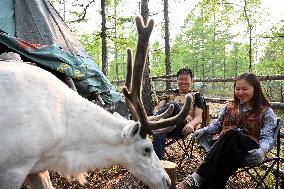
(240714) -- HULUN BUIR, July 14, 2024 Photo by Xinhua/ABACAPRESS.COM) -- Ayousha and her husband Wu Qiming rest at the reindeer herding site in Jinhe Town of Genhe City, north China's Inner Mongolia Autonomous Region, July 3, 2024. The Aoluguya Ewenki people, known as "the last hunting tribe in China," is the only ethnic minority group in China that raises reindeer. More than 20 years ago, they moved from the deep forests in the Dahinggan Mountains to Genhe City to resettle, but their tradition of herding reindeer was still preserved. Ayousha is one of the Aoluguya Ewenki people who spent her childhood in the deep forest with her family. In order to inherit the ethnic tradition of herding reindeer, Wu Qiming, Ayousha's husband and man of Han nationality, accompanied her back to the forest from the city in 2019, and together they set up a reindeer herding site in a forest in Jinhe Town. Both born in the 1990s, they are the youngest reindeer herders in the area now. The forests in the Dahinggan Mountains are lu

  •  
ChineseToday | Young couple inherit Aoluguya Ewenki legacy in forests in north China

ChineseToday | Young couple inherit Aoluguya Ewenki legacy in forests in north China

(240714) -- HULUN BUIR, July 14, 2024 Photo by Xinhua/ABACAPRESS.COM) -- Ayousha and her husband Wu Qiming pose for photos with their most favorite reindeer at the reindeer herding site in Jinhe Town of Genhe City, north China's Inner Mongolia Autonomous Region, July 3, 2024. The Aoluguya Ewenki people, known as "the last hunting tribe in China," is the only ethnic minority group in China that raises reindeer. More than 20 years ago, they moved from the deep forests in the Dahinggan Mountains to Genhe City to resettle, but their tradition of herding reindeer was still preserved. Ayousha is one of the Aoluguya Ewenki people who spent her childhood in the deep forest with her family. In order to inherit the ethnic tradition of herding reindeer, Wu Qiming, Ayousha's husband and man of Han nationality, accompanied her back to the forest from the city in 2019, and together they set up a reindeer herding site in a forest in Jinhe Town. Both born in the 1990s, they are the youngest reindeer herders in the area now.

  •  
ChineseToday | Young couple inherit Aoluguya Ewenki legacy in forests in north China

ChineseToday | Young couple inherit Aoluguya Ewenki legacy in forests in north China

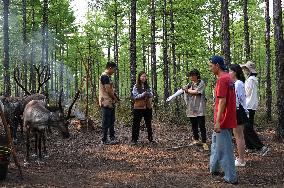
(240714) -- HULUN BUIR, July 14, 2024 Photo by Xinhua/ABACAPRESS.COM) -- Tourists pose for photos with a reindeer at the reindeer herding site in Jinhe Town of Genhe City, north China's Inner Mongolia Autonomous Region, July 3, 2024. The Aoluguya Ewenki people, known as "the last hunting tribe in China," is the only ethnic minority group in China that raises reindeer. More than 20 years ago, they moved from the deep forests in the Dahinggan Mountains to Genhe City to resettle, but their tradition of herding reindeer was still preserved. Ayousha is one of the Aoluguya Ewenki people who spent her childhood in the deep forest with her family. In order to inherit the ethnic tradition of herding reindeer, Wu Qiming, Ayousha's husband and man of Han nationality, accompanied her back to the forest from the city in 2019, and together they set up a reindeer herding site in a forest in Jinhe Town. Both born in the 1990s, they are the youngest reindeer herders in the area now. The forests in the Dahinggan Mountains are

  •  
ChineseToday | Young couple inherit Aoluguya Ewenki legacy in forests in north China

ChineseToday | Young couple inherit Aoluguya Ewenki legacy in forests in north China

(240714) -- HULUN BUIR, July 14, 2024 Photo by Xinhua/ABACAPRESS.COM) -- Ayousha (2nd L) communicates with tourists at the reindeer herding site in Jinhe Town of Genhe City, north China's Inner Mongolia Autonomous Region, July 3, 2024. The Aoluguya Ewenki people, known as "the last hunting tribe in China," is the only ethnic minority group in China that raises reindeer. More than 20 years ago, they moved from the deep forests in the Dahinggan Mountains to Genhe City to resettle, but their tradition of herding reindeer was still preserved. Ayousha is one of the Aoluguya Ewenki people who spent her childhood in the deep forest with her family. In order to inherit the ethnic tradition of herding reindeer, Wu Qiming, Ayousha's husband and man of Han nationality, accompanied her back to the forest from the city in 2019, and together they set up a reindeer herding site in a forest in Jinhe Town. Both born in the 1990s, they are the youngest reindeer herders in the area now. The forests in the Dahinggan Mountains ar

  •  
ChineseToday | Young couple inherit Aoluguya Ewenki legacy in forests in north China

ChineseToday | Young couple inherit Aoluguya Ewenki legacy in forests in north China

(240714) -- HULUN BUIR, July 14, 2024 Photo by Xinhua/ABACAPRESS.COM) -- Ayousha and her husband Wu Qiming work at the reindeer herding site in Jinhe Town of Genhe City, north China's Inner Mongolia Autonomous Region, July 3, 2024. The Aoluguya Ewenki people, known as "the last hunting tribe in China," is the only ethnic minority group in China that raises reindeer. More than 20 years ago, they moved from the deep forests in the Dahinggan Mountains to Genhe City to resettle, but their tradition of herding reindeer was still preserved. Ayousha is one of the Aoluguya Ewenki people who spent her childhood in the deep forest with her family. In order to inherit the ethnic tradition of herding reindeer, Wu Qiming, Ayousha's husband and man of Han nationality, accompanied her back to the forest from the city in 2019, and together they set up a reindeer herding site in a forest in Jinhe Town. Both born in the 1990s, they are the youngest reindeer herders in the area now. The forests in the Dahinggan Mountains are lu

  •  
ChineseToday | Young couple inherit Aoluguya Ewenki legacy in forests in north China

ChineseToday | Young couple inherit Aoluguya Ewenki legacy in forests in north China

(240714) -- HULUN BUIR, July 14, 2024 Photo by Xinhua/ABACAPRESS.COM) -- Ayousha records short videos at the reindeer herding site in Jinhe Town of Genhe City, north China's Inner Mongolia Autonomous Region, July 3, 2024. The Aoluguya Ewenki people, known as "the last hunting tribe in China," is the only ethnic minority group in China that raises reindeer. More than 20 years ago, they moved from the deep forests in the Dahinggan Mountains to Genhe City to resettle, but their tradition of herding reindeer was still preserved. Ayousha is one of the Aoluguya Ewenki people who spent her childhood in the deep forest with her family. In order to inherit the ethnic tradition of herding reindeer, Wu Qiming, Ayousha's husband and man of Han nationality, accompanied her back to the forest from the city in 2019, and together they set up a reindeer herding site in a forest in Jinhe Town. Both born in the 1990s, they are the youngest reindeer herders in the area now. The forests in the Dahinggan Mountains are lush and gre

  •  
ChineseToday | Young couple inherit Aoluguya Ewenki legacy in forests in north China

ChineseToday | Young couple inherit Aoluguya Ewenki legacy in forests in north China

(240714) -- HULUN BUIR, July 14, 2024 Photo by Xinhua/ABACAPRESS.COM) -- Wu Qiming fetches water from a stream near the reindeer herding site in Jinhe Town of Genhe City, north China's Inner Mongolia Autonomous Region, July 3, 2024. The Aoluguya Ewenki people, known as "the last hunting tribe in China," is the only ethnic minority group in China that raises reindeer. More than 20 years ago, they moved from the deep forests in the Dahinggan Mountains to Genhe City to resettle, but their tradition of herding reindeer was still preserved. Ayousha is one of the Aoluguya Ewenki people who spent her childhood in the deep forest with her family. In order to inherit the ethnic tradition of herding reindeer, Wu Qiming, Ayousha's husband and man of Han nationality, accompanied her back to the forest from the city in 2019, and together they set up a reindeer herding site in a forest in Jinhe Town. Both born in the 1990s, they are the youngest reindeer herders in the area now. The forests in the Dahinggan Mountains are l

  •  
(AmazingAnhui)CHINA-ANHUI-JIESHOU-PAINTED POTTERY (CN)

(AmazingAnhui)CHINA-ANHUI-JIESHOU-PAINTED POTTERY (CN)

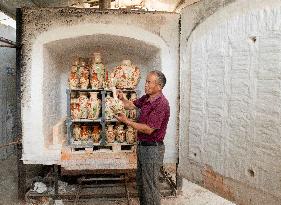
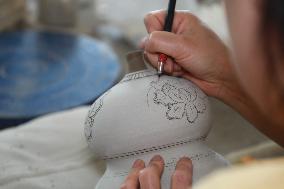
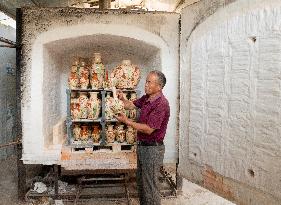
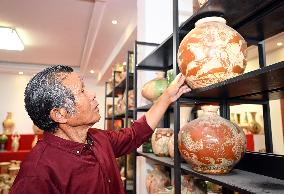
(240531) -- JIESHOU, May 31, 2024 Photo by Xinhua/ABACAPRESS.COM) -- Lu Yilin, a city-level inheritor of Jieshou painted pottery, checks on painted pottery works outside the kiln in Jieshou City of east China's Anhui Province, May 23, 2024. The making of Jieshou painted pottery can be traced back to the Tang Dynasty (618-907). Tianying Township in Jieshou City of east China's Anhui Province was the main production site of Jieshou painted pottery in history. The technique of making Jieshou painted pottery was inscribed as a national-level intangible cultural heritage in 2006. To inherit and revive the technique, the local inheritors have innovated the shape and carving patterns to meet the demand of modern society. The cultural and creative products designed by these inheritors are also favored by consumers. Nowadays, Tianying Township not only remains as a production place of Jieshou painted pottery, but also accommodates a museum for displaying potteries and a base for inheriting and reviving intangible cult

  •  
(AmazingAnhui)CHINA-ANHUI-JIESHOU-PAINTED POTTERY (CN)

(AmazingAnhui)CHINA-ANHUI-JIESHOU-PAINTED POTTERY (CN)

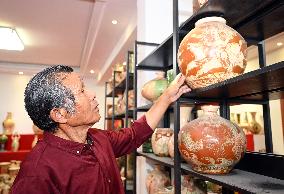
(240531) -- JIESHOU, May 31, 2024 Photo by Xinhua/ABACAPRESS.COM) -- Lu Qunshan, a national inheritor of Jieshou painted pottery, introduces painted pottery works at Jieshou City in east China's Anhui Province, May 24, 2024. The making of Jieshou painted pottery can be traced back to the Tang Dynasty (618-907). Tianying Township in Jieshou City of east China's Anhui Province was the main production site of Jieshou painted pottery in history. The technique of making Jieshou painted pottery was inscribed as a national-level intangible cultural heritage in 2006. To inherit and revive the technique, the local inheritors have innovated the shape and carving patterns to meet the demand of modern society. The cultural and creative products designed by these inheritors are also favored by consumers. Nowadays, Tianying Township not only remains as a production place of Jieshou painted pottery, but also accommodates a museum for displaying potteries and a base for inheriting and reviving intangible cultural heritage, w

  •  
(AmazingAnhui)CHINA-ANHUI-JIESHOU-PAINTED POTTERY (CN)

(AmazingAnhui)CHINA-ANHUI-JIESHOU-PAINTED POTTERY (CN)

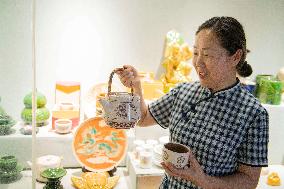
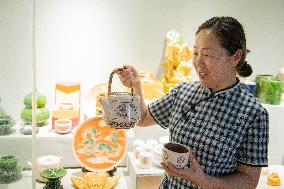
(240531) -- JIESHOU, May 31, 2024 Photo by Xinhua/ABACAPRESS.COM) -- Xing Shuqin, a provincial inheritor of Jieshou painted pottery, shows a tea pot made by herself at the painted pottery museum in Tianying Township of Jieshou City in east China's Anhui Province, May 23, 2024. The making of Jieshou painted pottery can be traced back to the Tang Dynasty (618-907). Tianying Township in Jieshou City of east China's Anhui Province was the main production site of Jieshou painted pottery in history. The technique of making Jieshou painted pottery was inscribed as a national-level intangible cultural heritage in 2006. To inherit and revive the technique, the local inheritors have innovated the shape and carving patterns to meet the demand of modern society. The cultural and creative products designed by these inheritors are also favored by consumers. Nowadays, Tianying Township not only remains as a production place of Jieshou painted pottery, but also accommodates a museum for displaying potteries and a base for in

  •  
(AmazingAnhui)CHINA-ANHUI-JIESHOU-PAINTED POTTERY (CN)

(AmazingAnhui)CHINA-ANHUI-JIESHOU-PAINTED POTTERY (CN)

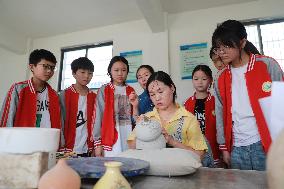
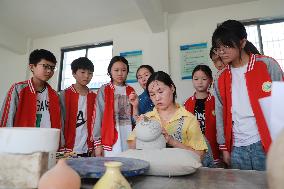
(240531) -- JIESHOU, May 31, 2024 Photo by Xinhua/ABACAPRESS.COM) -- Xing Hui (front), an engraver and painter of Jieshou painted pottery, demonstrates her techniques to children of a study tour at the painted pottery museum in Tianying Township of Jieshou City in east China's Anhui Province, May 29, 2024. The making of Jieshou painted pottery can be traced back to the Tang Dynasty (618-907). Tianying Township in Jieshou City of east China's Anhui Province was the main production site of Jieshou painted pottery in history. The technique of making Jieshou painted pottery was inscribed as a national-level intangible cultural heritage in 2006. To inherit and revive the technique, the local inheritors have innovated the shape and carving patterns to meet the demand of modern society. The cultural and creative products designed by these inheritors are also favored by consumers. Nowadays, Tianying Township not only remains as a production place of Jieshou painted pottery, but also accommodates a museum for displayi

  •  
(AmazingAnhui)CHINA-ANHUI-JIESHOU-PAINTED POTTERY (CN)

(AmazingAnhui)CHINA-ANHUI-JIESHOU-PAINTED POTTERY (CN)

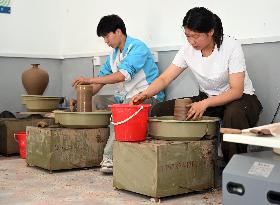
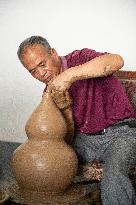
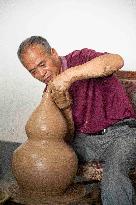
(240531) -- JIESHOU, May 31, 2024 Photo by Xinhua/ABACAPRESS.COM) -- Lu Yilin, a city-level inheritor of Jieshou painted pottery, shapes clay in Jieshou City of east China's Anhui Province, May 23, 2024. The making of Jieshou painted pottery can be traced back to the Tang Dynasty (618-907). Tianying Township in Jieshou City of east China's Anhui Province was the main production site of Jieshou painted pottery in history. The technique of making Jieshou painted pottery was inscribed as a national-level intangible cultural heritage in 2006. To inherit and revive the technique, the local inheritors have innovated the shape and carving patterns to meet the demand of modern society. The cultural and creative products designed by these inheritors are also favored by consumers. Nowadays, Tianying Township not only remains as a production place of Jieshou painted pottery, but also accommodates a museum for displaying potteries and a base for inheriting and reviving intangible cultural heritage, which makes the townsh

  •  
(AmazingAnhui)CHINA-ANHUI-JIESHOU-PAINTED POTTERY (CN)

(AmazingAnhui)CHINA-ANHUI-JIESHOU-PAINTED POTTERY (CN)

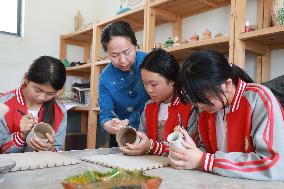
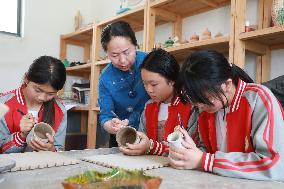
(240531) -- JIESHOU, May 31, 2024 Photo by Xinhua/ABACAPRESS.COM) -- Xing Shuqin (2nd L), a provincial inheritor of Jieshou painted pottery, instructs students of a study tour on the engraving and painting of pottery at the painted pottery museum in Tianying Township of Jieshou City in east China's Anhui Province, May 29, 2024. The making of Jieshou painted pottery can be traced back to the Tang Dynasty (618-907). Tianying Township in Jieshou City of east China's Anhui Province was the main production site of Jieshou painted pottery in history. The technique of making Jieshou painted pottery was inscribed as a national-level intangible cultural heritage in 2006. To inherit and revive the technique, the local inheritors have innovated the shape and carving patterns to meet the demand of modern society. The cultural and creative products designed by these inheritors are also favored by consumers. Nowadays, Tianying Township not only remains as a production place of Jieshou painted pottery, but also accommodates

  •  
(AmazingAnhui)CHINA-ANHUI-JIESHOU-PAINTED POTTERY (CN)

(AmazingAnhui)CHINA-ANHUI-JIESHOU-PAINTED POTTERY (CN)

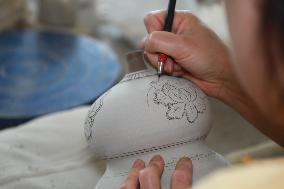
(240531) -- JIESHOU, May 31, 2024 (Xinhua) -- Xing Hui (front), an engraver and painter of Jieshou painted pottery, demonstrates her techniques at the painted pottery museum in Tianying Township of Jieshou City in east China's Anhui Province, May 29, 2024. The making of Jieshou painted pottery can be traced back to the Tang Dynasty (618-907). Tianying Township in Jieshou City of east China's Anhui Province was the main production site of Jieshou painted pottery in history. The technique of making Jieshou painted pottery was inscribed as a national-level intangible cultural heritage in 2006. To inherit and revive the technique, the local inheritors have innovated the shape and carving patterns to meet the demand of modern society. The cultural and creative products designed by these inheritors are also favored by consumers. Nowadays, Tianying Township not only remains as a production place of Jieshou painted pottery, but also accommodates a museum for displaying potteries and a base for inheriting and revivi

  •  
(AmazingAnhui)CHINA-ANHUI-JIESHOU-PAINTED POTTERY (CN)

(AmazingAnhui)CHINA-ANHUI-JIESHOU-PAINTED POTTERY (CN)

(240531) -- JIESHOU, May 31, 2024 Photo by Xinhua/ABACAPRESS.COM) -- Xing Hui (front), an engraver and painter of Jieshou painted pottery, demonstrates her techniques at the painted pottery museum in Tianying Township of Jieshou City in east China's Anhui Province, May 29, 2024. The making of Jieshou painted pottery can be traced back to the Tang Dynasty (618-907). Tianying Township in Jieshou City of east China's Anhui Province was the main production site of Jieshou painted pottery in history. The technique of making Jieshou painted pottery was inscribed as a national-level intangible cultural heritage in 2006. To inherit and revive the technique, the local inheritors have innovated the shape and carving patterns to meet the demand of modern society. The cultural and creative products designed by these inheritors are also favored by consumers. Nowadays, Tianying Township not only remains as a production place of Jieshou painted pottery, but also accommodates a museum for displaying potteries and a base for

  •  
(AmazingAnhui)CHINA-ANHUI-JIESHOU-PAINTED POTTERY (CN)

(AmazingAnhui)CHINA-ANHUI-JIESHOU-PAINTED POTTERY (CN)

(240531) -- JIESHOU, May 31, 2024 Photo by Xinhua/ABACAPRESS.COM) -- Lu Hua, a provincial inheritor of Jieshou painted pottery, makes a painted pottery craft at Jieshou City in east China's Anhui Province, May 24, 2024. The making of Jieshou painted pottery can be traced back to the Tang Dynasty (618-907). Tianying Township in Jieshou City of east China's Anhui Province was the main production site of Jieshou painted pottery in history. The technique of making Jieshou painted pottery was inscribed as a national-level intangible cultural heritage in 2006. To inherit and revive the technique, the local inheritors have innovated the shape and carving patterns to meet the demand of modern society. The cultural and creative products designed by these inheritors are also favored by consumers. Nowadays, Tianying Township not only remains as a production place of Jieshou painted pottery, but also accommodates a museum for displaying potteries and a base for inheriting and reviving intangible cultural heritage, which

  •  
(AmazingAnhui)CHINA-ANHUI-JIESHOU-PAINTED POTTERY (CN)

(AmazingAnhui)CHINA-ANHUI-JIESHOU-PAINTED POTTERY (CN)

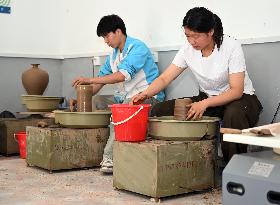
(240531) -- JIESHOU, May 31, 2024 Photo by Xinhua/ABACAPRESS.COM) -- Students learn about Jieshou painted pottery making at Fuyang Science and Engineering School in Jieshou City of east China's Anhui Province, May 24, 2024. The making of Jieshou painted pottery can be traced back to the Tang Dynasty (618-907). Tianying Township in Jieshou City of east China's Anhui Province was the main production site of Jieshou painted pottery in history. The technique of making Jieshou painted pottery was inscribed as a national-level intangible cultural heritage in 2006. To inherit and revive the technique, the local inheritors have innovated the shape and carving patterns to meet the demand of modern society. The cultural and creative products designed by these inheritors are also favored by consumers. Nowadays, Tianying Township not only remains as a production place of Jieshou painted pottery, but also accommodates a museum for displaying potteries and a base for inheriting and reviving intangible cultural heritage, wh

  •  
(AmazingAnhui)CHINA-ANHUI-JIESHOU-PAINTED POTTERY (CN)

(AmazingAnhui)CHINA-ANHUI-JIESHOU-PAINTED POTTERY (CN)

(240531) -- JIESHOU, May 31, 2024 (Xinhua) -- Xing Shuqin (2nd L), a provincial inheritor of Jieshou painted pottery, instructs students of a study tour on the engraving and painting of pottery at the painted pottery museum in Tianying Township of Jieshou City in east China's Anhui Province, May 29, 2024. The making of Jieshou painted pottery can be traced back to the Tang Dynasty (618-907). Tianying Township in Jieshou City of east China's Anhui Province was the main production site of Jieshou painted pottery in history. The technique of making Jieshou painted pottery was inscribed as a national-level intangible cultural heritage in 2006. To inherit and revive the technique, the local inheritors have innovated the shape and carving patterns to meet the demand of modern society. The cultural and creative products designed by these inheritors are also favored by consumers. Nowadays, Tianying Township not only remains as a production place of Jieshou painted pottery, but also accommodates a museum for display

  •  
(AmazingAnhui)CHINA-ANHUI-JIESHOU-PAINTED POTTERY (CN)

(AmazingAnhui)CHINA-ANHUI-JIESHOU-PAINTED POTTERY (CN)

(240531) -- JIESHOU, May 31, 2024 (Xinhua) -- Xing Hui (front), an engraver and painter of Jieshou painted pottery, demonstrates her techniques to children of a study tour at the painted pottery museum in Tianying Township of Jieshou City in east China's Anhui Province, May 29, 2024. The making of Jieshou painted pottery can be traced back to the Tang Dynasty (618-907). Tianying Township in Jieshou City of east China's Anhui Province was the main production site of Jieshou painted pottery in history. The technique of making Jieshou painted pottery was inscribed as a national-level intangible cultural heritage in 2006. To inherit and revive the technique, the local inheritors have innovated the shape and carving patterns to meet the demand of modern society. The cultural and creative products designed by these inheritors are also favored by consumers. Nowadays, Tianying Township not only remains as a production place of Jieshou painted pottery, but also accommodates a museum for displaying potteries and a ba

  •  
(AmazingAnhui)CHINA-ANHUI-JIESHOU-PAINTED POTTERY (CN)

(AmazingAnhui)CHINA-ANHUI-JIESHOU-PAINTED POTTERY (CN)

(240531) -- JIESHOU, May 31, 2024 (Xinhua) -- Lu Yilin, a city-level inheritor of Jieshou painted pottery, checks on painted pottery works outside the kiln in Jieshou City of east China's Anhui Province, May 23, 2024. The making of Jieshou painted pottery can be traced back to the Tang Dynasty (618-907). Tianying Township in Jieshou City of east China's Anhui Province was the main production site of Jieshou painted pottery in history. The technique of making Jieshou painted pottery was inscribed as a national-level intangible cultural heritage in 2006. To inherit and revive the technique, the local inheritors have innovated the shape and carving patterns to meet the demand of modern society. The cultural and creative products designed by these inheritors are also favored by consumers. Nowadays, Tianying Township not only remains as a production place of Jieshou painted pottery, but also accommodates a museum for displaying potteries and a base for inheriting and reviving intangible cultural heritage, which

  •  
(AmazingAnhui)CHINA-ANHUI-JIESHOU-PAINTED POTTERY (CN)

(AmazingAnhui)CHINA-ANHUI-JIESHOU-PAINTED POTTERY (CN)

(240531) -- JIESHOU, May 31, 2024 (Xinhua) -- Lu Hua, a provincial inheritor of Jieshou painted pottery, makes a painted pottery craft at Jieshou City in east China's Anhui Province, May 24, 2024. The making of Jieshou painted pottery can be traced back to the Tang Dynasty (618-907). Tianying Township in Jieshou City of east China's Anhui Province was the main production site of Jieshou painted pottery in history. The technique of making Jieshou painted pottery was inscribed as a national-level intangible cultural heritage in 2006. To inherit and revive the technique, the local inheritors have innovated the shape and carving patterns to meet the demand of modern society. The cultural and creative products designed by these inheritors are also favored by consumers. Nowadays, Tianying Township not only remains as a production place of Jieshou painted pottery, but also accommodates a museum for displaying potteries and a base for inheriting and reviving intangible cultural heritage, which makes the township a

  •  
(AmazingAnhui)CHINA-ANHUI-JIESHOU-PAINTED POTTERY (CN)

(AmazingAnhui)CHINA-ANHUI-JIESHOU-PAINTED POTTERY (CN)

(240531) -- JIESHOU, May 31, 2024 (Xinhua) -- Students learn about Jieshou painted pottery making at Fuyang Science and Engineering School in Jieshou City of east China's Anhui Province, May 24, 2024. The making of Jieshou painted pottery can be traced back to the Tang Dynasty (618-907). Tianying Township in Jieshou City of east China's Anhui Province was the main production site of Jieshou painted pottery in history. The technique of making Jieshou painted pottery was inscribed as a national-level intangible cultural heritage in 2006. To inherit and revive the technique, the local inheritors have innovated the shape and carving patterns to meet the demand of modern society. The cultural and creative products designed by these inheritors are also favored by consumers. Nowadays, Tianying Township not only remains as a production place of Jieshou painted pottery, but also accommodates a museum for displaying potteries and a base for inheriting and reviving intangible cultural heritage, which makes the townshi

  •  
(AmazingAnhui)CHINA-ANHUI-JIESHOU-PAINTED POTTERY (CN)

(AmazingAnhui)CHINA-ANHUI-JIESHOU-PAINTED POTTERY (CN)

(240531) -- JIESHOU, May 31, 2024 (Xinhua) -- Xing Shuqin, a provincial inheritor of Jieshou painted pottery, shows a tea pot made by herself at the painted pottery museum in Tianying Township of Jieshou City in east China's Anhui Province, May 23, 2024. The making of Jieshou painted pottery can be traced back to the Tang Dynasty (618-907). Tianying Township in Jieshou City of east China's Anhui Province was the main production site of Jieshou painted pottery in history. The technique of making Jieshou painted pottery was inscribed as a national-level intangible cultural heritage in 2006. To inherit and revive the technique, the local inheritors have innovated the shape and carving patterns to meet the demand of modern society. The cultural and creative products designed by these inheritors are also favored by consumers. Nowadays, Tianying Township not only remains as a production place of Jieshou painted pottery, but also accommodates a museum for displaying potteries and a base for inheriting and reviving

  •  
(AmazingAnhui)CHINA-ANHUI-JIESHOU-PAINTED POTTERY (CN)

(AmazingAnhui)CHINA-ANHUI-JIESHOU-PAINTED POTTERY (CN)

(240531) -- JIESHOU, May 31, 2024 (Xinhua) -- Lu Yilin, a city-level inheritor of Jieshou painted pottery, shapes clay in Jieshou City of east China's Anhui Province, May 23, 2024. The making of Jieshou painted pottery can be traced back to the Tang Dynasty (618-907). Tianying Township in Jieshou City of east China's Anhui Province was the main production site of Jieshou painted pottery in history. The technique of making Jieshou painted pottery was inscribed as a national-level intangible cultural heritage in 2006. To inherit and revive the technique, the local inheritors have innovated the shape and carving patterns to meet the demand of modern society. The cultural and creative products designed by these inheritors are also favored by consumers. Nowadays, Tianying Township not only remains as a production place of Jieshou painted pottery, but also accommodates a museum for displaying potteries and a base for inheriting and reviving intangible cultural heritage, which makes the township a popular destinat

  •  
(AmazingAnhui)CHINA-ANHUI-JIESHOU-PAINTED POTTERY (CN)

(AmazingAnhui)CHINA-ANHUI-JIESHOU-PAINTED POTTERY (CN)

(240531) -- JIESHOU, May 31, 2024 (Xinhua) -- Lu Qunshan, a national inheritor of Jieshou painted pottery, introduces painted pottery works at Jieshou City in east China's Anhui Province, May 24, 2024. The making of Jieshou painted pottery can be traced back to the Tang Dynasty (618-907). Tianying Township in Jieshou City of east China's Anhui Province was the main production site of Jieshou painted pottery in history. The technique of making Jieshou painted pottery was inscribed as a national-level intangible cultural heritage in 2006. To inherit and revive the technique, the local inheritors have innovated the shape and carving patterns to meet the demand of modern society. The cultural and creative products designed by these inheritors are also favored by consumers. Nowadays, Tianying Township not only remains as a production place of Jieshou painted pottery, but also accommodates a museum for displaying potteries and a base for inheriting and reviving intangible cultural heritage, which makes the townsh

  •  
(HainanOutlook) CHINA-HAINAN-DINGAN-QIONG OPERA IN PRIMARY SCHOOL (CN)

(HainanOutlook) CHINA-HAINAN-DINGAN-QIONG OPERA IN PRIMARY SCHOOL (CN)

(240425) -- DINGAN, April 25, 2024 (Xinhua) -- Sudents practice singing of Qiong Opera at a primary school in Dingan County, south China's Hainan Province, April 24, 2024. Various kinds of activities are held for students in the county to inherit and develop the Qiong Opera, a signature of traditional cultures in this southern Chinese island. (Qiong is an abbreviation for Hainan in Chinese.) (Xinhua/Zhang Liyun)

  • Main
  • Top
  • Editorial
  • Creative
  • About Us
  • About ILG
  • Terms of use
  • Company
  • BEHIND
  • Price List
  • Single Plan
  • Monthly Plan
  • Services
  • Shooting
  • Rights Clearance
  • Support
  • FAQ
  • How To Buy
  • Contact Us
  • Become a Partner

© KYODO NEWS IMAGES INC

All Rights Reserved.

  • Editorial
  • Olympics
  • News
  • Sports
  • Japan
  • Tech
  • Royal
  • Disaster
  • NorthKorea
  • Old Japan
  • SNS
  • Creative
  • Food
  • Japan
  • Landscape
  • Animal
  • Popular
  • #Ukraine
  • #China
  • #coronavirus
  • #N. Korea
  • #Thailand
  • #Russia
  • #Ukraine
  • #China
  • #coronavirus
  • #N. Korea
  • #Thailand
  • #Russia
  • Food
  • Japan
  • Landscape
  • Animal
  • Olympics
  • News
  • Sports
  • Japan
  • Tech
  • Royal
  • Disaster
  • NorthKorea
  • Old Japan
  • SNS