•  
Tie-Dye Technique Of Bai Ethnic Group - Chin

Tie-Dye Technique Of Bai Ethnic Group - Chin

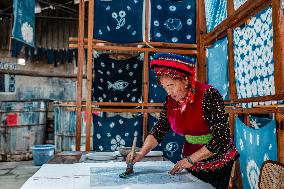
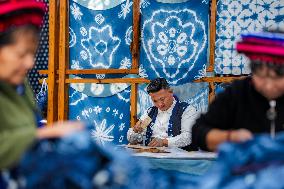
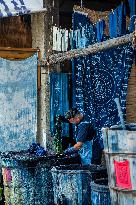
Duan Yuan, an inheritor of the tie-dye technique of Bai ethnic group, makes tie-dye designs in a dyehouse in Zhoucheng Village of Dali Bai Autonomous Prefecture, southwest China's Yunnan Province, November 21, 2025. Known as the hometown of the tie-dye technique of Bai ethnic group, Zhoucheng Village hosts over 200 households engaging in tie-dye businesses, with the number of employees exceeding 4,000. As a traditional folk technique of the Bai ethnic group, tie-dye boasts a history spanning over a thousand years and was included in the first batch of China's national intangible cultural heritage list in 2006. Tying and dyeing are the core steps in the process of making indigo tie-dye products. Artisans use needles and threads to create various patterns on the fabric, which are then dyed with plant-based dyes, resulting in blue backgrounds adorned with vivid white patterns. Photo by Hu Chao/Xinhua/ABACAPRESS.COM

  •  
Tie-Dye Technique Of Bai Ethnic Group - Chin

Tie-Dye Technique Of Bai Ethnic Group - Chin

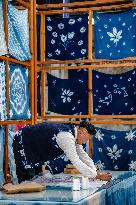
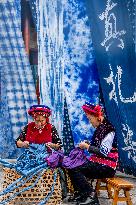
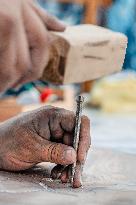
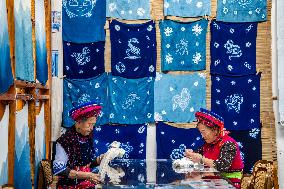
Duan Yinmei, an inheritor of the tie-dye technique of Bai ethnic group, creates knots on fabrics in a dyehouse in Zhoucheng Village of Dali Bai Autonomous Prefecture, southwest China's Yunnan Province, November 21, 2025. Known as the hometown of the tie-dye technique of Bai ethnic group, Zhoucheng Village hosts over 200 households engaging in tie-dye businesses, with the number of employees exceeding 4,000. As a traditional folk technique of the Bai ethnic group, tie-dye boasts a history spanning over a thousand years and was included in the first batch of China's national intangible cultural heritage list in 2006. Tying and dyeing are the core steps in the process of making indigo tie-dye products. Artisans use needles and threads to create various patterns on the fabric, which are then dyed with plant-based dyes, resulting in blue backgrounds adorned with vivid white patterns. Photo by Hu Chao/Xinhua/ABACAPRESS.COM

  •  
Tie-Dye Technique Of Bai Ethnic Group - Chin

Tie-Dye Technique Of Bai Ethnic Group - Chin

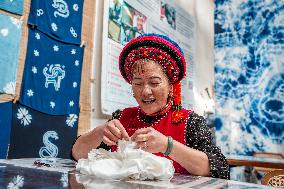
A woman experiences the tie-dye technique of Bai ethnic group in a dyehouse in Zhoucheng Village of Dali Bai Autonomous Prefecture, southwest China's Yunnan Province, November 21, 2025. Known as the hometown of the tie-dye technique of Bai ethnic group, Zhoucheng Village hosts over 200 households engaging in tie-dye businesses, with the number of employees exceeding 4,000. As a traditional folk technique of the Bai ethnic group, tie-dye boasts a history spanning over a thousand years and was included in the first batch of China's national intangible cultural heritage list in 2006. Tying and dyeing are the core steps in the process of making indigo tie-dye products. Artisans use needles and threads to create various patterns on the fabric, which are then dyed with plant-based dyes, resulting in blue backgrounds adorned with vivid white patterns. Photo by Hu Chao/Xinhua/ABACAPRESS.COM

  •  
Tie-Dye Technique Of Bai Ethnic Group - Chin

Tie-Dye Technique Of Bai Ethnic Group - Chin

Duan Yinmei, an inheritor of the tie-dye technique of Bai ethnic group, dyes patterns on fabrics in a dyehouse in Zhoucheng Village of Dali Bai Autonomous Prefecture, southwest China's Yunnan Province, November 21, 2025. Known as the hometown of the tie-dye technique of Bai ethnic group, Zhoucheng Village hosts over 200 households engaging in tie-dye businesses, with the number of employees exceeding 4,000. As a traditional folk technique of the Bai ethnic group, tie-dye boasts a history spanning over a thousand years and was included in the first batch of China's national intangible cultural heritage list in 2006. Tying and dyeing are the core steps in the process of making indigo tie-dye products. Artisans use needles and threads to create various patterns on the fabric, which are then dyed with plant-based dyes, resulting in blue backgrounds adorned with vivid white patterns. Photo by Hu Chao/Xinhua/ABACAPRESS.COM

  •  
Tie-Dye Technique Of Bai Ethnic Group - Chin

Tie-Dye Technique Of Bai Ethnic Group - Chin

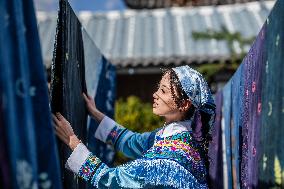
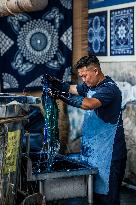
Duan Yuan, an inheritor of the tie-dye technique of Bai ethnic group, rinses dyed fabrics in a dyehouse in Zhoucheng Village of Dali Bai Autonomous Prefecture, southwest China's Yunnan Province, November 21, 2025. Known as the hometown of the tie-dye technique of Bai ethnic group, Zhoucheng Village hosts over 200 households engaging in tie-dye businesses, with the number of employees exceeding 4,000. As a traditional folk technique of the Bai ethnic group, tie-dye boasts a history spanning over a thousand years and was included in the first batch of China's national intangible cultural heritage list in 2006. Tying and dyeing are the core steps in the process of making indigo tie-dye products. Artisans use needles and threads to create various patterns on the fabric, which are then dyed with plant-based dyes, resulting in blue backgrounds adorned with vivid white patterns. Photo by Hu Chao/Xinhua/ABACAPRESS.COM

  •  
Tie-Dye Technique Of Bai Ethnic Group - Chin

Tie-Dye Technique Of Bai Ethnic Group - Chin

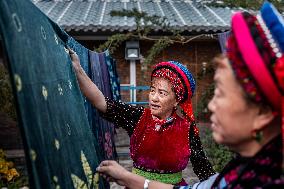
Duan Yinmei (L), an inheritor of the tie-dye technique of Bai ethnic group, and handicraftsman Duan Lilan dry tie-dye fabrics in a dyehouse in Zhoucheng Village of Dali Bai Autonomous Prefecture, southwest China's Yunnan Province, November 21, 2025. Known as the hometown of the tie-dye technique of Bai ethnic group, Zhoucheng Village hosts over 200 households engaging in tie-dye businesses, with the number of employees exceeding 4,000. As a traditional folk technique of the Bai ethnic group, tie-dye boasts a history spanning over a thousand years and was included in the first batch of China's national intangible cultural heritage list in 2006. Tying and dyeing are the core steps in the process of making indigo tie-dye products. Artisans use needles and threads to create various patterns on the fabric, which are then dyed with plant-based dyes, resulting in blue backgrounds adorned with vivid white patterns. Photo by Hu Chao/Xinhua/ABACAPRESS.COM

  •  
Tie-Dye Technique Of Bai Ethnic Group - Chin

Tie-Dye Technique Of Bai Ethnic Group - Chin

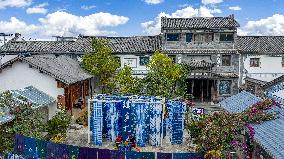
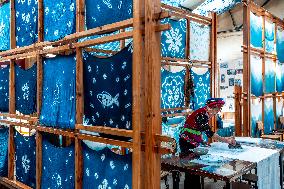
An aerial drone photo shows a scene at a dyehouse in Zhoucheng Village of Dali Bai Autonomous Prefecture, southwest China's Yunnan Province, November 21, 2025. Known as the hometown of the tie-dye technique of Bai ethnic group, Zhoucheng Village hosts over 200 households engaging in tie-dye businesses, with the number of employees exceeding 4,000. As a traditional folk technique of the Bai ethnic group, tie-dye boasts a history spanning over a thousand years and was included in the first batch of China's national intangible cultural heritage list in 2006. Tying and dyeing are the core steps in the process of making indigo tie-dye products. Artisans use needles and threads to create various patterns on the fabric, which are then dyed with plant-based dyes, resulting in blue backgrounds adorned with vivid white patterns. Photo by Hu Chao/Xinhua/ABACAPRESS.COM

  •  
Tie-Dye Technique Of Bai Ethnic Group - Chin

Tie-Dye Technique Of Bai Ethnic Group - Chin

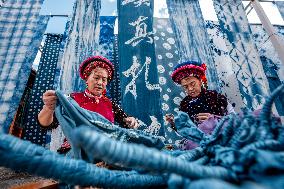
Duan Yinmei (L), an inheritor of the tie-dye technique of Bai ethnic group, and handicraftsman Duan Lilan untie knots on fabrics in a dyehouse in Zhoucheng Village of Dali Bai Autonomous Prefecture, southwest China's Yunnan Province, November 21, 2025. Known as the hometown of the tie-dye technique of Bai ethnic group, Zhoucheng Village hosts over 200 households engaging in tie-dye businesses, with the number of employees exceeding 4,000. As a traditional folk technique of the Bai ethnic group, tie-dye boasts a history spanning over a thousand years and was included in the first batch of China's national intangible cultural heritage list in 2006. Tying and dyeing are the core steps in the process of making indigo tie-dye products. Artisans use needles and threads to create various patterns on the fabric, which are then dyed with plant-based dyes, resulting in blue backgrounds adorned with vivid white patterns. Photo by Hu Chao/Xinhua/ABACAPRESS.COM

  •  
Tie-Dye Technique Of Bai Ethnic Group - Chin

Tie-Dye Technique Of Bai Ethnic Group - Chin

Duan Yinmei (L), an inheritor of the tie-dye technique of Bai ethnic group, and handicraftsman Duan Lilan untie knots on fabrics in a dyehouse in Zhoucheng Village of Dali Bai Autonomous Prefecture, southwest China's Yunnan Province, November 21, 2025. Known as the hometown of the tie-dye technique of Bai ethnic group, Zhoucheng Village hosts over 200 households engaging in tie-dye businesses, with the number of employees exceeding 4,000. As a traditional folk technique of the Bai ethnic group, tie-dye boasts a history spanning over a thousand years and was included in the first batch of China's national intangible cultural heritage list in 2006. Tying and dyeing are the core steps in the process of making indigo tie-dye products. Artisans use needles and threads to create various patterns on the fabric, which are then dyed with plant-based dyes, resulting in blue backgrounds adorned with vivid white patterns. Photo by Hu Chao/Xinhua/ABACAPRESS.COM

  •  
Tie-Dye Technique Of Bai Ethnic Group - Chin

Tie-Dye Technique Of Bai Ethnic Group - Chin

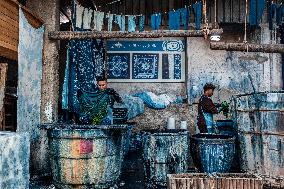
Duan Yuan (L), an inheritor of the tie-dye technique of Bai ethnic group, dyes fabrics in a dyehouse in Zhoucheng Village of Dali Bai Autonomous Prefecture, southwest China's Yunnan Province, November 21, 2025. Known as the hometown of the tie-dye technique of Bai ethnic group, Zhoucheng Village hosts over 200 households engaging in tie-dye businesses, with the number of employees exceeding 4,000. As a traditional folk technique of the Bai ethnic group, tie-dye boasts a history spanning over a thousand years and was included in the first batch of China's national intangible cultural heritage list in 2006. Tying and dyeing are the core steps in the process of making indigo tie-dye products. Artisans use needles and threads to create various patterns on the fabric, which are then dyed with plant-based dyes, resulting in blue backgrounds adorned with vivid white patterns. Photo by Hu Chao/Xinhua/ABACAPRESS.COM

  •  
Tie-Dye Technique Of Bai Ethnic Group - Chin

Tie-Dye Technique Of Bai Ethnic Group - Chin

Duan Yuan, an inheritor of the tie-dye technique of Bai ethnic group, makes tie-dye designs in a dyehouse in Zhoucheng Village of Dali Bai Autonomous Prefecture, southwest China's Yunnan Province, November 21, 2025. Known as the hometown of the tie-dye technique of Bai ethnic group, Zhoucheng Village hosts over 200 households engaging in tie-dye businesses, with the number of employees exceeding 4,000. As a traditional folk technique of the Bai ethnic group, tie-dye boasts a history spanning over a thousand years and was included in the first batch of China's national intangible cultural heritage list in 2006. Tying and dyeing are the core steps in the process of making indigo tie-dye products. Artisans use needles and threads to create various patterns on the fabric, which are then dyed with plant-based dyes, resulting in blue backgrounds adorned with vivid white patterns. Photo by Hu Chao/Xinhua/ABACAPRESS.COM

  •  
Tie-Dye Technique Of Bai Ethnic Group - Chin

Tie-Dye Technique Of Bai Ethnic Group - Chin

Duan Yuan, an inheritor of the tie-dye technique of Bai ethnic group, dyes fabrics in a dyehouse in Zhoucheng Village of Dali Bai Autonomous Prefecture, southwest China's Yunnan Province, November 21, 2025. Known as the hometown of the tie-dye technique of Bai ethnic group, Zhoucheng Village hosts over 200 households engaging in tie-dye businesses, with the number of employees exceeding 4,000. As a traditional folk technique of the Bai ethnic group, tie-dye boasts a history spanning over a thousand years and was included in the first batch of China's national intangible cultural heritage list in 2006. Tying and dyeing are the core steps in the process of making indigo tie-dye products. Artisans use needles and threads to create various patterns on the fabric, which are then dyed with plant-based dyes, resulting in blue backgrounds adorned with vivid white patterns. Photo by Hu Chao/Xinhua/ABACAPRESS.COM

  •  
Tie-Dye Technique Of Bai Ethnic Group - Chin

Tie-Dye Technique Of Bai Ethnic Group - Chin

Duan Yuan, an inheritor of the tie-dye technique of Bai ethnic group, dyes fabrics in a dyehouse in Zhoucheng Village of Dali Bai Autonomous Prefecture, southwest China's Yunnan Province, November 21, 2025. Known as the hometown of the tie-dye technique of Bai ethnic group, Zhoucheng Village hosts over 200 households engaging in tie-dye businesses, with the number of employees exceeding 4,000. As a traditional folk technique of the Bai ethnic group, tie-dye boasts a history spanning over a thousand years and was included in the first batch of China's national intangible cultural heritage list in 2006. Tying and dyeing are the core steps in the process of making indigo tie-dye products. Artisans use needles and threads to create various patterns on the fabric, which are then dyed with plant-based dyes, resulting in blue backgrounds adorned with vivid white patterns. Photo by Hu Chao/Xinhua/ABACAPRESS.COM

  •  
Tie-Dye Technique Of Bai Ethnic Group - Chin

Tie-Dye Technique Of Bai Ethnic Group - Chin

Duan Yuan, an inheritor of the tie-dye technique of Bai ethnic group, makes tie-dye designs in a dyehouse in Zhoucheng Village of Dali Bai Autonomous Prefecture, southwest China's Yunnan Province, November 21, 2025. Known as the hometown of the tie-dye technique of Bai ethnic group, Zhoucheng Village hosts over 200 households engaging in tie-dye businesses, with the number of employees exceeding 4,000. As a traditional folk technique of the Bai ethnic group, tie-dye boasts a history spanning over a thousand years and was included in the first batch of China's national intangible cultural heritage list in 2006. Tying and dyeing are the core steps in the process of making indigo tie-dye products. Artisans use needles and threads to create various patterns on the fabric, which are then dyed with plant-based dyes, resulting in blue backgrounds adorned with vivid white patterns. Photo by Hu Chao/Xinhua/ABACAPRESS.COM

  •  
Tie-Dye Technique Of Bai Ethnic Group - Chin

Tie-Dye Technique Of Bai Ethnic Group - Chin

Duan Yinmei, an inheritor of the tie-dye technique of Bai ethnic group, unties knots on fabrics in a dyehouse in Zhoucheng Village of Dali Bai Autonomous Prefecture, southwest China's Yunnan Province, November 21, 2025. Known as the hometown of the tie-dye technique of Bai ethnic group, Zhoucheng Village hosts over 200 households engaging in tie-dye businesses, with the number of employees exceeding 4,000. As a traditional folk technique of the Bai ethnic group, tie-dye boasts a history spanning over a thousand years and was included in the first batch of China's national intangible cultural heritage list in 2006. Tying and dyeing are the core steps in the process of making indigo tie-dye products. Artisans use needles and threads to create various patterns on the fabric, which are then dyed with plant-based dyes, resulting in blue backgrounds adorned with vivid white patterns. Photo by Hu Chao/Xinhua/ABACAPRESS.COM

  •  
Tie-Dye Technique Of Bai Ethnic Group - Chin

Tie-Dye Technique Of Bai Ethnic Group - Chin

Duan Yinmei, an inheritor of the tie-dye technique of Bai ethnic group, dyes patterns on fabrics in a dyehouse in Zhoucheng Village of Dali Bai Autonomous Prefecture, southwest China's Yunnan Province, November 21, 2025. Known as the hometown of the tie-dye technique of Bai ethnic group, Zhoucheng Village hosts over 200 households engaging in tie-dye businesses, with the number of employees exceeding 4,000. As a traditional folk technique of the Bai ethnic group, tie-dye boasts a history spanning over a thousand years and was included in the first batch of China's national intangible cultural heritage list in 2006. Tying and dyeing are the core steps in the process of making indigo tie-dye products. Artisans use needles and threads to create various patterns on the fabric, which are then dyed with plant-based dyes, resulting in blue backgrounds adorned with vivid white patterns. Photo by Hu Chao/Xinhua/ABACAPRESS.COM

  •  
Tie-Dye Technique Of Bai Ethnic Group - Chin

Tie-Dye Technique Of Bai Ethnic Group - Chin

Duan Yinmei (R), an inheritor of the tie-dye technique of Bai ethnic group, and handicraftsman Duan Lilan create knots on fabrics in a dyehouse in Zhoucheng Village of Dali Bai Autonomous Prefecture, southwest China's Yunnan Province, November 21, 2025. Known as the hometown of the tie-dye technique of Bai ethnic group, Zhoucheng Village hosts over 200 households engaging in tie-dye businesses, with the number of employees exceeding 4,000. As a traditional folk technique of the Bai ethnic group, tie-dye boasts a history spanning over a thousand years and was included in the first batch of China's national intangible cultural heritage list in 2006. Tying and dyeing are the core steps in the process of making indigo tie-dye products. Artisans use needles and threads to create various patterns on the fabric, which are then dyed with plant-based dyes, resulting in blue backgrounds adorned with vivid white patterns. Photo by Hu Chao/Xinhua/ABACAPRESS.COM

  •  
Giant float festival in southwestern Japan

Giant float festival in southwestern Japan

A giant float takes part in the Karatsu Kunchi festival, designated as an UNESCO Intangible Cultural Heritage asset, in Karatsu, Saga Prefecture, southwestern Japan, on Nov. 3, 2025.

  •  
Giant float festival in southwestern Japan

Giant float festival in southwestern Japan

A giant float takes part in the Karatsu Kunchi festival, designated as an UNESCO Intangible Cultural Heritage asset, in Karatsu, Saga Prefecture, southwestern Japan, on Nov. 3, 2025.

  •  
Giant float festival in southwestern Japan

Giant float festival in southwestern Japan

A giant float takes part in the Karatsu Kunchi festival, designated as an UNESCO Intangible Cultural Heritage asset, in Karatsu, Saga Prefecture, southwestern Japan, on Nov. 3, 2025.

  •  
Giant float festival in southwestern Japan

Giant float festival in southwestern Japan

People watch giant floats during the Karatsu Kunchi festival, designated as a UNESCO Intangible Cultural Heritage asset, in Karatsu, Saga Prefecture, southwestern Japan, on Nov. 3, 2025.

  •  
Giant float festival in southwestern Japan

Giant float festival in southwestern Japan

People watch giant floats during the Karatsu Kunchi festival, designated as a UNESCO Intangible Cultural Heritage asset, in Karatsu, Saga Prefecture, southwestern Japan, on Nov. 3, 2025.

  •  
Confucius Institutes in Alsace Cultural Exchange Delegation

Confucius Institutes in Alsace Cultural Exchange Delegation

BINZHOU, CHINA - OCTOBER 31, 2025 - Youth at the Confucius Institute in Alsace, France, experience virtual production equipment for intangible cultural heritage in Binzhou City, Shandong Province, China on October 31, 2025.

  •  
Confucius Institutes in Alsace Cultural Exchange Delegation

Confucius Institutes in Alsace Cultural Exchange Delegation

BINZHOU, CHINA - OCTOBER 31, 2025 - Youth at the Confucius Institute in Alsace, France, experience virtual production equipment for intangible cultural heritage in Binzhou City, Shandong Province, China on October 31, 2025.

  •  
Confucius Institutes in Alsace Cultural Exchange Delegation

Confucius Institutes in Alsace Cultural Exchange Delegation

BINZHOU, CHINA - OCTOBER 31, 2025 - Youth at the Confucius Institute in Alsace, France, experience virtual production equipment for intangible cultural heritage in Binzhou City, Shandong Province, China on October 31, 2025.

  •  
Legendary Ancestor Worship In Lishui - China

Legendary Ancestor Worship In Lishui - China

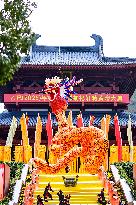
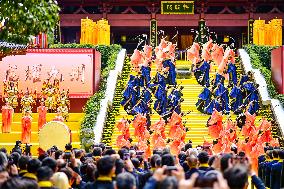
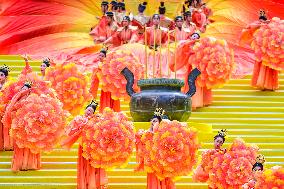
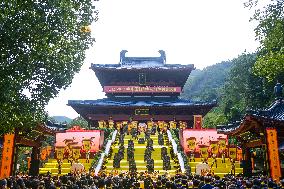
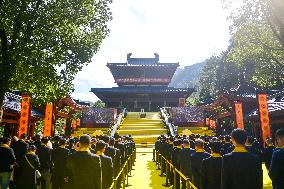
A performance is staged during a ceremony to worship the legendary ancestor Huangdi, or the Yellow Emperor, in Jinyun County, east China's Zhejiang Province, Oct. 29, 2025. Worshipping Huangdi is a tradition in China. The ceremony of ancestor worship record in Jinyun dates back to the Eastern Jin Dynasty (317-420). In 2011, the ceremony to worship the Yellow Emperor in Jinyun was listed as a national intangible cultural heritage. Photo by Jiang Han/Xinhua/ABACAPRESS.COM

  •  
Legendary Ancestor Worship In Lishui - China

Legendary Ancestor Worship In Lishui - China

A performance is staged during a ceremony to worship the legendary ancestor Huangdi, or the Yellow Emperor, in Jinyun County, east China's Zhejiang Province, Oct. 29, 2025. Worshipping Huangdi is a tradition in China. The ceremony of ancestor worship record in Jinyun dates back to the Eastern Jin Dynasty (317-420). In 2011, the ceremony to worship the Yellow Emperor in Jinyun was listed as a national intangible cultural heritage. Photo by Jiang Han/Xinhua/ABACAPRESS.COM

  •  
Legendary Ancestor Worship In Lishui - China

Legendary Ancestor Worship In Lishui - China

Actors perform during a ceremony to worship the legendary ancestor Huangdi, or the Yellow Emperor, in Jinyun County, east China's Zhejiang Province, Oct. 29, 2025. Worshipping Huangdi is a tradition in China. The ceremony of ancestor worship record in Jinyun dates back to the Eastern Jin Dynasty (317-420). In 2011, the ceremony to worship the Yellow Emperor in Jinyun was listed as a national intangible cultural heritage. Photo by Jiang Han/Xinhua/ABACAPRESS.COM

  •  
Legendary Ancestor Worship In Lishui - China

Legendary Ancestor Worship In Lishui - China

A performance is staged during a ceremony to worship the legendary ancestor Huangdi, or the Yellow Emperor, in Jinyun County, east China's Zhejiang Province, Oct. 29, 2025. Worshipping Huangdi is a tradition in China. The ceremony of ancestor worship record in Jinyun dates back to the Eastern Jin Dynasty (317-420). In 2011, the ceremony to worship the Yellow Emperor in Jinyun was listed as a national intangible cultural heritage. Photo by Jiang Han/Xinhua/ABACAPRESS.COM

  •  
Legendary Ancestor Worship In Lishui - China

Legendary Ancestor Worship In Lishui - China

A ceremony to worship the legendary ancestor Huangdi, or the Yellow Emperor, is held in Jinyun County, east China's Zhejiang Province, Oct. 29, 2025. Worshipping Huangdi is a tradition in China. The ceremony of ancestor worship record in Jinyun dates back to the Eastern Jin Dynasty (317-420). In 2011, the ceremony to worship the Yellow Emperor in Jinyun was listed as a national intangible cultural heritage. Photo by Jiang Han/Xinhua/ABACAPRESS.COM

  •  
Holiday Spots Sighting - China

Holiday Spots Sighting - China

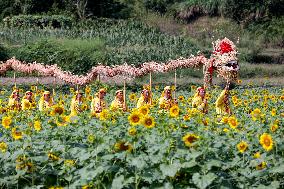
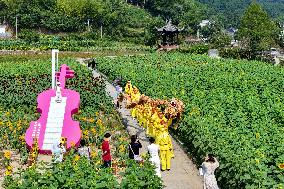
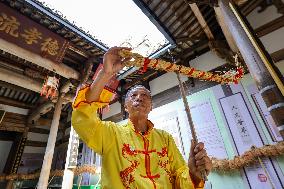
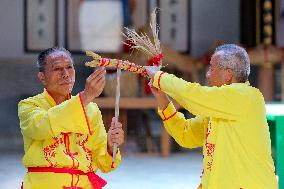
People dance with a straw-woven dragon at Shuyuan Village, Huizhou District of Huangshan City, east China's Anhui Province, October 4, 2025. Shuyuan's straw-woven dragon has been listed as a municipal-level intangible cultural heritage that boasts a history spanning over three centuries. Once the date for a dragon performance is slated at the village, locals would spontaneously collect and contribute straws for weaving of the dragon - an omen for a bountiful harvest. The straw-woven dragon performance on the occasion of the Mid-Autumn Festival has well blended cultural experience into sightseeing, which serves as a major tourist attraction this year. Photo by Fan Chengzhu/Xinhua/ABACAPRESS.COM

  •  
Straw-Woven Dragon Performance - China

Straw-Woven Dragon Performance - China

Bao Guanjin (L), an inheritor of straw-woven dragon craftsmanship, works with a villager to make a mini straw-woven dragon at Shuyuan Village, Huizhou District of Huangshan City, east China's Anhui Province, October 4, 2025. As China's Mid-Autumn Festival approaches, villagers at Shuyuan Village highlights their celebration with the straw-woven dragon performance. Shuyuan's straw-woven dragon has been listed as a municipal-level intangible cultural heritage that boasts a history spanning over three centuries. Once the date for a dragon performance is slated at the village, locals would spontaneously collect and contribute straws for weaving of the dragon - an omen for a bountiful harvest. The straw-woven dragon performance on the occasion of the Mid-Autumn Festival has well blended cultural experience into sightseeing, which serves as a major tourist attraction this year. Photo by Fan Chengzhu/Xinhua/ABACAPRESS.COM

  •  
Straw-Woven Dragon Performance - China

Straw-Woven Dragon Performance - China

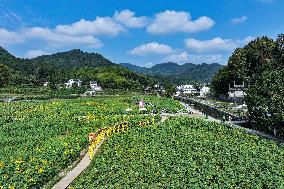
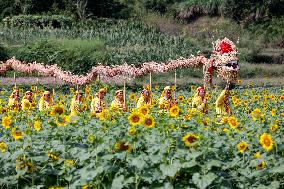
An aerial drone photo taken on October 4, 2025 shows a straw-woven dragon performance at Shuyuan Village, Huizhou District of Huangshan City, east China's Anhui Province. As China's Mid-Autumn Festival approaches, villagers at Shuyuan Village highlights their celebration with the straw-woven dragon performance. Shuyuan's straw-woven dragon has been listed as a municipal-level intangible cultural heritage that boasts a history spanning over three centuries. Once the date for a dragon performance is slated at the village, locals would spontaneously collect and contribute straws for weaving of the dragon - an omen for a bountiful harvest. The straw-woven dragon performance on the occasion of the Mid-Autumn Festival has well blended cultural experience into sightseeing, which serves as a major tourist attraction this year. Photo by Fan Chengzhu/Xinhua/ABACAPRESS.COM

  •  
Straw-Woven Dragon Performance - China

Straw-Woven Dragon Performance - China

A drone photo taken on October 4, 2025 shows a scene during a straw-woven dragon performance at Shuyuan Village, Huizhou District of Huangshan City, east China's Anhui Province. As China's Mid-Autumn Festival approaches, villagers at Shuyuan Village highlights their celebration with the straw-woven dragon performance. Shuyuan's straw-woven dragon has been listed as a municipal-level intangible cultural heritage that boasts a history spanning over three centuries. Once the date for a dragon performance is slated at the village, locals would spontaneously collect and contribute straws for weaving of the dragon - an omen for a bountiful harvest. The straw-woven dragon performance on the occasion of the Mid-Autumn Festival has well blended cultural experience into sightseeing, which serves as a major tourist attraction this year. Photo by Fan Chengzhu/Xinhua/ABACAPRESS.COM

  •  
Straw-Woven Dragon Performance - China

Straw-Woven Dragon Performance - China

Bao Guanjin (L), an inheritor of straw-woven dragon craftsmanship, makes a mini straw-woven dragon at Shuyuan Village, Huizhou District of Huangshan City, east China's Anhui Province, October 4, 2025. As China's Mid-Autumn Festival approaches, villagers at Shuyuan Village highlights their celebration with the straw-woven dragon performance. Shuyuan's straw-woven dragon has been listed as a municipal-level intangible cultural heritage that boasts a history spanning over three centuries. Once the date for a dragon performance is slated at the village, locals would spontaneously collect and contribute straws for weaving of the dragon - an omen for a bountiful harvest. The straw-woven dragon performance on the occasion of the Mid-Autumn Festival has well blended cultural experience into sightseeing, which serves as a major tourist attraction this year. Photo by Fan Chengzhu/Xinhua/ABACAPRESS.COM

  •  
Straw-Woven Dragon Performance - China

Straw-Woven Dragon Performance - China

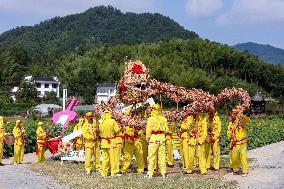
People dance with a straw-woven dragon at Shuyuan Village, Huizhou District of Huangshan City, east China's Anhui Province, October 4, 2025. As China's Mid-Autumn Festival approaches, villagers at Shuyuan Village highlights their celebration with the straw-woven dragon performance. Shuyuan's straw-woven dragon has been listed as a municipal-level intangible cultural heritage that boasts a history spanning over three centuries. Once the date for a dragon performance is slated at the village, locals would spontaneously collect and contribute straws for weaving of the dragon - an omen for a bountiful harvest. The straw-woven dragon performance on the occasion of the Mid-Autumn Festival has well blended cultural experience into sightseeing, which serves as a major tourist attraction this year. Photo by Fan Chengzhu/Xinhua/ABACAPRESS.COM

  •  
Straw-Woven Dragon Performance - China

Straw-Woven Dragon Performance - China

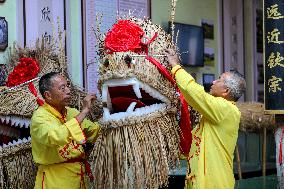
Bao Guanjin (L), an inheritor of straw-woven dragon craftsmanship, works with a villager to check a finished straw-woven dragon at Shuyuan Village, Huizhou District of Huangshan City, east China's Anhui Province, October 4, 2025. As China's Mid-Autumn Festival approaches, villagers at Shuyuan Village highlights their celebration with the straw-woven dragon performance. Shuyuan's straw-woven dragon has been listed as a municipal-level intangible cultural heritage that boasts a history spanning over three centuries. Once the date for a dragon performance is slated at the village, locals would spontaneously collect and contribute straws for weaving of the dragon - an omen for a bountiful harvest. The straw-woven dragon performance on the occasion of the Mid-Autumn Festival has well blended cultural experience into sightseeing, which serves as a major tourist attraction this year. Photo by Fan Chengzhu/Xinhua/ABACAPRESS.COM

  •  
Straw-Woven Dragon Performance - China

Straw-Woven Dragon Performance - China

People dance with a straw-woven dragon at Shuyuan Village, Huizhou District of Huangshan City, east China's Anhui Province, October 4, 2025. As China's Mid-Autumn Festival approaches, villagers at Shuyuan Village highlights their celebration with the straw-woven dragon performance. Shuyuan's straw-woven dragon has been listed as a municipal-level intangible cultural heritage that boasts a history spanning over three centuries. Once the date for a dragon performance is slated at the village, locals would spontaneously collect and contribute straws for weaving of the dragon - an omen for a bountiful harvest. The straw-woven dragon performance on the occasion of the Mid-Autumn Festival has well blended cultural experience into sightseeing, which serves as a major tourist attraction this year. Photo by Fan Chengzhu/Xinhua/ABACAPRESS.COM

  •  
PFW - Lisu Ethnic Clothing Runway

PFW - Lisu Ethnic Clothing Runway

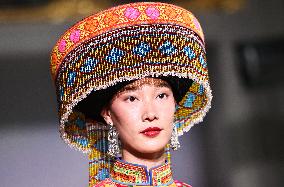
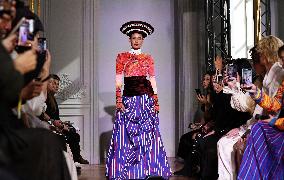
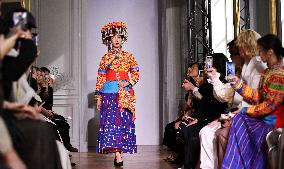
A model presents a creation of Lisu ethnic clothing from Yanbian County of southwest China's Sichuan Province as part of the "Sichuan Intangible Cultural Heritage: A Hundred Cites, A Hundred Crafts" cultural event during the 3rd Sino-French fashion and culture festival at the Chinese culture center in Paris, France, October 1, 2025. The 3rd Sino-French fashion and culture festival is held from Sept. 29 to October 6. Photo by Xinhua/Gao Jing/ABACAPRESS.COM

  •  
PFW - Lisu Ethnic Clothing Runway

PFW - Lisu Ethnic Clothing Runway

A model presents a creation of Lisu ethnic clothing from Yanbian County of southwest China's Sichuan Province as part of the "Sichuan Intangible Cultural Heritage: A Hundred Cites, A Hundred Crafts" cultural event during the 3rd Sino-French fashion and culture festival at the Chinese culture center in Paris, France, October 1, 2025. The 3rd Sino-French fashion and culture festival is held from Sept. 29 to October 6. Photo by Xinhua/Gao Jing/ABACAPRESS.COM

  •  
PFW - Lisu Ethnic Clothing Runway

PFW - Lisu Ethnic Clothing Runway

A model presents a creation of Lisu ethnic clothing from Yanbian County of southwest China's Sichuan Province as part of the "Sichuan Intangible Cultural Heritage: A Hundred Cites, A Hundred Crafts" cultural event during the 3rd Sino-French fashion and culture festival at the Chinese culture center in Paris, France, October 1, 2025. The 3rd Sino-French fashion and culture festival is held from Sept. 29 to October 6. Photo by Xinhua/Gao Jing/ABACAPRESS.COM

  •  
PFW - Lisu Ethnic Clothing Runway

PFW - Lisu Ethnic Clothing Runway

A model presents a creation of Lisu ethnic clothing from Yanbian County of southwest China's Sichuan Province as part of the "Sichuan Intangible Cultural Heritage: A Hundred Cites, A Hundred Crafts" cultural event during the 3rd Sino-French fashion and culture festival at the Chinese culture center in Paris, France, October 1, 2025. The 3rd Sino-French fashion and culture festival is held from Sept. 29 to October 6. Photo by Xinhua/Gao Jing/ABACAPRESS.COM

  •  
PFW - Lisu Ethnic Clothing Runway

PFW - Lisu Ethnic Clothing Runway

A model presents a creation of Lisu ethnic clothing from Yanbian County of southwest China's Sichuan Province as part of the "Sichuan Intangible Cultural Heritage: A Hundred Cites, A Hundred Crafts" cultural event during the 3rd Sino-French fashion and culture festival at the Chinese culture center in Paris, France, October 1, 2025. The 3rd Sino-French fashion and culture festival is held from Sept. 29 to October 6. Photo by Xinhua/Gao Jing/ABACAPRESS.COM

  •  
PFW - Lisu Ethnic Clothing Runway

PFW - Lisu Ethnic Clothing Runway

A model presents a creation of Lisu ethnic clothing from Yanbian County of southwest China's Sichuan Province as part of the "Sichuan Intangible Cultural Heritage: A Hundred Cites, A Hundred Crafts" cultural event during the 3rd Sino-French fashion and culture festival at the Chinese culture center in Paris, France, October 1, 2025. The 3rd Sino-French fashion and culture festival is held from Sept. 29 to October 6. Photo by Xinhua/Gao Jing/ABACAPRESS.COM

  •  
PFW - Lisu Ethnic Clothing Runway

PFW - Lisu Ethnic Clothing Runway

A model presents a creation of Lisu ethnic clothing from Yanbian County of southwest China's Sichuan Province as part of the "Sichuan Intangible Cultural Heritage: A Hundred Cites, A Hundred Crafts" cultural event during the 3rd Sino-French fashion and culture festival at the Chinese culture center in Paris, France, October 1, 2025. The 3rd Sino-French fashion and culture festival is held from Sept. 29 to October 6. Photo by Xinhua/Gao Jing/ABACAPRESS.COM

  •  
PFW - Lisu Ethnic Clothing Runway

PFW - Lisu Ethnic Clothing Runway

A model presents a creation of Lisu ethnic clothing from Yanbian County of southwest China's Sichuan Province as part of the "Sichuan Intangible Cultural Heritage: A Hundred Cites, A Hundred Crafts" cultural event during the 3rd Sino-French fashion and culture festival at the Chinese culture center in Paris, France, October 1, 2025. The 3rd Sino-French fashion and culture festival is held from Sept. 29 to October 6. Photo by Xinhua/Gao Jing/ABACAPRESS.COM

  •  
PFW - Lisu Ethnic Clothing Runway

PFW - Lisu Ethnic Clothing Runway

Designers greet the audience after a Lisu ethnic clothing fashion show as part of the "Sichuan Intangible Cultural Heritage: A Hundred Cites, A Hundred Crafts" cultural event during the 3rd Sino-French fashion and culture festival at the Chinese culture center in Paris, France, October 1, 2025. The 3rd Sino-French fashion and culture festival is held from Sept. 29 to October 6. Photo by Xinhua/Gao Jing/ABACAPRESS.COM

  •  
PFW - Lisu Ethnic Clothing Runway

PFW - Lisu Ethnic Clothing Runway

A model presents a creation of Lisu ethnic clothing from Yanbian County of southwest China's Sichuan Province as part of the "Sichuan Intangible Cultural Heritage: A Hundred Cites, A Hundred Crafts" cultural event during the 3rd Sino-French fashion and culture festival at the Chinese culture center in Paris, France, October 1, 2025. The 3rd Sino-French fashion and culture festival is held from Sept. 29 to October 6. Photo by Xinhua/Gao Jing/ABACAPRESS.COM

  •  
PFW - Lisu Ethnic Clothing Runway

PFW - Lisu Ethnic Clothing Runway

A model presents a creation of Lisu ethnic clothing from Yanbian County of southwest China's Sichuan Province as part of the "Sichuan Intangible Cultural Heritage: A Hundred Cites, A Hundred Crafts" cultural event during the 3rd Sino-French fashion and culture festival at the Chinese culture center in Paris, France, October 1, 2025. The 3rd Sino-French fashion and culture festival is held from Sept. 29 to October 6. Photo by Xinhua/Gao Jing/ABACAPRESS.COM

  •  
PFW - Lisu Ethnic Clothing Runway

PFW - Lisu Ethnic Clothing Runway

A model presents a creation of Lisu ethnic clothing from Yanbian County of southwest China's Sichuan Province as part of the "Sichuan Intangible Cultural Heritage: A Hundred Cites, A Hundred Crafts" cultural event during the 3rd Sino-French fashion and culture festival at the Chinese culture center in Paris, France, October 1, 2025. The 3rd Sino-French fashion and culture festival is held from Sept. 29 to October 6. Photo by Xinhua/Gao Jing/ABACAPRESS.COM

  • Main
  • Top
  • Editorial
  • Creative
  • About Us
  • About ILG
  • Terms of use
  • Company
  • BEHIND
  • Price List
  • Single Plan
  • Monthly Plan
  • Services
  • Shooting
  • Rights Clearance
  • Support
  • FAQ
  • How To Buy
  • Contact Us
  • Become a Partner

© KYODO NEWS IMAGES INC

All Rights Reserved.

  • Editorial
  • Olympics
  • News
  • Sports
  • Japan
  • Tech
  • Royal
  • Disaster
  • NorthKorea
  • Old Japan
  • SNS
  • Creative
  • Food
  • Japan
  • Landscape
  • Animal
  • Popular
  • #Ukraine
  • #Russia
  • #coronavirus
  • #N. Korea
  • #China
  • #Thailand
  • #Ukraine
  • #Russia
  • #coronavirus
  • #N. Korea
  • #China
  • #Thailand
  • Food
  • Japan
  • Landscape
  • Animal
  • Olympics
  • News
  • Sports
  • Japan
  • Tech
  • Royal
  • Disaster
  • NorthKorea
  • Old Japan
  • SNS