•  
Scientist holds model of 'Hayabusa' asteroid explorer

Scientist holds model of 'Hayabusa' asteroid explorer

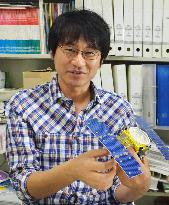
ASAHIKAWA, Japan - Shogo Tachibana, an associate professor at a Hokkaido University graduate school, holds a model of the "Hayabusa" (falcon) unmanned space probe that brought back dust particles from the asteroid Itokawa in 2010 in this file photo taken in Sapporo in Japan's northernmost prefecture of Hokkaido on Sept. 18, 2014. The Hayabusa 2 asteroid explorer is set to be launched into space on Nov. 30.

  •  
Analysis of space particles brought back by Hayabusa

Analysis of space particles brought back by Hayabusa

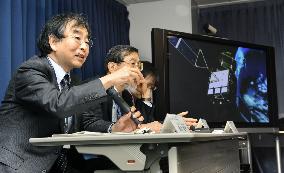
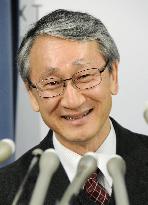
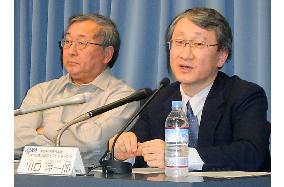
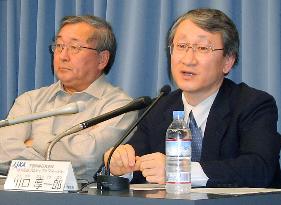
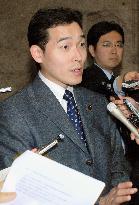
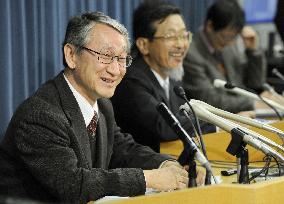
TOKYO, Japan - Akio Fujimura (L), professor at the Japan Aerospace Exploration Agency, speaks in a press conference in Tokyo on March 10, 2011, on the analysis of particles brought back to Earth by Japan's Hayabusa unmanned space probe from the asteroid Itokawa in June 2010. The material constituting the asteroid may have been formed in high temperatures at the time the solar system was created 4.6 billion years ago, according to JAXA.

  •  
Hayabusa capsule analysis

Hayabusa capsule analysis

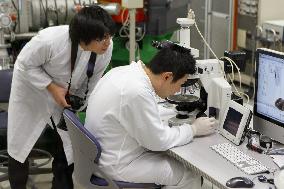
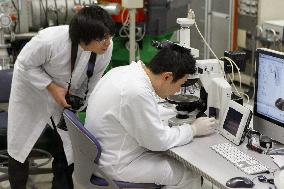
SAPPORO, Japan - Reporters visit Hokkaido University in Sapporo, northern Japan, to view samples brought back from the asteroid Itokawa by the unmanned Japanese space probe Hayabusa on March 1, 2011. A total of 13 institutes and eight teams have taken part in the project to analyze the samples. Hayabusa was launched in May 2003 and landed on the asteroid in September 2005. It returned to Earth while burning out upon reentry into atmosphere in June 2010 and the capsule containing the samples was recovered in a desert in southern Australia.

  •  
Hayabusa capsule analysis

Hayabusa capsule analysis

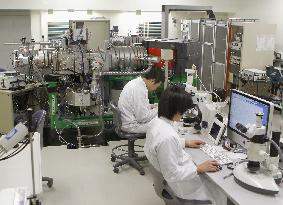
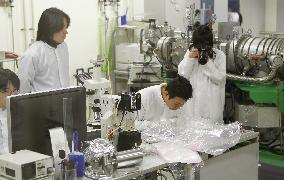
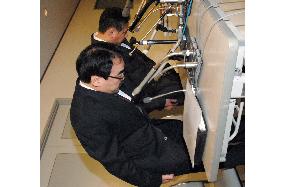
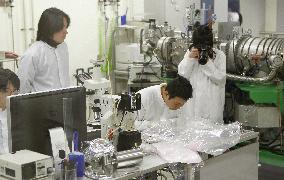
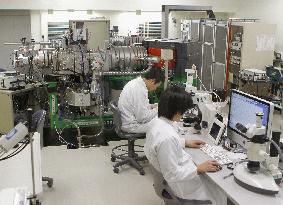
SAPPORO, Japan - Reporters visit Hokkaido University in Sapporo, northern Japan, to view samples brought back from the asteroid Itokawa by the unmanned Japanese space probe Hayabusa on March 1, 2011. Seen at left back is a machine for analysis. A total of 13 institutes and eight teams have taken part in the project to analyze the samples. Hayabusa was launched in May 2003 and landed on the asteroid in September 2005. It returned to Earth while burning out upon reentry into atmosphere in June 2010 and the capsule containing the samples was recovered in a desert in southern Australia.

  •  
Hayabusa capsule analysis

Hayabusa capsule analysis

SAPPORO, Japan - Reporters visit Hokkaido University in Sapporo, northern Japan, to view samples brought back from the asteroid Itokawa by the unmanned Japanese space probe Hayabusa on March 1, 2011. A total of 13 institutes and eight teams have taken part in the project to analyze the samples. Hayabusa was launched in May 2003 and landed on the asteroid in September 2005. It returned to Earth while burning out upon reentry into atmosphere in June 2010 and the capsule containing the samples was recovered in a desert in southern Australia.

  •  
Analysis of space particles in Hayabusa

Analysis of space particles in Hayabusa

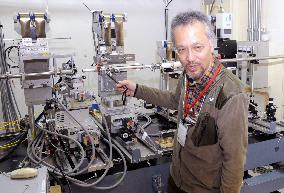
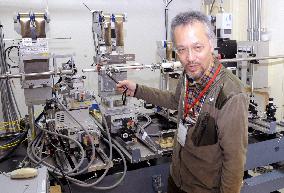
SAYO, Japan - Akira Tsuchiyama, a professor at Osaka University, explains equipment that is being used to analyze particles found inside a container of Japan's Hayabusa unmanned space probe, which returned from the asteroid Itokawa, at the large SPring-8 synchrotron radiation facility in Sayo, Hyogo Prefecture, on Jan. 22, 2011.

  •  
Hayabusa particles found to be from space

Hayabusa particles found to be from space

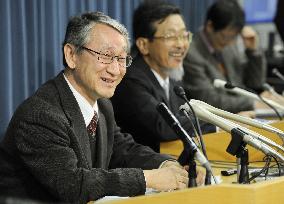
TOKYO, Japan - Junichiro Kawaguchi (L), professor at the Japan Aerospace Exploration Agency, commented on the discovery of particles inside the Hayabusa probe that originated from the asteroid Itokawa, at a press conference at the science ministry in Tokyo on Nov. 16, 2010. Kawaguchi led the project behind Hayabusa's trip into space.

  •  
Hayabusa particles found to be from space

Hayabusa particles found to be from space

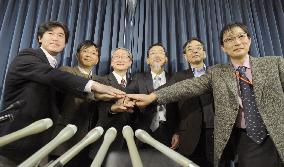
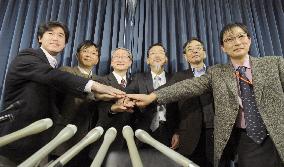
TOKYO, Japan - Junichiro Kawaguchi (3rd from L), professor at the Japan Aerospace Exploration Agency, poses together with members of his team that sent the Hayabusa space probe to the asteroid Itokawa, at the science ministry in Tokyo on Nov. 16, 2010. The government said the same day that particles found inside the Hayabusa originated from the asteroid.

  •  
Hayabusa particles found to be from space

Hayabusa particles found to be from space

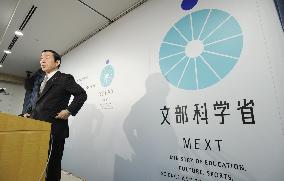
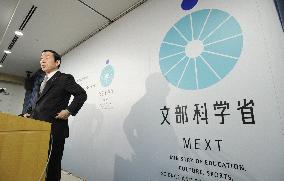
TOKYO, Japan - Japanese science minister Yoshiaki Takaki announces the discovery of particles inside the Hayabusa probe that originated from the asteroid Itokawa during a press conference at the science ministry in Tokyo on Nov. 16, 2010.

  •  
Hayabusa particles found to be from space

Hayabusa particles found to be from space

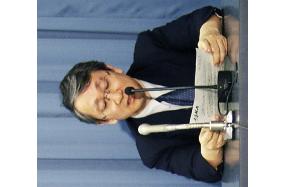
TOKYO, Japan - Junichiro Kawaguchi, professor at the Japan Aerospace Exploration Agency, commented on the discovery of particles inside the Hayabusa probe that originated from the asteroid Itokawa, at a press conference at the science ministry in Tokyo on Nov. 16, 2010. Kawaguchi led the project behind Hayabusa's trip into space.

  •  
Hayabusa on exhibition at Kakuda Space Center in Miyagi

Hayabusa on exhibition at Kakuda Space Center in Miyagi

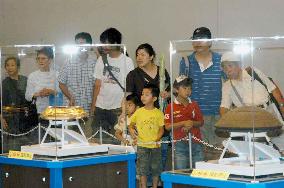
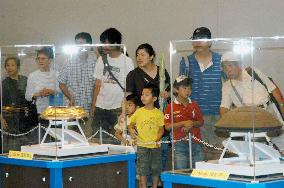
SENDAI, Japan - Visitors look at an exhibition of items associated with the Hayabusa unmanned space probe and retrieved in June after a seven-year round trip to the asteroid Itokawa at the Japan Aerospace Exploration Agency's Kakuda Space Center in Miyagi Prefecture on Sept. 11, 2010.

  •  
100,000th Hayabusa capsule viewer

100,000th Hayabusa capsule viewer

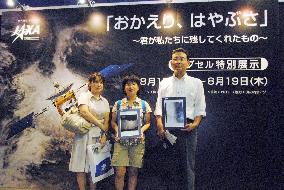
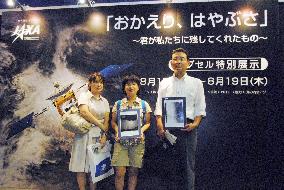
TOKYO, Japan - Moe Nakajima, 11, (C) and her parents pose for photos in Tokyo on Aug. 19, 2010, after she became the 100,000th viewer of a capsule taken back to Earth from the asteroid Itokawa by the Hayabusa unmanned space probe. The capsule has been exhibited in Kanagawa Prefecture, Ibaraki Prefecture and Tokyo since July. The Japan Aerospace Exploration Agency, or JAXA, was examining particles found in a container in the capsule for asteroid surface samples.

  •  
Hayabusa capsule from asteroid

Hayabusa capsule from asteroid

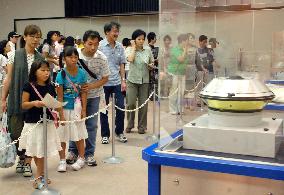
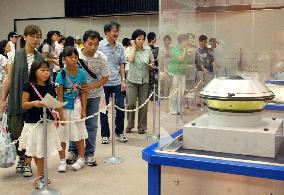
YOKOHAMA, Japan - Visitors view a small capsule at the Sagamihara City Museum in Sagamihara, Kanagawa Prefecture, on July 30, 2010. The museum on the same day began exhibiting the capsule that was released from the Hayabusa unmanned space probe and retrieved in June that year after a seven-year round trip to the asteroid Itokawa. The Japan Aerospace Exploration Agency said particles had been found in a container for asteroid surface samples inside the capsule.

  •  
Space probe Hayabusa unveiled to media

Space probe Hayabusa unveiled to media

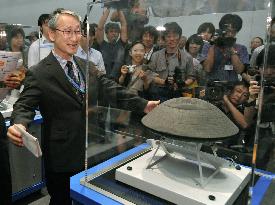
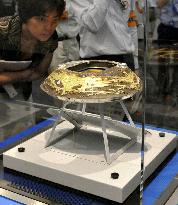
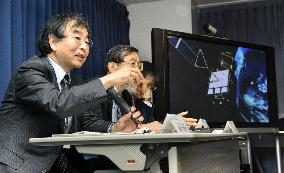
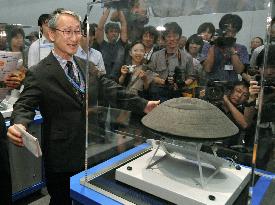
TOKYO, Japan - Junichiro Kawaguchi (L), the Japan Aerospace Exploration Agency project manager for space probe Hayabusa exploration, explains about the outer shell of the capsule at a press preview at Sagamihara City Museum in Kanagawa Prefecture on July 29, 2010, a day ahead of the probe's two-day public exhibition. Hayabusa returned from the asteroid Itokawa in June, making an unprecedented round trip to an astronomical body other than the moon.

  •  
Space probe Hayabusa unveiled to media

Space probe Hayabusa unveiled to media

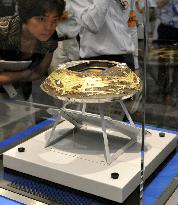
TOKYO, Japan - The Japanese space probe Hayabusa capsule's outer shell is unveiled to the media at Sagamihara City Museum in Kanagawa Prefecture on July 29, 2010, a day ahead of the capsule's two-day public exhibition. Hayabusa returned from the asteroid Itokawa in June, making an unprecedented round trip to an astronomical body other than the moon.

  •  
Mainichi reporter gave interview recording to third party

Mainichi reporter gave interview recording to third party

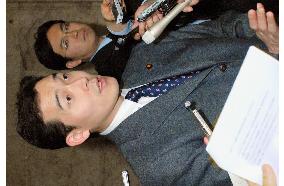
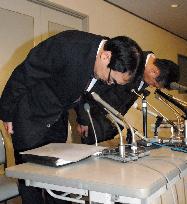
TOKYO, Japan - Yoshiaki Ito (front), head of the Editorial Division at the Mainichi Shimbun newspaper's head office, bows in apology at the outset of a news conference in Tokyo on Feb. 23. The company said a 41-year-old reporter passed a recording of an interview with Masaaki Itokawa, a House of Representatives member of the People's New Party, to a third person.

  •  
Construction firm exec held for threatening lawmaker

Construction firm exec held for threatening lawmaker

TOKYO, Japan - Opposition lawmaker Masaaki Itokawa responds to questions from reporters in the Diet on Feb. 22 after a construction company executive was arrested on suspicion of verbally threatening him over his parliamentary questions about land deals involving the executive's firm.

  •  
JAXA delays space probe's return for 3 yrs due to trouble

JAXA delays space probe's return for 3 yrs due to trouble

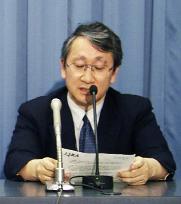
TOKYO, Japan - Junichiro Kawaguchi (R), a professor at the Japan Aerospace Exploration Agency, tells reporters in Tokyo on Dec. 14 that the return of Japan's space probe Hayabusa from the asteroid Itokawa to Earth will be pushed back three years to June 2010 due to thruster system problems.

  •  
Probe apparently failed to collect samples from asteroid Itokawa

Probe apparently failed to collect samples from asteroid Itokawa

TOKYO, Japan - Junichiro Kawaguchi, professor at the Japan Aerospace Exploration Agency, briefs reporters on data sent from the Japanese space probe Hayabusa at a news conference in Tokyo on Dec. 7.

  •  
Japan space probe collects samples from asteroid 'Itokawa'

Japan space probe collects samples from asteroid 'Itokawa'

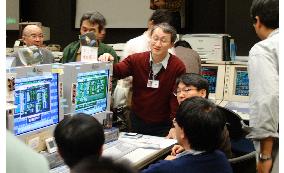
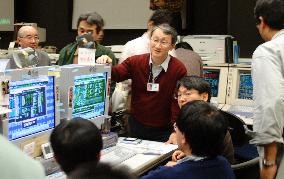
SAGAMIHARA, Japan - Professor Junichiro Kawaguchi (C) and his team members at the Japan Aerospace Exploration Agency look relieved on Nov. 26 following confirmation that the space probe Hayabusa landed on the asteroid ''Itokawa'' for the second time and apparently collected surface samples.

  •  
Itokawa 12th place in men's 5,000 meters

Itokawa 12th place in men's 5,000 meters

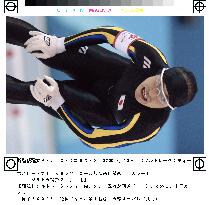
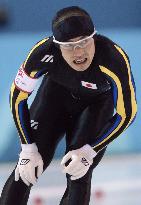
SALT LAKE CITY, United States - Japan's Toshihiko Itokawa looks unpleased after finishing 12th in the men's 5,000 meters with a time of 6 minutes, 27.52 seconds at Olympic Oval in Salt Lake City on Feb. 9.

  •  
Japan space probe collects samples from asteroid 'Itokawa'

Japan space probe collects samples from asteroid 'Itokawa'

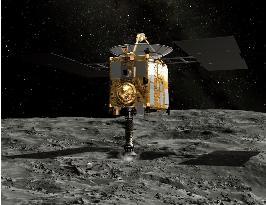
SAGAMIHARA, Japan - This is a scientist's image of the Japanese space probe Hayabusa landing on the asteroid ''Itokawa'' as provided by the Japan Aerospace Exploration Agency. The agency said the Hayabusa landed on the Itokawa for the second time on Nov. 26 and apparently collected surface samples there. (Kyodo)

  •  
Japan space probe collects samples from asteroid 'Itokawa'

Japan space probe collects samples from asteroid 'Itokawa'

SAGAMIHARA, Japan - Professor Junichiro Kawaguchi (C) and his team members at the Japan Aerospace Exploration Agency look relieved on Nov. 26 following confirmation that the space probe Hayabusa landed on the asteroid ''Itokawa'' for the second time and apparently collected surface samples. (Kyodo)

  •  
Probe apparently failed to collect samples from asteroid Itokawa

Probe apparently failed to collect samples from asteroid Itokawa

TOKYO, Japan - Junichiro Kawaguchi, professor at the Japan Aerospace Exploration Agency, briefs reporters on data sent from the Japanese space probe Hayabusa at a news conference in Tokyo on Dec. 7. (Kyodo)

  •  
JAXA delays space probe's return for 3 yrs due to trouble

JAXA delays space probe's return for 3 yrs due to trouble

TOKYO, Japan - Junichiro Kawaguchi (R), a professor at the Japan Aerospace Exploration Agency, tells reporters in Tokyo on Dec. 14 that the return of Japan's space probe Hayabusa from the asteroid Itokawa to Earth will be pushed back three years to June 2010 due to thruster system problems. (Kyodo)

  •  
Paper rockets checked before simultaneous launch

Paper rockets checked before simultaneous launch

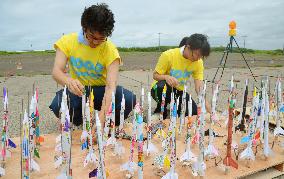
Paper-made rockets are inspected before their simultaneous launch at the port of Noshiro, Akita Prefecture, Japan, on Aug. 1. The prefecture is known as the site where Hideo Itokawa launched the so-called pencil rocket in 1955. (Kyodo) ==Kyodo

  •  
Itokawa 12th place in men's 5,000 meters

Itokawa 12th place in men's 5,000 meters

SALT LAKE CITY, United States - Japan's Toshihiko Itokawa looks unpleased after finishing 12th in the men's 5,000 meters with a time of 6 minutes, 27.52 seconds at Olympic Oval in Salt Lake City on Feb. 9.

  •  
Mainichi reporter gave interview recording to third party

Mainichi reporter gave interview recording to third party

TOKYO, Japan - Yoshiaki Ito (front), head of the Editorial Division at the Mainichi Shimbun newspaper's head office, bows in apology at the outset of a news conference in Tokyo on Feb. 23. The company said a 41-year-old reporter passed a recording of an interview with Masaaki Itokawa, a House of Representatives member of the People's New Party, to a third person. (Kyodo)

  •  
Construction firm exec held for threatening lawmaker

Construction firm exec held for threatening lawmaker

TOKYO, Japan - Opposition lawmaker Masaaki Itokawa responds to questions from reporters in the Diet on Feb. 22 after a construction company executive was arrested on suspicion of verbally threatening him over his parliamentary questions about land deals involving the executive's firm. (Kyodo)

  •  
Space probe Hayabusa unveiled to media

Space probe Hayabusa unveiled to media

TOKYO, Japan - The Japanese space probe Hayabusa capsule's outer shell is unveiled to the media at Sagamihara City Museum in Kanagawa Prefecture on July 29, 2010, a day ahead of the capsule's two-day public exhibition. Hayabusa returned from the asteroid Itokawa in June, making an unprecedented round trip to an astronomical body other than the moon. (Kyodo)

  •  
Hayabusa capsule analysis

Hayabusa capsule analysis

SAPPORO, Japan - Reporters visit Hokkaido University in Sapporo, northern Japan, to view samples brought back from the asteroid Itokawa by the unmanned Japanese space probe Hayabusa on March 1, 2011. A total of 13 institutes and eight teams have taken part in the project to analyze the samples. Hayabusa was launched in May 2003 and landed on the asteroid in September 2005. It returned to Earth while burning out upon reentry into atmosphere in June 2010 and the capsule containing the samples was recovered in a desert in southern Australia. (Kyodo)

  •  
Hayabusa capsule analysis

Hayabusa capsule analysis

SAPPORO, Japan - Reporters visit Hokkaido University in Sapporo, northern Japan, to view samples brought back from the asteroid Itokawa by the unmanned Japanese space probe Hayabusa on March 1, 2011. A total of 13 institutes and eight teams have taken part in the project to analyze the samples. Hayabusa was launched in May 2003 and landed on the asteroid in September 2005. It returned to Earth while burning out upon reentry into atmosphere in June 2010 and the capsule containing the samples was recovered in a desert in southern Australia. (Kyodo)

  •  
Hayabusa on exhibition at Kakuda Space Center in Miyagi

Hayabusa on exhibition at Kakuda Space Center in Miyagi

SENDAI, Japan - Visitors look at an exhibition of items associated with the Hayabusa unmanned space probe and retrieved in June after a seven-year round trip to the asteroid Itokawa at the Japan Aerospace Exploration Agency's Kakuda Space Center in Miyagi Prefecture on Sept. 11, 2010. (Kyodo)

  •  
100,000th Hayabusa capsule viewer

100,000th Hayabusa capsule viewer

TOKYO, Japan - Moe Nakajima, 11, (C) and her parents pose for photos in Tokyo on Aug. 19, 2010, after she became the 100,000th viewer of a capsule taken back to Earth from the asteroid Itokawa by the Hayabusa unmanned space probe. The capsule has been exhibited in Kanagawa Prefecture, Ibaraki Prefecture and Tokyo since July. The Japan Aerospace Exploration Agency, or JAXA, was examining particles found in a container in the capsule for asteroid surface samples. (Kyodo)

  •  
Hayabusa capsule from asteroid

Hayabusa capsule from asteroid

YOKOHAMA, Japan - Visitors view a small capsule at the Sagamihara City Museum in Sagamihara, Kanagawa Prefecture, on July 30, 2010. The museum on the same day began exhibiting the capsule that was released from the Hayabusa unmanned space probe and retrieved in June that year after a seven-year round trip to the asteroid Itokawa. The Japan Aerospace Exploration Agency said particles had been found in a container for asteroid surface samples inside the capsule. (Kyodo)

  •  
Space probe Hayabusa unveiled to media

Space probe Hayabusa unveiled to media

TOKYO, Japan - Junichiro Kawaguchi (L), the Japan Aerospace Exploration Agency project manager for space probe Hayabusa exploration, explains about the outer shell of the capsule at a press preview at Sagamihara City Museum in Kanagawa Prefecture on July 29, 2010, a day ahead of the probe's two-day public exhibition. Hayabusa returned from the asteroid Itokawa in June, making an unprecedented round trip to an astronomical body other than the moon. (Kyodo)

  •  
Hayabusa capsule analysis

Hayabusa capsule analysis

SAPPORO, Japan - Reporters visit Hokkaido University in Sapporo, northern Japan, to view samples brought back from the asteroid Itokawa by the unmanned Japanese space probe Hayabusa on March 1, 2011. Seen at left back is a machine for analysis. A total of 13 institutes and eight teams have taken part in the project to analyze the samples. Hayabusa was launched in May 2003 and landed on the asteroid in September 2005. It returned to Earth while burning out upon reentry into atmosphere in June 2010 and the capsule containing the samples was recovered in a desert in southern Australia. (Kyodo)

  •  
Analysis of space particles brought back by Hayabusa

Analysis of space particles brought back by Hayabusa

TOKYO, Japan - Akio Fujimura (L), professor at the Japan Aerospace Exploration Agency, speaks in a press conference in Tokyo on March 10, 2011, on the analysis of particles brought back to Earth by Japan's Hayabusa unmanned space probe from the asteroid Itokawa in June 2010. The material constituting the asteroid may have been formed in high temperatures at the time the solar system was created 4.6 billion years ago, according to JAXA. (Kyodo)

  •  
Analysis of space particles in Hayabusa

Analysis of space particles in Hayabusa

SAYO, Japan - Akira Tsuchiyama, a professor at Osaka University, explains equipment that is being used to analyze particles found inside a container of Japan's Hayabusa unmanned space probe, which returned from the asteroid Itokawa, at the large SPring-8 synchrotron radiation facility in Sayo, Hyogo Prefecture, on Jan. 22, 2011. (Kyodo)

  •  
Hayabusa particles found to be from space

Hayabusa particles found to be from space

TOKYO, Japan - Japanese science minister Yoshiaki Takaki announces the discovery of particles inside the Hayabusa probe that originated from the asteroid Itokawa during a press conference at the science ministry in Tokyo on Nov. 16, 2010. (Kyodo)

  •  
Hayabusa particles found to be from space

Hayabusa particles found to be from space

TOKYO, Japan - Junichiro Kawaguchi (3rd from L), professor at the Japan Aerospace Exploration Agency, poses together with members of his team that sent the Hayabusa space probe to the asteroid Itokawa, at the science ministry in Tokyo on Nov. 16, 2010. The government said the same day that particles found inside the Hayabusa originated from the asteroid. (Kyodo)

  •  
Hayabusa particles found to be from space

Hayabusa particles found to be from space

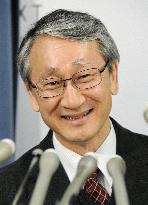
TOKYO, Japan - Junichiro Kawaguchi (L), professor at the Japan Aerospace Exploration Agency, commented on the discovery of particles inside the Hayabusa probe that originated from the asteroid Itokawa, at a press conference at the science ministry in Tokyo on Nov. 16, 2010. Kawaguchi led the project behind Hayabusa's trip into space. (Kyodo)

  •  
Hayabusa particles found to be from space

Hayabusa particles found to be from space

TOKYO, Japan - Junichiro Kawaguchi, professor at the Japan Aerospace Exploration Agency, commented on the discovery of particles inside the Hayabusa probe that originated from the asteroid Itokawa, at a press conference at the science ministry in Tokyo on Nov. 16, 2010. Kawaguchi led the project behind Hayabusa's trip into space. (Kyodo)

  • Main
  • Top
  • Editorial
  • Creative
  • About Us
  • About ILG
  • Terms of use
  • Company
  • BEHIND
  • Price List
  • Single Plan
  • Monthly Plan
  • Services
  • Shooting
  • Rights Clearance
  • Support
  • FAQ
  • How To Buy
  • Contact Us
  • Become a Partner

© KYODO NEWS IMAGES INC

All Rights Reserved.

  • Editorial
  • Olympics
  • News
  • Sports
  • Japan
  • Tech
  • Royal
  • Disaster
  • NorthKorea
  • Old Japan
  • SNS
  • Creative
  • Food
  • Japan
  • Landscape
  • Animal
  • Popular
  • #Ukraine
  • #Thailand
  • #coronavirus
  • #N. Korea
  • #China
  • #Russia
  • #Ukraine
  • #Thailand
  • #coronavirus
  • #N. Korea
  • #China
  • #Russia
  • Food
  • Japan
  • Landscape
  • Animal
  • Olympics
  • News
  • Sports
  • Japan
  • Tech
  • Royal
  • Disaster
  • NorthKorea
  • Old Japan
  • SNS