•  
Illustration - Persepolis - Iran

Illustration - Persepolis - Iran

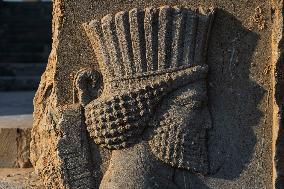
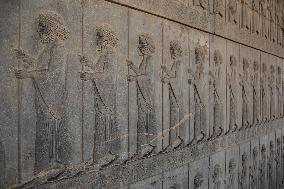
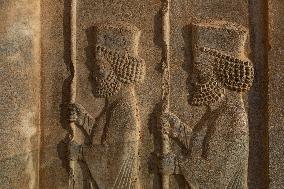
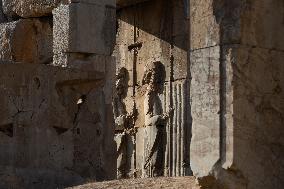
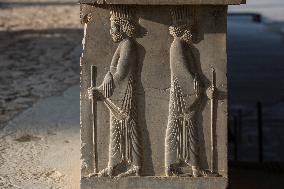
The figure of a royal guard is carved on a stone panel in Persepolis, Marvdasht, Fars, Iran on November 6, 2024. Built in the 6th century BCE by Darius the Great, Persepolis, also known as Takht-e Jamshid, stands as one of the most important archaeological sites of the ancient Persian world. Photo by Morteza Aminoroayayi/Middle East Images/ABACAPRESS.COM

  •  
Illustration - Persepolis - Iran

Illustration - Persepolis - Iran

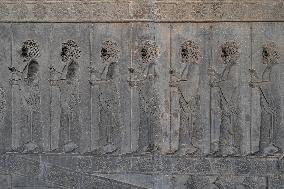
Ancient figures are carved on a wall at Persepolis in Marvdasht, Fars, Iran on November 6, 2024. Built in the 6th century BCE by Darius the Great, Persepolis, also known as Takht-e Jamshid, stands as one of the most important archaeological sites of the ancient Persian world. Photo by Morteza Aminoroayayi/Middle East Images/ABACAPRESS.COM

  •  
Illustration - Persepolis - Iran

Illustration - Persepolis - Iran

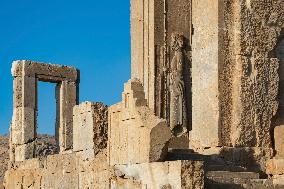
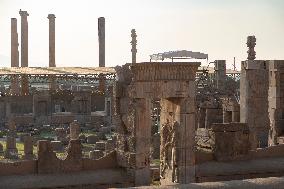
A stone figure is carved on a gateway wall at Persepolis in Marvdasht, Fars, Iran on November 6, 2024. Stone columns and a towering doorway stand at Persepolis, Iran on November 6, 2024. Built in the 6th century BCE by Darius the Great, Persepolis, also known as Takht-e Jamshid, stands as one of the most important archaeological sites of the ancient Persian world. Photo by Morteza Aminoroayayi/Middle East Images/ABACAPRESS.COM

  •  
Illustration - Persepolis - Iran

Illustration - Persepolis - Iran

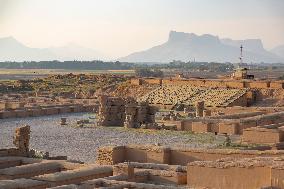
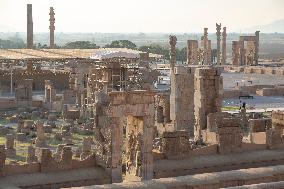
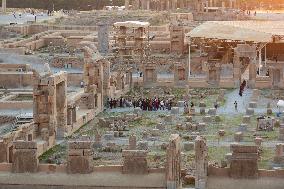
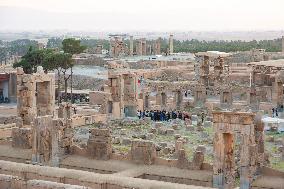
A wide view shows ancient structures and terraces at Persepolis in Marvdasht, Fars, Iran on November 6, 2024. Built in the 6th century BCE by Darius the Great, Persepolis, also known as Takht-e Jamshid, stands as one of the most important archaeological sites of the ancient Persian world. Photo by Morteza Aminoroayayi/Middle East Images/ABACAPRESS.COM

  •  
Illustration - Persepolis - Iran

Illustration - Persepolis - Iran

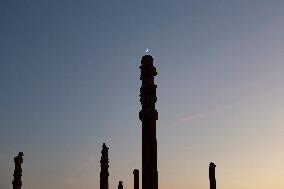
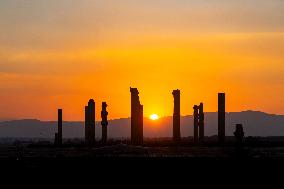
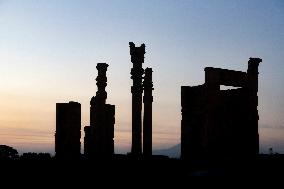
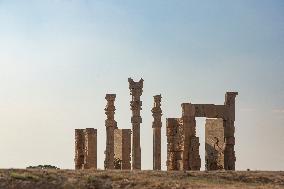
Silhouettes of columns stand against the sky in Persepolis, Marvdasht, Fars, Iran on November 6, 2024. Built in the 6th century BCE by Darius the Great, Persepolis, also known as Takht-e Jamshid, stands as one of the most important archaeological sites of the ancient Persian world. Photo by Morteza Aminoroayayi/Middle East Images/ABACAPRESS.COM

  •  
Illustration - Persepolis - Iran

Illustration - Persepolis - Iran

Silhouettes of columns stand against the sky in Persepolis, Marvdasht, Fars, Iran on November 6, 2024. Built in the 6th century BCE by Darius the Great, Persepolis, also known as Takht-e Jamshid, stands as one of the most important archaeological sites of the ancient Persian world. Photo by Morteza Aminoroayayi/Middle East Images/ABACAPRESS.COM

  •  
Illustration - Persepolis - Iran

Illustration - Persepolis - Iran

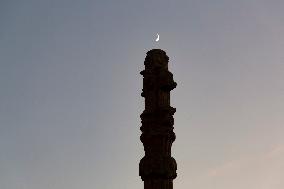
The moon sits above a stone column at Persepolis in Marvdasht, Fars, Iran on November 6, 2024. Built in the 6th century BCE by Darius the Great, Persepolis, also known as Takht-e Jamshid, stands as one of the most important archaeological sites of the ancient Persian world. Photo by Morteza Aminoroayayi/Middle East Images/ABACAPRESS.COM

  •  
Illustration - Persepolis - Iran

Illustration - Persepolis - Iran

A view of stone columns and gates at Persepolis in Marvdasht, Fars, Iran on November 6, 2024. Built in the 6th century BCE by Darius the Great, Persepolis, also known as Takht-e Jamshid, stands as one of the most important archaeological sites of the ancient Persian world. Photo by Morteza Aminoroayayi/Middle East Images/ABACAPRESS.COM

  •  
Illustration - Persepolis - Iran

Illustration - Persepolis - Iran

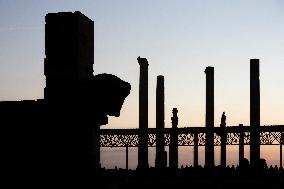
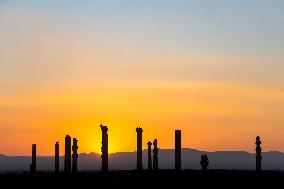
The sun sets behind columns at Persepolis in Marvdasht, Fars, Iran on November 6, 2024. Built in the 6th century BCE by Darius the Great, Persepolis, also known as Takht-e Jamshid, stands as one of the most important archaeological sites of the ancient Persian world. Photo by Morteza Aminoroayayi/Middle East Images/ABACAPRESS.COM

  •  
Illustration - Persepolis - Iran

Illustration - Persepolis - Iran

Ancient figures are carved on a wall at Persepolis in Marvdasht, Fars, Iran on November 6, 2024. Built in the 6th century BCE by Darius the Great, Persepolis, also known as Takht-e Jamshid, stands as one of the most important archaeological sites of the ancient Persian world. Photo by Morteza Aminoroayayi/Middle East Images/ABACAPRESS.COM

  •  
Illustration - Persepolis - Iran

Illustration - Persepolis - Iran

Ancient figures are carved on a wall at Persepolis in Marvdasht, Fars, Iran on November 6, 2024. Built in the 6th century BCE by Darius the Great, Persepolis, also known as Takht-e Jamshid, stands as one of the most important archaeological sites of the ancient Persian world. Photo by Morteza Aminoroayayi/Middle East Images/ABACAPRESS.COM

  •  
Illustration - Persepolis - Iran

Illustration - Persepolis - Iran

Visitors walk through ancient columns at Persepolis in Marvdasht, Fars, Iran on November 6, 2024. Built in the 6th century BCE by Darius the Great, Persepolis, also known as Takht-e Jamshid, stands as one of the most important archaeological sites of the ancient Persian world. Photo by Morteza Aminoroayayi/Middle East Images/ABACAPRESS.COM

  •  
Illustration - Persepolis - Iran

Illustration - Persepolis - Iran

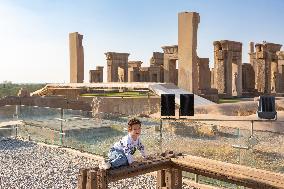
A child sits on a wooden bench near the ruins of Persepolis in Marvdasht, Fars, Iran on November 6, 2024. Built in the 6th century BCE by Darius the Great, Persepolis, also known as Takht-e Jamshid, stands as one of the most important archaeological sites of the ancient Persian world. Photo by Morteza Aminoroayayi/Middle East Images/ABACAPRESS.COM

  •  
Illustration - Persepolis - Iran

Illustration - Persepolis - Iran

Silhouettes of columns stand against the sky in Persepolis, Marvdasht, Fars, Iran on November 6, 2024. Built in the 6th century BCE by Darius the Great, Persepolis, also known as Takht-e Jamshid, stands as one of the most important archaeological sites of the ancient Persian world. Photo by Morteza Aminoroayayi/Middle East Images/ABACAPRESS.COM

  •  
Illustration - Persepolis - Iran

Illustration - Persepolis - Iran

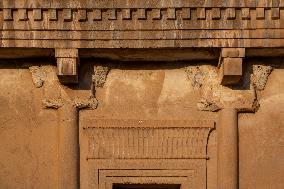
Detail of a stone doorway is seen at Persepolis in Marvdasht, Fars, Iran on November 6, 2024. Built in the 6th century BCE by Darius the Great, Persepolis, also known as Takht-e Jamshid, stands as one of the most important archaeological sites of the ancient Persian world. Photo by Morteza Aminoroayayi/Middle East Images/ABACAPRESS.COM

  •  
Illustration - Persepolis - Iran

Illustration - Persepolis - Iran

The sun sets behind columns at Persepolis in Marvdasht, Fars, Iran on November 6, 2024. Built in the 6th century BCE by Darius the Great, Persepolis, also known as Takht-e Jamshid, stands as one of the most important archaeological sites of the ancient Persian world. Photo by Morteza Aminoroayayi/Middle East Images/ABACAPRESS.COM

  •  
Illustration - Persepolis - Iran

Illustration - Persepolis - Iran

Visitors walk through ancient columns at Persepolis in Marvdasht, Fars, Iran on November 6, 2024. Built in the 6th century BCE by Darius the Great, Persepolis, also known as Takht-e Jamshid, stands as one of the most important archaeological sites of the ancient Persian world. Photo by Morteza Aminoroayayi/Middle East Images/ABACAPRESS.COM

  •  
Illustration - Persepolis - Iran

Illustration - Persepolis - Iran

A view of stone columns and gates at Persepolis in Marvdasht, Fars, Iran on November 6, 2024. Built in the 6th century BCE by Darius the Great, Persepolis, also known as Takht-e Jamshid, stands as one of the most important archaeological sites of the ancient Persian world. Photo by Morteza Aminoroayayi/Middle East Images/ABACAPRESS.COM

  •  
Illustration - Persepolis - Iran

Illustration - Persepolis - Iran

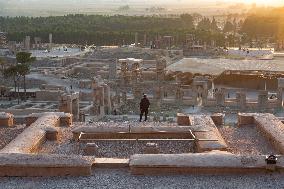
A man stands on a platform overlooking Persepolis in Marvdasht, Fars, Iran on November 6, 2024. Built in the 6th century BCE by Darius the Great, Persepolis, also known as Takht-e Jamshid, stands as one of the most important archaeological sites of the ancient Persian world. Photo by Morteza Aminoroayayi/Middle East Images/ABACAPRESS.COM

  •  
Illustration - Persepolis - Iran

Illustration - Persepolis - Iran

A carving of figures appears on a stone wall at Persepolis, Iran on November 6, 2024. Built in the 6th century BCE by Darius the Great, Persepolis, also known as Takht-e Jamshid, stands as one of the most important archaeological sites of the ancient Persian world. Photo by Morteza Aminoroayayi/Middle East Images/ABACAPRESS.COM

  •  
Illustration - Persepolis - Iran

Illustration - Persepolis - Iran

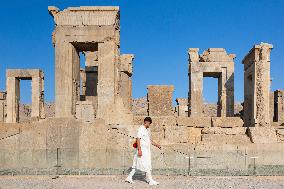
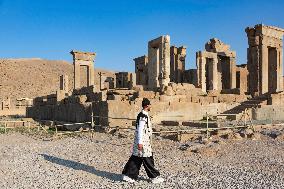
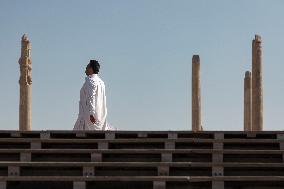
A man walks past stone columns at Persepolis in Marvdasht, Fars, Iran on November 6, 2024. Built in the 6th century BCE by Darius the Great, Persepolis, also known as Takht-e Jamshid, stands as one of the most important archaeological sites of the ancient Persian world. Photo by Morteza Aminoroayayi/Middle East Images/ABACAPRESS.COM

  •  
Illustration - Persepolis - Iran

Illustration - Persepolis - Iran

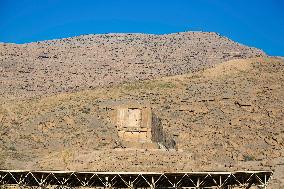
A royal tomb is carved into the mountainside above Persepolis in Marvdasht, Fars, Iran on November 6, 2024. Built in the 6th century BCE by Darius the Great, Persepolis, also known as Takht-e Jamshid, stands as one of the most important archaeological sites of the ancient Persian world. Photo by Morteza Aminoroayayi/Middle East Images/ABACAPRESS.COM

  •  
Illustration - Persepolis - Iran

Illustration - Persepolis - Iran

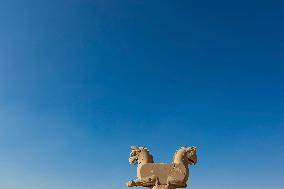
A sculpted double-headed griffin sits atop a column at Takht-e Jamshid in Marvdasht, Iran on November 6, 2024. Built in the 6th century BCE by Darius the Great, Persepolis, also known as Takht-e Jamshid, stands as one of the most important archaeological sites of the ancient Persian world. Photo by Morteza Aminoroayayi/Middle East Images/ABACAPRESS.COM

  •  
Illustration - Persepolis - Iran

Illustration - Persepolis - Iran

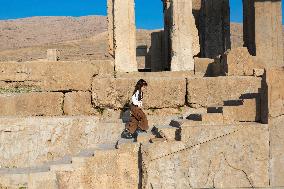
A child climbs a staircase among ancient columns at Persepolis in Marvdasht, Fars, Iran on November 6, 2024. Built in the 6th century BCE by Darius the Great, Persepolis, also known as Takht-e Jamshid, stands as one of the most important archaeological sites of the ancient Persian world. Photo by Morteza Aminoroayayi/Middle East Images/ABACAPRESS.COM

  •  
Illustration - Persepolis - Iran

Illustration - Persepolis - Iran

Ancient figures are carved on a wall at Persepolis in Marvdasht, Fars, Iran on November 6, 2024. Built in the 6th century BCE by Darius the Great, Persepolis, also known as Takht-e Jamshid, stands as one of the most important archaeological sites of the ancient Persian world. Photo by Morteza Aminoroayayi/Middle East Images/ABACAPRESS.COM

  •  
Illustration - Persepolis - Iran

Illustration - Persepolis - Iran

A man walks past stone columns at Persepolis in Marvdasht, Fars, Iran on November 6, 2024. Built in the 6th century BCE by Darius the Great, Persepolis, also known as Takht-e Jamshid, stands as one of the most important archaeological sites of the ancient Persian world. Photo by Morteza Aminoroayayi/Middle East Images/ABACAPRESS.COM

  •  
Illustration - Persepolis - Iran

Illustration - Persepolis - Iran

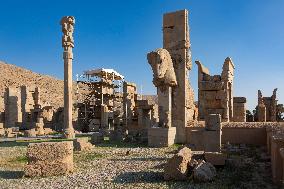
Stone columns and ruined gateways rise from the Persepolis terrace at Takht-e Jamshid in Marvdasht, Iran on November 6, 2024. Built in the 6th century BCE by Darius the Great, Persepolis, also known as Takht-e Jamshid, stands as one of the most important archaeological sites of the ancient Persian world. Photo by Morteza Aminoroayayi/Middle East Images/ABACAPRESS.COM

  •  
Illustration - Persepolis - Iran

Illustration - Persepolis - Iran

A view of Apadana Palace at Takht-e Jamshid in Marvdasht, Iran on November 6, 2024. Built in the 6th century BCE by Darius the Great, Persepolis, also known as Takht-e Jamshid, stands as one of the most important archaeological sites of the ancient Persian world. Photo by Morteza Aminoroayayi/Middle East Images/ABACAPRESS.COM

  •  
Illustration - Persepolis - Iran

Illustration - Persepolis - Iran

A man walks past towering stone columns at Takht-e Jamshid in Marvdasht, Iran on November 6, 2024. Built in the 6th century BCE by Darius the Great, Persepolis, also known as Takht-e Jamshid, stands as one of the most important archaeological sites of the ancient Persian world. Photo by Morteza Aminoroayayi/Middle East Images/ABACAPRESS.COM

  •  
(PARIS2024)FRANCE-PARIS-OLY-JUDO

(PARIS2024)FRANCE-PARIS-OLY-JUDO

(240802) -- PARIS, Aug. 2, 2024 Photo by Xinhua/ABACAPRESS.COM) -- Alisher Yusupov (R) of Uzbekistan celebrates with coach Jamshid Khudayberganov after the judo men's +100kg contest for bronze medal at the Paris 2024 Olympic Games in Paris, France, on Aug. 2, 2024. Photo by Xinhua/ABACAPRESS.COM/Li An)

  •  
Historical Site Persepolis Takht-e Jamshid - Iran

Historical Site Persepolis Takht-e Jamshid - Iran

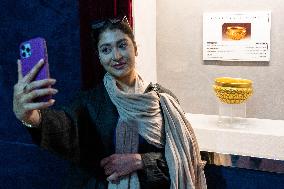
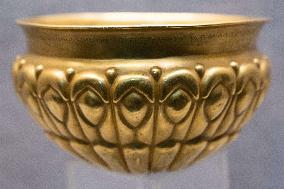
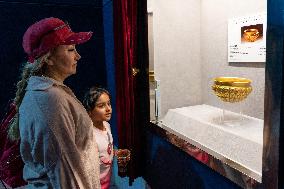
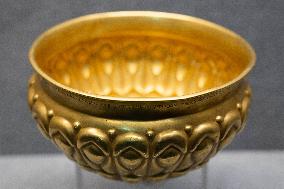
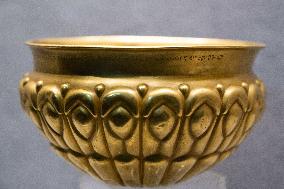
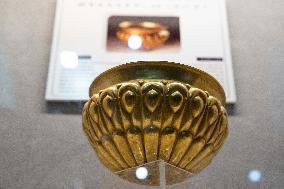
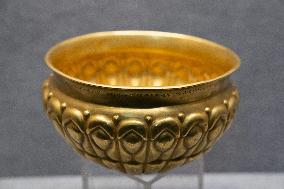
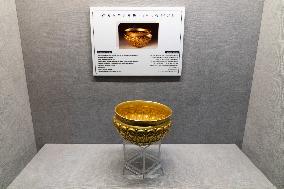
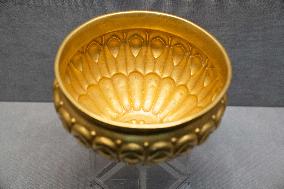
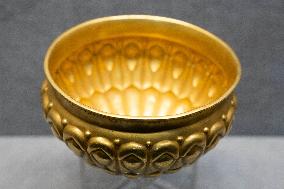
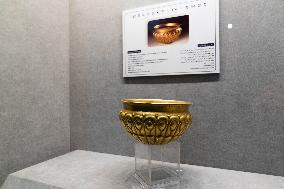
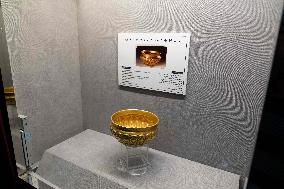
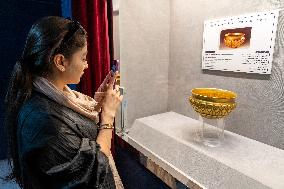
A woman takes a selfie next to the Golden Cup of  Xerxes, the king of the Persian Achaemenid Empire, put on display in the museum in the ruins of Persepolis or Takht-e Jamshid, a UNESCO World Heritage site near Shiraz, Iran, on May 18, 2024. Founded by Darius I in 518 B.C., Persepolis was the capital of the Achaemenid Empire. It was built on an immense half-artificial, half-natural terrace, where the king of kings created an impressive palace complex inspired by Mesopotamian models. Takht-e Jamshid in Persian and 'Persepolis' in Greek, this site has earned global recognition. The columns, column heads, inscriptions, reliefs, palaces, and gates in the Persepolis area are among the world's most celebrated works of civilization. As the Persepolis area is known, the' Land of Persia' draws tourists worldwide to Shiraz every year. a Photo by Moe/Middle East Images/ABACAPRESS.COM

  •  
Historical Site Persepolis Takht-e Jamshid - Iran

Historical Site Persepolis Takht-e Jamshid - Iran

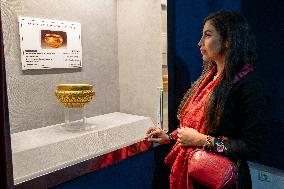
A woman looks at the Golden Cup of  Xerxes, the king of the Persian Achaemenid Empire, put on display in the museum in the ruins of Persepolis or Takht-e Jamshid, a UNESCO World Heritage site near Shiraz, Iran, on May 18, 2024. Founded by Darius I in 518 B.C., Persepolis was the capital of the Achaemenid Empire. It was built on an immense half-artificial, half-natural terrace, where the king of kings created an impressive palace complex inspired by Mesopotamian models. Takht-e Jamshid in Persian and 'Persepolis' in Greek, this site has earned global recognition. The columns, column heads, inscriptions, reliefs, palaces, and gates in the Persepolis area are among the world's most celebrated works of civilization. As the Persepolis area is known, the' Land of Persia' draws tourists worldwide to Shiraz every year. Photo by Moe/Middle East Images/ABACAPRESS.COM

  •  
Historical Site Persepolis Takht-e Jamshid - Iran

Historical Site Persepolis Takht-e Jamshid - Iran

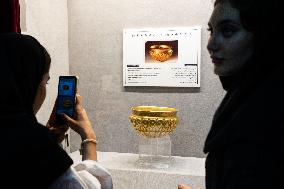
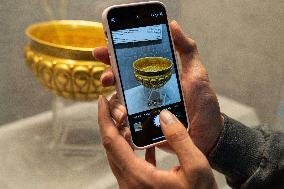
A visitor takes a photo of the Golden Cup of  Xerxes, the king of the Persian Achaemenid Empire, put on display in the museum in the ruins of Persepolis or Takht-e Jamshid, a UNESCO World Heritage site near Shiraz, Iran, on May 18, 2024. Founded by Darius I in 518 B.C., Persepolis was the capital of the Achaemenid Empire. It was built on an immense half-artificial, half-natural terrace, where the king of kings created an impressive palace complex inspired by Mesopotamian models. Takht-e Jamshid in Persian and 'Persepolis' in Greek, this site has earned global recognition. The columns, column heads, inscriptions, reliefs, palaces, and gates in the Persepolis area are among the world's most celebrated works of civilization. As the Persepolis area is known, the' Land of Persia' draws tourists worldwide to Shiraz every year. Photo by Moe/Middle East Images/ABACAPRESS.COM

  •  
Historical Site Persepolis Takht-e Jamshid - Iran

Historical Site Persepolis Takht-e Jamshid - Iran

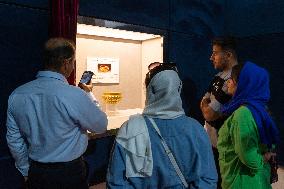
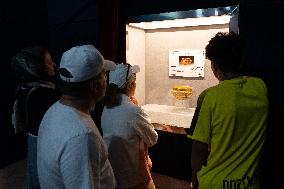
Visitors look at the Golden Cup of  Xerxes, the king of the Persian Achaemenid Empire, put on display in the museum in the ruins of Persepolis or Takht-e Jamshid, a UNESCO World Heritage site near Shiraz, Iran, on May 18, 2024. Founded by Darius I in 518 B.C., Persepolis was the capital of the Achaemenid Empire. It was built on an immense half-artificial, half-natural terrace, where the king of kings created an impressive palace complex inspired by Mesopotamian models. Takht-e Jamshid in Persian and 'Persepolis' in Greek, this site has earned global recognition. The columns, column heads, inscriptions, reliefs, palaces, and gates in the Persepolis area are among the world's most celebrated works of civilization. As the Persepolis area is known, the' Land of Persia' draws tourists worldwide to Shiraz every year. Photo by Moe/Middle East Images/ABACAPRESS.COM

  •  
Historical Site Persepolis Takht-e Jamshid - Iran

Historical Site Persepolis Takht-e Jamshid - Iran

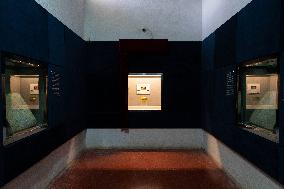
View of the Golden Cup of  Xerxes, the king of the Persian Achaemenid Empire, put on display in the museum in the ruins of Persepolis or Takht-e Jamshid, a UNESCO World Heritage site near Shiraz, Iran, on May 18, 2024. Founded by Darius I in 518 B.C., Persepolis was the capital of the Achaemenid Empire. It was built on an immense half-artificial, half-natural terrace, where the king of kings created an impressive palace complex inspired by Mesopotamian models. Takht-e Jamshid in Persian and 'Persepolis' in Greek, this site has earned global recognition. The columns, column heads, inscriptions, reliefs, palaces, and gates in the Persepolis area are among the world's most celebrated works of civilization. As the Persepolis area is known, the' Land of Persia' draws tourists worldwide to Shiraz every year. Photo by Moe/Middle East Images/ABACAPRESS.COM

  •  
Historical Site Persepolis Takht-e Jamshid - Iran

Historical Site Persepolis Takht-e Jamshid - Iran

A visitor takes a photo of the Golden Cup of  Xerxes, the king of the Persian Achaemenid Empire, put on display in the museum in the ruins of Persepolis or Takht-e Jamshid, a UNESCO World Heritage site near Shiraz, Iran, on May 18, 2024. Founded by Darius I in 518 B.C., Persepolis was the capital of the Achaemenid Empire. It was built on an immense half-artificial, half-natural terrace, where the king of kings created an impressive palace complex inspired by Mesopotamian models. Takht-e Jamshid in Persian and 'Persepolis' in Greek, this site has earned global recognition. The columns, column heads, inscriptions, reliefs, palaces, and gates in the Persepolis area are among the world's most celebrated works of civilization. As the Persepolis area is known, the' Land of Persia' draws tourists worldwide to Shiraz every year. Photo by Moe/Middle East Images/ABACAPRESS.COM

  •  
Historical Site Persepolis Takht-e Jamshid - Iran

Historical Site Persepolis Takht-e Jamshid - Iran

Visitors take a photo of the Golden Cup of  Xerxes, the king of the Persian Achaemenid Empire, put on display in the museum in the ruins of Persepolis or Takht-e Jamshid, a UNESCO World Heritage site near Shiraz, Iran, on May 18, 2024. Founded by Darius I in 518 B.C., Persepolis was the capital of the Achaemenid Empire. It was built on an immense half-artificial, half-natural terrace, where the king of kings created an impressive palace complex inspired by Mesopotamian models. Takht-e Jamshid in Persian and 'Persepolis' in Greek, this site has earned global recognition. The columns, column heads, inscriptions, reliefs, palaces, and gates in the Persepolis area are among the world's most celebrated works of civilization. As the Persepolis area is known, the' Land of Persia' draws tourists worldwide to Shiraz every year. Photo by Moe/Middle East Images/ABACAPRESS.COM

  •  
Historical Site Persepolis Takht-e Jamshid - Iran

Historical Site Persepolis Takht-e Jamshid - Iran

A woman takes a photo of the Golden Cup of  Xerxes, the king of the Persian Achaemenid Empire, put on display in the museum in the ruins of Persepolis or Takht-e Jamshid, a UNESCO World Heritage site near Shiraz, Iran, on May 18, 2024. Founded by Darius I in 518 B.C., Persepolis was the capital of the Achaemenid Empire. It was built on an immense half-artificial, half-natural terrace, where the king of kings created an impressive palace complex inspired by Mesopotamian models. Takht-e Jamshid in Persian and 'Persepolis' in Greek, this site has earned global recognition. The columns, column heads, inscriptions, reliefs, palaces, and gates in the Persepolis area are among the world's most celebrated works of civilization. As the Persepolis area is known, the' Land of Persia' draws tourists worldwide to Shiraz every year. Photo by Moe/Middle East Images/ABACAPRESS.COM

  •  
Historical Site Persepolis Takht-e Jamshid - Iran

Historical Site Persepolis Takht-e Jamshid - Iran

Visitors look at the Golden Cup of  Xerxes, the king of the Persian Achaemenid Empire, put on display in the museum in the ruins of Persepolis or Takht-e Jamshid, a UNESCO World Heritage site near Shiraz, Iran, on May 18, 2024. Founded by Darius I in 518 B.C., Persepolis was the capital of the Achaemenid Empire. It was built on an immense half-artificial, half-natural terrace, where the king of kings created an impressive palace complex inspired by Mesopotamian models. Takht-e Jamshid in Persian and 'Persepolis' in Greek, this site has earned global recognition. The columns, column heads, inscriptions, reliefs, palaces, and gates in the Persepolis area are among the world's most celebrated works of civilization. As the Persepolis area is known, the' Land of Persia' draws tourists worldwide to Shiraz every year. Photo by Moe/Middle East Images/ABACAPRESS.COM

  •  
Historical Site Persepolis Takht-e Jamshid - Iran

Historical Site Persepolis Takht-e Jamshid - Iran

View of the Golden Cup of  Xerxes, the king of the Persian Achaemenid Empire, put on display in the museum in the ruins of Persepolis or Takht-e Jamshid, a UNESCO World Heritage site near Shiraz, Iran, on May 18, 2024. Founded by Darius I in 518 B.C., Persepolis was the capital of the Achaemenid Empire. It was built on an immense half-artificial, half-natural terrace, where the king of kings created an impressive palace complex inspired by Mesopotamian models. Takht-e Jamshid in Persian and 'Persepolis' in Greek, this site has earned global recognition. The columns, column heads, inscriptions, reliefs, palaces, and gates in the Persepolis area are among the world's most celebrated works of civilization. As the Persepolis area is known, the' Land of Persia' draws tourists worldwide to Shiraz every year. Photo by Moe/Middle East Images/ABACAPRESS.COM

  •  
Historical Site Persepolis Takht-e Jamshid - Iran

Historical Site Persepolis Takht-e Jamshid - Iran

Visitors look at the Golden Cup of  Xerxes, the king of the Persian Achaemenid Empire, put on display in the museum in the ruins of Persepolis or Takht-e Jamshid, a UNESCO World Heritage site near Shiraz, Iran, on May 18, 2024. Founded by Darius I in 518 B.C., Persepolis was the capital of the Achaemenid Empire. It was built on an immense half-artificial, half-natural terrace, where the king of kings created an impressive palace complex inspired by Mesopotamian models. Takht-e Jamshid in Persian and 'Persepolis' in Greek, this site has earned global recognition. The columns, column heads, inscriptions, reliefs, palaces, and gates in the Persepolis area are among the world's most celebrated works of civilization. As the Persepolis area is known, the' Land of Persia' draws tourists worldwide to Shiraz every year. Photo by Moe/Middle East Images/ABACAPRESS.COM

  •  
Historical Site Persepolis Takht-e Jamshid - Iran

Historical Site Persepolis Takht-e Jamshid - Iran

View of the Golden Cup of  Xerxes, the king of the Persian Achaemenid Empire, put on display in the museum in the ruins of Persepolis or Takht-e Jamshid, a UNESCO World Heritage site near Shiraz, Iran, on May 18, 2024. Founded by Darius I in 518 B.C., Persepolis was the capital of the Achaemenid Empire. It was built on an immense half-artificial, half-natural terrace, where the king of kings created an impressive palace complex inspired by Mesopotamian models. Takht-e Jamshid in Persian and 'Persepolis' in Greek, this site has earned global recognition. The columns, column heads, inscriptions, reliefs, palaces, and gates in the Persepolis area are among the world's most celebrated works of civilization. As the Persepolis area is known, the' Land of Persia' draws tourists worldwide to Shiraz every year. Photo by Moe/Middle East Images/ABACAPRESS.COM

  •  
Historical Site Persepolis Takht-e Jamshid - Iran

Historical Site Persepolis Takht-e Jamshid - Iran

View of the Golden Cup of  Xerxes, the king of the Persian Achaemenid Empire, put on display in the museum in the ruins of Persepolis or Takht-e Jamshid, a UNESCO World Heritage site near Shiraz, Iran, on May 18, 2024. Founded by Darius I in 518 B.C., Persepolis was the capital of the Achaemenid Empire. It was built on an immense half-artificial, half-natural terrace, where the king of kings created an impressive palace complex inspired by Mesopotamian models. Takht-e Jamshid in Persian and 'Persepolis' in Greek, this site has earned global recognition. The columns, column heads, inscriptions, reliefs, palaces, and gates in the Persepolis area are among the world's most celebrated works of civilization. As the Persepolis area is known, the' Land of Persia' draws tourists worldwide to Shiraz every year. Photo by Moe/Middle East Images/ABACAPRESS.COM

  •  
Historical Site Persepolis Takht-e Jamshid - Iran

Historical Site Persepolis Takht-e Jamshid - Iran

View of the Golden Cup of  Xerxes, the king of the Persian Achaemenid Empire, put on display in the museum in the ruins of Persepolis or Takht-e Jamshid, a UNESCO World Heritage site near Shiraz, Iran, on May 18, 2024. Founded by Darius I in 518 B.C., Persepolis was the capital of the Achaemenid Empire. It was built on an immense half-artificial, half-natural terrace, where the king of kings created an impressive palace complex inspired by Mesopotamian models. Takht-e Jamshid in Persian and 'Persepolis' in Greek, this site has earned global recognition. The columns, column heads, inscriptions, reliefs, palaces, and gates in the Persepolis area are among the world's most celebrated works of civilization. As the Persepolis area is known, the' Land of Persia' draws tourists worldwide to Shiraz every year. Photo by Moe/Middle East Images/ABACAPRESS.COM

  •  
Historical Site Persepolis Takht-e Jamshid - Iran

Historical Site Persepolis Takht-e Jamshid - Iran

View of the Golden Cup of  Xerxes, the king of the Persian Achaemenid Empire, put on display in the museum in the ruins of Persepolis or Takht-e Jamshid, a UNESCO World Heritage site near Shiraz, Iran, on May 18, 2024. Founded by Darius I in 518 B.C., Persepolis was the capital of the Achaemenid Empire. It was built on an immense half-artificial, half-natural terrace, where the king of kings created an impressive palace complex inspired by Mesopotamian models. Takht-e Jamshid in Persian and 'Persepolis' in Greek, this site has earned global recognition. The columns, column heads, inscriptions, reliefs, palaces, and gates in the Persepolis area are among the world's most celebrated works of civilization. As the Persepolis area is known, the' Land of Persia' draws tourists worldwide to Shiraz every year. Photo by Moe/Middle East Images/ABACAPRESS.COM

  •  
Historical Site Persepolis Takht-e Jamshid - Iran

Historical Site Persepolis Takht-e Jamshid - Iran

View of the Golden Cup of  Xerxes, the king of the Persian Achaemenid Empire, put on display in the museum in the ruins of Persepolis or Takht-e Jamshid, a UNESCO World Heritage site near Shiraz, Iran, on May 18, 2024. Founded by Darius I in 518 B.C., Persepolis was the capital of the Achaemenid Empire. It was built on an immense half-artificial, half-natural terrace, where the king of kings created an impressive palace complex inspired by Mesopotamian models. Takht-e Jamshid in Persian and 'Persepolis' in Greek, this site has earned global recognition. The columns, column heads, inscriptions, reliefs, palaces, and gates in the Persepolis area are among the world's most celebrated works of civilization. As the Persepolis area is known, the' Land of Persia' draws tourists worldwide to Shiraz every year. Photo by Moe/Middle East Images/ABACAPRESS.COM

  •  
Historical Site Persepolis Takht-e Jamshid - Iran

Historical Site Persepolis Takht-e Jamshid - Iran

View of the Golden Cup of  Xerxes, the king of the Persian Achaemenid Empire, put on display in the museum in the ruins of Persepolis or Takht-e Jamshid, a UNESCO World Heritage site near Shiraz, Iran, on May 18, 2024. Founded by Darius I in 518 B.C., Persepolis was the capital of the Achaemenid Empire. It was built on an immense half-artificial, half-natural terrace, where the king of kings created an impressive palace complex inspired by Mesopotamian models. Takht-e Jamshid in Persian and 'Persepolis' in Greek, this site has earned global recognition. The columns, column heads, inscriptions, reliefs, palaces, and gates in the Persepolis area are among the world's most celebrated works of civilization. As the Persepolis area is known, the' Land of Persia' draws tourists worldwide to Shiraz every year. Photo by Moe/Middle East Images/ABACAPRESS.COM

  •  
Historical Site Persepolis Takht-e Jamshid - Iran

Historical Site Persepolis Takht-e Jamshid - Iran

View of the Golden Cup of  Xerxes, the king of the Persian Achaemenid Empire, put on display in the museum in the ruins of Persepolis or Takht-e Jamshid, a UNESCO World Heritage site near Shiraz, Iran, on May 18, 2024. Founded by Darius I in 518 B.C., Persepolis was the capital of the Achaemenid Empire. It was built on an immense half-artificial, half-natural terrace, where the king of kings created an impressive palace complex inspired by Mesopotamian models. Takht-e Jamshid in Persian and 'Persepolis' in Greek, this site has earned global recognition. The columns, column heads, inscriptions, reliefs, palaces, and gates in the Persepolis area are among the world's most celebrated works of civilization. As the Persepolis area is known, the' Land of Persia' draws tourists worldwide to Shiraz every year. Photo by Moe/Middle East Images/ABACAPRESS.COM

  •  
Historical Site Persepolis Takht-e Jamshid - Iran

Historical Site Persepolis Takht-e Jamshid - Iran

View of the Golden Cup of  Xerxes, the king of the Persian Achaemenid Empire, put on display in the museum in the ruins of Persepolis or Takht-e Jamshid, a UNESCO World Heritage site near Shiraz, Iran, on May 18, 2024. Founded by Darius I in 518 B.C., Persepolis was the capital of the Achaemenid Empire. It was built on an immense half-artificial, half-natural terrace, where the king of kings created an impressive palace complex inspired by Mesopotamian models. Takht-e Jamshid in Persian and 'Persepolis' in Greek, this site has earned global recognition. The columns, column heads, inscriptions, reliefs, palaces, and gates in the Persepolis area are among the world's most celebrated works of civilization. As the Persepolis area is known, the' Land of Persia' draws tourists worldwide to Shiraz every year. Photo by Moe/Middle East Images/ABACAPRESS.COM

  •  
Historical Site Persepolis Takht-e Jamshid - Iran

Historical Site Persepolis Takht-e Jamshid - Iran

View of the Golden Cup of  Xerxes, the king of the Persian Achaemenid Empire, put on display in the museum in the ruins of Persepolis or Takht-e Jamshid, a UNESCO World Heritage site near Shiraz, Iran, on May 18, 2024. Founded by Darius I in 518 B.C., Persepolis was the capital of the Achaemenid Empire. It was built on an immense half-artificial, half-natural terrace, where the king of kings created an impressive palace complex inspired by Mesopotamian models. Takht-e Jamshid in Persian and 'Persepolis' in Greek, this site has earned global recognition. The columns, column heads, inscriptions, reliefs, palaces, and gates in the Persepolis area are among the world's most celebrated works of civilization. As the Persepolis area is known, the' Land of Persia' draws tourists worldwide to Shiraz every year. Photo by Moe/Middle East Images/ABACAPRESS.COM

  • Main
  • Top
  • Editorial
  • Creative
  • About Us
  • About ILG
  • Terms of use
  • Company
  • BEHIND
  • Price List
  • Single Plan
  • Monthly Plan
  • Services
  • Shooting
  • Rights Clearance
  • Support
  • FAQ
  • How To Buy
  • Contact Us
  • Become a Partner

© KYODO NEWS IMAGES INC

All Rights Reserved.

  • Editorial
  • Olympics
  • News
  • Sports
  • Japan
  • Tech
  • Royal
  • Disaster
  • NorthKorea
  • Old Japan
  • SNS
  • Creative
  • Food
  • Japan
  • Landscape
  • Animal
  • Popular
  • #Ukraine
  • #Thailand
  • #coronavirus
  • #N. Korea
  • #Russia
  • #China
  • #Ukraine
  • #Thailand
  • #coronavirus
  • #N. Korea
  • #Russia
  • #China
  • Food
  • Japan
  • Landscape
  • Animal
  • Olympics
  • News
  • Sports
  • Japan
  • Tech
  • Royal
  • Disaster
  • NorthKorea
  • Old Japan
  • SNS