•  
Illustration - Millau

Illustration - Millau

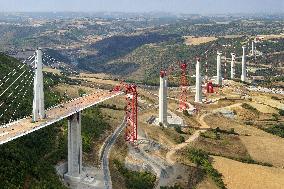
ARCHIVES JUNE 2003 - FRANCE. AVEYRON (12) AERIAL VIEW OTHE CONSTRUCTION OF THE MILLAU VIADUCT IN JUNE 2003. GENERAL VIEW OF THE VIADUCT SITE: AT A RATE OF 6 METERS PER HOUR THE FIRST PART OF THE METAL DECK (342 METERS LENGTH) IS LAUNCHED OVER THE VALLEY FROM THE TARN. AFTER HAVING JOINED THE PROVISIONAL PILLAR 171 METERS DISTANT (IN RED) THE APRON IS PUSHED TOWARDS PIER P6 (171 METERS FURTHER). IN THE BACKGROUND THE CAUSSE ROUGE. Photo by Stephane Compoint/Only France/ABACAPRESS.COM

  •  
Canada Wildfires Impact North America's Air Quality

Canada Wildfires Impact North America's Air Quality

Handout photo dated on August 3, 2025, shows Canada is currently facing an intense fire season, with hundreds of active wildfires across Saskatchewan, Alberta, and Manitoba, prompting the evacuation of thousands of residents. Smoke from these fires has severely degraded air quality both locally and across borders, including the United States. This false colour image, acquired by one of the Copernicus Sentinel-3 satellites on 3 August 2025, shows the smoke cloud from the wildfires engulfing skies over Canada and the US. According to the Copernicus Atmosphere Monitoring Service (CAMS), June and July 2025 saw severe wildfire activity in Canada, with daily total wildfire intensity and emissions consistently above the 2003-2024 average throughout the summer. August 3, 2025. Photo by European Union, Copernicus Sentinel-3 imagery via ABACAPRESS.COM

  •  
The Cardinals ‘Papabile’ - Vatican

The Cardinals ‘Papabile’ - Vatican

File photo - Cardinal ‘papabile’ Marc Ouellet (Canada) near the Vatican on June 4, 2009. Ouellet served as Archbishop of Quebec and Primate of Canada from 2003 to 2010. He was made a cardinal by Pope John Paul II on 21 October 2003 and was considered a possible candidate for election to the papacy in both 2005 and 2013. He is considered, within the church and the curia, one of the papal names, and could be the Successor of Peter. Photo by Eric Vandeville/ABACAPRESS.COM

  •  
File - Pope Jean Paul II

File - Pope Jean Paul II

File photo dated June 19, 2003. Pope John Paul II celebrated the Corpus Domini mass in front of Saint John in Lateran Basilic , a feast commemorating Christ's last supper and the institution of the Eucharist. Rome Italy. Photo by Eric Vandeville/ABACAPRESS.COM

  •  
Giant Panda Reintroduction - China

Giant Panda Reintroduction - China

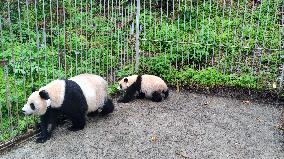
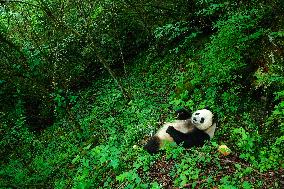
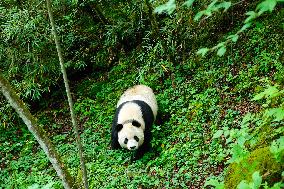
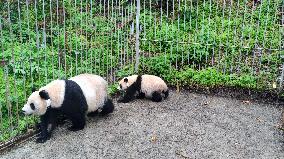
WOLONG, June 29, 2024 -- This file photo taken on Sept. 16, 2014 shows giant panda cub Hua Jiao (L), the world's first giant panda cub with both captive and wild parents, and her mother Cao Cao in the wild training fields. In recent years, China has made significant progress in panda conservation through a series of measures, including forest and wildlife protection as well as the construction of giant panda national parks. The wild giant panda population in China has grown from about 1,100 in the 1980s to nearly 1,900. Giant panda reintroduction refers to releasing captive-bred giant pandas to their historical distribution areas to live and reproduce after acclimatization training so as to rebuild the wild population of the species. China Conservation and Research Center for the Giant Panda (CCRCGP) started a reintroduction program in 2003. It has reintroduced eleven pandas into the wild, nine of which survived. In the future, the center will continue to train more individual panda cubs using the mother-cub

  •  
Giant Panda Reintroduction - China

Giant Panda Reintroduction - China

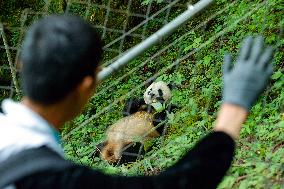
WOLONG, June 29, 2024 -- This file photo taken on Nov. 20, 2010 shows staff members dressed up in giant panda costumes holding a giant panda cub into a bamboo basket at the second-phase giant panda wild training fields of Hetaoping panda base in Wolong, southwest China's Sichuan Province. In recent years, China has made significant progress in panda conservation through a series of measures, including forest and wildlife protection as well as the construction of giant panda national parks. The wild giant panda population in China has grown from about 1,100 in the 1980s to nearly 1,900. Giant panda reintroduction refers to releasing captive-bred giant pandas to their historical distribution areas to live and reproduce after acclimatization training so as to rebuild the wild population of the species. China Conservation and Research Center for the Giant Panda (CCRCGP) started a reintroduction program in 2003. It has reintroduced eleven pandas into the wild, nine of which survived. In the future, the center will

  •  
Giant Panda Reintroduction - China

Giant Panda Reintroduction - China

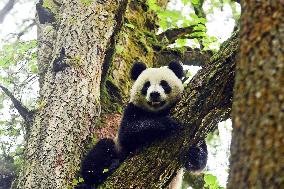
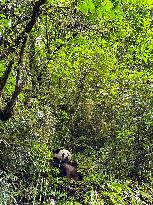
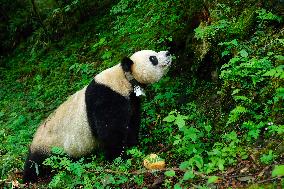
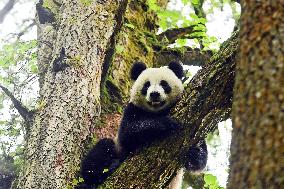
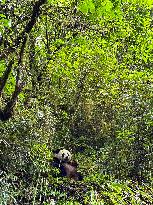
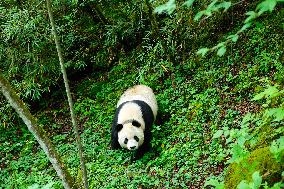
WOLONG, June 29, 2024 -- This file photo taken on June 4, 2020 shows a giant panda resting on a tree during wild training at Tiantai Mountain in Wolong National Nature Reserve in southwest China's Sichuan Province. In recent years, China has made significant progress in panda conservation through a series of measures, including forest and wildlife protection as well as the construction of giant panda national parks. The wild giant panda population in China has grown from about 1,100 in the 1980s to nearly 1,900. Giant panda reintroduction refers to releasing captive-bred giant pandas to their historical distribution areas to live and reproduce after acclimatization training so as to rebuild the wild population of the species. China Conservation and Research Center for the Giant Panda (CCRCGP) started a reintroduction program in 2003. It has reintroduced eleven pandas into the wild, nine of which survived. In the future, the center will continue to train more individual panda cubs using the mother-cub process

  •  
Giant Panda Reintroduction - China

Giant Panda Reintroduction - China

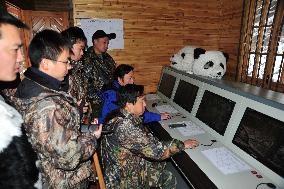
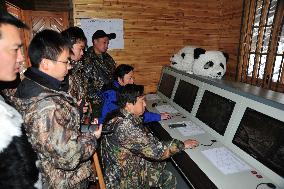
WOLONG, June 29, 2024 -- This file photo taken on Nov. 20, 2010 shows staff members monitoring the giant panda wild training fields of Hetaoping panda base in Wolong, southwest China's Sichuan Province. In recent years, China has made significant progress in panda conservation through a series of measures, including forest and wildlife protection as well as the construction of giant panda national parks. The wild giant panda population in China has grown from about 1,100 in the 1980s to nearly 1,900. Giant panda reintroduction refers to releasing captive-bred giant pandas to their historical distribution areas to live and reproduce after acclimatization training so as to rebuild the wild population of the species. China Conservation and Research Center for the Giant Panda (CCRCGP) started a reintroduction program in 2003. It has reintroduced eleven pandas into the wild, nine of which survived. In the future, the center will continue to train more individual panda cubs using the mother-cub process before relea

  •  
Giant Panda Reintroduction - China

Giant Panda Reintroduction - China

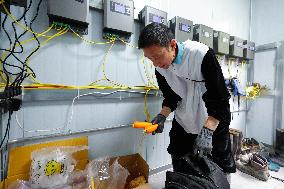
WOLONG, June 29, 2024 -- Staff member Mu Shijie prepares to patrol the giant panda wild training fields of Tiantai Mountain in Wolong National Nature Reserve in southwest China's Sichuan Province, June 24, 2024. In recent years, China has made significant progress in panda conservation through a series of measures, including forest and wildlife protection as well as the construction of giant panda national parks. The wild giant panda population in China has grown from about 1,100 in the 1980s to nearly 1,900. Giant panda reintroduction refers to releasing captive-bred giant pandas to their historical distribution areas to live and reproduce after acclimatization training so as to rebuild the wild population of the species. China Conservation and Research Center for the Giant Panda (CCRCGP) started a reintroduction program in 2003. It has reintroduced eleven pandas into the wild, nine of which survived. In the future, the center will continue to train more individual panda cubs using the mother-cub process bef

  •  
Giant Panda Reintroduction - China

Giant Panda Reintroduction - China

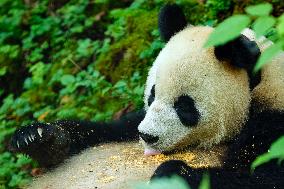
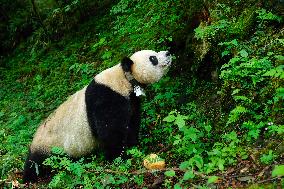
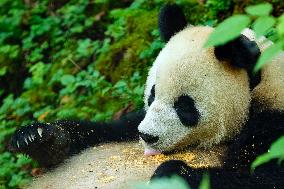
WOLONG, June 29, 2024 -- Giant panda Xian Xian has food at the second-phase giant panda wild training fields of Tiantai Mountain in Wolong National Nature Reserve in southwest China's Sichuan Province, June 24, 2024. In recent years, China has made significant progress in panda conservation through a series of measures, including forest and wildlife protection as well as the construction of giant panda national parks. The wild giant panda population in China has grown from about 1,100 in the 1980s to nearly 1,900. Giant panda reintroduction refers to releasing captive-bred giant pandas to their historical distribution areas to live and reproduce after acclimatization training so as to rebuild the wild population of the species. China Conservation and Research Center for the Giant Panda (CCRCGP) started a reintroduction program in 2003. It has reintroduced eleven pandas into the wild, nine of which survived. In the future, the center will continue to train more individual panda cubs using the mother-cub proces

  •  
Giant Panda Reintroduction - China

Giant Panda Reintroduction - China

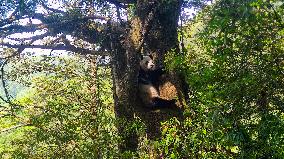
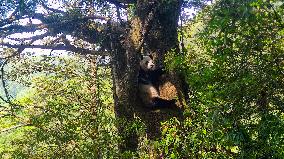
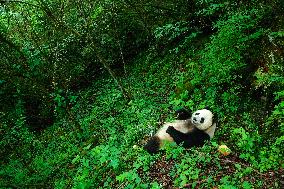
WOLONG, June 29, 2024 -- Giant panda Hui Hui is seen on a tree at the second-phase giant panda wild training fields of Tiantai Mountain in Wolong National Nature Reserve in southwest China's Sichuan Province, May 22, 2024. In recent years, China has made significant progress in panda conservation through a series of measures, including forest and wildlife protection as well as the construction of giant panda national parks. The wild giant panda population in China has grown from about 1,100 in the 1980s to nearly 1,900. Giant panda reintroduction refers to releasing captive-bred giant pandas to their historical distribution areas to live and reproduce after acclimatization training so as to rebuild the wild population of the species. China Conservation and Research Center for the Giant Panda (CCRCGP) started a reintroduction program in 2003. It has reintroduced eleven pandas into the wild, nine of which survived. In the future, the center will continue to train more individual panda cubs using the mother-cub

  •  
Giant Panda Reintroduction - China

Giant Panda Reintroduction - China

WOLONG, June 29, 2024 -- Giant panda Hui Hui and her cub are seen at the wild training fields of Tiantai Mountain in Wolong National Nature Reserve in southwest China's Sichuan Province, June 1, 2024. In recent years, China has made significant progress in panda conservation through a series of measures, including forest and wildlife protection as well as the construction of giant panda national parks. The wild giant panda population in China has grown from about 1,100 in the 1980s to nearly 1,900. Giant panda reintroduction refers to releasing captive-bred giant pandas to their historical distribution areas to live and reproduce after acclimatization training so as to rebuild the wild population of the species. China Conservation and Research Center for the Giant Panda (CCRCGP) started a reintroduction program in 2003. It has reintroduced eleven pandas into the wild, nine of which survived. In the future, the center will continue to train more individual panda cubs using the mother-cub process before releasi

  •  
Giant Panda Reintroduction - China

Giant Panda Reintroduction - China

WOLONG, June 29, 2024 -- Giant panda Tian Tian has carrots at the second-phase giant panda wild training fields of Tiantai Mountain in Wolong National Nature Reserve in southwest China's Sichuan Province, May 29, 2024. In recent years, China has made significant progress in panda conservation through a series of measures, including forest and wildlife protection as well as the construction of giant panda national parks. The wild giant panda population in China has grown from about 1,100 in the 1980s to nearly 1,900. Giant panda reintroduction refers to releasing captive-bred giant pandas to their historical distribution areas to live and reproduce after acclimatization training so as to rebuild the wild population of the species. China Conservation and Research Center for the Giant Panda (CCRCGP) started a reintroduction program in 2003. It has reintroduced eleven pandas into the wild, nine of which survived. In the future, the center will continue to train more individual panda cubs using the mother-cub proc

  •  
Giant Panda Reintroduction - China

Giant Panda Reintroduction - China

WOLONG, June 29, 2024 -- Giant panda Xian Xian has food at the second-phase giant panda wild training fields of Tiantai Mountain in Wolong National Nature Reserve in southwest China's Sichuan Province, June 24, 2024. In recent years, China has made significant progress in panda conservation through a series of measures, including forest and wildlife protection as well as the construction of giant panda national parks. The wild giant panda population in China has grown from about 1,100 in the 1980s to nearly 1,900. Giant panda reintroduction refers to releasing captive-bred giant pandas to their historical distribution areas to live and reproduce after acclimatization training so as to rebuild the wild population of the species. China Conservation and Research Center for the Giant Panda (CCRCGP) started a reintroduction program in 2003. It has reintroduced eleven pandas into the wild, nine of which survived. In the future, the center will continue to train more individual panda cubs using the mother-cub proces

  •  
Giant Panda Reintroduction - China

Giant Panda Reintroduction - China

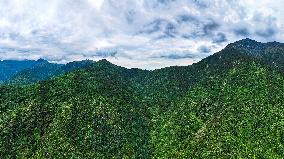
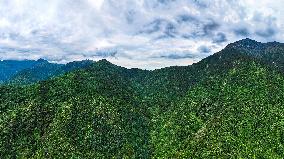
WOLONG, June 29, 2024 -- An aerial drone photo taken on June 24, 2024 shows a view of giant panda wild training fields of Tiantai Mountain in Wolong National Nature Reserve in southwest China's Sichuan Province, June 24, 2024. In recent years, China has made significant progress in panda conservation through a series of measures, including forest and wildlife protection as well as the construction of giant panda national parks. The wild giant panda population in China has grown from about 1,100 in the 1980s to nearly 1,900. Giant panda reintroduction refers to releasing captive-bred giant pandas to their historical distribution areas to live and reproduce after acclimatization training so as to rebuild the wild population of the species. China Conservation and Research Center for the Giant Panda (CCRCGP) started a reintroduction program in 2003. It has reintroduced eleven pandas into the wild, nine of which survived. In the future, the center will continue to train more individual panda cubs using the mother-

  •  
Giant Panda Reintroduction - China

Giant Panda Reintroduction - China

WOLONG, June 29, 2024 -- Staff member Mu Shijie is pictured on the way to the second-phase giant panda wild training fields of Tiantai Mountain in Wolong National Nature Reserve in southwest China's Sichuan Province, June 24, 2024. In recent years, China has made significant progress in panda conservation through a series of measures, including forest and wildlife protection as well as the construction of giant panda national parks. The wild giant panda population in China has grown from about 1,100 in the 1980s to nearly 1,900. Giant panda reintroduction refers to releasing captive-bred giant pandas to their historical distribution areas to live and reproduce after acclimatization training so as to rebuild the wild population of the species. China Conservation and Research Center for the Giant Panda (CCRCGP) started a reintroduction program in 2003. It has reintroduced eleven pandas into the wild, nine of which survived. In the future, the center will continue to train more individual panda cubs using the mo

  •  
Giant Panda Reintroduction - China

Giant Panda Reintroduction - China

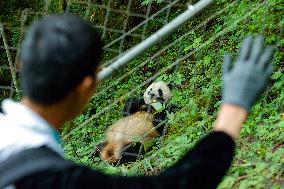
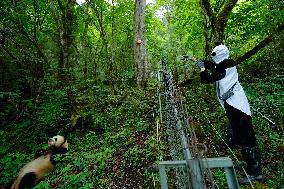
WOLONG, June 29, 2024 -- Staff member Mu Shijie looks for giant panda cubs while patrolling the second-phase giant panda wild training fields of Tiantai Mountain in Wolong National Nature Reserve in southwest China's Sichuan Province, June 24, 2024. In recent years, China has made significant progress in panda conservation through a series of measures, including forest and wildlife protection as well as the construction of giant panda national parks. The wild giant panda population in China has grown from about 1,100 in the 1980s to nearly 1,900. Giant panda reintroduction refers to releasing captive-bred giant pandas to their historical distribution areas to live and reproduce after acclimatization training so as to rebuild the wild population of the species. China Conservation and Research Center for the Giant Panda (CCRCGP) started a reintroduction program in 2003. It has reintroduced eleven pandas into the wild, nine of which survived. In the future, the center will continue to train more individual panda

  •  
Giant Panda Reintroduction - China

Giant Panda Reintroduction - China

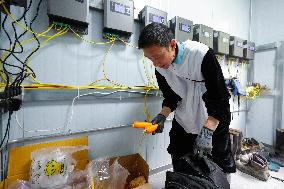
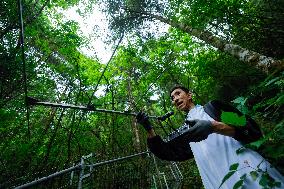
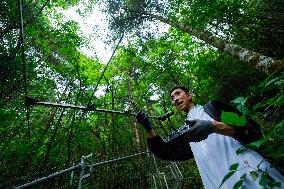
WOLONG, June 29, 2024 -- Staff member Mu Shijie uses a radio positioning device to trace giant panda Xian Xian while calling out her name at Tiantai Mountain in Wolong National Nature Reserve in southwest China's Sichuan Province, June 24, 2024. In recent years, China has made significant progress in panda conservation through a series of measures, including forest and wildlife protection as well as the construction of giant panda national parks. The wild giant panda population in China has grown from about 1,100 in the 1980s to nearly 1,900. Giant panda reintroduction refers to releasing captive-bred giant pandas to their historical distribution areas to live and reproduce after acclimatization training so as to rebuild the wild population of the species. China Conservation and Research Center for the Giant Panda (CCRCGP) started a reintroduction program in 2003. It has reintroduced eleven pandas into the wild, nine of which survived. In the future, the center will continue to train more individual panda cub

  •  
Giant Panda Reintroduction - China

Giant Panda Reintroduction - China

WOLONG, June 29, 2024 -- Staff member Mu Shijie uses a DIY bamboo leaf whislte to call giant panda Hui Hui out for foraging at the second-phase giant panda wild training fields of Tiantai Mountain in Wolong National Nature Reserve in southwest China's Sichuan Province, June 24, 2024. In recent years, China has made significant progress in panda conservation through a series of measures, including forest and wildlife protection as well as the construction of giant panda national parks. The wild giant panda population in China has grown from about 1,100 in the 1980s to nearly 1,900. Giant panda reintroduction refers to releasing captive-bred giant pandas to their historical distribution areas to live and reproduce after acclimatization training so as to rebuild the wild population of the species. China Conservation and Research Center for the Giant Panda (CCRCGP) started a reintroduction program in 2003. It has reintroduced eleven pandas into the wild, nine of which survived. In the future, the center will cont

  •  
Giant Panda Reintroduction - China

Giant Panda Reintroduction - China

WOLONG, June 29, 2024 -- Giant panda Xian Xian is pictured at the second-phase giant panda wild training fields of Tiantai Mountain in Wolong National Nature Reserve in southwest China's Sichuan Province, June 24, 2024. In recent years, China has made significant progress in panda conservation through a series of measures, including forest and wildlife protection as well as the construction of giant panda national parks. The wild giant panda population in China has grown from about 1,100 in the 1980s to nearly 1,900. Giant panda reintroduction refers to releasing captive-bred giant pandas to their historical distribution areas to live and reproduce after acclimatization training so as to rebuild the wild population of the species. China Conservation and Research Center for the Giant Panda (CCRCGP) started a reintroduction program in 2003. It has reintroduced eleven pandas into the wild, nine of which survived. In the future, the center will continue to train more individual panda cubs using the mother-cub pro

  •  
Giant Panda Reintroduction - China

Giant Panda Reintroduction - China

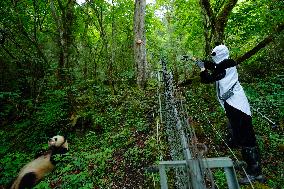
WOLONG, June 29, 2024 -- Staff member Mu Shijie, dressed up in a panda costume, feeds giant panda Xian Xian at the second-phase giant panda wild training fields of Tiantai Mountain in Wolong National Nature Reserve in southwest China's Sichuan Province, June 24, 2024. In recent years, China has made significant progress in panda conservation through a series of measures, including forest and wildlife protection as well as the construction of giant panda national parks. The wild giant panda population in China has grown from about 1,100 in the 1980s to nearly 1,900. Giant panda reintroduction refers to releasing captive-bred giant pandas to their historical distribution areas to live and reproduce after acclimatization training so as to rebuild the wild population of the species. China Conservation and Research Center for the Giant Panda (CCRCGP) started a reintroduction program in 2003. It has reintroduced eleven pandas into the wild, nine of which survived. In the future, the center will continue to train mo

  •  
Giant Panda Reintroduction - China

Giant Panda Reintroduction - China

WOLONG, June 29, 2024 -- Giant panda Xian Xian has food at the second-phase giant panda wild training fields of Tiantai Mountain in Wolong National Nature Reserve in southwest China's Sichuan Province, June 24, 2024. In recent years, China has made significant progress in panda conservation through a series of measures, including forest and wildlife protection as well as the construction of giant panda national parks. The wild giant panda population in China has grown from about 1,100 in the 1980s to nearly 1,900. Giant panda reintroduction refers to releasing captive-bred giant pandas to their historical distribution areas to live and reproduce after acclimatization training so as to rebuild the wild population of the species. China Conservation and Research Center for the Giant Panda (CCRCGP) started a reintroduction program in 2003. It has reintroduced eleven pandas into the wild, nine of which survived. In the future, the center will continue to train more individual panda cubs using the mother-cub proces

  •  
Giant Panda Reintroduction - China

Giant Panda Reintroduction - China

WOLONG, June 29, 2024 -- Giant panda Xian Xian comes out of the bamboo forest upon hearing the foraging call made by staff member Mu Shijie at the second-phase giant panda wild training fields of Tiantai Mountain in Wolong National Nature Reserve in southwest China's Sichuan Province, June 24, 2024. In recent years, China has made significant progress in panda conservation through a series of measures, including forest and wildlife protection as well as the construction of giant panda national parks. The wild giant panda population in China has grown from about 1,100 in the 1980s to nearly 1,900. Giant panda reintroduction refers to releasing captive-bred giant pandas to their historical distribution areas to live and reproduce after acclimatization training so as to rebuild the wild population of the species. China Conservation and Research Center for the Giant Panda (CCRCGP) started a reintroduction program in 2003. It has reintroduced eleven pandas into the wild, nine of which survived. In the future, the

  •  
Giant Panda Reintroduction - China

Giant Panda Reintroduction - China

WOLONG, June 29, 2024 -- Staff member Mu Shijie records videos of giant panda Xian Xian outside the second-phase giant panda wild training fields of Tiantai Mountain in Wolong National Nature Reserve in southwest China's Sichuan Province, June 24, 2024. In recent years, China has made significant progress in panda conservation through a series of measures, including forest and wildlife protection as well as the construction of giant panda national parks. The wild giant panda population in China has grown from about 1,100 in the 1980s to nearly 1,900. Giant panda reintroduction refers to releasing captive-bred giant pandas to their historical distribution areas to live and reproduce after acclimatization training so as to rebuild the wild population of the species. China Conservation and Research Center for the Giant Panda (CCRCGP) started a reintroduction program in 2003. It has reintroduced eleven pandas into the wild, nine of which survived. In the future, the center will continue to train more individual p

  •  
Giant Panda Reintroduction - China

Giant Panda Reintroduction - China

WOLONG, June 29, 2024 -- Staff member Mu Shijie waves goodbye to giant panda Xian Xian after feeding her at the second-phase giant panda wild training fields of Tiantai Mountain in Wolong National Nature Reserve in southwest China's Sichuan Province, June 24, 2024. In recent years, China has made significant progress in panda conservation through a series of measures, including forest and wildlife protection as well as the construction of giant panda national parks. The wild giant panda population in China has grown from about 1,100 in the 1980s to nearly 1,900. Giant panda reintroduction refers to releasing captive-bred giant pandas to their historical distribution areas to live and reproduce after acclimatization training so as to rebuild the wild population of the species. China Conservation and Research Center for the Giant Panda (CCRCGP) started a reintroduction program in 2003. It has reintroduced eleven pandas into the wild, nine of which survived. In the future, the center will continue to train more

  •  
(FOCUS)CHINA-SICHUAN-GIANT PANDA-REINTRODUCTION (CN)

(FOCUS)CHINA-SICHUAN-GIANT PANDA-REINTRODUCTION (CN)

(240629) -- WOLONG, June 29, 2024 Photo by Xinhua/ABACAPRESS.COM) -- Staff member Mu Shijie looks for giant panda cubs while patrolling the second-phase giant panda wild training fields of Tiantai Mountain in Wolong National Nature Reserve in southwest China's Sichuan Province, June 24, 2024. In recent years, China has made significant progress in panda conservation through a series of measures, including forest and wildlife protection as well as the construction of giant panda national parks. The wild giant panda population in China has grown from about 1,100 in the 1980s to nearly 1,900. Giant panda reintroduction refers to releasing captive-bred giant pandas to their historical distribution areas to live and reproduce after acclimatization training so as to rebuild the wild population of the species. China Conservation and Research Center for the Giant Panda (CCRCGP) started a reintroduction program in 2003. It has reintroduced eleven pandas into the wild, nine of which survived. In the future, the center

  •  
(FOCUS)CHINA-SICHUAN-GIANT PANDA-REINTRODUCTION (CN)

(FOCUS)CHINA-SICHUAN-GIANT PANDA-REINTRODUCTION (CN)

(240629) -- WOLONG, June 29, 2024 Photo by Xinhua/ABACAPRESS.COM) -- Giant panda Xian Xian has food at the second-phase giant panda wild training fields of Tiantai Mountain in Wolong National Nature Reserve in southwest China's Sichuan Province, June 24, 2024. In recent years, China has made significant progress in panda conservation through a series of measures, including forest and wildlife protection as well as the construction of giant panda national parks. The wild giant panda population in China has grown from about 1,100 in the 1980s to nearly 1,900. Giant panda reintroduction refers to releasing captive-bred giant pandas to their historical distribution areas to live and reproduce after acclimatization training so as to rebuild the wild population of the species. China Conservation and Research Center for the Giant Panda (CCRCGP) started a reintroduction program in 2003. It has reintroduced eleven pandas into the wild, nine of which survived. In the future, the center will continue to train more indiv

  •  
(FOCUS)CHINA-SICHUAN-GIANT PANDA-REINTRODUCTION (CN)

(FOCUS)CHINA-SICHUAN-GIANT PANDA-REINTRODUCTION (CN)

(240629) -- WOLONG, June 29, 2024 Photo by Xinhua/ABACAPRESS.COM) -- This file photo taken on June 4, 2020 shows a giant panda resting on a tree during wild training at Tiantai Mountain in Wolong National Nature Reserve in southwest China's Sichuan Province. In recent years, China has made significant progress in panda conservation through a series of measures, including forest and wildlife protection as well as the construction of giant panda national parks. The wild giant panda population in China has grown from about 1,100 in the 1980s to nearly 1,900. Giant panda reintroduction refers to releasing captive-bred giant pandas to their historical distribution areas to live and reproduce after acclimatization training so as to rebuild the wild population of the species. China Conservation and Research Center for the Giant Panda (CCRCGP) started a reintroduction program in 2003. It has reintroduced eleven pandas into the wild, nine of which survived. In the future, the center will continue to train more individ

  •  
(FOCUS)CHINA-SICHUAN-GIANT PANDA-REINTRODUCTION (CN)

(FOCUS)CHINA-SICHUAN-GIANT PANDA-REINTRODUCTION (CN)

(240629) -- WOLONG, June 29, 2024 Photo by Xinhua/ABACAPRESS.COM) -- Staff member Mu Shijie waves goodbye to giant panda Xian Xian after feeding her at the second-phase giant panda wild training fields of Tiantai Mountain in Wolong National Nature Reserve in southwest China's Sichuan Province, June 24, 2024. In recent years, China has made significant progress in panda conservation through a series of measures, including forest and wildlife protection as well as the construction of giant panda national parks. The wild giant panda population in China has grown from about 1,100 in the 1980s to nearly 1,900. Giant panda reintroduction refers to releasing captive-bred giant pandas to their historical distribution areas to live and reproduce after acclimatization training so as to rebuild the wild population of the species. China Conservation and Research Center for the Giant Panda (CCRCGP) started a reintroduction program in 2003. It has reintroduced eleven pandas into the wild, nine of which survived. In the fut

  •  
(FOCUS)CHINA-SICHUAN-GIANT PANDA-REINTRODUCTION (CN)

(FOCUS)CHINA-SICHUAN-GIANT PANDA-REINTRODUCTION (CN)

(240629) -- WOLONG, June 29, 2024 Photo by Xinhua/ABACAPRESS.COM) -- Staff member Mu Shijie uses a DIY bamboo leaf whislte to call giant panda Hui Hui out for foraging at the second-phase giant panda wild training fields of Tiantai Mountain in Wolong National Nature Reserve in southwest China's Sichuan Province, June 24, 2024. In recent years, China has made significant progress in panda conservation through a series of measures, including forest and wildlife protection as well as the construction of giant panda national parks. The wild giant panda population in China has grown from about 1,100 in the 1980s to nearly 1,900. Giant panda reintroduction refers to releasing captive-bred giant pandas to their historical distribution areas to live and reproduce after acclimatization training so as to rebuild the wild population of the species. China Conservation and Research Center for the Giant Panda (CCRCGP) started a reintroduction program in 2003. It has reintroduced eleven pandas into the wild, nine of which s

  •  
(FOCUS)CHINA-SICHUAN-GIANT PANDA-REINTRODUCTION (CN)

(FOCUS)CHINA-SICHUAN-GIANT PANDA-REINTRODUCTION (CN)

(240629) -- WOLONG, June 29, 2024 Photo by Xinhua/ABACAPRESS.COM) -- This file photo taken on Nov. 20, 2010 shows staff members dressed up in giant panda costumes holding a giant panda cub into a bamboo basket at the second-phase giant panda wild training fields of Hetaoping panda base in Wolong, southwest China's Sichuan Province. In recent years, China has made significant progress in panda conservation through a series of measures, including forest and wildlife protection as well as the construction of giant panda national parks. The wild giant panda population in China has grown from about 1,100 in the 1980s to nearly 1,900. Giant panda reintroduction refers to releasing captive-bred giant pandas to their historical distribution areas to live and reproduce after acclimatization training so as to rebuild the wild population of the species. China Conservation and Research Center for the Giant Panda (CCRCGP) started a reintroduction program in 2003. It has reintroduced eleven pandas into the wild, nine of wh

  •  
(FOCUS)CHINA-SICHUAN-GIANT PANDA-REINTRODUCTION (CN)

(FOCUS)CHINA-SICHUAN-GIANT PANDA-REINTRODUCTION (CN)

(240629) -- WOLONG, June 29, 2024 Photo by Xinhua/ABACAPRESS.COM) -- Giant panda Xian Xian is pictured at the second-phase giant panda wild training fields of Tiantai Mountain in Wolong National Nature Reserve in southwest China's Sichuan Province, June 24, 2024. In recent years, China has made significant progress in panda conservation through a series of measures, including forest and wildlife protection as well as the construction of giant panda national parks. The wild giant panda population in China has grown from about 1,100 in the 1980s to nearly 1,900. Giant panda reintroduction refers to releasing captive-bred giant pandas to their historical distribution areas to live and reproduce after acclimatization training so as to rebuild the wild population of the species. China Conservation and Research Center for the Giant Panda (CCRCGP) started a reintroduction program in 2003. It has reintroduced eleven pandas into the wild, nine of which survived. In the future, the center will continue to train more in

  •  
(FOCUS)CHINA-SICHUAN-GIANT PANDA-REINTRODUCTION (CN)

(FOCUS)CHINA-SICHUAN-GIANT PANDA-REINTRODUCTION (CN)

(240629) -- WOLONG, June 29, 2024 Photo by Xinhua/ABACAPRESS.COM) -- Giant panda Hui Hui is seen on a tree at the second-phase giant panda wild training fields of Tiantai Mountain in Wolong National Nature Reserve in southwest China's Sichuan Province, May 22, 2024. In recent years, China has made significant progress in panda conservation through a series of measures, including forest and wildlife protection as well as the construction of giant panda national parks. The wild giant panda population in China has grown from about 1,100 in the 1980s to nearly 1,900. Giant panda reintroduction refers to releasing captive-bred giant pandas to their historical distribution areas to live and reproduce after acclimatization training so as to rebuild the wild population of the species. China Conservation and Research Center for the Giant Panda (CCRCGP) started a reintroduction program in 2003. It has reintroduced eleven pandas into the wild, nine of which survived. In the future, the center will continue to train more

  •  
(FOCUS)CHINA-SICHUAN-GIANT PANDA-REINTRODUCTION (CN)

(FOCUS)CHINA-SICHUAN-GIANT PANDA-REINTRODUCTION (CN)

(240629) -- WOLONG, June 29, 2024 Photo by Xinhua/ABACAPRESS.COM) -- Staff member Mu Shijie is pictured on the way to the second-phase giant panda wild training fields of Tiantai Mountain in Wolong National Nature Reserve in southwest China's Sichuan Province, June 24, 2024. In recent years, China has made significant progress in panda conservation through a series of measures, including forest and wildlife protection as well as the construction of giant panda national parks. The wild giant panda population in China has grown from about 1,100 in the 1980s to nearly 1,900. Giant panda reintroduction refers to releasing captive-bred giant pandas to their historical distribution areas to live and reproduce after acclimatization training so as to rebuild the wild population of the species. China Conservation and Research Center for the Giant Panda (CCRCGP) started a reintroduction program in 2003. It has reintroduced eleven pandas into the wild, nine of which survived. In the future, the center will continue to t

  •  
(FOCUS)CHINA-SICHUAN-GIANT PANDA-REINTRODUCTION (CN)

(FOCUS)CHINA-SICHUAN-GIANT PANDA-REINTRODUCTION (CN)

(240629) -- WOLONG, June 29, 2024 Photo by Xinhua/ABACAPRESS.COM) -- Giant panda Xian Xian has food at the second-phase giant panda wild training fields of Tiantai Mountain in Wolong National Nature Reserve in southwest China's Sichuan Province, June 24, 2024. In recent years, China has made significant progress in panda conservation through a series of measures, including forest and wildlife protection as well as the construction of giant panda national parks. The wild giant panda population in China has grown from about 1,100 in the 1980s to nearly 1,900. Giant panda reintroduction refers to releasing captive-bred giant pandas to their historical distribution areas to live and reproduce after acclimatization training so as to rebuild the wild population of the species. China Conservation and Research Center for the Giant Panda (CCRCGP) started a reintroduction program in 2003. It has reintroduced eleven pandas into the wild, nine of which survived. In the future, the center will continue to train more indiv

  •  
(FOCUS)CHINA-SICHUAN-GIANT PANDA-REINTRODUCTION (CN)

(FOCUS)CHINA-SICHUAN-GIANT PANDA-REINTRODUCTION (CN)

(240629) -- WOLONG, June 29, 2024 Photo by Xinhua/ABACAPRESS.COM) -- This file photo taken on Sept. 16, 2014 shows giant panda cub Hua Jiao (L), the world's first giant panda cub with both captive and wild parents, and her mother Cao Cao in the wild training fields. In recent years, China has made significant progress in panda conservation through a series of measures, including forest and wildlife protection as well as the construction of giant panda national parks. The wild giant panda population in China has grown from about 1,100 in the 1980s to nearly 1,900. Giant panda reintroduction refers to releasing captive-bred giant pandas to their historical distribution areas to live and reproduce after acclimatization training so as to rebuild the wild population of the species. China Conservation and Research Center for the Giant Panda (CCRCGP) started a reintroduction program in 2003. It has reintroduced eleven pandas into the wild, nine of which survived. In the future, the center will continue to train more

  •  
(FOCUS)CHINA-SICHUAN-GIANT PANDA-REINTRODUCTION (CN)

(FOCUS)CHINA-SICHUAN-GIANT PANDA-REINTRODUCTION (CN)

(240629) -- WOLONG, June 29, 2024 Photo by Xinhua/ABACAPRESS.COM) -- Staff member Mu Shijie, dressed up in a panda costume, feeds giant panda Xian Xian at the second-phase giant panda wild training fields of Tiantai Mountain in Wolong National Nature Reserve in southwest China's Sichuan Province, June 24, 2024. In recent years, China has made significant progress in panda conservation through a series of measures, including forest and wildlife protection as well as the construction of giant panda national parks. The wild giant panda population in China has grown from about 1,100 in the 1980s to nearly 1,900. Giant panda reintroduction refers to releasing captive-bred giant pandas to their historical distribution areas to live and reproduce after acclimatization training so as to rebuild the wild population of the species. China Conservation and Research Center for the Giant Panda (CCRCGP) started a reintroduction program in 2003. It has reintroduced eleven pandas into the wild, nine of which survived. In the

  •  
(FOCUS)CHINA-SICHUAN-GIANT PANDA-REINTRODUCTION (CN)

(FOCUS)CHINA-SICHUAN-GIANT PANDA-REINTRODUCTION (CN)

(240629) -- WOLONG, June 29, 2024 Photo by Xinhua/ABACAPRESS.COM) -- Giant panda Hui Hui and her cub are seen at the wild training fields of Tiantai Mountain in Wolong National Nature Reserve in southwest China's Sichuan Province, June 1, 2024. In recent years, China has made significant progress in panda conservation through a series of measures, including forest and wildlife protection as well as the construction of giant panda national parks. The wild giant panda population in China has grown from about 1,100 in the 1980s to nearly 1,900. Giant panda reintroduction refers to releasing captive-bred giant pandas to their historical distribution areas to live and reproduce after acclimatization training so as to rebuild the wild population of the species. China Conservation and Research Center for the Giant Panda (CCRCGP) started a reintroduction program in 2003. It has reintroduced eleven pandas into the wild, nine of which survived. In the future, the center will continue to train more individual panda cubs

  •  
(FOCUS)CHINA-SICHUAN-GIANT PANDA-REINTRODUCTION (CN)

(FOCUS)CHINA-SICHUAN-GIANT PANDA-REINTRODUCTION (CN)

(240629) -- WOLONG, June 29, 2024 Photo by Xinhua/ABACAPRESS.COM) -- Staff member Mu Shijie records videos of giant panda Xian Xian outside the second-phase giant panda wild training fields of Tiantai Mountain in Wolong National Nature Reserve in southwest China's Sichuan Province, June 24, 2024. In recent years, China has made significant progress in panda conservation through a series of measures, including forest and wildlife protection as well as the construction of giant panda national parks. The wild giant panda population in China has grown from about 1,100 in the 1980s to nearly 1,900. Giant panda reintroduction refers to releasing captive-bred giant pandas to their historical distribution areas to live and reproduce after acclimatization training so as to rebuild the wild population of the species. China Conservation and Research Center for the Giant Panda (CCRCGP) started a reintroduction program in 2003. It has reintroduced eleven pandas into the wild, nine of which survived. In the future, the cen

  •  
(FOCUS)CHINA-SICHUAN-GIANT PANDA-REINTRODUCTION (CN)

(FOCUS)CHINA-SICHUAN-GIANT PANDA-REINTRODUCTION (CN)

(240629) -- WOLONG, June 29, 2024 Photo by Xinhua/ABACAPRESS.COM) -- Giant panda Tian Tian has carrots at the second-phase giant panda wild training fields of Tiantai Mountain in Wolong National Nature Reserve in southwest China's Sichuan Province, May 29, 2024. In recent years, China has made significant progress in panda conservation through a series of measures, including forest and wildlife protection as well as the construction of giant panda national parks. The wild giant panda population in China has grown from about 1,100 in the 1980s to nearly 1,900. Giant panda reintroduction refers to releasing captive-bred giant pandas to their historical distribution areas to live and reproduce after acclimatization training so as to rebuild the wild population of the species. China Conservation and Research Center for the Giant Panda (CCRCGP) started a reintroduction program in 2003. It has reintroduced eleven pandas into the wild, nine of which survived. In the future, the center will continue to train more ind

  •  
(FOCUS)CHINA-SICHUAN-GIANT PANDA-REINTRODUCTION (CN)

(FOCUS)CHINA-SICHUAN-GIANT PANDA-REINTRODUCTION (CN)

(240629) -- WOLONG, June 29, 2024 Photo by Xinhua/ABACAPRESS.COM) -- Giant panda Xian Xian has food at the second-phase giant panda wild training fields of Tiantai Mountain in Wolong National Nature Reserve in southwest China's Sichuan Province, June 24, 2024. In recent years, China has made significant progress in panda conservation through a series of measures, including forest and wildlife protection as well as the construction of giant panda national parks. The wild giant panda population in China has grown from about 1,100 in the 1980s to nearly 1,900. Giant panda reintroduction refers to releasing captive-bred giant pandas to their historical distribution areas to live and reproduce after acclimatization training so as to rebuild the wild population of the species. China Conservation and Research Center for the Giant Panda (CCRCGP) started a reintroduction program in 2003. It has reintroduced eleven pandas into the wild, nine of which survived. In the future, the center will continue to train more indiv

  •  
(FOCUS)CHINA-SICHUAN-GIANT PANDA-REINTRODUCTION (CN)

(FOCUS)CHINA-SICHUAN-GIANT PANDA-REINTRODUCTION (CN)

(240629) -- WOLONG, June 29, 2024 Photo by Xinhua/ABACAPRESS.COM) -- Staff member Mu Shijie prepares to patrol the giant panda wild training fields of Tiantai Mountain in Wolong National Nature Reserve in southwest China's Sichuan Province, June 24, 2024. In recent years, China has made significant progress in panda conservation through a series of measures, including forest and wildlife protection as well as the construction of giant panda national parks. The wild giant panda population in China has grown from about 1,100 in the 1980s to nearly 1,900. Giant panda reintroduction refers to releasing captive-bred giant pandas to their historical distribution areas to live and reproduce after acclimatization training so as to rebuild the wild population of the species. China Conservation and Research Center for the Giant Panda (CCRCGP) started a reintroduction program in 2003. It has reintroduced eleven pandas into the wild, nine of which survived. In the future, the center will continue to train more individual

  •  
(FOCUS)CHINA-SICHUAN-GIANT PANDA-REINTRODUCTION (CN)

(FOCUS)CHINA-SICHUAN-GIANT PANDA-REINTRODUCTION (CN)

(240629) -- WOLONG, June 29, 2024 Photo by Xinhua/ABACAPRESS.COM) -- This file photo taken on Nov. 20, 2010 shows staff members monitoring the giant panda wild training fields of Hetaoping panda base in Wolong, southwest China's Sichuan Province. In recent years, China has made significant progress in panda conservation through a series of measures, including forest and wildlife protection as well as the construction of giant panda national parks. The wild giant panda population in China has grown from about 1,100 in the 1980s to nearly 1,900. Giant panda reintroduction refers to releasing captive-bred giant pandas to their historical distribution areas to live and reproduce after acclimatization training so as to rebuild the wild population of the species. China Conservation and Research Center for the Giant Panda (CCRCGP) started a reintroduction program in 2003. It has reintroduced eleven pandas into the wild, nine of which survived. In the future, the center will continue to train more individual panda cu

  •  
(FOCUS)CHINA-SICHUAN-GIANT PANDA-REINTRODUCTION (CN)

(FOCUS)CHINA-SICHUAN-GIANT PANDA-REINTRODUCTION (CN)

(240629) -- WOLONG, June 29, 2024 Photo by Xinhua/ABACAPRESS.COM) -- Giant panda Xian Xian comes out of the bamboo forest upon hearing the foraging call made by staff member Mu Shijie at the second-phase giant panda wild training fields of Tiantai Mountain in Wolong National Nature Reserve in southwest China's Sichuan Province, June 24, 2024. In recent years, China has made significant progress in panda conservation through a series of measures, including forest and wildlife protection as well as the construction of giant panda national parks. The wild giant panda population in China has grown from about 1,100 in the 1980s to nearly 1,900. Giant panda reintroduction refers to releasing captive-bred giant pandas to their historical distribution areas to live and reproduce after acclimatization training so as to rebuild the wild population of the species. China Conservation and Research Center for the Giant Panda (CCRCGP) started a reintroduction program in 2003. It has reintroduced eleven pandas into the wild,

  •  
(FOCUS)CHINA-SICHUAN-GIANT PANDA-REINTRODUCTION (CN)

(FOCUS)CHINA-SICHUAN-GIANT PANDA-REINTRODUCTION (CN)

(240629) -- WOLONG, June 29, 2024 Photo by Xinhua/ABACAPRESS.COM) -- An aerial drone photo taken on June 24, 2024 shows a view of giant panda wild training fields of Tiantai Mountain in Wolong National Nature Reserve in southwest China's Sichuan Province, June 24, 2024. In recent years, China has made significant progress in panda conservation through a series of measures, including forest and wildlife protection as well as the construction of giant panda national parks. The wild giant panda population in China has grown from about 1,100 in the 1980s to nearly 1,900. Giant panda reintroduction refers to releasing captive-bred giant pandas to their historical distribution areas to live and reproduce after acclimatization training so as to rebuild the wild population of the species. China Conservation and Research Center for the Giant Panda (CCRCGP) started a reintroduction program in 2003. It has reintroduced eleven pandas into the wild, nine of which survived. In the future, the center will continue to train

  •  
(FOCUS)CHINA-SICHUAN-GIANT PANDA-REINTRODUCTION (CN)

(FOCUS)CHINA-SICHUAN-GIANT PANDA-REINTRODUCTION (CN)

(240629) -- WOLONG, June 29, 2024 Photo by Xinhua/ABACAPRESS.COM) -- Staff member Mu Shijie uses a radio positioning device to trace giant panda Xian Xian while calling out her name at Tiantai Mountain in Wolong National Nature Reserve in southwest China's Sichuan Province, June 24, 2024. In recent years, China has made significant progress in panda conservation through a series of measures, including forest and wildlife protection as well as the construction of giant panda national parks. The wild giant panda population in China has grown from about 1,100 in the 1980s to nearly 1,900. Giant panda reintroduction refers to releasing captive-bred giant pandas to their historical distribution areas to live and reproduce after acclimatization training so as to rebuild the wild population of the species. China Conservation and Research Center for the Giant Panda (CCRCGP) started a reintroduction program in 2003. It has reintroduced eleven pandas into the wild, nine of which survived. In the future, the center will

  •  

China's largest lake sees rebound of rare fish species

STORY: China's largest lake sees rebound of rare fish species SHOOTING TIME: File DATELINE: June 26, 2024 LENGTH: 00:01:24 LOCATION: XINING, China CATEGORY: ENVIRONMENT SHOTLIST: 1. various of the Qinghai Lake 2. various of the naked carp 3. various of the Qinghai Lake 4. various of birds at the Qinghai Lake STORYLINE: Qinghai Lake, China's largest inland saltwater lake, has seen a positive growth of a rare fish species thanks to ecological protection. The naked carp, known as "Huangyu" in China, is endemic to Qinghai Lake. The fish is not only critical to the existence of local bird species, but also to the ecological balance of the highland lake. Due to overfishing and environmental deterioration, the population of naked carp declined sharply in the 1960s and 1970s. In 2002, Qinghai Lake only had 2,592 tonnes of naked carp. In order to protect the species and restore the environment, the province banned naked carp fishing in Qinghai Lake and nearby rivers in 2003. Qinghai has also closed the lake six

  •  
NEPAL-KATHMANDU-CHINA-HIGHER EDUCATION-EXHIBITION

NEPAL-KATHMANDU-CHINA-HIGHER EDUCATION-EXHIBITION

(240618) -- KATHMANDU, June 18, 2024 Photo by Xinhua/ABACAPRESS.COM) -- Narayan Kaji Shrestha (C), Nepal's deputy prime minister and foreign minister, visits the China higher education exhibition held in Kathmandu, Nepal, June 18, 2024. China higher education exhibition 2024 was held here on Tuesday, drawing many Nepali students and parents. A total of 31 Chinese universities participated in the exhibition and had interactions with students and parents. The exhibition was first held in Nepal in 2003. It returned to the country after a ten-year hiatus. (Photo by Hari Maharjan/Xinhua/ABACAPRESS.COM

  •  
NEPAL-KATHMANDU-CHINA-HIGHER EDUCATION-EXHIBITION

NEPAL-KATHMANDU-CHINA-HIGHER EDUCATION-EXHIBITION

(240618) -- KATHMANDU, June 18, 2024 Photo by Xinhua/ABACAPRESS.COM) -- Narayan Kaji Shrestha (C), Nepal's deputy prime minister and foreign minister, and Chinese Ambassador to Nepal Chen Song (R) cut the ribbon for the China higher education exhibition held in Kathmandu, Nepal, June 18, 2024. China higher education exhibition 2024 was held here on Tuesday, drawing many Nepali students and parents. A total of 31 Chinese universities participated in the exhibition and had interactions with students and parents. The exhibition was first held in Nepal in 2003. It returned to the country after a ten-year hiatus. (Photo by Hari Maharjan/Xinhua/ABACAPRESS.COM

  •  
NEPAL-KATHMANDU-CHINA-HIGHER EDUCATION-EXHIBITION

NEPAL-KATHMANDU-CHINA-HIGHER EDUCATION-EXHIBITION

(240618) -- KATHMANDU, June 18, 2024 (Xinhua) -- Narayan Kaji Shrestha (C), Nepal's deputy prime minister and foreign minister, visits the China higher education exhibition held in Kathmandu, Nepal, June 18, 2024. China higher education exhibition 2024 was held here on Tuesday, drawing many Nepali students and parents. A total of 31 Chinese universities participated in the exhibition and had interactions with students and parents. The exhibition was first held in Nepal in 2003. It returned to the country after a ten-year hiatus. (Photo by Hari Maharjan/Xinhua)

  • Main
  • Top
  • Editorial
  • Creative
  • About Us
  • About ILG
  • Terms of use
  • Company
  • BEHIND
  • Price List
  • Single Plan
  • Monthly Plan
  • Services
  • Shooting
  • Rights Clearance
  • Support
  • FAQ
  • How To Buy
  • Contact Us
  • Become a Partner

© KYODO NEWS IMAGES INC

All Rights Reserved.

  • Editorial
  • Olympics
  • News
  • Sports
  • Japan
  • Tech
  • Royal
  • Disaster
  • NorthKorea
  • Old Japan
  • SNS

  • Creative
  • Food
  • Japan
  • Landscape
  • Animal
  • Popular
  • #Ukraine
  • #Thailand
  • #coronavirus
  • #N. Korea
  • #China
  • #Russia
  • #Ukraine
  • #Thailand
  • #coronavirus
  • #N. Korea
  • #China
  • #Russia
  • Food
  • Japan
  • Landscape
  • Animal
  • Olympics
  • News
  • Sports
  • Japan
  • Tech
  • Royal
  • Disaster
  • NorthKorea
  • Old Japan
  • SNS