•  
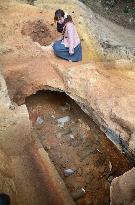
Ruins of ancient tile kiln found in western Japan

Ruins of ancient tile kiln found in western Japan

KASHIHARA, Japan - The remains of a tile kiln dating back to an era when Fujiwaka-kyo was the imperial capital (694-710) are shown to the press in Takatori, Nara Prefecture, western Japan, on Dec. 18, 2014. The kiln is believed to have been used for making tiles for the capital's main palace.

  •  
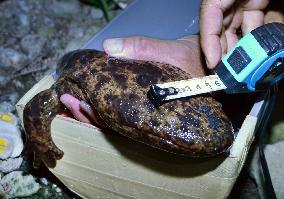
Japanese giant salamander threatened by crossbreeding

Japanese giant salamander threatened by crossbreeding

KASHIHARA, Japan - A Japanese giant salamander is captured during a field study on June 27, 2014, in Uda, Nara Prefecture, western Japan. Experts warn that increasing crossbreeding with Chinese giant salamanders, an alien species, is threatening to wipe out the native species, designated as a special "natural monument" in Japan.

  •  
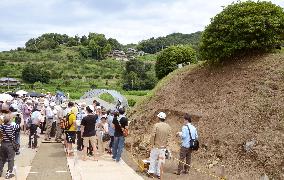
Citizens gather at Miyakozuka Tomb

Citizens gather at Miyakozuka Tomb

KASHIHARA, Japan - A large number of citizens gather at the village of Asuka in the western Japanese prefecture of Nara on Aug. 16, 2014, to listen to explanations by experts. The Miyakozuka Tomb, built in the late sixth century, is believed to have been shaped like a pyramid.

  •  
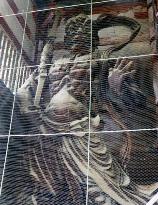
Pair of Buddhist guardian statues to undergo repair

Pair of Buddhist guardian statues to undergo repair

KASHIHARA, Japan - One of a pair of medieval wooden Buddhist guardian statues, called Kongo-Rikishi Agyo, at the Great South Gate of the Todai-ji temple in Nara, western Japan, is photographed on July 10, 2014, before the twin national treasures undergo repair work.

  •  
Goods unearthed from tumulus on display in Nara

Goods unearthed from tumulus on display in Nara

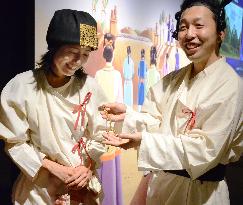
KASHIHARA, Japan - A male member of staff (R) shows a replica of a gold earring with a long chain, one of the articles found in the Niizawa Senzuka tumulus group, comprising about 600 burial mounds concerned with the Silk Road route, in Kashihara, Nara Prefecture, western Japan, on July 2, 2014. Some of the articles are on display at the Kashihara City Museum of History at a two-month exhibition under way from July 5.

  •  
Prince Hisahito visits imperial mausoleum

Prince Hisahito visits imperial mausoleum

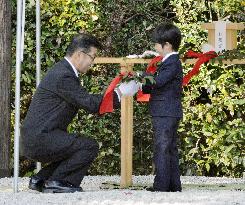
KASHIHARA, Japan - Prince Hisahito, 6, receives a sacred tree branch during his visit to the mausoleum of Emperor Jimmu, Japan's first emperor, in Kashihara, Nara Prefecture, on Nov. 7, 2012.

  •  
Prince Hisahito visits imperial mausoleum

Prince Hisahito visits imperial mausoleum

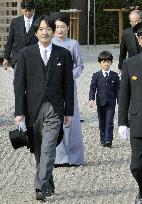
KASHIHARA, Japan - Prince Akishino (front), his wife Princess Kiko (behind Prince Akishino) and their son Prince Hisahito, 6, visit the site of the mausoleum of Emperor Jimmu, Japan's first emperor, in Kashihara, Nara Prefecture, on Nov. 7, 2012.

  •  
Prince Hisahito visits imperial mausoleum

Prince Hisahito visits imperial mausoleum

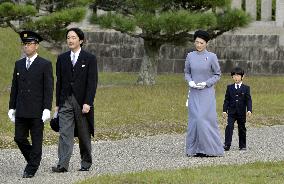
KASHIHARA, Japan - Prince Akishino (2nd from L), his wife Princess Kiko (2nd from R) and their son Prince Hisahito, 6, visit the site of the mausoleum of Emperor Jimmu, Japan's first emperor, in Kashihara, Nara Prefecture, on Nov. 7, 2012.

  •  
Remains of what appears to be Queen Himiko's palace found in Nara

Remains of what appears to be Queen Himiko's palace found in Nara

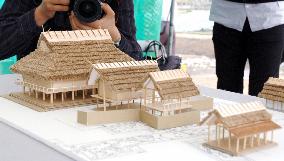
KASHIHARA, Japan - This photo taken Nov. 10, 2009, shows restored models based on remains of building structures found in western Japan's Nara Prefecture, which dates back to the early third century and could be a palace of legendary Japanese ruler Queen Himiko.

  •  
Remains of what appears to be Queen Himiko's palace found in Nara

Remains of what appears to be Queen Himiko's palace found in Nara

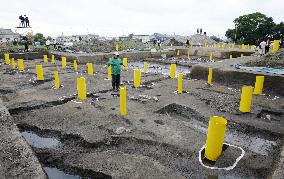
KASHIHARA, Japan - This photo taken Nov. 5, 2009, shows remains of a building structure dating back to the early third century in western Japan's Nara Prefecture which could be a palace of legendary Japanese ruler Queen Himiko. Yellow cylinders are set up on the holes believed to be pillar holes for the building.

  •  
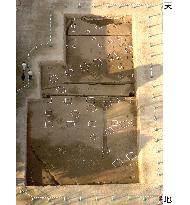
Remains of what appears to be Queen Himiko's palace found in Nara

Remains of what appears to be Queen Himiko's palace found in Nara

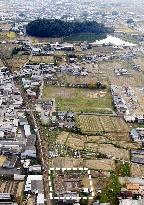
KASHIHARA, Japan - This photo taken Nov. 5, 2009, shows remains of a building structure (inside white borders at bottom) dating back to the early third century in western Japan's Nara Prefecture which could be a palace of legendary Japanese ruler Queen Himiko. The Hashihaka ancient burial mound, believed by some archaeologists to be the queen's tomb, is seen in the upper part of the photo.

  •  
Stone chamber of ancient tomb in early Yamato dynasty unveiled

Stone chamber of ancient tomb in early Yamato dynasty unveiled

KASHIHARA, Japan - The roof of a red-colored stone chamber, excavated at the ancient Sakurai Chausu-yama tomb mound in Sakurai, Nara Prefecture, is covered with large pieces of stone. Japanese archaeologists showed to the media the stone chamber on Oct. 22, 2009. The site is believed to date back to the late third to early fourth century.

  •  
Photos of stone chamber of 7th-8th century Takamatsuzuka

Photos of stone chamber of 7th-8th century Takamatsuzuka

KASHIHARA, Japan - The stone chamber of the seventh- to eighth-century Takamatsuzuka tomb in the village of Asuka, Nara Prefecture, is opened to the press on Sept. 15 for the first time since murals and colorfully painted walls were discovered in 1972. (Pool photo)

  •  
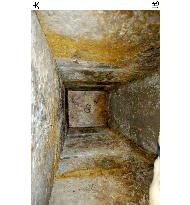
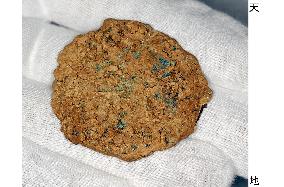
(2)Bones, teeth, metal found at Kitora tomb

(2)Bones, teeth, metal found at Kitora tomb

KASHIHARA, Japan - The photo released June 18 by the Culture Agency shows what is believed to be part of metal from a burial casket that has been found at the site of the ancient Kitora tomb in Asuka, Nara Prefecture. The tomb, about 14 meters in diameter and 2.6 meters high, is known for its richly colored mural paintings.

  •  
(3)Main building of Soga no Umako's residence found in Nara Pref.

(3)Main building of Soga no Umako's residence found in Nara Pref.

KASHIHARA, Japan - An aerial photo taken March 11 shows the ruins of a large building believed to be the residence of Soga no Umako, a major political figure in sixth-seventh century Japan. Umako initiated diplomatic relations with China's Sui dynasty (581-618), dispatching envoys to China and promoted Buddhism.

  •  
(1)Main building of Soga no Umako's residence found in Nara Pref.

(1)Main building of Soga no Umako's residence found in Nara Pref.

KASHIHARA, Japan - Photo taken March 11 shows the ruins of a large building (bottom right) believed to be the residence of Soga no Umako, a powerful minister who served four emperors in the Yamato court during the so-called Asuka period in the sixth-seventh centuries. The ruins have been found by the education board of Asuka in Nara Prefecture.

  •  
(1)Tunisia vs Cerezo Osaka

(1)Tunisia vs Cerezo Osaka

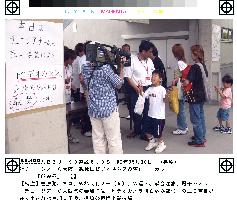
KASHIHARA, Japan - A notice at the Kashihara Park athletic field, venue of a warm-up match between Tunisia and Cerezo Osaka, reads: ''At Tunisia's strong request, you are strictly prohibited from bringing in your video cameras.'' (World Cup 2002)

  •  
Tunisian soccer team moves to Kashihara for training

Tunisian soccer team moves to Kashihara for training

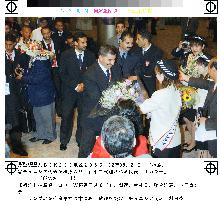
KASHIHARA, Japan - The Tunisian soccer team is welcomed by local people in Kashihara, Nara Prefecure, at a hotel on May 21 after arriving there from Saeki, Oita Prefecture, for training for the World Cup finals that begin May 31. The team did the first stage of its training in Saeki from May 17.

  •  
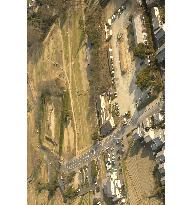
Ancient Nara pond larger than expected

Ancient Nara pond larger than expected

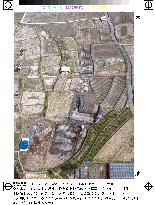
KASHIHARA, Japan - Photo taken from Kyodo News helicopter March 21 shows an aerial view of the remains of an artificial pond constructed in the seventh century in the village of Asuka, Nara Prefecture. The Archaeological Institute of Kashihara said the pond, one of the oldest of its kind, measures more than 200 meters long, over 70 meters wide, larger than initially expected. Archaeologists think such ponds were used to entertain foreign delegations or vassals.

  •  
6th century imperial mausoleum unearthed in Nara

6th century imperial mausoleum unearthed in Nara

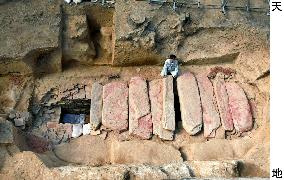
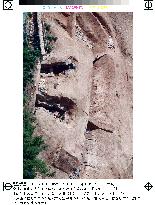
KASHIHARA, Japan - Photo taken from a Kyodo News helicopter Aug. 17 shows two stone hollows unearthed in the Ueyama ancient burial mound in Kashihara, Nara Prefecture, which researchers believe are part of a joint mausoleum for Empress Suiko (554-628) and her son, Prince Takeda.

  • Main
  • Top
  • Editorial
  • Creative
  • About Us
  • About ILG
  • Terms of use
  • Company
  • BEHIND
  • Price List
  • Single Plan
  • Monthly Plan
  • Services
  • Shooting
  • Rights Clearance
  • Support
  • FAQ
  • How To Buy
  • Contact Us
  • Become a Partner

© KYODO NEWS IMAGES INC

All Rights Reserved.

  • Editorial
  • Olympics
  • News
  • Sports
  • Japan
  • Tech
  • Royal
  • Disaster
  • NorthKorea
  • Old Japan
  • SNS
  • Creative
  • Food
  • Japan
  • Landscape
  • Animal
  • Popular
  • #Ukraine
  • #China
  • #coronavirus
  • #N. Korea
  • #Russia
  • #Thailand
  • #Ukraine
  • #China
  • #coronavirus
  • #N. Korea
  • #Russia
  • #Thailand
  • Food
  • Japan
  • Landscape
  • Animal
  • Olympics
  • News
  • Sports
  • Japan
  • Tech
  • Royal
  • Disaster
  • NorthKorea
  • Old Japan
  • SNS