•  
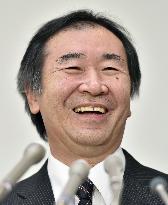
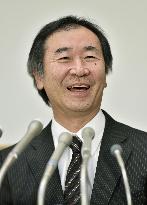
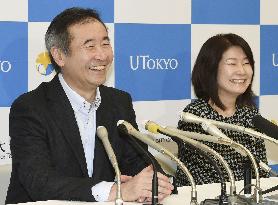
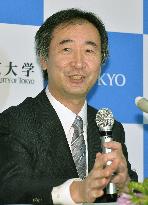
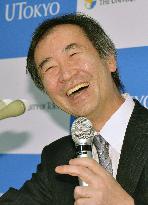
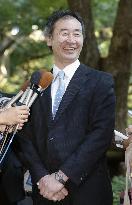
University of Tokyo professor at press conference

University of Tokyo professor at press conference

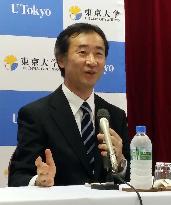
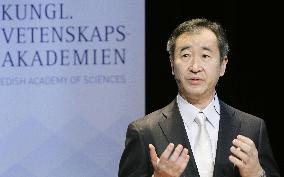
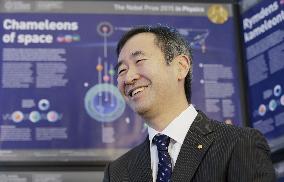
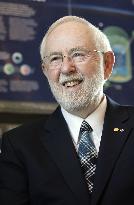
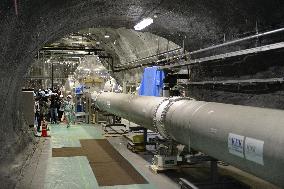
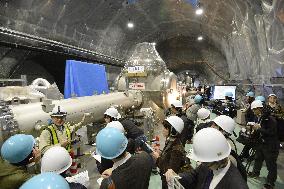
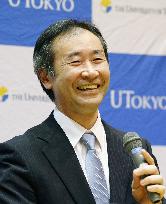
GIFU, Japan - Takaaki Kajita, director of the University of Tokyo's Institute for Cosmic Ray Research, speaks at a press conference in Hida, Gifu Prefecture, central Japan, on July 4, 2014. Tunnels to be used for the "Kagura" gravitational wave telescope system were unveiled to the press the same day.

  •  
'Bow-Lingual' awarded 'Ig Nobel' peace prize

'Bow-Lingual' awarded 'Ig Nobel' peace prize

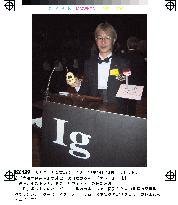
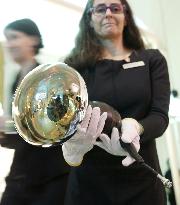
BOSTON, United States - Masahiko Kajita of Japanese toy maker Takara Co. holds up a dog-to-human-language translation device, dubbed ''Bow-Lingual,'' at a ceremony of the 12th annual ''Ig Nobel Prizes,'' a parody of the Nobel prizes, at Harvard University in Boston on Oct. 3. Takara's device was given the award for ''promoting peace and harmony between the species.''

  •  
Imperial garden party in Tokyo

Imperial garden party in Tokyo

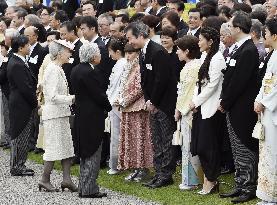
Emperor Akihito and Empress Michiko talk to 2015 Nobel laureate in physics Takaaki Kajita during a biannual imperial garden party at the Akasaka Imperial Garden in Tokyo on April 27, 2016. Kajita was among around 1,800 guests. (Kyodo) ==Kyodo

  •  
Scientists report detection of gravity waves theorized by Einstein

Scientists report detection of gravity waves theorized by Einstein

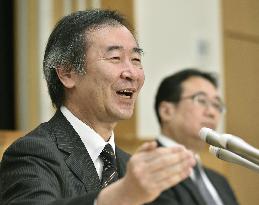
Takaaki Kajita, a Nobel laureate in physics, holds a press conference in Kashiwa, Japan, on Feb. 12, 2016, after an international team of scientists announced the detection of gravitational waves, ripples in space-time predicted 100 years ago by Albert Einstein in a physics theory, from colliding black holes. (Kyodo) ==Kyodo

  •  
Scientists report detection of gravity waves theorized by Einstein

Scientists report detection of gravity waves theorized by Einstein

Takaaki Kajita, a Nobel laureate in physics, holds a press conference in Kashiwa, Japan, on Feb. 12, 2016, after an international team of scientists announced the detection of gravitational waves, ripples in space-time predicted 100 years ago by Albert Einstein in a physics theory, from colliding black holes. (Kyodo) ==Kyodo

  •  
Scientists report detection of gravity waves theorized by Einstein

Scientists report detection of gravity waves theorized by Einstein

Takaaki Kajita, a Nobel laureate in physics, holds a press conference in Kashiwa, Japan, on Feb. 12, 2016, after an international team of scientists announced the detection of gravitational waves, ripples in space-time predicted 100 years ago by Albert Einstein in a physics theory, from colliding black holes. (Kyodo) ==Kyodo

  •  
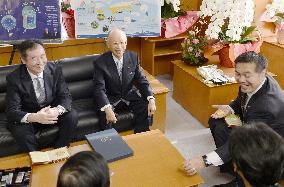
Nobel laureates Omura, Kajita visit education ministry

Nobel laureates Omura, Kajita visit education ministry

Nobel laureates Takaaki Kajita (far L) and Satoshi Omura (2nd from L) pay a courtesy call on Hiroshi Hase (R), Japan's minister of education, culture, sports, science and technology, in Tokyo on Dec. 15, 2015, to show their Nobel medals after returning from the Nobel Prize Award Ceremony in Stockholm. (Kyodo) ==Kyodo

  •  
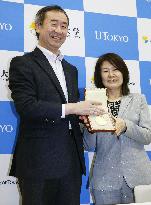
Nobel laureate Kajita returns home

Nobel laureate Kajita returns home

Nobel laureate Takaaki Kajita (L) and his wife Michiko display his Nobel medal at a press conference at Tokyo's Haneda airport on Dec. 14, 2015, after returning from the Nobel Prize Award Ceremony in Stockholm. (Kyodo) ==Kyodo

  •  
Nobel banquet in Stockholm

Nobel banquet in Stockholm

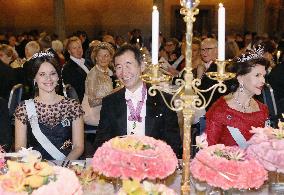
Photo taken Dec. 10, 2015, shows (from L) Princess Sofia of Sweden, Takaaki Kajita, a recipient of the Nobel Prize in Physics, and Queen Silvia of Sweden attending the Nobel banquet at the Stockholm City Hall. (Pool photo)(Kyodo) ==Kyodo

  •  
Two Japanese scientists receive Nobel prize

Two Japanese scientists receive Nobel prize

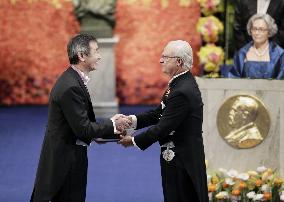
Takaaki Kajita of Japan receives a medal and diploma for his Nobel Prize in Physics from Swedish King Carl XVI Gustaf at the award ceremony in Stockholm on Dec. 10, 2015. Kajita has discovered neutrino oscillations demonstrating that neutrinos have mass. (Pool photo by Kyodo News)(Kyodo) ==Kyodo

  •  
Two Japanese scientists receive Nobel prize

Two Japanese scientists receive Nobel prize

Takaaki Kajita of Japan receives a medal and diploma for his Nobel Prize in Physics from Swedish King Carl XVI Gustaf at the award ceremony in Stockholm on Dec. 10, 2015. Kajita has discovered neutrino oscillations demonstrating that neutrinos have mass. (Pool photo by Kyodo News)(Kyodo) ==Kyodo

  •  
Two Japanese scientists receive Nobel prize

Two Japanese scientists receive Nobel prize

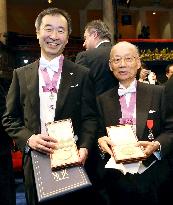
Japanese scientists Takaaki Kajita (L) and Satoshi Omura show their medals and diplomas at the Nobel Prize award ceremony in Stockholm on Dec. 10, 2015, after receiving the prizes in physics and medicine, respectively. (Pool photo)(Kyodo) ==Kyodo

  •  
Super-Kamiokande neutrino observatory in Japan

Super-Kamiokande neutrino observatory in Japan

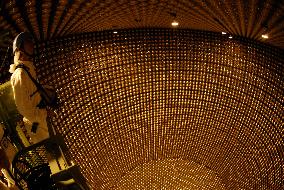
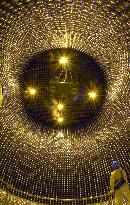
File photo taken in April 2006 shows the Super-Kamiokande neutrino observatory 1,000 meters underground in Gifu Prefecture, central Japan. University of Tokyo professor Takaaki Kajita won the 2015 Nobel Prize in Physics along with Canada's Arthur McDonald for their discovery of neutrino oscillations demonstrating that neutrinos have mass. (Kyodo) ==Kyodo

  •  
2 Japanese Nobel laureates in Stockholm

2 Japanese Nobel laureates in Stockholm

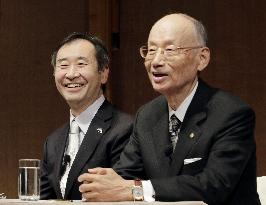
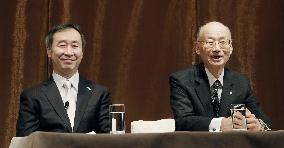
Japanese Nobel laureates Takaaki Kajita (L), professor at the University of Tokyo and a recipient of the Nobel Prize in Physics, and Satoshi Omura, special professor emeritus of Kitasato University and a recipient of the Nobel Prize in Physiology or Medicine, hold a joint news conference at a hotel in Stockholm on Dec. 8, 2015. (Kyodo) ==Kyodo

  •  
2 Japanese Nobel laureates in Stockholm

2 Japanese Nobel laureates in Stockholm

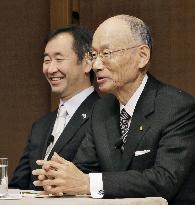
Japanese Nobel laureates Takaaki Kajita (L), professor at the University of Tokyo and a recipient of the Nobel Prize in Physics, and Satoshi Omura, special professor emeritus of Kitasato University and a recipient of the Nobel Prize in Physiology or Medicine, hold a joint news conference at a hotel in Stockholm on Dec. 8, 2015. (Kyodo) ==Kyodo

  •  
Super-Kamiokande neutrino observatory in Japan

Super-Kamiokande neutrino observatory in Japan

File photo taken in April 2006 shows the Super-Kamiokande neutrino observatory 1,000 meters underground in the central Japan prefecture of Gifu. Takaaki Kajita, a professor at the University of Tokyo, won the 2015 Nobel Prize in Physics along with Canada's Arthur McDonald for their discovery of neutrino oscillations demonstrating that neutrinos have mass. (Kyodo) ==Kyodo

  •  
2 Japanese Nobel laureates in Stockholm

2 Japanese Nobel laureates in Stockholm

Japanese Nobel laureates Takaaki Kajita (L), professor at the University of Tokyo and a recipient of the Nobel Prize in Physics, and Satoshi Omura, special professor emeritus of Kitasato University and a recipient of the Nobel Prize in Physiology or Medicine, hold a joint news conference at a hotel in Stockholm on Dec. 8, 2015. (Kyodo) ==Kyodo

  •  
2 Japanese Nobel laureates in Stockholm

2 Japanese Nobel laureates in Stockholm

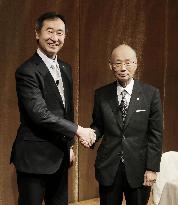
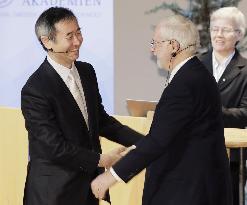
Japanese Nobel laureates Takaaki Kajita (L), professor at the University of Tokyo and a recipient of the Nobel Prize in Physics, and Satoshi Omura, special professor emeritus of Kitasato University and a recipient of the Nobel Prize in Physiology or Medicine, shake hands at a hotel in Stockholm on Dec. 8, 2015, ahead of a news conference. (Kyodo) ==Kyodo

  •  
Nobel laureate Kajita of Japan makes memorial lecture in Stockholm

Nobel laureate Kajita of Japan makes memorial lecture in Stockholm

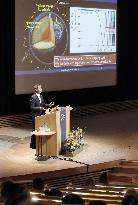
Nobel laureate in physics Takaaki Kajita, professor at the University of Tokyo in Japan, makes a memorial lecture at Stockholm University in the Swedish capital on Dec. 8, 2015. (Kyodo) ==Kyodo

  •  
Nobel laureate Kajita of Japan makes memorial lecture in Stockholm

Nobel laureate Kajita of Japan makes memorial lecture in Stockholm

Nobel laureate in physics Takaaki Kajita, professor at the University of Tokyo in Japan, makes a memorial lecture at Stockholm University in the Swedish capital on Dec. 8, 2015. (Kyodo) ==Kyodo

  •  
Nobel laureate Kajita of Japan makes memorial lecture in Stockholm

Nobel laureate Kajita of Japan makes memorial lecture in Stockholm

Nobel laureates in physics Takaaki Kajita (L), professor at the University of Tokyo in Japan, and Arthur McDonald, professor emeritus at Queen's University in Canada, shake hands after the end of Takaaki's memorial lecture at Stockholm University in the Swedish capital on Dec. 8, 2015. (Kyodo) ==Kyodo

  •  
Nobel laureate McDonald hails Japan's role in neutrino physics

Nobel laureate McDonald hails Japan's role in neutrino physics

Arthur McDonald of Canada, who shared the 2015 Nobel Prize in Physics with Takaaki Kajita of Japan, speaks to Kyodo News in Stockholm on Dec. 7, 2015. McDonald hailed Japan's leading role in neutrino physics. (Kyodo) ==Kyodo

  •  
Nobel laureate Kajita thanks community back home for support

Nobel laureate Kajita thanks community back home for support

Japanese scientist Takaaki Kajita, who shared the 2015 Nobel Prize in Physics with Canada's Arthur McDonald, gives an interview with the media in Stockholm on Dec. 7, 2015. Kajita expressed gratitude for support from people in Kamioka, the Japanese community that hosts the Super-Kamiokande neutrino observatory. (Kyodo) ==Kyodo

  •  
Nobel laureate Kajita thanks community back home for support

Nobel laureate Kajita thanks community back home for support

Japanese scientist Takaaki Kajita, who shared the 2015 Nobel Prize in Physics with Canada's Arthur McDonald, gives an interview with the media in Stockholm on Dec. 7, 2015. Kajita expressed gratitude for support from people in Kamioka, the Japanese community that hosts the Super-Kamiokande neutrino observatory. (Kyodo) ==Kyodo

  •  
Nobel laureate McDonald hails Japan's role in neutrino physics

Nobel laureate McDonald hails Japan's role in neutrino physics

Arthur McDonald of Canada, who shared the 2015 Nobel Prize in Physics with Takaaki Kajita of Japan, speaks to Kyodo News in Stockholm on Dec. 7, 2015. McDonald hailed Japan's leading role in neutrino physics. (Kyodo) ==Kyodo

  •  
Kajita donates neutrino detector

Kajita donates neutrino detector

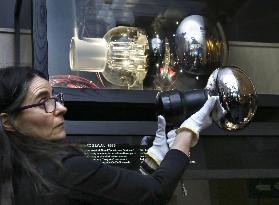
Photo taken Dec. 6, 2015, shows a neutrino detector donated by Takaaki Kajita, the Japanese scientist jointly awarded the Nobel Prize in physics for the discovery of neutrino oscillations, to the Nobel Museum in Stockholm. The same detectors are installed at the Super-Kamiokande neutrino observatory in Japan. (Kyodo) ==Kyodo

  •  
Kajita donates neutrino detector

Kajita donates neutrino detector

Photo taken Dec. 6, 2015, shows a neutrino detector (front) donated by Takaaki Kajita, the Japanese scientist jointly awarded the Nobel Prize in physics for the discovery of neutrino oscillations, to the Nobel Museum in Stockholm. The same detectors are installed at the Super-Kamiokande neutrino observatory in Japan. The detector seen in the back was donated by another Japanese Nobel laureate and Kajita's teacher, Masatoshi Koshiba, in 2002. (Kyodo) ==Kyodo

  •  
Nobel laureate Kajita arrives in Stockholm

Nobel laureate Kajita arrives in Stockholm

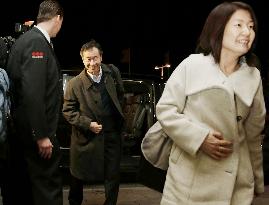
Takaaki Kajita (C), the Japanese scientist jointly awarded this year's Nobel Prize in physics for the discovery of neutrino oscillations, and his wife Michiko (R) arrive at a hotel in Stockholm on Dec. 4, 2015, to attend the award ceremony. "I hope we will be able to enjoy," Kajita said. (Kyodo) ==Kyodo

  •  
Nobel laureate Kajita leaves for Stockholm

Nobel laureate Kajita leaves for Stockholm

Takaaki Kajita (L), the Japanese scientist jointly awarded this year's Nobel Prize in physics for the discovery of neutrino oscillations, attends a press conference with his wife Michiko at Haneda airport in Tokyo on Dec. 4, 2015, before leaving for Stockholm to attend the award ceremony. "I hope to enjoy upcoming events with my fellow researchers," Kajita said. (Kyodo) ==Kyodo

  •  
Gravitational wave detector revealed to media

Gravitational wave detector revealed to media

Photo taken in the central Japan city of Hida shows a large-scale gravitational wave detector, KAGRA, revealed to the media on Nov. 6, 2015. Under the KAGRA project, led by the University of Tokyo professor Takaaki Kajita, winner of the Nobel Physics Prize, researchers aim to determine the structure and evolution of the cosmos by using the telescope. (Kyodo) ==Kyodo

  •  
Gravitational wave detector revealed to media

Gravitational wave detector revealed to media

Photo taken in the central Japan city of Hida shows a large-scale gravitational wave detector, KAGRA, revealed to the media on Nov. 6, 2015. Under the KAGRA project, led by the University of Tokyo professor Takaaki Kajita, winner of the Nobel Physics Prize, researchers aim to determine the structure and evolution of the cosmos by using the telescope. (Kyodo) ==Kyodo

  •  
Nobel laureate Kajita to receive Order of Culture

Nobel laureate Kajita to receive Order of Culture

Takaaki Kajita, awarded the Nobel Prize in physics, attends a press conference in Tokyo on Oct. 29, 2015, after he was chosen as a recipient of the 2015 Order of Culture, Japan's top award for contributions to the development of culture. He will receive the award from Emperor Akihito at the Imperial Palace on the Cultural Day national holiday on Nov. 3. (Kyodo) ==Kyodo

  •  
Nobel laureate Kajita to receive Order of Culture

Nobel laureate Kajita to receive Order of Culture

Takaaki Kajita, awarded the Nobel Prize in physics, attends a press conference in Tokyo on Oct. 29, 2015, after he was chosen as a recipient of the 2015 Order of Culture, Japan's top award for contributions to the development of culture. He will receive the award from Emperor Akihito at the Imperial Palace on the Cultural Day national holiday on Nov. 3. (Kyodo) ==Kyodo

  •  
Nobel winner Kajita expresses gratitude to old teacher

Nobel winner Kajita expresses gratitude to old teacher

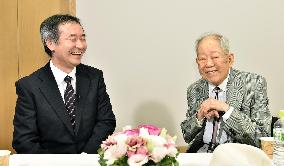
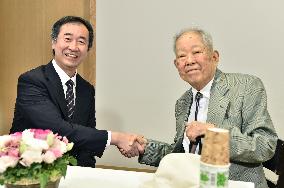
Japanese scientist Takaaki Kajita (L), co-winner of the 2015 Nobel Prize in Physics, meets with Masatoshi Koshiba, a 2002 Nobel Prize Physics laureate, in Tokyo on Oct. 15, 2015. In their first meeting since Kajita was named winner of the prize, Kajita expressed his gratitude to his former professor for his long-term support. (Kyodo) ==Kyodo

  •  
Nobel winner Kajita expresses gratitude to old teacher

Nobel winner Kajita expresses gratitude to old teacher

Japanese scientist Takaaki Kajita (L), co-winner of the 2015 Nobel Prize in Physics, meets with Masatoshi Koshiba, a 2002 Nobel Prize Physics laureate, in Tokyo on Oct. 15, 2015. In their first meeting since Kajita was named winner of the prize, Kajita expressed his gratitude to his former professor for his long-term support. (Kyodo) ==Kyodo

  •  
Nobel laureate Kajita returns from Canary Islands

Nobel laureate Kajita returns from Canary Islands

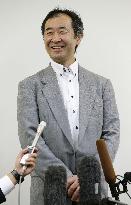
Nobel Physics Prize winner Takaaki Kajita meets with reporters at Tokyo's Haneda airport on Oct. 13, 2015, after returning from the Canary Islands where the professor at the University of Tokyo visited for a business trip from Oct. 8. (Kyodo) ==Kyodo

  •  
Nobel laureate Kajita returns from Canary Islands

Nobel laureate Kajita returns from Canary Islands

Nobel Physics Prize winner Takaaki Kajita meets with reporters at Tokyo's Haneda airport on Oct. 13, 2015, after returning from the Canary Islands where the professor at the University of Tokyo visited for a business trip from Oct. 8. (Kyodo) ==Kyodo

  •  
Sales of Nobel laureates' books expanding

Sales of Nobel laureates' books expanding

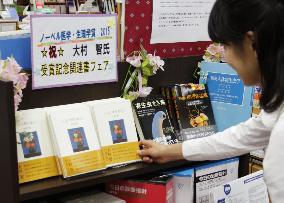
Photo taken Oct. 7, 2015, shows a sales staff member at a Tokyo bookstore putting out books written by Satoshi Omura, who won the Nobel Prize in Physiology or Medicine. Sales of a collection of Omura's essays on the arts as well as a scientific book written by another Japanese Nobel laureate, Takaaki Kajita, have been rapidly growing since their winning of the award. (Kyodo) ==Kyodo

  •  
Japan's Kajita shares Nobel Prize in Physics with Canada's McDonald

Japan's Kajita shares Nobel Prize in Physics with Canada's McDonald

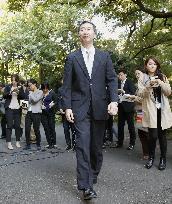
Japanese scientist Takaaki Kajita arrives at the University of Tokyo on Oct. 7, 2015, a day after he received the Nobel Prize in Physics along with Canada's Arthur McDonald for their discovery of neutrino oscillations demonstrating that neutrinos have mass. (Kyodo) ==Kyodo

  •  
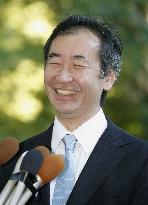
Japan's Kajita shares Nobel Prize in Physics with Canada's McDonald

Japan's Kajita shares Nobel Prize in Physics with Canada's McDonald

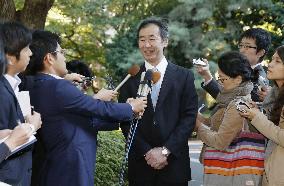
Japanese scientist Takaaki Kajita meets with reporters at the University of Tokyo on Oct. 7, 2015, a day after he received the Nobel Prize in Physics along with Canada's Arthur McDonald for their discovery of neutrino oscillations demonstrating that neutrinos have mass. (Kyodo) ==Kyodo

  •  
Japan's Kajita shares Nobel Prize in Physics with Canada's McDonald

Japan's Kajita shares Nobel Prize in Physics with Canada's McDonald

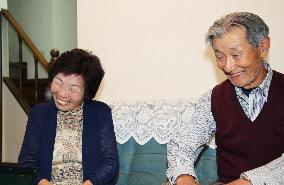
Photo taken Oct. 6, 2015, shows Masao Kajita (R) and his wife Tomoko, parents of a Japanese scientist Takaaki Kajita who won the Nobel Prize in Physics. At their home in the city of Higashimatsuyama, near Tokyo, Masao said, "My son could receive the prize as he has met great teachers." (Kyodo) ==Kyodo

  •  
Japan's Kajita shares Nobel Prize in Physics with Canada's McDonald

Japan's Kajita shares Nobel Prize in Physics with Canada's McDonald

Japanese scientist Takaaki Kajita meets with reporters at the University of Tokyo on Oct. 7, 2015, a day after he received the Nobel Prize in Physics along with Canada's Arthur McDonald for their discovery of neutrino oscillations demonstrating that neutrinos have mass. (Kyodo) ==Kyodo

  •  
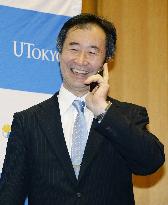
Japan's Kajita shares Nobel Prize in Physics with Canada's McDonald

Japan's Kajita shares Nobel Prize in Physics with Canada's McDonald

Japanese scientist Takaaki Kajita, 56, a professor at the University of Tokyo and director of the university's Institute for Cosmic Ray Research, talks with Prime Minister Shinzo Abe by phone during a press conference in Tokyo on Oct. 6, 2015, as he shared the Nobel Prize in Physics with Canada's Arthur McDonald for their discovery of neutrino oscillations. (Kyodo) ==Kyodo

  •  
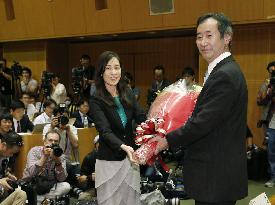
Japan's Kajita shares Nobel Prize in Physics with Canada's McDonald

Japan's Kajita shares Nobel Prize in Physics with Canada's McDonald

Japanese scientist Takaaki Kajita (R) receives flowers during a press conference on Oct. 6, 2015, at the University of Tokyo, as he won the Nobel Prize in Physics along with Canada's Arthur McDonald for their discovery of neutrino oscillations demonstrating that neutrinos have mass. (Kyodo) ==Kyodo

  •  
Japan's Kajita shares Nobel Prize in Physics with Canada's McDonald

Japan's Kajita shares Nobel Prize in Physics with Canada's McDonald

Japanese scientist Takaaki Kajita meets with reporters at the University of Tokyo on Oct. 7, 2015, a day after he received the Nobel Prize in Physics along with Canada's Arthur McDonald for their discovery of neutrino oscillations demonstrating that neutrinos have mass. (Kyodo) ==Kyodo

  •  
Canada's Arthur McDonald shares Nobel Prize in Physics

Canada's Arthur McDonald shares Nobel Prize in Physics

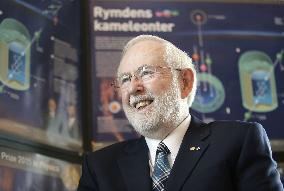
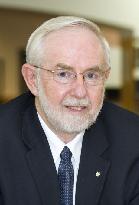
Photo taken in May 2008 shows Canadian scientist Arthur McDonald, a faculty member at Queen's University in Canada. McDonald won the Nobel Prize in Physics along with Japanese scientist Takaaki Kajita on Oct. 6, 2015, for the discovery of neutrino oscillations, the Royal Swedish Academy said. (Kyodo) ==Kyodo

  •  
Japan's Kajita shares Nobel Prize in Physics with Canada's McDonald

Japan's Kajita shares Nobel Prize in Physics with Canada's McDonald

Japanese scientist Takaaki Kajita, 56, a professor at the University of Tokyo and director of the university's Institute for Cosmic Ray Research, attends a press conference in Tokyo on Oct. 6, 2015, as he shared the Nobel Prize in Physics with Canada's Arthur McDonald for their discovery of neutrino oscillations. (Kyodo) ==Kyodo

  •  
Japan's Kajita shares Nobel Prize in Physics with Canada's McDonald

Japan's Kajita shares Nobel Prize in Physics with Canada's McDonald

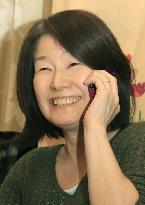
Michiko Kajita talks with her husband, Takaaki, a Japanese scientist who won the Nobel Prize in Physics, over the phone at their home in the central Japan city of Toyama on Oct. 6, 2015. She said, "I was simply surprised." (Kyodo) ==Kyodo

  •  
Japanese scientist Kajita shares Nobel Prize in Physics

Japanese scientist Kajita shares Nobel Prize in Physics

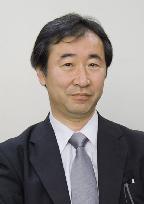
File photo taken in April 2010 shows Japanese scientist Takaaki Kajita. Kajita won the Nobel Prize in Physics along with Canadian scientist Arthur McDonald on Oct. 6, 2015, for the discovery of neutrino oscillations, the Royal Swedish Academy said. (Kyodo) ==Kyodo

  •  
Nobel laureate Kajita speaks with foreign press in Tokyo

Nobel laureate Kajita speaks with foreign press in Tokyo

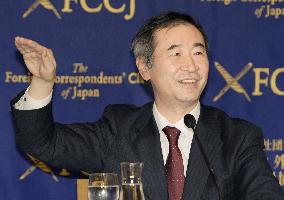
Takaaki Kajita, co-winner of the 2015 Nobel Prize in Physics, speaks at a news conference at the Foreign Correspondents' Club of Japan in Tokyo on Nov. 20, 2015. (Kyodo) ==Kyodo

  • Main
  • Top
  • Editorial
  • Creative
  • About Us
  • About ILG
  • Terms of use
  • Company
  • BEHIND
  • Price List
  • Single Plan
  • Monthly Plan
  • Services
  • Shooting
  • Rights Clearance
  • Support
  • FAQ
  • How To Buy
  • Contact Us
  • Become a Partner

© KYODO NEWS IMAGES INC

All Rights Reserved.

  • Editorial
  • Olympics
  • News
  • Sports
  • Japan
  • Tech
  • Royal
  • Disaster
  • NorthKorea
  • Old Japan
  • SNS
  • Creative
  • Food
  • Japan
  • Landscape
  • Animal
  • Popular
  • #Ukraine
  • #Thailand
  • #coronavirus
  • #N. Korea
  • #China
  • #Russia
  • #Ukraine
  • #Thailand
  • #coronavirus
  • #N. Korea
  • #China
  • #Russia
  • Food
  • Japan
  • Landscape
  • Animal
  • Olympics
  • News
  • Sports
  • Japan
  • Tech
  • Royal
  • Disaster
  • NorthKorea
  • Old Japan
  • SNS