•  
Satellite View of Graham Land - Antarctica

Satellite View of Graham Land - Antarctica

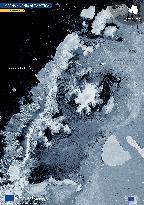
Handout Satellite views dated on November 21, 2025, shows Graham Land. Graham Land, the northernmost stretch of the Antarctic Peninsula, is one of the most rapidly warming regions on Earth. Its mountainous spine and outlet glaciers drain into the Weddell Sea, forming an important transition zone between grounded ice, floating shelves, and open water. This dynamic landscape supports rich marine ecosystems, including krill-dependent species such as seals, penguins, and seabirds, and plays an important role in global ocean circulation and climate regulation. This Copernicus Sentinel-1 image, acquired on 21 November 2025, shows the contrasting textures of grounded ice, fragmented sea ice, and dark, open ocean, revealing key glaciological features in radar backscatter. Copernicus data is essential to climate science. A recent study published in Nature used Copernicus Sentinel-1 and Sentinel-2 data to analyse glacier dynamics in Graham Land, Antarctica. Photo by European Union, Copernicus Sentinel-1 imagery via ABA

  •  
Minke whales captured to study fish hunting patterns

Minke whales captured to study fish hunting patterns

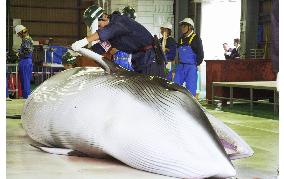
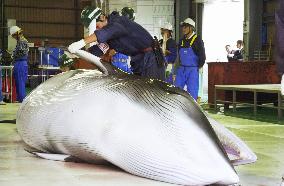
KUSHIRO, Japan - A Japanese team involved in whaling research off southeastern Hokkaido announced Nov. 8 that it captured 50 minke whales in September and October and that an analysis of their stomach contents showed 15 adolescent whales about 4 to 6 meters long had hunted Alaskan pollack. According to officials of the government-backed whaling team, anchovies were found in the stomachs of 19 of the captured minke whales, sauries in eight, and krill in six. Officials said the whales were captured to study the impact of minke whales on the local fishing industry. The photo shows members of the research team cutting up a captured whale. The carcasses are sold for food in Japan.

  •  
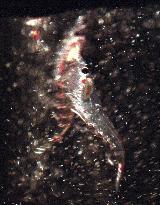
Nagoya aquarium breaks record for krill in captivity

Nagoya aquarium breaks record for krill in captivity

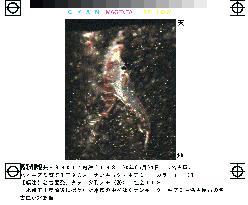
NAGOYA, Japan - The Port of Nagoya Public Aquarium in Aichi Prefecture has kept an Antarctic krill in captivity (shown in this photo) for a record-breaking seven years and nine months as part of efforts to breed the small shrimp-like crustaceans, aquarium officials said May 1. Krill are extremely sensitive to their environment. The previous record for keeping Antarctic krill in captivity was held by an Australian laboratory, which kept one alive for six and a half years.

  •  
Minke whales captured to study fish hunting patterns

Minke whales captured to study fish hunting patterns

KUSHIRO, Japan - A Japanese team involved in whaling research off southeastern Hokkaido announced Nov. 8 that it captured 50 minke whales in September and October and that an analysis of their stomach contents showed 15 adolescent whales about 4 to 6 meters long had hunted Alaskan pollack. According to officials of the government-backed whaling team, anchovies were found in the stomachs of 19 of the captured minke whales, sauries in eight, and krill in six. Officials said the whales were captured to study the impact of minke whales on the local fishing industry. The photo shows members of the research team cutting up a captured whale. The carcasses are sold for food in Japan. (Kyodo)

  •  
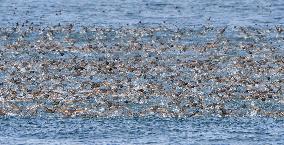
Short-tailed shearwaters seen off Shiretoko Peninsula

Short-tailed shearwaters seen off Shiretoko Peninsula

Photo taken on May 25, 2015, shows a flock of short-tailed shearwaters that have flown all the way from near Australia to the waters off Rausu on Japan's northernmost main island of Hokkaido in pursuit of krill and fish. (Kyodo) ==Kyodo

  •  
Nagoya aquarium breaks record for krill in captivity

Nagoya aquarium breaks record for krill in captivity

NAGOYA, Japan - The Port of Nagoya Public Aquarium in Aichi Prefecture has kept an Antarctic krill in captivity (shown in this photo) for a record-breaking seven years and nine months as part of efforts to breed the small shrimp-like crustaceans, aquarium officials said May 1. Krill are extremely sensitive to their environment. The previous record for keeping Antarctic krill in captivity was held by an Australian laboratory, which kept one alive for six and a half years.

  • Main
  • Top
  • Editorial
  • Creative
  • About Us
  • About ILG
  • Terms of use
  • Company
  • BEHIND
  • Price List
  • Single Plan
  • Monthly Plan
  • Services
  • Shooting
  • Rights Clearance
  • Support
  • FAQ
  • How To Buy
  • Contact Us
  • Become a Partner

© KYODO NEWS IMAGES INC

All Rights Reserved.

  • Editorial
  • Olympics
  • News
  • Sports
  • Japan
  • Tech
  • Royal
  • Disaster
  • NorthKorea
  • Old Japan
  • SNS
  • Creative
  • Food
  • Japan
  • Landscape
  • Animal
  • Popular
  • #Ukraine
  • #China
  • #coronavirus
  • #N. Korea
  • #Thailand
  • #Russia
  • #Ukraine
  • #China
  • #coronavirus
  • #N. Korea
  • #Thailand
  • #Russia
  • Food
  • Japan
  • Landscape
  • Animal
  • Olympics
  • News
  • Sports
  • Japan
  • Tech
  • Royal
  • Disaster
  • NorthKorea
  • Old Japan
  • SNS