•  
(InXizang)CHINA-XIZANG-FORMER SERF-NEW LIFE-LOZANG (CN)

(InXizang)CHINA-XIZANG-FORMER SERF-NEW LIFE-LOZANG (CN)

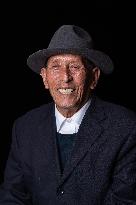
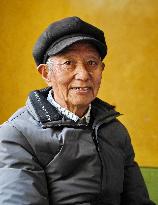
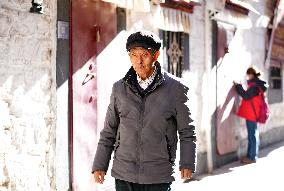
(240404) -- LHASA, April 4, 2024 (Xinhua) -- Lozang is pictured at his house in Kundeling Street, Chengguan District of Lhasa, southwest China's Xizang Autonomous Region, April 2, 2024. Born in 1939, Lozang is a resident of Kundeling Street of Chengguan District in Lhasa. Before the democratic reform, Lozang and his family were serfs, working for Kundeling Monastery. During his childhood, Lozang worked as a muleteer and was obliged to transport supplies, only receiving meager sustenance in return. In March 1959, people in Xizang launched the democratic reform that ended the region's feudal serfdom. Lozang was freed and allocated accommodations. In 1960, he was appointed head of the residents' committee in his community, and elected as a deputy to the National People's Congress. Now retired, Lozang lives with his family in a three-story house. His eldest and second daughters run a tea shop in downtown Lhasa, and his younger daughter works in a bank. Lozang said he was very happy to take care of h

  •  
(InXizang)CHINA-XIZANG-FORMER SERF-NEW LIFE-LOZANG (CN)

(InXizang)CHINA-XIZANG-FORMER SERF-NEW LIFE-LOZANG (CN)

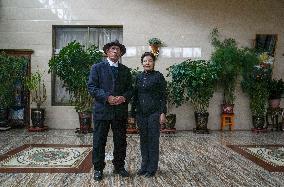
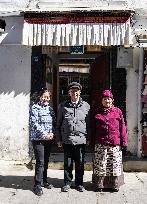
(240404) -- LHASA, April 4, 2024 (Xinhua) -- Lozang poses for a photo with his wife at his house in Kundeling Street, Chengguan District of Lhasa, southwest China's Xizang Autonomous Region, April 2, 2024. Born in 1939, Lozang is a resident of Kundeling Street of Chengguan District in Lhasa. Before the democratic reform, Lozang and his family were serfs, working for Kundeling Monastery. During his childhood, Lozang worked as a muleteer and was obliged to transport supplies, only receiving meager sustenance in return. In March 1959, people in Xizang launched the democratic reform that ended the region's feudal serfdom. Lozang was freed and allocated accommodations. In 1960, he was appointed head of the residents' committee in his community, and elected as a deputy to the National People's Congress. Now retired, Lozang lives with his family in a three-story house. His eldest and second daughters run a tea shop in downtown Lhasa, and his younger daughter works in a bank. Lozang said he was very hap

  •  
(InXizang)CHINA-XIZANG-FORMER SERF-NEW LIFE-LOZANG (CN)

(InXizang)CHINA-XIZANG-FORMER SERF-NEW LIFE-LOZANG (CN)

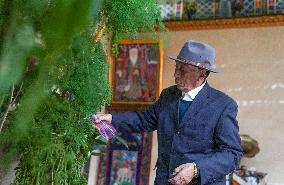
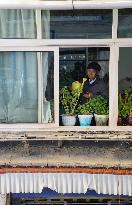
(240404) -- LHASA, April 4, 2024 (Xinhua) -- Lozang waters plants at his house in Kundeling Street, Chengguan District of Lhasa, southwest China's Xizang Autonomous Region, April 2, 2024. Born in 1939, Lozang is a resident of Kundeling Street of Chengguan District in Lhasa. Before the democratic reform, Lozang and his family were serfs, working for Kundeling Monastery. During his childhood, Lozang worked as a muleteer and was obliged to transport supplies, only receiving meager sustenance in return. In March 1959, people in Xizang launched the democratic reform that ended the region's feudal serfdom. Lozang was freed and allocated accommodations. In 1960, he was appointed head of the residents' committee in his community, and elected as a deputy to the National People's Congress. Now retired, Lozang lives with his family in a three-story house. His eldest and second daughters run a tea shop in downtown Lhasa, and his younger daughter works in a bank. Lozang said he was very happy to take care of

  •  
(InXizang)CHINA-XIZANG-FORMER SERF-NEW LIFE-LOZANG (CN)

(InXizang)CHINA-XIZANG-FORMER SERF-NEW LIFE-LOZANG (CN)

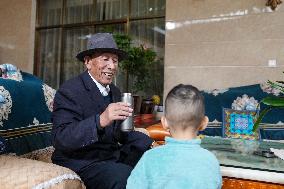
(240404) -- LHASA, April 4, 2024 (Xinhua) -- Lozang plays with his grandchild at his house in Kundeling Street, Chengguan District of Lhasa, southwest China's Xizang Autonomous Region, April 2, 2024. Born in 1939, Lozang is a resident of Kundeling Street of Chengguan District in Lhasa. Before the democratic reform, Lozang and his family were serfs, working for Kundeling Monastery. During his childhood, Lozang worked as a muleteer and was obliged to transport supplies, only receiving meager sustenance in return. In March 1959, people in Xizang launched the democratic reform that ended the region's feudal serfdom. Lozang was freed and allocated accommodations. In 1960, he was appointed head of the residents' committee in his community, and elected as a deputy to the National People's Congress. Now retired, Lozang lives with his family in a three-story house. His eldest and second daughters run a tea shop in downtown Lhasa, and his younger daughter works in a bank. Lozang said he was very happy to

  •  
(InXizang)CHINA-XIZANG-FORMER SERF-NEW LIFE-LOZANG (CN)

(InXizang)CHINA-XIZANG-FORMER SERF-NEW LIFE-LOZANG (CN)

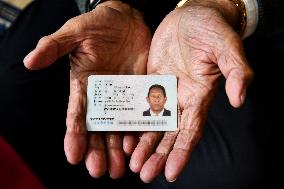
(240404) -- LHASA, April 4, 2024 (Xinhua) -- Lozang presents his ID card in Lhasa, southwest China's Xizang Autonomous Region, Dec. 7, 2021. Born in 1939, Lozang is a resident of Kundeling Street of Chengguan District in Lhasa. Before the democratic reform, Lozang and his family were serfs, working for Kundeling Monastery. During his childhood, Lozang worked as a muleteer and was obliged to transport supplies, only receiving meager sustenance in return. In March 1959, people in Xizang launched the democratic reform that ended the region's feudal serfdom. Lozang was freed and allocated accommodations. In 1960, he was appointed head of the residents' committee in his community, and elected as a deputy to the National People's Congress. Now retired, Lozang lives with his family in a three-story house. His eldest and second daughters run a tea shop in downtown Lhasa, and his younger daughter works in a bank. Lozang said he was very happy to take care of his grandchildren at home and exercise occasio

  •  
(InXizang)CHINA-XIZANG-FORMER SERF-NEW LIFE-LOZANG (CN)

(InXizang)CHINA-XIZANG-FORMER SERF-NEW LIFE-LOZANG (CN)

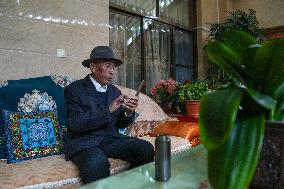
(240404) -- LHASA, April 4, 2024 (Xinhua) -- Lozang uses a mobile phone at his house in Kundeling Street, Chengguan District of Lhasa, southwest China's Xizang Autonomous Region, April 2, 2024. Born in 1939, Lozang is a resident of Kundeling Street of Chengguan District in Lhasa. Before the democratic reform, Lozang and his family were serfs, working for Kundeling Monastery. During his childhood, Lozang worked as a muleteer and was obliged to transport supplies, only receiving meager sustenance in return. In March 1959, people in Xizang launched the democratic reform that ended the region's feudal serfdom. Lozang was freed and allocated accommodations. In 1960, he was appointed head of the residents' committee in his community, and elected as a deputy to the National People's Congress. Now retired, Lozang lives with his family in a three-story house. His eldest and second daughters run a tea shop in downtown Lhasa, and his younger daughter works in a bank. Lozang said he was very happy to take c

  •  
XINHUA PHOTOS OF THE DAY

XINHUA PHOTOS OF THE DAY

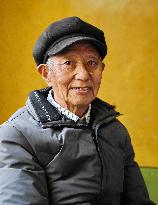
(240404) -- BEIJING, April 4, 2024 (Xinhua) -- This photo taken on March 27, 2024 shows a portrait of Lozang Gonpo who had been a serf before the democratic reform that ended feudal serfdom in Xizang in 1959, in Lhasa, southwest China's Xizang Autonomous Region. (Xinhua/Zhang Rufeng)

  •  
(InXizang)CHINA-XIZANG-FORMER SERF-NEW LIFE-LOZANG GONPO(CN)

(InXizang)CHINA-XIZANG-FORMER SERF-NEW LIFE-LOZANG GONPO(CN)

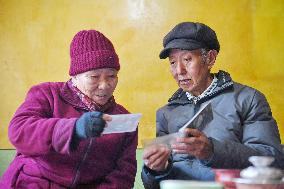
(240403) -- LHASA, April 3, 2024 (Xinhua) -- Lozang Gonpo and his wife Tsering Palmo flip through old photos in Lhasa, southwest China's Xizang Autonomous Region, March 27, 2024. Lozang Gonpo was born in 1949. His childhood memories are fraught with tales of poverty, scarcity, and hardship. Hailing from a family of shoemakers, Lozang Gonpo's upbringing was characterized by early mornings spent learning the craft alongside his parents and grandparents. "In those days, our humble abode, barely 30 square meters, served as shelter for our family of seven," he recalls. "With four children in the house, we shared a single bed and just one blanket, while clothes were washed and worn tirelessly." The burden of a grain tax, amounting to 70 kilograms per person annually, loomed heavily over their heads. "If we had grain, we paid with grain; if not, we resorted to selling shoes to meet our obligations," Lozang Gonpo explains. Following the democratic reform in Xizang in 1959, Lozang Gonpo was finally able to st

  •  
(InXizang)CHINA-XIZANG-FORMER SERF-NEW LIFE-LOZANG GONPO(CN)

(InXizang)CHINA-XIZANG-FORMER SERF-NEW LIFE-LOZANG GONPO(CN)

(240403) -- LHASA, April 3, 2024 (Xinhua) -- Lozang Gonpo waters plants at home in Lhasa, southwest China's Xizang Autonomous Region, March 27, 2024. Lozang Gonpo was born in 1949. His childhood memories are fraught with tales of poverty, scarcity, and hardship. Hailing from a family of shoemakers, Lozang Gonpo's upbringing was characterized by early mornings spent learning the craft alongside his parents and grandparents. "In those days, our humble abode, barely 30 square meters, served as shelter for our family of seven," he recalls. "With four children in the house, we shared a single bed and just one blanket, while clothes were washed and worn tirelessly." The burden of a grain tax, amounting to 70 kilograms per person annually, loomed heavily over their heads. "If we had grain, we paid with grain; if not, we resorted to selling shoes to meet our obligations," Lozang Gonpo explains. Following the democratic reform in Xizang in 1959, Lozang Gonpo was finally able to start a brand new life. At the

  •  
(InXizang)CHINA-XIZANG-FORMER SERF-NEW LIFE-LOZANG GONPO(CN)

(InXizang)CHINA-XIZANG-FORMER SERF-NEW LIFE-LOZANG GONPO(CN)

(240403) -- LHASA, April 3, 2024 (Xinhua) -- Lozang Gonpo (C) poses for photos with his family in front of his house in Lhasa, southwest China's Xizang Autonomous Region, March 27, 2024. Lozang Gonpo was born in 1949. His childhood memories are fraught with tales of poverty, scarcity, and hardship. Hailing from a family of shoemakers, Lozang Gonpo's upbringing was characterized by early mornings spent learning the craft alongside his parents and grandparents. "In those days, our humble abode, barely 30 square meters, served as shelter for our family of seven," he recalls. "With four children in the house, we shared a single bed and just one blanket, while clothes were washed and worn tirelessly." The burden of a grain tax, amounting to 70 kilograms per person annually, loomed heavily over their heads. "If we had grain, we paid with grain; if not, we resorted to selling shoes to meet our obligations," Lozang Gonpo explains. Following the democratic reform in Xizang in 1959, Lozang Gonpo was finally ab

  •  
(InXizang)CHINA-XIZANG-FORMER SERF-NEW LIFE-LOZANG GONPO(CN)

(InXizang)CHINA-XIZANG-FORMER SERF-NEW LIFE-LOZANG GONPO(CN)

(240403) -- LHASA, April 3, 2024 (Xinhua) -- This photo taken on March 27, 2024 shows a portrait of Lozang Gonpo, in Lhasa, southwest China's Xizang Autonomous Region. Lozang Gonpo was born in 1949. His childhood memories are fraught with tales of poverty, scarcity, and hardship. Hailing from a family of shoemakers, Lozang Gonpo's upbringing was characterized by early mornings spent learning the craft alongside his parents and grandparents. "In those days, our humble abode, barely 30 square meters, served as shelter for our family of seven," he recalls. "With four children in the house, we shared a single bed and just one blanket, while clothes were washed and worn tirelessly." The burden of a grain tax, amounting to 70 kilograms per person annually, loomed heavily over their heads. "If we had grain, we paid with grain; if not, we resorted to selling shoes to meet our obligations," Lozang Gonpo explains. Following the democratic reform in Xizang in 1959, Lozang Gonpo was finally able to start a brand

  •  
(InXizang)CHINA-XIZANG-FORMER SERF-NEW LIFE-LOZANG GONPO(CN)

(InXizang)CHINA-XIZANG-FORMER SERF-NEW LIFE-LOZANG GONPO(CN)

(240403) -- LHASA, April 3, 2024 (Xinhua) -- Lozang Gonpo is seen on his way home in Lhasa, southwest China's Xizang Autonomous Region, March 27, 2024. Lozang Gonpo was born in 1949. His childhood memories are fraught with tales of poverty, scarcity, and hardship. Hailing from a family of shoemakers, Lozang Gonpo's upbringing was characterized by early mornings spent learning the craft alongside his parents and grandparents. "In those days, our humble abode, barely 30 square meters, served as shelter for our family of seven," he recalls. "With four children in the house, we shared a single bed and just one blanket, while clothes were washed and worn tirelessly." The burden of a grain tax, amounting to 70 kilograms per person annually, loomed heavily over their heads. "If we had grain, we paid with grain; if not, we resorted to selling shoes to meet our obligations," Lozang Gonpo explains. Following the democratic reform in Xizang in 1959, Lozang Gonpo was finally able to start a brand new life. At th

  •  
(InXizang)CHINA-XIZANG-FORMER SERF-NEW LIFE-LOZANG GONPO(CN)

(InXizang)CHINA-XIZANG-FORMER SERF-NEW LIFE-LOZANG GONPO(CN)

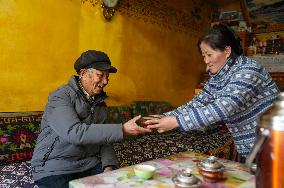
(240403) -- LHASA, April 3, 2024 (Xinhua) -- Lozang Gonpo's daughter-in-law Yangjen serves tea to him at home in Lhasa, southwest China's Xizang Autonomous Region, March 27, 2024. Lozang Gonpo was born in 1949. His childhood memories are fraught with tales of poverty, scarcity, and hardship. Hailing from a family of shoemakers, Lozang Gonpo's upbringing was characterized by early mornings spent learning the craft alongside his parents and grandparents. "In those days, our humble abode, barely 30 square meters, served as shelter for our family of seven," he recalls. "With four children in the house, we shared a single bed and just one blanket, while clothes were washed and worn tirelessly." The burden of a grain tax, amounting to 70 kilograms per person annually, loomed heavily over their heads. "If we had grain, we paid with grain; if not, we resorted to selling shoes to meet our obligations," Lozang Gonpo explains. Following the democratic reform in Xizang in 1959, Lozang Gonpo was finally able to s

  • Main
  • Top
  • Editorial
  • Creative
  • About Us
  • About ILG
  • Terms of use
  • Company
  • BEHIND
  • Price List
  • Single Plan
  • Monthly Plan
  • Services
  • Shooting
  • Rights Clearance
  • Support
  • FAQ
  • How To Buy
  • Contact Us
  • Become a Partner

© KYODO NEWS IMAGES INC

All Rights Reserved.

  • Editorial
  • Olympics
  • News
  • Sports
  • Japan
  • Tech
  • Royal
  • Disaster
  • NorthKorea
  • Old Japan
  • SNS
  • Creative
  • Food
  • Japan
  • Landscape
  • Animal
  • Popular
  • #Ukraine
  • #Russia
  • #coronavirus
  • #N. Korea
  • #China
  • #Thailand
  • #Ukraine
  • #Russia
  • #coronavirus
  • #N. Korea
  • #China
  • #Thailand
  • Food
  • Japan
  • Landscape
  • Animal
  • Olympics
  • News
  • Sports
  • Japan
  • Tech
  • Royal
  • Disaster
  • NorthKorea
  • Old Japan
  • SNS