•  
Self-Glimmering Plants Cultivated by Magicpen Bio - China

Self-Glimmering Plants Cultivated by Magicpen Bio - China

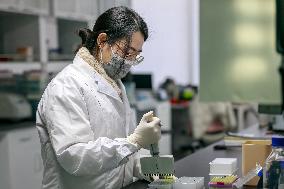
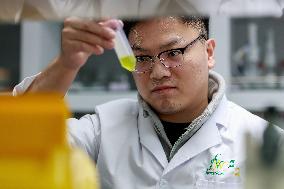
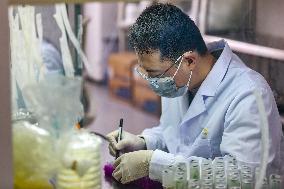
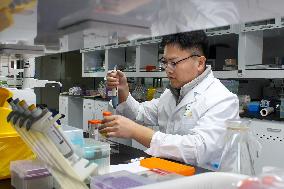
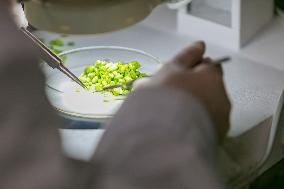
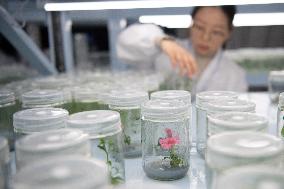
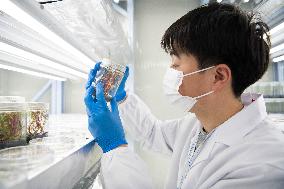
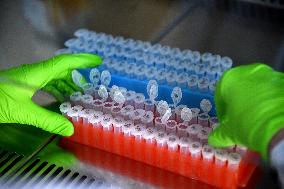
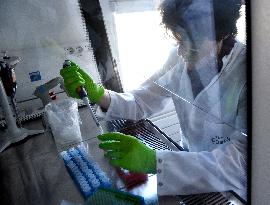
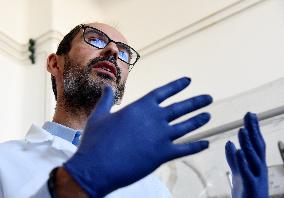
A reseacher checks the growth of seedlings at the laboratory of Magicpen Bio in Hefei, east China's Anhui Province, December 3, 2025. Chinese researchers have successfully cultivated a number of gene-edited plants that steadily glimmer in dark environments. They managed to introduce gene fragments from organisms such as fireflies into plant cells, allowing the latter to glimmer by themselves. Photo by Xinhua/Zhang Duan/ABACAPRESS.COM

  •  
Self-Glimmering Plants Cultivated by Magicpen Bio - China

Self-Glimmering Plants Cultivated by Magicpen Bio - China

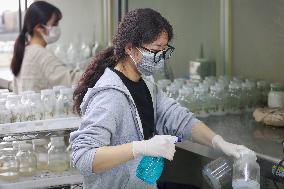
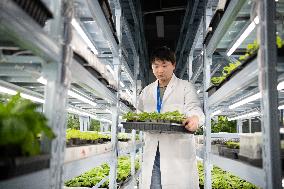
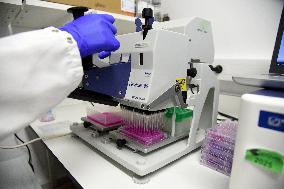
A researcher prepares to transfer a tray of self-glimmering plants into a dark room for observation at the laboratory of Magicpen Bio in Hefei, east China's Anhui Province, December 3, 2025. Chinese researchers have successfully cultivated a number of gene-edited plants that steadily glimmer in dark environments. They managed to introduce gene fragments from organisms such as fireflies into plant cells, allowing the latter to glimmer by themselves. Photo by Xinhua/Zhang Duan/ABACAPRESS.COM

  •  
Self-Glimmering Plants Cultivated by Magicpen Bio - China

Self-Glimmering Plants Cultivated by Magicpen Bio - China

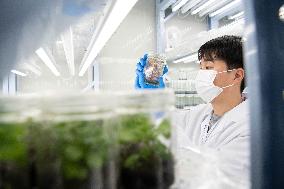
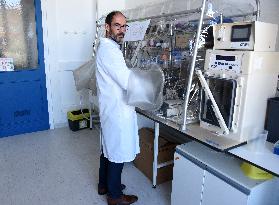
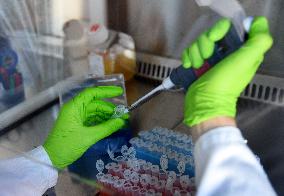
A reseacher checks the growth of seedlings at the laboratory of Magicpen Bio in Hefei, east China's Anhui Province, December 3, 2025. Chinese researchers have successfully cultivated a number of gene-edited plants that steadily glimmer in dark environments. They managed to introduce gene fragments from organisms such as fireflies into plant cells, allowing the latter to glimmer by themselves. Photo by Xinhua/Zhang Duan/ABACAPRESS.COM

  •  
Self-Glimmering Plants Cultivated by Magicpen Bio - China

Self-Glimmering Plants Cultivated by Magicpen Bio - China

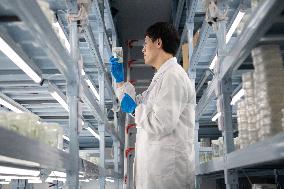
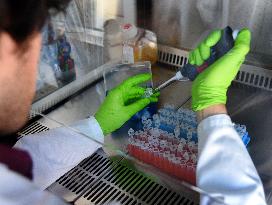
A reseacher checks the growth of seedlings at the laboratory of Magicpen Bio in Hefei, east China's Anhui Province, December 3, 2025. Chinese researchers have successfully cultivated a number of gene-edited plants that steadily glimmer in dark environments. They managed to introduce gene fragments from organisms such as fireflies into plant cells, allowing the latter to glimmer by themselves. Photo by Xinhua/Zhang Duan/ABACAPRESS.COM

  •  
Self-Glimmering Plants Cultivated by Magicpen Bio - China

Self-Glimmering Plants Cultivated by Magicpen Bio - China

A reseacher checks the growth of seedlings at the laboratory of Magicpen Bio in Hefei, east China's Anhui Province, December 3, 2025. Chinese researchers have successfully cultivated a number of gene-edited plants that steadily glimmer in dark environments. They managed to introduce gene fragments from organisms such as fireflies into plant cells, allowing the latter to glimmer by themselves. Photo by Xinhua/Zhang Duan/ABACAPRESS.COM

  •  
Intelligent Robot Industry - China

Intelligent Robot Industry - China

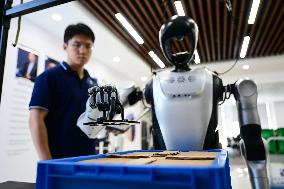
An engineer observes a humanoid robot grabbing a component at a laboratory of Leju Robotics in Hefei, east China's Anhui Province, October 24, 2025. In recent years, Hefei has been actively promoting the development of its intelligent robot industry. The city is now home to a full-chain industrial system for research, development and manufacturing of robotics that comprises 190 related enterprises. Photo by Xinhua/Zhou Mu/ABACAPRESS.COM

  •  
Intelligent Robot Industry - China

Intelligent Robot Industry - China

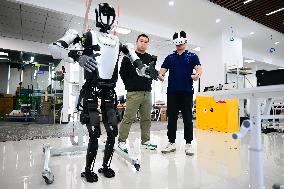
An engineer operates a humanoid robot via VR equipment for data collection purpose at a laboratory of Leju Robotics in Hefei, east China's Anhui Province, October 24, 2025. In recent years, Hefei has been actively promoting the development of its intelligent robot industry. The city is now home to a full-chain industrial system for research, development and manufacturing of robotics that comprises 190 related enterprises. Photo by Xinhua/Zhou Mu/ABACAPRESS.COM

  •  
Intelligent Robot Industry - China

Intelligent Robot Industry - China

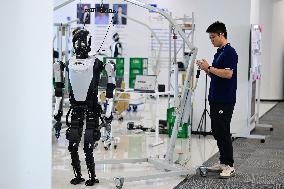
An engineer adjusts a humanoid robot at a laboratory of Leju Robotics in Hefei, east China's Anhui Province, October 24, 2025. In recent years, Hefei has been actively promoting the development of its intelligent robot industry. The city is now home to a full-chain industrial system for research, development and manufacturing of robotics that comprises 190 related enterprises. Photo by Xinhua/Zhou Mu/ABACAPRESS.COM

  •  
Robot Chemist - China

Robot Chemist - China

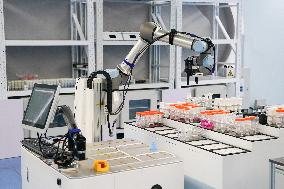
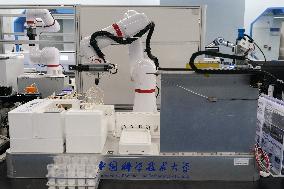
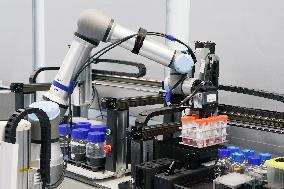
Robot Xiaolai performs an experiment at the state key laboratory of precision and intelligent chemistry of the University of Science and Technology of China (USTC) in Hefei, east China's Anhui Province, November 24, 2025. Traditional chemical research has long relied on continuous trial and error by scientists. With the development of artificial intelligence and robotic automation technologies, it has become possible to design experiments and issue instructions through intelligent platforms, using robots to replace human labor in experiential operations, which enhances experimental efficiency and precision. In 2021, after eight years of dedicated effort by a research team from USTC, Xiaolai, the first-generation "robot chemist," was successfully developed. After several years of iterations, the second-generation dual-armed humanoid robot Xiaolin has been put into operation, capable of performing more complex tasks. It has evolved from a substitute of human labor to a "research partner." According to Zhu Zhuoy

  •  
Robot Chemist - China

Robot Chemist - China

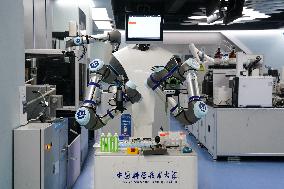
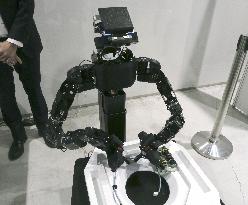
Robot Xiaolin is pictured at the state key laboratory of precision and intelligent chemistry of the University of Science and Technology of China (USTC) in Hefei, east China's Anhui Province, November 24, 2025. Traditional chemical research has long relied on continuous trial and error by scientists. With the development of artificial intelligence and robotic automation technologies, it has become possible to design experiments and issue instructions through intelligent platforms, using robots to replace human labor in experiential operations, which enhances experimental efficiency and precision. In 2021, after eight years of dedicated effort by a research team from USTC, Xiaolai, the first-generation "robot chemist," was successfully developed. After several years of iterations, the second-generation dual-armed humanoid robot Xiaolin has been put into operation, capable of performing more complex tasks. It has evolved from a substitute of human labor to a "research partner." According to Zhu Zhuoying, a prof

  •  
Robot Chemist - China

Robot Chemist - China

Robot Xiaolin is pictured at the state key laboratory of precision and intelligent chemistry of the University of Science and Technology of China (USTC) in Hefei, east China's Anhui Province, November 24, 2025. Traditional chemical research has long relied on continuous trial and error by scientists. With the development of artificial intelligence and robotic automation technologies, it has become possible to design experiments and issue instructions through intelligent platforms, using robots to replace human labor in experiential operations, which enhances experimental efficiency and precision. In 2021, after eight years of dedicated effort by a research team from USTC, Xiaolai, the first-generation "robot chemist," was successfully developed. After several years of iterations, the second-generation dual-armed humanoid robot Xiaolin has been put into operation, capable of performing more complex tasks. It has evolved from a substitute of human labor to a "research partner." According to Zhu Zhuoying, a prof

  •  
Robot Chemist - China

Robot Chemist - China

Robot Xiaolai performs an experiment at the state key laboratory of precision and intelligent chemistry of the University of Science and Technology of China (USTC) in Hefei, east China's Anhui Province, November 24, 2025. Traditional chemical research has long relied on continuous trial and error by scientists. With the development of artificial intelligence and robotic automation technologies, it has become possible to design experiments and issue instructions through intelligent platforms, using robots to replace human labor in experiential operations, which enhances experimental efficiency and precision. In 2021, after eight years of dedicated effort by a research team from USTC, Xiaolai, the first-generation "robot chemist," was successfully developed. After several years of iterations, the second-generation dual-armed humanoid robot Xiaolin has been put into operation, capable of performing more complex tasks. It has evolved from a substitute of human labor to a "research partner." According to Zhu Zhuoy

  •  
Robot Chemist - China

Robot Chemist - China

Robot Xiaolai performs an experiment at the state key laboratory of precision and intelligent chemistry of the University of Science and Technology of China (USTC) in Hefei, east China's Anhui Province, November 24, 2025. Traditional chemical research has long relied on continuous trial and error by scientists. With the development of artificial intelligence and robotic automation technologies, it has become possible to design experiments and issue instructions through intelligent platforms, using robots to replace human labor in experiential operations, which enhances experimental efficiency and precision. In 2021, after eight years of dedicated effort by a research team from USTC, Xiaolai, the first-generation "robot chemist," was successfully developed. After several years of iterations, the second-generation dual-armed humanoid robot Xiaolin has been put into operation, capable of performing more complex tasks. It has evolved from a substitute of human labor to a "research partner." According to Zhu Zhuoy

  •  
Robot Chemist - China

Robot Chemist - China

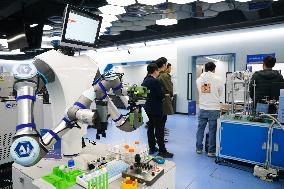
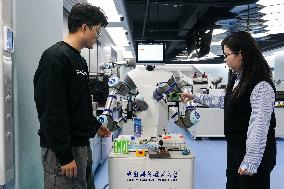
Professor Zhu Zhuoying (R) and doctoral student Guo Lulu have a discussion in front of Robot Xiaolin at the state key laboratory of precision and intelligent chemistry of the University of Science and Technology of China (USTC) in Hefei, east China's Anhui Province, November 24, 2025. Traditional chemical research has long relied on continuous trial and error by scientists. With the development of artificial intelligence and robotic automation technologies, it has become possible to design experiments and issue instructions through intelligent platforms, using robots to replace human labor in experiential operations, which enhances experimental efficiency and precision. In 2021, after eight years of dedicated effort by a research team from USTC, Xiaolai, the first-generation "robot chemist," was successfully developed. After several years of iterations, the second-generation dual-armed humanoid robot Xiaolin has been put into operation, capable of performing more complex tasks. It has evolved from a substitut

  •  
Hitachi robot engages in wiring work

Hitachi robot engages in wiring work

An AI robot developed by Hitachi Ltd. engages in electrical wiring work at a research laboratory in Kokubunji, Tokyo, on Nov. 20, 2025.

  •  
High-Quality Compost Production In Patumbak - Indonesia

High-Quality Compost Production In Patumbak - Indonesia

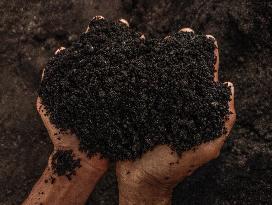
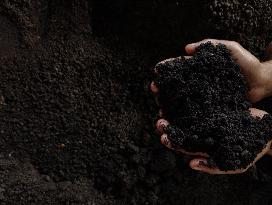
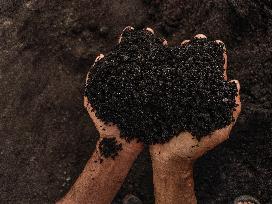
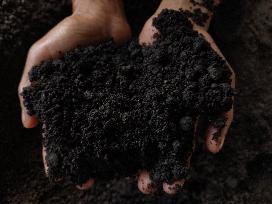
The hand of a compost factory worker of PT Nousindo Nusatara Agri's compost processing plant is seen showing the final result of material filtration in Patumbak, Deli Serdang, North Sumatra, on October 30, 2025, The final result: a handful of black, fertile compost, demonstrating the high quality of the organic fertilizer processed from livestock waste. This nutrient-rich product, verified by laboratory analysis, is the core of the local industry's commitment to building soil health and achieving food self-sufficiency. Photo by Aditya Sutanta/ABACAPRESS.COM

  •  
High-Quality Compost Production In Patumbak - Indonesia

High-Quality Compost Production In Patumbak - Indonesia

The hand of a compost factory worker of PT Nousindo Nusatara Agri's compost processing plant is seen showing the final result of material filtration in Patumbak, Deli Serdang, North Sumatra, on October 30, 2025, The final result: a handful of black, fertile compost, demonstrating the high quality of the organic fertilizer processed from livestock waste. This nutrient-rich product, verified by laboratory analysis, is the core of the local industry's commitment to building soil health and achieving food self-sufficiency. Photo by Aditya Sutanta/ABACAPRESS.COM

  •  
High-Quality Compost Production In Patumbak - Indonesia

High-Quality Compost Production In Patumbak - Indonesia

The hand of a compost factory worker of PT Nousindo Nusatara Agri's compost processing plant is seen showing the final result of material filtration in Patumbak, Deli Serdang, North Sumatra, on October 30, 2025, The final result: a handful of black, fertile compost, demonstrating the high quality of the organic fertilizer processed from livestock waste. This nutrient-rich product, verified by laboratory analysis, is the core of the local industry's commitment to building soil health and achieving food self-sufficiency. Photo by Aditya Sutanta/ABACAPRESS.COM

  •  
High-Quality Compost Production In Patumbak - Indonesia

High-Quality Compost Production In Patumbak - Indonesia

The hand of a compost factory worker of PT Nousindo Nusatara Agri's compost processing plant is seen showing the final result of material filtration in Patumbak, Deli Serdang, North Sumatra, on October 30, 2025, The final result: a handful of black, fertile compost, demonstrating the high quality of the organic fertilizer processed from livestock waste. This nutrient-rich product, verified by laboratory analysis, is the core of the local industry's commitment to building soil health and achieving food self-sufficiency. Photo by Aditya Sutanta/ABACAPRESS.COM

  •  
High-Quality Compost Production In Patumbak - Indonesia

High-Quality Compost Production In Patumbak - Indonesia

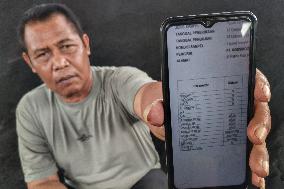
Organic fertiliser derived from processed livestock waste has become an essential resource for local farmers in response to the inconsistent availability of subsidised inorganic fertilisers. On October 30, 2025, Purnomo, a staff member at PT Nousindo Nusatara Agri’s compost processing plant, showcased the Indonesian Oil Palm Research Institute (PPKS) Laboratory Analysis Certification in Patumbak, Deli Serdang, North Sumatra. This certification confirms that the local compost fertiliser meets quality standards necessary for soil nutrient requirements and supports small-scale fertiliser industries in participating in the national food program. PT Nousindo's conversion of cow dung into high-quality compost offers a vital independent solution for agricultural sustainability. Photo by Aditya Sutanta/ABACAPRESS.COM

  •  
86th China Education Equipment Exhibition in Qingdao

86th China Education Equipment Exhibition in Qingdao

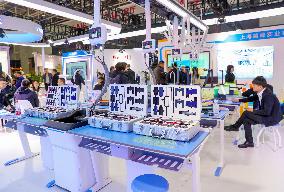
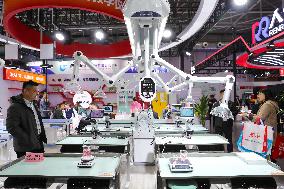
Visitors visit the laboratory at the 86th China Education Equipment Exhibition in Qingdao, Shandong Province, China on October 24, 2025.

  •  
86th China Education Equipment Exhibition in Qingdao

86th China Education Equipment Exhibition in Qingdao

Visitors visit the laboratory at the 86th China Education Equipment Exhibition in Qingdao, Shandong Province, China on October 24, 2025.

  •  
Pasteur Institute - Paris

Pasteur Institute - Paris

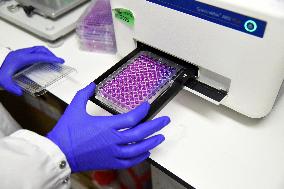
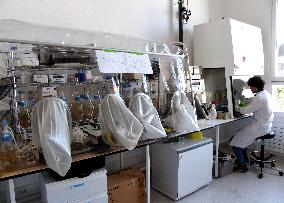
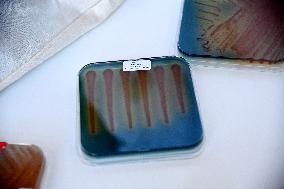
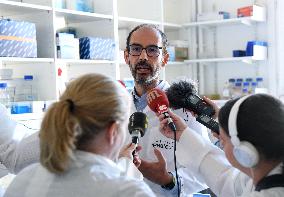
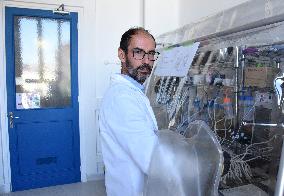
Pasteur Institute, Microbiota Host Interactions laboratory, directed by Benoit Chassaing. Research on the role of the intestinal microbiota in the development of certain cancers, particularly colorectal cancer in young adults. in Paris, France on September 18, 2025. Photo by Alain Apaydin/ABACAPRESS

  •  
Pasteur Institute - Paris

Pasteur Institute - Paris

Pasteur Institute, Microbiota Host Interactions laboratory, directed by Benoit Chassaing. Research on the role of the intestinal microbiota in the development of certain cancers, particularly colorectal cancer in young adults. in Paris, France on September 18, 2025. Photo by Alain Apaydin/ABACAPRESS

  •  
Pasteur Institute - Paris

Pasteur Institute - Paris

Pasteur Institute, Microbiota Host Interactions laboratory, directed by Benoit Chassaing. Research on the role of the intestinal microbiota in the development of certain cancers, particularly colorectal cancer in young adults. in Paris, France on September 18, 2025. Photo by Alain Apaydin/ABACAPRESS

  •  
Pasteur Institute - Paris

Pasteur Institute - Paris

Pasteur Institute, Microbiota Host Interactions laboratory, directed by Benoit Chassaing. Research on the role of the intestinal microbiota in the development of certain cancers, particularly colorectal cancer in young adults. in Paris, France on September 18, 2025. Photo by Alain Apaydin/ABACAPRESS

  •  
Pasteur Institute - Paris

Pasteur Institute - Paris

Pasteur Institute, Microbiota Host Interactions laboratory, directed by Benoit Chassaing. Research on the role of the intestinal microbiota in the development of certain cancers, particularly colorectal cancer in young adults. in Paris, France on September 18, 2025. Photo by Alain Apaydin/ABACAPRESS

  •  
Pasteur Institute - Paris

Pasteur Institute - Paris

Pasteur Institute, Microbiota Host Interactions laboratory, directed by Benoit Chassaing. Research on the role of the intestinal microbiota in the development of certain cancers, particularly colorectal cancer in young adults. in Paris, France on September 18, 2025. Photo by Alain Apaydin/ABACAPRESS

  •  
Pasteur Institute - Paris

Pasteur Institute - Paris

Pasteur Institute, Microbiota Host Interactions laboratory, directed by Benoit Chassaing. Research on the role of the intestinal microbiota in the development of certain cancers, particularly colorectal cancer in young adults. in Paris, France on September 18, 2025. Photo by Alain Apaydin/ABACAPRESS

  •  
Pasteur Institute - Paris

Pasteur Institute - Paris

Pasteur Institute, Microbiota Host Interactions laboratory, directed by Benoit Chassaing. Research on the role of the intestinal microbiota in the development of certain cancers, particularly colorectal cancer in young adults. in Paris, France on September 18, 2025. Photo by Alain Apaydin/ABACAPRESS

  •  
Pasteur Institute - Paris

Pasteur Institute - Paris

Pasteur Institute, Microbiota Host Interactions laboratory, directed by Benoit Chassaing. Research on the role of the intestinal microbiota in the development of certain cancers, particularly colorectal cancer in young adults. in Paris, France on September 18, 2025. Photo by Alain Apaydin/ABACAPRESS

  •  
Pasteur Institute - Paris

Pasteur Institute - Paris

Pasteur Institute, Microbiota Host Interactions laboratory, directed by Benoit Chassaing. Research on the role of the intestinal microbiota in the development of certain cancers, particularly colorectal cancer in young adults. in Paris, France on September 18, 2025. Photo by Alain Apaydin/ABACAPRESS

  •  
Pasteur Institute - Paris

Pasteur Institute - Paris

Pasteur Institute, Microbiota Host Interactions laboratory, directed by Benoit Chassaing. Research on the role of the intestinal microbiota in the development of certain cancers, particularly colorectal cancer in young adults. in Paris, France on September 18, 2025. Photo by Alain Apaydin/ABACAPRESS

  •  
Pasteur Institute - Paris

Pasteur Institute - Paris

Pasteur Institute, Microbiota Host Interactions laboratory, directed by Benoit Chassaing. Research on the role of the intestinal microbiota in the development of certain cancers, particularly colorectal cancer in young adults. in Paris, France on September 18, 2025. Photo by Alain Apaydin/ABACAPRESS

  •  
Pasteur Institute - Paris

Pasteur Institute - Paris

Pasteur Institute, Microbiota Host Interactions laboratory, directed by Benoit Chassaing. Research on the role of the intestinal microbiota in the development of certain cancers, particularly colorectal cancer in young adults. in Paris, France on September 18, 2025. Photo by Alain Apaydin/ABACAPRESS

  •  
Pasteur Institute - Paris

Pasteur Institute - Paris

Pasteur Institute, Microbiota Host Interactions laboratory, directed by Benoit Chassaing. Research on the role of the intestinal microbiota in the development of certain cancers, particularly colorectal cancer in young adults. in Paris, France on September 18, 2025. Photo by Alain Apaydin/ABACAPRESS

  •  
Pasteur Institute - Paris

Pasteur Institute - Paris

Pasteur Institute, Microbiota Host Interactions laboratory, directed by Benoit Chassaing. Research on the role of the intestinal microbiota in the development of certain cancers, particularly colorectal cancer in young adults. in Paris, France on September 18, 2025. Photo by Alain Apaydin/ABACAPRESS

  •  
Pasteur Institute - Paris

Pasteur Institute - Paris

Pasteur Institute, Microbiota Host Interactions laboratory, directed by Benoit Chassaing. Research on the role of the intestinal microbiota in the development of certain cancers, particularly colorectal cancer in young adults. in Paris, France on September 18, 2025. Photo by Alain Apaydin/ABACAPRESS

  •  
Pasteur Institute - Paris

Pasteur Institute - Paris

Pasteur Institute, Microbiota Host Interactions laboratory, directed by Benoit Chassaing. Research on the role of the intestinal microbiota in the development of certain cancers, particularly colorectal cancer in young adults. in Paris, France on September 18, 2025. Photo by Alain Apaydin/ABACAPRESS

  •  
Pasteur Institute - Paris

Pasteur Institute - Paris

Pasteur Institute, Microbiota Host Interactions laboratory, directed by Benoit Chassaing. Research on the role of the intestinal microbiota in the development of certain cancers, particularly colorectal cancer in young adults. in Paris, France on September 18, 2025. Photo by Alain Apaydin/ABACAPRESS

  •  
Pasteur Institute - Paris

Pasteur Institute - Paris

Pasteur Institute, Microbiota Host Interactions laboratory, directed by Benoit Chassaing. Research on the role of the intestinal microbiota in the development of certain cancers, particularly colorectal cancer in young adults. in Paris, France on September 18, 2025. Photo by Alain Apaydin/ABACAPRESS

  •  
Pasteur Institute - Paris

Pasteur Institute - Paris

Pasteur Institute, Microbiota Host Interactions laboratory, directed by Benoit Chassaing. Research on the role of the intestinal microbiota in the development of certain cancers, particularly colorectal cancer in young adults. in Paris, France on September 18, 2025. Photo by Alain Apaydin/ABACAPRESS

  •  
Pasteur Institute - Paris

Pasteur Institute - Paris

Pasteur Institute, Microbiota Host Interactions laboratory, directed by Benoit Chassaing. Research on the role of the intestinal microbiota in the development of certain cancers, particularly colorectal cancer in young adults. in Paris, France on September 18, 2025. Photo by Alain Apaydin/ABACAPRESS

  •  
Pasteur Institute - Paris

Pasteur Institute - Paris

Pasteur Institute, Microbiota Host Interactions laboratory, directed by Benoit Chassaing. Research on the role of the intestinal microbiota in the development of certain cancers, particularly colorectal cancer in young adults. in Paris, France on September 18, 2025. Photo by Alain Apaydin/ABACAPRESS

  •  
Pasteur Institute - Paris

Pasteur Institute - Paris

Pasteur Institute, Microbiota Host Interactions laboratory, directed by Benoit Chassaing. Research on the role of the intestinal microbiota in the development of certain cancers, particularly colorectal cancer in young adults. in Paris, France on September 18, 2025. Photo by Alain Apaydin/ABACAPRESS

  •  
Pasteur Institute - Paris

Pasteur Institute - Paris

Pasteur Institute, Microbiota Host Interactions laboratory, directed by Benoit Chassaing. Research on the role of the intestinal microbiota in the development of certain cancers, particularly colorectal cancer in young adults. in Paris, France on September 18, 2025. Photo by Alain Apaydin/ABACAPRESS

  •  
Pasteur Institute - Paris

Pasteur Institute - Paris

Pasteur Institute, Microbiota Host Interactions laboratory, directed by Benoit Chassaing. Research on the role of the intestinal microbiota in the development of certain cancers, particularly colorectal cancer in young adults. in Paris, France on September 18, 2025. Photo by Alain Apaydin/ABACAPRESS

  •  
Pasteur Institute - Paris

Pasteur Institute - Paris

Pasteur Institute, Microbiota Host Interactions laboratory, directed by Benoit Chassaing. Research on the role of the intestinal microbiota in the development of certain cancers, particularly colorectal cancer in young adults. in Paris, France on September 18, 2025. Photo by Alain Apaydin/ABACAPRESS

  •  
Pasteur Institute - Paris

Pasteur Institute - Paris

Pasteur Institute, Microbiota Host Interactions laboratory, directed by Benoit Chassaing. Research on the role of the intestinal microbiota in the development of certain cancers, particularly colorectal cancer in young adults. in Paris, France on September 18, 2025. Photo by Alain Apaydin/ABACAPRESS

  •  
International Deep Space Exploration Conference - Hefei

International Deep Space Exploration Conference - Hefei

This photo taken on July 7, 2025 shows an exterior view of the Deep Space Exploration Laboratory in Hefei, east China's Anhui Province. Chinese scientists unveil blueprint for asteroid defense and resource utilization, call for international collaboration. Photo by Zhou Mu /Xinhua/ABACAPRESS.COM

  • Main
  • Top
  • Editorial
  • Creative
  • About Us
  • About ILG
  • Terms of use
  • Company
  • BEHIND
  • Price List
  • Single Plan
  • Monthly Plan
  • Services
  • Shooting
  • Rights Clearance
  • Support
  • FAQ
  • How To Buy
  • Contact Us
  • Become a Partner

© KYODO NEWS IMAGES INC

All Rights Reserved.

  • Editorial
  • Olympics
  • News
  • Sports
  • Japan
  • Tech
  • Royal
  • Disaster
  • NorthKorea
  • Old Japan
  • SNS
  • Creative
  • Food
  • Japan
  • Landscape
  • Animal
  • Popular
  • #Ukraine
  • #Thailand
  • #coronavirus
  • #N. Korea
  • #Russia
  • #China
  • #Ukraine
  • #Thailand
  • #coronavirus
  • #N. Korea
  • #Russia
  • #China
  • Food
  • Japan
  • Landscape
  • Animal
  • Olympics
  • News
  • Sports
  • Japan
  • Tech
  • Royal
  • Disaster
  • NorthKorea
  • Old Japan
  • SNS