•  

Japan: Rare Low-Latitude Aurora Observed in Hokkaido

A rare low-latitude aurora was observed in parts of Hokkaido on Wednesday night, November 12.

  •  
Arctic Ocean Scientific Expedition

Arctic Ocean Scientific Expedition

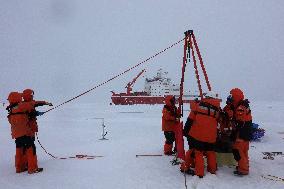
The scientific expedition team members deploy ice-based buoys in the high-latitude waters of the Arctic Ocean, Aug. 25, 2025. China's research icebreaker Xuelong 2, or Snow Dragon 2, arrived in Shanghai on Friday, marking the completion of the country's hitherto largest Arctic Ocean scientific expedition. A total of 100 members of China's 15th Arctic Ocean scientific expedition were aboard the vessel. Organized by the Ministry of Natural Resources, this round of Arctic survey was jointly carried out by four vessels, including Xuelong 2, Jidi, Shenhai-1 and Tansuo-3. This Arctic expedition has further enhanced China's understanding of the rapid changes in the Arctic Ocean and their impacts, providing important support for a deeper understanding and effective response to global climate change, according to the researchers. Photo by Xinhua/Liu Shiping/ABACAPRESS.COM

  •  

Netherlands: Rare Aurora Observed in West Terschelling Night Sky

Rare northern lights appeared over West Terschelling, Netherlands, late on the night of September 1, 2025. Triggered by strong geomagnetic activity from a recent solar storm, the aurora is a rare sight at this latitude (53°N).

  •  
Sunflower Field Illustrations - Spain

Sunflower Field Illustrations - Spain

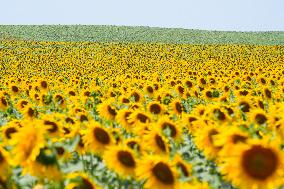
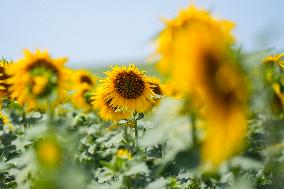
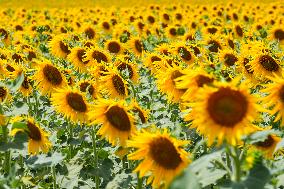
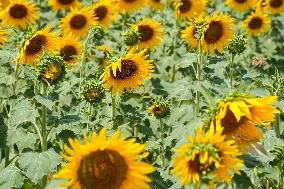
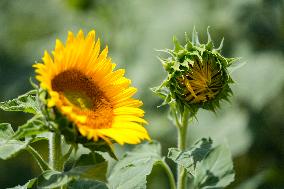
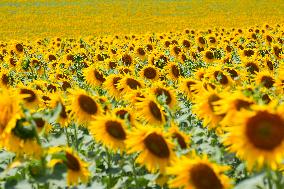
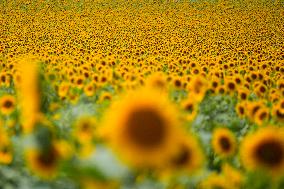
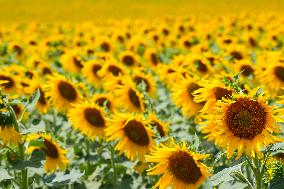
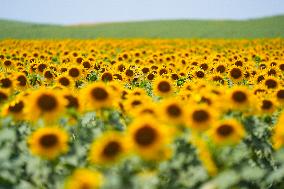
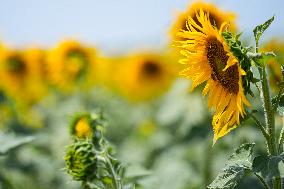
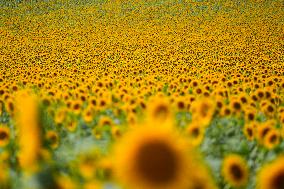
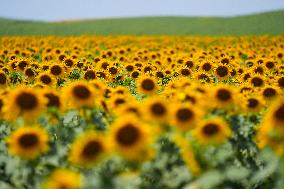
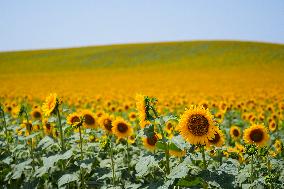
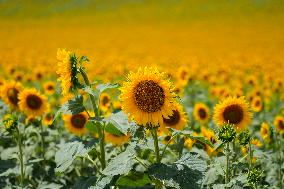
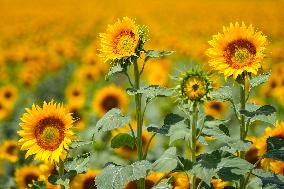
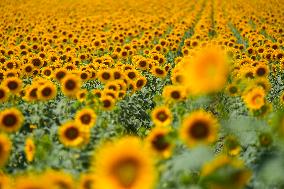
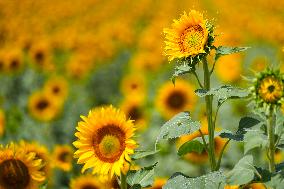
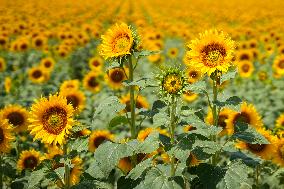
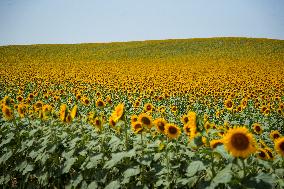
Images of a field of sunflowers in bloom in the Sevillian town of Sanlucar la Mayor, on June 20, 2025, in Seville, Andalusia, Spain. This Saturday, June 21, at 2 hours 42 minutes UTC, according to calculations by the National Astronomical Observatory, the summer solstice will occur, a phenomenon in which the Sun reaches its maximum declination projecting its light over the maximum geographic latitude on Earth. This astronomical event starts the summer in the northern hemisphere and the winter in the southern hemisphere. In addition, the day of the summer solstice corresponds to the longest day of the year, since it is the day on which the Sun rises the earliest and the day on which it sets the latest. Photo by Joaquin Corchero/Europa Press/ABACAPRESS.COM

  •  
Sunflower Field Illustrations - Spain

Sunflower Field Illustrations - Spain

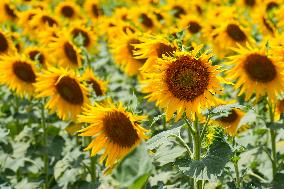
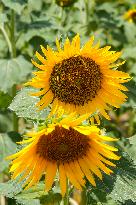
Images of a field of sunflowers in bloom in the Sevillian town of Sanlucar la Mayor, on June 20, 2025, in Seville, Andalusia, Spain. This Saturday, June 21, at 2 hours 42 minutes UTC, according to calculations by the National Astronomical Observatory, the summer solstice will occur, a phenomenon in which the Sun reaches its maximum declination projecting its light over the maximum geographic latitude on Earth. This astronomical event starts the summer in the northern hemisphere and the winter in the southern hemisphere. In addition, the day of the summer solstice corresponds to the longest day of the year, since it is the day on which the Sun rises the earliest and the day on which it sets the latest. Photo by Joaquin Corchero/Europa Press/ABACAPRESS.COM

  •  
Sunflower Field Illustrations - Spain

Sunflower Field Illustrations - Spain

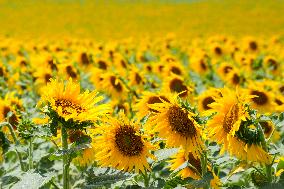
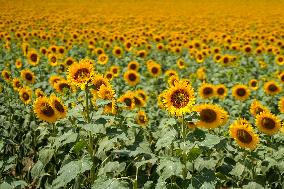
Images of a field of sunflowers in bloom in the Sevillian town of Sanlucar la Mayor, on June 20, 2025, in Seville, Andalusia, Spain. This Saturday, June 21, at 2 hours 42 minutes UTC, according to calculations by the National Astronomical Observatory, the summer solstice will occur, a phenomenon in which the Sun reaches its maximum declination projecting its light over the maximum geographic latitude on Earth. This astronomical event starts the summer in the northern hemisphere and the winter in the southern hemisphere. In addition, the day of the summer solstice corresponds to the longest day of the year, since it is the day on which the Sun rises the earliest and the day on which it sets the latest. Photo by Joaquin Corchero/Europa Press/ABACAPRESS.COM

  •  
Sunflower Field Illustrations - Spain

Sunflower Field Illustrations - Spain

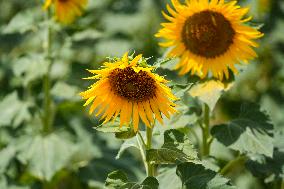
Images of a field of sunflowers in bloom in the Sevillian town of Sanlucar la Mayor, on June 20, 2025, in Seville, Andalusia, Spain. This Saturday, June 21, at 2 hours 42 minutes UTC, according to calculations by the National Astronomical Observatory, the summer solstice will occur, a phenomenon in which the Sun reaches its maximum declination projecting its light over the maximum geographic latitude on Earth. This astronomical event starts the summer in the northern hemisphere and the winter in the southern hemisphere. In addition, the day of the summer solstice corresponds to the longest day of the year, since it is the day on which the Sun rises the earliest and the day on which it sets the latest. Photo by Joaquin Corchero/Europa Press/ABACAPRESS.COM

  •  
Sunflower Field Illustrations - Spain

Sunflower Field Illustrations - Spain

Images of a field of sunflowers in bloom in the Sevillian town of Sanlucar la Mayor, on June 20, 2025, in Seville, Andalusia, Spain. This Saturday, June 21, at 2 hours 42 minutes UTC, according to calculations by the National Astronomical Observatory, the summer solstice will occur, a phenomenon in which the Sun reaches its maximum declination projecting its light over the maximum geographic latitude on Earth. This astronomical event starts the summer in the northern hemisphere and the winter in the southern hemisphere. In addition, the day of the summer solstice corresponds to the longest day of the year, since it is the day on which the Sun rises the earliest and the day on which it sets the latest. Photo by Joaquin Corchero/Europa Press/ABACAPRESS.COM

  •  
Sunflower Field Illustrations - Spain

Sunflower Field Illustrations - Spain

Images of a field of sunflowers in bloom in the Sevillian town of Sanlucar la Mayor, on June 20, 2025, in Seville, Andalusia, Spain. This Saturday, June 21, at 2 hours 42 minutes UTC, according to calculations by the National Astronomical Observatory, the summer solstice will occur, a phenomenon in which the Sun reaches its maximum declination projecting its light over the maximum geographic latitude on Earth. This astronomical event starts the summer in the northern hemisphere and the winter in the southern hemisphere. In addition, the day of the summer solstice corresponds to the longest day of the year, since it is the day on which the Sun rises the earliest and the day on which it sets the latest. Photo by Joaquin Corchero/Europa Press/ABACAPRESS.COM

  •  
Sunflower Field Illustrations - Spain

Sunflower Field Illustrations - Spain

Images of a field of sunflowers in bloom in the Sevillian town of Sanlucar la Mayor, on June 20, 2025, in Seville, Andalusia, Spain. This Saturday, June 21, at 2 hours 42 minutes UTC, according to calculations by the National Astronomical Observatory, the summer solstice will occur, a phenomenon in which the Sun reaches its maximum declination projecting its light over the maximum geographic latitude on Earth. This astronomical event starts the summer in the northern hemisphere and the winter in the southern hemisphere. In addition, the day of the summer solstice corresponds to the longest day of the year, since it is the day on which the Sun rises the earliest and the day on which it sets the latest. Photo by Joaquin Corchero/Europa Press/ABACAPRESS.COM

  •  
Sunflower Field Illustrations - Spain

Sunflower Field Illustrations - Spain

Images of a field of sunflowers in bloom in the Sevillian town of Sanlucar la Mayor, on June 20, 2025, in Seville, Andalusia, Spain. This Saturday, June 21, at 2 hours 42 minutes UTC, according to calculations by the National Astronomical Observatory, the summer solstice will occur, a phenomenon in which the Sun reaches its maximum declination projecting its light over the maximum geographic latitude on Earth. This astronomical event starts the summer in the northern hemisphere and the winter in the southern hemisphere. In addition, the day of the summer solstice corresponds to the longest day of the year, since it is the day on which the Sun rises the earliest and the day on which it sets the latest. Photo by Joaquin Corchero/Europa Press/ABACAPRESS.COM

  •  
Sunflower Field Illustrations - Spain

Sunflower Field Illustrations - Spain

Images of a field of sunflowers in bloom in the Sevillian town of Sanlucar la Mayor, on June 20, 2025, in Seville, Andalusia, Spain. This Saturday, June 21, at 2 hours 42 minutes UTC, according to calculations by the National Astronomical Observatory, the summer solstice will occur, a phenomenon in which the Sun reaches its maximum declination projecting its light over the maximum geographic latitude on Earth. This astronomical event starts the summer in the northern hemisphere and the winter in the southern hemisphere. In addition, the day of the summer solstice corresponds to the longest day of the year, since it is the day on which the Sun rises the earliest and the day on which it sets the latest. Photo by Joaquin Corchero/Europa Press/ABACAPRESS.COM

  •  
Sunflower Field Illustrations - Spain

Sunflower Field Illustrations - Spain

Images of a field of sunflowers in bloom in the Sevillian town of Sanlucar la Mayor, on June 20, 2025, in Seville, Andalusia, Spain. This Saturday, June 21, at 2 hours 42 minutes UTC, according to calculations by the National Astronomical Observatory, the summer solstice will occur, a phenomenon in which the Sun reaches its maximum declination projecting its light over the maximum geographic latitude on Earth. This astronomical event starts the summer in the northern hemisphere and the winter in the southern hemisphere. In addition, the day of the summer solstice corresponds to the longest day of the year, since it is the day on which the Sun rises the earliest and the day on which it sets the latest. Photo by Joaquin Corchero/Europa Press/ABACAPRESS.COM

  •  
Sunflower Field Illustrations - Spain

Sunflower Field Illustrations - Spain

Images of a field of sunflowers in bloom in the Sevillian town of Sanlucar la Mayor, on June 20, 2025, in Seville, Andalusia, Spain. This Saturday, June 21, at 2 hours 42 minutes UTC, according to calculations by the National Astronomical Observatory, the summer solstice will occur, a phenomenon in which the Sun reaches its maximum declination projecting its light over the maximum geographic latitude on Earth. This astronomical event starts the summer in the northern hemisphere and the winter in the southern hemisphere. In addition, the day of the summer solstice corresponds to the longest day of the year, since it is the day on which the Sun rises the earliest and the day on which it sets the latest. Photo by Joaquin Corchero/Europa Press/ABACAPRESS.COM

  •  
Sunflower Field Illustrations - Spain

Sunflower Field Illustrations - Spain

Images of a field of sunflowers in bloom in the Sevillian town of Sanlucar la Mayor, on June 20, 2025, in Seville, Andalusia, Spain. This Saturday, June 21, at 2 hours 42 minutes UTC, according to calculations by the National Astronomical Observatory, the summer solstice will occur, a phenomenon in which the Sun reaches its maximum declination projecting its light over the maximum geographic latitude on Earth. This astronomical event starts the summer in the northern hemisphere and the winter in the southern hemisphere. In addition, the day of the summer solstice corresponds to the longest day of the year, since it is the day on which the Sun rises the earliest and the day on which it sets the latest. Photo by Joaquin Corchero/Europa Press/ABACAPRESS.COM

  •  
Sunflower Field Illustrations - Spain

Sunflower Field Illustrations - Spain

Images of a field of sunflowers in bloom in the Sevillian town of Sanlucar la Mayor, on June 20, 2025, in Seville, Andalusia, Spain. This Saturday, June 21, at 2 hours 42 minutes UTC, according to calculations by the National Astronomical Observatory, the summer solstice will occur, a phenomenon in which the Sun reaches its maximum declination projecting its light over the maximum geographic latitude on Earth. This astronomical event starts the summer in the northern hemisphere and the winter in the southern hemisphere. In addition, the day of the summer solstice corresponds to the longest day of the year, since it is the day on which the Sun rises the earliest and the day on which it sets the latest. Photo by Joaquin Corchero/Europa Press/ABACAPRESS.COM

  •  
Sunflower Field Illustrations - Spain

Sunflower Field Illustrations - Spain

Images of a field of sunflowers in bloom in the Sevillian town of Sanlucar la Mayor, on June 20, 2025, in Seville, Andalusia, Spain. This Saturday, June 21, at 2 hours 42 minutes UTC, according to calculations by the National Astronomical Observatory, the summer solstice will occur, a phenomenon in which the Sun reaches its maximum declination projecting its light over the maximum geographic latitude on Earth. This astronomical event starts the summer in the northern hemisphere and the winter in the southern hemisphere. In addition, the day of the summer solstice corresponds to the longest day of the year, since it is the day on which the Sun rises the earliest and the day on which it sets the latest. Photo by Joaquin Corchero/Europa Press/ABACAPRESS.COM

  •  
Sunflower Field Illustrations - Spain

Sunflower Field Illustrations - Spain

Images of a field of sunflowers in bloom in the Sevillian town of Sanlucar la Mayor, on June 20, 2025, in Seville, Andalusia, Spain. This Saturday, June 21, at 2 hours 42 minutes UTC, according to calculations by the National Astronomical Observatory, the summer solstice will occur, a phenomenon in which the Sun reaches its maximum declination projecting its light over the maximum geographic latitude on Earth. This astronomical event starts the summer in the northern hemisphere and the winter in the southern hemisphere. In addition, the day of the summer solstice corresponds to the longest day of the year, since it is the day on which the Sun rises the earliest and the day on which it sets the latest. Photo by Joaquin Corchero/Europa Press/ABACAPRESS.COM

  •  
Sunflower Field Illustrations - Spain

Sunflower Field Illustrations - Spain

Images of a field of sunflowers in bloom in the Sevillian town of Sanlucar la Mayor, on June 20, 2025, in Seville, Andalusia, Spain. This Saturday, June 21, at 2 hours 42 minutes UTC, according to calculations by the National Astronomical Observatory, the summer solstice will occur, a phenomenon in which the Sun reaches its maximum declination projecting its light over the maximum geographic latitude on Earth. This astronomical event starts the summer in the northern hemisphere and the winter in the southern hemisphere. In addition, the day of the summer solstice corresponds to the longest day of the year, since it is the day on which the Sun rises the earliest and the day on which it sets the latest. Photo by Joaquin Corchero/Europa Press/ABACAPRESS.COM

  •  
Sunflower Field Illustrations - Spain

Sunflower Field Illustrations - Spain

Images of a field of sunflowers in bloom in the Sevillian town of Sanlucar la Mayor, on June 20, 2025, in Seville, Andalusia, Spain. This Saturday, June 21, at 2 hours 42 minutes UTC, according to calculations by the National Astronomical Observatory, the summer solstice will occur, a phenomenon in which the Sun reaches its maximum declination projecting its light over the maximum geographic latitude on Earth. This astronomical event starts the summer in the northern hemisphere and the winter in the southern hemisphere. In addition, the day of the summer solstice corresponds to the longest day of the year, since it is the day on which the Sun rises the earliest and the day on which it sets the latest. Photo by Joaquin Corchero/Europa Press/ABACAPRESS.COM

  •  
Sunflower Field Illustrations - Spain

Sunflower Field Illustrations - Spain

Images of a field of sunflowers in bloom in the Sevillian town of Sanlucar la Mayor, on June 20, 2025, in Seville, Andalusia, Spain. This Saturday, June 21, at 2 hours 42 minutes UTC, according to calculations by the National Astronomical Observatory, the summer solstice will occur, a phenomenon in which the Sun reaches its maximum declination projecting its light over the maximum geographic latitude on Earth. This astronomical event starts the summer in the northern hemisphere and the winter in the southern hemisphere. In addition, the day of the summer solstice corresponds to the longest day of the year, since it is the day on which the Sun rises the earliest and the day on which it sets the latest. Photo by Joaquin Corchero/Europa Press/ABACAPRESS.COM

  •  
Sunflower Field Illustrations - Spain

Sunflower Field Illustrations - Spain

Images of a field of sunflowers in bloom in the Sevillian town of Sanlucar la Mayor, on June 20, 2025, in Seville, Andalusia, Spain. This Saturday, June 21, at 2 hours 42 minutes UTC, according to calculations by the National Astronomical Observatory, the summer solstice will occur, a phenomenon in which the Sun reaches its maximum declination projecting its light over the maximum geographic latitude on Earth. This astronomical event starts the summer in the northern hemisphere and the winter in the southern hemisphere. In addition, the day of the summer solstice corresponds to the longest day of the year, since it is the day on which the Sun rises the earliest and the day on which it sets the latest. Photo by Joaquin Corchero/Europa Press/ABACAPRESS.COM

  •  
Sunflower Field Illustrations - Spain

Sunflower Field Illustrations - Spain

Images of a field of sunflowers in bloom in the Sevillian town of Sanlucar la Mayor, on June 20, 2025, in Seville, Andalusia, Spain. This Saturday, June 21, at 2 hours 42 minutes UTC, according to calculations by the National Astronomical Observatory, the summer solstice will occur, a phenomenon in which the Sun reaches its maximum declination projecting its light over the maximum geographic latitude on Earth. This astronomical event starts the summer in the northern hemisphere and the winter in the southern hemisphere. In addition, the day of the summer solstice corresponds to the longest day of the year, since it is the day on which the Sun rises the earliest and the day on which it sets the latest. Photo by Joaquin Corchero/Europa Press/ABACAPRESS.COM

  •  
Sunflower Field Illustrations - Spain

Sunflower Field Illustrations - Spain

Images of a field of sunflowers in bloom in the Sevillian town of Sanlucar la Mayor, on June 20, 2025, in Seville, Andalusia, Spain. This Saturday, June 21, at 2 hours 42 minutes UTC, according to calculations by the National Astronomical Observatory, the summer solstice will occur, a phenomenon in which the Sun reaches its maximum declination projecting its light over the maximum geographic latitude on Earth. This astronomical event starts the summer in the northern hemisphere and the winter in the southern hemisphere. In addition, the day of the summer solstice corresponds to the longest day of the year, since it is the day on which the Sun rises the earliest and the day on which it sets the latest. Photo by Joaquin Corchero/Europa Press/ABACAPRESS.COM

  •  
Sunflower Field Illustrations - Spain

Sunflower Field Illustrations - Spain

Images of a field of sunflowers in bloom in the Sevillian town of Sanlucar la Mayor, on June 20, 2025, in Seville, Andalusia, Spain. This Saturday, June 21, at 2 hours 42 minutes UTC, according to calculations by the National Astronomical Observatory, the summer solstice will occur, a phenomenon in which the Sun reaches its maximum declination projecting its light over the maximum geographic latitude on Earth. This astronomical event starts the summer in the northern hemisphere and the winter in the southern hemisphere. In addition, the day of the summer solstice corresponds to the longest day of the year, since it is the day on which the Sun rises the earliest and the day on which it sets the latest. Photo by Joaquin Corchero/Europa Press/ABACAPRESS.COM

  •  
Sunflower Field Illustrations - Spain

Sunflower Field Illustrations - Spain

Images of a field of sunflowers in bloom in the Sevillian town of Sanlucar la Mayor, on June 20, 2025, in Seville, Andalusia, Spain. This Saturday, June 21, at 2 hours 42 minutes UTC, according to calculations by the National Astronomical Observatory, the summer solstice will occur, a phenomenon in which the Sun reaches its maximum declination projecting its light over the maximum geographic latitude on Earth. This astronomical event starts the summer in the northern hemisphere and the winter in the southern hemisphere. In addition, the day of the summer solstice corresponds to the longest day of the year, since it is the day on which the Sun rises the earliest and the day on which it sets the latest. Photo by Joaquin Corchero/Europa Press/ABACAPRESS.COM

  •  
Sunflower Field Illustrations - Spain

Sunflower Field Illustrations - Spain

Images of a field of sunflowers in bloom in the Sevillian town of Sanlucar la Mayor, on June 20, 2025, in Seville, Andalusia, Spain. This Saturday, June 21, at 2 hours 42 minutes UTC, according to calculations by the National Astronomical Observatory, the summer solstice will occur, a phenomenon in which the Sun reaches its maximum declination projecting its light over the maximum geographic latitude on Earth. This astronomical event starts the summer in the northern hemisphere and the winter in the southern hemisphere. In addition, the day of the summer solstice corresponds to the longest day of the year, since it is the day on which the Sun rises the earliest and the day on which it sets the latest. Photo by Joaquin Corchero/Europa Press/ABACAPRESS.COM

  •  
Sunflower Field Illustrations - Spain

Sunflower Field Illustrations - Spain

Images of a field of sunflowers in bloom in the Sevillian town of Sanlucar la Mayor, on June 20, 2025, in Seville, Andalusia, Spain. This Saturday, June 21, at 2 hours 42 minutes UTC, according to calculations by the National Astronomical Observatory, the summer solstice will occur, a phenomenon in which the Sun reaches its maximum declination projecting its light over the maximum geographic latitude on Earth. This astronomical event starts the summer in the northern hemisphere and the winter in the southern hemisphere. In addition, the day of the summer solstice corresponds to the longest day of the year, since it is the day on which the Sun rises the earliest and the day on which it sets the latest. Photo by Joaquin Corchero/Europa Press/ABACAPRESS.COM

  •  

Japan: Rare Low-Latitude Aurora Dazzles Across Hokkaido

A rare low-latitude aurora illuminated the night sky across Hokkaido, Japan, on June 1. This stunning display of Northern Lights was visible due to a severe geomagnetic storm, triggered by a powerful solar flare.

  •  
Mount Fanjing Matcha Industry - China

Mount Fanjing Matcha Industry - China

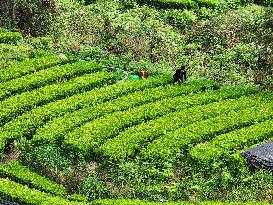
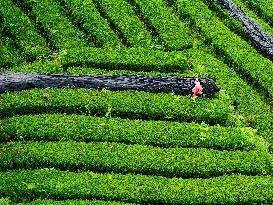
A drone photo shows a farmer weeding at a tea garden in Jiangkou County of Tongren, southwest China's Guizhou Province, on April 16, 2025. Located at the foot of Mount Fanjing, a UNESCO World Heritage Site, Jiangkou County is a powerhouse in the world's matcha industry. The county boasts over 10,000 hectares of tea plantations, nearly a fifth of which are dedicated to matcha production. In 2024, Jiangkou County produced more than 1,200 tonnes of matcha with a total output value of 350 million yuan (about 48.02 million U.S. dollars). The local matcha products have been exported to more than 40 overseas markets. Experts and agronomists believe that Guizhou, located on a plateau, possesses geographical and climatic advantages such as high altitude, low latitude, abundant fog and limited sunlight ideal for growing tea. Therefore, tea produced in this area is green, ecological and organic. Photo by Ou Dongqu/Xinhua/ABACAPRESS.COM

  •  
Mount Fanjing Matcha Industry - China

Mount Fanjing Matcha Industry - China

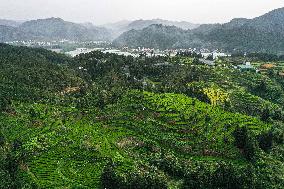
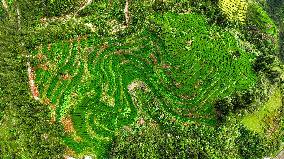
An aerial drone photo shows a tea garden in Jiangkou County of Tongren, southwest China's Guizhou Province, on April 16, 2025. Located at the foot of Mount Fanjing, a UNESCO World Heritage Site, Jiangkou County is a powerhouse in the world's matcha industry. The county boasts over 10,000 hectares of tea plantations, nearly a fifth of which are dedicated to matcha production. In 2024, Jiangkou County produced more than 1,200 tonnes of matcha with a total output value of 350 million yuan (about 48.02 million U.S. dollars). The local matcha products have been exported to more than 40 overseas markets. Experts and agronomists believe that Guizhou, located on a plateau, possesses geographical and climatic advantages such as high altitude, low latitude, abundant fog and limited sunlight ideal for growing tea. Therefore, tea produced in this area is green, ecological and organic. Photo by Yang Wenbin/Xinhua/ABACAPRESS.COM

  •  
Mount Fanjing Matcha Industry - China

Mount Fanjing Matcha Industry - China

Workers pack matcha powder at a tea industrial park in Jiangkou County of Tongren, southwest China's Guizhou Province, on April 14, 2025. Located at the foot of Mount Fanjing, a UNESCO World Heritage Site, Jiangkou County is a powerhouse in the world's matcha industry. The county boasts over 10,000 hectares of tea plantations, nearly a fifth of which are dedicated to matcha production. In 2024, Jiangkou County produced more than 1,200 tonnes of matcha with a total output value of 350 million yuan (about 48.02 million U.S. dollars). The local matcha products have been exported to more than 40 overseas markets. Experts and agronomists believe that Guizhou, located on a plateau, possesses geographical and climatic advantages such as high altitude, low latitude, abundant fog and limited sunlight ideal for growing tea. Therefore, tea produced in this area is green, ecological and organic. Photo by Yang Wenbin/Xinhua/ABACAPRESS.COM

  •  
Mount Fanjing Matcha Industry - China

Mount Fanjing Matcha Industry - China

A worker packs matcha powder at a tea industrial park in Jiangkou County of Tongren, southwest China's Guizhou Province, on April 14, 2025. Located at the foot of Mount Fanjing, a UNESCO World Heritage Site, Jiangkou County is a powerhouse in the world's matcha industry. The county boasts over 10,000 hectares of tea plantations, nearly a fifth of which are dedicated to matcha production. In 2024, Jiangkou County produced more than 1,200 tonnes of matcha with a total output value of 350 million yuan (about 48.02 million U.S. dollars). The local matcha products have been exported to more than 40 overseas markets. Experts and agronomists believe that Guizhou, located on a plateau, possesses geographical and climatic advantages such as high altitude, low latitude, abundant fog and limited sunlight ideal for growing tea. Therefore, tea produced in this area is green, ecological and organic. Photo by Ou Dongqu/Xinhua/ABACAPRESS.COM

  •  
Mount Fanjing Matcha Industry - China

Mount Fanjing Matcha Industry - China

A staff member checks the raw materials for matcha production at a tea industrial park in Jiangkou County of Tongren, southwest China's Guizhou Province, on April 14, 2025. Located at the foot of Mount Fanjing, a UNESCO World Heritage Site, Jiangkou County is a powerhouse in the world's matcha industry. The county boasts over 10,000 hectares of tea plantations, nearly a fifth of which are dedicated to matcha production. In 2024, Jiangkou County produced more than 1,200 tonnes of matcha with a total output value of 350 million yuan (about 48.02 million U.S. dollars). The local matcha products have been exported to more than 40 overseas markets. Experts and agronomists believe that Guizhou, located on a plateau, possesses geographical and climatic advantages such as high altitude, low latitude, abundant fog and limited sunlight ideal for growing tea. Therefore, tea produced in this area is green, ecological and organic. Photo by Ou Dongqu/Xinhua/ABACAPRESS.COM

  •  
Mount Fanjing Matcha Industry - China

Mount Fanjing Matcha Industry - China

Raw materials for matcha production are on display in a tea industrial park in Jiangkou County of Tongren, southwest China's Guizhou Province, on April 14, 2025. Located at the foot of Mount Fanjing, a UNESCO World Heritage Site, Jiangkou County is a powerhouse in the world's matcha industry. The county boasts over 10,000 hectares of tea plantations, nearly a fifth of which are dedicated to matcha production. In 2024, Jiangkou County produced more than 1,200 tonnes of matcha with a total output value of 350 million yuan (about 48.02 million U.S. dollars). The local matcha products have been exported to more than 40 overseas markets. Experts and agronomists believe that Guizhou, located on a plateau, possesses geographical and climatic advantages such as high altitude, low latitude, abundant fog and limited sunlight ideal for growing tea. Therefore, tea produced in this area is green, ecological and organic. Photo by Ou Dongqu/Xinhua/ABACAPRESS.COM

  •  
Mount Fanjing Matcha Industry - China

Mount Fanjing Matcha Industry - China

A staff member produces matcha at a tea industrial park in Jiangkou County of Tongren, southwest China's Guizhou Province, on April 14, 2025. Located at the foot of Mount Fanjing, a UNESCO World Heritage Site, Jiangkou County is a powerhouse in the world's matcha industry. The county boasts over 10,000 hectares of tea plantations, nearly a fifth of which are dedicated to matcha production. In 2024, Jiangkou County produced more than 1,200 tonnes of matcha with a total output value of 350 million yuan (about 48.02 million U.S. dollars). The local matcha products have been exported to more than 40 overseas markets. Experts and agronomists believe that Guizhou, located on a plateau, possesses geographical and climatic advantages such as high altitude, low latitude, abundant fog and limited sunlight ideal for growing tea. Therefore, tea produced in this area is green, ecological and organic. Photo by Ou Dongqu/Xinhua/ABACAPRESS.COM

  •  
Mount Fanjing Matcha Industry - China

Mount Fanjing Matcha Industry - China

An aerial drone photo shows a farmer applying shading nets at a tea garden in Jiangkou County of Tongren, southwest China's Guizhou Province, on April 16, 2025. Located at the foot of Mount Fanjing, a UNESCO World Heritage Site, Jiangkou County is a powerhouse in the world's matcha industry. The county boasts over 10,000 hectares of tea plantations, nearly a fifth of which are dedicated to matcha production. In 2024, Jiangkou County produced more than 1,200 tonnes of matcha with a total output value of 350 million yuan (about 48.02 million U.S. dollars). The local matcha products have been exported to more than 40 overseas markets. Experts and agronomists believe that Guizhou, located on a plateau, possesses geographical and climatic advantages such as high altitude, low latitude, abundant fog and limited sunlight ideal for growing tea. Therefore, tea produced in this area is green, ecological and organic. Photo by Ou Dongqu/Xinhua/ABACAPRESS.COM

  •  
Mount Fanjing Matcha Industry - China

Mount Fanjing Matcha Industry - China

Matcha beverages are displayed at a tea industrial park in Jiangkou County of Tongren, southwest China's Guizhou Province, on April 14, 2025. Located at the foot of Mount Fanjing, a UNESCO World Heritage Site, Jiangkou County is a powerhouse in the world's matcha industry. The county boasts over 10,000 hectares of tea plantations, nearly a fifth of which are dedicated to matcha production. In 2024, Jiangkou County produced more than 1,200 tonnes of matcha with a total output value of 350 million yuan (about 48.02 million U.S. dollars). The local matcha products have been exported to more than 40 overseas markets. Experts and agronomists believe that Guizhou, located on a plateau, possesses geographical and climatic advantages such as high altitude, low latitude, abundant fog and limited sunlight ideal for growing tea. Therefore, tea produced in this area is green, ecological and organic. Photo by Yang Wenbin/Xinhua/ABACAPRESS.COM

  •  
Mount Fanjing Matcha Industry - China

Mount Fanjing Matcha Industry - China

A staff member works at a matcha factory in Jiangkou County of Tongren, southwest China's Guizhou Province, on April 14, 2025. Located at the foot of Mount Fanjing, a UNESCO World Heritage Site, Jiangkou County is a powerhouse in the world's matcha industry. The county boasts over 10,000 hectares of tea plantations, nearly a fifth of which are dedicated to matcha production. In 2024, Jiangkou County produced more than 1,200 tonnes of matcha with a total output value of 350 million yuan (about 48.02 million U.S. dollars). The local matcha products have been exported to more than 40 overseas markets. Experts and agronomists believe that Guizhou, located on a plateau, possesses geographical and climatic advantages such as high altitude, low latitude, abundant fog and limited sunlight ideal for growing tea. Therefore, tea produced in this area is green, ecological and organic. Photo by Ou Dongqu/Xinhua/ABACAPRESS.COM

  •  
Mount Fanjing Matcha Industry - China

Mount Fanjing Matcha Industry - China

Matcha powder is pictured at a matcha factory in Jiangkou County of Tongren, southwest China's Guizhou Province, on April 14, 2025. Located at the foot of Mount Fanjing, a UNESCO World Heritage Site, Jiangkou County is a powerhouse in the world's matcha industry. The county boasts over 10,000 hectares of tea plantations, nearly a fifth of which are dedicated to matcha production. In 2024, Jiangkou County produced more than 1,200 tonnes of matcha with a total output value of 350 million yuan (about 48.02 million U.S. dollars). The local matcha products have been exported to more than 40 overseas markets. Experts and agronomists believe that Guizhou, located on a plateau, possesses geographical and climatic advantages such as high altitude, low latitude, abundant fog and limited sunlight ideal for growing tea. Therefore, tea produced in this area is green, ecological and organic. Photo by Yang Wenbin/Xinhua/ABACAPRESS.COM

  •  
Mount Fanjing Matcha Industry - China

Mount Fanjing Matcha Industry - China

A staff member makes matcha beverage at a tea industrial park in Jiangkou County of Tongren, southwest China's Guizhou Province, on April 14, 2025. Located at the foot of Mount Fanjing, a UNESCO World Heritage Site, Jiangkou County is a powerhouse in the world's matcha industry. The county boasts over 10,000 hectares of tea plantations, nearly a fifth of which are dedicated to matcha production. In 2024, Jiangkou County produced more than 1,200 tonnes of matcha with a total output value of 350 million yuan (about 48.02 million U.S. dollars). The local matcha products have been exported to more than 40 overseas markets. Experts and agronomists believe that Guizhou, located on a plateau, possesses geographical and climatic advantages such as high altitude, low latitude, abundant fog and limited sunlight ideal for growing tea. Therefore, tea produced in this area is green, ecological and organic. Photo by Ou Dongqu/Xinhua/ABACAPRESS.COM

  •  
Mount Fanjing Matcha Industry - China

Mount Fanjing Matcha Industry - China

A staff member makes matcha beverage at a tea industrial park in Jiangkou County of Tongren, southwest China's Guizhou Province, on April 14, 2025. Located at the foot of Mount Fanjing, a UNESCO World Heritage Site, Jiangkou County is a powerhouse in the world's matcha industry. The county boasts over 10,000 hectares of tea plantations, nearly a fifth of which are dedicated to matcha production. In 2024, Jiangkou County produced more than 1,200 tonnes of matcha with a total output value of 350 million yuan (about 48.02 million U.S. dollars). The local matcha products have been exported to more than 40 overseas markets. Experts and agronomists believe that Guizhou, located on a plateau, possesses geographical and climatic advantages such as high altitude, low latitude, abundant fog and limited sunlight ideal for growing tea. Therefore, tea produced in this area is green, ecological and organic. Photo by Ou Dongqu/Xinhua/ABACAPRESS.COM

  •  
Mount Fanjing Matcha Industry - China

Mount Fanjing Matcha Industry - China

An aerial drone photo shows a tea garden in Jiangkou County of Tongren, southwest China's Guizhou Province, on April 16, 2025. Located at the foot of Mount Fanjing, a UNESCO World Heritage Site, Jiangkou County is a powerhouse in the world's matcha industry. The county boasts over 10,000 hectares of tea plantations, nearly a fifth of which are dedicated to matcha production. In 2024, Jiangkou County produced more than 1,200 tonnes of matcha with a total output value of 350 million yuan (about 48.02 million U.S. dollars). The local matcha products have been exported to more than 40 overseas markets. Experts and agronomists believe that Guizhou, located on a plateau, possesses geographical and climatic advantages such as high altitude, low latitude, abundant fog and limited sunlight ideal for growing tea. Therefore, tea produced in this area is green, ecological and organic. Photo by Ou Dongqu/Xinhua/ABACAPRESS.COM

  •  
Myanmar Earthquake

Myanmar Earthquake

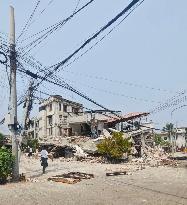
(250328) -- MANDALAY, March 28, 2025 Photo by Xinhua/ABACAPRESS.COM -- This photo taken on March 28, 2025 shows a damaged building after the earthquake in Mandalay, Myanmar. A 7.9-magnitude earthquake struck Myanmar at 2:20 p.m. Friday (Beijing Time), according to the China Earthquake Networks Center (CENC). The epicenter was monitored at 21.85 degrees north latitude and 95.95 degrees east longitude. The quake struck at a depth of 30 km, said a report issued by the CENC. Photo by Xinhua/ABACAPRESS.COM

  •  
Myanmar Earthquake

Myanmar Earthquake

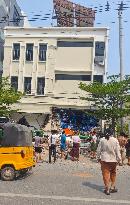
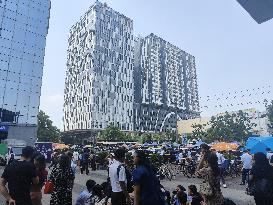
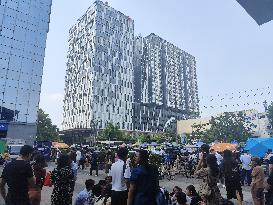
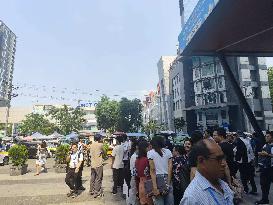
(250328) -- YANGON, March 28, 2025 Photo by Xinhua/ABACAPRESS.COM -- This photo taken with a mobile phone shows people fleeing to the streets after an earthquake in Yangon, Myanmar, March 28, 2025. The earthquake, with a magnitude of 7.7, jolted 16 km NNW of Sagaing, Myanmar earlier in the day, the U.S. Geological Survey said. The epicenter, with a depth of 10.0 km, was initially determined to be at 22.01 degrees north latitude and 95.92 degrees east longitude. Photo by Xinhua/ABACAPRESS.COM

  •  
Myanmar Earthquake

Myanmar Earthquake

(250328) -- MANDALAY, March 28, 2025 Photo by Xinhua/ABACAPRESS.COM -- This photo taken on March 28, 2025 shows a damaged building after the earthquake in Mandalay, Myanmar. A 7.9-magnitude earthquake struck Myanmar at 2:20 p.m. Friday (Beijing Time), according to the China Earthquake Networks Center (CENC). The epicenter was monitored at 21.85 degrees north latitude and 95.95 degrees east longitude. The quake struck at a depth of 30 km, said a report issued by the CENC. Photo by Xinhua/ABACAPRESS.COM

  •  
Myanmar Earthquake

Myanmar Earthquake

(250328) -- MANDALAY, March 28, 2025 Photo by Xinhua/ABACAPRESS.COM -- This photo taken on March 28, 2025 shows a damaged building after the earthquake in Mandalay, Myanmar. The earthquake, with a magnitude of 7.7, jolted 16 km NNW of Sagaing, Myanmar earlier in the day, the U.S. Geological Survey said. The epicenter, with a depth of 10.0 km, was initially determined to be at 22.01 degrees north latitude and 95.92 degrees east longitude. Photo by Xinhua/ABACAPRESS.COM

  •  
Myanmar Earthquake

Myanmar Earthquake

(250328) -- YANGON, March 28, 2025 Photo by Xinhua/ABACAPRESS.COM -- This photo taken with a mobile phone shows people fleeing to the streets after an earthquake in Yangon, Myanmar, March 28, 2025. The earthquake, with a magnitude of 7.7, jolted 16 km NNW of Sagaing, Myanmar earlier in the day, the U.S. Geological Survey said. The epicenter, with a depth of 10.0 km, was initially determined to be at 22.01 degrees north latitude and 95.92 degrees east longitude. Photo by Xinhua/ABACAPRESS.COM

  •  
Myanmar Earthquake

Myanmar Earthquake

(250328) -- YANGON, March 28, 2025 Photo by Xinhua/ABACAPRESS.COM -- This photo taken with a mobile phone shows people fleeing to the streets after an earthquake in Yangon, Myanmar, March 28, 2025. The earthquake, with a magnitude of 7.7, jolted 16 km NNW of Sagaing, Myanmar earlier in the day, the U.S. Geological Survey said. The epicenter, with a depth of 10.0 km, was initially determined to be at 22.01 degrees north latitude and 95.92 degrees east longitude. Photo by Xinhua/ABACAPRESS.COM

  •  
Myanmar Earthquake

Myanmar Earthquake

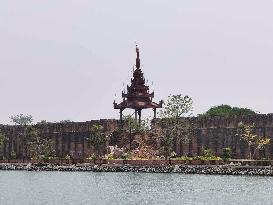
(250328) -- MANDALAY, March 28, 2025 Photo by Xinhua/ABACAPRESS.COM -- This photo taken on March 28, 2025 shows damage to the walled fort of Mandalay Palace after the earthquake in Mandalay, Myanmar. A 7.9-magnitude earthquake struck Myanmar at 2:20 p.m. Friday (Beijing Time), according to the China Earthquake Networks Center (CENC). The epicenter was monitored at 21.85 degrees north latitude and 95.95 degrees east longitude. The quake struck at a depth of 30 km, said a report issued by the CENC. Photo by Xinhua/ABACAPRESS.COM

  • Main
  • Top
  • Editorial
  • Creative
  • About Us
  • About ILG
  • Terms of use
  • Company
  • BEHIND
  • Price List
  • Single Plan
  • Monthly Plan
  • Services
  • Shooting
  • Rights Clearance
  • Support
  • FAQ
  • How To Buy
  • Contact Us
  • Become a Partner

© KYODO NEWS IMAGES INC

All Rights Reserved.

  • Editorial
  • Olympics
  • News
  • Sports
  • Japan
  • Tech
  • Royal
  • Disaster
  • NorthKorea
  • Old Japan
  • SNS

  • Creative
  • Food
  • Japan
  • Landscape
  • Animal
  • Popular
  • #Ukraine
  • #China
  • #coronavirus
  • #N. Korea
  • #Russia
  • #Thailand
  • #Ukraine
  • #China
  • #coronavirus
  • #N. Korea
  • #Russia
  • #Thailand
  • Food
  • Japan
  • Landscape
  • Animal
  • Olympics
  • News
  • Sports
  • Japan
  • Tech
  • Royal
  • Disaster
  • NorthKorea
  • Old Japan
  • SNS