•  

China: Trees Seem Lush in Winter, Revealed to Be Covered in Birds

On December 15, 2025, in Xuzhou, eastern China’s Jiangsu province, a video showed several trees that looked unusually lush for winter. From a distance, their branches appeared thick with leaves, even though most nearby trees were bare. As the camera moved closer, the “leaves” were revealed to be small, round birds packed tightly along the branches. They filled almost every twig, giving the trees a dense, full appearance. Occasionally, a few birds shifted or fluttered, but the overall outline remained like a giant canopy. Chinese netizens admired the scene, saying the living “bird trees” reflected the area’s improving environment.

  •  
Women Pluck Tea Leaves in Siliguri - India

Women Pluck Tea Leaves in Siliguri - India

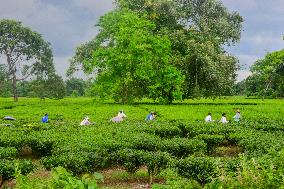
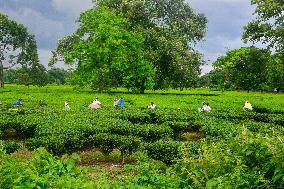
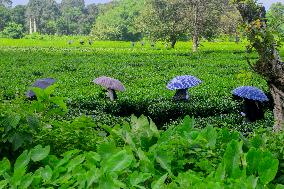
Female tea garden workers pluck tea leaves at Dagapur Tea Garden near Siliguri, India, on July 4, 2025. Dressed in traditional clothing and carrying baskets, they work under the morning sun amid lush plantations. The Siliguri region, in the Himalayan foothills, is known for tea production that supports local livelihoods and India’s export economy. Despite their crucial role, tea workers often face low wages and tough conditions, highlighting ongoing calls for labor reform. Photo by Diptendu Dutta/Middle East Images/ABACAPRESS.COM

  •  
Women Pluck Tea Leaves in Siliguri - India

Women Pluck Tea Leaves in Siliguri - India

Female tea garden workers pluck tea leaves at Dagapur Tea Garden near Siliguri, India, on July 4, 2025. Dressed in traditional clothing and carrying baskets, they work under the morning sun amid lush plantations. The Siliguri region, in the Himalayan foothills, is known for tea production that supports local livelihoods and India’s export economy. Despite their crucial role, tea workers often face low wages and tough conditions, highlighting ongoing calls for labor reform. Photo by Diptendu Dutta/Middle East Images/ABACAPRESS.COM

  •  
Women Pluck Tea Leaves in Siliguri - India

Women Pluck Tea Leaves in Siliguri - India

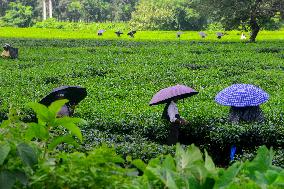
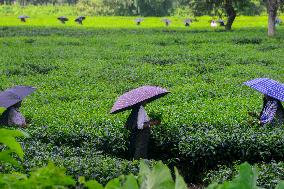
Several female tea workers hold umbrellas while plucking leaves at Dagapur Tea Garden near Siliguri, India, on July 4, 2025. They work under the sun in lush green fields, blending tradition with the demanding daily routine of tea harvesting. Photo by Diptendu Dutta/Middle East Images/ABACAPRESS.COM

  •  
Women Pluck Tea Leaves in Siliguri - India

Women Pluck Tea Leaves in Siliguri - India

Several female tea workers hold umbrellas while plucking leaves at Dagapur Tea Garden near Siliguri, India, on July 4, 2025. They work under the sun in lush green fields, blending tradition with the demanding daily routine of tea harvesting. Photo by Diptendu Dutta/Middle East Images/ABACAPRESS.COM

  •  
Women Pluck Tea Leaves in Siliguri - India

Women Pluck Tea Leaves in Siliguri - India

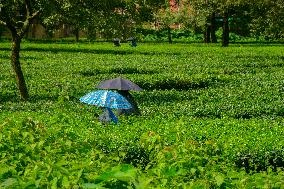
Several female tea workers hold umbrellas while plucking leaves at Dagapur Tea Garden near Siliguri, India, on July 4, 2025. They work under the sun in lush green fields, blending tradition with the demanding daily routine of tea harvesting. Photo by Diptendu Dutta/Middle East Images/ABACAPRESS.COM

  •  
Women Pluck Tea Leaves in Siliguri - India

Women Pluck Tea Leaves in Siliguri - India

Several female tea workers hold umbrellas while plucking leaves at Dagapur Tea Garden near Siliguri, India, on July 4, 2025. They work under the sun in lush green fields, blending tradition with the demanding daily routine of tea harvesting. Photo by Diptendu Dutta/Middle East Images/ABACAPRESS.COM

  •  
Women Pluck Tea Leaves in Siliguri - India

Women Pluck Tea Leaves in Siliguri - India

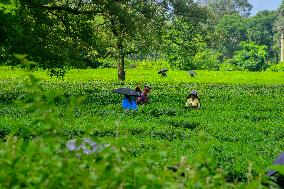
Two female workers pluck tea leaves at Dagapur Tea Garden near Siliguri, India, on July 4, 2025. Dressed in traditional attire, they work under the morning sun in the lush plantations. The region is known for its tea production, though workers often face low wages and tough conditions. Photo by Diptendu Dutta/Middle East Images/ABACAPRESS.COM

  •  
Liupan Mountains Ecological Barrier - China

Liupan Mountains Ecological Barrier - China

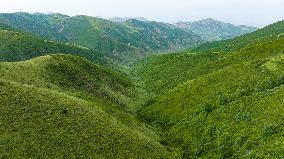
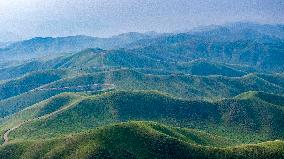
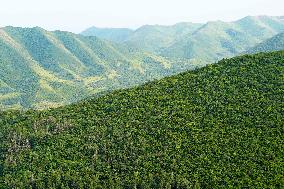
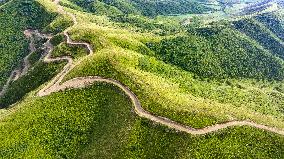
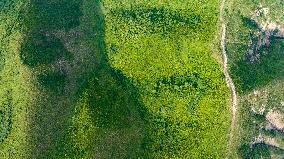
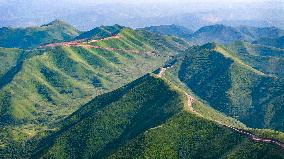
An aerial drone photo taken on July 17, 2025 shows the Madong Mountain forest farm blanketed in lush green vegetation in Yuanzhou District of Guyuan City, northwest China's Ningxia Hui Autonomous Region. In recent years, Ningxia has leveraged major national ecological projects such as "Shan-shui (Mountain-river) Initiative" to expand green spaces and improve the ecological environment of the Liupan Mountains, which serves as a vital ecological security barrier in northwest China. Photo by Wang Peng /Xinhua/ABACAPRESS.COM

  •  
Liupan Mountains Ecological Barrier - China

Liupan Mountains Ecological Barrier - China

An aerial drone photo taken on July 17, 2025 shows the Madong Mountain forest farm blanketed in lush green vegetation in Yuanzhou District of Guyuan City, northwest China's Ningxia Hui Autonomous Region. In recent years, Ningxia has leveraged major national ecological projects such as "Shan-shui (Mountain-river) Initiative" to expand green spaces and improve the ecological environment of the Liupan Mountains, which serves as a vital ecological security barrier in northwest China. Photo by Wang Peng /Xinhua/ABACAPRESS.COM

  •  
Liupan Mountains Ecological Barrier - China

Liupan Mountains Ecological Barrier - China

An aerial drone photo taken on July 17, 2025 shows the Madong Mountain forest farm blanketed in lush green vegetation in Yuanzhou District of Guyuan City, northwest China's Ningxia Hui Autonomous Region. In recent years, Ningxia has leveraged major national ecological projects such as "Shan-shui (Mountain-river) Initiative" to expand green spaces and improve the ecological environment of the Liupan Mountains, which serves as a vital ecological security barrier in northwest China. Photo by Wang Peng /Xinhua/ABACAPRESS.COM

  •  
Liupan Mountains Ecological Barrier - China

Liupan Mountains Ecological Barrier - China

An aerial drone photo taken on July 17, 2025 shows the Madong Mountain forest farm blanketed in lush green vegetation in Yuanzhou District of Guyuan City, northwest China's Ningxia Hui Autonomous Region. In recent years, Ningxia has leveraged major national ecological projects such as "Shan-shui (Mountain-river) Initiative" to expand green spaces and improve the ecological environment of the Liupan Mountains, which serves as a vital ecological security barrier in northwest China. Photo by Wang Peng /Xinhua/ABACAPRESS.COM

  •  
Liupan Mountains Ecological Barrier - China

Liupan Mountains Ecological Barrier - China

An aerial drone photo taken on July 17, 2025 shows the Madong Mountain forest farm blanketed in lush green vegetation in Yuanzhou District of Guyuan City, northwest China's Ningxia Hui Autonomous Region. In recent years, Ningxia has leveraged major national ecological projects such as "Shan-shui (Mountain-river) Initiative" to expand green spaces and improve the ecological environment of the Liupan Mountains, which serves as a vital ecological security barrier in northwest China. Photo by Wang Peng /Xinhua/ABACAPRESS.COM

  •  
Liupan Mountains Ecological Barrier - China

Liupan Mountains Ecological Barrier - China

An aerial drone photo taken on July 17, 2025 shows the Madong Mountain forest farm blanketed in lush green vegetation in Yuanzhou District of Guyuan City, northwest China's Ningxia Hui Autonomous Region. In recent years, Ningxia has leveraged major national ecological projects such as "Shan-shui (Mountain-river) Initiative" to expand green spaces and improve the ecological environment of the Liupan Mountains, which serves as a vital ecological security barrier in northwest China. Photo by Wang Peng /Xinhua/ABACAPRESS.COM

  •  
China S Largest Lychee Production Base

China S Largest Lychee Production Base

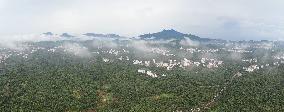
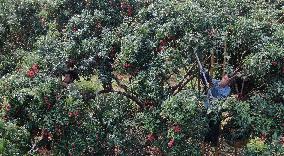
An aerial drone photo taken on June 5, 2025 shows a farmer picking lychees at a lychee garden in Genzi Town, Gaozhou of Maoming City, south China's Guangdong Province. Nestled in the lush landscapes of southwestern Guangdong Province, Gaozhou of Maoming City is known as a "hometown of lychees" in China. Maoming is China's largest lychee production base with a planting area of approximately 1.42 million mu (about 94,667 hectares) and an annual output that accounted for roughly 20 percent of the country's total in 2024. Beyond supplying domestic markets, Maoming lychee is exported worldwide, reaching countries including Russia, Australia, Thailand and Japan. Photo by Mao Siqian/Xinhua/ABACAPRESS.COM

  •  
China S Largest Lychee Production Base

China S Largest Lychee Production Base

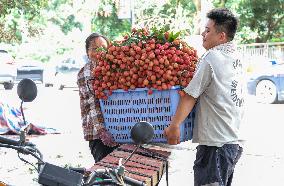
Farmers carry newly harvested lychees in Baiqiao Village, Gaozhou of Maoming City, south China's Guangdong Province, June 5, 2025. Nestled in the lush landscapes of southwestern Guangdong Province, Gaozhou of Maoming City is known as a "hometown of lychees" in China. Maoming is China's largest lychee production base with a planting area of approximately 1.42 million mu (about 94,667 hectares) and an annual output that accounted for roughly 20 percent of the country's total in 2024. Beyond supplying domestic markets, Maoming lychee is exported worldwide, reaching countries including Russia, Australia, Thailand and Japan. Photo by Mao Siqian/Xinhua/ABACAPRESS.COM

  •  
China S Largest Lychee Production Base

China S Largest Lychee Production Base

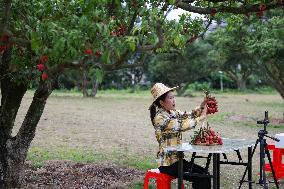
A farmer promotes lychees through livestreams at an ecological garden in Gaozhou of Maoming City, south China's Guangdong Province, June 4, 2025. Nestled in the lush landscapes of southwestern Guangdong Province, Gaozhou of Maoming City is known as a "hometown of lychees" in China. Maoming is China's largest lychee production base with a planting area of approximately 1.42 million mu (about 94,667 hectares) and an annual output that accounted for roughly 20 percent of the country's total in 2024. Beyond supplying domestic markets, Maoming lychee is exported worldwide, reaching countries including Russia, Australia, Thailand and Japan. Photo by Mao Siqian/Xinhua/ABACAPRESS.COM

  •  
China S Largest Lychee Production Base

China S Largest Lychee Production Base

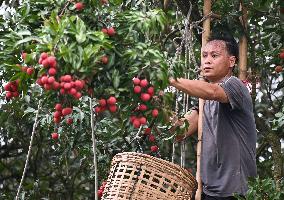
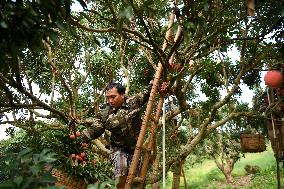
A farmer picks lychees at a lychee garden in Baiqiao Village, Gaozhou of Maoming City, south China's Guangdong Province, June 5, 2025. Nestled in the lush landscapes of southwestern Guangdong Province, Gaozhou of Maoming City is known as a "hometown of lychees" in China. Maoming is China's largest lychee production base with a planting area of approximately 1.42 million mu (about 94,667 hectares) and an annual output that accounted for roughly 20 percent of the country's total in 2024. Beyond supplying domestic markets, Maoming lychee is exported worldwide, reaching countries including Russia, Australia, Thailand and Japan. Photo by Deng Hua/Xinhua/ABACAPRESS.COM

  •  
China S Largest Lychee Production Base

China S Largest Lychee Production Base

A farmer picks lychees at a lychee garden in Baiqiao Village, Gaozhou of Maoming City, south China's Guangdong Province, June 5, 2025. Nestled in the lush landscapes of southwestern Guangdong Province, Gaozhou of Maoming City is known as a "hometown of lychees" in China. Maoming is China's largest lychee production base with a planting area of approximately 1.42 million mu (about 94,667 hectares) and an annual output that accounted for roughly 20 percent of the country's total in 2024. Beyond supplying domestic markets, Maoming lychee is exported worldwide, reaching countries including Russia, Australia, Thailand and Japan. Photo by Ding Hongfa/Xinhua/ABACAPRESS.COM

  •  
China S Largest Lychee Production Base

China S Largest Lychee Production Base

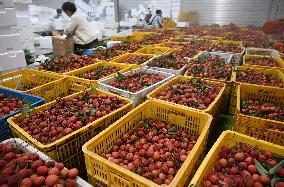
Lychees to be delivered are seen at a fruit and vegetable cooperative in Gaozhou of Maoming City, south China's Guangdong Province, June 6, 2025. Nestled in the lush landscapes of southwestern Guangdong Province, Gaozhou of Maoming City is known as a "hometown of lychees" in China. Maoming is China's largest lychee production base with a planting area of approximately 1.42 million mu (about 94,667 hectares) and an annual output that accounted for roughly 20 percent of the country's total in 2024. Beyond supplying domestic markets, Maoming lychee is exported worldwide, reaching countries including Russia, Australia, Thailand and Japan. Photo by Deng Hua/Xinhua/ABACAPRESS.COM

  •  
China S Largest Lychee Production Base

China S Largest Lychee Production Base

Farmers select lychees at a market in Yalong Village, Gaozhou of Maoming City, south China's Guangdong Province, June 5, 2025. Nestled in the lush landscapes of southwestern Guangdong Province, Gaozhou of Maoming City is known as a "hometown of lychees" in China. Maoming is China's largest lychee production base with a planting area of approximately 1.42 million mu (about 94,667 hectares) and an annual output that accounted for roughly 20 percent of the country's total in 2024. Beyond supplying domestic markets, Maoming lychee is exported worldwide, reaching countries including Russia, Australia, Thailand and Japan. Photo by Ding Hongfa/Xinhua/ABACAPRESS.COM

  •  
China S Largest Lychee Production Base

China S Largest Lychee Production Base

An aerial drone panoramic photo taken on May 19, 2025 shows lychee gardens in Gaozhou of Maoming City, south China's Guangdong Province. Nestled in the lush landscapes of southwestern Guangdong Province, Gaozhou of Maoming City is known as a "hometown of lychees" in China. Maoming is China's largest lychee production base with a planting area of approximately 1.42 million mu (about 94,667 hectares) and an annual output that accounted for roughly 20 percent of the country's total in 2024. Beyond supplying domestic markets, Maoming lychee is exported worldwide, reaching countries including Russia, Australia, Thailand and Japan. Photo by Deng Hua/Xinhua/ABACAPRESS.COM

  •  
China S Largest Lychee Production Base

China S Largest Lychee Production Base

A farmer picks lychees at an ecological garden in Gaozhou of Maoming City, south China's Guangdong Province, June 4, 2025. Nestled in the lush landscapes of southwestern Guangdong Province, Gaozhou of Maoming City is known as a "hometown of lychees" in China. Maoming is China's largest lychee production base with a planting area of approximately 1.42 million mu (about 94,667 hectares) and an annual output that accounted for roughly 20 percent of the country's total in 2024. Beyond supplying domestic markets, Maoming lychee is exported worldwide, reaching countries including Russia, Australia, Thailand and Japan. Photo by Mao Siqian/Xinhua/ABACAPRESS.COM

  •  
China S Largest Lychee Production Base

China S Largest Lychee Production Base

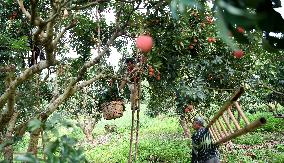
A farmer picks lychees at a lychee garden in Baiqiao Village, Gaozhou of Maoming City, south China's Guangdong Province, June 5, 2025. Nestled in the lush landscapes of southwestern Guangdong Province, Gaozhou of Maoming City is known as a "hometown of lychees" in China. Maoming is China's largest lychee production base with a planting area of approximately 1.42 million mu (about 94,667 hectares) and an annual output that accounted for roughly 20 percent of the country's total in 2024. Beyond supplying domestic markets, Maoming lychee is exported worldwide, reaching countries including Russia, Australia, Thailand and Japan. Photo by Ding Hongfa/Xinhua/ABACAPRESS.COM

  •  
China S Largest Lychee Production Base

China S Largest Lychee Production Base

A farmer picks lychees at a lychee garden in Baiqiao Village, Gaozhou of Maoming City, south China's Guangdong Province, June 5, 2025. Nestled in the lush landscapes of southwestern Guangdong Province, Gaozhou of Maoming City is known as a "hometown of lychees" in China. Maoming is China's largest lychee production base with a planting area of approximately 1.42 million mu (about 94,667 hectares) and an annual output that accounted for roughly 20 percent of the country's total in 2024. Beyond supplying domestic markets, Maoming lychee is exported worldwide, reaching countries including Russia, Australia, Thailand and Japan. Photo by Ding Hongfa/Xinhua/ABACAPRESS.COM

  •  
China S Largest Lychee Production Base

China S Largest Lychee Production Base

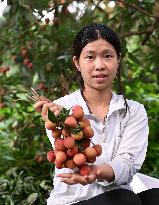
A farmer shows newly picked lychees at a lychee garden in Baiqiao Village, Gaozhou of Maoming City, south China's Guangdong Province, June 5, 2025. Nestled in the lush landscapes of southwestern Guangdong Province, Gaozhou of Maoming City is known as a "hometown of lychees" in China. Maoming is China's largest lychee production base with a planting area of approximately 1.42 million mu (about 94,667 hectares) and an annual output that accounted for roughly 20 percent of the country's total in 2024. Beyond supplying domestic markets, Maoming lychee is exported worldwide, reaching countries including Russia, Australia, Thailand and Japan. Photo by Deng Hua/Xinhua/ABACAPRESS.COM

  •  
China S Largest Lychee Production Base

China S Largest Lychee Production Base

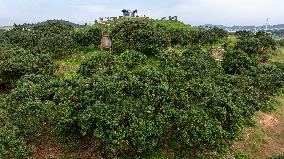
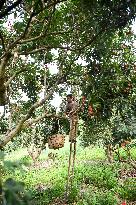
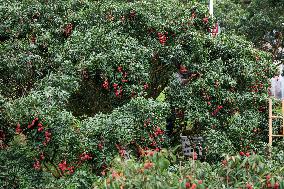
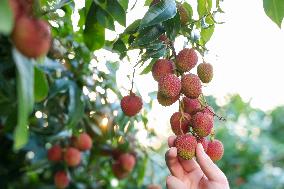
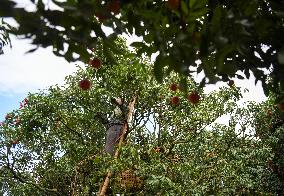
Lychees are seen on a tree at a forestry in Gaozhou of Maoming City, south China's Guangdong Province, June 5, 2025. Nestled in the lush landscapes of southwestern Guangdong Province, Gaozhou of Maoming City is known as a "hometown of lychees" in China. Maoming is China's largest lychee production base with a planting area of approximately 1.42 million mu (about 94,667 hectares) and an annual output that accounted for roughly 20 percent of the country's total in 2024. Beyond supplying domestic markets, Maoming lychee is exported worldwide, reaching countries including Russia, Australia, Thailand and Japan. Photo by Mao Siqian/Xinhua/ABACAPRESS.COM

  •  
China S Largest Lychee Production Base

China S Largest Lychee Production Base

A farmer picks lychees at a lychee garden in Baiqiao Village, Gaozhou of Maoming City, south China's Guangdong Province, June 5, 2025. Nestled in the lush landscapes of southwestern Guangdong Province, Gaozhou of Maoming City is known as a "hometown of lychees" in China. Maoming is China's largest lychee production base with a planting area of approximately 1.42 million mu (about 94,667 hectares) and an annual output that accounted for roughly 20 percent of the country's total in 2024. Beyond supplying domestic markets, Maoming lychee is exported worldwide, reaching countries including Russia, Australia, Thailand and Japan. Photo by Ding Hongfa/Xinhua/ABACAPRESS.COM

  •  
China S Largest Lychee Production Base

China S Largest Lychee Production Base

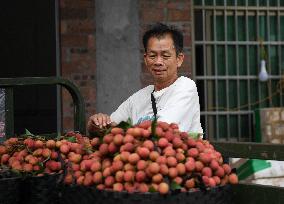
A vendor purchases lychees in Yalong Village, Gaozhou of Maoming City, south China's Guangdong Province, June 5, 2025. Nestled in the lush landscapes of southwestern Guangdong Province, Gaozhou of Maoming City is known as a "hometown of lychees" in China. Maoming is China's largest lychee production base with a planting area of approximately 1.42 million mu (about 94,667 hectares) and an annual output that accounted for roughly 20 percent of the country's total in 2024. Beyond supplying domestic markets, Maoming lychee is exported worldwide, reaching countries including Russia, Australia, Thailand and Japan. Photo by Ding Hongfa/Xinhua/ABACAPRESS.COM

  •  
China S Largest Lychee Production Base

China S Largest Lychee Production Base

A drone photo taken on June 5, 2025 shows farmers picking lychees at a lychee garden in Baiqiao Village, Gaozhou of Maoming City, south China's Guangdong Province. Nestled in the lush landscapes of southwestern Guangdong Province, Gaozhou of Maoming City is known as a "hometown of lychees" in China. Maoming is China's largest lychee production base with a planting area of approximately 1.42 million mu (about 94,667 hectares) and an annual output that accounted for roughly 20 percent of the country's total in 2024. Beyond supplying domestic markets, Maoming lychee is exported worldwide, reaching countries including Russia, Australia, Thailand and Japan. Photo by Deng Hua/Xinhua/ABACAPRESS.COM

  •  
China S Largest Lychee Production Base

China S Largest Lychee Production Base

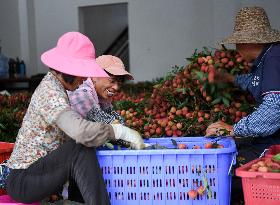
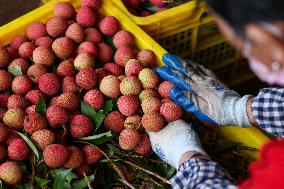
A farmer selects newly harvested lychees in Yalong Village, Gaozhou of Maoming City, south China's Guangdong Province, June 5, 2025. Nestled in the lush landscapes of southwestern Guangdong Province, Gaozhou of Maoming City is known as a "hometown of lychees" in China. Maoming is China's largest lychee production base with a planting area of approximately 1.42 million mu (about 94,667 hectares) and an annual output that accounted for roughly 20 percent of the country's total in 2024. Beyond supplying domestic markets, Maoming lychee is exported worldwide, reaching countries including Russia, Australia, Thailand and Japan. Photo by Mao Siqian/Xinhua/ABACAPRESS.COM

  •  
China S Largest Lychee Production Base

China S Largest Lychee Production Base

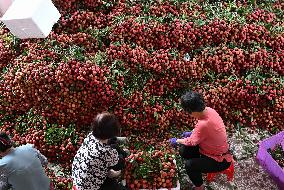
Farmers select lychees in Yalong Village, Gaozhou of Maoming City, south China's Guangdong Province, June 5, 2025. Nestled in the lush landscapes of southwestern Guangdong Province, Gaozhou of Maoming City is known as a "hometown of lychees" in China. Maoming is China's largest lychee production base with a planting area of approximately 1.42 million mu (about 94,667 hectares) and an annual output that accounted for roughly 20 percent of the country's total in 2024. Beyond supplying domestic markets, Maoming lychee is exported worldwide, reaching countries including Russia, Australia, Thailand and Japan. Photo by Deng Hua/Xinhua/ABACAPRESS.COM

  •  
Illustration - Provence

Illustration - Provence

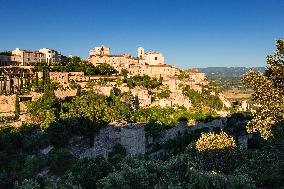
FRANCE, PROVENCE. VAUCLUSE (84), GORDES. A STUNNING HILLTOP VILLAGE IN PROVENCE, LOCATED IN THE LUBERON REGION AND FEATURES MEDIEVAL STONE BUILDINGS, LUSH GREENERY AND PANORAMIC VIEWS. A UNESCO WORLD HERITAGE Photo by Francois Roux/Only France/ABACAPRESS.COM

  •  
Drying Red Fabric - Bangladesh

Drying Red Fabric - Bangladesh

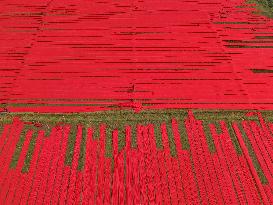
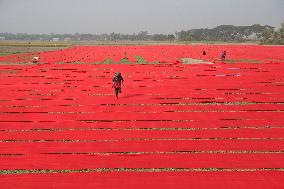
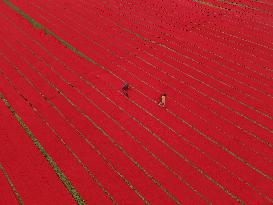
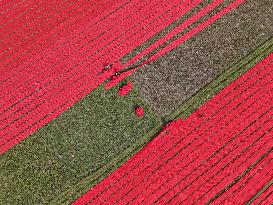
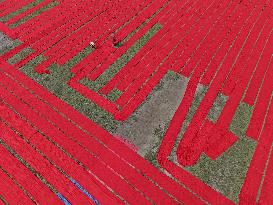
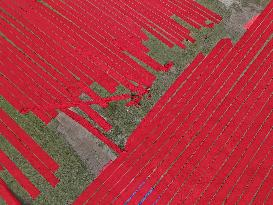
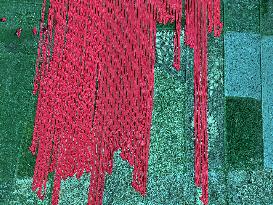
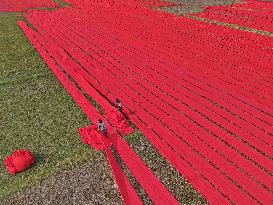
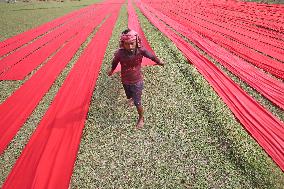
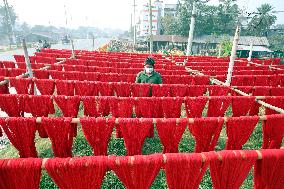
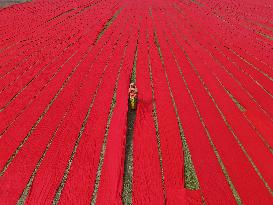
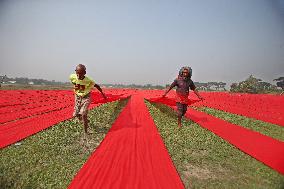
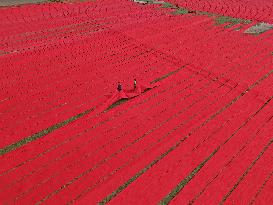
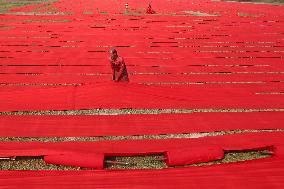
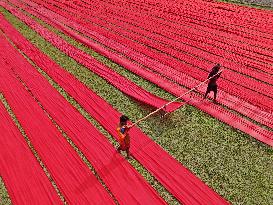
Red Salu fabric is a traditional cloth that is in high demand during the winter months. The fabric is used for a variety of purposes, including making quilts. The weavers' colony in Narsingdi is currently busy dying and drying the fabric using various processes. The lush green fields have been decorated with the drying red fabric. A worker gets a wage of Tk 400 for colouring, drying in the sun, folding and delivering each 1,000-yard roll of fabric. November 26, 2024. Photo by Habibur Rahman/ABACAPRESS.COM

  •  
Drying Red Fabric - Bangladesh

Drying Red Fabric - Bangladesh

Red Salu fabric is a traditional cloth that is in high demand during the winter months. The fabric is used for a variety of purposes, including making quilts. The weavers' colony in Narsingdi is currently busy dying and drying the fabric using various processes. The lush green fields have been decorated with the drying red fabric. A worker gets a wage of Tk 400 for colouring, drying in the sun, folding and delivering each 1,000-yard roll of fabric. November 26, 2024. Photo by Habibur Rahman/ABACAPRESS.COM

  •  
Drying Red Fabric - Bangladesh

Drying Red Fabric - Bangladesh

Red Salu fabric is a traditional cloth that is in high demand during the winter months. The fabric is used for a variety of purposes, including making quilts. The weavers' colony in Narsingdi is currently busy dying and drying the fabric using various processes. The lush green fields have been decorated with the drying red fabric. A worker gets a wage of Tk 400 for colouring, drying in the sun, folding and delivering each 1,000-yard roll of fabric. November 26, 2024. Photo by Habibur Rahman/ABACAPRESS.COM

  •  
Drying Red Fabric - Bangladesh

Drying Red Fabric - Bangladesh

Red Salu fabric is a traditional cloth that is in high demand during the winter months. The fabric is used for a variety of purposes, including making quilts. The weavers' colony in Narsingdi is currently busy dying and drying the fabric using various processes. The lush green fields have been decorated with the drying red fabric. A worker gets a wage of Tk 400 for colouring, drying in the sun, folding and delivering each 1,000-yard roll of fabric. November 26, 2024. Photo by Habibur Rahman/ABACAPRESS.COM

  •  
Drying Red Fabric - Bangladesh

Drying Red Fabric - Bangladesh

Red Salu fabric is a traditional cloth that is in high demand during the winter months. The fabric is used for a variety of purposes, including making quilts. The weavers' colony in Narsingdi is currently busy dying and drying the fabric using various processes. The lush green fields have been decorated with the drying red fabric. A worker gets a wage of Tk 400 for colouring, drying in the sun, folding and delivering each 1,000-yard roll of fabric. November 26, 2024. Photo by Habibur Rahman/ABACAPRESS.COM

  •  
Drying Red Fabric - Bangladesh

Drying Red Fabric - Bangladesh

Red Salu fabric is a traditional cloth that is in high demand during the winter months. The fabric is used for a variety of purposes, including making quilts. The weavers' colony in Narsingdi is currently busy dying and drying the fabric using various processes. The lush green fields have been decorated with the drying red fabric. A worker gets a wage of Tk 400 for colouring, drying in the sun, folding and delivering each 1,000-yard roll of fabric. November 26, 2024. Photo by Habibur Rahman/ABACAPRESS.COM

  •  
Drying Red Fabric - Bangladesh

Drying Red Fabric - Bangladesh

Red Salu fabric is a traditional cloth that is in high demand during the winter months. The fabric is used for a variety of purposes, including making quilts. The weavers' colony in Narsingdi is currently busy dying and drying the fabric using various processes. The lush green fields have been decorated with the drying red fabric. A worker gets a wage of Tk 400 for colouring, drying in the sun, folding and delivering each 1,000-yard roll of fabric. November 26, 2024. Photo by Habibur Rahman/ABACAPRESS.COM

  •  
Drying Red Fabric - Bangladesh

Drying Red Fabric - Bangladesh

Red Salu fabric is a traditional cloth that is in high demand during the winter months. The fabric is used for a variety of purposes, including making quilts. The weavers' colony in Narsingdi is currently busy dying and drying the fabric using various processes. The lush green fields have been decorated with the drying red fabric. A worker gets a wage of Tk 400 for colouring, drying in the sun, folding and delivering each 1,000-yard roll of fabric. November 26, 2024. Photo by Habibur Rahman/ABACAPRESS.COM

  •  
Drying Red Fabric - Bangladesh

Drying Red Fabric - Bangladesh

Red Salu fabric is a traditional cloth that is in high demand during the winter months. The fabric is used for a variety of purposes, including making quilts. The weavers' colony in Narsingdi is currently busy dying and drying the fabric using various processes. The lush green fields have been decorated with the drying red fabric. A worker gets a wage of Tk 400 for colouring, drying in the sun, folding and delivering each 1,000-yard roll of fabric. November 26, 2024. Photo by Habibur Rahman/ABACAPRESS.COM

  •  
Drying Red Fabric - Bangladesh

Drying Red Fabric - Bangladesh

Red Salu fabric is a traditional cloth that is in high demand during the winter months. The fabric is used for a variety of purposes, including making quilts. The weavers' colony in Narsingdi is currently busy dying and drying the fabric using various processes. The lush green fields have been decorated with the drying red fabric. A worker gets a wage of Tk 400 for colouring, drying in the sun, folding and delivering each 1,000-yard roll of fabric. November 26, 2024. Photo by Habibur Rahman/ABACAPRESS.COM

  •  
Drying Red Fabric - Bangladesh

Drying Red Fabric - Bangladesh

Red Salu fabric is a traditional cloth that is in high demand during the winter months. The fabric is used for a variety of purposes, including making quilts. The weavers' colony in Narsingdi is currently busy dying and drying the fabric using various processes. The lush green fields have been decorated with the drying red fabric. A worker gets a wage of Tk 400 for colouring, drying in the sun, folding and delivering each 1,000-yard roll of fabric. November 26, 2024. Photo by Habibur Rahman/ABACAPRESS.COM

  •  
Drying Red Fabric - Bangladesh

Drying Red Fabric - Bangladesh

Red Salu fabric is a traditional cloth that is in high demand during the winter months. The fabric is used for a variety of purposes, including making quilts. The weavers' colony in Narsingdi is currently busy dying and drying the fabric using various processes. The lush green fields have been decorated with the drying red fabric. A worker gets a wage of Tk 400 for colouring, drying in the sun, folding and delivering each 1,000-yard roll of fabric. November 26, 2024. Photo by Habibur Rahman/ABACAPRESS.COM

  •  
Drying Red Fabric - Bangladesh

Drying Red Fabric - Bangladesh

Red Salu fabric is a traditional cloth that is in high demand during the winter months. The fabric is used for a variety of purposes, including making quilts. The weavers' colony in Narsingdi is currently busy dying and drying the fabric using various processes. The lush green fields have been decorated with the drying red fabric. A worker gets a wage of Tk 400 for colouring, drying in the sun, folding and delivering each 1,000-yard roll of fabric. November 26, 2024. Photo by Habibur Rahman/ABACAPRESS.COM

  •  
Drying Red Fabric - Bangladesh

Drying Red Fabric - Bangladesh

Red Salu fabric is a traditional cloth that is in high demand during the winter months. The fabric is used for a variety of purposes, including making quilts. The weavers' colony in Narsingdi is currently busy dying and drying the fabric using various processes. The lush green fields have been decorated with the drying red fabric. A worker gets a wage of Tk 400 for colouring, drying in the sun, folding and delivering each 1,000-yard roll of fabric. November 26, 2024. Photo by Habibur Rahman/ABACAPRESS.COM

  •  
Drying Red Fabric - Bangladesh

Drying Red Fabric - Bangladesh

Red Salu fabric is a traditional cloth that is in high demand during the winter months. The fabric is used for a variety of purposes, including making quilts. The weavers' colony in Narsingdi is currently busy dying and drying the fabric using various processes. The lush green fields have been decorated with the drying red fabric. A worker gets a wage of Tk 400 for colouring, drying in the sun, folding and delivering each 1,000-yard roll of fabric. November 26, 2024. Photo by Habibur Rahman/ABACAPRESS.COM

  •  
Drying Red Fabric - Bangladesh

Drying Red Fabric - Bangladesh

Red Salu fabric is a traditional cloth that is in high demand during the winter months. The fabric is used for a variety of purposes, including making quilts. The weavers' colony in Narsingdi is currently busy dying and drying the fabric using various processes. The lush green fields have been decorated with the drying red fabric. A worker gets a wage of Tk 400 for colouring, drying in the sun, folding and delivering each 1,000-yard roll of fabric. November 26, 2024. Photo by Habibur Rahman/ABACAPRESS.COM

  •  
Drying Red Fabric - Bangladesh

Drying Red Fabric - Bangladesh

Red Salu fabric is a traditional cloth that is in high demand during the winter months. The fabric is used for a variety of purposes, including making quilts. The weavers' colony in Narsingdi is currently busy dying and drying the fabric using various processes. The lush green fields have been decorated with the drying red fabric. A worker gets a wage of Tk 400 for colouring, drying in the sun, folding and delivering each 1,000-yard roll of fabric. November 26, 2024. Photo by Habibur Rahman/ABACAPRESS.COM

  • Main
  • Top
  • Editorial
  • Creative
  • About Us
  • About ILG
  • Terms of use
  • Company
  • BEHIND
  • Price List
  • Single Plan
  • Monthly Plan
  • Services
  • Shooting
  • Rights Clearance
  • Support
  • FAQ
  • How To Buy
  • Contact Us
  • Become a Partner

© KYODO NEWS IMAGES INC

All Rights Reserved.

  • Editorial
  • Olympics
  • News
  • Sports
  • Japan
  • Tech
  • Royal
  • Disaster
  • NorthKorea
  • Old Japan
  • SNS
  • Creative
  • Food
  • Japan
  • Landscape
  • Animal
  • Popular
  • #Ukraine
  • #Thailand
  • #coronavirus
  • #N. Korea
  • #China
  • #Russia
  • #Ukraine
  • #Thailand
  • #coronavirus
  • #N. Korea
  • #China
  • #Russia
  • Food
  • Japan
  • Landscape
  • Animal
  • Olympics
  • News
  • Sports
  • Japan
  • Tech
  • Royal
  • Disaster
  • NorthKorea
  • Old Japan
  • SNS