•  
Chinese Ports Cargo Throughput Increased

Chinese Ports Cargo Throughput Increased

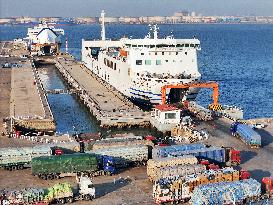
YANTAI, CHINA- DECEMBER 22, 2024 - Vehicles crossing the Bohai Strait enter a ro-ro ship bound for Dalian Lushun at the Longkou port area of Yantai Port, East China's Shandong province, Dec 22, 2024.

  •  
Patriotic Shrine - Paiyushan - Port Arthur

Patriotic Shrine - Paiyushan - Port Arthur

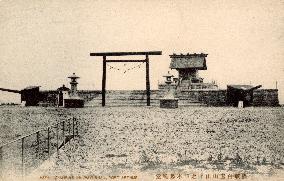
Patriotic Shrine - Paiyushan - Lushunkou (a district in the municipality of Dalian, Liaoning province, also called Lushun City or Lushun Port, formerly known as both Port Arthur and Ryojun). During the Russo-Japanese war (1904-1905), the Russians surrendered Port Arthur to the Japanese after nearly a year's siege: the Japanese expended 58,000 killed or wounded to obtain the town. This is a Japanese memorial to the victory. Date: circa 1910

  •  
South Manchurian Railway Company Hospital - Shenyang, China

South Manchurian Railway Company Hospital - Shenyang, China

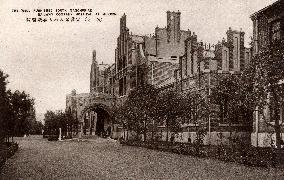
South Manchurian Railway Company Hospital - Shenyang (formerly Mukden), China. With the region under Japanese control following victory in the Russo-Japanese War (1904-5), Japanese settlers were encouraged through the construction of schools, libraries, hospitals and public utilities. The South Manchuria Railway Company (Mantetsu) - was a company founded in the Empire of Japan in 1906, taken over after the Russo-Japanese War, and operated within China in the Japanese-controlled South Manchuria Railway Zone. The railway itself ran from Lushun Port (Port Arthur) at the southern tip of the Liaodong Peninsula to Harbin, where it connected to the Chinese Eastern Railway. Date: circa 1920s

  •  
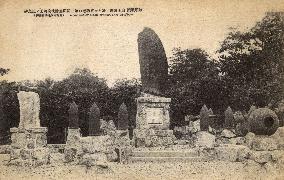
Lushun Baiyu Tower - Lushunkou, China (Ryojun)

Lushun Baiyu Tower - Lushunkou, China (Ryojun)

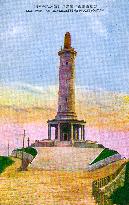
Lushun Baiyu Tower - built after the Russo-Japanese War by the Japanese to commemorate their 20, 000 war casualties at Ryojun (present-day Lushunkou, People's Republic of China formerly Port Arthur) - the major navy base for the Imperial Japanese Navy in the Kwantung Leased Territory before and during Second Sino-Japanese War (1937-1945). Date: circa 1930s

  •  
Treaty - Battle of Lushun - Anatoly Stessel, Nogi Maresuke

Treaty - Battle of Lushun - Anatoly Stessel, Nogi Maresuke

The Shuishiying in Lushunkou District, Dalian, Liaoning Province, China, where the cease fire treaty of the Battle of Lushun was signed between Anatoly Stessel (1848-1915) and Count Nogi Maresuke (1849-1912), representing Russia and Japan respectively, on 5th January 1905, during the Russo-Japanese War depicted in this postcard. Shuishiying were camp sites (or office buildings) of the Naval forces during the later days of the Qing Dynasty in China. Date: 1905

  •  
Martyrs Monument, Hakugyokuzan Ryojun, Port Arthur, Memorial

Martyrs Monument, Hakugyokuzan Ryojun, Port Arthur, Memorial

Martyrs Monument, Hakugyokuzan Ryojun, Port Arthur, Memorial. ort Arthur is now under Chinese control and is known as Lushunkou (a district in the municipality of Dalian, Liaoning province, also called Lushun City or Lushun Port, formerly known as Ryojun). Lushunkou has an excellent natural harbour, the possession and control of which became a 'casus belli' (justification for the act of war) during the Russo-Japanese War (19041905). Japanese and then Soviet administration would continue until 1953. Date: 1909

  •  
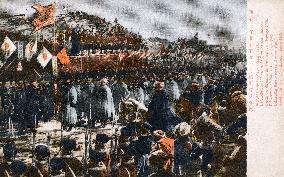
Russo-Japanese War - The Capture of Port Arthur - Jan 1905

Russo-Japanese War - The Capture of Port Arthur - Jan 1905

Russo-Japanese War - The Japanese Capture of Port Arthur - January 1905. Date: 1905

  •  
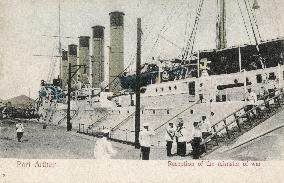
Naval reception at Port Arthur (Lushunkou), China

Naval reception at Port Arthur (Lushunkou), China

Reception of the (Russian) Minister of War at the seaport of Port Arthur, Lushunkou (a district in the municipality of Dalian, Liaoning province). Also known as Lushun City or Lushun Port, formerly known as both Port Arthur and Ryojun. At one time under Russian administration, then Japanese, but now in China. Date: early 20th century

  •  
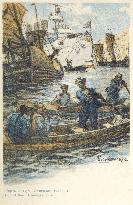
Chinese Boatmen at Port Arthur

Chinese Boatmen at Port Arthur

Chinese boatmen in the Port at Lushunkou, a district in the municipality of Dalian, Liaoning province, also called Lushun City or Lushun Port, formerly known as both Port Arthur and Ryojun. During the Russo-Japanese war, the Russians surrendered Port Arthur to the Japanese after nearly a year's siege: the Japanese expended 58,000 killed or wounded to obtain the town. As can be seen here, Lushunkou boasts an excellent natural harbour, the possession and control of which became a 'casus belli' (justification for the act of war) during the Russo-Japanese War (19041905). Date: 1904

  •  
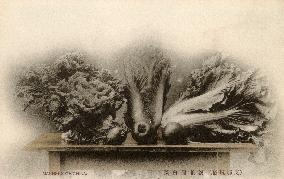
Port Arthur - Varieties of Chinese Vegetables

Port Arthur - Varieties of Chinese Vegetables

Japanese card depicting three varieties of Chinese cabbage and other vegetables (possibly beetroot) - at Port Arthur. A panoramic view of Lushunkou (a district in the municipality of Dalian, Liaoning province, also called Lushun City or Lushun Port, formerly known as both Port Arthur and Ryojun). During the Russo-Japanese war, the Russians surrendered Port Arthur to the Japanese after nearly a year's siege. Date: 1907

  •  
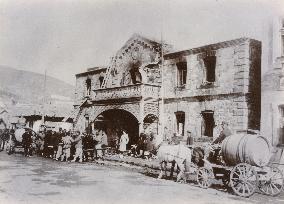
Port Arthur (Dalian) - Japanese bombardment

Port Arthur (Dalian) - Japanese bombardment

Port Arthur (Dalian) - a Russian administrative building damaged during the Japanese bombardment in February 1904. Dalian, Liaoning province, also called Lushun City or Lushun Port was formerly known as both Port Arthur and Ryojun. During the Russo-Japanese war, the Russians surrendered Port Arthur to the Japanese after nearly a years siege: the Japanese expended 58,000 killed or wounded to obtain the town. Date: 1904

  •  
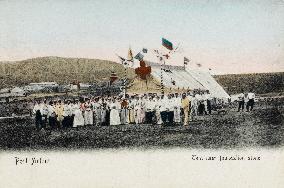
Port Arthur - Red Cross Tent.

Port Arthur - Red Cross Tent.

Red Cross tent at Port Arthur, near to the foundation stone for a new Red Cross Hospital to be built on the site. Port Arthur (modern Lushunkou) is a district in the municipality of Dalian, Liaoning province, also called Lushun City or Lushun Port, formerly known as Ryojun. During the Russo-Japanese war, the Russians surrendered Port Arthur to the Japanese after nearly a year's siege: the Japanese expended 58,000 killed or wounded to obtain the town. Date: circa 1904

  •  
Port Arthur - Lushunkou - China

Port Arthur - Lushunkou - China

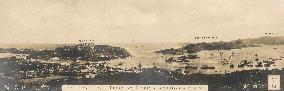
A panoramic view of Lushunkou (a district in the municipality of Dalian, Liaoning province, also called Lushun City or Lushun Port, formerly known as both Port Arthur and Ryojun). During the Russo-Japanese war, the Russians surrendered Port Arthur to the Japanese after nearly a year's siege: the Japanese expended 58,000 killed or wounded to obtain the town. As can be seen here, Lushunkou boasts an excellent natural harbour, the possession and control of which became a 'casus belli' (justification for the act of war) during the Russo-Japanese War (19041905). Date: circa 1909

  •  
The Music of General Oku

The Music of General Oku

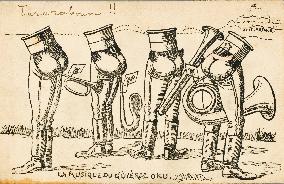
French 'comment' on General Yasukata Oku's plans to capture Lushunkou (a district in the municipality of Dalian, Liaoning province, also called Lushun City or Lushun Port, formerly known as both Port Arthur and Ryojun). Lushunkou has an excellent natural harbour, the possession and control of which became a 'casus belli' (justification for the act of war) during the Russo-Japanese War (19041905). Date: circa 1904

  •  
Port Arthur - The Pushkin School

Port Arthur - The Pushkin School

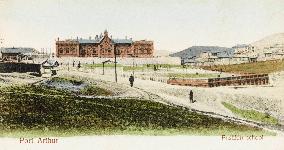
Port Arthur - The Pushkin School during the period of Russian occupation of the city. Port Arthur is now under Chinese control and is known as Lushunkou (a district in the municipality of Dalian, Liaoning province, also called Lushun City or Lushun Port, formerly known as Ryojun). Lushunkou has an excellent natural harbour, the possession and control of which became a 'casus belli' (justification for the act of war) during the Russo-Japanese War (19041905). Japanese and then Soviet administration would continue until 1953. Date: circa 1910s

  •  
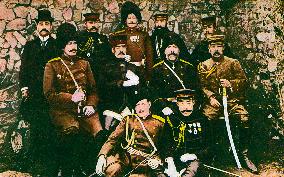
Russian troops at Port Arthur

Russian troops at Port Arthur

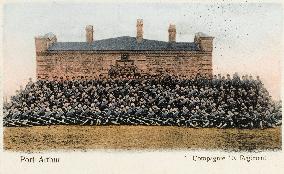
Port Arthur - held by Russia prior to defeat in the Russo-Japanese war. In this photograph, the 1st Company of the 10th Regiment pose for an official photograph. Many would likely have been involved in the bloody conflict soon to engulf this location of special strategic importance. Date: circa 1904

  • Main
  • Top
  • Editorial
  • Creative
  • About Us
  • About ILG
  • Terms of use
  • Company
  • BEHIND
  • Price List
  • Single Plan
  • Monthly Plan
  • Services
  • Shooting
  • Rights Clearance
  • Support
  • FAQ
  • How To Buy
  • Contact Us
  • Become a Partner

© KYODO NEWS IMAGES INC

All Rights Reserved.

  • Editorial
  • Olympics
  • News
  • Sports
  • Japan
  • Tech
  • Royal
  • Disaster
  • NorthKorea
  • Old Japan
  • SNS
  • Creative
  • Food
  • Japan
  • Landscape
  • Animal
  • Popular
  • #Ukraine
  • #Thailand
  • #coronavirus
  • #N. Korea
  • #Russia
  • #China
  • #Ukraine
  • #Thailand
  • #coronavirus
  • #N. Korea
  • #Russia
  • #China
  • Food
  • Japan
  • Landscape
  • Animal
  • Olympics
  • News
  • Sports
  • Japan
  • Tech
  • Royal
  • Disaster
  • NorthKorea
  • Old Japan
  • SNS