•  
Promoting Matcha Tea In Guizhou - China

Promoting Matcha Tea In Guizhou - China

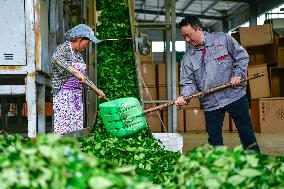
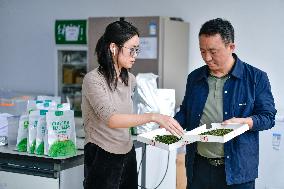
Wei Yong R) demonstrates the technique of drying tea leaves to a villager at a tea processing factory in Jiangkou County, southwest China's Guizhou Province, China, on May 15, 2025. Located at the foot of Mount Fanjing, a UNESCO World Heritage Site, Jiangkou County is a powerhouse in the world's matcha industry. As a native of Jiangkou and a specialist of tea industry, Wei Yong works at the research and development department of Guizhou Gui Tea Group Co. Wei, who originally majored in chemical engineering, never imagined that his technical experience in product testing could contribute to the research and development of matcha industry in his hometown. He not only offers professional suggestions in various processes of matcha production, but also conducts tests and provides feedback on matcha products. Wei believes that matcha has brought not only technological breakthroughs but also reshaped the industrial structure of the tea industry in Guizhou. Matcha helps tea farmers increase their income while promotin

  •  
Promoting Matcha Tea In Guizhou - China

Promoting Matcha Tea In Guizhou - China

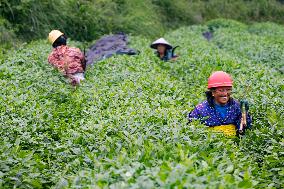
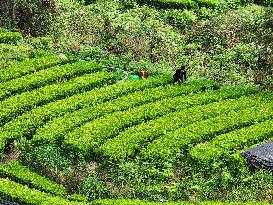
Tea farmers work at a tea garden in Jiangkou County, southwest China's Guizhou Province, China, on May 15, 2025. Located at the foot of Mount Fanjing, a UNESCO World Heritage Site, Jiangkou County is a powerhouse in the world's matcha industry. As a native of Jiangkou and a specialist of tea industry, Wei Yong works at the research and development department of Guizhou Gui Tea Group Co. Wei, who originally majored in chemical engineering, never imagined that his technical experience in product testing could contribute to the research and development of matcha industry in his hometown. He not only offers professional suggestions in various processes of matcha production, but also conducts tests and provides feedback on matcha products. Wei believes that matcha has brought not only technological breakthroughs but also reshaped the industrial structure of the tea industry in Guizhou. Matcha helps tea farmers increase their income while promoting the healthy and rapid development of the tea industry in Guizhou. "

  •  
Promoting Matcha Tea In Guizhou - China

Promoting Matcha Tea In Guizhou - China

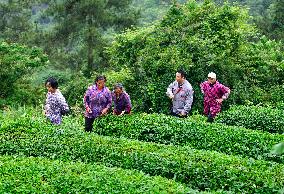
A drone photo taken on May 15, 2025 shows Wei Yong (2nd, R) explaining key points of harvesting tea leaves to villagers in Jiangkou County, southwest China's Guizhou Province, China, on May 15, 2025. Located at the foot of Mount Fanjing, a UNESCO World Heritage Site, Jiangkou County is a powerhouse in the world's matcha industry. As a native of Jiangkou and a specialist of tea industry, Wei Yong works at the research and development department of Guizhou Gui Tea Group Co. Wei, who originally majored in chemical engineering, never imagined that his technical experience in product testing could contribute to the research and development of matcha industry in his hometown. He not only offers professional suggestions in various processes of matcha production, but also conducts tests and provides feedback on matcha products. Wei believes that matcha has brought not only technological breakthroughs but also reshaped the industrial structure of the tea industry in Guizhou. Matcha helps tea farmers increase their inc

  •  
Promoting Matcha Tea In Guizhou - China

Promoting Matcha Tea In Guizhou - China

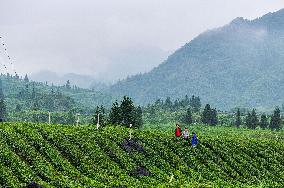
An aerial drone photo taken on May 15, 2025 shows Wei Yong (C) explaining key points of planting to tea farmers in Jiangkou County, southwest China's Guizhou Province. Located at the foot of Mount Fanjing, a UNESCO World Heritage Site, Jiangkou County is a powerhouse in the world's matcha industry. As a native of Jiangkou and a specialist of tea industry, Wei Yong works at the research and development department of Guizhou Gui Tea Group Co. Wei, who originally majored in chemical engineering, never imagined that his technical experience in product testing could contribute to the research and development of matcha industry in his hometown. He not only offers professional suggestions in various processes of matcha production, but also conducts tests and provides feedback on matcha products. Wei believes that matcha has brought not only technological breakthroughs but also reshaped the industrial structure of the tea industry in Guizhou. Matcha helps tea farmers increase their income while promoting the healthy

  •  
Promoting Matcha Tea In Guizhou - China

Promoting Matcha Tea In Guizhou - China

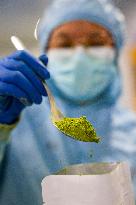
Wei Yong R) checks samples of raw materials for matcha production with a colleague in Jiangkou County, southwest China's Guizhou Province, China, on May 14, 2025. Located at the foot of Mount Fanjing, a UNESCO World Heritage Site, Jiangkou County is a powerhouse in the world's matcha industry. As a native of Jiangkou and a specialist of tea industry, Wei Yong works at the research and development department of Guizhou Gui Tea Group Co. Wei, who originally majored in chemical engineering, never imagined that his technical experience in product testing could contribute to the research and development of matcha industry in his hometown. He not only offers professional suggestions in various processes of matcha production, but also conducts tests and provides feedback on matcha products. Wei believes that matcha has brought not only technological breakthroughs but also reshaped the industrial structure of the tea industry in Guizhou. Matcha helps tea farmers increase their income while promoting the healthy and r

  •  
Mount Fanjing Matcha Industry - China

Mount Fanjing Matcha Industry - China

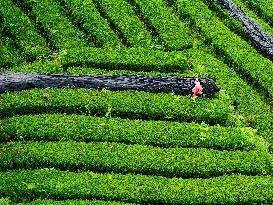
A drone photo shows a farmer weeding at a tea garden in Jiangkou County of Tongren, southwest China's Guizhou Province, on April 16, 2025. Located at the foot of Mount Fanjing, a UNESCO World Heritage Site, Jiangkou County is a powerhouse in the world's matcha industry. The county boasts over 10,000 hectares of tea plantations, nearly a fifth of which are dedicated to matcha production. In 2024, Jiangkou County produced more than 1,200 tonnes of matcha with a total output value of 350 million yuan (about 48.02 million U.S. dollars). The local matcha products have been exported to more than 40 overseas markets. Experts and agronomists believe that Guizhou, located on a plateau, possesses geographical and climatic advantages such as high altitude, low latitude, abundant fog and limited sunlight ideal for growing tea. Therefore, tea produced in this area is green, ecological and organic. Photo by Ou Dongqu/Xinhua/ABACAPRESS.COM

  •  
Mount Fanjing Matcha Industry - China

Mount Fanjing Matcha Industry - China

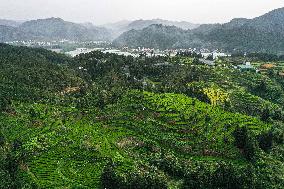
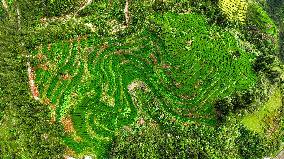
An aerial drone photo shows a tea garden in Jiangkou County of Tongren, southwest China's Guizhou Province, on April 16, 2025. Located at the foot of Mount Fanjing, a UNESCO World Heritage Site, Jiangkou County is a powerhouse in the world's matcha industry. The county boasts over 10,000 hectares of tea plantations, nearly a fifth of which are dedicated to matcha production. In 2024, Jiangkou County produced more than 1,200 tonnes of matcha with a total output value of 350 million yuan (about 48.02 million U.S. dollars). The local matcha products have been exported to more than 40 overseas markets. Experts and agronomists believe that Guizhou, located on a plateau, possesses geographical and climatic advantages such as high altitude, low latitude, abundant fog and limited sunlight ideal for growing tea. Therefore, tea produced in this area is green, ecological and organic. Photo by Yang Wenbin/Xinhua/ABACAPRESS.COM

  •  
Mount Fanjing Matcha Industry - China

Mount Fanjing Matcha Industry - China

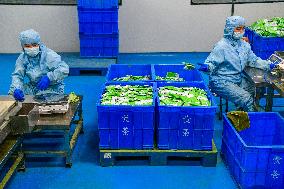
Workers pack matcha powder at a tea industrial park in Jiangkou County of Tongren, southwest China's Guizhou Province, on April 14, 2025. Located at the foot of Mount Fanjing, a UNESCO World Heritage Site, Jiangkou County is a powerhouse in the world's matcha industry. The county boasts over 10,000 hectares of tea plantations, nearly a fifth of which are dedicated to matcha production. In 2024, Jiangkou County produced more than 1,200 tonnes of matcha with a total output value of 350 million yuan (about 48.02 million U.S. dollars). The local matcha products have been exported to more than 40 overseas markets. Experts and agronomists believe that Guizhou, located on a plateau, possesses geographical and climatic advantages such as high altitude, low latitude, abundant fog and limited sunlight ideal for growing tea. Therefore, tea produced in this area is green, ecological and organic. Photo by Yang Wenbin/Xinhua/ABACAPRESS.COM

  •  
Mount Fanjing Matcha Industry - China

Mount Fanjing Matcha Industry - China

A worker packs matcha powder at a tea industrial park in Jiangkou County of Tongren, southwest China's Guizhou Province, on April 14, 2025. Located at the foot of Mount Fanjing, a UNESCO World Heritage Site, Jiangkou County is a powerhouse in the world's matcha industry. The county boasts over 10,000 hectares of tea plantations, nearly a fifth of which are dedicated to matcha production. In 2024, Jiangkou County produced more than 1,200 tonnes of matcha with a total output value of 350 million yuan (about 48.02 million U.S. dollars). The local matcha products have been exported to more than 40 overseas markets. Experts and agronomists believe that Guizhou, located on a plateau, possesses geographical and climatic advantages such as high altitude, low latitude, abundant fog and limited sunlight ideal for growing tea. Therefore, tea produced in this area is green, ecological and organic. Photo by Ou Dongqu/Xinhua/ABACAPRESS.COM

  •  
Mount Fanjing Matcha Industry - China

Mount Fanjing Matcha Industry - China

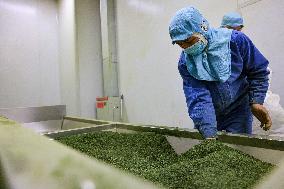
A staff member checks the raw materials for matcha production at a tea industrial park in Jiangkou County of Tongren, southwest China's Guizhou Province, on April 14, 2025. Located at the foot of Mount Fanjing, a UNESCO World Heritage Site, Jiangkou County is a powerhouse in the world's matcha industry. The county boasts over 10,000 hectares of tea plantations, nearly a fifth of which are dedicated to matcha production. In 2024, Jiangkou County produced more than 1,200 tonnes of matcha with a total output value of 350 million yuan (about 48.02 million U.S. dollars). The local matcha products have been exported to more than 40 overseas markets. Experts and agronomists believe that Guizhou, located on a plateau, possesses geographical and climatic advantages such as high altitude, low latitude, abundant fog and limited sunlight ideal for growing tea. Therefore, tea produced in this area is green, ecological and organic. Photo by Ou Dongqu/Xinhua/ABACAPRESS.COM

  •  
Mount Fanjing Matcha Industry - China

Mount Fanjing Matcha Industry - China

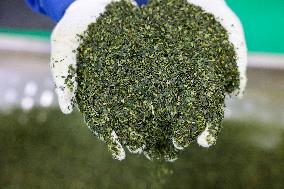
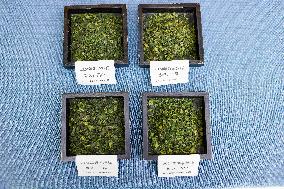
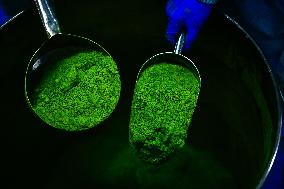
Raw materials for matcha production are on display in a tea industrial park in Jiangkou County of Tongren, southwest China's Guizhou Province, on April 14, 2025. Located at the foot of Mount Fanjing, a UNESCO World Heritage Site, Jiangkou County is a powerhouse in the world's matcha industry. The county boasts over 10,000 hectares of tea plantations, nearly a fifth of which are dedicated to matcha production. In 2024, Jiangkou County produced more than 1,200 tonnes of matcha with a total output value of 350 million yuan (about 48.02 million U.S. dollars). The local matcha products have been exported to more than 40 overseas markets. Experts and agronomists believe that Guizhou, located on a plateau, possesses geographical and climatic advantages such as high altitude, low latitude, abundant fog and limited sunlight ideal for growing tea. Therefore, tea produced in this area is green, ecological and organic. Photo by Ou Dongqu/Xinhua/ABACAPRESS.COM

  •  
Mount Fanjing Matcha Industry - China

Mount Fanjing Matcha Industry - China

A staff member produces matcha at a tea industrial park in Jiangkou County of Tongren, southwest China's Guizhou Province, on April 14, 2025. Located at the foot of Mount Fanjing, a UNESCO World Heritage Site, Jiangkou County is a powerhouse in the world's matcha industry. The county boasts over 10,000 hectares of tea plantations, nearly a fifth of which are dedicated to matcha production. In 2024, Jiangkou County produced more than 1,200 tonnes of matcha with a total output value of 350 million yuan (about 48.02 million U.S. dollars). The local matcha products have been exported to more than 40 overseas markets. Experts and agronomists believe that Guizhou, located on a plateau, possesses geographical and climatic advantages such as high altitude, low latitude, abundant fog and limited sunlight ideal for growing tea. Therefore, tea produced in this area is green, ecological and organic. Photo by Ou Dongqu/Xinhua/ABACAPRESS.COM

  •  
Mount Fanjing Matcha Industry - China

Mount Fanjing Matcha Industry - China

An aerial drone photo shows a farmer applying shading nets at a tea garden in Jiangkou County of Tongren, southwest China's Guizhou Province, on April 16, 2025. Located at the foot of Mount Fanjing, a UNESCO World Heritage Site, Jiangkou County is a powerhouse in the world's matcha industry. The county boasts over 10,000 hectares of tea plantations, nearly a fifth of which are dedicated to matcha production. In 2024, Jiangkou County produced more than 1,200 tonnes of matcha with a total output value of 350 million yuan (about 48.02 million U.S. dollars). The local matcha products have been exported to more than 40 overseas markets. Experts and agronomists believe that Guizhou, located on a plateau, possesses geographical and climatic advantages such as high altitude, low latitude, abundant fog and limited sunlight ideal for growing tea. Therefore, tea produced in this area is green, ecological and organic. Photo by Ou Dongqu/Xinhua/ABACAPRESS.COM

  •  
Mount Fanjing Matcha Industry - China

Mount Fanjing Matcha Industry - China

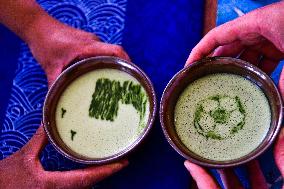
Matcha beverages are displayed at a tea industrial park in Jiangkou County of Tongren, southwest China's Guizhou Province, on April 14, 2025. Located at the foot of Mount Fanjing, a UNESCO World Heritage Site, Jiangkou County is a powerhouse in the world's matcha industry. The county boasts over 10,000 hectares of tea plantations, nearly a fifth of which are dedicated to matcha production. In 2024, Jiangkou County produced more than 1,200 tonnes of matcha with a total output value of 350 million yuan (about 48.02 million U.S. dollars). The local matcha products have been exported to more than 40 overseas markets. Experts and agronomists believe that Guizhou, located on a plateau, possesses geographical and climatic advantages such as high altitude, low latitude, abundant fog and limited sunlight ideal for growing tea. Therefore, tea produced in this area is green, ecological and organic. Photo by Yang Wenbin/Xinhua/ABACAPRESS.COM

  •  
Mount Fanjing Matcha Industry - China

Mount Fanjing Matcha Industry - China

A staff member works at a matcha factory in Jiangkou County of Tongren, southwest China's Guizhou Province, on April 14, 2025. Located at the foot of Mount Fanjing, a UNESCO World Heritage Site, Jiangkou County is a powerhouse in the world's matcha industry. The county boasts over 10,000 hectares of tea plantations, nearly a fifth of which are dedicated to matcha production. In 2024, Jiangkou County produced more than 1,200 tonnes of matcha with a total output value of 350 million yuan (about 48.02 million U.S. dollars). The local matcha products have been exported to more than 40 overseas markets. Experts and agronomists believe that Guizhou, located on a plateau, possesses geographical and climatic advantages such as high altitude, low latitude, abundant fog and limited sunlight ideal for growing tea. Therefore, tea produced in this area is green, ecological and organic. Photo by Ou Dongqu/Xinhua/ABACAPRESS.COM

  •  
Mount Fanjing Matcha Industry - China

Mount Fanjing Matcha Industry - China

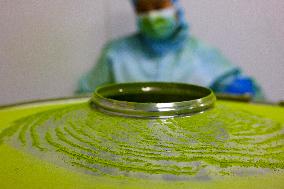
Matcha powder is pictured at a matcha factory in Jiangkou County of Tongren, southwest China's Guizhou Province, on April 14, 2025. Located at the foot of Mount Fanjing, a UNESCO World Heritage Site, Jiangkou County is a powerhouse in the world's matcha industry. The county boasts over 10,000 hectares of tea plantations, nearly a fifth of which are dedicated to matcha production. In 2024, Jiangkou County produced more than 1,200 tonnes of matcha with a total output value of 350 million yuan (about 48.02 million U.S. dollars). The local matcha products have been exported to more than 40 overseas markets. Experts and agronomists believe that Guizhou, located on a plateau, possesses geographical and climatic advantages such as high altitude, low latitude, abundant fog and limited sunlight ideal for growing tea. Therefore, tea produced in this area is green, ecological and organic. Photo by Yang Wenbin/Xinhua/ABACAPRESS.COM

  •  
Mount Fanjing Matcha Industry - China

Mount Fanjing Matcha Industry - China

A staff member makes matcha beverage at a tea industrial park in Jiangkou County of Tongren, southwest China's Guizhou Province, on April 14, 2025. Located at the foot of Mount Fanjing, a UNESCO World Heritage Site, Jiangkou County is a powerhouse in the world's matcha industry. The county boasts over 10,000 hectares of tea plantations, nearly a fifth of which are dedicated to matcha production. In 2024, Jiangkou County produced more than 1,200 tonnes of matcha with a total output value of 350 million yuan (about 48.02 million U.S. dollars). The local matcha products have been exported to more than 40 overseas markets. Experts and agronomists believe that Guizhou, located on a plateau, possesses geographical and climatic advantages such as high altitude, low latitude, abundant fog and limited sunlight ideal for growing tea. Therefore, tea produced in this area is green, ecological and organic. Photo by Ou Dongqu/Xinhua/ABACAPRESS.COM

  •  
Mount Fanjing Matcha Industry - China

Mount Fanjing Matcha Industry - China

A staff member makes matcha beverage at a tea industrial park in Jiangkou County of Tongren, southwest China's Guizhou Province, on April 14, 2025. Located at the foot of Mount Fanjing, a UNESCO World Heritage Site, Jiangkou County is a powerhouse in the world's matcha industry. The county boasts over 10,000 hectares of tea plantations, nearly a fifth of which are dedicated to matcha production. In 2024, Jiangkou County produced more than 1,200 tonnes of matcha with a total output value of 350 million yuan (about 48.02 million U.S. dollars). The local matcha products have been exported to more than 40 overseas markets. Experts and agronomists believe that Guizhou, located on a plateau, possesses geographical and climatic advantages such as high altitude, low latitude, abundant fog and limited sunlight ideal for growing tea. Therefore, tea produced in this area is green, ecological and organic. Photo by Ou Dongqu/Xinhua/ABACAPRESS.COM

  •  
Mount Fanjing Matcha Industry - China

Mount Fanjing Matcha Industry - China

An aerial drone photo shows a tea garden in Jiangkou County of Tongren, southwest China's Guizhou Province, on April 16, 2025. Located at the foot of Mount Fanjing, a UNESCO World Heritage Site, Jiangkou County is a powerhouse in the world's matcha industry. The county boasts over 10,000 hectares of tea plantations, nearly a fifth of which are dedicated to matcha production. In 2024, Jiangkou County produced more than 1,200 tonnes of matcha with a total output value of 350 million yuan (about 48.02 million U.S. dollars). The local matcha products have been exported to more than 40 overseas markets. Experts and agronomists believe that Guizhou, located on a plateau, possesses geographical and climatic advantages such as high altitude, low latitude, abundant fog and limited sunlight ideal for growing tea. Therefore, tea produced in this area is green, ecological and organic. Photo by Ou Dongqu/Xinhua/ABACAPRESS.COM

  •  
Matcha Cake Building in Nanning

Matcha Cake Building in Nanning

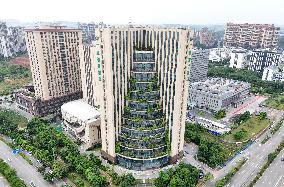
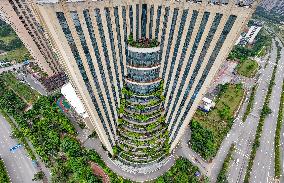
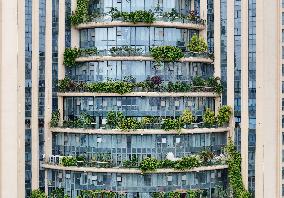
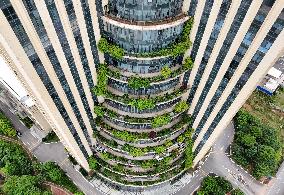
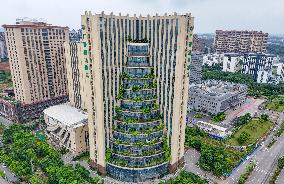
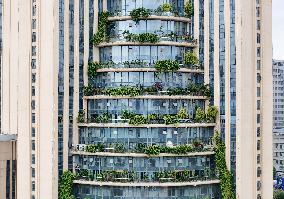
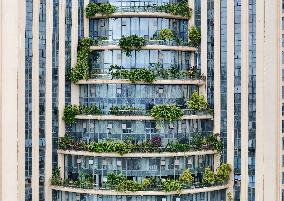
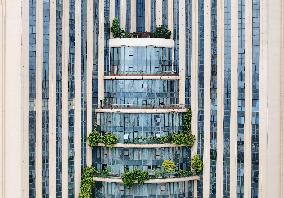
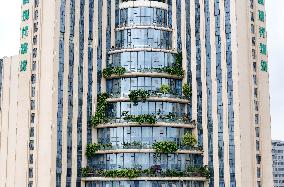
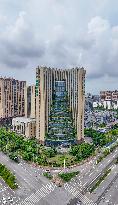
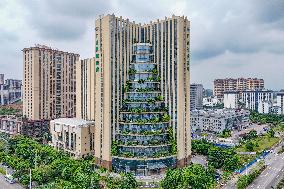
NANNING, CHINA - MAY 21, 2024 - Photo taken on May 21, 2024 shows a 12-storey building in Nanning, South China's Guangxi Zhuang Autonomous region, which looks like layers of stacked cakes. Because of the various green vegetation planted outside the building, it is called the "Matcha cake building".

  •  
Matcha Cake Building in Nanning

Matcha Cake Building in Nanning

NANNING, CHINA - MAY 21, 2024 - Photo taken on May 21, 2024 shows a 12-storey building in Nanning, South China's Guangxi Zhuang Autonomous region, which looks like layers of stacked cakes. Because of the various green vegetation planted outside the building, it is called the "Matcha cake building".

  •  
Matcha Cake Building in Nanning

Matcha Cake Building in Nanning

NANNING, CHINA - MAY 21, 2024 - Photo taken on May 21, 2024 shows a 12-storey building in Nanning, South China's Guangxi Zhuang Autonomous region, which looks like layers of stacked cakes. Because of the various green vegetation planted outside the building, it is called the "Matcha cake building".

  •  
Matcha Cake Building in Nanning

Matcha Cake Building in Nanning

NANNING, CHINA - MAY 21, 2024 - Photo taken on May 21, 2024 shows a 12-storey building in Nanning, South China's Guangxi Zhuang Autonomous region, which looks like layers of stacked cakes. Because of the various green vegetation planted outside the building, it is called the "Matcha cake building".

  •  
Matcha Cake Building in Nanning

Matcha Cake Building in Nanning

NANNING, CHINA - MAY 21, 2024 - Photo taken on May 21, 2024 shows a 12-storey building in Nanning, South China's Guangxi Zhuang Autonomous region, which looks like layers of stacked cakes. Because of the various green vegetation planted outside the building, it is called the "Matcha cake building".

  •  
Matcha Cake Building in Nanning

Matcha Cake Building in Nanning

NANNING, CHINA - MAY 21, 2024 - Photo taken on May 21, 2024 shows a 12-storey building in Nanning, South China's Guangxi Zhuang Autonomous region, which looks like layers of stacked cakes. Because of the various green vegetation planted outside the building, it is called the "Matcha cake building".

  •  
Matcha Cake Building in Nanning

Matcha Cake Building in Nanning

NANNING, CHINA - MAY 21, 2024 - Photo taken on May 21, 2024 shows a 12-storey building in Nanning, South China's Guangxi Zhuang Autonomous region, which looks like layers of stacked cakes. Because of the various green vegetation planted outside the building, it is called the "Matcha cake building".

  •  
Matcha Cake Building in Nanning

Matcha Cake Building in Nanning

NANNING, CHINA - MAY 21, 2024 - Photo taken on May 21, 2024 shows a 12-storey building in Nanning, South China's Guangxi Zhuang Autonomous region, which looks like layers of stacked cakes. Because of the various green vegetation planted outside the building, it is called the "Matcha cake building".

  •  
Matcha Cake Building in Nanning

Matcha Cake Building in Nanning

NANNING, CHINA - MAY 21, 2024 - Photo taken on May 21, 2024 shows a 12-storey building in Nanning, South China's Guangxi Zhuang Autonomous region, which looks like layers of stacked cakes. Because of the various green vegetation planted outside the building, it is called the "Matcha cake building".

  •  
Matcha Cake Building in Nanning

Matcha Cake Building in Nanning

NANNING, CHINA - MAY 21, 2024 - Photo taken on May 21, 2024 shows a 12-storey building in Nanning, South China's Guangxi Zhuang Autonomous region, which looks like layers of stacked cakes. Because of the various green vegetation planted outside the building, it is called the "Matcha cake building".

  •  
Matcha Cake Building in Nanning

Matcha Cake Building in Nanning

NANNING, CHINA - MAY 21, 2024 - Photo taken on May 21, 2024 shows a 12-storey building in Nanning, South China's Guangxi Zhuang Autonomous region, which looks like layers of stacked cakes. Because of the various green vegetation planted outside the building, it is called the "Matcha cake building".

  •  
Matcha Cake Building in Nanning

Matcha Cake Building in Nanning

NANNING, CHINA - MAY 21, 2024 - Photo taken on May 21, 2024 shows a 12-storey building in Nanning, South China's Guangxi Zhuang Autonomous region, which looks like layers of stacked cakes. Because of the various green vegetation planted outside the building, it is called the "Matcha cake building".

  •  
Matcha Cake Building in Nanning

Matcha Cake Building in Nanning

NANNING, CHINA - MAY 21, 2024 - Photo taken on May 21, 2024 shows a 12-storey building in Nanning, South China's Guangxi Zhuang Autonomous region, which looks like layers of stacked cakes. Because of the various green vegetation planted outside the building, it is called the "Matcha cake building".

  •  
Japan State Dinner Media Preview - Washington

Japan State Dinner Media Preview - Washington

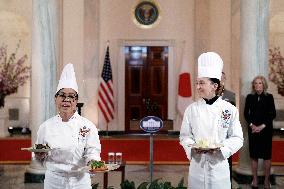
White House Executive Chef Cris Comerford and Executive Pastry Chef Susie Morrison present the menu at a media preview in advance of Wednesday Japan State Dinner at the White House in Washington on April 8, 2024. The menu includes: House-cured Salmon Avocados, Red Grapefruit, Watermelon Radish, Cucumber Shisho Leaf Fritters, Main Course: Dry-aged Rib Eye Steak, Blistered Shishito Pepper Butter Fricassée of Fava Beans, Morels and Cipollini Sesame Oil Sabayon and Dessert  Salted Caramel Pistachio Cake Matcha Ganache, Cherry Ice Cream, Raspberry Drizzle, Wine: Lingua Franca Bunker Hill Chardonnay 2021, Willamette Valley, Oregon Long Shadow Pirouette 2019, Columbia Valley, Washington, Argyle Vintage Brut Rosé 2020, Willamette Valley, Oregon. Photo by Yuri Gripas/ABACAPRESS.COM

  •  
Japan State Dinner Media Preview - Washington

Japan State Dinner Media Preview - Washington

White House Executive Chef Cris Comerford and Executive Pastry Chef Susie Morrison present the menu at a media preview in advance of Wednesday Japan State Dinner at the White House in Washington on April 8, 2024. The menu includes: House-cured Salmon Avocados, Red Grapefruit, Watermelon Radish, Cucumber Shisho Leaf Fritters, Main Course: Dry-aged Rib Eye Steak, Blistered Shishito Pepper Butter Fricassée of Fava Beans, Morels and Cipollini Sesame Oil Sabayon and Dessert  Salted Caramel Pistachio Cake Matcha Ganache, Cherry Ice Cream, Raspberry Drizzle, Wine: Lingua Franca Bunker Hill Chardonnay 2021, Willamette Valley, Oregon Long Shadow Pirouette 2019, Columbia Valley, Washington, Argyle Vintage Brut Rosé 2020, Willamette Valley, Oregon. Photo by Yuri Gripas/ABACAPRESS.COM

  •  
Japan State Dinner Media Preview - Washington

Japan State Dinner Media Preview - Washington

White House Executive Chef Cris Comerford and Executive Pastry Chef Susie Morrison present the menu at a media preview in advance of Wednesday Japan State Dinner at the White House in Washington on April 8, 2024. The menu includes: House-cured Salmon Avocados, Red Grapefruit, Watermelon Radish, Cucumber Shisho Leaf Fritters, Main Course: Dry-aged Rib Eye Steak, Blistered Shishito Pepper Butter Fricassée of Fava Beans, Morels and Cipollini Sesame Oil Sabayon and Dessert  Salted Caramel Pistachio Cake Matcha Ganache, Cherry Ice Cream, Raspberry Drizzle, Wine: Lingua Franca Bunker Hill Chardonnay 2021, Willamette Valley, Oregon Long Shadow Pirouette 2019, Columbia Valley, Washington, Argyle Vintage Brut Rosé 2020, Willamette Valley, Oregon. Photo by Yuri Gripas/ABACAPRESS.COM

  •  
Japan State Dinner Media Preview - Washington

Japan State Dinner Media Preview - Washington

White House Executive Chef Cris Comerford and Executive Pastry Chef Susie Morrison present the menu at a media preview in advance of Wednesday Japan State Dinner at the White House in Washington on April 8, 2024. The menu includes: House-cured Salmon Avocados, Red Grapefruit, Watermelon Radish, Cucumber Shisho Leaf Fritters, Main Course: Dry-aged Rib Eye Steak, Blistered Shishito Pepper Butter Fricassée of Fava Beans, Morels and Cipollini Sesame Oil Sabayon and Dessert  Salted Caramel Pistachio Cake Matcha Ganache, Cherry Ice Cream, Raspberry Drizzle, Wine: Lingua Franca Bunker Hill Chardonnay 2021, Willamette Valley, Oregon Long Shadow Pirouette 2019, Columbia Valley, Washington, Argyle Vintage Brut Rosé 2020, Willamette Valley, Oregon. Photo by Yuri Gripas/ABACAPRESS.COM

  •  
Japan State Dinner Media Preview - Washington

Japan State Dinner Media Preview - Washington

White House Executive Chef Cris Comerford and Executive Pastry Chef Susie Morrison present the menu at a media preview in advance of Wednesday Japan State Dinner at the White House in Washington on April 8, 2024. The menu includes: House-cured Salmon Avocados, Red Grapefruit, Watermelon Radish, Cucumber Shisho Leaf Fritters, Main Course: Dry-aged Rib Eye Steak, Blistered Shishito Pepper Butter Fricassée of Fava Beans, Morels and Cipollini Sesame Oil Sabayon and Dessert  Salted Caramel Pistachio Cake Matcha Ganache, Cherry Ice Cream, Raspberry Drizzle, Wine: Lingua Franca Bunker Hill Chardonnay 2021, Willamette Valley, Oregon Long Shadow Pirouette 2019, Columbia Valley, Washington, Argyle Vintage Brut Rosé 2020, Willamette Valley, Oregon. Photo by Yuri Gripas/ABACAPRESS.COM

  •  
Japan State Dinner Media Preview - Washington

Japan State Dinner Media Preview - Washington

White House Executive Chef Cris Comerford and Executive Pastry Chef Susie Morrison present the menu at a media preview in advance of Wednesday Japan State Dinner at the White House in Washington on April 8, 2024. The menu includes: House-cured Salmon Avocados, Red Grapefruit, Watermelon Radish, Cucumber Shisho Leaf Fritters, Main Course: Dry-aged Rib Eye Steak, Blistered Shishito Pepper Butter Fricassée of Fava Beans, Morels and Cipollini Sesame Oil Sabayon and Dessert  Salted Caramel Pistachio Cake Matcha Ganache, Cherry Ice Cream, Raspberry Drizzle, Wine: Lingua Franca Bunker Hill Chardonnay 2021, Willamette Valley, Oregon Long Shadow Pirouette 2019, Columbia Valley, Washington, Argyle Vintage Brut Rosé 2020, Willamette Valley, Oregon. Photo by Yuri Gripas/ABACAPRESS.COM

  •  
Japan State Dinner Media Preview - Washington

Japan State Dinner Media Preview - Washington

White House Executive Chef Cris Comerford and Executive Pastry Chef Susie Morrison present the menu at a media preview in advance of Wednesday Japan State Dinner at the White House in Washington on April 8, 2024. The menu includes: House-cured Salmon Avocados, Red Grapefruit, Watermelon Radish, Cucumber Shisho Leaf Fritters, Main Course: Dry-aged Rib Eye Steak, Blistered Shishito Pepper Butter Fricassée of Fava Beans, Morels and Cipollini Sesame Oil Sabayon and Dessert  Salted Caramel Pistachio Cake Matcha Ganache, Cherry Ice Cream, Raspberry Drizzle, Wine: Lingua Franca Bunker Hill Chardonnay 2021, Willamette Valley, Oregon Long Shadow Pirouette 2019, Columbia Valley, Washington, Argyle Vintage Brut Rosé 2020, Willamette Valley, Oregon. Photo by Yuri Gripas/ABACAPRESS.COM

  •  
JAPAN-SAITAMA-TEA MASTER-MATCHA

JAPAN-SAITAMA-TEA MASTER-MATCHA

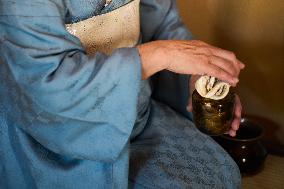
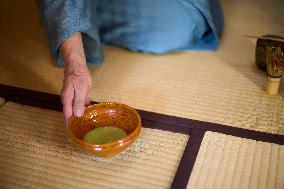
(230611) -- SAITAMA, June 11, 2023 (Xinhua) -- Tea Master Asami Yaeko demonstrates the cleaning of matcha props in the tea ceremony room at her home in Saitama, Japan, on June 10, 2023. Matcha is a tea drink originated in China. Kentoushi, or diplomats to China's Tang Dynasty (618-907), brought matcha back to Japan during the 9th century, where it became popular as time went by. Unlike regular teas, matcha needs to be ground before brewing and serving. Tea Master Asami Yaeko, who is near her 80, has been in touch with tea ceremony since childhood under the influence of her grandmother, and has been involved in tea for a lifetime. She demonstrated a tea ceremony with macha at her home in Saitama on Saturday. (Xinhua/Zhang Xiaoyu)

  •  
JAPAN-SAITAMA-TEA MASTER-MATCHA

JAPAN-SAITAMA-TEA MASTER-MATCHA

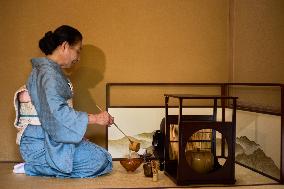
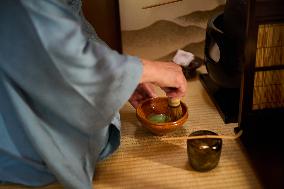
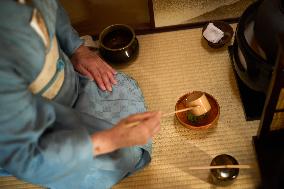
(230611) -- SAITAMA, June 11, 2023 (Xinhua) -- Tea Master Asami Yaeko demonstrates the brewing of matcha in the tea ceremony room at her home in Saitama, Japan, on June 10, 2023. Matcha is a tea drink originated in China. Kentoushi, or diplomats to China's Tang Dynasty (618-907), brought matcha back to Japan during the 9th century, where it became popular as time went by. Unlike regular teas, matcha needs to be ground before brewing and serving. Tea Master Asami Yaeko, who is near her 80, has been in touch with tea ceremony since childhood under the influence of her grandmother, and has been involved in tea for a lifetime. She demonstrated a tea ceremony with macha at her home in Saitama on Saturday. (Xinhua/Zhang Xiaoyu)

  •  
JAPAN-SAITAMA-TEA MASTER-MATCHA

JAPAN-SAITAMA-TEA MASTER-MATCHA

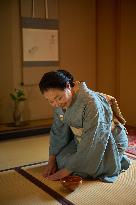
(230611) -- SAITAMA, June 11, 2023 (Xinhua) -- Tea Master Asami Yaeko demonstrates a bow to thank the serving of macha in the tea ceremony room at her home in Saitama, Japan, on June 10, 2023. Matcha is a tea drink originated in China. Kentoushi, or diplomats to China's Tang Dynasty (618-907), brought matcha back to Japan during the 9th century, where it became popular as time went by. Unlike regular teas, matcha needs to be ground before brewing and serving. Tea Master Asami Yaeko, who is near her 80, has been in touch with tea ceremony since childhood under the influence of her grandmother, and has been involved in tea for a lifetime. She demonstrated a tea ceremony with macha at her home in Saitama on Saturday. (Xinhua/Zhang Xiaoyu)

  •  
JAPAN-SAITAMA-TEA MASTER-MATCHA

JAPAN-SAITAMA-TEA MASTER-MATCHA

(230611) -- SAITAMA, June 11, 2023 (Xinhua) -- Tea Master Asami Yaeko demonstrates the serving of matcha to the guest in the tea ceremony room at her home in Saitama, Japan, on June 10, 2023. Matcha is a tea drink originated in China. Kentoushi, or diplomats to China's Tang Dynasty (618-907), brought matcha back to Japan during the 9th century, where it became popular as time went by. Unlike regular teas, matcha needs to be ground before brewing and serving. Tea Master Asami Yaeko, who is near her 80, has been in touch with tea ceremony since childhood under the influence of her grandmother, and has been involved in tea for a lifetime. She demonstrated a tea ceremony with macha at her home in Saitama on Saturday. (Xinhua/Zhang Xiaoyu)

  •  
JAPAN-SAITAMA-TEA MASTER-MATCHA

JAPAN-SAITAMA-TEA MASTER-MATCHA

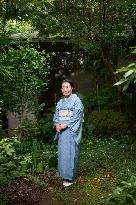
(230611) -- SAITAMA, June 11, 2023 (Xinhua) -- Tea Master Asami Yaeko stands at her home in Saitama, Japan, on June 10, 2023. Matcha is a tea drink originated in China. Kentoushi, or diplomats to China's Tang Dynasty (618-907), brought matcha back to Japan during the 9th century, where it became popular as time went by. Unlike regular teas, matcha needs to be ground before brewing and serving. Tea Master Asami Yaeko, who is near her 80, has been in touch with tea ceremony since childhood under the influence of her grandmother, and has been involved in tea for a lifetime. She demonstrated a tea ceremony with macha at her home in Saitama on Saturday. (Xinhua/Zhang Xiaoyu)

  •  
JAPAN-SAITAMA-TEA MASTER-MATCHA

JAPAN-SAITAMA-TEA MASTER-MATCHA

(230611) -- SAITAMA, June 11, 2023 (Xinhua) -- Tea Master Asami Yaeko demonstrates the brewing of matcha in the tea ceremony room at her home in Saitama, Japan, on June 10, 2023. Matcha is a tea drink originated in China. Kentoushi, or diplomats to China's Tang Dynasty (618-907), brought matcha back to Japan during the 9th century, where it became popular as time went by. Unlike regular teas, matcha needs to be ground before brewing and serving. Tea Master Asami Yaeko, who is near her 80, has been in touch with tea ceremony since childhood under the influence of her grandmother, and has been involved in tea for a lifetime. She demonstrated a tea ceremony with macha at her home in Saitama on Saturday. (Xinhua/Zhang Xiaoyu)

  •  
JAPAN-SAITAMA-TEA MASTER-MATCHA

JAPAN-SAITAMA-TEA MASTER-MATCHA

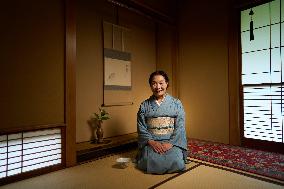
(230611) -- SAITAMA, June 11, 2023 (Xinhua) -- Tea Master Asami Yaeko sits in the tea ceremony room at her home in Saitama, Japan, on June 10, 2023. Matcha is a tea drink originated in China. Kentoushi, or diplomats to China's Tang Dynasty (618-907), brought matcha back to Japan during the 9th century, where it became popular as time went by. Unlike regular teas, matcha needs to be ground before brewing and serving. Tea Master Asami Yaeko, who is near her 80, has been in touch with tea ceremony since childhood under the influence of her grandmother, and has been involved in tea for a lifetime. She demonstrated a tea ceremony with macha at her home in Saitama on Saturday. (Xinhua/Zhang Xiaoyu)

  •  
JAPAN-SAITAMA-TEA MASTER-MATCHA

JAPAN-SAITAMA-TEA MASTER-MATCHA

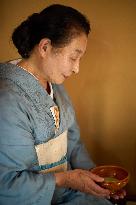
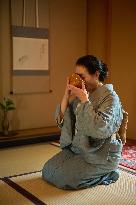
(230611) -- SAITAMA, June 11, 2023 (Xinhua) -- Tea Master Asami Yaeko demonstrates the drinking of matcha in the tea ceremony room at her home in Saitama, Japan, on June 10, 2023. Matcha is a tea drink originated in China. Kentoushi, or diplomats to China's Tang Dynasty (618-907), brought matcha back to Japan during the 9th century, where it became popular as time went by. Unlike regular teas, matcha needs to be ground before brewing and serving. Tea Master Asami Yaeko, who is near her 80, has been in touch with tea ceremony since childhood under the influence of her grandmother, and has been involved in tea for a lifetime. She demonstrated a tea ceremony with macha at her home in Saitama on Saturday. (Xinhua/Zhang Xiaoyu)

  •  
JAPAN-SAITAMA-TEA MASTER-MATCHA

JAPAN-SAITAMA-TEA MASTER-MATCHA

(230611) -- SAITAMA, June 11, 2023 (Xinhua) -- Tea Master Asami Yaeko shows a bow of finished matcha in the tea ceremony room at her home in Saitama, Japan, on June 10, 2023. Matcha is a tea drink originated in China. Kentoushi, or diplomats to China's Tang Dynasty (618-907), brought matcha back to Japan during the 9th century, where it became popular as time went by. Unlike regular teas, matcha needs to be ground before brewing and serving. Tea Master Asami Yaeko, who is near her 80, has been in touch with tea ceremony since childhood under the influence of her grandmother, and has been involved in tea for a lifetime. She demonstrated a tea ceremony with macha at her home in Saitama on Saturday. (Xinhua/Zhang Xiaoyu)

  •  
JAPAN-SAITAMA-TEA MASTER-MATCHA

JAPAN-SAITAMA-TEA MASTER-MATCHA

(230611) -- SAITAMA, June 11, 2023 (Xinhua) -- Tea Master Asami Yaeko demonstrates the brewing of matcha in the tea ceremony room at her home in Saitama, Japan, on June 10, 2023. Matcha is a tea drink originated in China. Kentoushi, or diplomats to China's Tang Dynasty (618-907), brought matcha back to Japan during the 9th century, where it became popular as time went by. Unlike regular teas, matcha needs to be ground before brewing and serving. Tea Master Asami Yaeko, who is near her 80, has been in touch with tea ceremony since childhood under the influence of her grandmother, and has been involved in tea for a lifetime. She demonstrated a tea ceremony with macha at her home in Saitama on Saturday. (Xinhua/Zhang Xiaoyu)

  •  

Explore matcha making in mountains of SW China

STORY: Explore matcha making in mountains of SW China DATELINE: April 16, 2023 LENGTH: 0:01:33 LOCATION: TONGREN, China CATEGORY: ECONOMY SHOTLIST: 1. various of matcha producing process 2. SOUNDBITE (Chinese): LIU HAI, Deputy general manager of Guitea Group STORYLINE: Nestled in the deep mountains in southwest China's Guizhou Province, Jiangkou county in Tongren City has an ideal environment to grow tea. Many tea producing companies have been dedicated to building it the "capital of matcha in China." SOUNDBITE (Chinese): LIU HAI, Deputy general manager of Guitea Group "Guitea's every tea garden here has to pass the organic certification of the European Union, the United States and Japan. Our tea garden is weeded manually without using pesticides. This workshop has an annual output of 4,000 tonnes of matcha and a smart blending system. This system can blend tea of different production areas and different varieties to produce standardized tea products. The raw materials will enter the milling workshop. H

  • Main
  • Top
  • Editorial
  • Creative
  • About Us
  • About ILG
  • Terms of use
  • Company
  • BEHIND
  • Price List
  • Single Plan
  • Monthly Plan
  • Services
  • Shooting
  • Rights Clearance
  • Support
  • FAQ
  • How To Buy
  • Contact Us
  • Become a Partner

© KYODO NEWS IMAGES INC

All Rights Reserved.

  • Editorial
  • Olympics
  • News
  • Sports
  • Japan
  • Tech
  • Royal
  • Disaster
  • NorthKorea
  • Old Japan
  • SNS

  • Creative
  • Food
  • Japan
  • Landscape
  • Animal
  • Popular
  • #Ukraine
  • #Thailand
  • #coronavirus
  • #N. Korea
  • #Russia
  • #China
  • #Ukraine
  • #Thailand
  • #coronavirus
  • #N. Korea
  • #Russia
  • #China
  • Food
  • Japan
  • Landscape
  • Animal
  • Olympics
  • News
  • Sports
  • Japan
  • Tech
  • Royal
  • Disaster
  • NorthKorea
  • Old Japan
  • SNS