•  
Japan imperial family's trip to Fukushima

Japan imperial family's trip to Fukushima

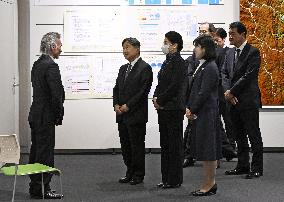
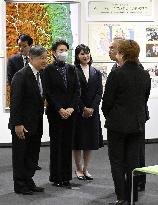
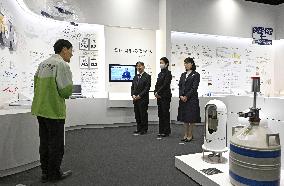
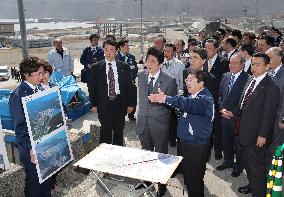
(Facing camera, from L) Japan's Emperor Naruhito, Empress Masako and their daughter Princess Aiko talk with a person affected by the Great East Japan Earthquake at a memorial museum in Futaba, a town in Fukushima Prefecture that co-hosts the crippled Fukushima Daiichi nuclear power plant, on April 6, 2026. Fifteen years after the earthquake, tsunami and nuclear disasters that struck northeastern Japan in March 2011, they are visiting the prefecture to see the recovery efforts firsthand.

  •  
Japan imperial family's trip to Fukushima

Japan imperial family's trip to Fukushima

Japan's Emperor Naruhito, Empress Masako and their daughter Princess Aiko arrive at a memorial museum in Futaba, a town in Fukushima Prefecture that co-hosts the crippled Fukushima Daiichi nuclear power plant, on April 6, 2026. Fifteen years after the earthquake, tsunami and nuclear disasters that struck northeastern Japan in March 2011, they are visiting the prefecture to see the recovery efforts firsthand.

  •  
Japan imperial family's trip to Fukushima

Japan imperial family's trip to Fukushima

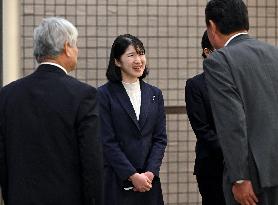
Japanese Princess Aiko is greeted upon her arrival at the J-Village facility in Fukushima Prefecture on April 6, 2026. Emperor Naruhito, Empress Masako and their daughter Princess Aiko are visiting Fukushima Prefecture to observe the recovery efforts after a massive earthquake and tsunami struck the region in March 2011, triggering a nuclear accident at the Fukushima Daiichi power plant. (Pool photo)

  •  
Japan imperial family's trip to Fukushima

Japan imperial family's trip to Fukushima

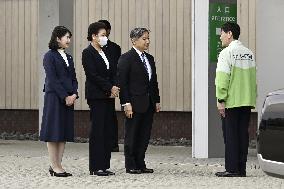
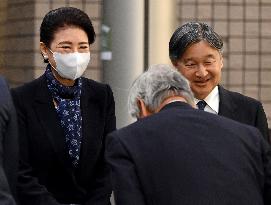
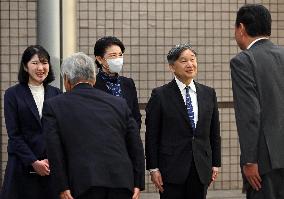
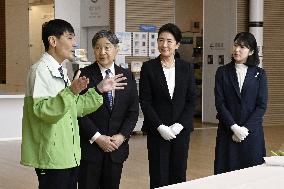
Japan's Emperor Naruhito and Empress Masako are greeted upon their arrival at the J-Village facility in Fukushima Prefecture on April 6, 2026. The imperial couple and their daughter Princess Aiko are visiting Fukushima Prefecture to observe the recovery efforts after a massive earthquake and tsunami struck the region in March 2011, triggering a nuclear accident at the Fukushima Daiichi power plant. (Pool photo)

  •  
Japan imperial family's trip to Fukushima

Japan imperial family's trip to Fukushima

Japanese Princess Aiko is greeted upon her arrival at the J-Village facility in Fukushima Prefecture on April 6, 2026. Emperor Naruhito, Empress Masako and their daughter Princess Aiko are visiting Fukushima Prefecture to observe the recovery efforts after a massive earthquake and tsunami struck the region in March 2011, triggering a nuclear accident at the Fukushima Daiichi power plant. (Pool photo)

  •  
Japan imperial family's trip to Fukushima

Japan imperial family's trip to Fukushima

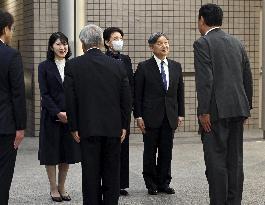
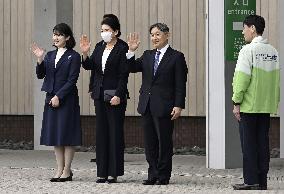
(Facing camera, from R) Japan's Emperor Naruhito, Empress Masako and their daughter Princess Aiko arrive at the J-Village facility in Fukushima Prefecture on April 6, 2026. The imperial family is visiting Fukushima Prefecture to observe the recovery efforts after a massive earthquake and tsunami struck the region in March 2011, triggering a nuclear accident at the Fukushima Daiichi power plant. (Pool photo)

  •  
Japan imperial family's trip to Fukushima

Japan imperial family's trip to Fukushima

Japan's Emperor Naruhito (back, R), Empress Masako (back, C) and their daughter Princess Aiko are greeted upon their arrival on April 6, 2026, at the J-Village football training center in Naraha, Fukushima Prefecture, which served as a relief center for people affected by the Great East Japan Earthquake. Fifteen years after the earthquake, tsunami and nuclear disasters that struck northeastern Japan in March 2011, they are visiting the prefecture to see the recovery efforts firsthand. (Pool photo)

  •  
Japan imperial family's trip to Fukushima

Japan imperial family's trip to Fukushima

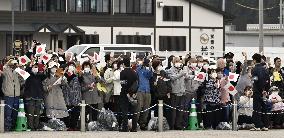
People wave to Japan's Emperor Naruhito, Empress Masako and their daughter Princess Aiko upon their arrival at the Great East Japan Earthquake and Nuclear Disaster Memorial Museum in Futaba, a Fukushima Prefecture town that co-hosts the crippled Fukushima Daiichi nuclear power plant, on April 6, 2026. Fifteen years after the earthquake, tsunami and nuclear disasters that struck northeastern Japan in March 2011, they are visiting the prefecture to see the recovery efforts firsthand.

  •  
Japan imperial family's trip to Fukushima

Japan imperial family's trip to Fukushima

Japan's Emperor Naruhito (L), Empress Masako (2nd from L) and their daughter Princess Aiko (3rd from L) talk with people affected by the Great East Japan Earthquake at a memorial museum in Futaba, a town in Fukushima Prefecture that co-hosts the crippled Fukushima Daiichi nuclear power plant, on April 6, 2026. Fifteen years after the earthquake, tsunami and nuclear disasters that struck northeastern Japan in March 2011, they are visiting the prefecture to see the recovery efforts firsthand.

  •  
Japan imperial family's trip to Fukushima

Japan imperial family's trip to Fukushima

Japan's Emperor Naruhito, Empress Masako (C) and their daughter Princess Aiko bow at the Great East Japan Earthquake and Nuclear Disaster Memorial Museum in Futaba, a Fukushima Prefecture town that co-hosts the crippled Fukushima Daiichi nuclear power plant, on April 6, 2026. Fifteen years after the earthquake, tsunami and nuclear disasters that struck northeastern Japan in March 2011, they are visiting the prefecture to see the recovery efforts firsthand.

  •  
Japan imperial family's trip to Fukushima

Japan imperial family's trip to Fukushima

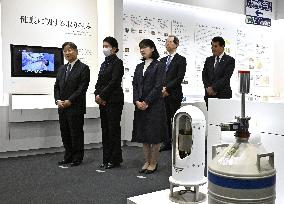
Japan's Emperor Naruhito (3rd from L), Empress Masako (2nd from L) and their daughter Princess Aiko arrive at the Great East Japan Earthquake and Nuclear Disaster Memorial Museum in Futaba, a Fukushima Prefecture town that co-hosts the crippled Fukushima Daiichi nuclear power plant, on April 6, 2026. Fifteen years after the earthquake, tsunami and nuclear disasters that struck northeastern Japan in March 2011, they are visiting the prefecture to see the recovery efforts firsthand.

  •  
Japan imperial family's trip to Fukushima

Japan imperial family's trip to Fukushima

Japan's Emperor Naruhito (2nd from L), Empress Masako (2nd from R) and their daughter Princess Aiko visit the Great East Japan Earthquake and Nuclear Disaster Memorial Museum in Futaba, a Fukushima Prefecture town that co-hosts the crippled Fukushima Daiichi nuclear power plant, on April 6, 2026. Fifteen years after the earthquake, tsunami and nuclear disasters that struck northeastern Japan in March 2011, they are visiting the prefecture to see the recovery efforts firsthand.

  •  
Japan imperial family's trip to Fukushima

Japan imperial family's trip to Fukushima

Japan's Emperor Naruhito (2nd from L), Empress Masako (2nd from R) and their daughter Princess Aiko visit the Great East Japan Earthquake and Nuclear Disaster Memorial Museum in Futaba, a Fukushima Prefecture town that co-hosts the crippled Fukushima Daiichi nuclear power plant, on April 6, 2026. Fifteen years after the earthquake, tsunami and nuclear disasters that struck northeastern Japan in March 2011, they are visiting the prefecture to see the recovery efforts firsthand.

  •  
Japan imperial family's trip to Fukushima

Japan imperial family's trip to Fukushima

Japan's Emperor Naruhito (back, L), Empress Masako (back, C) and their daughter Princess Aiko visit the Great East Japan Earthquake and Nuclear Disaster Memorial Museum in Futaba, a Fukushima Prefecture town that co-hosts the crippled Fukushima Daiichi nuclear power plant, on April 6, 2026. Fifteen years after the earthquake, tsunami and nuclear disasters that struck northeastern Japan in March 2011, they are visiting the prefecture to see the recovery efforts firsthand.

  •  
Japan imperial family's trip to Fukushima

Japan imperial family's trip to Fukushima

Japan's Emperor Naruhito (front, L), Empress Masako (front, C) and their daughter Princess Aiko visit the Great East Japan Earthquake and Nuclear Disaster Memorial Museum in Futaba, a Fukushima Prefecture town that co-hosts the crippled Fukushima Daiichi nuclear power plant, on April 6, 2026. Fifteen years after the earthquake, tsunami and nuclear disasters that struck northeastern Japan in March 2011, they are visiting the prefecture to see the recovery efforts firsthand.

  •  
Japan imperial family's trip to Fukushima

Japan imperial family's trip to Fukushima

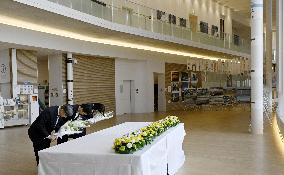
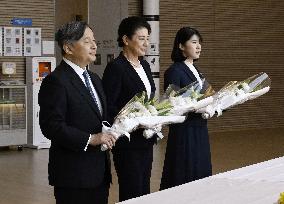
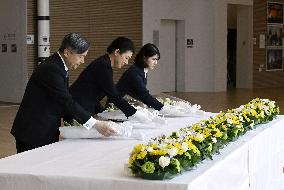
Japan's Emperor Naruhito, Empress Masako (C) and their daughter Princess Aiko lay flowers at the Great East Japan Earthquake and Nuclear Disaster Memorial Museum in Futaba, a Fukushima Prefecture town that co-hosts the crippled Fukushima Daiichi nuclear power plant, on April 6, 2026. Fifteen years after the earthquake, tsunami and nuclear disasters that struck northeastern Japan in March 2011, they are visiting the prefecture to see the recovery efforts firsthand.

  •  
Japan imperial family's trip to Fukushima

Japan imperial family's trip to Fukushima

Japan's Emperor Naruhito, Empress Masako (C) and their daughter Princess Aiko lay flowers at the Great East Japan Earthquake and Nuclear Disaster Memorial Museum in Futaba, a Fukushima Prefecture town that co-hosts the crippled Fukushima Daiichi nuclear power plant, on April 6, 2026. Fifteen years after the earthquake, tsunami and nuclear disasters that struck northeastern Japan in March 2011, they are visiting the prefecture to see the recovery efforts firsthand.

  •  
New Year ladder-top stunts by firefighters

New Year ladder-top stunts by firefighters

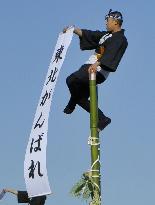
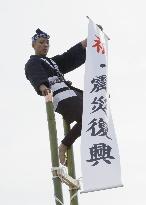
TOKYO, Japan - A firefighter holds a scroll bearing a message of encouragement for the Tohoku region, which was hit by the March 2011 earthquake and tsunami, while seated atop a 7-meter ladder in Tokyo's Koto Ward on Jan. 6, 2012, in a demonstration of ladder-top stunts dating back to Japan's feudal Edo period during the annual New Year parade of fire brigades organized by the Tokyo Fire Department.

  •  
Tsunami-hit police box in Onagawa, Miyagi Pref.

Tsunami-hit police box in Onagawa, Miyagi Pref.

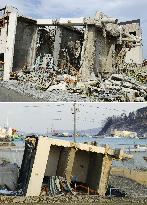
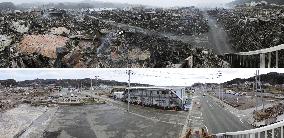
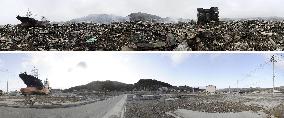
ONAGAWA, Japan - A "koban" police box destroyed by the March 2011 earthquake and tsunami in Onagawa, Miyagi Prefecture, northeastern Japan, is pictured in July 2011 (upper frame) and on March 6, 2014 (lower frame). Talks are underway about whether to preserve the police box as a relic from the disaster.

  •  
2 and a half years after quake

2 and a half years after quake

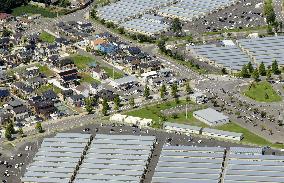
SENDAI, Japan - Photo taken from a Kyodo News helicopter shows a new residential area neighboring a large temporary housing complex in Ishinomaki, Miyagi Prefecture, on Sept. 6, 2013, about two and a half years after the March 11, 2011, Great East Japan Earthquake.

  •  
2 and a half years after quake

2 and a half years after quake

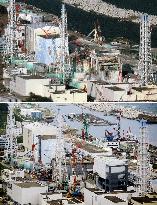
SENDAI, Japan - Combination photos taken from a Kyodo News helicopter show (from R front) the No. 4, No. 3, No. 2 and No. 1 reactor buildings at the crippled Fukushima Daiichi Nuclear Power Station in Fukushima Prefecture on Dec. 15, 2011 (top), about nine months after the March 11, 2011, Great East Japan Earthquake, and about two and a half years after the disaster on Sept. 6, 2013 (bottom).

  •  
2 and a half years after quake

2 and a half years after quake

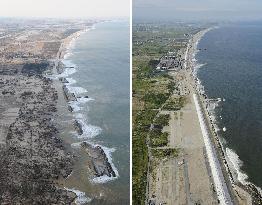
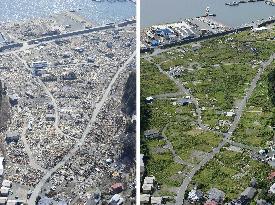
SENDAI, Japan - Combination photos taken from a Kyodo News helicopter show a coastal area in the town of Yamamoto, Miyagi Prefecture, on March 19, 2011 (L), shortly after the March 11, 2011, Great East Japan Earthquake, and about two and a half years later on Sept. 6, 2013 (R) with a breakwater under construction.

  •  
2 and a half years after quake

2 and a half years after quake

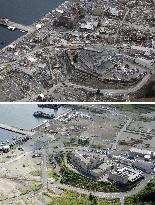
SENDAI, Japan - Combination photos from a Kyodo News helicopter show an area in the town of Onagawa, Miyagi Prefecture, on March 22, 2011 (top), shortly after the March 11, 2011, Great East Japan Earthquake, and about two and a half years later on Sept. 6, 2013 (bottom). Work has begun to add soil to areas where houses and commercial facilities are to be reconstructed.

  •  
2 and a half years after quake

2 and a half years after quake

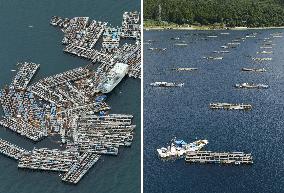
SENDAI, Japan - Combination photos taken from a Kyodo News helicopter show the Yamada Bay in the town of Yamada, Iwate Prefecture, on March 23, 2011 (L), soon after the March 11, 2011, Great East Japan Earthquake, and about two and a half years later on Sept. 6, 2013 (R). Oysters and scallops are cultured on rafts in array (latter).

  •  
2 and a half years after quake

2 and a half years after quake

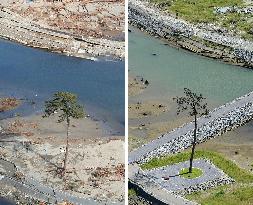
SENDAI, Japan - Combination photos taken from a Kyodo News helicopter show the "miracle pine" in Rikuzentakata, Iwate Prefecture, on March 27, 2011 (L), soon after the March 11, 2011, Great East Japan Earthquake, and a restored pine at the same location about two and a half years later on Sept. 6, 2013 (R). The tree, which initially withstood the tsunami and later died, was reassembled for a monument after being dissected for anti-decay treatment.

  •  
2 and a half years after quake

2 and a half years after quake

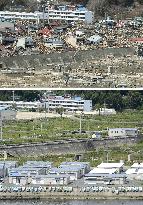
SENDAI, Japan - Combination photos taken from a Kyodo News helicopter show the downtown area of Ofunato, Iwate Prefecture, on March 19, 2011 (top), soon after the March 11, 2011, Great East Japan Earthquake, and about two and a half years later on Sept. 6, 2013 (bottom).

  •  
2 and a half years after quake

2 and a half years after quake

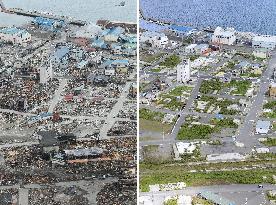
SENDAI, Japan - Combination photos taken from a Kyodo News helicopter show the Akahama area in the town of Otsuchi, Iwate Prefecture, on April 10, 2011 (L), about a month after the March 11, 2011, Great East Japan Earthquake, and about two and a half years later on Sept. 6, 2013 (R). A pleasure boat that was washed up on the roof of an inn (upper in the former) by the tsunami was dismantled, but the town government of Otsuchi now plans to restore it to preserve the memory of the disaster.

  •  
2 and a half years after quake

2 and a half years after quake

SENDAI, Japan - Combination photos from a Kyodo News helicopter show an area in the town of Yamada, Iwate Prefecture, on March 23, 2011 (L), after the March 11, 2011, Great East Japan Earthquake, and about two and a half years later on Sept. 6, 2013 (R). The building (front in the former) for JR Rikuchu-Yamada Station is not in the latter.

  •  
2 and a half years after quake

2 and a half years after quake

SENDAI, Japan - Combination photos from a Kyodo News helicopter show the Taro area of Miyako, Iwate Prefecture, on March 23, 2011 (top), after the March 11, 2011, Great East Japan Earthquake, and about two and a half years later on Sept. 6, 2013 (bottom). Fishery facilities are seen built in the latter.

  •  
Abe in disaster-hit Iwate

Abe in disaster-hit Iwate

MIYAKO, Japan - Japanese Prime Minister Shinzo Abe (front C) is briefed on April 6, 2013, by Masanori Yamamoto (front R), mayor of the city of Miyako, Iwate Prefecture, at a levee in the Toro area of the city that was heavily damaged by the March 2011 earthquake and tsunami. (Pool photo)

  •  
2 years after quake

2 years after quake

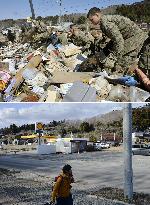
KESENNUMA, Japan - Photos show U.S. Marines cleaning up debris on the island of Oshima in Kesennuma, Miyagi Prefecture, on April 6, 2011 (top), after the March 11 earthquake and tsunami, and the same location on March 4, 2013.

  •  
2 years after quake

2 years after quake

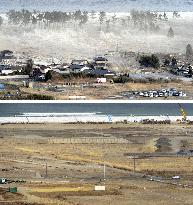
NATORI, Japan - Aerial photos taken by Kyodo News show a coastal area in the city of Natori, Miyagi Prefecture, on March 11, 2011 (top), as the area is hit by massive tsunami waves following a magnitude 9.0 earthquake, and the same location on March 6, 2013, with levees being reconstructed along the coast.

  •  
2 years after quake

2 years after quake

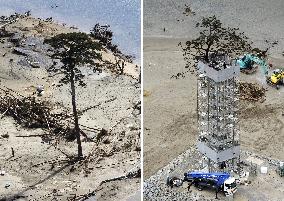
RIKUZENTAKATA, Japan - Aerial photos taken by Kyodo News show the "miracle pine" in Rikuzentakata, Iwate Prefecture, on March 27, 2011 (L), after the March 11 earthquake and tsunami, and sections of the truck being reassembled for a monument on March 6, 2013, after the tree was dissected for anti-decay treatment.

  •  
Firefighters' New Year parade

Firefighters' New Year parade

TOKYO, Japan - A firefighter holds a scroll bearing a message wishing for the reconstruction from the March 2011 earthquake and tsunami, in Tokyo's Koto Ward on Jan. 6, 2013, in a demonstration of ladder-top stunts dating back to Japan's feudal Edo period during the annual New Year parade of fire brigades organized by the Tokyo Fire Department.

  •  
Tsunami debris on U.S. shores

Tsunami debris on U.S. shores

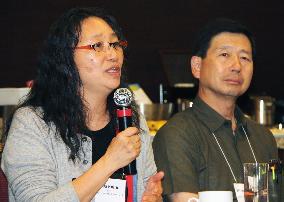
PORTLAND, United States - Azusa Kojima (L) and Hiroshi Kaneko of the Japan Environmental Action Network meet with U.S. groups on how to collaborate over the problem of debris from the March 2011 earthquake and tsunami landing on North American shores in Portland, Oregon, on Aug. 6, 2012.

  •  
Iwaki soon after quake, now

Iwaki soon after quake, now

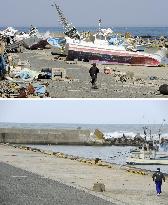
TOKYO, Japan - Photos show Yotsukura port in the city of Iwaki, Fukushima Prefecture, on April 6, 2011 (top), shortly after the area was devastated by the March 11 earthquake and tsunami, and the same location on March 3, 2012 (bottom).

  •  
Kesennuma soon after quake, now

Kesennuma soon after quake, now

TOKYO, Japan - Photos show an area in the city of Kesennuma, Miyagi Prefecture, on March 15, 2011 (top), shortly after the area was devastated by the March 11 earthquake and tsunami, and the same location on March 6, 2012 (bottom).

  •  
Railroad soon after quake, now

Railroad soon after quake, now

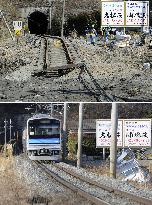
TOKYO, Japan - Photos show part of JR Senseki Line rail track in the city of Shiogama, Miyagi Prefecture, on April 6, 2011 (top), shortly after the area was devastated by the March 11 earthquake and tsunami, and the same location on March 4, 2012 (bottom). Services on the line have been partly resumed.

  •  
Kesennuma soon after quake, now

Kesennuma soon after quake, now

TOKYO, Japan - Panoramic photos show an area in the city of Kesennuma, Miyagi Prefecture, on March 15, 2011 (top), shortly after the area was devastated by the March 11 earthquake and tsunami, and the same location on March 6, 2012 (bottom).

  •  
U.S. Marines in Okinawa

U.S. Marines in Okinawa

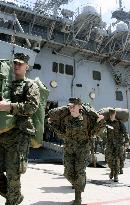
TOKYO, Japan - Members of the U.S. Marine Corps arrive at the White Beach U.S. Naval facility in Uruma, Okinawa Prefecture, in April 2011, after taking part in Operation Tomodachi to support people affected by the March 2011 earthquake and tsunami in northeastern Japan. On Feb. 6, 2012, Japan and the United States confirmed a policy to move about 4,700 U.S. Marines in Okinawa to Guam, delinking the troops' transfer from a plan to relocate the U.S. Marine Corps' Futenma Air Station within the prefecture, Japanese officials said.

  •  
Christmas tree in tsunami-hit Ofunato

Christmas tree in tsunami-hit Ofunato

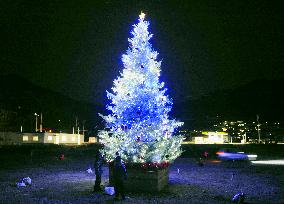
OFUNATO, Japan - A Christmas tree is illuminated in Ofunato, Iwate Prefecture, in northeastern Japan, on Dec. 6, 2011. The tree was set up by Meiji University the previous day in the city devastated by the March 11 tsunami.

  •  
Japan's Soejima wins NYC Marathon wheelchair div.

Japan's Soejima wins NYC Marathon wheelchair div.

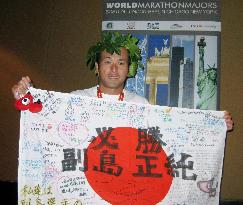
NEW YORK, United States - Japan's Masazumi Soejima holds a Japanese national flag in New York on Nov. 6, 2011, after winning the men's wheelchair division of the New York City Marathon in a time of 1 hour, 31 minutes, 41 seconds. Children from areas in northeastern Japan devastated by the March disasters gave him the flag after writing encouraging messages on it.

  •  
Cherry tree-planting project to remember tsunami

Cherry tree-planting project to remember tsunami

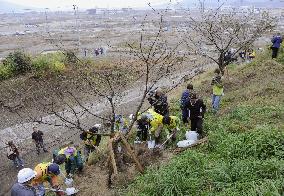
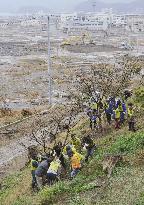
RIKUZENTAKATA, Japan - Members of a citizens' group begin planting cherry trees in a line connecting the furthest inland points reached by the March 11 tsunami in Rikuzentakata, Iwate Prefecture, on Nov. 6, 2011. In an effort to commemorate the disaster, volunteers began planting trees in a line that will eventually stretch 173 kilometers with 17,300 cherry trees in total planted at 10-meter intervals.

  •  
Cherry tree-planting project to remember tsunami

Cherry tree-planting project to remember tsunami

RIKUZENTAKATA, Japan - Members of a citizens' group begin planting cherry trees in a line connecting the furthest inland points reached by the March 11 tsunami in Rikuzentakata, Iwate Prefecture, on Nov. 6, 2011. In an effort to commemorate the disaster, volunteers began planting trees in a line that will eventually stretch 173 kilometers with 17,300 cherry trees in total planted at 10-meter intervals.

  •  
People moving into three-story temporary housing complex

People moving into three-story temporary housing complex

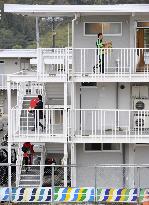
ONAGAWA, Japan - People affected by the March 11 earthquake and tsunami start moving into a newly built three-story temporary housing complex in the town of Onagawa, Miyagi Prefecture, on Nov. 6, 2011.

  •  
CORRECTED Secretaries general of DPJ, LDP, New Komeito

CORRECTED Secretaries general of DPJ, LDP, New Komeito

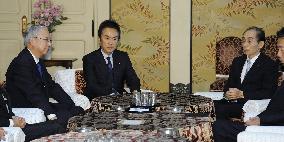
TOKYO, Japan - ADDING 'PARTY' AFTER NEW KOMEITO Secretaries general of the ruling and two largest opposition parties -- (from R) Azuma Koshiishi of the Democratic Party of Japan, Nobuteru Ishihara of the Liberal Democratic Party, and Yoshihisa Inoue of New Komeito party -- hold talks at the Diet building in Tokyo on Oct. 6, 2011. The DPJ called for the opposition parties' cooperation to secure quick Diet passage of the third extra budget for FY 2011, designed to fund reconstruction of areas devastated by the March 11 earthquake and tsunami.

  •  
Tsunami-hit Haramachi thermal power plant

Tsunami-hit Haramachi thermal power plant

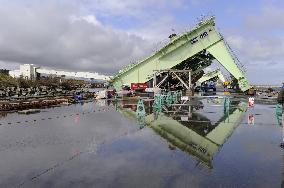
MINAMISOMA, Japan - Photo taken Oct. 6, 2011, shows a coal unloader damaged by the March 11 tsunami at the Haramachi thermal power plant, operated by Tohoku Electric Power Co., in Minamisoma, Fukushima Prefecture.

  •  
6 months after Japan quake, tsunami

6 months after Japan quake, tsunami

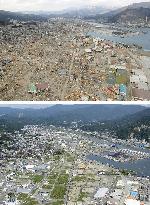
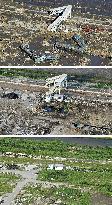
SHINCHI, Japan - Photos from a Kyodo News helicopter of Shinchi, Fukushima Prefecture, (from top) on March 12, June 3 and Sept. 6, 2011, show that a railway station and trains damaged by the March 11 tsunami have been removed and grass has grown.

  •  
6 months after Japan quake, tsunami

6 months after Japan quake, tsunami

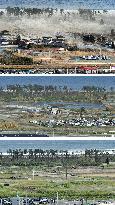
SENDAI, Japan - Photos of a residential district of Natori, Miyagi Prefecture, (from top) on March 11, June 3 and Sept. 6, 2011, show that the district was engulfed by tsunami on March 11 and that the only house remaining there on June 3 has been removed.

  •  
6 months after Japan quake, tsunami

6 months after Japan quake, tsunami

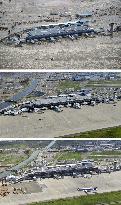
SENDAI, Japan - Photos taken from a Kyodo News helicopter of Sendai airport in Miyagi Prefecture (from top) on March 11, June 3 and Sept. 6, 2011, show that the airport inundated by the March 11 tsunami has resumed operation.

  • Main
  • Top
  • Editorial
  • Creative
  • About Us
  • About ILG
  • Terms of use
  • Company
  • BEHIND
  • Price List
  • Single Plan
  • Monthly Plan
  • Services
  • Shooting
  • Rights Clearance
  • Support
  • FAQ
  • How To Buy
  • Contact Us
  • Become a Partner

© KYODO NEWS IMAGES INC

All Rights Reserved.

  • Editorial
  • Olympics
  • News
  • Sports
  • Japan
  • Tech
  • Royal
  • Disaster
  • NorthKorea
  • Old Japan
  • SNS
  • Creative
  • Food
  • Japan
  • Landscape
  • Animal
  • Popular
  • #Ukraine
  • #Thailand
  • #coronavirus
  • #N. Korea
  • #China
  • #Russia
  • #Ukraine
  • #Thailand
  • #coronavirus
  • #N. Korea
  • #China
  • #Russia
  • Food
  • Japan
  • Landscape
  • Animal
  • Olympics
  • News
  • Sports
  • Japan
  • Tech
  • Royal
  • Disaster
  • NorthKorea
  • Old Japan
  • SNS