•  
LA Premiere Of Amazon Prime Video's 'Fallout' Season 2 - USA

LA Premiere Of Amazon Prime Video's 'Fallout' Season 2 - USA

American comedian and actress Rachel Marsh arrives at the Los Angeles Premiere Of Amazon Prime Video's 'Fallout' Season 2 held at the Academy Museum of Motion Pictures on December 8, 2025 in Museum Row, Miracle Mile, Los Angeles, California, United States. Photo by Xavier Collin/Image Press Agency/ABACAPRESS.COM

  •  
LA Premiere Of Amazon Prime Video's 'Fallout' Season 2 - USA

LA Premiere Of Amazon Prime Video's 'Fallout' Season 2 - USA

American comedian and actress Rachel Marsh arrives at the Los Angeles Premiere Of Amazon Prime Video's 'Fallout' Season 2 held at the Academy Museum of Motion Pictures on December 8, 2025 in Museum Row, Miracle Mile, Los Angeles, California, United States. Photo by Xavier Collin/Image Press Agency/ABACAPRESS.COM

  •  
‘Fallout’ Season 2 Premiere

‘Fallout’ Season 2 Premiere

Rachel Marsh arriving to Amazon Prime Video’s “Fallout’” season 2 premiere held at the Academy Museum of Motion Pictures on December 8, 2025 in Los Angeles, Ca. Photo by Starbuck/AFF/ABACAPRESS.COM

  •  
‘Fallout’ Season 2 Premiere

‘Fallout’ Season 2 Premiere

Rachel Marsh arriving to Amazon Prime Video’s “Fallout’” season 2 premiere held at the Academy Museum of Motion Pictures on December 8, 2025 in Los Angeles, Ca. Photo by Starbuck/AFF/ABACAPRESS.COM

  •  
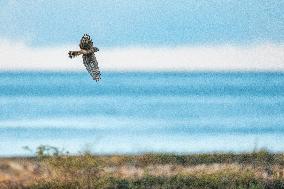
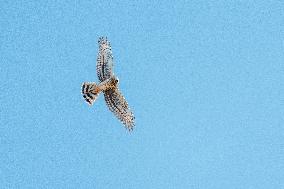
HEN HARRIER

HEN HARRIER

Blue harrier (Circus cyaneus), female. Hen harrier (Circus cyaneus). Circus cyaneus (Linnaeus, 1766) Photo: Magnus Martinsson / TT / 2734

  •  
HEN HARRIER

HEN HARRIER

Blue harrier (Circus cyaneus), female. Hen harrier (Circus cyaneus). Circus cyaneus (Linnaeus, 1766) Photo: Magnus Martinsson / TT / 2734

  •  
Baseball: Division Series between Phillies and Dodgers

Baseball: Division Series between Phillies and Dodgers

Los Angeles Dodgers two-way player Shohei Ohtani (C) talks with Brandon Marsh (R) of the Philadelphia Phillies ahead of Game 3 of the best-of-five National League Division Series on Oct. 8, 2025, at Dodger Stadium in Los Angeles.

  •  
Baseball: Division Series between Phillies and Dodgers

Baseball: Division Series between Phillies and Dodgers

Los Angeles Dodgers two-way player Shohei Ohtani (L) shakes hands with Brandon Marsh of the Philadelphia Phillies ahead of Game 3 of the best-of-five National League Division Series on Oct. 8, 2025, at Dodger Stadium in Los Angeles.

  •  
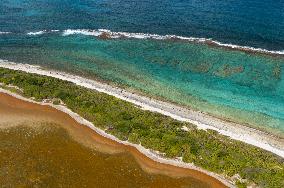
Illustration - Aerial View of France

Illustration - Aerial View of France

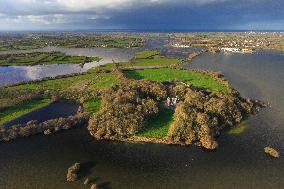
FRANCE. GUADELOUPE, POINTE DES CHATEAUX, GRANDE SALINE SALT MARSH AND LAGON (AERIAL VIEW) Photo by Thierry Grun/Only France/ABACAPRESS.COM

  •  
Illustration - Aerial View of France

Illustration - Aerial View of France

FRANCE. NORMANDY. MANCHE (50) CHATEAU DE L'ISLE MARIE. COTENTIN MARSH REGIONAL PARK Photo by Jerome Houyvet/Only France/ABACAPRESS.COM

  •  
Illustration - Provence

Illustration - Provence

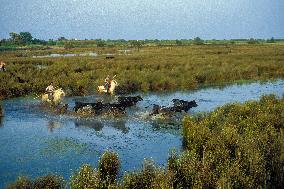
FRANCE. BOUCHES DU RHONE (13) CAMARGUE REGIONAL NATURE PARK, HERD OF BULLS CROSSING A MARSH Photo by Gerard Sioen/Only France/ABACAPRESS.COM

  •  
Super/Man: The Christopher Reeve Story Premiere - NYC

Super/Man: The Christopher Reeve Story Premiere - NYC

Marsh Williams with Guest attending "Super/Man: The Christopher Reeve Story" New York Premiere at Museum of Modern Art, New York, NY, September 18, 2024. Photo by Dave Allocca/Starpix/INSTARimages/ABACAPRESS.COM

  •  
Deadly Flooding In China

Deadly Flooding In China

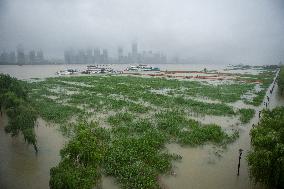
This photo taken on June 29, 2024 shows a riverside reed marsh in Wuhan, central China's Hubei Province. China on Saturday issued a red alert for rainstorms, the most severe in its four-tier weather warning system. It also warned about possible geological disasters occurring in some rain-hit regions. Some areas in Anhui, Jiangsu, Hubei, Hunan, Jiangxi and Guizhou provinces should expect downpours, with some regions likely to experience heavy rain of up to 280 mm within 24 hours until 2 p.m. Sunday, according to the National Meteorological Center forecast. Photo by Xinhua/Hu Jingwen/ABACAPRESS.COM

  •  
CHINA-HUBEI-RAINFALL-ALERT (CN)

CHINA-HUBEI-RAINFALL-ALERT (CN)

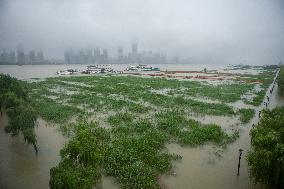
(240629) -- WUHAN, June 29, 2024 Photo by Xinhua/ABACAPRESS.COM) -- This photo taken on June 29, 2024 shows a riverside reed marsh in Wuhan, central China's Hubei Province. China on Saturday issued a red alert for rainstorms, the most severe in its four-tier weather warning system. It also warned about possible geological disasters occurring in some rain-hit regions. Some areas in Anhui, Jiangsu, Hubei, Hunan, Jiangxi and Guizhou provinces should expect downpours, with some regions likely to experience heavy rain of up to 280 mm within 24 hours until 2 p.m. Sunday, according to the National Meteorological Center forecast. Photo by Xinhua/ABACAPRESS.COM/Hu Jingwen)

  •  

US: Powerful Storms Bring Hurricane-Force Winds To Dallas, Causing Widespread Power Outages

Powerful storms with hurricane-force winds and heavy rains swept through North Texas on Tuesday, May 28, flooding roads, knocking down trees and power lines, and leaving hundreds of thousands without power. Dallas County Judge Clay Jenkins issued a disaster declaration.

  •  
Xth media forum starts in Lviv

Xth media forum starts in Lviv

LVIV, UKRAINE - MAY 16, 2024 - British neurosurgeon Henry Marsh and Superhumans Center CEO Olha Rudneva speak during the Xth Lviv Media Forum on the topic: "Language for Understanding: Search for Meaning in Polarized World", Lviv, western Ukraine.

  •  
Xth media forum starts in Lviv

Xth media forum starts in Lviv

LVIV, UKRAINE - MAY 16, 2024 - British neurosurgeon Henry Marsh and Superhumans Center CEO Olha Rudneva speak during the Xth Lviv Media Forum on the topic: "Language for Understanding: Search for Meaning in Polarized World", Lviv, western Ukraine.

  •  
Xth media forum starts in Lviv

Xth media forum starts in Lviv

LVIV, UKRAINE - MAY 16, 2024 - British neurosurgeon Henry Marsh and Superhumans Center CEO Olha Rudneva speak during the Xth Lviv Media Forum on the topic: "Language for Understanding: Search for Meaning in Polarized World", Lviv, western Ukraine.

  •  
Xth media forum starts in Lviv

Xth media forum starts in Lviv

LVIV, UKRAINE - MAY 16, 2024 - British neurosurgeon Henry Marsh and Superhumans Center CEO Olha Rudneva speak during the Xth Lviv Media Forum on the topic: "Language for Understanding: Search for Meaning in Polarized World", Lviv, western Ukraine.

  •  
The Marsh Arabs - Iraq

The Marsh Arabs - Iraq

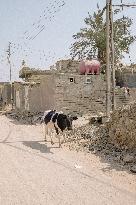
A cow walks on the street in the Chibayesh town in the marshlands in Iraq's southern Ahwar area of Dhi Qar on January 22, 2021. The Mesopotamian Marshes are located in southern Iraq, in the basin of the two mythical rivers of the Middle East: the Euphrates and the Tigris. The region is considered one of the cradles of civilization and, according to legend, even hosted the Gardens of Eden. The Marsh Arabs, also called Maadans, are an ancient community. It is estimated that they have occupied the marshes for almost 5,000 years. Between 1991 and 2003, the former dictator Saddam Hussein completely dried up the area because he believed it harbored his opponents. When he fell, the Maadans returned and tore down the dikes and dams he had built. The marshes have then almost returned to their original state. But in recent years, global warming and dams built upstream of the two rivers in Turkey have once again put the marshes in danger. Photo by Aline Deschamps/Middle East Images/ABACAPRESS.COM

  •  
The Marsh Arabs - Iraq

The Marsh Arabs - Iraq

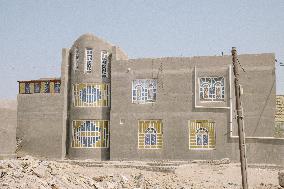
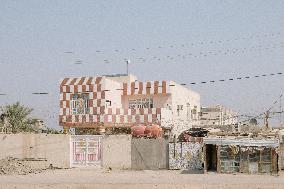
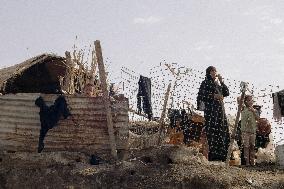
View of a house in the Chibayesh town in the marshlands in Iraq's southern Ahwar area of Dhi Qar on January 22, 2021. The Mesopotamian Marshes are located in southern Iraq, in the basin of the two mythical rivers of the Middle East: the Euphrates and the Tigris. The region is considered one of the cradles of civilization and, according to legend, even hosted the Gardens of Eden. The Marsh Arabs, also called Maadans, are an ancient community. It is estimated that they have occupied the marshes for almost 5,000 years. Between 1991 and 2003, the former dictator Saddam Hussein completely dried up the area because he believed it harbored his opponents. When he fell, the Maadans returned and tore down the dikes and dams he had built. The marshes have then almost returned to their original state. But in recent years, global warming and dams built upstream of the two rivers in Turkey have once again put the marshes in danger. Photo by Aline Deschamps/Middle East Images/ABACAPRESS.COM

  •  
The Marsh Arabs - Iraq

The Marsh Arabs - Iraq

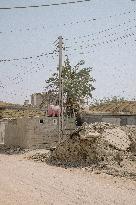
View of a street in the Chibayesh marshland in Iraq's southern Ahwar area of Dhi Qar on January 22, 2021. The Mesopotamian Marshes are located in southern Iraq, in the basin of the two mythical rivers of the Middle East: the Euphrates and the Tigris. The region is considered one of the cradles of civilization and, according to legend, even hosted the Gardens of Eden. The Marsh Arabs, also called Maadans, are an ancient community. It is estimated that they have occupied the marshes for almost 5,000 years. Between 1991 and 2003, the former dictator Saddam Hussein completely dried up the area because he believed it harbored his opponents. When he fell, the Maadans returned and tore down the dikes and dams he had built. The marshes have then almost returned to their original state. But in recent years, global warming and dams built upstream of the two rivers in Turkey have once again put the marshes in danger. Photo by Aline Deschamps/Middle East Images/ABACAPRESS.COM

  •  
The Marsh Arabs - Iraq

The Marsh Arabs - Iraq

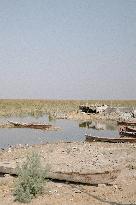
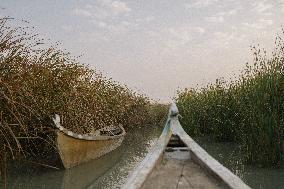
View of wooden narrow canoes by a waterway in the Chibayesh marshland in Iraq's southern Ahwar area of Dhi Qar on January 22, 2021. The Mesopotamian Marshes are located in southern Iraq, in the basin of the two mythical rivers of the Middle East: the Euphrates and the Tigris. The region is considered one of the cradles of civilization and, according to legend, even hosted the Gardens of Eden. The Marsh Arabs, also called Maadans, are an ancient community. It is estimated that they have occupied the marshes for almost 5,000 years. Between 1991 and 2003, the former dictator Saddam Hussein completely dried up the area because he believed it harbored his opponents. When he fell, the Maadans returned and tore down the dikes and dams he had built. The marshes have then almost returned to their original state. But in recent years, global warming and dams built upstream of the two rivers in Turkey have once again put the marshes in danger. Photo by Aline Deschamps/Middle East Images/ABACAPRESS.COM

  •  
The Marsh Arabs - Iraq

The Marsh Arabs - Iraq

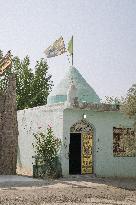
View of a Husayniyya in the Chibayesh town of the marshlands in Iraq's southern Ahwar area of Dhi Qar on January 22, 2021. The Mesopotamian Marshes are located in southern Iraq, in the basin of the two mythical rivers of the Middle East: the Euphrates and the Tigris. The region is considered one of the cradles of civilization and, according to legend, even hosted the Gardens of Eden. The Marsh Arabs, also called Maadans, are an ancient community. It is estimated that they have occupied the marshes for almost 5,000 years. Between 1991 and 2003, the former dictator Saddam Hussein completely dried up the area because he believed it harbored his opponents. When he fell, the Maadans returned and tore down the dikes and dams he had built. The marshes have then almost returned to their original state. But in recent years, global warming and dams built upstream of the two rivers in Turkey have once again put the marshes in danger. Photo by Aline Deschamps/Middle East Images/ABACAPRESS.COM

  •  
The Marsh Arabs - Iraq

The Marsh Arabs - Iraq

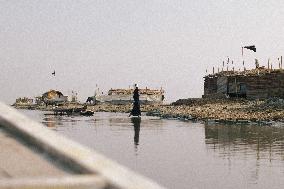
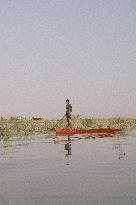
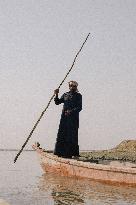
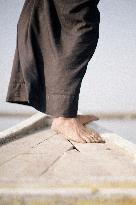
A man stands on a wooden narrow canoe in the waterways of the Chibayesh marshland in Iraq's southern Ahwar area of Dhi Qar on January 22, 2021. The Mesopotamian Marshes are located in southern Iraq, in the basin of the two mythical rivers of the Middle East: the Euphrates and the Tigris. The region is considered one of the cradles of civilization and, according to legend, even hosted the Gardens of Eden. The Marsh Arabs, also called Maadans, are an ancient community. It is estimated that they have occupied the marshes for almost 5,000 years. Between 1991 and 2003, the former dictator Saddam Hussein completely dried up the area because he believed it harbored his opponents. When he fell, the Maadans returned and tore down the dikes and dams he had built. The marshes have then almost returned to their original state. But in recent years, global warming and dams built upstream of the two rivers in Turkey have once again put the marshes in danger. Photo by Aline Deschamps/Middle East Images/ABACAPRESS.COM

  •  
The Marsh Arabs - Iraq

The Marsh Arabs - Iraq

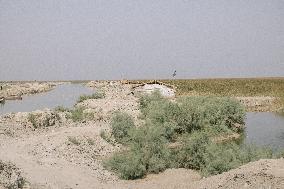
View of a waterway in the Chibayesh marshland in Iraq's southern Ahwar area of Dhi Qar on January 22, 2021. The Mesopotamian Marshes are located in southern Iraq, in the basin of the two mythical rivers of the Middle East: the Euphrates and the Tigris. The region is considered one of the cradles of civilization and, according to legend, even hosted the Gardens of Eden. The Marsh Arabs, also called Maadans, are an ancient community. It is estimated that they have occupied the marshes for almost 5,000 years. Between 1991 and 2003, the former dictator Saddam Hussein completely dried up the area because he believed it harbored his opponents. When he fell, the Maadans returned and tore down the dikes and dams he had built. The marshes have then almost returned to their original state. But in recent years, global warming and dams built upstream of the two rivers in Turkey have once again put the marshes in danger. Photo by Aline Deschamps/Middle East Images/ABACAPRESS.COM

  •  
The Marsh Arabs - Iraq

The Marsh Arabs - Iraq

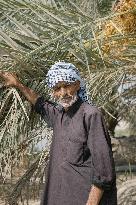
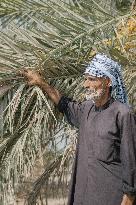
A man stands next to a palm tree in the Chibayesh marshland in Iraq's southern Ahwar area of Dhi Qar on January 22, 2021. The Mesopotamian Marshes are located in southern Iraq, in the basin of the two mythical rivers of the Middle East: the Euphrates and the Tigris. The region is considered one of the cradles of civilization and, according to legend, even hosted the Gardens of Eden. The Marsh Arabs, also called Maadans, are an ancient community. It is estimated that they have occupied the marshes for almost 5,000 years. Between 1991 and 2003, the former dictator Saddam Hussein completely dried up the area because he believed it harbored his opponents. When he fell, the Maadans returned and tore down the dikes and dams he had built. The marshes have then almost returned to their original state. But in recent years, global warming and dams built upstream of the two rivers in Turkey have once again put the marshes in danger. Photo by Aline Deschamps/Middle East Images/ABACAPRESS.COM

  •  
The Marsh Arabs - Iraq

The Marsh Arabs - Iraq

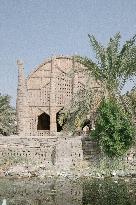
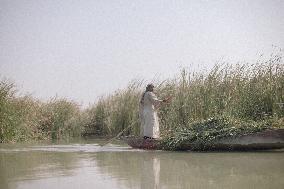
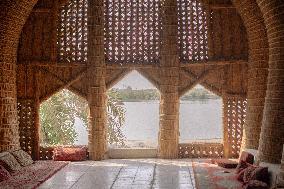
View of a reed house from a waterway in the Chibayesh marshland in Iraq's southern Ahwar area of Dhi Qar on January 22, 2021. The Mesopotamian Marshes are located in southern Iraq, in the basin of the two mythical rivers of the Middle East: the Euphrates and the Tigris. The region is considered one of the cradles of civilization and, according to legend, even hosted the Gardens of Eden. The Marsh Arabs, also called Maadans, are an ancient community. It is estimated that they have occupied the marshes for almost 5,000 years. Between 1991 and 2003, the former dictator Saddam Hussein completely dried up the area because he believed it harbored his opponents. When he fell, the Maadans returned and tore down the dikes and dams he had built. The marshes have then almost returned to their original state. But in recent years, global warming and dams built upstream of the two rivers in Turkey have once again put the marshes in danger. Photo by Aline Deschamps/Middle East Images/ABACAPRESS.COM

  •  
The Marsh Arabs - Iraq

The Marsh Arabs - Iraq

A man stands next to a palm tree in the Chibayesh marshland in Iraq's southern Ahwar area of Dhi Qar on January 22, 2021. The Mesopotamian Marshes are located in southern Iraq, in the basin of the two mythical rivers of the Middle East: the Euphrates and the Tigris. The region is considered one of the cradles of civilization and, according to legend, even hosted the Gardens of Eden. The Marsh Arabs, also called Maadans, are an ancient community. It is estimated that they have occupied the marshes for almost 5,000 years. Between 1991 and 2003, the former dictator Saddam Hussein completely dried up the area because he believed it harbored his opponents. When he fell, the Maadans returned and tore down the dikes and dams he had built. The marshes have then almost returned to their original state. But in recent years, global warming and dams built upstream of the two rivers in Turkey have once again put the marshes in danger. Photo by Aline Deschamps/Middle East Images/ABACAPRESS.COM

  •  
The Marsh Arabs - Iraq

The Marsh Arabs - Iraq

View of a house in the Chibayesh town in the marshlands in Iraq's southern Ahwar area of Dhi Qar on January 22, 2021. The Mesopotamian Marshes are located in southern Iraq, in the basin of the two mythical rivers of the Middle East: the Euphrates and the Tigris. The region is considered one of the cradles of civilization and, according to legend, even hosted the Gardens of Eden. The Marsh Arabs, also called Maadans, are an ancient community. It is estimated that they have occupied the marshes for almost 5,000 years. Between 1991 and 2003, the former dictator Saddam Hussein completely dried up the area because he believed it harbored his opponents. When he fell, the Maadans returned and tore down the dikes and dams he had built. The marshes have then almost returned to their original state. But in recent years, global warming and dams built upstream of the two rivers in Turkey have once again put the marshes in danger. Photo by Aline Deschamps/Middle East Images/ABACAPRESS.COM

  •  
The Marsh Arabs - Iraq

The Marsh Arabs - Iraq

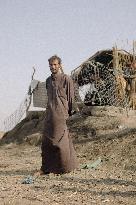
A man stands near his house in the Chibayesh marshland in Iraq's southern Ahwar area of Dhi Qar on January 22, 2021. The Mesopotamian Marshes are located in southern Iraq, in the basin of the two mythical rivers of the Middle East: the Euphrates and the Tigris. The region is considered one of the cradles of civilization and, according to legend, even hosted the Gardens of Eden. The Marsh Arabs, also called Maadans, are an ancient community. It is estimated that they have occupied the marshes for almost 5,000 years. Between 1991 and 2003, the former dictator Saddam Hussein completely dried up the area because he believed it harbored his opponents. When he fell, the Maadans returned and tore down the dikes and dams he had built. The marshes have then almost returned to their original state. But in recent years, global warming and dams built upstream of the two rivers in Turkey have once again put the marshes in danger. Photo by Aline Deschamps/Middle East Images/ABACAPRESS.COM

  •  
The Marsh Arabs - Iraq

The Marsh Arabs - Iraq

A buffalo herder carries water to her house in the Chibayesh marshland in Iraq's southern Ahwar area of Dhi Qar on January 22, 2021. The Mesopotamian Marshes are located in southern Iraq, in the basin of the two mythical rivers of the Middle East: the Euphrates and the Tigris. The region is considered one of the cradles of civilization and, according to legend, even hosted the Gardens of Eden. The Marsh Arabs, also called Maadans, are an ancient community. It is estimated that they have occupied the marshes for almost 5,000 years. Between 1991 and 2003, the former dictator Saddam Hussein completely dried up the area because he believed it harbored his opponents. When he fell, the Maadans returned and tore down the dikes and dams he had built. The marshes have then almost returned to their original state. But in recent years, global warming and dams built upstream of the two rivers in Turkey have once again put the marshes in danger. Photo by Aline Deschamps/Middle East Images/ABACAPRESS.COM

  •  
The Marsh Arabs - Iraq

The Marsh Arabs - Iraq

A man sits on a wooden narrow canoe in the waterways of the Chibayesh marshland in Iraq's southern Ahwar area of Dhi Qar on January 22, 2021. The Mesopotamian Marshes are located in southern Iraq, in the basin of the two mythical rivers of the Middle East: the Euphrates and the Tigris. The region is considered one of the cradles of civilization and, according to legend, even hosted the Gardens of Eden. The Marsh Arabs, also called Maadans, are an ancient community. It is estimated that they have occupied the marshes for almost 5,000 years. Between 1991 and 2003, the former dictator Saddam Hussein completely dried up the area because he believed it harbored his opponents. When he fell, the Maadans returned and tore down the dikes and dams he had built. The marshes have then almost returned to their original state. But in recent years, global warming and dams built upstream of the two rivers in Turkey have once again put the marshes in danger. Photo by Aline Deschamps/Middle East Images/ABACAPRESS.COM

  •  
The Marsh Arabs - Iraq

The Marsh Arabs - Iraq

A man rows a wooden narrow canoe in the waterways of the Chibayesh marshland in Iraq's southern Ahwar area of Dhi Qar on January 22, 2021. The Mesopotamian Marshes are located in southern Iraq, in the basin of the two mythical rivers of the Middle East: the Euphrates and the Tigris. The region is considered one of the cradles of civilization and, according to legend, even hosted the Gardens of Eden. The Marsh Arabs, also called Maadans, are an ancient community. It is estimated that they have occupied the marshes for almost 5,000 years. Between 1991 and 2003, the former dictator Saddam Hussein completely dried up the area because he believed it harbored his opponents. When he fell, the Maadans returned and tore down the dikes and dams he had built. The marshes have then almost returned to their original state. But in recent years, global warming and dams built upstream of the two rivers in Turkey have once again put the marshes in danger. Photo by Aline Deschamps/Middle East Images/ABACAPRESS.COM

  •  
The Marsh Arabs - Iraq

The Marsh Arabs - Iraq

Buffalo herders stand in their home in the Chibayesh marshland in Iraq's southern Ahwar area of Dhi Qar on January 22, 2021. The Mesopotamian Marshes are located in southern Iraq, in the basin of the two mythical rivers of the Middle East: the Euphrates and the Tigris. The region is considered one of the cradles of civilization and, according to legend, even hosted the Gardens of Eden. The Marsh Arabs, also called Maadans, are an ancient community. It is estimated that they have occupied the marshes for almost 5,000 years. Between 1991 and 2003, the former dictator Saddam Hussein completely dried up the area because he believed it harbored his opponents. When he fell, the Maadans returned and tore down the dikes and dams he had built. The marshes have then almost returned to their original state. But in recent years, global warming and dams built upstream of the two rivers in Turkey have once again put the marshes in danger. Photo by Aline Deschamps/Middle East Images/ABACAPRESS.COM

  •  
The Marsh Arabs - Iraq

The Marsh Arabs - Iraq

A man stands on a wooden narrow canoe in the waterways in the Chibayesh marshland in Iraq's southern Ahwar area of Dhi Qar on January 22, 2021. The Mesopotamian Marshes are located in southern Iraq, in the basin of the two mythical rivers of the Middle East: the Euphrates and the Tigris. The region is considered one of the cradles of civilization and, according to legend, even hosted the Gardens of Eden. The Marsh Arabs, also called Maadans, are an ancient community. It is estimated that they have occupied the marshes for almost 5,000 years. Between 1991 and 2003, the former dictator Saddam Hussein completely dried up the area because he believed it harbored his opponents. When he fell, the Maadans returned and tore down the dikes and dams he had built. The marshes have then almost returned to their original state. But in recent years, global warming and dams built upstream of the two rivers in Turkey have once again put the marshes in danger. Photo by Aline Deschamps/Middle East Images/ABACAPRESS.COM

  •  
The Marsh Arabs - Iraq

The Marsh Arabs - Iraq

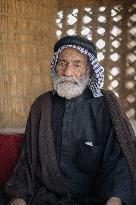
A man sits in a reed house in the Chibayesh marshland in Iraq's southern Ahwar area of Dhi Qar on January 22, 2021. The Mesopotamian Marshes are located in southern Iraq, in the basin of the two mythical rivers of the Middle East: the Euphrates and the Tigris. The region is considered one of the cradles of civilization and, according to legend, even hosted the Gardens of Eden. The Marsh Arabs, also called Maadans, are an ancient community. It is estimated that they have occupied the marshes for almost 5,000 years. Between 1991 and 2003, the former dictator Saddam Hussein completely dried up the area because he believed it harbored his opponents. When he fell, the Maadans returned and tore down the dikes and dams he had built. The marshes have then almost returned to their original state. But in recent years, global warming and dams built upstream of the two rivers in Turkey have once again put the marshes in danger. Photo by Aline Deschamps/Middle East Images/ABACAPRESS.COM

  •  
The Marsh Arabs - Iraq

The Marsh Arabs - Iraq

View of a waterway in the Chibayesh marshland in Iraq's southern Ahwar area of Dhi Qar on January 22, 2021. The Mesopotamian Marshes are located in southern Iraq, in the basin of the two mythical rivers of the Middle East: the Euphrates and the Tigris. The region is considered one of the cradles of civilization and, according to legend, even hosted the Gardens of Eden. The Marsh Arabs, also called Maadans, are an ancient community. It is estimated that they have occupied the marshes for almost 5,000 years. Between 1991 and 2003, the former dictator Saddam Hussein completely dried up the area because he believed it harbored his opponents. When he fell, the Maadans returned and tore down the dikes and dams he had built. The marshes have then almost returned to their original state. But in recent years, global warming and dams built upstream of the two rivers in Turkey have once again put the marshes in danger. Photo by Aline Deschamps/Middle East Images/ABACAPRESS.COM

  •  
The Marsh Arabs - Iraq

The Marsh Arabs - Iraq

A fisherman stands on a wooden narrow canoe in the waterways of the Chibayesh marshland in Iraq's southern Ahwar area of Dhi Qar on January 22, 2021. The Mesopotamian Marshes are located in southern Iraq, in the basin of the two mythical rivers of the Middle East: the Euphrates and the Tigris. The region is considered one of the cradles of civilization and, according to legend, even hosted the Gardens of Eden. The Marsh Arabs, also called Maadans, are an ancient community. It is estimated that they have occupied the marshes for almost 5,000 years. Between 1991 and 2003, the former dictator Saddam Hussein completely dried up the area because he believed it harbored his opponents. When he fell, the Maadans returned and tore down the dikes and dams he had built. The marshes have then almost returned to their original state. But in recent years, global warming and dams built upstream of the two rivers in Turkey have once again put the marshes in danger. Photo by Aline Deschamps/Middle East Images/ABACAPRESS.COM

  •  
The Marsh Arabs - Iraq

The Marsh Arabs - Iraq

A buffalo herder sits down with visitors in the Chibayesh marshland in Iraq's southern Ahwar area of Dhi Qar on January 22, 2021. The Mesopotamian Marshes are located in southern Iraq, in the basin of the two mythical rivers of the Middle East: the Euphrates and the Tigris. The region is considered one of the cradles of civilization and, according to legend, even hosted the Gardens of Eden. The Marsh Arabs, also called Maadans, are an ancient community. It is estimated that they have occupied the marshes for almost 5,000 years. Between 1991 and 2003, the former dictator Saddam Hussein completely dried up the area because he believed it harbored his opponents. When he fell, the Maadans returned and tore down the dikes and dams he had built. The marshes have then almost returned to their original state. But in recent years, global warming and dams built upstream of the two rivers in Turkey have once again put the marshes in danger. Photo by Aline Deschamps/Middle East Images/ABACAPRESS.COM

  •  
The Marsh Arabs - Iraq

The Marsh Arabs - Iraq

A man rows a wooden narrow canoe in the waterways of the Chibayesh marshland in Iraq's southern Ahwar area of Dhi Qar on January 22, 2021. The Mesopotamian Marshes are located in southern Iraq, in the basin of the two mythical rivers of the Middle East: the Euphrates and the Tigris. The region is considered one of the cradles of civilization and, according to legend, even hosted the Gardens of Eden. The Marsh Arabs, also called Maadans, are an ancient community. It is estimated that they have occupied the marshes for almost 5,000 years. Between 1991 and 2003, the former dictator Saddam Hussein completely dried up the area because he believed it harbored his opponents. When he fell, the Maadans returned and tore down the dikes and dams he had built. The marshes have then almost returned to their original state. But in recent years, global warming and dams built upstream of the two rivers in Turkey have once again put the marshes in danger. Photo by Aline Deschamps/Middle East Images/ABACAPRESS.COM

  •  
The Marsh Arabs - Iraq

The Marsh Arabs - Iraq

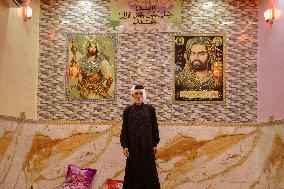
A man stands in his house in the of the Chibayesh town in the marshland in Iraq's southern Ahwar area of Dhi Qar on January 22, 2021. The Mesopotamian Marshes are located in southern Iraq, in the basin of the two mythical rivers of the Middle East: the Euphrates and the Tigris. The region is considered one of the cradles of civilization and, according to legend, even hosted the Gardens of Eden. The Marsh Arabs, also called Maadans, are an ancient community. It is estimated that they have occupied the marshes for almost 5,000 years. Between 1991 and 2003, the former dictator Saddam Hussein completely dried up the area because he believed it harbored his opponents. When he fell, the Maadans returned and tore down the dikes and dams he had built. The marshes have then almost returned to their original state. But in recent years, global warming and dams built upstream of the two rivers in Turkey have once again put the marshes in danger. Photo by Aline Deschamps/Middle East Images/ABACAPRESS.COM

  •  
The Marsh Arabs - Iraq

The Marsh Arabs - Iraq

View of a waterway from a reed house in the Chibayesh marshland in Iraq's southern Ahwar area of Dhi Qar on January 22, 2021. The Mesopotamian Marshes are located in southern Iraq, in the basin of the two mythical rivers of the Middle East: the Euphrates and the Tigris. The region is considered one of the cradles of civilization and, according to legend, even hosted the Gardens of Eden. The Marsh Arabs, also called Maadans, are an ancient community. It is estimated that they have occupied the marshes for almost 5,000 years. Between 1991 and 2003, the former dictator Saddam Hussein completely dried up the area because he believed it harbored his opponents. When he fell, the Maadans returned and tore down the dikes and dams he had built. The marshes have then almost returned to their original state. But in recent years, global warming and dams built upstream of the two rivers in Turkey have once again put the marshes in danger. Photo by Aline Deschamps/Middle East Images/ABACAPRESS.COM

  •  
The Marsh Arabs - Iraq

The Marsh Arabs - Iraq

A man stands in his house in the of the Chibayesh town in the marshland in Iraq's southern Ahwar area of Dhi Qar on January 22, 2021. The Mesopotamian Marshes are located in southern Iraq, in the basin of the two mythical rivers of the Middle East: the Euphrates and the Tigris. The region is considered one of the cradles of civilization and, according to legend, even hosted the Gardens of Eden. The Marsh Arabs, also called Maadans, are an ancient community. It is estimated that they have occupied the marshes for almost 5,000 years. Between 1991 and 2003, the former dictator Saddam Hussein completely dried up the area because he believed it harbored his opponents. When he fell, the Maadans returned and tore down the dikes and dams he had built. The marshes have then almost returned to their original state. But in recent years, global warming and dams built upstream of the two rivers in Turkey have once again put the marshes in danger. Photo by Aline Deschamps/Middle East Images/ABACAPRESS.COM

  •  
The Marsh Arabs - Iraq

The Marsh Arabs - Iraq

A man sits in a reed house in the Chibayesh marshland in Iraq's southern Ahwar area of Dhi Qar on January 22, 2021. The Mesopotamian Marshes are located in southern Iraq, in the basin of the two mythical rivers of the Middle East: the Euphrates and the Tigris. The region is considered one of the cradles of civilization and, according to legend, even hosted the Gardens of Eden. The Marsh Arabs, also called Maadans, are an ancient community. It is estimated that they have occupied the marshes for almost 5,000 years. Between 1991 and 2003, the former dictator Saddam Hussein completely dried up the area because he believed it harbored his opponents. When he fell, the Maadans returned and tore down the dikes and dams he had built. The marshes have then almost returned to their original state. But in recent years, global warming and dams built upstream of the two rivers in Turkey have once again put the marshes in danger. Photo by Aline Deschamps/Middle East Images/ABACAPRESS.COM

  •  
The Marsh Arabs - Iraq

The Marsh Arabs - Iraq

View of a waterway in the Chibayesh marshland in Iraq's southern Ahwar area of Dhi Qar on January 22, 2021. The Mesopotamian Marshes are located in southern Iraq, in the basin of the two mythical rivers of the Middle East: the Euphrates and the Tigris. The region is considered one of the cradles of civilization and, according to legend, even hosted the Gardens of Eden. The Marsh Arabs, also called Maadans, are an ancient community. It is estimated that they have occupied the marshes for almost 5,000 years. Between 1991 and 2003, the former dictator Saddam Hussein completely dried up the area because he believed it harbored his opponents. When he fell, the Maadans returned and tore down the dikes and dams he had built. The marshes have then almost returned to their original state. But in recent years, global warming and dams built upstream of the two rivers in Turkey have once again put the marshes in danger. Photo by Aline Deschamps/Middle East Images/ABACAPRESS.COM

  •  
The Marsh Arabs - Iraq

The Marsh Arabs - Iraq

Men sit a reed house in the Chibayesh marshland in Iraq's southern Ahwar area of Dhi Qar on January 22, 2021. The Mesopotamian Marshes are located in southern Iraq, in the basin of the two mythical rivers of the Middle East: the Euphrates and the Tigris. The region is considered one of the cradles of civilization and, according to legend, even hosted the Gardens of Eden. The Marsh Arabs, also called Maadans, are an ancient community. It is estimated that they have occupied the marshes for almost 5,000 years. Between 1991 and 2003, the former dictator Saddam Hussein completely dried up the area because he believed it harbored his opponents. When he fell, the Maadans returned and tore down the dikes and dams he had built. The marshes have then almost returned to their original state. But in recent years, global warming and dams built upstream of the two rivers in Turkey have once again put the marshes in danger. Photo by Aline Deschamps/Middle East Images/ABACAPRESS.COM

  •  
The Marsh Arabs - Iraq

The Marsh Arabs - Iraq

A man stands in his house in the of the Chibayesh town in the marshland in Iraq's southern Ahwar area of Dhi Qar on January 22, 2021. The Mesopotamian Marshes are located in southern Iraq, in the basin of the two mythical rivers of the Middle East: the Euphrates and the Tigris. The region is considered one of the cradles of civilization and, according to legend, even hosted the Gardens of Eden. The Marsh Arabs, also called Maadans, are an ancient community. It is estimated that they have occupied the marshes for almost 5,000 years. Between 1991 and 2003, the former dictator Saddam Hussein completely dried up the area because he believed it harbored his opponents. When he fell, the Maadans returned and tore down the dikes and dams he had built. The marshes have then almost returned to their original state. But in recent years, global warming and dams built upstream of the two rivers in Turkey have once again put the marshes in danger. Photo by Aline Deschamps/Middle East Images/ABACAPRESS.COM

  •  
The Marsh Arabs - Iraq

The Marsh Arabs - Iraq

Buffalo herders look after their herd in the Chibayesh marshland in Iraq's southern Ahwar area of Dhi Qar on January 22, 2021. The Mesopotamian Marshes are located in southern Iraq, in the basin of the two mythical rivers of the Middle East: the Euphrates and the Tigris. The region is considered one of the cradles of civilization and, according to legend, even hosted the Gardens of Eden. The Marsh Arabs, also called Maadans, are an ancient community. It is estimated that they have occupied the marshes for almost 5,000 years. Between 1991 and 2003, the former dictator Saddam Hussein completely dried up the area because he believed it harbored his opponents. When he fell, the Maadans returned and tore down the dikes and dams he had built. The marshes have then almost returned to their original state. But in recent years, global warming and dams built upstream of the two rivers in Turkey have once again put the marshes in danger. Photo by Aline Deschamps/Middle East Images/ABACAPRESS.COM

  •  
The Marsh Arabs - Iraq

The Marsh Arabs - Iraq

A man sits on a wooden narrow canoe in the waterways of the Chibayesh marshland in Iraq's southern Ahwar area of Dhi Qar on January 22, 2021. The Mesopotamian Marshes are located in southern Iraq, in the basin of the two mythical rivers of the Middle East: the Euphrates and the Tigris. The region is considered one of the cradles of civilization and, according to legend, even hosted the Gardens of Eden. The Marsh Arabs, also called Maadans, are an ancient community. It is estimated that they have occupied the marshes for almost 5,000 years. Between 1991 and 2003, the former dictator Saddam Hussein completely dried up the area because he believed it harbored his opponents. When he fell, the Maadans returned and tore down the dikes and dams he had built. The marshes have then almost returned to their original state. But in recent years, global warming and dams built upstream of the two rivers in Turkey have once again put the marshes in danger. Photo by Aline Deschamps/Middle East Images/ABACAPRESS.COM

  • Main
  • Top
  • Editorial
  • Creative
  • About Us
  • About ILG
  • Terms of use
  • Company
  • BEHIND
  • Price List
  • Single Plan
  • Monthly Plan
  • Services
  • Shooting
  • Rights Clearance
  • Support
  • FAQ
  • How To Buy
  • Contact Us
  • Become a Partner

© KYODO NEWS IMAGES INC

All Rights Reserved.

  • Editorial
  • Olympics
  • News
  • Sports
  • Japan
  • Tech
  • Royal
  • Disaster
  • NorthKorea
  • Old Japan
  • SNS
  • Creative
  • Food
  • Japan
  • Landscape
  • Animal
  • Popular
  • #Ukraine
  • #Thailand
  • #coronavirus
  • #N. Korea
  • #China
  • #Russia
  • #Ukraine
  • #Thailand
  • #coronavirus
  • #N. Korea
  • #China
  • #Russia
  • Food
  • Japan
  • Landscape
  • Animal
  • Olympics
  • News
  • Sports
  • Japan
  • Tech
  • Royal
  • Disaster
  • NorthKorea
  • Old Japan
  • SNS