•  
(InXizang)CHINA-XIZANG-TIBETAN MEDICINE (CN)

(InXizang)CHINA-XIZANG-TIBETAN MEDICINE (CN)

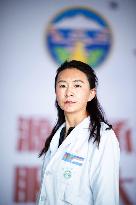
(240503) -- LHASA, May 3, 2024 (Xinhua) -- Bu Tsamjo poses for a photo at a Tibetan medicine company in Lhasa, southwest China's Xizang Autonomous Region, April 16, 2024. Bu Tsamjo, a team leader in the production department of a Tibetan medicine company, was awarded May Day national labor medal this year. Since joining work in 2009, she has witnessed and participated in the modernization of Tibetan medicine producing over the past years. The manufacturing and packaging of Tibetan medicine relied on manual work when Bu Tsamjo started working, and she could only pack 3,000 pills of Tibetan medicine per day. However, through recent advancements in mechanization and automation, the machinery of the company can now package 38,000 pills daily. Each process of the manufacture of medicine is essential. Bu Tsamjo's commitment to upholding high standards and ensuring the quality of medicine products underscores her unwavering dedication to her role. Her meticulous work ethic has earned her respect and admiratio

  •  
(InXizang)CHINA-XIZANG-TIBETAN MEDICINE (CN)

(InXizang)CHINA-XIZANG-TIBETAN MEDICINE (CN)

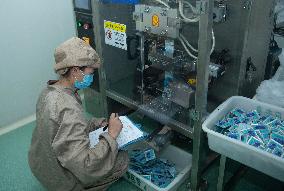
(240503) -- LHASA, May 3, 2024 (Xinhua) -- Bu Tsamjo prints the batch number of Tibetan medicine in Lhasa, southwest China's Xizang Autonomous Region, April 16, 2024. Bu Tsamjo, a team leader in the production department of a Tibetan medicine company, was awarded May Day national labor medal this year. Since joining work in 2009, she has witnessed and participated in the modernization of Tibetan medicine producing over the past years. The manufacturing and packaging of Tibetan medicine relied on manual work when Bu Tsamjo started working, and she could only pack 3,000 pills of Tibetan medicine per day. However, through recent advancements in mechanization and automation, the machinery of the company can now package 38,000 pills daily. Each process of the manufacture of medicine is essential. Bu Tsamjo's commitment to upholding high standards and ensuring the quality of medicine products underscores her unwavering dedication to her role. Her meticulous work ethic has earned her respect and admiration fr

  •  
(InXizang)CHINA-XIZANG-TIBETAN MEDICINE (CN)

(InXizang)CHINA-XIZANG-TIBETAN MEDICINE (CN)

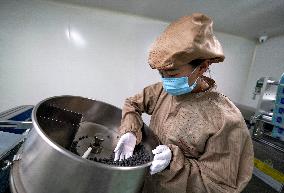
(240503) -- LHASA, May 3, 2024 (Xinhua) -- Bu Tsamjo checks pills in Lhasa, southwest China's Xizang Autonomous Region, April 16, 2024. Bu Tsamjo, a team leader in the production department of a Tibetan medicine company, was awarded May Day national labor medal this year. Since joining work in 2009, she has witnessed and participated in the modernization of Tibetan medicine producing over the past years. The manufacturing and packaging of Tibetan medicine relied on manual work when Bu Tsamjo started working, and she could only pack 3,000 pills of Tibetan medicine per day. However, through recent advancements in mechanization and automation, the machinery of the company can now package 38,000 pills daily. Each process of the manufacture of medicine is essential. Bu Tsamjo's commitment to upholding high standards and ensuring the quality of medicine products underscores her unwavering dedication to her role. Her meticulous work ethic has earned her respect and admiration from colleagues. (Xinhua/Jigme Do

  •  
(InXizang)CHINA-XIZANG-TIBETAN MEDICINE (CN)

(InXizang)CHINA-XIZANG-TIBETAN MEDICINE (CN)

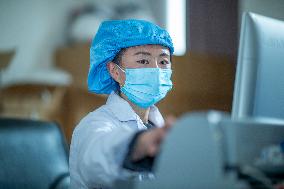
(240503) -- LHASA, May 3, 2024 (Xinhua) -- Bu Tsamjo registers packaging materials in Lhasa, southwest China's Xizang Autonomous Region, April 16, 2024. Bu Tsamjo, a team leader in the production department of a Tibetan medicine company, was awarded May Day national labor medal this year. Since joining work in 2009, she has witnessed and participated in the modernization of Tibetan medicine producing over the past years. The manufacturing and packaging of Tibetan medicine relied on manual work when Bu Tsamjo started working, and she could only pack 3,000 pills of Tibetan medicine per day. However, through recent advancements in mechanization and automation, the machinery of the company can now package 38,000 pills daily. Each process of the manufacture of medicine is essential. Bu Tsamjo's commitment to upholding high standards and ensuring the quality of medicine products underscores her unwavering dedication to her role. Her meticulous work ethic has earned her respect and admiration from colleagues.

  •  
(InXizang)CHINA-XIZANG-TIBETAN MEDICINE (CN)

(InXizang)CHINA-XIZANG-TIBETAN MEDICINE (CN)

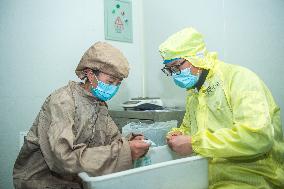
(240503) -- LHASA, May 3, 2024 (Xinhua) -- Bu Tsamjo (L) checks the batch number of Tibetan medicine in Lhasa, southwest China's Xizang Autonomous Region, April 16, 2024. Bu Tsamjo, a team leader in the production department of a Tibetan medicine company, was awarded May Day national labor medal this year. Since joining work in 2009, she has witnessed and participated in the modernization of Tibetan medicine producing over the past years. The manufacturing and packaging of Tibetan medicine relied on manual work when Bu Tsamjo started working, and she could only pack 3,000 pills of Tibetan medicine per day. However, through recent advancements in mechanization and automation, the machinery of the company can now package 38,000 pills daily. Each process of the manufacture of medicine is essential. Bu Tsamjo's commitment to upholding high standards and ensuring the quality of medicine products underscores her unwavering dedication to her role. Her meticulous work ethic has earned her respect and admiratio

  •  
(InXizang)CHINA-XIZANG-TIBETAN MEDICINE (CN)

(InXizang)CHINA-XIZANG-TIBETAN MEDICINE (CN)

(240503) -- LHASA, May 3, 2024 (Xinhua) -- Bu Tsamjo packages Tibetan Medicine in Lhasa, southwest China's Xizang Autonomous Region, April 16, 2024. Bu Tsamjo, a team leader in the production department of a Tibetan medicine company, was awarded May Day national labor medal this year. Since joining work in 2009, she has witnessed and participated in the modernization of Tibetan medicine producing over the past years. The manufacturing and packaging of Tibetan medicine relied on manual work when Bu Tsamjo started working, and she could only pack 3,000 pills of Tibetan medicine per day. However, through recent advancements in mechanization and automation, the machinery of the company can now package 38,000 pills daily. Each process of the manufacture of medicine is essential. Bu Tsamjo's commitment to upholding high standards and ensuring the quality of medicine products underscores her unwavering dedication to her role. Her meticulous work ethic has earned her respect and admiration from colleagues. (Xi

  •  
(InXizang)CHINA-XIZANG-TIBETAN MEDICINE (CN)

(InXizang)CHINA-XIZANG-TIBETAN MEDICINE (CN)

(240503) -- LHASA, May 3, 2024 (Xinhua) -- Bu Tsamjo walks into the packaging workshop in Lhasa, southwest China's Xizang Autonomous Region, April 16, 2024. Bu Tsamjo, a team leader in the production department of a Tibetan medicine company, was awarded May Day national labor medal this year. Since joining work in 2009, she has witnessed and participated in the modernization of Tibetan medicine producing over the past years. The manufacturing and packaging of Tibetan medicine relied on manual work when Bu Tsamjo started working, and she could only pack 3,000 pills of Tibetan medicine per day. However, through recent advancements in mechanization and automation, the machinery of the company can now package 38,000 pills daily. Each process of the manufacture of medicine is essential. Bu Tsamjo's commitment to upholding high standards and ensuring the quality of medicine products underscores her unwavering dedication to her role. Her meticulous work ethic has earned her respect and admiration from colleag

  •  
(InXizang)CHINA-XIZANG-TIBETAN MEDICINE (CN)

(InXizang)CHINA-XIZANG-TIBETAN MEDICINE (CN)

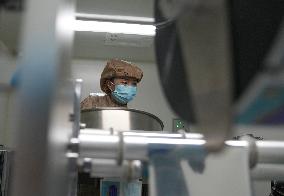
(240503) -- LHASA, May 3, 2024 (Xinhua) -- Bu Tsamjo checks the production of Tibetan medicine in Lhasa, southwest China's Xizang Autonomous Region, April 16, 2024. Bu Tsamjo, a team leader in the production department of a Tibetan medicine company, was awarded May Day national labor medal this year. Since joining work in 2009, she has witnessed and participated in the modernization of Tibetan medicine producing over the past years. The manufacturing and packaging of Tibetan medicine relied on manual work when Bu Tsamjo started working, and she could only pack 3,000 pills of Tibetan medicine per day. However, through recent advancements in mechanization and automation, the machinery of the company can now package 38,000 pills daily. Each process of the manufacture of medicine is essential. Bu Tsamjo's commitment to upholding high standards and ensuring the quality of medicine products underscores her unwavering dedication to her role. Her meticulous work ethic has earned her respect and admiration from

  •  

Smart cotton planting in China's Xinjiang

STORY: Smart cotton planting in China's Xinjiang SHOOTING TIME: April 16-20, 2024 DATELINE: April 29, 2024 LENGTH: 00:01:19 LOCATION: URUMQI, China CATEGORY: SOCIETY/TECHNOLOGY SHOTLIST: 1. various of farmers working in the fields 2. SOUNDBITE 1 (Chinese): YEMEK AMEN, Cotton farmer 3. SOUNDBTIE 2 (Chinese): MA JINYUN, Cotton farmer 4. SOUNDBTIE 3 (Chinese): LI WEIGUO, Cotton farmer 5. various of cotton fields STORYLINE: April marks the busiest planting season for cotton farmers in northwest China's Xinjiang. With the wide application of mechanization and unmanned technology, farmers embrace easier farm working. SOUNDBITE 1 (Chinese): YEMEK AMEN, Cotton farmer "We have started the busy season since mid-March with plowing, leveling the ground, harrowing, and sowing. We use agricultural drones to spray pesticides. With modern science and technology, we have used unmanned vehicles and full automatic agricultural machinery, which are easy to operate." SOUNDBTIE 2 (Chinese): MA JINYUN, Cotton farmer "To plant

  •  
XINHUA PHOTOS OF THE DAY

XINHUA PHOTOS OF THE DAY

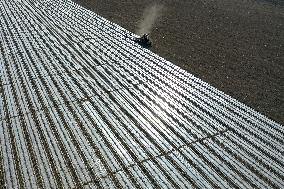
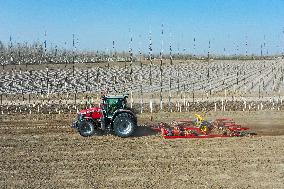
(240329) -- BEIJING, March 29, 2024 (Xinhua) -- An aerial drone photo shows a self-driving seeder working in the farmland in Awat County of Aksu, northwest China's Xinjiang Uygur Autonomous Region, March 27, 2024. Xinjiang is a major hub of cotton production. As the temperature rises, the spring sowing of cotton in Xinjiang kicked off from south to north. In recent years, advancements in agricultural technology have gradually become vital allies to the farmers of Xinjiang. From planting to harvesting, mechanization and intelligent facilities have been widely applied. (Xinhua/Ding Lei)

  •  
CHINA-XINJIANG-COTTON-PRODUCTION-SPRING SOWING (CN)

CHINA-XINJIANG-COTTON-PRODUCTION-SPRING SOWING (CN)

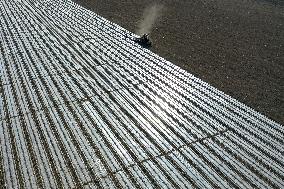
(240328) -- AWAT, March 28, 2024 (Xinhua) -- A drone photo shows a self-driving seeder working in the farmland in Awat County of Aksu, northwest China's Xinjiang Uygur Autonomous Region, March 27, 2024. Xinjiang is a major hub of cotton production. As the temperature rises, the spring sowing of cotton in Xinjiang kicked off from south to north. In recent years, advancements in agricultural technology have gradually become vital allies to the farmers of Xinjiang. From planting to harvesting, mechanization and intelligent facilities have been widely applied. (Xinhua/Ding Lei)

  •  
CHINA-XINJIANG-COTTON-PRODUCTION-SPRING SOWING (CN)

CHINA-XINJIANG-COTTON-PRODUCTION-SPRING SOWING (CN)

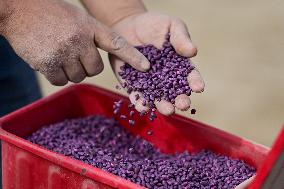
(240328) -- AWAT, March 28, 2024 (Xinhua) -- A farmer checks cotton seeds at a farmland in Awat County of Aksu, northwest China's Xinjiang Uygur Autonomous Region, March 27, 2024. Xinjiang is a major hub of cotton production. As the temperature rises, the spring sowing of cotton in Xinjiang kicked off from south to north. In recent years, advancements in agricultural technology have gradually become vital allies to the farmers of Xinjiang. From planting to harvesting, mechanization and intelligent facilities have been widely applied. (Xinhua/Ding Lei)

  •  
CHINA-XINJIANG-COTTON-PRODUCTION-SPRING SOWING (CN)

CHINA-XINJIANG-COTTON-PRODUCTION-SPRING SOWING (CN)

(240328) -- AWAT, March 28, 2024 (Xinhua) -- A drone photo shows a land grader working in the farmland in Awat County of Aksu, northwest China's Xinjiang Uygur Autonomous Region, March 26, 2024. Xinjiang is a major hub of cotton production. As the temperature rises, the spring sowing of cotton in Xinjiang kicked off from south to north. In recent years, advancements in agricultural technology have gradually become vital allies to the farmers of Xinjiang. From planting to harvesting, mechanization and intelligent facilities have been widely applied. (Xinhua/Ding Lei)

  •  
CHINA-XINJIANG-COTTON-PRODUCTION-SPRING SOWING (CN)

CHINA-XINJIANG-COTTON-PRODUCTION-SPRING SOWING (CN)

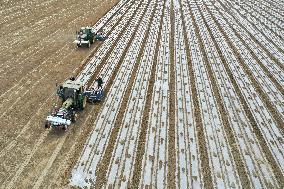
(240328) -- AWAT, March 28, 2024 (Xinhua) -- A drone photo shows self-driving seeders working in the farmland in Awat County of Aksu, northwest China's Xinjiang Uygur Autonomous Region, March 27, 2024. Xinjiang is a major hub of cotton production. As the temperature rises, the spring sowing of cotton in Xinjiang kicked off from south to north. In recent years, advancements in agricultural technology have gradually become vital allies to the farmers of Xinjiang. From planting to harvesting, mechanization and intelligent facilities have been widely applied. (Xinhua/Ding Lei)

  •  

BeiDou aids spring farming in Xinjiang

STORY: BeiDou aids spring farming in Xinjiang SHOOTING TIME: March 20, 2024 DATELINE: March 25, 2024 LENGTH: 00:00:58 LOCATION: URUMQI, China CATEGORY: TECHNOLOGY SHOTLIST: 1. various of the field 2. SOUNDBITE (Chinese): WANG XINJIA, Farmer in Xinjiang 3. various of the seeders STORYLINE: It's spring farming time in northwest China's Xinjiang Uygur Autonomous Region. Local farmers use the BeiDou Navigation Satellite System (BDS) to guide unmanned seeders to reduce the time and labor cost of farming. SOUNDBITE (Chinese): WANG XINJIA, Farmer in Xinjiang "I planted 20 mu (1.3 hectares) of wheat this year. I used traditional seeders in the past. It took a long time with low precision. This year, we have introduced BeiDou-guided seeders. It just took one hour to sow the seeds." Xinjiang has been keeping modernizing its farming process. According to the region's agricultural and rural affairs department, Xinjiang reached 100 percent mechanization in plowing and seeding, 80 percent in harvesting, and an overa

  •  

Modern agricultural machinery widely used in Xizang

STORY: Modern agricultural machinery widely used in Xizang SHOOTING TIME: March 16, 2024 DATELINE: March 24, 2024 LENGTH: 00:00:49 LOCATION: LHASA, China CATEGORY: AGRICULTURE SHOTLIST: 1. various of modern agricultural machinery being used in Xizang 2. SOUNDBITE (Chinese): NORBU DROOGDRA, Director of Bureau of agriculture and rural affairs in Doilungdeqen district of Lhasa STORYLINE: Spring farming, which is crucial to ensuring grain harvest, is underway in southwest China's Xizang Autonomous Region. In the 1970s, tractors were first introduced to the rural areas of Xizang. Now, modern agricultural machinery has been widely used in the fields here. SOUNDBITE (Chinese): NORBU DROOGDRA, Director of Bureau of agriculture and rural affairs in Doilungdeqen district of Lhasa "Currently, the full mechanization rate on agricultural production in our district has reached 88 percent. Our goal is to harvest all large farmlands with big machinery, and harvest small farmlands with crawler-type machinery. We are try

  •  
CHINA-XINJIANG-USU-COTTON PICKERS-MANUFACTURING (CN)

CHINA-XINJIANG-USU-COTTON PICKERS-MANUFACTURING (CN)

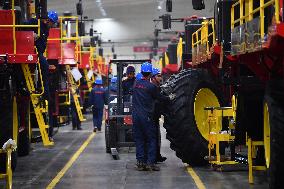
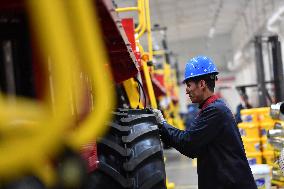
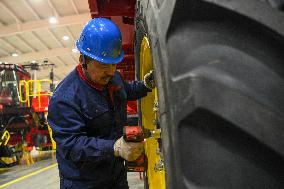
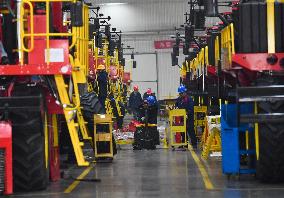
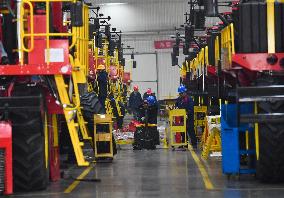
(240301) -- USU, March 1, 2024 (Xinhua) -- Workers assemble cotton pickers at an agricultural machinery manufacturing company in Usu, northwest China's Xinjiang Uygur Autonomous Region, Feb. 28, 2024. Nearly 7,000 cotton pickers were used in the harvest season in Xinjiang in 2023, bringing the region's mechanization rate of cotton picking to over 85 percent. (Xinhua/Zhao Ge)

  •  
CHINA-XINJIANG-USU-COTTON PICKERS-MANUFACTURING (CN)

CHINA-XINJIANG-USU-COTTON PICKERS-MANUFACTURING (CN)

(240301) -- USU, March 1, 2024 (Xinhua) -- A worker checks a cotton picker at an agricultural machinery manufacturing company in Usu, northwest China's Xinjiang Uygur Autonomous Region, Feb. 28, 2024. Nearly 7,000 cotton pickers were used in the harvest season in Xinjiang in 2023, bringing the region's mechanization rate of cotton picking to over 85 percent. (Xinhua/Zhao Ge)

  •  
CHINA-XINJIANG-USU-COTTON PICKERS-MANUFACTURING (CN)

CHINA-XINJIANG-USU-COTTON PICKERS-MANUFACTURING (CN)

(240301) -- USU, March 1, 2024 (Xinhua) -- A worker assembles a cotton picker at an agricultural machinery manufacturing company in Usu, northwest China's Xinjiang Uygur Autonomous Region, Feb. 28, 2024. Nearly 7,000 cotton pickers were used in the harvest season in Xinjiang in 2023, bringing the region's mechanization rate of cotton picking to over 85 percent. (Xinhua/Zhao Ge)

  •  
CHINA-XINJIANG-USU-COTTON PICKERS-MANUFACTURING (CN)

CHINA-XINJIANG-USU-COTTON PICKERS-MANUFACTURING (CN)

(240301) -- USU, March 1, 2024 (Xinhua) -- A worker assembles a cotton picker at an agricultural machinery manufacturing company in Usu, northwest China's Xinjiang Uygur Autonomous Region, Feb. 28, 2024. Nearly 7,000 cotton pickers were used in the harvest season in Xinjiang in 2023, bringing the region's mechanization rate of cotton picking to over 85 percent. (Xinhua/Zhao Ge)

  •  
CHINA-XINJIANG-USU-COTTON PICKERS-MANUFACTURING (CN)

CHINA-XINJIANG-USU-COTTON PICKERS-MANUFACTURING (CN)

(240301) -- USU, March 1, 2024 (Xinhua) -- Workers assemble cotton pickers at an agricultural machinery manufacturing company in Usu, northwest China's Xinjiang Uygur Autonomous Region, Feb. 28, 2024. Nearly 7,000 cotton pickers were used in the harvest season in Xinjiang in 2023, bringing the region's mechanization rate of cotton picking to over 85 percent. (Xinhua/Zhao Ge)

  •  
XINHUA PHOTOS OF THE DAY

XINHUA PHOTOS OF THE DAY

(240301) -- BEIJING, March 1, 2024 (Xinhua) -- Workers assemble cotton pickers at an agricultural machinery manufacturing company in Usu, northwest China's Xinjiang Uygur Autonomous Region, Feb. 28, 2024. Nearly 7,000 cotton pickers were applied for the harvest season in Xinjiang in 2023, bringing the region's mechanization rate of cotton picking to over 85 percent. (Xinhua/Zhao Ge)

  •  
Agricultural Mechanization

Agricultural Mechanization

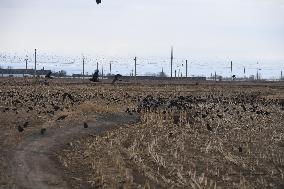
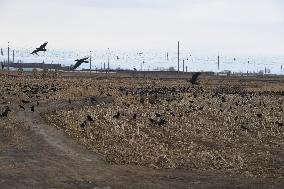
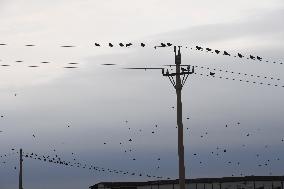
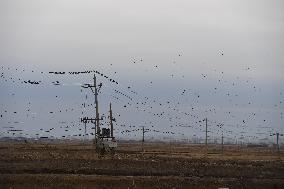
SHENYANG, CHINA - FEBRUARY 18, 2024 - Flocks of crows forage for scattered corn kernels in a field in Shenyang, Liaoning province, China, February 18, 2024. Since the mechanization of agricultural harvesting, the scattering of food is more obvious, which leaves a rich food resource for wildlife. For wild animals, the scattered corn is too much to eat.

  •  
Agricultural Mechanization

Agricultural Mechanization

SHENYANG, CHINA - FEBRUARY 18, 2024 - Flocks of crows forage for scattered corn kernels in a field in Shenyang, Liaoning province, China, February 18, 2024. Since the mechanization of agricultural harvesting, the scattering of food is more obvious, which leaves a rich food resource for wildlife. For wild animals, the scattered corn is too much to eat.

  •  
Agricultural Mechanization

Agricultural Mechanization

SHENYANG, CHINA - FEBRUARY 18, 2024 - Flocks of crows forage for scattered corn kernels in a field in Shenyang, Liaoning province, China, February 18, 2024. Since the mechanization of agricultural harvesting, the scattering of food is more obvious, which leaves a rich food resource for wildlife. For wild animals, the scattered corn is too much to eat.

  •  
Agricultural Mechanization

Agricultural Mechanization

SHENYANG, CHINA - FEBRUARY 18, 2024 - Flocks of crows forage for scattered corn kernels in a field in Shenyang, Liaoning province, China, February 18, 2024. Since the mechanization of agricultural harvesting, the scattering of food is more obvious, which leaves a rich food resource for wildlife. For wild animals, the scattered corn is too much to eat.

  •  
Agricultural Mechanization

Agricultural Mechanization

SHENYANG, CHINA - FEBRUARY 18, 2024 - Flocks of crows forage for scattered corn kernels in a field in Shenyang, Liaoning province, China, February 18, 2024. Since the mechanization of agricultural harvesting, the scattering of food is more obvious, which leaves a rich food resource for wildlife. For wild animals, the scattered corn is too much to eat.

  •  
Agricultural Mechanization

Agricultural Mechanization

SHENYANG, CHINA - FEBRUARY 18, 2024 - Flocks of crows forage for scattered corn kernels in a field in Shenyang, Liaoning province, China, February 18, 2024. Since the mechanization of agricultural harvesting, the scattering of food is more obvious, which leaves a rich food resource for wildlife. For wild animals, the scattered corn is too much to eat.

  •  
Agricultural Mechanization

Agricultural Mechanization

SHENYANG, CHINA - FEBRUARY 18, 2024 - Flocks of crows forage for scattered corn kernels in a field in Shenyang, Liaoning province, China, February 18, 2024. Since the mechanization of agricultural harvesting, the scattering of food is more obvious, which leaves a rich food resource for wildlife. For wild animals, the scattered corn is too much to eat.

  •  
CHINA-CHONGQING-RONGCHANG POTTERY-INHERITORS (CN)

CHINA-CHONGQING-RONGCHANG POTTERY-INHERITORS (CN)

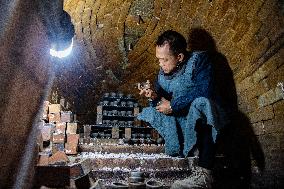
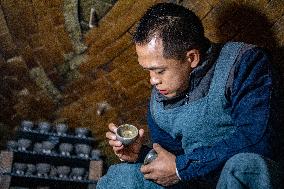
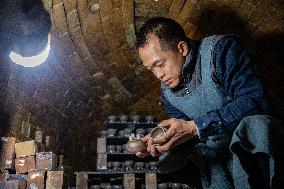
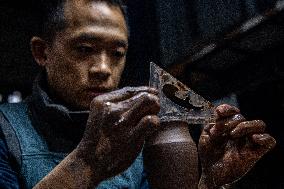
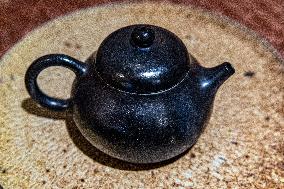
(231201) -- CHONGQING, Dec. 1, 2023 (Xinhua) -- Guan Yongshuang checks the firing of pottery inside a kiln in Chongqing, southwest China, Nov. 14, 2023. Liang Xiancai, 73, is an inheritor of Rongchang Pottery craftsmanship, an intangible cultural heritage in China. Despite the trend toward mechanization, automation, and large-scale pottery production, he steadfastly upholds the tradition of manual pottery making. Guan Yongshuang, 32, graduated from the Sichuan Fine Arts Institute with a major in pottery art. He has been studying pottery culture for nearly ten years. Guan is working on turning plant ashes, such as chestnut shells and ginkgo leaves, into natural glazes for pottery. "Pottery is like painting, with clay being the paper, wood fuels being the ink, and plant ashes being the pigment," said Guan. "All these things are from nature. So I wish to continue observing and expressing nature via pottery." Guan established his own pottery studio in Rongchang District of Chongqing, the birthplace of Ron

  •  
CHINA-CHONGQING-RONGCHANG POTTERY-INHERITORS (CN)

CHINA-CHONGQING-RONGCHANG POTTERY-INHERITORS (CN)

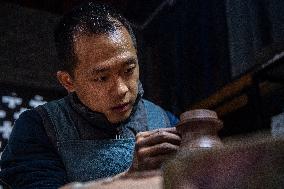
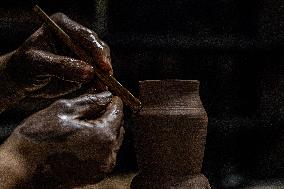
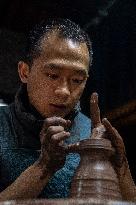
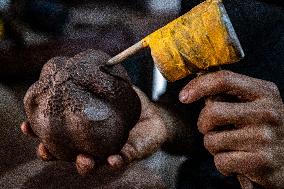
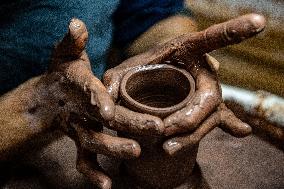
(231201) -- CHONGQING, Dec. 1, 2023 (Xinhua) -- Guan Yongshuang makes a pottery artwork at his studio in Rongchang District of Chongqing, southwest China, Nov. 14, 2023. Liang Xiancai, 73, is an inheritor of Rongchang Pottery craftsmanship, an intangible cultural heritage in China. Despite the trend toward mechanization, automation, and large-scale pottery production, he steadfastly upholds the tradition of manual pottery making. Guan Yongshuang, 32, graduated from the Sichuan Fine Arts Institute with a major in pottery art. He has been studying pottery culture for nearly ten years. Guan is working on turning plant ashes, such as chestnut shells and ginkgo leaves, into natural glazes for pottery. "Pottery is like painting, with clay being the paper, wood fuels being the ink, and plant ashes being the pigment," said Guan. "All these things are from nature. So I wish to continue observing and expressing nature via pottery." Guan established his own pottery studio in Rongchang District of Chongqing, the

  •  
CHINA-CHONGQING-RONGCHANG POTTERY-INHERITORS (CN)

CHINA-CHONGQING-RONGCHANG POTTERY-INHERITORS (CN)

(231201) -- CHONGQING, Dec. 1, 2023 (Xinhua) -- Guan Yongshuang checks the firing of pottery inside a kiln in Chongqing, southwest China, Nov. 14, 2023. Liang Xiancai, 73, is an inheritor of Rongchang Pottery craftsmanship, an intangible cultural heritage in China. Despite the trend toward mechanization, automation, and large-scale pottery production, he steadfastly upholds the tradition of manual pottery making. Guan Yongshuang, 32, graduated from the Sichuan Fine Arts Institute with a major in pottery art. He has been studying pottery culture for nearly ten years. Guan is working on turning plant ashes, such as chestnut shells and ginkgo leaves, into natural glazes for pottery. "Pottery is like painting, with clay being the paper, wood fuels being the ink, and plant ashes being the pigment," said Guan. "All these things are from nature. So I wish to continue observing and expressing nature via pottery." Guan established his own pottery studio in Rongchang District of Chongqing, the birthplace of Ron

  •  
CHINA-CHONGQING-RONGCHANG POTTERY-INHERITORS (CN)

CHINA-CHONGQING-RONGCHANG POTTERY-INHERITORS (CN)

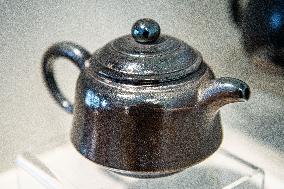
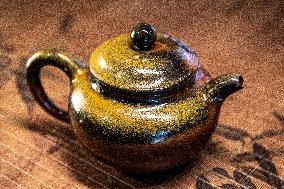
(231201) -- CHONGQING, Dec. 1, 2023 (Xinhua) -- This photo taken on Nov. 14, 2023 shows a pottery artwork by Liang Xiancai in Chongqing, southwest China. Liang Xiancai, 73, is an inheritor of Rongchang Pottery craftsmanship, an intangible cultural heritage in China. Despite the trend toward mechanization, automation, and large-scale pottery production, he steadfastly upholds the tradition of manual pottery making. Guan Yongshuang, 32, graduated from the Sichuan Fine Arts Institute with a major in pottery art. He has been studying pottery culture for nearly ten years. Guan is working on turning plant ashes, such as chestnut shells and ginkgo leaves, into natural glazes for pottery. "Pottery is like painting, with clay being the paper, wood fuels being the ink, and plant ashes being the pigment," said Guan. "All these things are from nature. So I wish to continue observing and expressing nature via pottery." Guan established his own pottery studio in Rongchang District of Chongqing, the birthplace of Ro

  •  
CHINA-CHONGQING-RONGCHANG POTTERY-INHERITORS (CN)

CHINA-CHONGQING-RONGCHANG POTTERY-INHERITORS (CN)

(231201) -- CHONGQING, Dec. 1, 2023 (Xinhua) -- This photo taken on Nov. 14, 2023 shows a pottery artwork by Guang Yongshuang in Chongqing, southwest China. Liang Xiancai, 73, is an inheritor of Rongchang Pottery craftsmanship, an intangible cultural heritage in China. Despite the trend toward mechanization, automation, and large-scale pottery production, he steadfastly upholds the tradition of manual pottery making. Guan Yongshuang, 32, graduated from the Sichuan Fine Arts Institute with a major in pottery art. He has been studying pottery culture for nearly ten years. Guan is working on turning plant ashes, such as chestnut shells and ginkgo leaves, into natural glazes for pottery. "Pottery is like painting, with clay being the paper, wood fuels being the ink, and plant ashes being the pigment," said Guan. "All these things are from nature. So I wish to continue observing and expressing nature via pottery." Guan established his own pottery studio in Rongchang District of Chongqing, the birthplace of

  •  
CHINA-CHONGQING-RONGCHANG POTTERY-INHERITORS (CN)

CHINA-CHONGQING-RONGCHANG POTTERY-INHERITORS (CN)

(231201) -- CHONGQING, Dec. 1, 2023 (Xinhua) -- Guan Yongshuang checks the firing of pottery inside a kiln in Chongqing, southwest China, Nov. 14, 2023. Liang Xiancai, 73, is an inheritor of Rongchang Pottery craftsmanship, an intangible cultural heritage in China. Despite the trend toward mechanization, automation, and large-scale pottery production, he steadfastly upholds the tradition of manual pottery making. Guan Yongshuang, 32, graduated from the Sichuan Fine Arts Institute with a major in pottery art. He has been studying pottery culture for nearly ten years. Guan is working on turning plant ashes, such as chestnut shells and ginkgo leaves, into natural glazes for pottery. "Pottery is like painting, with clay being the paper, wood fuels being the ink, and plant ashes being the pigment," said Guan. "All these things are from nature. So I wish to continue observing and expressing nature via pottery." Guan established his own pottery studio in Rongchang District of Chongqing, the birthplace of Ron

  •  
CHINA-CHONGQING-RONGCHANG POTTERY-INHERITORS (CN)

CHINA-CHONGQING-RONGCHANG POTTERY-INHERITORS (CN)

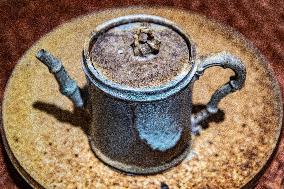
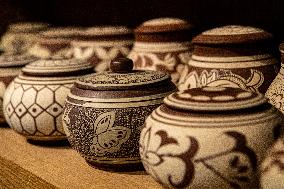
(231201) -- CHONGQING, Dec. 1, 2023 (Xinhua) -- This photo taken on Nov. 14, 2023 shows pottery artworks displayed at Liang Xiancai's studio in Rongchang District of Chongqing, southwest China. Liang Xiancai, 73, is an inheritor of Rongchang Pottery craftsmanship, an intangible cultural heritage in China. Despite the trend toward mechanization, automation, and large-scale pottery production, he steadfastly upholds the tradition of manual pottery making. Guan Yongshuang, 32, graduated from the Sichuan Fine Arts Institute with a major in pottery art. He has been studying pottery culture for nearly ten years. Guan is working on turning plant ashes, such as chestnut shells and ginkgo leaves, into natural glazes for pottery. "Pottery is like painting, with clay being the paper, wood fuels being the ink, and plant ashes being the pigment," said Guan. "All these things are from nature. So I wish to continue observing and expressing nature via pottery." Guan established his own pottery studio in Rongchang Dis

  •  
CHINA-CHONGQING-RONGCHANG POTTERY-INHERITORS (CN)

CHINA-CHONGQING-RONGCHANG POTTERY-INHERITORS (CN)

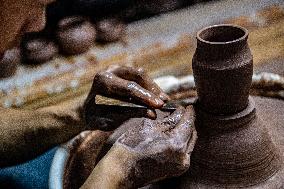
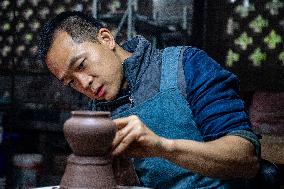
(231201) -- CHONGQING, Dec. 1, 2023 (Xinhua) -- Guan Yongshuang makes a pottery artwork at his studio in Rongchang District of Chongqing, southwest China, Nov. 14, 2023. Liang Xiancai, 73, is an inheritor of Rongchang Pottery craftsmanship, an intangible cultural heritage in China. Despite the trend toward mechanization, automation, and large-scale pottery production, he steadfastly upholds the tradition of manual pottery making. Guan Yongshuang, 32, graduated from the Sichuan Fine Arts Institute with a major in pottery art. He has been studying pottery culture for nearly ten years. Guan is working on turning plant ashes, such as chestnut shells and ginkgo leaves, into natural glazes for pottery. "Pottery is like painting, with clay being the paper, wood fuels being the ink, and plant ashes being the pigment," said Guan. "All these things are from nature. So I wish to continue observing and expressing nature via pottery." Guan established his own pottery studio in Rongchang District of Chongqing, the

  •  
CHINA-CHONGQING-RONGCHANG POTTERY-INHERITORS (CN)

CHINA-CHONGQING-RONGCHANG POTTERY-INHERITORS (CN)

(231201) -- CHONGQING, Dec. 1, 2023 (Xinhua) -- Guan Yongshuang makes a pottery artwork at his studio in Rongchang District of Chongqing, southwest China, Nov. 14, 2023. Liang Xiancai, 73, is an inheritor of Rongchang Pottery craftsmanship, an intangible cultural heritage in China. Despite the trend toward mechanization, automation, and large-scale pottery production, he steadfastly upholds the tradition of manual pottery making. Guan Yongshuang, 32, graduated from the Sichuan Fine Arts Institute with a major in pottery art. He has been studying pottery culture for nearly ten years. Guan is working on turning plant ashes, such as chestnut shells and ginkgo leaves, into natural glazes for pottery. "Pottery is like painting, with clay being the paper, wood fuels being the ink, and plant ashes being the pigment," said Guan. "All these things are from nature. So I wish to continue observing and expressing nature via pottery." Guan established his own pottery studio in Rongchang District of Chongqing, the

  •  
CHINA-CHONGQING-RONGCHANG POTTERY-INHERITORS (CN)

CHINA-CHONGQING-RONGCHANG POTTERY-INHERITORS (CN)

(231201) -- CHONGQING, Dec. 1, 2023 (Xinhua) -- This photo taken on Nov. 14, 2023 shows a pottery artwork by Guang Yongshuang at his studio in Rongchang District of Chongqing, southwest China. Liang Xiancai, 73, is an inheritor of Rongchang Pottery craftsmanship, an intangible cultural heritage in China. Despite the trend toward mechanization, automation, and large-scale pottery production, he steadfastly upholds the tradition of manual pottery making. Guan Yongshuang, 32, graduated from the Sichuan Fine Arts Institute with a major in pottery art. He has been studying pottery culture for nearly ten years. Guan is working on turning plant ashes, such as chestnut shells and ginkgo leaves, into natural glazes for pottery. "Pottery is like painting, with clay being the paper, wood fuels being the ink, and plant ashes being the pigment," said Guan. "All these things are from nature. So I wish to continue observing and expressing nature via pottery." Guan established his own pottery studio in Rongchang Dist

  •  
CHINA-CHONGQING-RONGCHANG POTTERY-INHERITORS (CN)

CHINA-CHONGQING-RONGCHANG POTTERY-INHERITORS (CN)

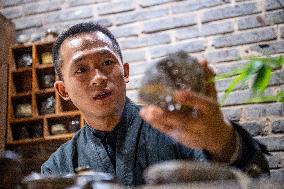
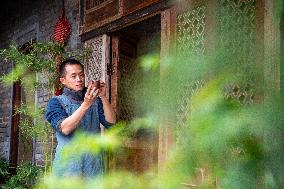
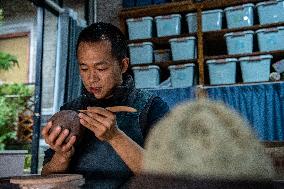
(231201) -- CHONGQING, Dec. 1, 2023 (Xinhua) -- Guan Yongshuang shows a pottery artwork at his studio in Rongchang District of Chongqing, southwest China, Nov. 14, 2023. Liang Xiancai, 73, is an inheritor of Rongchang Pottery craftsmanship, an intangible cultural heritage in China. Despite the trend toward mechanization, automation, and large-scale pottery production, he steadfastly upholds the tradition of manual pottery making. Guan Yongshuang, 32, graduated from the Sichuan Fine Arts Institute with a major in pottery art. He has been studying pottery culture for nearly ten years. Guan is working on turning plant ashes, such as chestnut shells and ginkgo leaves, into natural glazes for pottery. "Pottery is like painting, with clay being the paper, wood fuels being the ink, and plant ashes being the pigment," said Guan. "All these things are from nature. So I wish to continue observing and expressing nature via pottery." Guan established his own pottery studio in Rongchang District of Chongqing, the

  •  
CHINA-CHONGQING-RONGCHANG POTTERY-INHERITORS (CN)

CHINA-CHONGQING-RONGCHANG POTTERY-INHERITORS (CN)

(231201) -- CHONGQING, Dec. 1, 2023 (Xinhua) -- Guan Yongshuang checks a pottery artwork at his studio in Rongchang District of Chongqing, southwest China, Nov. 14, 2023. Liang Xiancai, 73, is an inheritor of Rongchang Pottery craftsmanship, an intangible cultural heritage in China. Despite the trend toward mechanization, automation, and large-scale pottery production, he steadfastly upholds the tradition of manual pottery making. Guan Yongshuang, 32, graduated from the Sichuan Fine Arts Institute with a major in pottery art. He has been studying pottery culture for nearly ten years. Guan is working on turning plant ashes, such as chestnut shells and ginkgo leaves, into natural glazes for pottery. "Pottery is like painting, with clay being the paper, wood fuels being the ink, and plant ashes being the pigment," said Guan. "All these things are from nature. So I wish to continue observing and expressing nature via pottery." Guan established his own pottery studio in Rongchang District of Chongqing, the

  •  
CHINA-CHONGQING-RONGCHANG POTTERY-INHERITORS (CN)

CHINA-CHONGQING-RONGCHANG POTTERY-INHERITORS (CN)

(231201) -- CHONGQING, Dec. 1, 2023 (Xinhua) -- Guan Yongshuang makes a pottery artwork at his studio in Rongchang District of Chongqing, southwest China, Nov. 14, 2023. Liang Xiancai, 73, is an inheritor of Rongchang Pottery craftsmanship, an intangible cultural heritage in China. Despite the trend toward mechanization, automation, and large-scale pottery production, he steadfastly upholds the tradition of manual pottery making. Guan Yongshuang, 32, graduated from the Sichuan Fine Arts Institute with a major in pottery art. He has been studying pottery culture for nearly ten years. Guan is working on turning plant ashes, such as chestnut shells and ginkgo leaves, into natural glazes for pottery. "Pottery is like painting, with clay being the paper, wood fuels being the ink, and plant ashes being the pigment," said Guan. "All these things are from nature. So I wish to continue observing and expressing nature via pottery." Guan established his own pottery studio in Rongchang District of Chongqing, the

  •  
CHINA-CHONGQING-RONGCHANG POTTERY-INHERITORS (CN)

CHINA-CHONGQING-RONGCHANG POTTERY-INHERITORS (CN)

(231201) -- CHONGQING, Dec. 1, 2023 (Xinhua) -- Guan Yongshuang makes a pottery artwork at his studio in Rongchang District of Chongqing, southwest China, Nov. 14, 2023. Liang Xiancai, 73, is an inheritor of Rongchang Pottery craftsmanship, an intangible cultural heritage in China. Despite the trend toward mechanization, automation, and large-scale pottery production, he steadfastly upholds the tradition of manual pottery making. Guan Yongshuang, 32, graduated from the Sichuan Fine Arts Institute with a major in pottery art. He has been studying pottery culture for nearly ten years. Guan is working on turning plant ashes, such as chestnut shells and ginkgo leaves, into natural glazes for pottery. "Pottery is like painting, with clay being the paper, wood fuels being the ink, and plant ashes being the pigment," said Guan. "All these things are from nature. So I wish to continue observing and expressing nature via pottery." Guan established his own pottery studio in Rongchang District of Chongqing, the

  •  
CHINA-CHONGQING-RONGCHANG POTTERY-INHERITORS (CN)

CHINA-CHONGQING-RONGCHANG POTTERY-INHERITORS (CN)

(231201) -- CHONGQING, Dec. 1, 2023 (Xinhua) -- This photo taken on Nov. 14, 2023 shows a pottery artwork by Liang Xiancai in Chongqing, southwest China. Liang Xiancai, 73, is an inheritor of Rongchang Pottery craftsmanship, an intangible cultural heritage in China. Despite the trend toward mechanization, automation, and large-scale pottery production, he steadfastly upholds the tradition of manual pottery making. Guan Yongshuang, 32, graduated from the Sichuan Fine Arts Institute with a major in pottery art. He has been studying pottery culture for nearly ten years. Guan is working on turning plant ashes, such as chestnut shells and ginkgo leaves, into natural glazes for pottery. "Pottery is like painting, with clay being the paper, wood fuels being the ink, and plant ashes being the pigment," said Guan. "All these things are from nature. So I wish to continue observing and expressing nature via pottery." Guan established his own pottery studio in Rongchang District of Chongqing, the birthplace of Ro

  •  
CHINA-CHONGQING-RONGCHANG POTTERY-INHERITORS (CN)

CHINA-CHONGQING-RONGCHANG POTTERY-INHERITORS (CN)

(231201) -- CHONGQING, Dec. 1, 2023 (Xinhua) -- Guan Yongshuang makes a pottery artwork at his studio in Rongchang District of Chongqing, southwest China, Nov. 14, 2023. Liang Xiancai, 73, is an inheritor of Rongchang Pottery craftsmanship, an intangible cultural heritage in China. Despite the trend toward mechanization, automation, and large-scale pottery production, he steadfastly upholds the tradition of manual pottery making. Guan Yongshuang, 32, graduated from the Sichuan Fine Arts Institute with a major in pottery art. He has been studying pottery culture for nearly ten years. Guan is working on turning plant ashes, such as chestnut shells and ginkgo leaves, into natural glazes for pottery. "Pottery is like painting, with clay being the paper, wood fuels being the ink, and plant ashes being the pigment," said Guan. "All these things are from nature. So I wish to continue observing and expressing nature via pottery." Guan established his own pottery studio in Rongchang District of Chongqing, the

  •  
CHINA-CHONGQING-RONGCHANG POTTERY-INHERITORS (CN)

CHINA-CHONGQING-RONGCHANG POTTERY-INHERITORS (CN)

(231201) -- CHONGQING, Dec. 1, 2023 (Xinhua) -- Guan Yongshuang makes a pottery artwork at his studio in Rongchang District of Chongqing, southwest China, Nov. 14, 2023. Liang Xiancai, 73, is an inheritor of Rongchang Pottery craftsmanship, an intangible cultural heritage in China. Despite the trend toward mechanization, automation, and large-scale pottery production, he steadfastly upholds the tradition of manual pottery making. Guan Yongshuang, 32, graduated from the Sichuan Fine Arts Institute with a major in pottery art. He has been studying pottery culture for nearly ten years. Guan is working on turning plant ashes, such as chestnut shells and ginkgo leaves, into natural glazes for pottery. "Pottery is like painting, with clay being the paper, wood fuels being the ink, and plant ashes being the pigment," said Guan. "All these things are from nature. So I wish to continue observing and expressing nature via pottery." Guan established his own pottery studio in Rongchang District of Chongqing, the

  •  
CHINA-CHONGQING-RONGCHANG POTTERY-INHERITORS (CN)

CHINA-CHONGQING-RONGCHANG POTTERY-INHERITORS (CN)

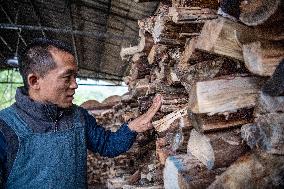
(231201) -- CHONGQING, Dec. 1, 2023 (Xinhua) -- Guan Yongshuang checks woods for firing pottery at his studio in Rongchang District of Chongqing, southwest China, Nov. 14, 2023. Liang Xiancai, 73, is an inheritor of Rongchang Pottery craftsmanship, an intangible cultural heritage in China. Despite the trend toward mechanization, automation, and large-scale pottery production, he steadfastly upholds the tradition of manual pottery making. Guan Yongshuang, 32, graduated from the Sichuan Fine Arts Institute with a major in pottery art. He has been studying pottery culture for nearly ten years. Guan is working on turning plant ashes, such as chestnut shells and ginkgo leaves, into natural glazes for pottery. "Pottery is like painting, with clay being the paper, wood fuels being the ink, and plant ashes being the pigment," said Guan. "All these things are from nature. So I wish to continue observing and expressing nature via pottery." Guan established his own pottery studio in Rongchang District of Chongqi

  •  
CHINA-CHONGQING-RONGCHANG POTTERY-INHERITORS (CN)

CHINA-CHONGQING-RONGCHANG POTTERY-INHERITORS (CN)

(231201) -- CHONGQING, Dec. 1, 2023 (Xinhua) -- Guan Yongshuang makes a pottery artwork at his studio in Rongchang District of Chongqing, southwest China, Nov. 14, 2023. Liang Xiancai, 73, is an inheritor of Rongchang Pottery craftsmanship, an intangible cultural heritage in China. Despite the trend toward mechanization, automation, and large-scale pottery production, he steadfastly upholds the tradition of manual pottery making. Guan Yongshuang, 32, graduated from the Sichuan Fine Arts Institute with a major in pottery art. He has been studying pottery culture for nearly ten years. Guan is working on turning plant ashes, such as chestnut shells and ginkgo leaves, into natural glazes for pottery. "Pottery is like painting, with clay being the paper, wood fuels being the ink, and plant ashes being the pigment," said Guan. "All these things are from nature. So I wish to continue observing and expressing nature via pottery." Guan established his own pottery studio in Rongchang District of Chongqing, the

  •  
CHINA-CHONGQING-RONGCHANG POTTERY-INHERITORS (CN)

CHINA-CHONGQING-RONGCHANG POTTERY-INHERITORS (CN)

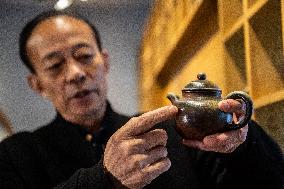
(231201) -- CHONGQING, Dec. 1, 2023 (Xinhua) -- Liang Xiancai shows a pottery artwork at his studio in Rongchang District of Chongqing, southwest China, Nov. 14, 2023. Liang Xiancai, 73, is an inheritor of Rongchang Pottery craftsmanship, an intangible cultural heritage in China. Despite the trend toward mechanization, automation, and large-scale pottery production, he steadfastly upholds the tradition of manual pottery making. Guan Yongshuang, 32, graduated from the Sichuan Fine Arts Institute with a major in pottery art. He has been studying pottery culture for nearly ten years. Guan is working on turning plant ashes, such as chestnut shells and ginkgo leaves, into natural glazes for pottery. "Pottery is like painting, with clay being the paper, wood fuels being the ink, and plant ashes being the pigment," said Guan. "All these things are from nature. So I wish to continue observing and expressing nature via pottery." Guan established his own pottery studio in Rongchang District of Chongqing, the bi

  •  
CHINA-CHONGQING-RONGCHANG POTTERY-INHERITORS (CN)

CHINA-CHONGQING-RONGCHANG POTTERY-INHERITORS (CN)

(231201) -- CHONGQING, Dec. 1, 2023 (Xinhua) -- Guan Yongshuang makes a pottery artwork at his studio in Rongchang District of Chongqing, southwest China, Nov. 14, 2023. Liang Xiancai, 73, is an inheritor of Rongchang Pottery craftsmanship, an intangible cultural heritage in China. Despite the trend toward mechanization, automation, and large-scale pottery production, he steadfastly upholds the tradition of manual pottery making. Guan Yongshuang, 32, graduated from the Sichuan Fine Arts Institute with a major in pottery art. He has been studying pottery culture for nearly ten years. Guan is working on turning plant ashes, such as chestnut shells and ginkgo leaves, into natural glazes for pottery. "Pottery is like painting, with clay being the paper, wood fuels being the ink, and plant ashes being the pigment," said Guan. "All these things are from nature. So I wish to continue observing and expressing nature via pottery." Guan established his own pottery studio in Rongchang District of Chongqing, the

  • Main
  • Top
  • Editorial
  • Creative
  • About Us
  • About ILG
  • Terms of use
  • Company
  • BEHIND
  • Price List
  • Single Plan
  • Monthly Plan
  • Services
  • Shooting
  • Rights Clearance
  • Support
  • FAQ
  • How To Buy
  • Contact Us
  • Become a Partner

© KYODO NEWS IMAGES INC

All Rights Reserved.

  • Editorial
  • Olympics
  • News
  • Sports
  • Japan
  • Tech
  • Royal
  • Disaster
  • NorthKorea
  • Old Japan
  • SNS
  • Creative
  • Food
  • Japan
  • Landscape
  • Animal
  • Popular
  • #Ukraine
  • #Russia
  • #coronavirus
  • #N. Korea
  • #Thailand
  • #China
  • #Ukraine
  • #Russia
  • #coronavirus
  • #N. Korea
  • #Thailand
  • #China
  • Food
  • Japan
  • Landscape
  • Animal
  • Olympics
  • News
  • Sports
  • Japan
  • Tech
  • Royal
  • Disaster
  • NorthKorea
  • Old Japan
  • SNS