•  
Portraits Project - Resisting the War - Israel

Portraits Project - Resisting the War - Israel

Shani, 25, is a student and part-time social media coordinator. She always thought that the occupation must end because of the harm it causes to Palestinians, but when the war started she realized the extent to which it hurts Israelis too — and not only in an indirect manner, through the militaristic and racist environment it creates. She also had to deal with the fact that her partner enlisted in the reserves. “As a leftist, I’ve never thought I’ll ever need to deal with this, and suddenly there's an ideological and emotional difficulty. If he was a combat soldier I wouldn’t be able to date him. And it’s also simply hard to be away from a person that is close to me in such a difficult time.” Photo by Yahel Gazit/Middle East Images/ABACAPRESS.COM

  •  

Russia commemorate Day of Victory over Militaristic Japan

STORY: Russia commemorate Day of Victory over Militaristic Japan DATELINE: Sept. 5, 2023 LENGTH: 00:02:05 LOCATION: Moscow CATEGORY: SOCIETY SHOTLIST: 1. various of the Museum of the Great Patriotic War 2. various of the commemorative ceremony 2. SOUNDBITE 1 (Russian): DMITRY SAGAL, Expert on public diplomacy 3. various of a special exhibition 4. SOUNDBITE 2 (Russian): OLGA YERYOMENKO, Descendant of WWII veteran 5. various of a visual effect special exhibition STORYLINE: Sunday marked the inaugural commemoration of "the Day of Victory over Militaristic Japan and the End of World War II (1945)," after Russian President Vladimir Putin signed a bill in June altering the name of the commemorative day from its previous designation as "the Day of the End of World War II (1945)." At the Museum of the Great Patriotic War in Moscow, representatives of all walks of life laid flowers to memory the loss during the war. SOUNDBITE 1 (Russian): DMITRY SAGAL, Expert on public diplomacy "Japanese militarists are the same

  •  
Women's rights pioneer and politician, Kato, dies at 104

Women's rights pioneer and politician, Kato, dies at 104

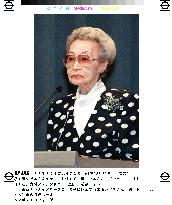
TOKYO, Japan - Shizue Kato (file photo taken in May, 1996), one of the first Japanese women to become a Diet member and a pioneer of women's rights in Japan, died on Dec. 22. She was 104. While studying in the United States, Kato met the famous feminist and pioneer of family planning, Margaret Sanger, around 1920. When she returned to Japan, she promoted the use of contraceptives, which was a taboo subject under the militaristic government. She also took part in a movement calling for women's suffrage.

  •  
China stresses benefits from peaceful ties with Japan

China stresses benefits from peaceful ties with Japan

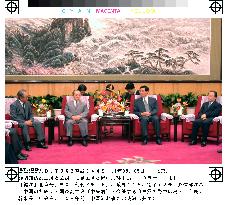
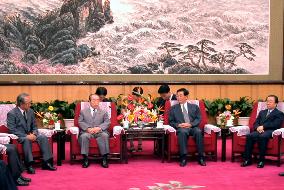
BEIDAIHE, China - Chinese Vice President Hu Jintao (2nd from R) tells Hiromu Nonaka (2nd from L), a heavyweight in Japan's ruling Liberal Democratic Party, and his delegation Aug. 5 that peaceful ties between the two countries will benefit both sides, suggesting Japan exercise caution over contentious issues relating to Japan's militaristic past. Hu met the delegation in the seaside resort of Beidaihe, east of Beijing.

  •  
Mori uses another war-era word

Mori uses another war-era word

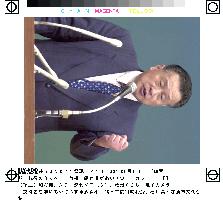
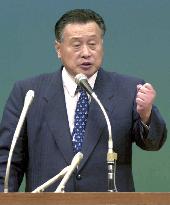
KAGA, Japan - Prime Minister Yoshiro Mori addresses an audience in his home prefecture of Ishikawa on June 10, where he again used a phrase harking back to Japan's militaristic past. He told the audience in Kaga to ''kindly take care of the 'jugo' (home front).'' The term ''jugo'' literally means ''behind the guns.'' The prime minister has been under fire for using other wartime expressions.

  •  
Women's rights pioneer and politician, Kato, dies at 104

Women's rights pioneer and politician, Kato, dies at 104

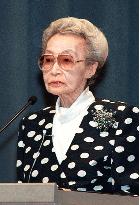
TOKYO, Japan - Shizue Kato (file photo taken in May, 1996), one of the first Japanese women to become a Diet member and a pioneer of women's rights in Japan, died on Dec. 22. She was 104. While studying in the United States, Kato met the famous feminist and pioneer of family planning, Margaret Sanger, around 1920. When she returned to Japan, she promoted the use of contraceptives, which was a taboo subject under the militaristic government. She also took part in a movement calling for women's suffrage.

  •  
People stage rally against Japan, S. Korea summit

People stage rally against Japan, S. Korea summit

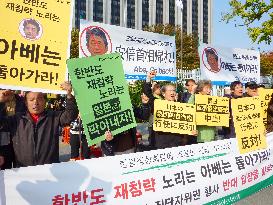
People stage a rally on Nov. 2, 2015, in Seoul against the summit meeting of Japanese Prime Minister Shinzo Abe and South Korean President Park Geun Hye, criticizing the Japanese government's historical perspectives and militaristic stance. (Kyodo) ==Kyodo

  •  
Ministers back use of prewar imperial rescript as teaching material

Ministers back use of prewar imperial rescript as teaching material

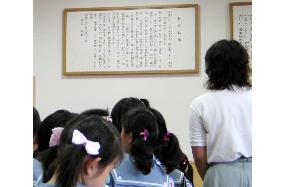
Children at Tsukamoto Kindergarten in the city of Osaka recite the Imperial Rescript of Education, the 1890 edict used to promote emperor-oriented and militaristic education before and during World War II in Japan, in this file photo taken June 27, 2006. (Kyodo) ==Kyodo

  •  
Suga refers to controversial Imperial Rescript on Education

Suga refers to controversial Imperial Rescript on Education

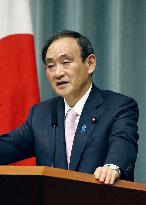
At a press conference in Tokyo on April 4, 2017, Chief Cabinet Secretary Yoshihide Suga refers to the prewar Imperial Rescript on Education, an 1890 edict that was used to promote emperor-oriented and militaristic education. Suga indicated its use as teaching material should not be barred as long as it is done within the scope of the Constitution and basic education law. (Kyodo) ==Kyodo

  •  
China stresses benefits from peaceful ties with Japan

China stresses benefits from peaceful ties with Japan

BEIDAIHE, China - Chinese Vice President Hu Jintao (2nd from R) tells Hiromu Nonaka (2nd from L), a heavyweight in Japan's ruling Liberal Democratic Party, and his delegation Aug. 5 that peaceful ties between the two countries will benefit both sides, suggesting Japan exercise caution over contentious issues relating to Japan's militaristic past. Hu met the delegation in the seaside resort of Beidaihe, east of Beijing.

  •  
Mori uses another war-era word

Mori uses another war-era word

SAGA, Japan - Prime Minister Yoshiro Mori addresses an audience in his home prefecture of Ishikawa on June 10, where he again used a phrase harking back to Japan's militaristic past. He told the audience in Kaga to ''kindly take care of the 'jugo' (home front).'' The term ''jugo'' literally means ''behind the guns.'' The prime minister has been under fire for using other wartime expressions.

  • Main
  • Top
  • Editorial
  • Creative
  • About Us
  • About ILG
  • Terms of use
  • Company
  • BEHIND
  • Price List
  • Single Plan
  • Monthly Plan
  • Services
  • Shooting
  • Rights Clearance
  • Support
  • FAQ
  • How To Buy
  • Contact Us
  • Become a Partner

© KYODO NEWS IMAGES INC

All Rights Reserved.

  • Editorial
  • Olympics
  • News
  • Sports
  • Japan
  • Tech
  • Royal
  • Disaster
  • NorthKorea
  • Old Japan
  • SNS
  • Creative
  • Food
  • Japan
  • Landscape
  • Animal
  • Popular
  • #Ukraine
  • #China
  • #coronavirus
  • #N. Korea
  • #Russia
  • #Thailand
  • #Ukraine
  • #China
  • #coronavirus
  • #N. Korea
  • #Russia
  • #Thailand
  • Food
  • Japan
  • Landscape
  • Animal
  • Olympics
  • News
  • Sports
  • Japan
  • Tech
  • Royal
  • Disaster
  • NorthKorea
  • Old Japan
  • SNS