•  
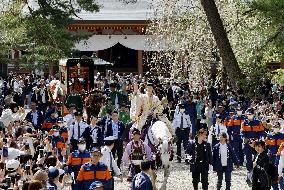
INI member Ozaki plays Yoshitsune in Iwate festival

INI member Ozaki plays Yoshitsune in Iwate festival

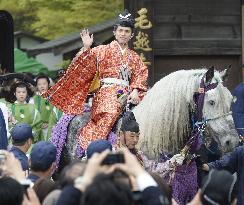
Takumi Ozaki (C) of Japanese boy band INI waves to spectators as he plays the role of 12th-century warrior Minamoto no Yoshitsune during a parade in Hiraizumi in the northeastern Japan prefecture of Iwate on May 3, 2025.

  •  
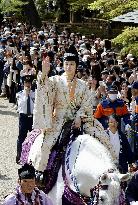
INI member Ozaki plays Yoshitsune in Iwate festival

INI member Ozaki plays Yoshitsune in Iwate festival

Takumi Ozaki of Japanese boy band INI waves to spectators as he plays the role of 12th-century warrior Minamoto no Yoshitsune during a parade in Hiraizumi in the northeastern Japan prefecture of Iwate on May 3, 2025.

  •  
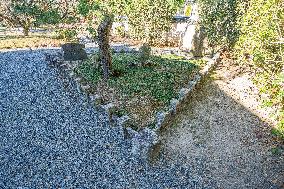
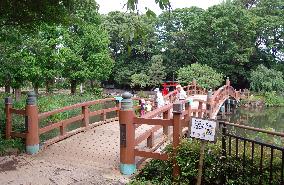
Byodo-in Ogi-no-Shiba (Lawn of Fan)

Byodo-in Ogi-no-Shiba (Lawn of Fan)

Byodo-in, Byodo-in Temple, Ogi-no-Shiba (Lawn of Fan), Minamoto no Yorimasa=22 December 2023, Place:Kyoto

  •  
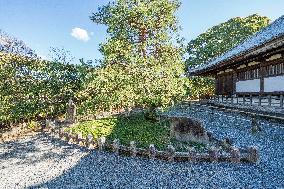
Byodo-in Ogi-no-Shiba (Lawn of Fan)

Byodo-in Ogi-no-Shiba (Lawn of Fan)

Byodo-in, Byodo-in Temple, Ogi-no-Shiba (Lawn of Fan), Minamoto no Yorimasa=22 December 2023, Place:Kyoto

  •  
Actor Yamamoto plays Yoshitsune in Iwate festival

Actor Yamamoto plays Yoshitsune in Iwate festival

HIRAIZUMI, Japan - Playing the role of Minamoto no Yoshitsune, a tragic warrior in the 12th century, in a parade, actor Yusuke Yamamoto waves on horseback to spectators in Hiraizumi, Iwate Prefecture, on May 3, 2014, during the "Haruno Fujiwara Matsuri" (Spring Fujiwara Festival). The cultural heritage of Hiraizumi has been included on the World Heritage List.

  •  
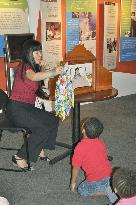
A-bomb victim Sadako's story narrated in New York

A-bomb victim Sadako's story narrated in New York

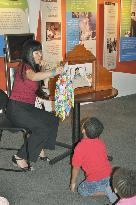
NEW YORK, United States - Japan Society educator Kazuko Minamoto narrates the story of Sadako Sasaki, a young girl who experienced the atomic bombing of Hiroshima in 1945, to children at the Tribute WTC Visitor Center in New York on Aug. 7, 2010, using 1,000 paper cranes.

  •  
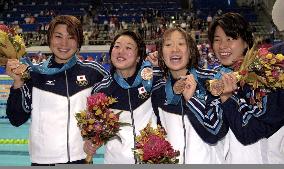
Japan's 4x100-meter medley relay team all smiles with bronze med

Japan's 4x100-meter medley relay team all smiles with bronze med

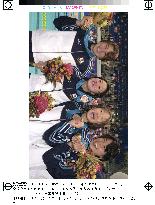
SYDNEY, Australia - The four members of the Japanese women's 4x100-meter medley relay team are all smiles as they pose and show off their bronze medals, after setting a national record of 4:04.16 at the Sydney Olympic Games on Sept. 23. Picture shows from left: Mai Nakamura, Masami Tanaka, Junko Onishi and Sumika Minamoto.

  •  
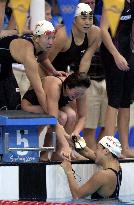
Japan wins bronze in women's 4x100-meter medley relay

Japan wins bronze in women's 4x100-meter medley relay

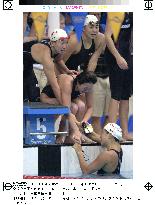
SYDNEY, Australia - Masami Tanaka (C) welcomes home anchor Sumika Minamoto after the Japanese women's 4x100-meter medley relay wins the bronze medal with a national record of 4:04.16 at the Sydney Olympic Games on Sept. 23. Junko Onishi (L) and Mai Nakamura (R) check the clock behind Tanaka.

  •  
RACIAL/JAPAN/SHOGUN 1900

RACIAL/JAPAN/SHOGUN 1900

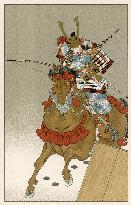
The shogun (commander-in- chief) Minamoto Joritomo, in full traditional battle array Date: circa 1900

  •  
Japan's "nebuta" appears in Hollywood

Japan's "nebuta" appears in Hollywood

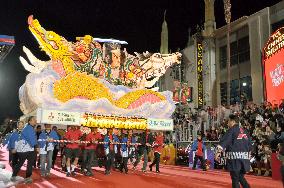
About 160 people, including dancers from Japan and the United States, participate in a parade with a "nebuta," or a lantern float, from Japan's northeastern Aomori region in Hollywood, California, on Nov. 29, 2015, during the annual Christmas event. The lantern float features an image of Japanese feudal warlord Minamoto no Yoshitsune. (Kyodo) ==Kyodo

  •  
Japan's "nebuta" appears in Hollywood

Japan's "nebuta" appears in Hollywood

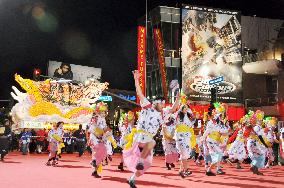
About 160 people, including dancers from Japan and the United States, participate in a parade with a "nebuta," or a lantern float, from Japan's northeastern Aomori region in Hollywood, California, on Nov. 29, 2015, during the annual Christmas event. The lantern float features an image of Japanese feudal warlord Minamoto no Yoshitsune. (Kyodo) ==Kyodo

  •  
Tokyo scene: Statue of ancient warlord's horse

Tokyo scene: Statue of ancient warlord's horse

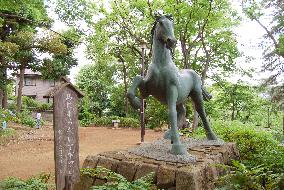
Photo taken on July 8, 2015, shows a statue of Ikezuki, a famous white horse that belonged to 12th-century warlord Minamoto no Yorimoto, founder of the Kamakura shogunate, and which makes an appearance in the "Tale of Heike." It stands near the Senzoku Pond in Tokyo's Ota district. (Kyodo) ==Kyodo

  •  
Tokyo scene: Bridge named after warlord's horse

Tokyo scene: Bridge named after warlord's horse

Photo taken on July 10, 2015, shows Ikezuki-bashi (Ikezuki Bridge), an arch bridge named after the famous white horse that belonged to 12th-century warlord Minamoto no Yorimoto, founder of the Kamakura shogunate. The bridge crosses the Senzoku Pond in Tokyo's Ota district. (Kyodo) ==Kyodo

  •  
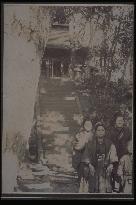
Tamazawa Inari Shrine

Tamazawa Inari Shrine

Family snapshot taken at the foot of the stairs of Tamasawa Inari Shrine in Asahi Village, Ibaraki Prefecture. This shrine is said to have been established near a natural spring on the way to Mutsu where Minamoto Yoriyoshi and Yoshiie, father and son, prayed for victory over the Abe clan. They ordered Kamakura Gondayuu to build the shrine in 1063. The deity enshrined here is Ukanomitama-no mikoto.==Date:unknown, Place:Kyoto, Photo:unknown, (Credit:Nagasaki University Library/Kyodo News Images) [Cabinet Number72‐64‐0]

  •  
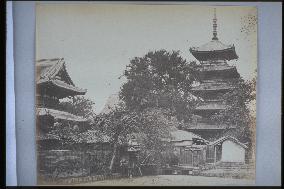
Sensoji Temple

Sensoji Temple

The five-story pagoda and Niomon (gate) seen from Benten Pond. Taken by Felix Beato, this is one of the oldest existing photographs of Sensoji Temple. Benten Shinto Shrine dedicated to the deity Benzaiten is simpler and looks slightly different from the one portrayed in photographs #2414 and 4440. The one in this photograph is older. Legend has it that the huge gingko tree in the centre grew from a pair of chopsticks left behind by Minamoto Yoritomo. The tree unfortunately perished in the air raids of 1945.==Date:unknown, Place:Tokyo, Photo:F. Beato, (Credit:Nagasaki University Library/Kyodo News Images) [Cabinet Number62‐34‐0]

  •  
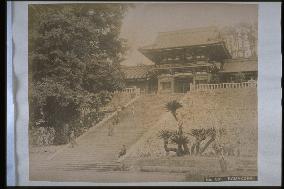
Tsurugaoka Hachimangu Shrine

Tsurugaoka Hachimangu Shrine

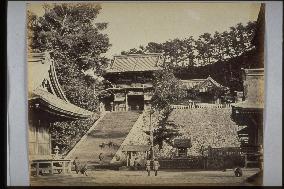
The photograph is labeled No. 531 KAMAKURA. The huge gingko tree (presently designated as a Natural Monument by Kanagawa Prefecture) famous for the legend of the assassination of the third shogun, Minamoto Sanetomo (1192-1219), is on the left. A cycad tree is growing on the opposite side. The date is the same as that of photograph #4674.==Date:unknown, Place:Kamakura, Photo:unknown, (Credit:Nagasaki University Library/Kyodo News Images) [Cabinet Number59‐79‐0]

  •  
Rokuharamitsuji Temple

Rokuharamitsuji Temple

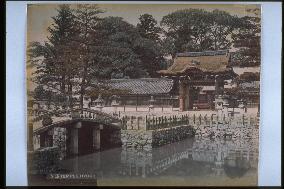
The Karamon Gate of Rokuson-o Shinto Shrine is seen facing east from the northeastern side of the Shinryu Pond. This shrine was rebuilt by Nankokushonin of Henjoshinin with the help of the Tokugawa Shogunate in 1702 and completed in 1707. It enshrines Rokuson-o (Minamoto Tsunemoto, a descendent of the Genji clan. The shape of the stone fence surrounding the pond indicates that this photograph was taken before 1911.==Date:unknown, Place:Kyoto, Photo:unknown, (Credit:Nagasaki University Library/Kyodo News Images) [Cabinet Number56‐20‐0]

  •  
Tsurugaoka Hachimangu Shrine

Tsurugaoka Hachimangu Shrine

Tsurugaoka Hachimangu is a shrine in Yukinoshita, Kamakura. It was built by Minamoto Yoritomo in 1180. The main building and corridor are built on the stone foundation, and part of the hall is seen below. (Identical to the photo numbered 36-14.)==Date:unknown, Place:Kamakura, Photo:F. Beato, (Credit:Nagasaki University Library/Kyodo News Images) [Cabinet Number36‐14‐0]

  •  
The honden (inner sanctuary),Tsurugaoka Hachimangu Shrine

The honden (inner sanctuary),Tsurugaoka Hachimangu Shrine

Tsurugaoka Hachimangu is a shrine in Yukinoshita, Kamakura. Minamoto Yoritomo built the shrine in 1180. Over the stone walls is the main building and corridor, and a step below is seen part of the hall to the right and left. (Same as the photo numbered 36-14)==Date:unknown, Place:Kamakura, Photo:F. Beato, (Credit:Nagasaki University Library/Kyodo News Images) [Cabinet Number28‐14‐0]

  •  
Tomb of yoritomo

Tomb of yoritomo

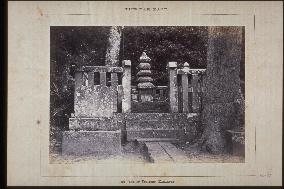
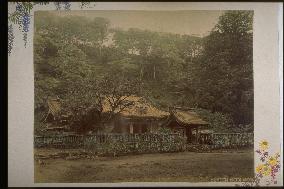
Minamoto Yoritomo died at the age of 53 in 1199, and his remains were buried in the Jibutsudo in the hills of Nishigomon in Kamakura city. The five-story stone pagoda with a stone fence marks the site. Huge trees stand in the front and back of the stone fence.==Date:unknown, Place:Kamakura, Photo:unknown, (Credit:Nagasaki University Library/Kyodo News Images) [Cabinet Number24‐40‐0]

  •  
Enoshima Island

Enoshima Island

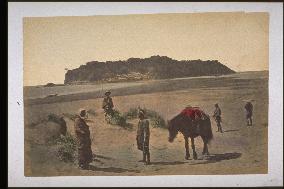
This is probably a scene near the photo numbered 4-14. The village in Enoshima can be seen clearly. Enoshima is mentioned in Azuma Kagami when Minamoto Yoritomo recommended the construction of a Benzaiten there in 1182. There is said to have been an oracle from the Enoshima Myojin on January 15, 1216. The seas turned into a road and people profited, so the Shogun at that time, Yoritsune, came to worship at the shrine in 1228.==Date:unknown, Place:Enoshima, Photo:unknown, (Credit:Nagasaki University Library/Kyodo News Images) [Cabinet Number13‐30‐0]

  •  
The Jogyo-do and the Hokke-do,Rinnoji Temple

The Jogyo-do and the Hokke-do,Rinnoji Temple

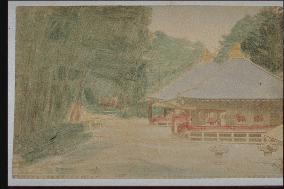
Seen from Daiyuin, Hokkedo is in front and the Japanese-style Jokodo is in the rear. Since they are of the same shape and both are coloured red, connected by a corridor, they are called Futatsudo . The main Buddha of Jokodo is Amida Nyorai, and the temple was a place of spiritual training for Minamoto Yoritomo. The colouring is rough.==Date:unknown, Place:Nikko, Photo:unknown, (Credit:Nagasaki University Library/Kyodo News Images) [Cabinet Number12‐10‐0]

  •  
Tsurugaoka hachimangu shrine and a big ginko tree

Tsurugaoka hachimangu shrine and a big ginko tree

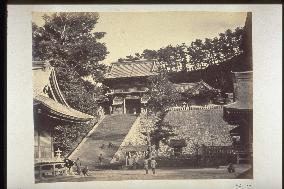
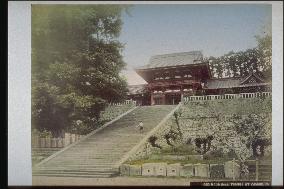
The Hachiman Shinto Shrine and great ginkgo trees. Hachiman Shrine was first built in Yuigahama by Minamoto Yoriyoshi in 1063, but later it was moved to the present site at Mt. Kita by the Shogun Yoritomo. It became the guardian of Kamakura. The Shogun Sanetomo is said to have been assassinated by Kugyo in 1219 under the gigantic gingko tree to the left.(This shrine is designated as a natural monument by Kanagawa prefecture.)==Date:unknown, Place:Kamakura, Photo:Ogawa Kazumasa, (Credit:Nagasaki University Library/Kyodo News Images) [Cabinet Number7‐15‐0]

  •  
Hakone Shrine

Hakone Shrine

Hakone Shinto Shrine was the centre of worship as the Hakone Gongen. Especially in the middle ages, it was revered by Kamakura Shoguns such as Minamoto Yoritomo, and it is the setting of the Tale of Soga. This picture was taken before 1896, because the Komainu (Korean style dogs) and the pines planted by Emperor Meiji are not seen.==Date:unknown, Place:Hakone, Photo:Ogawa Kazumasa, (Credit:Nagasaki University Library/Kyodo News Images) [Cabinet Number5‐24‐0]

  •  
Japan's 4x100-meter medley relay team all smiles with bronze med

Japan's 4x100-meter medley relay team all smiles with bronze med

SYDNEY, Australia - The four members of the Japanese women's 4x100-meter medley relay team are all smiles as they pose and show off their bronze medals, after setting a national record of 4:04.16 at the Sydney Olympic Games on Sept. 23. Picture shows from left: Mai Nakamura, Masami Tanaka, Junko Onishi and Sumika Minamoto.

  •  
A-bomb victim Sadako's story narrated in New York

A-bomb victim Sadako's story narrated in New York

NEW YORK, United States - Japan Society educator Kazuko Minamoto narrates the story of Sadako Sasaki, a young girl who experienced the atomic bombing of Hiroshima in 1945, to children at the Tribute WTC Visitor Center in New York on Aug. 7, 2010, using 1,000 paper cranes. (Kyodo)

  •  
Japan wins bronze in women's 4x100-meter medley relay

Japan wins bronze in women's 4x100-meter medley relay

SYDNEY, Australia - Masami Tanaka (C) welcomes home anchor Sumika Minamoto after the Japanese women's 4x100-meter medley relay wins the bronze medal with a national record of 4:04.16 at the Sydney Olympic Games on Sept. 23. Junko Onishi (L) and Mai Nakamura (R) check the clock behind Tanaka.

  • Main
  • Top
  • Editorial
  • Creative
  • About Us
  • About ILG
  • Terms of use
  • Company
  • BEHIND
  • Price List
  • Single Plan
  • Monthly Plan
  • Services
  • Shooting
  • Rights Clearance
  • Support
  • FAQ
  • How To Buy
  • Contact Us
  • Become a Partner

© KYODO NEWS IMAGES INC

All Rights Reserved.

  • Editorial
  • Olympics
  • News
  • Sports
  • Japan
  • Tech
  • Royal
  • Disaster
  • NorthKorea
  • Old Japan
  • SNS
  • Creative
  • Food
  • Japan
  • Landscape
  • Animal
  • Popular
  • #Ukraine
  • #Thailand
  • #coronavirus
  • #N. Korea
  • #Russia
  • #China
  • #Ukraine
  • #Thailand
  • #coronavirus
  • #N. Korea
  • #Russia
  • #China
  • Food
  • Japan
  • Landscape
  • Animal
  • Olympics
  • News
  • Sports
  • Japan
  • Tech
  • Royal
  • Disaster
  • NorthKorea
  • Old Japan
  • SNS