•  
Farmers Protest - Spain

Farmers Protest - Spain

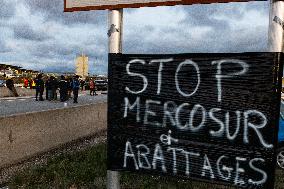
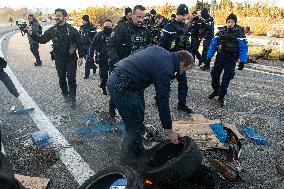
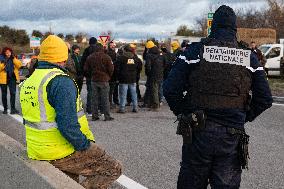
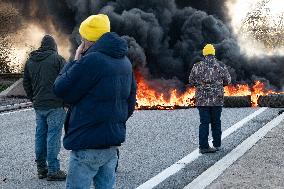
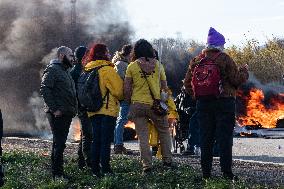
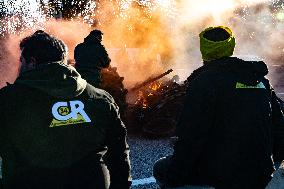
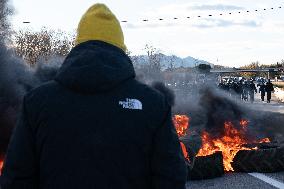
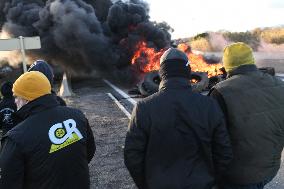
Several people cut the road during a protest, on January 8, 2026, in Pontós, Girona, Catalonia (Spain). The AP-7 between Borrassà and Garrigàs and the N-II from Pontós to Garrigàs (Girona) in both directions due to agricultural demonstrations claimed by Revolta Pagesa since early Thursday morning. The agricultural mobilizations respond to the refusal of the part of the sector to the agreement between the European Union and Mercosur, in addition to the "mismanagement" of wildlife - which they believe puts at risk farms and livestock - and cuts in the Common Agricultural Policy (CAP), has claimed Revolta Pagesa from their social networks. Photo by Glòria Sánchez / Europa Press / ABACAPRESS.COM

  •  
Farmers Protest - Spain

Farmers Protest - Spain

Several people cut the road during a protest, on January 8, 2026, in Pontós, Girona, Catalonia (Spain). The AP-7 between Borrassà and Garrigàs and the N-II from Pontós to Garrigàs (Girona) in both directions due to agricultural demonstrations claimed by Revolta Pagesa since early Thursday morning. The agricultural mobilizations respond to the refusal of the part of the sector to the agreement between the European Union and Mercosur, in addition to the "mismanagement" of wildlife - which they believe puts at risk farms and livestock - and cuts in the Common Agricultural Policy (CAP), has claimed Revolta Pagesa from their social networks. Photo by Glòria Sánchez / Europa Press / ABACAPRESS.COM

  •  
Farmers Protest - Spain

Farmers Protest - Spain

Several people cut the road during a protest, on January 8, 2026, in Pontós, Girona, Catalonia (Spain). The AP-7 between Borrassà and Garrigàs and the N-II from Pontós to Garrigàs (Girona) in both directions due to agricultural demonstrations claimed by Revolta Pagesa since early Thursday morning. The agricultural mobilizations respond to the refusal of the part of the sector to the agreement between the European Union and Mercosur, in addition to the "mismanagement" of wildlife - which they believe puts at risk farms and livestock - and cuts in the Common Agricultural Policy (CAP), has claimed Revolta Pagesa from their social networks. Photo by Glòria Sánchez / Europa Press / ABACAPRESS.COM

  •  
Farmers Protest - Spain

Farmers Protest - Spain

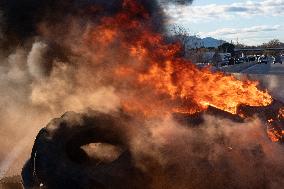
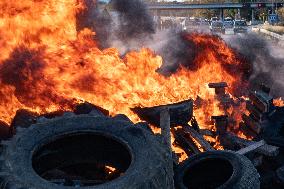
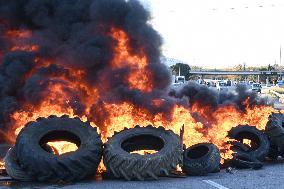
Several people cut the road with burning tires during a protest, on January 8, 2026, in Pontós, Girona, Catalonia (Spain). The AP-7 between Borrassà and Garrigàs and the N-II from Pontós to Garrigàs (Girona) in both directions because of agricultural demonstrations claimed by Revolta Pagesa since early Thursday morning. The agricultural mobilizations respond to the refusal of the part of the sector to the agreement between the European Union and Mercosur, in addition to the "mismanagement" of wildlife - which they believe puts at risk farms and livestock - and cuts in the Common Agricultural Policy (CAP), has claimed Revolta Pagesa from their social networks. Photo by Glòria Sánchez / Europa Press / ABACAPRESS.COM

  •  
Farmers Protest - Spain

Farmers Protest - Spain

Several people cut the road with burning tires during a protest, on January 8, 2026, in Pontós, Girona, Catalonia (Spain). The AP-7 between Borrassà and Garrigàs and the N-II from Pontós to Garrigàs (Girona) in both directions because of agricultural demonstrations claimed by Revolta Pagesa since early Thursday morning. The agricultural mobilizations respond to the refusal of the part of the sector to the agreement between the European Union and Mercosur, in addition to the "mismanagement" of wildlife - which they believe puts at risk farms and livestock - and cuts in the Common Agricultural Policy (CAP), has claimed Revolta Pagesa from their social networks. Photo by Glòria Sánchez / Europa Press / ABACAPRESS.COM

  •  
Farmers Protest - Spain

Farmers Protest - Spain

Several people cut the road with burning tires during a protest, on January 8, 2026, in Pontós, Girona, Catalonia (Spain). The AP-7 between Borrassà and Garrigàs and the N-II from Pontós to Garrigàs (Girona) in both directions because of agricultural demonstrations claimed by Revolta Pagesa since early Thursday morning. The agricultural mobilizations respond to the refusal of the part of the sector to the agreement between the European Union and Mercosur, in addition to the "mismanagement" of wildlife - which they believe puts at risk farms and livestock - and cuts in the Common Agricultural Policy (CAP), has claimed Revolta Pagesa from their social networks. Photo by Glòria Sánchez / Europa Press / ABACAPRESS.COM

  •  
Farmers Protest - Spain

Farmers Protest - Spain

Several people cut the road during a protest, on January 8, 2026, in Pontós, Girona, Catalonia (Spain). The AP-7 between Borrassà and Garrigàs and the N-II from Pontós to Garrigàs (Girona) in both directions due to agricultural demonstrations claimed by Revolta Pagesa since early Thursday morning. The agricultural mobilizations respond to the refusal of the part of the sector to the agreement between the European Union and Mercosur, in addition to the "mismanagement" of wildlife - which they believe puts at risk farms and livestock - and cuts in the Common Agricultural Policy (CAP), has claimed Revolta Pagesa from their social networks. Photo by Glòria Sánchez / Europa Press / ABACAPRESS.COM

  •  
Farmers Protest - Spain

Farmers Protest - Spain

Several people cut the road with burning tires during a protest, on January 8, 2026, in Pontós, Girona, Catalonia (Spain). The AP-7 between Borrassà and Garrigàs and the N-II from Pontós to Garrigàs (Girona) in both directions because of agricultural demonstrations claimed by Revolta Pagesa since early Thursday morning. The agricultural mobilizations respond to the refusal of the part of the sector to the agreement between the European Union and Mercosur, in addition to the "mismanagement" of wildlife - which they believe puts at risk farms and livestock - and cuts in the Common Agricultural Policy (CAP), has claimed Revolta Pagesa from their social networks. Photo by Glòria Sánchez / Europa Press / ABACAPRESS.COM

  •  
Farmers Protest - Spain

Farmers Protest - Spain

Several people cut the road with burning tires during a protest, on January 8, 2026, in Pontós, Girona, Catalonia (Spain). The AP-7 between Borrassà and Garrigàs and the N-II from Pontós to Garrigàs (Girona) in both directions because of agricultural demonstrations claimed by Revolta Pagesa since early Thursday morning. The agricultural mobilizations respond to the refusal of the part of the sector to the agreement between the European Union and Mercosur, in addition to the "mismanagement" of wildlife - which they believe puts at risk farms and livestock - and cuts in the Common Agricultural Policy (CAP), has claimed Revolta Pagesa from their social networks. Photo by Glòria Sánchez / Europa Press / ABACAPRESS.COM

  •  
Farmers Protest - Spain

Farmers Protest - Spain

Several people cut the road with burning tires during a protest, on January 8, 2026, in Pontós, Girona, Catalonia (Spain). The AP-7 between Borrassà and Garrigàs and the N-II from Pontós to Garrigàs (Girona) in both directions because of agricultural demonstrations claimed by Revolta Pagesa since early Thursday morning. The agricultural mobilizations respond to the refusal of the part of the sector to the agreement between the European Union and Mercosur, in addition to the "mismanagement" of wildlife - which they believe puts at risk farms and livestock - and cuts in the Common Agricultural Policy (CAP), has claimed Revolta Pagesa from their social networks. Photo by Gloria Sánchez/Europa Press/ABACAPRESS.COM

  •  
Farmers Protest - Spain

Farmers Protest - Spain

Several people cut the road during a protest, on January 8, 2026, in Pontós, Girona, Catalonia (Spain). The AP-7 between Borrassà and Garrigàs and the N-II from Pontós to Garrigàs (Girona) in both directions due to agricultural demonstrations claimed by Revolta Pagesa since early Thursday morning. The agricultural mobilizations respond to the refusal of the part of the sector to the agreement between the European Union and Mercosur, in addition to the "mismanagement" of wildlife - which they believe puts at risk farms and livestock - and cuts in the Common Agricultural Policy (CAP), has claimed Revolta Pagesa from their social networks. Photo by Gloria Sánchez/Europa Press/ABACAPRESS.COM

  •  
Lake Urmia Environmental Disaster - Iran

Lake Urmia Environmental Disaster - Iran

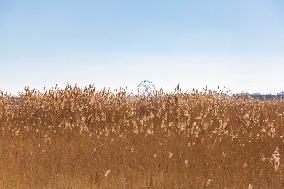
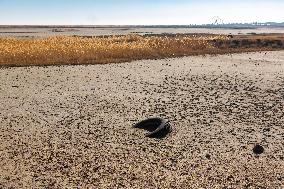
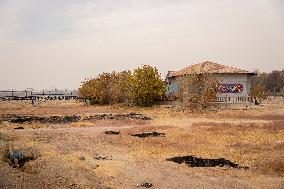
A view shows dry reeds on the dry bed of Lake Urmia in northwestern Iran on December 20, 2025. Lake Urmia, once the largest lake in the Middle East, has dramatically shrunk due to prolonged drought, the damming of rivers feeding the lake, and extensive groundwater extraction in the surrounding area. Although increased rainfall and water diversion briefly helped restore water levels in 2019, renewed drought and administrative mismanagement in the early 2020s reversed the trend, and satellite imagery shows the lake has almost entirely dried up by September 2025. Photo by Morteza Aminoroayayi/Middle East Images/ABACAPRESS.COM

  •  
Lake Urmia Environmental Disaster - Iran

Lake Urmia Environmental Disaster - Iran

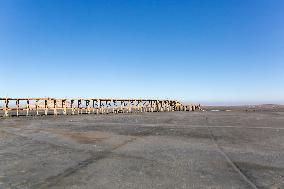
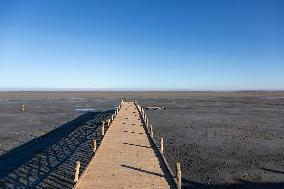
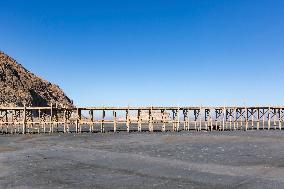
A view shows a wooden pier on the dry bed of Lake Urmia in northwestern Iran on December 20, 2025. Lake Urmia, once the largest lake in the Middle East, has dramatically shrunk due to prolonged drought, the damming of rivers feeding the lake, and extensive groundwater extraction in the surrounding area. Although increased rainfall and water diversion briefly helped restore water levels in 2019, renewed drought and administrative mismanagement in the early 2020s reversed the trend, and satellite imagery shows the lake has almost entirely dried up by September 2025. Photo by Morteza Aminoroayayi/Middle East Images/ABACAPRESS.COM

  •  
Lake Urmia Environmental Disaster - Iran

Lake Urmia Environmental Disaster - Iran

A view shows a wooden pier on the dry bed of Lake Urmia in northwestern Iran on December 20, 2025. Lake Urmia, once the largest lake in the Middle East, has dramatically shrunk due to prolonged drought, the damming of rivers feeding the lake, and extensive groundwater extraction in the surrounding area. Although increased rainfall and water diversion briefly helped restore water levels in 2019, renewed drought and administrative mismanagement in the early 2020s reversed the trend, and satellite imagery shows the lake has almost entirely dried up by September 2025. Photo by Morteza Aminoroayayi/Middle East Images/ABACAPRESS.COM

  •  
Lake Urmia Environmental Disaster - Iran

Lake Urmia Environmental Disaster - Iran

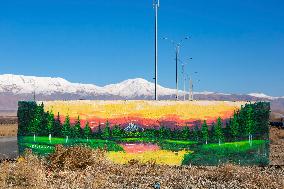
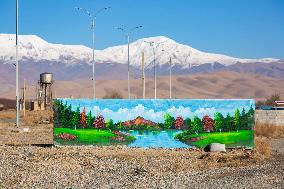
A view shows a mural depicting a landscape painted on a concrete wall near Sharafkhaneh port at Lake Urmia in northwestern Iran on December 19, 2025. Lake Urmia, once the largest lake in the Middle East, has dramatically shrunk due to prolonged drought, the damming of rivers feeding the lake, and extensive groundwater extraction in the surrounding area. Although increased rainfall and water diversion briefly helped restore water levels in 2019, renewed drought and administrative mismanagement in the early 2020s reversed the trend, and satellite imagery shows the lake has almost entirely dried up by September 2025. Photo by Morteza Aminoroayayi/Middle East Images/ABACAPRESS.COM

  •  
Lake Urmia Environmental Disaster - Iran

Lake Urmia Environmental Disaster - Iran

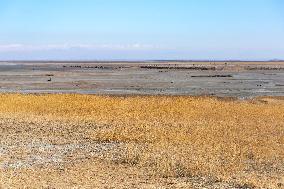
A view shows dry grass and the dry bed of Lake Urmia in northwestern Iran on December 20, 2025. Lake Urmia, once the largest lake in the Middle East, has dramatically shrunk due to prolonged drought, the damming of rivers feeding the lake, and extensive groundwater extraction in the surrounding area. Although increased rainfall and water diversion briefly helped restore water levels in 2019, renewed drought and administrative mismanagement in the early 2020s reversed the trend, and satellite imagery shows the lake has almost entirely dried up by September 2025. Photo by Morteza Aminoroayayi/Middle East Images/ABACAPRESS.COM

  •  
Lake Urmia Environmental Disaster - Iran

Lake Urmia Environmental Disaster - Iran

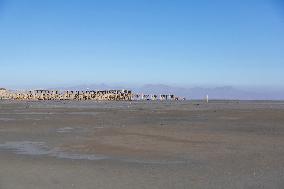
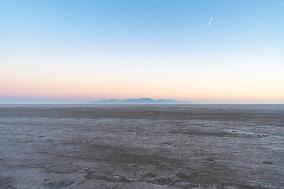
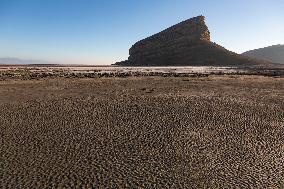
A view shows the dry bed of Lake Urmia in northwestern Iran on December 19, 2025. Lake Urmia, once the largest lake in the Middle East, has dramatically shrunk due to prolonged drought, the damming of rivers feeding the lake, and extensive groundwater extraction in the surrounding area. Although increased rainfall and water diversion briefly helped restore water levels in 2019, renewed drought and administrative mismanagement in the early 2020s reversed the trend, and satellite imagery shows the lake has almost entirely dried up by September 2025. Photo by Morteza Aminoroayayi/Middle East Images/ABACAPRESS.COM

  •  
Lake Urmia Environmental Disaster - Iran

Lake Urmia Environmental Disaster - Iran

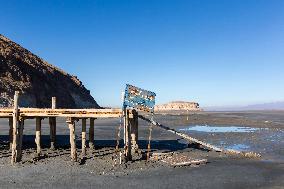
A view shows a rusty sign next to a wooden pier on the dry bed of Lake Urmia in northwestern Iran on December 20, 2025. Lake Urmia, once the largest lake in the Middle East, has dramatically shrunk due to prolonged drought, the damming of rivers feeding the lake, and extensive groundwater extraction in the surrounding area. Although increased rainfall and water diversion briefly helped restore water levels in 2019, renewed drought and administrative mismanagement in the early 2020s reversed the trend, and satellite imagery shows the lake has almost entirely dried up by September 2025. Photo by Morteza Aminoroayayi/Middle East Images/ABACAPRESS.COM

  •  
Lake Urmia Environmental Disaster - Iran

Lake Urmia Environmental Disaster - Iran

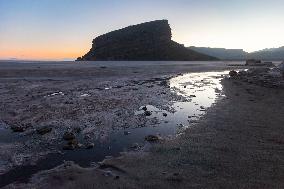
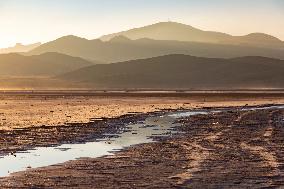
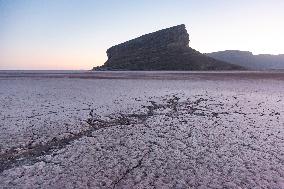
A view shows a shallow stream near a rocky cliff on the bed of Lake Urmia in northwestern Iran on December 19, 2025. Lake Urmia, once the largest lake in the Middle East, has dramatically shrunk due to prolonged drought, the damming of rivers feeding the lake, and extensive groundwater extraction in the surrounding area. Although increased rainfall and water diversion briefly helped restore water levels in 2019, renewed drought and administrative mismanagement in the early 2020s reversed the trend, and satellite imagery shows the lake has almost entirely dried up by September 2025. Photo by Morteza Aminoroayayi/Middle East Images/ABACAPRESS.COM

  •  
Lake Urmia Environmental Disaster - Iran

Lake Urmia Environmental Disaster - Iran

A view shows a wooden pier on the dry bed of Lake Urmia in northwestern Iran on December 20, 2025. Lake Urmia, once the largest lake in the Middle East, has dramatically shrunk due to prolonged drought, the damming of rivers feeding the lake, and extensive groundwater extraction in the surrounding area. Although increased rainfall and water diversion briefly helped restore water levels in 2019, renewed drought and administrative mismanagement in the early 2020s reversed the trend, and satellite imagery shows the lake has almost entirely dried up by September 2025. Photo by Morteza Aminoroayayi/Middle East Images/ABACAPRESS.COM

  •  
Lake Urmia Environmental Disaster - Iran

Lake Urmia Environmental Disaster - Iran

A view shows tire tracks running alongside a shallow stream on the bed of Lake Urmia in northwestern Iran on December 19, 2025. Lake Urmia, once the largest lake in the Middle East, has dramatically shrunk due to prolonged drought, the damming of rivers feeding the lake, and extensive groundwater extraction in the surrounding area. Although increased rainfall and water diversion briefly helped restore water levels in 2019, renewed drought and administrative mismanagement in the early 2020s reversed the trend, and satellite imagery shows the lake has almost entirely dried up by September 2025. Photo by Morteza Aminoroayayi/Middle East Images/ABACAPRESS.COM

  •  
Lake Urmia Environmental Disaster - Iran

Lake Urmia Environmental Disaster - Iran

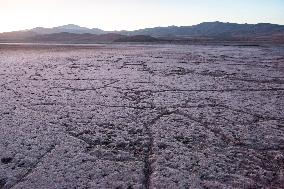
Salt formations cover the cracked surface of the dried bed of Lake Urmia in northwestern Iran on December 19, 2025. Lake Urmia, once the largest lake in the Middle East, has dramatically shrunk due to prolonged drought, the damming of rivers feeding the lake and extensive groundwater extraction in the surrounding area. Although increased rainfall and water diversion briefly helped restore water levels in 2019, renewed drought and administrative mismanagement in the early 2020s reversed the trend, and satellite imagery shows the lake has almost entirely dried up by September 2025. Photo by Morteza Aminoroayayi/Middle East Images/ABACAPRESS.COM

  •  
Lake Urmia Environmental Disaster - Iran

Lake Urmia Environmental Disaster - Iran

A discarded tire sits near dry reeds on the dry bed of Lake Urmia in northwestern Iran on December 20, 2025. Lake Urmia, once the largest lake in the Middle East, has dramatically shrunk due to prolonged drought, the damming of rivers feeding the lake, and extensive groundwater extraction in the surrounding area. Although increased rainfall and water diversion briefly helped restore water levels in 2019, renewed drought and administrative mismanagement in the early 2020s reversed the trend, and satellite imagery shows the lake has almost entirely dried up by September 2025. Photo by Morteza Aminoroayayi/Middle East Images/ABACAPRESS.COM

  •  
Lake Urmia Environmental Disaster - Iran

Lake Urmia Environmental Disaster - Iran

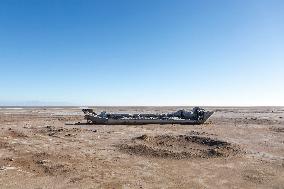
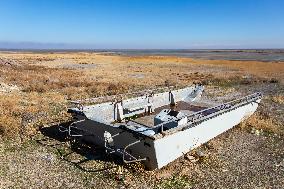
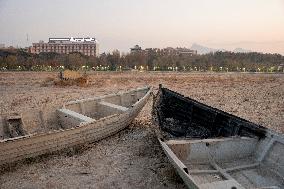
Remnants of a boat sit on the dry bed of Lake Urmia in northwestern Iran on December 19, 2025. Lake Urmia, once the largest lake in the Middle East, has dramatically shrunk due to prolonged drought, the damming of rivers feeding the lake, and extensive groundwater extraction in the surrounding area. Although increased rainfall and water diversion briefly helped restore water levels in 2019, renewed drought and administrative mismanagement in the early 2020s reversed the trend, and satellite imagery shows the lake has almost entirely dried up by September 2025. Photo by Morteza Aminoroayayi/Middle East Images/ABACAPRESS.COM

  •  
Lake Urmia Environmental Disaster - Iran

Lake Urmia Environmental Disaster - Iran

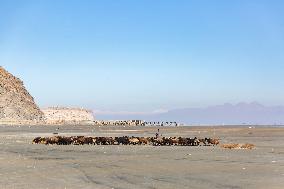
A shepherd guides a flock of sheep on the dry bed of Lake Urmia in northwestern Iran on December 20, 2025. Lake Urmia, once the largest lake in the Middle East, has dramatically shrunk due to prolonged drought, the damming of rivers feeding the lake, and extensive groundwater extraction in the surrounding area. Although increased rainfall and water diversion briefly helped restore water levels in 2019, renewed drought and administrative mismanagement in the early 2020s reversed the trend, and satellite imagery shows the lake has almost entirely dried up by September 2025. Photo by Morteza Aminoroayayi/Middle East Images/ABACAPRESS.COM

  •  
Lake Urmia Environmental Disaster - Iran

Lake Urmia Environmental Disaster - Iran

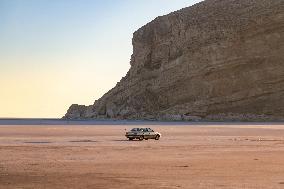
A car drives near a rocky cliff on the dry bed of Lake Urmia in northwestern Iran on December 19, 2025. Lake Urmia, once the largest lake in the Middle East, has dramatically shrunk due to prolonged drought, the damming of rivers feeding the lake, and extensive groundwater extraction in the surrounding area. Although increased rainfall and water diversion briefly helped restore water levels in 2019, renewed drought and administrative mismanagement in the early 2020s reversed the trend, and satellite imagery shows the lake has almost entirely dried up by September 2025. Photo by Morteza Aminoroayayi/Middle East Images/ABACAPRESS.COM

  •  
Lake Urmia Environmental Disaster - Iran

Lake Urmia Environmental Disaster - Iran

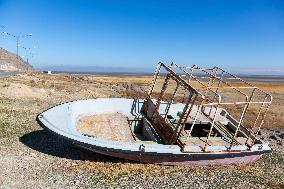
A rusty boat sits next to a road near Lake Urmia in northwestern Iran on December 20, 2025. Lake Urmia, once the largest lake in the Middle East, has dramatically shrunk due to prolonged drought, the damming of rivers feeding the lake, and extensive groundwater extraction in the surrounding area. Although increased rainfall and water diversion briefly helped restore water levels in 2019, renewed drought and administrative mismanagement in the early 2020s reversed the trend, and satellite imagery shows the lake has almost entirely dried up by September 2025. Photo by Morteza Aminoroayayi/Middle East Images/ABACAPRESS.COM

  •  
Lake Urmia Environmental Disaster - Iran

Lake Urmia Environmental Disaster - Iran

A view shows a wooden pier on the dry bed of Lake Urmia in northwestern Iran on December 19, 2025. Lake Urmia, once the largest lake in the Middle East, has dramatically shrunk due to prolonged drought, the damming of rivers feeding the lake, and extensive groundwater extraction in the surrounding area. Although increased rainfall and water diversion briefly helped restore water levels in 2019, renewed drought and administrative mismanagement in the early 2020s reversed the trend, and satellite imagery shows the lake has almost entirely dried up by September 2025. Photo by Morteza Aminoroayayi/Middle East Images/ABACAPRESS.COM

  •  
Lake Urmia Environmental Disaster - Iran

Lake Urmia Environmental Disaster - Iran

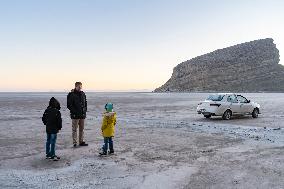
A man and two children stand near a car and a rocky cliff on the dry bed of Lake Urmia in northwestern Iran on December 19, 2025. Lake Urmia, once the largest lake in the Middle East, has dramatically shrunk due to prolonged drought, the damming of rivers feeding the lake, and extensive groundwater extraction in the surrounding area. Although increased rainfall and water diversion briefly helped restore water levels in 2019, renewed drought and administrative mismanagement in the early 2020s reversed the trend, and satellite imagery shows the lake has almost entirely dried up by September 2025. Photo by Morteza Aminoroayayi/Middle East Images/ABACAPRESS.COM

  •  
Lake Urmia Environmental Disaster - Iran

Lake Urmia Environmental Disaster - Iran

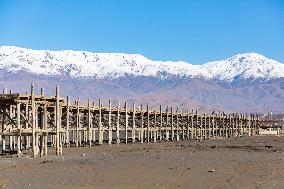
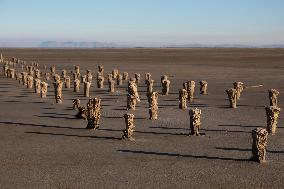
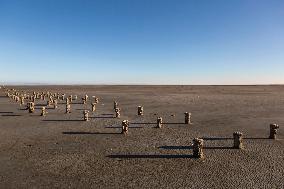
A view shows rows of wooden posts protruding from the dry bed of Lake Urmia in northwestern Iran on December 20, 2025. Lake Urmia, once the largest lake in the Middle East, has dramatically shrunk due to prolonged drought, the damming of rivers feeding the lake, and extensive groundwater extraction in the surrounding area. Although increased rainfall and water diversion briefly helped restore water levels in 2019, renewed drought and administrative mismanagement in the early 2020s reversed the trend, and satellite imagery shows the lake has almost entirely dried up by September 2025. Photo by Morteza Aminoroayayi/Middle East Images/ABACAPRESS.COM

  •  
Lake Urmia Environmental Disaster - Iran

Lake Urmia Environmental Disaster - Iran

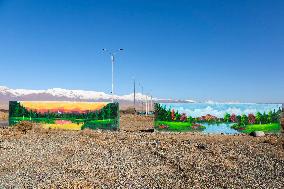
A view shows murals depicting nature scenes painted on concrete walls near Sharafkhaneh port at Lake Urmia in northwestern Iran on December 19, 2025. Lake Urmia, once the largest lake in the Middle East, has dramatically shrunk due to prolonged drought, the damming of rivers feeding the lake, and extensive groundwater extraction in the surrounding area. Although increased rainfall and water diversion briefly helped restore water levels in 2019, renewed drought and administrative mismanagement in the early 2020s reversed the trend, and satellite imagery shows the lake has almost entirely dried up by September 2025. Photo by Morteza Aminoroayayi/Middle East Images/ABACAPRESS.COM

  •  
Lake Urmia Environmental Disaster - Iran

Lake Urmia Environmental Disaster - Iran

A view shows the dry bed of Lake Urmia in northwestern Iran on December 19, 2025. Lake Urmia, once the largest lake in the Middle East, has dramatically shrunk due to prolonged drought, the damming of rivers feeding the lake, and extensive groundwater extraction in the surrounding area. Although increased rainfall and water diversion briefly helped restore water levels in 2019, renewed drought and administrative mismanagement in the early 2020s reversed the trend, and satellite imagery shows the lake has almost entirely dried up by September 2025. Photo by Morteza Aminoroayayi/Middle East Images/ABACAPRESS.COM

  •  
Lake Urmia Environmental Disaster - Iran

Lake Urmia Environmental Disaster - Iran

A view shows a wooden pier on the dry bed of Lake Urmia in northwestern Iran on December 20, 2025. Lake Urmia, once the largest lake in the Middle East, has dramatically shrunk due to prolonged drought, the damming of rivers feeding the lake, and extensive groundwater extraction in the surrounding area. Although increased rainfall and water diversion briefly helped restore water levels in 2019, renewed drought and administrative mismanagement in the early 2020s reversed the trend, and satellite imagery shows the lake has almost entirely dried up by September 2025. Photo by Morteza Aminoroayayi/Middle East Images/ABACAPRESS.COM

  •  
Lake Urmia Environmental Disaster - Iran

Lake Urmia Environmental Disaster - Iran

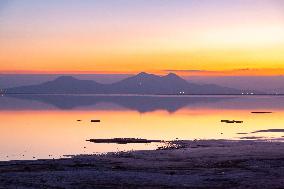
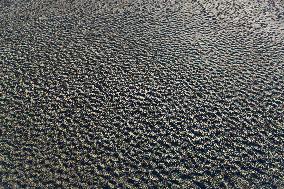
A view shows reflections on the surface of Lake Urmia in northwestern Iran on December 18, 2025. Lake Urmia, once the largest lake in the Middle East, has dramatically shrunk due to prolonged drought, the damming of rivers feeding the lake, and extensive groundwater extraction in the surrounding area. Although increased rainfall and water diversion briefly helped restore water levels in 2019, renewed drought and administrative mismanagement in the early 2020s reversed the trend, and satellite imagery shows the lake has almost entirely dried up by September 2025. Photo by Morteza Aminoroayayi/Middle East Images/ABACAPRESS.COM

  •  
Lake Urmia Environmental Disaster - Iran

Lake Urmia Environmental Disaster - Iran

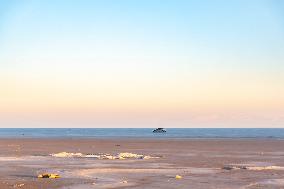
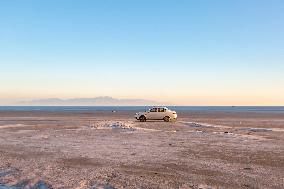
A car drives on the dry bed of Lake Urmia in northwestern Iran on December 19, 2025. Lake Urmia, once the largest lake in the Middle East, has dramatically shrunk due to prolonged drought, the damming of rivers feeding the lake, and extensive groundwater extraction in the surrounding area. Although increased rainfall and water diversion briefly helped restore water levels in 2019, renewed drought and administrative mismanagement in the early 2020s reversed the trend, and satellite imagery shows the lake has almost entirely dried up by September 2025. Photo by Morteza Aminoroayayi/Middle East Images/ABACAPRESS.COM

  •  
Lake Urmia Environmental Disaster - Iran

Lake Urmia Environmental Disaster - Iran

A view shows a mural depicting a landscape painted on a concrete wall near Sharafkhaneh port at Lake Urmia in northwestern Iran on December 19, 2025. Lake Urmia, once the largest lake in the Middle East, has dramatically shrunk due to prolonged drought, the damming of rivers feeding the lake, and extensive groundwater extraction in the surrounding area. Although increased rainfall and water diversion briefly helped restore water levels in 2019, renewed drought and administrative mismanagement in the early 2020s reversed the trend, and satellite imagery shows the lake has almost entirely dried up by September 2025. Photo by Morteza Aminoroayayi/Middle East Images/ABACAPRESS.COM

  •  
Lake Urmia Environmental Disaster - Iran

Lake Urmia Environmental Disaster - Iran

A view shows rows of wooden posts protruding from the dry bed of Lake Urmia in northwestern Iran on December 20, 2025. Lake Urmia, once the largest lake in the Middle East, has dramatically shrunk due to prolonged drought, the damming of rivers feeding the lake, and extensive groundwater extraction in the surrounding area. Although increased rainfall and water diversion briefly helped restore water levels in 2019, renewed drought and administrative mismanagement in the early 2020s reversed the trend, and satellite imagery shows the lake has almost entirely dried up by September 2025. Photo by Morteza Aminoroayayi/Middle East Images/ABACAPRESS.COM

  •  
Lake Urmia Environmental Disaster - Iran

Lake Urmia Environmental Disaster - Iran

Salt formations cover the cracked surface of the dried bed of Lake Urmia in northwestern Iran on December 19, 2025. Lake Urmia, once the largest lake in the Middle East, has dramatically shrunk due to prolonged drought, the damming of rivers feeding the lake and extensive groundwater extraction in the surrounding area. Although increased rainfall and water diversion briefly helped restore water levels in 2019, renewed drought and administrative mismanagement in the early 2020s reversed the trend, and satellite imagery shows the lake has almost entirely dried up by September 2025. Photo by Morteza Aminoroayayi/Middle East Images/ABACAPRESS.COM

  •  
Lake Urmia Environmental Disaster - Iran

Lake Urmia Environmental Disaster - Iran

Remains of a boat sits near the dry bed of Lake Urmia in northwestern Iran on December 20, 2025. Lake Urmia, once the largest lake in the Middle East, has dramatically shrunk due to prolonged drought, the damming of rivers feeding the lake, and extensive groundwater extraction in the surrounding area. Although increased rainfall and water diversion briefly helped restore water levels in 2019, renewed drought and administrative mismanagement in the early 2020s reversed the trend, and satellite imagery shows the lake has almost entirely dried up by September 2025. Photo by Morteza Aminoroayayi/Middle East Images/ABACAPRESS.COM

  •  
Lake Urmia Environmental Disaster - Iran

Lake Urmia Environmental Disaster - Iran

A car drives on the dry bed of Lake Urmia in northwestern Iran on December 19, 2025. Lake Urmia, once the largest lake in the Middle East, has dramatically shrunk due to prolonged drought, the damming of rivers feeding the lake, and extensive groundwater extraction in the surrounding area. Although increased rainfall and water diversion briefly helped restore water levels in 2019, renewed drought and administrative mismanagement in the early 2020s reversed the trend, and satellite imagery shows the lake has almost entirely dried up by September 2025. Photo by Morteza Aminoroayayi/Middle East Images/ABACAPRESS.COM

  •  
Lake Urmia Environmental Disaster - Iran

Lake Urmia Environmental Disaster - Iran

A view shows the dry bed of Lake Urmia in northwestern Iran on December 19, 2025. Lake Urmia, once the largest lake in the Middle East, has dramatically shrunk due to prolonged drought, the damming of rivers feeding the lake, and extensive groundwater extraction in the surrounding area. Although increased rainfall and water diversion briefly helped restore water levels in 2019, renewed drought and administrative mismanagement in the early 2020s reversed the trend, and satellite imagery shows the lake has almost entirely dried up by September 2025. Photo by Morteza Aminoroayayi/Middle East Images/ABACAPRESS.COM

  •  
Lake Urmia Environmental Disaster - Iran

Lake Urmia Environmental Disaster - Iran

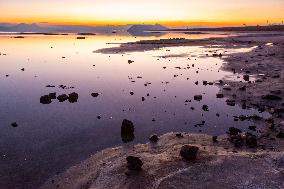
A view shows scattered rocks and shallow water in parts of Lake Urmia in northwestern Iran on December 18, 2025. Lake Urmia, once the largest lake in the Middle East, has dramatically shrunk due to prolonged drought, the damming of rivers feeding the lake, and extensive groundwater extraction in the surrounding area. Although increased rainfall and water diversion briefly helped restore water levels in 2019, renewed drought and administrative mismanagement in the early 2020s reversed the trend, and satellite imagery shows the lake has almost entirely dried up by September 2025. Photo by Morteza Aminoroayayi/Middle East Images/ABACAPRESS.COM

  •  
Zayanderud Riverbed Dries Up - Iran

Zayanderud Riverbed Dries Up - Iran

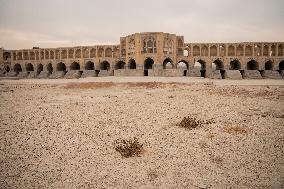
A view shows the dried-up riverbed of Zayanderud with Khaju Bridge overhead in Isfahan, Iran, on December 1, 2025. Zayanderud, like many other bodies of water in Iran, has faced droughts and water shortages in recent years. In addition to drought, mismanagement and overuse of water are major factors contributing to the decline of Zayanderud. Photo by Hozi/Middle East Images/ABACAPRESS.COM

  •  
Zayanderud Riverbed Dries Up - Iran

Zayanderud Riverbed Dries Up - Iran

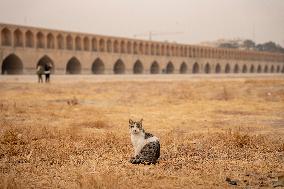
A cat sits on the dried-up riverbed of Zayanderud near Si-o-se-pol, the largest bridge over the river in Isfahan, Iran, on December 1, 2025. Zayanderud, like many other bodies of water in Iran, has faced droughts and water shortages in recent years. In addition to drought, mismanagement and overuse of water are major factors contributing to the decline of Zayanderud. Photo by Hozi/Middle East Images/ABACAPRESS.COM

  •  
Zayanderud Riverbed Dries Up - Iran

Zayanderud Riverbed Dries Up - Iran

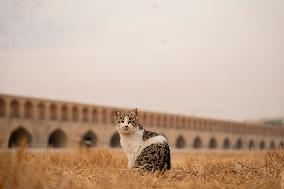
A cat sits on the dried-up riverbed of Zayanderud near Si-o-se-pol, the largest bridge over the river in Isfahan, Iran, on December 1, 2025. Zayanderud, like many other bodies of water in Iran, has faced droughts and water shortages in recent years. In addition to drought, mismanagement and overuse of water are major factors contributing to the decline of Zayanderud. Photo by Hozi/Middle East Images/ABACAPRESS.COM

  •  
Zayanderud Riverbed Dries Up - Iran

Zayanderud Riverbed Dries Up - Iran

A view shows the Game Island located on the dried-up riverbed of Zayanderud in Isfahan, Iran, on December 1, 2025. Zayanderud, like many other bodies of water in Iran, has faced droughts and water shortages in recent years. In addition to drought, mismanagement and overuse of water are major factors contributing to the decline of Zayanderud. Photo by Hozi/Middle East Images/ABACAPRESS.COM

  •  
Zayanderud Riverbed Dries Up - Iran

Zayanderud Riverbed Dries Up - Iran

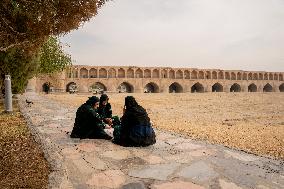
Women sit on a sidewalk along the dried-up riverbed of Zayanderud near Si-o-se-pol, the largest bridge over the river in Isfahan, Iran, on December 1, 2025. Zayanderud, like many other bodies of water in Iran, has faced droughts and water shortages in recent years. In addition to drought, mismanagement and overuse of water are major factors contributing to the decline of Zayanderud. Photo by Hozi/Middle East Images/ABACAPRESS.COM

  •  
Zayanderud Riverbed Dries Up - Iran

Zayanderud Riverbed Dries Up - Iran

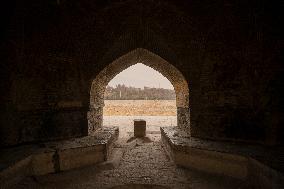
A view shows the dried-up riverbed of Zayanderud through a brick arch beneath Si-o-se-pol, the largest bridge over the dried-up river in Isfahan, Iran, on December 1, 2025. Zayanderud, like many other bodies of water in Iran, has faced droughts and water shortages in recent years. In addition to drought, mismanagement and overuse of water are major factors contributing to the decline of Zayanderud. Photo by Hozi/Middle East Images/ABACAPRESS.COM

  •  
Zayanderud Riverbed Dries Up - Iran

Zayanderud Riverbed Dries Up - Iran

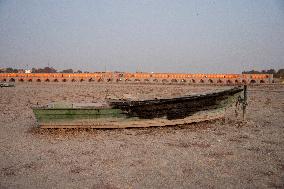
Two boats, tied to a pole, sit stranded on the dried-up riverbed of the Zayanderud in Isfahan, Iran, on November 30, 2025. Zayanderud, like many other bodies of water in Iran, has faced droughts and water shortages in recent years. In addition to drought, mismanagement and overuse of water are major factors contributing to the decline of Zayanderud. Photo by Hozi/Middle East Images/ABACAPRESS.COM

  •  
Zayanderud Riverbed Dries Up - Iran

Zayanderud Riverbed Dries Up - Iran

Two boats, tied to a pole, sit stranded on the dried-up riverbed of the Zayanderud in Isfahan, Iran, on November 30, 2025. Zayanderud, like many other bodies of water in Iran, has faced droughts and water shortages in recent years. In addition to drought, mismanagement and overuse of water are major factors contributing to the decline of Zayanderud. Photo by Hozi/Middle East Images/ABACAPRESS.COM

  • Main
  • Top
  • Editorial
  • Creative
  • About Us
  • About ILG
  • Terms of use
  • Company
  • BEHIND
  • Price List
  • Single Plan
  • Monthly Plan
  • Services
  • Shooting
  • Rights Clearance
  • Support
  • FAQ
  • How To Buy
  • Contact Us
  • Become a Partner

© KYODO NEWS IMAGES INC

All Rights Reserved.

  • Editorial
  • Olympics
  • News
  • Sports
  • Japan
  • Tech
  • Royal
  • Disaster
  • NorthKorea
  • Old Japan
  • SNS
  • Creative
  • Food
  • Japan
  • Landscape
  • Animal
  • Popular
  • #Ukraine
  • #Russia
  • #coronavirus
  • #N. Korea
  • #Thailand
  • #China
  • #Ukraine
  • #Russia
  • #coronavirus
  • #N. Korea
  • #Thailand
  • #China
  • Food
  • Japan
  • Landscape
  • Animal
  • Olympics
  • News
  • Sports
  • Japan
  • Tech
  • Royal
  • Disaster
  • NorthKorea
  • Old Japan
  • SNS