•  

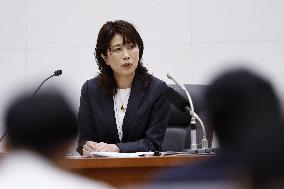
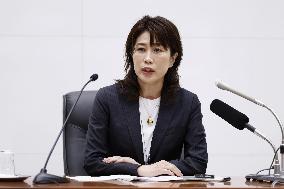
BOJ chief Ueda

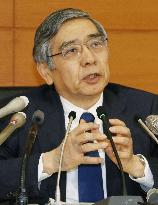
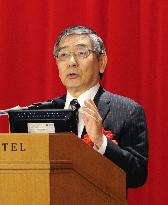
TOKYO, Japan, Dec. 25 Kyodo - Bank of Japan Governor Kazuo Ueda makes a speech in Tokyo on Dec. 25, 2024. (Kyodo)

  •  

Tokyo stocks close mixed on rising interest rates, positive U.S. futures

STORY: Tokyo stocks close mixed on rising interest rates, positive U.S. futures SHOOTING TIME: May 28, 2024 DATELINE: May 29, 2024 LENGTH: 00:01:51 LOCATION: Tokyo CATEGORY: ECONOMY SHOTLIST: 1. various of street view in Tokyo 2. various of Tokyo Stock Exchange 3. various of securities company STORYLINE: Tokyo stocks closed mixed on Tuesday amid concerns over rising long-term interest rates in Japan, while the market's downside was buoyed by positive U.S. stock futures. Japan's benchmark Nikkei stock index, the 225-issue Nikkei Stock Average, ended down 44.65 points, or 0.11 percent, from Monday at 38,855.37. The broader Topix index, meanwhile, finished 2.14 points, or 0.08 percent, higher at 2,768.50. Market watchers here noted the yield on the benchmark 10-year Japanese government bond briefly rose 0.015 percentage point from Monday's close to 1.035 percent, its highest level since April 2012, amid speculation that the Bank of Japan is shifting away from monetary easing measures. The Nikk

  •  

Bank of Japan cuts purchases of Japanese government bonds

STORY: Bank of Japan cuts purchases of Japanese government bonds SHOOTING TIME: April 30, 2024 DATELINE: May 14, 2024 LENGTH: 00:01:44 LOCATION: Tokyo CATEGORY: ECONOMY SHOTLIST: 1. various of Bank of Japan 2. various of banks in Tokyo STORYLINE: The Bank of Japan (BOJ) on Monday announced a reduction of the amount of Japanese government bonds it offered to buy in a regular purchase operation. The central bank offered to buy 425 billion yen (about 2.73 billion U.S. dollars) in Japanese government bonds with five to 10 years left to maturity, down 50 billion yen from the previous such operation. The benchmark yield on the 10-year Japanese government bond subsequently climbed to a six-month high of 0.935 percent at one point. The reduction was the first since the BOJ in March adjusted its massive monetary easing, including ending its negative interest rate policy. Some market participants saw the move as the BOJ's latest effort to counter the weakening yen. BOJ Governor Kazuo Ueda has said r

  •  
JAPAN-INTEREST RATE POLICY

JAPAN-INTEREST RATE POLICY

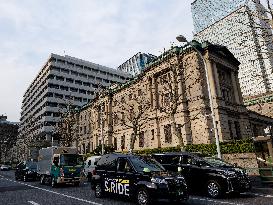
(240319) -- TOKYO, March 19, 2024 (Xinhua) -- The Bank of Japan is pictured in Tokyo, Japan, March 19, 2024. The Bank of Japan (BOJ) on Tuesday decided to end its negative interest rate policy in its first rate hike in 17 years, marking a major shift away from the long-running monetary easing that Japan has seen over the past decade to put an end to deflation. (Xinhua/Zhang Xiaoyu)

  •  
JAPAN-INTEREST RATE POLICY

JAPAN-INTEREST RATE POLICY

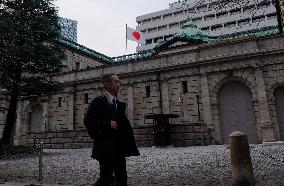
(240319) -- TOKYO, March 19, 2024 (Xinhua) -- A man walks past the Bank of Japan in Tokyo, Japan, March 19, 2024. The Bank of Japan (BOJ) on Tuesday decided to end its negative interest rate policy in its first rate hike in 17 years, marking a major shift away from the long-running monetary easing that Japan has seen over the past decade to put an end to deflation. (Xinhua/Zhang Xiaoyu)

  •  

Bank of Japan ends negative interest rates in historic policy overhaul

STORY: Bank of Japan ends negative interest rates in historic policy overhaul SHOOTING TIME: Earlier footage DATELINE: March 19, 2024 LENGTH: 0:00:41 LOCATION: Tokyo CATEGORY: ECONOMY SHOTLIST: 1. various of the Bank of Japan 2. various of city views in Tokyo STORYLINE: The Bank of Japan (BOJ) on Tuesday decided to end its negative interest rate policy in its first rate hike in 17 years, marking a major shift away from the long-running monetary easing that Japan has seen over the past decade to put an end to deflation. After a two-day policy meeting, the central bank's policy board decided to guide short-term rate to a range of 0 to 0.1 percent, up a fraction from minus 0.1 to 0 percent, judging that its goal of attaining a stable 2 percent inflation is "in sight." "It came into sight that the price stability target of 2 percent would be achieved in a sustainable and stable manner," the BOJ said in a post-meeting statement. On top of returning to positive rates, the BOJ also decided to scrap it

  •  

Japan's 2023 core inflation hits 41-year high

STORY: Japan's 2023 core inflation hits 41-year high SHOOTING TIME: Jan. 19, 2024 DATELINE: Jan. 19, 2024 LENGTH: 00:01:49 LOCATION: Tokyo CATEGORY: ECONOMY SHOTLIST: 1. various of cities in Japan STORYLINE: Japan's core consumer prices rose 3.1 pct in 2023 from the previous year, marking the fastest growth in 41 years, the government said in a report on Friday. The core consumer price index (CPI) for the year, excluding fresh food prices because of their volatility, came in at 105.2 against the 2020 base of 100, with its pace of increase fastening from 2.3 percent in 2022, according to the Ministry of Internal Affairs and Communications. The yearly increase, which remained above the Bank of Japan's 2 percent inflation target for the second consecutive year, marked the highest level since 1983. It came despite government subsidies to lower household utility bills, underscoring higher import costs that were inflated by a sharp drop of the yen, a byproduct of the Bank of Japan's monetary easing,

  •  

New Zealand increases official cash rate to 5.25 pct

STORY: New Zealand increases official cash rate to 5.25 pct DATELINE: April 6, 2023 LENGTH: 00:02:10 LOCATION: Wellington CATEGORY: ECONOMY SHOTLIST: 1. various of banks and cash machines 2. various of supermarkets 3. various of street view and gas station STORYLINE: The Reserve Bank of New Zealand (RBNZ) on Wednesday increased its Official Cash Rate (OCR) by 50 basis points, from 4.75 percent to 5.25 percent, its highest level since late 2008. The central bank's Monetary Policy Committee agreed the OCR needs to increase, as previously indicated, to return inflation to the 1-3 percent target range over the medium term. "Inflation is still too high and persistent, and employment is beyond its maximum sustainable level," said a committee statement. The level of economic activity over the December quarter was lower than anticipated and there are emerging signs of capacity pressures in the economy easing, it said, adding demand continues to significantly outpace the economy's supply capacity, thereby mainta

  •  
BOJ to wrap up "comprehensive assessment" amid easing speculation

BOJ to wrap up "comprehensive assessment" amid easing speculation

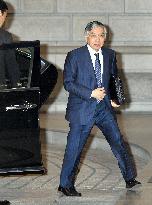
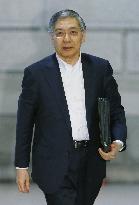
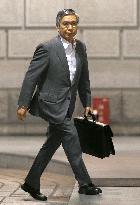
TOKYO, Japan, Sept. 21 Kyodo - Bank of Japan Governor Haruhiko Kuroda arrives at the central bank's headquarters in Tokyo on Sept. 21, 2016. The BOJ will wrap up its two-day Policy Board meeting later in the day and complete a "comprehensive assessment" of its monetary easing steps. (Pool photo)

  •  
BOJ watching impact of falling yen after additional easing

BOJ watching impact of falling yen after additional easing

NAGOYA, Japan - Bank of Japan Governor Haruhiko Kuroda delivers a lecture in a meeting of business leaders at a hotel in Nagoya, central Japan, on Nov. 25, 2014. Kuroda said the central bank is closely watching the impact of the yen's sharp fall against other major currencies following its additional monetary easing the previous month.

  •  
BOJ watching impact of falling yen after additional easing

BOJ watching impact of falling yen after additional easing

NAGOYA, Japan - Bank of Japan Governor Haruhiko Kuroda delivers a lecture in a meeting of business leaders at a hotel in Nagoya, central Japan, on Nov. 25, 2014. Kuroda said the central bank is closely watching the impact of the yen's sharp fall against other major currencies following its additional monetary easing the previous month.

  •  
Nikkei ends at 7-year high on BOJ's additional monetary easing

Nikkei ends at 7-year high on BOJ's additional monetary easing

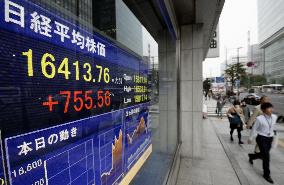
TOKYO, Japan - An electronic signboard in Tokyo's Yaesu district shows the Nikkei Stock Average jumping 755.56 points, or 4.83 percent, to close at 16,413.76 on Oct. 31, 2014, its highest finish since Nov. 2, 2007, after the Bank of Japan decided to expand its massive asset purchase program.

  •  
Many options for additional easing if needed

Many options for additional easing if needed

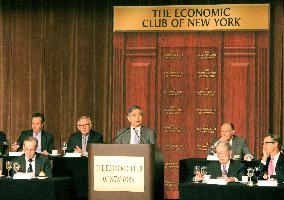
NEW YORK, United States - Bank of Japan Governor Haruhiko Kuroda (C) makes a speech at the Economic Club of New York of the United States on Oct. 8, 2014. Kuroda said the central bank has many options at its disposal if it decides to increase monetary easing to achieve the bank's goal of 2 percent inflation in the Japanese economy.

  •  
BOJ holds 2-day policy meeting

BOJ holds 2-day policy meeting

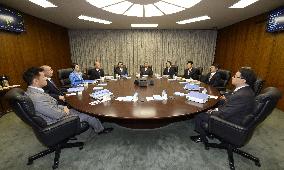
TOKYO, Japan - Bank of Japan Policy Board members attend a policy meeting at the BOJ headquarters in Tokyo on Oct. 7, 2014. The two-day meeting began the previous day amid expectations the central bank will maintain its aggressive monetary easing to boost the economy.

  •  
BOJ to conclude 2-day policy meeting

BOJ to conclude 2-day policy meeting

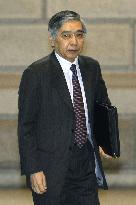
TOKYO, Japan - Bank of Japan Governor Haruhiko Kuroda arrives at the BOJ headquarters in Tokyo on Oct. 7, 2014, to attend a Policy Board meeting that started the previous day. The central bank is expected to maintain its aggressive monetary easing to boost the economy.

  •  
Division on monetary easing revealed by 2004 BOJ minutes

Division on monetary easing revealed by 2004 BOJ minutes

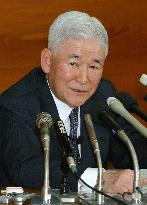
TOKYO, Japan - File photo taken in January 2004 at the Bank of Japan in Tokyo shows then BOJ Governor Toshihiko Fukui. Minutes of the central bank's policy meeting, released on July 30, 2014, indicated policymakers were divided in 2004 on whether to further ease monetary policy despite signs of recovery in the country's economy.

  •  
BOJ keeps robust scenario for Japan economy despite tax hike

BOJ keeps robust scenario for Japan economy despite tax hike

TOKYO, Japan - Bank of Japan Governor Haruhiko Kuroda heads for the second-day of the central bank's two-day policy meeting at its head office in Tokyo on July 15, 2014. The BOJ said the country's economy remains on a recovery track under its aggressive monetary easing.

  •  
BOJ chief Kuroda

BOJ chief Kuroda

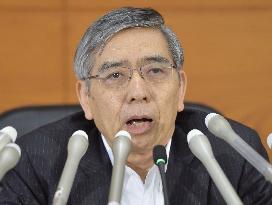
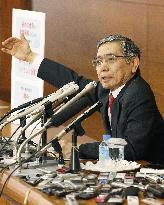
TOKYO, Japan - Bank of Japan Governor Haruhiko Kuroda holds a press conference at the BOJ's head office in Tokyo on May 21, 2014, after the central bank decided to keep intact its ultraloose monetary easing policy.

  •  
BOJ chief Kuroda

BOJ chief Kuroda

TOKYO, Japan - Bank of Japan Governor Haruhiko Kuroda holds a press conference at the BOJ's head office in Tokyo on May 21, 2014, after the central bank decided to keep intact its ultraloose monetary easing policy.

  •  
BOJ maintains ultraeasy monetary policy

BOJ maintains ultraeasy monetary policy

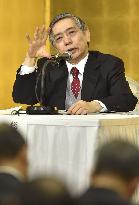
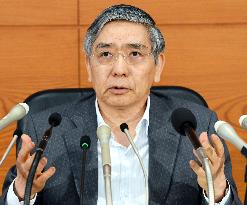
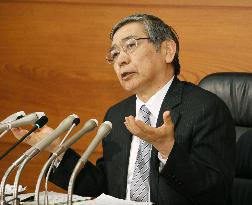
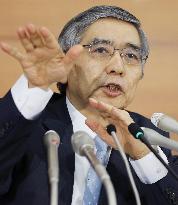
TOKYO, Japan - Bank of Japan Gov. Haruhiko Kuroda gestures during a press conference at the BOJ's headquarters in Tokyo on Jan. 22, 2014, after a two-day Policy Board meeting. The nine-member Policy Board unanimously decided that the central bank will continue with its large-scale monetary easing policy and keep unchanged its consumer price outlook for fiscal 2015 at 1.9 percent.

  •  
BOJ maintains ultraeasy monetary policy

BOJ maintains ultraeasy monetary policy

TOKYO, Japan - Bank of Japan Gov. Haruhiko Kuroda answers questions from reporters at the BOJ's headquarters in Tokyo on Jan. 22, 2014, after a two-day Policy Board meeting. The nine-member Policy Board unanimously decided that the central bank will continue with its large-scale monetary easing policy and keep unchanged its consumer price outlook for fiscal 2015 at 1.9 percent.

  •  
BOJ maintains ultraeasy monetary policy

BOJ maintains ultraeasy monetary policy

TOKYO, Japan - Bank of Japan Gov. Haruhiko Kuroda answers questions from reporters at the BOJ's headquarters in Tokyo on Jan. 22, 2014, after a two-day Policy Board meeting. The nine-member Policy Board unanimously decided that the central bank will continue with its large-scale monetary easing policy and keep unchanged its consumer price outlook for fiscal 2015 at 1.9 percent.

  •  
BOJ policy meeting

BOJ policy meeting

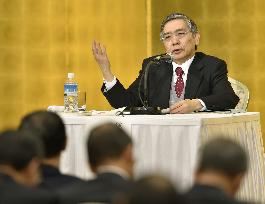
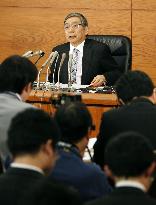
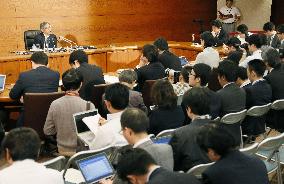
TOKYO, Japan - Haruhiko Kuroda (L back), governor of the Bank of Japan, holds a press conference after the BOJ's policy board meeting at the central bank's headquarters in Tokyo on Oct. 31, 2013. The BOJ said it expects the country's inflation rate to reach 1.9 percent in fiscal 2015, almost achieving its target of 2 percent in about two years, buoyed by its drastic monetary easing steps adopted in April 2013.

  •  
BOJ policy meeting

BOJ policy meeting

TOKYO, Japan - Haruhiko Kuroda, governor of the Bank of Japan, holds a press conference after the BOJ's policy board meeting at the central bank's headquarters in Tokyo on Oct. 31, 2013. The BOJ said it expects the country's inflation rate to reach 1.9 percent in fiscal 2015, almost achieving its target of 2 percent in about two years, buoyed by its drastic monetary easing steps adopted in April 2013.

  •  
BOJ deputy chief Iwata

BOJ deputy chief Iwata

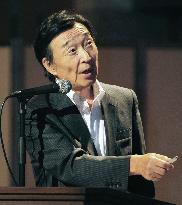
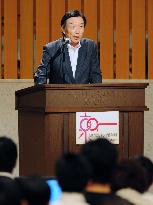
KYOTO, Japan - Bank of Japan Deputy Governor Kikuo Iwata gives a speech in Kyoto, western Japan, on Aug. 28, 2013. Iwata said clear improvements in economic activity induced by the central bank's ultra monetary easing may be evident by year-end.

  •  
BOJ deputy chief Iwata

BOJ deputy chief Iwata

KYOTO, Japan - Bank of Japan Deputy Governor Kikuo Iwata gives a speech in Kyoto, western Japan, on Aug. 28, 2013. Iwata said clear improvements in economic activity induced by the central bank's ultra monetary easing may be evident by year-end.

  •  
BOJ governor

BOJ governor

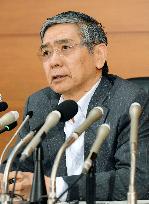
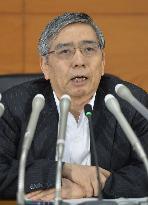
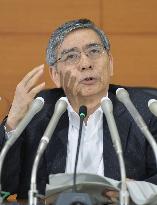
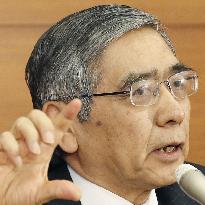
TOKYO, Japan - Bank of Japan Governor Haruhiko Kuroda speaks during a press conference at the central bank's head office in Tokyo on Aug. 8, 2013. Kuroda said that Japan can overcome longstanding deflation even if the sales tax is increased as planned, and called on the government to make progress in securing fiscal health to ensure the effects of the central bank's monetary easing policy.

  •  
BOJ governor

BOJ governor

TOKYO, Japan - Bank of Japan Governor Haruhiko Kuroda speaks during a press conference at the central bank's head office in Tokyo on Aug. 8, 2013. Kuroda said that Japan can overcome longstanding deflation even if the sales tax is increased as planned, and called on the government to make progress in securing fiscal health to ensure the effects of the central bank's monetary easing policy.

  •  
BOJ governor

BOJ governor

TOKYO, Japan - Bank of Japan Governor Haruhiko Kuroda speaks during a press conference at the central bank's head office in Tokyo on Aug. 8, 2013. Kuroda said that Japan can overcome longstanding deflation even if the sales tax is increased as planned, and called on the government to make progress in securing fiscal health to ensure the effects of the central bank's monetary easing policy.

  •  
BOJ policy meeting

BOJ policy meeting

TOKYO, Japan - Bank of Japan Governor Haruhiko Kuroda enters the head office of the central bank for a policy meeting in Tokyo on May 22, 2013. The BOJ decided to maintain its current aggressive monetary easing policy to beat deflation, at a time when the country's consumption and exports have started to recover amid a weakening yen and rising stocks. (Pool photo by Kyodo News)

  •  
BOJ expects inflation rate to reach 1.9% in FY 2015

BOJ expects inflation rate to reach 1.9% in FY 2015

TOKYO, Japan - Bank of Japan Governor Haruhiko Kuroda holds a press conference at the BOJ's head office in Tokyo on April 26, 2013. The central bank said the same day it expects Japan's inflation rate to reach 1.9 percent in fiscal 2015, almost achieving its target of 2 percent in about two years, backed by its aggressive monetary easing.

  •  
BOJ head Kuroda giving speech

BOJ head Kuroda giving speech

TOKYO, Japan - Bank of Japan Governor Haruhiko Kuroda gives a speech in Tokyo on April 12, 2013. Kuroda said the central bank will maintain its easy monetary policy until it attains its 2 percent inflation target, indicating that monetary easing will remain in place beyond two years if the bank deems it necessary.

  •  
Nikkei tops 13,000

Nikkei tops 13,000

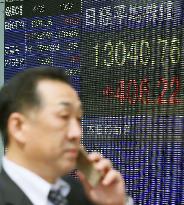
TOKYO, Japan - An electronic signboard in central Tokyo's Yaesu district shows Japan's key Nikkei stock index trading above the 13,000 mark, up more than 400 points from the previous day, in the morning of April 5, 2013. The index rose to its highest level since August 2008, buoyed by the Bank of Japan's decision the previous day to conduct a set of bolder-than-expected monetary easing.

  •  
BOJ further eases monetary policy

BOJ further eases monetary policy

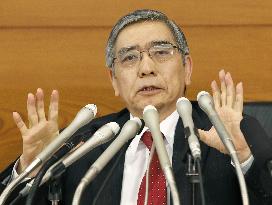
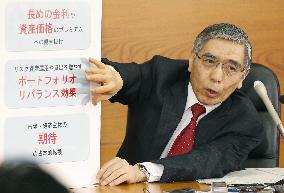
TOKYO, Japan - Bank of Japan Governor Haruhiko Kuroda speaks during a press conference at the BOJ head office in Tokyo on April 4, 2013. The central bank decided to further ease its monetary policy under a new monetary framework, displaying Kuroda's resolve to pursue further monetary easing to achieve a 2 percent inflation target in about 2 years to fight deflation.

  •  
BOJ further eases monetary policy

BOJ further eases monetary policy

TOKYO, Japan - Bank of Japan Governor Haruhiko Kuroda speaks during a press conference at the BOJ head office in Tokyo on April 4, 2013. The central bank decided to further ease its monetary policy under a new monetary framework, displaying Kuroda's resolve to pursue further monetary easing to achieve a 2 percent inflation target in about 2 years to fight deflation.

  •  
BOJ further eases monetary policy

BOJ further eases monetary policy

TOKYO, Japan - Bank of Japan Governor Haruhiko Kuroda speaks during a press conference at the BOJ head office in Tokyo on April 4, 2013. The central bank decided to further ease its monetary policy under a new monetary framework, displaying Kuroda's resolve to pursue further monetary easing to achieve a 2 percent inflation target in about 2 years to fight deflation.

  •  
BOJ further eases monetary policy

BOJ further eases monetary policy

TOKYO, Japan - Bank of Japan Governor Haruhiko Kuroda speaks during a press conference at the BOJ head office in Tokyo on April 4, 2013. The central bank decided to further ease its monetary policy under a new monetary framework, displaying Kuroda's resolve to pursue further monetary easing to achieve a 2 percent inflation target in about 2 years to fight deflation.

  •  
BOJ further eases monetary policy

BOJ further eases monetary policy

TOKYO, Japan - Bank of Japan Governor Haruhiko Kuroda speaks during a press conference at the BOJ head office in Tokyo on April 4, 2013. The central bank decided to further ease its monetary policy under a new monetary framework, displaying Kuroda's resolve to pursue further monetary easing to achieve a 2 percent inflation target in about 2 years to fight deflation.

  •  
Gov't proposes ADB chief Kuroda as next BOJ governor

Gov't proposes ADB chief Kuroda as next BOJ governor

TOKYO, Japan - Photo shows Asian Development Bank President Haruhiko Kuroda. The government proposed to the Diet on Feb. 28, 2013, the appointment of Kuroda, an advocate of aggressive monetary easing, as the next Bank of Japan governor.

  •  
Professor Iwata

Professor Iwata

TOKYO, Japan - File photo shows Gakushuin University professor Kikuo Iwata. The government plans to nominate Iwata, who has called for aggressive monetary easing, as the Bank of Japan's next deputy governor, sources close to the matter said on Feb. 25, 2013.

  •  
BOJ introduces 2% inflation target

BOJ introduces 2% inflation target

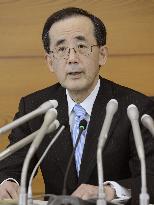
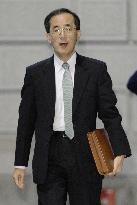
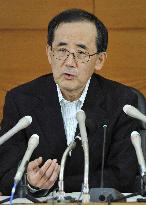
TOKYO, Japan - Bank of Japan Governor Masaaki Shirakawa holds a press conference at the BOJ's head office in Tokyo on Jan. 22, 2013, after a two-day Policy Board meeting. The Japanese central bank entered a new stage of drastic monetary easing the same day, setting a 2 percent inflation target under pressure from Prime Minister Shinzo Abe, who has asked it to take more action to overcome chronic deflation and the strong yen.

  •  
BOJ meeting

BOJ meeting

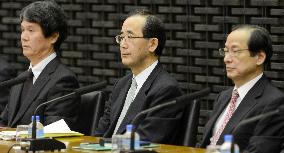
TOKYO, Japan - Bank of Japan Governor Masaaki Shirakawa (C) attends a quarterly meeting of the central bank's branch managers at the BOJ head office in Tokyo on Jan. 15, 2013. Shirakawa said the central bank will continue to pursue powerful monetary easing in light of a perceived reduction in the country's exports and industrial production, and with the economy likely to remain weak for the time being.

  •  
BOJ deputy head

BOJ deputy head

NIIGATA, Japan - Bank of Japan Deputy Governor Kiyohiko Nishimura holds a news conference in the city of Niigata on Dec. 5, 2012. Nishimura indicated that the central bank could take further monetary easing steps at its policy meeting later in the month.

  •  
BOJ decides on additional easing

BOJ decides on additional easing

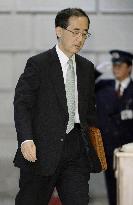
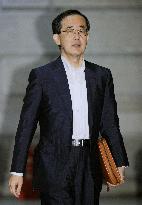
TOKYO, Japan - Bank of Japan Governor Masaaki Shirakawa enters the Japanese central bank in Tokyo on Oct. 30, 2012. The BOJ decided to expand its asset purchase program by 11 trillion yen to 91 trillion yen as additional monetary easing to fight deflation. (Pool photo by Kyodo News)

  •  
BOJ decides on additional easing

BOJ decides on additional easing

TOKYO, Japan - Bank of Japan Governor Masaaki Shirakawa enters the Japanese central bank in Tokyo on Oct. 30, 2012. The BOJ decided to expand its asset purchase program by 11 trillion yen to 91 trillion yen as additional monetary easing to fight deflation. (Pool photo by Kyodo News)

  •  
BOJ refrains from more easing

BOJ refrains from more easing

TOKYO, Japan - Bank of Japan Governor Masaaki Shirakawa enters the central bank's head office in Tokyo on July 12, 2012. The BOJ decided later in the day to refrain from taking additional monetary easing steps amid encouraging signs in the domestic economy, while downgrading its forecast for the country's core consumer price index in fiscal 2012 on the back of the recent fall in crude oil prices. (Pool photo by Kyodo News)

  •  
BOJ refrains from fresh easing steps

BOJ refrains from fresh easing steps

TOKYO, Japan - Bank of Japan Governor Masaaki Shirakawa gives a press conference at the BOJ head office in Tokyo on June 15, 2012. The central bank refrained from taking additional monetary easing steps ahead of the Greek election that could rattle financial markets depending on its outcome, while vowing to do its utmost to ensure the stability of Japan's financial system.

  •  
BOJ chief Shirakawa

BOJ chief Shirakawa

NAGOYA, Japan - Bank of Japan Governor Masaaki Shirakawa speaks at a meeting with regional business group officials at a hotel in Nagoya, central Japan, on Nov. 28, 2011. Shirakawa said the Japanese economy is likely to continue to face a ''severe'' situation amid the slowdown in overseas economies and the yen's rapid rise, and that the BOJ will keep pursuing ''powerful monetary easing.''

  •  
BOJ policymaker Kamezaki

BOJ policymaker Kamezaki

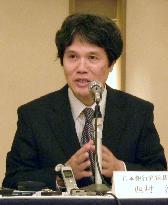
TSU, Japan - Hidetoshi Kamezaki, a Bank of Japan Policy Board member, speaks at a press conference in Tsu, Mie Prefecture, in western Japan on July 27, 2011. The Japanese central bank is not facing any immediate need for additional monetary easing, he said.

  •  
BOJ chief Shirakawa in meeting

BOJ chief Shirakawa in meeting

TOKYO, Japan - Bank of Japan Governor Masaaki Shirakawa (3rd from R) attends a quarterly meeting of the central bank's branch managers in Tokyo on Jan. 17, 2011. Shirakawa said the BOJ continues to seek strong monetary easing to help the Japanese economy fight deflation.

  • Main
  • Top
  • Editorial
  • Creative
  • About Us
  • About ILG
  • Terms of use
  • Company
  • BEHIND
  • Price List
  • Single Plan
  • Monthly Plan
  • Services
  • Shooting
  • Rights Clearance
  • Support
  • FAQ
  • How To Buy
  • Contact Us
  • Become a Partner

© KYODO NEWS IMAGES INC

All Rights Reserved.

  • Editorial
  • Olympics
  • News
  • Sports
  • Japan
  • Tech
  • Royal
  • Disaster
  • NorthKorea
  • Old Japan
  • SNS
  • Creative
  • Food
  • Japan
  • Landscape
  • Animal
  • Popular
  • #Ukraine
  • #China
  • #coronavirus
  • #N. Korea
  • #Russia
  • #Thailand
  • #Ukraine
  • #China
  • #coronavirus
  • #N. Korea
  • #Russia
  • #Thailand
  • Food
  • Japan
  • Landscape
  • Animal
  • Olympics
  • News
  • Sports
  • Japan
  • Tech
  • Royal
  • Disaster
  • NorthKorea
  • Old Japan
  • SNS