•  
"Evil Unbound" released in China

"Evil Unbound" released in China

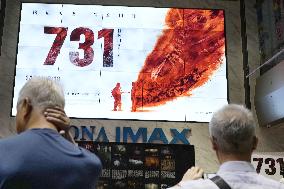
Photo shows an advertisement of Chinese war-themed film "Evil Unbound" at a movie theater in Beijing on Sept. 18, 2025, the 94th anniversary of the Mukden Incident that led to Japan's occupation of China's northeast through 1945, ahead of its release later in the day. The film tells the story of the Imperial Japanese Army's notorious Unit 731, which conducted human experiments on prisoners of war for biological and chemical warfare research in China during World War II.

  •  
"Evil Unbound" released in China

"Evil Unbound" released in China

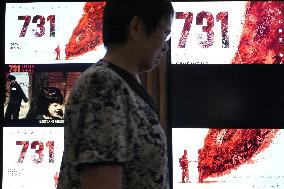
Photo shows an advertisement of Chinese war-themed film "Evil Unbound" at a movie theater in Beijing on Sept. 18, 2025, the 94th anniversary of the Mukden Incident that led to Japan's occupation of China's northeast through 1945, ahead of its release later in the day. The film tells the story of the Imperial Japanese Army's notorious Unit 731, which conducted human experiments on prisoners of war for biological and chemical warfare research in China during World War II.

  •  
"Evil Unbound" released in China

"Evil Unbound" released in China

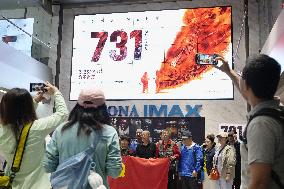
Photo shows an advertisement of Chinese war-themed film "Evil Unbound" at a movie theater in Beijing on Sept. 18, 2025, the 94th anniversary of the Mukden Incident that led to Japan's occupation of China's northeast through 1945, ahead of its release later in the day. The film tells the story of the Imperial Japanese Army's notorious Unit 731, which conducted human experiments on prisoners of war for biological and chemical warfare research in China during World War II.

  •  
"Evil Unbound" released in China

"Evil Unbound" released in China

Photo shows an advertisement of Chinese war-themed film "Evil Unbound" at a movie theater in Beijing on Sept. 18, 2025, the 94th anniversary of the Mukden Incident that led to Japan's occupation of China's northeast through 1945, ahead of its release later in the day. The film tells the story of the Imperial Japanese Army's notorious Unit 731, which conducted human experiments on prisoners of war for biological and chemical warfare research in China during World War II.

  •  
China marks anniv. of Japan's attack

China marks anniv. of Japan's attack

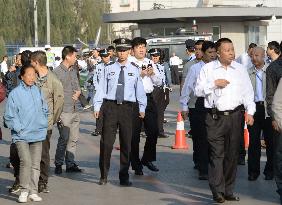
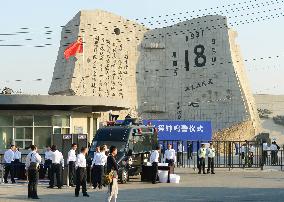
SHENYANG, China - Police officers keep citizens away from the 9.18 Historical Museum in Shenyang in China's Liaoning Province in the early morning of Sept. 18, 2014, the venue of a ceremony later in the day to commemorate the 83rd anniversary of the 1931 Mukden Incident that led to Japan's occupation of northeastern China.

  •  
China marks anniv. of Japan's attack

China marks anniv. of Japan's attack

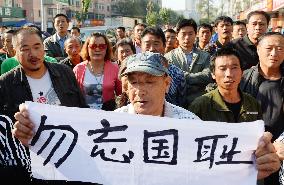
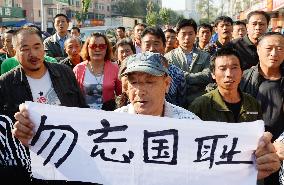
SHENYANG, China - A man (C) spreads a piece of cloth with the message "Don't forget the national disgrace" near the 9.18 Historical Museum in Shenyang in China's Liaoning Province on Sept. 18, 2014, the venue of a ceremony later in the day to commemorate the 83rd anniversary of the 1931 Mukden Incident that led to Japan's occupation of northeastern China.

  •  
China marks anniv. of Japan's attack

China marks anniv. of Japan's attack

SHENYANG, China - Police officers stand guard in front of the 9.18 Historical Museum in Shenyang in China's Liaoning Province in the early morning of Sept. 18, 2014, the venue of a ceremony later in the day to commemorate the 83rd anniversary of the 1931 Mukden Incident that led to Japan's occupation of northeastern China.

  •  
South Manchurian Railway Company Hospital - Shenyang, China

South Manchurian Railway Company Hospital - Shenyang, China

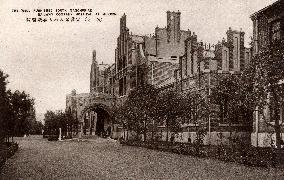
South Manchurian Railway Company Hospital - Shenyang (formerly Mukden), China. With the region under Japanese control following victory in the Russo-Japanese War (1904-5), Japanese settlers were encouraged through the construction of schools, libraries, hospitals and public utilities. The South Manchuria Railway Company (Mantetsu) - was a company founded in the Empire of Japan in 1906, taken over after the Russo-Japanese War, and operated within China in the Japanese-controlled South Manchuria Railway Zone. The railway itself ran from Lushun Port (Port Arthur) at the southern tip of the Liaodong Peninsula to Harbin, where it connected to the Chinese Eastern Railway. Date: circa 1920s

  •  
The Tartar General of Mukden (Shenyang), China

The Tartar General of Mukden (Shenyang), China

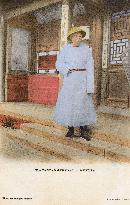
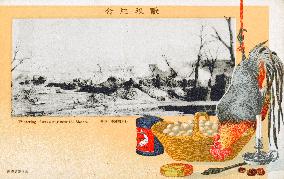
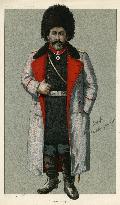
Fing-tun, The Tartar General of Mukden (now called Shenyang, the capital of Liaoning province in China) - forced to withdraw from the town during the Russo-Japanese War by the Russian Admiral Alexieff. Date: circa 1904

  •  
Russo-Japanese War - Japanese Army Wintering near Shaho

Russo-Japanese War - Japanese Army Wintering near Shaho

Russo-Japanese War - Japanese Army Wintering near the Shaho River along the MukdenPort Arthur spur of the China Far East Railway north of Liaoyang, Manchuria. Surrounded by illustrations of some of the supplies required by the troops! Date: 1904

  •  
Russo-Japanese War - 3rd Army Division at Battle of Shaho

Russo-Japanese War - 3rd Army Division at Battle of Shaho

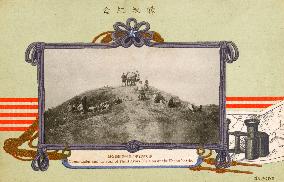
Japanese Commander and his staff of the Third Army at the Battle of Shaho (Saka no kaisen) - the second large-scale land battle of the Russo-Japanese War fought along a 37-mile front centred at the Shaho River along the Mukden Port Arthur spur of the China Far East Railway north of Liaoyang, Manchuria. Date: 1904

  •  
Japanese surrender at Mukden

Japanese surrender at Mukden

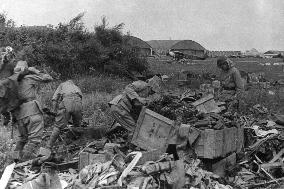
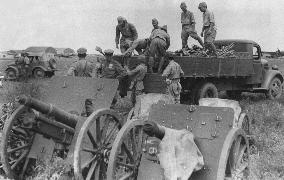
A scene at Mukden Airfield during the Japanese surrender to Soviet troops following their invasion of Manchuria, northern China. Japanese troops gather together arms and munitions for surrender. Date: August 1945

  •  
Red Cross Tents at Mukden - Russo-Japanese War

Red Cross Tents at Mukden - Russo-Japanese War

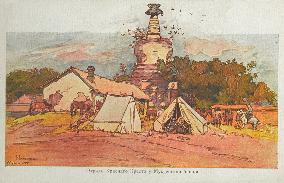
Red Cross Tents at Mukden - the last major land battle of the Russo-Japanese War, fought from 20th February to 10th March 1905 between Japan and Russia near Mukden in Manchuria. The city is now called Shenyang, the capital of Liaoning province in China. Date: 1905

  •  
Japanese surrender at Mukden

Japanese surrender at Mukden

Soviet troops receive arms and munitions surrendered by units of the 63rd Division of the Kwantung Army of Japan at Mukden, Manchuria Date: August 1945

  •  
Japanese Military leaders st Shenyang, Manchuria

Japanese Military leaders st Shenyang, Manchuria

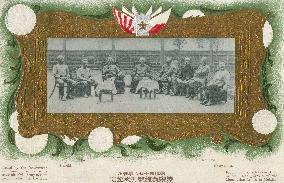
The Heads of the Japanese Military at the headquarters of their 'Manchurian Armies' at Mukden (now Shenyang), Manchuria following the end of the Russo-Japanese war (1904-1905). Following the Japanese victory, the Japanese concession at Mukden was one of the chief bases for Japanese economic expansion into southern Manchuria. Date: circa 1905

  •  
Cartoon impression of the Russo-Japanese War 4 of 5

Cartoon impression of the Russo-Japanese War 4 of 5

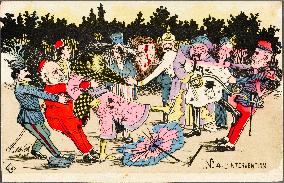
Card 4 of 5 - 'Intervention'. A cartoon interpretation of the Russo-Japanese war, acted out by the principal ruling individuals from the International Community. The Russo-Japanese War was a conflict that grew out of the rival imperialist ambitions of the Russian Empire and the Empire of Japan over Manchuria and Korea. The major theatres of operations were Southern Manchuria, specifically the area around the Liaodong Peninsula and Mukden, and the seas around Korea, Japan, and the Yellow Sea. Japan inflicted a series of stunning defeats on the Russian Navy, principally at Tsushima in May 1905. In this fourth card, Tsar Nicholas II and the Japanese Emperor Meiji are forcibly pulled apart by the rulers of the International community supporting each of their causes. For the Russians this includes the French, for the Japanese, the British and Italians. Date: 1905

  •  
Cartoon impression of the Russo-Japanese War 3 of 5

Cartoon impression of the Russo-Japanese War 3 of 5

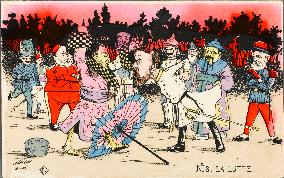
Card 3 of 5 - 'The Wrestlers'. A cartoon interpretation of the Russo-Japanese war, acted out by the principal ruling individuals from the International Community. The Russo-Japanese War was a conflict that grew out of the rival imperialist ambitions of the Russian Empire and the Empire of Japan over Manchuria and Korea. The major theatres of operations were Southern Manchuria, specifically the area around the Liaodong Peninsula and Mukden, and the seas around Korea, Japan, and the Yellow Sea. Japan inflicted a series of stunning defeats on the Russian Navy, principally at Tsushima in May 1905. In this third card, Tsar Nicholas II and the Japanese Emperor wrestle with each other whilst the International community watches on, forming up behind the side they are supporting. Date: 1905

  •  
Cartoon impression of the Russo-Japanese War 2 of 5

Cartoon impression of the Russo-Japanese War 2 of 5

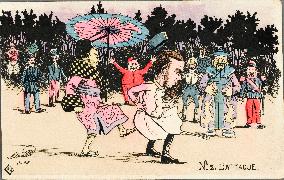
Card 2 of 5 - 'The Attack'. A cartoon interpretation of the Russo-Japanese war, acted out by the principal ruling individuals from the International Community. The Russo-Japanese War was a conflict that grew out of the rival imperialist ambitions of the Russian Empire and the Empire of Japan over Manchuria and Korea. The major theatres of operations were Southern Manchuria, specifically the area around the Liaodong Peninsula and Mukden, and the seas around Korea, Japan, and the Yellow Sea. Japan inflicted a series of stunning defeats on the Russian Navy, principally at Tsushima in May 1905. In this second card, Tsar Nicolas II is surprised by an attack by the Japanese Emperor Meiji, whilst the International community (still standing quite far back from proceedings) show a mixture of delight and alarm depending on their support for either side. Date: 1905

  •  
Cartoon impression of the Russo-Japanese War 1 of 5

Cartoon impression of the Russo-Japanese War 1 of 5

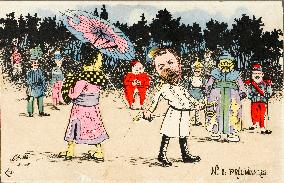
Card 1 of 5 - 'Preliminaries'. A cartoon interpretation of the Russo-Japanese war, acted out by the principal ruling individuals from the International Community. The War was a conflict that grew out of the rival imperialist ambitions of the Russian Empire and the Empire of Japan over Manchuria and Korea. The major theatres of operations were Southern Manchuria, specifically the area around the Liaodong Peninsula and Mukden, and the seas around Korea, Japan, and the Yellow Sea. Japan inflicted a series of stunning defeats on the Russian Navy, principally at Tsushima in May 1905. In this first card, Tsar Nicolas II and the Japanese Emperor Meiji trade insults and spit at each other whilst the International community stands quite far back from proceedings. Date: 1905

  •  
RUS/JAP WAR/ MUKDEN

RUS/JAP WAR/ MUKDEN

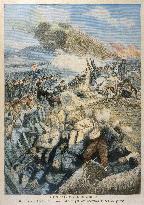
Mukden : days of bitter fighting lead to a Russian withdrawal and the Japanese occupation of the city Date: March 1905

  •  
RUS/JAP WAR/RETREAT

RUS/JAP WAR/RETREAT

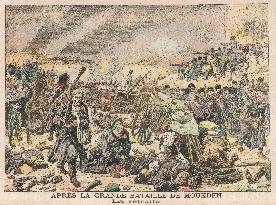
The Russians abandon Mukden, which is taken by the Japanese under Field-Marshal Orama Date: March 1905

  •  
RUS/JAP WAR/ OYAMA

RUS/JAP WAR/ OYAMA

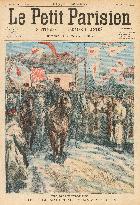
Mukden : Japanese commander Marshal Oyama enters the city after Kuropatkin has withdrawn the Russian forces Date: 10 March 1905

  •  
RUS-JAP WAR/ MUKDEN

RUS-JAP WAR/ MUKDEN

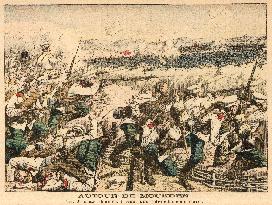
Japanese attack on the Russian defences at MUKDEN, Manchuria Date: 1904

  •  
General Kuropatkin, Russia

General Kuropatkin, Russia

ALEXEI NIKOLAIEVICH KUROPATKIN Russian general. Below are the words: I regret to report ... (after losing the Battle of Mukden during the Russo-Japanese War). Date: 1848 - 1921

  •  
Protests in H.K. on anniversary of Japanese aggression

Protests in H.K. on anniversary of Japanese aggression

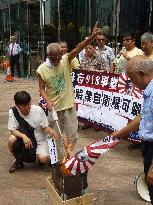
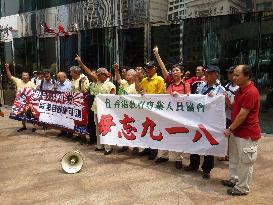
Protesters from anti-Japanese groups and political parties demonstrate outside the Japanese consulate general office in Hong Kong on Sept. 18, 2015, to mark the 84th anniversary of the Mukden Incident regarded as the beginning of Japan's invasion of China. (Kyodo) ==Kyodo

  •  
Protests in H.K. on anniversary of Japanese aggression

Protests in H.K. on anniversary of Japanese aggression

Protesters from anti-Japanese groups and political parties demonstrate outside the Japanese consulate general office in Hong Kong on Sept. 18, 2015, to mark the 84th anniversary of the Mukden Incident regarded as the beginning of Japan's invasion of China. (Kyodo) ==Kyodo

  •  
China marks anniv. of Japan's attack

China marks anniv. of Japan's attack

SHENYANG, China - A man (C) spreads a piece of cloth with the message "Don't forget the national disgrace" near the 9.18 Historical Museum in Shenyang in China's Liaoning Province on Sept. 18, 2014, the venue of a ceremony later in the day to commemorate the 83rd anniversary of the 1931 Mukden Incident that led to Japan's occupation of northeastern China. (Kyodo)

  • Main
  • Top
  • Editorial
  • Creative
  • About Us
  • About ILG
  • Terms of use
  • Company
  • BEHIND
  • Price List
  • Single Plan
  • Monthly Plan
  • Services
  • Shooting
  • Rights Clearance
  • Support
  • FAQ
  • How To Buy
  • Contact Us
  • Become a Partner

© KYODO NEWS IMAGES INC

All Rights Reserved.

  • Editorial
  • Olympics
  • News
  • Sports
  • Japan
  • Tech
  • Royal
  • Disaster
  • NorthKorea
  • Old Japan
  • SNS
  • Creative
  • Food
  • Japan
  • Landscape
  • Animal
  • Popular
  • #Ukraine
  • #China
  • #coronavirus
  • #N. Korea
  • #Russia
  • #Thailand
  • #Ukraine
  • #China
  • #coronavirus
  • #N. Korea
  • #Russia
  • #Thailand
  • Food
  • Japan
  • Landscape
  • Animal
  • Olympics
  • News
  • Sports
  • Japan
  • Tech
  • Royal
  • Disaster
  • NorthKorea
  • Old Japan
  • SNS