•  
Hubble Seeks Clusters in Lost Galaxy

Hubble Seeks Clusters in Lost Galaxy

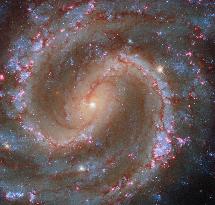
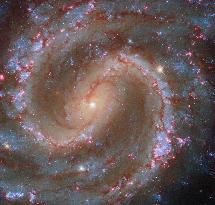
Handout Photo shows NASA/ESA Hubble Space Telescope image features the spiral galaxy NGC 4535, which is situated about 50 million light-years away in the constellation Virgo (the Maiden). Through a small telescope, this galaxy appears extremely faint, giving it the nickname ‘Lost Galaxy’. With a mirror spanning nearly eight feet (2.4 meters) across and its location above Earth’s light-obscuring atmosphere, Hubble can easily observe dim galaxies like NGC 4535 and pick out features like its massive spiral arms and central bar of stars. This image features NGC 4535’s young star clusters, which dot the galaxy’s spiral arms. Glowing-pink clouds surround many of these bright-blue star groupings. These clouds, called H II (‘H-two’) regions, are a sign that the galaxy is home to especially young, hot, and massive stars that blaze with high-energy radiation. Such massive stars shake up their surroundings by heating their birth clouds with powerful stellar winds, eventually exploding as supernovae. The image incorporat

  •  
Hubble Seeks Clusters in ‘Lost Galaxy’

Hubble Seeks Clusters in ‘Lost Galaxy’

NASA/ESA Hubble Space Telescope image features the spiral galaxy NGC 4535, which is situated about 50 million light-years away in the constellation Virgo (the Maiden). Through a small telescope, this galaxy appears extremely faint, giving it the nickname ‘Lost Galaxy’. With a mirror spanning nearly eight feet (2.4 meters) across and its location above Earth’s light-obscuring atmosphere, Hubble can easily observe dim galaxies like NGC 4535 and pick out features like its massive spiral arms and central bar of stars. This image features NGC 4535’s young star clusters, which dot the galaxy’s spiral arms. Glowing-pink clouds surround many of these bright-blue star groupings. These clouds, called H II (‘H-two’) regions, are a sign that the galaxy is home to especially young, hot, and massive stars that blaze with high-energy radiation. Such massive stars shake up their surroundings by heating their birth clouds with powerful stellar winds, eventually exploding as supernovae. The image incorporates data from an obse

  •  
EUROPEAN SPACE AGENCY-EUCLID-TELESCOPE-IMAGES

EUROPEAN SPACE AGENCY-EUCLID-TELESCOPE-IMAGES

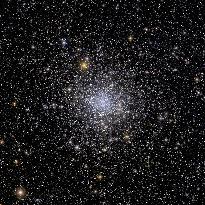
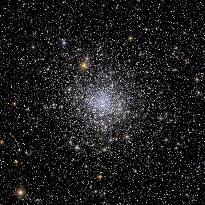
(231108) -- PARIS, Nov. 8, 2023 (Xinhua) -- This image provided by the European Space Agency on Nov. 7, 2023 shows the space telescope Euclid's view of globular cluster NGC 6397. The European Space Agency released Euclid's first photos on Tuesday. (European Space Agency hand out via Xinhua)(ESA/Euclid/Euclid Consortium/NASA, image processing by J.-C. Cuillandre (CEA Paris-Saclay), G. Anselmi, CC BY-SA 3.0 IGO)

  •  
EUROPEAN SPACE AGENCY-EUCLID-TELESCOPE-IMAGES

EUROPEAN SPACE AGENCY-EUCLID-TELESCOPE-IMAGES

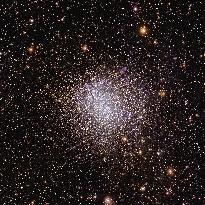
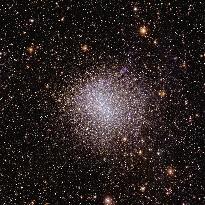
(231108) -- PARIS, Nov. 8, 2023 (Xinhua) -- This image provided by the European Space Agency on Nov. 7, 2023 shows the space telescope Euclid's view of irregular galaxy NGC 6822. The European Space Agency released Euclid's first photos on Tuesday. (European Space Agency hand out via Xinhua)(ESA/Euclid/Euclid Consortium/NASA, image processing by J.-C. Cuillandre (CEA Paris-Saclay), G. Anselmi, CC BY-SA 3.0 IGO)

  •  
Stunning First Full-Colour Images From Euclid Telescope

Stunning First Full-Colour Images From Euclid Telescope

HANDOUT - his image shows: Globular cluster NGC 6397. The European Space Agency's (ESA) Euclid space mission unveiled its first five full-colour images of the cosmos on Tuesday, November 7, 2023. Launched in July, Euclid is a cutting-edge telescope tasked with mapping a third of the extragalactic sky, shedding light on how dark matter and dark energy shape our universe. This ambitious mission is unique in its ability to capture razor-sharp astronomical images across a vast expanse of the sky, offering unprecedented insights into the far reaches of the universe. The initial set of images serves as a testament to Euclid's unparalleled capability to construct the most extensive 3D map of the universe to date. Among the images, the most captivating is a panoramic view of the Horsehead Nebula, also known as Barnard 33, situated in the Orion constellation approximately 1,375 light-years away. The nebula, with its striking equine shape, stands as the nearest giant star-forming region to Earth. Positioned just south

  •  
Stunning First Full-Colour Images From Euclid Telescope

Stunning First Full-Colour Images From Euclid Telescope

HANDOUT - Irregular galaxy NGC 6822. The European Space Agency's (ESA) Euclid space mission unveiled its first five full-colour images of the cosmos on Tuesday, November 7, 2023. Launched in July, Euclid is a cutting-edge telescope tasked with mapping a third of the extragalactic sky, shedding light on how dark matter and dark energy shape our universe. This ambitious mission is unique in its ability to capture razor-sharp astronomical images across a vast expanse of the sky, offering unprecedented insights into the far reaches of the universe. The initial set of images serves as a testament to Euclid's unparalleled capability to construct the most extensive 3D map of the universe to date. Among the images, the most captivating is a panoramic view of the Horsehead Nebula, also known as Barnard 33, situated in the Orion constellation approximately 1,375 light-years away. The nebula, with its striking equine shape, stands as the nearest giant star-forming region to Earth. Positioned just south of the prominent

  •  
James Webb View Of The Ring Nebula

James Webb View Of The Ring Nebula

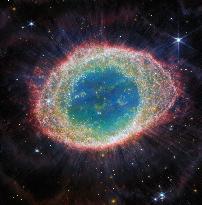
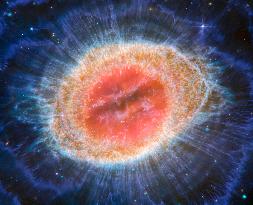
The NASA/ESA/CSA James Webb Space Telescope has observed the well-known Ring Nebula with unprecedented detail. Formed by a star throwing off its outer layers as it runs out of fuel, the Ring Nebula is an archetypal planetary nebula. Also known as M57 and NGC 6720, it is both relatively close to Earth at roughly 2,500 light-years away. This new image provides unprecedented spatial resolution and spectral sensitivity. For example, the intricate details of the filament structure of the inner ring are particularly visible in this dataset. There are some 20,000 dense globules in the nebula, which are rich in molecular hydrogen. In contrast, the inner region shows very hot gas. The main shell contains a thin ring of enhanced emission fromcarbon-based molecules known as polycyclic aromatic hydrocarbons (PAHs). Roughly ten concentric arcs are located just beyond the outer edge of the main ring. The arcs are thought to originate from the interaction of the central star with a low-mass companion orbiting at a distance

  •  
James Webb View Of The Ring Nebula

James Webb View Of The Ring Nebula

The NASA/ESA/CSA James Webb Space Telescope has observed the well-known Ring Nebula with unprecedented detail. Formed by a star throwing off its outer layers as it runs out of fuel, the Ring Nebula is an archetypal planetary nebula. Also known as M57 and NGC 6720, it is both relatively close to Earth at roughly 2,500 light-years away. This new image provides unprecedented spatial resolution and spectral sensitivity. In particular, Webb’s MIRI (Mid-InfraRed Instrument) reveals particular details in the concentric features in the outer regions of the nebulae’s ring (right). There are some 20,000 dense globules in the nebula, which are rich in molecular hydrogen. In contrast, the inner region shows very hot gas. The main shell contains a thin ring of enhanced emission fromcarbon-based molecules known as polycyclic aromatic hydrocarbons (PAHs). Roughly ten concentric arcs located just beyond the outer edge of the main ring. The arcs are thought to originate from the interaction of the central star with a low-mass

  •  
U.S.-GREENBELT-JAMES WEBB SPACE TELESCOPE-UNIVERSE-FIRST FULL-COLOR IMAGES

U.S.-GREENBELT-JAMES WEBB SPACE TELESCOPE-UNIVERSE-FIRST FULL-COLOR IMAGES

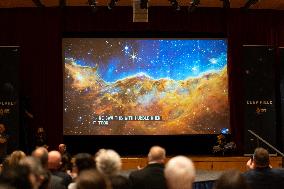
(220712) -- GREENBELT (U.S.), July 12, 2022 (Xinhua) -- The image captured by NASA's James Webb Space Telescope of the star-forming region called NGC 3324 in the Carina Nebula is seen on a screen at NASA's Goddard Space Flight Center in Greenbelt, Maryland, the Untied States, on July 12, 2022. NASA released James Webb Space Telescope's first full-color images of the universe and their spectroscopic data on Tuesday, revealing the unprecedented and detailed views of the universe. (NASA/Taylor Mickal/Handout via Xinhua)

  •  
U.S.-GREENBELT-JAMES WEBB SPACE TELESCOPE-UNIVERSE-FIRST FULL-COLOR IMAGES

U.S.-GREENBELT-JAMES WEBB SPACE TELESCOPE-UNIVERSE-FIRST FULL-COLOR IMAGES

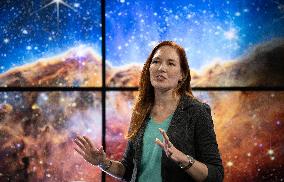
(220712) -- GREENBELT (U.S.), July 12, 2022 (Xinhua) -- NASA James Webb Space Telescope Deputy Project Scientist for Communications Amber Straughn speaks about the infrared image of the star-forming region called NGC 3324 in the Carina Nebula as it is shown on a screen during a broadcast releasing the telescope's first full-color images at NASA's Goddard Space Flight Center in Greenbelt, Maryland, the Untied States, on July 12, 2022. NASA released James Webb Space Telescope's first full-color images of the universe and their spectroscopic data on Tuesday, revealing the unprecedented and detailed views of the universe. (NASA/Bill Ingalls/Handout via Xinhua)

  •  
U.S.-GREENBELT-JAMES WEBB SPACE TELESCOPE-UNIVERSE-FIRST FULL-COLOR IMAGES

U.S.-GREENBELT-JAMES WEBB SPACE TELESCOPE-UNIVERSE-FIRST FULL-COLOR IMAGES

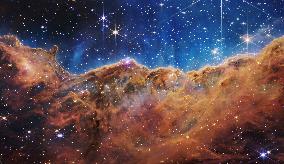
(220712) -- GREENBELT (U.S.), July 12, 2022 (Xinhua) -- Image released by NASA on July 12, 2022 shows the edge of a nearby, young, star-forming region called NGC 3324 in the Carina Nebula. Captured in infrared light by NASA's James Webb Space Telescope, the image reveals for the first time previously invisible areas of star birth. NASA released James Webb Space Telescope's first full-color images of the universe and their spectroscopic data on Tuesday, revealing the unprecedented and detailed views of the universe. (NASA, ESA, CSA, STScI/Handout via Xinhua)

  • Main
  • Top
  • Editorial
  • Creative
  • About Us
  • About ILG
  • Terms of use
  • Company
  • BEHIND
  • Price List
  • Single Plan
  • Monthly Plan
  • Services
  • Shooting
  • Rights Clearance
  • Support
  • FAQ
  • How To Buy
  • Contact Us
  • Become a Partner

© KYODO NEWS IMAGES INC

All Rights Reserved.

  • Editorial
  • Olympics
  • News
  • Sports
  • Japan
  • Tech
  • Royal
  • Disaster
  • NorthKorea
  • Old Japan
  • SNS
  • Creative
  • Food
  • Japan
  • Landscape
  • Animal
  • Popular
  • #Ukraine
  • #China
  • #coronavirus
  • #N. Korea
  • #Russia
  • #Thailand
  • #Ukraine
  • #China
  • #coronavirus
  • #N. Korea
  • #Russia
  • #Thailand
  • Food
  • Japan
  • Landscape
  • Animal
  • Olympics
  • News
  • Sports
  • Japan
  • Tech
  • Royal
  • Disaster
  • NorthKorea
  • Old Japan
  • SNS