•  

[Breaking News]Kanji for "bear" chosen as best to characterize 2025

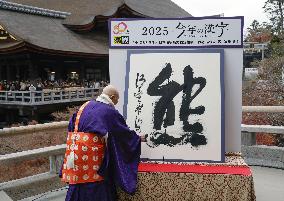
KYOTO, Japan, Dec. 12 Kyodo - Seihan Mori, chief Buddhist priest of Kiyomizu temple in Kyoto, writes the kanji character "kuma," meaning bear, with a calligraphy brush during the annual kanji-of-the-year event on Dec. 12, 2025. The character was chosen to symbolize the national mood for the year due to frequent bear sightings and related incidents across Japan, as well as attention to the return of pandas - written with characters meaning "bear" and "cat" - to China. (Kyodo)

  •  

Kanji for "bear" chosen as best to characterize 2025

KYOTO, Japan, Dec. 12 Kyodo - Seihan Mori, chief Buddhist priest of Kiyomizu temple in Kyoto, writes the kanji character "kuma," meaning bear, with a calligraphy brush during the annual kanji-of-the-year event on Dec. 12, 2025. The character was chosen to symbolize the national mood for the year due to frequent bear sightings and related incidents across Japan, as well as attention to the return of pandas - written with characters meaning "bear" and "cat" - to China. (Kyodo)

  •  
Kanji for "bear" chosen as best to characterize 2025

Kanji for "bear" chosen as best to characterize 2025

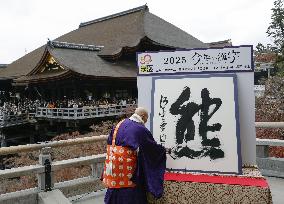
Seihan Mori, chief Buddhist priest of Kiyomizu temple in Kyoto, writes the kanji character "kuma," meaning bear, with a calligraphy brush during the annual kanji-of-the-year event on Dec. 12, 2025. The character was chosen to symbolize the national mood for the year due to frequent bear sightings and related incidents across Japan, as well as attention to the return of pandas - written with characters meaning "bear" and "cat" - to China.

  •  
Kanji for "bear" chosen as best to characterize 2025

Kanji for "bear" chosen as best to characterize 2025

Seihan Mori, chief Buddhist priest of Kiyomizu temple in Kyoto, writes the kanji character "kuma," meaning bear, with a calligraphy brush during the annual kanji-of-the-year event on Dec. 12, 2025. The character was chosen to symbolize the national mood for the year due to frequent bear sightings and related incidents across Japan, as well as attention to the return of pandas - written with characters meaning "bear" and "cat" - to China.

  •  
Kanji for "bear" chosen as best to characterize 2025

Kanji for "bear" chosen as best to characterize 2025

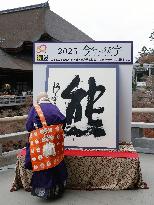
Seihan Mori, chief Buddhist priest of Kiyomizu temple in Kyoto, writes the kanji character "kuma," meaning bear, with a calligraphy brush during the annual kanji-of-the-year event on Dec. 12, 2025. The character was chosen to symbolize the national mood for the year due to frequent bear sightings and related incidents across Japan, as well as attention to the return of pandas - written with characters meaning "bear" and "cat" - to China.

  •  

Kanji for "kin," meaning gold or money, chosen as best to characterize 2024

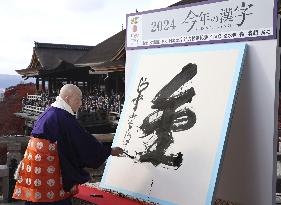
KYOTO, Japan, Dec. 12 Kyodo - Seihan Mori, chief Buddhist priest of Kiyomizu temple in Kyoto, writes the kanji character "kin," meaning gold or money, with a calligraphy brush on Dec. 12, 2024. The character was selected as the best single kanji to symbolize the national mood for the year as Japanese athletes had their second-best ever performance at the Olympics with 20 gold medals in Paris, while a money scandal rocked the ruling Liberal Democratic Party. (Kyodo)

  •  
Kanji for "kin," meaning gold or money, chosen as best to characterize 2024

Kanji for "kin," meaning gold or money, chosen as best to characterize 2024

Seihan Mori, chief Buddhist priest of Kiyomizu temple in Kyoto, writes the kanji character "kin," meaning gold or money, with a calligraphy brush on Dec. 12, 2024. The character was selected as the best single kanji to symbolize the national mood for the year as Japanese athletes had their second-best ever performance at the Olympics with 20 gold medals in Paris, while a money scandal rocked the ruling Liberal Democratic Party.

  •  
CHINA-SPRING FESTIVAL-CELEBRATIONS (CN)

CHINA-SPRING FESTIVAL-CELEBRATIONS (CN)

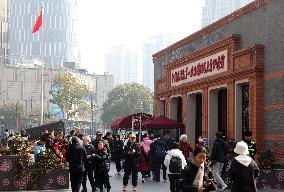
(240210) -- BEIJING, Feb. 10, 2024 (Xinhua) -- Visitors are seen in front of the memorial of the first National Congress of the Communist Party of China in Shanghai, east China, Feb. 10, 2024. As the festive mood reached its peak, China on Saturday ringed in the Chinese Lunar New Year, or the Spring Festival. Regarded as the most celebrated holiday among Chinese, it signifies a time of joyful family reunions and a slew of cultural events. (Xinhua)

  •  
CHINA-SPRING FESTIVAL-CELEBRATIONS (CN)

CHINA-SPRING FESTIVAL-CELEBRATIONS (CN)

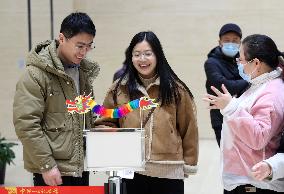
(240210) -- BEIJING, Feb. 10, 2024 (Xinhua) -- Visitors learn about a decorative ornament during a Spring Festival celebration event at the memorial of the first National Congress of the Communist Party of China in Shanghai, east China, Feb. 10, 2024. As the festive mood reached its peak, China on Saturday ringed in the Chinese Lunar New Year, or the Spring Festival. Regarded as the most celebrated holiday among Chinese, it signifies a time of joyful family reunions and a slew of cultural events. (Xinhua)

  •  

Kanji for "tax" chosen to symbolize Japan's social mood in 2023

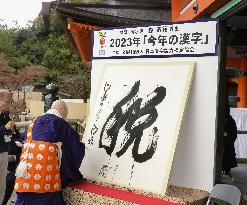
KYOTO, Japan Kyodo - Seihan Mori, chief Buddhist priest of Kiyomizu temple in Kyoto, writes the kanji character "zei," meaning tax, with a calligraphy brush on Dec. 12, 2023. The character was selected as the best single kanji to symbolize the national mood for the year as tax-related issues hit headlines, including the government's temporary income tax cut of 40,000 yen per person planned next fiscal year. (Kyodo)

  •  
Kanji for "tax" chosen to symbolize Japan's social mood in 2023

Kanji for "tax" chosen to symbolize Japan's social mood in 2023

Seihan Mori, chief Buddhist priest of Kiyomizu temple in Kyoto, writes the kanji character "zei," meaning tax, with a calligraphy brush on Dec. 12, 2023. The character was selected as the best single kanji to symbolize the national mood for the year as tax-related issues hit headlines, including the government's temporary income tax cut of 40,000 yen per person planned next fiscal year.

  •  
N. Korea marks 61st anniversary

N. Korea marks 61st anniversary

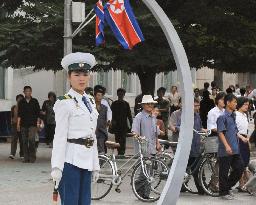
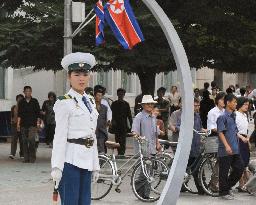
PYONGYANG, North Korea - People walk on the streets in Pyongyang under national flags hoisted on a pole on Sept. 8, 2009. North Korea marked the 61st anniversary of its founding the following day with many foreign visitors and the ''Arirang'' mass games bringing a festive mood to the capital.

  •  
(2)Zico in buoyant mood ahead of Bahrain q'fier

(2)Zico in buoyant mood ahead of Bahrain q'fier

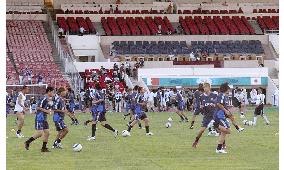
MANAMA, Bahrain - Japan tune up at National Stadium in Manama on June 2 for their Asia zone Group B World Cup qualifier against Bahrain on June 3.

  •  
(3)Zico in buoyant mood ahead of Bahrain q'fier

(3)Zico in buoyant mood ahead of Bahrain q'fier

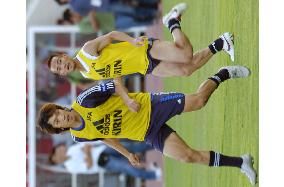
MANAMA, Bahrain - Japan midfielders Shunsuke Nakamura (L) and Hidetoshi Nakata tune up at National Stadium in Manama on June 2 for their Asia zone Group B World Cup qualifier against Bahrain on June 3.

  •  
(4)Zico in buoyant mood ahead of Bahrain q'fier

(4)Zico in buoyant mood ahead of Bahrain q'fier

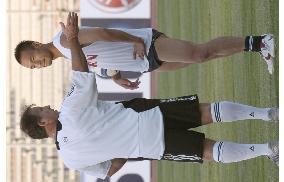
MANAMA, Bahrain - Japan coach Zico speaks with midfielder Hidetoshi Nakata during their practice at National Stadium in Manama on June 2 ahead of their Asia zone Group B World Cup qualifier against Bahrain on June 3.

  •  
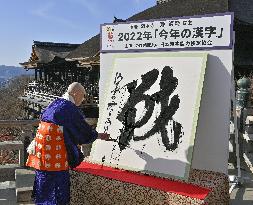
Kanji for "war" chosen as best to characterize 2022

Kanji for "war" chosen as best to characterize 2022

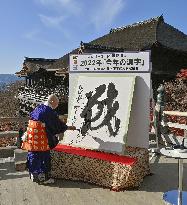
Seihan Mori, chief Buddhist priest of Kiyomizu temple in Kyoto, writes the kanji character "sen," meaning war or battle, with a calligraphy brush on Dec. 12, 2022. The character was selected as the best single kanji to symbolize the national mood for the year, referencing the Russia-Ukraine war.

  •  
Kanji for "war" chosen as best to characterize 2022

Kanji for "war" chosen as best to characterize 2022

Seihan Mori, chief Buddhist priest of Kiyomizu temple in Kyoto, writes the kanji character "sen," meaning war or battle, with a calligraphy brush on Dec. 12, 2022. The character was selected as the best single kanji to symbolize the national mood for the year, referencing the Russia-Ukraine war.

  •  
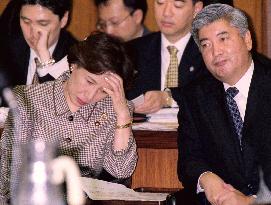
Makiko Tanaka in pensive mood the national security committee.

Makiko Tanaka in pensive mood the national security committee.

Makiko Tanaka (L), Foreign Minister, in pensive mood the House of Representatives national security committee. Sitting on her right is Gen Nakatani, Defense Agency Director General.

  •  
Security tightened amid rising tensions over G-7 summit

Security tightened amid rising tensions over G-7 summit

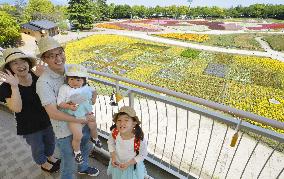
Photo taken on May 4, 2016 shows a botanical garden in Kuwana in the central Japan prefecture of Mie arranged to display the national flags of the seven countries that will participate in the Group of Seven summit in the prefecture on May 26-27. While Japan is in a mood to celebrate its hosting of the summit, security has been tightened in and around the main venue, including sightseeing resorts. (Kyodo) ==Kyodo

  •  
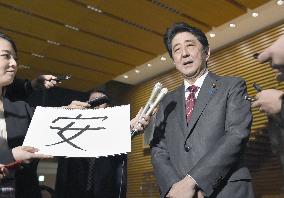
Kanji meaning safety, peace chosen as best characterizing 2015

Kanji meaning safety, peace chosen as best characterizing 2015

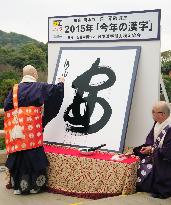
Japanese Prime Minister Shinzo Abe makes comments in Tokyo on Dec. 15, 2015, on the day's selection of the kanji "an" meaning safety or peace as the Chinese character best symbolizing the year's national mood. Abe pledged to protect citizens as the word was chosen after security bills that will expand the role of the Self-Defense Forces abroad triggered major protests in Japan and a series of terrorist attacks around the world stoked widespread fear. (Kyodo) ==Kyodo

  •  
Kanji meaning safety, peace chosen as best characterizing 2015

Kanji meaning safety, peace chosen as best characterizing 2015

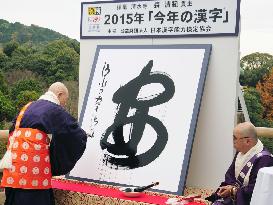
Seihan Mori (L), the chief Buddhist priest of Kiyomizu Temple in Kyoto, western Japan, writes the Chinese character "an" meaning safety or peace on a large sheet of "washi" paper using a giant Japanese calligraphy brush on Dec. 15, 2015, as the character was selected as the single best kanji symbolizing the year's national mood in Japan. (Kyodo) ==Kyodo

  •  
Kanji meaning safety, peace chosen as best characterizing 2015

Kanji meaning safety, peace chosen as best characterizing 2015

Seihan Mori (L), the chief Buddhist priest of Kiyomizu Temple in Kyoto, western Japan, writes the Chinese character "an" meaning safety or peace on a large sheet of "washi" paper using a giant Japanese calligraphy brush on Dec. 15, 2015, as the character was selected as the single best kanji symbolizing the year's national mood in Japan. (Kyodo) ==Kyodo

  •  
N. Korea marks 61st anniversary

N. Korea marks 61st anniversary

PYONGYANG, North Korea - People walk on the streets in Pyongyang under national flags hoisted on a pole on Sept. 8, 2009. North Korea marked the 61st anniversary of its founding the following day with many foreign visitors and the ''Arirang'' mass games bringing a festive mood to the capital. (Kyodo)

  •  
Women, smartphone, girl, colours, take care, leaf, yellow, smile, good mood

Women, smartphone, girl, colours, take care, leaf, yellow, smile, good mood

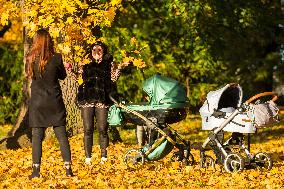
People enjoy sunny autumn day during the National holiday: Day of Establishment of Independent Czechoslovakia in 1918 in Olomouc, Czech Republic, October 28, 2020. (CTK Photo/Jaroslav Svoboda)

  •  
Women, mother, pram, autumn, colours, take care, leaf, yellow, smile, good mood

Women, mother, pram, autumn, colours, take care, leaf, yellow, smile, good mood

People enjoy sunny autumn day during the National holiday: Day of Establishment of Independent Czechoslovakia in 1918 in Olomouc, Czech Republic, October 28, 2020. (CTK Photo/Jaroslav Svoboda)

  •  
Kanji used in "3Cs" slogan picked to symbolize 2020 amid pandemic

Kanji used in "3Cs" slogan picked to symbolize 2020 amid pandemic

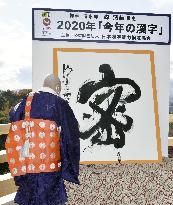
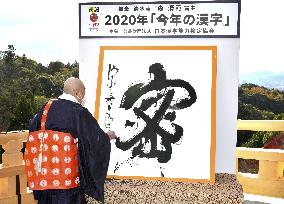
Seihan Mori, chief Buddhist priest of Kiyomizu temple in Kyoto, writes the kanji character "mitsu" meaning "close" or "dense" with a calligraphy brush in the Japanese city on Dec. 14, 2020. The character was selected as the best kanji to symbolize the national mood for the year, referencing calls to contain the spread of the novel coronavirus. (Pool photo)

  •  
Kanji used in "3Cs" slogan picked to symbolize 2020 amid pandemic

Kanji used in "3Cs" slogan picked to symbolize 2020 amid pandemic

Seihan Mori, chief Buddhist priest of Kiyomizu temple in Kyoto, writes the kanji character "mitsu" meaning "close" or "dense" with a calligraphy brush in the Japanese city on Dec. 14, 2020. The character was selected as the best kanji to symbolize the national mood for the year, referencing calls to contain the spread of the novel coronavirus. (Pool photo)

  •  
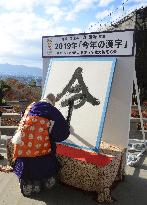
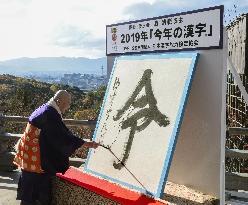
Kanji for "rei" chosen as best to characterize 2019

Kanji for "rei" chosen as best to characterize 2019

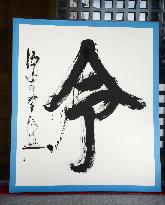
Photo taken at Kyoto's Kiyomizu Temple on Dec. 12, 2019, shows a calligraphy of the kanji character "rei" meaning beautiful or graceful. The character was selected as the single best kanji to symbolize the national mood for the year, as the character is part of the name of Japan's new era "Reiwa." (Kyodo) ==Kyodo

  •  
Kanji for "rei" chosen as best to characterize 2019

Kanji for "rei" chosen as best to characterize 2019

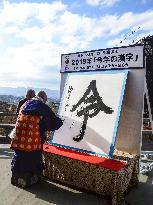
Seihan Mori, chief Buddhist priest of Kiyomizu Temple, writes the kanji character "rei" meaning beautiful or graceful with a calligraphy brush on Dec. 12, 2019. The character was selected as the single best kanji to symbolize the national mood for the year, as the character is part of the name of Japan's new era "Reiwa." (Kyodo) ==Kyodo

  •  
Kanji for "rei" chosen as best to characterize 2019

Kanji for "rei" chosen as best to characterize 2019

Seihan Mori, chief Buddhist priest of Kiyomizu Temple, writers the kanji character "rei" meaning beautiful or graceful with a calligraphy brush on Dec. 12, 2019. The character was selected as the single best kanji to symbolize the national mood for the year, as the character is part of the name of Japan's new era "Reiwa." (Kyodo) ==Kyodo

  •  
Kanji for "rei" chosen as best to characterize 2019

Kanji for "rei" chosen as best to characterize 2019

Seihan Mori, chief Buddhist priest of Kiyomizu Temple, writers the kanji character "rei" meaning beautiful or graceful with a calligraphy brush on Dec. 12, 2019. The character was selected as the single best kanji to symbolize the national mood for the year, as the character is part of the name of Japan's new era "Reiwa." (Kyodo) ==Kyodo

  •  
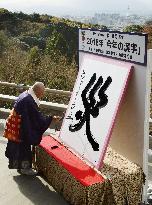
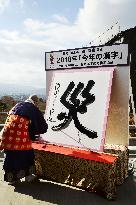
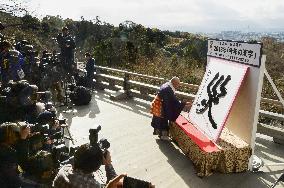
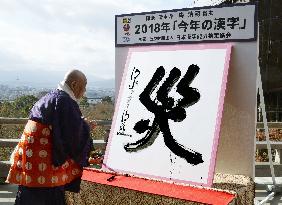
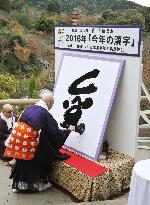
Kanji for "disaster" chosen as best to characterize 2018

Kanji for "disaster" chosen as best to characterize 2018

Seihan Mori, chief Buddhist priest of Kiyomizu Temple in Kyoto, writes the kanji character "sai" meaning disaster with a calligraphy brush on Dec. 12, 2018. The character was selected as the single best kanji to symbolize the national mood for the year, referencing a string of natural and man-made calamities. (Kyodo) ==Kyodo

  •  
Kanji for "disaster" chosen as best to characterize 2018

Kanji for "disaster" chosen as best to characterize 2018

Seihan Mori, chief Buddhist priest of Kiyomizu Temple in Kyoto, writes the kanji character "sai" meaning disaster with a calligraphy brush on Dec. 12, 2018. The character was selected as the single best kanji to symbolize the national mood for the year, referencing a string of natural and man-made calamities. (Kyodo) ==Kyodo

  •  
Kanji for "disaster" chosen as best to characterize 2018

Kanji for "disaster" chosen as best to characterize 2018

Seihan Mori, chief Buddhist priest of Kiyomizu Temple in Kyoto, writes the kanji character "sai" meaning disaster with a calligraphy brush on Dec. 12, 2018. The character was selected as the single best kanji to symbolize the national mood for the year, referencing a string of natural and man-made calamities. (Kyodo) ==Kyodo

  •  
Kanji for "disaster" chosen as best to characterize 2018

Kanji for "disaster" chosen as best to characterize 2018

Seihan Mori, chief Buddhist priest of Kiyomizu Temple in Kyoto, writes the kanji character "sai" meaning disaster with a calligraphy brush on Dec. 12, 2018. The character was selected as the single best kanji to symbolize the national mood for the year, referencing a string of natural and man-made calamities. (Kyodo) ==Kyodo

  •  
Kanji for "disaster" chosen as best to characterize 2018

Kanji for "disaster" chosen as best to characterize 2018

Seihan Mori, chief Buddhist priest of Kiyomizu Temple in Kyoto, writes the kanji character "sai" meaning disaster with a calligraphy brush on Dec. 12, 2018. The character was selected as the single best kanji to symbolize the national mood for the year, referencing a string of natural and man-made calamities. (Kyodo) ==Kyodo

  •  
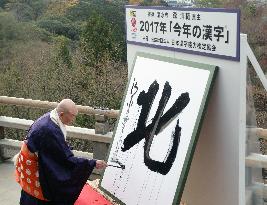
Kanji for "north" chosen as best to characterize 2017

Kanji for "north" chosen as best to characterize 2017

Seihan Mori, chief Buddhist priest of Kiyomizu Temple in Japan's ancient city of Kyoto, writes the kanji character "kita" meaning north with a calligraphy brush on Dec. 12, 2017. The character was selected as the single best kanji to symbolize the national mood for the year, referencing North Korea's missile launches among other things. (Kyodo) ==Kyodo

  •  
Kanji for "north" chosen as best to characterize 2017

Kanji for "north" chosen as best to characterize 2017

Seihan Mori, chief Buddhist priest of Kiyomizu Temple in Japan's ancient city of Kyoto, writes the kanji character "kita" meaning north with a calligraphy brush on Dec. 12, 2017. The character was selected as the single best kanji to symbolize the national mood for the year, referencing North Korea's missile launches among other things. (Kyodo) ==Kyodo

  •  
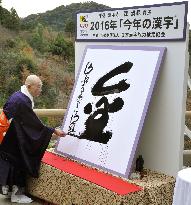
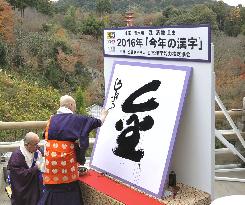
Kanji meaning gold, money chosen as best characterizing 2016

Kanji meaning gold, money chosen as best characterizing 2016

Seihan Mori, chief Buddhist priest at Kiyomizu Temple in Japan's ancient city of Kyoto, writes the Chinese character "kin" meaning gold or money on a 1.5-meter-high, 1.3-meter-wide sheet of "washi" paper on Dec. 12, 2016. The character was selected as the single best kanji symbolizing the national mood for the year, when Rio Olympics gold medals and money scandals made headlines. (Kyodo) ==Kyodo

  •  
Kanji meaning gold, money chosen as best characterizing 2016

Kanji meaning gold, money chosen as best characterizing 2016

Seihan Mori, chief Buddhist priest at Kiyomizu Temple in Japan's ancient city of Kyoto, writes the Chinese character "kin" meaning gold or money on a 1.5-meter-high, 1.3-meter-wide sheet of "washi" paper on Dec. 12, 2016. The character was selected as the single best kanji symbolizing the national mood for the year, when Rio Olympics gold medals and money scandals made headlines. (Kyodo) ==Kyodo

  •  
Kanji meaning gold, money chosen as best characterizing 2016

Kanji meaning gold, money chosen as best characterizing 2016

Seihan Mori, chief Buddhist priest at Kiyomizu Temple in Japan's ancient city of Kyoto, writes the Chinese character "kin" meaning gold or money on a 1.5-meter-high, 1.3-meter-wide sheet of "washi" paper on Dec. 12, 2016. The character was selected as the single best kanji symbolizing the national mood for the year, when Rio Olympics gold medals and money scandals made headlines. (Kyodo) ==Kyodo

  • Main
  • Top
  • Editorial
  • Creative
  • About Us
  • About ILG
  • Terms of use
  • Company
  • BEHIND
  • Price List
  • Single Plan
  • Monthly Plan
  • Services
  • Shooting
  • Rights Clearance
  • Support
  • FAQ
  • How To Buy
  • Contact Us
  • Become a Partner

© KYODO NEWS IMAGES INC

All Rights Reserved.

  • Editorial
  • Olympics
  • News
  • Sports
  • Japan
  • Tech
  • Royal
  • Disaster
  • NorthKorea
  • Old Japan
  • SNS
  • Creative
  • Food
  • Japan
  • Landscape
  • Animal
  • Popular
  • #Ukraine
  • #Russia
  • #coronavirus
  • #N. Korea
  • #Thailand
  • #China
  • #Ukraine
  • #Russia
  • #coronavirus
  • #N. Korea
  • #Thailand
  • #China
  • Food
  • Japan
  • Landscape
  • Animal
  • Olympics
  • News
  • Sports
  • Japan
  • Tech
  • Royal
  • Disaster
  • NorthKorea
  • Old Japan
  • SNS