•  
CHINA-SWISS-SCIENTISTS-ENERGY-EFFICIENT BRAIN-LIKE CHIP (CN)

CHINA-SWISS-SCIENTISTS-ENERGY-EFFICIENT BRAIN-LIKE CHIP (CN)

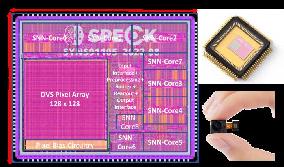
(240603) -- BEIJING, June 3, 2024 Photo by Xinhua/ABACAPRESS.COM) -- The undated combo image shows a diagram (L) and two photos of an energy-efficient sensing-computing neuromorphic chip dubbed "Speck," which mimics the neurons and synapses of the human brain. A team of Chinese and Swiss scientists has jointly developed an energy-efficient sensing-computing neuromorphic chip that mimics the neurons and synapses of the human brain. The human brain, capable of processing incredibly intricate and expansive neural networks, operates with a total power consumption of merely 20 watts, significantly lower than that of current AI systems. Therefore, neuromorphic or brain-like computing offers promising energy-saving machine intelligence. TO GO WITH "Chinese, Swiss scientists design energy-efficient brain-like chip" (The Institute of Automation, CAS/Handout via Xinhua/ABACAPRESS.COM

  •  
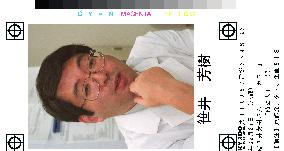
Yoshiki Sasai, a professor at Kyodo University

Yoshiki Sasai, a professor at Kyodo University

KYOTO, Japan - Yoshiki Sasai, professor of neurobiology at Kyoto University's Institute for Frontier Medical Sciences who played a key role in generating neurons that produce neurotransmitter dopamine and light-sensitive retina cells from a monkey's embryonic stem cells.

  •  

Wriggling abiotic worm manifests "intelligent life" rudiment

STORY: Wriggling abiotic worm manifests "intelligent life" rudiment DATELINE: June 3, 2022 LENGTH: 00:00:42 LOCATION: Beijing CATEGORY: SCIENCE SHOTLIST: various of MetaWorm STORYLINE: MetaWorm, a simulation model of a roundworm, was unveiled at the Beijing Academy of Artificial Intelligence (BAAI) Conference 2022 on Tuesday. When stimulated by food signals, MetaWorm wriggles its body forward like a living worm. It mimics the 96 muscles and 302 neurons that compose the one-millimeter-long soft body of Caenorhabditis elegans, a type of roundworm. Developed by BAAI, MetaWorm can smell and move under the high-precision simulations of 106 neurons which are relevant to the dynamic mechanism. Xinhua News Agency correspondents reporting from Beijing. (XHTV)

  •  
Neurons generated from monkey's embryonic stem cells

Neurons generated from monkey's embryonic stem cells

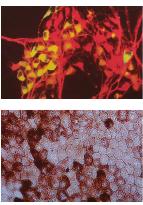
KYOTO, Japan - A group of scientists led by Yoshiki Sasai, professor at Kyoto University, have succeeded in generating neurons that produce neurotransmitter dopamine (above) and light-sensitive retina cells (below) from a monkey's embryonic stem cells, the scientists said Jan. 29. The scientists claim the experiments could lead to treatment of Parkinson's disease and other incurable diseases.

  • Main
  • Top
  • Editorial
  • Creative
  • About Us
  • About ILG
  • Terms of use
  • Company
  • BEHIND
  • Price List
  • Single Plan
  • Monthly Plan
  • Services
  • Shooting
  • Rights Clearance
  • Support
  • FAQ
  • How To Buy
  • Contact Us
  • Become a Partner

© KYODO NEWS IMAGES INC

All Rights Reserved.

  • Editorial
  • Olympics
  • News
  • Sports
  • Japan
  • Tech
  • Royal
  • Disaster
  • NorthKorea
  • Old Japan
  • SNS
  • Creative
  • Food
  • Japan
  • Landscape
  • Animal
  • Popular
  • #Ukraine
  • #China
  • #coronavirus
  • #N. Korea
  • #Thailand
  • #Russia
  • #Ukraine
  • #China
  • #coronavirus
  • #N. Korea
  • #Thailand
  • #Russia
  • Food
  • Japan
  • Landscape
  • Animal
  • Olympics
  • News
  • Sports
  • Japan
  • Tech
  • Royal
  • Disaster
  • NorthKorea
  • Old Japan
  • SNS