•  
Burang Gutu Eve Celebration - Xizang

Burang Gutu Eve Celebration - Xizang

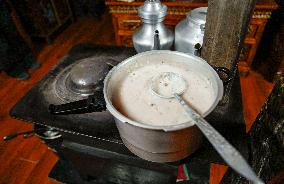
This photo taken on Dec. 18, 2025 shows "Gutu" cooked at Jamyang Drolma's home in Khorchak Village, Burang County of Ngari Prefecture, southwest China's Xizang Autonomous Region. Two days ahead of the Tibetan New Year is the traditional "Gutu Eve" for families to have a feast of "gutu", a traditional soup dish made of flour, at home. "Gu" in Tibetan means nine, which is a lucky number. "Tu" means "pasta." Nine different fillings like wool, charcoal and chili are placed inside the dough drops, and each of these fillings has a meaning. While in Burang, "Gutu" is a sort of porridge with nine ingredients and also a distinctive dish on the dinner table of the "Gutu Eve." In Khorchak Village of Burang County, Jamyang Drolma's family is bustling with New Year preparations at home. A pot of "Gutu" steams on the stove, while the "chema," a two-tier rectangular wooden box containing roasted barley and fried wheat grain, is placed to pray for harvest in the next year. This year, the family rejoiced over a bumper harvest

  •  
Burang Gutu Eve Celebration - Xizang

Burang Gutu Eve Celebration - Xizang

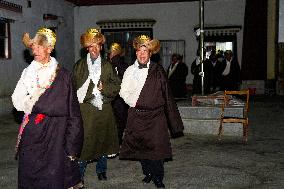
Local residents in Tibetan costumes celebrate the "Gutu Eve" in Khorchak Village, Burang County of Ngari Prefecture, southwest China's Xizang Autonomous Region, Dec. 18, 2025. Two days ahead of the Tibetan New Year is the traditional "Gutu Eve" for families to have a feast of "gutu", a traditional soup dish made of flour, at home. "Gu" in Tibetan means nine, which is a lucky number. "Tu" means "pasta." Nine different fillings like wool, charcoal and chili are placed inside the dough drops, and each of these fillings has a meaning. While in Burang, "Gutu" is a sort of porridge with nine ingredients and also a distinctive dish on the dinner table of the "Gutu Eve." In Khorchak Village of Burang County, Jamyang Drolma's family is bustling with New Year preparations at home. A pot of "Gutu" steams on the stove, while the "chema," a two-tier rectangular wooden box containing roasted barley and fried wheat grain, is placed to pray for harvest in the next year. This year, the family rejoiced over a bumper harvest of

  •  
Burang Gutu Eve Celebration - Xizang

Burang Gutu Eve Celebration - Xizang

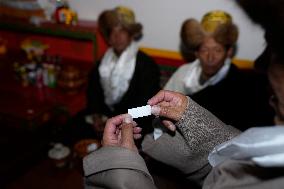
A resident shows a note denoting wishes and expectations for the New Year on the "Gutu Eve" in Khorchak Village, Burang County of Ngari Prefecture, southwest China's Xizang Autonomous Region, Dec. 18, 2025. Two days ahead of the Tibetan New Year is the traditional "Gutu Eve" for families to have a feast of "gutu", a traditional soup dish made of flour, at home. "Gu" in Tibetan means nine, which is a lucky number. "Tu" means "pasta." Nine different fillings like wool, charcoal and chili are placed inside the dough drops, and each of these fillings has a meaning. While in Burang, "Gutu" is a sort of porridge with nine ingredients and also a distinctive dish on the dinner table of the "Gutu Eve." In Khorchak Village of Burang County, Jamyang Drolma's family is bustling with New Year preparations at home. A pot of "Gutu" steams on the stove, while the "chema," a two-tier rectangular wooden box containing roasted barley and fried wheat grain, is placed to pray for harvest in the next year. This year, the family re

  •  
Burang Gutu Eve Celebration - Xizang

Burang Gutu Eve Celebration - Xizang

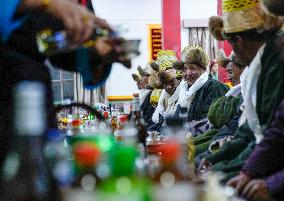
Local residents celebrate the "Gutu Eve" in Khorchak Village, Burang County of Ngari Prefecture, southwest China's Xizang Autonomous Region, Dec. 18, 2025. Two days ahead of the Tibetan New Year is the traditional "Gutu Eve" for families to have a feast of "gutu", a traditional soup dish made of flour, at home. "Gu" in Tibetan means nine, which is a lucky number. "Tu" means "pasta." Nine different fillings like wool, charcoal and chili are placed inside the dough drops, and each of these fillings has a meaning. While in Burang, "Gutu" is a sort of porridge with nine ingredients and also a distinctive dish on the dinner table of the "Gutu Eve." In Khorchak Village of Burang County, Jamyang Drolma's family is bustling with New Year preparations at home. A pot of "Gutu" steams on the stove, while the "chema," a two-tier rectangular wooden box containing roasted barley and fried wheat grain, is placed to pray for harvest in the next year. This year, the family rejoiced over a bumper harvest of highland barley and

  •  
Burang Gutu Eve Celebration - Xizang

Burang Gutu Eve Celebration - Xizang

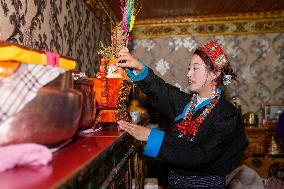
Jamyang Drolma prepares "chema" at home in Khorchak Village, Burang County of Ngari Prefecture, southwest China's Xizang Autonomous Region, Dec. 18, 2025. Two days ahead of the Tibetan New Year is the traditional "Gutu Eve" for families to have a feast of "gutu", a traditional soup dish made of flour, at home. "Gu" in Tibetan means nine, which is a lucky number. "Tu" means "pasta." Nine different fillings like wool, charcoal and chili are placed inside the dough drops, and each of these fillings has a meaning. While in Burang, "Gutu" is a sort of porridge with nine ingredients and also a distinctive dish on the dinner table of the "Gutu Eve." In Khorchak Village of Burang County, Jamyang Drolma's family is bustling with New Year preparations at home. A pot of "Gutu" steams on the stove, while the "chema," a two-tier rectangular wooden box containing roasted barley and fried wheat grain, is placed to pray for harvest in the next year. This year, the family rejoiced over a bumper harvest of highland barley and

  •  
Burang Gutu Eve Celebration - Xizang

Burang Gutu Eve Celebration - Xizang

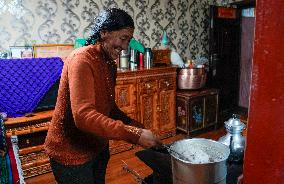
Jamyang Drolma's mother cooks "Gutu" at their home in Khorchak Village, Burang County of Ngari Prefecture, southwest China's Xizang Autonomous Region, Dec. 18, 2025. Two days ahead of the Tibetan New Year is the traditional "Gutu Eve" for families to have a feast of "gutu", a traditional soup dish made of flour, at home. "Gu" in Tibetan means nine, which is a lucky number. "Tu" means "pasta." Nine different fillings like wool, charcoal and chili are placed inside the dough drops, and each of these fillings has a meaning. While in Burang, "Gutu" is a sort of porridge with nine ingredients and also a distinctive dish on the dinner table of the "Gutu Eve." In Khorchak Village of Burang County, Jamyang Drolma's family is bustling with New Year preparations at home. A pot of "Gutu" steams on the stove, while the "chema," a two-tier rectangular wooden box containing roasted barley and fried wheat grain, is placed to pray for harvest in the next year. This year, the family rejoiced over a bumper harvest of highland

  •  
Burang Gutu Eve Celebration - Xizang

Burang Gutu Eve Celebration - Xizang

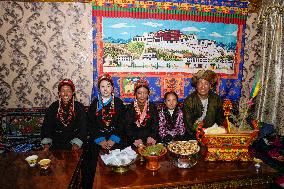
Jamyang Drolma (2nd L) poses for a group photo with her family in Khorchak Village, Burang County of Ngari Prefecture, southwest China's Xizang Autonomous Region, Dec. 18, 2025. Two days ahead of the Tibetan New Year is the traditional "Gutu Eve" for families to have a feast of "gutu", a traditional soup dish made of flour, at home. "Gu" in Tibetan means nine, which is a lucky number. "Tu" means "pasta." Nine different fillings like wool, charcoal and chili are placed inside the dough drops, and each of these fillings has a meaning. While in Burang, "Gutu" is a sort of porridge with nine ingredients and also a distinctive dish on the dinner table of the "Gutu Eve." In Khorchak Village of Burang County, Jamyang Drolma's family is bustling with New Year preparations at home. A pot of "Gutu" steams on the stove, while the "chema," a two-tier rectangular wooden box containing roasted barley and fried wheat grain, is placed to pray for harvest in the next year. This year, the family rejoiced over a bumper harvest

  •  
Burang Gutu Eve Celebration - Xizang

Burang Gutu Eve Celebration - Xizang

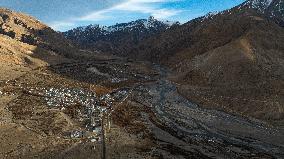
An aerial drone photo taken on Dec. 18, 2025 shows a view of Khorchak Village in Burang County of Ngari Prefecture, southwest China's Xizang Autonomous Region. Two days ahead of the Tibetan New Year is the traditional "Gutu Eve" for families to have a feast of "gutu", a traditional soup dish made of flour, at home. "Gu" in Tibetan means nine, which is a lucky number. "Tu" means "pasta." Nine different fillings like wool, charcoal and chili are placed inside the dough drops, and each of these fillings has a meaning. While in Burang, "Gutu" is a sort of porridge with nine ingredients and also a distinctive dish on the dinner table of the "Gutu Eve." In Khorchak Village of Burang County, Jamyang Drolma's family is bustling with New Year preparations at home. A pot of "Gutu" steams on the stove, while the "chema," a two-tier rectangular wooden box containing roasted barley and fried wheat grain, is placed to pray for harvest in the next year. This year, the family rejoiced over a bumper harvest of highland barley

  •  
Burang Gutu Eve Celebration - Xizang

Burang Gutu Eve Celebration - Xizang

An aerial drone photo taken on Dec. 18, 2025 shows a view of Khorchak Village in Burang County of Ngari Prefecture, southwest China's Xizang Autonomous Region. Two days ahead of the Tibetan New Year is the traditional "Gutu Eve" for families to have a feast of "gutu", a traditional soup dish made of flour, at home. "Gu" in Tibetan means nine, which is a lucky number. "Tu" means "pasta." Nine different fillings like wool, charcoal and chili are placed inside the dough drops, and each of these fillings has a meaning. While in Burang, "Gutu" is a sort of porridge with nine ingredients and also a distinctive dish on the dinner table of the "Gutu Eve." In Khorchak Village of Burang County, Jamyang Drolma's family is bustling with New Year preparations at home. A pot of "Gutu" steams on the stove, while the "chema," a two-tier rectangular wooden box containing roasted barley and fried wheat grain, is placed to pray for harvest in the next year. This year, the family rejoiced over a bumper harvest of highland barley

  •  
Daily Life In Tehran's Grand Bazaar

Daily Life In Tehran's Grand Bazaar

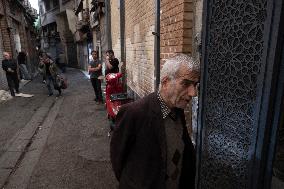
An elderly Iranian man stands just outside a mosque at a market in the Traditional Grand Bazaar in southern Tehran, Iran, on March 19, 2025, the day before the Iranian New Year holidays. (Photo by Morteza Nikoubazl/NurPhoto)

  •  
New Year preparations at Imperial Palace

New Year preparations at Imperial Palace

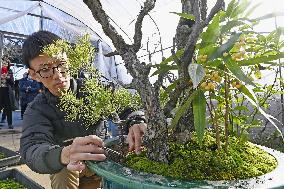
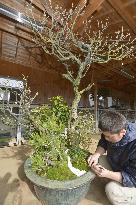
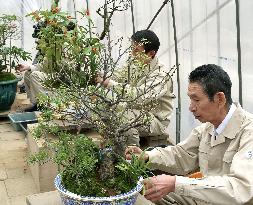
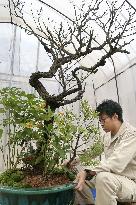
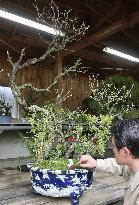
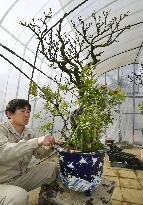
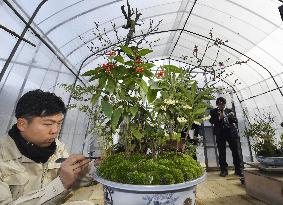
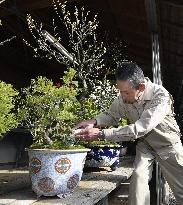
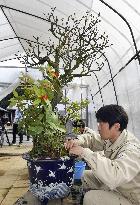
An Imperial Palace gardener tends to potted bonsai trees ahead of the New Year at the palace in Tokyo on Dec. 24, 2024.

  •  
New Year preparations at Imperial Palace

New Year preparations at Imperial Palace

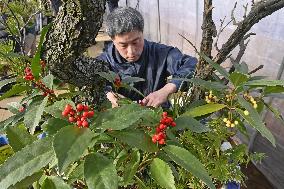
An Imperial Palace gardener tends to potted bonsai trees ahead of the New Year at the palace in Tokyo on Dec. 24, 2024.

  •  
New Year preparations at Imperial Palace

New Year preparations at Imperial Palace

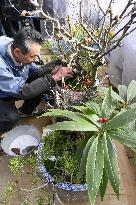
An Imperial Palace gardener tends to potted bonsai trees ahead of the New Year at the palace in Tokyo on Dec. 24, 2024.

  •  
Kyoto geisha start New Year preparations

Kyoto geisha start New Year preparations

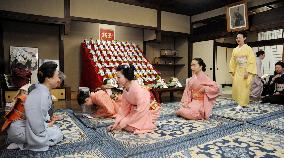
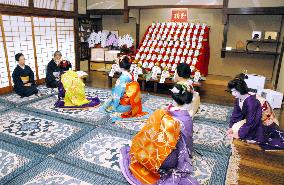
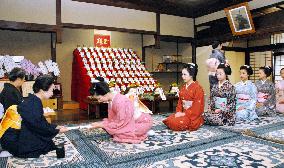
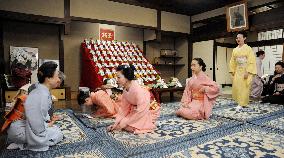
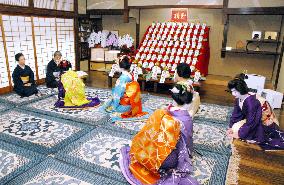
KYOTO, Japan - Geisha entertainers and maiko apprentice geisha line up to greet the Kyomai dance master Inoue Yachiyo (L) at her home in Kyoto on Dec. 13, 2010. The annual ''kotohajime'' event signaled the start of preparations for the New Year in the city's Hanamachi entertainment quarter.

  •  
Kyoto geisha start New Year preparations

Kyoto geisha start New Year preparations

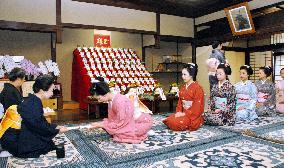
KYOTO, Japan - Apprentice geisha, or maiko, line up to receive a special fan from the Kyomai dance master Inoue Yachiyo (L) at her home in Kyoto on Dec. 13, 2009. The ceremony was one of the annual ''kotohajime'' events that signal the start of preparations for the New Year in the city's Hanamachi entertainment quarter.

  •  
Kyoto geisha start New Year preparations

Kyoto geisha start New Year preparations

KYOTO, Japan - Apprentice geisha, or maiko, line up to receive a special fan from the Kyomai dance master Inoue Yachiyo (2nd from L) at her home in Kyoto on Dec. 13, 2009. The ceremony was one of the annual ''kotohajime'' events that signal the start of preparations for the New Year in the city's Hanamachi entertainment quarter.

  •  
New Year preparations under way at Imperial Palace

New Year preparations under way at Imperial Palace

An Imperial Household Agency gardening official prepares New Year bonsai at the Imperial Palace in Tokyo on Dec. 25, 2015. The special potted plants will be decorated at the palace and residences of other royal family members, along with the agency, on Dec. 30. (Kyodo) ==Kyodo

  •  
Kyoto geisha start New Year preparations

Kyoto geisha start New Year preparations

KYOTO, Japan - Geisha entertainers and maiko apprentice geisha line up to greet the Kyomai dance master Inoue Yachiyo (L) at her home in Kyoto on Dec. 13, 2010. The annual ''kotohajime'' event signaled the start of preparations for the New Year in the city's Hanamachi entertainment quarter. (Kyodo)

  •  
New Year preparations at Imperial Palace

New Year preparations at Imperial Palace

Imperial Palace gardeners prepare potted bonsai trees ahead of the New Year at the palace in Tokyo on Dec. 25, 2019. (Kyodo) ==Kyodo

  •  
New Year preparations at Imperial Palace

New Year preparations at Imperial Palace

An Imperial Palace gardener prepares potted bonsai trees ahead of the New Year at the palace in Tokyo on Dec. 25, 2019. (Kyodo) ==Kyodo

  •  
New Year preparations at Imperial Palace

New Year preparations at Imperial Palace

An Imperial Palace gardener prepares potted bonsai trees ahead of the New Year at the palace in Tokyo on Dec. 25, 2019. (Kyodo) ==Kyodo

  •  
New Year preparations at Imperial Palace

New Year preparations at Imperial Palace

A gardener prepares New Year bonsai at the Imperial Palace in Tokyo on Dec. 26, 2018. (Kyodo) ==Kyodo

  •  
New Year preparations at Imperial Palace

New Year preparations at Imperial Palace

A gardener prepares New Year bonsai at the Imperial Palace in Tokyo on Dec. 26, 2018. (Kyodo) ==Kyodo

  •  
New Year preparations at Imperial Palace

New Year preparations at Imperial Palace

A gardener prepares New Year bonsai at the Imperial Palace in Tokyo on Dec. 26, 2018. (Kyodo) ==Kyodo

  •  
New Year preparations at Imperial Palace

New Year preparations at Imperial Palace

A gardener prepares New Year bonsai at the Imperial Palace in Tokyo on Dec. 26, 2018. (Kyodo) ==Kyodo

  •  
Kyoto geisha start New Year preparations

Kyoto geisha start New Year preparations

KYOTO, Japan - Apprentice geisha, or maiko, line up to receive a special fan from the Kyomai dance master Inoue Yachiyo (L) at her home in Kyoto on Dec. 13, 2009. The ceremony was one of the annual ''kotohajime'' events that signal the start of preparations for the New Year in the city's Hanamachi entertainment quarter. (Kyodo)

  •  
Kyoto geisha start New Year preparations

Kyoto geisha start New Year preparations

KYOTO, Japan - Apprentice geisha, or maiko, line up to receive a special fan from the Kyomai dance master Inoue Yachiyo (2nd from L) at her home in Kyoto on Dec. 13, 2009. The ceremony was one of the annual ''kotohajime'' events that signal the start of preparations for the New Year in the city's Hanamachi entertainment quarter. (Kyodo)

  • Main
  • Top
  • Editorial
  • Creative
  • About Us
  • About ILG
  • Terms of use
  • Company
  • BEHIND
  • Price List
  • Single Plan
  • Monthly Plan
  • Services
  • Shooting
  • Rights Clearance
  • Support
  • FAQ
  • How To Buy
  • Contact Us
  • Become a Partner

© KYODO NEWS IMAGES INC

All Rights Reserved.

  • Editorial
  • Olympics
  • News
  • Sports
  • Japan
  • Tech
  • Royal
  • Disaster
  • NorthKorea
  • Old Japan
  • SNS
  • Creative
  • Food
  • Japan
  • Landscape
  • Animal
  • Popular
  • #Ukraine
  • #China
  • #coronavirus
  • #N. Korea
  • #Thailand
  • #Russia
  • #Ukraine
  • #China
  • #coronavirus
  • #N. Korea
  • #Thailand
  • #Russia
  • Food
  • Japan
  • Landscape
  • Animal
  • Olympics
  • News
  • Sports
  • Japan
  • Tech
  • Royal
  • Disaster
  • NorthKorea
  • Old Japan
  • SNS