•  
Kazakh Eagle Hunters Preserve Ancient Tradition - Mongolia

Kazakh Eagle Hunters Preserve Ancient Tradition - Mongolia

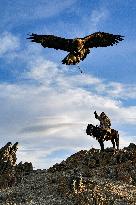
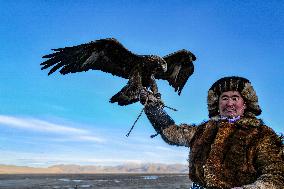
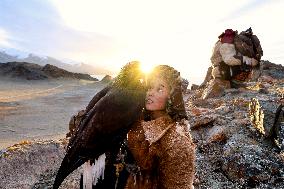
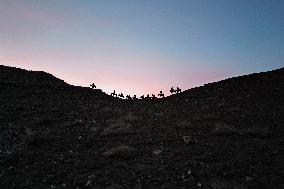
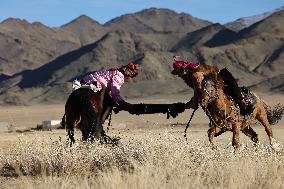
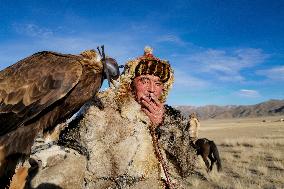
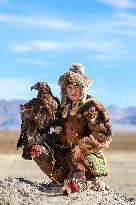
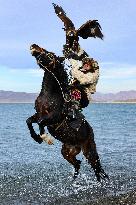
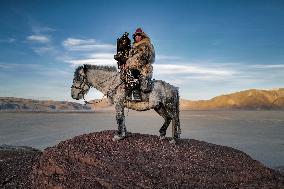
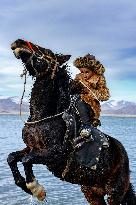
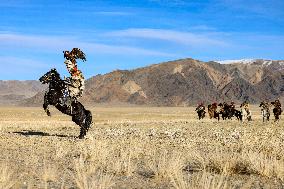
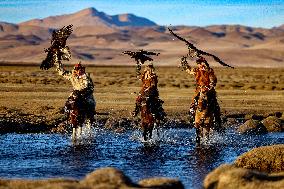
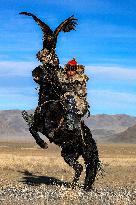
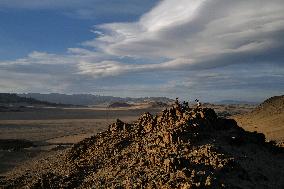
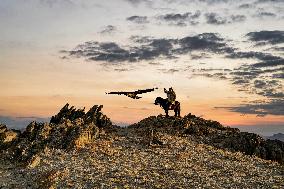
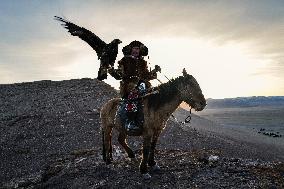
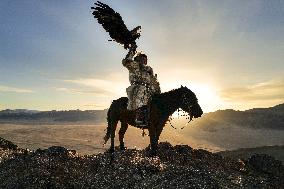
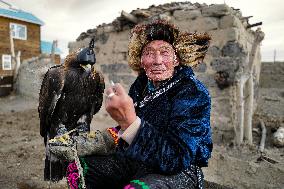
Kazakh eagle hunters in the Altai Mountains of western Mongolia pose with their trained golden eagles during a photo session on October 26, 2023. Clad in traditional fur garments and perched on horseback, the hunters embody a centuries-old nomadic tradition known as “berkutchi,” where raptors are used to hunt foxes and hares in the harsh mountain landscape. This photo series documents both the daily life and ceremonial moments of the hunters, capturing their deep bond with their eagles and the unique skills passed down through generations. Against the backdrop of the rugged steppe and snow-dusted peaks, the images reflect a culture rooted in survival, identity, and pride. As modern influences increasingly reshape the region, these photographs preserve a way of life that is fast disappearing but still resonates as a symbol of resilience and cultural heritage among the Kazakh minority in Mongolia. Photo by Laurin Strele/Middle East Images/ABACAPRESS.COM

  •  
Kazakh Eagle Hunters Preserve Ancient Tradition - Mongolia

Kazakh Eagle Hunters Preserve Ancient Tradition - Mongolia

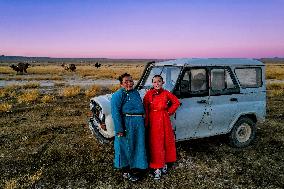
Kazakh eagle hunters in the Altai Mountains of western Mongolia pose with their trained golden eagles during a photo session on October 25, 2023. Clad in traditional fur garments and perched on horseback, the hunters embody a centuries-old nomadic tradition known as “berkutchi,” where raptors are used to hunt foxes and hares in the harsh mountain landscape. This photo series documents both the daily life and ceremonial moments of the hunters, capturing their deep bond with their eagles and the unique skills passed down through generations. Against the backdrop of the rugged steppe and snow-dusted peaks, the images reflect a culture rooted in survival, identity, and pride. As modern influences increasingly reshape the region, these photographs preserve a way of life that is fast disappearing but still resonates as a symbol of resilience and cultural heritage among the Kazakh minority in Mongolia. Photo by Laurin Strele/Middle East Images/ABACAPRESS.COM

  •  
Kazakh Eagle Hunters Preserve Ancient Tradition - Mongolia

Kazakh Eagle Hunters Preserve Ancient Tradition - Mongolia

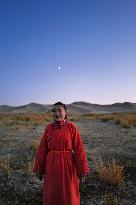
Kazakh eagle hunters in the Altai Mountains of western Mongolia pose with their trained golden eagles during a photo session on October 26, 2023. Clad in traditional fur garments and perched on horseback, the hunters embody a centuries-old nomadic tradition known as “berkutchi,” where raptors are used to hunt foxes and hares in the harsh mountain landscape. This photo series documents both the daily life and ceremonial moments of the hunters, capturing their deep bond with their eagles and the unique skills passed down through generations. Against the backdrop of the rugged steppe and snow-dusted peaks, the images reflect a culture rooted in survival, identity, and pride. As modern influences increasingly reshape the region, these photographs preserve a way of life that is fast disappearing but still resonates as a symbol of resilience and cultural heritage among the Kazakh minority in Mongolia. Photo by Laurin Strele/Middle East Images/ABACAPRESS.COM

  •  
Kazakh Eagle Hunters Preserve Ancient Tradition - Mongolia

Kazakh Eagle Hunters Preserve Ancient Tradition - Mongolia

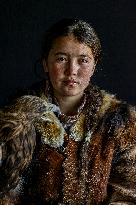
Kazakh eagle hunters in the Altai Mountains of western Mongolia pose with their trained golden eagles during a photo session on October 25, 2023. Clad in traditional fur garments and perched on horseback, the hunters embody a centuries-old nomadic tradition known as “berkutchi,” where raptors are used to hunt foxes and hares in the harsh mountain landscape. This photo series documents both the daily life and ceremonial moments of the hunters, capturing their deep bond with their eagles and the unique skills passed down through generations. Against the backdrop of the rugged steppe and snow-dusted peaks, the images reflect a culture rooted in survival, identity, and pride. As modern influences increasingly reshape the region, these photographs preserve a way of life that is fast disappearing but still resonates as a symbol of resilience and cultural heritage among the Kazakh minority in Mongolia. Photo by Laurin Strele/Middle East Images/ABACAPRESS.COM

  •  
Kazakh Eagle Hunters Preserve Ancient Tradition - Mongolia

Kazakh Eagle Hunters Preserve Ancient Tradition - Mongolia

Kazakh eagle hunters in the Altai Mountains of western Mongolia pose with their trained golden eagles during a photo session on October 25, 2023. Clad in traditional fur garments and perched on horseback, the hunters embody a centuries-old nomadic tradition known as “berkutchi,” where raptors are used to hunt foxes and hares in the harsh mountain landscape. This photo series documents both the daily life and ceremonial moments of the hunters, capturing their deep bond with their eagles and the unique skills passed down through generations. Against the backdrop of the rugged steppe and snow-dusted peaks, the images reflect a culture rooted in survival, identity, and pride. As modern influences increasingly reshape the region, these photographs preserve a way of life that is fast disappearing but still resonates as a symbol of resilience and cultural heritage among the Kazakh minority in Mongolia. Photo by Laurin Strele/Middle East Images/ABACAPRESS.COM

  •  
Kazakh Eagle Hunters Preserve Ancient Tradition - Mongolia

Kazakh Eagle Hunters Preserve Ancient Tradition - Mongolia

Kazakh eagle hunters in the Altai Mountains of western Mongolia pose with their trained golden eagles during a photo session on October 25, 2023. Clad in traditional fur garments and perched on horseback, the hunters embody a centuries-old nomadic tradition known as “berkutchi,” where raptors are used to hunt foxes and hares in the harsh mountain landscape. This photo series documents both the daily life and ceremonial moments of the hunters, capturing their deep bond with their eagles and the unique skills passed down through generations. Against the backdrop of the rugged steppe and snow-dusted peaks, the images reflect a culture rooted in survival, identity, and pride. As modern influences increasingly reshape the region, these photographs preserve a way of life that is fast disappearing but still resonates as a symbol of resilience and cultural heritage among the Kazakh minority in Mongolia. Photo by Laurin Strele/Middle East Images/ABACAPRESS.COM

  •  
Kazakh Eagle Hunters Preserve Ancient Tradition - Mongolia

Kazakh Eagle Hunters Preserve Ancient Tradition - Mongolia

Kazakh eagle hunters in the Altai Mountains of western Mongolia pose with their trained golden eagles during a photo session on October 25, 2023. Clad in traditional fur garments and perched on horseback, the hunters embody a centuries-old nomadic tradition known as “berkutchi,” where raptors are used to hunt foxes and hares in the harsh mountain landscape. This photo series documents both the daily life and ceremonial moments of the hunters, capturing their deep bond with their eagles and the unique skills passed down through generations. Against the backdrop of the rugged steppe and snow-dusted peaks, the images reflect a culture rooted in survival, identity, and pride. As modern influences increasingly reshape the region, these photographs preserve a way of life that is fast disappearing but still resonates as a symbol of resilience and cultural heritage among the Kazakh minority in Mongolia. Photo by Laurin Strele/Middle East Images/ABACAPRESS.COM

  •  
Kazakh Eagle Hunters Preserve Ancient Tradition - Mongolia

Kazakh Eagle Hunters Preserve Ancient Tradition - Mongolia

Kazakh eagle hunters in the Altai Mountains of western Mongolia pose with their trained golden eagles during a photo session on October 25, 2023. Clad in traditional fur garments and perched on horseback, the hunters embody a centuries-old nomadic tradition known as “berkutchi,” where raptors are used to hunt foxes and hares in the harsh mountain landscape. This photo series documents both the daily life and ceremonial moments of the hunters, capturing their deep bond with their eagles and the unique skills passed down through generations. Against the backdrop of the rugged steppe and snow-dusted peaks, the images reflect a culture rooted in survival, identity, and pride. As modern influences increasingly reshape the region, these photographs preserve a way of life that is fast disappearing but still resonates as a symbol of resilience and cultural heritage among the Kazakh minority in Mongolia. Photo by Laurin Strele/Middle East Images/ABACAPRESS.COM

  •  
Kazakh Eagle Hunters Preserve Ancient Tradition - Mongolia

Kazakh Eagle Hunters Preserve Ancient Tradition - Mongolia

Kazakh eagle hunters in the Altai Mountains of western Mongolia pose with their trained golden eagles during a photo session on October 26, 2023. Clad in traditional fur garments and perched on horseback, the hunters embody a centuries-old nomadic tradition known as “berkutchi,” where raptors are used to hunt foxes and hares in the harsh mountain landscape. This photo series documents both the daily life and ceremonial moments of the hunters, capturing their deep bond with their eagles and the unique skills passed down through generations. Against the backdrop of the rugged steppe and snow-dusted peaks, the images reflect a culture rooted in survival, identity, and pride. As modern influences increasingly reshape the region, these photographs preserve a way of life that is fast disappearing but still resonates as a symbol of resilience and cultural heritage among the Kazakh minority in Mongolia. Photo by Laurin Strele/Middle East Images/ABACAPRESS.COM

  •  
Kazakh Eagle Hunters Preserve Ancient Tradition - Mongolia

Kazakh Eagle Hunters Preserve Ancient Tradition - Mongolia

Kazakh eagle hunters in the Altai Mountains of western Mongolia pose with their trained golden eagles during a photo session on October 25, 2023. Clad in traditional fur garments and perched on horseback, the hunters embody a centuries-old nomadic tradition known as “berkutchi,” where raptors are used to hunt foxes and hares in the harsh mountain landscape. This photo series documents both the daily life and ceremonial moments of the hunters, capturing their deep bond with their eagles and the unique skills passed down through generations. Against the backdrop of the rugged steppe and snow-dusted peaks, the images reflect a culture rooted in survival, identity, and pride. As modern influences increasingly reshape the region, these photographs preserve a way of life that is fast disappearing but still resonates as a symbol of resilience and cultural heritage among the Kazakh minority in Mongolia. Photo by Laurin Strele/Middle East Images/ABACAPRESS.COM

  •  
Kazakh Eagle Hunters Preserve Ancient Tradition - Mongolia

Kazakh Eagle Hunters Preserve Ancient Tradition - Mongolia

Kazakh eagle hunters in the Altai Mountains of western Mongolia pose with their trained golden eagles during a photo session on October 27, 2023. Clad in traditional fur garments and perched on horseback, the hunters embody a centuries-old nomadic tradition known as “berkutchi,” where raptors are used to hunt foxes and hares in the harsh mountain landscape. This photo series documents both the daily life and ceremonial moments of the hunters, capturing their deep bond with their eagles and the unique skills passed down through generations. Against the backdrop of the rugged steppe and snow-dusted peaks, the images reflect a culture rooted in survival, identity, and pride. As modern influences increasingly reshape the region, these photographs preserve a way of life that is fast disappearing but still resonates as a symbol of resilience and cultural heritage among the Kazakh minority in Mongolia. Photo by Laurin Strele/Middle East Images/ABACAPRESS.COM

  •  
Kazakh Eagle Hunters Preserve Ancient Tradition - Mongolia

Kazakh Eagle Hunters Preserve Ancient Tradition - Mongolia

Kazakh eagle hunters in the Altai Mountains of western Mongolia pose with their trained golden eagles during a photo session on October 25, 2023. Clad in traditional fur garments and perched on horseback, the hunters embody a centuries-old nomadic tradition known as “berkutchi,” where raptors are used to hunt foxes and hares in the harsh mountain landscape. This photo series documents both the daily life and ceremonial moments of the hunters, capturing their deep bond with their eagles and the unique skills passed down through generations. Against the backdrop of the rugged steppe and snow-dusted peaks, the images reflect a culture rooted in survival, identity, and pride. As modern influences increasingly reshape the region, these photographs preserve a way of life that is fast disappearing but still resonates as a symbol of resilience and cultural heritage among the Kazakh minority in Mongolia. Photo by Laurin Strele/Middle East Images/ABACAPRESS.COM

  •  
Kazakh Eagle Hunters Preserve Ancient Tradition - Mongolia

Kazakh Eagle Hunters Preserve Ancient Tradition - Mongolia

Kazakh eagle hunters in the Altai Mountains of western Mongolia pose with their trained golden eagles during a photo session on October 24, 2023. Clad in traditional fur garments and perched on horseback, the hunters embody a centuries-old nomadic tradition known as “berkutchi,” where raptors are used to hunt foxes and hares in the harsh mountain landscape. This photo series documents both the daily life and ceremonial moments of the hunters, capturing their deep bond with their eagles and the unique skills passed down through generations. Against the backdrop of the rugged steppe and snow-dusted peaks, the images reflect a culture rooted in survival, identity, and pride. As modern influences increasingly reshape the region, these photographs preserve a way of life that is fast disappearing but still resonates as a symbol of resilience and cultural heritage among the Kazakh minority in Mongolia. Photo by Laurin Strele/Middle East Images/ABACAPRESS.COM

  •  
Kazakh Eagle Hunters Preserve Ancient Tradition - Mongolia

Kazakh Eagle Hunters Preserve Ancient Tradition - Mongolia

Kazakh eagle hunters in the Altai Mountains of western Mongolia pose with their trained golden eagles during a photo session on October 25, 2023. Clad in traditional fur garments and perched on horseback, the hunters embody a centuries-old nomadic tradition known as “berkutchi,” where raptors are used to hunt foxes and hares in the harsh mountain landscape. This photo series documents both the daily life and ceremonial moments of the hunters, capturing their deep bond with their eagles and the unique skills passed down through generations. Against the backdrop of the rugged steppe and snow-dusted peaks, the images reflect a culture rooted in survival, identity, and pride. As modern influences increasingly reshape the region, these photographs preserve a way of life that is fast disappearing but still resonates as a symbol of resilience and cultural heritage among the Kazakh minority in Mongolia. Photo by Laurin Strele/Middle East Images/ABACAPRESS.COM

  •  
Kazakh Eagle Hunters Preserve Ancient Tradition - Mongolia

Kazakh Eagle Hunters Preserve Ancient Tradition - Mongolia

Kazakh eagle hunters in the Altai Mountains of western Mongolia pose with their trained golden eagles during a photo session on October 25, 2023. Clad in traditional fur garments and perched on horseback, the hunters embody a centuries-old nomadic tradition known as “berkutchi,” where raptors are used to hunt foxes and hares in the harsh mountain landscape. This photo series documents both the daily life and ceremonial moments of the hunters, capturing their deep bond with their eagles and the unique skills passed down through generations. Against the backdrop of the rugged steppe and snow-dusted peaks, the images reflect a culture rooted in survival, identity, and pride. As modern influences increasingly reshape the region, these photographs preserve a way of life that is fast disappearing but still resonates as a symbol of resilience and cultural heritage among the Kazakh minority in Mongolia. Photo by Laurin Strele/Middle East Images/ABACAPRESS.COM

  •  
Kazakh Eagle Hunters Preserve Ancient Tradition - Mongolia

Kazakh Eagle Hunters Preserve Ancient Tradition - Mongolia

Kazakh eagle hunters in the Altai Mountains of western Mongolia pose with their trained golden eagles during a photo session on October 22, 2023. Clad in traditional fur garments and perched on horseback, the hunters embody a centuries-old nomadic tradition known as “berkutchi,” where raptors are used to hunt foxes and hares in the harsh mountain landscape. This photo series documents both the daily life and ceremonial moments of the hunters, capturing their deep bond with their eagles and the unique skills passed down through generations. Against the backdrop of the rugged steppe and snow-dusted peaks, the images reflect a culture rooted in survival, identity, and pride. As modern influences increasingly reshape the region, these photographs preserve a way of life that is fast disappearing but still resonates as a symbol of resilience and cultural heritage among the Kazakh minority in Mongolia. Photo by Laurin Strele/Middle East Images/ABACAPRESS.COM

  •  
Kazakh Eagle Hunters Preserve Ancient Tradition - Mongolia

Kazakh Eagle Hunters Preserve Ancient Tradition - Mongolia

Kazakh eagle hunters in the Altai Mountains of western Mongolia pose with their trained golden eagles during a photo session on November 05, 2023. Clad in traditional fur garments and perched on horseback, the hunters embody a centuries-old nomadic tradition known as “berkutchi,” where raptors are used to hunt foxes and hares in the harsh mountain landscape. This photo series documents both the daily life and ceremonial moments of the hunters, capturing their deep bond with their eagles and the unique skills passed down through generations. Against the backdrop of the rugged steppe and snow-dusted peaks, the images reflect a culture rooted in survival, identity, and pride. As modern influences increasingly reshape the region, these photographs preserve a way of life that is fast disappearing but still resonates as a symbol of resilience and cultural heritage among the Kazakh minority in Mongolia. Photo by Laurin Strele/Middle East Images/ABACAPRESS.COM

  •  
Kazakh Eagle Hunters Preserve Ancient Tradition - Mongolia

Kazakh Eagle Hunters Preserve Ancient Tradition - Mongolia

Kazakh eagle hunters in the Altai Mountains of western Mongolia pose with their trained golden eagles during a photo session on October 21, 2023. Clad in traditional fur garments and perched on horseback, the hunters embody a centuries-old nomadic tradition known as “berkutchi,” where raptors are used to hunt foxes and hares in the harsh mountain landscape. This photo series documents both the daily life and ceremonial moments of the hunters, capturing their deep bond with their eagles and the unique skills passed down through generations. Against the backdrop of the rugged steppe and snow-dusted peaks, the images reflect a culture rooted in survival, identity, and pride. As modern influences increasingly reshape the region, these photographs preserve a way of life that is fast disappearing but still resonates as a symbol of resilience and cultural heritage among the Kazakh minority in Mongolia. Photo by Laurin Strele/Middle East Images/ABACAPRESS.COM

  •  
Kazakh Eagle Hunters Preserve Ancient Tradition - Mongolia

Kazakh Eagle Hunters Preserve Ancient Tradition - Mongolia

Kazakh eagle hunters in the Altai Mountains of western Mongolia pose with their trained golden eagles during a photo session on October 26, 2023. Clad in traditional fur garments and perched on horseback, the hunters embody a centuries-old nomadic tradition known as “berkutchi,” where raptors are used to hunt foxes and hares in the harsh mountain landscape. This photo series documents both the daily life and ceremonial moments of the hunters, capturing their deep bond with their eagles and the unique skills passed down through generations. Against the backdrop of the rugged steppe and snow-dusted peaks, the images reflect a culture rooted in survival, identity, and pride. As modern influences increasingly reshape the region, these photographs preserve a way of life that is fast disappearing but still resonates as a symbol of resilience and cultural heritage among the Kazakh minority in Mongolia. Photo by Laurin Strele/Middle East Images/ABACAPRESS.COM

  •  
Kazakh Eagle Hunters Preserve Ancient Tradition - Mongolia

Kazakh Eagle Hunters Preserve Ancient Tradition - Mongolia

Kazakh eagle hunters in the Altai Mountains of western Mongolia pose with their trained golden eagles during a photo session on October 24, 2023. Clad in traditional fur garments and perched on horseback, the hunters embody a centuries-old nomadic tradition known as “berkutchi,” where raptors are used to hunt foxes and hares in the harsh mountain landscape. This photo series documents both the daily life and ceremonial moments of the hunters, capturing their deep bond with their eagles and the unique skills passed down through generations. Against the backdrop of the rugged steppe and snow-dusted peaks, the images reflect a culture rooted in survival, identity, and pride. As modern influences increasingly reshape the region, these photographs preserve a way of life that is fast disappearing but still resonates as a symbol of resilience and cultural heritage among the Kazakh minority in Mongolia. Photo by Laurin Strele/Middle East Images/ABACAPRESS.COM

  •  
Kazakh Eagle Hunters Preserve Ancient Tradition - Mongolia

Kazakh Eagle Hunters Preserve Ancient Tradition - Mongolia

Kazakh eagle hunters in the Altai Mountains of western Mongolia pose with their trained golden eagles during a photo session on October 24, 2023. Clad in traditional fur garments and perched on horseback, the hunters embody a centuries-old nomadic tradition known as “berkutchi,” where raptors are used to hunt foxes and hares in the harsh mountain landscape. This photo series documents both the daily life and ceremonial moments of the hunters, capturing their deep bond with their eagles and the unique skills passed down through generations. Against the backdrop of the rugged steppe and snow-dusted peaks, the images reflect a culture rooted in survival, identity, and pride. As modern influences increasingly reshape the region, these photographs preserve a way of life that is fast disappearing but still resonates as a symbol of resilience and cultural heritage among the Kazakh minority in Mongolia. Photo by Laurin Strele/Middle East Images/ABACAPRESS.COM

  •  
Kazakh Eagle Hunters Preserve Ancient Tradition - Mongolia

Kazakh Eagle Hunters Preserve Ancient Tradition - Mongolia

Kazakh eagle hunters in the Altai Mountains of western Mongolia pose with their trained golden eagles during a photo session on October 25, 2023. Clad in traditional fur garments and perched on horseback, the hunters embody a centuries-old nomadic tradition known as “berkutchi,” where raptors are used to hunt foxes and hares in the harsh mountain landscape. This photo series documents both the daily life and ceremonial moments of the hunters, capturing their deep bond with their eagles and the unique skills passed down through generations. Against the backdrop of the rugged steppe and snow-dusted peaks, the images reflect a culture rooted in survival, identity, and pride. As modern influences increasingly reshape the region, these photographs preserve a way of life that is fast disappearing but still resonates as a symbol of resilience and cultural heritage among the Kazakh minority in Mongolia. Photo by Laurin Strele/Middle East Images/ABACAPRESS.COM

  •  
Kazakh Eagle Hunters Preserve Ancient Tradition - Mongolia

Kazakh Eagle Hunters Preserve Ancient Tradition - Mongolia

Kazakh eagle hunters in the Altai Mountains of western Mongolia pose with their trained golden eagles during a photo session on October 26, 2023. Clad in traditional fur garments and perched on horseback, the hunters embody a centuries-old nomadic tradition known as “berkutchi,” where raptors are used to hunt foxes and hares in the harsh mountain landscape. This photo series documents both the daily life and ceremonial moments of the hunters, capturing their deep bond with their eagles and the unique skills passed down through generations. Against the backdrop of the rugged steppe and snow-dusted peaks, the images reflect a culture rooted in survival, identity, and pride. As modern influences increasingly reshape the region, these photographs preserve a way of life that is fast disappearing but still resonates as a symbol of resilience and cultural heritage among the Kazakh minority in Mongolia. Photo by Laurin Strele/Middle East Images/ABACAPRESS.COM

  •  
Kazakh Eagle Hunters Preserve Ancient Tradition - Mongolia

Kazakh Eagle Hunters Preserve Ancient Tradition - Mongolia

Kazakh eagle hunters in the Altai Mountains of western Mongolia pose with their trained golden eagles during a photo session on October 26, 2023. Clad in traditional fur garments and perched on horseback, the hunters embody a centuries-old nomadic tradition known as “berkutchi,” where raptors are used to hunt foxes and hares in the harsh mountain landscape. This photo series documents both the daily life and ceremonial moments of the hunters, capturing their deep bond with their eagles and the unique skills passed down through generations. Against the backdrop of the rugged steppe and snow-dusted peaks, the images reflect a culture rooted in survival, identity, and pride. As modern influences increasingly reshape the region, these photographs preserve a way of life that is fast disappearing but still resonates as a symbol of resilience and cultural heritage among the Kazakh minority in Mongolia. Photo by Laurin Strele/Middle East Images/ABACAPRESS.COM

  •  
Kazakh Eagle Hunters Preserve Ancient Tradition - Mongolia

Kazakh Eagle Hunters Preserve Ancient Tradition - Mongolia

Kazakh eagle hunters in the Altai Mountains of western Mongolia pose with their trained golden eagles during a photo session on October 25, 2023. Clad in traditional fur garments and perched on horseback, the hunters embody a centuries-old nomadic tradition known as “berkutchi,” where raptors are used to hunt foxes and hares in the harsh mountain landscape. This photo series documents both the daily life and ceremonial moments of the hunters, capturing their deep bond with their eagles and the unique skills passed down through generations. Against the backdrop of the rugged steppe and snow-dusted peaks, the images reflect a culture rooted in survival, identity, and pride. As modern influences increasingly reshape the region, these photographs preserve a way of life that is fast disappearing but still resonates as a symbol of resilience and cultural heritage among the Kazakh minority in Mongolia. Photo by Laurin Strele/Middle East Images/ABACAPRESS.COM

  •  
Kazakh Eagle Hunters Preserve Ancient Tradition - Mongolia

Kazakh Eagle Hunters Preserve Ancient Tradition - Mongolia

Kazakh eagle hunters in the Altai Mountains of western Mongolia pose with their trained golden eagles during a photo session on October 26, 2023. Clad in traditional fur garments and perched on horseback, the hunters embody a centuries-old nomadic tradition known as “berkutchi,” where raptors are used to hunt foxes and hares in the harsh mountain landscape. This photo series documents both the daily life and ceremonial moments of the hunters, capturing their deep bond with their eagles and the unique skills passed down through generations. Against the backdrop of the rugged steppe and snow-dusted peaks, the images reflect a culture rooted in survival, identity, and pride. As modern influences increasingly reshape the region, these photographs preserve a way of life that is fast disappearing but still resonates as a symbol of resilience and cultural heritage among the Kazakh minority in Mongolia. Photo by Laurin Strele/Middle East Images/ABACAPRESS.COM

  •  
Kazakh Eagle Hunters Preserve Ancient Tradition - Mongolia

Kazakh Eagle Hunters Preserve Ancient Tradition - Mongolia

Kazakh eagle hunters in the Altai Mountains of western Mongolia pose with their trained golden eagles during a photo session on October 26, 2023. Clad in traditional fur garments and perched on horseback, the hunters embody a centuries-old nomadic tradition known as “berkutchi,” where raptors are used to hunt foxes and hares in the harsh mountain landscape. This photo series documents both the daily life and ceremonial moments of the hunters, capturing their deep bond with their eagles and the unique skills passed down through generations. Against the backdrop of the rugged steppe and snow-dusted peaks, the images reflect a culture rooted in survival, identity, and pride. As modern influences increasingly reshape the region, these photographs preserve a way of life that is fast disappearing but still resonates as a symbol of resilience and cultural heritage among the Kazakh minority in Mongolia. Photo by Laurin Strele/Middle East Images/ABACAPRESS.COM

  •  
Kazakh Eagle Hunters Preserve Ancient Tradition - Mongolia

Kazakh Eagle Hunters Preserve Ancient Tradition - Mongolia

Kazakh eagle hunters in the Altai Mountains of western Mongolia pose with their trained golden eagles during a photo session on October 26, 2023. Clad in traditional fur garments and perched on horseback, the hunters embody a centuries-old nomadic tradition known as “berkutchi,” where raptors are used to hunt foxes and hares in the harsh mountain landscape. This photo series documents both the daily life and ceremonial moments of the hunters, capturing their deep bond with their eagles and the unique skills passed down through generations. Against the backdrop of the rugged steppe and snow-dusted peaks, the images reflect a culture rooted in survival, identity, and pride. As modern influences increasingly reshape the region, these photographs preserve a way of life that is fast disappearing but still resonates as a symbol of resilience and cultural heritage among the Kazakh minority in Mongolia. Photo by Laurin Strele/Middle East Images/ABACAPRESS.COM

  •  
Indian Kalbeliya Gypsy Dancers Performs - India

Indian Kalbeliya Gypsy Dancers Performs - India

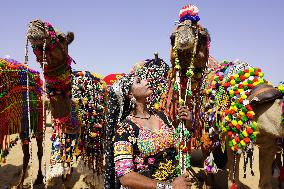
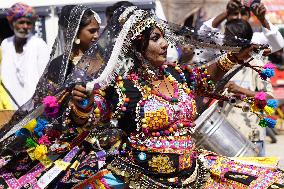
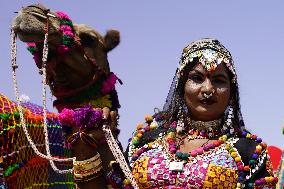
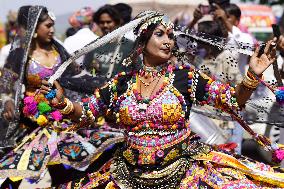
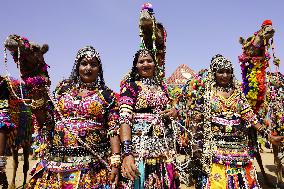
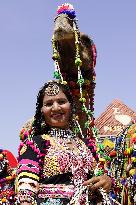
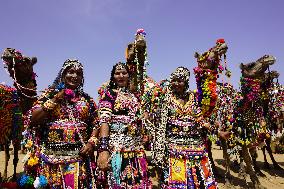
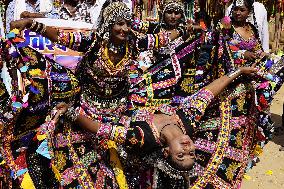
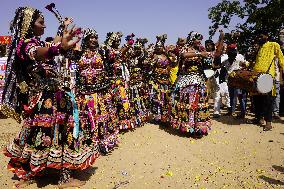
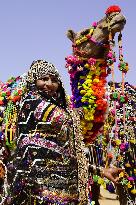
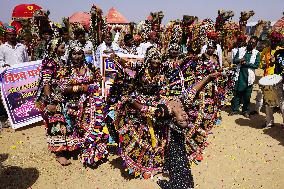
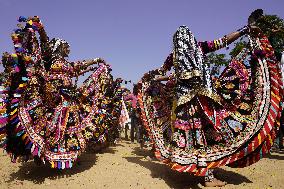
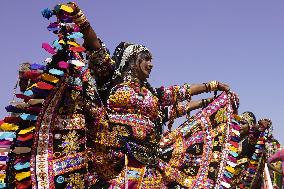
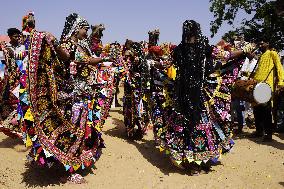
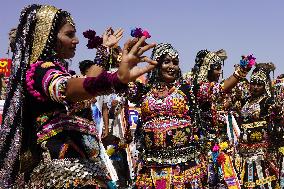
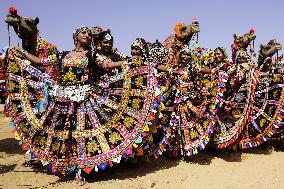
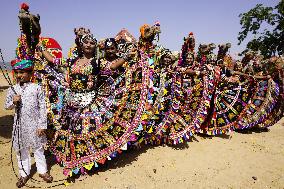
Indian Kalbeliya gypsy dancers Performs during the "World Tourism Day" celebration at the Desert of Pushkar, Rajasthan, India on September 27, 2025. Kalbeliya refers to both a nomadic community of traditional snake-catchers in Rajasthan, India, and a vibrant folk dance performed by this community, also known as the "Snake Charmer Dance" or "Sapera Dance". The dance, which features serpentine movements, traditional instruments like the pungi (snake charmer's pipe), and colorful attire, is a significant part of the Kalbelia tribe's oral history and cultural heritage, recognized by UNESCO as an Intangible Cultural Heritage. Photo by ABACAPRESS.COM

  •  
Indian Kalbeliya Gypsy Dancers Performs - India

Indian Kalbeliya Gypsy Dancers Performs - India

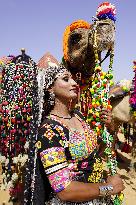
Indian Kalbeliya gypsy dancers Performs during the "World Tourism Day" celebration at the Desert of Pushkar, Rajasthan, India on September 27, 2025. Kalbeliya refers to both a nomadic community of traditional snake-catchers in Rajasthan, India, and a vibrant folk dance performed by this community, also known as the "Snake Charmer Dance" or "Sapera Dance". The dance, which features serpentine movements, traditional instruments like the pungi (snake charmer's pipe), and colorful attire, is a significant part of the Kalbelia tribe's oral history and cultural heritage, recognized by UNESCO as an Intangible Cultural Heritage. Photo by ABACAPRESS.COM

  •  
Indian Kalbeliya Gypsy Dancers Performs - India

Indian Kalbeliya Gypsy Dancers Performs - India

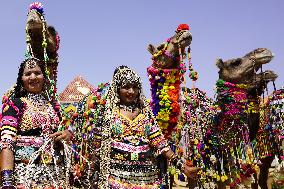
Indian Kalbeliya gypsy dancers Performs during the "World Tourism Day" celebration at the Desert of Pushkar, Rajasthan, India on September 27, 2025. Kalbeliya refers to both a nomadic community of traditional snake-catchers in Rajasthan, India, and a vibrant folk dance performed by this community, also known as the "Snake Charmer Dance" or "Sapera Dance". The dance, which features serpentine movements, traditional instruments like the pungi (snake charmer's pipe), and colorful attire, is a significant part of the Kalbelia tribe's oral history and cultural heritage, recognized by UNESCO as an Intangible Cultural Heritage. Photo by ABACAPRESS.COM

  •  
Indian Kalbeliya Gypsy Dancers Performs - India

Indian Kalbeliya Gypsy Dancers Performs - India

Indian Kalbeliya gypsy dancers Performs during the "World Tourism Day" celebration at the Desert of Pushkar, Rajasthan, India on September 27, 2025. Kalbeliya refers to both a nomadic community of traditional snake-catchers in Rajasthan, India, and a vibrant folk dance performed by this community, also known as the "Snake Charmer Dance" or "Sapera Dance". The dance, which features serpentine movements, traditional instruments like the pungi (snake charmer's pipe), and colorful attire, is a significant part of the Kalbelia tribe's oral history and cultural heritage, recognized by UNESCO as an Intangible Cultural Heritage. Photo by ABACAPRESS.COM

  •  
Indian Kalbeliya Gypsy Dancers Performs - India

Indian Kalbeliya Gypsy Dancers Performs - India

Indian Kalbeliya gypsy dancers Performs during the "World Tourism Day" celebration at the Desert of Pushkar, Rajasthan, India on September 27, 2025. Kalbeliya refers to both a nomadic community of traditional snake-catchers in Rajasthan, India, and a vibrant folk dance performed by this community, also known as the "Snake Charmer Dance" or "Sapera Dance". The dance, which features serpentine movements, traditional instruments like the pungi (snake charmer's pipe), and colorful attire, is a significant part of the Kalbelia tribe's oral history and cultural heritage, recognized by UNESCO as an Intangible Cultural Heritage. Photo by ABACAPRESS.COM

  •  
Indian Kalbeliya Gypsy Dancers Performs - India

Indian Kalbeliya Gypsy Dancers Performs - India

Indian Kalbeliya gypsy dancers Performs during the "World Tourism Day" celebration at the Desert of Pushkar, Rajasthan, India on September 27, 2025. Kalbeliya refers to both a nomadic community of traditional snake-catchers in Rajasthan, India, and a vibrant folk dance performed by this community, also known as the "Snake Charmer Dance" or "Sapera Dance". The dance, which features serpentine movements, traditional instruments like the pungi (snake charmer's pipe), and colorful attire, is a significant part of the Kalbelia tribe's oral history and cultural heritage, recognized by UNESCO as an Intangible Cultural Heritage. Photo by ABACAPRESS.COM

  •  
Indian Kalbeliya Gypsy Dancers Performs - India

Indian Kalbeliya Gypsy Dancers Performs - India

Indian Kalbeliya gypsy dancers Performs during the "World Tourism Day" celebration at the Desert of Pushkar, Rajasthan, India on September 27, 2025. Kalbeliya refers to both a nomadic community of traditional snake-catchers in Rajasthan, India, and a vibrant folk dance performed by this community, also known as the "Snake Charmer Dance" or "Sapera Dance". The dance, which features serpentine movements, traditional instruments like the pungi (snake charmer's pipe), and colorful attire, is a significant part of the Kalbelia tribe's oral history and cultural heritage, recognized by UNESCO as an Intangible Cultural Heritage. Photo by ABACAPRESS.COM

  •  
Indian Kalbeliya Gypsy Dancers Performs - India

Indian Kalbeliya Gypsy Dancers Performs - India

Indian Kalbeliya gypsy dancers Performs during the "World Tourism Day" celebration at the Desert of Pushkar, Rajasthan, India on September 27, 2025. Kalbeliya refers to both a nomadic community of traditional snake-catchers in Rajasthan, India, and a vibrant folk dance performed by this community, also known as the "Snake Charmer Dance" or "Sapera Dance". The dance, which features serpentine movements, traditional instruments like the pungi (snake charmer's pipe), and colorful attire, is a significant part of the Kalbelia tribe's oral history and cultural heritage, recognized by UNESCO as an Intangible Cultural Heritage. Photo by ABACAPRESS.COM

  •  
Indian Kalbeliya Gypsy Dancers Performs - India

Indian Kalbeliya Gypsy Dancers Performs - India

Indian Kalbeliya gypsy dancers Performs during the "World Tourism Day" celebration at the Desert of Pushkar, Rajasthan, India on September 27, 2025. Kalbeliya refers to both a nomadic community of traditional snake-catchers in Rajasthan, India, and a vibrant folk dance performed by this community, also known as the "Snake Charmer Dance" or "Sapera Dance". The dance, which features serpentine movements, traditional instruments like the pungi (snake charmer's pipe), and colorful attire, is a significant part of the Kalbelia tribe's oral history and cultural heritage, recognized by UNESCO as an Intangible Cultural Heritage. Photo by ABACAPRESS.COM

  •  
Indian Kalbeliya Gypsy Dancers Performs - India

Indian Kalbeliya Gypsy Dancers Performs - India

Indian Kalbeliya gypsy dancers Performs during the "World Tourism Day" celebration at the Desert of Pushkar, Rajasthan, India on September 27, 2025. Kalbeliya refers to both a nomadic community of traditional snake-catchers in Rajasthan, India, and a vibrant folk dance performed by this community, also known as the "Snake Charmer Dance" or "Sapera Dance". The dance, which features serpentine movements, traditional instruments like the pungi (snake charmer's pipe), and colorful attire, is a significant part of the Kalbelia tribe's oral history and cultural heritage, recognized by UNESCO as an Intangible Cultural Heritage. Photo by ABACAPRESS.COM

  •  
Indian Kalbeliya Gypsy Dancers Performs - India

Indian Kalbeliya Gypsy Dancers Performs - India

Indian Kalbeliya gypsy dancers Performs during the "World Tourism Day" celebration at the Desert of Pushkar, Rajasthan, India on September 27, 2025. Kalbeliya refers to both a nomadic community of traditional snake-catchers in Rajasthan, India, and a vibrant folk dance performed by this community, also known as the "Snake Charmer Dance" or "Sapera Dance". The dance, which features serpentine movements, traditional instruments like the pungi (snake charmer's pipe), and colorful attire, is a significant part of the Kalbelia tribe's oral history and cultural heritage, recognized by UNESCO as an Intangible Cultural Heritage. Photo by ABACAPRESS.COM

  •  
Indian Kalbeliya Gypsy Dancers Performs - India

Indian Kalbeliya Gypsy Dancers Performs - India

Indian Kalbeliya gypsy dancers Performs during the "World Tourism Day" celebration at the Desert of Pushkar, Rajasthan, India on September 27, 2025. Kalbeliya refers to both a nomadic community of traditional snake-catchers in Rajasthan, India, and a vibrant folk dance performed by this community, also known as the "Snake Charmer Dance" or "Sapera Dance". The dance, which features serpentine movements, traditional instruments like the pungi (snake charmer's pipe), and colorful attire, is a significant part of the Kalbelia tribe's oral history and cultural heritage, recognized by UNESCO as an Intangible Cultural Heritage. Photo by ABACAPRESS.COM

  •  
Indian Kalbeliya Gypsy Dancers Performs - India

Indian Kalbeliya Gypsy Dancers Performs - India

Indian Kalbeliya gypsy dancers Performs during the "World Tourism Day" celebration at the Desert of Pushkar, Rajasthan, India on September 27, 2025. Kalbeliya refers to both a nomadic community of traditional snake-catchers in Rajasthan, India, and a vibrant folk dance performed by this community, also known as the "Snake Charmer Dance" or "Sapera Dance". The dance, which features serpentine movements, traditional instruments like the pungi (snake charmer's pipe), and colorful attire, is a significant part of the Kalbelia tribe's oral history and cultural heritage, recognized by UNESCO as an Intangible Cultural Heritage. Photo by ABACAPRESS.COM

  •  
Indian Kalbeliya Gypsy Dancers Performs - India

Indian Kalbeliya Gypsy Dancers Performs - India

Indian Kalbeliya gypsy dancers Performs during the "World Tourism Day" celebration at the Desert of Pushkar, Rajasthan, India on September 27, 2025. Kalbeliya refers to both a nomadic community of traditional snake-catchers in Rajasthan, India, and a vibrant folk dance performed by this community, also known as the "Snake Charmer Dance" or "Sapera Dance". The dance, which features serpentine movements, traditional instruments like the pungi (snake charmer's pipe), and colorful attire, is a significant part of the Kalbelia tribe's oral history and cultural heritage, recognized by UNESCO as an Intangible Cultural Heritage. Photo by ABACAPRESS.COM

  •  
Indian Kalbeliya Gypsy Dancers Performs - India

Indian Kalbeliya Gypsy Dancers Performs - India

Indian Kalbeliya gypsy dancers Performs during the "World Tourism Day" celebration at the Desert of Pushkar, Rajasthan, India on September 27, 2025. Kalbeliya refers to both a nomadic community of traditional snake-catchers in Rajasthan, India, and a vibrant folk dance performed by this community, also known as the "Snake Charmer Dance" or "Sapera Dance". The dance, which features serpentine movements, traditional instruments like the pungi (snake charmer's pipe), and colorful attire, is a significant part of the Kalbelia tribe's oral history and cultural heritage, recognized by UNESCO as an Intangible Cultural Heritage. Photo by ABACAPRESS.COM

  •  
Indian Kalbeliya Gypsy Dancers Performs - India

Indian Kalbeliya Gypsy Dancers Performs - India

Indian Kalbeliya gypsy dancers Performs during the "World Tourism Day" celebration at the Desert of Pushkar, Rajasthan, India on September 27, 2025. Kalbeliya refers to both a nomadic community of traditional snake-catchers in Rajasthan, India, and a vibrant folk dance performed by this community, also known as the "Snake Charmer Dance" or "Sapera Dance". The dance, which features serpentine movements, traditional instruments like the pungi (snake charmer's pipe), and colorful attire, is a significant part of the Kalbelia tribe's oral history and cultural heritage, recognized by UNESCO as an Intangible Cultural Heritage. Photo by ABACAPRESS.COM

  •  
Indian Kalbeliya Gypsy Dancers Performs - India

Indian Kalbeliya Gypsy Dancers Performs - India

Indian Kalbeliya gypsy dancers Performs during the "World Tourism Day" celebration at the Desert of Pushkar, Rajasthan, India on September 27, 2025. Kalbeliya refers to both a nomadic community of traditional snake-catchers in Rajasthan, India, and a vibrant folk dance performed by this community, also known as the "Snake Charmer Dance" or "Sapera Dance". The dance, which features serpentine movements, traditional instruments like the pungi (snake charmer's pipe), and colorful attire, is a significant part of the Kalbelia tribe's oral history and cultural heritage, recognized by UNESCO as an Intangible Cultural Heritage. Photo by ABACAPRESS.COM

  •  
Indian Kalbeliya Gypsy Dancers Performs - India

Indian Kalbeliya Gypsy Dancers Performs - India

Indian Kalbeliya gypsy dancers Performs during the "World Tourism Day" celebration at the Desert of Pushkar, Rajasthan, India on September 27, 2025. Kalbeliya refers to both a nomadic community of traditional snake-catchers in Rajasthan, India, and a vibrant folk dance performed by this community, also known as the "Snake Charmer Dance" or "Sapera Dance". The dance, which features serpentine movements, traditional instruments like the pungi (snake charmer's pipe), and colorful attire, is a significant part of the Kalbelia tribe's oral history and cultural heritage, recognized by UNESCO as an Intangible Cultural Heritage. Photo by ABACAPRESS.COM

  •  
World Tourism Day Celebration - India

World Tourism Day Celebration - India

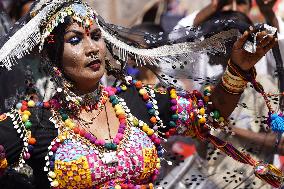
Indian Kalbeliya gypsy dancers Performs during the "World Tourism Day" celebration at the Desert of Pushkar, Rajasthan, India on September 27, 2025. Kalbeliya refers to both a nomadic community of traditional snake-catchers in Rajasthan, India, and a vibrant folk dance performed by this community, also known as the "Snake Charmer Dance" or "Sapera Dance". The dance, which features serpentine movements, traditional instruments like the pungi (snake charmer's pipe), and colorful attire, is a significant part of the Kalbelia tribe's oral history and cultural heritage, recognized by UNESCO as an Intangible Cultural Heritage. Photo by Himanshu Sharma/ABACAPRESS.COM

  •  
World Tourism Day Celebration - India

World Tourism Day Celebration - India

Indian Kalbeliya gypsy dancers Performs during the "World Tourism Day" celebration at the Desert of Pushkar, Rajasthan, India on September 27, 2025. Kalbeliya refers to both a nomadic community of traditional snake-catchers in Rajasthan, India, and a vibrant folk dance performed by this community, also known as the "Snake Charmer Dance" or "Sapera Dance". The dance, which features serpentine movements, traditional instruments like the pungi (snake charmer's pipe), and colorful attire, is a significant part of the Kalbelia tribe's oral history and cultural heritage, recognized by UNESCO as an Intangible Cultural Heritage. Photo by Himanshu Sharma/ABACAPRESS.COM

  •  
Nomadic Life in Inner Mongolia's Horqin Grassland - China

Nomadic Life in Inner Mongolia's Horqin Grassland - China

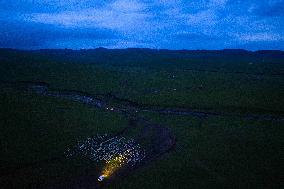
An aerial drone photo taken on June 14, 2025 shows herdsmen driving the livestock at night on the way to the summer campsite on Ar Horqin Grassland, Chifeng City of north China's Inner Mongolia Autonomous Region. Saintsogt, 55, a herdsman in Bayin-undur of Ar Horqin Banner, north China's Inner Mongolia Autonomous Region, is busy with the annual summer migration covering a distance of about 100 kilometers. For the past four decades, he has completed the migration every year. Saintsogt's pasture is a part of the Ar Horqin Grassland Nomadic System, which was listed as one of the Globally Important Agricultural Heritage Systems (GIAHS) sites by the United Nations Food and Agriculture Organization (FAO) on May 20, 2022. Herders here still keep the traditional nomadic customs today. "The travel time has been shortened to three days from eight," Saintsogt said. "The rain makes pasture grow better, and the livestock have enough forage." This year, herders from more than 1,200 households and 128,000 livestock in Bayin

  •  
Nomadic Life in Inner Mongolia's Horqin Grassland - China

Nomadic Life in Inner Mongolia's Horqin Grassland - China

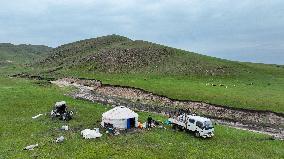
An aerial drone photo taken on June 15, 2025 shows a Mongolian yurt of Saintsogt at his summer campsite on Ar Horqin Grassland, Chifeng City of north China's Inner Mongolia Autonomous Region. Saintsogt, 55, a herdsman in Bayin-undur of Ar Horqin Banner, north China's Inner Mongolia Autonomous Region, is busy with the annual summer migration covering a distance of about 100 kilometers. For the past four decades, he has completed the migration every year. Saintsogt's pasture is a part of the Ar Horqin Grassland Nomadic System, which was listed as one of the Globally Important Agricultural Heritage Systems (GIAHS) sites by the United Nations Food and Agriculture Organization (FAO) on May 20, 2022. Herders here still keep the traditional nomadic customs today. "The travel time has been shortened to three days from eight," Saintsogt said. "The rain makes pasture grow better, and the livestock have enough forage." This year, herders from more than 1,200 households and 128,000 livestock in Bayin-undur joined the mig

  • Main
  • Top
  • Editorial
  • Creative
  • About Us
  • About ILG
  • Terms of use
  • Company
  • BEHIND
  • Price List
  • Single Plan
  • Monthly Plan
  • Services
  • Shooting
  • Rights Clearance
  • Support
  • FAQ
  • How To Buy
  • Contact Us
  • Become a Partner

© KYODO NEWS IMAGES INC

All Rights Reserved.

  • Editorial
  • Olympics
  • News
  • Sports
  • Japan
  • Tech
  • Royal
  • Disaster
  • NorthKorea
  • Old Japan
  • SNS
  • Creative
  • Food
  • Japan
  • Landscape
  • Animal
  • Popular
  • #Ukraine
  • #Russia
  • #coronavirus
  • #N. Korea
  • #China
  • #Thailand
  • #Ukraine
  • #Russia
  • #coronavirus
  • #N. Korea
  • #China
  • #Thailand
  • Food
  • Japan
  • Landscape
  • Animal
  • Olympics
  • News
  • Sports
  • Japan
  • Tech
  • Royal
  • Disaster
  • NorthKorea
  • Old Japan
  • SNS