•  

April Pink Moon Dazzles Sky Watchers Worldwide 2

April's full pink moon lit up the night sky on April 1, or April 2 in some regions, visible to sky watchers across both hemispheres. Despite its rosy name, the moon does not actually appear pink — the name comes from the early spring bloom of "moss pink," a wildflower native to eastern North America.

  •  

April Pink Moon Dazzles Sky Watchers Worldwide

April's full pink moon lit up the night sky on April 1, or April 2 in some regions, visible to sky watchers across both hemispheres. Despite its rosy name, the moon does not actually appear pink — the name comes from the early spring bloom of "moss pink," a wildflower native to eastern North America.

  •  
October 2025, the Third Warmest October on Record

October 2025, the Third Warmest October on Record

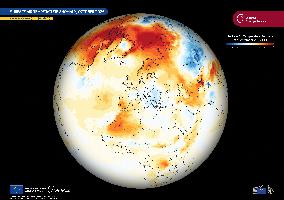
Handout photo dated on 2025 shows The Copernicus Climate Change Service (C3S) has published its latest monthly Climate Bulletin, which focuses on key climate trends in October 2025. The bulletin reports that October 2025 was the third-warmest October globally, with an average surface air temperature of 15.14°C, 0.70°C above the 1991-2020 average for the month. This data visualisation, produced using C3S data, illustrates the surface air temperature anomalies across part of the Northern Hemisphere in October 2025. Warmer-than-average temperatures have been observed over much of northern and western Europe, where the average temperature was 10.19°C, 0.60°C above the average for the month. The Arctic Ocean northeast of Svalbard and the Canadian Arctic Archipelago have also been particularly affected, with surface air temperature anomalies reaching up to 8 °C above average. Photo by European Union, Copernicus Climate Change Service Data via ABACAPRESS.COM

  •  
Sunflower Field Illustrations - Spain

Sunflower Field Illustrations - Spain

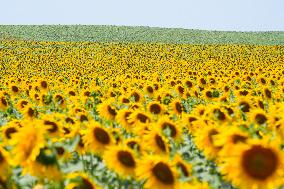
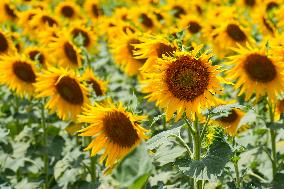
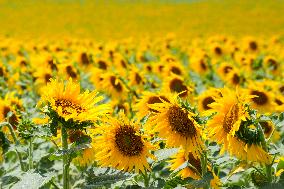
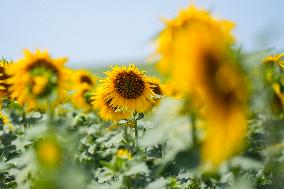
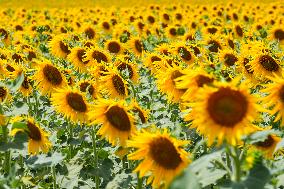
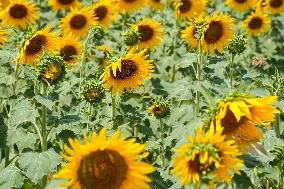
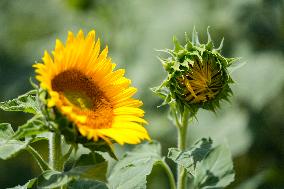
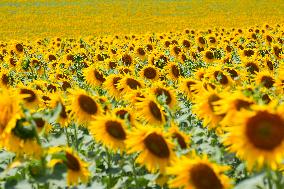
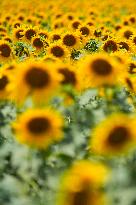
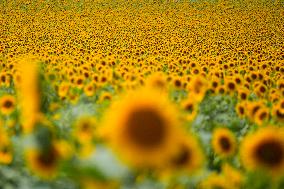
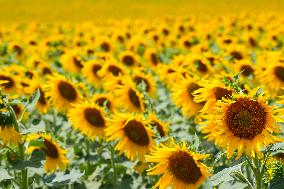
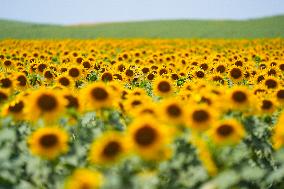
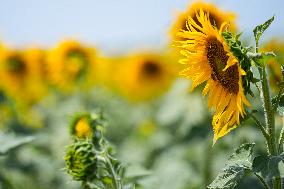
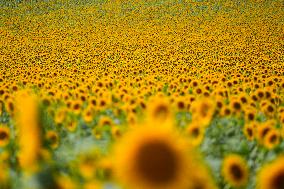
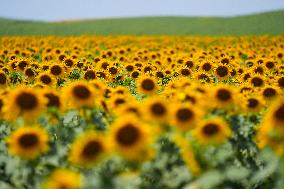
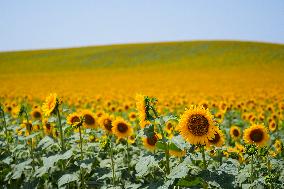
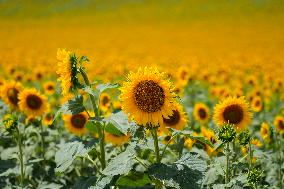
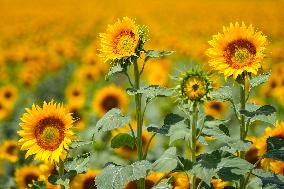
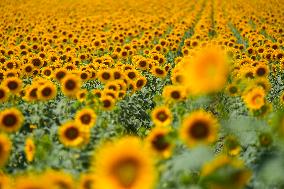
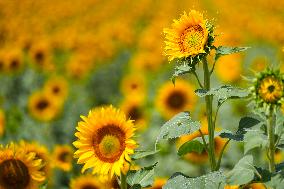
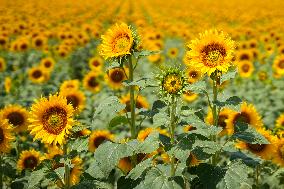
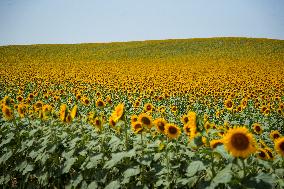
Images of a field of sunflowers in bloom in the Sevillian town of Sanlucar la Mayor, on June 20, 2025, in Seville, Andalusia, Spain. This Saturday, June 21, at 2 hours 42 minutes UTC, according to calculations by the National Astronomical Observatory, the summer solstice will occur, a phenomenon in which the Sun reaches its maximum declination projecting its light over the maximum geographic latitude on Earth. This astronomical event starts the summer in the northern hemisphere and the winter in the southern hemisphere. In addition, the day of the summer solstice corresponds to the longest day of the year, since it is the day on which the Sun rises the earliest and the day on which it sets the latest. Photo by Joaquin Corchero/Europa Press/ABACAPRESS.COM

  •  
Sunflower Field Illustrations - Spain

Sunflower Field Illustrations - Spain

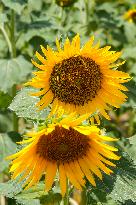
Images of a field of sunflowers in bloom in the Sevillian town of Sanlucar la Mayor, on June 20, 2025, in Seville, Andalusia, Spain. This Saturday, June 21, at 2 hours 42 minutes UTC, according to calculations by the National Astronomical Observatory, the summer solstice will occur, a phenomenon in which the Sun reaches its maximum declination projecting its light over the maximum geographic latitude on Earth. This astronomical event starts the summer in the northern hemisphere and the winter in the southern hemisphere. In addition, the day of the summer solstice corresponds to the longest day of the year, since it is the day on which the Sun rises the earliest and the day on which it sets the latest. Photo by Joaquin Corchero/Europa Press/ABACAPRESS.COM

  •  
Sunflower Field Illustrations - Spain

Sunflower Field Illustrations - Spain

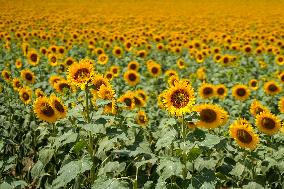
Images of a field of sunflowers in bloom in the Sevillian town of Sanlucar la Mayor, on June 20, 2025, in Seville, Andalusia, Spain. This Saturday, June 21, at 2 hours 42 minutes UTC, according to calculations by the National Astronomical Observatory, the summer solstice will occur, a phenomenon in which the Sun reaches its maximum declination projecting its light over the maximum geographic latitude on Earth. This astronomical event starts the summer in the northern hemisphere and the winter in the southern hemisphere. In addition, the day of the summer solstice corresponds to the longest day of the year, since it is the day on which the Sun rises the earliest and the day on which it sets the latest. Photo by Joaquin Corchero/Europa Press/ABACAPRESS.COM

  •  
Sunflower Field Illustrations - Spain

Sunflower Field Illustrations - Spain

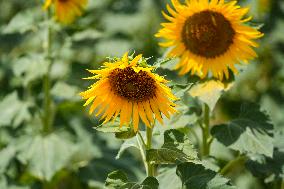
Images of a field of sunflowers in bloom in the Sevillian town of Sanlucar la Mayor, on June 20, 2025, in Seville, Andalusia, Spain. This Saturday, June 21, at 2 hours 42 minutes UTC, according to calculations by the National Astronomical Observatory, the summer solstice will occur, a phenomenon in which the Sun reaches its maximum declination projecting its light over the maximum geographic latitude on Earth. This astronomical event starts the summer in the northern hemisphere and the winter in the southern hemisphere. In addition, the day of the summer solstice corresponds to the longest day of the year, since it is the day on which the Sun rises the earliest and the day on which it sets the latest. Photo by Joaquin Corchero/Europa Press/ABACAPRESS.COM

  •  
Sunflower Field Illustrations - Spain

Sunflower Field Illustrations - Spain

Images of a field of sunflowers in bloom in the Sevillian town of Sanlucar la Mayor, on June 20, 2025, in Seville, Andalusia, Spain. This Saturday, June 21, at 2 hours 42 minutes UTC, according to calculations by the National Astronomical Observatory, the summer solstice will occur, a phenomenon in which the Sun reaches its maximum declination projecting its light over the maximum geographic latitude on Earth. This astronomical event starts the summer in the northern hemisphere and the winter in the southern hemisphere. In addition, the day of the summer solstice corresponds to the longest day of the year, since it is the day on which the Sun rises the earliest and the day on which it sets the latest. Photo by Joaquin Corchero/Europa Press/ABACAPRESS.COM

  •  
Sunflower Field Illustrations - Spain

Sunflower Field Illustrations - Spain

Images of a field of sunflowers in bloom in the Sevillian town of Sanlucar la Mayor, on June 20, 2025, in Seville, Andalusia, Spain. This Saturday, June 21, at 2 hours 42 minutes UTC, according to calculations by the National Astronomical Observatory, the summer solstice will occur, a phenomenon in which the Sun reaches its maximum declination projecting its light over the maximum geographic latitude on Earth. This astronomical event starts the summer in the northern hemisphere and the winter in the southern hemisphere. In addition, the day of the summer solstice corresponds to the longest day of the year, since it is the day on which the Sun rises the earliest and the day on which it sets the latest. Photo by Joaquin Corchero/Europa Press/ABACAPRESS.COM

  •  
Sunflower Field Illustrations - Spain

Sunflower Field Illustrations - Spain

Images of a field of sunflowers in bloom in the Sevillian town of Sanlucar la Mayor, on June 20, 2025, in Seville, Andalusia, Spain. This Saturday, June 21, at 2 hours 42 minutes UTC, according to calculations by the National Astronomical Observatory, the summer solstice will occur, a phenomenon in which the Sun reaches its maximum declination projecting its light over the maximum geographic latitude on Earth. This astronomical event starts the summer in the northern hemisphere and the winter in the southern hemisphere. In addition, the day of the summer solstice corresponds to the longest day of the year, since it is the day on which the Sun rises the earliest and the day on which it sets the latest. Photo by Joaquin Corchero/Europa Press/ABACAPRESS.COM

  •  
Sunflower Field Illustrations - Spain

Sunflower Field Illustrations - Spain

Images of a field of sunflowers in bloom in the Sevillian town of Sanlucar la Mayor, on June 20, 2025, in Seville, Andalusia, Spain. This Saturday, June 21, at 2 hours 42 minutes UTC, according to calculations by the National Astronomical Observatory, the summer solstice will occur, a phenomenon in which the Sun reaches its maximum declination projecting its light over the maximum geographic latitude on Earth. This astronomical event starts the summer in the northern hemisphere and the winter in the southern hemisphere. In addition, the day of the summer solstice corresponds to the longest day of the year, since it is the day on which the Sun rises the earliest and the day on which it sets the latest. Photo by Joaquin Corchero/Europa Press/ABACAPRESS.COM

  •  
Sunflower Field Illustrations - Spain

Sunflower Field Illustrations - Spain

Images of a field of sunflowers in bloom in the Sevillian town of Sanlucar la Mayor, on June 20, 2025, in Seville, Andalusia, Spain. This Saturday, June 21, at 2 hours 42 minutes UTC, according to calculations by the National Astronomical Observatory, the summer solstice will occur, a phenomenon in which the Sun reaches its maximum declination projecting its light over the maximum geographic latitude on Earth. This astronomical event starts the summer in the northern hemisphere and the winter in the southern hemisphere. In addition, the day of the summer solstice corresponds to the longest day of the year, since it is the day on which the Sun rises the earliest and the day on which it sets the latest. Photo by Joaquin Corchero/Europa Press/ABACAPRESS.COM

  •  
Sunflower Field Illustrations - Spain

Sunflower Field Illustrations - Spain

Images of a field of sunflowers in bloom in the Sevillian town of Sanlucar la Mayor, on June 20, 2025, in Seville, Andalusia, Spain. This Saturday, June 21, at 2 hours 42 minutes UTC, according to calculations by the National Astronomical Observatory, the summer solstice will occur, a phenomenon in which the Sun reaches its maximum declination projecting its light over the maximum geographic latitude on Earth. This astronomical event starts the summer in the northern hemisphere and the winter in the southern hemisphere. In addition, the day of the summer solstice corresponds to the longest day of the year, since it is the day on which the Sun rises the earliest and the day on which it sets the latest. Photo by Joaquin Corchero/Europa Press/ABACAPRESS.COM

  •  
Sunflower Field Illustrations - Spain

Sunflower Field Illustrations - Spain

Images of a field of sunflowers in bloom in the Sevillian town of Sanlucar la Mayor, on June 20, 2025, in Seville, Andalusia, Spain. This Saturday, June 21, at 2 hours 42 minutes UTC, according to calculations by the National Astronomical Observatory, the summer solstice will occur, a phenomenon in which the Sun reaches its maximum declination projecting its light over the maximum geographic latitude on Earth. This astronomical event starts the summer in the northern hemisphere and the winter in the southern hemisphere. In addition, the day of the summer solstice corresponds to the longest day of the year, since it is the day on which the Sun rises the earliest and the day on which it sets the latest. Photo by Joaquin Corchero/Europa Press/ABACAPRESS.COM

  •  
Sunflower Field Illustrations - Spain

Sunflower Field Illustrations - Spain

Images of a field of sunflowers in bloom in the Sevillian town of Sanlucar la Mayor, on June 20, 2025, in Seville, Andalusia, Spain. This Saturday, June 21, at 2 hours 42 minutes UTC, according to calculations by the National Astronomical Observatory, the summer solstice will occur, a phenomenon in which the Sun reaches its maximum declination projecting its light over the maximum geographic latitude on Earth. This astronomical event starts the summer in the northern hemisphere and the winter in the southern hemisphere. In addition, the day of the summer solstice corresponds to the longest day of the year, since it is the day on which the Sun rises the earliest and the day on which it sets the latest. Photo by Joaquin Corchero/Europa Press/ABACAPRESS.COM

  •  
Sunflower Field Illustrations - Spain

Sunflower Field Illustrations - Spain

Images of a field of sunflowers in bloom in the Sevillian town of Sanlucar la Mayor, on June 20, 2025, in Seville, Andalusia, Spain. This Saturday, June 21, at 2 hours 42 minutes UTC, according to calculations by the National Astronomical Observatory, the summer solstice will occur, a phenomenon in which the Sun reaches its maximum declination projecting its light over the maximum geographic latitude on Earth. This astronomical event starts the summer in the northern hemisphere and the winter in the southern hemisphere. In addition, the day of the summer solstice corresponds to the longest day of the year, since it is the day on which the Sun rises the earliest and the day on which it sets the latest. Photo by Joaquin Corchero/Europa Press/ABACAPRESS.COM

  •  
Sunflower Field Illustrations - Spain

Sunflower Field Illustrations - Spain

Images of a field of sunflowers in bloom in the Sevillian town of Sanlucar la Mayor, on June 20, 2025, in Seville, Andalusia, Spain. This Saturday, June 21, at 2 hours 42 minutes UTC, according to calculations by the National Astronomical Observatory, the summer solstice will occur, a phenomenon in which the Sun reaches its maximum declination projecting its light over the maximum geographic latitude on Earth. This astronomical event starts the summer in the northern hemisphere and the winter in the southern hemisphere. In addition, the day of the summer solstice corresponds to the longest day of the year, since it is the day on which the Sun rises the earliest and the day on which it sets the latest. Photo by Joaquin Corchero/Europa Press/ABACAPRESS.COM

  •  
Sunflower Field Illustrations - Spain

Sunflower Field Illustrations - Spain

Images of a field of sunflowers in bloom in the Sevillian town of Sanlucar la Mayor, on June 20, 2025, in Seville, Andalusia, Spain. This Saturday, June 21, at 2 hours 42 minutes UTC, according to calculations by the National Astronomical Observatory, the summer solstice will occur, a phenomenon in which the Sun reaches its maximum declination projecting its light over the maximum geographic latitude on Earth. This astronomical event starts the summer in the northern hemisphere and the winter in the southern hemisphere. In addition, the day of the summer solstice corresponds to the longest day of the year, since it is the day on which the Sun rises the earliest and the day on which it sets the latest. Photo by Joaquin Corchero/Europa Press/ABACAPRESS.COM

  •  
Sunflower Field Illustrations - Spain

Sunflower Field Illustrations - Spain

Images of a field of sunflowers in bloom in the Sevillian town of Sanlucar la Mayor, on June 20, 2025, in Seville, Andalusia, Spain. This Saturday, June 21, at 2 hours 42 minutes UTC, according to calculations by the National Astronomical Observatory, the summer solstice will occur, a phenomenon in which the Sun reaches its maximum declination projecting its light over the maximum geographic latitude on Earth. This astronomical event starts the summer in the northern hemisphere and the winter in the southern hemisphere. In addition, the day of the summer solstice corresponds to the longest day of the year, since it is the day on which the Sun rises the earliest and the day on which it sets the latest. Photo by Joaquin Corchero/Europa Press/ABACAPRESS.COM

  •  
Sunflower Field Illustrations - Spain

Sunflower Field Illustrations - Spain

Images of a field of sunflowers in bloom in the Sevillian town of Sanlucar la Mayor, on June 20, 2025, in Seville, Andalusia, Spain. This Saturday, June 21, at 2 hours 42 minutes UTC, according to calculations by the National Astronomical Observatory, the summer solstice will occur, a phenomenon in which the Sun reaches its maximum declination projecting its light over the maximum geographic latitude on Earth. This astronomical event starts the summer in the northern hemisphere and the winter in the southern hemisphere. In addition, the day of the summer solstice corresponds to the longest day of the year, since it is the day on which the Sun rises the earliest and the day on which it sets the latest. Photo by Joaquin Corchero/Europa Press/ABACAPRESS.COM

  •  
Sunflower Field Illustrations - Spain

Sunflower Field Illustrations - Spain

Images of a field of sunflowers in bloom in the Sevillian town of Sanlucar la Mayor, on June 20, 2025, in Seville, Andalusia, Spain. This Saturday, June 21, at 2 hours 42 minutes UTC, according to calculations by the National Astronomical Observatory, the summer solstice will occur, a phenomenon in which the Sun reaches its maximum declination projecting its light over the maximum geographic latitude on Earth. This astronomical event starts the summer in the northern hemisphere and the winter in the southern hemisphere. In addition, the day of the summer solstice corresponds to the longest day of the year, since it is the day on which the Sun rises the earliest and the day on which it sets the latest. Photo by Joaquin Corchero/Europa Press/ABACAPRESS.COM

  •  
Sunflower Field Illustrations - Spain

Sunflower Field Illustrations - Spain

Images of a field of sunflowers in bloom in the Sevillian town of Sanlucar la Mayor, on June 20, 2025, in Seville, Andalusia, Spain. This Saturday, June 21, at 2 hours 42 minutes UTC, according to calculations by the National Astronomical Observatory, the summer solstice will occur, a phenomenon in which the Sun reaches its maximum declination projecting its light over the maximum geographic latitude on Earth. This astronomical event starts the summer in the northern hemisphere and the winter in the southern hemisphere. In addition, the day of the summer solstice corresponds to the longest day of the year, since it is the day on which the Sun rises the earliest and the day on which it sets the latest. Photo by Joaquin Corchero/Europa Press/ABACAPRESS.COM

  •  
Sunflower Field Illustrations - Spain

Sunflower Field Illustrations - Spain

Images of a field of sunflowers in bloom in the Sevillian town of Sanlucar la Mayor, on June 20, 2025, in Seville, Andalusia, Spain. This Saturday, June 21, at 2 hours 42 minutes UTC, according to calculations by the National Astronomical Observatory, the summer solstice will occur, a phenomenon in which the Sun reaches its maximum declination projecting its light over the maximum geographic latitude on Earth. This astronomical event starts the summer in the northern hemisphere and the winter in the southern hemisphere. In addition, the day of the summer solstice corresponds to the longest day of the year, since it is the day on which the Sun rises the earliest and the day on which it sets the latest. Photo by Joaquin Corchero/Europa Press/ABACAPRESS.COM

  •  
Sunflower Field Illustrations - Spain

Sunflower Field Illustrations - Spain

Images of a field of sunflowers in bloom in the Sevillian town of Sanlucar la Mayor, on June 20, 2025, in Seville, Andalusia, Spain. This Saturday, June 21, at 2 hours 42 minutes UTC, according to calculations by the National Astronomical Observatory, the summer solstice will occur, a phenomenon in which the Sun reaches its maximum declination projecting its light over the maximum geographic latitude on Earth. This astronomical event starts the summer in the northern hemisphere and the winter in the southern hemisphere. In addition, the day of the summer solstice corresponds to the longest day of the year, since it is the day on which the Sun rises the earliest and the day on which it sets the latest. Photo by Joaquin Corchero/Europa Press/ABACAPRESS.COM

  •  
Sunflower Field Illustrations - Spain

Sunflower Field Illustrations - Spain

Images of a field of sunflowers in bloom in the Sevillian town of Sanlucar la Mayor, on June 20, 2025, in Seville, Andalusia, Spain. This Saturday, June 21, at 2 hours 42 minutes UTC, according to calculations by the National Astronomical Observatory, the summer solstice will occur, a phenomenon in which the Sun reaches its maximum declination projecting its light over the maximum geographic latitude on Earth. This astronomical event starts the summer in the northern hemisphere and the winter in the southern hemisphere. In addition, the day of the summer solstice corresponds to the longest day of the year, since it is the day on which the Sun rises the earliest and the day on which it sets the latest. Photo by Joaquin Corchero/Europa Press/ABACAPRESS.COM

  •  
Sunflower Field Illustrations - Spain

Sunflower Field Illustrations - Spain

Images of a field of sunflowers in bloom in the Sevillian town of Sanlucar la Mayor, on June 20, 2025, in Seville, Andalusia, Spain. This Saturday, June 21, at 2 hours 42 minutes UTC, according to calculations by the National Astronomical Observatory, the summer solstice will occur, a phenomenon in which the Sun reaches its maximum declination projecting its light over the maximum geographic latitude on Earth. This astronomical event starts the summer in the northern hemisphere and the winter in the southern hemisphere. In addition, the day of the summer solstice corresponds to the longest day of the year, since it is the day on which the Sun rises the earliest and the day on which it sets the latest. Photo by Joaquin Corchero/Europa Press/ABACAPRESS.COM

  •  
Sunflower Field Illustrations - Spain

Sunflower Field Illustrations - Spain

Images of a field of sunflowers in bloom in the Sevillian town of Sanlucar la Mayor, on June 20, 2025, in Seville, Andalusia, Spain. This Saturday, June 21, at 2 hours 42 minutes UTC, according to calculations by the National Astronomical Observatory, the summer solstice will occur, a phenomenon in which the Sun reaches its maximum declination projecting its light over the maximum geographic latitude on Earth. This astronomical event starts the summer in the northern hemisphere and the winter in the southern hemisphere. In addition, the day of the summer solstice corresponds to the longest day of the year, since it is the day on which the Sun rises the earliest and the day on which it sets the latest. Photo by Joaquin Corchero/Europa Press/ABACAPRESS.COM

  •  
Sunflower Field Illustrations - Spain

Sunflower Field Illustrations - Spain

Images of a field of sunflowers in bloom in the Sevillian town of Sanlucar la Mayor, on June 20, 2025, in Seville, Andalusia, Spain. This Saturday, June 21, at 2 hours 42 minutes UTC, according to calculations by the National Astronomical Observatory, the summer solstice will occur, a phenomenon in which the Sun reaches its maximum declination projecting its light over the maximum geographic latitude on Earth. This astronomical event starts the summer in the northern hemisphere and the winter in the southern hemisphere. In addition, the day of the summer solstice corresponds to the longest day of the year, since it is the day on which the Sun rises the earliest and the day on which it sets the latest. Photo by Joaquin Corchero/Europa Press/ABACAPRESS.COM

  •  
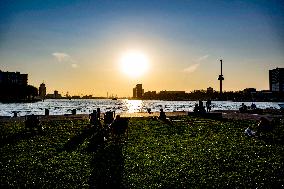
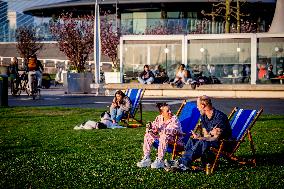
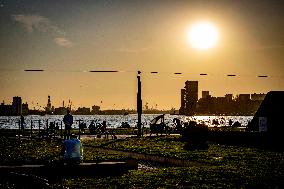
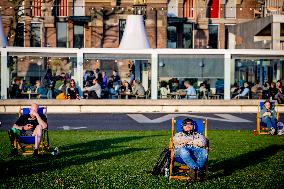
Spring Illustrations - Rotterdam

Spring Illustrations - Rotterdam

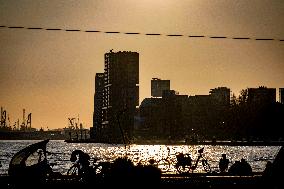
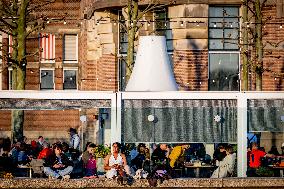
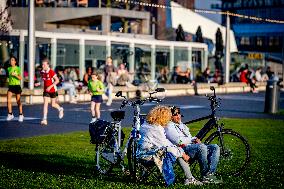
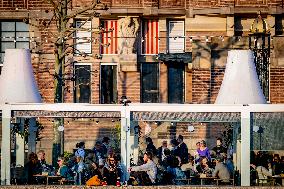
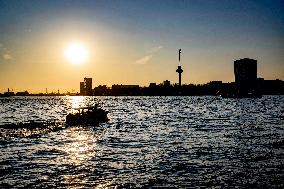
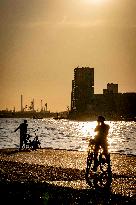
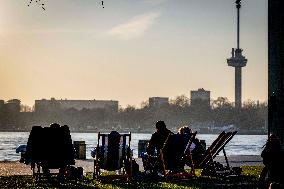
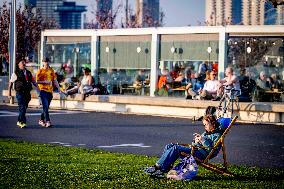
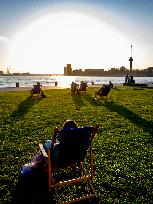
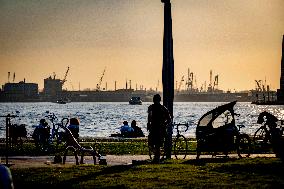
People are enjoying the sun at the beginning of spring in Rotterdam, The Netherlands on March 20, 2025. Spring has just begun. The sun crossed the equator on Thursday at 10:01 European time and is now above the northern hemisphere. The days are longer than the nights. Photo by Robin Utrecht/ABACAPRESS.COM

  •  
Spring Illustrations - Rotterdam

Spring Illustrations - Rotterdam

People are enjoying the sun at the beginning of spring in Rotterdam, The Netherlands on March 20, 2025. Spring has just begun. The sun crossed the equator on Thursday at 10:01 European time and is now above the northern hemisphere. The days are longer than the nights. Photo by Robin Utrecht/ABACAPRESS.COM

  •  
Spring Illustrations - Rotterdam

Spring Illustrations - Rotterdam

People are enjoying the sun at the beginning of spring in Rotterdam, The Netherlands on March 20, 2025. Spring has just begun. The sun crossed the equator on Thursday at 10:01 European time and is now above the northern hemisphere. The days are longer than the nights. Photo by Robin Utrecht/ABACAPRESS.COM

  •  
Spring Illustrations - Rotterdam

Spring Illustrations - Rotterdam

People are enjoying the sun at the beginning of spring in Rotterdam, The Netherlands on March 20, 2025. Spring has just begun. The sun crossed the equator on Thursday at 10:01 European time and is now above the northern hemisphere. The days are longer than the nights. Photo by Robin Utrecht/ABACAPRESS.COM

  •  
Spring Illustrations - Rotterdam

Spring Illustrations - Rotterdam

People are enjoying the sun at the beginning of spring in Rotterdam, The Netherlands on March 20, 2025. Spring has just begun. The sun crossed the equator on Thursday at 10:01 European time and is now above the northern hemisphere. The days are longer than the nights. Photo by Robin Utrecht/ABACAPRESS.COM

  •  
Spring Illustrations - Rotterdam

Spring Illustrations - Rotterdam

People are enjoying the sun at the beginning of spring in Rotterdam, The Netherlands on March 20, 2025. Spring has just begun. The sun crossed the equator on Thursday at 10:01 European time and is now above the northern hemisphere. The days are longer than the nights. Photo by Robin Utrecht/ABACAPRESS.COM

  •  
Spring Illustrations - Rotterdam

Spring Illustrations - Rotterdam

People are enjoying the sun at the beginning of spring in Rotterdam, The Netherlands on March 20, 2025. Spring has just begun. The sun crossed the equator on Thursday at 10:01 European time and is now above the northern hemisphere. The days are longer than the nights. Photo by Robin Utrecht/ABACAPRESS.COM

  •  
Spring Illustrations - Rotterdam

Spring Illustrations - Rotterdam

People are enjoying the sun at the beginning of spring in Rotterdam, The Netherlands on March 20, 2025. Spring has just begun. The sun crossed the equator on Thursday at 10:01 European time and is now above the northern hemisphere. The days are longer than the nights. Photo by Robin Utrecht/ABACAPRESS.COM

  •  
Spring Illustrations - Rotterdam

Spring Illustrations - Rotterdam

People are enjoying the sun at the beginning of spring in Rotterdam, The Netherlands on March 20, 2025. Spring has just begun. The sun crossed the equator on Thursday at 10:01 European time and is now above the northern hemisphere. The days are longer than the nights. Photo by Robin Utrecht/ABACAPRESS.COM

  •  
Spring Illustrations - Rotterdam

Spring Illustrations - Rotterdam

People are enjoying the sun at the beginning of spring in Rotterdam, The Netherlands on March 20, 2025. Spring has just begun. The sun crossed the equator on Thursday at 10:01 European time and is now above the northern hemisphere. The days are longer than the nights. Photo by Robin Utrecht/ABACAPRESS.COM

  •  
Spring Illustrations - Rotterdam

Spring Illustrations - Rotterdam

People are enjoying the sun at the beginning of spring in Rotterdam, The Netherlands on March 20, 2025. Spring has just begun. The sun crossed the equator on Thursday at 10:01 European time and is now above the northern hemisphere. The days are longer than the nights. Photo by Robin Utrecht/ABACAPRESS.COM

  •  
Spring Illustrations - Rotterdam

Spring Illustrations - Rotterdam

People are enjoying the sun at the beginning of spring in Rotterdam, The Netherlands on March 20, 2025. Spring has just begun. The sun crossed the equator on Thursday at 10:01 European time and is now above the northern hemisphere. The days are longer than the nights. Photo by Robin Utrecht/ABACAPRESS.COM

  •  
Spring Illustrations - Rotterdam

Spring Illustrations - Rotterdam

People are enjoying the sun at the beginning of spring in Rotterdam, The Netherlands on March 20, 2025. Spring has just begun. The sun crossed the equator on Thursday at 10:01 European time and is now above the northern hemisphere. The days are longer than the nights. Photo by Robin Utrecht/ABACAPRESS.COM

  •  
Spring Illustrations - Rotterdam

Spring Illustrations - Rotterdam

People are enjoying the sun at the beginning of spring in Rotterdam, The Netherlands on March 20, 2025. Spring has just begun. The sun crossed the equator on Thursday at 10:01 European time and is now above the northern hemisphere. The days are longer than the nights. Photo by Robin Utrecht/ABACAPRESS.COM

  •  
Spring Illustrations - Rotterdam

Spring Illustrations - Rotterdam

People are enjoying the sun at the beginning of spring in Rotterdam, The Netherlands on March 20, 2025. Spring has just begun. The sun crossed the equator on Thursday at 10:01 European time and is now above the northern hemisphere. The days are longer than the nights. Photo by Robin Utrecht/ABACAPRESS.COM

  •  
Spring Illustrations - Rotterdam

Spring Illustrations - Rotterdam

People are enjoying the sun at the beginning of spring in Rotterdam, The Netherlands on March 20, 2025. Spring has just begun. The sun crossed the equator on Thursday at 10:01 European time and is now above the northern hemisphere. The days are longer than the nights. Photo by Robin Utrecht/ABACAPRESS.COM

  •  

Estonian resort city celebrates Midsummer

STORY: Estonian resort city celebrates Midsummer SHOOTING TIME: June 23, 2024 DATELINE: June 25, 2024 LENGTH: 00:01:19 LOCATION: NARVA-JOESUU, Estonia CATEGORY: CULTURE SHOTLIST: 1. various of Midsummer celebrations in Narva-Joesuu STORYLINE: Residents and tourists in Narva-Joesuu, a resort city in northeastern Estonia, on Sunday celebrated the Midsummer, known as Jaanipaev in Estonian. Midsummer is among the most important and beloved holidays in Estonia. The day coincides with the longest day of the year in the Northern Hemisphere - the summer solstice. Every year, Midsummer festivities in Estonia begin on the eve of June 23 and conclude on June 24. Xinhua News Agency correspondents reporting from Narva-Joesuu, Estonia. (XHTV)

  •  

24 Solar Terms: Summer Solstice

STORY: 24 Solar Terms: Summer Solstice SHOOTING TIME: File DATELINE: June 21, 2024 LENGTH: 00:00:54 LOCATION: GUANGDONG, China CATEGORY: SOCIETY SHOTLIST: 1. various of a woman making tea 2. various of lotus in painting STORYLINE: Xiazhi, or the Summer Solstice, is the tenth solar term of a year. It falls on Friday this year. It marks the longest daytime in the Northern Hemisphere. Xinhua News Agency correspondents reporting from Guangdong, China. (XHTV)

  •  

Heatwaves wreak havoc across North Hemisphere, sound climate alarm

STORY: Heatwaves wreak havoc across North Hemisphere, sound climate alarm DATELINE: July 24, 2023 LENGTH: 00:02:35 LOCATION: Beijing CATEGORY: ENVIRONMENT/SOCIETY SHOTLIST: 1. various of street views in the Northern Hemisphere 2. various of views in Mexico 3. SOUNDBITE 1 (Spanish): Resident in Mexicali, Mexico 4. various of views in the U.S. 5. various of U.S. temperature map 6. various of views in Italy 7. SOUNDBITE 2 (Italian): Resident in Florence, Italy 8. various of wildfires in Greece, Spain and Türkiye 9. various of the wildfire on La Palma 10. various of views in Greece 11. various of views in Cyprus 12. various of views in the Northern Hemisphere STORYLINE: Intense heatwaves are scorching vast parts of the Northern Hemisphere. The high temperature has not only threatened people's health, but also resulted in natural disasters. In Mexico, at least 100 people had died of heat-related causes last month as temperatures climbed over 40 degrees Celsius in some areas. SOUNDBITE 1 (Spanish): Resident in

  •  
Heat Wave Cerberus Hits southern Europe - Bergamo

Heat Wave Cerberus Hits southern Europe - Bergamo

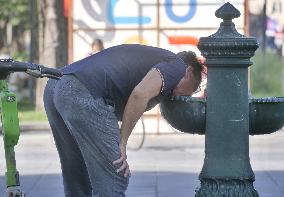
People cool off on July 17, 2023 in Bergamo, Italy. Temperatures reached new highs on Monday as heat waves scorched parts of the Northern Hemisphere, triggering health warnings and fanning wildfires in the latest stark reminder of the effects of global warming. From North America to Europe and Asia, people gulped water and sought shelter from the sweltering heat, with the mercury expected to reach new highs in several places in the next few days. Photo by Luca Ponti/IPA/ABACAPRESS.COM

  •  
Heat Wave Cerberus Hits southern Europe - Bergamo

Heat Wave Cerberus Hits southern Europe - Bergamo

People cool off on July 17, 2023 in Bergamo, Italy. Temperatures reached new highs on Monday as heat waves scorched parts of the Northern Hemisphere, triggering health warnings and fanning wildfires in the latest stark reminder of the effects of global warming. From North America to Europe and Asia, people gulped water and sought shelter from the sweltering heat, with the mercury expected to reach new highs in several places in the next few days. Photo by Luca Ponti/IPA/ABACAPRESS.COM

  •  
Heat Wave Cerberus Hits southern Europe - Bergamo

Heat Wave Cerberus Hits southern Europe - Bergamo

People cool off on July 17, 2023 in Bergamo, Italy. Temperatures reached new highs on Monday as heat waves scorched parts of the Northern Hemisphere, triggering health warnings and fanning wildfires in the latest stark reminder of the effects of global warming. From North America to Europe and Asia, people gulped water and sought shelter from the sweltering heat, with the mercury expected to reach new highs in several places in the next few days. Photo by Luca Ponti/IPA/ABACAPRESS.COM

  • Main
  • Top
  • Editorial
  • Creative
  • About Us
  • About ILG
  • Terms of use
  • Company
  • BEHIND
  • Price List
  • Single Plan
  • Monthly Plan
  • Services
  • Shooting
  • Rights Clearance
  • Support
  • FAQ
  • How To Buy
  • Contact Us
  • Become a Partner

© KYODO NEWS IMAGES INC

All Rights Reserved.

  • Editorial
  • Olympics
  • News
  • Sports
  • Japan
  • Tech
  • Royal
  • Disaster
  • NorthKorea
  • Old Japan
  • SNS
  • Creative
  • Food
  • Japan
  • Landscape
  • Animal
  • Popular
  • #Ukraine
  • #Russia
  • #coronavirus
  • #N. Korea
  • #Thailand
  • #China
  • #Ukraine
  • #Russia
  • #coronavirus
  • #N. Korea
  • #Thailand
  • #China
  • Food
  • Japan
  • Landscape
  • Animal
  • Olympics
  • News
  • Sports
  • Japan
  • Tech
  • Royal
  • Disaster
  • NorthKorea
  • Old Japan
  • SNS