•  
Snow Blanketed North East Scotland - UK

Snow Blanketed North East Scotland - UK

Handout photo dated on November 18, 2025 shows on 18 November 2025, the first major winter weather event of the 2025-26 season took place across parts of the United Kingdom, including north-east Scotland. Heavy snowfall blanketed large areas of the region, leading to travel disruption, the isolation of several rural communities, and the closure of numerous schools. Emergency services were deployed to assist residents affected by road blockages and power outages, while local authorities issued weather warnings and urged the public to avoid non-essential travel. This false-colour image, acquired by one of the Copernicus Sentinel-2 satellites, shows widespread snow-cover across Aberdeenshire and the surrounding upland areas, with the city of Aberdeen visible along the coast. Data from Copernicus Sentinel-2, which provides high spatial resolution and multispectral observations, supports continuous monitoring of snow extent and surface conditions. North East Scotland, UK on November 18, 2025. Photo by European Uni

  •  
First images From Copernicus Sentinel-5A

First images From Copernicus Sentinel-5A

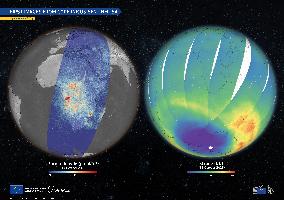
Handout photo dated October 13, 2025 shows Copernicus Sentinel-5A has delivered its first images after its launch on 13 August 2025, marking a significant milestone in the monitoring of air quality from space. The Sentinel-5 mission provides observations of key air pollutants, essential climate variables, and stratospheric ozone, which is the protective layer shielding life on Earth from harmful ultraviolet radiation. This visualisation, created with Sentinel-5A data acquired on 13 October 2025, shows atmospheric concentrations of two trace gases: ozone (O₃) and formaldehyde (HCHO). The image on the left presents the formaldehyde vertical column density. Elevated concentrations along the northwestern coast of Angola are linked to emissions from wildfires, while increased levels over the Central African Republic stem from a combination of fire activity and biogenic emissions. The image on the right shows a global map of ozone. The hole in stratospheric ozone above Antarctica is clearly visible, with column den

  •  
Southern Europe and The Northwestern Mediterranean Coast from The ISS

Southern Europe and The Northwestern Mediterranean Coast from The ISS

Handout - JAXA (Japan Aerospace Exploration Agency) astronaut Kimiya Yui captured this photo of southern Europe and the northwestern Mediterranean coast from the International Space Station as it orbited 261 miles above Earth on August 30, 2025. At left, the Po Valley urban corridor in Italy shines with the metropolitan areas of Milan and Turin and their surrounding suburbs. Crew members aboard the orbital lab have produced hundreds of thousands of images of the land, oceans, and atmosphere of Earth, and even of the Moon through Crew Earth Observations. Their photographs of Earth record how the planet changes over time due to human activity and natural events. This allows scientists to monitor disasters and direct response on the ground and study a number of phenomena, from the movement of glaciers to urban wildlife. Photo by JAXA/Kimiya Yui/NASA via ABACAPRESS.COM

  •  
Kharkiv Astronomers Work Despite Continuing Russo-Ukrainian War - Ukraine

Kharkiv Astronomers Work Despite Continuing Russo-Ukrainian War - Ukraine

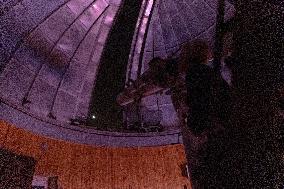
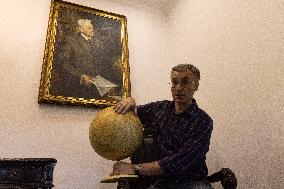
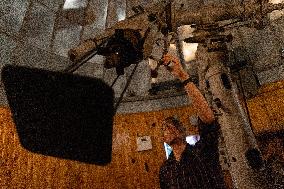
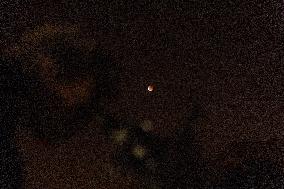
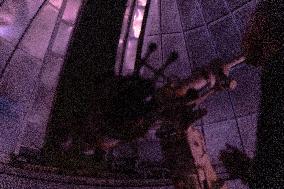
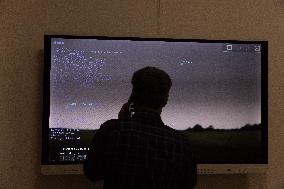
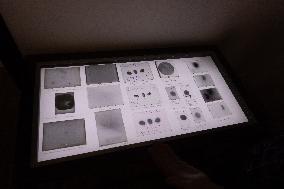
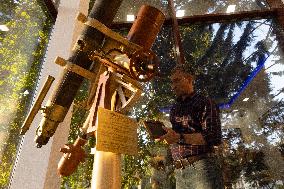
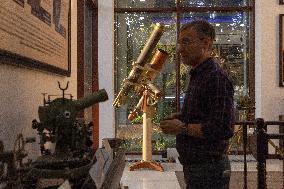
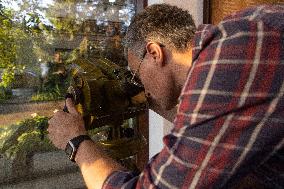
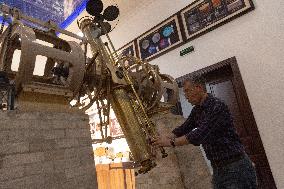
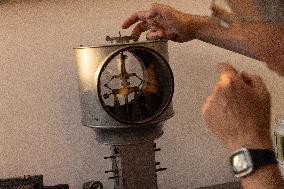
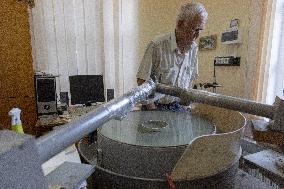
Kharkiv astronomers are only now returning to observations at their own observation base. "The only Ukrainian astronomical observatory that was occupied for a long time" - Vadym Kaidash, head of the scientific research institute of astronomy The full-scale invasion, says Kaidash, deprived Kharkiv astronomers of the opportunity to work at the Chuhuiv observatory of Karazin University. It is located 70 kilometers from Kharkiv - and in 2022 found itself under occupation. We, Kharkiv astronomers, astronomers of Karazin University, have very limited opportunities to observe the starry sky, because telescopes and observation equipment, computers, control systems, etc., are destroyed, do not work. There was an observatory in our suburbs during the occupation. A new exhibition appeared in the university museum of astronomy during the war. In this small exhibition we have evidence of the occupation by the Russians of our Chuguyiv Observatory of the Research Institute of Astronomy. This is the only Ukrainian astronomic

  •  
Kharkiv Astronomers Work Despite Continuing Russo-Ukrainian War - Ukraine

Kharkiv Astronomers Work Despite Continuing Russo-Ukrainian War - Ukraine

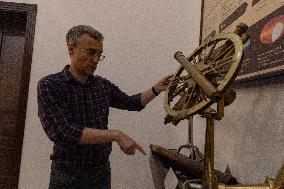
Kharkiv astronomers are only now returning to observations at their own observation base. "The only Ukrainian astronomical observatory that was occupied for a long time" - Vadym Kaidash, head of the scientific research institute of astronomy The full-scale invasion, says Kaidash, deprived Kharkiv astronomers of the opportunity to work at the Chuhuiv observatory of Karazin University. It is located 70 kilometers from Kharkiv - and in 2022 found itself under occupation. We, Kharkiv astronomers, astronomers of Karazin University, have very limited opportunities to observe the starry sky, because telescopes and observation equipment, computers, control systems, etc., are destroyed, do not work. There was an observatory in our suburbs during the occupation. A new exhibition appeared in the university museum of astronomy during the war. In this small exhibition we have evidence of the occupation by the Russians of our Chuguyiv Observatory of the Research Institute of Astronomy. This is the only Ukrainian astronomic

  •  
Kharkiv Astronomers Work Despite Continuing Russo-Ukrainian War - Ukraine

Kharkiv Astronomers Work Despite Continuing Russo-Ukrainian War - Ukraine

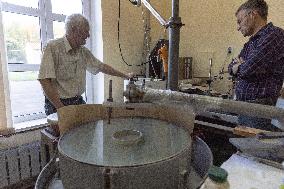
Kharkiv astronomers are only now returning to observations at their own observation base. "The only Ukrainian astronomical observatory that was occupied for a long time" - Vadym Kaidash, head of the scientific research institute of astronomy The full-scale invasion, says Kaidash, deprived Kharkiv astronomers of the opportunity to work at the Chuhuiv observatory of Karazin University. It is located 70 kilometers from Kharkiv - and in 2022 found itself under occupation. We, Kharkiv astronomers, astronomers of Karazin University, have very limited opportunities to observe the starry sky, because telescopes and observation equipment, computers, control systems, etc., are destroyed, do not work. There was an observatory in our suburbs during the occupation. A new exhibition appeared in the university museum of astronomy during the war. In this small exhibition we have evidence of the occupation by the Russians of our Chuguyiv Observatory of the Research Institute of Astronomy. This is the only Ukrainian astronomic

  •  
Kharkiv Astronomers Work Despite Continuing Russo-Ukrainian War - Ukraine

Kharkiv Astronomers Work Despite Continuing Russo-Ukrainian War - Ukraine

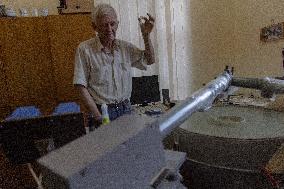
Kharkiv astronomers are only now returning to observations at their own observation base. "The only Ukrainian astronomical observatory that was occupied for a long time" - Vadym Kaidash, head of the scientific research institute of astronomy The full-scale invasion, says Kaidash, deprived Kharkiv astronomers of the opportunity to work at the Chuhuiv observatory of Karazin University. It is located 70 kilometers from Kharkiv - and in 2022 found itself under occupation. We, Kharkiv astronomers, astronomers of Karazin University, have very limited opportunities to observe the starry sky, because telescopes and observation equipment, computers, control systems, etc., are destroyed, do not work. There was an observatory in our suburbs during the occupation. A new exhibition appeared in the university museum of astronomy during the war. In this small exhibition we have evidence of the occupation by the Russians of our Chuguyiv Observatory of the Research Institute of Astronomy. This is the only Ukrainian astronomic

  •  
Kharkiv Astronomers Work Despite Continuing Russo-Ukrainian War - Ukraine

Kharkiv Astronomers Work Despite Continuing Russo-Ukrainian War - Ukraine

Kharkiv astronomers are only now returning to observations at their own observation base. "The only Ukrainian astronomical observatory that was occupied for a long time" - Vadym Kaidash, head of the scientific research institute of astronomy The full-scale invasion, says Kaidash, deprived Kharkiv astronomers of the opportunity to work at the Chuhuiv observatory of Karazin University. It is located 70 kilometers from Kharkiv - and in 2022 found itself under occupation. We, Kharkiv astronomers, astronomers of Karazin University, have very limited opportunities to observe the starry sky, because telescopes and observation equipment, computers, control systems, etc., are destroyed, do not work. There was an observatory in our suburbs during the occupation. A new exhibition appeared in the university museum of astronomy during the war. In this small exhibition we have evidence of the occupation by the Russians of our Chuguyiv Observatory of the Research Institute of Astronomy. This is the only Ukrainian astronomic

  •  
Kharkiv Astronomers Work Despite Continuing Russo-Ukrainian War - Ukraine

Kharkiv Astronomers Work Despite Continuing Russo-Ukrainian War - Ukraine

Kharkiv astronomers are only now returning to observations at their own observation base. "The only Ukrainian astronomical observatory that was occupied for a long time" - Vadym Kaidash, head of the scientific research institute of astronomy The full-scale invasion, says Kaidash, deprived Kharkiv astronomers of the opportunity to work at the Chuhuiv observatory of Karazin University. It is located 70 kilometers from Kharkiv - and in 2022 found itself under occupation. We, Kharkiv astronomers, astronomers of Karazin University, have very limited opportunities to observe the starry sky, because telescopes and observation equipment, computers, control systems, etc., are destroyed, do not work. There was an observatory in our suburbs during the occupation. A new exhibition appeared in the university museum of astronomy during the war. In this small exhibition we have evidence of the occupation by the Russians of our Chuguyiv Observatory of the Research Institute of Astronomy. This is the only Ukrainian astronomic

  •  
Kharkiv Astronomers Work Despite Continuing Russo-Ukrainian War - Ukraine

Kharkiv Astronomers Work Despite Continuing Russo-Ukrainian War - Ukraine

Kharkiv astronomers are only now returning to observations at their own observation base. "The only Ukrainian astronomical observatory that was occupied for a long time" - Vadym Kaidash, head of the scientific research institute of astronomy The full-scale invasion, says Kaidash, deprived Kharkiv astronomers of the opportunity to work at the Chuhuiv observatory of Karazin University. It is located 70 kilometers from Kharkiv - and in 2022 found itself under occupation. We, Kharkiv astronomers, astronomers of Karazin University, have very limited opportunities to observe the starry sky, because telescopes and observation equipment, computers, control systems, etc., are destroyed, do not work. There was an observatory in our suburbs during the occupation. A new exhibition appeared in the university museum of astronomy during the war. In this small exhibition we have evidence of the occupation by the Russians of our Chuguyiv Observatory of the Research Institute of Astronomy. This is the only Ukrainian astronomic

  •  
Kharkiv Astronomers Work Despite Continuing Russo-Ukrainian War - Ukraine

Kharkiv Astronomers Work Despite Continuing Russo-Ukrainian War - Ukraine

Kharkiv astronomers are only now returning to observations at their own observation base. "The only Ukrainian astronomical observatory that was occupied for a long time" - Vadym Kaidash, head of the scientific research institute of astronomy The full-scale invasion, says Kaidash, deprived Kharkiv astronomers of the opportunity to work at the Chuhuiv observatory of Karazin University. It is located 70 kilometers from Kharkiv - and in 2022 found itself under occupation. We, Kharkiv astronomers, astronomers of Karazin University, have very limited opportunities to observe the starry sky, because telescopes and observation equipment, computers, control systems, etc., are destroyed, do not work. There was an observatory in our suburbs during the occupation. A new exhibition appeared in the university museum of astronomy during the war. In this small exhibition we have evidence of the occupation by the Russians of our Chuguyiv Observatory of the Research Institute of Astronomy. This is the only Ukrainian astronomic

  •  
Kharkiv Astronomers Work Despite Continuing Russo-Ukrainian War - Ukraine

Kharkiv Astronomers Work Despite Continuing Russo-Ukrainian War - Ukraine

Kharkiv astronomers are only now returning to observations at their own observation base. "The only Ukrainian astronomical observatory that was occupied for a long time" - Vadym Kaidash, head of the scientific research institute of astronomy The full-scale invasion, says Kaidash, deprived Kharkiv astronomers of the opportunity to work at the Chuhuiv observatory of Karazin University. It is located 70 kilometers from Kharkiv - and in 2022 found itself under occupation. We, Kharkiv astronomers, astronomers of Karazin University, have very limited opportunities to observe the starry sky, because telescopes and observation equipment, computers, control systems, etc., are destroyed, do not work. There was an observatory in our suburbs during the occupation. A new exhibition appeared in the university museum of astronomy during the war. In this small exhibition we have evidence of the occupation by the Russians of our Chuguyiv Observatory of the Research Institute of Astronomy. This is the only Ukrainian astronomic

  •  
Kharkiv Astronomers Work Despite Continuing Russo-Ukrainian War - Ukraine

Kharkiv Astronomers Work Despite Continuing Russo-Ukrainian War - Ukraine

Kharkiv astronomers are only now returning to observations at their own observation base. "The only Ukrainian astronomical observatory that was occupied for a long time" - Vadym Kaidash, head of the scientific research institute of astronomy The full-scale invasion, says Kaidash, deprived Kharkiv astronomers of the opportunity to work at the Chuhuiv observatory of Karazin University. It is located 70 kilometers from Kharkiv - and in 2022 found itself under occupation. We, Kharkiv astronomers, astronomers of Karazin University, have very limited opportunities to observe the starry sky, because telescopes and observation equipment, computers, control systems, etc., are destroyed, do not work. There was an observatory in our suburbs during the occupation. A new exhibition appeared in the university museum of astronomy during the war. In this small exhibition we have evidence of the occupation by the Russians of our Chuguyiv Observatory of the Research Institute of Astronomy. This is the only Ukrainian astronomic

  •  
Kharkiv Astronomers Work Despite Continuing Russo-Ukrainian War - Ukraine

Kharkiv Astronomers Work Despite Continuing Russo-Ukrainian War - Ukraine

Kharkiv astronomers are only now returning to observations at their own observation base. "The only Ukrainian astronomical observatory that was occupied for a long time" - Vadym Kaidash, head of the scientific research institute of astronomy The full-scale invasion, says Kaidash, deprived Kharkiv astronomers of the opportunity to work at the Chuhuiv observatory of Karazin University. It is located 70 kilometers from Kharkiv - and in 2022 found itself under occupation. We, Kharkiv astronomers, astronomers of Karazin University, have very limited opportunities to observe the starry sky, because telescopes and observation equipment, computers, control systems, etc., are destroyed, do not work. There was an observatory in our suburbs during the occupation. A new exhibition appeared in the university museum of astronomy during the war. In this small exhibition we have evidence of the occupation by the Russians of our Chuguyiv Observatory of the Research Institute of Astronomy. This is the only Ukrainian astronomic

  •  
Kharkiv Astronomers Work Despite Continuing Russo-Ukrainian War - Ukraine

Kharkiv Astronomers Work Despite Continuing Russo-Ukrainian War - Ukraine

Kharkiv astronomers are only now returning to observations at their own observation base. "The only Ukrainian astronomical observatory that was occupied for a long time" - Vadym Kaidash, head of the scientific research institute of astronomy The full-scale invasion, says Kaidash, deprived Kharkiv astronomers of the opportunity to work at the Chuhuiv observatory of Karazin University. It is located 70 kilometers from Kharkiv - and in 2022 found itself under occupation. We, Kharkiv astronomers, astronomers of Karazin University, have very limited opportunities to observe the starry sky, because telescopes and observation equipment, computers, control systems, etc., are destroyed, do not work. There was an observatory in our suburbs during the occupation. A new exhibition appeared in the university museum of astronomy during the war. In this small exhibition we have evidence of the occupation by the Russians of our Chuguyiv Observatory of the Research Institute of Astronomy. This is the only Ukrainian astronomic

  •  
Kharkiv Astronomers Work Despite Continuing Russo-Ukrainian War - Ukraine

Kharkiv Astronomers Work Despite Continuing Russo-Ukrainian War - Ukraine

Kharkiv astronomers are only now returning to observations at their own observation base. "The only Ukrainian astronomical observatory that was occupied for a long time" - Vadym Kaidash, head of the scientific research institute of astronomy The full-scale invasion, says Kaidash, deprived Kharkiv astronomers of the opportunity to work at the Chuhuiv observatory of Karazin University. It is located 70 kilometers from Kharkiv - and in 2022 found itself under occupation. We, Kharkiv astronomers, astronomers of Karazin University, have very limited opportunities to observe the starry sky, because telescopes and observation equipment, computers, control systems, etc., are destroyed, do not work. There was an observatory in our suburbs during the occupation. A new exhibition appeared in the university museum of astronomy during the war. In this small exhibition we have evidence of the occupation by the Russians of our Chuguyiv Observatory of the Research Institute of Astronomy. This is the only Ukrainian astronomic

  •  
Kharkiv Astronomers Work Despite Continuing Russo-Ukrainian War - Ukraine

Kharkiv Astronomers Work Despite Continuing Russo-Ukrainian War - Ukraine

Kharkiv astronomers are only now returning to observations at their own observation base. "The only Ukrainian astronomical observatory that was occupied for a long time" - Vadym Kaidash, head of the scientific research institute of astronomy The full-scale invasion, says Kaidash, deprived Kharkiv astronomers of the opportunity to work at the Chuhuiv observatory of Karazin University. It is located 70 kilometers from Kharkiv - and in 2022 found itself under occupation. We, Kharkiv astronomers, astronomers of Karazin University, have very limited opportunities to observe the starry sky, because telescopes and observation equipment, computers, control systems, etc., are destroyed, do not work. There was an observatory in our suburbs during the occupation. A new exhibition appeared in the university museum of astronomy during the war. In this small exhibition we have evidence of the occupation by the Russians of our Chuguyiv Observatory of the Research Institute of Astronomy. This is the only Ukrainian astronomic

  •  
Kharkiv Astronomers Work Despite Continuing Russo-Ukrainian War - Ukraine

Kharkiv Astronomers Work Despite Continuing Russo-Ukrainian War - Ukraine

Kharkiv astronomers are only now returning to observations at their own observation base. "The only Ukrainian astronomical observatory that was occupied for a long time" - Vadym Kaidash, head of the scientific research institute of astronomy The full-scale invasion, says Kaidash, deprived Kharkiv astronomers of the opportunity to work at the Chuhuiv observatory of Karazin University. It is located 70 kilometers from Kharkiv - and in 2022 found itself under occupation. We, Kharkiv astronomers, astronomers of Karazin University, have very limited opportunities to observe the starry sky, because telescopes and observation equipment, computers, control systems, etc., are destroyed, do not work. There was an observatory in our suburbs during the occupation. A new exhibition appeared in the university museum of astronomy during the war. In this small exhibition we have evidence of the occupation by the Russians of our Chuguyiv Observatory of the Research Institute of Astronomy. This is the only Ukrainian astronomic

  •  
Kharkiv Astronomers Work Despite Continuing Russo-Ukrainian War - Ukraine

Kharkiv Astronomers Work Despite Continuing Russo-Ukrainian War - Ukraine

Kharkiv astronomers are only now returning to observations at their own observation base. "The only Ukrainian astronomical observatory that was occupied for a long time" - Vadym Kaidash, head of the scientific research institute of astronomy The full-scale invasion, says Kaidash, deprived Kharkiv astronomers of the opportunity to work at the Chuhuiv observatory of Karazin University. It is located 70 kilometers from Kharkiv - and in 2022 found itself under occupation. We, Kharkiv astronomers, astronomers of Karazin University, have very limited opportunities to observe the starry sky, because telescopes and observation equipment, computers, control systems, etc., are destroyed, do not work. There was an observatory in our suburbs during the occupation. A new exhibition appeared in the university museum of astronomy during the war. In this small exhibition we have evidence of the occupation by the Russians of our Chuguyiv Observatory of the Research Institute of Astronomy. This is the only Ukrainian astronomic

  •  
Kharkiv Astronomers Work Despite Continuing Russo-Ukrainian War - Ukraine

Kharkiv Astronomers Work Despite Continuing Russo-Ukrainian War - Ukraine

Kharkiv astronomers are only now returning to observations at their own observation base. "The only Ukrainian astronomical observatory that was occupied for a long time" - Vadym Kaidash, head of the scientific research institute of astronomy The full-scale invasion, says Kaidash, deprived Kharkiv astronomers of the opportunity to work at the Chuhuiv observatory of Karazin University. It is located 70 kilometers from Kharkiv - and in 2022 found itself under occupation. We, Kharkiv astronomers, astronomers of Karazin University, have very limited opportunities to observe the starry sky, because telescopes and observation equipment, computers, control systems, etc., are destroyed, do not work. There was an observatory in our suburbs during the occupation. A new exhibition appeared in the university museum of astronomy during the war. In this small exhibition we have evidence of the occupation by the Russians of our Chuguyiv Observatory of the Research Institute of Astronomy. This is the only Ukrainian astronomic

  •  
Kharkiv Astronomers Work Despite Continuing Russo-Ukrainian War - Ukraine

Kharkiv Astronomers Work Despite Continuing Russo-Ukrainian War - Ukraine

Kharkiv astronomers are only now returning to observations at their own observation base. "The only Ukrainian astronomical observatory that was occupied for a long time" - Vadym Kaidash, head of the scientific research institute of astronomy The full-scale invasion, says Kaidash, deprived Kharkiv astronomers of the opportunity to work at the Chuhuiv observatory of Karazin University. It is located 70 kilometers from Kharkiv - and in 2022 found itself under occupation. We, Kharkiv astronomers, astronomers of Karazin University, have very limited opportunities to observe the starry sky, because telescopes and observation equipment, computers, control systems, etc., are destroyed, do not work. There was an observatory in our suburbs during the occupation. A new exhibition appeared in the university museum of astronomy during the war. In this small exhibition we have evidence of the occupation by the Russians of our Chuguyiv Observatory of the Research Institute of Astronomy. This is the only Ukrainian astronomic

  •  
Kharkiv Astronomers Work Despite Continuing Russo-Ukrainian War - Ukraine

Kharkiv Astronomers Work Despite Continuing Russo-Ukrainian War - Ukraine

Kharkiv astronomers are only now returning to observations at their own observation base. "The only Ukrainian astronomical observatory that was occupied for a long time" - Vadym Kaidash, head of the scientific research institute of astronomy The full-scale invasion, says Kaidash, deprived Kharkiv astronomers of the opportunity to work at the Chuhuiv observatory of Karazin University. It is located 70 kilometers from Kharkiv - and in 2022 found itself under occupation. We, Kharkiv astronomers, astronomers of Karazin University, have very limited opportunities to observe the starry sky, because telescopes and observation equipment, computers, control systems, etc., are destroyed, do not work. There was an observatory in our suburbs during the occupation. A new exhibition appeared in the university museum of astronomy during the war. In this small exhibition we have evidence of the occupation by the Russians of our Chuguyiv Observatory of the Research Institute of Astronomy. This is the only Ukrainian astronomic

  •  
Kharkiv Astronomers Work Despite Continuing Russo-Ukrainian War - Ukraine

Kharkiv Astronomers Work Despite Continuing Russo-Ukrainian War - Ukraine

Kharkiv astronomers are only now returning to observations at their own observation base. "The only Ukrainian astronomical observatory that was occupied for a long time" - Vadym Kaidash, head of the scientific research institute of astronomy The full-scale invasion, says Kaidash, deprived Kharkiv astronomers of the opportunity to work at the Chuhuiv observatory of Karazin University. It is located 70 kilometers from Kharkiv - and in 2022 found itself under occupation. We, Kharkiv astronomers, astronomers of Karazin University, have very limited opportunities to observe the starry sky, because telescopes and observation equipment, computers, control systems, etc., are destroyed, do not work. There was an observatory in our suburbs during the occupation. A new exhibition appeared in the university museum of astronomy during the war. In this small exhibition we have evidence of the occupation by the Russians of our Chuguyiv Observatory of the Research Institute of Astronomy. This is the only Ukrainian astronomic

  •  
Kharkiv Astronomers Work Despite Continuing Russo-Ukrainian War - Ukraine

Kharkiv Astronomers Work Despite Continuing Russo-Ukrainian War - Ukraine

Kharkiv astronomers are only now returning to observations at their own observation base. "The only Ukrainian astronomical observatory that was occupied for a long time" - Vadym Kaidash, head of the scientific research institute of astronomy The full-scale invasion, says Kaidash, deprived Kharkiv astronomers of the opportunity to work at the Chuhuiv observatory of Karazin University. It is located 70 kilometers from Kharkiv - and in 2022 found itself under occupation. We, Kharkiv astronomers, astronomers of Karazin University, have very limited opportunities to observe the starry sky, because telescopes and observation equipment, computers, control systems, etc., are destroyed, do not work. There was an observatory in our suburbs during the occupation. A new exhibition appeared in the university museum of astronomy during the war. In this small exhibition we have evidence of the occupation by the Russians of our Chuguyiv Observatory of the Research Institute of Astronomy. This is the only Ukrainian astronomic

  •  
Kharkiv Astronomers Work Despite Continuing Russo-Ukrainian War - Ukraine

Kharkiv Astronomers Work Despite Continuing Russo-Ukrainian War - Ukraine

Kharkiv astronomers are only now returning to observations at their own observation base. "The only Ukrainian astronomical observatory that was occupied for a long time" - Vadym Kaidash, head of the scientific research institute of astronomy The full-scale invasion, says Kaidash, deprived Kharkiv astronomers of the opportunity to work at the Chuhuiv observatory of Karazin University. It is located 70 kilometers from Kharkiv - and in 2022 found itself under occupation. We, Kharkiv astronomers, astronomers of Karazin University, have very limited opportunities to observe the starry sky, because telescopes and observation equipment, computers, control systems, etc., are destroyed, do not work. There was an observatory in our suburbs during the occupation. A new exhibition appeared in the university museum of astronomy during the war. In this small exhibition we have evidence of the occupation by the Russians of our Chuguyiv Observatory of the Research Institute of Astronomy. This is the only Ukrainian astronomic

  •  
Kharkiv Astronomers Work Despite Continuing Russo-Ukrainian War - Ukraine

Kharkiv Astronomers Work Despite Continuing Russo-Ukrainian War - Ukraine

Kharkiv astronomers are only now returning to observations at their own observation base. "The only Ukrainian astronomical observatory that was occupied for a long time" - Vadym Kaidash, head of the scientific research institute of astronomy The full-scale invasion, says Kaidash, deprived Kharkiv astronomers of the opportunity to work at the Chuhuiv observatory of Karazin University. It is located 70 kilometers from Kharkiv - and in 2022 found itself under occupation. We, Kharkiv astronomers, astronomers of Karazin University, have very limited opportunities to observe the starry sky, because telescopes and observation equipment, computers, control systems, etc., are destroyed, do not work. There was an observatory in our suburbs during the occupation. A new exhibition appeared in the university museum of astronomy during the war. In this small exhibition we have evidence of the occupation by the Russians of our Chuguyiv Observatory of the Research Institute of Astronomy. This is the only Ukrainian astronomic

  •  
Kharkiv Astronomers Work Despite Continuing Russo-Ukrainian War - Ukraine

Kharkiv Astronomers Work Despite Continuing Russo-Ukrainian War - Ukraine

Kharkiv astronomers are only now returning to observations at their own observation base. "The only Ukrainian astronomical observatory that was occupied for a long time" - Vadym Kaidash, head of the scientific research institute of astronomy The full-scale invasion, says Kaidash, deprived Kharkiv astronomers of the opportunity to work at the Chuhuiv observatory of Karazin University. It is located 70 kilometers from Kharkiv - and in 2022 found itself under occupation. We, Kharkiv astronomers, astronomers of Karazin University, have very limited opportunities to observe the starry sky, because telescopes and observation equipment, computers, control systems, etc., are destroyed, do not work. There was an observatory in our suburbs during the occupation. A new exhibition appeared in the university museum of astronomy during the war. In this small exhibition we have evidence of the occupation by the Russians of our Chuguyiv Observatory of the Research Institute of Astronomy. This is the only Ukrainian astronomic

  •  
Kharkiv Astronomers Work Despite Continuing Russo-Ukrainian War - Ukraine

Kharkiv Astronomers Work Despite Continuing Russo-Ukrainian War - Ukraine

Kharkiv astronomers are only now returning to observations at their own observation base. "The only Ukrainian astronomical observatory that was occupied for a long time" - Vadym Kaidash, head of the scientific research institute of astronomy The full-scale invasion, says Kaidash, deprived Kharkiv astronomers of the opportunity to work at the Chuhuiv observatory of Karazin University. It is located 70 kilometers from Kharkiv - and in 2022 found itself under occupation. We, Kharkiv astronomers, astronomers of Karazin University, have very limited opportunities to observe the starry sky, because telescopes and observation equipment, computers, control systems, etc., are destroyed, do not work. There was an observatory in our suburbs during the occupation. A new exhibition appeared in the university museum of astronomy during the war. In this small exhibition we have evidence of the occupation by the Russians of our Chuguyiv Observatory of the Research Institute of Astronomy. This is the only Ukrainian astronomic

  •  
Kharkiv Astronomers Work Despite Continuing Russo-Ukrainian War - Ukraine

Kharkiv Astronomers Work Despite Continuing Russo-Ukrainian War - Ukraine

Kharkiv astronomers are only now returning to observations at their own observation base. "The only Ukrainian astronomical observatory that was occupied for a long time" - Vadym Kaidash, head of the scientific research institute of astronomy The full-scale invasion, says Kaidash, deprived Kharkiv astronomers of the opportunity to work at the Chuhuiv observatory of Karazin University. It is located 70 kilometers from Kharkiv - and in 2022 found itself under occupation. We, Kharkiv astronomers, astronomers of Karazin University, have very limited opportunities to observe the starry sky, because telescopes and observation equipment, computers, control systems, etc., are destroyed, do not work. There was an observatory in our suburbs during the occupation. A new exhibition appeared in the university museum of astronomy during the war. In this small exhibition we have evidence of the occupation by the Russians of our Chuguyiv Observatory of the Research Institute of Astronomy. This is the only Ukrainian astronomic

  •  
Kharkiv Astronomers Work Despite Continuing Russo-Ukrainian War - Ukraine

Kharkiv Astronomers Work Despite Continuing Russo-Ukrainian War - Ukraine

Kharkiv astronomers are only now returning to observations at their own observation base. "The only Ukrainian astronomical observatory that was occupied for a long time" - Vadym Kaidash, head of the scientific research institute of astronomy The full-scale invasion, says Kaidash, deprived Kharkiv astronomers of the opportunity to work at the Chuhuiv observatory of Karazin University. It is located 70 kilometers from Kharkiv - and in 2022 found itself under occupation. We, Kharkiv astronomers, astronomers of Karazin University, have very limited opportunities to observe the starry sky, because telescopes and observation equipment, computers, control systems, etc., are destroyed, do not work. There was an observatory in our suburbs during the occupation. A new exhibition appeared in the university museum of astronomy during the war. In this small exhibition we have evidence of the occupation by the Russians of our Chuguyiv Observatory of the Research Institute of Astronomy. This is the only Ukrainian astronomic

  •  
Kharkiv Astronomers Work Despite Continuing Russo-Ukrainian War - Ukraine

Kharkiv Astronomers Work Despite Continuing Russo-Ukrainian War - Ukraine

Kharkiv astronomers are only now returning to observations at their own observation base. "The only Ukrainian astronomical observatory that was occupied for a long time" - Vadym Kaidash, head of the scientific research institute of astronomy The full-scale invasion, says Kaidash, deprived Kharkiv astronomers of the opportunity to work at the Chuhuiv observatory of Karazin University. It is located 70 kilometers from Kharkiv - and in 2022 found itself under occupation. We, Kharkiv astronomers, astronomers of Karazin University, have very limited opportunities to observe the starry sky, because telescopes and observation equipment, computers, control systems, etc., are destroyed, do not work. There was an observatory in our suburbs during the occupation. A new exhibition appeared in the university museum of astronomy during the war. In this small exhibition we have evidence of the occupation by the Russians of our Chuguyiv Observatory of the Research Institute of Astronomy. This is the only Ukrainian astronomic

  •  
Kharkiv Astronomers Work Despite Continuing Russo-Ukrainian War - Ukraine

Kharkiv Astronomers Work Despite Continuing Russo-Ukrainian War - Ukraine

Kharkiv astronomers are only now returning to observations at their own observation base. "The only Ukrainian astronomical observatory that was occupied for a long time" - Vadym Kaidash, head of the scientific research institute of astronomy The full-scale invasion, says Kaidash, deprived Kharkiv astronomers of the opportunity to work at the Chuhuiv observatory of Karazin University. It is located 70 kilometers from Kharkiv - and in 2022 found itself under occupation. We, Kharkiv astronomers, astronomers of Karazin University, have very limited opportunities to observe the starry sky, because telescopes and observation equipment, computers, control systems, etc., are destroyed, do not work. There was an observatory in our suburbs during the occupation. A new exhibition appeared in the university museum of astronomy during the war. In this small exhibition we have evidence of the occupation by the Russians of our Chuguyiv Observatory of the Research Institute of Astronomy. This is the only Ukrainian astronomic

  •  
Kharkiv Astronomers Work Despite Continuing Russo-Ukrainian War - Ukraine

Kharkiv Astronomers Work Despite Continuing Russo-Ukrainian War - Ukraine

Kharkiv astronomers are only now returning to observations at their own observation base. "The only Ukrainian astronomical observatory that was occupied for a long time" - Vadym Kaidash, head of the scientific research institute of astronomy The full-scale invasion, says Kaidash, deprived Kharkiv astronomers of the opportunity to work at the Chuhuiv observatory of Karazin University. It is located 70 kilometers from Kharkiv - and in 2022 found itself under occupation. We, Kharkiv astronomers, astronomers of Karazin University, have very limited opportunities to observe the starry sky, because telescopes and observation equipment, computers, control systems, etc., are destroyed, do not work. There was an observatory in our suburbs during the occupation. A new exhibition appeared in the university museum of astronomy during the war. In this small exhibition we have evidence of the occupation by the Russians of our Chuguyiv Observatory of the Research Institute of Astronomy. This is the only Ukrainian astronomic

  •  

Osaka Metro station connected to World Expo venue

OSAKA, Japan, Jan. 19 Kyodo - A tape-cutting ceremony is held in Osaka on Jan. 19, 2025, to mark the opening of new Osaka Metro Chuo Line station Yumeshima, directly connected to the venue of the 2025 World Exposition starting in April on an artificial island called Yumeshima in the western Japan city. (Kyodo)

  •  

New Year greeting event at Japan's Imperial Palace

TOKYO, Japan, Jan. 2 Kyodo - Japanese Emperor Naruhito and Empress Masako wave to well-wishers from a balcony at the Imperial Palace in Tokyo during a New Year greeting event on Jan. 2, 2025. (Kyodo)

  •  
Seouls New Record First Snow - South Korea

Seouls New Record First Snow - South Korea

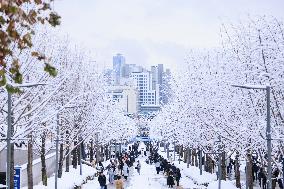
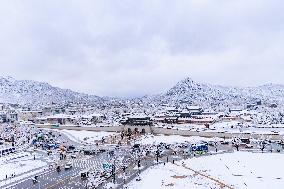
A view of the city after snowfall in Seoul, South Korea. More than 16 centimeters of snow blanketed the South Korea's capital Seoul on November 27, 2024, marking the biggest snowfall in November since modern weather observations began in 1907, the Korea Meteorological Administration (KMA) said. The new record coincided with the first snow of the season in Seoul. Photo by Photo by Park Jintaek/Xinhua/ABACAPRESS.COM

  •  
Seouls New Record First Snow - South Korea

Seouls New Record First Snow - South Korea

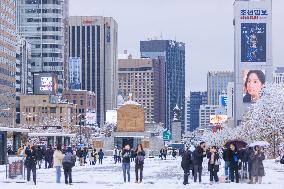
A view of the city after snowfall in Seoul, South Korea. More than 16 centimeters of snow blanketed the South Korea's capital Seoul on November 27, 2024, marking the biggest snowfall in November since modern weather observations began in 1907, the Korea Meteorological Administration (KMA) said. The new record coincided with the first snow of the season in Seoul. Photo by Photo by Park Jintaek/Xinhua/ABACAPRESS.COM

  •  
Seouls New Record First Snow - South Korea

Seouls New Record First Snow - South Korea

A view of the city after snowfall in Seoul, South Korea. More than 16 centimeters of snow blanketed the South Korea's capital Seoul on November 27, 2024, marking the biggest snowfall in November since modern weather observations began in 1907, the Korea Meteorological Administration (KMA) said. The new record coincided with the first snow of the season in Seoul. Photo by Photo by Park Jintaek/Xinhua/ABACAPRESS.COM

  •  
Seouls New Record First Snow - South Korea

Seouls New Record First Snow - South Korea

A view of the city after snowfall in Seoul, South Korea. More than 16 centimeters of snow blanketed the South Korea's capital Seoul on November 27, 2024, marking the biggest snowfall in November since modern weather observations began in 1907, the Korea Meteorological Administration (KMA) said. The new record coincided with the first snow of the season in Seoul. Photo by Photo by Park Jintaek/Xinhua/ABACAPRESS.COM

  •  
Seouls New Record First Snow - South Korea

Seouls New Record First Snow - South Korea

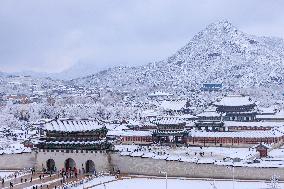
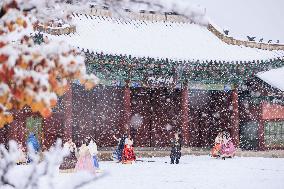
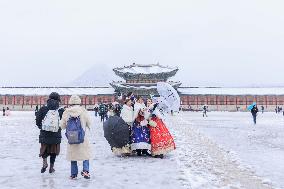
Tourists wearing Hanbok, the traditional Korean costume, take a photo with snow at the Gyeongbokgung Palace in Seoul, South Korea. More than 16 centimeters of snow blanketed the South Korea's capital Seoul on November 27, 2024, marking the biggest snowfall in November since modern weather observations began in 1907, the Korea Meteorological Administration (KMA) said. The new record coincided with the first snow of the season in Seoul. Photo by Photo by Park Jintaek/Xinhua/ABACAPRESS.COM

  •  
Seouls New Record First Snow - South Korea

Seouls New Record First Snow - South Korea

Tourists wearing Hanbok, the traditional Korean costume, take a photo with snow at the Gyeongbokgung Palace in Seoul, South Korea. More than 16 centimeters of snow blanketed the South Korea's capital Seoul on November 27, 2024, marking the biggest snowfall in November since modern weather observations began in 1907, the Korea Meteorological Administration (KMA) said. The new record coincided with the first snow of the season in Seoul. Photo by Photo by Park Jintaek/Xinhua/ABACAPRESS.COM

  •  
Hurricane Beryl Makes His Way Across The Caribbean

Hurricane Beryl Makes His Way Across The Caribbean

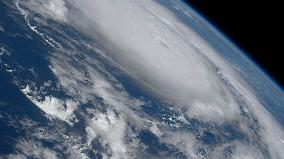
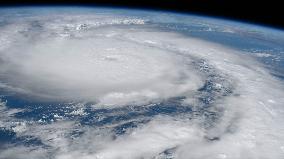
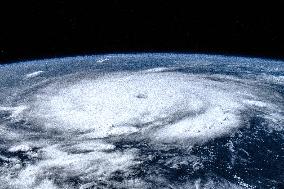
Handout photo from the International Space Station, taken June 30, 2024, shows Hurricane Beryl pictured east of Barbados. An astronaut has captured jaw-dropping pictures of destructive Hurricane Beryl from space. NASA's Matthew Dominick shot images of the storm as it made its way across the Caribbean this week. The Category 4 hurricane had winds which peaked at 165 mph, and is expected to bring life-threatening winds and storm surges to Jamaica on Wednesday. Matthew Dominick wrote: "We flew right over the top of Hurricane Beryl today (1 July). Peering down into the eye with the 50 to 500 mm lens gave me both an eerie feeling and a high level of weather nerd excitement." NASA say they study hurricanes from space through images like these, as well as observations from satellites. They explain: "This vantage point helps scientists understand how climate change impacts hurricanes and learn how communities can better prepare for tropical cyclones in a warmer world." Photo by NAsa via ABACAPRESS.COM

  •  
Hurricane Beryl Makes His Way Across The Caribbean

Hurricane Beryl Makes His Way Across The Caribbean

Handout photo from the International Space Station, taken June 30, 2024, shows Hurricane Beryl pictured east of Barbados. An astronaut has captured jaw-dropping pictures of destructive Hurricane Beryl from space. NASA's Matthew Dominick shot images of the storm as it made its way across the Caribbean this week. The Category 4 hurricane had winds which peaked at 165 mph, and is expected to bring life-threatening winds and storm surges to Jamaica on Wednesday. Matthew Dominick wrote: "We flew right over the top of Hurricane Beryl today (1 July). Peering down into the eye with the 50 to 500 mm lens gave me both an eerie feeling and a high level of weather nerd excitement." NASA say they study hurricanes from space through images like these, as well as observations from satellites. They explain: "This vantage point helps scientists understand how climate change impacts hurricanes and learn how communities can better prepare for tropical cyclones in a warmer world." Photo by NAsa via ABACAPRESS.COM

  •  
Hurricane Beryl Makes His Way Across The Caribbean

Hurricane Beryl Makes His Way Across The Caribbean

Handout photo - NASA astronaut Matthew Dominick on the International Space Station wrote on 1 July 2024: "We flew right over the top of Hurricane Beryl today. Peering down into the eye with the 50 to 500 mm lens gave me both an eerie feeling and a high level of weather nerd excitement." An astronaut has captured jaw-dropping pictures of destructive Hurricane Beryl from space. NASA's Matthew Dominick shot images of the storm as it made its way across the Caribbean this week. The Category 4 hurricane had winds which peaked at 165 mph, and is expected to bring life-threatening winds and storm surges to Jamaica on Wednesday. Matthew Dominick wrote: "We flew right over the top of Hurricane Beryl today (1 July). Peering down into the eye with the 50 to 500 mm lens gave me both an eerie feeling and a high level of weather nerd excitement." NASA say they study hurricanes from space through images like these, as well as observations from satellites. They explain: "This vantage point helps scientists understand how cli

  •  
NORWAY-NY-ALESUND-YELLOW RIVER STATION-CHINESE RESEARCHERS

NORWAY-NY-ALESUND-YELLOW RIVER STATION-CHINESE RESEARCHERS

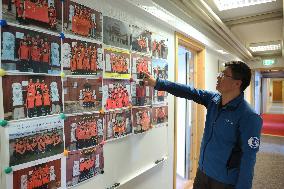
(240626) -- NY-ALESUND, June 26, 2024 Photo by Xinhua/ABACAPRESS.COM) -- Hu Zhengyi, a member of the Chinese Arctic expedition team, points to one of the photos of Chinese Arctic expedition teams at the Yellow River Station in Ny-Alesund, Svalbard, Norway, June 23, 2024. Situated at 79 degrees north latitude in the northwestern region of Spitsbergen, the largest island in Norway's Arctic Svalbard archipelago, Ny-Alesund is the world's northernmost permanent settlement. Once a thriving coal mining town, Ny-Alesund now buzzes with the activities of polar researchers. Since the Yellow River Station's inception in 2004, China has established a significant presence in this scientific sanctuary, carrying out a range of observations and investigations in glaciology, terrestrial ecology, marine ecology, space physics, and other fields. By the end of 2023, the Yellow River Station had supported more than 250 scientific research projects and hosted over 660 researchers. As China's first Arctic research station, it has

  •  
NORWAY-NY-ALESUND-YELLOW RIVER STATION-CHINESE RESEARCHERS

NORWAY-NY-ALESUND-YELLOW RIVER STATION-CHINESE RESEARCHERS

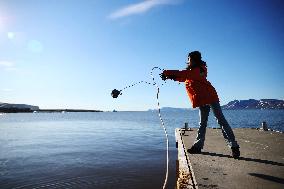
(240626) -- NY-ALESUND, June 26, 2024 Photo by Xinhua/ABACAPRESS.COM) -- Zhao Hongying, a member of the Chinese Arctic expedition team, carries out a sampling operation at the Yellow River Station in Ny-Alesund, Svalbard, Norway, June 21, 2024. Situated at 79 degrees north latitude in the northwestern region of Spitsbergen, the largest island in Norway's Arctic Svalbard archipelago, Ny-Alesund is the world's northernmost permanent settlement. Once a thriving coal mining town, Ny-Alesund now buzzes with the activities of polar researchers. Since the Yellow River Station's inception in 2004, China has established a significant presence in this scientific sanctuary, carrying out a range of observations and investigations in glaciology, terrestrial ecology, marine ecology, space physics, and other fields. By the end of 2023, the Yellow River Station had supported more than 250 scientific research projects and hosted over 660 researchers. As China's first Arctic research station, it has witnessed not only the deve

  •  
NORWAY-NY-ALESUND-YELLOW RIVER STATION-CHINESE RESEARCHERS

NORWAY-NY-ALESUND-YELLOW RIVER STATION-CHINESE RESEARCHERS

(240626) -- NY-ALESUND, June 26, 2024 Photo by Xinhua/ABACAPRESS.COM) -- Wu Xiaohan, a member of the Chinese Arctic expedition team, takes a sample of sea water in Ny-Alesund, Svalbard, Norway, June 21, 2024. Situated at 79 degrees north latitude in the northwestern region of Spitsbergen, the largest island in Norway's Arctic Svalbard archipelago, Ny-Alesund is the world's northernmost permanent settlement. Once a thriving coal mining town, Ny-Alesund now buzzes with the activities of polar researchers. Since the Yellow River Station's inception in 2004, China has established a significant presence in this scientific sanctuary, carrying out a range of observations and investigations in glaciology, terrestrial ecology, marine ecology, space physics, and other fields. By the end of 2023, the Yellow River Station had supported more than 250 scientific research projects and hosted over 660 researchers. As China's first Arctic research station, it has witnessed not only the development of China's polar research ef

  •  
NORWAY-NY-ALESUND-YELLOW RIVER STATION-CHINESE RESEARCHERS

NORWAY-NY-ALESUND-YELLOW RIVER STATION-CHINESE RESEARCHERS

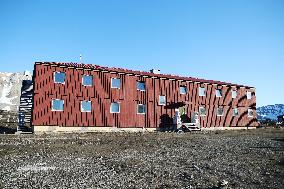
(240626) -- NY-ALESUND, June 26, 2024 Photo by Xinhua/ABACAPRESS.COM) -- This photo taken on June 21, 2024 shows the Yellow River Station in Ny-Alesund, Svalbard, Norway. Situated at 79 degrees north latitude in the northwestern region of Spitsbergen, the largest island in Norway's Arctic Svalbard archipelago, Ny-Alesund is the world's northernmost permanent settlement. Once a thriving coal mining town, Ny-Alesund now buzzes with the activities of polar researchers. Since the Yellow River Station's inception in 2004, China has established a significant presence in this scientific sanctuary, carrying out a range of observations and investigations in glaciology, terrestrial ecology, marine ecology, space physics, and other fields. By the end of 2023, the Yellow River Station had supported more than 250 scientific research projects and hosted over 660 researchers. As China's first Arctic research station, it has witnessed not only the development of China's polar research efforts but also the endeavor and braver

  •  
NORWAY-NY-ALESUND-YELLOW RIVER STATION-CHINESE RESEARCHERS

NORWAY-NY-ALESUND-YELLOW RIVER STATION-CHINESE RESEARCHERS

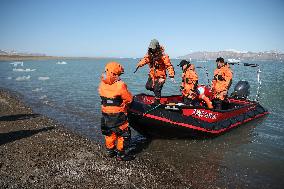
(240626) -- NY-ALESUND, June 26, 2024 Photo by Xinhua/ABACAPRESS.COM) -- Members of the Chinese Arctic expedition team take a boat out for sampling in Ny-Alesund, Svalbard, Norway, June 22, 2024. Situated at 79 degrees north latitude in the northwestern region of Spitsbergen, the largest island in Norway's Arctic Svalbard archipelago, Ny-Alesund is the world's northernmost permanent settlement. Once a thriving coal mining town, Ny-Alesund now buzzes with the activities of polar researchers. Since the Yellow River Station's inception in 2004, China has established a significant presence in this scientific sanctuary, carrying out a range of observations and investigations in glaciology, terrestrial ecology, marine ecology, space physics, and other fields. By the end of 2023, the Yellow River Station had supported more than 250 scientific research projects and hosted over 660 researchers. As China's first Arctic research station, it has witnessed not only the development of China's polar research efforts but als

  •  
NORWAY-NY-ALESUND-YELLOW RIVER STATION-CHINESE RESEARCHERS

NORWAY-NY-ALESUND-YELLOW RIVER STATION-CHINESE RESEARCHERS

(240626) -- NY-ALESUND, June 26, 2024 Photo by Xinhua/ABACAPRESS.COM) -- Members of the Chinese Arctic expedition team Zhao Hongying (L) and Wu Xiaohan communicate at the Yellow River Station in Ny-Alesund, Svalbard, Norway, June 21, 2024. Situated at 79 degrees north latitude in the northwestern region of Spitsbergen, the largest island in Norway's Arctic Svalbard archipelago, Ny-Alesund is the world's northernmost permanent settlement. Once a thriving coal mining town, Ny-Alesund now buzzes with the activities of polar researchers. Since the Yellow River Station's inception in 2004, China has established a significant presence in this scientific sanctuary, carrying out a range of observations and investigations in glaciology, terrestrial ecology, marine ecology, space physics, and other fields. By the end of 2023, the Yellow River Station had supported more than 250 scientific research projects and hosted over 660 researchers. As China's first Arctic research station, it has witnessed not only the developme

  • Main
  • Top
  • Editorial
  • Creative
  • About Us
  • About ILG
  • Terms of use
  • Company
  • BEHIND
  • Price List
  • Single Plan
  • Monthly Plan
  • Services
  • Shooting
  • Rights Clearance
  • Support
  • FAQ
  • How To Buy
  • Contact Us
  • Become a Partner

© KYODO NEWS IMAGES INC

All Rights Reserved.

  • Editorial
  • Olympics
  • News
  • Sports
  • Japan
  • Tech
  • Royal
  • Disaster
  • NorthKorea
  • Old Japan
  • SNS
  • Creative
  • Food
  • Japan
  • Landscape
  • Animal
  • Popular
  • #Ukraine
  • #Russia
  • #coronavirus
  • #N. Korea
  • #Thailand
  • #China
  • #Ukraine
  • #Russia
  • #coronavirus
  • #N. Korea
  • #Thailand
  • #China
  • Food
  • Japan
  • Landscape
  • Animal
  • Olympics
  • News
  • Sports
  • Japan
  • Tech
  • Royal
  • Disaster
  • NorthKorea
  • Old Japan
  • SNS