•  
Red Beach Scenic Area - China

Red Beach Scenic Area - China

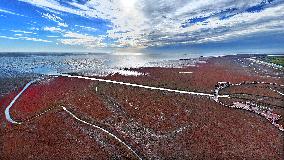
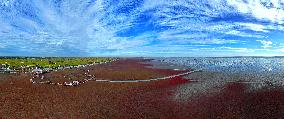
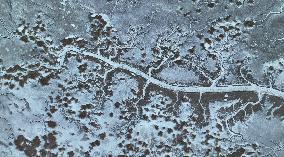
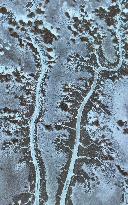
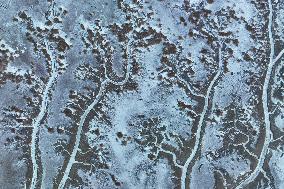
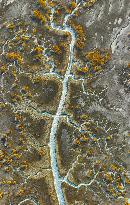
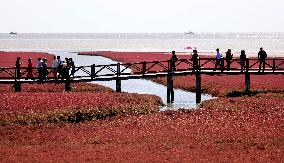
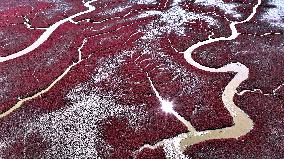
An aerial drone photo shows a view of the Red Beach scenic area in Panjin City, northeast China's Liaoning Province, September 11, 2024. The Red Beach is famous for its landscapes featuring the red plant of Suaeda salsa. Photo by Xinhua/Zhou Hua/ABACAPRESS.COM

  •  
Red Beach Scenic Area - China

Red Beach Scenic Area - China

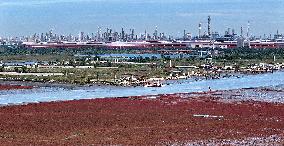
An aerial drone photo shows a view of the red beach at the Liaohe River delta in Panjin City, northeast China's Liaoning Province, September 11, 2024. The Red Beach is famous for its landscapes featuring the red plant of Suaeda salsa. Photo by Xinhua/Zhou Hua/ABACAPRESS.COM

  •  
Red Beach Scenic Area - China

Red Beach Scenic Area - China

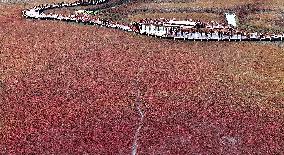
An aerial drone photo shows a view of the Red Beach scenic area in Panjin City, northeast China's Liaoning Province, September 11, 2024. The Red Beach is famous for its landscapes featuring the red plant of Suaeda salsa. Photo by Xinhua/Zhou Hua/ABACAPRESS.COM

  •  
Red Beach Scenic Area - China

Red Beach Scenic Area - China

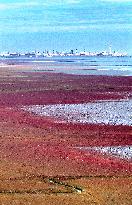
An aerial drone photo shows a view of the red beach at the Liaohe River delta in Panjin City, northeast China's Liaoning Province, September 11, 2024. The Red Beach is famous for its landscapes featuring the red plant of Suaeda salsa. Photo by Xinhua/Zhou Hua/ABACAPRESS.COM

  •  
Red Beach Scenic Area - China

Red Beach Scenic Area - China

An aerial drone photo shows a view of the red beach at the Liaohe River delta in Panjin City, northeast China's Liaoning Province, September 11, 2024. The Red Beach is famous for its landscapes featuring the red plant of Suaeda salsa. Photo by Xinhua/Zhou Hua/ABACAPRESS.COM

  •  
XINHUA PHOTOS OF THE DAY

XINHUA PHOTOS OF THE DAY

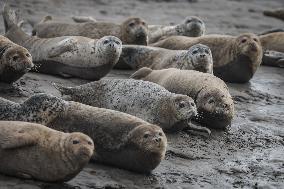
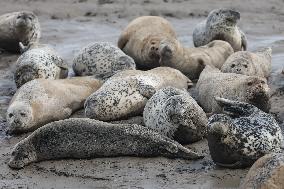
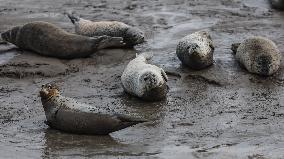
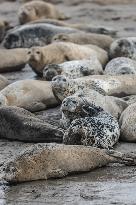
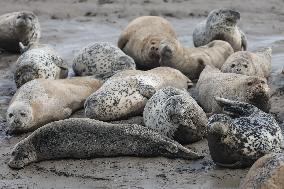
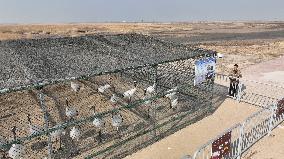
(240410) -- BEIJING, April 10, 2024 (Xinhua) -- Spotted seals rest on mudflat of Liaodong Bay in Panjin City, northeast China's Liaoning Province, April 9, 2024. As temperature rises, spotted seals inhabiting the Liaodong Bay in Panjin City, Liaoning Province, are entering their active period. Liaodong Bay, which is situated at the northernmost end of the ice-covered area in Chinese waters, represents the southernmost breeding area among the eight breeding zones for spotted seals worldwide. Designated as a national first-level protected wildlife species, spotted seals are the only pinniped marine mammals that breed in Chinese waters. In recent years, Panjin City has committed to preserving the ecological balance of its coastal areas, restoring 85,900 mu (approximately 5,727 hectares) of coastal wetlands and adding 17.6 kilometers of natural coastline. These efforts have created favorable breeding and habitat conditions for spotted seals migrating to the area annually. According to statistics, the popu

  •  
CHINA-LIAONING-PANJIN-LIAODONG BAY-SPOTTED SEAL (CN)

CHINA-LIAONING-PANJIN-LIAODONG BAY-SPOTTED SEAL (CN)

(240409) -- PANJIN, April 9, 2024 (Xinhua) -- Spotted seals rest on mudflat of Liaodong Bay in Panjin City, northeast China's Liaoning Province, April 9, 2024. As temperature rises, spotted seals inhabiting the Liaodong Bay in Panjin City, Liaoning Province, are entering their active period. Liaodong Bay, which is situated at the northernmost end of the ice-covered area in Chinese waters, represents the southernmost breeding area among the eight breeding zones for spotted seals worldwide. Designated as a national first-level protected wildlife species, spotted seals are the only pinniped marine mammals that breed in Chinese waters. In recent years, Panjin City has committed to preserving the ecological balance of its coastal areas, restoring 85,900 mu (approximately 5,727 hectares) of coastal wetlands and adding 17.6 kilometers of natural coastline. These efforts have created favorable breeding and habitat conditions for spotted seals migrating to the area annually. According to statistics, the popula

  •  
CHINA-LIAONING-PANJIN-LIAODONG BAY-SPOTTED SEAL (CN)

CHINA-LIAONING-PANJIN-LIAODONG BAY-SPOTTED SEAL (CN)

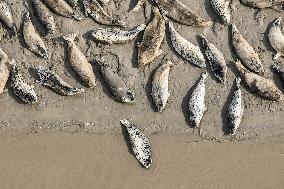
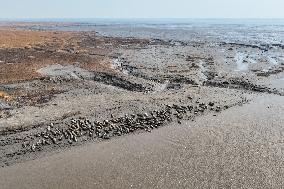
(240409) -- PANJIN, April 9, 2024 (Xinhua) -- An aerial drone photo taken on April 9, 2024 shows spotted seals resting on mudflat of Liaodong Bay in Panjin City, northeast China's Liaoning Province. As temperature rises, spotted seals inhabiting the Liaodong Bay in Panjin City, Liaoning Province, are entering their active period. Liaodong Bay, which is situated at the northernmost end of the ice-covered area in Chinese waters, represents the southernmost breeding area among the eight breeding zones for spotted seals worldwide. Designated as a national first-level protected wildlife species, spotted seals are the only pinniped marine mammals that breed in Chinese waters. In recent years, Panjin City has committed to preserving the ecological balance of its coastal areas, restoring 85,900 mu (approximately 5,727 hectares) of coastal wetlands and adding 17.6 kilometers of natural coastline. These efforts have created favorable breeding and habitat conditions for spotted seals migrating to the area annual

  •  
CHINA-LIAONING-PANJIN-LIAODONG BAY-SPOTTED SEAL (CN)

CHINA-LIAONING-PANJIN-LIAODONG BAY-SPOTTED SEAL (CN)

(240409) -- PANJIN, April 9, 2024 (Xinhua) -- Spotted seals rest on mudflat of Liaodong Bay in Panjin City, northeast China's Liaoning Province, April 9, 2024. As temperature rises, spotted seals inhabiting the Liaodong Bay in Panjin City, Liaoning Province, are entering their active period. Liaodong Bay, which is situated at the northernmost end of the ice-covered area in Chinese waters, represents the southernmost breeding area among the eight breeding zones for spotted seals worldwide. Designated as a national first-level protected wildlife species, spotted seals are the only pinniped marine mammals that breed in Chinese waters. In recent years, Panjin City has committed to preserving the ecological balance of its coastal areas, restoring 85,900 mu (approximately 5,727 hectares) of coastal wetlands and adding 17.6 kilometers of natural coastline. These efforts have created favorable breeding and habitat conditions for spotted seals migrating to the area annually. According to statistics, the popula

  •  
CHINA-LIAONING-PANJIN-LIAODONG BAY-SPOTTED SEAL (CN)

CHINA-LIAONING-PANJIN-LIAODONG BAY-SPOTTED SEAL (CN)

(240409) -- PANJIN, April 9, 2024 (Xinhua) -- An aerial drone photo taken on April 9, 2024 shows spotted seals resting on mudflat of Liaodong Bay in Panjin City, northeast China's Liaoning Province. As temperature rises, spotted seals inhabiting the Liaodong Bay in Panjin City, Liaoning Province, are entering their active period. Liaodong Bay, which is situated at the northernmost end of the ice-covered area in Chinese waters, represents the southernmost breeding area among the eight breeding zones for spotted seals worldwide. Designated as a national first-level protected wildlife species, spotted seals are the only pinniped marine mammals that breed in Chinese waters. In recent years, Panjin City has committed to preserving the ecological balance of its coastal areas, restoring 85,900 mu (approximately 5,727 hectares) of coastal wetlands and adding 17.6 kilometers of natural coastline. These efforts have created favorable breeding and habitat conditions for spotted seals migrating to the area annual

  •  
CHINA-LIAONING-PANJIN-LIAODONG BAY-SPOTTED SEAL (CN)

CHINA-LIAONING-PANJIN-LIAODONG BAY-SPOTTED SEAL (CN)

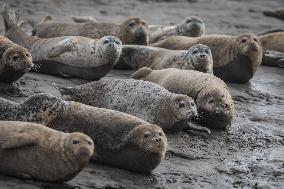
(240409) -- PANJIN, April 9, 2024 (Xinhua) -- Spotted seals rest on mudflat of Liaodong Bay in Panjin City, northeast China's Liaoning Province, April 9, 2024. As temperature rises, spotted seals inhabiting the Liaodong Bay in Panjin City, Liaoning Province, are entering their active period. Liaodong Bay, which is situated at the northernmost end of the ice-covered area in Chinese waters, represents the southernmost breeding area among the eight breeding zones for spotted seals worldwide. Designated as a national first-level protected wildlife species, spotted seals are the only pinniped marine mammals that breed in Chinese waters. In recent years, Panjin City has committed to preserving the ecological balance of its coastal areas, restoring 85,900 mu (approximately 5,727 hectares) of coastal wetlands and adding 17.6 kilometers of natural coastline. These efforts have created favorable breeding and habitat conditions for spotted seals migrating to the area annually. According to statistics, the popula

  •  
CHINA-LIAONING-PANJIN-LIAODONG BAY-SPOTTED SEAL (CN)

CHINA-LIAONING-PANJIN-LIAODONG BAY-SPOTTED SEAL (CN)

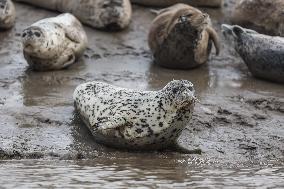
(240409) -- PANJIN, April 9, 2024 (Xinhua) -- Spotted seals rest on mudflat of Liaodong Bay in Panjin City, northeast China's Liaoning Province, April 9, 2024. As temperature rises, spotted seals inhabiting the Liaodong Bay in Panjin City, Liaoning Province, are entering their active period. Liaodong Bay, which is situated at the northernmost end of the ice-covered area in Chinese waters, represents the southernmost breeding area among the eight breeding zones for spotted seals worldwide. Designated as a national first-level protected wildlife species, spotted seals are the only pinniped marine mammals that breed in Chinese waters. In recent years, Panjin City has committed to preserving the ecological balance of its coastal areas, restoring 85,900 mu (approximately 5,727 hectares) of coastal wetlands and adding 17.6 kilometers of natural coastline. These efforts have created favorable breeding and habitat conditions for spotted seals migrating to the area annually. According to statistics, the popula

  •  
CHINA-LIAONING-PANJIN-LIAODONG BAY-SPOTTED SEAL (CN)

CHINA-LIAONING-PANJIN-LIAODONG BAY-SPOTTED SEAL (CN)

(240409) -- PANJIN, April 9, 2024 (Xinhua) -- Spotted seals rest on mudflat of Liaodong Bay in Panjin City, northeast China's Liaoning Province, April 9, 2024. As temperature rises, spotted seals inhabiting the Liaodong Bay in Panjin City, Liaoning Province, are entering their active period. Liaodong Bay, which is situated at the northernmost end of the ice-covered area in Chinese waters, represents the southernmost breeding area among the eight breeding zones for spotted seals worldwide. Designated as a national first-level protected wildlife species, spotted seals are the only pinniped marine mammals that breed in Chinese waters. In recent years, Panjin City has committed to preserving the ecological balance of its coastal areas, restoring 85,900 mu (approximately 5,727 hectares) of coastal wetlands and adding 17.6 kilometers of natural coastline. These efforts have created favorable breeding and habitat conditions for spotted seals migrating to the area annually. According to statistics, the popula

  •  
CHINA-LIAONING-PANJIN-LIAODONG BAY-SPOTTED SEAL (CN)

CHINA-LIAONING-PANJIN-LIAODONG BAY-SPOTTED SEAL (CN)

(240409) -- PANJIN, April 9, 2024 (Xinhua) -- Spotted seals rest on mudflat of Liaodong Bay in Panjin City, northeast China's Liaoning Province, April 9, 2024. As temperature rises, spotted seals inhabiting the Liaodong Bay in Panjin City, Liaoning Province, are entering their active period. Liaodong Bay, which is situated at the northernmost end of the ice-covered area in Chinese waters, represents the southernmost breeding area among the eight breeding zones for spotted seals worldwide. Designated as a national first-level protected wildlife species, spotted seals are the only pinniped marine mammals that breed in Chinese waters. In recent years, Panjin City has committed to preserving the ecological balance of its coastal areas, restoring 85,900 mu (approximately 5,727 hectares) of coastal wetlands and adding 17.6 kilometers of natural coastline. These efforts have created favorable breeding and habitat conditions for spotted seals migrating to the area annually. According to statistics, the popula

  •  
CHINA-LIAONING-PANJIN-LIAODONG BAY-SPOTTED SEAL (CN)

CHINA-LIAONING-PANJIN-LIAODONG BAY-SPOTTED SEAL (CN)

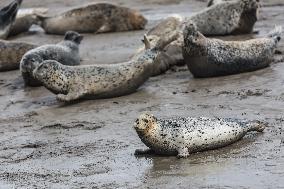
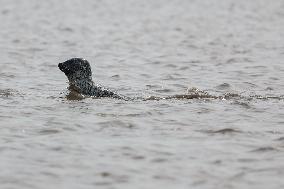
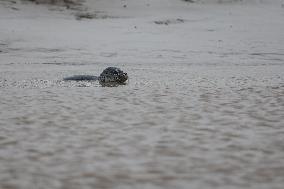
(240409) -- PANJIN, April 9, 2024 (Xinhua) -- A spotted seal is seen in waters of Sandaogou in Liaodong Bay in Panjin City, northeast China's Liaoning Province, April 9, 2024. As temperature rises, spotted seals inhabiting the Liaodong Bay in Panjin City, Liaoning Province, are entering their active period. Liaodong Bay, which is situated at the northernmost end of the ice-covered area in Chinese waters, represents the southernmost breeding area among the eight breeding zones for spotted seals worldwide. Designated as a national first-level protected wildlife species, spotted seals are the only pinniped marine mammals that breed in Chinese waters. In recent years, Panjin City has committed to preserving the ecological balance of its coastal areas, restoring 85,900 mu (approximately 5,727 hectares) of coastal wetlands and adding 17.6 kilometers of natural coastline. These efforts have created favorable breeding and habitat conditions for spotted seals migrating to the area annually. According to statis

  •  
CHINA-LIAONING-PANJIN-LIAODONG BAY-SPOTTED SEAL (CN)

CHINA-LIAONING-PANJIN-LIAODONG BAY-SPOTTED SEAL (CN)

(240409) -- PANJIN, April 9, 2024 (Xinhua) -- A spotted seal is seen in waters of Sandaogou in Liaodong Bay in Panjin City, northeast China's Liaoning Province, April 9, 2024. As temperature rises, spotted seals inhabiting the Liaodong Bay in Panjin City, Liaoning Province, are entering their active period. Liaodong Bay, which is situated at the northernmost end of the ice-covered area in Chinese waters, represents the southernmost breeding area among the eight breeding zones for spotted seals worldwide. Designated as a national first-level protected wildlife species, spotted seals are the only pinniped marine mammals that breed in Chinese waters. In recent years, Panjin City has committed to preserving the ecological balance of its coastal areas, restoring 85,900 mu (approximately 5,727 hectares) of coastal wetlands and adding 17.6 kilometers of natural coastline. These efforts have created favorable breeding and habitat conditions for spotted seals migrating to the area annually. According to statis

  •  
CHINA-LIAONING-PANJIN-LIAODONG BAY-SPOTTED SEAL (CN)

CHINA-LIAONING-PANJIN-LIAODONG BAY-SPOTTED SEAL (CN)

(240409) -- PANJIN, April 9, 2024 (Xinhua) -- Spotted seals rest on mudflat of Liaodong Bay in Panjin City, northeast China's Liaoning Province, April 9, 2024. As temperature rises, spotted seals inhabiting the Liaodong Bay in Panjin City, Liaoning Province, are entering their active period. Liaodong Bay, which is situated at the northernmost end of the ice-covered area in Chinese waters, represents the southernmost breeding area among the eight breeding zones for spotted seals worldwide. Designated as a national first-level protected wildlife species, spotted seals are the only pinniped marine mammals that breed in Chinese waters. In recent years, Panjin City has committed to preserving the ecological balance of its coastal areas, restoring 85,900 mu (approximately 5,727 hectares) of coastal wetlands and adding 17.6 kilometers of natural coastline. These efforts have created favorable breeding and habitat conditions for spotted seals migrating to the area annually. According to statistics, the popula

  •  
CHINA-LIAONING-PANJIN-SEALS (CN)

CHINA-LIAONING-PANJIN-SEALS (CN)

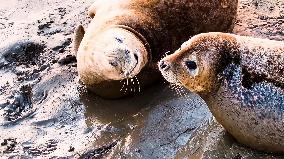
(240326) -- PANJIN, March 26, 2024 (Xinhua) -- Two western Pacific harbor seals rest on the mudflat in Panjin, northeast China's Liaoning Province, March 23, 2024. TO GO WITH "NE China bay sees increasing migratory harbor seals" (Photo by Guo Zhiling/Xinhua)

  •  
CHINA-LIAONING-PANJIN-RED-CROWNED CRANE-BREEDER (CN)

CHINA-LIAONING-PANJIN-RED-CROWNED CRANE-BREEDER (CN)

(240319) -- PANJIN, March 19, 2024 (Xinhua) -- Zhao Shiwei checks the condition of red-crowned cranes through a monitor at Liaohekou National Nature Reserve in Panjin, northeast China's Liaoning Province, March 18, 2024. Zhao Shiwei is a staff member of the crane breeding and protection station in Liaohekou National Nature Reserve. He graduated from college in 1993 and started to work at the nature reserve in Panjin City, which sits along a primary bird migration corridor, welcoming a myriad of wild migratory birds to breed and winter annually. The endangered red-crowned crane is under first-class state protection, dubbed one of the most sensitive indicator species of a wetland ecosystem. In 1996, Zhao and his colleagues successfully hatched three baby red-crowned cranes, and gradually explored a complete set of breeding methods for red-crowned cranes since then. From 2016 to 2023, Zhao and his colleagues have bred 356 red-crowned cranes and released 140 in the wild, which effectively supplemented the w

  •  
CHINA-LIAONING-PANJIN-RED-CROWNED CRANE-BREEDER (CN)

CHINA-LIAONING-PANJIN-RED-CROWNED CRANE-BREEDER (CN)

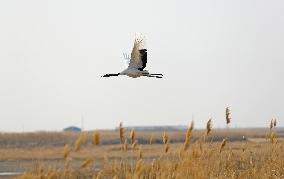
(240319) -- PANJIN, March 19, 2024 (Xinhua) -- A wild red-crowned crane flies at Liaohekou National Nature Reserve in Panjin, northeast China's Liaoning Province, March 18, 2024. Zhao Shiwei is a staff member of the crane breeding and protection station in Liaohekou National Nature Reserve. He graduated from college in 1993 and started to work at the nature reserve in Panjin City, which sits along a primary bird migration corridor, welcoming a myriad of wild migratory birds to breed and winter annually. The endangered red-crowned crane is under first-class state protection, dubbed one of the most sensitive indicator species of a wetland ecosystem. In 1996, Zhao and his colleagues successfully hatched three baby red-crowned cranes, and gradually explored a complete set of breeding methods for red-crowned cranes since then. From 2016 to 2023, Zhao and his colleagues have bred 356 red-crowned cranes and released 140 in the wild, which effectively supplemented the wild population of red-crowned cranes. (Xin

  •  
CHINA-LIAONING-PANJIN-RED-CROWNED CRANE-BREEDER (CN)

CHINA-LIAONING-PANJIN-RED-CROWNED CRANE-BREEDER (CN)

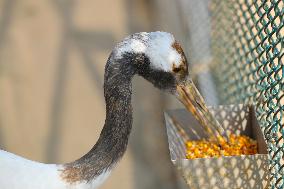
(240319) -- PANJIN, March 19, 2024 (Xinhua) -- A red-crowned crane eats corn at Liaohekou National Nature Reserve in Panjin, northeast China's Liaoning Province, March 18, 2024. Zhao Shiwei is a staff member of the crane breeding and protection station in Liaohekou National Nature Reserve. He graduated from college in 1993 and started to work at the nature reserve in Panjin City, which sits along a primary bird migration corridor, welcoming a myriad of wild migratory birds to breed and winter annually. The endangered red-crowned crane is under first-class state protection, dubbed one of the most sensitive indicator species of a wetland ecosystem. In 1996, Zhao and his colleagues successfully hatched three baby red-crowned cranes, and gradually explored a complete set of breeding methods for red-crowned cranes since then. From 2016 to 2023, Zhao and his colleagues have bred 356 red-crowned cranes and released 140 in the wild, which effectively supplemented the wild population of red-crowned cranes. (Xinh

  •  
CHINA-LIAONING-PANJIN-RED-CROWNED CRANE-BREEDER (CN)

CHINA-LIAONING-PANJIN-RED-CROWNED CRANE-BREEDER (CN)

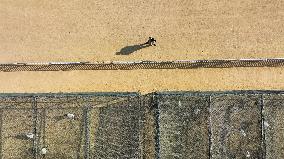
(240319) -- PANJIN, March 19, 2024 (Xinhua) -- An aerial drone photo taken on March 18, 2024 shows Zhao Shiwei checking the condition of red-crowned cranes at Liaohekou National Nature Reserve in Panjin, northeast China's Liaoning Province. Zhao Shiwei is a staff member of the crane breeding and protection station in Liaohekou National Nature Reserve. He graduated from college in 1993 and started to work at the nature reserve in Panjin City, which sits along a primary bird migration corridor, welcoming a myriad of wild migratory birds to breed and winter annually. The endangered red-crowned crane is under first-class state protection, dubbed one of the most sensitive indicator species of a wetland ecosystem. In 1996, Zhao and his colleagues successfully hatched three baby red-crowned cranes, and gradually explored a complete set of breeding methods for red-crowned cranes since then. From 2016 to 2023, Zhao and his colleagues have bred 356 red-crowned cranes and released 140 in the wild, which effectivel

  •  
CHINA-LIAONING-PANJIN-RED-CROWNED CRANE-BREEDER (CN)

CHINA-LIAONING-PANJIN-RED-CROWNED CRANE-BREEDER (CN)

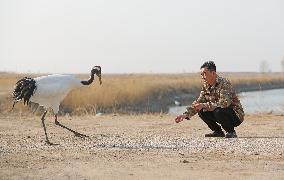
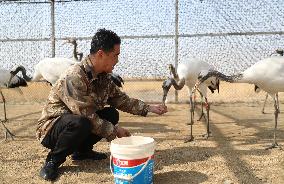
(240319) -- PANJIN, March 19, 2024 (Xinhua) -- Zhao Shiwei feeds a red-crowned crane at Liaohekou National Nature Reserve in Panjin, northeast China's Liaoning Province, March 18, 2024. Zhao Shiwei is a staff member of the crane breeding and protection station in Liaohekou National Nature Reserve. He graduated from college in 1993 and started to work at the nature reserve in Panjin City, which sits along a primary bird migration corridor, welcoming a myriad of wild migratory birds to breed and winter annually. The endangered red-crowned crane is under first-class state protection, dubbed one of the most sensitive indicator species of a wetland ecosystem. In 1996, Zhao and his colleagues successfully hatched three baby red-crowned cranes, and gradually explored a complete set of breeding methods for red-crowned cranes since then. From 2016 to 2023, Zhao and his colleagues have bred 356 red-crowned cranes and released 140 in the wild, which effectively supplemented the wild population of red-crowned crane

  •  
CHINA-LIAONING-PANJIN-RED-CROWNED CRANE-BREEDER (CN)

CHINA-LIAONING-PANJIN-RED-CROWNED CRANE-BREEDER (CN)

(240319) -- PANJIN, March 19, 2024 (Xinhua) -- Zhao Shiwei feeds red-crowned cranes at Liaohekou National Nature Reserve in Panjin, northeast China's Liaoning Province, March 18, 2024. Zhao Shiwei is a staff member of the crane breeding and protection station in Liaohekou National Nature Reserve. He graduated from college in 1993 and started to work at the nature reserve in Panjin City, which sits along a primary bird migration corridor, welcoming a myriad of wild migratory birds to breed and winter annually. The endangered red-crowned crane is under first-class state protection, dubbed one of the most sensitive indicator species of a wetland ecosystem. In 1996, Zhao and his colleagues successfully hatched three baby red-crowned cranes, and gradually explored a complete set of breeding methods for red-crowned cranes since then. From 2016 to 2023, Zhao and his colleagues have bred 356 red-crowned cranes and released 140 in the wild, which effectively supplemented the wild population of red-crowned cranes

  •  
CHINA-LIAONING-PANJIN-RED-CROWNED CRANE-BREEDER (CN)

CHINA-LIAONING-PANJIN-RED-CROWNED CRANE-BREEDER (CN)

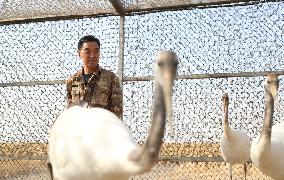
(240319) -- PANJIN, March 19, 2024 (Xinhua) -- Zhao Shiwei checks the condition of red-crowned cranes at Liaohekou National Nature Reserve in Panjin, northeast China's Liaoning Province, March 18, 2024. Zhao Shiwei is a staff member of the crane breeding and protection station in Liaohekou National Nature Reserve. He graduated from college in 1993 and started to work at the nature reserve in Panjin City, which sits along a primary bird migration corridor, welcoming a myriad of wild migratory birds to breed and winter annually. The endangered red-crowned crane is under first-class state protection, dubbed one of the most sensitive indicator species of a wetland ecosystem. In 1996, Zhao and his colleagues successfully hatched three baby red-crowned cranes, and gradually explored a complete set of breeding methods for red-crowned cranes since then. From 2016 to 2023, Zhao and his colleagues have bred 356 red-crowned cranes and released 140 in the wild, which effectively supplemented the wild population of

  •  
CHINA-LIAONING-PANJIN-RED-CROWNED CRANE-BREEDER (CN)

CHINA-LIAONING-PANJIN-RED-CROWNED CRANE-BREEDER (CN)

(240319) -- PANJIN, March 19, 2024 (Xinhua) -- Zhao Shiwei checks the condition of a red-crowned crane at Liaohekou National Nature Reserve in Panjin, northeast China's Liaoning Province, March 18, 2024. Zhao Shiwei is a staff member of the crane breeding and protection station in Liaohekou National Nature Reserve. He graduated from college in 1993 and started to work at the nature reserve in Panjin City, which sits along a primary bird migration corridor, welcoming a myriad of wild migratory birds to breed and winter annually. The endangered red-crowned crane is under first-class state protection, dubbed one of the most sensitive indicator species of a wetland ecosystem. In 1996, Zhao and his colleagues successfully hatched three baby red-crowned cranes, and gradually explored a complete set of breeding methods for red-crowned cranes since then. From 2016 to 2023, Zhao and his colleagues have bred 356 red-crowned cranes and released 140 in the wild, which effectively supplemented the wild population of

  •  
CHINA-LIAONING-PANJIN-RED-CROWNED CRANE-BREEDER (CN)

CHINA-LIAONING-PANJIN-RED-CROWNED CRANE-BREEDER (CN)

(240319) -- PANJIN, March 19, 2024 (Xinhua) -- An aerial drone photo taken on March 18, 2024 shows Zhao Shiwei checking the condition of red-crowned cranes at Liaohekou National Nature Reserve in Panjin, northeast China's Liaoning Province. Zhao Shiwei is a staff member of the crane breeding and protection station in Liaohekou National Nature Reserve. He graduated from college in 1993 and started to work at the nature reserve in Panjin City, which sits along a primary bird migration corridor, welcoming a myriad of wild migratory birds to breed and winter annually. The endangered red-crowned crane is under first-class state protection, dubbed one of the most sensitive indicator species of a wetland ecosystem. In 1996, Zhao and his colleagues successfully hatched three baby red-crowned cranes, and gradually explored a complete set of breeding methods for red-crowned cranes since then. From 2016 to 2023, Zhao and his colleagues have bred 356 red-crowned cranes and released 140 in the wild, which effectivel

  •  
CHINA-LIAONING-PANJIN-RED-CROWNED CRANE-BREEDER (CN)

CHINA-LIAONING-PANJIN-RED-CROWNED CRANE-BREEDER (CN)

(240319) -- PANJIN, March 19, 2024 (Xinhua) -- Zhao Shiwei collects fallen feathers of red-crowned cranes at Liaohekou National Nature Reserve in Panjin, northeast China's Liaoning Province, March 18, 2024. Zhao Shiwei is a staff member of the crane breeding and protection station in Liaohekou National Nature Reserve. He graduated from college in 1993 and started to work at the nature reserve in Panjin City, which sits along a primary bird migration corridor, welcoming a myriad of wild migratory birds to breed and winter annually. The endangered red-crowned crane is under first-class state protection, dubbed one of the most sensitive indicator species of a wetland ecosystem. In 1996, Zhao and his colleagues successfully hatched three baby red-crowned cranes, and gradually explored a complete set of breeding methods for red-crowned cranes since then. From 2016 to 2023, Zhao and his colleagues have bred 356 red-crowned cranes and released 140 in the wild, which effectively supplemented the wild population

  •  
CHINA-LIAONING-PANJIN-RED-CROWNED CRANE-BREEDER (CN)

CHINA-LIAONING-PANJIN-RED-CROWNED CRANE-BREEDER (CN)

(240319) -- PANJIN, March 19, 2024 (Xinhua) -- Zhao Shiwei takes records of migratory birds at Liaohekou National Nature Reserve in Panjin, northeast China's Liaoning Province, March 18, 2024. Zhao Shiwei is a staff member of the crane breeding and protection station in Liaohekou National Nature Reserve. He graduated from college in 1993 and started to work at the nature reserve in Panjin City, which sits along a primary bird migration corridor, welcoming a myriad of wild migratory birds to breed and winter annually. The endangered red-crowned crane is under first-class state protection, dubbed one of the most sensitive indicator species of a wetland ecosystem. In 1996, Zhao and his colleagues successfully hatched three baby red-crowned cranes, and gradually explored a complete set of breeding methods for red-crowned cranes since then. From 2016 to 2023, Zhao and his colleagues have bred 356 red-crowned cranes and released 140 in the wild, which effectively supplemented the wild population of red-crowne

  •  
CHINA-LIAONING-PANJIN-RED-CROWNED CRANE-BREEDER (CN)

CHINA-LIAONING-PANJIN-RED-CROWNED CRANE-BREEDER (CN)

(240319) -- PANJIN, March 19, 2024 (Xinhua) -- Zhao Shiwei observes migratory birds with a telescope at Liaohekou National Nature Reserve in Panjin, northeast China's Liaoning Province, March 18, 2024. Zhao Shiwei is a staff member of the crane breeding and protection station in Liaohekou National Nature Reserve. He graduated from college in 1993 and started to work at the nature reserve in Panjin City, which sits along a primary bird migration corridor, welcoming a myriad of wild migratory birds to breed and winter annually. The endangered red-crowned crane is under first-class state protection, dubbed one of the most sensitive indicator species of a wetland ecosystem. In 1996, Zhao and his colleagues successfully hatched three baby red-crowned cranes, and gradually explored a complete set of breeding methods for red-crowned cranes since then. From 2016 to 2023, Zhao and his colleagues have bred 356 red-crowned cranes and released 140 in the wild, which effectively supplemented the wild population of r

  •  
CHINA-LIAONING-LEADING-EDGE INNOVATIONS-TESTING BASE (CN)

CHINA-LIAONING-LEADING-EDGE INNOVATIONS-TESTING BASE (CN)

(240314) -- SHENYANG, March 14, 2024 (Xinhua) -- Staff members work on a testing project at a fine chemical engineering medium-sized test demonstration base in Panjin City, northeast China's Liaoning Province, March 12, 2024. TO GO WITH "Economic Watch: NE China builds testing base for leading-edge innovations" (Xinhua/Bai Yongquan)

  •  
CHINA-LIAONING-PANJIN-ESTUARY-WETLAND-WINTER VIEW (CN)

CHINA-LIAONING-PANJIN-ESTUARY-WETLAND-WINTER VIEW (CN)

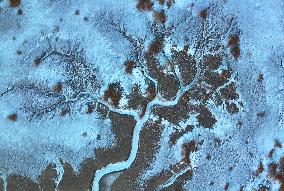
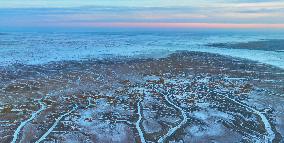
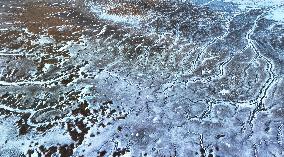
(240202) -- SHENYANG, Feb. 2, 2024 (Xinhua) -- An aerial drone photo taken on Jan. 31, 2024 shows a view of frozen tidal creeks in the wetland of Liaohe River estuary in Panjin, northeast China's Liaoning Province. (Xinhua/Yang Qing)

  •  
CHINA-LIAONING-PANJIN-ESTUARY-WETLAND-WINTER VIEW (CN)

CHINA-LIAONING-PANJIN-ESTUARY-WETLAND-WINTER VIEW (CN)

(240202) -- SHENYANG, Feb. 2, 2024 (Xinhua) -- An aerial drone photo taken on Jan. 31, 2024 shows a view of frozen tidal creeks in the wetland of Liaohe River estuary in Panjin, northeast China's Liaoning Province. (Xinhua/Yang Qing)

  •  
CHINA-LIAONING-PANJIN-ESTUARY-WETLAND-WINTER VIEW (CN)

CHINA-LIAONING-PANJIN-ESTUARY-WETLAND-WINTER VIEW (CN)

(240202) -- SHENYANG, Feb. 2, 2024 (Xinhua) -- An aerial drone photo taken on Jan. 31, 2024 shows a view of frozen tidal creeks in the wetland of Liaohe River estuary in Panjin, northeast China's Liaoning Province. (Xinhua/Yang Qing)

  •  
CHINA-LIAONING-PANJIN-ESTUARY-WETLAND-WINTER VIEW (CN)

CHINA-LIAONING-PANJIN-ESTUARY-WETLAND-WINTER VIEW (CN)

(240202) -- SHENYANG, Feb. 2, 2024 (Xinhua) -- An aerial drone photo taken on Jan. 31, 2024 shows a view of frozen tidal creeks in the wetland of Liaohe River estuary in Panjin, northeast China's Liaoning Province. (Xinhua/Yang Qing)

  •  
CHINA-LIAONING-PANJIN-ESTUARY-WETLAND-WINTER VIEW (CN)

CHINA-LIAONING-PANJIN-ESTUARY-WETLAND-WINTER VIEW (CN)

(240202) -- SHENYANG, Feb. 2, 2024 (Xinhua) -- An aerial drone photo taken on Jan. 31, 2024 shows a view of frozen tidal creeks in the wetland of Liaohe River estuary in Panjin, northeast China's Liaoning Province. (Xinhua/Yang Qing)

  •  
CHINA-LIAONING-PANJIN-ESTUARY-WETLAND-WINTER VIEW (CN)

CHINA-LIAONING-PANJIN-ESTUARY-WETLAND-WINTER VIEW (CN)

(240202) -- SHENYANG, Feb. 2, 2024 (Xinhua) -- An aerial drone photo taken on Jan. 31, 2024 shows a view of frozen tidal creeks in the wetland of Liaohe River estuary in Panjin, northeast China's Liaoning Province. (Xinhua/Yang Qing)

  •  
CHINA-LIAONING-PANJIN-ESTUARY-WETLAND-WINTER VIEW (CN)

CHINA-LIAONING-PANJIN-ESTUARY-WETLAND-WINTER VIEW (CN)

(240202) -- SHENYANG, Feb. 2, 2024 (Xinhua) -- An aerial drone photo taken on Jan. 31, 2024 shows a view of frozen tidal creeks in the wetland of Liaohe River estuary in Panjin, northeast China's Liaoning Province. (Xinhua/Yang Qing)

  •  
XINHUA-PICTURES OF THE YEAR 2023-AERIAL PHOTO

XINHUA-PICTURES OF THE YEAR 2023-AERIAL PHOTO

(240105) -- BEIJING, Jan. 5, 2024 (Xinhua) -- This aerial photo taken on Feb. 1, 2023 shows a view of frozen tidal creeks in the wetland of Liaohe River estuary in Panjin, northeast China's Liaoning Province. (Xinhua/Yang Qing)

  •  
CHINA-NEW YEAR-SCENERY-SUNRISE (CN)

CHINA-NEW YEAR-SCENERY-SUNRISE (CN)

(240101) -- BEIJING, Jan. 1, 2024 (Xinhua) -- This aerial photo taken on Jan. 1, 2024 shows the sunrise in Panjin, northeast China's Liaoning Province. (Xinhua/Pan Yulong)

  •  
CHINA-NEW YEAR-SCENERY-SUNRISE (CN)

CHINA-NEW YEAR-SCENERY-SUNRISE (CN)

(240101) -- BEIJING, Jan. 1, 2024 (Xinhua) -- This aerial photo taken on Jan. 1, 2024 shows an oil field at sunrise in Panjin, northeast China's Liaoning Province. (Xinhua/Pan Yulong)

  •  
CHINA-NEW YEAR-SCENERY-SUNRISE (CN)

CHINA-NEW YEAR-SCENERY-SUNRISE (CN)

(240101) -- BEIJING, Jan. 1, 2024 (Xinhua) -- This aerial photo taken on Jan. 1, 2024 shows an oil field at sunrise in Panjin, northeast China's Liaoning Province. (Xinhua/Pan Yulong)

  •  
Xinhua Headlines: Increasing foreign investment in NE China highlights new opportunities

Xinhua Headlines: Increasing foreign investment in NE China highlights new opportunities

(231023) -- SHENYANG, Oct. 23, 2023 (Xinhua) -- This photo taken on March 29, 2023 shows the groundbreaking ceremony of a China-Saudi Arabia joint venture project for fine chemicals and raw materials in Panjin, northeast China's Liaoning Province. (Xinhua/Pan Yulong)

  •  
CHINA-NORTHEASTERN PROVINCES-CLEAN ENERGY (CN)

CHINA-NORTHEASTERN PROVINCES-CLEAN ENERGY (CN)

(230917) -- SHENYANG, Sept. 17, 2023 (Xinhua) -- A staff member inspects a gas storage area of PetroChina Liaohe Oilfield gas storage group in Panjin, northeast China's Liaoning Province, Feb. 3, 2021. In recent years, the three northeastern provinces of Liaoning, Jilin, and Heilongjiang have sped up the development of clean energy generation such as wind power, photovoltaic power and biomass power generation. This is of great significance for ensuring safe and reliable power supply, accelerating clean energy transition and low-carbon development, and promoting the full revitalization of northeast China. (Xinhua/Yang Qing)

  •  
CHINA-LIAONING-PANJIN-RED BEACH-TOURISM (CN)

CHINA-LIAONING-PANJIN-RED BEACH-TOURISM (CN)

(230913) -- PANJIN, Sept. 13, 2023 (Xinhua) -- Tourists visit the Honghaitan red beach in Panjin, northeast China's Liaoning Province, Sept. 12, 2023. The Honghaitan red beach is famous for its landscapes featuring the red plant of Suaeda salsa, one of the few species of plant that can live in highly alkaline soil. (Xinhua/Yao Jianfeng)

  •  
CHINA-LIAONING-PANJIN-RED BEACH-TOURISM (CN)

CHINA-LIAONING-PANJIN-RED BEACH-TOURISM (CN)

(230913) -- PANJIN, Sept. 13, 2023 (Xinhua) -- Tourists visit the Honghaitan red beach in Panjin, northeast China's Liaoning Province, Sept. 12, 2023. The Honghaitan red beach is famous for its landscapes featuring the red plant of Suaeda salsa, one of the few species of plant that can live in highly alkaline soil. (Xinhua/Yao Jianfeng)

  •  
CHINA-LIAONING-PANJIN-RED BEACH-TOURISM (CN)

CHINA-LIAONING-PANJIN-RED BEACH-TOURISM (CN)

(230913) -- PANJIN, Sept. 13, 2023 (Xinhua) -- This aerial photo taken on Sept. 12, 2023 shows the Honghaitan red beach in Panjin, northeast China's Liaoning Province. The Honghaitan red beach is famous for its landscapes featuring the red plant of Suaeda salsa, one of the few species of plant that can live in highly alkaline soil. (Xinhua/Yao Jianfeng)

  •  
CHINA-LIAONING-PANJIN-RED BEACH-TOURISM (CN)

CHINA-LIAONING-PANJIN-RED BEACH-TOURISM (CN)

(230913) -- PANJIN, Sept. 13, 2023 (Xinhua) -- Tourists pose for photos at the Honghaitan red beach in Panjin, northeast China's Liaoning Province, Sept. 12, 2023. The Honghaitan red beach is famous for its landscapes featuring the red plant of Suaeda salsa, one of the few species of plant that can live in highly alkaline soil. (Xinhua/Yao Jianfeng)

  •  
CHINA-LIAONING-PANJIN-RED BEACH-TOURISM (CN)

CHINA-LIAONING-PANJIN-RED BEACH-TOURISM (CN)

(230913) -- PANJIN, Sept. 13, 2023 (Xinhua) -- Tourists visit the Honghaitan red beach in Panjin, northeast China's Liaoning Province, Sept. 12, 2023. The Honghaitan red beach is famous for its landscapes featuring the red plant of Suaeda salsa, one of the few species of plant that can live in highly alkaline soil. (Xinhua/Yao Jianfeng)

  •  
CHINA-LIAONING-PANJIN-RED BEACH-TOURISM (CN)

CHINA-LIAONING-PANJIN-RED BEACH-TOURISM (CN)

(230913) -- PANJIN, Sept. 13, 2023 (Xinhua) -- This aerial photo taken on Sept. 12, 2023 shows the Honghaitan red beach in Panjin, northeast China's Liaoning Province. The Honghaitan red beach is famous for its landscapes featuring the red plant of Suaeda salsa, one of the few species of plant that can live in highly alkaline soil. (Xinhua/Yao Jianfeng)

  • Main
  • Top
  • Editorial
  • Creative
  • About Us
  • About ILG
  • Terms of use
  • Company
  • BEHIND
  • Price List
  • Single Plan
  • Monthly Plan
  • Services
  • Shooting
  • Rights Clearance
  • Support
  • FAQ
  • How To Buy
  • Contact Us
  • Become a Partner

© KYODO NEWS IMAGES INC

All Rights Reserved.

  • Editorial
  • Olympics
  • News
  • Sports
  • Japan
  • Tech
  • Royal
  • Disaster
  • NorthKorea
  • Old Japan
  • SNS
  • Creative
  • Food
  • Japan
  • Landscape
  • Animal
  • Popular
  • #Ukraine
  • #Thailand
  • #coronavirus
  • #N. Korea
  • #China
  • #Russia
  • #Ukraine
  • #Thailand
  • #coronavirus
  • #N. Korea
  • #China
  • #Russia
  • Food
  • Japan
  • Landscape
  • Animal
  • Olympics
  • News
  • Sports
  • Japan
  • Tech
  • Royal
  • Disaster
  • NorthKorea
  • Old Japan
  • SNS