•  
ChineseToday | A post-80s devotes himself to bonsai art

ChineseToday | A post-80s devotes himself to bonsai art

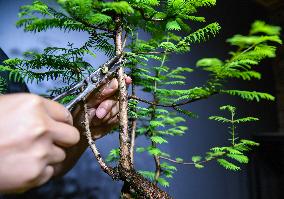
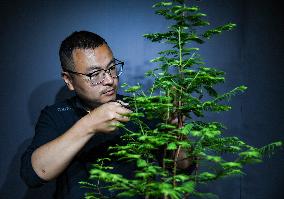
(240509) -- CHENGDU, May 9, 2024 (Xinhua) -- Chen Hongyu prunes a bonsai plant at his studio in Wenjiang District of Chengdu, southwest China's Sichuan Province, May 2, 2024. Chen Hongyu, a post-80s postgraduate student majoring in landscape architecture at Sichuan Agricultural University, is an inheritor of the intangible cultural heritage of Sichuan-style bonsai skills. At the Wenjiang branch of the ongoing International Horticultural Exhibition 2024 Chengdu, Sichuan-style bonsai has become a unique scenery. Being responsible for the bonsai works at the stage area of the Wenjiang branch, Chen has being preparing for years since 2020. His efforts have paid off, and the works are highly acclaimed for their layered appearance and harmonious atmosphere. Earlier in 2017, as a move to promote the art, Chen Hongyu founded an education base of Sichuan-style bonsai with the support of local government that has attracted many people to learn about the art and its techniques and cultural and artistic connotation

  •  
ChineseToday | A post-80s devotes himself to bonsai art

ChineseToday | A post-80s devotes himself to bonsai art

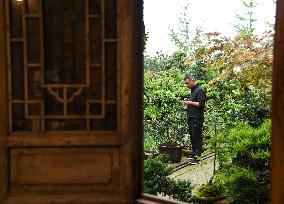
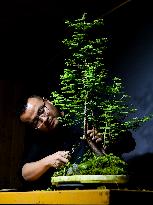
(240509) -- CHENGDU, May 9, 2024 (Xinhua) -- Chen Hongyu works on a bonsai plant at an education base of Sichuan-style bonsai in Wenjiang District of Chengdu, southwest China's Sichuan Province, May 2, 2024. Chen Hongyu, a post-80s postgraduate student majoring in landscape architecture at Sichuan Agricultural University, is an inheritor of the intangible cultural heritage of Sichuan-style bonsai skills. At the Wenjiang branch of the ongoing International Horticultural Exhibition 2024 Chengdu, Sichuan-style bonsai has become a unique scenery. Being responsible for the bonsai works at the stage area of the Wenjiang branch, Chen has being preparing for years since 2020. His efforts have paid off, and the works are highly acclaimed for their layered appearance and harmonious atmosphere. Earlier in 2017, as a move to promote the art, Chen Hongyu founded an education base of Sichuan-style bonsai with the support of local government that has attracted many people to learn about the art and its techniques and

  •  
ChineseToday | A post-80s devotes himself to bonsai art

ChineseToday | A post-80s devotes himself to bonsai art

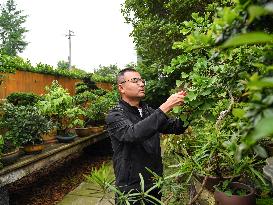
(240509) -- CHENGDU, May 9, 2024 (Xinhua) -- Chen Hongyu prunes a bonsai plant at an education base of Sichuan-style bonsai in Wenjiang District of Chengdu, southwest China's Sichuan Province, May 2, 2024. Chen Hongyu, a post-80s postgraduate student majoring in landscape architecture at Sichuan Agricultural University, is an inheritor of the intangible cultural heritage of Sichuan-style bonsai skills. At the Wenjiang branch of the ongoing International Horticultural Exhibition 2024 Chengdu, Sichuan-style bonsai has become a unique scenery. Being responsible for the bonsai works at the stage area of the Wenjiang branch, Chen has being preparing for years since 2020. His efforts have paid off, and the works are highly acclaimed for their layered appearance and harmonious atmosphere. Earlier in 2017, as a move to promote the art, Chen Hongyu founded an education base of Sichuan-style bonsai with the support of local government that has attracted many people to learn about the art and its techniques and cu

  •  
ChineseToday | A post-80s devotes himself to bonsai art

ChineseToday | A post-80s devotes himself to bonsai art

(240509) -- CHENGDU, May 9, 2024 (Xinhua) -- Chen Hongyu prunes a bonsai plant at an education base of Sichuan-style bonsai in Wenjiang District of Chengdu, southwest China's Sichuan Province, May 2, 2024. Chen Hongyu, a post-80s postgraduate student majoring in landscape architecture at Sichuan Agricultural University, is an inheritor of the intangible cultural heritage of Sichuan-style bonsai skills. At the Wenjiang branch of the ongoing International Horticultural Exhibition 2024 Chengdu, Sichuan-style bonsai has become a unique scenery. Being responsible for the bonsai works at the stage area of the Wenjiang branch, Chen has being preparing for years since 2020. His efforts have paid off, and the works are highly acclaimed for their layered appearance and harmonious atmosphere. Earlier in 2017, as a move to promote the art, Chen Hongyu founded an education base of Sichuan-style bonsai with the support of local government that has attracted many people to learn about the art and its techniques and cu

  •  
ChineseToday | A post-80s devotes himself to bonsai art

ChineseToday | A post-80s devotes himself to bonsai art

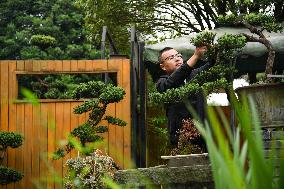
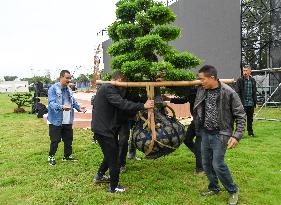
(240509) -- CHENGDU, May 9, 2024 (Xinhua) -- Chen Hongyu (1st L) guides workers to move a bonsai plant at Wenjiang branch of International Horticultural Exhibition 2024 Chengdu in Wenjiang District of Chengdu, southwest China's Sichuan Province, April 23, 2024. Chen Hongyu, a post-80s postgraduate student majoring in landscape architecture at Sichuan Agricultural University, is an inheritor of the intangible cultural heritage of Sichuan-style bonsai skills. At the Wenjiang branch of the ongoing International Horticultural Exhibition 2024 Chengdu, Sichuan-style bonsai has become a unique scenery. Being responsible for the bonsai works at the stage area of the Wenjiang branch, Chen has being preparing for years since 2020. His efforts have paid off, and the works are highly acclaimed for their layered appearance and harmonious atmosphere. Earlier in 2017, as a move to promote the art, Chen Hongyu founded an education base of Sichuan-style bonsai with the support of local government that has attracted many

  •  
ChineseToday | A post-80s devotes himself to bonsai art

ChineseToday | A post-80s devotes himself to bonsai art

(240509) -- CHENGDU, May 9, 2024 (Xinhua) -- Chen Hongyu prunes a bonsai plant at his studio in Wenjiang District of Chengdu, southwest China's Sichuan Province, May 2, 2024. Chen Hongyu, a post-80s postgraduate student majoring in landscape architecture at Sichuan Agricultural University, is an inheritor of the intangible cultural heritage of Sichuan-style bonsai skills. At the Wenjiang branch of the ongoing International Horticultural Exhibition 2024 Chengdu, Sichuan-style bonsai has become a unique scenery. Being responsible for the bonsai works at the stage area of the Wenjiang branch, Chen has being preparing for years since 2020. His efforts have paid off, and the works are highly acclaimed for their layered appearance and harmonious atmosphere. Earlier in 2017, as a move to promote the art, Chen Hongyu founded an education base of Sichuan-style bonsai with the support of local government that has attracted many people to learn about the art and its techniques and cultural and artistic connotation

  •  
ChineseToday | A post-80s devotes himself to bonsai art

ChineseToday | A post-80s devotes himself to bonsai art

(240509) -- CHENGDU, May 9, 2024 (Xinhua) -- Chen Hongyu prunes a bonsai plant at his studio in Wenjiang District of Chengdu, southwest China's Sichuan Province, May 2, 2024. Chen Hongyu, a post-80s postgraduate student majoring in landscape architecture at Sichuan Agricultural University, is an inheritor of the intangible cultural heritage of Sichuan-style bonsai skills. At the Wenjiang branch of the ongoing International Horticultural Exhibition 2024 Chengdu, Sichuan-style bonsai has become a unique scenery. Being responsible for the bonsai works at the stage area of the Wenjiang branch, Chen has being preparing for years since 2020. His efforts have paid off, and the works are highly acclaimed for their layered appearance and harmonious atmosphere. Earlier in 2017, as a move to promote the art, Chen Hongyu founded an education base of Sichuan-style bonsai with the support of local government that has attracted many people to learn about the art and its techniques and cultural and artistic connotation

  •  
(InXizang) CHINA-XIZANG-LHASA-BARREN MOUNTAIN-TREE PLANTING (CN)

(InXizang) CHINA-XIZANG-LHASA-BARREN MOUNTAIN-TREE PLANTING (CN)

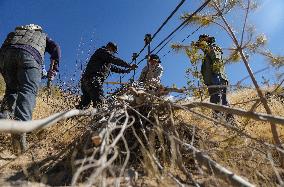
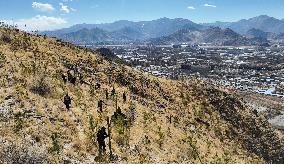
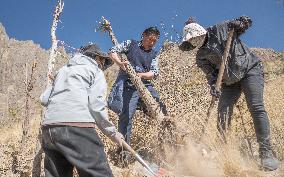
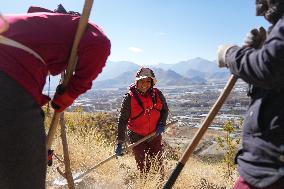
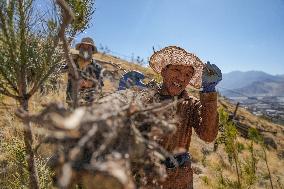
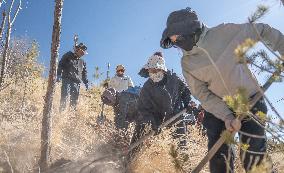
(240313) -- LHASA, March 13, 2024 (Xinhua) -- An aerial photo taken on March 12, 2024 shows villagers of the Donggar community transferring saplings by cableway in Lhasa, southwest China's Xizang Autonomous Region, March 12, 2024. In Doilungdeqen District of Lhasa, more than 90 villagers of the Donggar community gathered on Xiga Mountain Tuesday to earth up saplings. They planned to plant about 2,000 saplings on this day. Xiga Mountain, which once was barren with rocks, has transformed its appearance since a proposal by Rigzin, a group leader of the Donggar community, in 2013 to utilize part of the collective income for tree-planting. From the year of 2013 to 2020, a total of 28.54 million yuan (about 3.97 million U.S. dollars) was invested, greening 800 mu (about 53.33 hectares) of the mountain land. Thanks to related policies rolled out by local government, villagers of the group planted an area of 1,200 mu (about 80 hectares) with trees in 2021. In 2022, Rigzin's group was granted a loan of 24 mil

  •  
(InXizang) CHINA-XIZANG-LHASA-BARREN MOUNTAIN-TREE PLANTING (CN)

(InXizang) CHINA-XIZANG-LHASA-BARREN MOUNTAIN-TREE PLANTING (CN)

(240313) -- LHASA, March 13, 2024 (Xinhua) -- Villagers of the Donggar community transfer saplings by cableway in Lhasa, southwest China's Xizang Autonomous Region, March 12, 2024. In Doilungdeqen District of Lhasa, more than 90 villagers of the Donggar community gathered on Xiga Mountain Tuesday to earth up saplings. They planned to plant about 2,000 saplings on this day. Xiga Mountain, which once was barren with rocks, has transformed its appearance since a proposal by Rigzin, a group leader of the Donggar community, in 2013 to utilize part of the collective income for tree-planting. From the year of 2013 to 2020, a total of 28.54 million yuan (about 3.97 million U.S. dollars) was invested, greening 800 mu (about 53.33 hectares) of the mountain land. Thanks to related policies rolled out by local government, villagers of the group planted an area of 1,200 mu (about 80 hectares) with trees in 2021. In 2022, Rigzin's group was granted a loan of 24 million yuan (about 3.34 million U.S. dollars) to joi

  •  
(InXizang) CHINA-XIZANG-LHASA-BARREN MOUNTAIN-TREE PLANTING (CN)

(InXizang) CHINA-XIZANG-LHASA-BARREN MOUNTAIN-TREE PLANTING (CN)

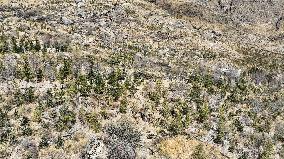
(240313) -- LHASA, March 13, 2024 (Xinhua) -- An aerial drone photo taken on March 12, 2024 shows trees planted on Xiga Mountain in Lhasa, southwest China's Xizang Autonomous Region. In Doilungdeqen District of Lhasa, more than 90 villagers of the Donggar community gathered on Xiga Mountain Tuesday to earth up saplings. They planned to plant about 2,000 saplings on this day. Xiga Mountain, which once was barren with rocks, has transformed its appearance since a proposal by Rigzin, a group leader of the Donggar community, in 2013 to utilize part of the collective income for tree-planting. From the year of 2013 to 2020, a total of 28.54 million yuan (about 3.97 million U.S. dollars) was invested, greening 800 mu (about 53.33 hectares) of the mountain land. Thanks to related policies rolled out by local government, villagers of the group planted an area of 1,200 mu (about 80 hectares) with trees in 2021. In 2022, Rigzin's group was granted a loan of 24 million yuan (about 3.34 million U.S. dollars) to j

  •  
(InXizang) CHINA-XIZANG-LHASA-BARREN MOUNTAIN-TREE PLANTING (CN)

(InXizang) CHINA-XIZANG-LHASA-BARREN MOUNTAIN-TREE PLANTING (CN)

(240313) -- LHASA, March 13, 2024 (Xinhua) -- An aerial drone photo taken on March 12, 2024 shows villagers of the Donggar community planting saplings in Lhasa, southwest China's Xizang Autonomous Region. In Doilungdeqen District of Lhasa, more than 90 villagers of the Donggar community gathered on Xiga Mountain Tuesday to earth up saplings. They planned to plant about 2,000 saplings on this day. Xiga Mountain, which once was barren with rocks, has transformed its appearance since a proposal by Rigzin, a group leader of the Donggar community, in 2013 to utilize part of the collective income for tree-planting. From the year of 2013 to 2020, a total of 28.54 million yuan (about 3.97 million U.S. dollars) was invested, greening 800 mu (about 53.33 hectares) of the mountain land. Thanks to related policies rolled out by local government, villagers of the group planted an area of 1,200 mu (about 80 hectares) with trees in 2021. In 2022, Rigzin's group was granted a loan of 24 million yuan (about 3.34 mill

  •  
(InXizang) CHINA-XIZANG-LHASA-BARREN MOUNTAIN-TREE PLANTING (CN)

(InXizang) CHINA-XIZANG-LHASA-BARREN MOUNTAIN-TREE PLANTING (CN)

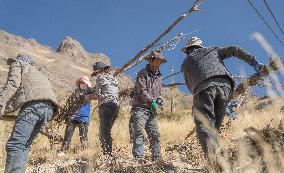
(240313) -- LHASA, March 13, 2024 (Xinhua) -- Villagers of the Donggar community transfer saplings in Lhasa, southwest China's Xizang Autonomous Region, March 12, 2024. In Doilungdeqen District of Lhasa, more than 90 villagers of the Donggar community gathered on Xiga Mountain Tuesday to earth up saplings. They planned to plant about 2,000 saplings on this day. Xiga Mountain, which once was barren with rocks, has transformed its appearance since a proposal by Rigzin, a group leader of the Donggar community, in 2013 to utilize part of the collective income for tree-planting. From the year of 2013 to 2020, a total of 28.54 million yuan (about 3.97 million U.S. dollars) was invested, greening 800 mu (about 53.33 hectares) of the mountain land. Thanks to related policies rolled out by local government, villagers of the group planted an area of 1,200 mu (about 80 hectares) with trees in 2021. In 2022, Rigzin's group was granted a loan of 24 million yuan (about 3.34 million U.S. dollars) to join a greening

  •  
(InXizang) CHINA-XIZANG-LHASA-BARREN MOUNTAIN-TREE PLANTING (CN)

(InXizang) CHINA-XIZANG-LHASA-BARREN MOUNTAIN-TREE PLANTING (CN)

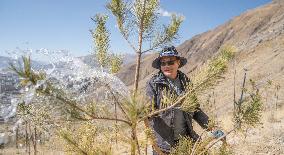
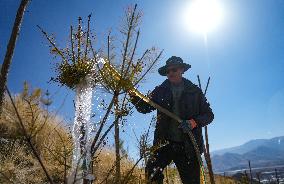
(240313) -- LHASA, March 13, 2024 (Xinhua) -- A villager of the Donggar community waters saplings in Lhasa, southwest China's Xizang Autonomous Region, March 12, 2024. In Doilungdeqen District of Lhasa, more than 90 villagers of the Donggar community gathered on Xiga Mountain Tuesday to earth up saplings. They planned to plant about 2,000 saplings on this day. Xiga Mountain, which once was barren with rocks, has transformed its appearance since a proposal by Rigzin, a group leader of the Donggar community, in 2013 to utilize part of the collective income for tree-planting. From the year of 2013 to 2020, a total of 28.54 million yuan (about 3.97 million U.S. dollars) was invested, greening 800 mu (about 53.33 hectares) of the mountain land. Thanks to related policies rolled out by local government, villagers of the group planted an area of 1,200 mu (about 80 hectares) with trees in 2021. In 2022, Rigzin's group was granted a loan of 24 million yuan (about 3.34 million U.S. dollars) to join a greening

  •  
(InXizang) CHINA-XIZANG-LHASA-BARREN MOUNTAIN-TREE PLANTING (CN)

(InXizang) CHINA-XIZANG-LHASA-BARREN MOUNTAIN-TREE PLANTING (CN)

(240313) -- LHASA, March 13, 2024 (Xinhua) -- Rigzin (C) and villagers of the Donggar community plant saplings in Lhasa, southwest China's Xizang Autonomous Region, March 12, 2024. In Doilungdeqen District of Lhasa, more than 90 villagers of the Donggar community gathered on Xiga Mountain Tuesday to earth up saplings. They planned to plant about 2,000 saplings on this day. Xiga Mountain, which once was barren with rocks, has transformed its appearance since a proposal by Rigzin, a group leader of the Donggar community, in 2013 to utilize part of the collective income for tree-planting. From the year of 2013 to 2020, a total of 28.54 million yuan (about 3.97 million U.S. dollars) was invested, greening 800 mu (about 53.33 hectares) of the mountain land. Thanks to related policies rolled out by local government, villagers of the group planted an area of 1,200 mu (about 80 hectares) with trees in 2021. In 2022, Rigzin's group was granted a loan of 24 million yuan (about 3.34 million U.S. dollars) to joi

  •  
(InXizang) CHINA-XIZANG-LHASA-BARREN MOUNTAIN-TREE PLANTING (CN)

(InXizang) CHINA-XIZANG-LHASA-BARREN MOUNTAIN-TREE PLANTING (CN)

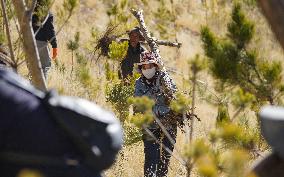
(240313) -- LHASA, March 13, 2024 (Xinhua) -- Villagers of the Donggar community plant saplings in Lhasa, southwest China's Xizang Autonomous Region, March 12, 2024. In Doilungdeqen District of Lhasa, more than 90 villagers of the Donggar community gathered on Xiga Mountain Tuesday to earth up saplings. They planned to plant about 2,000 saplings on this day. Xiga Mountain, which once was barren with rocks, has transformed its appearance since a proposal by Rigzin, a group leader of the Donggar community, in 2013 to utilize part of the collective income for tree-planting. From the year of 2013 to 2020, a total of 28.54 million yuan (about 3.97 million U.S. dollars) was invested, greening 800 mu (about 53.33 hectares) of the mountain land. Thanks to related policies rolled out by local government, villagers of the group planted an area of 1,200 mu (about 80 hectares) with trees in 2021. In 2022, Rigzin's group was granted a loan of 24 million yuan (about 3.34 million U.S. dollars) to join a greening pr

  •  
(InXizang) CHINA-XIZANG-LHASA-BARREN MOUNTAIN-TREE PLANTING (CN)

(InXizang) CHINA-XIZANG-LHASA-BARREN MOUNTAIN-TREE PLANTING (CN)

(240313) -- LHASA, March 13, 2024 (Xinhua) -- Villagers of the Donggar community transfer saplings in Lhasa, southwest China's Xizang Autonomous Region, March 12, 2024. In Doilungdeqen District of Lhasa, more than 90 villagers of the Donggar community gathered on Xiga Mountain Tuesday to earth up saplings. They planned to plant about 2,000 saplings on this day. Xiga Mountain, which once was barren with rocks, has transformed its appearance since a proposal by Rigzin, a group leader of the Donggar community, in 2013 to utilize part of the collective income for tree-planting. From the year of 2013 to 2020, a total of 28.54 million yuan (about 3.97 million U.S. dollars) was invested, greening 800 mu (about 53.33 hectares) of the mountain land. Thanks to related policies rolled out by local government, villagers of the group planted an area of 1,200 mu (about 80 hectares) with trees in 2021. In 2022, Rigzin's group was granted a loan of 24 million yuan (about 3.34 million U.S. dollars) to join a greening

  •  
(InXizang) CHINA-XIZANG-LHASA-BARREN MOUNTAIN-TREE PLANTING (CN)

(InXizang) CHINA-XIZANG-LHASA-BARREN MOUNTAIN-TREE PLANTING (CN)

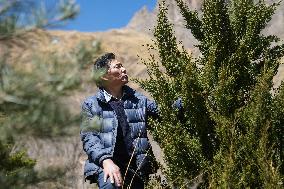
(240313) -- LHASA, March 13, 2024 (Xinhua) -- Rigzin, a group leader in the Donggar community, checks the growth of saplings in Lhasa, southwest China's Xizang Autonomous Region, March 12, 2024. In Doilungdeqen District of Lhasa, more than 90 villagers of the Donggar community gathered on Xiga Mountain Tuesday to earth up saplings. They planned to plant about 2,000 saplings on this day. Xiga Mountain, which once was barren with rocks, has transformed its appearance since a proposal by Rigzin, a group leader of the Donggar community, in 2013 to utilize part of the collective income for tree-planting. From the year of 2013 to 2020, a total of 28.54 million yuan (about 3.97 million U.S. dollars) was invested, greening 800 mu (about 53.33 hectares) of the mountain land. Thanks to related policies rolled out by local government, villagers of the group planted an area of 1,200 mu (about 80 hectares) with trees in 2021. In 2022, Rigzin's group was granted a loan of 24 million yuan (about 3.34 million U.S. d

  •  
(InXizang) CHINA-XIZANG-LHASA-BARREN MOUNTAIN-TREE PLANTING (CN)

(InXizang) CHINA-XIZANG-LHASA-BARREN MOUNTAIN-TREE PLANTING (CN)

(240313) -- LHASA, March 13, 2024 (Xinhua) -- Villagers of the Donggar community plant saplings in Lhasa, southwest China's Xizang Autonomous Region, March 12, 2024. In Doilungdeqen District of Lhasa, more than 90 villagers of the Donggar community gathered on Xiga Mountain Tuesday to earth up saplings. They planned to plant about 2,000 saplings on this day. Xiga Mountain, which once was barren with rocks, has transformed its appearance since a proposal by Rigzin, a group leader of the Donggar community, in 2013 to utilize part of the collective income for tree-planting. From the year of 2013 to 2020, a total of 28.54 million yuan (about 3.97 million U.S. dollars) was invested, greening 800 mu (about 53.33 hectares) of the mountain land. Thanks to related policies rolled out by local government, villagers of the group planted an area of 1,200 mu (about 80 hectares) with trees in 2021. In 2022, Rigzin's group was granted a loan of 24 million yuan (about 3.34 million U.S. dollars) to join a greening pr

  •  
(InXizang) CHINA-XIZANG-LHASA-BARREN MOUNTAIN-TREE PLANTING (CN)

(InXizang) CHINA-XIZANG-LHASA-BARREN MOUNTAIN-TREE PLANTING (CN)

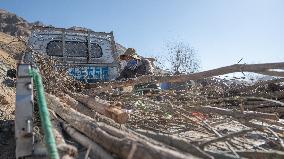
(240313) -- LHASA, March 13, 2024 (Xinhua) -- A villager of the Donggar community transfers saplings in Lhasa, southwest China's Xizang Autonomous Region, March 12, 2024. In Doilungdeqen District of Lhasa, more than 90 villagers of the Donggar community gathered on Xiga Mountain Tuesday to earth up saplings. They planned to plant about 2,000 saplings on this day. Xiga Mountain, which once was barren with rocks, has transformed its appearance since a proposal by Rigzin, a group leader of the Donggar community, in 2013 to utilize part of the collective income for tree-planting. From the year of 2013 to 2020, a total of 28.54 million yuan (about 3.97 million U.S. dollars) was invested, greening 800 mu (about 53.33 hectares) of the mountain land. Thanks to related policies rolled out by local government, villagers of the group planted an area of 1,200 mu (about 80 hectares) with trees in 2021. In 2022, Rigzin's group was granted a loan of 24 million yuan (about 3.34 million U.S. dollars) to join a greeni

  •  
(InXizang) CHINA-XIZANG-LHASA-BARREN MOUNTAIN-TREE PLANTING (CN)

(InXizang) CHINA-XIZANG-LHASA-BARREN MOUNTAIN-TREE PLANTING (CN)

(240313) -- LHASA, March 13, 2024 (Xinhua) -- A villager of the Donggar community waters saplings in Lhasa, southwest China's Xizang Autonomous Region, March 12, 2024. In Doilungdeqen District of Lhasa, more than 90 villagers of the Donggar community gathered on Xiga Mountain Tuesday to earth up saplings. They planned to plant about 2,000 saplings on this day. Xiga Mountain, which once was barren with rocks, has transformed its appearance since a proposal by Rigzin, a group leader of the Donggar community, in 2013 to utilize part of the collective income for tree-planting. From the year of 2013 to 2020, a total of 28.54 million yuan (about 3.97 million U.S. dollars) was invested, greening 800 mu (about 53.33 hectares) of the mountain land. Thanks to related policies rolled out by local government, villagers of the group planted an area of 1,200 mu (about 80 hectares) with trees in 2021. In 2022, Rigzin's group was granted a loan of 24 million yuan (about 3.34 million U.S. dollars) to join a greening

  •  
(InXizang) CHINA-XIZANG-LHASA-BARREN MOUNTAIN-TREE PLANTING (CN)

(InXizang) CHINA-XIZANG-LHASA-BARREN MOUNTAIN-TREE PLANTING (CN)

(240313) -- LHASA, March 13, 2024 (Xinhua) -- Villagers of the Donggar community transfer saplings in Lhasa, southwest China's Xizang Autonomous Region, March 12, 2024. In Doilungdeqen District of Lhasa, more than 90 villagers of the Donggar community gathered on Xiga Mountain Tuesday to earth up saplings. They planned to plant about 2,000 saplings on this day. Xiga Mountain, which once was barren with rocks, has transformed its appearance since a proposal by Rigzin, a group leader of the Donggar community, in 2013 to utilize part of the collective income for tree-planting. From the year of 2013 to 2020, a total of 28.54 million yuan (about 3.97 million U.S. dollars) was invested, greening 800 mu (about 53.33 hectares) of the mountain land. Thanks to related policies rolled out by local government, villagers of the group planted an area of 1,200 mu (about 80 hectares) with trees in 2021. In 2022, Rigzin's group was granted a loan of 24 million yuan (about 3.34 million U.S. dollars) to join a greening

  •  
(InXizang) CHINA-XIZANG-LHASA-BARREN MOUNTAIN-TREE PLANTING (CN)

(InXizang) CHINA-XIZANG-LHASA-BARREN MOUNTAIN-TREE PLANTING (CN)

(240313) -- LHASA, March 13, 2024 (Xinhua) -- Villagers of the Donggar community plant saplings in Lhasa, southwest China's Xizang Autonomous Region, March 12, 2024. In Doilungdeqen District of Lhasa, more than 90 villagers of the Donggar community gathered on Xiga Mountain Tuesday to earth up saplings. They planned to plant about 2,000 saplings on this day. Xiga Mountain, which once was barren with rocks, has transformed its appearance since a proposal by Rigzin, a group leader of the Donggar community, in 2013 to utilize part of the collective income for tree-planting. From the year of 2013 to 2020, a total of 28.54 million yuan (about 3.97 million U.S. dollars) was invested, greening 800 mu (about 53.33 hectares) of the mountain land. Thanks to related policies rolled out by local government, villagers of the group planted an area of 1,200 mu (about 80 hectares) with trees in 2021. In 2022, Rigzin's group was granted a loan of 24 million yuan (about 3.34 million U.S. dollars) to join a greening pr

  •  
(InXizang) CHINA-XIZANG-LHASA-BARREN MOUNTAIN-TREE PLANTING (CN)

(InXizang) CHINA-XIZANG-LHASA-BARREN MOUNTAIN-TREE PLANTING (CN)

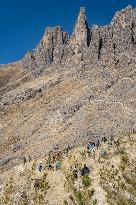
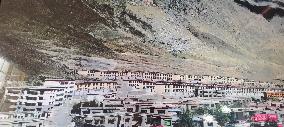
(240313) -- LHASA, March 13, 2024 (Xinhua) -- This photo taken in October 2004 shows a view of the Donggar community and the barren mountain around the community in Lhasa, southwest China's Xizang Autonomous Region. In Doilungdeqen District of Lhasa, more than 90 villagers of the Donggar community gathered on Xiga Mountain Tuesday to earth up saplings. They planned to plant about 2,000 saplings on this day. Xiga Mountain, which once was barren with rocks, has transformed its appearance since a proposal by Rigzin, a group leader of the Donggar community, in 2013 to utilize part of the collective income for tree-planting. From the year of 2013 to 2020, a total of 28.54 million yuan (about 3.97 million U.S. dollars) was invested, greening 800 mu (about 53.33 hectares) of the mountain land. Thanks to related policies rolled out by local government, villagers of the group planted an area of 1,200 mu (about 80 hectares) with trees in 2021. In 2022, Rigzin's group was granted a loan of 24 million yuan (abou

  •  
(EnchantingGuangxi)CHINA-GUANGXI-MIAO ETHNIC GROUP-TRADITIONAL COSTUME (CN)

(EnchantingGuangxi)CHINA-GUANGXI-MIAO ETHNIC GROUP-TRADITIONAL COSTUME (CN)

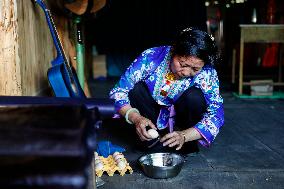
(230903) -- RONGSHUI, Sept. 3, 2023 (Xinhua) -- Wu Meiqiu applies egg white on a piece of "Liang Bu" in Wuying Village on the border between south China's Guangxi Zhuang Autonomous Region and southwest China's Guizhou Province, on Aug. 31, 2023. Wuying Village is a Miao ethnic group hamlet that nestles snugly in the towering mountains stretching across the border between Guangxi and Guizhou. "Liang Bu", named for its glistening appearance, is a kind of traditional hand-made cloth of Miao ethnic group. Women of Miao ethnic group in Wuying plant woad in spring and harvest it in fall. They soak woad in water for days before mixing it with materials such as lime, to make the dye for "Liang Bu". It usually takes months to make a piece of "Liang Bu" after repeated process of dip-dyeing, drying, pounding, applying egg white and steaming. The cloth gradually becomes glistening owing to tens of thousands of poundings by villagers with traditional wooden hammers. After cutting, sewing, embroidery and ironing, a

  •  
(EnchantingGuangxi)CHINA-GUANGXI-MIAO ETHNIC GROUP-TRADITIONAL COSTUME (CN)

(EnchantingGuangxi)CHINA-GUANGXI-MIAO ETHNIC GROUP-TRADITIONAL COSTUME (CN)

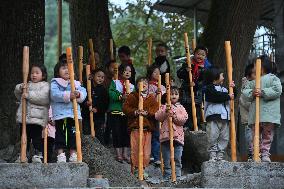
(230903) -- RONGSHUI, Sept. 3, 2023 (Xinhua) -- Children learn to use the traditional "Liang Bu" hammers in Wuying Village on the border between south China's Guangxi Zhuang Autonomous Region and southwest China's Guizhou Province, on Nov. 14, 2022. Wuying Village is a Miao ethnic group hamlet that nestles snugly in the towering mountains stretching across the border between Guangxi and Guizhou. "Liang Bu", named for its glistening appearance, is a kind of traditional hand-made cloth of Miao ethnic group. Women of Miao ethnic group in Wuying plant woad in spring and harvest it in fall. They soak woad in water for days before mixing it with materials such as lime, to make the dye for "Liang Bu". It usually takes months to make a piece of "Liang Bu" after repeated process of dip-dyeing, drying, pounding, applying egg white and steaming. The cloth gradually becomes glistening owing to tens of thousands of poundings by villagers with traditional wooden hammers. After cutting, sewing, embroidery and ironin

  •  
(EnchantingGuangxi)CHINA-GUANGXI-MIAO ETHNIC GROUP-TRADITIONAL COSTUME (CN)

(EnchantingGuangxi)CHINA-GUANGXI-MIAO ETHNIC GROUP-TRADITIONAL COSTUME (CN)

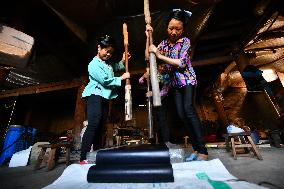
(230903) -- RONGSHUI, Sept. 3, 2023 (Xinhua) -- Wei Meili (R) pounds the cloth with the traditional "Liang Bu" hammer in Wuying Village on the border between south China's Guangxi Zhuang Autonomous Region and southwest China's Guizhou Province, on Sept. 2, 2020. Wuying Village is a Miao ethnic group hamlet that nestles snugly in the towering mountains stretching across the border between Guangxi and Guizhou. "Liang Bu", named for its glistening appearance, is a kind of traditional hand-made cloth of Miao ethnic group. Women of Miao ethnic group in Wuying plant woad in spring and harvest it in fall. They soak woad in water for days before mixing it with materials such as lime, to make the dye for "Liang Bu". It usually takes months to make a piece of "Liang Bu" after repeated process of dip-dyeing, drying, pounding, applying egg white and steaming. The cloth gradually becomes glistening owing to tens of thousands of poundings by villagers with traditional wooden hammers. After cutting, sewing, embroide

  •  
(EnchantingGuangxi)CHINA-GUANGXI-MIAO ETHNIC GROUP-TRADITIONAL COSTUME (CN)

(EnchantingGuangxi)CHINA-GUANGXI-MIAO ETHNIC GROUP-TRADITIONAL COSTUME (CN)

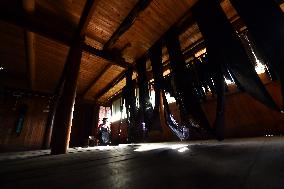
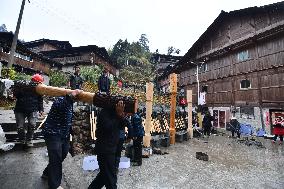
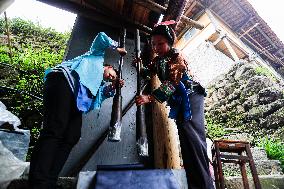
(230903) -- RONGSHUI, Sept. 3, 2023 (Xinhua) -- Villagers install large "Liang Bu" hammers at a square in Wuying Village on the border between south China's Guangxi Zhuang Autonomous Region and southwest China's Guizhou Province, on Nov. 19, 2022. Wuying Village is a Miao ethnic group hamlet that nestles snugly in the towering mountains stretching across the border between Guangxi and Guizhou. "Liang Bu", named for its glistening appearance, is a kind of traditional hand-made cloth of Miao ethnic group. Women of Miao ethnic group in Wuying plant woad in spring and harvest it in fall. They soak woad in water for days before mixing it with materials such as lime, to make the dye for "Liang Bu". It usually takes months to make a piece of "Liang Bu" after repeated process of dip-dyeing, drying, pounding, applying egg white and steaming. The cloth gradually becomes glistening owing to tens of thousands of poundings by villagers with traditional wooden hammers. After cutting, sewing, embroidery and ironing,

  •  
(EnchantingGuangxi)CHINA-GUANGXI-MIAO ETHNIC GROUP-TRADITIONAL COSTUME (CN)

(EnchantingGuangxi)CHINA-GUANGXI-MIAO ETHNIC GROUP-TRADITIONAL COSTUME (CN)

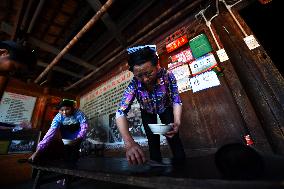
(230903) -- RONGSHUI, Sept. 3, 2023 (Xinhua) -- Wei Meili (R) applies egg white on a piece of "Liang Bu" in Wuying Village on the border between south China's Guangxi Zhuang Autonomous Region and southwest China's Guizhou Province, on Sept. 2, 2020. Wuying Village is a Miao ethnic group hamlet that nestles snugly in the towering mountains stretching across the border between Guangxi and Guizhou. "Liang Bu", named for its glistening appearance, is a kind of traditional hand-made cloth of Miao ethnic group. Women of Miao ethnic group in Wuying plant woad in spring and harvest it in fall. They soak woad in water for days before mixing it with materials such as lime, to make the dye for "Liang Bu". It usually takes months to make a piece of "Liang Bu" after repeated process of dip-dyeing, drying, pounding, applying egg white and steaming. The cloth gradually becomes glistening owing to tens of thousands of poundings by villagers with traditional wooden hammers. After cutting, sewing, embroidery and ironin

  •  
(EnchantingGuangxi)CHINA-GUANGXI-MIAO ETHNIC GROUP-TRADITIONAL COSTUME (CN)

(EnchantingGuangxi)CHINA-GUANGXI-MIAO ETHNIC GROUP-TRADITIONAL COSTUME (CN)

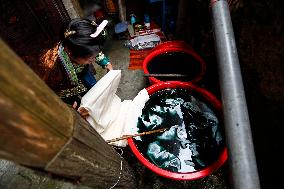
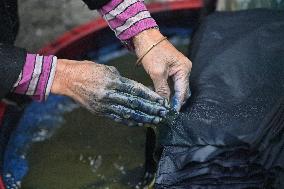
(230903) -- RONGSHUI, Sept. 3, 2023 (Xinhua) -- Liang Zuying dyes the white cloth in Wuying Village on the border between south China's Guangxi Zhuang Autonomous Region and southwest China's Guizhou Province, on Aug. 31, 2023. Wuying Village is a Miao ethnic group hamlet that nestles snugly in the towering mountains stretching across the border between Guangxi and Guizhou. "Liang Bu", named for its glistening appearance, is a kind of traditional hand-made cloth of Miao ethnic group. Women of Miao ethnic group in Wuying plant woad in spring and harvest it in fall. They soak woad in water for days before mixing it with materials such as lime, to make the dye for "Liang Bu". It usually takes months to make a piece of "Liang Bu" after repeated process of dip-dyeing, drying, pounding, applying egg white and steaming. The cloth gradually becomes glistening owing to tens of thousands of poundings by villagers with traditional wooden hammers. After cutting, sewing, embroidery and ironing, a set of glossy "Lia

  •  
(EnchantingGuangxi)CHINA-GUANGXI-MIAO ETHNIC GROUP-TRADITIONAL COSTUME (CN)

(EnchantingGuangxi)CHINA-GUANGXI-MIAO ETHNIC GROUP-TRADITIONAL COSTUME (CN)

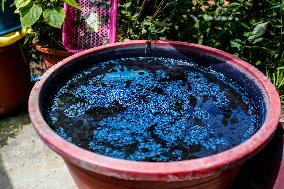
(230903) -- RONGSHUI, Sept. 3, 2023 (Xinhua) -- This photo shows the water after soaking woad in it for three days in Wuying Village on the border between south China's Guangxi Zhuang Autonomous Region and southwest China's Guizhou Province, on Aug. 31, 2023. Wuying Village is a Miao ethnic group hamlet that nestles snugly in the towering mountains stretching across the border between Guangxi and Guizhou. "Liang Bu", named for its glistening appearance, is a kind of traditional hand-made cloth of Miao ethnic group. Women of Miao ethnic group in Wuying plant woad in spring and harvest it in fall. They soak woad in water for days before mixing it with materials such as lime, to make the dye for "Liang Bu". It usually takes months to make a piece of "Liang Bu" after repeated process of dip-dyeing, drying, pounding, applying egg white and steaming. The cloth gradually becomes glistening owing to tens of thousands of poundings by villagers with traditional wooden hammers. After cutting, sewing, embroidery

  •  
(EnchantingGuangxi)CHINA-GUANGXI-MIAO ETHNIC GROUP-TRADITIONAL COSTUME (CN)

(EnchantingGuangxi)CHINA-GUANGXI-MIAO ETHNIC GROUP-TRADITIONAL COSTUME (CN)

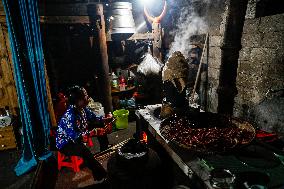
(230903) -- RONGSHUI, Sept. 3, 2023 (Xinhua) -- Liang Zuying steams the cloth in Wuying Village on the border between south China's Guangxi Zhuang Autonomous Region and southwest China's Guizhou Province, on Aug. 30, 2023. Wuying Village is a Miao ethnic group hamlet that nestles snugly in the towering mountains stretching across the border between Guangxi and Guizhou. "Liang Bu", named for its glistening appearance, is a kind of traditional hand-made cloth of Miao ethnic group. Women of Miao ethnic group in Wuying plant woad in spring and harvest it in fall. They soak woad in water for days before mixing it with materials such as lime, to make the dye for "Liang Bu". It usually takes months to make a piece of "Liang Bu" after repeated process of dip-dyeing, drying, pounding, applying egg white and steaming. The cloth gradually becomes glistening owing to tens of thousands of poundings by villagers with traditional wooden hammers. After cutting, sewing, embroidery and ironing, a set of glossy "Liang B

  •  
(EnchantingGuangxi)CHINA-GUANGXI-MIAO ETHNIC GROUP-TRADITIONAL COSTUME (CN)

(EnchantingGuangxi)CHINA-GUANGXI-MIAO ETHNIC GROUP-TRADITIONAL COSTUME (CN)

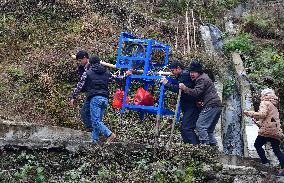
(230903) -- RONGSHUI, Sept. 3, 2023 (Xinhua) -- Villagers carry machines for making "Liang Bu" in Wuying Village on the border between south China's Guangxi Zhuang Autonomous Region and southwest China's Guizhou Province, on Dec. 31, 2021. The machines were donated by the women's federation and the association of women entrepreneurs of Liuzhou. Wuying Village is a Miao ethnic group hamlet that nestles snugly in the towering mountains stretching across the border between Guangxi and Guizhou. "Liang Bu", named for its glistening appearance, is a kind of traditional hand-made cloth of Miao ethnic group. Women of Miao ethnic group in Wuying plant woad in spring and harvest it in fall. They soak woad in water for days before mixing it with materials such as lime, to make the dye for "Liang Bu". It usually takes months to make a piece of "Liang Bu" after repeated process of dip-dyeing, drying, pounding, applying egg white and steaming. The cloth gradually becomes glistening owing to tens of thousands of pou

  •  
(EnchantingGuangxi)CHINA-GUANGXI-MIAO ETHNIC GROUP-TRADITIONAL COSTUME (CN)

(EnchantingGuangxi)CHINA-GUANGXI-MIAO ETHNIC GROUP-TRADITIONAL COSTUME (CN)

(230903) -- RONGSHUI, Sept. 3, 2023 (Xinhua) -- Pan Huami dyes the cloth in Wuying Village on the border between south China's Guangxi Zhuang Autonomous Region and southwest China's Guizhou Province, on Sept. 2, 2023. Wuying Village is a Miao ethnic group hamlet that nestles snugly in the towering mountains stretching across the border between Guangxi and Guizhou. "Liang Bu", named for its glistening appearance, is a kind of traditional hand-made cloth of Miao ethnic group. Women of Miao ethnic group in Wuying plant woad in spring and harvest it in fall. They soak woad in water for days before mixing it with materials such as lime, to make the dye for "Liang Bu". It usually takes months to make a piece of "Liang Bu" after repeated process of dip-dyeing, drying, pounding, applying egg white and steaming. The cloth gradually becomes glistening owing to tens of thousands of poundings by villagers with traditional wooden hammers. After cutting, sewing, embroidery and ironing, a set of glossy "Liang Bu" cl

  •  
(EnchantingGuangxi)CHINA-GUANGXI-MIAO ETHNIC GROUP-TRADITIONAL COSTUME (CN)

(EnchantingGuangxi)CHINA-GUANGXI-MIAO ETHNIC GROUP-TRADITIONAL COSTUME (CN)

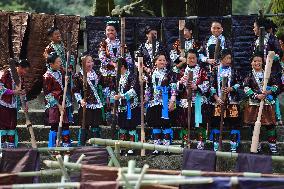
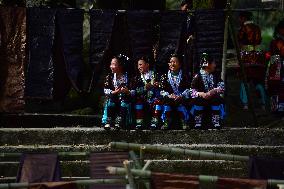
(230903) -- RONGSHUI, Sept. 3, 2023 (Xinhua) -- Liang Zuying (3rd L, front) displays "Liang Bu" and traditional costumes with other locals during a "Liang Bu" cultural festival in Wuying Village on the border between south China's Guangxi Zhuang Autonomous Region and southwest China's Guizhou Province, on Oct. 25, 2020. Wuying Village is a Miao ethnic group hamlet that nestles snugly in the towering mountains stretching across the border between Guangxi and Guizhou. "Liang Bu", named for its glistening appearance, is a kind of traditional hand-made cloth of Miao ethnic group. Women of Miao ethnic group in Wuying plant woad in spring and harvest it in fall. They soak woad in water for days before mixing it with materials such as lime, to make the dye for "Liang Bu". It usually takes months to make a piece of "Liang Bu" after repeated process of dip-dyeing, drying, pounding, applying egg white and steaming. The cloth gradually becomes glistening owing to tens of thousands of poundings by villagers with

  •  
(EnchantingGuangxi)CHINA-GUANGXI-MIAO ETHNIC GROUP-TRADITIONAL COSTUME (CN)

(EnchantingGuangxi)CHINA-GUANGXI-MIAO ETHNIC GROUP-TRADITIONAL COSTUME (CN)

(230903) -- RONGSHUI, Sept. 3, 2023 (Xinhua) -- Children watch the making of "Liang Bu" in Wuying Village on the border between south China's Guangxi Zhuang Autonomous Region and southwest China's Guizhou Province, on Sept. 7, 2022. Wuying Village is a Miao ethnic group hamlet that nestles snugly in the towering mountains stretching across the border between Guangxi and Guizhou. "Liang Bu", named for its glistening appearance, is a kind of traditional hand-made cloth of Miao ethnic group. Women of Miao ethnic group in Wuying plant woad in spring and harvest it in fall. They soak woad in water for days before mixing it with materials such as lime, to make the dye for "Liang Bu". It usually takes months to make a piece of "Liang Bu" after repeated process of dip-dyeing, drying, pounding, applying egg white and steaming. The cloth gradually becomes glistening owing to tens of thousands of poundings by villagers with traditional wooden hammers. After cutting, sewing, embroidery and ironing, a set of gloss

  •  
(EnchantingGuangxi)CHINA-GUANGXI-MIAO ETHNIC GROUP-TRADITIONAL COSTUME (CN)

(EnchantingGuangxi)CHINA-GUANGXI-MIAO ETHNIC GROUP-TRADITIONAL COSTUME (CN)

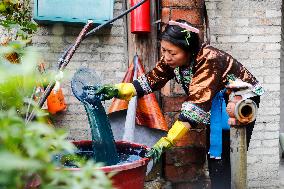
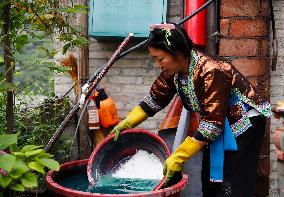
(230903) -- RONGSHUI, Sept. 3, 2023 (Xinhua) -- Liang Zuying adds lime into the water with woad soaked to make the dye in Wuying Village on the border between south China's Guangxi Zhuang Autonomous Region and southwest China's Guizhou Province, on Aug. 31, 2023. Wuying Village is a Miao ethnic group hamlet that nestles snugly in the towering mountains stretching across the border between Guangxi and Guizhou. "Liang Bu", named for its glistening appearance, is a kind of traditional hand-made cloth of Miao ethnic group. Women of Miao ethnic group in Wuying plant woad in spring and harvest it in fall. They soak woad in water for days before mixing it with materials such as lime, to make the dye for "Liang Bu". It usually takes months to make a piece of "Liang Bu" after repeated process of dip-dyeing, drying, pounding, applying egg white and steaming. The cloth gradually becomes glistening owing to tens of thousands of poundings by villagers with traditional wooden hammers. After cutting, sewing, embroid

  •  
(EnchantingGuangxi)CHINA-GUANGXI-MIAO ETHNIC GROUP-TRADITIONAL COSTUME (CN)

(EnchantingGuangxi)CHINA-GUANGXI-MIAO ETHNIC GROUP-TRADITIONAL COSTUME (CN)

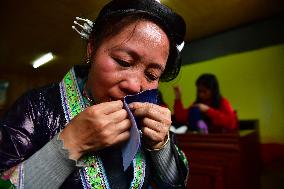
(230903) -- RONGSHUI, Sept. 3, 2023 (Xinhua) -- Liang Zuying makes embroidery in Wuying Village on the border between south China's Guangxi Zhuang Autonomous Region and southwest China's Guizhou Province, on Oct. 19, 2019. Wuying Village is a Miao ethnic group hamlet that nestles snugly in the towering mountains stretching across the border between Guangxi and Guizhou. "Liang Bu", named for its glistening appearance, is a kind of traditional hand-made cloth of Miao ethnic group. Women of Miao ethnic group in Wuying plant woad in spring and harvest it in fall. They soak woad in water for days before mixing it with materials such as lime, to make the dye for "Liang Bu". It usually takes months to make a piece of "Liang Bu" after repeated process of dip-dyeing, drying, pounding, applying egg white and steaming. The cloth gradually becomes glistening owing to tens of thousands of poundings by villagers with traditional wooden hammers. After cutting, sewing, embroidery and ironing, a set of glossy "Liang B

  •  
(EnchantingGuangxi)CHINA-GUANGXI-MIAO ETHNIC GROUP-TRADITIONAL COSTUME (CN)

(EnchantingGuangxi)CHINA-GUANGXI-MIAO ETHNIC GROUP-TRADITIONAL COSTUME (CN)

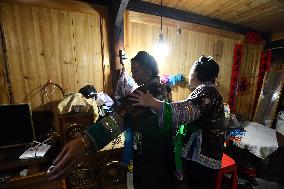
(230903) -- RONGSHUI, Sept. 3, 2023 (Xinhua) -- Wu Meiqiu (R) takes Liang Zuying's measurement for making "Liang Bu" costumes in Wuying Village on the border between south China's Guangxi Zhuang Autonomous Region and southwest China's Guizhou Province, on Aug. 31, 2023. Wuying Village is a Miao ethnic group hamlet that nestles snugly in the towering mountains stretching across the border between Guangxi and Guizhou. "Liang Bu", named for its glistening appearance, is a kind of traditional hand-made cloth of Miao ethnic group. Women of Miao ethnic group in Wuying plant woad in spring and harvest it in fall. They soak woad in water for days before mixing it with materials such as lime, to make the dye for "Liang Bu". It usually takes months to make a piece of "Liang Bu" after repeated process of dip-dyeing, drying, pounding, applying egg white and steaming. The cloth gradually becomes glistening owing to tens of thousands of poundings by villagers with traditional wooden hammers. After cutting, sewing,

  •  
(EnchantingGuangxi)CHINA-GUANGXI-MIAO ETHNIC GROUP-TRADITIONAL COSTUME (CN)

(EnchantingGuangxi)CHINA-GUANGXI-MIAO ETHNIC GROUP-TRADITIONAL COSTUME (CN)

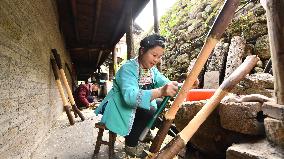
(230903) -- RONGSHUI, Sept. 3, 2023 (Xinhua) -- Liang Zuying (R) pounds the cloth with the traditional "Liang Bu" hammer in Wuying Village on the border between south China's Guangxi Zhuang Autonomous Region and southwest China's Guizhou Province, on Aug. 31, 2023. Wuying Village is a Miao ethnic group hamlet that nestles snugly in the towering mountains stretching across the border between Guangxi and Guizhou. "Liang Bu", named for its glistening appearance, is a kind of traditional hand-made cloth of Miao ethnic group. Women of Miao ethnic group in Wuying plant woad in spring and harvest it in fall. They soak woad in water for days before mixing it with materials such as lime, to make the dye for "Liang Bu". It usually takes months to make a piece of "Liang Bu" after repeated process of dip-dyeing, drying, pounding, applying egg white and steaming. The cloth gradually becomes glistening owing to tens of thousands of poundings by villagers with traditional wooden hammers. After cutting, sewing, embro

  •  
(EnchantingGuangxi)CHINA-GUANGXI-MIAO ETHNIC GROUP-TRADITIONAL COSTUME (CN)

(EnchantingGuangxi)CHINA-GUANGXI-MIAO ETHNIC GROUP-TRADITIONAL COSTUME (CN)

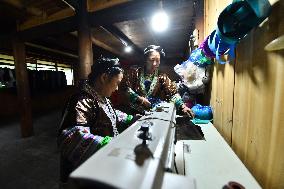
(230903) -- RONGSHUI, Sept. 3, 2023 (Xinhua) -- Liang Zuying (R) and Wu Meiqiu sew "Liang Bu" costumes in Wuying Village on the border between south China's Guangxi Zhuang Autonomous Region and southwest China's Guizhou Province, on Aug. 31, 2023. Wuying Village is a Miao ethnic group hamlet that nestles snugly in the towering mountains stretching across the border between Guangxi and Guizhou. "Liang Bu", named for its glistening appearance, is a kind of traditional hand-made cloth of Miao ethnic group. Women of Miao ethnic group in Wuying plant woad in spring and harvest it in fall. They soak woad in water for days before mixing it with materials such as lime, to make the dye for "Liang Bu". It usually takes months to make a piece of "Liang Bu" after repeated process of dip-dyeing, drying, pounding, applying egg white and steaming. The cloth gradually becomes glistening owing to tens of thousands of poundings by villagers with traditional wooden hammers. After cutting, sewing, embroidery and ironing,

  •  
(EnchantingGuangxi)CHINA-GUANGXI-MIAO ETHNIC GROUP-TRADITIONAL COSTUME (CN)

(EnchantingGuangxi)CHINA-GUANGXI-MIAO ETHNIC GROUP-TRADITIONAL COSTUME (CN)

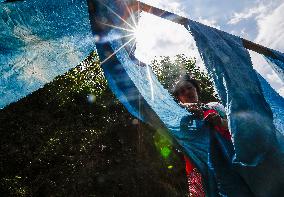
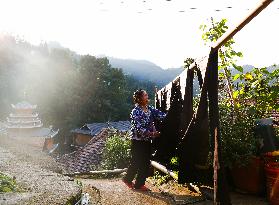
(230903) -- RONGSHUI, Sept. 3, 2023 (Xinhua) -- Liang Zuying dries the cloth after dip-dyeing in Wuying Village on the border between south China's Guangxi Zhuang Autonomous Region and southwest China's Guizhou Province, on Aug. 31, 2023. Wuying Village is a Miao ethnic group hamlet that nestles snugly in the towering mountains stretching across the border between Guangxi and Guizhou. "Liang Bu", named for its glistening appearance, is a kind of traditional hand-made cloth of Miao ethnic group. Women of Miao ethnic group in Wuying plant woad in spring and harvest it in fall. They soak woad in water for days before mixing it with materials such as lime, to make the dye for "Liang Bu". It usually takes months to make a piece of "Liang Bu" after repeated process of dip-dyeing, drying, pounding, applying egg white and steaming. The cloth gradually becomes glistening owing to tens of thousands of poundings by villagers with traditional wooden hammers. After cutting, sewing, embroidery and ironing, a set of

  •  
(EnchantingGuangxi)CHINA-GUANGXI-MIAO ETHNIC GROUP-TRADITIONAL COSTUME (CN)

(EnchantingGuangxi)CHINA-GUANGXI-MIAO ETHNIC GROUP-TRADITIONAL COSTUME (CN)

(230903) -- RONGSHUI, Sept. 3, 2023 (Xinhua) -- Pan Meimei and her husband make the traditional "Liang Bu" hammers in Wuying Village on the border between south China's Guangxi Zhuang Autonomous Region and southwest China's Guizhou Province, on Jan. 15, 2023. Wuying Village is a Miao ethnic group hamlet that nestles snugly in the towering mountains stretching across the border between Guangxi and Guizhou. "Liang Bu", named for its glistening appearance, is a kind of traditional hand-made cloth of Miao ethnic group. Women of Miao ethnic group in Wuying plant woad in spring and harvest it in fall. They soak woad in water for days before mixing it with materials such as lime, to make the dye for "Liang Bu". It usually takes months to make a piece of "Liang Bu" after repeated process of dip-dyeing, drying, pounding, applying egg white and steaming. The cloth gradually becomes glistening owing to tens of thousands of poundings by villagers with traditional wooden hammers. After cutting, sewing, embroidery

  •  
(EnchantingGuangxi)CHINA-GUANGXI-MIAO ETHNIC GROUP-TRADITIONAL COSTUME (CN)

(EnchantingGuangxi)CHINA-GUANGXI-MIAO ETHNIC GROUP-TRADITIONAL COSTUME (CN)

(230903) -- RONGSHUI, Sept. 3, 2023 (Xinhua) -- Liang Zuying dries the cloth after dip-dyeing in Wuying Village on the border between south China's Guangxi Zhuang Autonomous Region and southwest China's Guizhou Province, on Aug. 31, 2023. Wuying Village is a Miao ethnic group hamlet that nestles snugly in the towering mountains stretching across the border between Guangxi and Guizhou. "Liang Bu", named for its glistening appearance, is a kind of traditional hand-made cloth of Miao ethnic group. Women of Miao ethnic group in Wuying plant woad in spring and harvest it in fall. They soak woad in water for days before mixing it with materials such as lime, to make the dye for "Liang Bu". It usually takes months to make a piece of "Liang Bu" after repeated process of dip-dyeing, drying, pounding, applying egg white and steaming. The cloth gradually becomes glistening owing to tens of thousands of poundings by villagers with traditional wooden hammers. After cutting, sewing, embroidery and ironing, a set of

  •  
(EnchantingGuangxi)CHINA-GUANGXI-MIAO ETHNIC GROUP-TRADITIONAL COSTUME (CN)

(EnchantingGuangxi)CHINA-GUANGXI-MIAO ETHNIC GROUP-TRADITIONAL COSTUME (CN)

(230903) -- RONGSHUI, Sept. 3, 2023 (Xinhua) -- Liang Zuying takes egg white for applying on the cloth in Wuying Village on the border between south China's Guangxi Zhuang Autonomous Region and southwest China's Guizhou Province, on Aug. 30, 2023. Wuying Village is a Miao ethnic group hamlet that nestles snugly in the towering mountains stretching across the border between Guangxi and Guizhou. "Liang Bu", named for its glistening appearance, is a kind of traditional hand-made cloth of Miao ethnic group. Women of Miao ethnic group in Wuying plant woad in spring and harvest it in fall. They soak woad in water for days before mixing it with materials such as lime, to make the dye for "Liang Bu". It usually takes months to make a piece of "Liang Bu" after repeated process of dip-dyeing, drying, pounding, applying egg white and steaming. The cloth gradually becomes glistening owing to tens of thousands of poundings by villagers with traditional wooden hammers. After cutting, sewing, embroidery and ironing,

  •  
(EnchantingGuangxi)CHINA-GUANGXI-MIAO ETHNIC GROUP-TRADITIONAL COSTUME (CN)

(EnchantingGuangxi)CHINA-GUANGXI-MIAO ETHNIC GROUP-TRADITIONAL COSTUME (CN)

(230903) -- RONGSHUI, Sept. 3, 2023 (Xinhua) -- Liang Zuying (1st L) displays "Liang Bu" and traditional costumes with other locals during a "Liang Bu" cultural festival in Wuying Village on the border between south China's Guangxi Zhuang Autonomous Region and southwest China's Guizhou Province, on Oct. 25, 2020. Wuying Village is a Miao ethnic group hamlet that nestles snugly in the towering mountains stretching across the border between Guangxi and Guizhou. "Liang Bu", named for its glistening appearance, is a kind of traditional hand-made cloth of Miao ethnic group. Women of Miao ethnic group in Wuying plant woad in spring and harvest it in fall. They soak woad in water for days before mixing it with materials such as lime, to make the dye for "Liang Bu". It usually takes months to make a piece of "Liang Bu" after repeated process of dip-dyeing, drying, pounding, applying egg white and steaming. The cloth gradually becomes glistening owing to tens of thousands of poundings by villagers with traditi

  •  
(EnchantingGuangxi)CHINA-GUANGXI-MIAO ETHNIC GROUP-TRADITIONAL COSTUME (CN)

(EnchantingGuangxi)CHINA-GUANGXI-MIAO ETHNIC GROUP-TRADITIONAL COSTUME (CN)

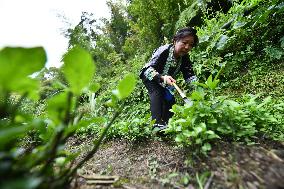
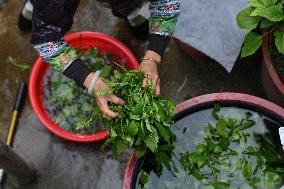
(230903) -- RONGSHUI, Sept. 3, 2023 (Xinhua) -- Liang Zuying harvests the woad on a mountain in Wuying Village on the border between south China's Guangxi Zhuang Autonomous Region and southwest China's Guizhou Province, on Aug. 29, 2023. Wuying Village is a Miao ethnic group hamlet that nestles snugly in the towering mountains stretching across the border between Guangxi and Guizhou. "Liang Bu", named for its glistening appearance, is a kind of traditional hand-made cloth of Miao ethnic group. Women of Miao ethnic group in Wuying plant woad in spring and harvest it in fall. They soak woad in water for days before mixing it with materials such as lime, to make the dye for "Liang Bu". It usually takes months to make a piece of "Liang Bu" after repeated process of dip-dyeing, drying, pounding, applying egg white and steaming. The cloth gradually becomes glistening owing to tens of thousands of poundings by villagers with traditional wooden hammers. After cutting, sewing, embroidery and ironing, a set of

  •  
(EnchantingGuangxi)CHINA-GUANGXI-MIAO ETHNIC GROUP-TRADITIONAL COSTUME (CN)

(EnchantingGuangxi)CHINA-GUANGXI-MIAO ETHNIC GROUP-TRADITIONAL COSTUME (CN)

(230903) -- RONGSHUI, Sept. 3, 2023 (Xinhua) -- Liang Zuying adds lime into the water with woad soaked to make the dye in Wuying Village on the border between south China's Guangxi Zhuang Autonomous Region and southwest China's Guizhou Province, on Aug. 31, 2023. Wuying Village is a Miao ethnic group hamlet that nestles snugly in the towering mountains stretching across the border between Guangxi and Guizhou. "Liang Bu", named for its glistening appearance, is a kind of traditional hand-made cloth of Miao ethnic group. Women of Miao ethnic group in Wuying plant woad in spring and harvest it in fall. They soak woad in water for days before mixing it with materials such as lime, to make the dye for "Liang Bu". It usually takes months to make a piece of "Liang Bu" after repeated process of dip-dyeing, drying, pounding, applying egg white and steaming. The cloth gradually becomes glistening owing to tens of thousands of poundings by villagers with traditional wooden hammers. After cutting, sewing, embroid

  •  
(EnchantingGuangxi)CHINA-GUANGXI-MIAO ETHNIC GROUP-TRADITIONAL COSTUME (CN)

(EnchantingGuangxi)CHINA-GUANGXI-MIAO ETHNIC GROUP-TRADITIONAL COSTUME (CN)

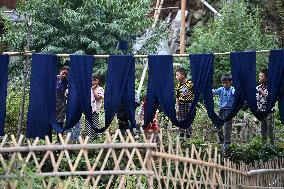
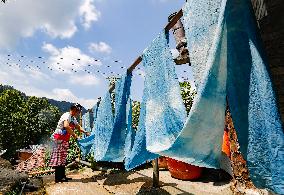
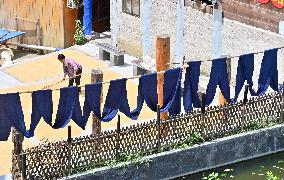
(230903) -- RONGSHUI, Sept. 3, 2023 (Xinhua) -- Pieces of "Liang Bu" are dried at a square in Wuying Village on the border between south China's Guangxi Zhuang Autonomous Region and southwest China's Guizhou Province, on Sept. 2, 2023. Wuying Village is a Miao ethnic group hamlet that nestles snugly in the towering mountains stretching across the border between Guangxi and Guizhou. "Liang Bu", named for its glistening appearance, is a kind of traditional hand-made cloth of Miao ethnic group. Women of Miao ethnic group in Wuying plant woad in spring and harvest it in fall. They soak woad in water for days before mixing it with materials such as lime, to make the dye for "Liang Bu". It usually takes months to make a piece of "Liang Bu" after repeated process of dip-dyeing, drying, pounding, applying egg white and steaming. The cloth gradually becomes glistening owing to tens of thousands of poundings by villagers with traditional wooden hammers. After cutting, sewing, embroidery and ironing, a set of gl

  •  
(EnchantingGuangxi)CHINA-GUANGXI-MIAO ETHNIC GROUP-TRADITIONAL COSTUME (CN)

(EnchantingGuangxi)CHINA-GUANGXI-MIAO ETHNIC GROUP-TRADITIONAL COSTUME (CN)

(230903) -- RONGSHUI, Sept. 3, 2023 (Xinhua) -- Liang Zuying dries the unfinished "Liang Bu" in Wuying Village on the border between south China's Guangxi Zhuang Autonomous Region and southwest China's Guizhou Province, on Aug. 30, 2023. Wuying Village is a Miao ethnic group hamlet that nestles snugly in the towering mountains stretching across the border between Guangxi and Guizhou. "Liang Bu", named for its glistening appearance, is a kind of traditional hand-made cloth of Miao ethnic group. Women of Miao ethnic group in Wuying plant woad in spring and harvest it in fall. They soak woad in water for days before mixing it with materials such as lime, to make the dye for "Liang Bu". It usually takes months to make a piece of "Liang Bu" after repeated process of dip-dyeing, drying, pounding, applying egg white and steaming. The cloth gradually becomes glistening owing to tens of thousands of poundings by villagers with traditional wooden hammers. After cutting, sewing, embroidery and ironing, a set of

  •  
(EnchantingGuangxi)CHINA-GUANGXI-MIAO ETHNIC GROUP-TRADITIONAL COSTUME (CN)

(EnchantingGuangxi)CHINA-GUANGXI-MIAO ETHNIC GROUP-TRADITIONAL COSTUME (CN)

(230903) -- RONGSHUI, Sept. 3, 2023 (Xinhua) -- Liang Zuying soaks the newly harvested woad in water in Wuying Village on the border between south China's Guangxi Zhuang Autonomous Region and southwest China's Guizhou Province, on Aug. 29, 2023. Wuying Village is a Miao ethnic group hamlet that nestles snugly in the towering mountains stretching across the border between Guangxi and Guizhou. "Liang Bu", named for its glistening appearance, is a kind of traditional hand-made cloth of Miao ethnic group. Women of Miao ethnic group in Wuying plant woad in spring and harvest it in fall. They soak woad in water for days before mixing it with materials such as lime, to make the dye for "Liang Bu". It usually takes months to make a piece of "Liang Bu" after repeated process of dip-dyeing, drying, pounding, applying egg white and steaming. The cloth gradually becomes glistening owing to tens of thousands of poundings by villagers with traditional wooden hammers. After cutting, sewing, embroidery and ironing, a

  • Main
  • Top
  • Editorial
  • Creative
  • About Us
  • About ILG
  • Terms of use
  • Company
  • BEHIND
  • Price List
  • Single Plan
  • Monthly Plan
  • Services
  • Shooting
  • Rights Clearance
  • Support
  • FAQ
  • How To Buy
  • Contact Us
  • Become a Partner

© KYODO NEWS IMAGES INC

All Rights Reserved.

  • Editorial
  • Olympics
  • News
  • Sports
  • Japan
  • Tech
  • Royal
  • Disaster
  • NorthKorea
  • Old Japan
  • SNS
  • Creative
  • Food
  • Japan
  • Landscape
  • Animal
  • Popular
  • #Ukraine
  • #China
  • #coronavirus
  • #N. Korea
  • #Thailand
  • #Russia
  • #Ukraine
  • #China
  • #coronavirus
  • #N. Korea
  • #Thailand
  • #Russia
  • Food
  • Japan
  • Landscape
  • Animal
  • Olympics
  • News
  • Sports
  • Japan
  • Tech
  • Royal
  • Disaster
  • NorthKorea
  • Old Japan
  • SNS