•  
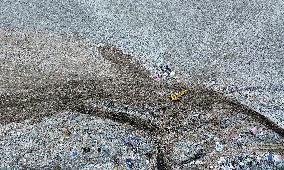
Sidoarjo Garbage Landfill - Indonesia

Sidoarjo Garbage Landfill - Indonesia

An aerial drone photo shows workers sorting plastic waste at Griyo Mulyo garbage landfill in Sidoarjo Regency, East Java, Indonesia, on January 3, 2025. Photo by Sahlan Kurniawan/Xinhua/ABACAPRESS.COM

  •  
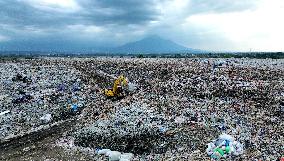
Sidoarjo Garbage Landfill - Indonesia

Sidoarjo Garbage Landfill - Indonesia

An aerial drone photo shows a view of Griyo Mulyo garbage landfill in Sidoarjo Regency, East Java, Indonesia, on January 3, 2025. Photo by Sahlan Kurniawan/Xinhua/ABACAPRESS.COM

  •  
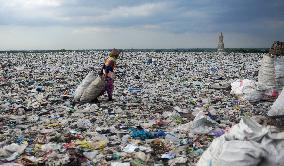
Sidoarjo Garbage Landfill - Indonesia

Sidoarjo Garbage Landfill - Indonesia

A worker drags sacks of plastic waste at Griyo Mulyo garbage landfill in Sidoarjo Regency, East Java, Indonesia, on January 3, 2025. Photo by Sahlan Kurniawan/Xinhua/ABACAPRESS.COM

  •  
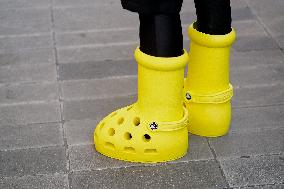
PFW - Vivienne Westwood Street Style

PFW - Vivienne Westwood Street Style

Street style, close up at Vivienne Westwood Spring Summer 2025 show, held at Rue de Malte, Paris, France, on September 28, 2024. Photo by Marie-Paola Bertrand-Hillion/ABACAPRESS.COM

  •  
PFW - Chanel Street Style

PFW - Chanel Street Style

Street style, Anna Dello Russo arriving at Chanel Spring-Summer 2024 Haute Couture show, held at Grand Palais Ephemere, Paris, France, on January 23, 2024. Photo by Marie-Paola Bertrand-Hillion/ABACAPRESS.COM

  •  
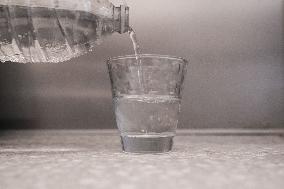
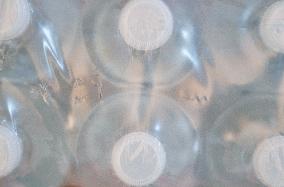
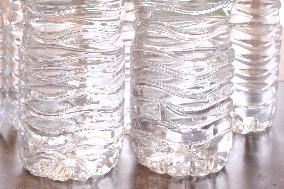
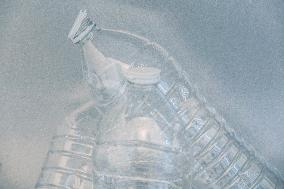
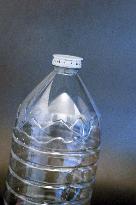
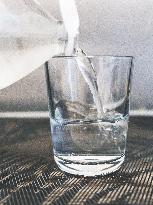
Illustration Of Plastic Water Bottles - France

Illustration Of Plastic Water Bottles - France

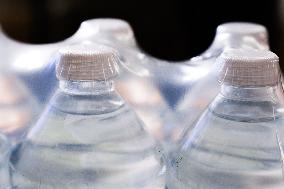
Illustration of plastic water bottles following the announcement of illegal ultraviolet treatments and activated carbon filters on certain brands of mineral water to maintain their food safety on January 31, 2024 in France. Photo by Marie Hubert Psaila/ABACAPRESS.COM

  •  
Illustration Of Plastic Water Bottles - France

Illustration Of Plastic Water Bottles - France

Illustration of plastic water bottles following the announcement of illegal ultraviolet treatments and activated carbon filters on certain brands of mineral water to maintain their food safety on January 31, 2024 in France. Photo by Marie Hubert Psaila/ABACAPRESS.COM

  •  
Illustration Of Plastic Water Bottles - France

Illustration Of Plastic Water Bottles - France

Illustration of plastic water bottles following the announcement of illegal ultraviolet treatments and activated carbon filters on certain brands of mineral water to maintain their food safety on January 31, 2024 in France. Photo by Marie Hubert Psaila/ABACAPRESS.COM

  •  
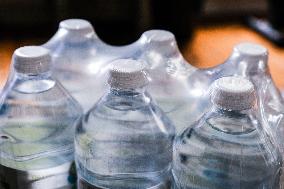
Illustration Of Plastic Water Bottles - France

Illustration Of Plastic Water Bottles - France

Illustration of plastic water bottles following the announcement of illegal ultraviolet treatments and activated carbon filters on certain brands of mineral water to maintain their food safety on January 31, 2024 in France. Photo by Marie Hubert Psaila/ABACAPRESS.COM

  •  
Illustration Of Plastic Water Bottles - France

Illustration Of Plastic Water Bottles - France

Illustration of plastic water bottles following the announcement of illegal ultraviolet treatments and activated carbon filters on certain brands of mineral water to maintain their food safety on January 31, 2024 in France. Photo by Marie Hubert Psaila/ABACAPRESS.COM

  •  
Illustration Of Plastic Water Bottles - France

Illustration Of Plastic Water Bottles - France

Illustration of plastic water bottles following the announcement of illegal ultraviolet treatments and activated carbon filters on certain brands of mineral water to maintain their food safety on January 31, 2024 in France. Photo by Marie Hubert Psaila/ABACAPRESS.COM

  •  
Illustration Of Plastic Water Bottles - France

Illustration Of Plastic Water Bottles - France

Illustration of plastic water bottles following the announcement of illegal ultraviolet treatments and activated carbon filters on certain brands of mineral water to maintain their food safety on January 31, 2024 in France. Photo by Marie Hubert Psaila/ABACAPRESS.COM

  •  
Illustration Of Plastic Water Bottles - France

Illustration Of Plastic Water Bottles - France

Illustration of plastic water bottles following the announcement of illegal ultraviolet treatments and activated carbon filters on certain brands of mineral water to maintain their food safety on January 31, 2024 in France. Photo by Marie Hubert Psaila/ABACAPRESS.COM

  •  
Illustration Of Plastic Water Bottles - France

Illustration Of Plastic Water Bottles - France

Illustration of plastic water bottles following the announcement of illegal ultraviolet treatments and activated carbon filters on certain brands of mineral water to maintain their food safety on January 31, 2024 in France. Photo by Marie Hubert Psaila/ABACAPRESS.COM

  •  
Illustration Of Plastic Water Bottles - France

Illustration Of Plastic Water Bottles - France

Illustration of plastic water bottles following the announcement of illegal ultraviolet treatments and activated carbon filters on certain brands of mineral water to maintain their food safety on January 31, 2024 in France. Photo by Marie Hubert Psaila/ABACAPRESS.COM

  •  
Illustration Of Plastic Water Bottles - France

Illustration Of Plastic Water Bottles - France

Illustration of plastic water bottles following the announcement of illegal ultraviolet treatments and activated carbon filters on certain brands of mineral water to maintain their food safety on January 31, 2024 in France. Photo by Marie Hubert Psaila/ABACAPRESS.COM

  •  
Illustration Of Plastic Water Bottles - France

Illustration Of Plastic Water Bottles - France

Illustration of plastic water bottles following the announcement of illegal ultraviolet treatments and activated carbon filters on certain brands of mineral water to maintain their food safety on January 31, 2024 in France. Photo by Marie Hubert Psaila/ABACAPRESS.COM

  •  
Illustration Of Plastic Water Bottles - France

Illustration Of Plastic Water Bottles - France

Illustration of plastic water bottles following the announcement of illegal ultraviolet treatments and activated carbon filters on certain brands of mineral water to maintain their food safety on January 31, 2024 in France. Photo by Marie Hubert Psaila/ABACAPRESS.COM

  •  
Illustration Of Plastic Water Bottles - France

Illustration Of Plastic Water Bottles - France

Illustration of plastic water bottles following the announcement of illegal ultraviolet treatments and activated carbon filters on certain brands of mineral water to maintain their food safety on January 31, 2024 in France. Photo by Marie Hubert Psaila/ABACAPRESS.COM

  •  
Illustration Of Plastic Water Bottles - France

Illustration Of Plastic Water Bottles - France

Illustration of plastic water bottles following the announcement of illegal ultraviolet treatments and activated carbon filters on certain brands of mineral water to maintain their food safety on January 31, 2024 in France. Photo by Marie Hubert Psaila/ABACAPRESS.COM

  •  
Illustration Of Plastic Water Bottles - France

Illustration Of Plastic Water Bottles - France

Illustration of plastic water bottles following the announcement of illegal ultraviolet treatments and activated carbon filters on certain brands of mineral water to maintain their food safety on January 31, 2024 in France. Photo by Marie Hubert Psaila/ABACAPRESS.COM

  •  
Illustration Of Plastic Water Bottles - France

Illustration Of Plastic Water Bottles - France

Illustration of plastic water bottles following the announcement of illegal ultraviolet treatments and activated carbon filters on certain brands of mineral water to maintain their food safety on January 31, 2024 in France. Photo by Marie Hubert Psaila/ABACAPRESS.COM

  •  
Plastic Pellets Polluting Spanish Beaches After Container Ship Spill

Plastic Pellets Polluting Spanish Beaches After Container Ship Spill

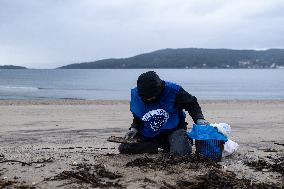
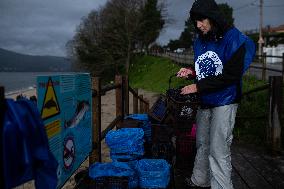
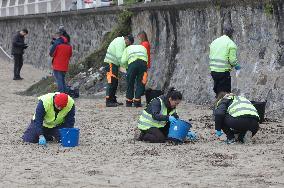
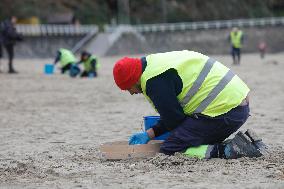
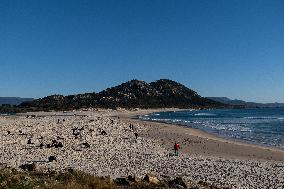
A volunteer from the Noia Limpa organization participates in the collection of pellets on Bos beach, January 13, 2024, in Noia, A Coruña, Galicia (Spain). Already known as the "white tide", it is expected to come from the six containers from the ship Toconao that fell into the sea in Portuguese waters. At least one of the six containers, weighing around 20 tons, is believed to contain between 800 and 1,000 25-kilogram sacks of pellets. Pellets are small plastic balls of less than five millimeters that are used to manufacture plastic products. Because of their small size and light weight, it is "almost impossible to clean them up" once they are scattered on the beaches. Photo by Elena Fernández / Europa Press/ABACAPRESS.COM

  •  
Plastic Pellets Polluting Spanish Beaches After Container Ship Spill

Plastic Pellets Polluting Spanish Beaches After Container Ship Spill

A volunteer from the Noia Limpa organization participates in the collection of pellets on Bos beach, January 13, 2024, in Noia, A Coruña, Galicia (Spain). Already known as the "white tide", it is expected to come from the six containers from the ship Toconao that fell into the sea in Portuguese waters. At least one of the six containers, weighing around 20 tons, is believed to contain between 800 and 1,000 25-kilogram sacks of pellets. Pellets are small plastic balls of less than five millimeters that are used to manufacture plastic products. Because of their small size and light weight, it is "almost impossible to clean them up" once they are spread on the beaches. Photo by Elena Fernández / Europa Press/ABACAPRESS.COM

  •  
Plastic Pellets Polluting Spanish Beaches After Container Ship Spill

Plastic Pellets Polluting Spanish Beaches After Container Ship Spill

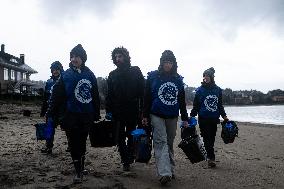
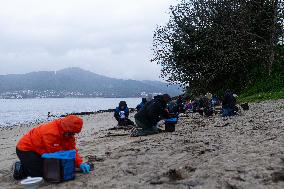
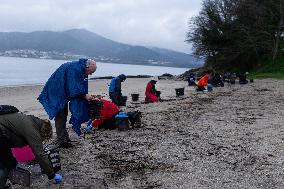
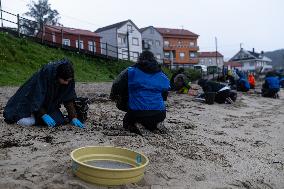
Volunteers from the Noia Limpa organization participate in the collection of pellets on Bos beach, January 13, 2024, in Noia, A Coruña, Galicia (Spain). Already known as the "white tide", it is expected to come from the six containers from the ship Toconao that fell into the sea in Portuguese waters. At least one of the six containers, weighing around 20 tons, is believed to contain between 800 and 1,000 25-kilogram sacks of pellets. Pellets are small plastic balls of less than five millimeters that are used to manufacture plastic products. Because of their small size and light weight, it is "almost impossible to clean them up" once they are scattered on the beaches. Photo by Elena Fernández / Europa Press/ABACAPRESS.COM

  •  
Plastic Pellets Polluting Spanish Beaches After Container Ship Spill

Plastic Pellets Polluting Spanish Beaches After Container Ship Spill

Volunteers from the Noia Limpa organization participate in the collection of pellets on Bos beach, January 13, 2024, in Noia, A Coruña, Galicia (Spain). Already known as the "white tide", it is expected to come from the six containers from the ship Toconao that fell into the sea in Portuguese waters. At least one of the six containers, weighing around 20 tons, is believed to contain between 800 and 1,000 25-kilogram sacks of pellets. Pellets are small plastic balls of less than five millimeters that are used to manufacture plastic products. Because of their small size and light weight, it is "almost impossible to clean them up" once they are scattered on the beaches. Photo by Elena Fernández / Europa Press/ABACAPRESS.COM

  •  
Plastic Pellets Polluting Spanish Beaches After Container Ship Spill

Plastic Pellets Polluting Spanish Beaches After Container Ship Spill

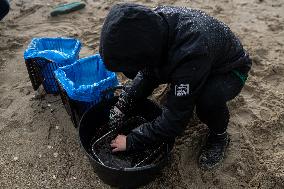
A volunteer from the Noia Limpa organization participates in the collection of pellets on Bos beach, January 13, 2024, in Noia, A Coruña, Galicia (Spain). Already known as the "white tide", it is expected to come from the six containers from the ship Toconao that fell into the sea in Portuguese waters. At least one of the six containers, weighing around 20 tons, is believed to contain between 800 and 1,000 25-kilogram sacks of pellets. Pellets are small plastic balls of less than five millimeters that are used to manufacture plastic products. Because of their small size and light weight, it is "almost impossible to clean them up" once they are scattered on the beaches. Photo by Elena Fernández / Europa Press/ABACAPRESS.COM

  •  
Plastic Pellets Polluting Spanish Beaches After Container Ship Spill

Plastic Pellets Polluting Spanish Beaches After Container Ship Spill

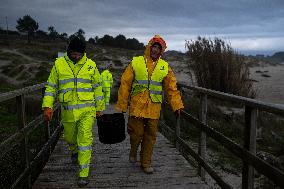
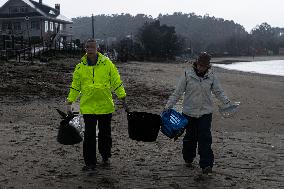
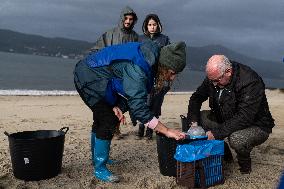
Two men carry a bucket full of pellets on the beach Do Dique, January 13, 2024, in Queiruga, A Coruña, Galicia (Spain). Already known as the "white tide", it is expected to come from the six containers from the ship Toconao that fell into the sea in Portuguese waters. At least one of the six containers, weighing around 20 tons, is believed to contain between 800 and 1,000 25-kilogram sacks of pellets. Pellets are small plastic balls of less than five millimeters that are used to manufacture plastic products. Because of their small size and light weight, it is "almost impossible to clean them up" once they are scattered on the beaches. Photo by Elena Fernández / Europa Press/ABACAPRESS.COM

  •  
Plastic Pellets Polluting Spanish Beaches After Container Ship Spill

Plastic Pellets Polluting Spanish Beaches After Container Ship Spill

Pellets found on Bos beach, January 13, 2024, in Noia, A Coruña, Galicia (Spain). Already known as the "white tide", it is expected to come from the six containers of the ship Toconao that fell into the sea in Portuguese waters. At least one of the six containers, weighing around 20 tons, is believed to contain between 800 and 1,000 25-kilogram sacks of pellets. Pellets are small plastic balls of less than five millimeters that are used to manufacture plastic products. Because of their small size and light weight, it is "almost impossible to clean them up" once they are scattered on the beaches. Photo by Elena Fernández / Europa Press/ABACAPRESS.COM

  •  
Plastic Pellets Polluting Spanish Beaches After Container Ship Spill

Plastic Pellets Polluting Spanish Beaches After Container Ship Spill

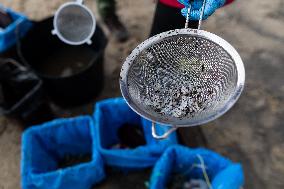
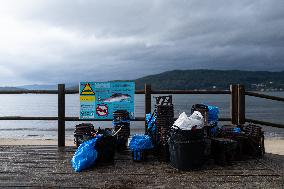
Material used to collect pellets on Bos beach, January 13, 2024, in Noia, A Coruña, Galicia (Spain). Already known as the "white tide", it is expected to come from the six containers from the ship Toconao that fell into the sea in Portuguese waters. At least one of the six containers, weighing around 20 tons, is believed to contain between 800 and 1,000 25-kilogram sacks of pellets. Pellets are small plastic balls of less than five millimeters that are used to manufacture plastic products. Because of their small size and light weight, it is "almost impossible to clean them up" once they are scattered on the beaches. Photo by Elena Fernández / Europa Press/ABACAPRESS.COM

  •  
Plastic Pellets Polluting Spanish Beaches After Container Ship Spill

Plastic Pellets Polluting Spanish Beaches After Container Ship Spill

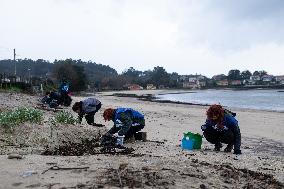
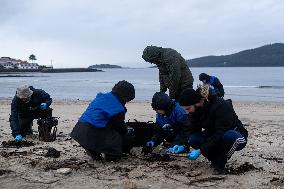
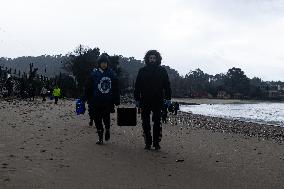
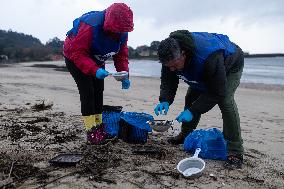
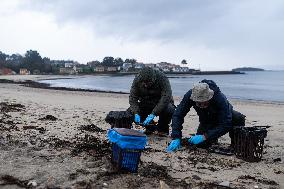
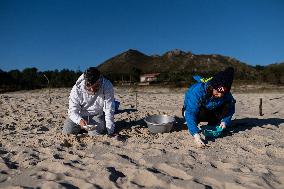
Two volunteers from the Noia Limpa organization participate in the collection of pellets on Bos beach, January 13, 2024, in Noia, A Coruña, Galicia (Spain). Already known as the "white tide", it is expected to come from the six containers from the ship Toconao that fell into the sea in Portuguese waters. At least one of the six containers, weighing around 20 tons, is believed to contain between 800 and 1,000 25-kilogram sacks of pellets. Pellets are small plastic balls of less than five millimeters that are used to manufacture plastic products. Because of their small size and light weight, it is "almost impossible to clean them up" once they are scattered on the beaches. Photo by Elena Fernández / Europa Press/ABACAPRESS.COM

  •  
Plastic Pellets Polluting Spanish Beaches After Container Ship Spill

Plastic Pellets Polluting Spanish Beaches After Container Ship Spill

Two volunteers from the Noia Limpa organization participate in the collection of pellets on Bos beach, January 13, 2024, in Noia, A Coruña, Galicia (Spain). Already known as the "white tide", it is expected to come from the six containers from the ship Toconao that fell into the sea in Portuguese waters. At least one of the six containers, weighing around 20 tons, is believed to contain between 800 and 1,000 25-kilogram sacks of pellets. Pellets are small plastic balls of less than five millimeters that are used to manufacture plastic products. Because of their small size and light weight, it is "almost impossible to clean them up" once they are scattered on the beaches. Photo by Elena Fernández / Europa Press/ABACAPRESS.COM

  •  
Plastic Pellets Polluting Spanish Beaches After Container Ship Spill

Plastic Pellets Polluting Spanish Beaches After Container Ship Spill

Two volunteers from the Noia Limpa organization participate in the collection of pellets on Bos beach, January 13, 2024, in Noia, A Coruña, Galicia (Spain). Already known as the "white tide", it is expected to come from the six containers from the ship Toconao that fell into the sea in Portuguese waters. At least one of the six containers, weighing around 20 tons, is believed to contain between 800 and 1,000 25-kilogram sacks of pellets. Pellets are small plastic balls of less than five millimeters that are used to manufacture plastic products. Because of their small size and light weight, it is "almost impossible to clean them up" once they are scattered on the beaches. Photo by Elena Fernández / Europa Press/ABACAPRESS.COM

  •  
Plastic Pellets Polluting Spanish Beaches After Container Ship Spill

Plastic Pellets Polluting Spanish Beaches After Container Ship Spill

A volunteer from the Noia Limpa organization participates in the collection of pellets on Bos beach, January 13, 2024, in Noia, A Coruña, Galicia (Spain). Already known as the "white tide", it is expected to come from the six containers from the ship Toconao that fell into the sea in Portuguese waters. At least one of the six containers, weighing around 20 tons, is believed to contain between 800 and 1,000 25-kilogram sacks of pellets. Pellets are small plastic balls of less than five millimeters that are used to manufacture plastic products. Because of their small size and light weight, it is "almost impossible to clean them up" once they are spread on the beaches. Photo by Elena Fernández / Europa Press/ABACAPRESS.COM

  •  
Plastic Pellets Polluting Spanish Beaches After Container Ship Spill

Plastic Pellets Polluting Spanish Beaches After Container Ship Spill

Volunteers from the Noia Limpa organization participate in the collection of pellets on Bos beach, January 13, 2024, in Noia, A Coruña, Galicia (Spain). Already known as the "white tide", it is expected to come from the six containers from the ship Toconao that fell into the sea in Portuguese waters. At least one of the six containers, weighing around 20 tons, is believed to contain between 800 and 1,000 25-kilogram sacks of pellets. Pellets are small plastic balls of less than five millimeters that are used to manufacture plastic products. Because of their small size and light weight, it is "almost impossible to clean them up" once they are scattered on the beaches. Photo by Elena Fernández / Europa Press/ABACAPRESS.COM

  •  
Plastic Pellets Polluting Spanish Beaches After Container Ship Spill

Plastic Pellets Polluting Spanish Beaches After Container Ship Spill

Volunteers from the Noia Limpa organization participate in the collection of pellets on Bos beach, January 13, 2024, in Noia, A Coruña, Galicia (Spain). Already known as the "white tide", it is expected to come from the six containers from the ship Toconao that fell into the sea in Portuguese waters. At least one of the six containers, weighing around 20 tons, is believed to contain between 800 and 1,000 25-kilogram sacks of pellets. Pellets are small plastic balls of less than five millimeters that are used to manufacture plastic products. Because of their small size and light weight, it is "almost impossible to clean them up" once they are scattered on the beaches. Photo by Elena Fernández / Europa Press/ABACAPRESS.COM

  •  
Plastic Pellets Polluting Spanish Beaches After Container Ship Spill

Plastic Pellets Polluting Spanish Beaches After Container Ship Spill

Volunteers from the Noia Limpa organization participate in the collection of pellets on Bos beach, January 13, 2024, in Noia, A Coruña, Galicia (Spain). Already known as the "white tide", it is expected to come from the six containers from the ship Toconao that fell into the sea in Portuguese waters. At least one of the six containers, weighing around 20 tons, is believed to contain between 800 and 1,000 25-kilogram sacks of pellets. Pellets are small plastic balls of less than five millimeters that are used to manufacture plastic products. Because of their small size and light weight, it is "almost impossible to clean them up" once they are scattered on the beaches. Photo by Elena Fernández / Europa Press/ABACAPRESS.COM

  •  
Plastic Pellets Polluting Spanish Beaches After Container Ship Spill

Plastic Pellets Polluting Spanish Beaches After Container Ship Spill

Two volunteers from the Noia Limpa organization participate in the collection of pellets on Bos beach, January 13, 2024, in Noia, A Coruña, Galicia (Spain). Already known as the "white tide", it is expected to come from the six containers from the ship Toconao that fell into the sea in Portuguese waters. At least one of the six containers, weighing around 20 tons, is believed to contain between 800 and 1,000 25-kilogram sacks of pellets. Pellets are small plastic balls of less than five millimeters that are used to manufacture plastic products. Because of their small size and light weight, it is "almost impossible to clean them up" once they are scattered on the beaches. Photo by Elena Fernández / Europa Press/ABACAPRESS.COM

  •  
Plastic Pellets Polluting Spanish Beaches After Container Ship Spill

Plastic Pellets Polluting Spanish Beaches After Container Ship Spill

Volunteers from the Noia Limpa organization participate in the collection of pellets on Bos beach, January 13, 2024, in Noia, A Coruña, Galicia (Spain). Already known as the "white tide", it is expected to come from the six containers from the ship Toconao that fell into the sea in Portuguese waters. At least one of the six containers, weighing around 20 tons, is believed to contain between 800 and 1,000 25-kilogram sacks of pellets. Pellets are small plastic balls of less than five millimeters that are used to manufacture plastic products. Because of their small size and light weight, it is "almost impossible to clean them up" once they are scattered on the beaches. Photo by Elena Fernández / Europa Press/ABACAPRESS.COM

  •  
Plastic Pellets Polluting Spanish Beaches After Container Ship Spill

Plastic Pellets Polluting Spanish Beaches After Container Ship Spill

Volunteers from the Noia Limpa organization participate in the collection of pellets on Bos beach, January 13, 2024, in Noia, A Coruña, Galicia (Spain). Already known as the "white tide", it is expected to come from the six containers from the ship Toconao that fell into the sea in Portuguese waters. At least one of the six containers, weighing around 20 tons, is believed to contain between 800 and 1,000 25-kilogram sacks of pellets. Pellets are small plastic balls of less than five millimeters that are used to manufacture plastic products. Because of their small size and light weight, it is "almost impossible to clean them up" once they are scattered on the beaches. Photo by Elena Fernández / Europa Press/ABACAPRESS.COM

  •  
Plastic Pellets Polluting Spanish Beaches After Container Ship Spill

Plastic Pellets Polluting Spanish Beaches After Container Ship Spill

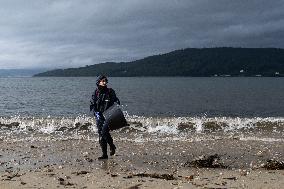
A man pours pellets into a bucket on the beach Do Dique, January 13, 2024, in Queiruga, A Coruña, Galicia, Spain. Already known as the "white tide", it is expected to come from the six containers from the ship Toconao that fell into the sea in Portuguese waters. At least one of the six containers, weighing around 20 tons, is believed to contain between 800 and 1,000 25-kilogram sacks of pellets. Pellets are small plastic balls of less than five millimeters that are used to manufacture plastic products. Because of their small size and light weight, it is "almost impossible to clean them up" once they are scattered on the beaches. Photo by Elena Fernández / Europa Press/ABACAPRESS.COM

  •  
Plastic Pellets Polluting Spanish Beaches After Container Ship Spill

Plastic Pellets Polluting Spanish Beaches After Container Ship Spill

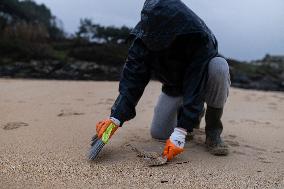
A person collects pellets at Do Dique beach, January 13, 2024, in Queiruga, A Coruña, Galicia, Spain. Already known as the "white tide", it is expected to come from the six containers from the ship Toconao that fell into the sea in Portuguese waters. At least one of the six containers, weighing around 20 tons, is believed to contain between 800 and 1,000 25-kilogram sacks of pellets. Pellets are small plastic balls of less than five millimeters that are used to manufacture plastic products. Because of their small size and light weight, it is "almost impossible to clean them up" once they are scattered on the beaches. Photo by Elena Fernández / Europa Press/ABACAPRESS.COM

  •  
Workers collect plastic pellets on the beach - Spain

Workers collect plastic pellets on the beach - Spain

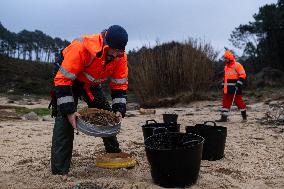
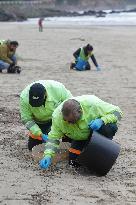
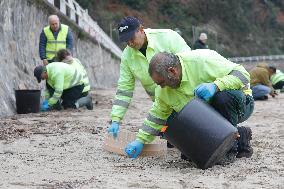
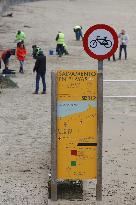
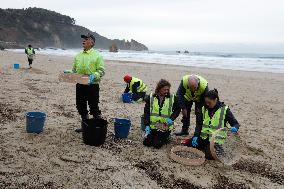
TRAGSA workers collect plastic pellets on the beach of Aguilar, January 9, 2024, in Muros de Nalón, Asturias (Spain). The Principality of Asturias has activated the level two emergency due to the dumping of plastic pellets on the region's beaches. This situation contrasts with the Galician case, where the Xunta maintains the Camgal anti-pollution plan at level one. The State points out that the Galician Government must raise this level in order to be able to collaborate with resources. Pellets are small plastic balls of less than five millimeters, used to manufacture plastic products. Photo by Jorge Peteiro / Europa Press/ABACAPRESS.COM

  •  
Workers collect plastic pellets on the beach - Spain

Workers collect plastic pellets on the beach - Spain

TRAGSA workers collect plastic pellets on the beach of Aguilar, January 9, 2024, in Muros de Nalón, Asturias (Spain). The Principality of Asturias has activated the level two emergency due to the dumping of plastic pellets on the region's beaches. This situation contrasts with the Galician case, where the Xunta maintains the Camgal anti-pollution plan at level one. The State points out that the Galician Government must raise this level in order to be able to collaborate with resources. Pellets are small plastic balls of less than five millimeters, used to manufacture plastic products. Photo by Jorge Peteiro / Europa Press/ABACAPRESS.COM

  •  
Workers collect plastic pellets on the beach - Spain

Workers collect plastic pellets on the beach - Spain

TRAGSA workers collect plastic pellets on the beach of Aguilar, January 9, 2024, in Muros de Nalón, Asturias (Spain). The Principality of Asturias has activated the level two emergency due to the dumping of plastic pellets on the region's beaches. This situation contrasts with the Galician case, where the Xunta maintains the Camgal anti-pollution plan at level one. The State points out that the Galician Government must raise this level in order to be able to collaborate with resources. Pellets are small plastic balls of less than five millimeters, used to manufacture plastic products. Photo by Jorge Peteiro / Europa Press/ABACAPRESS.COM

  •  
Workers collect plastic pellets on the beach - Spain

Workers collect plastic pellets on the beach - Spain

TRAGSA workers collect plastic pellets on the beach of Aguilar, January 9, 2024, in Muros de Nalón, Asturias (Spain). The Principality of Asturias has activated the level two emergency due to the dumping of plastic pellets on the region's beaches. This situation contrasts with the Galician case, where the Xunta maintains the Camgal anti-pollution plan at level one. The State points out that the Galician Government must raise this level in order to be able to collaborate with resources. Pellets are small plastic balls of less than five millimeters, used to manufacture plastic products. Photo by Jorge Peteiro / Europa Press/ABACAPRESS.COM

  •  
Workers collect plastic pellets on the beach - Spain

Workers collect plastic pellets on the beach - Spain

TRAGSA workers collect plastic pellets on the beach of Aguilar, January 9, 2024, in Muros de Nalón, Asturias (Spain). The Principality of Asturias has activated the level two emergency due to the dumping of plastic pellets on the region's beaches. This situation contrasts with the Galician case, where the Xunta maintains the Camgal anti-pollution plan at level one. The State points out that the Galician Government must raise this level in order to be able to collaborate with resources. Pellets are small plastic balls of less than five millimeters, used to manufacture plastic products. Photo by Jorge Peteiro / Europa Press/ABACAPRESS.COM

  •  
Workers collect plastic pellets on the beach - Spain

Workers collect plastic pellets on the beach - Spain

TRAGSA workers collect plastic pellets on the beach of Aguilar, January 9, 2024, in Muros de Nalón, Asturias (Spain). The Principality of Asturias has activated the level two emergency due to the dumping of plastic pellets on the region's beaches. This situation contrasts with the Galician case, where the Xunta maintains the Camgal anti-pollution plan at level one. The State points out that the Galician Government must raise this level in order to be able to collaborate with resources. Pellets are small plastic balls of less than five millimeters, used to manufacture plastic products. Photo by Jorge Peteiro / Europa Press/ABACAPRESS.COM

  •  
Pellet Cleaning Continues In Galician Sandbanks

Pellet Cleaning Continues In Galician Sandbanks

Volunteers make a collection of pellets from the sand, Galicia, January 7, 2024, in A Coruña, Galicia (Spain). Large quantities of plastic pellets have been appearing, since December 13 in the Rias Baixas and in the estuary of Muros de Noia in more than 70 bags of about 25 kilos, with the name of the company Bedeko Europe based in Poland. This has been reported by the Noia Limpa Association, which has detailed that the loss of goods from six containers of the ship Tocomao, registered with IMO number 9627899 and flagged Liberia, near Viana do Castelo, in Portugal, was reported. Pellets are small plastic balls of less than five millimeters that are used to manufacture plastic products, because of their small size and light weight, it is "almost impossible to clean them up" once they are spread on the beaches. Photo by Elena Fernandez/Europa Press/ABACAPRESS.COM

  •  
Pellet Cleaning Continues In Galician Sandbanks

Pellet Cleaning Continues In Galician Sandbanks

Volunteers make a collection of pellets from the sand, Galicia, January 7, 2024, in A Coruña, Galicia (Spain). Large quantities of plastic pellets have been appearing, since December 13 in the Rias Baixas and in the estuary of Muros de Noia in more than 70 bags of about 25 kilos, with the name of the company Bedeko Europe based in Poland. This has been reported by the Noia Limpa Association, which has detailed that the loss of goods from six containers of the ship Tocomao, registered with IMO number 9627899 and flagged Liberia, near Viana do Castelo, in Portugal, was reported. Pellets are small plastic balls of less than five millimeters that are used to manufacture plastic products, because of their small size and light weight, it is "almost impossible to clean them up" once they are spread on the beaches. Photo by Elena Fernandez/Europa Press/ABACAPRESS.COM

  • Main
  • Top
  • Editorial
  • Creative
  • About Us
  • About ILG
  • Terms of use
  • Company
  • BEHIND
  • Price List
  • Single Plan
  • Monthly Plan
  • Services
  • Shooting
  • Rights Clearance
  • Support
  • FAQ
  • How To Buy
  • Contact Us
  • Become a Partner

© KYODO NEWS IMAGES INC

All Rights Reserved.

  • Editorial
  • Olympics
  • News
  • Sports
  • Japan
  • Tech
  • Royal
  • Disaster
  • NorthKorea
  • Old Japan
  • SNS
  • Creative
  • Food
  • Japan
  • Landscape
  • Animal
  • Popular
  • #Ukraine
  • #Russia
  • #coronavirus
  • #N. Korea
  • #China
  • #Thailand
  • #Ukraine
  • #Russia
  • #coronavirus
  • #N. Korea
  • #China
  • #Thailand
  • Food
  • Japan
  • Landscape
  • Animal
  • Olympics
  • News
  • Sports
  • Japan
  • Tech
  • Royal
  • Disaster
  • NorthKorea
  • Old Japan
  • SNS