•  
Crawford Lake Marks Beginning Of Anthropocene - Canada

Crawford Lake Marks Beginning Of Anthropocene - Canada

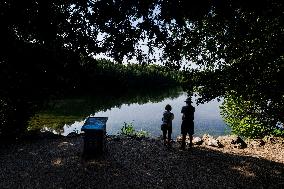
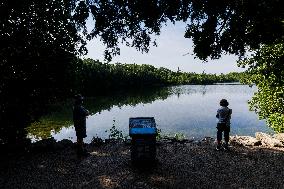
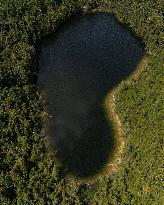
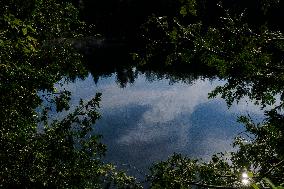
People look out on the water from the shore of Crawford Lake in Milton, Ont., on Friday, July 7, 2023. Crawford Lake, a small body of water in Ontario, Canada, is being put forward as the location that best records humanity's impacts on Earth. Scientists are trying to define a new geological time period to recognise the changes we've made to the planet, and Crawford is their model example. Its sediments have captured fallout from intense fossil fuel burning, and even the plutonium from bomb tests. The muds would be symbolic of the onset of a proposed Anthropocene Epoch. Photo by Cole Burston/CP/ABACAPRESS.COM

  •  
Crawford Lake Marks Beginning Of Anthropocene - Canada

Crawford Lake Marks Beginning Of Anthropocene - Canada

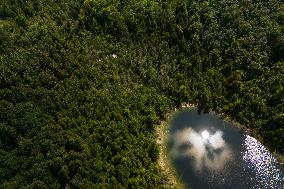
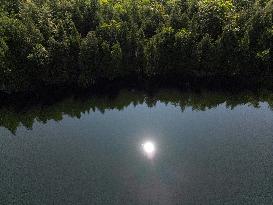
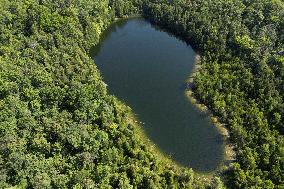
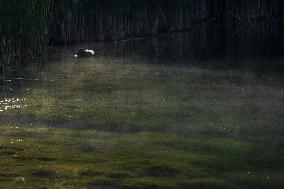
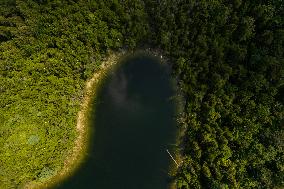
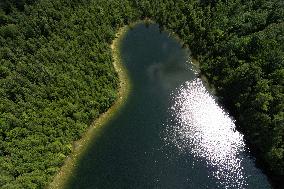
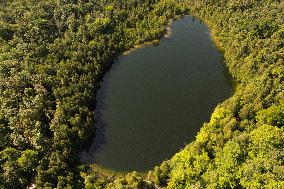
The waters of Crawford Lake in Milton, Ont., on Monday, July 10, 2023. Crawford Lake, a small body of water in Ontario, Canada, is being put forward as the location that best records humanity's impacts on Earth. Scientists are trying to define a new geological time period to recognise the changes we've made to the planet, and Crawford is their model example. Its sediments have captured fallout from intense fossil fuel burning, and even the plutonium from bomb tests. The muds would be symbolic of the onset of a proposed Anthropocene Epoch. Photo by Cole Burston/CP/ABACAPRESS.COM

  •  
Crawford Lake Marks Beginning Of Anthropocene - Canada

Crawford Lake Marks Beginning Of Anthropocene - Canada

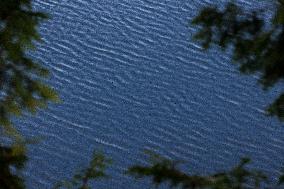
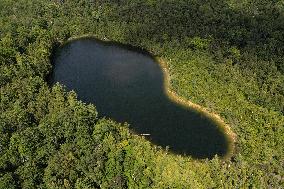
The waters of Crawford Lake in Milton, Ont., on Friday, July 7, 2023. Crawford Lake, a small body of water in Ontario, Canada, is being put forward as the location that best records humanity's impacts on Earth. Scientists are trying to define a new geological time period to recognise the changes we've made to the planet, and Crawford is their model example. Its sediments have captured fallout from intense fossil fuel burning, and even the plutonium from bomb tests. The muds would be symbolic of the onset of a proposed Anthropocene Epoch. Photo by Cole Burston/CP/ABACAPRESS.COM

  •  
Crawford Lake Marks Beginning Of Anthropocene - Canada

Crawford Lake Marks Beginning Of Anthropocene - Canada

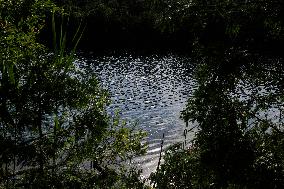
The waters of Crawford Lake in Milton, Ont., on Friday, July 7, 2023. Crawford Lake, a small body of water in Ontario, Canada, is being put forward as the location that best records humanity's impacts on Earth. Scientists are trying to define a new geological time period to recognise the changes we've made to the planet, and Crawford is their model example. Its sediments have captured fallout from intense fossil fuel burning, and even the plutonium from bomb tests. The muds would be symbolic of the onset of a proposed Anthropocene Epoch. Photo by Cole Burston/CP/ABACAPRESS.COM

  •  
Crawford Lake Marks Beginning Of Anthropocene - Canada

Crawford Lake Marks Beginning Of Anthropocene - Canada

People look out on the water from the shore of Crawford Lake in Milton, Ont., on Friday, July 7, 2023. Crawford Lake, a small body of water in Ontario, Canada, is being put forward as the location that best records humanity's impacts on Earth. Scientists are trying to define a new geological time period to recognise the changes we've made to the planet, and Crawford is their model example. Its sediments have captured fallout from intense fossil fuel burning, and even the plutonium from bomb tests. The muds would be symbolic of the onset of a proposed Anthropocene Epoch. Photo by Cole Burston/CP/ABACAPRESS.COM

  •  
Crawford Lake Marks Beginning Of Anthropocene - Canada

Crawford Lake Marks Beginning Of Anthropocene - Canada

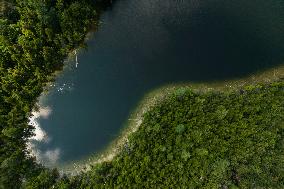
The waters of Crawford Lake in Milton, Ont., on Monday, July 10, 2023. Crawford Lake, a small body of water in Ontario, Canada, is being put forward as the location that best records humanity's impacts on Earth. Scientists are trying to define a new geological time period to recognise the changes we've made to the planet, and Crawford is their model example. Its sediments have captured fallout from intense fossil fuel burning, and even the plutonium from bomb tests. The muds would be symbolic of the onset of a proposed Anthropocene Epoch. Photo by Cole Burston/CP/ABACAPRESS.COM

  •  
Crawford Lake Marks Beginning Of Anthropocene - Canada

Crawford Lake Marks Beginning Of Anthropocene - Canada

The waters of Crawford Lake in Milton, Ont., on Friday, July 7, 2023. Crawford Lake, a small body of water in Ontario, Canada, is being put forward as the location that best records humanity's impacts on Earth. Scientists are trying to define a new geological time period to recognise the changes we've made to the planet, and Crawford is their model example. Its sediments have captured fallout from intense fossil fuel burning, and even the plutonium from bomb tests. The muds would be symbolic of the onset of a proposed Anthropocene Epoch. Photo by Cole Burston/CP/ABACAPRESS.COM

  •  
Crawford Lake Marks Beginning Of Anthropocene - Canada

Crawford Lake Marks Beginning Of Anthropocene - Canada

The waters of Crawford Lake in Milton, Ont., on Monday, July 10, 2023. Crawford Lake, a small body of water in Ontario, Canada, is being put forward as the location that best records humanity's impacts on Earth. Scientists are trying to define a new geological time period to recognise the changes we've made to the planet, and Crawford is their model example. Its sediments have captured fallout from intense fossil fuel burning, and even the plutonium from bomb tests. The muds would be symbolic of the onset of a proposed Anthropocene Epoch. Photo by Cole Burston/CP/ABACAPRESS.COM

  •  
Crawford Lake Marks Beginning Of Anthropocene - Canada

Crawford Lake Marks Beginning Of Anthropocene - Canada

Wetland is seen on the shore of Crawford Lake in Milton, Ont., on Friday, July 7, 2023. Crawford Lake, a small body of water in Ontario, Canada, is being put forward as the location that best records humanity's impacts on Earth. Scientists are trying to define a new geological time period to recognise the changes we've made to the planet, and Crawford is their model example. Its sediments have captured fallout from intense fossil fuel burning, and even the plutonium from bomb tests. The muds would be symbolic of the onset of a proposed Anthropocene Epoch. Photo by Cole Burston/CP/ABACAPRESS.COM

  •  
Crawford Lake Marks Beginning Of Anthropocene - Canada

Crawford Lake Marks Beginning Of Anthropocene - Canada

The waters of Crawford Lake in Milton, Ont., on Friday, July 7, 2023. Crawford Lake, a small body of water in Ontario, Canada, is being put forward as the location that best records humanity's impacts on Earth. Scientists are trying to define a new geological time period to recognise the changes we've made to the planet, and Crawford is their model example. Its sediments have captured fallout from intense fossil fuel burning, and even the plutonium from bomb tests. The muds would be symbolic of the onset of a proposed Anthropocene Epoch. Photo by Cole Burston/CP/ABACAPRESS.COM

  •  
Crawford Lake Marks Beginning Of Anthropocene - Canada

Crawford Lake Marks Beginning Of Anthropocene - Canada

The waters of Crawford Lake in Milton, Ont., on Friday, July 7, 2023. Crawford Lake, a small body of water in Ontario, Canada, is being put forward as the location that best records humanity's impacts on Earth. Scientists are trying to define a new geological time period to recognise the changes we've made to the planet, and Crawford is their model example. Its sediments have captured fallout from intense fossil fuel burning, and even the plutonium from bomb tests. The muds would be symbolic of the onset of a proposed Anthropocene Epoch. Photo by Cole Burston/CP/ABACAPRESS.COM

  •  
Crawford Lake Marks Beginning Of Anthropocene - Canada

Crawford Lake Marks Beginning Of Anthropocene - Canada

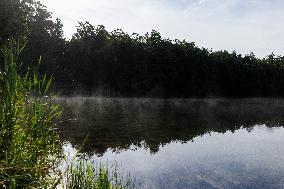
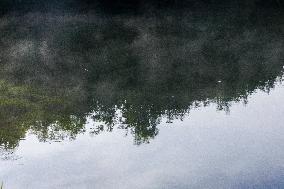
Steam rises off the water of Crawford Lake in Milton, Ont., on Friday, July 7, 2023. Crawford Lake, a small body of water in Ontario, Canada, is being put forward as the location that best records humanity's impacts on Earth. Scientists are trying to define a new geological time period to recognise the changes we've made to the planet, and Crawford is their model example. Its sediments have captured fallout from intense fossil fuel burning, and even the plutonium from bomb tests. The muds would be symbolic of the onset of a proposed Anthropocene Epoch. Photo by Cole Burston/CP/ABACAPRESS.COM

  •  
Crawford Lake Marks Beginning Of Anthropocene - Canada

Crawford Lake Marks Beginning Of Anthropocene - Canada

The waters of Crawford Lake in Milton, Ont., on Monday, July 10, 2023. Crawford Lake, a small body of water in Ontario, Canada, is being put forward as the location that best records humanity's impacts on Earth. Scientists are trying to define a new geological time period to recognise the changes we've made to the planet, and Crawford is their model example. Its sediments have captured fallout from intense fossil fuel burning, and even the plutonium from bomb tests. The muds would be symbolic of the onset of a proposed Anthropocene Epoch. Photo by Cole Burston/CP/ABACAPRESS.COM

  •  
Crawford Lake Marks Beginning Of Anthropocene - Canada

Crawford Lake Marks Beginning Of Anthropocene - Canada

The waters of Crawford Lake in Milton, Ont., on Monday, July 10, 2023. Crawford Lake, a small body of water in Ontario, Canada, is being put forward as the location that best records humanity's impacts on Earth. Scientists are trying to define a new geological time period to recognise the changes we've made to the planet, and Crawford is their model example. Its sediments have captured fallout from intense fossil fuel burning, and even the plutonium from bomb tests. The muds would be symbolic of the onset of a proposed Anthropocene Epoch. Photo by Cole Burston/CP/ABACAPRESS.COM

  •  
Crawford Lake Marks Beginning Of Anthropocene - Canada

Crawford Lake Marks Beginning Of Anthropocene - Canada

The waters of Crawford Lake in Milton, Ont., on Friday, July 7, 2023. Crawford Lake, a small body of water in Ontario, Canada, is being put forward as the location that best records humanity's impacts on Earth. Scientists are trying to define a new geological time period to recognise the changes we've made to the planet, and Crawford is their model example. Its sediments have captured fallout from intense fossil fuel burning, and even the plutonium from bomb tests. The muds would be symbolic of the onset of a proposed Anthropocene Epoch. Photo by Cole Burston/CP/ABACAPRESS.COM

  •  
Crawford Lake Marks Beginning Of Anthropocene - Canada

Crawford Lake Marks Beginning Of Anthropocene - Canada

Steam rises off the water of Crawford Lake in Milton, Ont., on Friday, July 7, 2023. Crawford Lake, a small body of water in Ontario, Canada, is being put forward as the location that best records humanity's impacts on Earth. Scientists are trying to define a new geological time period to recognise the changes we've made to the planet, and Crawford is their model example. Its sediments have captured fallout from intense fossil fuel burning, and even the plutonium from bomb tests. The muds would be symbolic of the onset of a proposed Anthropocene Epoch. Photo by Cole Burston/CP/ABACAPRESS.COM

  •  
Crawford Lake Marks Beginning Of Anthropocene - Canada

Crawford Lake Marks Beginning Of Anthropocene - Canada

The waters of Crawford Lake in Milton, Ont., on Monday, July 10, 2023. Crawford Lake, a small body of water in Ontario, Canada, is being put forward as the location that best records humanity's impacts on Earth. Scientists are trying to define a new geological time period to recognise the changes we've made to the planet, and Crawford is their model example. Its sediments have captured fallout from intense fossil fuel burning, and even the plutonium from bomb tests. The muds would be symbolic of the onset of a proposed Anthropocene Epoch. Photo by Cole Burston/CP/ABACAPRESS.COM

  •  
Crawford Lake Marks Beginning Of Anthropocene - Canada

Crawford Lake Marks Beginning Of Anthropocene - Canada

The waters of Crawford Lake in Milton, Ont., on Monday, July 10, 2023. Crawford Lake, a small body of water in Ontario, Canada, is being put forward as the location that best records humanity's impacts on Earth. Scientists are trying to define a new geological time period to recognise the changes we've made to the planet, and Crawford is their model example. Its sediments have captured fallout from intense fossil fuel burning, and even the plutonium from bomb tests. The muds would be symbolic of the onset of a proposed Anthropocene Epoch. Photo by Cole Burston/CP/ABACAPRESS.COM

  •  
Crawford Lake Marks Beginning Of Anthropocene - Canada

Crawford Lake Marks Beginning Of Anthropocene - Canada

The waters of Crawford Lake in Milton, Ont., on Monday, July 10, 2023. Crawford Lake, a small body of water in Ontario, Canada, is being put forward as the location that best records humanity's impacts on Earth. Scientists are trying to define a new geological time period to recognise the changes we've made to the planet, and Crawford is their model example. Its sediments have captured fallout from intense fossil fuel burning, and even the plutonium from bomb tests. The muds would be symbolic of the onset of a proposed Anthropocene Epoch. Photo by Cole Burston/CP/ABACAPRESS.COM

  •  
Crawford Lake Marks Beginning Of Anthropocene - Canada

Crawford Lake Marks Beginning Of Anthropocene - Canada

The waters of Crawford Lake in Milton, Ont., on Monday, July 10, 2023. Crawford Lake, a small body of water in Ontario, Canada, is being put forward as the location that best records humanity's impacts on Earth. Scientists are trying to define a new geological time period to recognise the changes we've made to the planet, and Crawford is their model example. Its sediments have captured fallout from intense fossil fuel burning, and even the plutonium from bomb tests. The muds would be symbolic of the onset of a proposed Anthropocene Epoch. Photo by Cole Burston/CP/ABACAPRESS.COM

  •  
Hiroshima protests U.S. plutonium test

Hiroshima protests U.S. plutonium test

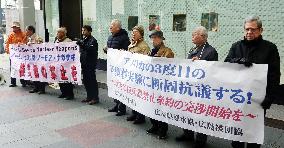
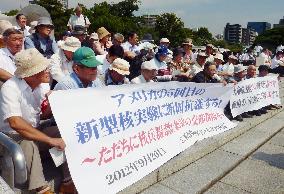
HIROSHIMA, Japan - People hold banners in the city of Hiroshima, western Japan, on Jan. 6, 2012, in protest against an experiment using plutonium conducted by the United States the previous summer to examine the capabilities of its nuclear arsenal.

  •  
Japan moves step closer to scrapping trouble-prone Monju reactor

Japan moves step closer to scrapping trouble-prone Monju reactor

NAGOYA, Japan, Sept. 21 Kyodo - Photo taken Sept. 21, 2016, from a Kyodo News helicopter shows the reactor building of the Monju fast-breeder unit in the Sea of Japan coastal city of Tsuruga. The government decided that day to rethink its policy on the plutonium-burning reactor that has hardly operated over the past 20 years despite its intended key role in Japan's nuclear fuel recycling policy.

  •  
Fuel rods removed at Genkai nuclear plant

Fuel rods removed at Genkai nuclear plant

TOKYO, Japan - Work is underway to remove fuel rods from the No. 3 reactor at Kyushu Electric Power Co.'s Genkai nuclear power plant in Genkai Town, Saga Prefecture, in March 2013. Japan did not include 640kg of unused plutonium in its annual report to the International Atomic Energy Agency in 2012 and 2013. The unreported plutonium is part of the MOX fuel which was loaded to the No. 3 reactor in March 2011 during its regular checkup but was removed unused in March 2013 as the reactor has remained idle since the Fukushima nuclear crisis.

  •  
Hakodate city suit over MOX reactor

Hakodate city suit over MOX reactor

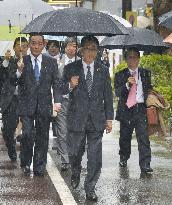
TOKYO, Japan - Toshiki Kudo (front), mayor of the city of Hakodate in Hokkaido, heads to the Tokyo District Court on April 3, 2014. The city filed a lawsuit against the Japanese state government and Electric Power Development Co. seeking suspension of construction of a plutonium-uranium mixed oxide fuel reactor at the Oma nuclear power plant in Aomori Prefecture due to safety concerns.

  •  
Hakodate city suit over MOX reactor

Hakodate city suit over MOX reactor

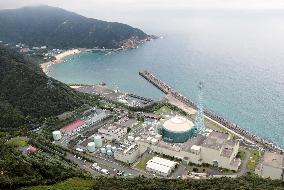
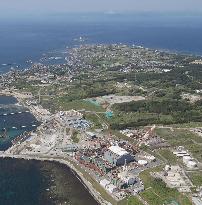
TOKYO, Japan - A June 2013 photo taken from a Kyodo News airplane shows the Oma nuclear power plant (bottom) under construction in Aomori Prefecture. At top is the city of Hakodate, Hokkaido, across the Tsugaru Strait. The city of Hakodate filed a lawsuit on April 3, 2014, against the Japanese state government and Electric Power Development Co. seeking suspension of the construction of a plutonium-uranium mixed oxide fuel reactor at the Oma plant due to safety concerns.

  •  
A-bomb survivors protest U.S. test

A-bomb survivors protest U.S. test

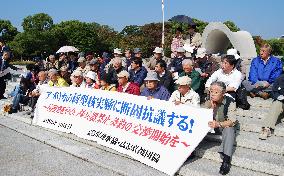
HIROSHIMA, Japan - The 1945 atomic bombing survivors and other protesters stage a sit-in near a cenotaph for atomic bombing victims in Hiroshima on Nov. 1, 2013, after the United States revealed it had conducted an experiment using a small amount of plutonium to examine the capabilities of its nuclear weapons between July and September 2013.

  •  
A-bomb survivors protest U.S. test

A-bomb survivors protest U.S. test

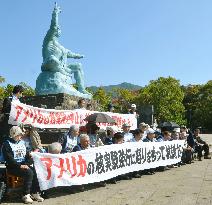
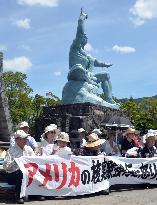
NAGASAKI, Japan - The 1945 atomic bombing survivors and other protesters stage a sit-in near the Peace Statue in Nagasaki on Nov. 1, 2013, after the United States revealed it had conducted an experiment using a small amount of plutonium to examine the capabilities of its nuclear weapons between July and September 2013.

  •  
A-bomb survivors protest U.S. test

A-bomb survivors protest U.S. test

NAGASAKI, Japan - Protesters including survivors of the 1945 U.S. atomic bombing stage a sit-in at the foot of the Peace Statue in Nagasaki Peace Park in Nagasaki, Japan on Aug. 22, 2013. The protest was sparked by the recent revelation that the United States conducted a plutonium test earlier in the year.

  •  
Hiroshima resets 'peace clock'

Hiroshima resets 'peace clock'

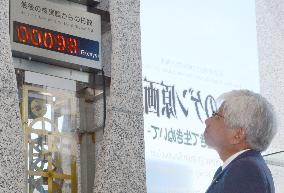
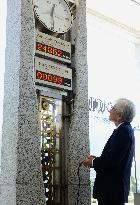
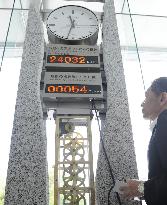
HIROSHIMA, Japan - Kenji Shiga, director of the Hiroshima Peace Memorial Museum, looks at a "peace clock" monument on Aug. 21, 2013, at the museum in the city of Hiroshima, which counts the number of days since the last nuclear test. It showed "98" after it was reset the same day as the city learned of a U.S. experiment in May using plutonium to examine the capabilities of nuclear weapons.

  •  
Hiroshima resets 'peace clock'

Hiroshima resets 'peace clock'

HIROSHIMA, Japan - Kenji Shiga, director of the Hiroshima Peace Memorial Museum, looks at a "peace clock" monument on Aug. 21, 2013, at the museum in the city of Hiroshima, which counts the number of days since the last nuclear test. It showed "98" after it was reset the same day as the city learned of a U.S. experiment in May using plutonium to examine the capabilities of nuclear weapons.

  •  
Japan Nuclear Fuel unveils plutonium fuel plant

Japan Nuclear Fuel unveils plutonium fuel plant

ROKKASHO, Japan - Japan Nuclear Fuel Ltd. unveils to reporters its plant for producing so-called MOX nuclear fuel, under construction in Rokkasho, Aomori Prefecture on Nov. 1, 2012.

  •  
Japan Nuclear Fuel unveils plutonium fuel plant

Japan Nuclear Fuel unveils plutonium fuel plant

ROKKASHO, Japan - Japan Nuclear Fuel Ltd. unveils to reporters its plant for producing so-called MOX nuclear fuel, under construction in Rokkasho, Aomori Prefecture on Nov. 1, 2012.

  •  
Protest in Hiroshima against new U.S. nuke test

Protest in Hiroshima against new U.S. nuke test

HIROSHIMA, Japan - People stage a sit-in protest in front of the cenotaph for the victims of the 1945 atomic bombing of Hiroshima at the Hiroshima Peace Memorial Park on Sept. 20, 2012. They were protesting against a U.S. experiment from April to June using plutonium to examine the capabilities of nuclear weapons.

  •  
U.S. nuclear cleanup holds lessons for Fukushima crisis

U.S. nuclear cleanup holds lessons for Fukushima crisis

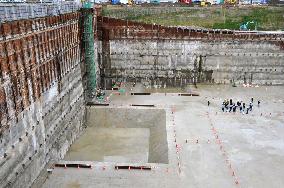
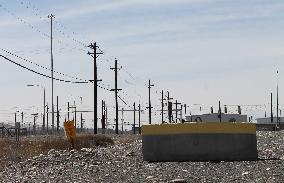
RICHLAND, United States - The U.S. Energy Department shows to the press the Hanford Site, a complex of nuclear reactors and processing facilities once used to produce plutonium for the U.S. nuclear arsenal, in Richland in the U.S. state of Washington on April 24, 2012.

  •  
Saga Gov. Furukawa in press conference

Saga Gov. Furukawa in press conference

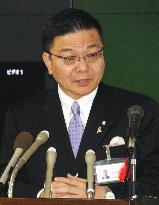
SAGA, Japan - Saga Gov. Yasushi Furukawa speaks during a press conference at the prefectural government building in Saga, southwestern Japan, on Nov. 22, 2011. Furukawa apologized after a report concluded that the prefectural government was aware of Kyushu Electric Power Co.'s attempted manipulation of public opinion on introducing a plutonium-thermal power generation project at the local Genkai nuclear power plant during a public forum in 2005. The report denied Furukawa's involvement in the matter.

  •  
British MOX plant to be closed

British MOX plant to be closed

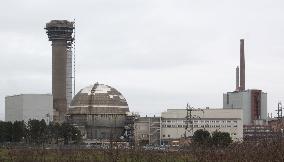
LONDON, Britain - File photo taken in March 2011 shows facilities related to nuclear power in Sellafield, Britain. Ten Japanese electric power companies that operate nuclear power plants jointly covered the cost of renovating a Sellafield-based plant to produce plutonium-uranium mixed oxide, or MOX, fuel. Now the British government-affiliated Nuclear Decommissioning Authority, which runs the facility, has determined Japan will no longer need MOX fuel in the wake of the nuclear accident at the Fukushima Daiichi power plant, and has decided to close the reprocessing plant, industry sources said Oct. 18, 2011.

  •  
Hokkaido Electric Power President Sato

Hokkaido Electric Power President Sato

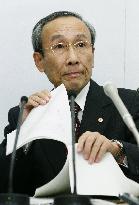
SAPPORO, Japan - Hokkaido Electric Power Co. President Yoshitaka Sato gives a press conference in Sapporo, Hokkaido, on Oct. 17, 2011. Sato said the utility will freeze a plutonium-thermal power generation project at its Tomari nuclear plant due to a scandal involving the misrepresentation of local opinion about the project.

  •  
Nuclear fuel unloaded in Fukui Pref.

Nuclear fuel unloaded in Fukui Pref.

TOKYO, Japan - Plutonium-uranium mixed oxide, or MOX, fuel is unloaded from a ship in the town of Takahama, Fukui Prefecture, in June 2010, to be transported to the Takahama nuclear power plant operated by Kansai Electric Power Co. Japan held 30.1 tons of fissile plutonium at home and abroad as of the end of 2010, down 0.9 ton from a year earlier for the second consecutive yearly decline, the government said Sept. 20, 2011.

  •  
Hiroshima resets 'peace clock' after U.S. plutonium tests

Hiroshima resets 'peace clock' after U.S. plutonium tests

HIROSHIMA, Japan - A counter on a ''peace clock'' monument at the Hiroshima Peace Memorial Museum that shows the number of days since the last nuclear test was reset on May 24, 2011, following recent U.S. tests to examine the effectiveness of its nuclear weapons with the use of plutonium.

  •  
Japan's 1st MOX plant

Japan's 1st MOX plant

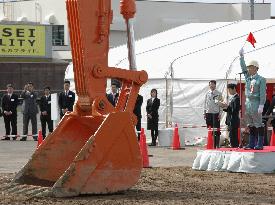
AOMORI, Japan - Japan Nuclear Fuel Ltd. Executive Vice President Koichi Ikeda (R) orders a loading shovel to start operations during a groundbreaking ceremony for Japan's first commercial plant to produce plutonium-uranium mixed oxide, or MOX, fuel, an integral part of the nation's nuclear fuel cycle policy, in the village of Rokkasho, Aomori Prefecture, on Oct. 28, 2010.

  •  
MOX fuel power generation starts in Japan

MOX fuel power generation starts in Japan

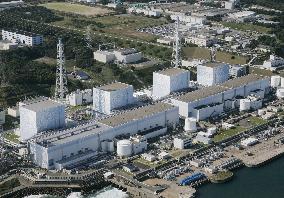
TOKYO, Japan - This October 2008 file photo shows the Fukushima No. 1 nuclear plant of Tokyo Electric Power Co. in Okuma, Fukushima Prefecture. Power generation using plutonium-uranium mixed oxide fuel started at the plant's No. 3 reactor (2nd from L) on Sept. 23, 2010.

  •  
MOX fuel rods placed in storage pool

MOX fuel rods placed in storage pool

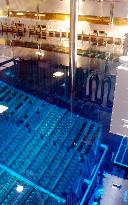
FUKUSHIMA, Japan - Plutonium-uranium mixed oxide (MOX) fuel rods are placed in a storage pool at the No. 3 reactor of the Fukushima No. 1 nuclear power plant in Okuma, Fukushima Prefecture. The photo was taken on Aug. 21, 2010.

  •  
MOX fuel placed in storage pool

MOX fuel placed in storage pool

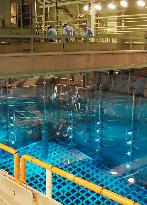
TSURUGA, Japan - Plutonium-uranium mixed oxide fuel processed in France for ''pluthermal'' power generation is placed in a storage pool filled with boric acid solution at Takahama nuclear power plant in Takahama, Fukui Prefecture, on July 6, 2010. Kansai Electric Power Co. gave the media access to observe the process.

  •  
Vessel carrying MOX fuel reaches Takahama nuclear plant

Vessel carrying MOX fuel reaches Takahama nuclear plant

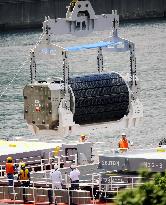
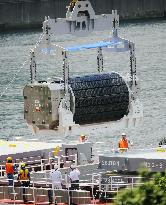
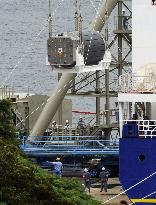
TAKAHAMA, Japan - A crane lifts a container of plutonium-uranium mixed oxide, or MOX, fuel from a vessel near Kansai Electric Power Co.'s Takahama nuclear power station in Fukui Prefecture on June 30, 2010. It was the first delivery since 1999 of the fuel, used in ''pluthermal'' power generation.

  •  
MOX fuel reaches Japan nuclear plant

MOX fuel reaches Japan nuclear plant

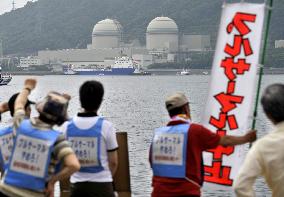
TAKAHAMA, Japan - Protesters mount a rally in the town of Takahama, Fukui Prefecture, on June 30, 2010, after the vessel Pacific Heron, which is believed to be carrying plutonium-uranium mixed oxide fuel, docks at a Kansai Electric Power Co. plant. The banner reads, ''Stop pluthermal.''

  •  
MOX fuel reaches Japan nuclear plant

MOX fuel reaches Japan nuclear plant

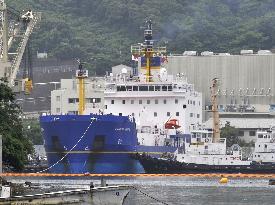
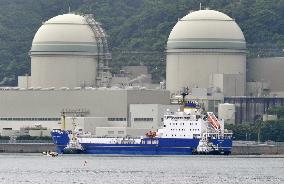
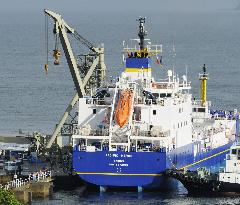
TAKAHAMA, Japan - The vessel Pacific Heron purportedly carrying plutonium-uranium mixed oxide fuel docks at the Takahama nuclear plant of Kansai Electric Power Co. in Fukui Prefecture on the Sea of Japan, on June 30, 2010. It was the first delivery of MOX fuel to the plant since 1999.

  •  
MOX fuel reaches Japan nuclear plant

MOX fuel reaches Japan nuclear plant

TAKAHAMA, Japan - The vessel Pacific Heron purportedly carrying plutonium-uranium mixed oxide fuel docks at the Takahama nuclear plant of Kansai Electric Power Co. in Fukui Prefecture on the Sea of Japan, on June 30, 2010. It was the first delivery of MOX fuel to the plant since 1999.

  •  
Ship carrying nuclear fuel from France arrives in Japan

Ship carrying nuclear fuel from France arrives in Japan

SAGA, Japan - A container loaded with uranium-plutonium mixed-oxide, or MOX, fuel, is unloaded from the Pacific Heron, at Kyushu Electric Power Co.'s Genkai plant in Saga Prefecture on June 28, 2010.

  •  
Ship carrying nuclear fuel from France arrives in Japan

Ship carrying nuclear fuel from France arrives in Japan

SAGA, Japan - The Pacific Heron, a transport ship carrying recycled nuclear fuel from France for Japanese power reactors, arrives at Kyushu Electric Power Co.'s Genkai plant in Saga Prefecture on June 28, 2010. A French radio station said the ship was loaded with 15 tons of uranium-plutonium mixed-oxide, or MOX, fuel, apparently containing around 1.3 tons of plutonium, when it left France in April.

  •  
'Pluthermal' power generation begins at Japan plant

'Pluthermal' power generation begins at Japan plant

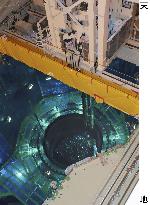
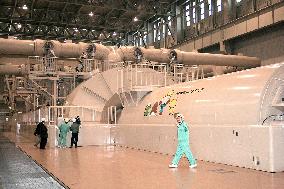
MATSUYAMA, Japan - Seen here is the No. 3 reactor at the Ikata nuclear power plant in Ehime Prefecture in western Japan on March 4, 2010. The nuclear plant became Japan's second ''pluthermal'' power-generating facility, using plutonium-uranium mixed oxide fuel.

  • Main
  • Top
  • Editorial
  • Creative
  • About Us
  • About ILG
  • Terms of use
  • Company
  • BEHIND
  • Price List
  • Single Plan
  • Monthly Plan
  • Services
  • Shooting
  • Rights Clearance
  • Support
  • FAQ
  • How To Buy
  • Contact Us
  • Become a Partner

© KYODO NEWS IMAGES INC

All Rights Reserved.

  • Editorial
  • Olympics
  • News
  • Sports
  • Japan
  • Tech
  • Royal
  • Disaster
  • NorthKorea
  • Old Japan
  • SNS
  • Creative
  • Food
  • Japan
  • Landscape
  • Animal
  • Popular
  • #Ukraine
  • #China
  • #coronavirus
  • #N. Korea
  • #Russia
  • #Thailand
  • #Ukraine
  • #China
  • #coronavirus
  • #N. Korea
  • #Russia
  • #Thailand
  • Food
  • Japan
  • Landscape
  • Animal
  • Olympics
  • News
  • Sports
  • Japan
  • Tech
  • Royal
  • Disaster
  • NorthKorea
  • Old Japan
  • SNS